
Destiny and Overcoming

Henry Wadsworth Longfellow
Tales Of A Wayside Inn : Part 1. The Musician's Tale; The Saga of King Olaf XI.
-- Bishop Sigurd At Salten Fiord
Loud the anngy wind was wailing
As King Olaf's ships came sailing
Northward out of Drontheim haven
To the mouth of Salten Fiord.
Though the flying sea-spray drenches
Fore and aft the rowers' benches,
Not a single heart is craven
Of the champions there on board.
All without the Fiord was quiet
But within it storm and riot,
Such as on his Viking cruises
Raud the Strong was wont to ride.
And the sea through all its tide-ways
Swept the reeling vessels sideways,
As the leaves are swept through sluices,
When the flood-gates open wide.
''T is the warlock! 't is the demon
Raud!' cried Sigurd to the seamen;
'But the Lord is not affrighted
By the witchcraft of his foes.'
To the ship's bow he ascended,
By his choristers attended,
Round him were the tapers lighted,
And the sacred incense rose.
On the bow stood Bishop Sigurd,
In his robes, as one transfigured,
And the Crucifix he planted
High amid the rain and mist.
Then with holy water sprinkled
All the ship; the mass-bells tinkled.
Loud the monks around him chanted,
Loud he read the Evangelist.
As into the Fiord they darted,
On each side the water parted;
Down a path like silver molten
Steadily rowed King Olaf's ships;
Steadily burned all night the tapers,
And the White Christ through the vapors
Gleamed across the Fiord of Salten,
As through John's Apocalypse,--
Till at last they reached Raud's dwelling
On the little isle of Gelling;
Not a guard was at the doorway,
Not a glimmer of light was seen.
But at anchor, carved and gilded,
Lay the dragon-ship he builded;
'T was the grandest ship in Norway,
With its crest and scales of green.
Up the stairway, softly creeping,
To the loft where Raud was sleeping,
With their fists they burst asunder
Bolt and bar that held the door.
Drunken with sleep and ale they found him,
Dragged him from his bed and bound him,
While he stared with stupid wonder,
At the look and garb they wore.
Then King Olaf said: 'O Sea-King!
Little time have we for speaking,
Choose between the good and evil;
Be baptized, or thou shalt die!?
But in scorn the heathen scoffer
Answered: 'I disdain thine offer;
Neither fear I God nor Devil;
Thee and thy Gospel I defy!'
Then between his jaws distended,
When his frantic struggles ended,
Through King Olaf's horn an adder,
Touched by fire, they forced to glide.
Sharp his tooth was as an arrow,
As he gnawed through bone and marrow;
But without a groan or shudder,
Raud the Strong blaspheming died.
Then baptized they all that region,
Swarthy Lap and fair Norwegian,
Far as swims the salmon, leaping,
Up the streams of Salten Fiord.
In their temples Thor and Odin
Lay in dust and ashes trodden,
As King Olaf, onward sweeping,
Preached the Gospel with his sword.
Then he took the carved and gilded
Dragon-ship that Raud had builded,
And the tiller single-handed,
Grasping, steered into the main.
Southward sailed the sea-gulls o'er him,
Southward sailed the ship that bore him,
Till at Drontheim haven landed
Olaf and his crew again.
272

Anonymous
Episode
THEN the baleful fiend its fire belched out,
and bright homes burned. The blaze stood high
all landsfolk frighting. No living thing
would that loathly one leave as aloft it flew.
Wide was the dragon's warring seen,
its fiendish fury far and near,
as the grim destroyer those Geatish people
hated and hounded. To hidden lair,
to its hoard it hastened at hint of dawn.
Folk of the land it had lapped in flame,
with bale and brand. In its barrow it trusted,
its battling and bulwarks: that boast was vain!
To Beowulf then the bale was told
quickly and truly: the king's own home,
of buildings the best, in brand-waves melted,
that gift-throne of Geats. To the good old man
sad in heart, 'twas heaviest sorrow.
The sage assumed that his sovran God
he had angered, breaking ancient law,
and embittered the Lord. His breast within
with black thoughts welled, as his wont was never.
The folk's own fastness that fiery dragon
with flame had destroyed, and the stronghold all
washed by waves; but the warlike king,
prince of the Weders, plotted vengeance.
Warriors'-bulwark, he bade them work
all of iron -- the earl's commander --
a war-shield wondrous: well he knew
that forest-wood against fire were worthless,
linden could aid not. -- Atheling brave,
he was fated to finish this fleeting life,
his days on earth, and the dragon with him,
though long it had watched o'er the wealth of thehoard! --
Shame he reckoned it, sharer-of-rings,
to follow the flyer-afar with a host,
a broad-flung band; nor the battle feared he,
nor deemed he dreadful the dragon's warring,
its vigor and valor: ventures desperate
he had passed a-plenty, and perils of war,
contest-crash, since, conqueror proud,
Hrothgar's hall he had wholly purged,
and in grapple had killed the kin of Grendel,
loathsome breed! Not least was that
of hand-to-hand fights where Hygelac fell,
when the ruler of Geats in rush of battle,
lord of his folk, in the Frisian land,
son of Hrethel, by sword-draughts died,
by brands down-beaten. Thence Beowulf fled
through strength of himself and his swimming power,
though alone, and his arms were laden with thirty
coats of mail, when he came to the sea!
Nor yet might Hetwaras haughtily boast
their craft of contest, who carried against him
shields to the fight: but few escaped
from strife with the hero to seek their homes!
Then swam over ocean Ecgtheow's son
lonely and sorrowful, seeking his land,
where Hygd made him offer of hoard and realm,
rings and royal-seat, reckoning naught
the strength of her son to save their kingdom
from hostile hordes, after Hygelac's death.
No sooner for this could the stricken ones
in any wise move that atheling's mind
over young Heardred's head as lord
and ruler of all the realm to be:
yet the hero upheld him with helpful words,
aided in honor, till, older grown,
he wielded the Weder-Geats. -- Wandering exiles
sought him o'er seas, the sons of Ohtere,
who had spurned the sway of the Scylfings'-helmet,
the bravest and best that broke the rings,
in Swedish land, of the sea-kings' line,
haughty hero. Hence Heardred's end.
For shelter he gave them, sword-death came,
the blade's fell blow, to bairn of Hygelac;
but the son of Ongentheow sought again
house and home when Heardred fell,
leaving Beowulf lord of Geats
and gift-seat's master. -- A good king he!
269

Robert W. Service
Causation
Said darling daughter unto me:
"oh Dad, how funny it would be
If you had gone to Mexico
A score or so of years ago.
Had not some whimsey changed your plan
I might have been a Mexican.
With lissome form and raven hair,
Instead of being fat and fair.
"Or if you'd sailed the Southern Seas
And mated with a Japanese
I might have been a squatty girl
With never golden locks to curl,
Who flirted with a painted fan,
And tinkled on a samisan,
And maybe slept upon a mat I'm
very glad I don't do that.
"When I consider the romance
Of all your youth of change and chance
I might, I fancy, just as well
Have bloomed a bold Tahitian belle,
Or have been born . . . but there - ah no!
I draw the line - and Esquimeaux.
It scares me stiff to think of what
I might have been - thank God! I'm not."
Said I: "my dear, don't be absurd,
Since everything that has occurred,
Through seeming fickle in your eyes,
Could not a jot be otherwise.
For in this casual cosmic biz
The world can be but what it is;
And nobody can dare deny
Part of this world is you and I.
Or call it fate or destiny
No other issue could there be.
Though half the world I've wandered through
Cause and effect have linked us two.
Aye, all the aeons of the past
Conspired to bring us here at last,
And all I ever chanced to do
Inevitably led to you.
To you, to make you what you are,
A maiden in a Morris car,
IN Harris tweeds, an airedale too,
But Anglo-Saxon through and through.
And all the good and ill I've done
In every land beneath the sun
Magnificently led to this
A country cottage and - your kiss."
269

John Greenleaf Whittier
The Vow Of Washington
The sword was sheathed: in April's sun
Lay green the fields by Freedom won;
And severed sections, weary of debates,
Joined hands at last and were United States.
O City sitting by the Sea
How proud the day that dawned on thee,
When the new era, long desired, began,
And, in its need, the hour had found the man!
One thought the cannon salvos spoke,
The resonant bell-tower's vibrant stroke,
The voiceful streets, the plaudit-echoing halls,
And prayer and hymn borne heavenward from St. Paul's!
How felt the land in every part
The strong throb of a nation's heart,
As its great leader gave, with reverent awe,
His pledge to Union, Liberty, and Law.
That pledge the heavens above him heard,
That vow the sleep of centuries stirred;
In world-wide wonder listening peoples bent
Their gaze on Freedom's great experiment.
Could it succeed? Of honor sold
And hopes deceived all history told.
Above the wrecks that strewed the mournful past,
Was the long dream of ages true at last?
Thank God! the people's choice was just,
The one man equal to his trust,
Wise beyond lore, and without weakness good,
Calm in the strength of flawless rectitude.
His rule of justice, order, peace,
Made possible the world's release;
Taught prince and serf that power is but a trust,
And rule, alone, which serves the ruled, is just;
That Freedom generous is, but strong
In hate of fraud and selfish wrong,
Pretence that turns her holy truths to lies,
And lawless license masking in her guise.
Land of his love! with one glad voice
Let thy great sisterhood rejoice;
A century's suns o'er thee have risen and set,
And, God be praised, we are one nation yet.
And still we trust the years to be
Shall prove his hope was destiny,
Leaving our flag, with all its added stars,
Unrent by faction and unstained by wars.
Lo! where with patient toil he nursed
And trained the new-set plant at first,
The widening branches of a stately tree
Stretch from the sunrise to the sunset sea.
And in its broad and sheltering shade,
Sitting with none to make afraid,
Were we now silent, through each mighty limb,
The winds of heaven would sing the praise of him.
Our first and best!--his ashes lie
Beneath his own Virginian sky.
Forgive, forget, O true and just and brave,
The storm that swept above thy sacred grave.
For, ever in the awful strife
And dark hours of the nation's life,
Through the fierce tumult pierced his warning word,
Their father's voice his erring children heard.
The change for which he prayed and sought
In that sharp agony was wrought;
No partial interest draws its alien line
'Twixt North and South, the cypress and the pine!
One people now, all doubt beyond,
His name shall be our Union-bond;
We lift our hands to Heaven, and here and now.
Take on our lips the old Centennial vow.
For rule and trust must needs be ours;
Chooser and chosen both are powers
Equal in service as in rights; the claim
Of Duty rests on each and all the same.
Then let the sovereign millions, where
Our banner floats in sun and air,
From the warm palm-lands to Alaska's cold,
Repeat with us the pledge a century old?
267

Emily Dickinson
We lose—because we win
We lose—because we win—
Gamblers—recollecting which
Toss their dice again!
Gamblers—recollecting which
Toss their dice again!
265

Ogden Nash
One From One Leaves Two
Higgledy piggledy, my black hen,
She lays eggs for gentlemen.
Gentlemen come every day
To count what my black hen doth lay.
If perchance she lays too many,
They fine my hen a pretty penny;
If perchance she fails to lay,
The gentlemen a bonus pay.
Mumbledy pumbledy, my red cow,
She’s cooperating now.
At first she didn’t understand
That milk production must be planned;
She didn’t understand at first
She either had to plan or burst,
But now the government reports
She’s giving pints instead of quarts.
Fiddle de dee, my next-door neighbors,
They are giggling at their labors.
First they plant the tiny seed,
Then they water, then they weed,
Then they hoe and prune and lop,
They they raise a record crop,
Then they laugh their sides asunder,
And plow the whole caboodle under.
Abracadabra, thus we learn
The more you create, the less you earn.
The less you earn, the more you’re given,
The less you lead, the more you’re driven,
The more destroyed, the more they feed,
The more you pay, the more they need,
The more you earn, the less you keep,
And now I lay me down to sleep.
I pray the Lord my soul to take
If the tax-collector hasn’t got it before I wake.
266

Thomas Hardy
At Lulworth Cove a Century Back
Had I but lived a hundred years ago
I might have gone, as I have gone this year,
By Warmwell Cross on to a Cove I know,
And Time have placed his finger on me there:
"You see that man?" -- I might have looked, and said,
"O yes: I see him. One that boat has brought
Which dropped down Channel round Saint Alban's Head.
So commonplace a youth calls not my thought."
"You see that man?" -- "Why yes; I told you; yes:
Of an idling town-sort; thin; hair brown in hue;
And as the evening light scants less and less
He looks up at a star, as many do."
"You see that man?" -- "Nay, leave me!" then I plead,
"I have fifteen miles to vamp across the lea,
And it grows dark, and I am weary-kneed:
I have said the third time; yes, that man I see!"
"Good. That man goes to Rome -- to death, despair;
And no one notes him now but you and I:
A hundred years, and the world will follow him there,
And bend with reverence where his ashes lie."
263
Robert W. Service
You And Me
I'm part of people I have known
And they are part of me;
The seeds of thought that I have sown
In other minds I see.
There's something of me in the throne
And in the gallows tree.
There's something of me in each one
With whom I work and play,
For islanded there can be none
In this dynamic day;
And meshed with me perchance may be
A leper in Cathay.
There's me in you and you in me,
For deeply in us delves
Such common thought that never we
Can call ourselves ourselves.
In coils of universal fate
No man is isolate.
For you and I are History,
The all that ever was;
And woven in the tapestry
Of everlasting laws,
Persist will we in Time to be,
Forever you and me.
263

Jonathan Swift
On A Pair Of Dice
We are little brethren twain,
Arbiters of loss and gain,
Many to our counters run,
Some are made, and some undone:
But men find it to their cost,
Few are made, but numbers lost.
Though we play them tricks for ever,
Yet they always hope our favour.
Arbiters of loss and gain,
Many to our counters run,
Some are made, and some undone:
But men find it to their cost,
Few are made, but numbers lost.
Though we play them tricks for ever,
Yet they always hope our favour.
262

Christina Rossetti
Amor Mundi
'Oh, where are you going with your love-locks flowing
On the west wind blowing along this valley track?'
'The downhill path is easy, come with me an' it please ye,
We shall escape the uphill by never turning back.'
So they two went together in glowing August weather,
The honey-breathing heather lay to their left and right;
And dear she was to doat on, her swift feet seemed to float on
The air like soft twin pigeons too sportive to alight.
'Oh, what is that in heaven where grey cloud-flakes are seven,
Where blackest clouds hang riven just at the rainy skirt?'
'Oh, that's a meteor sent us, a message dumb, portentous,—
An undeciphered solemn signal of help or hurt.'
'Oh, what is that glides quickly where velvet flowers grow thickly,
Their scent comes rich and sickly?'—'A scaled and hooded worm.'
'Oh, what's that in the hollow, so pale I quake to follow?'
'Oh, that's a thin dead body which waits th' eternal term.'
'Turn again, O my sweetest,—turn again, false and fleetest:
This way whereof thou weetest I fear is hell's own track.'
'Nay, too steep for hill-mounting,—nay, too late for cost-counting:
This downhill path is easy, but there's no turning back.'
260
John Greenleaf Whittier
Italy
ACROSS the sea I heard the groans
Of nations in the intervals
Of wind and wave. Their blood and bones
Cried out in torture, crushed by thrones,
And sucked by priestly cannibals.
I dreamed of Freedom slowly gained
By martyr meekness, patience, faith,
And lo! an athlete grimly stained,
With corded muscles battle-strained,
Shouting it from the fields of death!
I turn me, awe-struck, from the sight,
Among the clamoring thousands mute,
I only know that God is right,
And that the children of the light
Shall tread the darkness under foot.
I know the pent fire heaves its crust,
That sultry skies the bolt will form
To smite them clear; that Nature must
The balance of her powers adjust,
Though with the earthquake and the storm.
God reigns, and let the earth rejoice!
I bow before His sterner plan.
Dumb are the organs of my choice;
He speaks in battle's stormy voice,
His praise is in the wrath of man!
Yet, surely as He lives, the day
Of peace He promised shall be ours,
To fold the flags of war, and lay
Its sword and spear to rust away,
And sow its ghastly fields with flowers!
262
John Greenleaf Whittier
Kallundborg Church ( From The Tent on the Beach)
"Tie stille, barn min!
Imorgen kommer Fin,
Fa'er din,
Og gi'er dich Esbern Snares öine og hjerte at lege med!"
Zealand Rhyme.
"BUILD at Kallundborg by the sea
A church as stately as church may be,
And there shalt thou wed my daughter fair,"
Said the Lord of Nesvek to Esbern Snare.
And the Baron laughed. But Esbern said,
"Though I lose my soul, I will Helva wed!"
And off he strode, in his pride of will,
To the Troll who dwelt in Ulshoi hill.
"Build, O Troll, a church for me
At Kallundborg by the mighty sea;
Build it stately, and build it fair,
Build it quickly," said Esbern Snare.
But the sly Dwarf said, "No work is wrought
By Trolls of the Hills, O man, for naught.
What wilt thou give for thy church so fair?"
"Set thy own price," quoth Esbern Snare.
"When Kallundborg church is builded well,
Thou must the name of its builder tell,
Or thy heart and thy eyes must be my boon."
"Build," said Esbern, "and build it soon."
By night and by day the Troll wrought on;
He hewed the timbers, he piled the stone;
But day by day, as the walls rose fair,
Darker and sadder grew Esbern Snare.
He listened by night, he watched by day,
He sought and thought, but he dared not pray;
In vain he called on the Elle-maids shy,
And the Neck and the Nis gave no reply.
Of his evil bargain far and wide
A rumor ran through the country-side;
And Helva of Nesvek, young and fair,
Prayed for the soul of Esbern Snare.
And now the church was wellnigh done;
One pillar it lacked, and one alone;
And the grim Troll muttered, "Fool thou art!
To-morrow gives me thy eyes and heart!"
By Kallundborg in black despair,
Through wood and meadow, walked Esbern Snare,
Till, worn and weary, the strong man sank
Under the birches on Ulshoi bank.
At his last day's work he heard the Troll
Hammer and delve in the quarry's hole;
Before him the church stood large and fair:
"I have builded my tomb," said Esbern Snare.
And he closed his eyes the sight to hide,
When he heard a light step at his side:
"O Esbern Snare! a sweet voice said,
"Would I might die now in thy stead!"
With a grasp by love and by fear made strong,
He held her fast, and he held her long;
With the beating heart of a bird afeard,
She hid her face in his flame-red beard.
"O love!" he cried, "let me look to-day
In thine eyes ere mine are plucked away;
Let me hold thee close, let me feel thy heart
Ere mine by the Troll is torn apart!
"I sinned, O Helva, for love of thee!
Pray that the Lord Christ pardon me!"
But fast as she prayed, and faster still,
Hammered the Troll in Ulshoi hill.
He knew, as he wrought, that a loving heart
Was somehow baffling his evil art;
For more than spell of Elf or Troll
Is a maiden's prayer for her lover's soul.
And Esbern listened, and caught the sound
Of a Troll-wife singing underground:
"To-morrow comes Fine, father thine:
Lie still and hush thee, baby mine!
"Lie still, my darling! next sunrise
Thou'lt play with Esbern Snare's heart and eyes!"
"Ho! ho!" quoth Esbern, "is that your game?
Thanks to the Troll-wife, I know his name!"
The Troll he heard him, and hurried on
To Kallundborg church with the lacking stone.
"Too late, Gaffer Fine!" cried Esbern Snare;
And Troll and pillar vanished in air!
That night the harvesters heard the sound
Of a woman sobbing underground,
And the voice of the Hill-Troll loud with blame
Of the careless singer who told his name.
Of the Troll of the Church they sing the rune
By the Northern Sea in the harvest moon;
And the fishers of Zealand hear him still
Scolding his wife in Ulshoi hill.
And seaward over its groves of birch
Still looks the tower of Kallundborg church
Where, first at its altar, a wedded pair,
Stood Helva of Nesvek and Esbern Snare!
259
John Greenleaf Whittier
To A Southern Statesman
IS this thy voice whose treble notes of fear
Wail in the wind? And dost thou shake to hear,
Actæon-like, the bay of thine own hounds,
Spurning the leash, and leaping o'er their bounds?
Sore-baffled statesman! when thy eager hand,
With game afoot, unslipped the hungry pack,
To hunt down Freedom in her chosen land,
Hadst thou no fear, that, erelong, doubling back,
These dogs of thine might snuff on Slavery's track?
Where's now the boast, which even thy guarded tongue,
Cold, calm, and proud, in the teeth o' the Senate flung,
O'er the fulfilment of thy baleful plan,
Like Satan's triumph at the fall of man?
How stood'st thou then, thy feet on Freedom planting,
And pointing to the lurid heaven afar,
Whence all could see, through the south windows slanting,
Crimson as blood, the beams of that Lone Star!
The Fates are just; they give us but our own;
Nemesis ripens what our hands have sown.
There is an Eastern story, not unknown,
Doubtless, to thee, of one whose magic skill
Called demons up his water-jars to fill;
Defty and silently, they did his will,
But, when the task was done, kept pouring still.
In vain with spell and charm the wizard wrought,
Faster and faster were the buckets brought,
Higher and higher rose the flood around,
Till the fiends clapped their hands above their master drowned!
So, Carolinian, it may prove with thee,
For God still overrules man's schemes, and takes
Craftiness in its self-set snare, and makes
The wrath of man to praise Him. It may be,
That the roused spirits of Democracy
May leave to freer States the same wide door
Through which thy slave-cursed Texas entered in,
From out the blood and fire, the wrong and sin,
Of the stormed city and the ghastly plain,
Beat by hot hail, and wet with bloody rain,
The myriad-handed pioneer may pour,
And the wild West with the roused North combine
And heave the engineer of evil with his mine.
257
Robert W. Service
Drifter
God gave you guts: don't let Him down;
Brace up, be worthy of His giving.
The road's a rut, the sky's a frown;
I know you're plumb fed up with living.
Fate birches you, and wry the rod . . .
Snap out, you fool! Don't let down God.
Oh, yes, you're on misfortune's shift,
And weary is the row your hoeing;
You have no home, you drift and drift,
Seems folks don't care the way you're going . . .
Well, make them care - you're not afraid:
Step on the gas - you'll make the grade.
Believe that God has faith in you,
In you His loving light is shining;
All of you that is fine and true
Is part of Him, so quit your whining . . .
buck up, son, for your Maker's sake:
Don't let Him down - give God a break.
256
Henry Wadsworth Longfellow
Tales Of A Wayside Inn : Part 1. The Sicilian's Tale; King Robert of Sicily
Robert of Sicily, brother of Pope Urbane
And Valmond, Emperor of Allemaine,
Apparelled in magnificent attire,
With retinue of many a knight and squire,
On St. John's eve, at vespers, proudly sat
And heard the priests chant the Magnificat,
And as he listened, o'er and o'er again
Repeated, like a burden or refrain,
He caught the words, 'Deposuit potentes
De sede, et exaltavit humiles;'
And slowly lifting up his kingly head
He to a learned clerk beside him said,
'What mean these words?' The clerk made answer meet,
'He has put down the mighty from their seat,
And has exalted them of low degree.'
Thereat King Robert muttered scornfully,
''T is well that such seditious words are sung
Only by priests and in the Latin tongue;
For unto priests and people be it known,
There is no power can push me from my throne!'
And leaning back, he yawned and fell asleep,
Lulled by the chant monotonous and deep.
When he awoke, it was already night;
The church was empty, and there was no light,
Save where the lamps, that glimmered few and faint,
Lighted a little space before some saint.
He started from his seat and gazed around,
But saw no living thing and heard no sound.
He groped towards the door, but it was locked;
He cried aloud, and listened, and then knocked,
And uttered awful threatenings and complaints,
And imprecations upon men and saints.
The sounds reëchoed from the roof and walls
As if dead priests were laughing in their stalls.
At length the sexton, hearing from without
The tumult of the knocking and the shout,
And thinking thieves were in the house of prayer,
Came with his lantern, asking, 'Who is there?'
Half choked with rage, King Robert fiercely said,
'Open: 't is I, the King! Art thou afraid?'
The frightened sexton, muttering, with a curse,
'This is some drunken vagabond, or worse!'
Turned the great key and flung the portal wide;
A man rushed by him at a single stride,
Haggard, half naked, without hat or cloak,
Who neither turned, nor looked at him, nor spoke,
But leaped into the blackness of the night,
And vanished like a spectre from his sight.
Robert of Sicily, brother of Pope Urbane
And Valmond, Emperor of Allemaine,
Despoiled of his magnificent attire,
Bareheaded, breathless, and besprent with mire,
With sense of wrong and outrage desperate,
Strode on and thundered at the palace gate;
Rushed through the courtyard, thrusting in his rage
To right and left each seneschal and page,
And hurried up the broad and sounding stair,
His white face ghastly in the torches' glare.
From hall to hall he passed with breathless speed;
Voices and cries he heard, but did not heed,
Until at last he reached the banquet-room,
Blazing with light, and breathing with perfume.
There on the dais sat another king,
Wearing his robes, his crown, his signet-ring,
King Robert's self in features, form, and height,
But all transfigured with angelic light!
It was an Angel; and his presence there
With a divine effulgence filled the air,
An exaltation, piercing the disguise,
Though none the hidden Angel recognize.
A moment speechless, motionless, amazed,
The throneless monarch on the Angel gazed,
Who met his look of anger and surprise
With the divine compassion of his eyes;
Then said, 'Who art thou? and why com'st thou here?'
To which King Robert answered, with a sneer,
'I am the King, and come to claim my own
From an impostor, who usurps my throne!'
And suddenly, at these audacious words,
Up sprang the angry guests, and drew their swords;
The Angel answered, with unruffled brow,
'Nay, not the King, but the King's Jester, thou
Henceforth shall wear the bells and scalloped cape,
And for thy counsellor shalt lead an ape;
Thou shalt obey my servants when they call,
And wait upon my henchmen in the hall!'
Deaf to King Robert's threats and cries and prayers,
They thrust him from the hall and down the stairs;
A group of tittering pages ran before,
And as they opened wide the folding-door,
His heart failed, for he heard, with strange alarms,
The boisterous laughter of the men-at-arms,
And all the vaulted chamber roar and ring
With the mock plaudits of 'Long live the King!'
Next morning, waking with the day's first beam,
He said within himself, 'It was a dream!'
But the straw rustled as he turned his head,
There were the cap and bells beside his bed,
Around him rose the bare, discolored walls,
Close by, the steeds were champing in their stalls,
And in the corner, a revolting shape,
Shivering and chattering sat the wretched ape.
It was no dream; the world he loved so much
Had turned to dust and ashes at his touch!
Days came and went; and now returned again
To Sicily the old Saturnian reign;
Under the Angel's governance benign
The happy island danced with corn and wine,
And deep within the mountain's burning breast
Enceladus, the giant, was at rest.
Meanwhile King Robert yielded to his fate,
Sullen and silent and disconsolate.
Dressed in the motley garb that Jesters wear,
With look bewildered and a vacant stare,
Close shaven above the ears, as monks are shorn,
By courtiers mocked, by pages laughed to scorn,
His only friend the ape, his only food
What others left,--he still was unsubdued.
And when the Angel met him on his way,
And half in earnest, half in jest, would say,
Sternly, though tenderly, that he might feel
The velvet scabbard held a sword of steel,
'Art thou the King?' the passion of his woe
Burst from him in resistless overflow,
And, lifting high his forehead, he would fling
The haughty answer back, 'I am, I am the King!'
Almost three years were ended; when there came
Ambassadors of great repute and name
From Valmond, Emperor of Allemaine,
Unto King Robert, saying that Pope Urbane
By letter summoned them forthwith to come
On Holy Thursday to his city of Rome.
The Angel with great joy received his guests,
And gave them presents of embroidered vests,
And velvet mantles with rich ermine lined,
And rings and jewels of the rarest kind.
Then he departed with them o'er the sea
Into the lovely land of Italy,
Whose loveliness was more resplendent made
By the mere passing of that cavalcade,
With plumes, and cloaks, and housings, and the stir
Of jewelled bridle and of golden spur.
And lo! among the menials, in mock state,
Upon a piebald steed, with shambling gait,
His cloak of fox-tails flapping in the wind,
The solemn ape demurely perched behind,
King Robert rode, making huge merriment
In all the country towns through which they went.
The Pope received them with great pomp and blare
Of bannered trumpets, on Saint Peter's square,
Giving his benediction and embrace,
Fervent, and full of apostolic grace.
While with congratulations and with prayers
He entertained the Angel unawares,
Robert, the Jester, bursting through the crowd,
Into their presence rushed, and cried aloud,
'I am the King! Look, and behold in me
Robert, your brother, King of Sicily!
This man, who wears my semblance to your eyes,
Is an impostor in a king's disguise.
Do you not know me? does no voice within
Answer my cry, and say we are akin?'
The Pope in silence, but with troubled mien,
Gazed at the Angel's countenance serene;
The Emperor, laughing, said, 'It is strange sport
To keep a madman for thy Fool at court!'
And the poor, baffled Jester in disgrace
Was hustled back among the populace.
In solemn state the Holy Week went by,
And Easter Sunday gleamed upon the sky;
The presence of the Angel, with its light,
Before the sun rose, made the city bright,
And with new fervor filled the hearts of men,
Who felt that Christ indeed had risen again.
Even the Jester, on his bed of straw,
With haggard eyes the unwonted splendor saw,
He felt within a power unfelt before,
And, kneeling humbly on his chamber floor,
He heard the rushing garments of the Lord
Sweep through the silent air, ascending heavenward.
And now the visit ending, and once more
Valmond returning to the Danube's shore,
Homeward the Angel journeyed, and again
The land was made resplendent with his train,
Flashing along the towns of Italy
Unto Salerno, and from thence by sea.
And when once more within Palermo's wall,
And, seated on the throne in his great hall,
He heard the Angelus from convent towers,
As if the better world conversed with ours,
He beckoned to King Robert to draw nigher,
And with a gesture bade the rest retire;
And when they were alone, the Angel said,
'Art thou the King?' Then, bowing down his head,
King Robert crossed both hands upon his breast,
And meekly answered him: 'Thou knowest best!
My sins as scarlet are; let me go hence,
And in some cloister's school of penitence,
Across those stones, that pave the way to heaven,
Walk barefoot, till my guilty soul be shriven!'
The Angel smiled, and from his radiant face
A holy light illumined all the place,
And through the open window, loud and clear,
They heard the monks chant in the chapel near,
Above the stir and tumult of the street:
'He has put down the mighty from their seat,
And has exalted them of low degree!'
And through the chant a second melody
Rose like the throbbing of a single string:
'I am an Angel, and thou art the King!'
King Robert, who was standing near the throne,
Lifted his eyes, and lo! he was alone!
But all apparelled as in days of old,
With ermined mantle and with cloth of gold;
And when his courtiers came, they found him there
Kneeling upon the floor, absorbed in silent prayer.
And Valmond, Emperor of Allemaine,
Apparelled in magnificent attire,
With retinue of many a knight and squire,
On St. John's eve, at vespers, proudly sat
And heard the priests chant the Magnificat,
And as he listened, o'er and o'er again
Repeated, like a burden or refrain,
He caught the words, 'Deposuit potentes
De sede, et exaltavit humiles;'
And slowly lifting up his kingly head
He to a learned clerk beside him said,
'What mean these words?' The clerk made answer meet,
'He has put down the mighty from their seat,
And has exalted them of low degree.'
Thereat King Robert muttered scornfully,
''T is well that such seditious words are sung
Only by priests and in the Latin tongue;
For unto priests and people be it known,
There is no power can push me from my throne!'
And leaning back, he yawned and fell asleep,
Lulled by the chant monotonous and deep.
When he awoke, it was already night;
The church was empty, and there was no light,
Save where the lamps, that glimmered few and faint,
Lighted a little space before some saint.
He started from his seat and gazed around,
But saw no living thing and heard no sound.
He groped towards the door, but it was locked;
He cried aloud, and listened, and then knocked,
And uttered awful threatenings and complaints,
And imprecations upon men and saints.
The sounds reëchoed from the roof and walls
As if dead priests were laughing in their stalls.
At length the sexton, hearing from without
The tumult of the knocking and the shout,
And thinking thieves were in the house of prayer,
Came with his lantern, asking, 'Who is there?'
Half choked with rage, King Robert fiercely said,
'Open: 't is I, the King! Art thou afraid?'
The frightened sexton, muttering, with a curse,
'This is some drunken vagabond, or worse!'
Turned the great key and flung the portal wide;
A man rushed by him at a single stride,
Haggard, half naked, without hat or cloak,
Who neither turned, nor looked at him, nor spoke,
But leaped into the blackness of the night,
And vanished like a spectre from his sight.
Robert of Sicily, brother of Pope Urbane
And Valmond, Emperor of Allemaine,
Despoiled of his magnificent attire,
Bareheaded, breathless, and besprent with mire,
With sense of wrong and outrage desperate,
Strode on and thundered at the palace gate;
Rushed through the courtyard, thrusting in his rage
To right and left each seneschal and page,
And hurried up the broad and sounding stair,
His white face ghastly in the torches' glare.
From hall to hall he passed with breathless speed;
Voices and cries he heard, but did not heed,
Until at last he reached the banquet-room,
Blazing with light, and breathing with perfume.
There on the dais sat another king,
Wearing his robes, his crown, his signet-ring,
King Robert's self in features, form, and height,
But all transfigured with angelic light!
It was an Angel; and his presence there
With a divine effulgence filled the air,
An exaltation, piercing the disguise,
Though none the hidden Angel recognize.
A moment speechless, motionless, amazed,
The throneless monarch on the Angel gazed,
Who met his look of anger and surprise
With the divine compassion of his eyes;
Then said, 'Who art thou? and why com'st thou here?'
To which King Robert answered, with a sneer,
'I am the King, and come to claim my own
From an impostor, who usurps my throne!'
And suddenly, at these audacious words,
Up sprang the angry guests, and drew their swords;
The Angel answered, with unruffled brow,
'Nay, not the King, but the King's Jester, thou
Henceforth shall wear the bells and scalloped cape,
And for thy counsellor shalt lead an ape;
Thou shalt obey my servants when they call,
And wait upon my henchmen in the hall!'
Deaf to King Robert's threats and cries and prayers,
They thrust him from the hall and down the stairs;
A group of tittering pages ran before,
And as they opened wide the folding-door,
His heart failed, for he heard, with strange alarms,
The boisterous laughter of the men-at-arms,
And all the vaulted chamber roar and ring
With the mock plaudits of 'Long live the King!'
Next morning, waking with the day's first beam,
He said within himself, 'It was a dream!'
But the straw rustled as he turned his head,
There were the cap and bells beside his bed,
Around him rose the bare, discolored walls,
Close by, the steeds were champing in their stalls,
And in the corner, a revolting shape,
Shivering and chattering sat the wretched ape.
It was no dream; the world he loved so much
Had turned to dust and ashes at his touch!
Days came and went; and now returned again
To Sicily the old Saturnian reign;
Under the Angel's governance benign
The happy island danced with corn and wine,
And deep within the mountain's burning breast
Enceladus, the giant, was at rest.
Meanwhile King Robert yielded to his fate,
Sullen and silent and disconsolate.
Dressed in the motley garb that Jesters wear,
With look bewildered and a vacant stare,
Close shaven above the ears, as monks are shorn,
By courtiers mocked, by pages laughed to scorn,
His only friend the ape, his only food
What others left,--he still was unsubdued.
And when the Angel met him on his way,
And half in earnest, half in jest, would say,
Sternly, though tenderly, that he might feel
The velvet scabbard held a sword of steel,
'Art thou the King?' the passion of his woe
Burst from him in resistless overflow,
And, lifting high his forehead, he would fling
The haughty answer back, 'I am, I am the King!'
Almost three years were ended; when there came
Ambassadors of great repute and name
From Valmond, Emperor of Allemaine,
Unto King Robert, saying that Pope Urbane
By letter summoned them forthwith to come
On Holy Thursday to his city of Rome.
The Angel with great joy received his guests,
And gave them presents of embroidered vests,
And velvet mantles with rich ermine lined,
And rings and jewels of the rarest kind.
Then he departed with them o'er the sea
Into the lovely land of Italy,
Whose loveliness was more resplendent made
By the mere passing of that cavalcade,
With plumes, and cloaks, and housings, and the stir
Of jewelled bridle and of golden spur.
And lo! among the menials, in mock state,
Upon a piebald steed, with shambling gait,
His cloak of fox-tails flapping in the wind,
The solemn ape demurely perched behind,
King Robert rode, making huge merriment
In all the country towns through which they went.
The Pope received them with great pomp and blare
Of bannered trumpets, on Saint Peter's square,
Giving his benediction and embrace,
Fervent, and full of apostolic grace.
While with congratulations and with prayers
He entertained the Angel unawares,
Robert, the Jester, bursting through the crowd,
Into their presence rushed, and cried aloud,
'I am the King! Look, and behold in me
Robert, your brother, King of Sicily!
This man, who wears my semblance to your eyes,
Is an impostor in a king's disguise.
Do you not know me? does no voice within
Answer my cry, and say we are akin?'
The Pope in silence, but with troubled mien,
Gazed at the Angel's countenance serene;
The Emperor, laughing, said, 'It is strange sport
To keep a madman for thy Fool at court!'
And the poor, baffled Jester in disgrace
Was hustled back among the populace.
In solemn state the Holy Week went by,
And Easter Sunday gleamed upon the sky;
The presence of the Angel, with its light,
Before the sun rose, made the city bright,
And with new fervor filled the hearts of men,
Who felt that Christ indeed had risen again.
Even the Jester, on his bed of straw,
With haggard eyes the unwonted splendor saw,
He felt within a power unfelt before,
And, kneeling humbly on his chamber floor,
He heard the rushing garments of the Lord
Sweep through the silent air, ascending heavenward.
And now the visit ending, and once more
Valmond returning to the Danube's shore,
Homeward the Angel journeyed, and again
The land was made resplendent with his train,
Flashing along the towns of Italy
Unto Salerno, and from thence by sea.
And when once more within Palermo's wall,
And, seated on the throne in his great hall,
He heard the Angelus from convent towers,
As if the better world conversed with ours,
He beckoned to King Robert to draw nigher,
And with a gesture bade the rest retire;
And when they were alone, the Angel said,
'Art thou the King?' Then, bowing down his head,
King Robert crossed both hands upon his breast,
And meekly answered him: 'Thou knowest best!
My sins as scarlet are; let me go hence,
And in some cloister's school of penitence,
Across those stones, that pave the way to heaven,
Walk barefoot, till my guilty soul be shriven!'
The Angel smiled, and from his radiant face
A holy light illumined all the place,
And through the open window, loud and clear,
They heard the monks chant in the chapel near,
Above the stir and tumult of the street:
'He has put down the mighty from their seat,
And has exalted them of low degree!'
And through the chant a second melody
Rose like the throbbing of a single string:
'I am an Angel, and thou art the King!'
King Robert, who was standing near the throne,
Lifted his eyes, and lo! he was alone!
But all apparelled as in days of old,
With ermined mantle and with cloth of gold;
And when his courtiers came, they found him there
Kneeling upon the floor, absorbed in silent prayer.
254
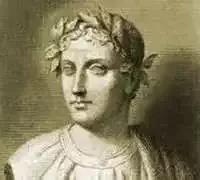
Horácio
BkII:XX Poetic Immortality
A poet of dual form, I won’t be carried
through the flowing air on weak or mundane wings,
nor will I linger down here on earth,
for any length of time: beyond envy,
I’ll leave the cities behind. It’s not I, born
of poor parents, it’s not I, who hear your voice,
beloved Maecenas, I who’ll die,
or be encircled by Stygian waters.
Even now the rough skin is settling around
my ankles, and now above them I’ve become
a snow-white swan, and soft feathers are
emerging over my arms and shoulders.
Soon, a melodious bird, and more famous
than Icarus, Daedalus’ son, I’ll visit
Bosphorus’ loud shores, Gaetulian
Syrtes, and the Hyperborean plains.
Colchis will know me, so will the Scythians,
who pretend to show no fear of Italian
troops, and the Geloni: Spain will learn
from me, the expert, and those who drink Rhone.
No dirges at my insubstantial funeral,
no elegies, and no unseemly grieving:
suppress all the clamour, not for me
the superfluous honour of a tomb.
253

Henry Lawson
Jack Cornstalk in his Teens
“If not in the Garden, he had in the ark,
To neither the beasts’ nor the passengers’ joy.
Full many a boyish and monkeyish lark,
The sandy-complexioned, the freckle-faced boy.
And down through the ages he rattles the drums,
While armies and nations each other destroy;
The century goes, and the century comes
But he lives on forever, the freckle-faced boy.
All over the world are the lands of his birth;
And when Time and Transgression this planet destroy
He will come to advise the last man on earth
The fatherly, chummy, the freckle-faced boy.”
252
Thomas Hardy
Hap
IF but some vengeful god would call to me
From up the sky, and laugh: "Thou suffering thing,
Know that thy sorrow is my ecstasy,
That thy love's loss is my hate's profiting!"
Then would I bear, and clench myself, and die,
Steeled by the sense of ire unmerited;
Half-eased, too, that a Powerfuller than I
Had willed and meted me the tears I shed.
But not so. How arrives it joy lies slain,
And why unblooms the best hope ever sown?
--Crass Casualty obstructs the sun and rain,
And dicing Time for gladness casts a moan....
These purblind Doomsters had as readily strown
Blisses about my pilgrimage as pain.
253
Anonymous
Thomas the Rhymer
True Thomas lay on Huntlie bank;
A ferlie he spied wi' his e'e;
And there he saw a ladye bright
Come riding down by the Eildon Tree.
Her skirt was o' the grass-green silk,
Her mantle o' the velvet fyne;
At ilka tett o' her horse's mane,
Hung fifty siller bells and nine.
True Thomas he pu'd aff his cap,
And louted low down on his knee
'Hail to thee Mary, Queen of Heaven!
For thy peer on earth could never be.'
'O no, O no, Thomas' she said,
'That name does not belang to me;
I'm but the Queen o' fair Elfland,
That am hither come to visit thee.
'Harp and carp, Thomas,' she said;
'Harp and carp along wi' me;
And if ye dare to kiss my lips,
Sure of your bodie I will be.'
'Betide me weal; betide me woe,
That weird shall never daunten me.'
Syne he has kiss'd her rosy lips,
All underneath the Eildon Tree.
'Now ye maun go wi' me,' she said,
'True Thomas, ye maun go wi' me;
And ye maun serve me seven years,
Thro' weal or woe as may chance to be.'
She 's mounted on her milk-white steed,
She 's ta'en true Thomas up behind;
And aye, whene'er her bridle rang,
The steed gaed swifter than the wind.
O they rade on, and farther on,
The steed gaed swifter than the wind;
Until they reach'd a desert wide,
And living land was left behind.
'Light down, light down now, true Thomas,
And lean your head upon my knee;
Abide ye there a little space,
And I will show you ferlies three.
'O see ye not yon narrow road,
So thick beset wi' thorns and briers?
That is the Path of Righteousness,
Though after it but few inquires.
'And see ye not yon braid, braid road,
That lies across the lily leven?
That is the Path of Wickedness,
Though some call it the Road to Heaven.
'And see ye not yon bonny road
That winds about the fernie brae?
That is the Road to fair Elfland,
Where thou and I this night maun gae.
'But, Thomas, ye sall haud your tongue,
Whatever ye may hear or see;
For speak ye word in Elfyn-land,
Ye'll ne'er win back to your ain countrie.'
O they rade on, and farther on,
And they waded rivers abune the knee;
And they saw neither sun nor moon,
But they heard the roaring of the sea.
It was mirk, mirk night, there was nae starlight,
They waded thro' red blude to the knee;
For a' the blude that 's shed on the earth
Rins through the springs o' that countrie.
Syne they came to a garden green,
And she pu'd an apple frae a tree:
'Take this for thy wages, true Thomas;
It will give thee the tongue that can never lee.'
'My tongue is my ain,' true Thomas he said;
'A gudely gift ye wad gie to me!
I neither dought to buy or sell
At fair or tryst where I might be.
'I dought neither speak to prince or peer,
Nor ask of grace from fair ladye!'—
'Now haud thy peace, Thomas,' she said,
'For as I say, so must it be.'
He has gotten a coat of the even cloth,
And a pair o' shoon of the velvet green;
And till seven years were gane and past,
True Thomas on earth was never seen.
248
John Greenleaf Whittier
The Rock In El Ghor
Dead Petra in her hill-tomb sleeps,
Her stones of emptiness remain;
Around her sculptured mystery sweeps
The lonely waste of Edom's plain.
From the doomed dwellers in the cleft
The bow of vengeance turns not back;
Of all her myriads none are left
Along the Wady Mousa's track.
Clear in the hot Arabian day
Her arches spring, her statues climb;
Unchanged, the graven wonders pay
No tribute to the spoiler, Time!
Unchanged the awful lithograph
Of power and glory undertrod;
Of nations scattered like the chaff
Blown from the threshing-floor of God.
Yet shall the thoughtful stranger turn
From Petra's gates with deeper awe,
To mark afar the burial urn
Of Aaron on the cliffs of Hor;
And where upon its ancient guard
Thy Rock, El Ghor, is standing yet,-Looks
from its turrets desertward,
And keeps the watch that God has set.
The same as when in thunders loud
It heard the voice of God to man,
As when it saw in fire and cloud
The angels walk in Israel's van,
Or when from Ezion-Geber's way
It saw the long procession file,
And heard the Hebrew timbrels play
The music of the lordly Nile;
Or saw the tabernacle pause,
Cloud-bound, by Kadesh Barnea's wells,
While Moses graved the sacred laws,
And Aaron swung his golden bells.
Rock of the desert, prophet-sung!
How grew its shadowing pile at length,
A symbol, in the Hebrew tongue,
Of God's eternal love and strength.
On lip of bard and scroll of seer,
From age to age went down the name,
Until the Shiloh's promised year,
And Christ, the Rock of Ages, came!
The path of life we walk to-day
Is strange as that the Hebrews trod;
We need the shadowing rock, as they,-We
need, like them, the guides of God.
God send His angels, Cloud and Fire,
To lead us o'er the desert sand!
God give our hearts their long desire,
His shadow in a weary land!
250
Robert W. Service
Lost Shepherd
Ah me! How hard is destiny!
If we could only know. . . .
I bought my son from Sicily
A score of years ago;
I haled him from our sunny vale
To streets of din and squalor,
And left it to professors pale
To make of him a scholar.
Had he remained a peasant lad,
A shepherd on the hill,
like golden faun in goatskin clad
He might be singing still;
He would have made the flock his care
And lept with gay reliance
On thymy heights, unwitting there
Was such a thing as science.
He would have crooned to his guitar,
Draughts of chianti drinking;
A better destiny by far
Than reading, writing, thinking.
So bent above his books was he,
His thirst for knowledge slaking,
He did not realize that we
Are worm-food in the making.
Ambition got him in its grip
And inched him to his doom;
Fate granted him a fellowship,
Then graved for him a tomb.
"Beneath my feet I can't allow
The grass to grow," he said;
And toiled so tirelessly that now
It grows above his head.
His honour scrolls shall feed the flame,
They mean no more to me;
His ashes I with bitter blame
Will take to Sicily.
And there I'll weep with heart bereft,
By groves and sunny rills,
And wish my laughing boy I'd left
A shepherd on the hills.
249
Thomas Hardy
The Dead Drummer.
I
They throw in Drummer Hodge, to rest
Uncoffined--just as found:
His landmark is a kopje-crest
That breaks the veldt around;
And foreign constellations west
Each night above his mound.
II
Young Hodge the Drummer never knew -
Fresh from his Wessex home -
The meaning of the broad Karoo,
The Bush, the dusty loam,
And why uprose to nightly view
Strange stars amid the gloam.
III
Yet portion of that unknown plain
Will Hodge for ever be;
His homely Northern breast and brain
Grow up a Southern tree.
And strange-eyed constellations reign
His stars eternally.
248
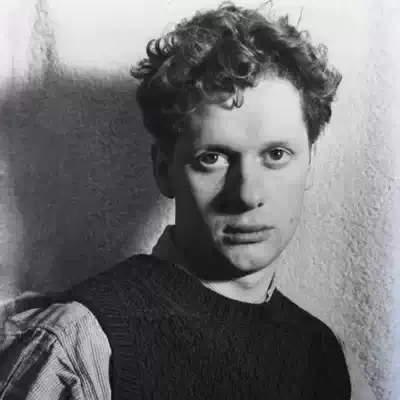
Dylan Thomas
The Seed-At-Zero
The seed-at-zero shall not storm
That town of ghosts, the trodden womb,
With her rampart to his tapping,
No god-in-hero tumble down
Like a tower on the town
Dumbly and divinely stumbling
Over the manwaging line.
The seed-at-zero shall not storm
That town of ghosts, the manwaged tomb
With her rampart to his tapping,
No god-in-hero tumble down
Like a tower on the town
Dumbly and divinely leaping
Over the warbearing line.
Through the rampart of the sky
Shall the star-flanked seed be riddled,
Manna for the rumbling ground,
Quickening for the riddled sea;
Settled on a virgin stronghold
He shall grapple with the guard
And the keeper of the key.
May a humble village labour
And a continent deny?
A hemisphere may scold him
And a green inch be his bearer;
Let the hero seed find harbour,
Seaports by a drunken shore
Have their thirsty sailors hide him.
May be a humble planet labour
And a continent deny?
A village green may scold him
And a high sphere be his bearer;
Let the hero seed find harbour,
Seaports by a thirsty shore
Have their drunken sailors hide him.
Man-in-seed, in seed-at-zero,
From the foreign fields of space,
Shall not thunder on the town
With a star-flanked garrison,
Nor the cannons of his kingdom
Shall the hero-in-tomorrow
Range on the sky-scraping place.
Man-in-seed, in seed-at-zero,
From the star-flanked fields of space,
Thunders on the foreign town
With a sand-bagged garrison,
Nor the cannons of his kingdom
Shall the hero-in-to-morrow
Range from the grave-groping place.
244
Emily Dickinson
The Malay—took the Pearl
The Malay—took the Pearl—
Not—I—the Earl—
I—feared the Sea—too much
Unsanctified—to touch—
Praying that I might be
Worthy—the Destiny—
The Swarthy fellow swam—
And bore my Jewel—Home—
Home to the Hut! What lot
Had I—the Jewel—got—
Borne on a Dusky Breasty—
I had not deemed a Vest
Of Amber—fit—
The Negro never knew
I—wooed it—too—
To gain, or be undone—
Alike to Him—One—
243