
Long-Distance Love

Johann Wolfgang von Goethe
Book Of Suleika - Suleika 04
WITH what inward joy, sweet lay,
I thy meaning have descried!
Lovingly thou seem'st to say
That I'm ever by his side;
That he ever thinks of me,
That he to the absent gives
All his love's sweet ecstasy,
While for him alone she lives.
Yes, the mirror which reveals
Thee, my loved one, is my breast;
This the bosom, where thy seals
Endless kisses have impress'd.
Numbers sweet, unsullied truth,
Chain me down in sympathy!
Love's embodied radiant youth,
In the garb of poesy!
478

William Butler Yeats
He Wishes His Beloved Were Dead
WERE you but lying cold and dead,
And lights were paling out of the West,
You would come hither, and bend your head,
And I would lay my head on your breast;
And you would murmur tender words,
Forgiving me, because you were dead:
Nor would you rise and hasten away,
Though you have the will of the wild birds,
But know your hair was bound and wound
About the stars and moon and sun:
O would, beloved, that you lay
Under the dock-leaves in the ground,
While lights were paling one by one.
476

Rudyard Kipling
My Boy Jack
-
'Have you news of my boy Jack?'
Not this tide.
'When d'you think that he'll come back?'
Not with this wind blowing, and this tide.
'Has anyone else had word of him?'
Not this tide.
For what is sunk will hardly swim,
Not with this wind blowing and this tide.
'Oh, dear, what comfort can I find?'
None this tide,
Nor any tide,
Except he did not shame his kind-
Not even with that wind blowing, and that tide.
Then hold your head up all the more,
This tide,
And every tide;
Because he was the son you bore,
And gave to that wind blowing and that tide!
469

Paul Celan
Night Ray
Most brightly of all burned the hair of my evening loved one:
to her I send the coffin of lightest wood.
Waves billow round it as round the bed of our dream in Rome;
it wears a white wig as I do and speaks hoarsely:
it talks as I do when I grant admittance to hearts.
It knows a French song about love, I sang it in autumn
when I stopped as a tourist in Lateland and wrote my letters
to morning.
A fine boat is that coffin carved in the coppice of feelings.
I too drift in it downbloodstream, younger still than your eye.
Now you are young as a bird dropped dead in March snow,
now it comes to you, sings you its love song from France.
You are light: you will sleep through my spring till it's over.
I am lighter:
in front of strangers I sing.
468
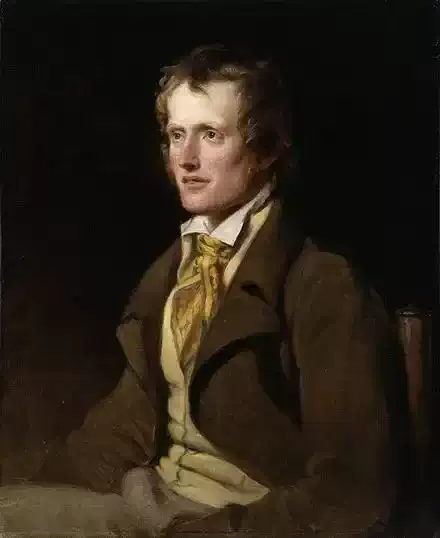
John Clare
The Sailor-Boy
Tis three years and a quarter since I left my own fireside
To go aboard a ship through love, and plough the ocean wide.
I crossed my native fields, where the scarlet poppies grew,
And the groundlark left his nest like a neighbour which I knew.
The pigeons from the dove cote cooed over the old lane,
The crow flocks from the oakwood went flopping oer the grain;
Like lots of dear old neighbours whom I shall see no more
They greeted me that morning I left the English shore.
The sun was just a-rising above the heath of furze,
And the shadows grow to giants; that bright ball never stirs:
There the shepherds lay with their dogs by their side,
And they started up and barked as my shadow they espied.
A maid of early morning twirled her mop upon the moor;
I wished her my farewell before she closed the door.
My friends I left behind me for other places new,
Crows and pigeons all were strangers as oer my head they flew.
Trees and bushes were all strangers, the hedges and the lanes,
The steeples and the houses and broad untrodden plains.
I passed the pretty milkmaid with her red and rosy face;
I knew not where I met her, I was strange to the place.
At last I saw the ocean, a pleasing sight to me:
I stood upon the shore of a mighty glorious sea.
The waves in easy motion went rolling on their way,
English colours were a-flying where the British squadron lay.
I left my honest parents, the church clock and the village;
I left the lads and lasses, the labour and the tillage;
To plough the briny ocean, which soon became my joy--
I sat and sang among the shrouds, a lonely sailor-boy.
463
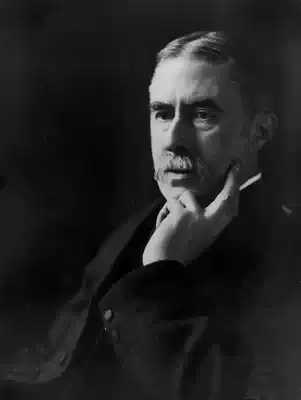
Alfred Edward Housman
The rainy Pleiads wester
The rainy Pleiads wester,
Orion plunges prone,
The stroke of midnight ceases
And I lie down alone.
The rainy Pleiads wester,
And seek beyond the sea
The head that I shall dream of
That will not dream of me.
Orion plunges prone,
The stroke of midnight ceases
And I lie down alone.
The rainy Pleiads wester,
And seek beyond the sea
The head that I shall dream of
That will not dream of me.
461

Elizabeth Barrett Browning
Sonnet 28 - My letters! all dead paper, mute and white!
XXVIII
My letters! all dead paper, mute and white!
And yet they seem alive and quivering
Against my tremulous hands which loose the string
And let them drop down on my knee to-night.
This said,-he wished to have me in his sight
Once, as a friend: this fixed a day in spring
To come and touch my hand . . . a simple thing,
Yet I wept for it!-this, . . . the paper's light . . .
Said, Dear, I love thee; and I sank and quailed
As if God's future thundered on my past.
This said, I am thine-and so its ink has paled
With Iying at my heart that beat too fast.
And this . . . O Love, thy words have ill availed
If, what this said, I dared repeat at last!
460
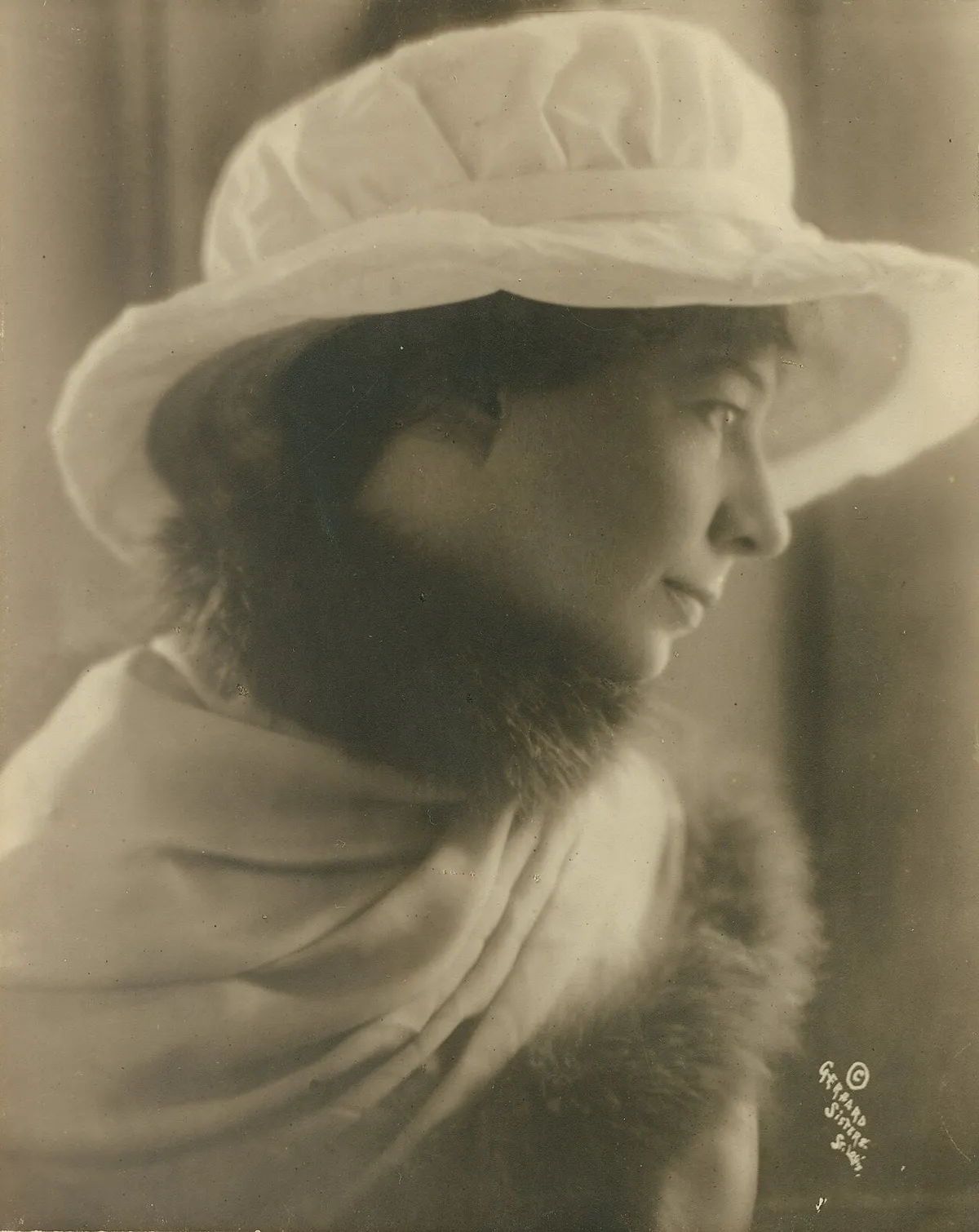
Sara Teasdale
Four Winds
"Four winds blowing through the sky,
You have seen poor maidens die,
Tell me then what I shall do
That my lover may be true."
Said the wind from out the south,
"Lay no kiss upon his mouth,"
And the wind from out the west,
"Wound the heart within his breast,"
And the wind from out the east,
"Send him empty from the feast,"
And the wind from out the north,
"In the tempest thrust him forth;
When thou art more cruel than he,
Then will Love be kind to thee."
458
John Milton
The Fifth Ode Of Horace. Lib. I
Quis multa gracilis te puer in Rosa
Rendred almost word for word without Rhyme according to the
Latin Measure, as near as the Language permit.
WHAT slender Youth bedew'd with liquid odours
Courts thee on Roses in some pleasant Cave,
Pyrrha for whom bind'st thou
In wreaths thy golden Hair,
Plain in thy neatness; O how oft shall he
On Faith and changed Gods complain: and Seas
Rough with black winds and storms
Unwonted shall admire:
Who now enjoyes thee credulous, all Gold,
Who alwayes vacant, alwayes amiable
Hopes thee; of flattering gales
Unmindfull. Hapless they
To whom thou untry'd seem'st fair. Me in my vow'd
Picture the sacred wall declares t' have hung
My dank and dropping weeds
To the stern God of Sea.
[The Latin text follows.]
454
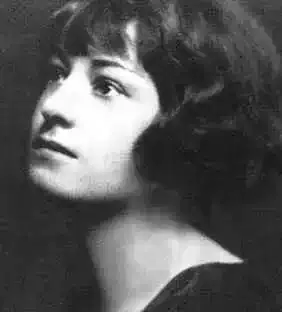
Dorothy Parker
Ballade of Unfortunate Mammals
Love is sharper than stones or sticks;
Lone as the sea, and deeper blue;
Loud in the night as a clock that ticks;
Longer-lived than the Wandering Jew.
Show me a love was done and through,
Tell me a kiss escaped its debt!
Son, to your death you'll pay your due-
Women and elephants never forget.
Ever a man, alas, would mix,
Ever a man, heigh-ho, must woo;
So he's left in the world-old fix,
Thus is furthered the sale of rue.
Son, your chances are thin and few
Won't
you ponder, before you're set?
Shoot if you must, but hold in view
Women and elephants never forget.
Down from Caesar past Joynson-Hicks
Echoes the warning, ever new:
Though they're trained to amusing tricks,
Gentler, they, than the pigeon's coo,
Careful, son, of the curs'ed two-
Either one is a dangerous pet;
Natural history proves it true-
Women and elephants never forget.
L'ENVOI
Prince, a precept I'd leave for you,
Coined in Eden, existing yet:
Skirt the parlor, and shun the zoo-
Women and elephants never forget.
437
Elizabeth Barrett Browning
Sonnet XXVIII: My Letters
My letters-- all dead paper, mute and white!
And yet they seem alive and quivering
Against my tremulous hands which loose the string
And let them drop down on my knee to-night,
This said,--he wished to have me in his sight
Once, as a friend: this fixed a day in spring
To come and touch my hand...a simple thing,
Yet I wept for it!--this...the paper's light...
Said, Dear, I love thee; and I sank and quailed
As if God's future thundered on my past.
This said, I am thine--and so its ink has paled
With lying at my heart that beat too fast.
And this...O Love, thy words have ill availed
If, what this said, I dared repeat at last!
419

Claude Mckay
Absence
Your words dropped into my heart like pebbles into a pool,
Rippling around my breast and leaving it melting cool.
Your kisses fell sharp on my flesh like dawn-dews from the limb,
Of a fruit-filled lemon tree when the day is young and dim.
But a silence vasty-deep, oh deeper than all these ties
Now, through the menacing miles, brooding between us lies.
And more than the songs I sing, I await your written word,
To stir my fluent blood as never your presence stirred.
416
Sara Teasdale
Message
I heard a cry in the night,
A thousand miles it came,
Sharp as a flash of light,
My name, my name!
It was your voice I heard,
You waked and loved me so --
I send you back this word,
I know, I know!
A thousand miles it came,
Sharp as a flash of light,
My name, my name!
It was your voice I heard,
You waked and loved me so --
I send you back this word,
I know, I know!
408

Ella Wheeler Wilcox
Her Last Letter
Sitting alone by the window,
Watching the moonlit street,
Bending my head to listen
To the well-known sound of your feet,
I have been wondering, darling,
How I can bear the pain,
When I watch, with sighs and tear-wet eyes;
And wait for your coming in vain.
For I know that a day approaches
When your heart will tire of me;
When by door and gate I may watch and wait
For a form I shall not see.
When the love that is now my heaven,
The kisses that make my life,
You will bestow on another,
And that other will be-your wife.
You will grow weary of sinning
(Though you do not call it so),
You will long for a love that is purer
Than the love that we two know.
God knows I have loved you dearly,
With a passion strong as true;
But you will grow tired and leave me,
Though I gave up all for you.
I was as pure as the morning
When I first looked on your face;
I knew I never could reach you
In your high, exalted place.
But I looked and loved and worshiped
As a flower might worship a star,
And your eyes shone down upon me,
And you seemed so far-so far.
And then? Well, then, you loved me,
Loved me with all your heart;
But we could not stand at the altar,
We were so far apart.
If a star should wed with a flower
The star must drop from the sky,
Or the flower in trying to reach it
Would droop on its stalk and die.
But you said that you loved me, darling,
And swore by the heavens above
That the Lord and all of His angels
Would sanction and bless our love.
And I? I was weak, not wicked.
My love was as pure as true,
And sin itself seemed a virtue
If only shared by you.
We have been happy together,
Though under the cloud of sin,
But I know that the day approaches
When my chastening must begin.
You have been faithful and tender,
But you will not always be,
And I think I had better leave you
While your thoughts are kind of me.
I know my beauty is fading-
Sin furrows the fairest brow-
And I know that your heart will weary
Of the face you smile on now.
You will take a bride to your bosom
After you turn from me;
You will sit with your wife in the moonlight,
And hold her babe on your knee.
Oh, God! I never could bear it;
It would madden my brain, I know;
And so while you love me dearly
I think I had better go.
It is sweeter to feel, my darling-
To know as I fall asleep-
That some one will mourn me and miss me,
That some one is left to weep,
Than to die as I should in the future,
To drop in the street some day,
Unknown, unwept and forgotten
After you cast me away.
Perhaps the blood of the Saviour
Can wash my garments clean;
Perchance I may drink of the waters
That flow through pastures green.
Perchance we may meet in heaven,
And walk in the streets above,
With nothing to grieve us or part us
Since our sinning was all through love.
God says, 'Love one another,'
And down to the depths of hell
Will he send the soul of a women
Because she loved-and fell?
And so in the moonlight he found her,
Or found her beautiful clay,
Lifeless and pallid as marble,
For the spirit had flown away.
The farewell words she had written
She held to her cold, white breast,
And the buried blade of a dagger
Told how she had gone to rest.
405

James Whitcomb Riley
The Ripest Peach
The ripest peach is highest on the tree --
And so her love, beyond the reach of me,
Is dearest in my sight. Sweet breezes, bow
Her heart down to me where I worship now!
She looms aloft where every eye may see
The ripest peach is highest on the tree.
Such fruitage as her love I know, alas!
I may not reach here from the orchard grass.
I drink the sunshine showered past her lips
As roses drain the dewdrop as it drips.
The ripest peach is highest on the tree,
And so mine eyes gaze upward eagerly.
Why -- why do I not turn away in wrath
And pluck some heart here hanging in my path? -Love's
lower boughs bend with them -- but, ah me!
The ripest peach is highest on the tree!
393

Robert Louis Stevenson
The Piper
AGAIN I hear you piping, for I know the tune so well, -
You rouse the heart to wander and be free,
Tho' where you learned your music, not the God of song can tell,
For you pipe the open highway and the sea.
O piper, lightly footing, lightly piping on your way,
Tho' your music thrills and pierces far and near,
I tell you you had better pipe to someone else to-day,
For you cannot pipe my fancy from my dear.
You sound the note of travel through the hamlet and the town;
You would lure the holy angels from on high;
And not a man can hear you, but he throws the hammer down
And is off to see the countries ere he die.
But now no more I wander, now unchanging here I stay;
By my love, you find me safely sitting here:
And pipe you ne'er so sweetly, till you pipe the hills away,
You can never pipe my fancy from my dear.
380
Dorothy Parker
For An Unknown Lady
Lady, if you'd slumber sound,
Keep your eyes upon the ground.
If you'd toss and turn at night,
Slip your glances left and right.
Would the mornings find you gay,
Never give your heart away.
Would they find you pale and sad,
Fling it to a whistling lad.
Ah, but when his pleadings burn,
Will you let my words return?
Will you lock your pretty lips,
And deny your finger-tips,
Veil away your tender eyes,
Just because some words were wise?
If he whistles low and clear
When the insistent moon is near
And the secret stars are known-
Will your heart be still your own
Just because some words were true? ...
Lady, I was told them, too!
376
Ella Wheeler Wilcox
Moon And Sea
You are the moon, dear love, and I the sea:
The tide of hope swells high within my breast,
And hides the rough dark rocks of life’s unrest
When your fond eyes smile near in perigee.
But when that loving face is turned from me,
Low falls the tide, and the grim rocks appear,
And earth’s dim coast-line seems a thing to fear.
You are the moon, dear one, and I the sea.
372
Robert Louis Stevenson
Know You The River NEar To Grez
KNOW you the river near to Grez,
A river deep and clear?
Among the lilies all the way,
That ancient river runs to-day
From snowy weir to weir.
Old as the Rhine of great renown,
She hurries clear and fast,
She runs amain by field and town
From south to north, from up to down,
To present on from past.
The love I hold was borne by her;
And now, though far away,
My lonely spirit hears the stir
Of water round the starling spur
Beside the bridge at Grez.
So may that love forever hold
In life an equal pace;
So may that love grow never old,
But, clear and pure and fountain-cold,
Go on from grace to grace.
374
Dorothy Parker
Distance
Were you to cross the world, my dear,
To work or love or fight,
I could be calm and wistful here,
And close my eyes at night.
It were a sweet and gallant pain
To be a sea apart;
But, oh, to have you down the lane
Is bitter to my heart.
To work or love or fight,
I could be calm and wistful here,
And close my eyes at night.
It were a sweet and gallant pain
To be a sea apart;
But, oh, to have you down the lane
Is bitter to my heart.
354
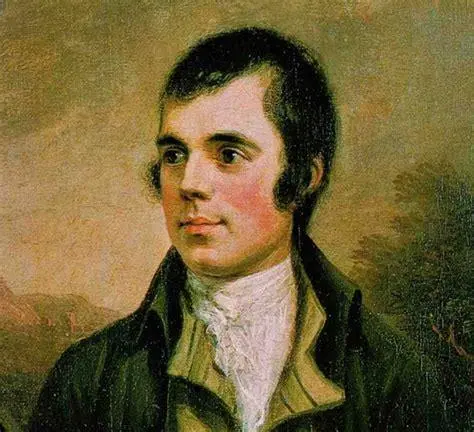
Robert Burns
A Red, Red Rose
Oh my luve is like a red, red rose,
That's newly sprung in June:
Oh my luve is like the melodie,
That's sweetly play'd in tune.
As fair art thou, my bonie lass,
So deep in luve am I;
And I will luve thee still, my dear,
Till a' the seas gang dry.
Till a' the seas gang dry, my dear,
And the rocks melt wi' the sun;
And I will luve thee still, my dear,
While the sands o' life shall run.
And fare thee weel, my only luve!
And fare thee weel a while!
And I will come again, my luve,
Tho' it were ten thousand mile!
349

Henry Wadsworth Longfellow
A Song Of Savoy
As the dim twilight shrouds
The mountain's purple crest,
And Summer's white and folded clouds
Are glowing in the west,
Loud shouts come up the rocky dell,
And voices hail the evening-bell.
Faint is the goatherd's song,
And sighing comes the breeze;
The silent river sweeps along
Amid its bending trees -
And the full moon shines faintly there,
And music fills the evening air.
Beneath the waving firs
The tinkling cymbals sound;
And as the wind the foliage stirs,
I see the dancers bound
Where the green branches, arched above,
Bend over this fair scene of love.
And he is there, that sought
My young heart long ago!
But he has left me - though I thought
He ne'er could leave me so.
Ah! lover's vows - how frail are they!
And his - were made but yesterday.
Why comes he not? I call
In tears upon him yet;
'Twere better ne'er to love at all,
Than love, and then forget!
Why comes he not? Alas! I should
Reclaim him still, if weeping could.
But see - he leaves the glade,
And beckons me away:
He comes to seek his mountain maid!
I cannot chide his stay.
Glad sounds along the valley swell,
And voices hail the evening-bell.
341
Johann Wolfgang von Goethe
The Beauteous Flower - Son Of The Imprisioned Count
COUNT.
I KNOW a flower of beauty rare,
Ah, how I hold it dear!
To seek it I would fain repair,
Were I not prison'd here.
My sorrow sore oppresses me,
For when I was at liberty,
I had it close beside me.
Though from this castle's walls so steep
I cast mine eyes around,
And gaze oft from the lofty keep,
The flower can not be found.
Whoe'er would bring it to my sight,
Whether a vassal he, or knight,
My dearest friend I'd deem him.
THE ROSE.
I blossom fair,--thy tale of woes
I hear from 'neath thy grate.
Thou doubtless meanest me, the rose.
Poor knight of high estate!
Thou hast in truth a lofty mind;
The queen of flowers is then enshrin'd,
I doubt not, in thy bosom.
COUNT.
Thy red, in dress of green array'd,
As worth all praise I hold;
And so thou'rt treasured by each maid
Like precious stones or gold.
Thy wreath adorns the fairest face
But still thou'rt not the flower whose grace
I honour here in silence.
THE LILY.
The rose is wont with pride to swell,
And ever seeks to rise;
But gentle sweethearts love full well
The lily's charms to prize,
The heart that fills a bosom true,
That is, like me, unsullied too,
My merit values duly.
COUNT.
In truth, I hope myself unstain'd,
And free from grievous crime;
Yet I am here a prisoner chain'd,
And pass in grief my time,
To me thou art an image sure
Of many a maiden, mild and pure,
And yet I know a dearer.
THE PINK.
That must be me, the pink, who scent
The warder's garden here;
Or wherefore is he so intent
My charms with care to rear?
My petals stand in beauteous ring,
Sweet incense all around I fling,
And boast a thousand colours.
COUNT.
The pink in truth we should not slight,
It is the gardener's pride
It now must stand exposed to light,
Now in the shade abide.
Yet what can make the Count's heart glow
Is no mere pomp of outward show;
It is a silent flower.
THE VIOLET.
Here stand I, modestly half hid,
And fain would silence keep;
Yet since to speak I now am bid,
I'll break my silence deep.
If, worthy Knight, I am that flower,
It grieves me that I have not power
To breathe forth all my sweetness.
COUNT.
The violet's charms I prize indeed,
So modest 'tis, and fair,
And smells so sweet; yet more I need
To ease my heavy care.
The truth I'll whisper in thine ear:
Upon these rocky heights so drear,
I cannot find the loved one.
The truest maiden 'neath the sky
Roams near the stream below,
And breathes forth many a gentle sigh,
Till I from hence can go.
And when she plucks a flow'ret blue,
And says "Forget-me-not!"--I, too,
Though far away, can feel it.
Ay, distance only swells love's might,
When fondly love a pair;
Though prison'd in the dungeon's night,
In life I linger there
And when my heart is breaking nigh,
"Forget-me-not!" is all I cry,
And straightway life returneth.
333
James Whitcomb Riley
Man's Devotion
A lover said, 'O Maiden, love me well,
For I must go away:
And should ANOTHER ever come to tell
Of love--What WILL you say?'
And she let fall a royal robe of hair
That folded on his arm
And made a golden pillow for her there;
Her face--as bright a charm
As ever setting held in kingly crown--
Made answer with a look,
And reading it, the lover bended down,
And, trusting, 'kissed the book.'
He took a fond farewell and went away.
And slow the time went by--
So weary--dreary was it, day by day
To love, and wait, and sigh.
She kissed his pictured face sometimes, and said:
'O Lips, so cold and dumb,
I would that you would tell me, if not dead,
Why, why do you not come?'
The picture, smiling, stared her in the face
Unmoved--e'en with the touch
Of tear-drops--HERS--bejeweling the case-'
Twas plain--she loved him much.
And, thus she grew to think of him as gay
And joyous all the while,
And SHE was sorrowing--'Ah, welladay!'
But pictures ALWAYS smile!
And years--dull years--in dull monotony
As ever went and came,
Still weaving changes on unceasingly,
And changing, changed her name.
Was she untrue?--She oftentimes was glad
And happy as a wife;
But ONE remembrance oftentimes made sad
Her matrimonial life.--
Though its few years were hardly noted, when
Again her path was strown
With thorns--the roses swept away again,
And she again alone!
And then--alas! ah THEN!--her lover came:
'I come to claim you now-
My Darling, for I know you are the same,
And I have kept my vow
Through these long, long, long years, and now no more
Shall we asundered be!'
She staggered back and, sinking to the floor,
Cried in her agony:
'I have been false!' she moaned, '_I_ am not true--
I am not worthy now,
Nor ever can I be a wife to YOU--
For I have broke my vow!'
And as she kneeled there, sobbing at his feet,
He calmly spoke--no sign
Betrayed his inward agony--'I count you meet
To be a wife of mine!'
And raised her up forgiven, though untrue;
As fond he gazed on her,
She sighed,--'SO HAPPY!' And she never knew
HE was a WIDOWER.
335