
Unrequited Love

John Keats
You Say You Love
You Say You Love
I
You say you love ; but with a voice
Chaster than a nun's, who singeth
The soft Vespers to herself
While the chime-bell ringeth-
O love me truly!
II
You say you love; but with a smile
Cold as sunrise in September,
As you were Saint Cupid 's nun,
And kept his weeks of Ember.
O love me truly!
III
You say you love but then your lips
Coral tinted teach no blisses,
More than coral in the sea
They never pout for kisses
O love me truly!
IV
You say you love ; but then your hand
No soft squeeze for squeeze returneth,
It is like a statue's dead
While mine to passion burneth
O love me truly!
V
O breathe a word or two of fire!
Smile, as if those words should bum me,
Squeeze as lovers should O kiss
And in thy heart inurn me!
O love me truly!
501
8

Walt Whitman
Sometimes with One I Love
Sometimes with one I love I fill myself with rage for fear I
effuse unreturnd love,
But now I think there is no unreturnd love, the pay is
certain one way or another,
(I loved a certain person ardently and my love was not
returnd,
Yet out of that I have written these songs.)
effuse unreturnd love,
But now I think there is no unreturnd love, the pay is
certain one way or another,
(I loved a certain person ardently and my love was not
returnd,
Yet out of that I have written these songs.)
1,780
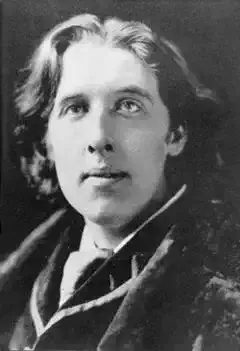
Oscar Wilde
Serenade (For Music)
The western wind is blowing fair
Across the dark AEgean sea,
And at the secret marble stair
My Tyrian galley waits for thee.
Come down! the purple sail is spread,
The watchman sleeps within the town,
O leave thy lily-flowered bed,
O Lady mine come down, come down!
She will not come, I know her well,
Of lover's vows she hath no care,
And little good a man can tell
Of one so cruel and so fair.
True love is but a woman's toy,
They never know the lover's pain,
And I who loved as loves a boy
Must love in vain, must love in vain.
O noble pilot, tell me true,
Is that the sheen of golden hair?
Or is it but the tangled dew
That binds the passion-flowers there?
Good sailor come and tell me now
Is that my Lady's lily hand?
Or is it but the gleaming prow,
Or is it but the silver sand?
No! no! 'tis not the tangled dew,
'Tis not the silver-fretted sand,
It is my own dear Lady true
With golden hair and lily hand!
O noble pilot, steer for Troy,
Good sailor, ply the labouring oar,
This is the Queen of life and joy
Whom we must bear from Grecian shore!
The waning sky grows faint and blue,
It wants an hour still of day,
Aboard! aboard! my gallant crew,
O Lady mine, away! away!
O noble pilot, steer for Troy,
Good sailor, ply the labouring oar,
O loved as only loves a boy!
O loved for ever evermore!
1,605
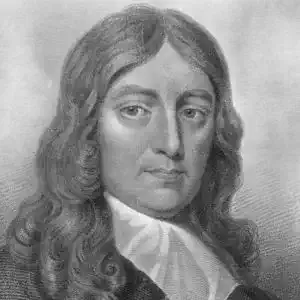
John Milton
Sonnet 01
Sonnet 01
I
O Nightingale, that on yon bloomy Spray
Warbl'st at eeve, when all the Woods are still,
Thou with fresh hope the Lovers heart dost fill,
While the jolly hours lead on propitious May,
Thy liquid notes that close the eye of Day,
First heard before the shallow Cuccoo's bill
Portend success in love; O if Jove's will
Have linkt that amorous power to thy soft lay,
Now timely sing, ere the rude Bird of Hate
Foretell my hopeles doom in som Grove ny:
As thou from yeer to yeer hast sung too late
For my relief; yet hadst no reason why,
Whether the Muse, or Love call thee his mate,
Both them I serve, and of their train am I.
963
Oscar Wilde
Quia Multum Amavi
Dear Heart, I think the young impassioned priest
When first he takes from out the hidden shrine
His God imprisoned in the Eucharist,
And eats the bread, and drinks the dreadful wine,
Feels not such awful wonder as I felt
When first my smitten eyes beat full on thee,
And all night long before thy feet I knelt
Till thou wert wearied of Idolatry.
Ah! hadst thou liked me less and loved me more,
Through all those summer days of joy and rain,
I had not now been sorrow's heritor,
Or stood a lackey in the House of Pain.
Yet, though remorse, youth's white-faced seneschal,
Tread on my heels with all his retinue,
I am most glad I loved thee - think of all
The suns that go to make one speedwell blue!
758

Kazi Nazrul Islam
The Bird-Hunter's Song
The Bird-Hunter's Song
Who is that who looks askance at me?
Is it a look of fear, diffidence or tenderness?
She smiles at me holding the aerial roots of the banyan,
Or floating her water vessel in the pond.
As she watches me bird-hunting
Her eyes fill with tears like a pair
of mussel-shells brimmed
with water from a kohl-dark lake.
The water lilies tremble in the clasp of her palm.
She knits her brows and chides me --
Is it fear, diffidence or tenderness?
Reclining her relaxed body, she arranges her tress,
Tucks at the waist the end of her dress;
She cracks her fingers and drags her feet,
oh, how she drags her feet!
At times she dives in the water,
at times she swims about,
For dallying at the ghat, she finds all the excuse.
She wants me to believe that
she is waiting for someone else.
Is it in fear, diffidence or tenderness?
[Translated from the Bangla by Farida Majid]
669

Federico García Lorca
Before the Dawn
Before the Dawn
But like love
the archers
are blind
Upon the green night,
the piercing saetas
leave traces of warm
lily.
The keel of the moon
breaks through purple clouds
and their quivers
fill with dew.
Ay, but like love
the archers
are blind!
But like love
the archers
are blind
Upon the green night,
the piercing saetas
leave traces of warm
lily.
The keel of the moon
breaks through purple clouds
and their quivers
fill with dew.
Ay, but like love
the archers
are blind!
653

Lord Byron
Translation Of A Romaic Love Song
Translation Of A Romaic Love Song
Ah! Love was never yet without
The pang, the agony, the doubt,
Which rends my heart with ceaseless sigh,
While day and night roll darkling by.
Without one friend to hear my woe,
I faint, I die beneath the blow.
That Love had arrows well I knew;
Alas! I find them poison'd too.
Birds, yet in freedom, shun the net
Which Love around your haunts hath set;
Or, circled by his fatal fire,
Your hearts shall burn, your hopes expire.
A bird of free and careless wing
Was I through many a smiling spring;
But caught within the subtle snare,
I burn, and feebly flutter there.
Who ne'er have loved, and loved in vain,
Can neither feel nor pity pain,
The cold repulse, the look askance,
The lightning of Love's angry glance.
In flattering dreams I deem'd thee mine;
Now hope, and he who hoped, decline'
Like melting wax, or withering flower,
I feel my passion, and thy power.
My light of life! ah, tell me why
That pouting lip, and alter'd eye?
My bird of love! my beauteous mate!
And art thou changed, and canst thou hate?
Mine eyes like wintry streams o'erflow:
What wretch with me would barter woe?
My bird! relent: one note could give
A charm to bid thy lover live.
My curdling blood, my madd'ning brain,
In silent anguish I sustain
And still thy heart, without partaking
One pang, exults while
mine is breaking.
Pour me the poison; fear not thou!
Thou canst not murder more than now:
I've lived to curse my natal day,
And Love, that thus can lingering slay.
My wounded soul, my bleeding breast,
Can patience preach thee into rest?
Alas! too late, I dearly know
That joy is harbinger of woe.
629

Ezra Pound
Dompna Pois De Me No'us Cal
Dompna Pois De Me No'us Cal
FROM THE PROVENCAL OF EN BERTRANS DE BORN
Lady, since you care nothing for me,
And since you have shut me away from you
Causelessly,
I know not wnere to go seeking,
For certainly
I will never again gather
Joy so rich, and if I find not ever
A lady with look so speaking
To my desire, worth yours whom I have lost,
I’ll have no other love at any cost.
And since I could not find a peer to you,
Neither one so fair, nor of such heart,
So eager and alert,
Nor with such art
In attire, nor so gay
Nor with gift so bountiful and so true,
I will go out a-searching,
Culling from each a fair trait
To make me a borrowed lady
Till I again find you ready.
Bels Cembelins, I take of you your colour,
For it's your own, and your glance
Where love is,
A proud thing I do here,
For, as to colour and eyes
I shall have missed nothing at all,
Having yours.
I ask of Midons Aelis (of Montfort)
Her straight speech free-running,
That my phantom lack not in cunning,
At Chalais of the Viscountess, I would
That she give me outright
Her two hands and her throat,
So take I my road
To Rochechouart,
Swift-foot to my Lady Anhes,
Seeing that Tristan's lady Iseutz had never
Such grace of locks, I do ye to wit,
Though she'd the far fame for it.
Of Audiart at Malemort,
Though she with a full heart
Wish me ill,
I'd have her form that's laced
So cunningly,
Without blemish, for her love
Breaks not nor turns aside.
I of Miels-de-ben demand
Her straight fresh body,
She is so supple and young,
Her robes can but do her wrong.
Her white teeth, of the Lady Faidita
I ask, and the fine courtesy
She hath to welcome one,
And such replies she lavishes
Within her nest;
Of Bels Mirals, the rest,
Tall stature and gaiety,
To make these avail
She knoweth well, betide
No change nor turning aside.
Ah, Bels Senher, Maent, at last
I ask naught from you,
Save that I have such hunger for
This phantom
As I've for you, such flame-lap,
And yet I'd rather
Ask of you than hold another,
Mayhap, right close and kissed.
Ah, lady, why have you cast
Me out, knowing you hold me so fast!
632
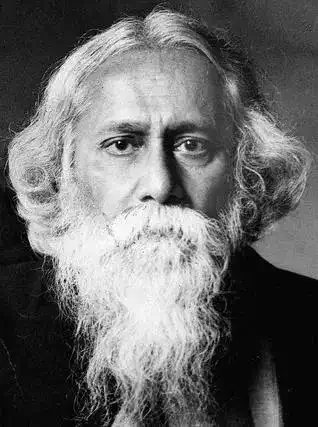
Rabindranath Tagore
Sit Smiling
Sit Smiling
I boasted among men that I had known you.
They see your pictures in all works of mine.
They come and ask me, `Who is he?'
I know not how to answer them. I say, `Indeed, I cannot tell.'
They blame me and they go away in scorn.
And you sit there smiling.
I put my tales of you into lasting songs.
The secret gushes out from my heart.
They come and ask me, `Tell me all your meanings.'
I know not how to answer them.
I say, `Ah, who knows what they mean!'
They smile and go away in utter scorn.
And you sit there smiling.
600

William Butler Yeats
A Man Young And Old
A Man Young And Old
I
First Love
THOUGH nurtured like the sailing moon
In beauty's murderous brood,
She walked awhile and blushed awhile
And on my pathway stood
Until I thought her body bore
A heart of flesh and blood.
But since I laid a hand thereon
And found a heart of stone
I have attempted many things
And not a thing is done,
For every hand is lunatic
That travels on the moon.
She smiled and that transfigured me
And left me but a lout,
Maundering here, and maundering there,
Emptier of thought
Than the heavenly circuit of its stars
When the moon sails out.
II
Human Dignity
Like the moon her kindness is,
If kindness I may call
What has no comprehension in't,
But is the same for all
As though my sorrow were a scene
Upon a painted wall.
So like a bit of stone I lie
Under a broken tree.
I could recover if I shrieked
My heart's agony
To passing bird, but I am dumb
From human dignity.
III
The Mermaid
A mermaid found a swimming lad,
Picked him for her own,
Pressed her body to his body,
Laughed; and plunging down
Forgot in cruel happiness
That even lovers drown.
IV
The Death of the Hare
I have pointed out the yelling pack,
The hare leap to the wood,
And when I pass a compliment
Rejoice as lover should
At the drooping of an eye,
At the mantling of the blood.
Then' suddenly my heart is wrung
By her distracted air
And I remember wildness lost
And after, swept from there,
Am set down standing in the wood
At the death of the hare.
V
The Empty Cup
A crazy man that found a cup,
When all but dead of thirst,
Hardly dared to wet his mouth
Imagining, moon-accursed,
That another mouthful
And his beating heart would burst.
October last I found it too
But found it dry as bone,
And for that reason am I crazed
And my sleep is gone.
VI
His Memories
We should be hidden from their eyes,
Being but holy shows
And bodies broken like a thorn
Whereon the bleak north blows,
To think of buried Hector
And that none living knows.
The women take so little stock
In what I do or say
They'd sooner leave their cosseting
To hear a jackass bray;
My arms are like the twisted thorn
And yet there beauty lay;
The first of all the tribe lay there
And did such pleasure take --
She who had brought great Hector down
And put all Troy to wreck --
That she cried into this ear,
'Strike me if I shriek.'
VII
The Friends of his Youth
Laughter not time destroyed my voice
And put that crack in it,
And when the moon's pot-bellied
I get a laughing fit,
For that old Madge comes down the lane,
A stone upon her breast,
And a cloak wrapped about the stone,
And she can get no rest
With singing hush and hush-a-bye;
She that has been wild
And barren as a breaking wave
Thinks that the stone's a child.
And Peter that had great affairs
And was a pushing man
Shrieks, 'I am King of the Peacocks,'
And perches on a stone;
And then I laugh till tears run down
And the heart thumps at my side,
Remembering that her shriek was love
And that he shrieks from pride.
VIII
Summer and Spring
We sat under an old thorn-tree
And talked away the night,
Told all that had been said or done
Since first we saw the light,
And when we talked of growing up
Knew that we'd halved a soul
And fell the one in t'other's arms
That we might make it whole;
Then peter had a murdering look,
For it seemed that he and she
Had spoken of their childish days
Under that very tree.
O what a bursting out there was,
And what a blossoming,
When we had all the summer-time
And she had all the spring!
IX
The Secrets of the Old
I have old women's sectets now
That had those of the young;
Madge tells me what I dared not think
When my blood was strong,
And what had drowned a lover once
Sounds like an old song.
Though Margery is stricken dumb
If thrown in Madge's way,
We three make up a solitude;
For none alive to-day
Can know the stories that we know
Or say the things we say:
How such a man pleased women most
Of all that are gone,
How such a pair loved many years
And such a pair but one,
Stories of the bed of straw
Or the bed of down.
X
His Wildness
O bid me mount and sail up there
Amid the cloudy wrack,
For peg and Meg and Paris' love
That had so straight a back,
Are gone away, and some that stay
Have changed their silk for sack.
Were I but there and none to hear
I'd have a peacock cry,
For that is natural to a man
That lives in memory,
Being all alone I'd nurse a stone
And sing it lullaby.
XI
From 'Oedipus at Colonus'
Endure what life God gives and ask no longer span;
Cease to remember the delights of youth, travel-wearied aged man;
Delight becomes death-longing if all longing else be vain.
Even from that delight memory treasures so,
Death, despair, division of families, all entanglements of mankind grow,
As that old wandering beggar and these God-hated children know.
In the long echoing street the laughing dancers throng,
The bride is catried to the bridegroom's chamber
through torchlight and tumultuous song;
I celebrate the silent kiss that ends short life or long.
Never to have lived is best, ancient writers say;
Never to have drawn the breath of life, never to have
looked into the eye of day;
The second best's a gay goodnight and quickly turn away.
549

Mirza Ghalib
It is not Love it is Madness
It is not Love it is Madness
(You say) It is not love, it is madness
My madness may be the cause of your fame
Sever not my relationship with you
If nothing then be my enemy
What is the meaning of notoriety in meeting me
If not in public court meet me alone
I am not my own enemy
So what if the stranger is in love with you
Whatever you are, it is due to your own being
If this not known then it is ignorance
Life though fleets like a lightening flash
Yet it is abundant Time to be in love
I do not want debate on the sustenance of love
Be it not love but another dilemma
Give something O biased One
At least the sanction to cry and plea
I will perpetuate the rituals
Even if cruelty be your habit
Teasing and cajoling the beloved cannot leave 'Asad'
Even if there is no union and only the desire remains
544

Alfred Lord Tennyson
Lilian
Lilian
I
Airy, Fairy Lilian,
Flitting, fairy Lilian,
When I ask her if she love me,
Claps her tiny hands above me,
Laughing all she can;
She 'll not tell me if she love me,
Cruel little Lilian.
II
When my passion seeks
Pleasance in love-sighs,
She, looking thro' and thro' me
Thoroughly to undo me,
Smiling, never speaks:
So innocent-arch, so cunning-simple,
From beneath her gathered wimple
Glancing with black-bearded eyes,
Till the lightning laughters dimple
The baby-roses in her cheeks;
Then away she flies.
III
Prythee weep, May Lilian!
Gaiety without eclipse
Whearieth me, May Lilian;
Thro' my every heart it thrilleth
When from crimson-threaded lips
Silver-treble laughter trilleth:
Prythee weep, May Lilian!
IV
Praying all I can,
If prayers will not hush thee,
Airy Lilian,
Like a rose-leaf I will crush thee,
Fairy Lilian.
517
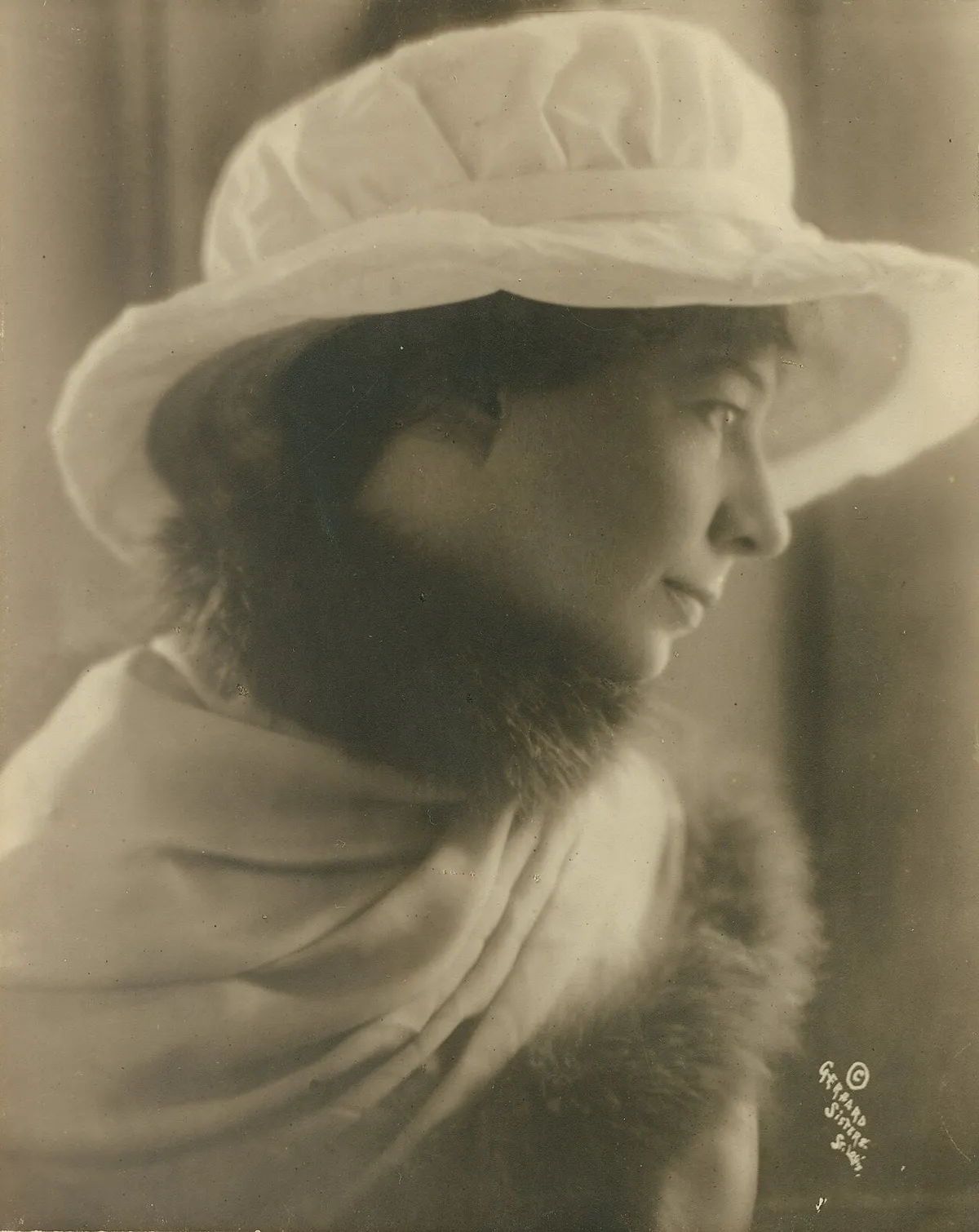
Sara Teasdale
Debt
Debt
What do I owe to you
Who loved me deep and long?
You never gave my spirit wings
Or gave my heart a song.
But oh, to him I loved,
Who loved me not at all,
I owe the open gate
That led through heaven's wall.
What do I owe to you
Who loved me deep and long?
You never gave my spirit wings
Or gave my heart a song.
But oh, to him I loved,
Who loved me not at all,
I owe the open gate
That led through heaven's wall.
513
Kazi Nazrul Islam
Like a Lost Bird
Like a Lost Bird
At the end of the rolIing road, my dearest, I await alone;
Rolling in the dust of the path you have traveled.
The way you have walked on the bright ground of the mountains
I wish you could rub your feet on my breast making me forget my pain
I do not desire anything, no slumber in my eyes;
Wandering aimlessly in the street, the neighborhood laughs at me.
I cannot go to the pond, how have you enchanted me!
In the black water of the pond, I see your black beauty
You have scandalized me and left me alone!
[Original: Pothhara Pakhi; Translation: Kashfia Billah]
510
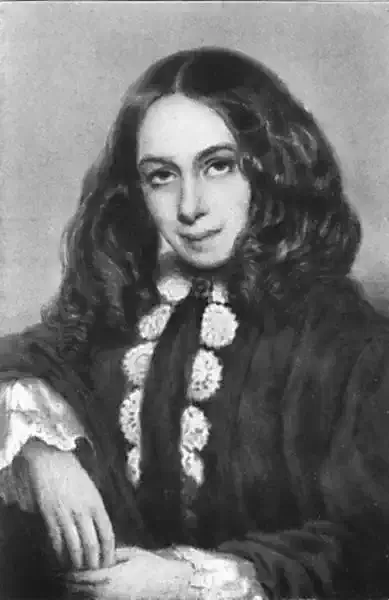
Elizabeth Barrett Browning
IX
IX
Can it be right to give what I can give ?
To let thee sit beneath the fall of tears
As salt as mine, and hear the sighing years
Re-sighing on my lips renunciative
Through those infrequent smiles which fail to live
For all thy adjurations ? O my fears,
That this can scarce be right ! We are not peers,
So to be lovers; and I own, and grieve,
That givers of such gifts as mine are, must
Be counted with the ungenerous. Out, alas !
I will not soil thy purple with my dust,
Nor breathe my poison on thy Venice-glass,
Nor give thee any love--which were unjust.
Beloved, I only love thee ! let it pass.
494
Rabindranath Tagore
The Gardener XX: Day After Day He Comes
The Gardener XX: Day After Day He Comes
Day after day he comes and goes
away.
Go, and give him a flower from my
hair, my friend.
If he asks who was it that sent it, I
entreat you do not tell him my name-for
he only comes and goes away.
He sits on the dust under the tree.
Spread there a seat with flowers and
leaves, my friend.
His eyes are sad, and they bring
sadness to my heart.
He does not speak what he has in
mind; he only comes and goes away.
490
Lord Byron
Lines: Written In 'Letters Of An Italian Nun And An English Gentleman'
Lines: Written In 'Letters Of An Italian Nun And An English Gentleman'
'Away, away, your fleeting arts
May now betray some simpler hearts;
And you will smile at their believing,
And they shall weep at your deceiving.'
ANSWER TO THE FOREGOING, ADDRESSED TO MISS .
Dear, simple girl, those flattering arts,
From which thou'dst guard frail female hearts,
Exist but in imagination,Mere
phantoms of thine own creation;
For he who views that witching grace,
That perfect form, that lovely face,
With eyes admiring, oh! believe me,
He never wishes to deceive thee:
Once in thy polish'd mirror glance,
Thou'lt there descry that elegance
Which from our sex demands such praises,
But envy in the other raises:
Then he who tells thee of thy beauty,
Believe me, only does his duty:
Ah! fly not from the candid youth;
It is not flattery,'
tis truth.
July 1804
480

Johann Wolfgang von Goethe
The Epochs
The Epochs
ON Petrarch's heart, all other days before,
In flaming letters written, was impress d
GOOD FRIDAY. And on mine, be it confess'd,
Is this year's ADVENT, as it passeth o'er.
I do not now begin,--I still adore
Her whom I early cherish'd in my breast;,
Then once again with prudence dispossess'd,
And to whose heart I'm driven back once more.
The love of Petrarch, that all-glorious love,
Was unrequited, and, alas, full sad;
One long Good Friday 'twas, one heartache drear
But may my mistress' Advent ever prove,
With its palm-jubilee, so sweet and glad,
One endless Mayday, through the livelong year!
478

Rudyard Kipling
Brookland Road
Brookland Road
I was very well pleased with what I knowed,
I reckoned myself no fool --
Till I met with a maid on the Brookland Road,
That turned me back to school.
Low down-low down!
Where the liddle green lanterns shine --
O maids, I've done with 'ee all but one,
And she can never be mine!
'Twas right in the middest of a hot June night,
With thunder duntin' round,
And I see her face by the fairy-light
That beats from off the ground.
She only smiled and she never spoke,
She smiled and went away;
But when she'd gone my heart was broke
And my wits was clean astray.
O, stop your ringing and let me be --
Let be, O Brookland bells!
You'll ring Old Goodman out of the sea,
Before I wed one else!
Old Goodman's Farm is rank sea-sand,
And was this thousand year;
But it shall turn to rich plough-land
Before I change my dear.
O, Fairfield Church is water-bound
From autumn to the spring;
But it shall turn to high hill-ground
Before my bells do ring.
O, leave me walk on Brookland Road,
In the thunder and warm rain --
O, leave me look where my love goed,
And p'raps I'll see her again!
Low down -- low down!
Where the liddle green lanterns shine --
O maids, I've done with 'ee all but one,
And she can never be mine!
476
Lord Byron
To M. S. G.
To M. S. G.
Whene'er I view those lips of thine,
Their hue invites my fervent kiss;
Yet, I forego that bliss divine,
Alas! it wereunhallow'd
bliss.
Whene'er I dream of that pure breast,
How could I dwell upon its snows!
Yet, is the daring wish represt,
For that,would
banish its repose.
A glance from thy soulsearching
eye
Can raise with hope, depress with fear;
Yet, I conceal my love,and
why?
I would not force a painful tear.
I ne'er have told my love, yet thou
Hast seen my ardent flame too well;
And shall I plead my passion now,
To make thy bosom's heaven a hell?
No! for thou never canst be mine,
United by the priest's decree:
By any ties but those divine,
Mine, my belov'd, thou ne'er shalt be.
Then let the secret fire consume,
Let it consume, thou shalt not know:
With joy I court a certain doom,
Rather than spread its guilty glow.
I will not ease my tortur'd heart,
By driving doveey'd
peace from thine;
Rather than such a sting impart,
Each thought presumptuous I resign.
Yes! yield those lips, for which I'd brave
More than I here shall dare to tell;
Thy innocence and mine to save,I
bid thee now a last farewell.
Yes! yield that breast, to seek despair
And hope no more thy soft embrace;
Which to obtain, my soul would dare,
All, all reproach, but thy disgrace.
At least from guilt shalt thou be free,
No matron shall thy shame reprove;
Though cureless pangs may prey on me,
No martyr shalt thou be to love.
470
John Milton
Sonnet to the Nightingale
Sonnet to the Nightingale
O nightingale that on yon blooming spray
Warblest at eve, when all the woods are still,
Thou with fresh hopes the Lover’s heart dost fill,
While the jolly Hours lead on propitious May.
Thy liquid notes that close the eye of Day,
First heard before the shallow cuckoo’s bill,
Portend success in love. O if Jove’s will
Have linked that amorous power to thy soft lay,
Now timely sing, ere the rude bird of hate
Foretell my hopeless doom, in some grove nigh;
As thou from year to year hast sung too late
For my relief, yet had’st no reason why.
Whether the Muse or Love call thee his mate,
Both them I serve, and of their train am I.
470
John Keats
La Belle Dame Sans Merci (Original version )
La Belle Dame Sans Merci (Original version )
Oh what can ail thee, knight-at-arms,
Alone and palely loitering?
The sedge has withered from the lake,
And no birds sing.
Oh what can ail thee, knight-at-arms,
So haggard and so woe-begone?
The squirrel's granary is full,
And the harvest's done.
I see a lily on thy brow,
With anguish moist and fever-dew,
And on thy cheeks a fading rose
Fast withereth too.
I met a lady in the meads,
Full beautiful - a faery's child,
Her hair was long, her foot was light,
And her eyes were wild.
I made a garland for her head,
And bracelets too, and fragrant zone;
She looked at me as she did love,
And made sweet moan.
I set her on my pacing steed,
And nothing else saw all day long,
For sidelong would she bend, and sing
A faery's song.
She found me roots of relish sweet,
And honey wild, and manna-dew,
And sure in language strange she said '
I love thee true'.
She took me to her elfin grot,
And there she wept and sighed full sore,
And there I shut her wild wild eyes
With kisses four.
And there she lulled me asleep
And there I dreamed - Ah! woe betide! -
The latest dream I ever dreamt
On the cold hill side.
I saw pale kings and princes too,
Pale warriors, death-pale were they all;
They cried - 'La Belle Dame sans Merci
Hath thee in thrall!'
I saw their starved lips in the gloam,
With horrid warning gaped wide,
And I awoke and found me here,
On the cold hill's side.
And this is why I sojourn here
Alone and palely loitering,
Though the sedge is withered from the lake,
And no birds sing.
Oh what can ail thee, knight-at-arms,
Alone and palely loitering?
The sedge has withered from the lake,
And no birds sing.
Oh what can ail thee, knight-at-arms,
So haggard and so woe-begone?
The squirrel's granary is full,
And the harvest's done.
I see a lily on thy brow,
With anguish moist and fever-dew,
And on thy cheeks a fading rose
Fast withereth too.
I met a lady in the meads,
Full beautiful - a faery's child,
Her hair was long, her foot was light,
And her eyes were wild.
I made a garland for her head,
And bracelets too, and fragrant zone;
She looked at me as she did love,
And made sweet moan.
I set her on my pacing steed,
And nothing else saw all day long,
For sidelong would she bend, and sing
A faery's song.
She found me roots of relish sweet,
And honey wild, and manna-dew,
And sure in language strange she said '
I love thee true'.
She took me to her elfin grot,
And there she wept and sighed full sore,
And there I shut her wild wild eyes
With kisses four.
And there she lulled me asleep
And there I dreamed - Ah! woe betide! -
The latest dream I ever dreamt
On the cold hill side.
I saw pale kings and princes too,
Pale warriors, death-pale were they all;
They cried - 'La Belle Dame sans Merci
Hath thee in thrall!'
I saw their starved lips in the gloam,
With horrid warning gaped wide,
And I awoke and found me here,
On the cold hill's side.
And this is why I sojourn here
Alone and palely loitering,
Though the sedge is withered from the lake,
And no birds sing.
471
Sara Teasdale
Pierrot
Pierrot
Pierrot stands in the garden
Beneath a waning moon,
And on his lute he fashions
A fragile silver tune.
Pierrot plays in the garden,
He thinks he plays for me,
But I am quite forgotten
Under the cherry tree.
Pierrot plays in the garden,
And all the roses know
That Pierrot loves his music, --
But I love Pierrot.
466
Page 1
Next