
Seasons (Spring, Summer, Autumn, Winter)
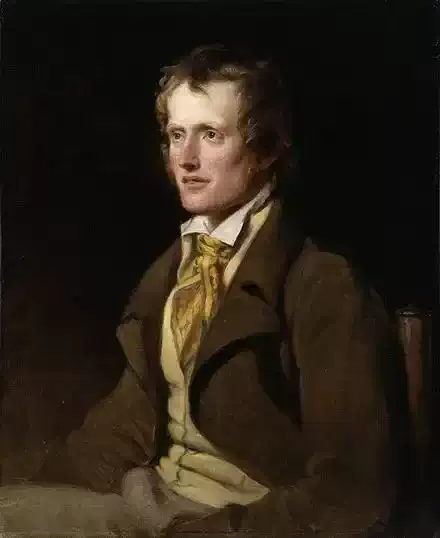
John Clare
Emmonsail's Heath in Winter
I love to see the old heath's withered brake
Mingle its crimpled leaves with furze and ling,
While the old heron from the lonely lake
Starts slow and flaps its melancholy wing,
An oddling crow in idle motion swing
On the half-rotten ash-tree's topmost twig,
Beside whose trunk the gypsy makes his bed.
Up flies the bouncing woodcock from the brig
Where a black quagmire quakes beneath the tread;
The fieldfares chatter in the whistling thorn
And for the haw round fields and closen rove,
And coy bumbarrels, twenty in a drove,
Flit down the hedgerows in the frozen plain
And hang on little twigs and start again.
442

Matsuo Bashō
First snow
First snow
falling
on the half-finished bridge.
Translated by Robert Hass
falling
on the half-finished bridge.
Translated by Robert Hass
444

Walt Whitman
Warble Of Lilac-Time
WARBLE me now, for joy of Lilac-time,
Sort me, O tongue and lips, for Nature's sake, and sweet life's
sake--and death's the same as life's,
Souvenirs of earliest summer--birds' eggs, and the first berries;
Gather the welcome signs, (as children, with pebbles, or stringing
shells;)
Put in April and May--the hylas croaking in the ponds--the elastic
air,
Bees, butterflies, the sparrow with its simple notes,
Blue-bird, and darting swallow--nor forget the high-hole flashing his
golden wings,
The tranquil sunny haze, the clinging smoke, the vapor,
Spiritual, airy insects, humming on gossamer wings,
Shimmer of waters, with fish in them--the cerulean above;
All that is jocund and sparkling--the brooks running,
The maple woods, the crisp February days, and the sugar-making;
The robin, where he hops, bright-eyed, brown-breasted,
With musical clear call at sunrise, and again at sunset,
Or flitting among the trees of the apple-orchard, building the nest
of his mate;
The melted snow of March--the willow sending forth its yellow-green
sprouts;
--For spring-time is here! the summer is here! and what is this in it
and from it?
Thou, Soul, unloosen'd--the restlessness after I know not what;
Come! let us lag here no longer--let us be up and away!
O for another world! O if one could but fly like a bird!
O to escape--to sail forth, as in a ship!
To glide with thee, O Soul, o'er all, in all, as a ship o'er the
waters!
--Gathering these hints, these preludes--the blue sky, the grass, the
morning drops of dew;
(With additional songs--every spring will I now strike up additional
songs,
Nor ever again forget, these tender days, the chants of Death as well
as Life;)
The lilac-scent, the bushes, and the dark green, heart-shaped leaves,
Wood violets, the little delicate pale blossoms called innocence,
Samples and sorts not for themselves alone, but for their atmosphere,
To tally, drench'd with them, tested by them,
Cities and artificial life, and all their sights and scenes,
My mind henceforth, and all its meditations--my recitatives,
My land, my age, my race, for once to serve in songs,
(Sprouts, tokens ever of death indeed the same as life,)
To grace the bush I love--to sing with the birds,
A warble for joy of Lilac-time.
444
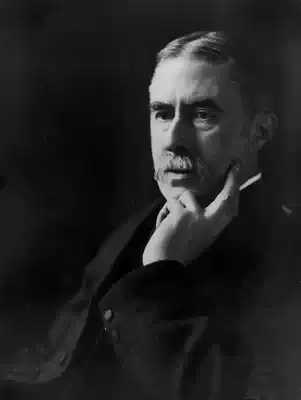
Alfred Edward Housman
Loveliest of Trees, the Cherry Now
Loveliest of trees, the cherry now
Is hung with bloom along the bough,
And stands about the woodland ride
Wearing white for Eastertide.
Now, of my threescore years and ten,
Twenty will not come again,
And take from seventy springs a score,
It only leaves me fifty more.
And since to look at things in bloom
Fifty springs are little room,
About the woodlands I will go
To see the cherry hung with snow.
439
Matsuo Bashō
Autumn moonlight
Autumn moonlight--
a worm digs silently
into the chestnut.
Translated by Robert Hass
a worm digs silently
into the chestnut.
Translated by Robert Hass
440
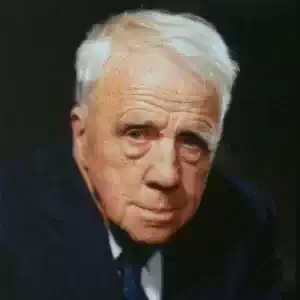
Robert Frost
October
O hushed October morning mild, Thy leaves have ripened to the fall; Tomorrow's wind,
if it be wild, Should waste them all. The crows above the forest call; Tomorrow they
may form and go. O hushed October morning mild, Begin the hours of this day slow.
Make the day seem to us less brief. Hearts not averse to being beguiled, Beguile us in
the way you know. Release one leaf at break of day; At noon release another leaf; one
from our trees, one far away. Retard the sun with gentle mist; Enchant the land with
amethyst. Slow, slow! For the grapes' sake, if the were all, Whose elaves already are
burnt with frost, Whose clustered fruit must else be lost-- For the grapes' sake along
the all.
440

Ezra Pound
La Regina Avrillouse
Lady of rich allure,
Queen of the spring's embrace,
Your arms are long like boughs of ash,
Mid laugh-broken streams, spirit of rain unsure,
Breath of the poppy flower,
All the wood thy bower
And the hills thy dwelling-place.
This will I no more dream;
Warm is thy arm's allure,
Warm is the gust of breath
That ere thy lips meet mine
Kisseth my cheek and saith:
"This is the joy of earth,
Here is the wine of mirth
Drain ye one goblet sure,
Take ye the honey cup
The honied song raise up,
Drink of the spring's allure,
April and dew and rain;
Brown of the earth sing sure,
Cheeks and lips and hair
And soft breath that kisseth where
Thy lips have come not yet to drink."
Moss and the mold of earth,
These be thy couch of mirth,
Long arms thy boughs of shade
April-alluring, as the blade
Of grass doth catch the dew
And make it crown to hold the sun.
Banner be you
Above my head,
Glory to all wold display'd,
April-alluring, glory-bold.
440

Ella Wheeler Wilcox
The Optimist
The fields were bleak and sodden. Not a wing
Or note enlivened the depressing wood,
A soiled and sullen, stubborn snowdrift stood
Beside the roadway. Winds came muttering
Of storms to be, and brought the chilly sting
Of icebergs in their breath. Stalled cattle mooed
Forth plaintive pleadings for the earth's green food.
No gleam, no hint of hope in anything.
The sky was blank and ashen, like the face
Of some poor wretch who drains life's cup too fast.
Yet, swaying to and fro, as if to fling
About chilled Nature its lithe arms of grace,
Smiling with promise in the wintry blast,
The optimistic Willow spoke of spring.
440
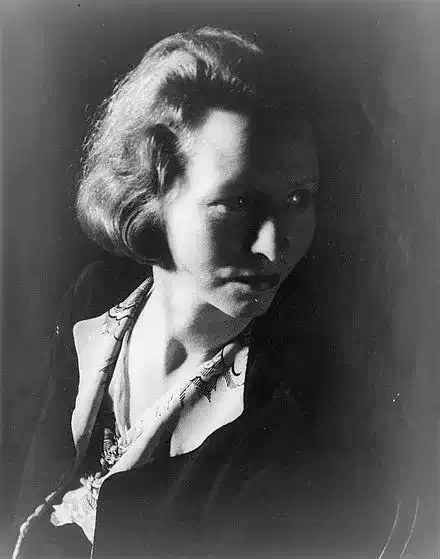
Edna St. Vincent Millay
Three Songs Of Shattering
I
The first rose on my rose-tree
Budded, bloomed, and shattered,
During sad days when to me
Nothing mattered.
Grief of grief has drained me clean;
Still it seems a pity
No one saw,—it must have been
Very pretty.
II
Let the little birds sing;
Let the little lambs play;
Spring is here; and so 'tis spring;—
But not in the old way!
I recall a place
Where a plum-tree grew;
There you lifted up your face,
And blossoms covered you.
If the little birds sing,
And the little lambs play,
Spring is here; and so 'tis spring—
But not in the old way!
III
All the dog-wood blossoms are underneath the tree!
Ere spring was going—ah, spring is gone!
And there comes no summer to the like of you and me,—
Blossom time is early, but no fruit sets on.
All the dog-wood blossoms are underneath the tree,
Browned at the edges, turned in a day;
And I would with all my heart they trimmed a mound for me,
And weeds were tall on all the paths that led that way!
438
Ella Wheeler Wilcox
The Hammock's Complaint
Who thinks how desolate and strange
To me must seem the autumn's change,
When housed in attic or in chest,
A lonely and unwilling guest,
I lie through nights of bleak December,
And think in silence, and remember.
I think of hempen fields, where I
Once played with insects floating by,
And joyed alike in sun and rain,
Unconscious of approaching pain.
I dwell upon my later lot,
Where, swung in some secluded spot
Between two tried and trusted trees,
All summer long I wooed the breeze.
With song of bee and call of bird
And lover's secrets overheard,
And sight and scent of blooming flowers,
To fill the happy sunlight's hours.
When verdant fields grow bare and brown,
When forest leaves come raining down,
When frost has mated with the weather
And all the birds go south together,
When drying boats turn up their keels,
Who wonders how the hammock feels?
436
John Clare
Snow Storm
What a night! The wind howls, hisses, and but stops
To howl more loud, while the snow volley keeps
Incessant batter at the window pane,
Making our comfort feel as sweet again;
And in the morning, when the tempest drops,
At every cottage door mountainous heaps
Of snow lie drifted, that all entrance stops
Untill the beesom and the shovel gain
The path, and leave a wall on either side.
The shepherd rambling valleys white and wide
With new sensations his old memory fills,
When hedges left at night, no more descried,
Are turned to one white sweep of curving hills,
And trees turned bushes half their bodies hide.
The boy that goes to fodder with surprise
Walks oer the gate he opened yesternight.
The hedges all have vanished from his eyes;
Een some tree tops the sheep could reach to bite.
The novel scene emboldens new delight,
And, though with cautious steps his sports begin,
He bolder shuffles the huge hills of snow,
Till down he drops and plunges to the chin,
And struggles much and oft escape to win--
Then turns and laughs but dare not further go;
For deep the grass and bushes lie below,
Where little birds that soon at eve went in
With heads tucked in their wings now pine for day
And little feel boys oer their heads can stray.
437

Henry Wadsworth Longfellow
Woods in Winter
When winter winds are piercing chill,
And through the hawthorn blows the gale,
With solemn feet I tread the hill,
That overbrows the lonely vale.
O'er the bare upland, and away
Through the long reach of desert woods,
The embracing sunbeams chastely play,
And gladden these deep solitudes.
Where, twisted round the barren oak,
The summer vine in beauty clung,
And summer winds the stillness broke,
The crystal icicle is hung.
Where, from their frozen urns, mute springs
Pour out the river's gradual tide,
Shrilly the skater's iron rings,
And voices fill the woodland side.
Alas! how changed from the fair scene,
When birds sang out their mellow lay,
And winds were soft, and woods were green,
And the song ceased not with the day!
But still wild music is abroad,
Pale, desert woods! within your crowd;
And gathering winds, in hoarse accord,
Amid the vocal reeds pipe loud.
Chill airs and wintry winds! my ear
Has grown familiar with your song;
I hear it in the opening year,
I listen, and it cheers me long.
435
John Clare
The Shepherds Calendar - April
The infant april joins the spring
And views its watery skye
As youngling linnet trys its wing
And fears at first to flye
With timid step she ventures on
And hardly dares to smile
The blossoms open one by one
And sunny hours beguile
But finer days approacheth yet
With scenes more sweet to charm
And suns arrive that rise and set
Bright strangers to a storm
And as the birds with louder song
Each mornings glory cheers
With bolder step she speeds along
And looses all her fears
In wanton gambols like a child
She tends her early toils
And seeks the buds along the wild
That blossom while she smiles
And laughing on with nought to chide
She races with the hours
Or sports by natures lovley side
And fills her lap with flowers
Tho at her birth north cutting gales
Her beautys oft disguise
And hopfull blossoms turning pales
Upon her bosom dies
Yet ere she seeks another place
And ends her reign in this
She leaves us with as fair a face
As ere gave birth to bliss
And fairey month of waking mirth
From whom our joys ensue
Thou early gladder of the earth
Thrice welcom here anew
With thee the bud unfolds to leaves
The grass greens on the lea
And flowers their tender boon recieves
To bloom and smile with thee
The shepherds on thy pasture walks
The first fair cowslip finds
Whose tufted flowers on slender stalks
Keep nodding to the winds
And tho thy thorns withold the may
Their shades the violets bring
Which childern stoop for in their play
As tokens of the spring
The time when daiseys bloom divine
With thy calm hours begun
And crowflowers blazing blooms are thine
Bright childern of the sun
Along thy woodlands shaded nooks
The primrose wanly comes
And shining in thy pebley brooks
The horse bleb gaily blooms
The long lost charm of sparkling dew
Thy gentle birth recieves
And on thy wreathing locks we view
The first infolding leaves
And seeking firstling buds and flowers
The trials of thy skill
Were pastimes of my infant hours
And so they haunt me still
To see thy first broad arum leaves
I lovd them from a child
And where thy woodbines sprouting weaves
I joyd to trace the wild
And jocund as thy lambs at play
I met the wanton wind
With feelings that have passd away
Whose shadows cling behind
Those joys which childhood claims its own
Woud they were kin to men
Those treasures to the world unknown
When known-was witherd then
But hovering round our growing years
To gild cares sable shroud
Their spirit thro the gloom appears
As suns behind a cloud
As thou first met my infant eyes
When thro thy fields I flew
Whose distance where they meet the skyes
Was all the worlds I knew
That warmth of fancys wildest hours
Which made things kin to life
That heard a voice in trees and flowers
Has swoond in reasons strife
Sweet month thy pleasures bids thee be
The fairest child of spring
And every hour that comes with thee
Comes some new joy to bring
The trees still deepen in their bloom
Crass greens the meadow lands
And flowers with every morning come
As dropt by fairey hands
The field and gardens lovley hours
Begin and end with thee
For whats so sweet as peeping flowers
And bursting buds to see
What time the dews unsullied drops
In burnishd gold distills
On crocus flowers unclosing tops
And drooping daffodills
Each day with added glorys come
And as they leave the night
Put on the roseys lovley bloom
And blushes with delight
And suns that wait their welcome birth
With earlier haste pursue
Their journeys to this lower earth
To free their steps from dew
To see thee come all hearts rejoice
And warms with feelings strong
With thee all nature finds a voice
And hums a waking song
The lover views thy welcome hours
And thinks of summer come
And takes the maid thy early flowers
To tempt her steps from home
Along each hedge and sprouting bush
The singing birds are blest
And linnet green and speckld thrush
Prepare their mossy nest
On the warm bed thy plain supplys
The young lambs find repose
And mid thy green hills basking lies
Like spots of lingering snows
Young things of tender life again
Enjoys thy sunny hours
And gosslings waddle ocr the plain
As yellow as its flowers
Or swim the pond in wild delight
To catch the water flye
Where hissing geese in ceasless spite
Make childern scamper bye
Again the fairey tribes pursue
Their pleasures on the plain
And brightend with the morning dew
Black circles shine again
And on its superstitious ground
Where flowers seem loath to dwell
The toadstools fuzzy balls abound
And mushrooms yearly swell
The seasons beautys all are thine
That visit with the year
Beautys that poets think divine
And all delight to hear
Thy latter days a pleasure brings
That gladden every heart
Pleasures that come like lovley things
But like to shades depart
Thy opend leaves and ripend buds
The cuckoo makes his choice
And shepherds in thy greening woods
First hears the cheering voice
And to thy ripend blooming bowers
The nightingale belongs
And singing to thy parting hours
Keeps night awake with songs
With thee the swallow dares to come
And primes his sutty wings
And urgd to seek their yearly home
Thy suns the Martin brings
And lovley month be leisure mine
Thy yearly mate to be
Tho may day scenes may brighter shine
Their birth belongs to thee
I waked me with thy rising sun
And thy first glorys viewd
And as thy welcome hours begun
Their sunny steps pursued
And now thy sun is on the set
Like to a lovley eve
I view thy parting with regret
And linger loath to leave
Thou lovley april fare thee well
Thou early child of spring
Tho born where storms too often dwell
Thy parents news to bring
Yet what thy parting youth supplys
No other months excell
Thou first for flowers and sunny skyes
Sweet april fare thee well.
436
Alfred Edward Housman
Tis Time, I Think, By Wenlock Town
'Tis time, I think, by Wenlock town
The golden broom should blow;
The hawthorn sprinkled up and down
Should charge the land with snow.
Spring will not wait the loiterer's time
Who keeps so long away;
So others wear the broom and climb
The hedgerows heaped with may.
Oh tarnish late on Wenlock Edge,
Gold that I never see;
Lie long, high snowdrifts in the hedge
That will not shower on me.
432

Emily Dickinson
Always Mine!
Always Mine!
No more Vacation!
Term of Light this Day begun!
Failless as the fair rotation
Of the Seasons and the Sun.
Old the Grace, but new the Subjects-
Old, indeed, the East,
Yet upon His Purple Programme
Every Dawn, is first.
No more Vacation!
Term of Light this Day begun!
Failless as the fair rotation
Of the Seasons and the Sun.
Old the Grace, but new the Subjects-
Old, indeed, the East,
Yet upon His Purple Programme
Every Dawn, is first.
433

Claude Mckay
Spring in New Hampshire
Too green the springing April grass,
Too blue the silver-speckled sky,
For me to linger here, alas,
While happy winds go laughing by,
Wasting the golden hours indoors,
Washing windows and scrubbing floors.
Too wonderful the April night,
Too faintly sweet the first May flowers,
The stars too gloriously bright,
For me to spend the evening hours,
When fields are fresh and streams are leaping,
Wearied, exhausted, dully sleeping.
430
John Clare
Summer Images
Now swarthy Summer, by rude health embrowned,
Precedence takes of rosy fingered Spring;
And laughing Joy, with wild flowers prank'd, and crown'd,
A wild and giddy thing,
And Health robust, from every care unbound,
Come on the zephyr's wing,
And cheer the toiling clown.
Happy as holiday-enjoying face,
Loud tongued, and "merry as a marriage bell,"
Thy lightsome step sheds joy in every place;
And where the troubled dwell,
Thy witching charms wean them of half their cares;
And from thy sunny spell,
They greet joy unawares.
Then with thy sultry locks all loose and rude,
And mantle laced with gems of garish light,
Come as of wont; for I would fain intrude,
And in the world's despite,
Share the rude wealth that thy own heart beguiles;
If haply so I might
Win pleasure from thy smiles.
Me not the noise of brawling pleasure cheers,
In nightly revels or in city streets;
But joys which soothe, and not distract the ears,
That one at leisure meets
In the green woods, and meadows summer-shorn,
Or fields, where bee-fly greets
The ear with mellow horn.
The green-swathed grasshopper, on treble pipe,
Sings there, and dances, in mad-hearted pranks;
There bees go courting every flower that's ripe,
On baulks and sunny banks;
And droning dragon-fly, on rude bassoon,
Attempts to give God thanks
In no discordant tune.
The speckled thrush, by self-delight embued,
There sings unto himself for joy's amends,
And drinks the honey dew of solitude.
There Happiness attends
With inbred Joy until the heart o'erflow,
Of which the world's rude friends,
Nought heeding, nothing know.
There the gay river, laughing as it goes,
Plashes with easy wave its flaggy sides,
And to the calm of heart, in calmness shows
What pleasure there abides,
To trace its sedgy banks, from trouble free:
Spots Solitude provides
To muse, and happy be.
There ruminating 'neath some pleasant bush,
On sweet silk grass I stretch me at mine ease,
Where I can pillow on the yielding rush;
And, acting as I please,
Drop into pleasant dreams; or musing lie,
Mark the wind-shaken trees,
And cloud-betravelled sky.
There think me how some barter joy for care,
And waste life's summer-health in riot rude,
Of nature, nor of nature's sweets aware.
When passions vain intrude,
These, by calm musings, softened are and still;
And the heart's better mood
Feels sick of doing ill.
There I can live, and at my leisure seek
Joys far from cold restraints--not fearing pride--
Free as the winds, that breathe upon my cheek
Rude health, so long denied.
Here poor Integrity can sit at ease,
And list self-satisfied
The song of honey-bees.
The green lane now I traverse, where it goes
Nought guessing, till some sudden turn espies
Rude batter'd finger post, that stooping shows
Where the snug mystery lies;
And then a mossy spire, with ivy crown,
Cheers up the short surprise,
And shows a peeping town.
I see the wild flowers, in their summer morn
Of beauty, feeding on joy's luscious hours;
The gay convolvulus, wreathing round the thorn,
Agape for honey showers;
And slender kingcup, burnished with the dew
Of morning's early hours,
Like gold yminted new.
And mark by rustic bridge, o'er shallow stream,
Cow-tending boy, to toil unreconciled,
Absorbed as in some vagrant summer dream;
Who now, in gestures wild,
Starts dancing to his shadow on the wall,
Feeling self-gratified,
Nor fearing human thrall.
Or thread the sunny valley laced with streams,
Or forests rude, and the o'ershadow'd brims
Of simple ponds, where idle shepherd dreams,
Stretching his listless limbs;
Or trace hay-scented meadows, smooth and long,
Where joy's wild impulse swims
In one continued song.
I love at early morn, from new mown swath,
To see the startled frog his route pursue;
To mark while, leaping o'er the dripping path,
His bright sides scatter dew,
The early lark that from its bustle flies,
To hail his matin new;
And watch him to the skies.
To note on hedgerow baulks, in moisture sprent,
The jetty snail creep from the mossy thorn,
With earnest heed, and tremulous intent,
Frail brother of the morn,
That from the tiny bent's dew-misted leaves
Withdraws his timid horn,
And fearful vision weaves.
Or swallow heed on smoke-tanned chimney top,
Wont to be first unsealing Morning's eye,
Ere yet the bee hath gleaned one wayward drop
Of honey on his thigh;
To see him seek morn's airy couch to sing,
Until the golden sky
Bepaint his russet wing.
Or sauntering boy by tanning corn to spy,
With clapping noise to startle birds away,
And hear him bawl to every passer by
To know the hour of day;
While the uncradled breezes, fresh and strong,
With waking blossoms play,
And breathe Æolian song.
I love the south-west wind, or low or loud,
And not the less when sudden drops of rain
Moisten my glowing cheek from ebon cloud,
Threatening soft showers again,
That over lands new ploughed and meadow grounds,
Summer's sweet breath unchain,
And wake harmonious sounds.
Rich music breathes in Summer's every sound;
And in her harmony of varied greens,
Woods, meadows, hedge-rows, corn-fields, all around
Much beauty intervenes,
Filling with harmony the ear and eye;
While o'er the mingling scenes
Far spreads the laughing sky.
See, how the wind-enamoured aspen leaves
Turn up their silver lining to the sun!
And hark! the rustling noise, that oft deceives,
And makes the sheep-boy run:
The sound so mimics fast-approaching showers,
He thinks the rain's begun,
And hastes to sheltering bowers.
But now the evening curdles dank and grey,
Changing her watchet hue for sombre weed;
And moping owls, to close the lids of day,
On drowsy wing proceed;
While chickering crickets, tremulous and long,
Light's farewell inly heed,
And give it parting song.
The pranking bat its flighty circlet makes;
The glow-worm burnishes its lamp anew;
O'er meadows dew-besprent, the beetle wakes
Inquiries ever new,
Teazing each passing ear with murmurs vain,
As wanting to pursue
His homeward path again.
Hark! 'tis the melody of distant bells
That on the wind with pleasing hum rebounds
By fitful starts, then musically swells
O'er the dim stilly grounds;
While on the meadow-bridge the pausing boy
Listens the mellow sounds,
And hums in vacant joy.
Now homeward-bound, the hedger bundles round
His evening faggot, and with every stride
His leathern doublet leaves a rustling sound,
Till silly sheep beside
His path start tremulous, and once again
Look back dissatisfied,
And scour the dewy plain.
How sweet the soothing calmness that distills
O'er the heart's every sense its opiate dews,
In meek-eyed moods and ever balmy trills!
That softens and subdues,
With gentle Quiet's bland and sober train,
Which dreamy eve renews
In many a mellow strain!
I love to walk the fields, they are to me
A legacy no evil can destroy;
They, like a spell, set every rapture free
That cheer'd me when a boy.
Play--pastime--all Time's blotting pen conceal'd,
Comes like a new-born joy,
To greet me in the field.
For Nature's objects ever harmonize
With emulous Taste, that vulgar deed annoys;
Which loves in pensive moods to sympathize,
And meet vibrating joys
O'er Nature's pleasing things; nor slighting, deems
Pastimes, the Muse employs,
Vain and obtrusive themes.
429
Henry Wadsworth Longfellow
Autumn
Thou comest, Autumn, heralded by the rain,
With banners, by great gales incessant fanned,
Brighter than brightest silks of Samarcand,
And stately oxen harnessed to thy wain!
Thou standest, like imperial Charlemagne,
Upon thy bridge of gold; thy royal hand
Outstretched with benedictions o'er the land,
Blessing the farms through all thy vast domain!
Thy shield is the red harvest moon, suspended
So long beneath the heaven's o'er-hanging eaves;
Thy steps are by the farmer's prayers attended;
Like flames upon an altar shine the sheaves;
And, following thee, in thy ovation splendid,
Thine almoner, the wind, scatters the golden leaves!
429
Emily Dickinson
The Angle of a Landscape
The Angle of a Landscape-
That every time I wake-
Between my Curtain and the Wall
Upon an ample Crack-
Like a Venetian-waiting-
Accosts my open eye-
Is just a Bough of Apples-
Held slanting, in the Sky-
The Pattern of a Chimney-
The Forehead of a HillSometimes-
a Vane's Forefinger-
But that's-Occasional-
The Seasons-shift-my Picture-
Upon my Emerald Bough,
I wake-to find no-EmeraldsThen-
Diamonds-which the Snow
From Polar Caskets-fetched me-
The Chimney-and the Hill-
And just the Steeple's finger
These-
never stir at all-
427

Johann Wolfgang von Goethe
Ever And Everywhere
FAR explore the mountain hollow,
High in air the clouds then follow!
To each brook and vale the Muse
Thousand times her call renews.
Soon as a flow'ret blooms in spring,
It wakens many a strain;
And when Time spreads his fleeting wing,
The seasons come again.
High in air the clouds then follow!
To each brook and vale the Muse
Thousand times her call renews.
Soon as a flow'ret blooms in spring,
It wakens many a strain;
And when Time spreads his fleeting wing,
The seasons come again.
427
Claude Mckay
Flame-Heart
So much have I forgotten in ten years,
So much in ten brief years! I have forgot
What time the purple apples come to juice,
And what month brings the shy forget-me-not.
I have forgot the special, startling season
Of the pimento's flowering and fruiting;
What time of year the ground doves brown the fields
And fill the noonday with their curious fluting.
I have forgotten much, but still remember
The poinsettia's red, blood-red in warm December.
I still recall the honey-fever grass,
But cannot recollect the high days when
We rooted them out of the ping-wing path
To stop the mad bees in the rabbit pen.
I often try to think in what sweet month
The languid painted ladies used to dapple
The yellow by-road mazing from the main,
Sweet with the golden threads of the rose-apple.
I have forgotten--strange--but quite remember
The poinsettia's red, blood-red in warm December.
What weeks, what months, what time of the mild year
We cheated school to have our fling at tops?
What days our wine-thrilled bodies pulsed with joy
Feasting upon blackberries in the copse?
Oh some I know! I have embalmed the days,
Even the sacred moments when we played,
All innocent of passion, uncorrupt,
At noon and evening in the flame-heart's shade.
We were so happy, happy, I remember,
Beneath the poinsettia's red in warm December.
422
Edna St. Vincent Millay
Spring
To what purpose, April, do you return again?
Beauty is not enough.
You can no longer quiet me with the redness
Of little leaves opening stickily.
I know what I know.
The sun is hot on my neck as I observe
The spikes of the crocus.
The smell of the earth is good.
It is apparent that there is no death.
But what does that signify?
Not only under ground are the brains of men
Eaten by maggots.
Life in itself
Is nothing,
An empty cup, a flight of uncarpeted stairs.
It is not enough that yearly, down this hill,
April
Comes like an idiot, babbling and strewing flowers.
423
Ella Wheeler Wilcox
Summer Song
The meadow lark’s trill and the brown thrush’s whistle
From morning to evening fill all the sweet air,
And my heart is as light as the down of a thistle –
The world is so bright and the earth is so fair.
There is life in the wood, there is bloom on the meadow;
The air drops with songs that the merry birds sing.
The sunshine has won, in the battle with shadow,
And she’s dressed the glad earth with robes of the spring.
The bee leaves his hive for the field of red clover
And the vale where the daisies bloom white as the snow,
And a mantle of warm yellow sunshine hangs over
The calm little pond, where the pale lillies grow.
In the woodland beyond it, a thousand gay voices
Are singing in chorus some jubilant air.
The bird and the bee and all nature rejoices,
The world is so bright, and the earth is so fair.
I am glad as a child, in this beautiful weather;
I have tossed all my burdens and trials away;
My heart is as light – yes, as light as a feather; I
am care-free, and careless, and happy to-day.
Can it be there approaches a dark, dreary to-morrow?
Can shadows e’er fall on this beautiful earth?
Ah! To-day is my own! No forebodings of sorrow
Shall darken my skies, or shall dampen my mirth.
422
John Clare
Early Spring
The Spring is come, and Spring flowers coming too,
The crocus, patty kay, the rich hearts' ease;
The polyanthus peeps with blebs of dew,
And daisy flowers; the buds swell on the trees;
While oer the odd flowers swim grandfather bees
In the old homestead rests the cottage cow;
The dogs sit on their haunches near the pail,
The least one to the stranger growls 'bow wow,'
Then hurries to the door and cocks his tail,
To knaw the unfinished bone; the placid cow
Looks oer the gate; the thresher's lumping flail
Is all the noise the spring encounters now.
423