
Seasons (Spring, Summer, Autumn, Winter)
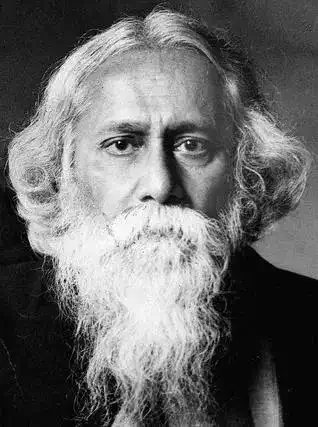
Rabindranath Tagore
The Gardener XLIV: Reverend Sir, Forgive
Reverend sir, forgive this pair of
sinners. Spring winds to-day are
blowing in wild eddies, driving dust
and dead leaves away, and with them
your lessons are all lost.
Do not say, father, that life is a
vanity.
For we have made truce with death
for once, and only for a few fragrant
hours we two have been made immortal.
Even if the king's army came and
fiercely fell upon us we should sadly
shake our heads and say, Brothers,
you are disturbing us. If you must
have this noisy game, go and clatter
your arms elsewhere. Since only for
a few fleeting moments we have been
made immortal.
If friendly people came and flocked
around us, we should humbly bow to
them and say, This extravagant good
fortune is an embarrassment to us.
Room is scarce in the infinite sky
where we dwell. For in the springtime
flowers come in crowds, and the
busy wings of bees jostle each other.
Our little heaven, where dwell only
we two immortals, is too absurdly
narrow.
496

John Clare
The Cuckoo
The cuckoo, like a hawk in flight,
With narrow pointed wings
Whews o'er our heads - soon out of sight
And as she flies she sings:
And darting down the hedgerow side
She scares the little bird
Who leaves the nest it cannot hide
While plaintive notes are heard.
I've watched it on an old oak tree
Sing half an hour away
Until its quick eye noticed me
And then it whewed away.
Its mouth when open shone as red
As hips upon the brier,
Like stock doves seemed its winged head
But striving to get higher
It heard me rustle and above leaves
Soon did its flight pursue,
Still waking summer's melodies
And singing as it flew.
So quick it flies from wood to wood
'Tis miles off 'ere you think it gone;
I've thought when I have listening stood
Full twenty sang - when only one.
When summer from the forest starts
Its melody with silence lies,
And, like a bird from foreign parts,
It cannot sing for all it tries.
'Cuck cuck' it cries and mocking boys
Crie 'Cuck' and then it stutters more
Till quick forgot its own sweet voice
It seems to know itself no more.
488
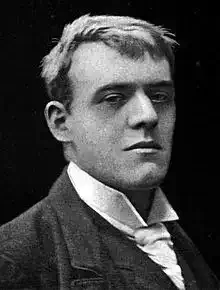
Hilaire Belloc
[Month of] December
Hoar Time about the house betakes him slow,
Seeking an entry for his weariness.
And in that dreadful company distress
And the sad night with silent footsteps go.
On my poor fire the brands are scarce aglow,
And in the woods without what memories press
Where, waning in the trees from less to less,
Mysterious bangs the hom6d moon and low.
For now December, full of aged care,
Comes in upon the yea and weakly grieves;
Mumbling his lost desires and his despair; .
And with mad trembling hand still interweaves,
The dank sear flower-stalks tangled in his hair,
While round about him whirl the rotten leaves.
485

Ezra Pound
Invern
Earth's winter cometh
And I being part of all
And sith the spirit of all moveth in me
I must needs bear earth's winter
Drawn cold and grey with hours
And joying in a momentary sun,
Lo I am withered with waiting till my spring cometh!
Or crouch covetous of warmth
O'er scant-logged ingle blaze,
Must take cramped joy in tomed Longinus
That, read I him first time
The woods agleam with summer
Or mid desirous winds of spring,
Had set me singing spheres
Or made heart to wander forth among warm roses
Or curl in grass next neath a kindly moon.
486

Christina Rossetti
Song IV
Oh roses for the flush of youth,
And laurel for the perfect prime;
But pluck an ivy branch for me
Grown old before my time.
Oh violets for the grave of youth,
And bay for those dead in their prime;
Give me the withered leaves I chose
Before in the old time.
And laurel for the perfect prime;
But pluck an ivy branch for me
Grown old before my time.
Oh violets for the grave of youth,
And bay for those dead in their prime;
Give me the withered leaves I chose
Before in the old time.
484
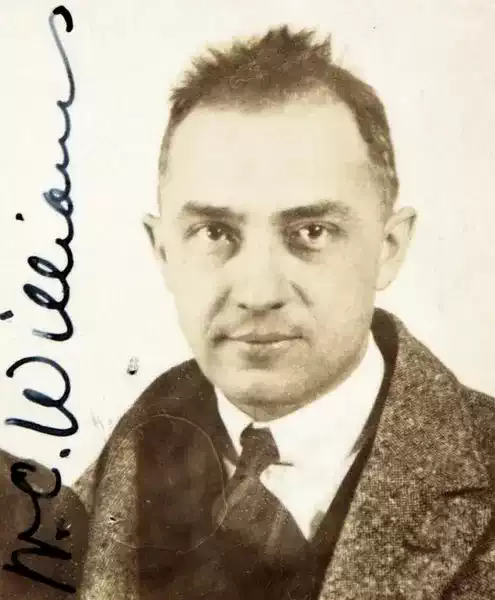
William Carlos Williams
Hunters in the Snow
The over-all picture is winter
icy mountains
in the background the return
from the hunt it is toward evening
from the left
sturdy hunters lead in
their pack the inn-sign
hanging from a
broken hinge is a stag a crucifix
between his antlers the cold
inn yard is
deserted but for a huge bonfire
that flares wind-driven tended by
women who cluster
about it to the right beyond
the hill is a pattern of skaters
Brueghel the painter
concerned with it all has chosen
a winter-struck bush for his
foreground to
complete the picture
483
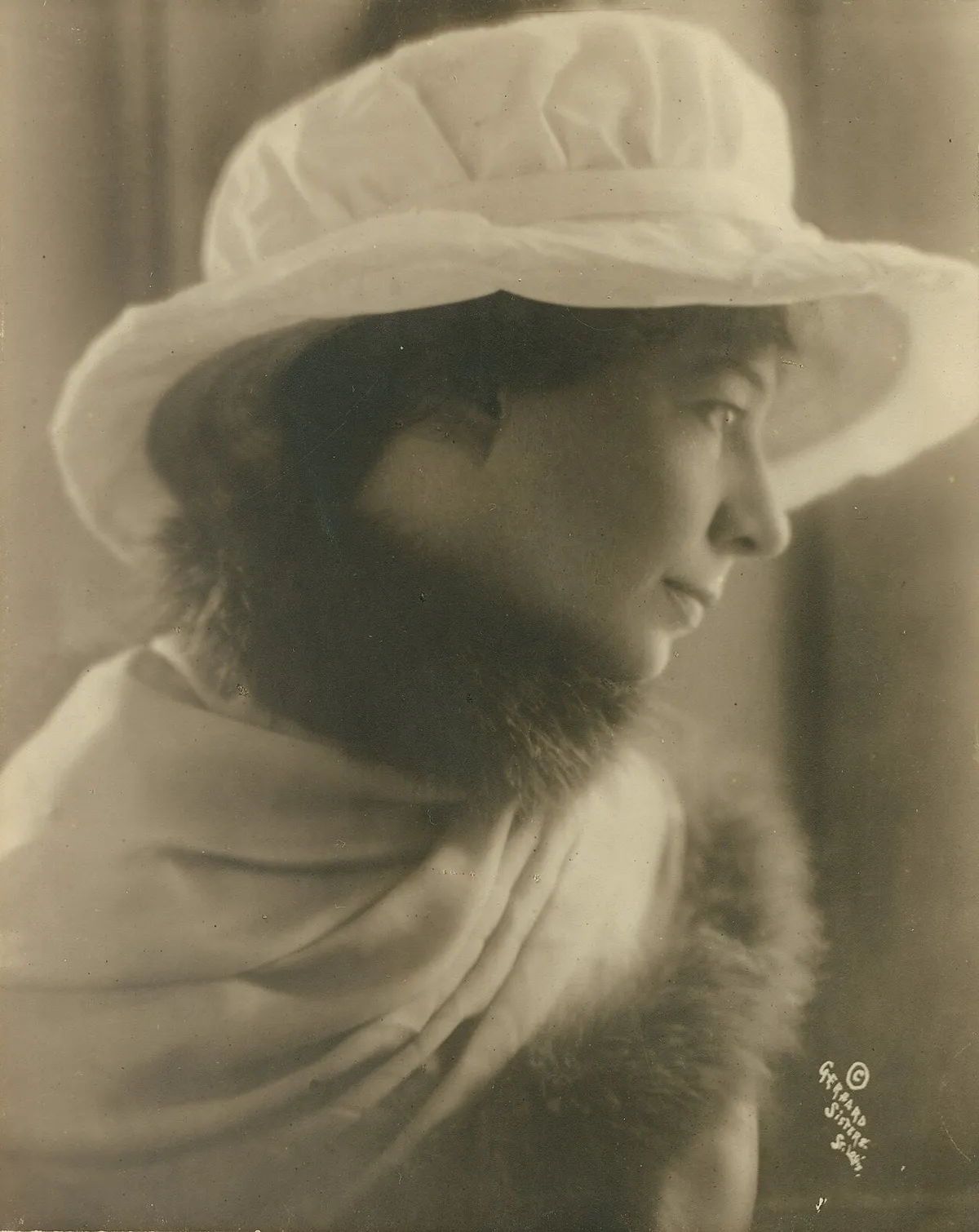
Sara Teasdale
Summer Night, Riverside
In the wild, soft summer darkness
How many and many a night we two together
Sat in the park and watched the Hudson
Wearing her lights like golden spangles
Glinting on black satin.
The rail along the curving pathway
Was low in a happy place to let us cross,
And down the hill a tree that dripped with bloom
Sheltered us,
While your kisses and the flowers,
Falling, falling,
Tangled my hair. . . .
The frail white stars moved slowly over the sky.
And now, far off
In the fragrant darkness
The tree is tremulous again with bloom,
For June comes back.
To-night what girl
Dreamily before her mirror shakes from her hair
This year's blossoms, clinging in its coils?
483
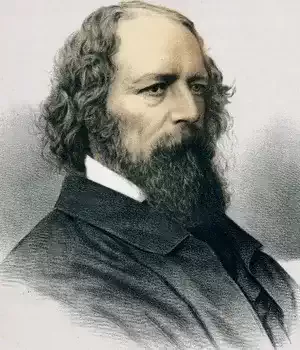
Alfred Lord Tennyson
In Memoriam A. H. H.: 15. To-night the winds begin to rise
To-night the winds begin to rise
And roar from yonder dropping day:
The last red leaf is whirl'd away,
The rooks are blown about the skies;
The forest crack'd, the waters curl'd,
The cattle huddled on the lea;
And wildly dash'd on tower and tree
The sunbeam strikes along the world:
And but for fancies, which aver
That all thy motions gently pass
Athwart a plane of molten glass,
I scarce could brook the strain and stir
That makes the barren branches loud;
And but for fear it is not so,
The wild unrest that lives in woe
Would dote and pore on yonder cloud
That rises upward always higher,
And onward drags a labouring breast,
And topples round the dreary west,
A looming bastion fringed with fire.
481
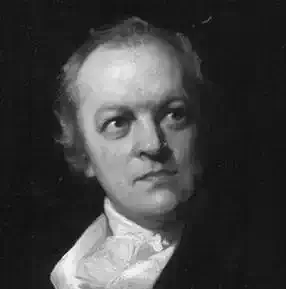
William Blake
To Spring
O thou with dewy locks, who lookest down
Thro' the clear windows of the morning, turn
Thine angel eyes upon our western isle,
Which in full choir hails thy approach, O Spring!
The hills tell each other, and the listening
Valleys hear; all our longing eyes are turned
Up to thy bright pavilions: issue forth,
And let thy holy feet visit our clime.
Come o'er the eastern hills, and let our winds
Kiss thy perfumed garments; let us taste
Thy morn and evening breath; scatter thy pearls
Upon our love-sick land that mourns for thee.
O deck her forth with thy fair fingers; pour
Thy soft kisses on her bosom; and put
Thy golden crown upon her languished head,
Whose modest tresses were bound up for thee.
482

Rudyard Kipling
In Springtime
My garden blazes brightly with the rose-bush and the peach,
And the koil sings above it, in the siris by the well,
From the creeper-covered trellis comes the squirrel's chattering speech,
And the blue jay screams and flutters where the cheery sat-bhai dwell.
But the rose has lost its fragrance, and the koil's note is strange;
I am sick of endless sunshine, sick of blossom-burdened bough.
Give me back the leafless woodlands where the winds of Springtime range --
Give me back one day in England, for it's Spring in England now!
Through the pines the gusts are booming, o'er the brown fields blowing chill,
From the furrow of the ploughshare streams the fragrance of the loam,
And the hawk nests on the cliffside and the jackdaw in the hill,
And my heart is back in England 'mid the sights and sounds of Home.
But the garland of the sacrifice this wealth of rose and peach is,
Ah! koil, little koil, singing on the siris bough,
In my ears the knell of exile your ceaseless bell like speech is --
Can you tell me aught of England or of Spring in England now?
471

Matsuo Bashō
Collection of Six Haiku
Waking in the night;
the lamp is low,
the oil freezing.
It has rained enough
to turn the stubble on the field
black.
Winter rain
falls on the cow-shed;
a cock crows.
The leeks
newly washed white,-
how cold it is!
The sea darkens;
the voices of the wild ducks
are faintly white.
Ill on a journey;
my dreams wander
over a withered moor.
472

Alexander Pope
Winter - The Fourth Pastoral, or Daphne
Lycidas.
Thyrsis, the music of that murm'ring spring,
Is not so mournful as the strains you sing.
Nor rivers winding thro' the vales below,
So sweetly warble, or so smoothly flow.
Now sleeping flocks on their soft fleeces lie,
The moon, serene in glory, mounts the sky,
Wile silent birds forget their tuneful lays,
Oh sing of Daphne's fate, and Daphne's praise!
Thyrsis.
Behold the groves that shine with silver frost,
Their beauty wither'd, and their verdure lost.
Here shall I try the sweet Alexis' strain,
That call'd the list'ning Dryads to the plain?
Thames heard the numbers as he flow'd along,
And bade his willows learn the moving song.
Lycidas.
So may kind rains their vital moisture yield,
And swell the future harvest of the field.
Begin; this charge the dying Daphne gave,
And said; 'Ye shepherds, sing around my grave!
Sing, while beside the shaded tomb I mourn,
And with fresh bays her rural shrine adorn.'
Thyrsis.
Ye gentle Muses, leave your crystal spring,
Let Nymphs and Sylvans cypress garlands bring;
Ye weeping Loves, the stream with myrtles hide,
And break your vows, as when Adonis died;
And with your golden darts, now useless grown,
Inscribe a verse on this relenting stone:
'Let nature change, let heav'n and earth deplore,
Fair Daphne's dead, and love is now no more!'
'Tis done, and nature's various charms decay,
See gloomy clouds obscure the cheerful day!
Now hung with pearls the dropping trees appear,
Their faded honours scatter'd on her bier.
See, where on earth the flow'ry glories lie,
With her they flourish'd, and with her they die.
Ah what avail the beauties nature wore?
Fair Daphne's dead, and beauty is no more!
For her the flocks refuse their verdant food,
Nor thirsty heifers seek the gliding flood.
The silver swans her hapless fate bemoan,
In notes more sad than when they sing their own;
In hollow caves sweet Echo silent lies,
Silent, or only to her name replies;
Her name with pleasure once she taught the shore,
Now Daphne's dead, and pleasure is no more!
No grateful dews descend from ev'ning skies,
Nor morning odours from the flow'rs arise;
No rich perfumes refresh the fruitful field,
Nor fragrant herbs their native incense yield.
The balmy Zephyrs, silent since her death,
Lament the ceasing of a sweeter breath;
Th' industrious bees neglect their golden store;
Fair Daphne's dead, and sweetness is no more!
No more the mounting larks, while Daphne sings,
Shall list'ning in mid air suspend their wings;
No more the birds shall imitate her lays,
Or hush'd with wonder, hearken from the sprays;
No more the streams their murmur shall forbear,
A sweeter music than their own to hear,
But tell the reeds, and tell the vocal shore,
Fair Daphne's dead, and music is no more!
Her fate is whisper'd by the gentle breeze,
And told in sighs to all the trembling trees;
The trembling trees, in ev'ry plain and wood,
Her fate remurmur to the silver flood;
The silver flood, so lately calm, appears
Swell'd with new passion, and o'erflows with tears;
The winds and trees and floods her death deplore,
Daphne, our grief! our glory now no more!
But see! where Daphne wond'ring mounts on high
Above the clouds, above the starry sky!
Eternal beauties grace the shining scene,
Fields ever fresh, and groves for ever green!
There while you rest in Amaranthine bow'rs,
Or from those meads select unfading flow'rs,
Behold us kindly, who your name implore,
Daphne, our Goddess, and our grief no more!
Lycidas.
How all things listen, while thy Muse complains!
Such silence waits on Philomela's strains,
In some still ev'ning, when the whisp'ring breeze
Pants on the leaves, and dies upon the trees.
To thee, bright goddess, oft a lamb shall bleed,
If teeming ewes increase my fleecy breed.
While plants their shade, or flow'rs their odours give,
Thy name, thy honour, and thy praise shall live!
Thyrsis.
But see, Orion sheds unwholesome dews,
Arise, the pines a noxious shade diffuse;
Sharp Boreas blows, and Nature feels decay,
Time conquers all, and we must Time obey.
Adieu, ye vales, ye mountains, streams and groves,
Adieu, ye shepherd's rural lays and loves;
Adieu, my flocks, farewell ye sylvan crew,
Daphne, farewell, and all the world adieu!
467

Ella Wheeler Wilcox
Lost
You left me with the autumn time;
When the winter stripped the forest bare,
Then dressed it in his spotless rime;
When frosts were lurking in the air
You left me here and went away.
The winds were cold; you could not stay.
You sought a warmer clime, until
The south wind, artful maid, should break
The winter's trumpets, and should fill
The air with songs of birds; and wake
The sleeping blossoms on the plain
And make the brooks to flow again.
I thought that the winter desolate,
And all times felt a sense of loss.
I taught my longing heart to wait,
And said, 'When Spring shall come across
The hills, with blossoms in her track,
The she, our loved one, will come back.'
And now the hills with grass and moss
The spring with cunning hands has spread,
And yet I feel my grievous loss.
My heart will not be comforted,
But crieth daily, 'Where is she
You promised should come back to me? '
Oh, love! where are you? day by day
I seek to find you, but in vain.
Men point me to a grave, and say:
'There is her bed upon the plain.'
But though I see no trace of you,
I cannot thiink their words are true.
You were too sweet to wholly pass
Away from earth, and leave no trace;
You were to fair to let the grass
Grow rank and tall above your face.
Your voice, that mocked the robin's trill,
I cannot think is hushed and still.
I thought I saw your golden hair
One day, and reached to touch a strand;
I found but yellow sunbeams there
The bright rays fell aslant my hand,
And seemed to mock, with lights and shades,
The silken meshes of your braids.
Again, I thought I saw your hand
Wave, as if beckoning to me;
I found 'twas but a lily, fanned
By the cool zephyrs from the sea.
Oh, love! I find no trace of you -
I wonder if their words were true?
One day I heard a singing voice;
A burst of music, trill on trill.
It made my very soul rejoice;
My heart gave and exultant thrill.
I cried, 'Oh heart, we've found her - hush! '
But no - 'twas the silver-throated thrush.
And once I thought I saw your face,
And wild with joy I ran to you;
But found, when I had reached the place,
'Twas a blush rose, bathed in dew.
Ah, love! I think you must be dead;
And I believe the words they said.
462

Edna St. Vincent Millay
The Spring And The Fall
In the spring of the year, in the spring of the year,
I walked the road beside my dear.
The trees were black where the bark was wet.
I see them yet, in the spring of the year.
He broke me a bough of the blossoming peach
That was out of the way and hard to reach.
In the fall of the year, in the fall of the year,
I walked the road beside my dear.
The rooks went up with a raucous trill.
I hear them still, in the fall of the year.
He laughed at all I dared to praise,
And broke my heart, in little ways.
Year be springing or year be falling,
The bark will drip and the birds be calling.
There's much that's fine to see and hear
In the spring of a year, in the fall of a year.
'Tis not love's going hurt my days.
But that it went in little ways.
I walked the road beside my dear.
The trees were black where the bark was wet.
I see them yet, in the spring of the year.
He broke me a bough of the blossoming peach
That was out of the way and hard to reach.
In the fall of the year, in the fall of the year,
I walked the road beside my dear.
The rooks went up with a raucous trill.
I hear them still, in the fall of the year.
He laughed at all I dared to praise,
And broke my heart, in little ways.
Year be springing or year be falling,
The bark will drip and the birds be calling.
There's much that's fine to see and hear
In the spring of a year, in the fall of a year.
'Tis not love's going hurt my days.
But that it went in little ways.
460

Johann Wolfgang von Goethe
The Metamorphosis Of Plants
THOU art confused, my beloved, at, seeing the thousandfold union
Shown in this flowery troop, over the garden dispers'd;
any a name dost thou hear assign'd; one after another
Falls on thy list'ning ear, with a barbarian sound.
None resembleth another, yet all their forms have a likeness;
Therefore, a mystical law is by the chorus proclaim'd;
Yes, a sacred enigma! Oh, dearest friend, could I only
Happily teach thee the word, which may the mystery solve!
Closely observe how the plant, by little and little progressing,
Step by step guided on, changeth to blossom and fruit!
First from the seed it unravels itself, as soon as the silent
Fruit-bearing womb of the earth kindly allows Its escape,
And to the charms of the light, the holy, the ever-in-motion,
Trusteth the delicate leaves, feebly beginning to shoot.
Simply slumber'd the force in the seed; a germ of the future,
Peacefully lock'd in itself, 'neath the integument lay,
Leaf and root, and bud, still void of colour, and shapeless;
Thus doth the kernel, while dry, cover that motionless life.
Upward then strives it to swell, in gentle moisture confiding,
And, from the night where it dwelt, straightway ascendeth to light.
Yet still simple remaineth its figure, when first it appeareth;
And 'tis a token like this, points out the child 'mid the plants.
Soon a shoot, succeeding it, riseth on high, and reneweth,
Piling-up node upon node, ever the primitive form;
Yet not ever alike: for the following leaf, as thou seest,
Ever produceth itself, fashioned in manifold ways.
Longer, more indented, in points and in parts more divided,
Which. all-deform'd until now, slept in the organ below,
So at length it attaineth the noble and destined perfection,
Which, in full many a tribe, fills thee with wondering awe.
Many ribb'd and tooth'd, on a surface juicy and swelling,
Free and unending the shoot seemeth in fullness to be;
Yet here Nature restraineth, with powerful hands, the formation,
And to a perfecter end, guideth with softness its growth,
Less abundantly yielding the sap, contracting the vessels,
So that the figure ere long gentler effects doth disclose.
Soon and in silence is check'd the growth of the vigorous branches,
And the rib of the stalk fuller becometh in form.
Leafless, however, and quick the tenderer stem then up-springeth,
And a miraculous sight doth the observer enchant.
Ranged in a circle, in numbers that now are small, and now countless,
Gather the smaller-sized leaves, close by the side of their like.
Round the axis compress'd the sheltering calyx unfoldeth,
And, as the perfectest type, brilliant-hued coronals forms.
Thus doth Nature bloom, in glory still nobler and fuller,
Showing, in order arranged, member on member uprear'd.
Wonderment fresh dost thou feel, as soon as the stem rears the flower
Over the scaffolding frail of the alternating leaves.
But this glory is only the new creation's foreteller,
Yes, the leaf with its hues feeleth the hand all divine,
And on a sudden contracteth itself; the tenderest figures
Twofold as yet, hasten on, destined to blend into one.
Lovingly now the beauteous pairs are standing together,
Gather'd in countless array, there where the altar is raised.
Hymen hovereth o'er them, and scents delicious and mighty
Stream forth their fragrance so sweet, all things enliv'ning around.
Presently, parcell'd out, unnumber'd germs are seen swelling,
Sweetly conceald in the womb, where is made perfect the fruit.
Here doth Nature close the ring of her forces eternal;
Yet doth a new one, at once, cling to the one gone before,
So that the chain be prolonged for ever through all generations,
And that the whole may have life, e'en as enjoy'd by each part.
Now, my beloved one, turn thy gaze on the many-hued thousands
Which, confusing no more, gladden the mind as they wave.
Every plant unto thee proclaimeth the laws everlasting,
Every flowered speaks louder and louder to thee;
But if thou here canst decipher the mystic words of the goddess,
Everywhere will they be seen, e'en though the features are changed.
Creeping insects may linger, the eager butterfly hasten,-
Plastic and forming, may man change e'en the figure decreed!
Oh, then, bethink thee, as well, how out of the germ of acquaintance,
Kindly intercourse sprang, slowly unfolding its leaves;
Soon how friendship with might unveil'd itself in our bosoms,
And how Amor, at length, brought forth blossom and fruit
Think of the manifold ways wherein Nature hath lent to our feelings,
Silently giving them birth, either the first or the last!
Yes, and rejoice in the present day! For love that is holy
Seeketh the noblest of fruits,--that where the thoughts are the same,
Where the opinions agree,--that the pair may, in rapt contemplation,
Lovingly blend into one,--find the more excellent world.
457

John Keats
In Drear-Nighted December
IN drear-nighted December,
Too happy, happy tree,
Thy branches ne'er remember
Their green felicity:
The north cannot undo them
With a sleety whistle through them;
Nor frozen thawings glue them
From budding at the prime.
In drear-nighted December,
Too happy, happy brook,
Thy bubblings ne'er remember
Apollo's summer look;
But with a sweet forgetting,
They stay their crystal fretting,
Never, never petting
About the frozen time.
Ah! would 'twere so with many
A gentle girl and boy!
But were there ever any
Writhed not at passed joy?
The feel of not to feel it,
When there is none to heal it
Nor numbed sense to steel it,
Was never said in rhyme.
458
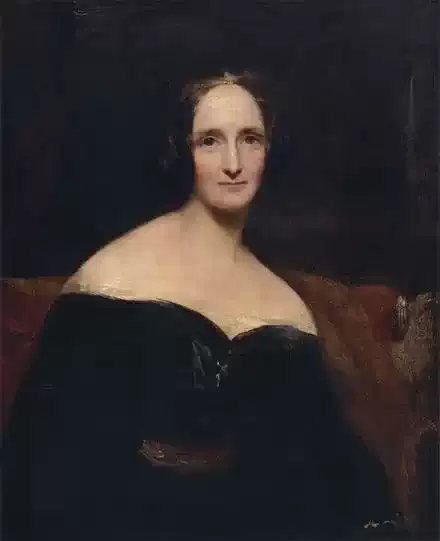
Percy Bysshe Shelley
Autumn: A Dirge
The warm sun is falling, the bleak wind is wailing,
The bare boughs are sighing, the pale flowers are dying,
And the Year
On the earth is her death-bed, in a shroud of leaves dead,
Is lying.
Come, Months, come away,
From November to May,
In your saddest array;
Follow the bier
Of the dead cold Year,
And like dim shadows watch by her sepulchre.
The chill rain is falling, the nipped worm is crawling,
The rivers are swelling, the thunder is knelling
For the Year;
The blithe swallows are flown, and the lizards each gone
To his dwelling.
Come, Months, come away;
Put on white, black and gray;
Let your light sisters play--
Ye, follow the bier
Of the dead cold Year,
And make her grave green with tear on tear.
453
Alfred Lord Tennyson
Sir Launcelot and Queen Guinevere
LIKE souls that balance joy and pain,
With tears and smiles from heaven again
The maiden Spring upon the plain
Came in a sun-lit fall of rain.
In crystal vapour everywhere
Blue isles of heaven laugh'd between,
And far, in forest-deeps unseen,
The topmost elm-tree gather'd green
From draughts of balmy air.
Sometimes the linnet piped his song:
Sometimes the throstle whistled strong:
Sometimes the sparhawk, wheel'd along,
Hush'd all the groves from fear of wrong:
By grassy capes with fuller sound
In curves the yellowing river ran,
And drooping chestnut-buds began
To spread into the perfect fan,
Above the teeming ground.
Then, in the boyhood of the year,
Sir Launcelot and Queen Guinevere
Rode thro' the coverts of the deer,
With blissful treble ringing clear.
She seem'd a part of joyous Spring:
A gown of grass-green silk she wore,
Buckled with golden clasps before;
A light-green tuft of plumes she bore
Closed in a golden ring.
Now on some twisted ivy-net,
Now by some tinkling rivulet,
In mosses mixt with violet
Her cream-white mule his pastern set:
And fleeter now she skimm'd the plains
Than she whose elfin prancer springs
By night to eery warblings,
When all the glimmering moorland rings
With jingling bridle-reins.
As she fled fast thro' sun and shade,
The happy winds upon her play'd,
Blowing the ringlet from the braid:
She look'd so lovely, as she sway'd
The rein with dainty finger-tips,
A man had given all other bliss,
And all his worldly worth for this,
To waste his whole heart in one kiss
Upon her perfect lips.
451
William Carlos Williams
Willow Poem
It is a willow when summer is over,
a willow by the river
from which no leaf has fallen nor
bitten by the sun
turned orange or crimson.
The leaves cling and grow paler,
swing and grow paler
over the swirling waters of the river
as if loth to let go,
they are so cool, so drunk with
the swirl of the wind and of the river --
oblivious to winter,
the last to let go and fall
into the water and on the ground.
451
John Clare
Autumn
The thistledown's flying, though the winds are all still,
On the green grass now lying, now mounting the hill,
The spring from the fountain now boils like a pot;
Through stones past the counting it bubbles red-hot.
The ground parched and cracked is like overbaked bread,
The greensward all wracked is, bents dried up and dead.
The fallow fields glitter like water indeed,
And gossamers twitter, flung from weed unto weed.
Hill-tops like hot iron glitter bright in the sun,
And the rivers we're eying burn to gold as they run;
Burning hot is the ground, liquid gold is the air;
Whoever looks round sees Eternity there.
444
John Clare
Wild Bees
These children of the sun which summer brings
As pastoral minstrels in her merry train
Pipe rustic ballads upon busy wings
And glad the cotters' quiet toils again.
The white-nosed bee that bores its little hole
In mortared walls and pipes its symphonies,
And never absent couzen, black as coal,
That Indian-like bepaints its little thighs,
With white and red bedight for holiday,
Right earlily a-morn do pipe and play
And with their legs stroke slumber from their eyes.
And aye so fond they of their singing seem
That in their holes abed at close of day
They still keep piping in their honey dreams,
And larger ones that thrum on ruder pipe
Round the sweet smelling closen and rich woods
Where tawny white and red flush clover buds
Shine bonnily and bean fields blossom ripe,
Shed dainty perfumes and give honey food
To these sweet poets of the summer fields;
Me much delighting as I stroll along
The narrow path that hay laid meadow yields,
Catching the windings of their wandering song.
The black and yellow bumble first on wing
To buzz among the sallow's early flowers,
Hiding its nest in holes from fickle spring
Who stints his rambles with her frequent showers;
And one that may for wiser piper pass,
In livery dress half sables and half red,
Who laps a moss ball in the meadow grass
And hoards her stores when April showers have fled;
And russet commoner who knows the face
Of every blossom that the meadow brings,
Starting the traveller to a quicker pace
By threatening round his head in many rings:
These sweeten summer in their happy glee
By giving for her honey melody.
445
Ezra Pound
The Jewel Stairs' Grievance
The jewelled steps are already quite white with dew,
It is so late that the dew soaks my gauze stockings,
And I let down the crystal curtain
And watch the moon through the clear autumn.
It is so late that the dew soaks my gauze stockings,
And I let down the crystal curtain
And watch the moon through the clear autumn.
445
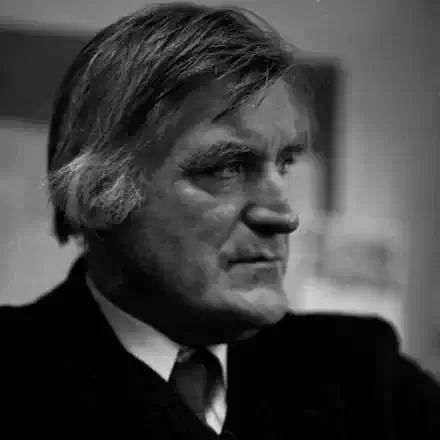
Ted Hughes
September
We sit late, watching the dark slowly unfold:
No clock counts this.
When kisses are repeated and the arms hold
There is no telling where time is.
It is midsummer: the leaves hang big and still:
Behind the eye a star,
Under the silk of the wrist a sea, tell
Time is nowhere.
We stand; leaves have not timed the summer.
No clock now needs
Tell we have only what we remember:
Minutes uproaring with our heads
Like an unfortunate King's and his Queen's
When the senseless mob rules;
And quietly the trees casting their crowns
Into the pools.
443
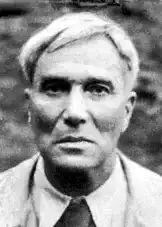
Boris Pasternak
March
The sun is hotter than the top ledge in a steam bath;
The ravine, crazed, is rampaging below.
Spring -- that corn-fed, husky milkmaid --
Is busy at her chores with never a letup.
The snow is wasting (pernicious anemia --
See those branching veinlets of impotent blue?)
Yet in the cowbarn life is burbling, steaming,
And the tines of pitchforks simply glow with health.
These days -- these days, and these nights also!
With eavesdrop thrumming its tattoos at noon,
With icicles (cachectic!) hanging on to gables,
And with the chattering of rills that never sleep!
All doors are flung open -- in stable and in cowbarn;
Pigeons peck at oats fallen in the snow;
And the culprit of all this and its life-begetter--
The pile of manure -- is pungent with ozone.
441