
Seasons (Spring, Summer, Autumn, Winter)

Rudyard Kipling
A Carol
Our Lord Who did the Ox command
To kneel to Judah's King,
He binds His frost upon the land
To ripen it for Spring --
To ripen it for Spring, good sirs,
According to His Word.
Which well must be as ye can see --
And who shall judge the Lord?
When we poor fenmen skate the ice
Or shiver on the wold,
We hear the cry of a single tree
That breaks her heart in the cold --
That breaks her heart in the cold, good sirs,
And rendeth by the board.
Which well must be as ye can see --
And who shall judge the Lord?
Her wood is crazed and little worth
Excepting as to burn,
That we may warm and make our mirth
Until the Spring return --
Until the Spring return, good sirs,
When Christians walk abroad;
When well must be as ye can see --
And who shall judge the Lord?
God bless the master of this house,
And all who sleep therein!
And guard the fens from pirate folk,
And keep us all from sin,
To walk in honesty, good sirs,
Of thought and deed ad word!
Which shall befriend our latter end....
And who shall judge the Lord?
546
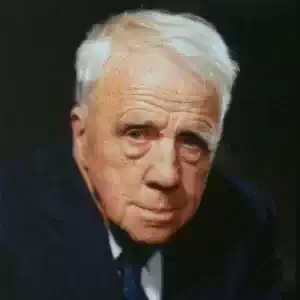
Robert Frost
My November Guest
My Sorrow, when she's here with me,
Thinks these dark days of autumn rain
Are beautiful as days can be;
She loves the bare, the withered tree;
She walks the sodden pasture lane.
Her pleasure will not let me stay.
She talks and I am fain to list:
She's glad the birds are gone away,
She's glad her simple worsted grey
Is silver now with clinging mist.
The desolate, deserted trees,
The faded earth, the heavy sky,
The beauties she so truly sees,
She thinks I have no eye for these,
And vexes me for reason why.
Not yesterday I learned to know
The love of bare November days
Before the coming of the snow,
But it were vain to tell her so,
And they are better for her praise
546
Boris Pasternak
Spring (Fragment 3)
Is it only dirt you notice?
Does the thaw not catch your glance?
As a dapple-grey fine stallion
Does it not through ditches dance?
Is it only birds that chatter
In the blueness of the skies,
Sipping through the straws of sunrays
Lemon liturgies on ice?
Only look, and you will see it:
From the rooftops to the ground
Moscow, all day long, like Kitezh
Lies, in light-blue water drowned.
Why are all the roofs transparent
And the colours crystal-bright?
Bricks like rushes gently swaying,
Mornings rush into the night.
Like a bog the town is swampy
And the scabs of snow are rare.
February, like saturated
Cottonwool in spirits, flares.
This white flame wears out the garrets,
And the air, in the oblique
Interplace of twigs and birds, is
Naked, weightless and unique.
In such days the crowds of people
Knock you down; you are unknown,
Nameless; and your girl is with them,
But you, too, are not alone.
543
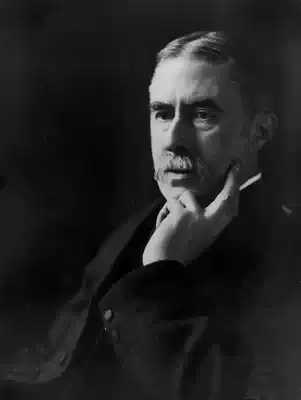
Alfred Edward Housman
Bring, In This Timeless Grave to Throw
Bring, in this timeless grave to throw,
No cypress, sombre on the snow;
Snap not from the bitter yew
His leaves that live December through;
Break no rosemary, bright with rime
And sparkling to the cruel clime;
Nor plod the winter land to look
For willows in the icy brook
To cast them leafless round him: bring
No spray that ever buds in spring.
But if the Christmas field has kept
Awns the last gleaner overstept,
Or shrivelled flax, whose flower is blue
A single season, never two;
Or if one haulm whose year is o'er
Shivers on the upland frore,
--Oh, bring from hill and stream and plain
Whatever will not flower again,
To give him comfort: he and those
Shall bide eternal bedfellows
Where low upon the couch he lies
Whence he never shall arise.
536

Robert Louis Stevenson
Windy Nights
Whenever the moon and stars are set,
Whenever the wind is high,
All night long in the dark and wet,
A man goes riding by.
Late in the night when the fires are out,
Why does he gallop and gallop about?
Whenever the trees are crying aloud,
And ships are tossed at sea,
By, on the highway, low and loud,
By at the gallop goes he.
By at the gallop he goes, and then
By he comes back at the gallop again.
537

William Wordsworth
Ode, Composed On A May Morning
While from the purpling east departs
The star that led the dawn,
Blithe Flora from her couch upstarts,
For May is on the lawn.
A quickening hope, a freshening glee,
Foreran the expected Power,
Whose first-drawn breath, from bush and tree,
Shakes off that pearly shower.
All Nature welcomes Her whose sway
Tempers the year's extremes;
Who scattereth lustres o'er noon-day,
Like morning's dewy gleams;
While mellow warble, sprightly trill,
The tremulous heart excite;
And hums the balmy air to still
The balance of delight.
Time was, blest Power! when youth and maids
At peep of dawn would rise,
And wander forth, in forest glades
Thy birth to solemnize.
Though mute the song---to grace the rite
Untouched the hawthorn bough,
Thy Spirit triumphs o'er the slight;
Man changes, but not Thou!
Thy feathered Lieges bill and wings
In love's disport employ;
Warmed by thy influence, creeping things
Awake to silent joy:
Queen art thou still for each gay plant
Where the slim wild deer roves;
And served in depths where fishes haunt
Their own mysterious groves.
Cloud-piercing peak, and trackless heath,
Instinctive homage pay;
Nor wants the dim-lit cave a wreath
To honor thee, sweet May!
Where cities fanned by thy brisk airs
Behold a smokeless sky,
Their puniest flower-pot-nursling dares
To open a bright eye.
And if, on this thy natal morn,
The pole, from which thy name
Hath not departed, stands forlorn
Of song and dance and game;
Still from the village-green a vow
Aspires to thee addrest,
Wherever peace is on the brow,
Or love within the breast.
Yes! where Love nestles thou canst teach
The soul to love the more;
Hearts also shall thy lessons reach
That never loved before.
Stript is the haughty one of pride,
The bashful freed from fear,
While rising, like the ocean-tide,
In flow the joyous year.
Hush, feeble lyre! weak words refuse
The service to prolong!
To yon exulting thrush the Muse
Entrusts the imperfect song;
His voice shall chant, in accents clear,
Throughout the live-long day,
Till the first silver star appear,
The sovereignty of May.
531
Robert Frost
To The Thawing Wind
Come with rain. O loud Southwester! Bring the singer, bring the nester; Give the
buried flower a dream; make the settled snowbank steam; Find the brown beneath the
white; But whate'er you do tonight, bath my window, make it flow, Melt it as the ice
will go; Melt the glass and leave the sticks Like a hermit's crucifix; Burst into my
narrow stall; Swing the picture on the wall; Run the rattling pages o'er; Scatter poems
on the floor; Turn the poet out of door.
530
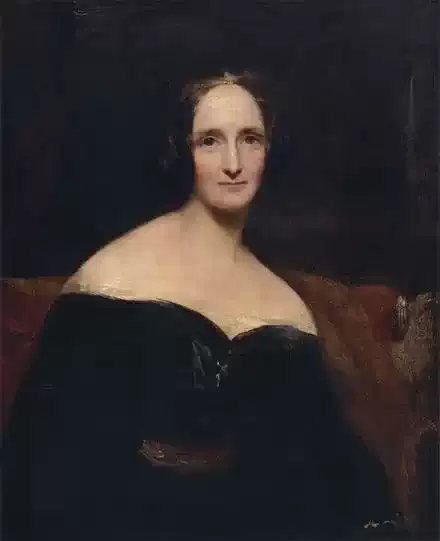
Percy Bysshe Shelley
Lines: The cold earth slept below
The cold earth slept below;
Above the cold sky shone;
And all around,
With a chilling sound,
From caves of ice and fields of snow
The breath of night like death did flow
Beneath the sinking moon.
The wintry hedge was black;
The green grass was not seen;
The birds did rest
On the bare thorn's breast,
Whose roots, beside the pathway track,
Had bound their folds o'er many a crack
Which the frost had made between.
Thine eyes glow'd in the glare
Of the moon's dying light;
As a fen-fire's beam
On a sluggish stream
Gleams dimly--so the moon shone there,
And it yellow'd the strings of thy tangled hair,
That shook in the wind of night.
The moon made thy lips pale, belov{`e}d;
The wind made thy bosom chill;
The night did shed
On thy dear head
Its frozen dew, and thou didst lie
Where the bitter breath of the naked sky
Might visit thee at will.
525
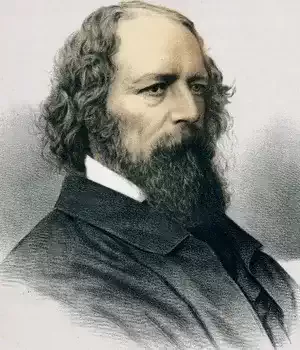
Alfred Lord Tennyson
The Oak
Live thy Life,
Young and old,
Like yon oak,
Bright in spring,
Living gold;
Summer-rich
Then; and then
Autumn-changed
Soberer-hued
Gold again.
All his leaves
Fall'n at length,
Look, he stands,
Trunk and bough
Naked strength.
Young and old,
Like yon oak,
Bright in spring,
Living gold;
Summer-rich
Then; and then
Autumn-changed
Soberer-hued
Gold again.
All his leaves
Fall'n at length,
Look, he stands,
Trunk and bough
Naked strength.
524

Robert Browning
By The Fire-Side
I.
How well I know what I mean to do
When the long dark autumn-evenings come:
And where, my soul, is thy pleasant hue?
With the music of all thy voices, dumb
In life's November too!
II.
I shall be found by the fire, suppose,
O'er a great wise book as beseemeth age,
While the shutters flap as the cross-wind blows
And I turn the page, and I turn the page,
Not verse now, only prose!
III.
Till the young ones whisper, finger on lip,
``There he is at it, deep in Greek:
``Now then, or never, out we slip
``To cut from the hazels by the creek
``A mainmast for our ship!''
IV.
I shall be at it indeed, my friends:
Greek puts already on either side
Such a branch-work forth as soon extends
To a vista opening far and wide,
And I pass out where it ends.
V.
The outside-frame, like your hazel-trees:
But the inside-archway widens fast,
And a rarer sort succeeds to these,
And we slope to Italy at last
And youth, by green degrees.
VI.
I follow wherever I am led,
Knowing so well the leader's hand:
Oh woman-country, wooed not wed,
Loved all the more by earth's male-lands,
Laid to their hearts instead!
VII.
Look at the ruined chapel again
Half-way up in the Alpine gorge!
Is that a tower, I point you plain,
Or is it a mill, or an iron-forge
Breaks solitude in vain?
VIII.
A turn, and we stand in the heart of things:
The woods are round us, heaped and dim;
From slab to slab how it slips and springs,
The thread of water single and slim,
Through the ravage some torrent brings!
IX.
Does it feed the little lake below?
That speck of white just on its marge
Is Pella; see, in the evening-glow,
How sharp the silver spear-heads charge
When Alp meets heaven in snow!
X.
On our other side is the straight-up rock;
And a path is kept 'twixt the gorge and it
By boulder-stones where lichens mock
The marks on a moth, and small ferns fit
Their teeth to the polished block.
XI.
Oh the sense of the yellow mountain-flowers,
And thorny balls, each three in one,
The chestnuts throw on our path in showers!
For the drop of the woodland fruit's begun,
These early November hours,
XII.
That crimson the creeper's leaf across
Like a splash of blood, intense, abrupt,
O'er a shield else gold from rim to boss,
And lay it for show on the fairy-cupped
Elf-needled mat of moss,
XIII.
By the rose-flesh mushrooms, undivulged
Last evening---nay, in to-day's first dew
Yon sudden coral nipple bulged,
Where a freaked fawn-coloured flaky crew
Of toadstools peep indulged.
XIV.
And yonder, at foot of the fronting ridge
That takes the turn to a range beyond,
Is the chapel reached by the one-arched bridge
Where the water is stopped in a stagnant pond
Danced over by the midge.
XV.
The chapel and bridge are of stone alike,
Blackish-grey and mostly wet;
Cut hemp-stalks steep in the narrow dyke.
See here again, how the lichens fret
And the roots of the ivy strike!
XVI.
Poor little place, where its one priest comes
On a festa-day, if he comes at all,
To the dozen folk from their scattered homes,
Gathered within that precinct small
By the dozen ways one roams---
XVII.
To drop from the charcoal-burners' huts,
Or climb from the hemp-dressers' low shed,
Leave the grange where the woodman stores his nuts,
Or the wattled cote where the fowlers spread
Their gear on the rock's bare juts.
XVIII.
It has some pretension too, this front,
With its bit of fresco half-moon-wise
Set over the porch, Art's early wont:
'Tis John in the Desert, I surmise,
But has borne the weather's brunt---
XIX.
Not from the fault of the builder, though,
For a pent-house properly projects
Where three carved beams make a certain show,
Dating---good thought of our architect's---
'Five, six, nine, he lets you know.
XX.
And all day long a bird sings there,
And a stray sheep drinks at the pond at times;
The place is silent and aware;
It has had its scenes, its joys and crimes,
But that is its own affair.
XXI.
My perfect wife, my Leonor,
Oh heart, my own, oh eyes, mine too,
Whom else could I dare look backward for,
With whom beside should I dare pursue
The path grey heads abhor?
XXII.
For it leads to a crag's sheer edge with them;
Youth, flowery all the way, there stops---
Not they; age threatens and they contemn,
Till they reach the gulf wherein youth drops,
One inch from life's safe hem!
XXIII.
With me, youth led ... I will speak now,
No longer watch you as you sit
Reading by fire-light, that great brow
And the spirit-small hand propping it,
Mutely, my heart knows how---
XXIV.
When, if I think but deep enough,
You are wont to answer, prompt as rhyme;
And you, too, find without rebuff
Response your soul seeks many a time
Piercing its fine flesh-stuff.
XXV.
My own, confirm me! If I tread
This path back, is it not in pride
To think how little I dreamed it led
To an age so blest that, by its side,
Youth seems the waste instead?
XXVI.
My own, see where the years conduct!
At first, 'twas something our two souls
Should mix as mists do; each is sucked
In each now: on, the new stream rolls,
Whatever rocks obstruct.
XXVII.
Think, when our one soul understands
The great Word which makes all things new,
When earth breaks up and heaven expands,
How will the change strike me and you
ln the house not made with hands?
XXVIII.
Oh I must feel your brain prompt mine,
Your heart anticipate my heart,
You must be just before, in fine,
See and make me see, for your part,
New depths of the divine!
XXIX.
But who could have expected this
When we two drew together first
Just for the obvious human bliss,
To satisfy life's daily thirst
With a thing men seldom miss?
XXX.
Come back with me to the first of all,
Let us lean and love it over again,
Let us now forget and now recall,
Break the rosary in a pearly rain,
And gather what we let fall!
XXXI.
What did I say?---that a small bird sings
All day long, save when a brown pair
Of hawks from the wood float with wide wings
Strained to a bell: 'gainst noon-day glare
You count the streaks and rings.
XXXII.
But at afternoon or almost eve
'Tis better; then the silence grows
To that degree, you half believe
It must get rid of what it knows,
Its bosom does so heave.
XXXIII.
Hither we walked then, side by side,
Arm in arm and cheek to cheek,
And still I questioned or replied,
While my heart, convulsed to really speak,
Lay choking in its pride.
XXXIV.
Silent the crumbling bridge we cross,
And pity and praise the chapel sweet,
And care about the fresco's loss,
And wish for our souls a like retreat,
And wonder at the moss.
XXXV.
Stoop and kneel on the settle under,
Look through the window's grated square:
Nothing to see! For fear of plunder,
The cross is down and the altar bare,
As if thieves don't fear thunder.
XXXVI.
We stoop and look in through the grate,
See the little porch and rustic door,
Read duly the dead builder's date;
Then cross the bridge that we crossed before,
Take the path again---but wait!
XXXVII.
Oh moment, one and infinite!
The water slips o'er stock and stone;
The West is tender, hardly bright:
How grey at once is the evening grown---
One star, its chrysolite!
XXXVIII.
We two stood there with never a third,
But each by each, as each knew well:
The sights we saw and the sounds we heard,
The lights and the shades made up a spell
Till the trouble grew and stirred.
XXXIX.
Oh, the little more, and how much it is!
And the little less, and what worlds away!
How a sound shall quicken content to bliss,
Or a breath suspend the blood's best play,
And life be a proof of this!
XL.
Had she willed it, still had stood the screen
So slight, so sure, 'twixt my love and her:
I could fix her face with a guard between,
And find her soul as when friends confer,
Friends---lovers that might have been.
XLI.
For my heart had a touch of the woodland-time,
Wanting to sleep now over its best.
Shake the whole tree in the summer-prime,
But bring to the Iast leaf no such test!
``Hold the last fast!'' runs the rhyme.
XLII.
For a chance to make your little much,
To gain a lover and lose a friend,
Venture the tree and a myriad such,
When nothing you mar but the year can mend:
But a last leaf---fear to touch!
XLIII.
Yet should it unfasten itself and fall
Eddying down till it find your face
At some slight wind---best chance of all!
Be your heart henceforth its dwelling-place
You trembled to forestall!
XLIV.
Worth how well, those dark grey eyes,
That hair so dark and dear, how worth
That a man should strive and agonize,
And taste a veriest hell on earth
For the hope of such a prize!
XIIV.
You might have turned and tried a man,
Set him a space to weary and wear,
And prove which suited more your plan,
His best of hope or his worst despair,
Yet end as he began.
XLVI.
But you spared me this, like the heart you are,
And filled my empty heart at a word.
If two lives join, there is oft a scar,
They are one and one, with a shadowy third;
One near one is too far.
XLVII.
A moment after, and hands unseen
Were hanging the night around us fast
But we knew that a bar was broken between
Life and life: we were mixed at last
In spite of the mortal screen.
XLVIII.
The forests had done it; there they stood;
We caught for a moment the powers at play:
They had mingled us so, for once and good,
Their work was done---we might go or stay,
They relapsed to their ancient mood.
XLIX.
How the world is made for each of us!
How all we perceive and know in it
Tends to some moment's product thus,
When a soul declares itself---to wit,
By its fruit, the thing it does
L.
Be hate that fruit or love that fruit,
It forwards the general deed of man,
And each of the Many helps to recruit
The life of the race by a general plan;
Each living his own, to boot.
LI.
I am named and known by that moment's feat;
There took my station and degree;
So grew my own small life complete,
As nature obtained her best of me---
One born to love you, sweet!
LII.
And to watch you sink by the fire-side now
Back again, as you mutely sit
Musing by fire-light, that great brow
And the spirit-small hand propping it,
Yonder, my heart knows how!
LIII.
So, earth has gained by one man the more,
And the gain of earth must be heaven's gain too;
And the whole is well worth thinking o'er
When autumn comes: which I mean to do
One day, as I said before.
522

Paul Laurence Dunbar
Signs of the Times
Air a-gittin' cool an' coolah,
Frost a-comin' in de night,
Hicka' nuts an' wa'nuts fallin',
Possum keepin' out o' sight.
Tu'key struttin' in de ba'nya'd,
Nary a step so proud ez his;
Keep on struttin', Mistah Tu'key,
Yo' do' know whut time it is.
Cidah press commence a-squeakin'
Eatin' apples sto'ed away,
Chillun swa'min' 'roun' lak ho'nets,
Huntin' aigs ermung de hay.
Mistah Tu'key keep on gobblin'
At de geese a-flyin' souf,
Oomph! dat bird do' know whut's comin';
Ef he did he'd shet his mouf.
Pumpkin gittin' good an' yallah
Mek me open up my eyes;
Seems lak it's a-lookin' at me
Jes' a-la'in' dah sayin' "Pies."
Tu'key gobbler gwine 'roun' blowin',
Gwine 'roun' gibbin' sass an' slack;
Keep on talkin', Mistah Tu'key,
You ain't seed no almanac.
Fa'mer walkin' th'oo de ba'nya'd
Seein' how things is comin' on,
Sees ef all de fowls is fatt'nin' --
Good times comin' sho's you bo'n.
Hyeahs dat tu'key gobbler braggin',
Den his face break in a smile --
Nebbah min', you sassy rascal,
He's gwine nab you atter while.
Choppin' suet in de kitchen,
Stonin' raisins in de hall,
Beef a-cookin' fu' de mince meat,
Spices groun' -- I smell 'em all.
Look hyeah, Tu'key, stop dat gobblin',
You ain' luned de sense ob feah,
You ol' fool, yo' naik's in dangah,
Do' you know Thanksgibbin's hyeah?
514

Henry Wadsworth Longfellow
An April Day
When the warm sun, that brings
Seed-time and harvest, has returned again,
'T is sweet to visit the still wood, where springs
The first flower of the plain.
I love the season well,
When forest glades are teeming with bright forms,
Nor dark and many-folded clouds foretell
The coming-on of storms.
From the earth's loosened mould
The sapling draws its sustenance, and thrives;
Though stricken to the heart with winter's cold,
The drooping tree revives.
The softly-warbled song
Comes from the pleasant woods, and colored wings
Glance quick in the bright sun, that moves along
The forest openings.
When the bright sunset fills
The silver woods with light, the green slope throws
Its shadows in the hollows of the hills,
And wide the upland glows.
And when the eve is born,
In the blue lake the sky, o'er-reaching far,
Is hollowed out and the moon dips her horn,
And twinkles many a star.
Inverted in the tide
Stand the gray rocks, and trembling shadows throw,
And the fair trees look over, side by side,
And see themselves below.
Sweet April! many a thought
Is wedded unto thee, as hearts are wed;
Nor shall they fail, till, to its autumn brought,
Life's golden fruit is shed.
513

Johann Wolfgang von Goethe
May Song II
BETWEEN wheatfield and corn,
Between hedgerow and thorn,
Between pasture and tree,
Where's my sweetheart
Tell it me!
Sweetheart caught I
Not at home;
She's then, thought I.
Gone to roam.
Fair and loving
Blooms sweet May;
Sweetheart's roving,
Free and gay.
By the rock near the wave,
Where her first kiss she gave,
On the greensward, to me,--
Something I see!
Is it she?
511
Alfred Edward Housman
Diffugere Nives
Horace, Odes, iv, 7
The snows are fled away, leaves on the shaws
And grasses in the mead renew their birth,
The river to the river-bed withdraws,
And altered is the fashion of the earth.
The Nymphs and Graces three put off their fear
And unapparelled in the woodland play.
The swift hour and the brief prime of the year
Say to the soul, Thou wast not born for aye.
Thaw follows frost; hard on the heel of spring
Treads summer sure to die, for hard on hers
Comes autumn with his apples scattering;
Then back to wintertide, when nothing stirs.
But oh, whate'er the sky-led seasons mar,
Moon upon moon rebuilds it with her beams;
Come we where Tullus and where Ancus are
And good Aeneas, we are dust and dreams.
Torquatus, if the gods in heaven shall add
The morrow to the day, what tongue has told?
Feast then thy heart, for what thy heart has had
The fingers of no heir will ever hold.
When thou descendest once the shades among,
The stern assize and equal judgment o'er,
Not thy long lineage nor thy golden tongue,
No, nor thy righteousness, shall friend thee more.
Night holds Hippolytus the pure of stain,
Diana steads him nothing, he must stay;
And Theseus leafves Pirithous in the chain
The love of comrades cannot take away.
508
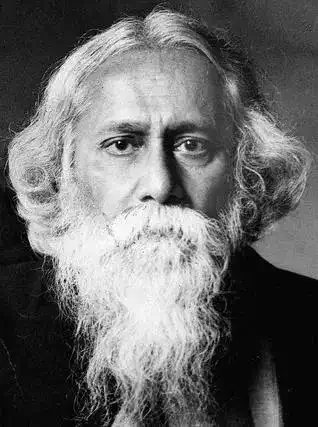
Rabindranath Tagore
The Gardener LV: It Was Mid-Day
It was mid-day when you went
away .
The sun was strong in the sky.
I had done my work and sat alone
on my balcony when you went away.
Fitful gusts came winnowing
through the smells of may distant
fields.
The doves cooed tireless in the shade,
and a bee strayed in my room humming
the news of many distant fields.
The village slept in the noonday
heat. The road lay deserted.
In sudden fits the rustling of the
leaves rose and died.
I gazed at the sky and wove in the
blue the letters of a name I had known,
while the village slept in the noonday
heat.
I had forgotten to braid my hair.
The languid breeze played with it upon
my cheek.
The river ran unruffled under the
shady bank.
The lazy white clouds did not move.
I had forgotten to braid my hair.
It was mid-day when you went
away.
The dust of the road was hot and
the fields panting.
The doves cooed among the dense
leaves.
I was alone in my balcony when you
went away.
507
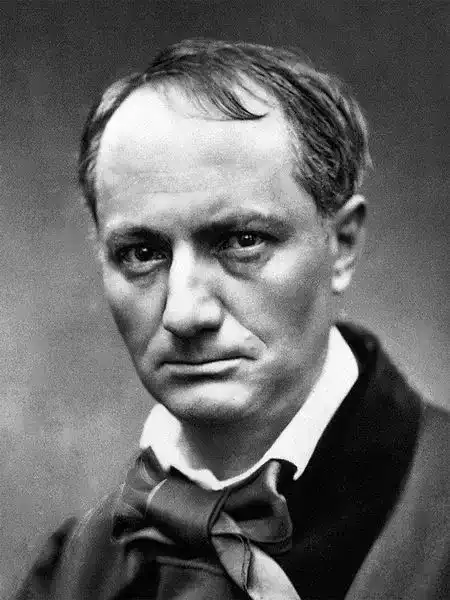
Charles Baudelaire
Overcast
Are they blue, gray or green? Mysterious eyes
(as if in fact you were looking through a mist)
in alternation tender, dreamy, grim
to match the shiftless pallor of the sky.
That's what you're like- these warm white afternoons
which make the ravished heart dissolve in tears,
the nerves, inexplicably overwrought,
outrage the dozing mind.
Not always, though-sometimes
you're like the horizon when the sun
ignites our cloudy autumn-how you glow!
A sodden countryside in sudden rout,
turned incandescent by a changing wind.
Dangerous woman-demoralizing days!
Will I adore your killing frost as much,
and in that implacable winter, when it comes,
discover pleasures sharper than iron and ice?
508

Claude Mckay
To One Coming North
At first you'll joy to see the playful snow,
Like white moths trembling on the tropic air,
Or waters of the hills that softly flow
Gracefully falling down a shining stair.
And when the fields and streets are covered white
And the wind-worried void is chilly, raw,
Or underneath a spell of heat and light
The cheerless frozen spots begin to thaw,
Like me you'll long for home, where birds' glad song
Means flowering lanes and leas and spaces dry,
And tender thoughts and feelings fine and strong,
Beneath a vivid silver-flecked blue sky.
But oh! more than the changeless southern isles,
When Spring has shed upon the earth her charm,
You'll love the Northland wreathed in golden smiles
By the miraculous sun turned glad and warm.
501

John Clare
Sport In The Meadows
Maytime is to the meadows coming in,
And cowslip peeps have gotten eer so big,
And water blobs and all their golden kin
Crowd round the shallows by the striding brig.
Daisies and buttercups and ladysmocks
Are all abouten shining here and there,
Nodding about their gold and yellow locks
Like morts of folken flocking at a fair.
The sheep and cows are crowding for a share
And snatch the blossoms in such eager haste
That basket-bearing children running there
Do think within their hearts they'll get them all
And hoot and drive them from their graceless waste
As though there wa'n't a cowslip peep to spare.
--For they want some for tea and some for wine
And some to maken up a cuckaball
To throw across the garland's silken line
That reaches oer the street from wall to wall.
--Good gracious me, how merrily they fare:
One sees a fairer cowslip than the rest,
And off they shout--the foremost bidding fair
To get the prize--and earnest half and jest
The next one pops her down--and from her hand
Her basket falls and out her cowslips all
Tumble and litter there--the merry band
In laughing friendship round about her fall
To helpen gather up the littered flowers
That she no loss may mourn. And now the wind
In frolic mood among the merry hours
Wakens with sudden start and tosses off
Some untied bonnet on its dancing wings;
Away they follow with a scream and laugh,
And aye the youngest ever lags behind,
Till on the deep lake's very bank it hings.
They shout and catch it and then off they start
And chase for cowslips merry as before,
And each one seems so anxious at the heart
As they would even get them all and more.
One climbs a molehill for a bunch of may,
One stands on tiptoe for a linnet's nest
And pricks her hand and throws her flowers away
And runs for plantin leaves to have it drest.
So do they run abouten all the day
And teaze the grass-hid larks from getting rest.
--Scarce give they time in their unruly haste
To tie a shoestring that the grass unties--
And thus they run the meadows' bloom to waste,
Till even comes and dulls their phantasies,
When one finds losses out to stifle smiles
Of silken bonnet-strings--and utters sigh
Oer garments renten clambering over stiles.
Yet in the morning fresh afield they hie,
Bidding the last day's troubles all goodbye;
When red pied cow again their coming hears,
And ere they clap the gate she tosses up
Her head and hastens from the sport she fears:
The old yoe calls her lamb nor cares to stoop
To crop a cowslip in their company.
Thus merrily the little noisy troop
Along the grass as rude marauders hie,
For ever noisy and for ever gay
While keeping in the meadows holiday.
504

John Keats
Teignmouth
I.
Here all the summer could I stay,
For there's Bishop's teign
And King's teign
And Coomb at the clear Teign head--
Where close by the stream
You may have your cream
All spread upon barley bread.
II.
There's Arch Brook
And there's Larch Brook
Both turning many a mill,
And cooling the drouth
Of the salmon's mouth
And fattening his silver gill.
III.
There is Wild wood,
A Mild hood
To the sheep on the lea o' the down,
Where the golden furze,
With its green, thin spurs,
Doth catch at the maiden's gown.
IV.
There is Newton Marsh
With its spear grass harsh--
A pleasant summer level
Where the maidens sweet
Of the Market Street
Do meet in the dusk to revel.
V.
There's the Barton rich
With dyke and ditch
And hedge for the thrush to live in,
And the hollow tree
For the buzzing bee
And a bank for the wasp to hive in.
VI.
And O, and O
The daisies blow
And the primroses are waken'd,
And violets white
Sit in silver plight,
And the green bud's as long as the spike end.
VII.
Then who would go
Into dark Soho,
And chatter with dack'd-hair'd critics,
When he can stay
For the new-mown hay,
And startle the dappled Prickets?
504
William Blake
To Autum
O Autumn, laden with fruit, and stain'd
With the blood of the grape, pass not, but sit
Beneath my shady roof; there thou may'st rest,
And tune thy jolly voice to my fresh pipe,
And all the daughters of the year shall dance!
Sing now the lusty song of fruits and flowers.
'The narrow bud opens her beauties to
The sun, and love runs in her thrilling veins;
Blossoms hang round the brows of Morning, and
Flourish down the bright cheek of modest Eve,
Till clust'ring Summer breaks forth into singing,
And feather'd clouds strew flowers round her head.
'The spirits of the air live in the smells
Of fruit; and Joy, with pinions light, roves round
The gardens, or sits singing in the trees.'
Thus sang the jolly Autumn as he sat,
Then rose, girded himself, and o'er the bleak
Hills fled from our sight; but left his golden load.
504

Mao Tsé-Tung
Snow
North country scene:
A hundred leagues locked in ice,
A thousand leagues of whirling snow.
Both sides of the Great Wall
One single white immensity.
The Yellow River's swift current
Is stilled from end to end.
The mountains dance like silver snakes
And the highlands* charge like wax-hued elephants,
Vying with heaven in stature.
On a fine day, the land,
Clad in white, adorned in red,
Grows more enchanting.
This land so rich in beauty
Has made countless heroes bow in homage.
But alas! Chin Shih-huang and Han Wu-ti
Were lacking in literary grace,
And Tang Tai-tsung and Sung Tai-tsu
Had little poetry in their souls;
And Genghis Khan,
Proud Son of Heaven for a day,
Knew only shooting eagles, bow outstretched
All are past and gone!
For truly great men
Look to this age alone.
502
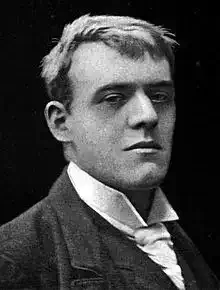
Hilaire Belloc
[Month of] November
November is that historied Emperor,
Conquered in age, but foot to foot with fate,
Who from his refuge high has heard the roar
Of squadrons in pursuit, and now, too late,
Stirrups the storm and calls the winds to war,
And arms the garrison of his last heirloom,
And shakes the sky to its extremest shore
With battle against irrevocable doom.
Till, driven and hurled from his strong citadels,
He flies in hurrying cloud and spurs him on,
Empty of lingerings, empty of farewells
And final benedictions, and is gone.
But in my garden all the trees have shed
Their legacies of the light, and all the flowers are dead.
502
Henry Wadsworth Longfellow
Autumnal Nightfall
Round Autumn's mouldering urn
Loud mourns the chill and cheerless gale,
When nightfall shades the quiet vale
And stars in beauty burn.
'Tis the year's eventide.
The wind, like one that sighs in pain
O?er joys that ne'er will bloom again
Mourns on the far hillside.
And yet my pensive eye
Rests on the faint blue mountain long;
And for the fairy-land of song,
That lies beyond, I sigh.
The moon unveils her brow;
In the mid-sky her urn glows bright,
And in her sad and mellowing light
The valley sleeps below.
Upon the hazel gray
The lyre of Autumn hangs unstrung
And o?er its tremulous chords are flung
The fringes of decay.
I stand deep musing here,
Beneath the dark and motionless beech,
Whilst wandering winds of nightfall reach
My melancholy ear.
The air breathes chill and free:
A spirit in soft music calls
From Autumn's gray and moss-grown halls,
And round her withered tree.
The hoar and mantled oak,
With moss and twisted ivy brown,
Bends in its lifeless beauty down
Where weeds the fountain choke.
That fountain's hollow voice
Echoes the sound of precious things;
Of early feeling's tuneful springs
Choked with our blighted joys.
Leaves, that the night-wind bears
To earth's cold bosom with a sign,
Are types of our mortality,
And of our fading years.
The tree that shades the plain,
Wasting and hoar as time decays,
Spring shall renew with cheerful days,--
But not my joys again.
500
Rudyard Kipling
Cuckoo Song
(Spring begins in southern England on the th April, on which date the Old
Woman lets the Cuckoo out of her basket at Heathfield Fair -- locally known as Heffle
Cuckoo Fair.)
Tell it to the locked-up trees,
Cuckoo, bring your song here!
Warrant, Act and Summons, please,
For Spring to pass along here!
Tell old Winder, if he doubt,
Tell him squat and square -- a!
Old Woman!
Old Woman!
Old Woman's let the Cuckoo out
At Heffle Cuckoo Fair -- a!
March has searched and April tried --
'Tisn't long to Mary now.
Not so far to Whitsuntide
And Cuckoo's come to stay now!
Hear the valiant fellow shout
Down the orchard bare -- a!
Old Woman!
Old Woman!
Old Woman's let the Cuckoo out
At Heffle Cuckoo Fair -- a!
When your heart is young and gay
And the season rules it --
Work your works and play your play
'Fore the Autumn cools it!
Kiss you turn and turn-about,
But my lad, beware -- a!
Old Woman!
Old Woman!
Old Woman's let the Cuckoo out
At Heffle Cuckoo Fair -- a!
496