
Seasons (Spring, Summer, Autumn, Winter)

Roger Mcgough
The Time I Like Best
The time I like best is am
when the snow is inches deep
which I'm yet to discover
'cause I'm under the covers
fast, fast asleep.
when the snow is inches deep
which I'm yet to discover
'cause I'm under the covers
fast, fast asleep.
629

Paul Laurence Dunbar
Summer in the South
The Oriole sings in the greening grove
As if he were half-way waiting,
The rosebuds peep from their hoods of green,
Timid, and hesitating.
The rain comes down in a torrent sweep
And the nights smell warm and pinety,
The garden thrives, but the tender shoots
Are yellow-green and tiny.
Then a flash of sun on a waiting hill,
Streams laugh that erst were quiet,
The sky smiles down with a dazzling blue
And the woods run mad with riot.
638
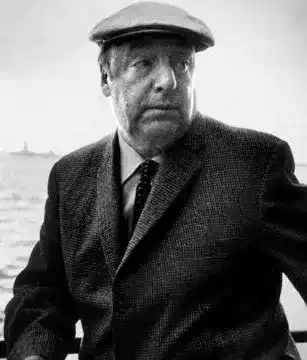
Pablo Neruda
I Remember You As You Were
I remember you as you were in the last autumn.
You were the grey beret and the still heart.
In your eyes the flames of the twilight fought on.
And the leaves fell in the water of your soul.
Clasping my arms like a climbing plant
the leaves garnered your voice, that was slow and at peace.
Bonfire of awe in which my thirst was burning.
Sweet blue hyacinth twisted over my soul.
I feel your eyes traveling, and the autumn is far off:
Grey beret, voice of a bird, heart like a house
Towards which my deep longings migrated
And my kisses fell, happy as embers.
Sky from a ship. Field from the hills:
Your memory is made of light, of smoke, of a still pond!
Beyond your eyes, farther on, the evenings were blazing.
Dry autumn leaves revolved in your soul.
627
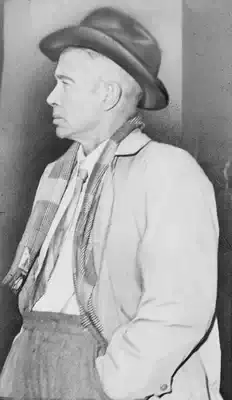
E. E. Cummings
in just
in Justspring
when the world is mudluscious
the little
lame balloonman
whistles far and wee
and eddieandbill come
running from marbles and
piracies and it's spring
when the world is puddle-wonderful
the queer
old balloonman whistles
far and wee
and bettyandisbel come dancing
from hop-scotch and jump-rope and
it's spring
and the goat-footed
balloonMan whistles
far
and
wee
633

Christina Rossetti
A Green Cornfield
The earth was green, the sky was blue:
I saw and heard one sunny morn
A skylark hang betweent he two,
A singing speck above the corn;
A stage below, in gay accord,
White butterflies danced on the wing,
And still the singing skylark soared,
And silent sank and soared to sing.
The cornfield stretched a tender green
To right and left beside my walks;
I knew he had a nest unseen
Somewhere among the million stalks.
And as I paused to hear his song
While swift the sunny moments slid,
Perhaps his mate sat listening long,
And listened longer than I did.
617

William Shakespeare
It was a Lover and his Lass
IT was a lover and his lass,
With a hey, and a ho, and a hey nonino,
That o'er the green corn-field did pass,
In the spring time, the only pretty ring time,
When birds do sing, hey ding a ding, ding;
Sweet lovers love the spring.
Between the acres of the rye,
With a hey, and a ho, and a hey nonino,
These pretty country folks would lie,
In the spring time, the only pretty ring time,
When birds do sing, hey ding a ding, ding;
Sweet lovers love the spring.
This carol they began that hour,
With a hey, and a ho, and a hey nonino,
How that life was but a flower
In the spring time, the only pretty ring time,
When birds do sing, hey ding a ding, ding;
Sweet lovers love the spring.
And, therefore, take the present time
With a hey, and a ho, and a hey nonino,
For love is crown`d with the prime
In the spring time, the only pretty ring time,
When birds do sing, hey ding a ding, ding;
Sweet lovers love the spring.
With a hey, and a ho, and a hey nonino,
That o'er the green corn-field did pass,
In the spring time, the only pretty ring time,
When birds do sing, hey ding a ding, ding;
Sweet lovers love the spring.
Between the acres of the rye,
With a hey, and a ho, and a hey nonino,
These pretty country folks would lie,
In the spring time, the only pretty ring time,
When birds do sing, hey ding a ding, ding;
Sweet lovers love the spring.
This carol they began that hour,
With a hey, and a ho, and a hey nonino,
How that life was but a flower
In the spring time, the only pretty ring time,
When birds do sing, hey ding a ding, ding;
Sweet lovers love the spring.
And, therefore, take the present time
With a hey, and a ho, and a hey nonino,
For love is crown`d with the prime
In the spring time, the only pretty ring time,
When birds do sing, hey ding a ding, ding;
Sweet lovers love the spring.
621
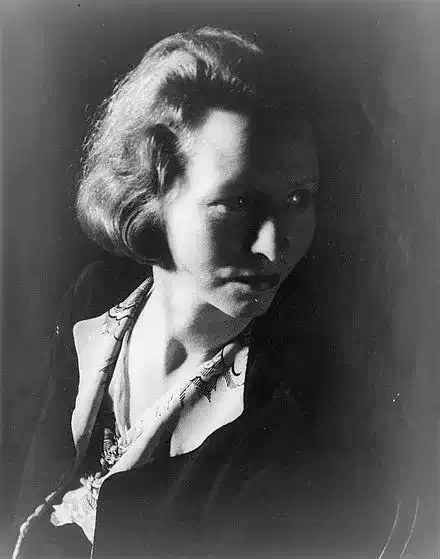
Edna St. Vincent Millay
Sonnet III: Mindful of you the sodden earth
Mindful of you the sodden earth in spring,
And all the flowers that in the springtime grow,
And dusty roads, and thistles, and the slow
Rising of the round moon, all throats that sing
The summer through, and each departing wing,
And all the nests that the bared branches show,
And all winds that in any weather blow,
And all the storms that the four seasons bring.
You go no more on your exultant feet
Up paths that only mist and morning knew,
Or watch the wind, or listen to the beat
Of a bird's wings too high in air to view,--
But you were something more than young and sweet
And fair,--and the long year remembers you.
603

Robert Browning
Up At A Villa--- Down In The City
AS DISTINGUISHED BY AN ITALIAN PERSON OF QUALITY.)
I.
Had I but plenty of money, money enough and to spare,
The house for me, no doubt, were a house in the city-square;
Ah, such a life, such a life, as one leads at the window there!
II.
Something to see, by Bacchus, something to hear, at least!
There, the whole day long, one's life is a perfect feast;
While up at a villa one lives, I maintain it, no more than a beast.
III.
Well now, look at our villa! stuck like the horn of a bull
Just on a mountain-edge as bare as the creature's skull,
Save a mere shag of a bush with hardly a leaf to pull!
---I scratch my own, sometimes, to see if the hair's turned wool.
IV.
But the city, oh the city---the square with the houses! Why?
They are stone-faced, white as a curd, there's something to take the eye!
Houses in four straight lines, not a single front awry;
You watch who crosses and gossips, who saunters, who hurries by;
Green blinds, as a matter of course, to draw when the sun gets high;
And the shops with fanciful signs which are painted properly.
V.
What of a villa? Though winter be over in March by rights,
'Tis May perhaps ere the snow shall have withered well off the heights:
You've the brown ploughed land before, where the oxen steam and wheeze,
And the hills over-smoked behind by the faint grey olive-trees.
VI.
Is it better in May, I ask you? You've summer all at once;
In a day he leaps complete with a few strong April suns.
'Mid the sharp short emerald wheat, scarce risen three fingers well,
The wild tulip, at end of its tube, blows out its great red bell
Like a thin clear bubble of blood, for the children to pick and sell.
VII.
Is it ever hot in the square? There's a fountain to spout and splash!
In the shade it sings and springs; in the shine such foam-bows flash
On the horses with curling fish-tails, that prance and paddle and pash
Round the lady atop in her conch---fifty gazers do not abash,
Though all that she wears is some weeds round her waist in a sort of sash.
VIII.
All the year at the villa, nothing to see though you linger,
Except yon cypress that points like a death's lean lifted forefinger.
Some think fireflies pretty, when they mix i' the corn and mingle,
Or thrid the stinking hemp till the stalks of it seem a-tingle.
Late August or early September, the stunning cicala is shrill,
And the bees keep their tiresome whine round the resinous firs on the hill.
Enough of the seasons,---I spare you the months of the fever and chill.
IX.
Ere you open your eyes in the city, the blessed church-bells begin:
No sooner the bells leave off than the diligence rattles in:
You get the pick of the news, and it costs you never a pin.
By-and-by there's the travelling doctor gives pills, lets blood, draws teeth;
Or the Pulcinello-trumpet breaks up the market beneath.
At the post-office such a scene-picture---the new play, piping hot!
And a notice how, only this morning, three liberal thieves were shot.
Above it, behold the Archbishop's most fatherly of rebukes,
And beneath, with his crown and his lion, some little new law of the Duke's!
Or a sonnet with flowery marge, to the Reverend Don So-and-so
Who is Dante, Boccaccio, Petrarca, Saint Jerome and Cicero,
``And moreover,'' (the sonnet goes rhyming,) ``the skirts of Saint Paul has reached,
``Having preached us those six Lent-lectures more unctuous than ever he preached.''
Noon strikes,---here sweeps the procession! our Lady borne smiling and smart
With a pink gauze gown all spangles, and seven swords stuck in her heart!
_Bang-whang-whang_ goes the drum, _tootle-to-tootle_ the fife;
No keeping one's haunches still: it's the greatest pleasure in life.
X.
But bless you, it's dear---it's dear! fowls, wine, at double the rate.
They have clapped a new tax upon salt, and what oil pays passing the gate
It's a horror to think of. And so, the villa for me, not the city!
Beggars can scarcely be choosers: but still---ah, the pity, the pity!
Look, two and two go the priests, then the monks with cowls and sandals,
And the penitents dressed in white shirts, a-holding the yellow candles;
One' he carries a flag up straight, and another a cross with handles,
And the Duke's guard brings up the rear, for the better prevention of scandals:
_Bang-whang-whang_ goes the drum, _tootle-te-tootle_ the fife.
Oh, a day in the city-square, there is no such pleasure in life!
601

Kazi Nazrul Islam
Life
An awakening pervades
The meadows and wilderness
Let not your slumber
Make it go in vain.
The lightning is beckoning
With thunder and rain.
The heaven is awake
The earth is awake
Oh, wake up for heaven's sake.
Beneath the earth
And under the feet
Those who lay dead
They shall now sprout
Like the green grass
With new blades.
A verdant earth is awaiting
The advent of a spring-shower.
The bud that the thunder
Failed to burst into new blossom
Out of joy, it will now bloom.
[Original: Jibon; Translation: Syed Mujibul Huq]
591

William Wordsworth
The Rainbow
My heart leaps up when I behold
A Rainbow in the sky:
So was it when my life began;
So is it now I am a man;
So be it when I shall grow old,
Or let me die!
The Child is father of the man;
And I wish my days to be
Bound each to each by natural piety.
A Rainbow in the sky:
So was it when my life began;
So is it now I am a man;
So be it when I shall grow old,
Or let me die!
The Child is father of the man;
And I wish my days to be
Bound each to each by natural piety.
588

Boris Pasternak
There'll be no one in the house...
There'll be no one in the house
Save for twilight. All alone,
Winter's day seen in the space that's
Made by curtains left undrawn.
Only flash-past of the wet white
Snowflake clusters, glimpsed and gone.
Only roofs and snow, and save for
Roofs and snow-no one at home.
Once more, frost will trace its patterns,
I'll be haunted once again
By my last year's melancholy,
By that other wintertime.
Once more, I'll be troubled by an
Old unexpiated shame,
And the icy firewood famine
Will press on the window-pane.
But the quiver of intrusion
Through those curtains folds will run.
Measuring silence with your footsteps,
Like the future, in you'll come.
You'll appear there in the doorway
Wearing something white and plain,
Something in the very stuff from
Which the snowflakes too are sewn.
572
Kazi Nazrul Islam
The Month of Poush
Lo! Winter comes!
She comes across an ocean of sorrow and tears.
Beware! Beware!
She comes from behind the horizon enveloped
in thick mist.
With her advent, alas! in the Ieafy forest
A farewell dirge seems to go round
The parting Day (Ah me!) casts a sad look
Losing as she does-the Evening Star that
lights her path.
See! Winter sets in -
She represents the sadness of the year's
journey, a loss of Eternity,
The farewell season of ripe paddy,
the dread of new arrival-
Beware! Beware! She is come! -
Dry breath, and Oh! the choked voice
of a farewell deeply laden with tears -
Arise, wayfarer! Thou hast to cover
a long distance casting a sad look
from thy black eyes.
[Translation: Abdul Hakim]
573
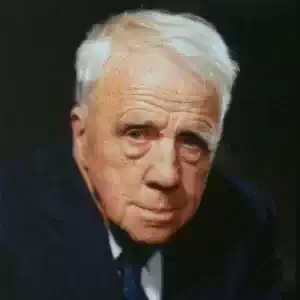
Robert Frost
Evening In A Sugar Orchard
From where I lingered in a lull in march
outside the sugar-house one night for choice,
I called the fireman with a careful voice
And bade him leave the pan and stoke the arch:
'O fireman, give the fire another stoke,
And send more sparks up chimney with the smoke.'
I thought a few might tangle, as they did,
Among bare maple boughs, and in the rare
Hill atmosphere not cease to glow,
And so be added to the moon up there.
The moon, though slight, was moon enough to show
On every tree a bucket with a lid,
And on black ground a bear-skin rug of snow.
The sparks made no attempt to be the moon.
They were content to figure in the trees
As Leo, Orion, and the Pleiades.
And that was what the boughs were full of soon.
572
Boris Pasternak
The Steppe
How lovely those journeys into quiet!
Boundless the steppe, like a seascape,
ants rustle, and the feather-grass sighs,
mosquitoes go whining through space.
The hayricks line up with the clouds,
volcano after volcano, they fade.
Grown silent, damp, the boundless steppe,
you drift, you’re buffeted, you sway.
The mist overtakes us, washes, a sea,
and burrs are clinging to stockings, today
it’s lovely to tramp the steppe’s shore,
you drift, you’re buffeted, you sway.
Is that a rick in the mist? Who knows?
Is that one ours? Yes, it’s found.
There! Yes, that’s it all right, though.
The rick, and the mist, and the steppe all round.
And the Milky Way slants towards Kerch,
like a path that cattle have stamped on.
Go past the houses, you’ll lose your breath,
on every side, broad, broad horizons.
Shadowy midnight stands by the way,
strewn with stars, that touch every verst,
and you can’t cross it, beyond the fence,
without trampling the universe.
When did the stars sweep down so low,
midnight sink so deep in tall grass,
and drenched muslin, afraid, aglow,
long for a dénouement at last?
Let the steppe judge, and night decide.
When, if not in the Beginning,
did Mosquitoes whine, Ants ride,
and Burrs go clinging to stockings?
Close them, my darling! Or go blind!
The whole steppe’s as before the Fall:
All, drowned in peace, like a parachute,
like a heaving vision, All.
572
Boris Pasternak
Autumn Frost
The morning sun shows like a pillar
Of fire through smoke on frosty days.
As on a faulty snap, it cannot
Make out my features in the haze.
The distant trees will hardly see me
Until the sun at last can break
Out of the fog, and flash triumphant
Upon the meadows by the lake.
A passer-by in mist receding
Is recognized when he has passed.
You walk on hoarfrost-covered pathways
As though on mats of plaited bast.
The frost is covered up in gooseflesh,
The air is false like painted cheeks,
The earth is shivering, and sick of
Breathing potato-stalks for weeks.
574

Ella Wheeler Wilcox
Songs Of A Country Home
I
Who has not felt his heart leap up, and glow
What time the tulips first begin to blow,
Has one sweet joy, still left for him to know.
It is like early loves' imagining;
That fragile pleasure, which the Tulips bring,
When suddenly we see them, in the Spring.
Not all the gardens later royal train,
Not great triumphant Roses, when they reign,
Can bring that delicate delight again.
II
One of the sweetest hours is this;
(Of all I think we like it best
A little restful oasis,
Between the breakfast, and the post.
Just south of coffee, and of toast,
Just north of daily task and duty;
Just west of dreams, this Island gleams,
A fertile spot of peace and beauty.
We wander out across the lawn;
We idle by a bush in bloom;
The Household pets come following on;
Or if the day is one of gloom,
We loiter in a pleasant room
Or from a casement, lean and chatter.
Then comes the mail, like sudden hail,
And off we scatter.
III
When roses die, in languid August days,
We leave the Garden, to its fallen ways;
And seek the shelter of wide porticos,
Where Honeysuckle, in defiance blows
Undaunted by the Sun's too ardent rays.
The matron Summer, turns a wistful gaze
Across green valleys, back to tender Mays;
And something of her large contentment goes,
When roses die.
Yet all her subtle fascination stays
To lure us into idle sweet delays.
The lowered awning, by the hammock shows
Inviting nooks for dreaming and repose;
Oh, restful are the pleasures of those days
When roses die.
IV
The summer folk, fled back to town;
The green woods changed to red and brown;
A sound upon the frosty air
Of windows closing everywhere.
And then the log, lapped by a blaze.
Oh, what is better than these days;
With books and friends and love a-near;
Go on, gay world, but leave me here.
568

Sara Teasdale
A November Night
There! See the line of lights,
A chain of stars down either side the street --
Why can't you lift the chain and give it to me,
A necklace for my throat? I'd twist it round
And you could play with it. You smile at me
As though I were a little dreamy child
Behind whose eyes the fairies live. . . . And see,
The people on the street look up at us
All envious. We are a king and queen,
Our royal carriage is a motor bus,
We watch our subjects with a haughty joy. . . .
How still you are! Have you been hard at work
And are you tired to-night? It is so long
Since I have seen you -- four whole days, I think.
My heart is crowded full of foolish thoughts
Like early flowers in an April meadow,
And I must give them to you, all of them,
Before they fade. The people I have met,
The play I saw, the trivial, shifting things
That loom too big or shrink too little, shadows
That hurry, gesturing along a wall,
Haunting or gay -- and yet they all grow real
And take their proper size here in my heart
When you have seen them. . . . There's the Plaza now,
A lake of light! To-night it almost seems
That all the lights are gathered in your eyes,
Drawn somehow toward you. See the open park
Lying below us with a million lamps
Scattered in wise disorder like the stars.
We look down on them as God must look down
On constellations floating under Him
Tangled in clouds. . . . Come, then, and let us walk
Since we have reached the park. It is our garden,
All black and blossomless this winter night,
But we bring April with us, you and I;
We set the whole world on the trail of spring.
I think that every path we ever took
Has marked our footprints in mysterious fire,
Delicate gold that only fairies see.
When they wake up at dawn in hollow tree-trunks
And come out on the drowsy park, they look
Along the empty paths and say, "Oh, here
They went, and here, and here, and here! Come, see,
Here is their bench, take hands and let us dance
About it in a windy ring and make
A circle round it only they can cross
When they come back again!" . . . Look at the lake --
Do you remember how we watched the swans
That night in late October while they slept?
Swans must have stately dreams, I think. But now
The lake bears only thin reflected lights
That shake a little. How I long to take
One from the cold black water -- new-made gold
To give you in your hand! And see, and see,
There is a star, deep in the lake, a star!
Oh, dimmer than a pearl -- if you stoop down
Your hand could almost reach it up to me. . . .
There was a new frail yellow moon to-night --
I wish you could have had it for a cup
With stars like dew to fill it to the brim. . . .
How cold it is! Even the lights are cold;
They have put shawls of fog around them, see!
What if the air should grow so dimly white
That we would lose our way along the paths
Made new by walls of moving mist receding
The more we follow. . . . What a silver night!
That was our bench the time you said to me
The long new poem -- but how different now,
How eerie with the curtain of the fog
Making it strange to all the friendly trees!
There is no wind, and yet great curving scrolls
Carve themselves, ever changing, in the mist.
Walk on a little, let me stand here watching
To see you, too, grown strange to me and far. . . .
I used to wonder how the park would be
If one night we could have it all alone --
No lovers with close arm-encircled waists
To whisper and break in upon our dreams.
And now we have it! Every wish comes true!
We are alone now in a fleecy world;
Even the stars have gone. We two alone!
563
Boris Pasternak
Winter Nears
Winter nears. Once more
the bear’s secret retreat
will vanish under mud’s floor,
to a child’s fretful grief.
Huts will wake in the water,
reflecting paths of smoke,
circled by autumn’s tremor
lovers meet by the fire to talk.
Denizens of the harsh North
whose roof is the clear air,
‘In this sign conquer’, set forth,
marks each unreachable lair.
I love you, provincial haunts,
off the map, the road, past the farms,
the more tired and faded the book,
the greater for me its charms.
Slow files of carts lumbering by
you spell out an alphabet flowing
from meadow to meadow. And I
found you always my favourite reading.
And it’s suddenly written again,
here in first snow is the spider’s
cursive script, runners of sleighs,
where ice on the page embroiders.
A silvered hazel October.
Pewter glow since frost began.
Autumn twilight, of Chekhov,
Tchaikovsky, and Levitan.
556
Boris Pasternak
Spasskoe
In Spasskoe, unforgettable September sheds its leaves.
Isn’t it time to close up the summer-house?
Echo traps the thudding of axe-blows in the trees,
and, past the fence, barters a herd-boy’s shout.
Last night the marsh by the park shivered, too.
The moment the sun rises it vanishes.
The bluebell can’t drink the rheumatic dew,
and a dirty lilac stain soils the birches.
The wood’s downcast. It wants to sleep, as well,
under the snow, in the deep quiet of the bear’s den.
The park, gaping, framed by tree-trunks stands still,
in neat obituary-columns, its edges blackened.
Has the birch copse stopped fading, staining,
its shade more watery still, and growing thin?
And again, you’re, fifteen – it’s still complaining –
again – ‘oh child, oh, what shall we do with them?’
They’re already so many it’s time to stop playing.
They’re – birds in the bushes, mushrooms in the trees.
Already we’ve veiled our horizon with them, shrouding
each other’s landscape with fog-bound mysteries.
The comic, on the night of his death, typhus-stricken,
hears a peal: it’s Homeric laughter from the box.
Today in Spasskoe, the same grief, in hallucination,
stares, from the road, at a house of weathered logs.
556

Matsuo Bashō
Moonlight slanting
Moonlight slanting
through the bamboo grove;
a cuckoo crying.
Translated by Robert Hass
through the bamboo grove;
a cuckoo crying.
Translated by Robert Hass
559
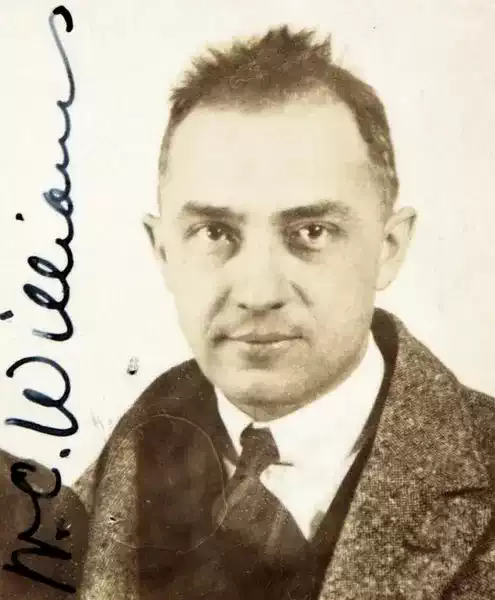
William Carlos Williams
A Celebration
A middle-northern March, now as always--
gusts from the South broken against cold winds--
but from under, as if a slow hand lifted a tide,
it moves--not into April--into a second March,
the old skin of wind-clear scales dropping
upon the mold: this is the shadow projects the tree
upward causing the sun to shine in his sphere.
So we will put on our pink felt hat--new last year!
--newer this by virtue of brown eyes turning back
the seasons--and let us walk to the orchid-house,
see the flowers will take the prize tomorrow
at the Palace.
Stop here, these are our oleanders.
When they are in bloom--
You would waste words
It is clearer to me than if the pink
were on the branch. It would be a searching in
a colored cloud to reveal that which now, huskless,
shows the very reason for their being.
And these the orange-trees, in blossom--no need
to tell with this weight of perfume in the air.
If it were not so dark in this shed one could better
see the white.
It is that very perfume
has drawn the darkness down among the leaves.
Do I speak clearly enough?
It is this darkness reveals that which darkness alone
loosens and sets spinning on waxen wings--
not the touch of a finger-tip, not the motion
of a sigh. A too heavy sweetness proves
its own caretaker.
And here are the orchids!
Never having seen
such gaiety I will read these flowers for you:
This is an odd January, died--in Villon's time.
Snow, this is and this the stain of a violet
grew in that place the spring that foresaw its own doom.
And this, a certain July from Iceland:
a young woman of that place
breathed it toward the South. It took root there.
The color ran true but the plant is small.
This falling spray of snow-flakes is
a handful of dead Februaries
prayed into flower by Rafael Arevalo Martinez
of Guatemala.
Here's that old friend who
went by my side so many years: this full, fragile
head of veined lavender. Oh that April
that we first went with our stiff lusts
leaving the city behind, out to the green hill--
May, they said she was. A hand for all of us:
this branch of blue butterflies tied to this stem.
June is a yellow cup I'll not name; August
the over-heavy one. And here are--
russet and shiny, all but March. And March?
Ah, March--
Flowers are a tiresome pastime.
One has a wish to shake them from their pots
root and stem, for the sun to gnaw.
Walk out again into the cold and saunter home
to the fire. This day has blossomed long enough.
I have wiped out the red night and lit a blaze
instead which will at least warm our hands
and stir up the talk.
I think we have kept fair time.
Time is a green orchard.
553
Boris Pasternak
Ploughing Time
What is the matter with the landscape?
Familiar landmarks are not there.
Ploughed fields, like squares upon a chessboard,
Today are scattered everywhere.
The newly-harrowed vast expanses
So evenly are spread about,
As though the valley had been spring-cleaned
Or else the mountains flattened out.
And that same day, in one endeavour,
Outside the furrows every tree
Bursts into leaf, light-green and downy,
And stretches skyward, tall and free.
No speck of dust on the new maples,
And colours nowhere are as clean
As is the light-grey of the ploughland
And as the silver-birch's green.
547
Boris Pasternak
Winter Sky
Ice-chips plucked whole from the smoke,
the past week’s stars all frozen in flight,
Head over heels the skater’s club goes,
clinking its rink with the peal of night.
Step slow, slower, slow-er, skater,
pride carving its trace as you race by.
each turn’s a constellation cut there,
scratched by a skate in Norway’s sky.
The air is fettered in frozen iron.
Oh, skaters! There – it’s all the same,
that, like snake’s eyes set in ivory,
night’s on earth, a domino game:
that moon, a numb hound’s tongue
is there, frozen tight: that mouths like
the forgers of coins’ – are stung,
filled with lava of breathtaking ice.
553
William Wordsworth
The Simplon Pass
-Brook and road
Were fellow-travellers in this gloomy Pass,
And with them did we journey several hours
At a slow step. The immeasurable height
Of woods decaying, never to be decayed,
The stationary blasts of waterfalls,
And in the narrow rent, at every turn,
Winds thwarting winds bewildered and forlorn,
The torrents shooting from the clear blue sky,
The rocks that muttered close upon our ears,
Black drizzling crags that spake by the wayside
As if a voice were in them, the sick sight
And giddy prospect of the raving stream,
The unfettered clouds and region of the heavens,
Tumult and peace, the darkness and the light--
Were all like workings of one mind, the features
Of the same face, blossoms upon one tree,
Characters of the great Apocalypse,
The types and symbols of Eternity,
Of first and last, and midst, and without end.
552