
Seasons (Spring, Summer, Autumn, Winter)
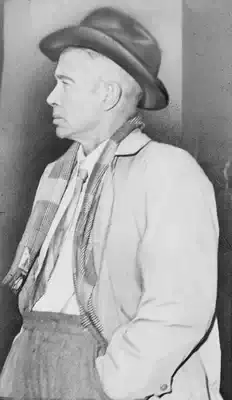
E. E. Cummings
somewhere i have never travelled, gladly beyond
any experience,your eyes have their silence:
in your most frail gesture are things which enclose me,
or which i cannot touch because they are too near
your slightest look will easily unclose me
though i have closed myself as fingers,
you open always petal by petal myself as Spring opens
(touching skilfully,mysteriously)her first rose
or if your wish be to close me, i and
my life will shut very beautifully ,suddenly,
as when the heart of this flower imagines
the snow carefully everywhere descending;
nothing which we are to perceive in this world equals
the power of your intense fragility:whose texture
compels me with the color of its countries,
rendering death and forever with each breathing
(i do not know what it is about you that closes
and opens;only something in me understands
the voice of your eyes is deeper than all roses)
nobody,not even the rain,has such small hands
1,278
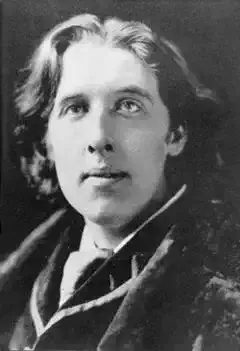
Oscar Wilde
Desespoir
The seasons send their ruin as they go,
For in the spring the narciss shows its head
Nor withers till the rose has flamed to red,
And in the autumn purple violets blow,
And the slim crocus stirs the winter snow;
Wherefore yon leafless trees will bloom again
And this grey land grow green with summer rain
And send up cowslips for some boy to mow.
But what of life whose bitter hungry sea
Flows at our heels, and gloom of sunless night
Covers the days which never more return?
Ambition, love and all the thoughts that burn
We lose too soon, and only find delight
In withered husks of some dead memory.
1,306
E. E. Cummings
Since feeling is first,
who pays any attention
to the syntax of things
will never wholly kiss you;
wholly to be a fool
while spring is in the world
my blood approves,
and kisses are a better fate
than wisdom
lady i swear by all flowers. Dont cry
-the best gesture of my brain is less than
your eyelids flutter which says
we are for each other: then
laugh, leaning back in my arms
for lifes not a paragraph
and death i think is no parenthesis
1,461

Rabindranath Tagore
The Flower-School
The Flower-School
When storm-clouds rumble in the sky and June showers come down.
The moist east wind comes marching over the heath to blow its
bagpipes among the bamboos.
Then crowds of flowers come out of a sudden, from nobody knows
where, and dance upon the grass in wild glee.
Mother, I really think the flowers go to school underground.
They do their lessons with doors shut, and if they want to
come out to play before it is time, their master makes them stand
in a corner.
When the rain come they have their holidays.
Branches clash together in the forest, and the leaves rustle
in the wild wind, the thunder-clouds clap their giant hands and the
flower children rush out in dresses of pink and yellow and white.
Do you know, mother, their home is in the sky, where the stars
are.
Haven't you see how eager they are to get there? Don't you
know why they are in such a hurry?
Of course, I can guess to whom they raise their arms; they
have their mother as I have my own.
861
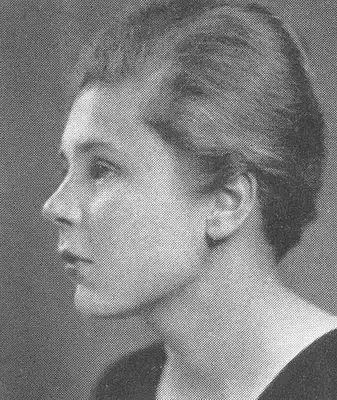
Elizabeth Bishop
Cape Breton
Cape Breton
Out on the high "bird islands," Ciboux and Hertford,
the razorbill auks and the silly-looking puffins all stand
with their backs to the mainland
in solemn, uneven lines along the cliff's brown grass-frayed edge,
while the few sheep pastured there go "Baaa, baaa."
(Sometimes, frightened by aeroplanes, they stampede
and fall over into the sea or onto the rocks.)
The silken water is weaving and weaving,
disappearing under the mist equally in all directions,
lifted and penetrated now and then
by one shag's dripping serpent-neck,
and somewhere the mist incorporates the pulse,
rapid but unurgent, of a motor boat.
The same mist hangs in thin layers
among the valleys and gorges of the mainland
like rotting snow-ice sucked away
almost to spirit; the ghosts of glaciers drift
among those folds and folds of fir: spruce and hackmatack-dull,
dead, deep pea-cock colors,
each riser distinguished from the next
by an irregular nervous saw-tooth edge,
alike, but certain as a stereoscopic view.
The wild road clambers along the brink of the coast.
On it stand occasional small yellow bulldozers,
but without their drivers, because today is Sunday.
The little white churches have been dropped into the matted hills
like lost quartz arrowheads.
The road appears to have been abandoned.
Whatever the landscape had of meaning appears to have been abandoned,
unless the road is holding it back, in the interior,
where we cannot see,
where deep lakes are reputed to be,
and disused trails and mountains of rock
and miles of burnt forests, standing in gray scratches
like the admirable scriptures made on stones by stones-and
these regions now have little to say for themselves
except in thousands of light song-sparrow songs floating upward
freely, dispassionately, through the mist, and meshing
in brown-wet, fine torn fish-nets.
A small bus comes along, in up-and-down rushes,
packed with people, even to its step.
(On weekdays with groceries, spare automobile parts, and pump parts,
but today only two preachers extra, one carrying his frock coat on a
hanger.)
It passes the closed roadside stand, the closed schoolhouse,
where today no flag is flying
from the rough-adzed pole topped with a white china doorknob.
It stops, and a man carrying a bay gets off,
climbs over a stile, and goes down through a small steep meadow,
which establishes its poverty in a snowfall of daisies,
to his invisible house beside the water.
The birds keep on singing, a calf bawls, the bus starts.
The thin mist follows
the white mutations of its dream;
an ancient chill is rippling the dark brooks.
795

John Keats
Sonnet XV. On The Grasshopper And Cricket
Sonnet XV. On The Grasshopper And Cricket
The poetry of earth is never dead:
When all the birds are faint with the hot sun,
And hide in cooling trees, a voice will run
From hedge to hedge about the new-mown mead;
That is the Grasshopper's -- he takes the lead
In summer luxury, -- he has never done
With his delights; for when tired out with fun
He rests at ease beneath some pleasant weed.
The poetry of earth is ceasing never:
On a lone winter evening, when the frost
Has wrought a silence, from the stove there shrills
The Cricket's song, in warmth increasing ever,
And seems to one in drowsiness half lost,
The Grasshopper's among some grassy hills.
822
Oscar Wilde
Symphony in Yellow
An omnibus across the bridge
Crawls like a yellow butterfly
And, here and there, a passer-by
Shows like a little restless midge.
Big barges full of yellow hay
Are moored against the shadowy wharf,
And, like a yellow silken scarf,
The thick fog hangs along the quay.
The yellow leaves begin to fade
And flutter from the Temple elms,
And at my feet the pale green Thames
Lies like a rod of rippled jade.
766
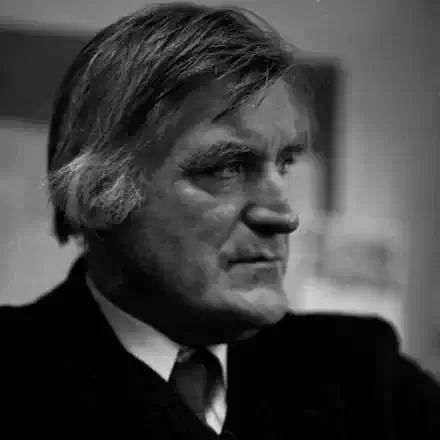
Ted Hughes
The Seven Sorrows
The Seven Sorrows
The first sorrow of autumn
Is the slow goodbye
Of the garden who stands so long in the evening-
A brown poppy head,
The stalk of a lily,
And still cannot go.
The second sorrow
Is the empty feet
Of a pheasant who hangs from a hook with his brothers.
The woodland of gold
Is folded in feathers
With its head in a bag.
And the third sorrow
Is the slow goodbye
Of the sun who has gathered the birds and who gathers
The minutes of evening,
The golden and holy
Ground of the picture.
The fourth sorrow
Is the pond gone black
Ruined and sunken the city of water-
The beetle's palace,
The catacombs
Of the dragonfly.
And the fifth sorrow
Is the slow goodbye
Of the woodland that quietly breaks up its camp.
One day it's gone.
It has only left litter-
Firewood, tentpoles.
And the sixth sorrow
Is the fox's sorrow
The joy of the huntsman, the joy of the hounds,
The hooves that pound
Till earth closes her ear
To the fox's prayer.
And the seventh sorrow
Is the slow goodbye
Of the face with its wrinkles that looks through the window
As the year packs up
Like a tatty fairground
That came for the children.
750
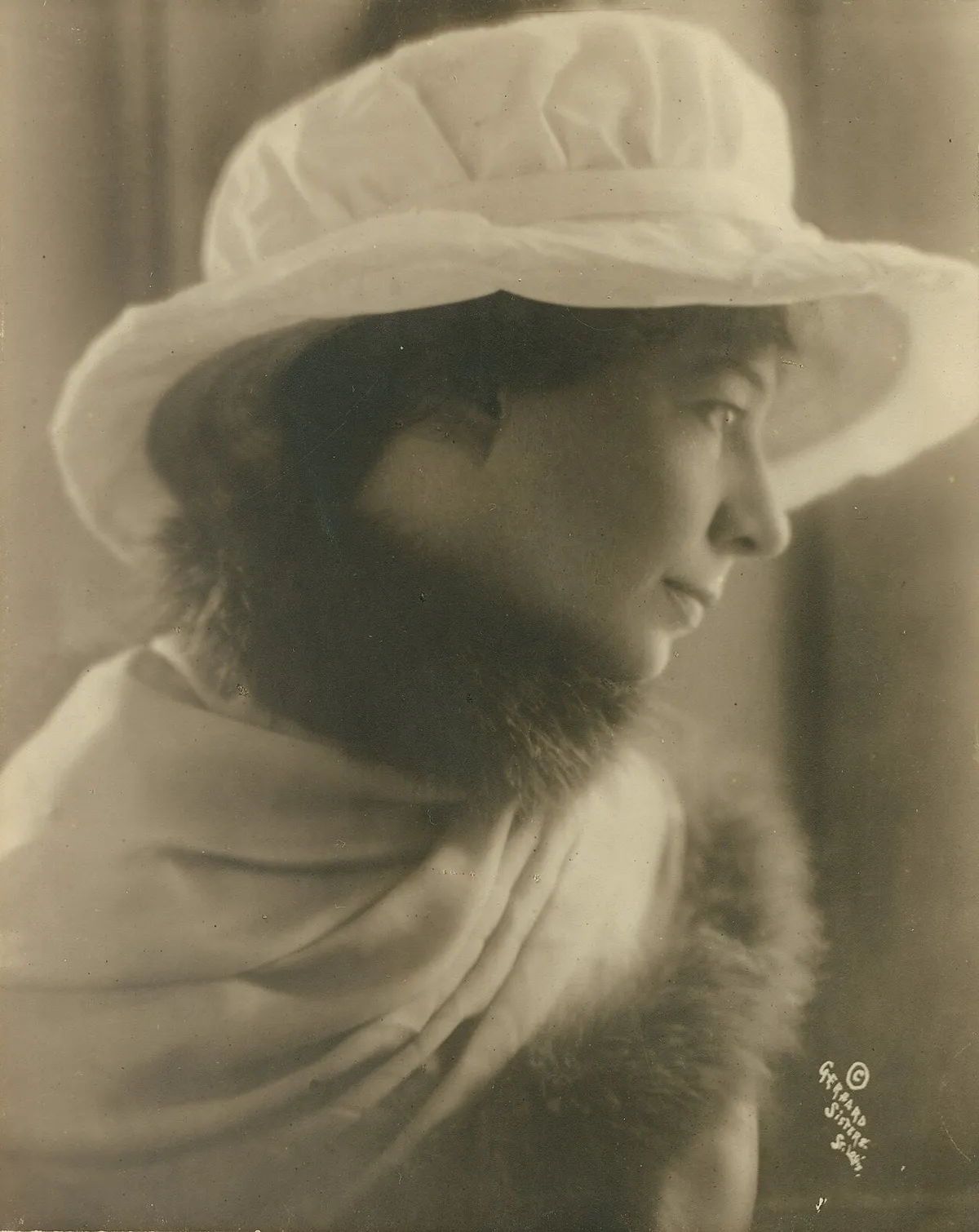
Sara Teasdale
The Garden
The Garden
My heart is a garden tired with autumn,
Heaped with bending asters and dahlias heavy and dark,
In the hazy sunshine, the garden remembers April,
The drench of rains and a snow-drop quick and clear as a spark;
Daffodils blowing in the cold wind of morning,
And golden tulips, goblets holding the rain --
The garden will be hushed with snow, forgotten soon, forgotten --
After the stillness, will spring come again?
743
Oscar Wilde
Endymion
The apple trees are hung with gold,
And birds are loud in Arcady,
The sheep lie bleating in the fold,
The wild goat runs across the wold,
But yesterday his love he told,
I know he will come back to me.
O rising moon! O Lady moon!
Be you my lover's sentinel,
You cannot choose but know him well,
For he is shod with purple shoon,
You cannot choose but know my love,
For he a shepherd's crook doth bear,
And he is soft as any dove,
And brown and curly is his hair.
The turtle now has ceased to call
Upon her crimson-footed groom,
The grey wolf prowls about the stall,
The lily's singing seneschal
Sleeps in the lily-bell, and all
The violet hills are lost in gloom.
O risen moon! O holy moon!
Stand on the top of Helice,
And if my own true love you see,
Ah! if you see the purple shoon,
The hazel crook, the lad's brown hair,
The goat-skin wrapped about his arm,
Tell him that I am waiting where
The rushlight glimmers in the Farm.
The falling dew is cold and chill,
And no bird sings in Arcady,
The little fauns have left the hill,
Even the tired daffodil
Has closed its gilded doors, and still
My lover comes not back to me.
False moon! False moon! O waning moon!
Where is my own true lover gone,
Where are the lips vermilion,
The shepherd's crook, the purple shoon?
Why spread that silver pavilion,
Why wear that veil of drifting mist?
Ah! thou hast young Endymion
Thou hast the lips that should be kissed!
752
Ted Hughes
The Warm and the Cold
The Warm and the Cold
Freezing dusk is closing
Like a slow trap of steel
On trees and roads and hills and all
That can no longer feel.
But the carp is in its depth
Like a planet in its heaven.
And the badger in its bedding
Like a loaf in the oven.
And the butterfly in its mummy
Like a viol in its case.
And the owl in its feathers
Like a doll in its lace.
Freezing dusk has tightened
Like a nut screwed tight
On the starry aeroplane
Of the soaring night.
But the trout is in its hole
Like a chuckle in a sleeper.
The hare strays down the highway
Like a root going deeper.
The snail is dry in the outhouse
Like a seed in a sunflower.
The owl is pale on the gatepost
Like a clock on its tower.
Moonlight freezes the shaggy world
Like a mammoth of ice -
The past and the future
Are the jaws of a steel vice.
But the cod is in the tide-rip
Like a key in a purse.
The deer are on the bare-blown hill
Like smiles on a nurse.
The flies are behind the plaster
Like the lost score of a jig.
Sparrows are in the ivy-clump
Like money in a pig.
Such a frost
The flimsy moon
Has lost her wits.
A star falls.
The sweating farmers
Turn in their sleep
Like oxen on spits.
737
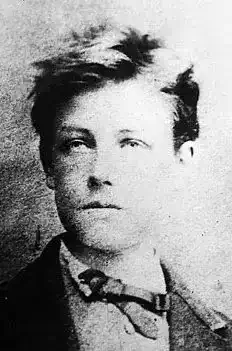
Arthur Rimbaud
Metropolitan
Metropolitan
From the indigo straits to Ossian's seas,
on pink and orange sands washed by the vinous sky,
crystal boulevards have just risen and crossed,
immediately occupied by poor young families
who get their food at the greengrocers'.
Nothing rich.-- The city! From the bituminous desert,
in headlong flight with the sheets of fog spread
in frightful bands across the sky,
that bends, recedes, descends,
formed by the most sinister black smoke
that Ocean in mourning can produce,
flee helmets, wheels, boats, rumps.--
The battle! Raise your eyes: that arched wooden bridge;
those last truck gardens of Samaria; those faces reddened
by the lantern lashed by the cold night;
silly Undine in her noisy dress, down by the river;
those luminous skulls among the rows of peas,-and
all the other phantasmagoria-- the country.
Roads bordered by walls and iron fences
that with difficulty hold back their groves,
and frightful flowers probably called loves and doves,
Damask damning languorously,-- possessions of magic
aristocracies ultra-Rhinish, Japanese, Guaranian,
still qualified to receive ancestral music-- and there are inns
that now never open anymore,-there
are princesses, and if you are not too overwhelmed,
the study of the stars-- the sky.
The morning when with Her you struggled among
the glittering of snow, those green lips,
those glaciers, black banners and blue beams,
and the purple perfumes of the polar sun.-- Your strength.
704
Oscar Wilde
Les Ballons
Against these turbid turquoise skies
The light and luminous balloons
Dip and drift like satin moons
Drift like silken butterflies;
Reel with every windy gust,
Rise and reel like dancing girls,
Float like strange transparent pearls,
Fall and float like silver dust.
Now to the low leaves they cling,
Each with coy fantastic pose,
Each a petal of a rose
Straining at a gossamer string.
Then to the tall trees they climb,
Like thin globes of amethyst,
Wandering opals keeping tryst
With the rubies of the lime.
676
Elizabeth Bishop
Large Bad Picture
Large Bad Picture
Remembering the Strait of Belle Isle or
some northerly harbor of Labrador,
before he became a schoolteacher
a great-uncle painted a big picture.
Receding for miles on either side
into a flushed, still sky
are overhanging pale blue cliffs
hundreds of feet high,
their bases fretted by little arches,
the entrances to caves
running in along the level of a bay
masked by perfect waves.
On the middle of that quiet floor
sits a fleet of small black ships,
square-rigged, sails furled, motionless,
their spars like burnt match-sticks.
And high above them, over the tall cliffs'
semi-translucent ranks,
are scribbled hundreds of fine black birds
hanging in n's in banks.
One can hear their crying, crying,
the only sound there is
except for occasional sizhine
as a large aquatic animal breathes.
In the pink light
the small red sun goes rolling, rolling,
round and round and round at the same height
in perpetual sunset, comprehensive, consoling,
while the ships consider it.
Apparently they have reached their destination.
It would be hard to say what brought them there,
commerce or contemplation.
675
Oscar Wilde
Le Jardin
The lily's withered chalice falls
Around its rod of dusty gold,
And from the beech-trees on the wold
The last wood-pigeon coos and calls.
The gaudy leonine sunflower
Hangs black and barren on its stalk,
And down the windy garden walk
The dead leaves scatter, - hour by hour.
Pale privet-petals white as milk
Are blown into a snowy mass:
The roses lie upon the grass
Like little shreds of crimson silk.
675
Oscar Wilde
Magdalen Walks
The little white clouds are racing over the sky,
And the fields are strewn with the gold of the flower of March,
The daffodil breaks under foot, and the tasselled larch
Sways and swings as the thrush goes hurrying by.
A delicate odour is borne on the wings of the morning breeze,
The odour of deep wet grass, and of brown new-furrowed earth,
The birds are singing for joy of the Spring's glad birth,
Hopping from branch to branch on the rocking trees.
And all the woods are alive with the murmur and sound of Spring,
And the rose-bud breaks into pink on the climbing briar,
And the crocus-bed is a quivering moon of fire
Girdled round with the belt of an amethyst ring.
And the plane to the pine-tree is whispering some tale of love
Till it rustles with laughter and tosses its mantle of green,
And the gloom of the wych-elm's hollow is lit with the iris sheen
Of the burnished rainbow throat and the silver breast of a dove.
See! the lark starts up from his bed in the meadow there,
Breaking the gossamer threads and the nets of dew,
And flashing adown the river, a flame of blue!
The kingfisher flies like an arrow, and wounds the air.
674
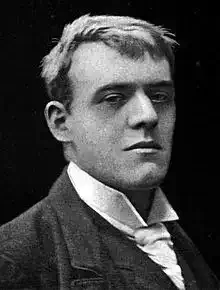
Hilaire Belloc
[Month of] April
[Month of] April
The stranger warmth of the young sun obeying,
Look! little beads of green begin to grow,
And hidden flowers have dated their tops to show
Where late such droughty dusts were rudely playing.
It's not the month, but all the world's a-maying!
Come then with me, I'll take you, for I know
Where the first hedgethorns and white windflowers blow:
We two alone,, that goes without the saying.
The month has treacherous clouds and moves in fears.
This April shames the month itself with smiles:
In whose new eyes I know no heaven of tears,
But still serene desire and between whiles,
So great a look that even April's grace
Makes only marvel at her only face.
663
Oscar Wilde
Les Silhouettes
The sea is flecked with bars of grey,
The dull dead wind is out of tune,
And like a withered leaf the moon
Is blown across the stormy bay.
Etched clear upon the pallid sand
Lies the black boat: a sailor boy
Clambers aboard in careless joy
With laughing face and gleaming hand.
And overhead the curlews cry,
Where through the dusky upland grass
The young brown-throated reapers pass,
Like silhouettes against the sky.
666
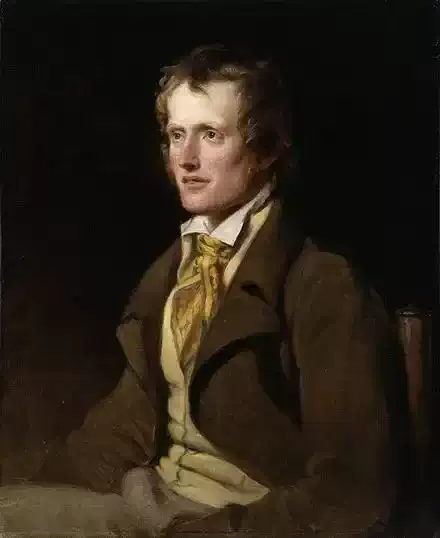
John Clare
Young Lambs
Young Lambs
The spring is coming by a many signs;
The trays are up, the hedges broken down,
That fenced the haystack, and the remnant shines
Like some old antique fragment weathered brown.
And where suns peep, in every sheltered place,
The little early buttercups unfold
A glittering star or two--till many trace
The edges of the blackthorn clumps in gold.
And then a little lamb bolts up behind
The hill and wags his tail to meet the yoe,
And then another, sheltered from the wind,
Lies all his length as dead--and lets me go
Close bye and never stirs but baking lies,
With legs stretched out as though he could not rise.
650
E. E. Cummings
Spring is like a perhaps hand
Spring is like a perhaps hand
Spring is like a perhaps hand
(which comes carefully
out of Nowhere)arranging
a window,into which people look(while
people stare
arranging and changing placing
carefully there a strange
thing and a known thing here)and
changing everything carefully
spring is like a perhaps
Hand in a window
(carefully to
and fro moving New and
Old things,while
people stare carefully
moving a perhaps
fraction of flower here placing
an inch of air there)and
without breaking anything.
645

Roger Mcgough
The Time I Like Best
The Time I Like Best
The time I like best is am
when the snow is inches deep
which I'm yet to discover
'cause I'm under the covers
fast, fast asleep.
The time I like best is am
when the snow is inches deep
which I'm yet to discover
'cause I'm under the covers
fast, fast asleep.
629
E. E. Cummings
in just
in just
in Justspring
when the world is mudluscious
the little
lame balloonman
whistles far and wee
and eddieandbill come
running from marbles and
piracies and it's spring
when the world is puddle-wonderful
the queer
old balloonman whistles
far and wee
and bettyandisbel come dancing
from hop-scotch and jump-rope and
it's spring
and the goat-footed
balloonMan whistles
far
and
wee
633

Paul Laurence Dunbar
Summer in the South
Summer in the South
The Oriole sings in the greening grove
As if he were half-way waiting,
The rosebuds peep from their hoods of green,
Timid, and hesitating.
The rain comes down in a torrent sweep
And the nights smell warm and pinety,
The garden thrives, but the tender shoots
Are yellow-green and tiny.
Then a flash of sun on a waiting hill,
Streams laugh that erst were quiet,
The sky smiles down with a dazzling blue
And the woods run mad with riot.
638

William Shakespeare
It was a Lover and his Lass
It was a Lover and his Lass
IT was a lover and his lass,
With a hey, and a ho, and a hey nonino,
That o'er the green corn-field did pass,
In the spring time, the only pretty ring time,
When birds do sing, hey ding a ding, ding;
Sweet lovers love the spring.
Between the acres of the rye,
With a hey, and a ho, and a hey nonino,
These pretty country folks would lie,
In the spring time, the only pretty ring time,
When birds do sing, hey ding a ding, ding;
Sweet lovers love the spring.
This carol they began that hour,
With a hey, and a ho, and a hey nonino,
How that life was but a flower
In the spring time, the only pretty ring time,
When birds do sing, hey ding a ding, ding;
Sweet lovers love the spring.
And, therefore, take the present time
With a hey, and a ho, and a hey nonino,
For love is crown`d with the prime
In the spring time, the only pretty ring time,
When birds do sing, hey ding a ding, ding;
Sweet lovers love the spring.
621
Page 1
Next