
Faith, Spirituality and Religion
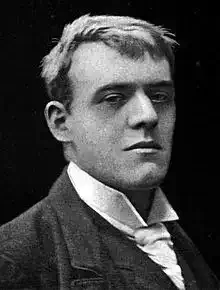
Hilaire Belloc
The Birds
When Jesus Christ was four years old
The angels brought Him toys of gold,
Which no man ever had bought or sold.
And yet with these He would not play.
He made Him small fowl out of clay,
And blessed them till they flew away:
Tu creasti Domine
Jesus Christ, Thou child so wise,
Bless mine hands and fill mine eyes,
And bring my soul to Paradise.
456
Hilaire Belloc
Ballade to Our Lady of Czestochowa
I
Lady and Queen and Mystery manifold
And very Regent of the untroubled sky,
Whom in a dream St. Hilda did behold
And heard a woodland music passing by:
You shall receive me when the clouds are high
With evening and the sheep attain the fold.
This is the faith that I have held and hold,
And this is that in which I mean to die.
II
Steep are the seas and savaging and cold
In broken waters terrible to try;
And vast against the winter night the wold,
And harbourless for any sail to lie.
But you shall lead me to the lights, and I
Shall hymn you in a harbour story told.
This is the faith that I have held and hold,
And this is that in which I mean to die.
III
Help of the half-defeated, House of gold,
Shrine of the Sword, and Tower of Ivory;
Splendour apart, supreme and aureoled,
The Battler's vision and the World's reply.
You shall restore me, O my last Ally,
To vengence and the glories of the bold.
This is the faith that I have held and hold,
And this is that in which I mean to die.
Envoi
Prince of the degradations, bought and sold,
These verses, written in your crumbling sty,
Proclaim the faith that I have held and hold
And publish that in which I mean to die.
459
Hilaire Belloc
The Pelagian Drinking Song
Pelagius lived at Kardanoel
And taught a doctrine there
How, whether you went to heaven or to hell
It was your own affair.
It had nothing to do with the Church, my boy,
But was your own affair.
No, he didn't believe
In Adam and Eve
He put no faith therein!
His doubts began
With the Fall of Man
And he laughed at Original Sin.
With my row-ti-tow
Ti-oodly-ow
He laughed at original sin.
Then came the bishop of old Auxerre
Germanus was his name
He tore great handfuls out of his hair
And he called Pelagius shame.
And with his stout Episcopal staff
So thoroughly whacked and banged
The heretics all, both short and tall --
They rather had been hanged.
Oh he whacked them hard, and he banged them long
Upon each and all occasions
Till they bellowed in chorus, loud and strong
Their orthodox persuasions.
With my row-ti-tow
Ti-oodly-ow
Their orthodox persuasions.
Now the faith is old and the Devil bold
Exceedingly bold indeed.
And the masses of doubt that are floating about
Would smother a mortal creed.
But we that sit in a sturdy youth
And still can drink strong ale
Let us put it away to infallible truth
That always shall prevail.
And thank the Lord
For the temporal sword
And howling heretics too.
And all good things
Our Christendom brings
But especially barley brew!
With my row-ti-tow
Ti-oodly-ow
Especially barley brew!
458

Johann Wolfgang von Goethe
Legend
THERE lived in the desert a holy man
To whom a goat-footed Faun one day
Paid a visit, and thus began
To his surprise: 'I entreat thee to pray
That grace to me and my friends may be given,
That we may be able to mount to Heaven,
For great is our thirst for heav'nly bliss.'
The holy man made answer to this:
'Much danger is lurking in thy petition,
Nor will it be easy to gain admission;
Thou dost not come with an angel's salute;
For I see thou wearest a cloven foot.'
The wild man paused, and then answer'd he:
'What doth my goat's foot matter to thee?
Full many I've known into heaven to pass
Straight and with ease, with the head of an ass!'
457

Rudyard Kipling
To Wolcott Balestier
Beyond the path of the outmost sun through utter darkness hurled --
Further than ever comet flared or vagrant star-dust swirled --
Live such as fought and sailed and ruled and loved and made our world.
They are purged of pride because they died, they know the worth of their bays,
They sit at wine with the Maidens Nine and the Gods of the Elder Days,
It is their will to serve or be still as fitteth our Father's praise.
'Tis theirs to sweep through the ringing deep where Azrael's outposts are,
Or buffet a path through the Pit's red wrath when God goes out to war,
Or hang with the reckless Seraphim on the rein of a red-maned star.
They take their mirth in the joy of the Earth --
they dare not grieve for her pain --
They know of toil and the end of toil, they know God's law is plain,
So they whistle the Devil to make them sport who know that Sin is vain.
And ofttimes cometh our wise Lord God, master of every trade,
And tells them tales of His daily toil, of Edens newly made;
And they rise to their feet as He passes by, gentlemen unafraid.
To these who are cleansed of base Desire, Sorrow and Lust and Shame --
Gods for they knew the hearts of men, men for they stooped to Fame,
Borne on the breath that men call Death, my brother's spirit came.
He scarce had need to doff his pride or slough the dross of Earth --
E'en as he trod that day to God so walked he from his birth,
In simpleness and gentleness and honour and clean mirth.
So cup to lip in fellowship they gave him welcome high
And made him place at the banquet board -- the Strong Men ranged thereby,
Who had done his work and held his peace and had no fear to die.
Beyond the loom of the last lone star, through open darkness hurled,
Further than rebel comet dared or hiving star-swarm swirled,
Sits he with those that praise our God for that they served His world.
456

John Clare
The Stranger
When trouble haunts me, need I sigh?
No, rather smile away despair;
For those have been more sad than I,
With burthens more than I could bear;
Aye, gone rejoicing under care
Where I had sunk in black despair.
When pain disturbs my peace and rest,
Am I a hopeless grief to keep,
When some have slept on torture's breast
And smiled as in the sweetest sleep,
Aye, peace on thorns, in faith forgiven,
And pillowed on the hope of heaven?
Though low and poor and broken down,
Am I to think myself distrest?
No, rather laugh where others frown
And think my being truly blest;
For others I can daily see
More worthy riches worse than me.
Aye, once a stranger blest the earth
Who never caused a heart to mourn,
Whose very voice gave sorrow mirth--
And how did earth his worth return?
It spurned him from its lowliest lot,
The meanest station owned him not;
An outcast thrown in sorrow's way,
A fugitive that knew no sin,
Yet in lone places forced to stray--
Men would not take the stranger in.
Yet peace, though much himself he mourned,
Was all to others he returned.
* * * * *
His presence was a peace to all,
He bade the sorrowful rejoice.
Pain turned to pleasure at his call,
Health lived and issued from his voice.
He healed the sick and sent abroad
The dumb rejoicing in the Lord.
The blind met daylight in his eye,
The joys of everlasting day;
The sick found health in his reply;
The cripple threw his crutch away.
Yet he with troubles did remain
And suffered poverty and pain.
Yet none could say of wrong he did,
And scorn was ever standing bye;
Accusers by their conscience chid,
When proof was sought, made no reply.
Yet without sin he suffered more
Than ever sinners did before.
453

William Butler Yeats
The Magi
NOW as at all times I can see in the mind's eye,
In their stiff, painted clothes, the pale unsatisfied ones
Appear and disappear in the blue depth of the sky
With all their ancient faces like rain-beaten stones,
And all their helms of Silver hovering side by side,
And all their eyes still fixed, hoping to find once more,
Being by Calvary's turbulence unsatisfied,
The uncontrollable mystery on the bestial floor.
453
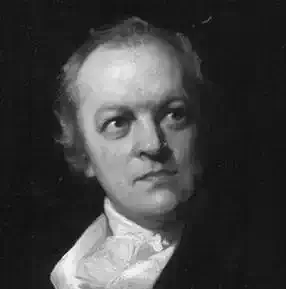
William Blake
If It Is True What the Prophets Write
If it is true, what the Prophets write,
That the heathen gods are all stocks and stones,
Shall we, for the sake of being polite,
Feed them with the juice of our marrow-bones?
And if Bezaleel and Aholiab drew
What the finger of God pointed to their view,
Shall we suffer the Roman and Grecian rods
To compel us to worship them as gods?
They stole them from the temple of the Lord
And worshipp'd them that they might make inspirèd art abhorr'd;
The wood and stone were call'd the holy things,
And their sublime intent given to their kings.
All the atonements of Jehovah spurn'd,
And criminals to sacrifices turn'd.
452
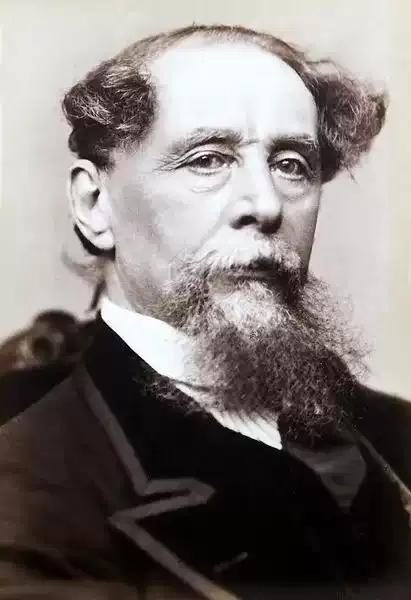
Charles Dickens
A Child's Hymn
Hear my prayer, O heavenly Father,
Ere I lay me down to sleep;
Bid Thy angels, pure and holy,
Round my bed their vigil keep.
My sins are heavy, but Thy mercy
Far outweighs them, every one;
Down before Thy cross I cast them,
Trusting in Thy help alone.
Keep me through this night of peril
Underneath its boundless shade;
Take me to Thy rest, I pray Thee,
When my pilgrimage is made.
None shall measure out Thy patience
By the span of human thought;
None shall bound the tender mercies
Which Thy Holy Son has bought.
Pardon all my past transgressions,
Give me strength for days to come;
Guide and guard me with Thy blessing
Till Thy angels bid me home.
453
Johann Wolfgang von Goethe
The Garlands
KLOPSTOCK would lead us away from Pindus; no longer for laurel
May we be eager--the homely acorn alone must content us;
Yet he himself his more-than-epic crusade is conducting
High on Golgotha's summit, that foreign gods he may honour!
Yet, on what hill he prefers, let him gather the angels together,
Suffer deserted disciples to weep o'er the grave of the just one:
There where a hero and saint hath died, where a bard breath'd his numbers,
Both for our life and our death an ensample of courage resplendent
And of the loftiest human worth to bequeath,--ev'ry nation
There will joyously kneel in devotion ecstatic, revering
Thorn and laurel garland, and all its charms and its tortures.
454
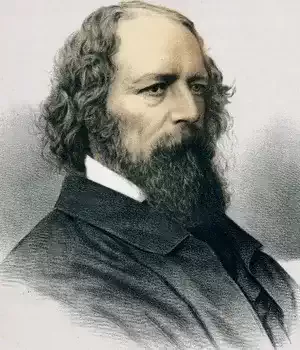
Alfred Lord Tennyson
In Memoriam A. H. H.: 126. Love is and was my Lord and King
Love is and was my Lord and King,
And in his presence I attend
To hear the tidings of my friend,
Which every hour his couriers bring.
Love is and was my King and Lord,
And will be, tho' as yet I keep
Within his court on earth, and sleep
Encompass'd by his faithful guard,
And hear at times a sentinel
Who moves about from place to place,
And whispers to the worlds of space,
In the deep night, that all is well.
450
Rudyard Kipling
The Last Chantey
"And there was no more sea."
Thus said The Lord in the Vault above the Cherubim
Calling to the Angels and the Souls in their degree:
"Lo! Earth has passed away
On the smoke of Judgment Day.
That Our word may be established shall We gather up the sea?"
Loud sang the souls of the jolly, jolly mariners:
"Plague upon the hurricane that made us furl and flee!
But the war is done between us,
In the deep the Lord hath seen us --
Our bones we'll leave the barracout', and God may sink the sea!"
Then said the soul of Judas that betray]\ed Him:
"Lord, hast Thou forgotten Thy covenant with me?
How once a year I go
To cool me on the floe?
And Ye take my day of mercy if Ye take away the sea!"
Then said the soul of the Angel of the Off-shore Wind:
(He that bits the thunder when the bull-mouthed breakers flee):
"I have watch and ward to keep
O'er Thy wonders on the deep,
And Ye take mine honour from me if Ye take away the sea!"
Loud sang the souls of the jolly, jolly mariners:
"Nay, but we were angry, and a hasty folk are we!
If we worked the ship together
Till she foundered in foul weather,
Are we babes that we should clamour for a vengeance on the sea?"
Then said the souls of the slaves that men threw overboard:
"Kennelled in the picaroon a weary band were we;
But Thy arm was strong to save,
And it touched us on the wave,
And we drowsed the long tides idle till Thy Trumpets tore the sea."
Then cried the soul of the stout Apostle Paul to God:
"Once we frapped a ship, and she laboured woundily.
There were fourteen score of these,
And they blessed Thee on their knees,
When they learned Thy Grace and Glory under Malta by the sea!"
Loud sang the souls of the jolly, jolly mariners,
Plucking at their harps, and they plucked unhandily:
"Our thumbs are rough and tarred,
And the tune is something hard --
May we lift a Deep-sea Chantey such as seamen use at sea?"
Then said the souls of the gentlemen-adventurers --
Fettered wrist to bar all for red iniquity:
"Ho, we revel in our chains
O'er the sorrow that was Spain's;
Heave or sink it, leave or drink it, we were masters of the sea!"
Up spake the soul of a gray Gothavn 'speckshioner --
(He that led the flinching in the fleets of fair Dundee):
"Oh, the ice-blink white and near,
And the bowhead breaching clear!
Will Ye whelm them all for wantonness that wallow in the sea?"
Loud sang the souls of the jolly, jolly mariners,
Crying: "Under Heaven, here is neither lead nor lee!
Must we sing for evermore
On the windless, glassy floor?
Take back your golden fiddles and we'll beat to open sea!"
Then stooped the Lord, and He called the good sea up to Him,
And 'stablished his borders unto all eternity,
That such as have no pleasure
For to praise the Lord by measure,
They may enter into galleons and serve Him on the sea.
Sun, wind, and cloud shall fail not from the face of it,
Stinging, ringing spindrift, nor the fulmar flying free;
And the ships shall go abroad
To the Glory of the Lord
Who heard the silly sailor-folk and gave them back their sea!
450
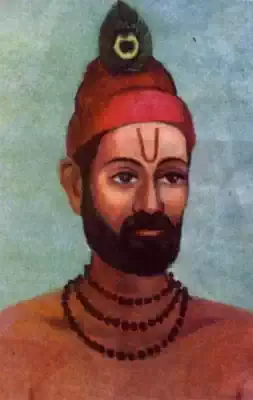
Kabir
O friend
O friend! hope for Him whilst you live
O friend! hope for Him whilst you live,
know whilst you live, understand whilst you live:
for in life deliverance abides.
If your bonds be not broken whilst living,
what hope of deliverance in death ?
It is but an empty dream, that the soul shall have union with Him
because it has passed from the body:
If He is found now, He is found then,
If not, we do but go to dwell in the City of Death.
If you have union now, you shall have it hereafter.
Bathe in the truth, know the true Guru,
have faith in the true Name!
Kabir says : 'It is the spirit of the quest which helps;
I am the slave of this Spirit of the quest.'
451
Rudyard Kipling
In the Matter of One Compass
When, foot to wheel and back to wind,
The helmsman dare not look behind,
But hears beyond his compass-light,
The blind bow thunder through the night,
And, like a harpstring ere it snaps,
The rigging sing beneath the caps;
Above the shriek of storm in sail
Or rattle of the blocks blown free,
Set for the peace beyond the gale,
This song the Needle sings the Sea;
Oh, drunken Wave! Oh, driving Cloud!
Rage of the Deep and sterile Rain,
By love upheld, by God allowed,
We go, but we return again!
When leagued about the 'wildered boat
The rainbow Jellies fill and float,
And, lilting where the laver lingers,
The Starfish trips on all her fingers;
Where, 'neath his myriad spines ashock,
The Sea-egg ripples down the rock,
An orange wonder dimly guessed
From darkness where the Cuttles rest,
Moored o'er the darker deeps that hide
The blind white Sea-snake and his bride,
Who, drowsing, nose the long-lost Ships
Let down through darkness to their lips --
Safe-swung above the glassy death,
Hear what the constant Needle saith:
Oh, lisping Reef! Oh, listless Cloud,
In slumber on a pulseless main!
By Love upheld, by God allowed,
We go, but we return again!
E'en so through Tropic and through Trade,
Awed by the shadow of new skies,
As we shall watch old planets fade
And mark the stranger stars arise,
So, surely, back through Sun and Cloud,
So, surely, from the outward main
By Love recalled, by God allowed,
Shall we return -- return again!
Yea, we return -- return again!
451
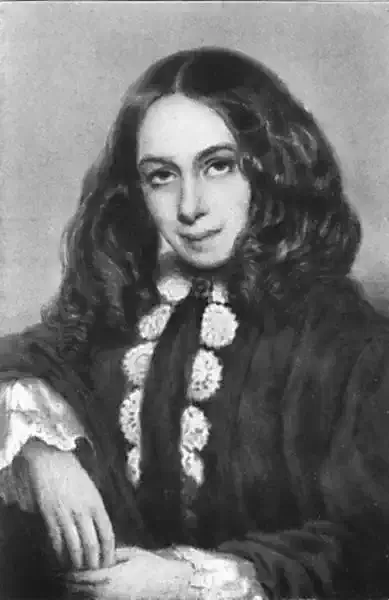
Elizabeth Barrett Browning
The Look
The Saviour looked on Peter. Ay, no word,
No gesture of reproach; the Heavens serene
Though heavy with armed justice, did not lean
Their thunders that way: the forsaken Lord
Looked only, on the traitor. None record
What that look was, none guess; for those who have seen
Wronged lovers loving through a death-pang keen,
Or pale-cheeked martyrs smiling to a sword,
Have missed Jehovah at the judgment-call.
And Peter, from the height of blasphemy-'
I never knew this man '--did quail and fall
As knowing straight THAT GOD; and turned free
And went out speechless from the face of all
And filled the silenc, weeping bitterly.
450
Kabir
Tentacles of Time
Sadho Ye Murdon Ka Gaon
Peer Mare, Pygambar Mari Hain
Mari Hain Zinda Jogi
Raja Mari Hain, Parja Mari Hain
Mari Hain Baid Aur Rogi
Chanda Mari Hain, Suraj Mari Hain
Mari Hain Dharni Akasa
Chaudan Bhuvan Ke Chaudhry Mari Hain
In Hun Ki Ka Asa
Nauhun Mari Hain, Dus Hun Mari Hain
Mari Hain Sahaj Athasi
Tethis Koti Devata Mari Hain
Badi Kaal Ki Bazi
Naam Anam Anant Rehat Hai
Duja Tatva Na Hoi
Kahe Kabir Suno Bhai Sadho
Bhatak Maro Mat Koi
English Translation
Oh Sadhu This is the Village of the Dead
The Saints Have Died, The God-Messengers Die
The Life-Filled Yogis Die Too |
The Kings Die, The Subjects Die
The Healers and the Sick Die Too ||
The Moon Dies, The Sun Dies
The Earth and Sky Die Too |
Even the Caretakers of the Fourteen Worlds Die
Why Hope For Any of These ||
The Nine Die, The Ten Die
The Eighty Eight Die Easily Too |
The Thirty Three Crore Devatas Die
It's a Big Game of Time ||
The Un-Named Naam Lives Without Any End
There is No Other Truth ||
Says Kabir Listen Oh Sadhu
Don't Get Lost and Die ||
448
Elizabeth Barrett Browning
XXVII
My own Beloved, who hast lifted me
From this drear flat of earth where I was thrown,
And, in betwixt the languid ringlets, blown
A life-breath, till the forehead hopefully
Shines out again, as all the angels see,
Before thy saving kiss ! My own, my own,
Who camest to me when the world was gone,
And I who looked for only God, found thee !
I find thee; I am safe, and strong, and glad.
As one who stands in dewless asphodel
Looks backward on the tedious time he had
In the upper life,--so I, with bosom-swell,
Make witness, here, between the good and bad,
That Love, as strong as Death, retrieves as well.
449

Ella Wheeler Wilcox
Song Of The Spirit
Too sweet and too subtle for pen or for tongue
In phrases unwritten and measures unsung,
As deep and as strange as the sounds of the sea,
Is the song that my spirit is singing to me.
In the midnight and tempest when forest trees shiver,
In the roar of the surf, and the rush of the river,
In the rustle of leaves and the fall of the rain,
And on the low breezes I catch the refrain.
From the vapours that frame and envelop the earth,
And beyond, from the realms where my spirit had birth,
From the mists of the land and the fogs of the sea,
For ever and ever the songs come to me.
I know not its wording - its import I know -
For the rhythm is broken, the measure runs low,
When vexed or allured by the things of this life
My soul is merged into its pleasures or strife.
When up to the hill tops of beauty and light
My soul like a lark in the ether takes flight,
And the white gates of heaven shine brighter and nearer,
The song of the spirit grows sweeter and clearer.
Up, up to the realms where no mortal has trod -
Into space and infinity near to my God -
With whiteness, and silence, and beautiful things,
I am bourne when the voice of eternity sings.
When once in the winds or the dropp of the rain
Thy spirit shall listen and hear the refrain,
Thy soul shall soar up like a bird on the breeze,
And the things that have pleased thee will never more please.
449

Muhammad Iqbal
First Date Tree Saeeded By Abdul Rahman The Firs
You are the apple of my eye,
My heart's delight:
I am remote from my valley,
To me you are the Burning Bush of Sinai!
You are a houri of the Arabian Desert,
Nursed by the Western breeze.
I feel homesick in exile,
You feel homesick in exile:
Prosper in this strange land!
May the morning dew quench your thirst!
The world presents a strange sight:
The vision's mantle is torn apart—
May valour struggle with the waves if it must,
The other side of the river is not to be seen!
Life owes itself to the heat of one's soul:
Flame does not rise from dust.
The Syrian evening's fallen star
Shined brighter in the exile's dawn.
There are no frontiers for the Man of Faith,
He is at home everywhere.
[Translated by the Editors]
*
That blood of pristine vigour is no more;
That yearning heart's power is no more;
Prayer, fasting, hajj, sacrifice survive,
But in thee nature's old dower is no more.
[Translated by Naim Siddiqui]
Not: These verses from Abdul Rahman the First
are quoted in Tarikh al Muqqari. The
following Urdu poem is a liberal
translation (the tree mentioned here was
planted in Madinatut Zahra)
446

Henry Wadsworth Longfellow
Old Age. (Sonnet IV.)
The course of my long life hath reached at last,
In fragile bark o'er a tempestuous sea,
The common harbor, where must rendered be
Account of all the actions of the past.
The impassioned phantasy, that, vague and vast,
Made art an idol and a king to me,
Was an illusion, and but vanity
Were the desires that lured me and harassed.
The dreams of love, that were so sweet of yore,
What are they now, when two deaths may be mine,--
One sure, and one forecasting its alarms?
Painting and sculpture satisfy no more
The soul now turning to the Love Divine,
That oped, to embrace us, on the cross its arms.
447
Rudyard Kipling
Death of a Believer
Yet at the last, ere our spearmen had found him,
Yet at the last, ere a sword-thrust could save,
Yet at the last, with his masters around him,
He spoke of the Faith as a master to slave.
Yet at the last, though the Kafirs had maimed him,
Broken by bondage and wrecked by the reiver,
Yet at the last, tho' the darkness had claimed him,
He called on Allah, and died a Believer!
447
John Donne
Crucifying
By miracles exceeding power of man,
He faith in some, envy in some begat,
For, what weak spirits admire, ambitious hate :
In both affections many to Him ran.
But O ! the worst are most, they will and can,
Alas ! and do, unto th' Immaculate,
Whose creature Fate is, now prescribe a fate,
Measuring self-life's infinity to span,
Nay to an inch. Lo ! where condemned He
Bears His own cross, with pain, yet by and by
When it bears him, He must bear more and die.
Now Thou art lifted up, draw me to Thee,
And at Thy death giving such liberal dole,
Moist with one drop of Thy blood my dry soul.
446
Alfred Lord Tennyson
In Memoriam A. H. H.: 56. So careful of the type? but no
"So careful of the type?" but no.
From scarped cliff and quarried stone
She cries, "A thousand types are gone:
I care for nothing, all shall go.
"Thou makest thine appeal to me:
I bring to life, I bring to death:
The spirit does but mean the breath:
I know no more." And he, shall he,
Man, her last work, who seem'd so fair,
Such splendid purpose in his eyes,
Who roll'd the psalm to wintry skies,
Who built him fanes of fruitless prayer,
Who trusted God was love indeed
And love Creation's final law-Tho'
Nature, red in tooth and claw
With ravine, shriek'd against his creed-
Who loved, who suffer'd countless ills,
Who battled for the True, the Just,
Be blown about the desert dust,
Or seal'd within the iron hills?
No more? A monster then, a dream,
A discord. Dragons of the prime,
That tare each other in their slime,
Were mellow music match'd with him.
O life as futile, then, as frail!
O for thy voice to soothe and bless!
What hope of answer, or redress?
Behind the veil, behind the veil.
444

Alexander Pope
Universal Prayer
Father of all! In every age,
In ev'ry clime ador'd,
By saint, by savage, and by sage,
Jehovah, Jove, or Lord!
Thou Great First Cause, least understood,
Who all my sense confin'd
To know but this, that Thou art good,
And that myself am blind:
Yet gave me, in this dark estate,
To see the good from ill;
And, binding Nature fast in Fate,
Left free the human Will.
What Conscience dictates to be done,
Or warns me not to do;
This teach me more than Hell to shun,
That more than Heav'n pursue.
What blessings thy free bounty gives
Let me not cast away;
For God is paid when man receives;
T' enjoy is to obey.
Yet not to earth's contracted span
Thy goodness let me bound,
Or think thee Lord alone of man,
When thousand worlds are round.
Let not this weak, unknowing hand
Presume thy bolts to throw,
And teach damnation round the land
On each I judge thy foe.
If I am right, thy grace impart,
Still in the right to stay;
If I am wrong, O teach my heart
To find that better way.
Save me alike from foolish Pride
Or impious Discontent,
At aught thy wisdom has denied,
Or aught that goodness lent.
Teach me to feel another's woe,
To right the fault I see:
That mercy I to others show,
That mercy show to me.
Mean tho' I am, not wholly so,
Since quicken'd by thy breath;
O lead me whereso'er I go,
Thro' this day's life or death!
This day be bread and peace my lot:
All else beneath the sun
Though know'st if best bestow'd or not,
And let Thy will be done.
To Thee, whose temple is of Space,
Whose altar earth, sea, skies,
One chorus let all Beings raise!
All Nature's incense rise!
445