
Faith, Spirituality and Religion
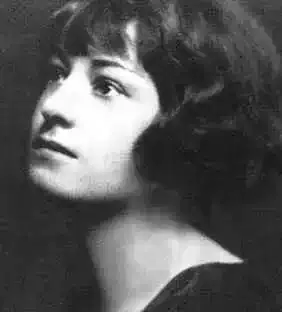
Dorothy Parker
Verse For a Certain Dog
Such glorious faith as fills your limpid eyes,
Dear little friend of mine, I never knew.
All-innocent are you, and yet all-wise.
(For Heaven's sake, stop worrying that shoe!)
You look about, and all you see is fair;
This mighty globe was made for you alone.
Of all the thunderous ages, you're the heir.
(Get off the pillow with that dirty bone!)
A skeptic world you face with steady gaze;
High in young pride you hold your noble head,
Gayly you meet the rush of roaring days.
(Must you eat puppy biscuit on the bed?)
Lancelike your courage, gleaming swift and strong,
Yours the white rapture of a winged soul,
Yours is a spirit like a Mayday song.
(God help you, if you break the goldfish bowl!)
"Whatever is, is good" - your gracious creed.
You wear your joy of living like a crown.
Love lights your simplest act, your every deed.
(Drop it, I tell you- put that kitten down!)
You are God's kindliest gift of all - a friend.
Your shining loyalty unflecked by doubt,
You ask but leave to follow to the end.
(Couldn't you wait until I took you out?)
443

Emily Dickinson
Over the fence
Over the fence
Strawberries-
grow-
Over the fence-
I could climb-if I tried, I know-
Berries are nice!
But-if I stained my Apron-
God would certainly scold!
Oh, dear,-I guess if He were a BoyHe'd-
climb-if He could!
Strawberries-
grow-
Over the fence-
I could climb-if I tried, I know-
Berries are nice!
But-if I stained my Apron-
God would certainly scold!
Oh, dear,-I guess if He were a BoyHe'd-
climb-if He could!
442
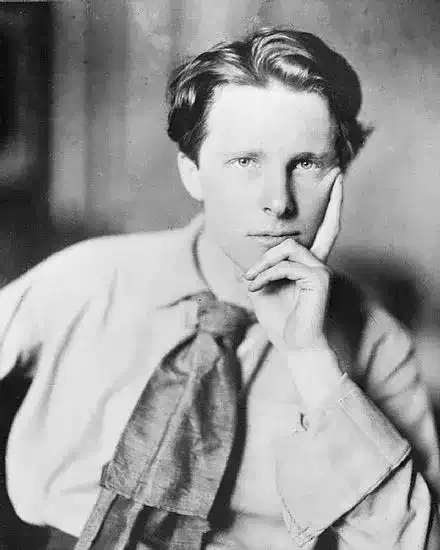
Rupert Brooke
The Song of the Pilgrims
(Halted around the fire by night, after moon-set, they sing this beneath the
trees.)
What light of unremembered skies
Hast thou relumed within our eyes,
Thou whom we seek, whom we shall find?…
A certain odour on the wind,
Thy hidden face beyond the west,
These things have called us; on a quest
Older than any road we trod,
More endless than desire.…
Far God,
Sigh with thy cruel voice, that fills
The soul with longing for dim hills
And faint horizons! For there come
Grey moments of the antient dumb
Sickness of travel, when no song
Can cheer us; but the way seems long;
And one remembers.…
Ah! the beat
Of weary unreturning feet,
And songs of pilgrims unreturning!…
The fires we left are always burning
On the old shrines of home. Our kin
Have built them temples, and therein
Pray to the Gods we know; and dwell
In little houses lovable,
Being happy (we remember how!)
And peaceful even to death...
O Thou,
God of all long desirous roaming,
Our hearts are sick of fruitless homing,
And crying after lost desire.
Hearten us onward! as with fire
Consuming dreams of other bliss.
The best Thou givest, giving this
Sufficient thing—to travel still
Over the plain, beyond the hill,
Unhesitating through the shade,
Amid the silence unafraid,
Till, at some sudden turn, one sees
Against the black and muttering trees
Thine altar, wonderfully white,
Among the Forests of the Night.
441

William Blake
England! awake! awake! awake!
England! awake! awake! awake!
Jerusalem thy Sister calls!
Why wilt thou sleep the sleep of death
And close her from thy ancient walls?
Thy hills and valleys felt her feet
Gently upon their bosoms move:
Thy gates beheld sweet Zion's ways:
Then was a time of joy and love.
And now the time returns again:
Our souls exult, and London's towers
Receive the Lamb of God to dwell
In England's green and pleasant bowers.
439

Robert Louis Stevenson
Prayer
I ASK good things that I detest,
With speeches fair;
Heed not, I pray Thee, Lord, my breast,
But hear my prayer.
I say ill things I would not say -
Things unaware:
Regard my breast, Lord, in Thy day,
And not my prayer.
My heart is evil in Thy sight:
My good thoughts flee:
O Lord, I cannot wish aright -
Wish Thou for me.
O bend my words and acts to Thee,
However ill,
That I, whate'er I say or be,
May serve Thee still.
O let my thoughts abide in Thee
Lest I should fall:
Show me Thyself in all I see,
Thou Lord of all.
441

Ella Wheeler Wilcox
Thought-Magnets
With each strong thought, with every earnest longing
For aught thou deemest needful to thy soul,
Invisible vast forces are set thronging
Between thee and that goal.
‘Tis only when some hidden weakness alters
And changes thy desire, or makes it less,
That this mysterious army ever falters
Or stops short of success.
Thought is a magnet; and the longed-for pleasure
Or boon, or aim, or object, is the steel;
And is attainment hangs but on the measure
Of what thy soul can feel.
440
John Donne
A Litany
I.
THE FATHER.
FATHER of Heaven, and Him, by whom
It, and us for it, and all else for us,
Thou madest, and govern'st ever, come
And re-create me, now grown ruinous:
My heart is by dejection, clay,
And by self-murder, red.
From this red earth, O Father, purge away
All vicious tinctures, that new-fashioned
I may rise up from death, before I'm dead.
II.
THE SON.
O Son of God, who, seeing two things,
Sin and Death, crept in, which were never made,
By bearing one, tried'st with what stings
The other could Thine heritage invade ;
O be Thou nail'd unto my heart,
And crucified again ;
Part not from it, though it from Thee would part,
But let it be by applying so Thy pain,
Drown'd in Thy blood, and in Thy passion slain.
III.
THE HOLY GHOST.
O Holy Ghost, whose temple I
Am, but of mud walls , and condensèd dust,
And being sacrilegiously
Half wasted with youth's fires of pride and lust,
Must with new storms be weather-beat,
Double in my heart Thy flame,
Which let devout sad tears intend, and let—
Though this glass lanthorn, flesh, do suffer maim—
Fire, sacrifice, priest, altar be the same.
IV.
THE TRINITY.
O blessed glorious Trinity,
Bones to philosophy, but milk to faith,
Which, as wise serpents, diversely
Most slipperiness, yet most entanglings hath,
As you distinguish'd, undistinct,
By power, love, knowledge be,
Give me a such self different instinct,
Of these let all me elemented be,
Of power, to love, to know you unnumbered three.
V.
THE VIRGIN MARY.
For that fair blessed mother-maid,
Whose flesh redeem'd us, that she-cherubin,
Which unlock'd paradise, and made
One claim for innocence, and disseizèd sin,
Whose womb was a strange heaven, for there
God clothed Himself, and grew,
Our zealous thanks we pour. As her deeds were
Our helps, so are her prayers ; nor can she sue
In vain, who hath such titles unto you.
VI.
THE ANGELS.
And since this life our nonage is,
And we in wardship to Thine angels be,
Native in heaven's fair palaces
Where we shall be but denizen'd by Thee ;
As th' earth conceiving by the sun,
Yields fair diversity,
Yet never knows what course that light doth run ;
So let me study that mine actions be
Worthy their sight, though blind in how they see.
VII.
THE PATRIARCHS.
And let Thy patriarchs' desire,
—Those great grandfathers of Thy Church, which saw
More in the cloud than we in fire,
Whom nature clear'd more, than us grace and law,
And now in heaven still pray, that we
May use our new helps right—
Be satisfied, and fructify in me ;
Let not my mind be blinder by more light,
Nor faith by reason added lose her sight.
VIII.
THE PROPHETS.
Thy eagle-sighted prophets too,
—Which were Thy Church's organs, and did sound
That harmony which made of two
One law, and did unite, but not confound ;
Those heavenly poets which did see
Thy will, and it express
In rhythmic feet—in common pray for me,
That I by them excuse not my excess
In seeking secrets, or poeticness.
IX.
THE APOSTLES.
And thy illustrious zodiac
Of twelve apostles, which engirt this All,
—From whom whosoever do not take
Their light, to dark deep pits throw down and fall ;—
As through their prayers Thou'st let me know
That their books are divine,
May they pray still, and be heard, that I go
Th' old broad way in applying ; O decline
Me, when my comment would make Thy word mine.
X.
THE MARTYRS.
And since Thou so desirously
Didst long to die, that long before Thou couldst,
And long since Thou no more couldst die,
Thou in thy scatter'd mystic body wouldst
In Abel die, and ever since
In Thine ; let their blood come
To beg for us a discreet patience
Of death, or of worse life ; for O, to some
Not to be martyrs, is a martyrdom.
XI.
THE CONFESSORS.
Therefore with Thee triumpheth there
A virgin squadron of white confessors,
Whose bloods betroth'd not married were,
Tender'd, not taken by those ravishers.
They know, and pray that we may know,
In every Christian
Hourly tempestuous persecutions grow ;
Temptations martyr us alive ; a man
Is to himself a Diocletian.
XII.
THE VIRGINS.
The cold white snowy nunnery,
Which, as Thy Mother, their high abbess, sent
Their bodies back again to Thee,
As Thou hadst lent them, clean and innocent ;
Though they have not obtain'd of Thee,
That or Thy Church or I
Should keep, as they, our first integrity,
Divorce Thou sin in us, or bid it die,
And call chaste widowhead virginity.
XIII.
THE DOCTORS.
The sacred academy above
Of Doctors, whose pains have unclasp'd, and taught
Both books of life to us—for love
To know Thy scriptures tells us, we are wrote
In Thy other book—pray for us there,
That what they have misdone
Or missaid, we to that may not adhere.
Their zeal may be our sin. Lord, let us run
Mean ways, and call them stars, but not the sun.
XIV.
And whilst this universal quire,
That Church in triumph, this in warfare here,
Warm'd with one all-partaking fire
Of love, that none be lost, which cost Thee dear,
Prays ceaselessly, and Thou hearken too
—Since to be gracious
Our task is treble, to pray, bear, and do—
Hear this prayer, Lord ; O Lord, deliver us
From trusting in those prayers, though pour'd out
thus.
XV.
From being anxious, or secure,
Dead clods of sadness, or light squibs of mirth,
From thinking that great courts immure
All, or no happiness, or that this earth
Is only for our prison framed,
Or that Thou'rt covetous
To them whom Thou lovest, or that they are maim'd
From reaching this world's sweet who seek Thee
thus,
With all their might, good Lord, deliver us.
XVI.
From needing danger, to be good,
From owing Thee yesterday's tears to-day,
From trusting so much to Thy blood
That in that hope we wound our soul away,
From bribing Thee with alms, to excuse
Some sin more burdenous,
From light affecting, in religion, news,
From thinking us all soul, neglecting thus
Our mutual duties, Lord, deliver us.
XVII.
From tempting Satan to tempt us,
By our connivance, or slack company,
From measuring ill by vicious
Neglecting to choke sin's spawn, vanity,
From indiscreet humility,
Which might be scandalous
And cast reproach on Christianity,
From being spies, or to spies pervious,
From thirst or scorn of fame, deliver us.
XVIII.
Deliver us through Thy descent
Into the Virgin, whose womb was a place
Of middle kind ; and Thou being sent
To ungracious us, stay'dst at her full of grace ;
And through Thy poor birth, where first Thou
Glorified'st poverty ;
And yet soon after riches didst allow,
By accepting kings' gifts in th' Epiphany ;
Deliver us, and make us to both ways free.
XIX.
And through that bitter agony,
Which is still th' agony of pious wits,
Disputing what distorted Thee,
And interrupted evenness with fits ;
And through Thy free confession,
Though thereby they were then
Made blind, so that Thou mightst from them have gone ;
Good Lord, deliver us, and teach us when
We may not, and we may, blind unjust men.
XX.
Through Thy submitting all, to blows
Thy face, Thy robes to spoil, Thy fame to scorn,
All ways, which rage, or justice knows,
And by which Thou couldst show that Thou wast born ;
And through Thy gallant humbleness
Which Thou in death didst show,
Dying before Thy soul they could express ;
Deliver us from death, by dying so
To this world, ere this world do bid us go.
XXI.
When senses, which Thy soldiers are,
We arm against Thee, and they fight for sin ;
When want, sent but to tame, doth war,
And work despair a breach to enter in ;
When plenty, God's image, and seal,
Makes us idolatrous,
And love it, not him, whom it should reveal ;
When we are moved to seem religious
Only to vent wit ; Lord, deliver us.
XXII.
In churches, when th' infirmity
Of him which speaks, diminishes the word ;
When magistrates do misapply
To us, as we judge, lay or ghostly sword ;
When plague, which is Thine angel, reigns,
Or wars, Thy champions, sway ;
When heresy, Thy second deluge, gains ;
In th' hour of death, th' eve of last Judgment day ;
Deliver us from the sinister way.
XXIII.
Hear us, O hear us, Lord; to Thee
A sinner is more music, when he prays,
Than spheres' or angels' praises be,
In panegyric alleluias ;
Hear us, for till Thou hear us, Lord,
We know not what to say ;
Thine ear to our sighs, tears, thoughts, gives voice and word ;
O Thou, who Satan heard'st in Job's sick day,
Hear Thyself now, for Thou in us dost pray.
XXIV.
That we may change to evenness
This intermitting aguish piety ;
That snatching cramps of wickedness
And apoplexies of fast sin may die ;
That music of Thy promises,
Not threats in thunder may
Awaken us to our just offices ;
What in Thy book Thou dost, or creatures say,
That we may hear, Lord, hear us when we pray.
XXV.
That our ears' sickness we may cure,
And rectify those labyrinths aright,
That we by heark'ning not procure
Our praise, nor others' dispraise so invite ;
That we get not a slipp'riness
And senselessly decline,
From hearing bold wits jest at kings' excess,
To admit the like of majesty divine ;
That we may lock our ears, Lord, open Thine.
XXVI.
That living law, the magistrate,
Which to give us, and make us physic, doth
Our vices often aggravate ;
That preachers taxing sin, before her growth ;
That Satan, and envenom'd men—
Which will, if we starve, dine—
When they do most accuse us, may see then
Us to amendment hear them, Thee decline ;
That we may open our ears, Lord, lock Thine.
XXVII.
That learning, Thine ambassador,
From Thine allegiance we never tempt ;
That beauty, paradise's flower
For physic made, from poison be exempt ;
That wit—born apt high good to do—
By dwelling lazily
On nature's nothing be not nothing too ;
That our affections kill us not, nor die ;
Hear us, weak echoes, O, Thou Ear and Eye.
XXVIII.
Son of God, hear us, and since Thou
By taking our blood, owest it us again,
Gain to Thyself, or us allow ;
And let not both us and Thyself be slain ;
O Lamb of God, which took'st our sin,
Which could not stick to Thee,
O let it not return to us again ;
But patient and physician being free,
As sin is nothing, let it nowhere be.
435
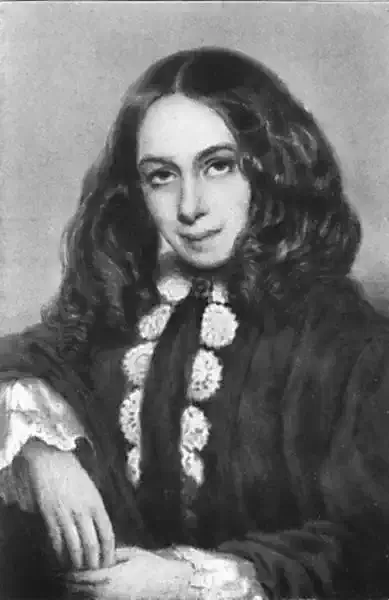
Elizabeth Barrett Browning
Work And Contemplation
The woman singeth at her spinning-wheel
A pleasant chant, ballad or barcarole;
She thinketh of her song, upon the whole,
Far more than of her flax; and yet the reel
Is full, and artfully her fingers feel
With quick adjustment, provident control,
The lines--too subtly twisted to unroll--
Out to a perfect thread. I hence appeal
To the dear Christian Church--that we may do
Our Father's business in these temples mirk,
Thus swift and steadfast, thus intent and strong;
While thus, apart from toil, our souls pursue
Some high calm spheric tune, and prove our work
The better for the sweetness of our song.
437

Kabir
Many Hoped
Many hoped
but no one found
Hari's heart.
Where do the senses rest?
Where do the Ram-chanters go?
Where do the bright ones go?
Corpses: all gone
to the same place.
Drunk on the juice
of Ram's bliss,
Kabir says,
I've said and I've said,
I'm tired of saying.
but no one found
Hari's heart.
Where do the senses rest?
Where do the Ram-chanters go?
Where do the bright ones go?
Corpses: all gone
to the same place.
Drunk on the juice
of Ram's bliss,
Kabir says,
I've said and I've said,
I'm tired of saying.
437
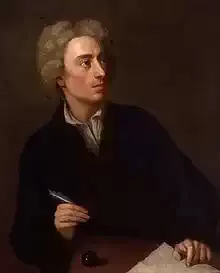
Alexander Pope
The Messiah : A Sacred Eclogue
Ye nymphs of Solyma! begin the song,
To heavenly themes sublimer strains belong.
The mossy fountains, and the sylvan shades,
The dreams of Pindus, and the Aonian maids,
Delight no more - O thou, my voice inspire,
Who touched Isaiah's hallowed lips with fire!
Rapt into future times the bard begun,
A virgin shall conceive, a Virgin bear a son!
From Jesse's root behold a branch arise,
Whose sacred flower with fragrance fills the skies;
The ethereal Spirit o'er its leaves shall move,
And on its top descend the mystic Dove.
Ye heavens! from high the dewy nectar pour,
And in soft silence shed the kindly shower!
The sick and weak, the healing Plant shall aid,
From storms a shelter, and from heat a shade.
All crimes shall cease, and ancient fraud shall fail;
Returning justice lift aloft her scale.
Peace o'er the world her olive wand extend,
And white robed innocence from heaven descend.
Swift fly the years, and rise the expected morn!
O spring to light, auspicious Babe, be born!
See! nature hastes her earliest wreaths to bring,
WIth all the incense of the breathing spring!
See! lofty Lebanon his head advance,
See! nodding forests on the mountains dance:
See! spicy clouds from lowly Sharon rise;
And Carmel's flowery top perfumes the skies.
Hark! a glad voice the lonely desart cheers;
Prepare the way! a God, a God appears:
A God, a God! the vocal hills reply,
The rocks proclaim the approaching Deity.
Lo! earth receives him from the bending skies!
Sink down ye mountains, and ye vallies rise!
With heads declined ye cedars homage pay!
Be smooth ye rocks, ye rapid floods give way!
The Saviour comes! by ancient bards foretold:
Hear him ye deaf, and all ye blind, behold!
He from thick films shall purge the visual ray,
And on the sightless eye-ball pour the day.
'Tis he the obstructed paths of sound shall clear,
The dumb shall sing, the lame his crutch forego,
And leap exulting like the bounding roe:
No sigh, no murmer the wide world shall hear;
From every face he wipes off every tear.
In adamantine chains shall death be bound,
And hell's grim tyrant feel the eternal wound.
As the good shepherd tends his fleecy care,
Seeks freshest pastures and the purest air:
Explores the lost, the wandering sheep directs,
By day o'ersees them, and by night protects;
The tender lambs he raises in his arms,
Feeds from his hand, and in his bosom warms!
Thus shall mankind his guardian care engage,
The promis'd father of the future age.
No more shall nation against nation rise,
Nor ardent warriors meet with hateful eyes;
Nor fields with gleaming steel be cover'd o'er,
The brazen trumpets kindle rage no more;
But useless lances into scythes shall bend,
And the broad faulchion in a plough-share end.
Then palaces shall rise: the joyful son
Shall finish what his short-liv'd fire begun;
Their vines a shadow to their race shall yield,
And the same hand that sow'd, shall reap the field.
The swain in barren desarts with surprise
Sees lillies spring, and sudden verdure rise,
And starts amidst the thirsty wilds to hear
New falls of water murmuring in his ear;
On rifted rocks, the dragon's late abodes,
The green reed trembles, and the bulrush nods.
Waste sandy vallies once perplex'd with thorn,
The spiry fir and shapely box adorn;
The leafless shrubs the flow'ring palms succeed,
And odorous myrtle to the noisome weed.
The lambs with wolves shall grace the verdant mead,
And boys in flow'ry bands the tyger lead;
The steer and lion at one crib shall meet,
And harmless serpents lick the pilgrim's feet.
The smiling infant in his hand shall take
The crested basilisk and speckled snake;
Pleas'd, the green lustres of the scales survey,
And with their forky tongues shall innocently play.
Rise, crown'd with light, imperial Salem rise!
Exalt thy tow'ry head, and lift thy eyes!
See! a long race thy spacious courts adorn;
See! future sons and daughters yet unborn,
In crowding ranks on ev'ry side arise,
Demanding life, impatient for the skies!
See! barb'rous nations at thy gates attend,
Walk in thy light, and in thy temple bend;
See! thy bright altars throng'd with prostrate kings,
And heap'd with products of Sabaean springs!
For thee Idume's spicy forests blow,
And seeds of gold in Ophir's mountains glow.
See! heav'n its sparkling portals wide display,
And break upon thee in a flood of day!
No more the rising sun shall gild the morn,
Nor ev'ning Cynthia fill her silver horn;
But lost, dissolv'd in thy superior rays,
One tide of glory, one unclouded blaze,
O'erflow thy courts: the Light Himself shall shine
Reveal'd, and God's eternal day be thine!
The seas shall waste, the skies in smoke decay,
Rocks fall to dust, and mountains melt away;
But fix'd his word, his saving pow'r remains,
Thy realm for ever lasts, thy own Messiah reigns.
434
Elizabeth Barrett Browning
Sonnet XXVII: My Dear Belovèd
My dear Belovèd, who hast lifted me
From this drear flat of earth where I was thrown,
And, in betwixt the languid ringlets, blown
A life-breath, till the forehead hopefully
Shines out again, as all the angels see,
Before thy saving kiss! My own, my own,
Who camest to me when the world was gone,
And I who looked for only God, found thee!
I find thee; I am safe, and strong, and glad.
As one who stands in dewless asphodel
Looks backward on the tedious time he had
In the upper life,--so I, with bosom-swell,
Make witness, here, between the good and bad,
That Love, as strong as Death, retrieves as well.
431
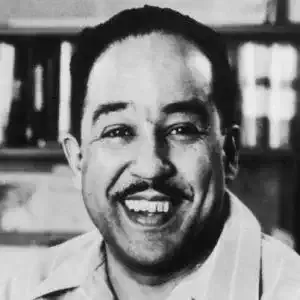
Langston Hughes
Personal
In an envelope marked:
PERSONAL
God addressed me a letter.
In an envelope marked:
PERSONAL
I have given my answer.
PERSONAL
God addressed me a letter.
In an envelope marked:
PERSONAL
I have given my answer.
434
Ella Wheeler Wilcox
The Hour
This is the world's stupendous hour-
The supreme moment for the race
To see the emptiness of power,
The worthlessness of wealth and place,
To see the purpose and the plan
Conceived by God for growing man.
And they who see and comprehend
That ultimate and lofty aim
Will wait in patience for the end,
Knowing injustice cannot claim
One lasting victory, or control
Laws that bar progress for the whole.
This is an epoch-making time;
God thunders through the universe
A message glorious and sublime,
At once a blessing and a curse.
Blessings for those who seek His light,
Curses for those whose law is might.
Ephemeral as the sunset glow
Is human grandeur. Mortal life
Was given that souls might seek and know
Immortal truths; and through the strife
That shakes the earth from land to land
The wise shall hear and understand.
Out of the awful holocaust,
Out of the whirlwind and the flood,
Out of old creeds to Bedlam tossed,
Shall rise a new earth washed in blood-
A new race filled with spirit power,
This is the world's stupendous hour.
431
Kabir
O lord Increate, who will serve Thee?
O lord Increate, who will serve Thee?
Every votary offers his worship to the God of his own creation:
each day he receives service-
None seek Him, the Perfect:
Brahma, the Indivisible Lord.
They believe in ten Avatars;
but no Avatar can be the Infinite Spirit,
for he suffers the results of his deeds:
The Supreme One must be other than this.
The Yogi, the Sanyasi,
the Ascetics, are disputing one with another:
Kabîr says, 'O brother! he who has seen that radiance of love,
he is saved.'
428

Alfred Lord Tennyson
In Memoriam A. H. H.: 96. You say, but with no touch of sco
You say, but with no touch of scorn,
Sweet-hearted, you, whose light-blue eyes
Are tender over drowning flies,
You tell me, doubt is Devil-born.
I know not: one indeed I knew
In many a subtle question versed,
Who touch'd a jarring lyre at first,
But ever strove to make it true:
Perplext in faith, but pure in deeds,
At last he beat his music out.
There lives more faith in honest doubt,
Believe me, than in half the creeds.
He fought his doubts and gather'd strength,
He would not make his judgment blind,
He faced the spectres of the mind
And laid them: thus he came at length
To find a stronger faith his own;
And Power was with him in the night,
Which makes the darkness and the light,
And dwells not in the light alone,
But in the darkness and the cloud,
As over Sinaï's peaks of old,
While Israel made their gods of gold,
Altho' the trumpet blew so loud.
427
Ella Wheeler Wilcox
The Times
The times are not degenerate. Man’s faith
Mounts higher than of old. No crumbling creed
Can take from the immortal soul the need
Of that supreme Creator, God. The wraith
Of dead beliefs we cherished in our youth
Fades but to let us welcome new-born Truth.
Man may not worship at the ancient shrine
Prone on his face, in self-accusing scorn.
That night is past. He hails a fairer morn,
And knows himself a something all divine;
No humble worm whose heritage is sin,
But, born of God, he feels the Christ within.
Not loud his prayers, as in the olden time,
But deep his reverence for that mighty force,
That occult working of the great all Source,
Which makes the present era so sublime.
Religion now means something high and broad,
And man stood never half so near to God.
429

Rudyard Kipling
The Light That Failed
So we settled it all when the storm was done
As comfy as comfy could be;
And I was to wait in the barn, my dears,
Because I was only three.
And Teddy would run to the rainbow's foot
Because he was five and a man--
And that's how it all began, my dears,
And that's how it all began!
Then we brought the lances down--then the trumpets blew--
When we went to Kandahar, ridin' two an' two.
Ridin'--ridin'--ridin' two an' two!
Ta-ra-ra-ra-ra-ra-a!
All the way to Kandahar,
Ridin' two an' two.
The wolf-cub at even lay hid in the corn,
When the smoke of the cooking hung grey.
He knew where the doe made a couch for her fawn,
And he looked to his strength for his prey.
But the moon swept the smoke-wreaths away;
And he turned from his meal in the villager's close,
And he bayed to the moon as she rose.
"I have a thousand men," said he,
"To wait upon my will;
And towers nine upon the Tyne,
And three upon the Till."
"And what care I for your men? " said she,
"Or towers from Tyne to Till?
Sith you must go with me," said she,
"To wait upon my will.
And you may lead a thousand men
Nor ever draw the rein,
But before you lead the Fairy Queen
'Twill burst your heart in twain."
He has slipped his foot from the stirrup-bar,
The bridle from his hand,
And he is bound by hand and foot
To the Queen of Fairy Land.
"If I have taken the common clay
And wrought it cunningly
In the shape of a God that was digged a clod,
The greater honour to me."
"If thou hast taken the common clay,
And thy hands be not free
From the taint of the soil, thou hast made thy spoil
The greater shame to thee."
The lark will make her hymn to God,
The partridge call her brood,
While I forget the heath I trod,
The fields wherein I stood.
'Tis dule to know not night from morn,
But greater dule to know
I can but hear the hunter's horn
That once I used to blow.
There were three friends that buried the fourth,
The mould in his mouth and the dust in his eyes,
And they .went south and east and north--
The strong man fights but the sick man dies.
There were three friends that spoke of the dead--
The strong man fights but the sick man dies--
"And would he were here with us now," they said,
"The Sun in our face and the wind in our eyes."
Yet at the last ere our spearmen had found him,
Yet at the last, ere a sword-thrust could save,
Yet at the last, with his masters around him,
He spoke of the Faith as a master to slave.
Yet at the last though the Kafirs had maimed him,
Broken by bondage and wrecked by the reiver,
Yet at the last, tho' the darkness had claimed him,
He colled on Allah and died a Believer!
428
Rupert Brooke
The Vision of the Archangels
Slowly up silent peaks, the white edge of the world,
Trod four archangels, clear against the unheeding sky,
Bearing, with quiet even steps, and great wings furled,
A little dingy coffin; where a child must lie,
It was so tiny. (Yet, you had fancied, God could never
Have bidden a child turn from the spring and the sunlight,
And shut him in that lonely shell, to drop for ever
Into the emptiness and silence, into the night.…)
They then from the sheer summit cast, and watched it fall,
Through unknown glooms, that frail black coffin—and therein
God’s little pitiful Body lying, worn and thin,
And curled up like some crumpled, lonely flower petal—
Till it was no more visible; then turned again
With sorrowful quiet faces downward to the plain.
428
Ella Wheeler Wilcox
The Creed
Whoever was begotten by pure love,
And came desired and welcome into life,
Is of immaculate conception. He
Whose heart is full of tenderness and truth,
Who loves mankind more than he loves himself,
And cannot find room in his heart for hate,
May be another Christ. We all may be
The Saviours of the world if we believe
In the Divinity which dwells in us
And worship it, and nail our grosser selves,
Our tempers, greeds, and our unworthy aims,
Upon the cross. Who giveth love to all;
Pays kindness for unkindness, smiles for frowns;
And lends new courage to each fainting heart,
And strengthens hope and scatters joy abroad—
He, too, is a Redeemer, Son of God.
429

Henry Wadsworth Longfellow
Youth And Age. (Sonnet III.)
Oh give me back the days when loose and free
To my blind passion were the curb and rein,
Oh give me back the angelic face again,
With which all virtue buried seems to be!
Oh give my panting footsteps back to me,
That are in age so slow and fraught with pain,
And fire and moisture in the heart and brain,
If thou wouldst have me burn and weep for thee!
If it be true thou livest alone, Amor,
On the sweet-bitter tears of human hearts,
In an old man thou canst not wake desire;
Souls that have almost reached the other shore
Of a diviner love should feel the darts,
And be as tinder to a holier fire.
428

Johann Wolfgang von Goethe
Rhymed Distichs
WHO trusts in God,
Fears not His rod.
THIS truth may be by all believed:
Whom God deceives, is well deceived.
HOW? when? and where?-No answer comes from high;
Thou wait'st for the Because, and yet thou ask'st not Why?
IF the whole is ever to gladden thee,
That whole in the smallest thing thou must see.
WATER its living strength first shows,
When obstacles its course oppose.
TRANSPARENT appears the radiant air,
Though steel and stone in its breast it may bear;
At length they'll meet with fiery power,
And metal and stones on the earth will shower.
WHATE'ER a living flame may surround,
No longer is shapeless, or earthly bound.
'Tis now invisible, flies from earth,
And hastens on high to the place of its birth.
430

Walt Whitman
These Carols
THESE Carols, sung to cheer my passage through the world I see,
For completion, I dedicate to the Invisible World.
For completion, I dedicate to the Invisible World.
427
Rudyard Kipling
The First Chantey
Mine was the woman to me, darkling I found her;
Haling her dumb from the camp, took her and bound her.
Hot rose her tribe on our track ere I had proved her;
Hearing her laugh in the gloom, greatly I loved her.
Swift through the forest we ran; none stood to guard us,
Few were my people and far; then the flood barred us --
Him we call Son of the Sea, sullen and swollen.
Panting we waited the death, stealer and stolen.
Yet ere they came to my lance laid for the slaughter,
Lightly she leaped to a log lapped in the water;
Holding on high and apart skins that arrayed her,
Called she the God of the Wind that He should aid her.
Life had the tree at that word (Praise we the Giver!)
Otter-like left he the bank for the full river.
Far fell their axes behind, flashing and ringing,
Wonder was on me and fear -- yet she was singing!
Low lay the land we had left. Now the blue bound us,
Even the Floor of the Gods level around us.
Whisper there was not, nor word, shadow nor showing,
Till the light stirred on the deep, glowing and growing.
Then did He leap to His place flaring from under,
He the Compeller, the Sun, bared to our wonder.
Nay, not a league from our eyes blinded with gazing,
Cleared He the gate of the world, huge and amazing!
This we beheld (and we live) -- the Pit of the Burning!
Then the God spoke to the tree for our returning;
Back to the beach of our flight, fearless and slowly,
Back to our slayers went he: but we were holy.
Men that were hot in that hunt, women that followed,
Babes that were promised our bones, trembled and wallowed:
Over the necks of the Tribe crouching and fawning --
Prophet and priestess we came back from the dawning!
425

Robert Browning
The Boy And the Angel
Morning, evening, noon and night,
``Praise God!; sang Theocrite.
Then to his poor trade he turned,
Whereby the daily meal was earned.
Hard he laboured, long and well;
O'er his work the boy's curls fell.
But ever, at each period,
He stopped and sang, ``Praise God!''
Then back again his curls he threw,
And cheerful turned to work anew.
Said Blaise, the listening monk, ``Well done;
``I doubt not thou art heard, my son:
``As well as if thy voice to-day
``Were praising God, the Pope's great way.
``This Easter Day, the Pope at Rome
``Praises God from Peter's dome.''
Said Theocrite, ``Would God that I
``Might praise him, that great way, and die!''
Night passed, day shone,
And Theocrite was gone.
With God a day endures alway,
A thousand years are but a day.
God said in heaven, ``Nor day nor night
``Now brings the voice of my delight.''
Then Gabriel, like a rainbow's birth,
Spread his wings and sank to earth;
Entered, in flesh, the empty cell,
Lived there, and played the craftsman well;
And morning, evening, noon and night,
Praised God in place of Theocrite.
And from a boy, to youth he grew:
The man put off the stripling's hue:
The man matured and fell away
Into the season of decay:
And ever o'er the trade he bent,
And ever lived on earth content.
(He did God's will; to him, all one
If on the earth or in the sun.)
God said, ``A praise is in mine ear;
``There is no doubt in it, no fear:
``So sing old worlds, and so
``New worlds that from my footstool go.
``Clearer loves sound other ways:
``I miss my little human praise.''
Then forth sprang Gabriel's wings, off fell
The flesh disguise, remained the cell.
'Twas Easter Day: he flew to Rome,
And paused above Saint Peter's dome.
In the tiring-room close by
The great outer gallery,
With his holy vestments dight,
Stood the new Pope, Theocrite:
And all his past career
Came back upon him clear,
Since when, a boy, he plied his trade,
Till on his life the sickness weighed;
And in his cell, when death drew near,
An angel in a dream brought cheer:
And rising from the sickness drear
He grew a priest, and now stood here.
To the East with praise he turned,
And on his sight the angel burned.
``I bore thee from thy craftsman's cell
``And set thee here; I did not well.
``Vainly I left my angel-sphere,
``Vain was thy dream of many a year.
``Thy voice's praise seemed weak; it dropped---
``Creation's chorus stopped!
``Go back and praise again
``The early way, while I remain.
``With that weak voice of our disdain,
``Take up creation's pausing strain.
``Back to the cell and poor employ:
``Resume the craftsman and the boy!''
Theocrite grew old at home;
A new Pope dwelt in Peter's dome.
One vanished as the other died:
They sought God side by side.
426