
Happiness and Joy

Elizabeth Barrett Browning
The Best Thing in the World
What's the best thing in the world?
June-rose, by May-dew impearled;
Sweet south-wind, that means no rain;
Truth, not cruel to a friend;
Pleasure, not in haste to end;
Beauty, not self-decked and curled
Till its pride is over-plain;
Love, when, so, you're loved again.
What's the best thing in the world?
--Something out of it, I think.
443
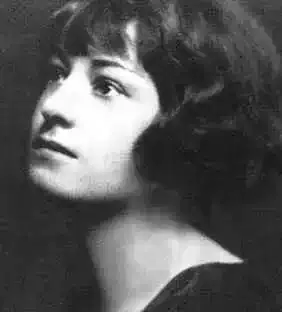
Dorothy Parker
Verse For a Certain Dog
Such glorious faith as fills your limpid eyes,
Dear little friend of mine, I never knew.
All-innocent are you, and yet all-wise.
(For Heaven's sake, stop worrying that shoe!)
You look about, and all you see is fair;
This mighty globe was made for you alone.
Of all the thunderous ages, you're the heir.
(Get off the pillow with that dirty bone!)
A skeptic world you face with steady gaze;
High in young pride you hold your noble head,
Gayly you meet the rush of roaring days.
(Must you eat puppy biscuit on the bed?)
Lancelike your courage, gleaming swift and strong,
Yours the white rapture of a winged soul,
Yours is a spirit like a Mayday song.
(God help you, if you break the goldfish bowl!)
"Whatever is, is good" - your gracious creed.
You wear your joy of living like a crown.
Love lights your simplest act, your every deed.
(Drop it, I tell you- put that kitten down!)
You are God's kindliest gift of all - a friend.
Your shining loyalty unflecked by doubt,
You ask but leave to follow to the end.
(Couldn't you wait until I took you out?)
443

Emily Dickinson
Over the fence
Over the fence
Strawberries-
grow-
Over the fence-
I could climb-if I tried, I know-
Berries are nice!
But-if I stained my Apron-
God would certainly scold!
Oh, dear,-I guess if He were a BoyHe'd-
climb-if He could!
Strawberries-
grow-
Over the fence-
I could climb-if I tried, I know-
Berries are nice!
But-if I stained my Apron-
God would certainly scold!
Oh, dear,-I guess if He were a BoyHe'd-
climb-if He could!
442

Robert Louis Stevenson
Fairy Bread
Come up here, O dusty feet!
Here is fairy ready to eat.
Here in my retiring room,
Children ,you may dine
On the golden smell of broom
And the shade of pine;
And when you have eaten well,
Fairy stories hear and tell.
Here is fairy ready to eat.
Here in my retiring room,
Children ,you may dine
On the golden smell of broom
And the shade of pine;
And when you have eaten well,
Fairy stories hear and tell.
438

Ella Wheeler Wilcox
A Baby In The House
I knew that a baby was hid in that house,
Though I saw no cradle and heard no cry;
But the husband was tip-toeing 'round like a mouse,
And the good wife was humming a soft lullaby;
And there was a look on the face of the mother,
That I knew could mean only one thing, and no other.
The mother, I said to myself, for I knew
That the woman before me was certainly that;
And there lay in a corner a tiny cloth shoe,
And I saw on a stand such a wee little hat;
And the beard of the husband said, plain as could be,
'Two fat chubby hands have been tugging at me.'
And he took from his pocket a gay picture-book,
And a dog that could bark, if you pulled on a string;
And the wife laid them up with such a pleased look;
And I said to myself, 'There is no other thing
But a babe that could bring about all this, and so
That one thing is in hiding somewhere, I know.'
I stayed but a moment, and saw nothing more,
And heard not a sound, yet I know I was right;
What else could the shoe mean that lay on the floor,
The book and the toy, and the faces so bright;
And what made the husband as still as a mouse?
I am sure, very sure, there's a babe in that house.
440

Henry Wadsworth Longfellow
Holidays
The holiest of all holidays are those
Kept by ourselves in silence and apart;
The secret anniversaries of the heart,
When the full river of feeling overflows;--
The happy days unclouded to their close;
The sudden joys that out of darkness start
As flames from ashes; swift desires that dart
Like swallows singing down each wind that blows!
White as the gleam of a receding sail,
White as a cloud that floats and fades in air,
White as the whitest lily on a stream,
These tender memories are;--a fairy tale
Of some enchanted land we know not where,
But lovely as a landscape in a dream.
440
Ella Wheeler Wilcox
Life's Harmonies
Let no man pray that he know not sorrow,
Let no soul ask to be free from pain,
For the gall of to-day is the sweet of to-morrow,
And the moment's loss is the lifetime's gain.
Through want of a thing does its worth redouble,
Through hunger's pangs does the feast content,
And only the heart that has harbored trouble,
Can fully rejoice when joy is sent.
Let no man shrink from the bitter tonics
Of grief, and yearning, and need, and strife,
For the rarest chords in the soul's harmonies,
Are found in the minor strains of life.
438
Ella Wheeler Wilcox
Dell And I
In a mansion grand, just over the way,
Lives bonny, beautiful Dell;
You may have heard of this lady gay,
For she is a famous belle.
I live in a low cot opposite,
You never have heard of me;
For when the lady moon shines bright,
Who would a pale star see?
But ah, well, ah, well! I am happier far than Dell,
As strange as that may be.
Dell has robes of the richest kind-
Pinks and purples and blues.
And she worries her maid and frets her mind
To know which one to choose.
Which shall it be now, silk or lace?
In which will I be most fair?
She stands by the mirror with anxious face,
And her maid looks on in despair.
Ah, well, ah, well! I am not worried, you see, like Dell,
For I have but
one
to wear.
Dell has lovers of every grade,
Of every age and style;
Suitors flutter about the maid,
And bask in her word and smile.
She keeps them all, with a coquette's art,
As suits her mood or mirth,
And vainly wonders if in one heart
Of all true love has birth.
Ah, well, ah, well! I never question myself like Dell,
For I
know
a true heart's worth.
Pleasure to Dell seems stale and old,
Often she sits and sighs;
Life to me is a tale untold,
Each day is a glad surprise.
Dell with marry, of course, some day
After her belleship is run;
She will cavil the matter in worldly way
And wed Dame Fortune's son.
But, ah, well, sweet to tell, I shall not dally and choose like Dell,
For I love and am loved byone
.
438
Ella Wheeler Wilcox
Refuted
‘Anticipation is sweeter than realisation.’
It may be, yet I have not found it so.
In those first golden dreams of future fame
I did not find such happiness as came
When toil was crowned with triumph. Now I know
My words have recognition, and will go
Straight to some listening heart, my early aim,
To win the idle glory of a name,
Pales like a candle in the noonday’s glow.
So with the deeper joys of which I dreamed:
Life yields more rapture than did childhood’s fancies,
And each year brings more pleasure than I waited.
Friendship proves truer than of old it seemed,
And, all beyond youth’s passion-hued romances,
Love is more perfect than anticipated.
434
Henry Wadsworth Longfellow
Woods in Winter
When winter winds are piercing chill,
And through the hawthorn blows the gale,
With solemn feet I tread the hill,
That overbrows the lonely vale.
O'er the bare upland, and away
Through the long reach of desert woods,
The embracing sunbeams chastely play,
And gladden these deep solitudes.
Where, twisted round the barren oak,
The summer vine in beauty clung,
And summer winds the stillness broke,
The crystal icicle is hung.
Where, from their frozen urns, mute springs
Pour out the river's gradual tide,
Shrilly the skater's iron rings,
And voices fill the woodland side.
Alas! how changed from the fair scene,
When birds sang out their mellow lay,
And winds were soft, and woods were green,
And the song ceased not with the day!
But still wild music is abroad,
Pale, desert woods! within your crowd;
And gathering winds, in hoarse accord,
Amid the vocal reeds pipe loud.
Chill airs and wintry winds! my ear
Has grown familiar with your song;
I hear it in the opening year,
I listen, and it cheers me long.
435

James Whitcomb Riley
A Barefoot Boy
A barefoot boy! I mark him at his play --
For May is here once more, and so is he, --
His dusty trousers, rolled half to the knee,
And his bare ankles grimy, too, as they:
Cross-hatchings of the nettle, in array
Of feverish stripes, hint vividly to me
Of woody pathways winding endlessly
Along the creek, where even yesterday
He plunged his shrinking body -- gasped and shook --
Yet called the water 'warm,' with never lack
Of joy. And so, half enviously I look
Upon this graceless barefoot and his track, --
His toe stubbed -- ay, his big toe-nail knocked back
Like unto the clasp of an old pocketbook.
431

John Clare
Summer Images
Now swarthy Summer, by rude health embrowned,
Precedence takes of rosy fingered Spring;
And laughing Joy, with wild flowers prank'd, and crown'd,
A wild and giddy thing,
And Health robust, from every care unbound,
Come on the zephyr's wing,
And cheer the toiling clown.
Happy as holiday-enjoying face,
Loud tongued, and "merry as a marriage bell,"
Thy lightsome step sheds joy in every place;
And where the troubled dwell,
Thy witching charms wean them of half their cares;
And from thy sunny spell,
They greet joy unawares.
Then with thy sultry locks all loose and rude,
And mantle laced with gems of garish light,
Come as of wont; for I would fain intrude,
And in the world's despite,
Share the rude wealth that thy own heart beguiles;
If haply so I might
Win pleasure from thy smiles.
Me not the noise of brawling pleasure cheers,
In nightly revels or in city streets;
But joys which soothe, and not distract the ears,
That one at leisure meets
In the green woods, and meadows summer-shorn,
Or fields, where bee-fly greets
The ear with mellow horn.
The green-swathed grasshopper, on treble pipe,
Sings there, and dances, in mad-hearted pranks;
There bees go courting every flower that's ripe,
On baulks and sunny banks;
And droning dragon-fly, on rude bassoon,
Attempts to give God thanks
In no discordant tune.
The speckled thrush, by self-delight embued,
There sings unto himself for joy's amends,
And drinks the honey dew of solitude.
There Happiness attends
With inbred Joy until the heart o'erflow,
Of which the world's rude friends,
Nought heeding, nothing know.
There the gay river, laughing as it goes,
Plashes with easy wave its flaggy sides,
And to the calm of heart, in calmness shows
What pleasure there abides,
To trace its sedgy banks, from trouble free:
Spots Solitude provides
To muse, and happy be.
There ruminating 'neath some pleasant bush,
On sweet silk grass I stretch me at mine ease,
Where I can pillow on the yielding rush;
And, acting as I please,
Drop into pleasant dreams; or musing lie,
Mark the wind-shaken trees,
And cloud-betravelled sky.
There think me how some barter joy for care,
And waste life's summer-health in riot rude,
Of nature, nor of nature's sweets aware.
When passions vain intrude,
These, by calm musings, softened are and still;
And the heart's better mood
Feels sick of doing ill.
There I can live, and at my leisure seek
Joys far from cold restraints--not fearing pride--
Free as the winds, that breathe upon my cheek
Rude health, so long denied.
Here poor Integrity can sit at ease,
And list self-satisfied
The song of honey-bees.
The green lane now I traverse, where it goes
Nought guessing, till some sudden turn espies
Rude batter'd finger post, that stooping shows
Where the snug mystery lies;
And then a mossy spire, with ivy crown,
Cheers up the short surprise,
And shows a peeping town.
I see the wild flowers, in their summer morn
Of beauty, feeding on joy's luscious hours;
The gay convolvulus, wreathing round the thorn,
Agape for honey showers;
And slender kingcup, burnished with the dew
Of morning's early hours,
Like gold yminted new.
And mark by rustic bridge, o'er shallow stream,
Cow-tending boy, to toil unreconciled,
Absorbed as in some vagrant summer dream;
Who now, in gestures wild,
Starts dancing to his shadow on the wall,
Feeling self-gratified,
Nor fearing human thrall.
Or thread the sunny valley laced with streams,
Or forests rude, and the o'ershadow'd brims
Of simple ponds, where idle shepherd dreams,
Stretching his listless limbs;
Or trace hay-scented meadows, smooth and long,
Where joy's wild impulse swims
In one continued song.
I love at early morn, from new mown swath,
To see the startled frog his route pursue;
To mark while, leaping o'er the dripping path,
His bright sides scatter dew,
The early lark that from its bustle flies,
To hail his matin new;
And watch him to the skies.
To note on hedgerow baulks, in moisture sprent,
The jetty snail creep from the mossy thorn,
With earnest heed, and tremulous intent,
Frail brother of the morn,
That from the tiny bent's dew-misted leaves
Withdraws his timid horn,
And fearful vision weaves.
Or swallow heed on smoke-tanned chimney top,
Wont to be first unsealing Morning's eye,
Ere yet the bee hath gleaned one wayward drop
Of honey on his thigh;
To see him seek morn's airy couch to sing,
Until the golden sky
Bepaint his russet wing.
Or sauntering boy by tanning corn to spy,
With clapping noise to startle birds away,
And hear him bawl to every passer by
To know the hour of day;
While the uncradled breezes, fresh and strong,
With waking blossoms play,
And breathe Æolian song.
I love the south-west wind, or low or loud,
And not the less when sudden drops of rain
Moisten my glowing cheek from ebon cloud,
Threatening soft showers again,
That over lands new ploughed and meadow grounds,
Summer's sweet breath unchain,
And wake harmonious sounds.
Rich music breathes in Summer's every sound;
And in her harmony of varied greens,
Woods, meadows, hedge-rows, corn-fields, all around
Much beauty intervenes,
Filling with harmony the ear and eye;
While o'er the mingling scenes
Far spreads the laughing sky.
See, how the wind-enamoured aspen leaves
Turn up their silver lining to the sun!
And hark! the rustling noise, that oft deceives,
And makes the sheep-boy run:
The sound so mimics fast-approaching showers,
He thinks the rain's begun,
And hastes to sheltering bowers.
But now the evening curdles dank and grey,
Changing her watchet hue for sombre weed;
And moping owls, to close the lids of day,
On drowsy wing proceed;
While chickering crickets, tremulous and long,
Light's farewell inly heed,
And give it parting song.
The pranking bat its flighty circlet makes;
The glow-worm burnishes its lamp anew;
O'er meadows dew-besprent, the beetle wakes
Inquiries ever new,
Teazing each passing ear with murmurs vain,
As wanting to pursue
His homeward path again.
Hark! 'tis the melody of distant bells
That on the wind with pleasing hum rebounds
By fitful starts, then musically swells
O'er the dim stilly grounds;
While on the meadow-bridge the pausing boy
Listens the mellow sounds,
And hums in vacant joy.
Now homeward-bound, the hedger bundles round
His evening faggot, and with every stride
His leathern doublet leaves a rustling sound,
Till silly sheep beside
His path start tremulous, and once again
Look back dissatisfied,
And scour the dewy plain.
How sweet the soothing calmness that distills
O'er the heart's every sense its opiate dews,
In meek-eyed moods and ever balmy trills!
That softens and subdues,
With gentle Quiet's bland and sober train,
Which dreamy eve renews
In many a mellow strain!
I love to walk the fields, they are to me
A legacy no evil can destroy;
They, like a spell, set every rapture free
That cheer'd me when a boy.
Play--pastime--all Time's blotting pen conceal'd,
Comes like a new-born joy,
To greet me in the field.
For Nature's objects ever harmonize
With emulous Taste, that vulgar deed annoys;
Which loves in pensive moods to sympathize,
And meet vibrating joys
O'er Nature's pleasing things; nor slighting, deems
Pastimes, the Muse employs,
Vain and obtrusive themes.
429

Walt Whitman
What General Has A Good Army
WHAT General has a good army in himself, has a good army;
He happy in himself, or she happy in herself, is happy,
But I tell you you cannot be happy by others, any more than you can
beget or conceive a child by others.
He happy in himself, or she happy in herself, is happy,
But I tell you you cannot be happy by others, any more than you can
beget or conceive a child by others.
428
Elizabeth Barrett Browning
Sonnet XXVII: My Dear Belovèd
My dear Belovèd, who hast lifted me
From this drear flat of earth where I was thrown,
And, in betwixt the languid ringlets, blown
A life-breath, till the forehead hopefully
Shines out again, as all the angels see,
Before thy saving kiss! My own, my own,
Who camest to me when the world was gone,
And I who looked for only God, found thee!
I find thee; I am safe, and strong, and glad.
As one who stands in dewless asphodel
Looks backward on the tedious time he had
In the upper life,--so I, with bosom-swell,
Make witness, here, between the good and bad,
That Love, as strong as Death, retrieves as well.
430

Claude Mckay
Spring in New Hampshire
Too green the springing April grass,
Too blue the silver-speckled sky,
For me to linger here, alas,
While happy winds go laughing by,
Wasting the golden hours indoors,
Washing windows and scrubbing floors.
Too wonderful the April night,
Too faintly sweet the first May flowers,
The stars too gloriously bright,
For me to spend the evening hours,
When fields are fresh and streams are leaping,
Wearied, exhausted, dully sleeping.
430
Robert Louis Stevenson
A Good Play
We built a ship upon the stairs
All made of the back-bedroom chairs,
And filled it full of soft pillows
To go a-sailing on the billows.
We took a saw and several nails,
And water in the nursery pails;
And Tom said, "Let us also take
An apple and a slice of cake;"--
Which was enough for Tom and me
To go a-sailing on, till tea.
We sailed along for days and days,
And had the very best of plays;
But Tom fell out and hurt his knee,
So there was no one left but me.
430
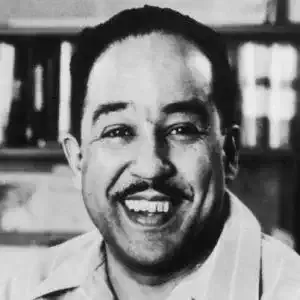
Langston Hughes
April Rain Song
Let the rain kiss you
Let the rain beat upon your head with silver liquid drops
Let the rain sing you a lullaby
The rain makes still pools on the sidewalk
The rain makes running pools in the gutter
The rain plays a little sleep song on our roof at night
And I love the rain.
Let the rain beat upon your head with silver liquid drops
Let the rain sing you a lullaby
The rain makes still pools on the sidewalk
The rain makes running pools in the gutter
The rain plays a little sleep song on our roof at night
And I love the rain.
425

Khalil Gibran
The Life of Love XVI
Spring
Come, my beloved; let us walk amidst the knolls,
For the snow is water, and Life is alive from its
Slumber and is roaming the hills and valleys.
Let us follow the footprints of Spring into the
Distant fields, and mount the hilltops to draw
Inspiration high above the cool green plains.
Dawn of Spring has unfolded her winter-kept garment
And placed it on the peach and citrus trees; and
They appear as brides in the ceremonial custom of
the Night of Kedre.
The sprigs of grapevine embrace each other like
Sweethearts, and the brooks burst out in dance
Between the rocks, repeating the song of joy;
And the flowers bud suddenly from the heart of
Nature, like foam from the rich heart of the sea.
Come, my beloved; let us drink the last of Winter's
Tears from the cupped lilies, and soothe our spirits
With the shower of notes from the birds, and wander
In exhilaration through the intoxicating breeze.
Let us sit by that rock, where violets hide; let us
Pursue their exchange of the sweetness of kisses.
Summer
Let us go into the fields, my beloved, for the
Time of harvest approaches, and the sun's eyes
Are ripening the grain.
Let us tend the fruit of the earth, as the
Spirit nourishes the grains of Joy from the
Seeds of Love, sowed deep in our hearts.
Let us fill our bins with the products of
Nature, as life fills so abundantly the
Domain of our hearts with her endless bounty.
Let us make the flowers our bed, and the
Sky our blanket, and rest our heads together
Upon pillows of soft hay.
Let us relax after the day's toil, and listen
To the provoking murmur of the brook.
Autumn
Let us go and gather grapes in the vineyard
For the winepress, and keep the wine in old
Vases, as the spirit keeps Knowledge of the
Ages in eternal vessels.
Let us return to our dwelling, for the wind has
Caused the yellow leaves to fall and shroud the
Withering flowers that whisper elegy to Summer.
Come home, my eternal sweetheart, for the birds
Have made pilgrimage to warmth and lest the chilled
Prairies suffering pangs of solitude. The jasmine
And myrtle have no more tears.
Let us retreat, for the tired brook has
Ceased its song; and the bubblesome springs
Are drained of their copious weeping; and
Their cautious old hills have stored away
Their colorful garments.
Come, my beloved; Nature is justly weary
And is bidding her enthusiasm farewell
With quiet and contented melody.
Winter
Come close to me, oh companion of my full life;
Come close to me and let not Winter's touch
Enter between us. Sit by me before the hearth,
For fire is the only fruit of Winter.
Speak to me of the glory of your heart, for
That is greater than the shrieking elements
Beyond our door.
Bind the door and seal the transoms, for the
Angry countenance of the heaven depresses my
Spirit, and the face of our snow-laden fields
Makes my soul cry.
Feed the lamp with oil and let it not dim, and
Place it by you, so I can read with tears what
Your life with me has written upon your face.
Bring Autumn's wine. Let us drink and sing the
Song of remembrance to Spring's carefree sowing,
And Summer's watchful tending, and Autumn's
Reward in harvest.
Come close to me, oh beloved of my soul; the
Fire is cooling and fleeing under the ashes.
Embrace me, for I fear loneliness; the lamp is
Dim, and the wine which we pressed is closing
Our eyes. Let us look upon each other before
They are shut.
Find me with your arms and embrace me; let
Slumber then embrace our souls as one.
Kiss me, my beloved, for Winter has stolen
All but our moving lips.
You are close by me, My Forever.
How deep and wide will be the ocean of Slumber,
And how recent was the dawn!
424
Ella Wheeler Wilcox
Our Lives
Our lives are songs. God writes the words,
And we set them to music at pleasure;
And the song grows glad, or sweet, or sad,
As we choose to fashion the measure.
We must write the music, whatever the song,
Whatever its rhyme, or metre;
And if it is sad, we can make it glad,
Or if sweet, we can make it sweeter.
One has a song that is free and strong;
But the music he writes is minor;
And the sad, sad strain is replete with pain,
And the singer becomes a repiner.
And he thinks God gave him a dirge-like lay,
Nor knows that the words are cheery;
And the song seems lonely and solemn-only
Because the music is dreary.
And the song of another has through the words
An under current of sadness;
But he sets it to music of ringing chords,
And makes it a pean of gladness.
So whether our songs are sad or not,
We can give the world more pleasure,
And better ourselves, by setting the words
To a glad, triumphant measure.
1872
423
Ella Wheeler Wilcox
Summer Song
The meadow lark’s trill and the brown thrush’s whistle
From morning to evening fill all the sweet air,
And my heart is as light as the down of a thistle –
The world is so bright and the earth is so fair.
There is life in the wood, there is bloom on the meadow;
The air drops with songs that the merry birds sing.
The sunshine has won, in the battle with shadow,
And she’s dressed the glad earth with robes of the spring.
The bee leaves his hive for the field of red clover
And the vale where the daisies bloom white as the snow,
And a mantle of warm yellow sunshine hangs over
The calm little pond, where the pale lillies grow.
In the woodland beyond it, a thousand gay voices
Are singing in chorus some jubilant air.
The bird and the bee and all nature rejoices,
The world is so bright, and the earth is so fair.
I am glad as a child, in this beautiful weather;
I have tossed all my burdens and trials away;
My heart is as light – yes, as light as a feather; I
am care-free, and careless, and happy to-day.
Can it be there approaches a dark, dreary to-morrow?
Can shadows e’er fall on this beautiful earth?
Ah! To-day is my own! No forebodings of sorrow
Shall darken my skies, or shall dampen my mirth.
422

John Keats
To one who has been long in city pent
To one who has been long in city pent,
'Tis very sweet to look into the fair
And open face of heaven,--to breathe a prayer
Full in the smile of the blue firmament.
Who is more happy, when, with heart's content,
Fatigued he sinks into some pleasant lair
Of wavy grass, and reads a debonair
And gentle tale of love and languishment?
Returning home at evening, with an ear
Catching the notes of Philomel,--an eye
Watching the sailing cloudlet's bright career,
He mourns that day so soon has glided by:
E'en like the passage of an angel's tear
That falls through the clear ether silently.
424

Carl Sandburg
Joy
Let a joy keep you.
Reach out your hands
And take it when it runs by,
As the Apache dancer
Clutches his woman.
I have seen them
Live long and laugh loud,
Sent on singing, singing,
Smashed to the heart
Under the ribs
With a terrible love.
Joy always,
Joy everywhere--
Let joy kill you!
Keep away from the little deaths.
Reach out your hands
And take it when it runs by,
As the Apache dancer
Clutches his woman.
I have seen them
Live long and laugh loud,
Sent on singing, singing,
Smashed to the heart
Under the ribs
With a terrible love.
Joy always,
Joy everywhere--
Let joy kill you!
Keep away from the little deaths.
423

Johann Wolfgang von Goethe
The Spring Oracle
OH prophetic bird so bright,
Blossom-songster, cuckoo bight!
In the fairest time of year,
Dearest bird, oh! deign to hear
What a youthful pair would pray,
Do thou call, if hope they may:
Thy cuck-oo, thy cuck-oo.
Ever more cuck-oo, cuck-oo!
Hearest thou? A loving pair
Fain would to the altar fare;
Yes! a pair in happy youth,
Full of virtue, full of truth.
Is the hour not fix'd by fate?
Say, how long must they still wait?
Hark! cuck-oo! hark! cuck-oo!
Silent yet! for shame, cuck-oo!
'Tis not our fault, certainly!
Only two years patient be!
But if we ourselves please here,
Will pa-pa-papas appear?
Know that thou'lt more kindness do us,
More thou'lt prophesy unto us.
One! cuck-oo! Two! cuck-oo!
Ever, ever, cuck-oo, cuck-oo, coo!
If we've calculated clearly,
We have half a dozen nearly.
If good promises we'll give,
Wilt thou say how long we'II live?
Truly, we'll confess to thee,
We'd prolong it willingly.
Coo cuck-oo, coo cuck-oo,
Coo, coo, coo, coo, coo, coo, coo, coo, coo!
Life is one continued feast-(
If we keep no score, at least).
If now we together dwell,
Will true love remain as well?
For if that should e'er decay,
Happiness would pass away.
Coo cuck-oo, coo cuck-oo,
Coo, coo, coo, coo, coo, coo, coo, coo, coo!
420
Langston Hughes
In Time Of Silver Rain
In time of silver rain
The earth puts forth new life again,
Green grasses grow
And flowers lift their heads,
And over all the plain
The wonder spreads
Of Life,
Of Life,
Of life!
In time of silver rain
The butterflies lift silken wings
To catch a rainbow cry,
And trees put forth new leaves to sing
In joy beneath the sky
As down the roadway
Passing boys and girls
Go singing, too,
In time of silver rain When spring
And life
Are new.
416