
Platonic Love

Lord Byron
Stanzas To A Lady, With The Poems Of Camoëns
This votive pledge of fond esteem,
Perhaps, dear girl! for me thou'lt prize;
It sings of Love's enchanting dream,
A theme we never can despise.
Who blames it but the envious fool,
The old and disappointed maid;
Or pupil of the prudish school,
In single sorrow doom'd to fade?
Then read, dear girl! with feeling read,
For thou wilt ne'er be one of those;
To thee in vain I shall not plead
In pity for the poet's woes.
He was in sooth a genuine bard;
His was no faint, fictitious flame.
Like his, may love be thy reward,
But not thy hapless fate the same.
430

William Shakespeare
Sonnet 31: Thy bosom is endeared with all hearts
Thy bosom is endeared with all hearts,
Which I by lacking have supposed dead,
And there reigns love and all love's loving parts,
And all those friends which I thought buried.
How many a holy and obsequious tear
Hath dear religious love stol'n from mine eye
As interest of the dead, which now appear
But things removed that hidden in thee lie!
Thou art the grave where buried love doth live,
Hung with the trophies of my lovers gone,
Who all their parts of me to thee did give;
That due of many now is thine alone:
Their images I loved I view in thee,
And thou, all they, hast all the all of me.
428

Ezra Pound
Speech For Psyche In The Golden Book Of Apuleius
All night, and as the wind lieth among
The cypress trees, he lay,
Nor held me save as air that brusheth by one
Close, and as the petals of flowers in falling
Waver and seem not drawn to earth, so he
Seemed over me to hover light as leaves
And closer me than air,
And music flowing through me seemed to open
Mine eyes upon new colours.
O winds, what wind can match the weight of him!
425
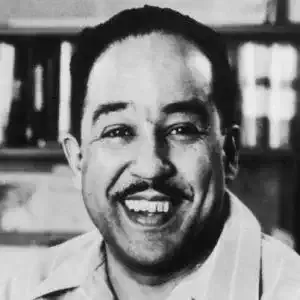
Langston Hughes
Quiet Girl
I would liken you
To a night without stars
Were it not for your eyes.
I would liken you
To a sleep without dreams
Were it not for your songs.
To a night without stars
Were it not for your eyes.
I would liken you
To a sleep without dreams
Were it not for your songs.
425

Ella Wheeler Wilcox
But One
The year has but one June, dear friend;
The year has but one June;
And when that perfect month doth end,
The robin's song, though loud, though long,
Seems never quite in tune.
The rose, though still its blushing face
By bee and bird is seen,
May yet have lost that subtle grace—
That nameless spell the winds know
Which makes it garden's queen.
Life's perfect June, love's red, red rose,
Have burned and bloomed for me.
Though still youth's summer sunlight glows;
Though thou art kind, dear friend, I find
I have no heart for thee.
422
Ella Wheeler Wilcox
Sestina
I wandered o'er the vast green plains of youth,
And searched for Pleasure. On a distant height
Fame's silhouette stood sharp against the skies.
Beyond vast crowds that thronged a broad highway
I caught the glimmer of a golden goal,
While from a blooming bower smiled siren Love.
Straight gazing in her eyes, I laughed at Love,
With all the haughty insolence of youth,
As past her bower I strode to seek my goal.
'Now will I climb to glory's dizzy height, '
I said, ' for there above the common way
Doth pleasure dwell companioned by the skies.'
But when I reached that summit near the skies,
So far from man I seemed, so far from Love'
Not here, ' I cried, 'doth Pleasure find her way, '
Seen from the distant borderland of youth.
Fame smiles upon us from her sun-kissed height,
But frowns in shadows when we reach the goal.
Then were mine eyes fixed on that glittering goal,
Dear to all sense-sunk souls beneath the skies.
Gold tempts the artist from the lofty height,
Gold lures the maiden from the arms of Love,
Gold buys the fresh ingenuous heart of youth,
'And gold, ' I said, 'will show me Pleasure's way.'
But ah! the soil and discord of that way,
Where savage hordes rushed headlong to the goal,
Dead to the best impulses of their youth,
Blind to the azure beauty of the skies;
Dulled to the voice of conscience and of love,
They wandered far from Truth's eternal height.
Then Truth spoke to me from that noble height,
Saying: 'Thou didst pass Pleasure on the way,
She with the yearning eyes so full of Love,
Whom thou disdained to seek for glory's goal.'
Two blending paths beneath God's arching skies
Lead straight to Pleasure. Ah, blind heart of youth,
Not up fame's height, not toward the base god's goal,
Doth Pleasure make her way, but 'neath calm skies
Where Duty walks with Love in endless youth.
423

Robert Browning
A Pretty Woman
I.
That fawn-skin-dappled hair of hers,
And the blue eye
Dear and dewy,
And that infantine fresh air of hers!
II.
To think men cannot take you, Sweet,
And enfold you,
Ay, and hold you,
And so keep you what they make you, Sweet!
III
You like us for a glance, you know---
For a word's sake
Or a sword's sake,
All's the same, whate'er the chance, you know.
IV.
And in turn we make you ours, we say---
You and youth too,
Eyes and mouth too,
All the face composed of flowers, we say.
V.
All's our own, to make the most of, Sweet---
Sing and say for,
Watch and pray for,
Keep a secret or go boast of, Sweet!
VI.
But for loving, why, you would not, Sweet,
Though we prayed you,
Paid you, brayed you
in a mortar---for you could not, Sweet!
VII.
So, we leave the sweet face fondly there:
Be its beauty
Its sole duty!
Let all hope of grace beyond, lie there!
VIII.
And while the face lies quiet there,
Who shall wonder
That I ponder
A conclusion? I will try it there.
IX.
As,---why must one, for the love foregone,
Scout mere liking?
Thunder-striking
Earth,---the heaven, we looked above for, gone!
X.
Why, with beauty, needs there money be,
Love with liking?
Crush the fly-king
In his gauze, because no honey-bee?
XI.
May not liking be so simple-sweet,
If love grew there
'Twould undo there
All that breaks the cheek to dimples sweet?
XII.
Is the creature too imperfect,
Would you mend it
And so end it?
Since not all addition perfects aye!
XIII.
Or is it of its kind, perhaps,
Just perfection---
Whence, rejection
Of a grace not to its mind, perhaps?
XIV.
Shall we burn up, tread that face at once
Into tinder,
And so hinder
Sparks from kindling all the place at once?
XV.
Or else kiss away one's soul on her?
Your love-fancies!
---A sick man sees
Truer, when his hot eyes roll on her!
XVI.
Thus the craftsman thinks to grace the rose,---
Plucks a mould-flower
For his gold flower,
Uses fine things that efface the rose:
XVII.
Rosy rubies make its cup more rose,
Precious metals
Ape the petals,---
Last, some old king locks it up, morose!
XVIII.
Then how grace a rose? I know a way!
Leave it, rather.
Must you gather?
Smell, kiss, wear it---at last, throw away!
423

Henry Wadsworth Longfellow
Endymion
The rising moon has hid the stars;
Her level rays, like golden bars,
Lie on the landscape green,
With shadows brown between.
And silver white the river gleams,
As if Diana, in her dreams,
Had dropt her silver bow
Upon the meadows low.
On such a tranquil night as this,
She woke Endymion with a kiss,
When, sleeping in the grove,
He dreamed not of her love.
Like Dian's kiss, unasked, unsought,
Love gives itself, but is not bought;
Nor voice, nor sound betrays
Its deep, impassioned gaze.
It comes,--the beautiful, the free,
The crown of all humanity,-In
silence and alone
To seek the elected one.
It lifts the boughs, whose shadows deep
Are Life's oblivion, the soul's sleep,
And kisses the closed eyes
Of him, who slumbering lies.
O weary hearts! O slumbering eyes!
O drooping souls, whose destinies
Are fraught with fear and pain,
Ye shall be loved again!
No one is so accursed by fate,
No one so utterly desolate,
But some heart, though unknown,
Responds unto his own.
Responds,--as if with unseen wings,
An angel touched its quivering strings;
And whispers, in its song,
"'Where hast thou stayed so long?"
422
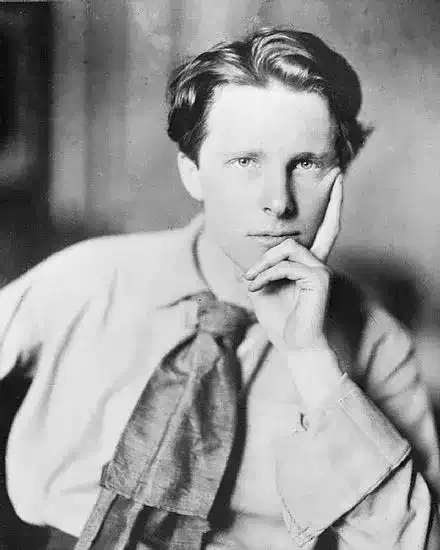
Rupert Brooke
The Goddess in the Wood
In a flowered dell the Lady Venus stood,
Amazed with sorrow. Down the morning one
Far golden horn in the gold of trees and sun
Rang out; and held; and died.… She thought the wood
Grew quieter. Wing, and leaf, and pool of light
Forgot to dance. Dumb lay the unfalling stream;
Life one eternal instant rose in dream
Clear out of time, poised on a golden height.…
Till a swift terror broke the abrupt hour.
The gold waves purled amidst the green above her;
And a bird sang. With one sharp-taken breath,
By sunlit branches and unshaken flower,
The immortal limbs flashed to the human lover,
And the immortal eyes to look on death.
413

Rudyard Kipling
My Lady's Law
The Law whereby my lady moves
Was never Law to me,
But 'tis enough that she approves
Whatever Law it be.
For in that Law, and by that Law
My constant course I'll steer;
Not that I heed or deem it dread,
But that she holds it dear.
Tho' Asia sent for my content
Her richest argosies,
Those would I spurn, and bid return,
If that should give her ease.
With equal heart I'd watch depart
Each spiced sail from sight;
Sans bitterness, desiring less
Great gear than her delight.
Though Kings made swift with many a gift
My proven sword to hire--
I would not go nor serve 'em so--
Except at her desire.
With even mind, I'd put behind
Adventure and acclaim,
And clean give o'er, esteeming more
Her favour than my fame.
Yet such am I, yea, such am I--
Sore bond and freest free,
The Law that sways my lady's ways
Is mystery to me!
411

John Donne
The Ecstasy
Where, like a pillow on a bed
A pregnant bank swell'd up to rest
The violet's reclining head,
Sat we two, one another's best.
Our hands were firmly cemented
With a fast balm, which thence did spring;
Our eye-beams twisted, and did thread
Our eyes upon one double string;
So to'intergraft our hands, as yet
Was all the means to make us one,
And pictures in our eyes to get
Was all our propagation.
As 'twixt two equal armies fate
Suspends uncertain victory,
Our souls (which to advance their state
Were gone out) hung 'twixt her and me.
And whilst our souls negotiate there,
We like sepulchral statues lay;
All day, the same our postures were,
And we said nothing, all the day.
If any, so by love refin'd
That he soul's language understood,
And by good love were grown all mind,
Within convenient distance stood,
He (though he knew not which soul spake,
Because both meant, both spake the same)
Might thence a new concoction take
And part far purer than he came.
This ecstasy doth unperplex,
We said, and tell us what we love;
We see by this it was not sex,
We see we saw not what did move;
But as all several souls contain
Mixture of things, they know not what,
Love these mix'd souls doth mix again
And makes both one, each this and that.
A single violet transplant,
The strength, the colour, and the size,
(All which before was poor and scant)
Redoubles still, and multiplies.
When love with one another so
Interinanimates two souls,
That abler soul, which thence doth flow,
Defects of loneliness controls.
We then, who are this new soul, know
Of what we are compos'd and made,
For th' atomies of which we grow
Are souls. whom no change can invade.
But oh alas, so long, so far,
Our bodies why do we forbear?
They'are ours, though they'are not we; we are
The intelligences, they the spheres.
We owe them thanks, because they thus
Did us, to us, at first convey,
Yielded their senses' force to us,
Nor are dross to us, but allay.
On man heaven's influence works not so,
But that it first imprints the air;
So soul into the soul may flow,
Though it to body first repair.
As our blood labors to beget
Spirits, as like souls as it can,
Because such fingers need to knit
That subtle knot which makes us man,
So must pure lovers' souls descend
T' affections, and to faculties,
Which sense may reach and apprehend,
Else a great prince in prison lies.
To'our bodies turn we then, that so
Weak men on love reveal'd may look;
Love's mysteries in souls do grow,
But yet the body is his book.
And if some lover, such as we,
Have heard this dialogue of one,
Let him still mark us, he shall see
Small change, when we'are to bodies gone.
395
William Shakespeare
Sonnet 125: Were't aught to me I bore the canopy
Were't aught to me I bore the canopy,
With my extern the outward honouring,
Or laid great bases for eternity,
Which proves more short than waste or ruining?
Have I not seen dwellers on form and favour
Lose all, and more, by paying too much rent
For compound sweet forgoing simple savour,
Pitiful thrivers in their gazing spent?
No, let me be obsequious in thy heart,
And take thou my oblation, poor but free,
Which is not mixed with seconds, knows no art
But mutual render, only me for thee.
Hence, thou suborned informer, a true soul
When most impeached stands least in thy control.
392
William Shakespeare
The Rival Poet Sonnets (78 - 86)
LXXVIII
So oft have I invoked thee for my Muse,
And found such fair assistance in my verse
As every alien pen hath got my use
And under thee their poesy disperse.
Thine eyes, that taught the dumb on high to sing
And heavy ignorance aloft to fly,
Have added feathers to the learned's wing
And given grace a double majesty.
Yet be most proud of that which I compile,
Whose influence is thine, and born of thee:
In others' works thou dost but mend the style,
And arts with thy sweet graces graced be;
But thou art all my art, and dost advance
As high as learning my rude ignorance.
LXXIX
Whilst I alone did call upon thy aid,
My verse alone had all thy gentle grace;
But now my gracious numbers are decay'd,
And my sick Muse doth give an other place.
I grant, sweet love, thy lovely argument
Deserves the travail of a worthier pen;
Yet what of thee thy poet doth invent
He robs thee of, and pays it thee again.
He lends thee virtue, and he stole that word
From thy behaviour; beauty doth he give,
And found it in thy cheek: he can afford
No praise to thee, but what in thee doth live.
Then thank him not for that which he doth say,
Since what he owes thee, thou thyself dost pay.
LXXX
O! how I faint when I of you do write,
Knowing a better spirit doth use your name,
And in the praise thereof spends all his might,
To make me tongue-tied speaking of your fame.
But since your worth, wide as the ocean is,
The humble as the proudest sail doth bear,
My saucy bark, inferior far to his,
On your broad main doth wilfully appear.
Your shallowest help will hold me up afloat,
Whilst he upon your soundless deep doth ride;
Or, being wrack'd, I am a worthless boat,
He of tall building, and of goodly pride:
Then if he thrive and I be cast away,
The worst was this, my love was my decay.
LXXXI
Or I shall live your epitaph to make,
Or you survive when I in earth am rotten,
From hence your memory death cannot take,
Although in me each part will be forgotten.
Your name from hence immortal life shall have,
Though I, once gone, to all the world must die:
The earth can yield me but a common grave,
When you entombed in men's eyes shall lie.
Your monument shall be my gentle verse,
Which eyes not yet created shall o'er-read;
And tongues to be, your being shall rehearse,
When all the breathers of this world are dead;
You still shall live, such virtue hath my pen,
Where breath most breathes, even in the mouths of men.
LXXXII
I grant thou wert not married to my Muse,
And therefore mayst without attaint o'erlook
The dedicated words which writers use
Of their fair subject, blessing every book.
Thou art as fair in knowledge as in hue,
Finding thy worth a limit past my praise;
And therefore art enforced to seek anew
Some fresher stamp of the time-bettering days.
And do so, love; yet when they have devis'd,
What strained touches rhetoric can lend,
Thou truly fair, wert truly sympathiz'd
In true plain words, by thy true-telling friend;
And their gross painting might be better usd
Where cheeks need blood; in thee it is abusd.
LXXXIII
I never saw that you did painting need,
And therefore to your fair no painting set;
I found, or thought I found, you did exceed
The barren tender of a poet's debt:
And therefore have I slept in your report,
That you yourself, being extant, well might show
How far a modern quill doth come too short,
Speaking of worth, what worth in you doth grow.
This silence for my sin you did impute,
Which shall be most my glory being dumb;
For I impair not beauty being mute,
When others would give life, and bring a tomb.
There lives more life in one of your fair eyes
Than both your poets can in praise devise.
LXXXIV
Who is it that says most, which can say more,
Than this rich praise, that you alone, are you,
In whose confine immured is the store
Which should example where your equal grew?
Lean penury within that pen doth dwell
That to his subject lends not some small glory;
But he that writes of you, if he can tell
That you are you, so dignifies his story.
Let him but copy what in you is writ,
Not making worse what nature made so clear,
And such a counterpart shall fame his wit,
Making his style admired every where.
You to your beauteous blessings add a curse,
Being fond on praise, which makes your praises worse.
LXXXV
My tongue-tied Muse in manners holds her still,
While comments of your praise richly compiled,
Reserve thy character with golden quill,
And precious phrase by all the Muses filed.
I think good thoughts, whilst others write good words,
And like unlettered clerk still cry 'Amen'
To every hymn that able spirit affords,
In polished form of well-refined pen.
Hearing you praised, I say ''tis so, 'tis true,'
And to the most of praise add something more;
But that is in my thought, whose love to you,
Though words come hindmost, holds his rank before.
Then others, for the breath of words respect,
Me for my dumb thoughts, speaking in effect.
LXXXVI
Was it the proud full sail of his great verse,
Bound for the prize of all too precious you,
That did my ripe thoughts in my brain inhearse,
Making their tomb the womb wherein they grew?
Was it his spirit, by spirits taught to write
Above a mortal pitch, that struck me dead?
No, neither he, nor his compeers by night
Giving him aid, my verse astonished.
He, nor that affable familiar ghost
Which nightly gulls him with intelligence,
As victors of my silence cannot boast;
I was not sick of any fear from thence:
But when your countenance filled up his line,
Then lacked I matter; that enfeebled mine.
389
Ella Wheeler Wilcox
Platonic
I knew it the first of the summer,
I knew it the same at the end,
That you and your love were plighted,
But couldn’t you be my friend?
Couldn’t we sit in the twilight,
Couldn’t we walk on the shore
With only a pleasant friendship
To bind us, and nothing more?
There was not a word of folly
Spoken between us two,
Though we lingered oft in the garden
Till the roses were wet with dew.
We touched on a thousand subjects –
The moon and the worlds above, -
And our talk was tinctured with science,
And everything else, save love.
A wholly Platonic friendship
You said I had proven to you
Could bind a man and a woman
The whole long season through,
With never a thought of flirting,
Though both were in their youth,
What would you have said, my lady,
If you had known the truth!
What would you have done, I wonder,
Had I gone on my knees to you
And told you my passionate story,
There in the dusk and the dew?
My burning, burdensome story,
Hidden and hushed so long –
My story of hopeless loving –
Say, would you have thought it wrong?
But I fought with my heart and conquered,
I hid my wound from sight;
You were going away in the morning,
And I said a calm goodnight.
But now when I sit in the twilight,
Or when I walk by the sea
That friendship, quite Platonic,
Comes surging over me.
And a passionate longing fills me
For the roses, the dusk, the dew;
For the beautiful summer vanished,
For the moonlight walks – and you.
385
William Shakespeare
Sonnet 52: So am I as the rich, whose blessed key
So am I as the rich, whose blessed key
Can bring him to his sweet up-locked treasure,
The which he will not every hour survey,
For blunting the fine point of seldom pleasure.
Therefore are feasts so solemn and so rare,
Since, seldom coming, in the long year set,
Like stones of worth they thinly placed are,
Or captain jewels in the carcanet.
So is the time that keeps you as my chest,
Or as the wardrobe which the robe doth hide,
To make some special instant special blest,
By new unfolding his imprison'd pride.
Blessed are you, whose worthiness gives scope,
Being had, to triumph, being lack'd, to hope.
387
Ella Wheeler Wilcox
I Step Across The Mystic Border-Land
I step across the mystic border-land,
And look upon the wonder-world of Art.
How beautiful, how beautiful its hills!
And all its valleys, how surpassing fair!
The winding paths that lead up to the heights
Are polished by the footsteps of the great.
The mountain-peaks stand very near to God:
The chosen few whose feet have trod thereon
Have talked with Him. and with the angels walked.
Here are no sounds of discord-no profane
Or senseless gossip of unworthy things-
Only the songs of chisels and of pens,
Of busy brushes, and ecstatic strains
Of souls surcharged with music most divine.
Here is no idle sorrow, no poor grief
For any day or object left behind-
For time is counted precious, and herein
Is such complete abandonment of Self
That tears turn into rainbows, and enhance
The beauty of the land where all is fair,
Awed and afraid, I cross the border-land.
Oh, who am I, that I dare enter here
Where the great artists of the world have trod-
The genius-crowned aristocrats of Earth?
Only the singer of a little song;
Yet loving Art with such a mighty love
I hold it greater to have won a place
Just on the fair land's edge, to make my grave,
Than in the outer world of greed and gain
To sit upon a royal throne and reign.
386

Walt Whitman
To A Common Prostitute
To a Common Prostitute
BE composed--be at ease with me--I am Walt Whitman, liberal and lusty
as Nature;
Not till the sun excludes you, do I exclude you;
Not till the waters refuse to glisten for you, and the leaves to
rustle for you, do my words refuse to glisten and rustle for
you.
My girl, I appoint with you an appointment--and I charge you that you
make preparation to be worthy to meet me,
And I charge you that you be patient and perfect till I come.
Till then, I salute you with a significant look, that you do not
forget me.
381
William Shakespeare
Sonnet 21: So is it not with me as with that Muse
So is it not with me as with that Muse
Stirr'd by a painted beauty to his verse,
Who heaven itself for ornament doth use
And every fair with his fair doth rehearse
Making a couplement of proud compare,
With sun and moon, with earth and sea's rich gems,
With April's first-born flowers, and all things rare
That heaven's air in this huge rondure hems.
O' let me, true in love, but truly write,
And then believe me, my love is as fair
As any mother's child, though not so bright
As those gold candles fix'd in heaven's air:
Let them say more than like of hearsay well;
I will not praise that purpose not to sell.
379

William Butler Yeats
The Cap And Bells
THE jester walked in the garden:
The garden had fallen still;
He bade his soul rise upward
And stand on her window-sill.
It rose in a straight blue garment,
When owls began to call:
It had grown wise-tongued by thinking
Of a quiet and light footfall;
But the young queen would not listen;
She rose in her pale night-gown;
She drew in the heavy casement
And pushed the latches down.
He bade his heart go to her,
When the owls called out no more;
In a red and quivering garment
It sang to her through the door.
It had grown sweet-tongued by dreaming
Of a flutter of flower-like hair;
But she took up her fan from the table
And waved it off on the air.
'I have cap and bells,' he pondered,
'I will send them to her and die';
And when the morning whitened
He left them where she went by.
She laid them upon her bosom,
Under a cloud of her hair,
And her red lips sang them a love-song
Till stars grew out of the air.
She opened her door and her window,
And the heart and the soul came through,
To her right hand came the red one,
To her left hand came the blue.
They set up a noise like crickets,
A chattering wise and sweet,
And her hair was a folded flower
And the quiet of love in her feet.
379

Johann Wolfgang von Goethe
Flower-Salute
THIS nosegay,--'twas I dress'd it,--
Greets thee a thousand times!
Oft stoop'd I, and caress'd it,
Ah! full a thousand times,
And 'gainst my bosom press'd it
A hundred thousand times!
Greets thee a thousand times!
Oft stoop'd I, and caress'd it,
Ah! full a thousand times,
And 'gainst my bosom press'd it
A hundred thousand times!
376
Ezra Pound
Albatre
This lady in the white bath-robe which she calls a
peignoir,
Is, for the time being, the mistress of my friend,
And the delicate white feet of her little white dog
Are not more delicate than she is,
Nor would Gautier himself have despised their contrasts
in whiteness
As she sits in the great chair
Between the two indolent candles.
peignoir,
Is, for the time being, the mistress of my friend,
And the delicate white feet of her little white dog
Are not more delicate than she is,
Nor would Gautier himself have despised their contrasts
in whiteness
As she sits in the great chair
Between the two indolent candles.
372
John Donne
Negative Love
I never stoop'd so low, as they
Which on an eye, cheeke, lip, can prey,
Seldom to them, which soare no higher
Than vertue or the minde to'admire,
For sense, and understanding may
Know, what gives fuell to their fire:
My love, though silly, is more brave,
For may I misse, when ere I crave,
If I know yet, what I would have.
If that be simply perfectest
Which can by no way be exprest
But Negatives, my love is so.
To All, which all love, I say no.
If any who deciphers best,
What we know not, our selves, can know,
Let him teach mee that nothing; This
As yet my ease, and comfort is,
Though I speed not, I cannot misse.
373
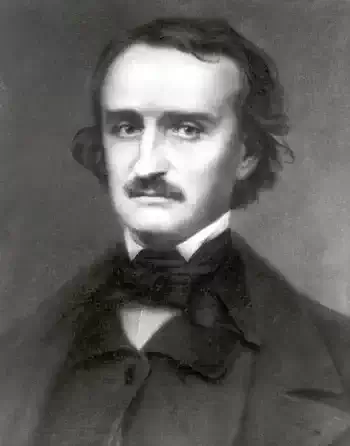
Edgar Allan Poe
To Marie Louise (Shew)
Of all who hail thy presence as the morning-
Of all to whom thine absence is the night-
The blotting utterly from out high heaven
The sacred sun- of all who, weeping, bless thee
Hourly for hope- for life- ah! above all,
For the resurrection of deep-buried faith
In Truth- in Virtue- in Humanity-
Of all who, on Despair's unhallowed bed
Lying down to die, have suddenly arisen
At thy soft-murmured words, 'Let there be light!'
At the soft-murmured words that were fulfilled
In the seraphic glancing of thine eyes-
Of all who owe thee most- whose gratitude
Nearest resembles worship- oh, remember
The truest- the most fervently devoted,
And think that these weak lines are written by him-
By him who, as he pens them, thrills to think
His spirit is communing with an angel's.
370

Carl Sandburg
Dream Girl
You will come one day in a waver of love,
Tender as dew, impetuous as rain,
The tan of the sun will be on your skin,
The purr of the breeze in your murmuring speech,
You will pose with a hill-flower grace.
You will come, with your slim, expressive arms,
A poise of the head no sculptor has caught
And nuances spoken with shoulder and neck,
Your face in a pass-and-repass of moods
As many as skies in delicate change
Of cloud and blue and flimmering sun.
Yet,
You may not come, O girl of a dream,
We may but pass as the world goes by
And take from a look of eyes into eyes,
A film of hope and a memoried day.
370