
Freedom
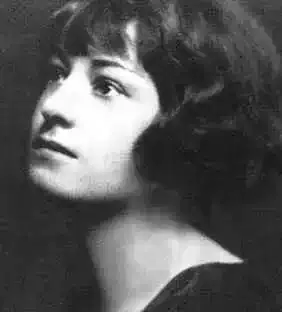
Dorothy Parker
The Satin Dress
Needle, needle, dip and dart,
Thrusting up and down,
Where's the man could ease a heart
Like a satin gown?
See the stitches curve and crawl
Round the cunning seams-
Patterns thin and sweet and small
As a lady's dreams.
Wantons go in bright brocade;
Brides in organdie;
Gingham's for the plighted maid;
Satin's for the free!
Wool's to line a miser's chest;
Crepe's to calm the old;
Velvet hides an empty breast
Satin's for the bold!
Lawn is for a bishop's yoke;
Linen's for a nun;
Satin is for wiser folk-
Would the dress were done!
Satin glows in candlelight
Satin's
for the proud!
They will say who watch at night,
"What a fine shroud!"
428
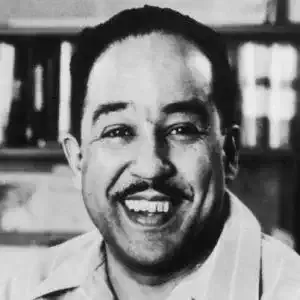
Langston Hughes
Oppression
Now dreams
Are not available
To the dreamers,
Nor songs
To the singers.
In some lands
Dark night
And cold steel
Prevail
But the dream
Will come back,
And the song
Break
Its jail.
Are not available
To the dreamers,
Nor songs
To the singers.
In some lands
Dark night
And cold steel
Prevail
But the dream
Will come back,
And the song
Break
Its jail.
429

Rudyard Kipling
The First Chantey
Mine was the woman to me, darkling I found her;
Haling her dumb from the camp, took her and bound her.
Hot rose her tribe on our track ere I had proved her;
Hearing her laugh in the gloom, greatly I loved her.
Swift through the forest we ran; none stood to guard us,
Few were my people and far; then the flood barred us --
Him we call Son of the Sea, sullen and swollen.
Panting we waited the death, stealer and stolen.
Yet ere they came to my lance laid for the slaughter,
Lightly she leaped to a log lapped in the water;
Holding on high and apart skins that arrayed her,
Called she the God of the Wind that He should aid her.
Life had the tree at that word (Praise we the Giver!)
Otter-like left he the bank for the full river.
Far fell their axes behind, flashing and ringing,
Wonder was on me and fear -- yet she was singing!
Low lay the land we had left. Now the blue bound us,
Even the Floor of the Gods level around us.
Whisper there was not, nor word, shadow nor showing,
Till the light stirred on the deep, glowing and growing.
Then did He leap to His place flaring from under,
He the Compeller, the Sun, bared to our wonder.
Nay, not a league from our eyes blinded with gazing,
Cleared He the gate of the world, huge and amazing!
This we beheld (and we live) -- the Pit of the Burning!
Then the God spoke to the tree for our returning;
Back to the beach of our flight, fearless and slowly,
Back to our slayers went he: but we were holy.
Men that were hot in that hunt, women that followed,
Babes that were promised our bones, trembled and wallowed:
Over the necks of the Tribe crouching and fawning --
Prophet and priestess we came back from the dawning!
425

John Clare
The Fallen Elm
Old elm that murmured in our chimney top
The sweetest anthem autumn ever made
And into mellow whispering calms would drop
When showers fell on thy many coloured shade
And when dark tempests mimic thunder made -
While darkness came as it would strangle light
With the black tempest of a winter night
That rocked thee like a cradle in thy root -
How did I love to hear the winds upbraid
Thy strength without - while all within was mute.
It seasoned comfort to our hearts' desire,
We felt that kind protection like a friend
And edged our chairs up closer to the fire,
Enjoying comfort that was never penned.
Old favourite tree, thou'st seen time's changes lower,
Though change till now did never injure thee;
For time beheld thee as her sacred dower
And nature claimed thee her domestic tree.
Storms came and shook thee many a weary hour,
Yet stedfast to thy home thy roots have been;
Summers of thirst parched round thy homely bower
Till earth grew iron - still thy leaves were green.
The children sought thee in thy summer shade
And made their playhouse rings of stick and stone;
The mavis sang and felt himself alone
While in thy leaves his early nest was made,
And I did feel his happiness mine own,
Nought heeding that our friendship was betrayed,
Friend not inanimate - though stocks and stones
There are, and many formed of flesh and bones.
Thou owned a language by which hearts are stirred
Deeper than by a feeling clothed in word,
And speakest now what's known of every tongue,
Language of pity and the force of wrong.
What cant assumes, what hypocrites will dare,
Speaks home to truth and shows it what they are.
I see a picture which thy fate displays
And learn a lesson from thy destiny;
Self-interest saw thee stand in freedom's ways -
So thy old shadow must a tyrant be.
Thou'st heard the knave, abusing those in power,
Bawl freedom loud and then oppress the free;
Thou'st sheltered hypocrites in many a shower,
That when in power would never shelter thee.
Thou'st heard the knave supply his canting powers
With wrong's illusions when he wanted friends;
That bawled for shelter when he lived in showers
And when clouds vanished made thy shade amends -
With axe at root he felled thee to the ground
And barked of freedom - O I hate the sound
Time hears its visions speak, - and age sublime
Hath made thee a disciple unto time.
-It grows the cant term of enslaving tools
To wrong another by the name of right;
Thus came enclosure - ruin was its guide,
But freedom's cottage soon was thrust aside
And workhouse prisons raised upon the site.
Een nature's dwellings far away from men,
The common heath, became the spoiler's prey;
The rabbit had not where to make his den
And labour's only cow was drove away.
No matter - wrong was right and right was wrong,
And freedom's bawl was sanction to the song.
-Such was thy ruin, music-making elm;
The right of freedom was to injure thine:
As thou wert served, so would they overwhelm
In freedom's name the little that is mine.
And there are knaves that brawl for better laws
And cant of tyranny in stronger power
Who glut their vile unsatiated maws
And freedom's birthright from the weak devour.
426
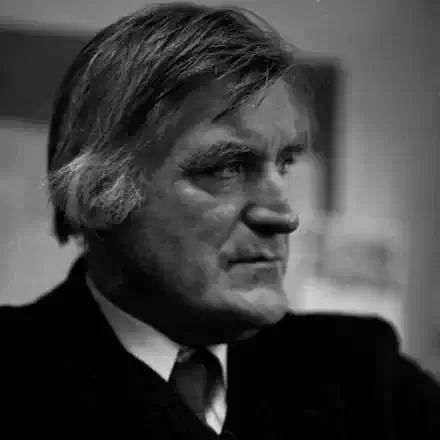
Ted Hughes
Macaw and Little Miss
In a cage of wire-ribs
The size of a man's head, the macaw bristles in a staring
Combustion, suffers the stoking devils of his eyes.
In the old lady's parlour, where an aspidistra succumbs
To the musk of faded velvet, he hangs in clear flames,
Like a torturer's iron instrument preparing
With dense slow shudderings of greens, yellows, blues,
Crimsoning into the barbs:
Or like the smouldering head that hung
In Killdevil's brass kitchen, in irons, who had been
Volcano swearing to vomit the world away in black ash,
And would, one day; or a fugitive aristocrat
From some thunderous mythological hierarchy, caught
By a little boy with a crust and a bent pin,
Or snare of horsehair set for a song-thrush,
And put in a cage to sing.
The old lady who feeds him seeds
Has a grand-daughter. The girl calls him 'Poor Polly', pokes fun.
'Jolly Mop.' But lies under every full moon,
The spun glass of her body bared and so gleam-still
Her brimming eyes do not tremble or spill
The dream where the warrior comes, lightning and iron,
Smashing and burning and rending towards her loin:
Deep into her pillow her silence pleads.
All day he stares at his furnace
With eyes red-raw, but when she comes they close.
'Polly. Pretty Poll', she cajoles, and rocks him gently.
She caresses, whispers kisses. The blue lids stay shut.
She strikes the cage in a tantrum and swirls out:
Instantly beak, wings, talons crash
The bars in conflagration and frenzy,
And his shriek shakes the house.
419
John Clare
Farewell And Defiance To Love
Love and thy vain employs, away
From this too oft deluded breast!
No longer will I court thy stay,
To be my bosom's teazing guest.
Thou treacherous medicine, reckoned pure,
Thou quackery of the harassed heart,
That kills what it pretends to cure,
Life's mountebank thou art.
With nostrums vain of boasted powers,
That, ta'en, a worse disorder leave;
An asp hid in a group of flowers,
That bites and stings when few perceive;
Thou mock-truce to the troubled mind,
Leading it more in sorrow's way,
Freedom, that leaves us more confined,
I bid thee hence away.
Dost taunt, and deem thy power beyond
The resolution reason gave?
Tut! Falsity hath snapt each bond,
That kept me once thy quiet slave,
And made thy snare a spider's thread,
Which een my breath can break in twain;
Nor will I be, like Sampson, led
To trust thy wiles again.
I took thee as my staff to guide
Me on the road I did pursue,
And when my weakness most relied
Upon its strength it broke in two.
I took thee as my friendly host
That counsel might in dangers show,
But when I needed thee the most
I found thou wert my foe.
Tempt me no more with rosy cheeks,
Nor daze my reason with bright eyes;
I'm wearied with thy painted freaks,
And sicken at such vanities:
Be roses fine as eer they will,
They, with the meanest, fade and die,
And eyes, though thronged with darts to kill,
Share like mortality.
Feed the young bard, that madly sips
His nectar-draughts from folly's flowers,
Bright eyes, fair cheeks, and ruby lips,
Till muses melt to honey showers;
Lure him to thrum thy empty lays,
While flattery listens to the chimes,
Till words themselves grow sick with praise
And stop for want of rhymes.
Let such be still thy paramours,
And chaunt love's old and idle tune,
Robbing the spring of all its flowers,
And heaven of all her stars and moon,
To gild with dazzling similes
Blind folly's vain and empty lay:
I'm sobered from such phantasies,
So get thee hence away.
Nor bid me sigh for mine own cost,
Nor count its loss, for mine annoy,
Nor say my stubbornness hath lost
A paradise of dainty joy:
I'll not believe thee, till I know
That sober reason turns an ape,
And acts the harlequin, to show
That cares in every shape,
Heart-achings, sighs, and grief-wrung tears,
Shame-blushes at betrayed distress,
Dissembled smiles, and jealous fears,
Are nought but real happiness:
Then will I mourn what now I brave,
And suffer Celia's quirks to be
(Like a poor fate-bewilder'd slave,)
The rulers of my destiny.
I'll weep and sigh wheneer she wills
To frown, and when she deigns to smile
It shall be cure for all my ills,
And, foolish still, I'll laugh the while;
But till that comes, I'll bless the rules
Experience taught, and deem it wise
To hold thee as the game of fools,
And all thy tricks despise.
417

Walt Whitman
The Prairie-Grass Dividing
THE prairie-grass dividing--its special odor breathing,
I demand of it the spiritual corresponding,
Demand the most copious and close companionship of men,
Demand the blades to rise of words, acts, beings,
Those of the open atmosphere, coarse, sunlit, fresh, nutritious,
Those that go their own gait, erect, stepping with freedom and
command--leading, not following,
Those with a never-quell'd audacity--those with sweet and lusty
flesh, clear of taint,
Those that look carelessly in the faces of Presidents and Governors,
as to say, Who are you?
Those of earth-born passion, simple, never-constrain'd, never
obedient,
Those of inland America.
415

William Butler Yeats
The Hosting Of The Sidhe
The host is riding from Knocknarea
And over the grave of Clooth-na-Bare;
Caoilte tossing his burning hair,
And Niamh calling Away, come away:
Empty your heart of its mortal dream.
The winds awaken, the leaves whirl round,
Our cheeks are pale, our hair is unbound,
Our breasts are heaving, our eyes are agleam,
Our arms are waving, our lips are apart;
And if any gaze on our rushing band,
We come between him and the deed of his hand,
We come between him and the hope of his heart.
The host is rushing 'twixt night and day,
And where is there hope or deed as fair?
Caoilte tossing his burning hair,
And Niamh calling Away, come away.
413

John Keats
If By Dull Rhymes Our English Must Be Chain'd
If by dull rhymes our English must be chain'd,
And, like Andromeda, the Sonnet sweet
Fetter'd, in spite of pained loveliness;
Let us find out, if we must be constrain'd,
Sandals more interwoven and complete
To fit the naked foot of poesy;
Let us inspect the lyre, and weigh the stress
Of every chord, and see what may be gain'd
By ear industrious, and attention meet:
Misers of sound and syllable, no less
Than Midas of his coinage, let us be
Jealous of dead leaves in the bay wreath crown;
So, if we may not let the Muse be free,
She will be bound with garlands of her own.
412
John Clare
The Sleep Of Spring
O for that sweet, untroubled rest
That poets oft have sung!--
The babe upon its mother's breast,
The bird upon its young,
The heart asleep without a pain--
When shall I know that sleep again?
When shall I be as I have been
Upon my mother's breast
Sweet Nature's garb of verdant green
To woo to perfect rest--
Love in the meadow, field, and glen,
And in my native wilds again?
The sheep within the fallow field,
The herd upon the green,
The larks that in the thistle shield,
And pipe from morn to e'en--
O for the pasture, fields, and fen!
When shall I see such rest again?
I love the weeds along the fen,
More sweet than garden flowers,
For freedom haunts the humble glen
That blest my happiest hours.
Here prison injures health and me:
I love sweet freedom and the free.
The crows upon the swelling hills,
The cows upon the lea,
Sheep feeding by the pasture rills,
Are ever dear to me,
Because sweet freedom is their mate,
While I am lone and desolate.
I loved the winds when I was young,
When life was dear to me;
I loved the song which Nature sung,
Endearing liberty;
I loved the wood, the vale, the stream,
For there my boyhood used to dream.
There even toil itself was play;
Twas pleasure een to weep;
Twas joy to think of dreams by day,
The beautiful of sleep.
When shall I see the wood and plain,
And dream those happy dreams again?
406

Ella Wheeler Wilcox
Song Of The Aviator
You may thrill with the speed of your thoroughbred steed,
You may laugh with delight as you ride the ocean,
You may rush afar in your touring car,
Leaping, sweeping, by things that are creeping-
But you never will know the joy of motion
Till you rise up over the earth some day,
And soar like an eagle, away-away.
High and higher above each spire,
Till lost to sight is the tallest steeple,
With the winds you chase in a valiant race,
Looping, swooping, where mountains are grouping,
Hailing them comrades, in place of people.
Oh! vast is the rapture the birdman knows,
As into the ether he mounts and goes.
He is over the sphere of human fear;
He has come into touch with things supernal.
At each man's gate death stands await;
And dying, flying, were better than lying
In sick-beds, crying for life eternal,
Better to fly half-way to God
Than to burrow too long like a worm in the sod.
403
William Butler Yeats
Sweet Dancer
THE girl goes dancing there
On the leaf-sown, new-mown, smooth
Grass plot of the garden;
Escaped from bitter youth,
Escaped out of her crowd,
Or out of her black cloud.
Ah, dancer, ah, sweet dancer.!
If strange men come from the house
To lead her away, do not say
That she is happy being crazy;
Lead them gently astray;
Let her finish her dance,
Let her finish her dance.
Ah, dancer, ah, sweet dancer.!
404

Robert Louis Stevenson
The Vagabond
Give to me the life I love,
Let the lave go by me,
Give the jolly heaven above
And the byway nigh me.
Bed in the bush with stars to see,
Bread I dip in the river -
There's the life for a man like me,
There's the life for ever.
Let the blow fall soon or late,
Let what will be o'er me;
Give the face of earth around
And the road before me.
Wealth I seek not, hope nor love,
Nor a friend to know me;
All I seek, the heaven above
And the road below me.
Or let autumn fall on me
Where afield I linger,
Silencing the bird on tree,
Biting the blue finger.
White as meal the frosty field -
Warm the fireside haven -
Not to autumn will I yield,
Not to winter even!
Let the blow fall soon or late,
Let what will be o'er me;
Give the face of earth around,
And the road before me.
Wealth I ask not, hope nor love,
Nor a friend to know me;
All I ask, the heaven above
And the road below me.
400
Walt Whitman
Native Moments
NATIVE moments! when you come upon me--Ah you are here now! Give me now
libidinous joys only! Give me the drench of my passions! Give me life
coarse and rank! To-day, I go consort with nature's darlings--to-night too;
I am for those who believe in loose delights--I share the midnight orgies
of young men; I dance with the dancers, and drink with the drinkers; The
echoes ring with our indecent calls; I take for my love some prostitute--I
pick out some low person for my dearest friend, He shall be lawless, rude,
illiterate--he shall be one condemn'd by others for deeds done; I will play
a part no longer--Why should I exile myself from my companions? 10 O you
shunn'd persons! I at least do not shun you, I come forthwith in your
midst--I will be your poet, I will be more to you than to any of the rest.
400
Walt Whitman
To A Certain Cantatrice
HERE, take this gift!
I was reserving it for some hero, speaker, or General,
One who should serve the good old cause, the great Idea, the progress
and freedom of the race;
Some brave confronter of despots--some daring rebel;
--But I see that what I was reserving, belongs to you just as much as
to any.
I was reserving it for some hero, speaker, or General,
One who should serve the good old cause, the great Idea, the progress
and freedom of the race;
Some brave confronter of despots--some daring rebel;
--But I see that what I was reserving, belongs to you just as much as
to any.
397

Claude Mckay
One Year After
I
Not once in all our days of poignant love,
Did I a single instant give to thee
My undivided being wholly free.
Not all thy potent passion could remove
The barrier that loomed between to prove
The full supreme surrendering of me.
Oh, I was beaten, helpless utterly
Against the shadow-fact with which I strove.
For when a cruel power forced me to face
The truth which poisoned our illicit wine,
That even I was faithless to my race
Bleeding beneath the iron hand of thine,
Our union seemed a monstrous thing and base!
I was an outcast from thy world and mine.
II
Adventure-seasoned and storm-buffeted,
I shun all signs of anchorage, because
The zest of life exceeds the bound of laws.
New gales of tropic fury round my head
Break lashing me through hours of soulful dread;
But when the terror thins and, spent, withdraws,
Leaving me wondering awhile, I pause--
But soon again the risky ways I tread!
No rigid road for me, no peace, no rest,
While molten elements run through my blood;
And beauty-burning bodies manifest
Their warm, heart-melting motions to be wooed;
And passion boldly rising in my breast,
Like rivers of the Spring, lets loose its flood.
396

Johann Wolfgang von Goethe
Neither This Nor That
IF thou to be a slave shouldst will,
Thou'lt get no pity, but fare ill;
And if a master thou wouldst be,
The world will view it angrily;
And if in status quo thou stay,
That thou art but a fool, they'll say.
Thou'lt get no pity, but fare ill;
And if a master thou wouldst be,
The world will view it angrily;
And if in status quo thou stay,
That thou art but a fool, they'll say.
396
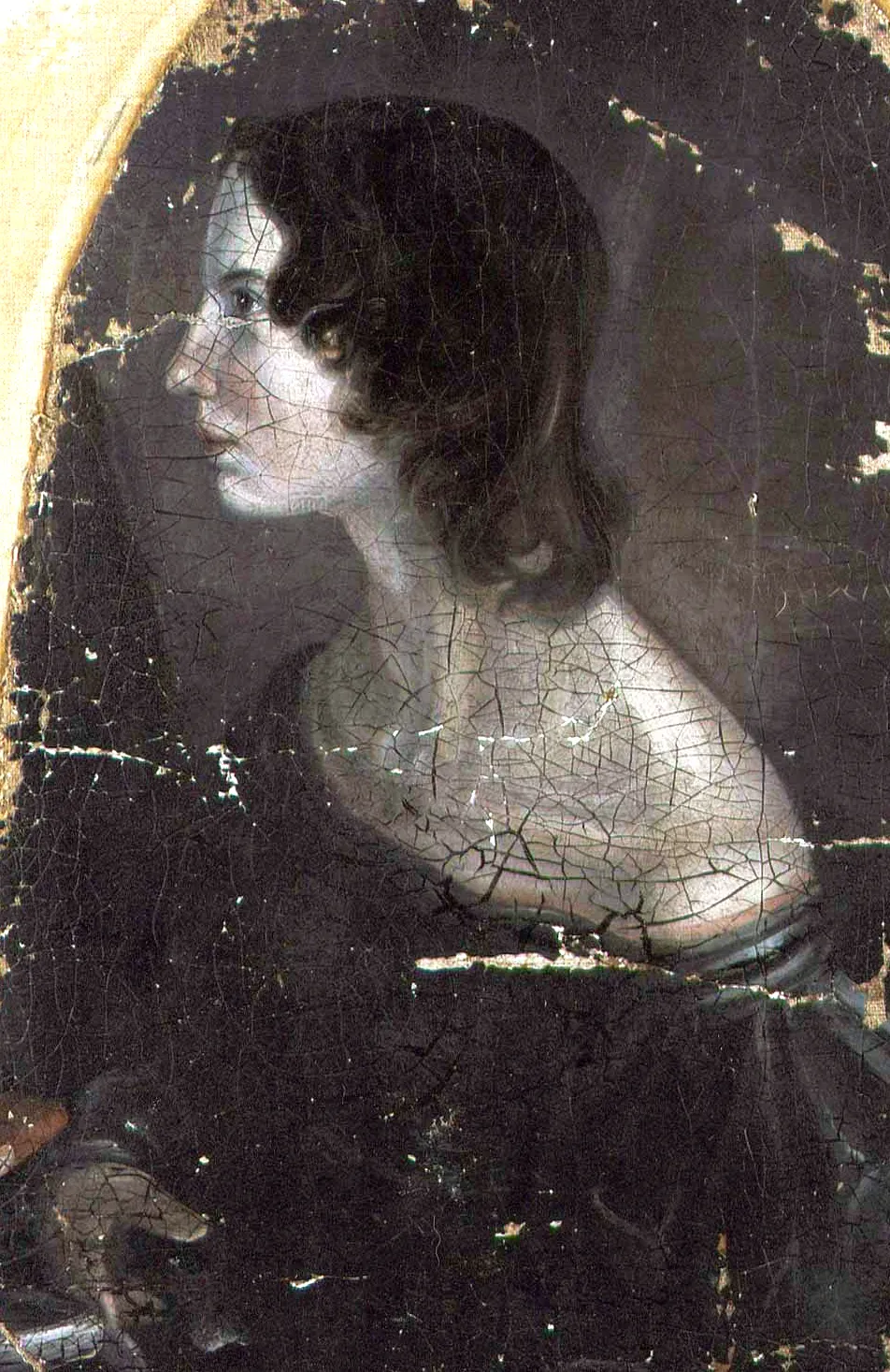
Emily Jane Brontë
The Old Stoic
Riches I hold in light esteem;
And Love I laugh to scorn;
And lust of fame was but a dream
That vanished with the morn:
And if I pray, the only prayer
That moves my lips for me
Is, 'Leave the heart that now I bear,
And give me liberty!'
Yes, as my swift days near their goal,
'Tis all that I implore;
In life and death, a chainless soul,
With courage to endure.
393
William Butler Yeats
Cuchulain Comforted
A MAN that had six mortal wounds, a man
Violent and famous, strode among the dead;
Eyes stared out of the branches and were gone.
Then certain Shrouds that muttered head to head
Came and were gone. He leant upon a tree
As though to meditate on wounds and blood.
A Shroud that seemed to have authority
Among those bird-like things came, and let fall
A bundle of linen. Shrouds by two and thrce
Came creeping up because the man was still.
And thereupon that linen-carrier said:
'Your life can grow much sweeter if you will
'Obey our ancient rule and make a shroud;
Mainly because of what we only know
The rattle of those arms makes us afraid.
'We thread the needles' eyes, and all we do
All must together do.' That done, the man
Took up the nearest and began to sew.
'Now must we sing and sing the best we can,
But first you must be told our character:
Convicted cowards all, by kindred slain
'Or driven from home and left to dic in fear.'
They sang, but had nor human tunes nor words,
Though all was done in common as before;
They had changed their thtoats and had the throats of birds.
395
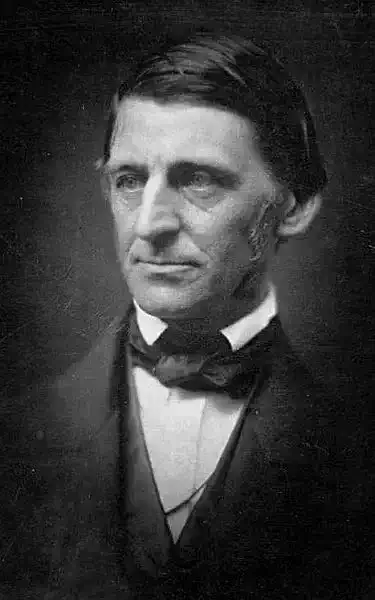
Ralph Waldo Emerson
Merlin I
Thy trivial harp will never please
Or fill my craving ear;
Its chords should ring as blows the breeze,
Free, peremptory, clear.
No jingling serenader's art,
Nor tinkle of piano strings,
Can make the wild blood start
In its mystic springs.
The kingly bard
Must smite the chords rudely and hard,
As with hammer or with mace,
That they may render back
Artful thunder that conveys
Secrets of the solar track,
Sparks of the supersolar blaze.
Merlin's blows are strokes of fate,
Chiming with the forest-tone,
When boughs buffet boughs in the wood;
Chiming with the gasp and moan
Of the ice-imprisoned flood;
With the pulse of manly hearts,
With the voice of orators,
With the din of city arts,
With the cannonade of wars.
With the marches of the brave,
And prayers of might from martyrs' cave.
Great is the art,
Great be the manners of the bard!
He shall not his brain encumber
With the coil of rhythm and number,
But, leaving rule and pale forethought,
He shall aye climb
For his rhyme:
Pass in, pass in, the angels say,
In to the upper doors;
Nor count compartments of the floors,
But mount to Paradise
By the stairway of surprise.
Blameless master of the games,
King of sport that never shames;
He shall daily joy dispense
Hid in song's sweet influence.
Things more cheerly live and go,
What time the subtle mind
Plays aloud the tune whereto
Their pulses beat,
And march their feet,
And their members are combined.
By Sybarites beguiled
He shall no task decline;
Merlin's mighty line,
Extremes of nature reconciled,
Bereaved a tyrant of his will,
And made the lion mild.
Songs can the tempest still,
Scattered on the stormy air,
Mould the year to fair increase,
And bring in poetic peace.
He shall not seek to weave,
In weak unhappy times,
Efficacious rhymes;
Wait his returning strength,
Bird, that from the nadir's floor,
To the zenith's top could soar,
The soaring orbit of the muse exceeds that journey's length!
Nor, profane, affect to hit
Or compass that by meddling wit,
Which only the propitious mind
Publishes when 'tis inclined.
There are open hours
When the god's will sallies free,
And the dull idiot might see
The flowing fortunes of a thousand years;
Sudden, at unawares,
Self-moved fly-to the doors,
Nor sword of angels could reveal
What they conceal.
392

Carl Sandburg
Gypsy
I asked a gypsy pal
To imitate an old image
And speak old wisdom.
She drew in her chin,
Made her neck and head
The top piece of a Nile obelisk
and said:
Snatch off the gag from thy mouth, child,
And be free to keep silence.
Tell no man anything for no man listens,
Yet hold thy lips ready to speak.
To imitate an old image
And speak old wisdom.
She drew in her chin,
Made her neck and head
The top piece of a Nile obelisk
and said:
Snatch off the gag from thy mouth, child,
And be free to keep silence.
Tell no man anything for no man listens,
Yet hold thy lips ready to speak.
390

Emily Dickinson
Before I got my eye put out
Before I got my eye put out
I liked as well to see-
As other Creatures, that have Eyes
And know no other way-
But were it told to me-Today-
That I might have the sky
For mine-I tell you that my Heart
Would split, for size of me-
The Meadows-mine-
The Mountains-mine-
All Forests-Stintless Stars-
As much of Noon as I could take
Between my finite eyes-
The Motions of the Dipping Birds-
The Morning's Amber Road-
For mine-to look at when I liked-
The News would strike me dead-
So safer-guess-with just my soul
Upon the Window pane-
Where other Creatures put their eyes
Incautious-
of the Sun-
389

Edna St. Vincent Millay
Oh, Oh, You Will Be Sorry
Oh, oh, you will be sorry for that word!
Give me back my book and take my kiss instead.
Was it my enemy or my friend I heard,
"What a big book for such a little head!"
Come, I will show you now my newest hat,
And you may watch me purse my mouth and prink!
Oh, I shall love you still, and all of that.
I never again shall tell you what I think.
I shall be sweet and crafty, soft and sly;
You will not catch me reading any more:
I shall be called a wife to pattern by;
And some day when you knock and push the door,
Some sane day, not too bright and not too stormy,
I shall be gone, and you may whistle for me.
388
Ella Wheeler Wilcox
War
I
There is no picturesqueness and no glory,
No halo of romance, in war to-day.
It is a hideous thing; Time would turn grey
With horror, were he not already hoary
At sight of this vile monster, foul and gory.
Yet while sweet women perish as they pray,
And new-born babes are slaughtered, who dare say
'Halt!' till Right pens its 'Finis' to the story!
There is no pathway, but the path through blood,
Out of the horrors of this holocaust.
Hell has let loose its scalding crimson flood,
And he who stops to argue now is lost.
Not brooms of creeds, not Pacifistic words
Can stem the tide, but swords-uplifted swords!
II
Yet, after Peace has turned the clean white page
There shall be sorrow on the earth for years;
Abysmal grief, that has no eyes for tears,
And youth that hobbles through the earth like age.
But better to play this part upon life's stage
Than to aid structures that a tyrant rears,
To live a stalwart hireling torn with fears,
And shamed by feeding on a conqueror's wage.
Death, yea, a thousand deaths, were sweet in truth
Rather than such ignoble life. God gave
Being, and breath, and high resolve to youth
That it might be Wrong's master, not its slave.
Our road to Freedom is the road to guns!
Go, arm your sons! I say, Go, arm your sons!
III
Arm! arm! that mandate on each wind is whirled.
Let no man hesitate or look askance,
For from the devastated homes of France
And ruined Belgium the cry is hurled.
Why, Christ Himself would keep peace banners furled
Were He among us, till, with lifted lance,
He saw the hosts of Righteousness advance
To purify the Temples of the world.
There is no safety on the earth to-day
For any sacred thing, or clean, or fair;
Nor can there be, until men rise and slay
The hydra-headed monster in his lair.
War! horrid War! now Virtue's only friend;
Clasp hands with War, and battle to the end!
389