
Literature and Words

John Keats
To Homer
Standing aloof in giant ignorance,
Of thee I hear and of the Cyclades,
As one who sits ashore and longs perchance
To visit dolphin-coral in deep seas.
So thou wast blind;--but then the veil was rent,
For Jove uncurtain'd Heaven to let thee live,
And Neptune made for thee a spumy tent,
And Pan made sing for thee his forest-hive;
Aye on the shores of darkness there is light,
And precipices show untrodden green,
There is a budding morrow in midnight,
There is a triple sight in blindness keen;
Such seeing hadst thou, as it once befel
To Dian, Queen of Earth, and Heaven, and Hell.
476

Ezra Pound
And Thus In Nineveh
Aye! I am a poet and upon my tomb
Shall maidens scatter rose leaves
And men myrtles, ere the night
Slays day with her dark sword.
'Lo ! this thing is not mine
Nor thine to hinder,
For the custom is full old,
And here in Nineveh have I beheld
Many a singer pass and take his place
In those dim halls where no man troubleth
His sleep or song.
And many a one hath sung his songs
More craftily, more subtle-souled than I;
And many a one now doth surpass
My wave-worn beauty with his wind of flowers,
Yet am I poet, and upon my tomb
Shall all men scatter rose leaves
Ere the night slay light
With her blue sword.
‘It is not, Raana, that my song rings highest
Or more sweet in tone than any, but that I
Am here a Poet, that doth drink of life
As lesser men drink wine.’
477
Ezra Pound
Envoi
Go, dumb-born book,
Tell her that sang me once that song of Lawes:
Hadst thou but song
As thou hast subjects known,
Then were there cause in thee that should condone
Even my faults that heavy upon me lie
And build her glories their longevity.
Tell her that sheds
Such treasure in the air,
Recking naught else but that her graces give
Life to the moment,
I would bid them live
As roses might, in magic amber laid,
Red overwrought with orange and all made
One substance and one colour
Braving time.
Tell her that goes
With song upon her lips
But sings not out the song, nor knows
The maker of it, some other mouth,
May be as fair as hers,
Might, in new ages, gain her worshippers,
When our two dusts with Waller's shall be laid,
Siftings on siftings in oblivion,
Till change hath broken down
All things save Beauty alone.
476

Rudyard Kipling
The Press
The Soldier may forget his Sword,
The Sailorman the Sea,
The Mason may forget the Word
And the Priest his Litany:
The Maid may forget both jewel and gem,
And the Bride her wedding-dress--
But the Jew shall forget Jerusalem
Ere we forget the Press!
Who once hath stood through the loaded hour
Ere, roaring like the gale,
The Harrild and the Hoe devour
Their league-long paper-bale,
And has lit his pipe in the morning calm
That follows the midnight stress--
He hath sold his heart to the old Black Art
We call the daily Press.
Who once hath dealt in the widest game
That all of a man can play,
No later love, no larger fame
Will lure him long away.
As the war-horse snuffeth the battle afar,
The entered Soul, no less,
He saith: "Ha! Ha!" where the trumpets are
And the thunders of the Press!
Canst thou number the days that we fulfill,
Or the Times that we bring forth?
Canst thou send the lightnings to do thy will,
And cause them reign on earth?
Hast thou given a peacock goodly wings,
To please his foolishness?
Sit down at the heart of men and things,
Companion of the Press!
The Pope may launch his Interdict,
The Union its decree,
But the bubble is blown and the bubble is pricked
By Us and such as We.
Remember the battle and stand aside
While Thrones and Powers confess
That King over all the children of pride
Is the Press--the Press--the Press!
473
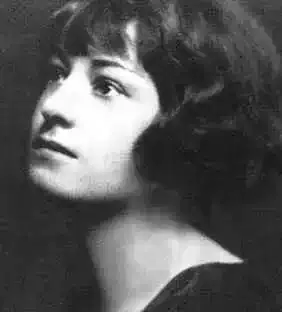
Dorothy Parker
D.G. Rossetti
Dante Gabriel Rossetti
Buried all of his libretti,
Thought the matter over - then
Went and dug them up again.
Buried all of his libretti,
Thought the matter over - then
Went and dug them up again.
471
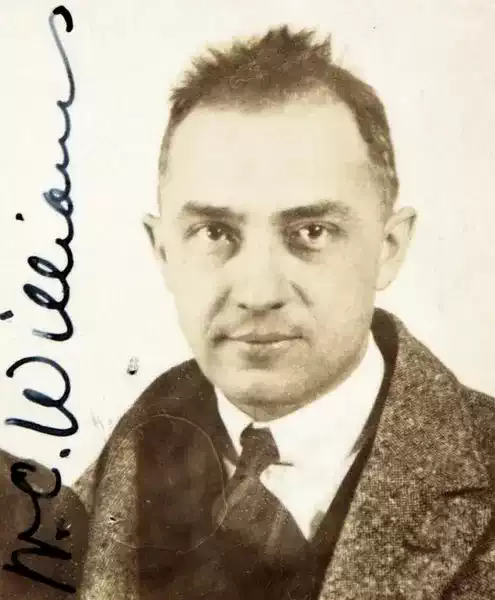
William Carlos Williams
The Uses of Poetry
I've fond anticipation of a day
O'erfilled with pure diversion presently,
For I must read a lady poesy
The while we glide by many a leafy bay,
Hid deep in rushes, where at random play
The glossy black winged May-flies, or whence flee
Hush-throated nestlings in alarm,
Whom we have idly frighted with our boat's long sway.
For, lest o'ersaddened by such woes as spring
To rural peace from our meek onward trend,
What else more fit? We'll draw the latch-string
And close the door of sense; then satiate wend,
On poesy's transforming giant wing,
To worlds afar whose fruits all anguish mend.
468

William Blake
Songs Of Innocence: Introduction
Piping down the valleys wild
Piping songs of pleasant glee
On a cloud I saw a child.
And he laughing said to me.
Pipe a song about a Lamb:
So I piped with merry chear,
Piper, pipe that song again--
So I piped, he wept to hear.
Drop thy pipe thy happy pipe
Sing thy songs of happy chear,
So I sung the same again
While he wept with joy to hear
Piper sit thee down and write
In a book that all may read--
So he vanished from my sight
And I pluck'd a hollow reed.
And I made a rural pen,
And I stained the water clear,
And I wrote my happy songs,
Every child may joy to hear.
946

Walt Whitman
Song Of The Exposition
AFTER all, not to create only, or found only,
But to bring, perhaps from afar, what is already founded,
To give it our own identity, average, limitless, free;
To fill the gross, the torpid bulk with vital religious fire;
Not to repel or destroy, so much as accept, fuse, rehabilitate;
To obey, as well as command--to follow, more than to lead;
These also are the lessons of our New World;
--While how little the New, after all--how much the Old, Old World!
Long, long, long, has the grass been growing,
Long and long has the rain been falling,
Long has the globe been rolling round.
Come, Muse, migrate from Greece and Ionia;
Cross out, please, those immensely overpaid accounts,
That matter of Troy, and Achilles' wrath, and Eneas', Odysseus'
wanderings;
Placard "Removed" and "To Let" on the rocks of your snowy Parnassus;
Repeat at Jerusalem--place the notice high on Jaffa's gate, and on
Mount Moriah;
The same on the walls of your Gothic European Cathedrals, and German,
French and Spanish Castles;
For know a better, fresher, busier sphere--a wide, untried domain
awaits, demands you.
Responsive to our summons,
Or rather to her long-nurs'd inclination,
Join'd with an irresistible, natural gravitation,
She comes! this famous Female--as was indeed to be expected;
(For who, so-ever youthful, 'cute and handsome, would wish to stay in
mansions such as those,
When offer'd quarters with all the modern improvements,
With all the fun that 's going--and all the best society?)
She comes! I hear the rustling of her gown;
I scent the odor of her breath's delicious fragrance;
I mark her step divine--her curious eyes a-turning, rolling,
Upon this very scene.
The Dame of Dames! can I believe, then,
Those ancient temples classic, and castles strong and feudalistic,
could none of them restrain her?
Nor shades of Virgil and Dante--nor myriad memories, poems, old
associations, magnetize and hold on to her?
But that she 's left them all--and here?
Yes, if you will allow me to say so,
I, my friends, if you do not, can plainly see Her,
The same Undying Soul of Earth's, activity's, beauty's, heroism's
Expression,
Out from her evolutions hither come--submerged the strata of her
former themes,
Hidden and cover'd by to-day's--foundation of to-day's;
Ended, deceas'd, through time, her voice by Castaly's fountain;
Silent through time the broken-lipp'd Sphynx in Egypt--silent those
century-baffling tombs;
Closed for aye the epics of Asia's, Europe's helmeted warriors;
Calliope's call for ever closed--Clio, Melpomene, Thalia closed and
dead;
Seal'd the stately rhythmus of Una and Oriana--ended the quest of the
Holy Graal;
Jerusalem a handful of ashes blown by the wind--extinct;
The Crusaders' streams of shadowy, midnight troops, sped with the
sunrise;
Amadis, Tancred, utterly gone--Charlemagne, Roland, Oliver gone,
Palmerin, ogre, departed--vanish'd the turrets that Usk reflected,
Arthur vanish'd with all his knights--Merlin and Lancelot and
Galahad--all gone--dissolv'd utterly, like an exhalation;
Pass'd! pass'd! for us, for ever pass'd! that once so mighty World-now
void, inanimate, phantom World!
Embroider'd, dazzling World! with all its gorgeous legends, myths,
Its kings and barons proud--its priests, and warlike lords, and
courtly dames;
Pass'd to its charnel vault--laid on the shelf--coffin'd, with Crown
and Armor on,
Blazon'd with Shakspeare's purple page,
And dirged by Tennyson's sweet sad rhyme.
I say I see, my friends, if you do not, the Animus of all that World,
Escaped, bequeath'd, vital, fugacious as ever, leaving those dead
remains, and now this spot approaching, filling;
--And I can hear what maybe you do not--a terrible aesthetical
commotion,
With howling, desperate gulp of "flower" and "bower,"
With "Sonnet to Matilda's Eyebrow" quite, quite frantic;
With gushing, sentimental reading circles turn'd to ice or stone;
With many a squeak, (in metre choice,) from Boston, New York,
Philadelphia, London;
As she, the illustrious Emigré, (having, it is true, in her day,
although the same, changed, journey'd considerable,)
Making directly for this rendezvous--vigorously clearing a path for
herself--striding through the confusion,
By thud of machinery and shrill steam-whistle undismay'd,
Bluff'd not a bit by drain-pipe, gasometers, artificial fertilizers,
Smiling and pleased, with palpable intent to stay,
She 's here, install'd amid the kitchen ware!
But hold--don't I forget my manners?
To introduce the Stranger (what else indeed have I come for?) to
thee, Columbia:
In Liberty's name, welcome, Immortal! clasp hands,
And ever henceforth Sisters dear be both.
Fear not, O Muse! truly new ways and days receive, surround you,
(I candidly confess, a queer, queer race, of novel fashion,)
And yet the same old human race--the same within, without,
Faces and hearts the same--feelings the same--yearnings the same,
The same old love--beauty and use the same.
We do not blame thee, Elder World--nor separate ourselves from thee:
(Would the Son separate himself from the Father?)
Looking back on thee--seeing thee to thy duties, grandeurs, through
past ages bending, building,
We build to ours to-day.
Mightier than Egypt's tombs,
Fairer than Grecia's, Roma's temples,
Prouder than Milan's statued, spired Cathedral,
More picturesque than Rhenish castle-keeps,
We plan, even now, to raise, beyond them all,
Thy great Cathedral, sacred Industry--no tomb,
A Keep for life for practical Invention.
As in a waking vision,
E'en while I chant, I see it rise--I scan and prophesy outside and
in,
Its manifold ensemble.
Around a Palace,
Loftier, fairer, ampler than any yet,
Earth's modern Wonder, History's Seven outstripping,
High rising tier on tier, with glass and iron façades.
Gladdening the sun and sky--enhued in cheerfulest hues,
Bronze, lilac, robin's-egg, marine and crimson,
Over whose golden roof shall flaunt, beneath thy banner, Freedom,
The banners of The States, the flags of every land,
A brood of lofty, fair, but lesser Palaces shall cluster.
Somewhere within the walls of all,
Shall all that forwards perfect human life be started,
Tried, taught, advanced, visibly exhibited.
Here shall you trace in flowing operation,
In every state of practical, busy movement,
The rills of Civilization.
Materials here, under your eye, shall change their shape, as if by
magic;
The cotton shall be pick'd almost in the very field,
Shall be dried, clean'd, ginn'd, baled, spun into thread and cloth,
before you:
You shall see hands at work at all the old processes, and all the new
ones;
You shall see the various grains, and how flour is made, and then
bread baked by the bakers;
You shall see the crude ores of California and Nevada passing on and
on till they become bullion;
You shall watch how the printer sets type, and learn what a composing
stick is;
You shall mark, in amazement, the Hoe press whirling its cylinders,
shedding the printed leaves steady and fast:
The photograph, model, watch, pin, nail, shall be created before you.
In large calm halls, a stately Museum shall teach you the infinite,
solemn lessons of Minerals;
In another, woods, plants, Vegetation shall be illustrated--in
another Animals, animal life and development.
One stately house shall be the Music House;
Others for other Arts--Learning, the Sciences, shall all be here;
None shall be slighted--none but shall here be honor'd, help'd,
exampled.
This, this and these, America, shall be your Pyramids and
Obelisks,
Your Alexandrian Pharos, gardens of Babylon,
Your temple at Olympia.
The male and female many laboring not,
Shall ever here confront the laboring many,
With precious benefits to both--glory to all,
To thee, America--and thee, Eternal Muse.
And here shall ye inhabit, Powerful Matrons!
In your vast state, vaster than all the old;
Echoed through long, long centuries to come,
To sound of different, prouder songs, with stronger themes,
Practical, peaceful life--the people's life--the People themselves,
Lifted, illumin'd, bathed in peace--elate, secure in peace.
Away with themes of war! away with War itself!
Hence from my shuddering sight, to never more return, that show of
blacken'd, mutilated corpses!
That hell unpent, and raid of blood--fit for wild tigers, or for lop
tongued wolves--not reasoning men!
And in its stead speed Industry's campaigns!
With thy undaunted armies, Engineering!
Thy pennants, Labor, loosen'd to the breeze!
Thy bugles sounding loud and clear!
Away with old romance!
Away with novels, plots, and plays of foreign courts!
Away with love-verses, sugar'd in rhyme--the intrigues, amours of
idlers,
Fitted for only banquets of the night, where dancers to late music
slide;
The unhealthy pleasures, extravagant dissipations of the few,
With perfumes, heat and wine, beneath the dazzling chandeliers.
To you, ye Reverent, sane Sisters,
To this resplendent day, the present scene,
These eyes and ears that like some broad parterre bloom up around,
before me,
I raise a voice for far superber themes for poets and for Art,
To exalt the present and the real,
To teach the average man the glory of his daily walk and trade,
To sing, in songs, how exercise and chemical life are never to be
baffled;
Boldly to thee, America, to-day! and thee, Immortal Muse!
To practical, manual work, for each and all--to plough, hoe, dig,
To plant and tend the tree, the berry, the vegetables, flowers,
For every man to see to it that he really do something--for every
woman too;
To use the hammer, and the saw, (rip or cross-cut,)
To cultivate a turn for carpentering, plastering, painting,
To work as tailor, tailoress, nurse, hostler, porter,
To invent a little--something ingenious--to aid the washing, cooking,
cleaning,
And hold it no disgrace to take a hand at them themselves.
I say I bring thee, Muse, to-day and here,
All occupations, duties broad and close,
Toil, healthy toil and sweat, endless, without cessation,
The old, old general burdens, interests, joys,
The family, parentage, childhood, husband and wife,
The house-comforts--the house itself, and all its belongings,
Food and its preservations--chemistry applied to it;
Whatever forms the average, strong, complete, sweet-blooded Man or
Woman--the perfect, longeve Personality,
And helps its present life to health and happiness--and shapes its
Soul,
For the eternal Real Life to come.
With latest materials, works,
Steam-power, the great Express lines, gas, petroleum,
These triumphs of our time, the Atlantic's delicate cable,
The Pacific Railroad, the Suez canal, the Mont Cenis tunnel;
Science advanced, in grandeur and reality, analyzing every thing,
This world all spann'd with iron rails--with lines of steamships
threading every sea,
Our own Rondure, the current globe I bring.
And thou, high-towering One--America!
Thy swarm of offspring towering high--yet higher thee, above all
towering,
With Victory on thy left, and at thy right hand Law;
Thou Union, holding all--fusing, absorbing, tolerating all,
Thee, ever thee, I bring.
Thou--also thou, a world!
With all thy wide geographies, manifold, different, distant,
Rounding by thee in One--one common orbic language,
One common indivisible destiny and Union.
And by the spells which ye vouchsafe,
To those, your ministers in earnest,
I here personify and call my themes,
To make them pass before ye.
Behold, America! (And thou, ineffable Guest and Sister!)
For thee come trooping up thy waters and thy lands:
Behold! thy fields and farms, thy far-off woods and mountains,
As in procession coming.
Behold! the sea itself!
And on its limitless, heaving breast, thy ships:
See! where their white sails, bellying in the wind, speckle the green
and blue!
See! thy steamers coming and going, steaming in or out of port!
See! dusky and undulating, their long pennants of smoke!
Behold, in Oregon, far in the north and west,
Or in Maine, far in the north and east, thy cheerful axemen,
Wielding all day their axes!
Behold, on the lakes, thy pilots at their wheels--thy oarsmen!
Behold how the ash writhes under those muscular arms!
There by the furnace, and there by the anvil,
Behold thy sturdy blacksmiths, swinging their sledges;
Overhand so steady--overhand they turn and fall, with joyous clank,
Like a tumult of laughter.
Behold! (for still the procession moves,)
Behold, Mother of All, thy countless sailors, boatmen, coasters!
The myriads of thy young and old mechanics!
Mark--mark the spirit of invention everywhere--thy rapid patents,
Thy continual workshops, foundries, risen or rising;
See, from their chimneys, how the tall flame-fires stream!
Mark, thy interminable farms, North, South,
Thy wealthy Daughter-States, Eastern, and Western,
The varied products of Ohio, Pennsylvania, Missouri, Georgia, Texas,
and the rest;
Thy limitless crops--grass, wheat, sugar, corn, rice, hemp, hops,
Thy barns all fill'd--thy endless freight-trains, and thy bulging
store-houses,
The grapes that ripen on thy vines--the apples in thy orchards,
Thy incalculable lumber, beef, pork, potatoes--thy coal--thy gold and
silver,
The inexhaustible iron in thy mines.
All thine, O sacred Union!
Ship, farm, shop, barns, factories, mines,
City and State--North, South, item and aggregate,
We dedicate, dread Mother, all to thee!
Protectress absolute, thou! Bulwark of all!
For well we know that while thou givest each and all, (generous as
God,)
Without thee, neither all nor each, nor land, home,
Ship, nor mine--nor any here, this day, secure,
Nor aught, nor any day secure.
And thou, thy Emblem, waving over all!
Delicate beauty! a word to thee, (it may be salutary;)
Remember, thou hast not always been, as here to-day, so comfortably
ensovereign'd;
In other scenes than these have I observ'd thee, flag;
Not quite so trim and whole, and freshly blooming, in folds of
stainless silk;
But I have seen thee, bunting, to tatters torn, upon thy splinter'd
staff,
Or clutch'd to some young color-bearer's breast, with desperate
hands,
Savagely struggled for, for life or death--fought over long,
'Mid cannon's thunder-crash, and many a curse, and groan and yell-and
rifle-volleys cracking sharp,
And moving masses, as wild demons surging--and lives as nothing
risk'd,
For thy mere remnant, grimed with dirt and smoke, and sopp'd in
blood;
For sake of that, my beauty--and that thou might'st dally, as now,
secure up there,
Many a good man have I seen go under.
Now here, and these, and hence, in peace all thine, O Flag!
And here, and hence, for thee, O universal Muse! and thou for them!
And here and hence, O Union, all the work and workmen thine!
The poets, women, sailors, soldiers, farmers, miners, students thine!
None separate from Thee--henceforth one only, we and Thou;
(For the blood of the children--what is it only the blood Maternal?
And lives and works--what are they all at last except the roads to
Faith and Death?)
While we rehearse our measureless wealth, it is for thee, dear
Mother!
We own it all and several to-day indissoluble in Thee;
--Think not our chant, our show, merely for products gross, or
lucre--it is for Thee, the Soul, electric, spiritual!
Our farms, inventions, crops, we own in Thee! Cities and States in
Thee!
Our freedom all in Thee! our very lives in Thee!
468
John Keats
Sonnet: Before He Went
BEFORE he went to feed with owls and bats
Nebuchadnezzar had an ugly dream,
Worse than an Hus'if's when she thinks her cream
Made a Naumachia for mice and rats.
So scared, he sent for that 'Good King of Cats'
Young Daniel, who soon did pluck away the beam
From out his eye, and said he did not deem
The sceptre worth a straw his Cushions old door-mats.
A horrid nightmare similar somewhat
Of late has haunted a most motley crew,
Most loggerheads and Chapmen we are told
That any Daniel tho' he be a sot
Can make the lying lips turn pale of hue
By belching out 'ye are that head of Gold.'
466
Walt Whitman
In Cabin'd Ships At Sea
IN cabin'd ships, at sea,
The boundless blue on every side expanding,
With whistling winds and music of the waves--the large imperious
waves--In such,
Or some lone bark, buoy'd on the dense marine,
Where, joyous, full of faith, spreading white sails,
She cleaves the ether, mid the sparkle and the foam of day, or under
many a star at night,
By sailors young and old, haply will I, a reminiscence of the land,
be read,
In full rapport at last.
Here are our thoughts--voyagers' thoughts,
Here not the land, firm land, alone appears, may then by them be
said;
The sky o'erarches here--we feel the undulating deck beneath our
feet,
We feel the long pulsation--ebb and flow of endless motion;
The tones of unseen mystery--the vague and vast suggestions of the
briny world--the liquid-flowing syllables,
The perfume, the faint creaking of the cordage, the melancholy
rhythm,
The boundless vista, and the horizon far and dim, are all here,
And this is Ocean's poem.
Then falter not, O book! fulfil your destiny!
You, not a reminiscence of the land alone,
You too, as a lone bark, cleaving the ether--purpos'd I know
not whither--yet ever full of faith,
Consort to every ship that sails--sail you!
Bear forth to them, folded, my love--(Dear mariners! for you I fold
it here, in every leaf;)
Speed on, my Book! spread your white sails, my little bark, athwart
the imperious waves!
Chant on--sail on--bear o'er the boundless blue, from me, to every
shore,
This song for mariners and all their ships.
464
John Keats
To George Felton Mathew
Sweet are the pleasures that to verse belong,
And doubly sweet a brotherhood in song;
Nor can remembrance, Mathew! bring to view
A fate more pleasing, a delight more true
Than that in which the brother Poets joy'd,
Who with combined powers, their wit employ'd
To raise a trophy to the drama's muses.
The thought of this great partnership diffuses
Over the genius loving heart, a feeling
Of all that's high, and great, and good, and healing.
Too partial friend! fain would I follow thee
Past each horizon of fine poesy;
Fain would I echo back each pleasant note
As o'er Sicilian seas, clear anthems float
'Mong the light skimming gondolas far parted,
Just when the sun his farewell beam has darted:
But 'tis impossible, far different cares
Beckon me sternly from soft 'Lydian airs,'
And hold my faculties so long in thrall,
That I am oft in doubt whether at all
I shall again see Phoebus in the morning:
Or flush'd Aurora in the roseate dawning!
Or a white Naiad in a rippling stream;
Or a rapt seraph in a moonlight beam;
Or again witness what with thee I've seen,
The dew by fairy feet swept from the green,
After a night of some quaint jubilee
Which every elf and fay had come to see:
When bright processions took their airy march
Beneath the curved moon's triumphal arch.
But might I now each passing moment give
To the coy muse, with me she would not live
In this dark city, nor would condescend
'Mid contradictions her delights to lend.
Should e'er the fine-eyed maid to me be kind,
Ah! surely it must be whene'er I find
Some flowery spot, sequester'd, wild, romantic,
That often must have seen a poet frantic;
Where oaks, that erst the Druid knew, are growing,
And flowers, the glory of one day, are blowing;
Where the dark-leav'd laburnum's drooping clusters
Reflect athwart the stream their yellow lustres,
And intertwined the cassia's arms unite,
With its own drooping buds, but very white.
Where on one side are covert branches hung,
'Mong which the nightingales have always sung
In leafy quiet; where to pry, aloof,
Atween the pillars of the sylvan roof,
Would be to find where violet beds were nestling,
And where the bee with cowslip bells was wrestling.
There must be too a ruin dark, and gloomy,
To say 'joy not too much in all that's bloomy.'
Yet this is vain--O Mathew lend thy aid
To find a place where I may greet the maid--
Where we may soft humanity put on,
And sit, and rhyme and think on Chatterton;
And that warm-hearted Shakspeare sent to meet him
Four laurell'd spirits, heaven-ward to intreat him.
With reverence would we speak of all the sages
Who have left streaks of light athwart their ages:
And thou shouldst moralize on Milton's blindness,
And mourn the fearful dearth of human kindness
To those who strove with the bright golden wing
Of genius, to flap away each sting
Thrown by the pitiless world. We next could tell
Of those who in the cause of freedom fell;
Of our own Alfred, of Helvetian Tell;
Of him whose name to ev'ry heart's a solace,
High-minded and unbending William Wallace.
While to the rugged north our musing turns
We well might drop a tear for him, and Burns.
Felton! without incitements such as these,
How vain for me the niggard Muse to tease;
For thee, she will thy every dwelling grace,
And make 'a sunshine in a shady place:'
For thou wast once a flowret blooming wild,
Close to the source, bright, pure, and undefil'd,
Whence gush the streams of song: in happy hour
Came chaste Diana from her shady bower,
Just as the sun was from the east uprising;
And, as for him some gift she was devising,
Beheld thee, pluck'd thee, cast thee in the stream
To meet her glorious brother’s greeting beam.
I marvel much that thou hast never told
How, from a flower, into a fish of gold
Apollo chang'd thee; how thou next didst seem
A black-eyed swan upon the widening stream;
And when thou first didst in that mirror trace
The placid features of a human face:
That thou hast never told thy travels strange,
And all the wonders of the mazy range
O’er pebbly crystal, and o'er golden sands;
Kissing thy daily food from Naiad’s pearly hands.
462
John Keats
Sonnet III. Written On The Day That Mr. Leigh Hunt Left Prison
What though, for showing truth to flatter'd state,
Kind Hunt was shut in prison, yet has he,
In his immortal spirit, been as free
As the sky-searching lark, and as elate.
Minion of grandeur! think you he did wait?
Think you he nought but prison-walls did see,
Till, so unwilling, thou unturn'dst the key?
Ah, no! far happier, nobler was his fate!
In Spenser's halls he stray'd, and bowers fair,
Culling enchanted flowers; and he flew
With daring Milton through the fields of air:
To regions of his own his genius true
Took happy flights. Who shall his fame impair
When thou art dead, and all thy wretched crew?
464
John Keats
Bards of Passion and of Mirth, written on the Blank Page before Beaumont and
Fletcher's Tragi-Comedy 'The Fair Maid of the Inn'
BARDS of Passion and of Mirth,
Ye have left your souls on earth!
Have ye souls in heaven too,
Doubled-lived in regions new?
Yes, and those of heaven commune
With the spheres of sun and moon;
With the noise of fountains wondrous,
And the parle of voices thund'rous;
With the whisper of heaven's trees
And one another, in soft ease
Seated on Elysian lawns
Browsed by none but Dian's fawns;
Underneath large blue-bells tented,
Where the daisies are rose-scented,
And the rose herself has got
Perfume which on earth is not;
Where the nightingale doth sing
Not a senseless, tranced thing,
But divine melodious truth;
Philosophic numbers smooth;
Tales and golden histories
Of heaven and its mysteries.
Thus ye live on high, and then
On the earth ye live again;
And the souls ye left behind you
Teach us, here, the way to find you,
Where your other souls are joying,
Never slumber'd, never cloying.
Here, your earth-born souls still speak
To mortals, of their little week;
Of their sorrows and delights;
Of their passions and their spites;
Of their glory and their shame;
What doth strengthen and what maim.
Thus ye teach us, every day,
Wisdom, though fled far away.
Bards of Passion and of Mirth,
Ye have left your souls on earth!
Ye have souls in heaven too,
Double-lived in regions new!
1,434
Ezra Pound
Historion
No man hath dared to write this thing as yet,
And yet I know, how that the souls of all men great
At times pass athrough us,
And we are melted into them, and are not
Save reflexions of their souls.
Thus am I Dante for a space and am
One Francois Villon, ballad-lord and thief,
Or am such holy ones I may not write
Lest blasphemy be writ against my name;
This for an instant and the flame is gone.
'Tis as in midmost us there glows a sphere
Translucent, molten gold, that is the "I"
And into this some form projects itself:
Christus, or John, or eke the Florentine;
And as the clear space is not if a form's
Imposed thereon,
So cease we from all being for the time,
And these, the Masters of the Soul, live on.
461
Ezra Pound
Salvationists
I
Come, my songs, let us speak of perfection
We shall get ourselves rather disliked.
II
Ah yes, my songs, let us resurrect
The very excellent term Rusticus.
Let us apply it in all its opprobrium
To those to whom it applies.
And you may decline to make them immortal,
For we shall consider them and their state
In delicate
Opulent silence.
III
Come, my songs,
Let us take arms against this sea of stupidities-
Beginning with Mumpodorus;
And against this sea of vulgarities
Beginning with Nimmim;
And against this sea of imbeciles
All the Bulmenian literati.
459

Lord Byron
To Mr. Murray (Strahan, Tonson Lintot Of The Times)
Strahan, Tonson Lintot of the times,
Patron and publisher of rhymes,
For thee the bard up Pindus climbs,
My Murray.
To thee, with hope and terror dumb,
The unedged MS. authors come;
Thou printest all and
sellest some
My
Murray.
Upon thy table's baize so green
The last new Quarterly is seen,
But
where is thy new Magazine,
My Murray?
Along thy sprucest bookshelves shine
The works thou deemest most divine
The
'Art of Cookery,' and mine,
My Murray.
Tours, Travels, Essays, too, I wist,
And Sermons, to thy mill bring grist;
And then thou hast the 'Navy List,'
My Murray.
And Heaven forbid I should conclude
Without 'the Board of Longitude,'
Although this narrow paper would,
My Murray.
Venice, March 25, 1818.
461

Elizabeth Barrett Browning
On A Portrait Of Wordsworth
WORDSWORTH upon Helvellyn ! Let the cloud
Ebb audibly along the mountain-wind,
Then break against the rock, and show behind
The lowland valleys floating up to crowd
The sense with beauty. He with forehead bowed
And humble-lidded eyes, as one inclined
Before the sovran thought of his own mind,
And very meek with inspirations proud,
Takes here his rightful place as poet-priest
By the high altar, singing prayer and prayer
To the higher Heavens. A noble vision free
Our Haydon's hand has flung out from the mist:
No portrait this, with Academic air !
This is the poet and his poetry.
459
John Keats
Fragment Of 'The Castle Builder.'
To-night I'll have my friar -- let me think
About my room, -- I'll have it in the pink;
It should be rich and sombre, and the moon,
Just in its mid-life in the midst of June,
Should look thro' four large windows and display
Clear, but for gold-fish vases in the way,
Their glassy diamonding on Turkish floor;
The tapers keep aside, an hour and more,
To see what else the moon alone can show;
While the night-breeze doth softly let us know
My terrace is well bower'd with oranges.
Upon the floor the dullest spirit sees
A guitar-ribband and a lady's glove
Beside a crumple-leaved tale of love;
A tambour-frame, with Venus sleeping there,
All finish'd but some ringlets of her hair;
A viol, bow-strings torn, cross-wise upon
A glorious folio of Anacreon;
A skull upon a mat of roses lying,
Ink'd purple with a song concerning dying;
An hour-glass on the turn, amid the trails
Of passion-flower; -- just in time there sails
A cloud across the moon, -- the lights bring in!
And see what more my phantasy can win.
It is a gorgeous room, but somewhat sad;
The draperies are so, as tho' they had
Been made for Cleopatra's winding-sheet;
And opposite the stedfast eye doth meet
A spacious looking-glass, upon whose face,
In letters raven-sombre, you may trace
Old 'Mene, Mene, Tekel Upharsin.'
Greek busts and statuary have ever been
Held, by the finest spirits, fitter far
Than vase grotesque and Siamesian jar;
Therefore 'tis sure a want of Attic taste
That I should rather love a Gothic waste
Of eyesight on cinque-coloured potter's clay,
Than on the marble fairness of old Greece.
My table-coverlits of Jason's fleece
And black Numidian sheep-wool should be wrought,
Gold, black, and heavy, from the Lama brought.
My ebon sofas should delicious be
With down from Leda's cygnet progeny.
My pictures all Salvator's, save a few
Of Titian's portraiture, and one, though new,
Of Haydon's in its fresh magnificence.
My wine -- O good! 'tis here at my desire,
And I must sit to supper with my friar.
454
Lord Byron
Versicles
I Read the 'Christabel';
Very well:
I read the Missionary';
Pretty very
I tried at Ilderim ;
Ahem!
I read a sheet of 'Marg'ret of Anjou';
Can you?
I turn'd a page of Scott's 'Waterloo';
Pooh! pooh!
I look'd at Wordsworth's milkwhite
'Rylstone Doe';
Hillo!
&c. &c. &c.
March 1817.
Very well:
I read the Missionary';
Pretty very
I tried at Ilderim ;
Ahem!
I read a sheet of 'Marg'ret of Anjou';
Can you?
I turn'd a page of Scott's 'Waterloo';
Pooh! pooh!
I look'd at Wordsworth's milkwhite
'Rylstone Doe';
Hillo!
&c. &c. &c.
March 1817.
453

Henry Wadsworth Longfellow
Introduction To The Song Of Hiawatha
Should you ask me,
whence these stories?
Whence these legends and traditions,
With the odors of the forest
With the dew and damp of meadows,
With the curling smoke of wigwams,
With the rushing of great rivers,
With their frequent repetitions,
And their wild reverberations
As of thunder in the mountains?
I should answer, I should tell you,
"From the forests and the prairies,
From the great lakes of the Northland,
From the land of the Ojibways,
From the land of the Dacotahs,
From the mountains, moors, and fen-lands
Where the heron, the Shuh-shuh-gah,
Feeds among the reeds and rushes.
I repeat them as I heard them
From the lips of Nawadaha,
The musician, the sweet singer."
Should you ask where Nawadaha
Found these songs so wild and wayward,
Found these legends and traditions,
I should answer, I should tell you,
"In the bird's-nests of the forest,
In the lodges of the beaver,
In the hoofprint of the bison,
In the eyry of the eagle!
"All the wild-fowl sang them to him,
In the moorlands and the fen-lands,
In the melancholy marshes;
Chetowaik, the plover, sang them,
Mahng, the loon, the wild-goose, Wawa,
The blue heron, the Shuh-shuh-gah,
And the grouse, the Mushkodasa!"
If still further you should ask me,
Saying, "Who was Nawadaha?
Tell us of this Nawadaha,"
I should answer your inquiries
Straightway in such words as follow.
"In the vale of Tawasentha,
In the green and silent valley,
By the pleasant water-courses,
Dwelt the singer Nawadaha.
Round about the Indian village
Spread the meadows and the corn-fields,
And beyond them stood the forest,
Stood the groves of singing pine-trees,
Green in Summer, white in Winter,
Ever sighing, ever singing.
"And the pleasant water-courses,
You could trace them through the valley,
By the rushing in the Spring-time,
By the alders in the Summer,
By the white fog in the Autumn,
By the black line in the Winter;
And beside them dwelt the singer,
In the vale of Tawasentha,
In the green and silent valley.
"There he sang of Hiawatha,
Sang the Song of Hiawatha,
Sang his wondrous birth and being,
How he prayed and how be fasted,
How he lived, and toiled, and suffered,
That the tribes of men might prosper,
That he might advance his people!"
Ye who love the haunts of Nature,
Love the sunshine of the meadow,
Love the shadow of the forest,
Love the wind among the branches,
And the rain-shower and the snow-storm,
And the rushing of great rivers
Through their palisades of pine-trees,
And the thunder in the mountains,
Whose innumerable echoes
Flap like eagles in their eyries;-
Listen to these wild traditions,
To this Song of Hiawatha!
Ye who love a nation's legends,
Love the ballads of a people,
That like voices from afar off
Call to us to pause and listen,
Speak in tones so plain and childlike,
Scarcely can the ear distinguish
Whether they are sung or spoken;-
Listen to this Indian Legend,
To this Song of Hiawatha!
Ye whose hearts are fresh and simple,
Who have faith in God and Nature,
Who believe that in all ages
Every human heart is human,
That in even savage bosoms
There are longings, yearnings, strivings
For the good they comprehend not,
That the feeble hands and helpless,
Groping blindly in the darkness,
Touch God's right hand in that darkness
And are lifted up and strengthened;-
Listen to this simple story,
To this Song of Hiawatha!
Ye, who sometimes, in your rambles
Through the green lanes of the country,
Where the tangled barberry-bushes
Hang their tufts of crimson berries
Over stone walls gray with mosses,
Pause by some neglected graveyard,
For a while to muse, and ponder
On a half-effaced inscription,
Written with little skill of song-craft,
Homely phrases, but each letter
Full of hope and yet of heart-break,
Full of all the tender pathos
Of the Here and the Hereafter;
Stay and read this rude inscription,
Read this Song of Hiawatha!
453
John Keats
Lines Written In The Highlands After A Visit To Burns's Country
There is a charm in footing slow across a silent plain,
Where patriot battle has been fought, where glory had the gain;
There is a pleasure on the heath where Druids old have been,
Where mantles grey have rustled by and swept the nettles green;
There is a joy in every spot made known by times of old,
New to the feet, although each tale a hundred times be told;
There is a deeper joy than all, more solemn in the heart,
More parching to the tongue than all, of more divine a smart,
When weary steps forget themselves upon a pleasant turf,
Upon hot sand, or flinty road, or sea-shore iron scurf,
Toward the castle or the cot, where long ago was born
One who was great through mortal days, and died of fame unshorn.
Light heather-bells may tremble then, but they are far away;
Wood-lark may sing from sandy fern, -- the Sun may hear this lay;
Runnels may kiss the grass on shelves and shallows clear,
But their low voices are not heard, though come on travels drear;
Blood-red the Sun may set behind the black mountain peaks;
Blue tides may sluice and drench their time in caves and weedy creeks;
Eagles may seem to sleep wing-side upon the air;
Ring-dove may fly convuls'd across to some high-cedar'd lair;
But the forgotten eye is still fast lidded to the ground,
As Palmer's, that with weariness, mid-desert shrine hath found.
At such a time the soul's a child, in childhood is the brain;
Forgotten is the worldly heart -- alone, it beats in vain.--
Aye, if a madman could have leave to pass a healthful day
To tell his forehead's swoon and faint when first began decay,
He might make tremble many a one whose spirit had gone forth
To find a Bard's low cradle-place about the silent North!
Scanty the hour and few the steps, because a longer stay
Would bar return, and make a man forget his mortal way:
O horrible! to lose the sight of well remember'd face,
Of Brother's eyes, of Sister's brow -- constant to every place;
Filling the air, as on we move, with portraiture intense;
More warm than those heroic tints that pain a painter's sense,
When shapes of old come striding by, and visages of old,
Locks shining black, hair scanty grey, and passions manifold.
No, no, that horror cannot be, for at the cable's length
Man feels the gentle anchor pull and gladdens in its strength:--
One hour, half-idiot, he stands by mossy waterfall,
But in the very next he reads his soul's memorial:--
He reads it on the mountain's height, where chance he may sit down
Upon rough marble diadem -- that hill's eternal crown.
Yet be his anchor e'er so fast, room is there for a prayer
That man may never lose his mind on mountains black and bare;
That he may stray league after league some great birth-place to find
And keep his vision clear from speck, his inward sight unblind.
449

Ella Wheeler Wilcox
Lines from
I'd rather have my verses win
A place in common people's hearts,
Who, toiling through the strife and din
Of life's great thoroughfares, and marts,
May read some line my hand has penned;
Some simple verse, not fine, or grand,
But what their hearts can understand
And hold me henceforth as a friend,-
I'd rather win such quiet fame
Than by some fine thought, bolished so
But those of learned minds would know,
Just what the meaning of my song,--
To have the critics sound my name
In high-flown praises, loud and long.
I sing not for the critic's ear,
But for the masses. If they hear
Despite the turmoil, noise, and strife
Some least low note that gladdens life,
I shall be wholly satisfied,
Though critics to the end deride.
451

Alexander Pope
Couplets on Wit
I
But our Great Turks in wit must reign alone
And ill can bear a Brother on the Throne.
II
Wit is like faith by such warm Fools profest
Who to be saved by one, must damn the rest.
III
Some who grow dull religious strait commence
And gain in morals what they lose in sence.
IV
Wits starve as useless to a Common weal
While Fools have places purely for their Zea.
V
Now wits gain praise by copying other wits
As one Hog lives on what another sh---.
VI
Wou'd you your writings to some Palates fit
Purged all you verses from the sin of wit
For authors now are so conceited grown
They praise no works but what are like their own.
446

Johann Wolfgang von Goethe
A Parable
I PICKED a rustic nosegay lately,
And bore it homewards, musing greatly;
When, heated by my hand, I found
The heads all drooping tow'rd the ground.
I plac'd them in a well-cool'd glass,
And what a wonder came to pass
The heads soon raised themselves once more.
The stalks were blooming as before,
And all were in as good a case
As when they left their native place.
So felt I, when I wond'ring heard
My song to foreign tongues transferr'd.
443