
Fear and Anxiety
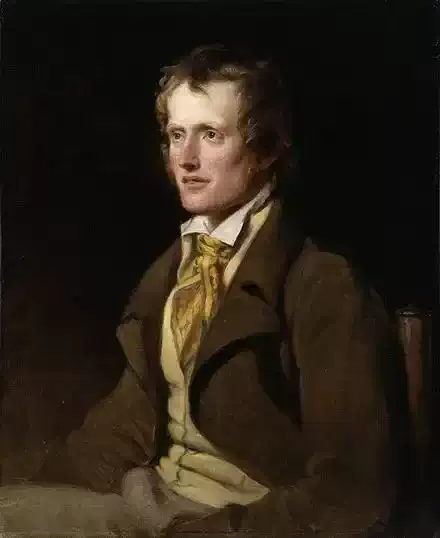
John Clare
Dyke Side
The frog croaks loud, and maidens dare not pass
But fear the noisome toad and shun the grass;
And on the sunny banks they dare not go
Where hissing snakes run to the flood below.
The nuthatch noises loud in wood and wild,
Like women turning skreeking to a child.
The schoolboy hears and brushes through the trees
And runs about till drabbled to the knees.
The old hawk winnows round the old crow's nest;
The schoolboy hears and wonder fills his breast.
He throws his basket down to climb the tree
And wonders what the red blotched eggs can be:
The green woodpecker bounces from the view
And hollos as he buzzes bye 'kew kew.'
417

Ella Wheeler Wilcox
Spectres
How terrible these nights are when alone
With our scarred hearts, we sit in solitude,
And some old sorrow, to the world unknown,
Does suddenly with silent steps intrude.
After the guests departed, and the light
Burned dimly in my room, there came to me,
As noiselessly as shadows of the night,
The spectre of a woe that used to be.
Out of the gruesome darkness and the gloom
I saw it peering; and, in still despair,
I watched it gliding swift across the room,
Until it came and stood beside my chair.
Why, need I tell thee what its shape or name?
Thou hast thy secret hidden from the light:
And be it sin or sorrow, woe or shame,
Thou dost not like to meet it in the night.
And yet it comes. As certainly as death,
And far more cruel since death ends all pain,
On lonesome nights we feel its icy breath,
And turn and face the thing we fancied slain.
With shrinking hearts, we view the ghastly shape;
We look into its eyes with fear and dread,
And know that we can never more escape
Until the grave doth fold us with the dead.
On the swift maelstrom of the eddying world
We hurl our woes, and think they are no more.
But round and round by dizzy billows whirled,
They reach out sinewy arms and swim to shore.
410

William Shakespeare
Sonnet 92: But do thy worst to steal thyself away
But do thy worst to steal thyself away,
For term of life thou art assured mine,
And life no longer than thy love will stay,
For it depends upon that love of thine.
Then need I not to fear the worst of wrongs,
When in the least of them my life hath end.
I see a better state to me belongs
Than that which on thy humour doth depend;
Thou canst not vex me with inconstant mind,
Since that my life on thy revolt doth lie.
O, what a happy title do I find,
Happy to have thy love, happy to die!
But what's so blessed-fair that fears no blot?
Thou mayst be false, and yet I know it not.
412
Ella Wheeler Wilcox
Don't Tease The Lion
If you saw a lion
Not within a cage,
Would you tease and fret him
Till he roared in rage?
Would you tempt his anger
And his savage power,
Knowing he could crush you,
Kill you, and devour?
Yet I know some people
Who, morn and noon and night,
Tease and fret with bitters
The lion-appetite.
It matters not what ails them,
For each disease and all
They seem to think there's healing
In demon alcohol.
So they fret the lion,
And anger him, until,
In his awful power,
He springs up to kill.
Let me warn you, children,
From this foolish way.
Do not tease the lion,
Nor tempt him any day.
Don't believe the doctors
If they say you need
Any wines or ciders;
For there are, indeed,
Better cures, and safer,
Than these drinks, that slay
More than a hundred people
Without fail each day.
411
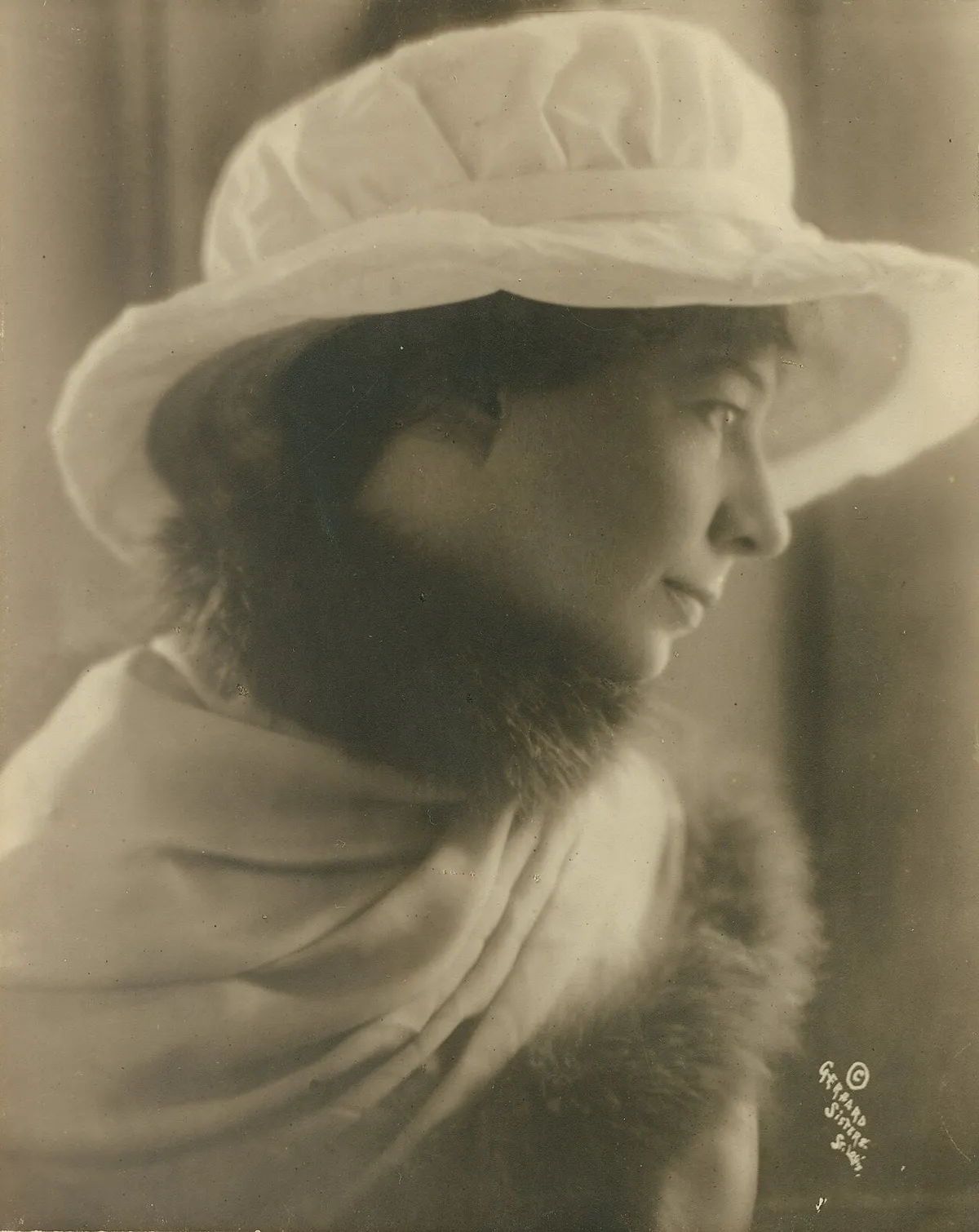
Sara Teasdale
The Lamp
If I can bear your love like a lamp before me,
When I go down the long steep Road of Darkness,
I shall not fear the everlasting shadows,
Nor cry in terror.
If I can find out God, then I shall find Him,
If none can find Him, then I shall sleep soundly,
Knowing how well on earth your love sufficed me,
A lamp in darkness.
When I go down the long steep Road of Darkness,
I shall not fear the everlasting shadows,
Nor cry in terror.
If I can find out God, then I shall find Him,
If none can find Him, then I shall sleep soundly,
Knowing how well on earth your love sufficed me,
A lamp in darkness.
407
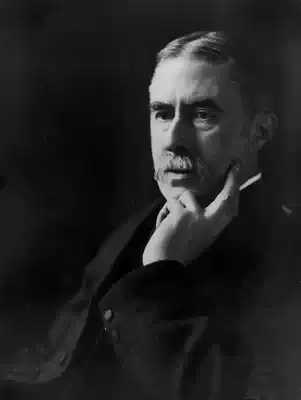
Alfred Edward Housman
Now Hollow Fires Burn Out to Black
Now hollow fires burn out to black,
And lights are guttering low:
Square your shoulders, lift your pack,
And leave your friends and go.
Oh never fear, man, nought's to dread,
Look not to left nor right:
In all the endless road you tread
There's nothing but the night.
And lights are guttering low:
Square your shoulders, lift your pack,
And leave your friends and go.
Oh never fear, man, nought's to dread,
Look not to left nor right:
In all the endless road you tread
There's nothing but the night.
403

Claude Mckay
Poetry
Sometimes I tremble like a storm-swept flower,
And seek to hide my tortured soul from thee.
Bowing my head in deep humility
Before the silent thunder of thy power.
Sometimes I flee before thy blazing light,
As from the specter of pursuing death;
Intimidated lest thy mighty breath,
Windways, will sweep me into utter night.
For oh, I fear they will be swallowed up--
The loves which are to me of vital worth,
My passion and my pleasure in the earth--
And lost forever in thy magic cup!
I fear, I fear my truly human heart
Will perish on the altar-stone of art!
405
Ella Wheeler Wilcox
About May
One night Nurse Sleep held out her hand
To tired little May.
'Come, go with me to Wonderland,'
She said, 'I know the way.
Just rock-a-by-hum-m-m,
And lo! we come
To the place where the dream-girls play.'
But naughty May, she wriggled away
From Sleep's soft arms, and said:
'I must stay awake till I eat my cake,
And then I will go to bed;
With a by-lo, away I will go.'
But the good nurse shook her head.
She shook her head and away she sped,
While May sat munching her crumb.
But after the cake there came an ache,
Though May cried: 'Come, Sleep, come,
And it's oh! my! let us by-lo-by'-
All save the echoes were dumb.
She ran after Sleep toward Wonderland,
Ran till the morning light;
And just as she caught her and grasped her hand,
A nightmare gave her a fright.
And it's by-lo, I hope she'll know
Better another night.
400
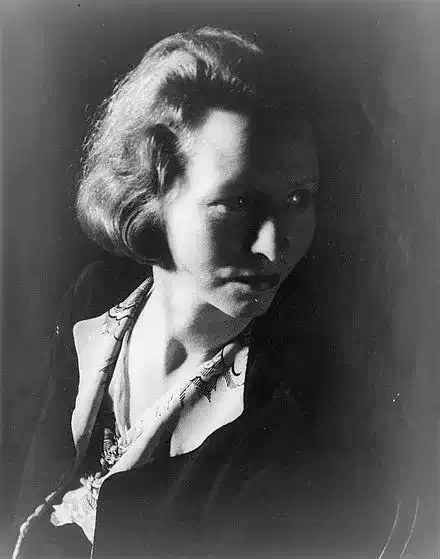
Edna St. Vincent Millay
Wraith
"Thin Rain, whom are you haunting,
That you haunt my door?"
—Surely it is not I she's wanting;
Someone living here before—
"Nobody's in the house but me:
You may come in if you like and see."
Thin as thread, with exquisite fingers,—
Have you seen her, any of you?—
Grey shawl, and leaning on the wind,
And the garden showing through?
Glimmering eyes,—and silent, mostly,
Sort of a whisper, sort of a purr,
Asking something, asking it over,
If you get a sound from her.—
Ever see her, any of you?—
Strangest thing I've ever known,—
Every night since I moved in,
And I came to be alone.
"Thin Rain, hush with your knocking!
You may not come in!
This is I that you hear rocking;
Nobody's with me, nor has been!"
Curious, how she tried the window,—
Odd, the way she tries the door,—
Wonder just what sort of people
Could have had this house before . . .
401

William Blake
A Divine Image
Cruelty has a human heart,
And Jealousy a human face;
Terror the human form divine,
And Secresy the human dress.
The human dress is forged iron,
The human form a fiery forge,
The human face a furnace sealed,
The human heart its hungry gorge.
And Jealousy a human face;
Terror the human form divine,
And Secresy the human dress.
The human dress is forged iron,
The human form a fiery forge,
The human face a furnace sealed,
The human heart its hungry gorge.
396
Edna St. Vincent Millay
Assault
I
I had forgotten how the frogs must sound
After a year of silence, else I think
I should not so have ventured forth alone
At dusk upon this unfrequented road.
II
I am waylaid by Beauty. Who will walk
Between me and the crying of the frogs?
Oh, savage Beauty, suffer me to pass,
That am a timid woman, on her way
From one house to another!
390

William Butler Yeats
Two Songs of a Fool
I
A speckled cat and a tame hare
Eat at my hearthstone
And seep there;
And both look up to me alone
For learning and defence
As I look up to Providence.
I start out of my sleep to think
Some day I may forget
Their food and drink;
Or, the house door left unshut,
The hare may run till it's found
The horn's sweet note and the tooth of the hound.
I bear a burden that might well try
Men that do all by rule,
And what can I
That am a wandering-witted fool
But pray to God that He ease
My great responsibilities?
II
I slept on my three-leged stool by the fire,
The speckled cat slept on my knee;
We never thought to enquire
Where the brown hare might be,
And whether the door were shut.
Who knows how she drank the wind
Stretched up on two legs from the mat,
Before she had settled her mind
To drum with her heel and to leap?
Had I but awakened from sleep
And called her name, she had heard,
It may be, and not have stirred,
That now, it may be, has found
The horn's sweet note and the tooth of the hound.
390

Emily Dickinson
I know some lonely Houses off the Road
I know some lonely Houses off the Road
A Robber'd like the look of-
Wooden barred,
And Windows hanging low,
Inviting to-
A Portico,
Where two could creep
One-
hand the Tools-
The other peep-
To make sure All's Asleep-
Old fashioned eyes-
Not easy to surprise!
How orderly the Kitchen'd look, by night,
With just a Clock-
But they could gag the Tick-
And Mice won't bark-
And so the Walls-don't tell
None-
will-
A pair of Spectacles ajar just stir-
An Almanac's aware-
Was it the Mat-winked,
Or a Nervous Star?
The Moon-slides down the stair,
To see who's there!
There's plunder-where-
Tankard, or SpoonEarring-
or Stone-
A Watch-Some Ancient Brooch
To match the Grandmama-
Staid sleeping-there
Day-rattles-too
Stealth's-slow-
The Sun has got as far
As the third Sycamore-
Screams Chanticleer
"Who's there"?
And Echoes-Trains away,
Sneer-"Where"!
While the old Couple, just astir,
Fancy the Sunrise-left the door ajar!
389
Ella Wheeler Wilcox
The King Of Candyland
Have you heard of the king of Candy land?
Well, listen while I sing,
He has pages on every hand,
For he is a mighty king,
And thousands of children bend the knee,
And bow to this ruler of high degree.
He has a smile, oh! like the sun!
And his face is round and bland,
His bright eyes twinkle and glow with fun,
As the children kiss his hand.
And everything toothsome, melting, sweet,
He scatters freely before their feet.
But wo! for the children who follow him,
With loving praises and laughter,
For he is a monster ugly and grim
That they go running after.
And when they get well into the chase
He lifts his masque and shows his face.
And ah! but that is a gruesome sight
For the followers of the king.
The cheeks grow pale that once were bright,
And they sob instead of sing.
And their teeth drop out and their eyes grow red,
And they cannot sleep when they go to bed.
And after they see the monster's face,
They have no peaceful hour.
And they have aches in every place,
And what was sweet seems sour.
Oh wo! for that sorrowful foolish band
Who follow the king of Candy land.
382

Henry Wadsworth Longfellow
The Ghosts
Never stoops the soaring vulture
On his quarry in the desert,
On the sick or wounded bison,
But another vulture, watching
From his high aerial look-out,
Sees the downward plunge, and follows;
And a third pursues the second,
Coming from the invisible ether,
First a speck, and then a vulture,
Till the air is dark with pinions.
So disasters come not singly;
But as if they watched and waited,
Scanning one another's motions,
When the first descends, the others
Follow, follow, gathering flock-wise
Round their victim, sick and wounded,
First a shadow, then a sorrow,
Till the air is dark with anguish.
Now, o'er all the dreary North-land,
Mighty Peboan, the Winter,
Breathing on the lakes and rivers,
Into stone had changed their waters.
From his hair he shook the snow-flakes,
Till the plains were strewn with whiteness,
One uninterrupted level,
As if, stooping, the Creator
With his hand had smoothed them over.
Through the forest, wide and wailing,
Roamed the hunter on his snow-shoes;
In the village worked the women,
Pounded maize, or dressed the deer-skin;
And the young men played together
On the ice the noisy ball-play,
On the plain the dance of snow-shoes.
One dark evening, after sundown,
In her wigwam Laughing Water
Sat with old Nokomis, waiting
For the steps of Hiawatha
Homeward from the hunt returning.
On their faces gleamed the firelight,
Painting them with streaks of crimson,
In the eyes of old Nokomis
Glimmered like the watery moonlight,
In the eyes of Laughing Water
Glistened like the sun in water;
And behind them crouched their shadows
In the corners of the wigwam,
And the smoke In wreaths above them
Climbed and crowded through the smoke-flue.
Then the curtain of the doorway
From without was slowly lifted;
Brighter glowed the fire a moment,
And a moment swerved the smoke-wreath,
As two women entered softly,
Passed the doorway uninvited,
Without word of salutation,
Without sign of recognition,
Sat down in the farthest corner,
Crouching low among the shadows.
From their aspect and their garments,
Strangers seemed they in the village;
Very pale and haggard were they,
As they sat there sad and silent,
Trembling, cowering with the shadows.
Was it the wind above the smoke-flue,
Muttering down into the wigwam?
Was it the owl, the Koko-koho,
Hooting from the dismal forest?
Sure a voice said in the silence:
"These are corpses clad in garments,
These are ghosts that come to haunt you,
From the kingdom of Ponemah,
From the land of the Hereafter!"
Homeward now came Hiawatha
From his hunting in the forest,
With the snow upon his tresses,
And the red deer on his shoulders.
At the feet of Laughing Water
Down he threw his lifeless burden;
Nobler, handsomer she thought him,
Than when first he came to woo her,
First threw down the deer before her,
As a token of his wishes,
As a promise of the future.
Then he turned and saw the strangers,
Cowering, crouching with the shadows;
Said within himself, "Who are they?
What strange guests has Minnehaha?"
But he questioned not the strangers,
Only spake to bid them welcome
To his lodge, his food, his fireside.
When the evening meal was ready,
And the deer had been divided,
Both the pallid guests, the strangers,
Springing from among the shadows,
Seized upon the choicest portions,
Seized the white fat of the roebuck,
Set apart for Laughing Water,
For the wife of Hiawatha;
Without asking, without thanking,
Eagerly devoured the morsels,
Flitted back among the shadows
In the corner of the wigwam.
Not a word spake Hiawatha,
Not a motion made Nokomis,
Not a gesture Laughing Water;
Not a change came o'er their features;
Only Minnehaha softly
Whispered, saying, "They are famished;
Let them do what best delights them;
Let them eat, for they are famished."
Many a daylight dawned and darkened,
Many a night shook off the daylight
As the pine shakes off the snow-flakes
From the midnight of its branches;
Day by day the guests unmoving
Sat there silent in the wigwam;
But by night, in storm or starlight,
Forth they went into the forest,
Bringing fire-wood to the wigwam,
Bringing pine-cones for the burning,
Always sad and always silent.
And whenever Hiawatha
Came from fishing or from hunting,
When the evening meal was ready,
And the food had been divided,
Gliding from their darksome corner,
Came the pallid guests, the strangers,
Seized upon the choicest portions
Set aside for Laughing Water,
And without rebuke or question
Flitted back among the shadows.
Never once had Hiawatha
By a word or look reproved them;
Never once had old Nokomis
Made a gesture of impatience;
Never once had Laughing Water
Shown resentment at the outrage.
All had they endured in silence,
That the rights of guest and stranger,
That the virtue of free-giving,
By a look might not be lessened,
By a word might not be broken.
Once at midnight Hiawatha,
Ever wakeful, ever watchful,
In the wigwam, dimly lighted
By the brands that still were burning,
By the glimmering, flickering firelight
Heard a sighing, oft repeated,
From his couch rose Hiawatha,
From his shaggy hides of bison,
Pushed aside the deer-skin curtain,
Saw the pallid guests, the shadows,
Sitting upright on their couches,
Weeping in the silent midnight.
And he said: "O guests! why is it
That your hearts are so afflicted,
That you sob so in the midnight?
Has perchance the old Nokomis,
Has my wife, my Minnehaha,
Wronged or grieved you by unkindness,
Failed in hospitable duties?"
Then the shadows ceased from weeping,
Ceased from sobbing and lamenting,
And they said, with gentle voices:
"We are ghosts of the departed,
Souls of those who once were with you.
From the realms of Chibiabos
Hither have we come to try you,
Hither have we come to warn you.
"Cries of grief and lamentation
Reach us in the Blessed Islands;
Cries of anguish from the living,
Calling back their friends departed,
Sadden us with useless sorrow.
Therefore have we come to try you;
No one knows us, no one heeds us.
We are but a burden to you,
And we see that the departed
Have no place among the living.
"Think of this, O Hiawatha!
Speak of it to all the people,
That henceforward and forever
They no more with lamentations
Sadden the souls of the departed
In the Islands of the Blessed.
"Do not lay such heavy burdens
In the graves of those you bury,
Not such weight of furs and wampum,
Not such weight of pots and kettles,
For the spirits faint beneath them.
Only give them food to carry,
Only give them fire to light them.
"Four days is the spirit's journey
To the land of ghosts and shadows,
Four its lonely night encampments;
Four times must their fires be lighted.
Therefore, when the dead are buried,
Let a fire, as night approaches,
Four times on the grave be kindled,
That the soul upon its journey
May not lack the cheerful firelight,
May not grope about in darkness.
"Farewell, noble Hiawatha!
We have put you to the trial,
To the proof have put your patience,
By the insult of our presence,
By the outrage of our actions.
We have found you great and noble.
Fail not in the greater trial,
Faint not In the harder struggle."
When they ceased, a sudden darkness
Fell and filled the silent wigwam.
Hiawatha heard a rustle
As of garments trailing by him,
Heard the curtain of the doorway
Lifted by a hand he saw not,
Felt the cold breath of the night air,
For a moment saw the starlight;
But he saw the ghosts no longer,
Saw no more the wandering spirits
From the kingdom of Ponemah,
From the land of the Hereafter.
385
William Butler Yeats
The Apparitions
BECAUSE there is safety in derision
I talked about an apparition,
I took no trouble to convince,
Or seem plausible to a man of sense.
Distrustful of thar popular eye
Whether it be bold or sly.
Fifteen apparitions have I seen;
The worst a coat upon a coat-hanger.
I have found nothing half so good
As my long-planned half solitude,
Where I can sit up half the night
With some friend that has the wit
Not to allow his looks to tell
When I am unintelligible.
Fifteen apparitions have I seen;
The worst a coat upon a coat-hanger.
When a man grows old his joy
Grows more deep day after day,
His empty heart is full at length,
But he has need of all that strength
Because of the increasing Night
That opens her mystery and fright.
Fifteen apparitions have I seen;
The worst a coat upon a coat-hanger.
383
William Blake
The Fly
Little Fly,
Thy summer's play
My thoughtless hand
Has brushed away.
Am not I
A fly like thee?
Or art not thou
A man like me?
For I dance
And drink, and sing,
Till some blind hand
Shall brush my wing.
If thought is life
And strength and breath
And the want
Of thought is death;
Then am I
A happy fly,
If I live,
Or if I die.
380
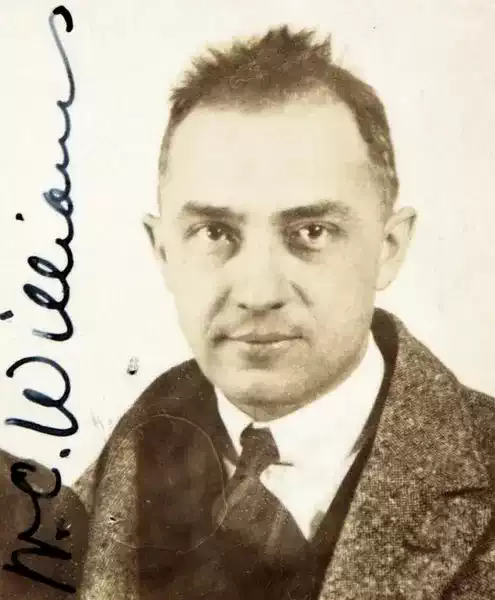
William Carlos Williams
Light Hearted Author
The birches are mad with green points
the wood's edge is burning with their green,
burning, seething--No, no, no.
The birches are opening their leaves one
by one. Their delicate leaves unfold cold
and separate, one by one. Slender tassels
hang swaying from the delicate branch tips--
Oh, I cannot say it. There is no word.
Black is split at once into flowers. In
every bog and ditch, flares of
small fire, white flowers!--Agh,
the birches are mad, mad with their green.
The world is gone, torn into shreds
with this blessing. What have I left undone
that I should have undertaken?
O my brother, you redfaced, living man
ignorant, stupid whose feet are upon
this same dirt that I touch--and eat.
We are alone in this terror, alone,
face to face on this road, you and I,
wrapped by this flame!
Let the polished plows stay idle,
their gloss already on the black soil.
But that face of yours--!
Answer me. I will clutch you. I
will hug you, grip you. I will poke my face
into your face and force you to see me.
Take me in your arms, tell me the commonest
thing that is in your mind to say,
say anything. I will understand you--!
It is the madness of the birch leaves opening
cold, one by one.
My rooms will receive me. But my rooms
are no longer sweet spaces where comfort
is ready to wait on me with its crumbs.
A darkness has brushed them. The mass
of yellow tulips in the bowl is shrunken.
Every familiar object is changed and dwarfed.
I am shaken, broken against a might
that splits comfort, blows apart
my careful partitions, crushes my house
and leaves me--with shrinking heart
and startled, empty eyes--peering out
into a cold world.
In the spring I would be drunk! In the spring
I would be drunk and lie forgetting all things.
Your face! Give me your face, Yang Kue Fei!
your hands, your lips to drink!
Give me your wrists to drink--
I drag you, I am drowned in you, you
overwhelm me! Drink!
Save me! The shad bush is in the edge
of the clearing. The yards in a fury
of lilac blossoms are driving me mad with terror.
Drink and lie forgetting the world.
And coldly the birch leaves are opening one by one.
Coldly I observe them and wait for the end.
And it ends.
382
Henry Wadsworth Longfellow
By The Seaside : Twilight
The twilight is sad and cloudy,
The wind blows wild and free,
And like the wings of sea-birds
Flash the white caps of the sea.
But in the fisherman's cottage
There shines a ruddier light,
And a little face at the window
Peers out into the night.
Close, close it is pressed to the window,
As if those childish eyes
Were looking into the darkness,
To see some form arise.
And a woman's waving shadow
Is passing to and fro,
Now rising to the ceiling,
Now bowing and bending low.
What tale do the roaring ocean,
And the night-wind, bleak and wild,
As they beat at the crazy casement,
Tell to that little child?
And why do the roaring ocean,
And the night-wind, wild and bleak,
As they beat at the heart of the mother,
Drive the color from her cheek?
376

Carl Sandburg
Lost
Desolate and lone
All night long on the lake
Where fog trails and mist creeps,
The whistle of a boat
Calls and cries unendingly,
Like some lost child
In tears and trouble
Hunting the harbor's breast
And the harbor's eyes.
All night long on the lake
Where fog trails and mist creeps,
The whistle of a boat
Calls and cries unendingly,
Like some lost child
In tears and trouble
Hunting the harbor's breast
And the harbor's eyes.
376

Walter de la Mare
Alexander
It was the Great Alexander,
Capped with a golden helm,
Sate in the ages, in his floating ship,
In a dead calm.
Voices of sea-maids singing
Wandered across the deep:
The sailors labouring on their oars
Rowed as in sleep.
All the high pomp of Asia,
Charmed by that siren lay,
Out of their weary and dreaming minds
Faded away.
Like a bold boy sate their Captain,
His glamour withered and gone,
In the souls of his brooding mariners,
While the song pined on.
Time like a falling dew,
Life like the scene of a dream
Laid between slumber and slumber
Only did seem. . . .
O Alexander, then,
In all us mortals too,
Wax not so overbold
On the wave dark-blue!
Come the calm starry night,
Who then will hear
Aught save the singing
Of the sea-maids clear?
376
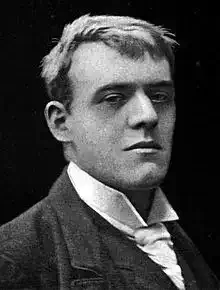
Hilaire Belloc
The Lion
The Lion, the Lion, he dwells in the Waste,
He has a big head and a very small waist;
But his shoulders are stark, and his jaws they are grim,
And a good little child will not play with him.
He has a big head and a very small waist;
But his shoulders are stark, and his jaws they are grim,
And a good little child will not play with him.
372
William Butler Yeats
Form the Green Helmet And Other Poems
HIS DREAM
I SWAYED upon the gaudy stem
The butt-end of a steering-oar,
And saw wherever I could turn
A crowd upon a shore.
And though I would have hushed the crowd,
There was no mother's son but said,
'What is the figure in a shroud
Upon a gaudy bed?'
And after running at the brim
Cried out upon that thing beneath
-- It had such dignity of limb --
By the sweet name of Death.
Though I'd my finger on my lip,
What could I but take up the song?
And running crowd and gaudy ship
Cried out the whole night long,
Crying amid the glittering sea,
Naming it with ecstatic breath,
Because it had such dignity,
By the sweet name of Death.
372
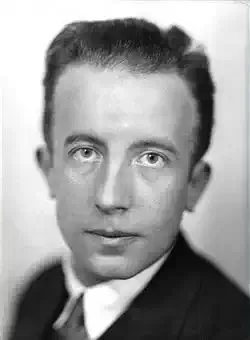
Paul Éluard
The Deaf and Blind
Do we reach the sea with clocks
In our pockets, with the noise of the sea
In the sea, or are we the carriers
Of a purer and more silent water?
The water rubbing against our hands sharpens knives.
The warriors have found their weapons in the waves
And the sound of their blows is like
The rocks that smash the boats at night.
It is the storm and the thunder. Why not the silence
Of the flood, for we have dreamt within us
Space for the greatest silence and we breathe
Like the wind over terrible seas, like the wind
That creeps slowly over every horizon.
370