
Fear and Anxiety
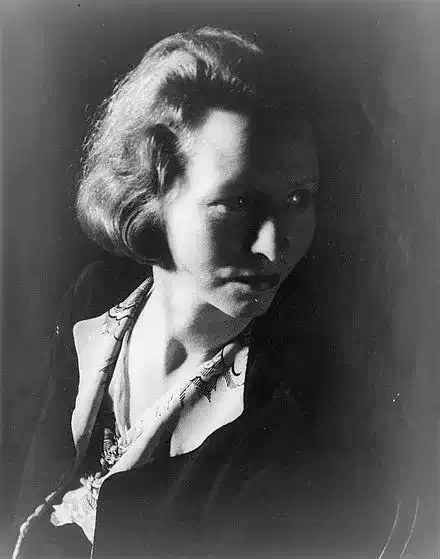
Edna St. Vincent Millay
Night Is My Sister, And How Deep In Love
Night is my sister, and how deep in love,
How drowned in love and weedily washed ashore,
There to be fretted by the drag and shove
At the tide's edge, I lie—these things and more:
Whose arm alone between me and the sand,
Whose voice alone, whose pitiful breath brought near,
Could thaw these nostrils and unlock this hand,
She could advise you, should you care to hear.
Small chance, however, in a storm so black,
A man will leave his friendly fire and snug
For a drowned woman's sake, and bring her back
To drip and scatter shells upon the rug.
No one but Night, with tears on her dark face,
Watches beside me in this windy place.
370
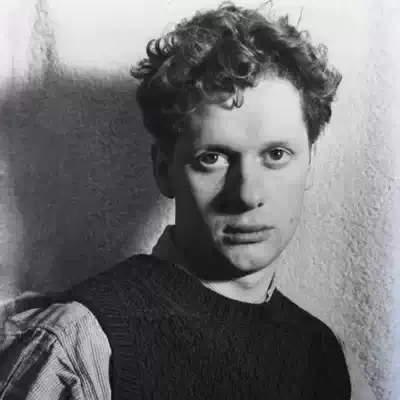
Dylan Thomas
Ghosts whooed like owls in the long nights when I dared not look over my shoulder
Ghosts whooed like owls in the long nights when I dared not look over my shoulder;
animals lurked in the cubbyhole under the stairs and the gas meter ticked. And I
remember that we went singing carols once, when there wasn't the shaving of a moon
to light the flying streets. At the end of a long road was a drive that led to a large
house, and we stumbled up the darkness of the drive that night, each one of us afraid,
each one holding a stone in his hand in case, and all of us too brave to say a word. The
wind through the trees made noises as of old and unpleasant and maybe webfooted
men wheezing in caves. We reached the black bulk of the house. "What shall we give
them? Hark the Herald?"
"No," Jack said, "Good King Wencelas. I'll count three." One, two three, and we began
to sing, our voices high and seemingly distant in the snow-felted darkness round the
house that was occupied by nobody we knew. We stood close together, near the dark
door. Good King Wencelas looked out On the Feast of Stephen ... And then a small, dry
voice, like the voice of someone who has not spoken for a long time, joined our
singing: a small, dry, eggshell voice from the other side of the door: a small dry voice
through the keyhole. And when we stopped running we were outside our house; the
front room was lovely; balloons floated under the hot-water-bottle-gulping gas;
everything was good again and shone over the town.
"Perhaps it was a ghost," Jim said.
"Perhaps it was trolls," Dan said, who was always reading.
"Let's go in and see if there's any jelly left," Jack said. And we did that.
Always on Christmas night there was music. An uncle played the fiddle, a cousin sang
"Cherry Ripe," and another uncle sang "Drake's Drum." It was very warm in the little
house. Auntie Hannah, who had got on to the parsnip wine, sang a song about
Bleeding Hearts and Death, and then another in which she said her heart was like a
Bird's Nest; and then everybody laughed again; and then I went to bed. Looking
through my bedroom window, out into the moonlight and the unending smoke-colored
snow, I could see the lights in the windows of all the other houses on our hill and hear
the music rising from them up the long, steady falling night. I turned the gas down, I
got into bed. I said some words to the close and holy darkness, and then I slept.
362

William Butler Yeats
The Crazed Moon
CRAZED through much child-bearing
The moon is staggering in the sky;
Moon-struck by the despairing
Glances of her wandering eye
We grope, and grope in vain,
For children born of her pain.
Children dazed or dead!
When she in all her virginal pride
First trod on the mountain's head
What stir ran through the countryside
Where every foot obeyed her glance!
What manhood led the dance!
Fly-catchers of the moon,
Our hands are blenched, our fingers seem
But slender needles of bone;
Blenched by that malicious dream
They are spread wide that each
May rend what comes in reach.
363

Emily Dickinson
The first Day's Night had come
The first Day's Night had come-
And grateful that a thing
So terrible-had been endured-
I told my Soul to sing-
She said her Strings were snapt-
Her Bow-to Atoms blown-
And so to mend her-gave me work
Until another Morn-
And then-a Day as huge
As Yesterdays in pairs,
Unrolled its horror in my face-
Until it blocked my eyes-
My Brain-begun to laugh-
I mumbled-like a fool-
And tho' 'tis Years ago-that Day-
My Brain keeps giggling-still.
And Something's odd-within-
That person that I was-
And this One-do not feel the same-
Could it be Madness-this?
363
Edna St. Vincent Millay
The Bean-Stalk
Ho, Giant! This is I!
I have built me a bean-stalk into your sky!
La,—but it's lovely, up so high!
This is how I came,—I put
Here my knee, there my foot,
Up and up, from shoot to shoot—
And the blessed bean-stalk thinning
Like the mischief all the time,
Till it took me rocking, spinning,
In a dizzy, sunny circle,
Making angles with the root,
Far and out above the cackle
Of the city I was born in,
Till the little dirty city
In the light so sheer and sunny
Shone as dazzling bright and pretty
As the money that you find
In a dream of finding money—
What a wind! What a morning!—
Till the tiny, shiny city,
When I shot a glance below,
Shaken with a giddy laughter,
Sick and blissfully afraid,
Was a dew-drop on a blade,
And a pair of moments after
Was the whirling guess I made,—
And the wind was like a whip
Cracking past my icy ears,
And my hair stood out behind,
And my eyes were full of tears,
Wide-open and cold,
More tears than they could hold,
The wind was blowing so,
And my teeth were in a row,
Dry and grinning,
And I felt my foot slip,
And I scratched the wind and whined,
And I clutched the stalk and jabbered,
With my eyes shut blind,—
What a wind! What a wind!
Your broad sky, Giant,
Is the shelf of a cupboard;
I make bean-stalks, I'm
A builder, like yourself,
But bean-stalks is my trade,
I couldn't make a shelf,
Don't know how they're made,
Now, a bean-stalk is more pliant—
La, what a climb!
359

Mirza Ghalib
No Hope
I am left with no hope at all,
No possibility to reach my goal,
The Day of my death is fixed,
I am so very anxious that I can not sleep all night.
Though I know the reward of obedience and worship,
But I have no tendency for it.
I am silent for a certain reason,
Otherwise I can convince you with my words,
Why I shouldn't cry,
For when I don't, she asks about me,
My heart is burning, though you cannot see the spot,
But O my doctor, can't you smell my heart burn?
I have reached to a certain state,
From where even I cannot find myself.
I am dying (Waiting anxiously) for my death,
I don't know where the hell my death has gone.
With what face you will go to Ka'ba, O! Ghalib,
You should be ashamed of yourself while thinking to go there.
358
Emily Dickinson
It would have starved a Gnat
It would have starved a Gnat-
To live so small as I-
And yet I was a living Child-
With Food's necessity
Upon me-like a Claw-
I could no more remove
Than I could coax a Leech away-
Or make a Dragon-move-
Not like the Gnat-had I-
The privilege to fly
And seek a Dinner for myself-
How mightier He-than I-
Nor like Himself-the Art
Upon the Window Pane
To gad my little Being out-
And not begin-again-
358
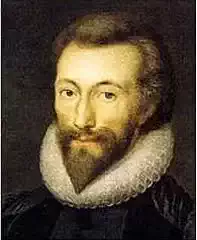
John Donne
Holy Sonnet I: Thou Hast Made Me
Thou hast made me, and shall thy work decay?
Repair me now, for now mine end doth haste;
I run to death, and death meets me as fast,
And all my pleasures are like yesterday.
I dare not move my dim eyes any way,
Despair behind, and death before doth cast
Such terror, and my feeble flesh doth waste
By sin in it, which it towards hell doth weigh.
Only thou art above, and when towards thee
By thy leave I can look, I rise again;
But our old subtle foe so tempteth me
That not one hour myself I can sustain.
Thy grace may wing me to prevent his art,
And thou like adamant draw mine iron heart.
358

Henry Wadsworth Longfellow
Tales Of A Wayside Inn : Part 2. The Musician's Tale; The Ballad of Carmilhan -
II.
The jolly skipper paused awhile,
And then again began;
'There is a Spectre Ship,' quoth he,
'A ship of the Dead that sails the sea,
And is called the Carmilhan.
'A ghostly ship, with a ghostly crew,
In tempests she appears;
And before the gale, or against the gale,
She sails without a rag of sail,
Without a helmsman steers.
'She haunts the Atlantic north and south,
But mostly the mid-sea,
Where three great rocks rise bleak and bare
Like furnace-chimneys in the air,
And are called the Chimneys Three.
'And ill betide the luckless ship
That meets the Carmilhan;
Over her decks the seas will leap,
She must go down into the deep,
And perish mouse and man.'
The captain of the Valdemar
Laughed loud with merry heart.
'I should like to see this ship,' said he;
'I should like to find these Chimneys Three,
That are marked down in the chart.
'I have sailed right over the spot,' he said
'With a good stiff breeze behind,
When the sea was blue, and the sky was clear,--
You can follow my course by these pinholes here,--
And never a rock could find.'
And then he swore a dreadful oath,
He swore by the Kingdoms Three,
That, should he meet the Carmilhan,
He would run her down, although he ran
Right into Eternity!
All this, while passing to and fro,
The cabin-boy had heard;
He lingered at the door to hear,
And drank in all with greedy ear,
And pondered every word.
He was a simple country lad,
But of a roving mind.
'Oh, it must be like heaven,' thought he,
'Those far-off foreign lands to see,
And fortune seek and find!'
But in the fo'castle, when he heard
The mariners blaspheme,
He thought of home, he thought of God,
And his mother under the churchyard sod,
And wished it were a dream.
One friend on board that ship had he;
T was the Klaboterman,
Who saw the Bible in his chest,
And made a sign upon his breast,
All evil things to ban.
354
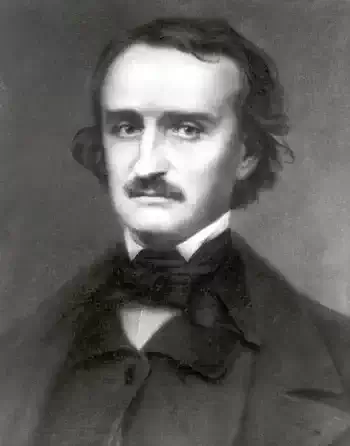
Edgar Allan Poe
The Raven
Once upon a midnight dreary, while I pondered, weak and weary,
Over many a quaint and curious volume of forgotten lore,
While I nodded, nearly napping, suddenly there came a tapping,
As of some one gently rapping, rapping at my chamber door.
''Tis some visitor,' I muttered, 'tapping at my chamber door
Only
this, and nothing more.'
Ah, distinctly I remember it was in the bleak December,
And each separate dying ember wrought its ghost upon the floor.
Eagerly I wished the morrow;- vainly I had sought to borrow
From my books surcease of sorrow- sorrow for the lost Lenore
For the rare and radiant maiden whom the angels name LenoreNameless
here for evermore.
And the silken sad uncertain rustling of each purple curtain
Thrilled me- filled me with fantastic terrors never felt before;
So that now, to still the beating of my heart, I stood repeating,
''Tis some visitor entreating entrance at my chamber door
Some late visitor entreating entrance at my chamber door;
This
it is, and nothing more.'
Presently my soul grew stronger; hesitating then no longer,
'Sir,' said I, 'or Madam, truly your forgiveness I implore;
But the fact is I was napping, and so gently you came rapping,
And so faintly you came tapping, tapping at my chamber door,
That I scarce was sure I heard you'- here I opened wide the door;
Darkness
there, and nothing more.
Deep into that darkness peering, long I stood there wondering,
fearing,
Doubting, dreaming dreams no mortals ever dared to dream before;
But the silence was unbroken, and the stillness gave no token,
And the only word there spoken was the whispered word, 'Lenore!'
This I whispered, and an echo murmured back the word, 'Lenore!'Merely
this, and nothing more.
Back into the chamber turning, all my soul within me burning,
Soon again I heard a tapping somewhat louder than before.
'Surely,' said I, 'surely that is something at my window lattice:
Let me see, then, what thereat is, and this mystery explore
Let my heart be still a moment and this mystery explore;'
Tis the wind and nothing more.'
Open here I flung the shutter, when, with many a flirt and
flutter,
In there stepped a stately raven of the saintly days of yore;
Not the least obeisance made he; not a minute stopped or stayed
he;
But, with mien of lord or lady, perched above my chamber door
Perched
upon a bust of Pallas just above my chamber door
Perched,
and sat, and nothing more.
Then this ebony bird beguiling my sad fancy into smiling,
By the grave and stern decorum of the countenance it wore.
'Though thy crest be shorn and shaven, thou,' I said, 'art sure no
craven,
Ghastly grim and ancient raven wandering from the Nightly shore
Tell
me what thy lordly name is on the Night's Plutonian shore!'
Quoth the Raven, 'Nevermore.'
Much I marvelled this ungainly fowl to hear discourse so plainly,
Though its answer little meaning- little relevancy bore;
For we cannot help agreeing that no living human being
Ever yet was blest with seeing bird above his chamber door
Bird or beast upon the sculptured bust above his chamber door,
With such name as 'Nevermore.'
But the raven, sitting lonely on the placid bust, spoke only
That one word, as if his soul in that one word he did outpour.
Nothing further then he uttered- not a feather then he fluttered
Till
I scarcely more than muttered, 'other friends have flown
before
On
the morrow he will leave me, as my hopes have flown before.'
Then the bird said, 'Nevermore.'
Startled at the stillness broken by reply so aptly spoken,
'Doubtless,' said I, 'what it utters is its only stock and store,
Caught from some unhappy master whom unmerciful Disaster
Followed fast and followed faster till his songs one burden bore
Till the dirges of his Hope that melancholy burden bore
Of 'Never- nevermore'.'
But the Raven still beguiling all my fancy into smiling,
Straight I wheeled a cushioned seat in front of bird, and bust and
door;
Then upon the velvet sinking, I betook myself to linking
Fancy unto fancy, thinking what this ominous bird of yore
What this grim, ungainly, ghastly, gaunt and ominous bird of yore
Meant in croaking 'Nevermore.'
This I sat engaged in guessing, but no syllable expressing
To the fowl whose fiery eyes now burned into my bosom's core;
This and more I sat divining, with my head at ease reclining
On the cushion's velvet lining that the lamplight gloated o'er,
But whose velvet violet lining with the lamplight gloating o'er,
She shall press, ah, nevermore!
Then methought the air grew denser, perfumed from an unseen censer
Swung by Seraphim whose footfalls tinkled on the tufted floor.
'Wretch,' I cried, 'thy God hath lent thee- by these angels he
hath sent thee
Respite- respite and nepenthe, from thy memories of Lenore!
Quaff, oh quaff this kind nepenthe and forget this lost Lenore!'
Quoth the Raven, 'Nevermore.'
'Prophet!' said I, 'thing of evil!- prophet still, if bird or
devil!
Whether Tempter sent, or whether tempest tossed thee here ashore,
Desolate yet all undaunted, on this desert land enchanted
On
this home by horror haunted- tell me truly, I implore
Is there- is there balm in Gilead?- tell me- tell me, I implore!'
Quoth the Raven, 'Nevermore.'
'Prophet!' said I, 'thing of evil- prophet still, if bird or
devil!
By that Heaven that bends above us- by that God we both adore
Tell
this soul with sorrow laden if, within the distant Aidenn,
It shall clasp a sainted maiden whom the angels name Lenore
Clasp a rare and radiant maiden whom the angels name Lenore.'
Quoth the Raven, 'Nevermore.'
'Be that word our sign in parting, bird or fiend,' I shrieked,
upstarting
'Get thee back into the tempest and the Night's Plutonian shore!
Leave no black plume as a token of that lie thy soul hath spoken!
Leave my loneliness unbroken!- quit the bust above my door!
Take thy beak from out my heart, and take thy form from off my
door!'
Quoth the Raven, 'Nevermore.'
And the Raven, never flitting, still is sitting, still is sitting
On the pallid bust of Pallas just above my chamber door;
And his eyes have all the seeming of a demon's that is dreaming,
And the lamplight o'er him streaming throws his shadow on the
floor;
And my soul from out that shadow that lies floating on the floor
Shall be lifted- nevermore!
355
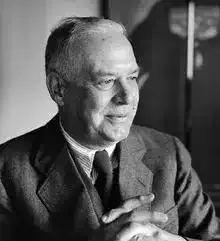
Wallace Stevens
Domination Of Black
At night, by the fire,
The colors of the bushes
And of the fallen leaves,
Repeating themselves,
Turned in the room,
Like the leaves themselves
Turning in the wind.
Yes: but the color of the heavy hemlocks
Came striding.
And I remembered the cry of the peacocks.
The colors of their tails
Were like the leaves themselves
Turning in the wind,
In the twilight wind.
They swept over the room,
Just as they flew from the boughs of the hemlocks
Down to the ground.
I heard them cry -- the peacocks.
Was it a cry against the twilight
Or against the leaves themselves
Turning in the wind,
Turning as the flames
Turned in the fire,
Turning as the tails of the peacocks
Turned in the loud fire,
Loud as the hemlocks
Full of the cry of the peacocks?
Or was it a cry against the hemlocks?
Out of the window,
I saw how the planets gathered
Like the leaves themselves
Turning in the wind.
I saw how the night came,
Came striding like the color of the heavy hemlocks
I felt afraid.
And I remembered the cry of the peacocks.
350

John Greenleaf Whittier
The Double-Headed Snake of Newbury
Far away in the twilight time
Of every people, in every clime,
Dragons and griffins and monsters dire,
Born of water, and air, and fire,
Or nursed, like the Python, in the mud
And ooze of the old Deucalion flood,
Crawl and wriggle and foam with rage,
Through dusk tradition and ballad age.
So from the childhood of Newbury town
And its time of fable the tale comes down
Of a terror which haunted bush and brake,
The Amphisbaena, the Double Snake!
Thou who makest the tale thy mirth,
Consider that strip of Christian earth
On the desolate shore of a sailless sea,
Full of terror and mystery,
Half redeemed from the evil hold
Of the wood so dreary, and dark, and old,
Which drank with its lips of leaves the dew
When Time was young, and the world was new,
And wove its shadows with sun and moon,
Ere the stones of Cheops were squared and hewn.
Think of the sea's dread monotone,
Of the mournful wail from the pine-wood blown,
Of the strange, vast splendors that lit the North,
Of the troubled throes of the quaking earth,
And the dismal tales the Indian told,
Till the settler's heart at his hearth grew cold,
And he shrank from the tawny wizard boasts,
And the hovering shadows seemed full of ghosts,
And above, below, and on every side,
The fear of his creed seemed verified;
And
think, if his lot were now thine own,
To grope with terrors nor named nor known,
How laxer muscle and weaker nerve
And a feebler faith thy need might serve;
And own to thyself the wonder more
That the snake had two heads, and not a score!
Whether he lurked in the Oldtown fen
Or the gray earth-flax of the Devil's Den,
Or swam in the wooded Artichoke,
Or coiled by the Northman's Written Rock,
Nothing on record is left to show;
Only the fact that be lived, we know,
And left the cast of a double head
In the scaly mask which he yearly shed.
For he carried a head where his tail should be,
And the two, of course, could never agree,
But wriggled about with main and might,
Now to the left and now to the right;
Pulling and twisting this way and that,
Neither knew what the other was at.
A snake with two beads, lurking so near!
Judge of the wonder, guess at the fear!
Think what ancient gossips might say,
Shaking their heads in their dreary way,
Between the meetings on Sabbath-day!
How urchins, searching at day's decline
The Common Pasture for sheep or kine,
The terrible double-ganger heard
In leafy rustle or whir of bird!
Think what a zest it gave to the sport,
In berry-time, of the younger sort,
As over pastures blackberry-twined,
Reuben and Dorothy lagged behind,
And closer and closer, for fear of harm,
The maiden clung to her lover's arm;
And how the spark, who was forced to stay,
By his sweetheart's fears, till the break of day,
Thanked the snake for the fond delay.
Far and wide the tale was told,
Like a snowball growing while it rolled.
The nurse hushed with it the baby's cry;
And it served, in the worthy minister's eye,
To paint the primitive serpent by.
Cotton Mather came galloping down
All the way to Newbury town,
With his eyes agog and his ears set wide,
And his marvellous inkhorn at his side;
Stirring the while in the shallow pool
Of his brains for the lore he learned at school,
To garnish the story, with here a streak
Of Latin, and there another of Greek
And the tales he heard and the notes he took,
Behold! are they not in his Wonder-Book?
Stories, like dragons, are hard to kill.
If the snake does not, the tale runs still
In Byfield Meadows, on Pipestave Hill.
And still, whenever husband and wife
Publish the shame of their daily strife,
And, with mad cross-purpose, tug and strain
At either end of the marriage-chain,
The gossips say, with a knowing shake
Of their gray heads, 'Look at the Double Snake
One in body and two in will,
The Amphisbaena is living still!'
348

William Wordsworth
Lucy Gray
Oft I had heard of Lucy Gray:
And, when I crossed the wild,
I chanced to see at break of day
The solitary child.
No mate, no comrade Lucy knew;
She dwelt on a wide moor,
--The sweetest thing that ever grew
Beside a human door!
You yet may spy the fawn at play,
The hare upon the green;
But the sweet face of Lucy Gray
Will never more be seen.
"To-night will be a stormy night--
You to the town must go;
And take a lantern, Child, to light
Your mother through the snow."
"That, Father! will I gladly do:
'Tis scarcely afternoon--
The minster-clock has just struck two,
And yonder is the moon!"
At this the Father raised his hook,
And snapped a faggot-band;
He plied his work;--and Lucy took
The lantern in her hand.
Not blither is the mountain roe:
With many a wanton stroke
Her feet disperse the powdery snow,
That rises up like smoke.
The storm came on before its time:
She wandered up and down;
And many a hill did Lucy climb:
But never reached the town.
The wretched parents all that night
Went shouting far and wide;
But there was neither sound nor sight
To serve them for a guide.
At day-break on a hill they stood
That overlooked the moor;
And thence they saw the bridge of wood,
A furlong from their door.
They wept--and, turning homeward, cried,
"In heaven we all shall meet;"
--When in the snow the mother spied
The print of Lucy's feet.
Then downwards from the steep hill's edge
They tracked the footmarks small;
And through the broken hawthorn hedge,
And by the long stone-wall;
And then an open field they crossed:
The marks were still the same;
They tracked them on, nor ever lost;
And to the bridge they came.
They followed from the snowy bank
Those footmarks, one by one,
Into the middle of the plank;
And further there were none!
--Yet some maintain that to this day
She is a living child;
That you may see sweet Lucy Gray
Upon the lonesome wild.
O'er rough and smooth she trips along,
And never looks behind;
And sings a solitary song
That whistles in the wind.
345
Emily Dickinson
A Secret told
A Secret told-
Ceases to be a Secret-then-
A Secret-kept
That-
can appal but One-
Better of it-continual be afraid-
Than it-
And Whom you told it to-beside-
Ceases to be a Secret-then-
A Secret-kept
That-
can appal but One-
Better of it-continual be afraid-
Than it-
And Whom you told it to-beside-
342

Carl Sandburg
The Hangman at Home
What does a hangman think about
When he goes home at night from work?
When he sits down with his wife and
Children for a cup of coffee and a
Plate of ham and eggs, do they ask
Him if it was a good day's work
And everything went well or do they
Stay off some topics and kill about
The weather, baseball, politics
And the comic strips in the papers
And the movies? Do they look at his
Hands when he reaches for the coffee
Or the ham and eggs? If the little
Ones say, Daddy, play horse, here's
A rope--does he answer like a joke:
I seen enough rope for today?
Or does his face light up like a
Bonfire of joy and does he say:
It's a good and dandy world we live
'In. And if a white face moon looks
In through a window where a baby girl
Sleeps and the moon-gleams mix with
Baby ears and baby hair--the hangman--
How does he act then? It must be easy
For him. Anything is easy for a hangman,
I guess.
340
John Greenleaf Whittier
My Dream
In my dream, methought I trod,
Yesternight, a mountain road;
Narrow as Al Sirat's span,
High as eagle's flight, it ran.
Overhead, a roof of cloud
With its weight of thunder bowed;
Underneath, to left and right,
Blankness and abysmal night.
Here and there a wild-flower blushed,
Now and then a bird-song gushed;
Now and then, through rifts of shade,
Stars shone out, and sunbeams played.
But the goodly company,
Walking in that path with me,
One by one the brink o'erslid,
One by one the darkness hid.
Some with wailing and lament,
Some with cheerful courage went;
But, of all who smiled or mourned,
Never one to us returned.
Anxiously, with eye and ear,
Questioning that shadow drear,
Never hand in token stirred,
Never answering voice I heard!
Steeper, darker!--lo! I felt
From my feet the pathway melt.
Swallowed by the black despair,
And the hungry jaws of air,
Past the stony-throated caves,
Strangled by the wash of waves,
Past the splintered crags, I sank
On a green and flowery bank,-
Soft as fall of thistle-down,
Lightly as a cloud is blown,
Soothingly as childhood pressed
To the bosom of its rest.
Of the sharp-horned rocks instead,
Green the grassy meadows spread,
Bright with waters singing by
Trees that propped a golden sky.
Painless, trustful, sorrow-free,
Old lost faces welcomed me,
With whose sweetness of content
Still expectant hope was blent.
Waking while the dawning gray
Slowly brightened into day,
Pondering that vision fled,
Thus unto myself I said:-
'Steep and hung with clouds of strife
Is our narrow path of life;
And our death the dreaded fall
Through the dark, awaiting all.
'So, with painful steps we climb
Up the dizzy ways of time,
Ever in the shadow shed
By the forecast of our dread.
'Dread of mystery solved alone,
Of the untried and unknown;
Yet the end thereof may seem
Like the falling of my dream.
'And this heart-consuming care,
All our fears of here or there,
Change and absence, loss and death,
Prove but simple lack of faith.'
Thou, O Most Compassionate!
Who didst stoop to our estate,
Drinking of the cup we drain,
Treading in our path of pain,-
Through the doubt and mystery,
Grant to us thy steps to see,
And the grace to draw from thence
Larger hope and confidence.
Show thy vacant tomb, and let,
As of old, the angels sit,
Whispering, by its open door
'Fear not! He hath gone before!'
340
Edgar Allan Poe
To -- -- --. Ulalume: A Ballad
The skies they were ashen and sober;
The leaves they were crisped and sere
The
leaves they were withering and sere;
It was night in the lonesome October
Of my most immemorial year;
It was hard by the dim lake of Auber,
In the misty mid region of WeirIt
was down by the dank tarn of Auber,
In the ghoul-haunted woodland of Weir.
Here once, through an alley Titanic,
Of cypress, I roamed with my SoulOf
cypress, with Psyche, my Soul.
There were days when my heart was volcanic
As the scoriac rivers that roll
As
the lavas that restlessly roll
Their sulphurous currents down Yaanek
In the ultimate climes of the pole
That
groan as they roll down Mount Yaanek
In the realms of the boreal pole.
Our talk had been serious and sober,
But our thoughts they were palsied and sere
Our
memories were treacherous and sere
For we knew not the month was October,
And we marked not the night of the year(
Ah, night of all nights in the year!)
We noted not the dim lake of Auber(
Though once we had journeyed down here),
Remembered not the dank tarn of Auber,
Nor the ghoul-haunted woodland of Weir.
And now, as the night was senescent,
And star-dials pointed to morn
As
the star-dials hinted of morn
At the end of our path a liquescent
And nebulous lustre was born,
Out of which a miraculous crescent
Arose with a duplicate horn
Astarte's
bediamonded crescent
Distinct with its duplicate horn.
And I said- 'She is warmer than Dian:
She rolls through an ether of sighs
She
revels in a region of sighs:
She has seen that the tears are not dry on
These cheeks, where the worm never dies,
And has come past the stars of the Lion,
To point us the path to the skies
To
the Lethean peace of the skies
Come up, in despite of the Lion,
To shine on us with her bright eyes
Come up through the lair of the Lion,
With love in her luminous eyes.'
But Psyche, uplifting her finger,
Said- 'Sadly this star I mistrust
Her
pallor I strangely mistrust:
Oh, hasten!- oh, let us not linger!
Oh, fly!- let us fly!- for we must.'
In terror she spoke, letting sink her
Wings until they trailed in the dust
In agony sobbed, letting sink her
Plumes till they trailed in the dust
Till
they sorrowfully trailed in the dust.
I replied- 'This is nothing but dreaming:
Let us on by this tremulous light!
Let us bathe in this crystalline light!
Its Sybilic splendor is beaming
With Hope and in Beauty to-night:
See!-
it flickers up the sky through the night!
Ah, we safely may trust to its gleaming,
And be sure it will lead us aright
We safely may trust to a gleaming
That cannot but guide us aright,
Since it flickers up to Heaven through the night.'
Thus I pacified Psyche and kissed her,
And tempted her out of her gloom
And
conquered her scruples and gloom;
And we passed to the end of the vista,
But were stopped by the door of a tomb
By
the door of a legended tomb;
And I said- 'What is written, sweet sister,
On the door of this legended tomb?'
She replied- 'Ulalume- Ulalume'
Tis the vault of thy lost Ulalume!'
Then my heart it grew ashen and sober
As the leaves that were crisped and sere
As
the leaves that were withering and sere
And I cried- 'It was surely October
On this very night of last year
That I journeyed- I journeyed down here
That
I brought a dread burden down here
On
this night of all nights in the year,
Ah, what demon has tempted me here?
Well I know, now, this dim lake of AuberThis
misty mid region of WeirWell
I know, now, this dank tarn of Auber,
This ghoul-haunted woodland of Weir.'
330

Walter de la Mare
The Keys of Morning
While at her bedroom window once,
Learning her task for school,
Little Louisa lonely sat
In the morning clear and cool,
She slanted her small bead-brown eyes
Across the empty street,
And saw Death softly watching her
In the sunshine pale and sweet.
His was a long lean sallow face;
He sat with half-shut eyes,
Like a old sailor in a ship
Becalmed 'neath tropic skies.
Beside him in the dust he had set
His staff and shady hat;
These, peeping small, Louisa saw
Quite clearly where she sat -
The thinness of his coal-black locks,
His hands so long and lean
They scarcely seemed to grasp at all
The keys that hung between:
Both were of gold, but one was small,
And with this last did he
Wag in the air, as if to say,
"Come hither, child, to me!"
Louisa laid her lesson book
On the cold window-sill;
And in the sleepy sunshine house
Went softly down, until
She stood in the half-opened door,
And peeped. But strange to say
Where Death just now had sunning sat
Only a shadow lay:
Just the tall chimney's round-topped cowl,
And the small sun behind,
Had with its shadow in the dust
Called sleepy Death to mind.
But most she thought how strange it was
Two keys that he should bear,
And that, when beckoning, he should wag
The littlest in the air.
331
Emily Dickinson
The only ghost I ever saw
The only ghost I ever saw
Was dressed in mechlin, --so;
He wore no sandal on his foot,
And stepped like flakes of snow.
His gait was soundless, like the bird,
But rapid, like the roe;
His fashions quaint, mosaic,
Or, haply, mistletoe.
Hi conversation seldom,
His laughter like the breeze
That dies away in dimples
Among the pensive trees.
Our interview was transient, --
Of me, himself was shy;
And God forbid I look behind
Since that appalling day!
327
Emily Dickinson
It struck me every day
It struck me every day
The lightning was as new
As if the cloud that instant slit
And let the fire through.
It burned me in the night,
It blistered in my dream;
It sickened fresh upon my sight
With every morning's beam.
I thought that storm was brief,-The
maddest, quickest by;
But Nature lost the date of this,
And left it in the sky.
328
John Donne
Holy Sonnet XIX: Oh, To Vex Me, Contraries Meet In One
Oh, to vex me, contraries meet in one:
Inconstancy unnaturally hath begot
A constant habit; that when I would not
I change in vows, and in devotion.
As humorous is my contrition
As my profane love, and as soon forgot:
As riddlingly distempered, cold and hot,
As praying, as mute; as infinite, as none.
I durst not view heaven yesterday; and today
In prayers and flattering speeches I court God:
Tomorrow I quake with true fear of his rod.
So my devout fits come and go away
Like a fantastic ague; save that here
Those are my best days, when I shake with feare.
326

Ella Wheeler Wilcox
Warning
High in the heavens I saw the moon this morning,
Albeit the sun shone bright;
Unto my soul it spoke, in voice of warning,
‘Remember Night! ’
Albeit the sun shone bright;
Unto my soul it spoke, in voice of warning,
‘Remember Night! ’
324
Emily Dickinson
Distrustful of the Gentian
Distrustful of the Gentian-
And just to turn away,
The fluttering of her fringes
Child my perfidy-
Weary for my-----
I will singing go-
I shall not feel the sleet-then-
I shall not fear the snow.
Flees so the phantom meadow
Before the breathless Bee-
So bubble brooks in deserts
On Ears that dying lie-
Burn so the Evening Spires
To Eyes that Closing go-
Hangs so distant Heaven-
To a hand below.
324
Dylan Thomas
Ears in the Turrets Hear
Ears in the turrets hear
Hands grumble on the door,
Eyes in the gables see
The fingers at the locks.
Shall I unbolt or stay
Alone till the day I die
Unseen by stranger-eyes
In this white house?
Hands, hold you poison or grapes?
Beyond this island bound
By a thin sea of flesh
And a bone coast,
The land lies out of sound
And the hills out of mind.
No birds or flying fish
Disturbs this island’s rest.
Ears in this island hear
The wind pass like a fire,
Eyes in this island see
Ships anchor off the bay.
Shall I run to the ships
With the wind in my hair,
Or stay till the day I die
And welcome no sailor?
Ships, hold you poison or grapes?
Hands grumble on the door,
Ships anchor off the bay,
Rain beats the sand and slates.
Shall I let in the stranger,
Shall I welcome the sailor,
Or stay till the day I die?
Hands of the stranger and holds of the ships,
Hold you poison or grapes?
Hands grumble on the door,
Eyes in the gables see
The fingers at the locks.
Shall I unbolt or stay
Alone till the day I die
Unseen by stranger-eyes
In this white house?
Hands, hold you poison or grapes?
Beyond this island bound
By a thin sea of flesh
And a bone coast,
The land lies out of sound
And the hills out of mind.
No birds or flying fish
Disturbs this island’s rest.
Ears in this island hear
The wind pass like a fire,
Eyes in this island see
Ships anchor off the bay.
Shall I run to the ships
With the wind in my hair,
Or stay till the day I die
And welcome no sailor?
Ships, hold you poison or grapes?
Hands grumble on the door,
Ships anchor off the bay,
Rain beats the sand and slates.
Shall I let in the stranger,
Shall I welcome the sailor,
Or stay till the day I die?
Hands of the stranger and holds of the ships,
Hold you poison or grapes?
318