
Fear and Anxiety

James Whitcomb Riley
Little Orphant Annie
To all the little children: -- The happy ones; and sad ones;
The sober and the silent ones; the boisterous and glad ones;
The good ones -- Yes, the good ones, too; and all the lovely bad ones.
Little Orphant Annie's come to our house to stay,
An' wash the cups an' saucers up, an' brush the crumbs away,
An' shoo the chickens off the porch, an' dust the hearth, an' sweep,
An' make the fire, an' bake the bread, an' earn her board-an'-keep;
An' all us other childern, when the supper-things is done,
We set around the kitchen fire an' has the mostest fun
A-list'nin' to the witch-tales 'at Annie tells about,
An' the Gobble-uns 'at gits you
Ef you
Don't
Watch
Out!
Wunst they wuz a little boy wouldn't say his prayers,--
An' when he went to bed at night, away up-stairs,
His Mammy heerd him holler, an' his Daddy heerd him bawl,
An' when they turn't the kivvers down, he wuzn't there at all!
An' they seeked him in the rafter-room, an' cubby-hole, an' press,
An' seeked him up the chimbly-flue, an' ever'-wheres, I guess;
But all they ever found wuz thist his pants an' roundabout:--
An' the Gobble-uns 'll git you
Ef you
Don't
Watch
Out!
An' one time a little girl 'ud allus laugh an' grin,
An' make fun of ever' one, an' all her blood-an'-kin;
An' wunst, when they was 'company,' an' ole folks wuz there,
She mocked 'em an' shocked 'em, an' said she didn't care!
An' thist as she kicked her heels, an' turn't to run an' hide,
They wuz two great big Black Things a-standin' by her side,
An' they snatched her through the ceilin' 'fore she knowed what she's about!
An' the Gobble-uns 'll git you
Ef you
Don't
Watch
Out!
An' little Orphant Annie says, when the blaze is blue,
An' the lamp-wick sputters, an' the wind goes woo-oo!
An' you hear the crickets quit, an' the moon is gray,
An' the lightnin'-bugs in dew is all squenched away,--
You better mind yer parunts, an' yer teachurs fond an' dear,
An' churish them 'at loves you, an' dry the orphant's tear,
An' he'p the pore an' needy ones 'at clusters all about,
Er the Gobble-uns 'll git you
Ef you
Don't
Watch
Out!
319
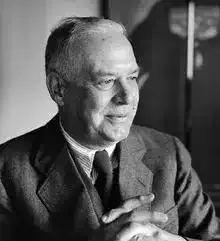
Wallace Stevens
Gray Room
Although you sit in a room that is gray,
Except for the silver
Of the straw-paper,
And pick
At your pale white gown;
Or lift one of the green beads
Of your necklace,
To let it fall;
Or gaze at your green fan
Printed with the red branches of a red willow;
Or, with one finger,
Move the leaf in the bowl--
The leaf that has fallen from the branches of the forsythia
Beside you...
What is all this?
I know how furiously your heart is beating.
314
James Whitcomb Riley
The Bat
I.
Thou dread, uncanny thing,
With fuzzy breast and leathern wing,
In mad, zigzagging flight,
Notching the dusk, and buffeting
The black cheeks of the night,
With grim delight!
II.
What witch's hand unhasps
Thy keen claw-cornered wings
From under the barn roof, and flings
Thee forth, with chattering gasps,
To scud the air,
And nip the lady-bug, and tear
Her children's hearts out unaware?
III.
The glow-worm's glimmer, and the bright,
Sad pulsings of the fire-fly's light,
Are banquet lights to thee.
O less than bird, and worse than beast,
Thou Devil's self, or brat, at least,
Grate not thy teeth at me!
314

John Greenleaf Whittier
Birchbrook Mill
A NOTELESS stream, the Birchbrook runs
Beneath its leaning trees;
That low, soft ripple is its own,
That dull roar is the sea's.
Of human signs it sees alone
The distant church spire's tip,
And, ghost-like, on a blank of gray,
The white sail of a ship.
No more a toiler at the wheel,
It wanders at its will;
Nor dam nor pond is left to tell
Where once was Birchbrook mill.
The timbers of that mill have fed
Long since a farmer's fires;
His doorsteps are the stones that ground
The harvest of his sires.
Man trespassed here; but Nature lost
No right of her domain;
She waited, and she brought the old
Wild beauty back again.
By day the sunlight through the leaves
Falls on its moist, green sod,
And wakes the violet bloom of spring
And autumn's golden-rod.
Its birches whisper to the wind,
The swallow dips her wings
In the cool spray, and on its banks
The gray song-sparrow sings.
But from it, when the dark night falls,
The school-girl shrinks with dread;
The farmer, home-bound from his fields,
Goes by with quickened tread.
They dare not pause to hear the grind
Of shadowy stone on stone;
The plashing of a water-wheel
Where wheel there now is none.
Has not a cry of pain been heard
Above the clattering mill?
The pawing of an unseen horse,
Who waits his mistress still?
Yet never to the listener's eye
Has sight confirmed the sound;
A wavering birch line marks alone
The vacant pasture ground.
No ghostly arms fling up to heaven
The agony of prayer;
No spectral steed impatient shakes
His white mane on the air.
The meaning of that common dread
No tongue has fitly told;
The secret of the dark surmise
The brook and birches hold.
What nameless horror of the past
Broods here forevermore?
What ghost his unforgiven sin
Is grinding o'er and o'er?
Does, then, immortal memory play
The actor's tragic part,
Rehearsals of a mortal life
And unveiled human heart?
God's pity spare a guilty soul
That drama of its ill,
And let the scenic curtain fall
On Birchbrook's haunted mill
313

Emily Dickinson
A doubt if it be Us
A doubt if it be Us
Assists the staggering Mind
In an extremer Anguish
Until it footing find.
An Unreality is lent,
A merciful Mirage
That makes the living possible
While it suspends the lives.
Assists the staggering Mind
In an extremer Anguish
Until it footing find.
An Unreality is lent,
A merciful Mirage
That makes the living possible
While it suspends the lives.
310
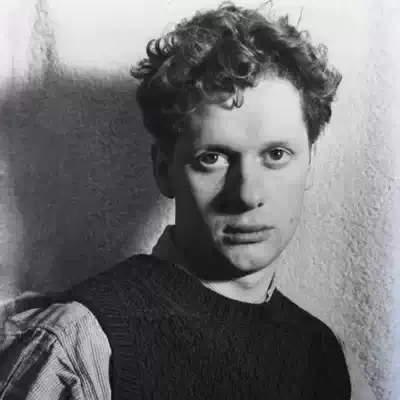
Dylan Thomas
Why East Wind Chills
Why east wind chills and south wind cools
Shall not be known till windwell dries
And west's no longer drowned
In winds that bring the fruit and rind
Of many a hundred falls;
Why silk is soft and the stone wounds
The child shall question all his days,
Why night-time rain and the breast's blood
Both quench his thirst he'll have a black reply.
When cometh Jack Frost? the children ask.
Shall they clasp a comet in their fists?
Not till, from high and low, their dust
Sprinkles in children's eyes a long-last sleep
And dusk is crowded with the children's ghosts,
Shall a white answer echo from the rooftops.
All things are known: the stars' advice
Calls some content to travel with the winds,
Though what the stars ask as they round
Time upon time the towers of the skies
Is heard but little till the stars go out.
I hear content, and 'Be Content'
Ring like a handbell through the corridors,
And 'Know no answer,' and I know
No answer to the children's cry
Of echo's answer and the man of frost
And ghostly comets over the raised fists.
310
Emily Dickinson
The Soul has Bandaged moments
The Soul has Bandaged moments-
When too appalled to stir-
She feels some ghastly Fright come up
And stop to look at her-
Salute her-with long fingers-
Caress her freezing hair-
Sip, Goblin, from the very lips
The Lover-hovered-o'er-
Unworthy, that a thought so mean
Accost a Theme-so-fair-
The soul has moments of Escape-
When bursting all the doors-
She dances like a Bomb, abroad,
And swings upon the Hours,
As do the Bee-delirious borne-
Long Dungeoned from his Rose-
Touch Liberty-then know no more,
But Noon, and Paradise-
The Soul's retaken moments-
When, Felon led along,
With shackles on the plumed feet,
And staples, in the Song,
The Horror welcomes her, again,
These, are not brayed of Tongue-
309
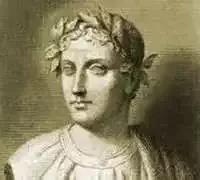
Horácio
BkI:XIV The Ship of State
O ship the fresh tide carries back to sea again.
Where are you going! Quickly, run for harbour.
Can’t you see how your sides
have been stripped bare of oars,
how your shattered masts and yards are groaning loudly
in the swift south-westerly, and bare of rigging,
your hull can scarce tolerate
the overpowering waters?
You haven’t a single sail that’s still intact now,
no gods, that people call to when they’re in trouble.
Though you’re built of Pontic pine,
a child of those famous forests,
though you can boast of your race, and an idle name:
the fearful sailor puts no faith in gaudy keels.
You must beware of being
merely a plaything of the winds.
You, who not long ago were troubling weariness
to me, and now are my passion and anxious care,
avoid the glistening seas
between the shining Cyclades.
308

Henry Wadsworth Longfellow
Tales Of A Wayside Inn : Part 2. The Musician's Tale; The Ballad of Carmilhan -
IV.
And now along the horizon's edge
Mountains of cloud uprose,
Black as with forests underneath,
Above their sharp and jagged teeth
Were white as drifted snows.
Unseen behind them sank the sun,
But flushed each snowy peak
A little while with rosy light
That faded slowly from the sight
As blushes from the cheek.
Black grew the sky,--all black, all black;
The clouds were everywhere;
There was a feeling of suspense
In nature, a mysterious sense
Of terror in the air.
And all on board the Valdemar
Was still as still could be;
Save when the dismal ship-bell tolled,
As ever and anon she rolled,
And lurched into the sea.
The captain up and down the deck
Went striding to and fro;
Now watched the compass at the wheel,
Now lifted up his hand to feel
Which way the wind might blow.
And now he looked up at the sails,
And now upon the deep;
In every fibre of his frame
He felt the storm before it came,
He had no thought of sleep.
Eight bells! and suddenly abaft,
With a great rush of rain,
Making the ocean white with spume,
In darkness like the day of doom,
On came the hurricane.
The lightning flashed from cloud to cloud,
And rent the sky in two;
A jagged flame, a single jet
Of white fire, like a bayonet_
That pierced the eyeballs through.
Then all around was dark again,
And blacker than before;
But in that single flash of light
He had beheld a fearful sight,
And thought of the oath he swore.
For right ahead lay the Ship of the Dead,
The ghostly Carmilhan!
Her masts were stripped, her yards were bare,
And on her bowsprit, poised in air,
Sat the Klaboterman.
Her crew of ghosts was all on deck
Or clambering up the shrouds;
The boatswain's whistle, the captain's hail,
Were like the piping of the gale,
And thunder in the clouds.
And close behind the Carmilhan
There rose up from the sea,
As from a foundered ship of stone,
Three bare and splintered masts alone:
They were the Chimneys Three.
And onward dashed the Valdemar
And leaped into the dark;
A denser mist, a colder blast,
A little shudder, and she had passed
Right through the Phantom Bark.
She cleft in twain the shadowy hulk,
But cleft it unaware;
As when, careering to her nest,
The sea-gull severs with her breast
The unresisting air.
Again the lightning flashed; again
They saw the Carmilhan,
Whole as before in hull and spar;
But now on board of the Valdemar
Stood the Klaboterman.
And they all knew their doom was sealed;
They knew that death was near;
Some prayed who never prayed before,
And some they wept, and some they swore,
And some were mute with fear.
Then suddenly there came a shock,
And louder than wind or sea
A cry burst from the crew on deck,
As she dashed and crashed, a hopeless wreck,
Upon the Chimneys Three.
The storm and night were passed, the light
To streak the east began;
The cabin-boy, picked up at sea,
Survived the wreck, and only he,
To tell of the Carmilhan.
309
Emily Dickinson
One need not be a chamber to be haunted
One need not be a chamber to be haunted,
One need not be a house;
The brain has corridors surpassing
Material place.
Far safer, of a midnight meeting
External ghost,
Than an interior confronting
That whiter host.
Far safer through an Abbey gallop,
The stones achase,
Than, moonless, one's own self encounter
In lonesome place.
Ourself, behind ourself concealed,
Should startle most;
Assassin, hid in our apartment,
Be horror's least.
The prudent carries a revolver,
He bolts the door,
O'erlooking a superior spectre
More near.
306

William Butler Yeats
To His Heart, Bidding It Have No Fear
BE you still, be you still, trembling heart;
Remember the wisdom out of the old days:
Him who trembles before the flame and the flood,
And the winds that blow through the starry ways,
Let the starry winds and the flame and the flood
Cover over and hide, for he has no part
With the lonely, majestical multitude.
Remember the wisdom out of the old days:
Him who trembles before the flame and the flood,
And the winds that blow through the starry ways,
Let the starry winds and the flame and the flood
Cover over and hide, for he has no part
With the lonely, majestical multitude.
306
Emily Dickinson
An awful Tempest mashed the air
An awful Tempest mashed the air-
The clouds were gaunt, and few-
A Black-as of a Spectre's Cloak
Hid Heaven and Earth from view.
The creatures chuckled on the Roofs-
And whistled in the air-
And shook their fists-
And gnashed their teeth-
And swung their frenzied hair.
The morning lit-the Birds arose-
The Monster's faded eyes
Turned slowly to his native coast-
And peace-was Paradise!
303
Emily Dickinson
The Heart has narrow Banks
The Heart has narrow Banks
It measures like the Sea
In mighty-unremitting Bass
And Blue Monotony
Till Hurricane bisect
And as itself discerns
Its sufficient Area
The Heart convulsive learns
That Calm is but a Wall
Of unattempted Gauze
An instant's Push demolishes
A Questioning-dissolves.
It measures like the Sea
In mighty-unremitting Bass
And Blue Monotony
Till Hurricane bisect
And as itself discerns
Its sufficient Area
The Heart convulsive learns
That Calm is but a Wall
Of unattempted Gauze
An instant's Push demolishes
A Questioning-dissolves.
304
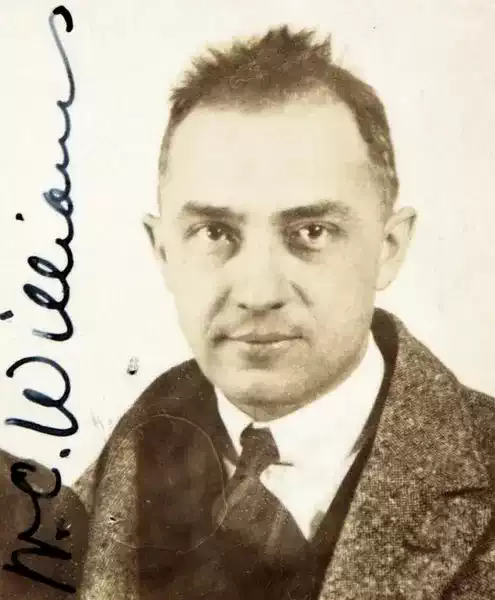
William Carlos Williams
The Great Figure
Among the rain
and lights
I saw the figure
in gold
on a red
firetruck
moving
tense
unheeded
to gong clangs
siren howls
and wheels rumbling
through the dark city.
and lights
I saw the figure
in gold
on a red
firetruck
moving
tense
unheeded
to gong clangs
siren howls
and wheels rumbling
through the dark city.
304
Dylan Thomas
Especially When the October Wind
Especially when the October wind
With frosty fingers punishes my hair,
Caught by the crabbing sun I walk on fire
And cast a shadow crab upon the land,
By the sea's side, hearing the noise of birds,
Hearing the raven cough in winter sticks,
My busy heart who shudders as she talks
Sheds the syllabic blood and drains her words.
Shut, too, in a tower of words, I mark
On the horizon walking like the trees
The wordy shapes of women, and the rows
Of the star-gestured children in the park.
Some let me make you of the vowelled beeches,
Some of the oaken voices, from the roots
Of many a thorny shire tell you notes,
Some let me make you of the water's speeches.
Behind a pot of ferns the wagging clock
Tells me the hour's word, the neural meaning
Flies on the shafted disk, declaims the morning
And tells the windy weather in the cock.
Some let me make you of the meadow's signs;
The signal grass that tells me all I know
Breaks with the wormy winter through the eye.
Some let me tell you of the raven's sins.
Especially when the October wind
(Some let me make you of autumnal spells,
The spider-tongued, and the loud hill of Wales)
With fists of turnips punishes the land,
Some let me make you of the heartless words.
The heart is drained that, spelling in the scurry
Of chemic blood, warned of the coming fury.
By the sea's side hear the dark-vowelled birds.
302
Emily Dickinson
The Loneliness One dare not sound
The Loneliness One dare not sound-
And would as soon surmise
As in its Grave go plumbing
To ascertain the size-
The Loneliness whose worst alarm
Is lest itself should see-
And perish from before itself
For just a scrutiny-
The Horror not to be surveyed-
But skirted in the Dark-
With Consciousness suspended-
And Being under Lock-
I fear me this-is Loneliness-
The Maker of the soul
Its Caverns and its Corridors
Illuminate-or seal-
299

Henry Lawson
The Drovers
Shrivelled leather, rusty buckles, and the rot is in our knuckles,
Scorched for months upon the pommel while the brittle rein hung free;
Shrunken eyes that once were lighted with fresh boyhood, dull and blighted—
And the sores upon our eyelids are unpleasant sights to see.
And our hair is thin and dying from the ends, with too long lying
In the night dews on the ashes of the Dry Countree.
Yes, we’ve seen ’em ‘bleaching whitely’ where the salt-bush sparkles brightly,
But their grins were over-friendly, so we passed and let them be.
And we’ve seen them ‘rather recent,’ and we’ve stopped to hide ’em decent
When they weren’t nice to handle and they weren’t too nice to see;
We have heard the dry bones rattle under fifteen hundred cattle—
Seen the rags go up in dust-clouds and the brittle joints kicked free;
But there’s little time to tarry, if you wish to live and marry,
When the cattle shy at something in the Dry Countree.
No, you needn’t fear the blacks on the Never Never tracks—
For the Myall in his freedom’s an uncommon sight to see;
Oh! we do not stick at trifles—and the trackers sneak their rifles,
And go strolling in the gloaming while the sergeant’s yarning free:
Round the Myalls creep the trackers—there’s a sound like firing crackers
And—the blacks are getting scarcer in the Dry Countree.
(Goes an unprotected maiden-’cross the clearing carrion-laden—
Oh they ride ’em down on horseback in the Dry Countree.)
But you don’t know what might happen when a tank is but a trap on
Roofs of hell, and there is nothing but the blaze of hell to see;
And the phantom water’s lapping—and no limb for saddle-strapping—
Better carry your revolver through the Dry Countree.
But I’m feeling gay and frisky, come with me and have a whisky!
Change of hells is all we live for (that’s my mate that’s got D.T.);
We have fought through hell’s own weather, he and I and death together—
Oh, the devil grins to greet us from the Dry Countree!
293

Robert W. Service
The Ballad Of The Black Fox Skin
I
There was Claw-fingered Kitty and Windy Ike living the life of shame,
When unto them in the Long, Long Night came the man-who-had-no-name;
Bearing his prize of a black fox pelt, out of the Wild he came.
His cheeks were blanched as the flume-head foam when the brown spring freshets
flow;
Deep in their dark, sin-calcined pits were his sombre eyes aglow;
They knew him far for the fitful man who spat forth blood on the snow.
"Did ever you see such a skin?" quoth he; "there's nought in the world so fine--
Such fullness of fur as black as the night, such lustre, such size, such shine;
It's life to a one-lunged man like me; it's London, it's women, it's wine.
"The Moose-hides called it the devil-fox, and swore that no man could kill;
That he who hunted it, soon or late, must surely suffer some ill;
But I laughed at them and their old squaw-tales. Ha! Ha! I'm laughing still.
"For look ye, the skin--it's as smooth as sin, and black as the core of the Pit.
By gun or by trap, whatever the hap, I swore I would capture it;
By star and by star afield and afar, I hunted and would not quit.
"For the devil-fox, it was swift and sly, and it seemed to fleer at me;
I would wake in fright by the camp-fire light, hearing its evil glee;
Into my dream its eyes would gleam, and its shadow would I see.
"It sniffed and ran from the ptarmigan I had poisoned to excess;
Unharmed it sped from my wrathful lead ('twas as if I shot by guess);
Yet it came by night in the stark moonlight to mock at my weariness.
"I tracked it up where the mountains hunch like the vertebrae of the world;
I tracked it down to the death-still pits where the avalanche is hurled;
From the glooms to the sacerdotal snows, where the carded clouds are curled.
"From the vastitudes where the world protrudes through clouds like seas up-shoaled,
I held its track till it led me back to the land I had left of old--
The land I had looted many moons. I was weary and sick and cold.
"I was sick, soul-sick, of the futile chase, and there and then I swore
The foul fiend fox might scathless go, for I would hunt no more;
Then I rubbed mine eyes in a vast surprise--it stood by my cabin door.
"A rifle raised in the wraith-like gloom, and a vengeful shot that sped;
A howl that would thrill a cream-faced corpse-- and the demon fox lay dead. . . .
Yet there was never a sign of wound, and never a drop he bled.
"So that was the end of the great black fox, and here is the prize I've won;
And now for a drink to cheer me up--I've mushed since the early sun;
We'll drink a toast to the sorry ghost of the fox whose race is run."
II
Now Claw-fingered Kitty and Windy Ike, bad as the worst were they;
In their road-house down by the river-trail they waited and watched for prey;
With wine and song they joyed night long, and they slept like swine by day.
For things were done in the Midnight Sun that no tongue will ever tell;
And men there be who walk earth-free, but whose names are writ in hell--
Are writ in flames with the guilty names of Fournier and Labelle.
Put not your trust in a poke of dust would ye sleep the sleep of sin;
For there be those who would rob your clothes ere yet the dawn comes in;
And a prize likewise in a woman's eyes is a peerless black fox skin.
Put your faith in the mountain cat if you lie within his lair;
Trust the fangs of the mother-wolf, and the claws of the lead-ripped bear;
But oh, of the wiles and the gold-tooth smiles of a dance-hall wench beware!
Wherefore it was beyond all laws that lusts of man restrain,
A man drank deep and sank to sleep never to wake again;
And the Yukon swallowed through a hole the cold corpse of the slain.
III
The black fox skin a shadow cast from the roof nigh to the floor;
And sleek it seemed and soft it gleamed, and the woman stroked it o'er;
And the man stood by with a brooding eye, and gnashed his teeth and swore.
When thieves and thugs fall out and fight there's fell arrears to pay;
And soon or late sin meets its fate, and so it fell one day
That Claw-fingered Kitty and Windy Ike fanged up like dogs at bay.
"The skin is mine, all mine," she cried; "I did the deed alone."
"It's share and share with a guilt-yoked pair", he hissed in a pregnant tone;
And so they snarled like malamutes over a mildewed bone.
And so they fought, by fear untaught, till haply it befell
One dawn of day she slipped away to Dawson town to sell
The fruit of sin, this black fox skin that had made their lives a hell.
She slipped away as still he lay, she clutched the wondrous fur;
Her pulses beat, her foot was fleet, her fear was as a spur;
She laughed with glee, she did not see him rise and follow her.
The bluffs uprear and grimly peer far over Dawson town;
They see its lights a blaze o' nights and harshly they look down;
They mock the plan and plot of man with grim, ironic frown.
The trail was steep; 'twas at the time when swiftly sinks the snow;
All honey-combed, the river ice was rotting down below;
The river chafed beneath its rind with many a mighty throe.
And up the swift and oozy drift a woman climbed in fear,
Clutching to her a black fox fur as if she held it dear;
And hard she pressed it to her breast--then Windy Ike drew near.
She made no moan--her heart was stone--she read his smiling face,
And like a dream flashed all her life's dark horror and disgrace;
A moment only--with a snarl he hurled her into space.
She rolled for nigh an hundred feet; she bounded like a ball;
From crag to crag she carromed down through snow and timber fall; . . .
A hole gaped in the river ice; the spray flashed--that was all.
A bird sang for the joy of spring, so piercing sweet and frail;
And blinding bright the land was dight in gay and glittering mail;
And with a wondrous black fox skin a man slid down the trail.
IV
A wedge-faced man there was who ran along the river bank,
Who stumbled through each drift and slough, and ever slipped and sank,
And ever cursed his Maker's name, and ever "hooch" he drank.
He travelled like a hunted thing, hard harried, sore distrest;
The old grandmother moon crept out from her cloud-quilted nest;
The aged mountains mocked at him in their primeval rest.
Grim shadows diapered the snow; the air was strangely mild;
The valley's girth was dumb with mirth, the laughter of the wild;
The still, sardonic laughter of an ogre o'er a child.
The river writhed beneath the ice; it groaned like one in pain,
And yawning chasms opened wide, and closed and yawned again;
And sheets of silver heaved on high until they split in twain.
From out the road-house by the trail they saw a man afar
Make for the narrow river-reach where the swift cross-currents are;
Where, frail and worn, the ice is torn and the angry waters jar.
But they did not see him crash and sink into the icy flow;
They did not see him clinging there, gripped by the undertow,
Clawing with bleeding finger-nails at the jagged ice and snow.
They found a note beside the hole where he had stumbled in:
"Here met his fate by evil luck a man who lived in sin,
And to the one who loves me least I leave this black fox skin."
And strange it is; for, though they searched the river all around,
No trace or sign of black fox skin was ever after found;
Though one man said he saw the tread of HOOFS deep in the ground.
293
William Butler Yeats
The Chambermaid's First Song
HOW came this ranger
Now sunk in rest,
Stranger with strangcr.
On my cold breast?
What's left to Sigh for?
Strange night has come;
God's love has hidden him
Out of all harm,
Pleasure has made him
Weak as a worm.
Now sunk in rest,
Stranger with strangcr.
On my cold breast?
What's left to Sigh for?
Strange night has come;
God's love has hidden him
Out of all harm,
Pleasure has made him
Weak as a worm.
290

Ogden Nash
The Praying Mantis
From whence arrived the praying mantis?
From outer space, or lost Atlantis?
glimpse the grin, green metal mug
at masks the pseudo-saintly bug,
Orthopterous, also carnivorous,
And faintly whisper, Lord deliver us.
From outer space, or lost Atlantis?
glimpse the grin, green metal mug
at masks the pseudo-saintly bug,
Orthopterous, also carnivorous,
And faintly whisper, Lord deliver us.
289

Thomas Hardy
The Alarm
In Memory of one of the Writer's Family who was a Volunteer during the War
with Napoleon
In a ferny byway
Near the great South-Wessex Highway,
A homestead raised its breakfast-smoke aloft;
The dew-damps still lay steamless, for the sun had made no sky-way,
And twilight cloaked the croft.
'Twas hard to realize on
This snug side the mute horizon
That beyond it hostile armaments might steer,
Save from seeing in the porchway a fair woman weep with eyes on
A harnessed Volunteer.
In haste he'd flown there
To his comely wife alone there,
While marching south hard by, to still her fears,
For she soon would be a mother, and few messengers were known there
In these campaigning years.
'Twas time to be Good-bying,
Since the assembly-hour was nighing
In royal George's town at six that morn;
And betwixt its wharves and this retreat were ten good miles of hieing
Ere ring of bugle-horn.
"I've laid in food, Dear,
And broached the spiced and brewed, Dear;
And if our July hope should antedate,
Let the char-wench mount and gallop by the halterpath and wood, Dear,
And fetch assistance straight.
"As for Buonaparte, forget him;
He's not like to land! But let him,
Those strike with aim who strike for wives and sons!
And the war-boats built to float him; 'twere but wanted to upset him
A slat from Nelson's guns!
"But, to assure thee,
And of creeping fears to cure thee,
If he should be rumored anchoring in the Road,
Drive with the nurse to Kingsbere; and let nothing thence allure thee
Till we've him safe-bestowed.
"Now, to turn to marching matters:--
I've my knapsack, firelock, spatters,
Crossbelts, priming-horn, stock, bay'net, blackball, clay,
Pouch, magazine, flints, flint-box that at every quick-step clatters;
...My heart, Dear; that must stay!"
--With breathings broken
Farewell was kissed unspoken,
And they parted there as morning stroked the panes;
And the Volunteer went on, and turned, and twirled his glove for
token,
And took the coastward lanes.
When above He'th Hills he found him,
He saw, on gazing round him,
The Barrow-Beacon burning--burning low,
As if, perhaps, uplighted ever since he'd homeward bound him;
And it meant: Expect the Foe!
Leaving the byway,
And following swift the highway,
Car and chariot met he, faring fast inland;
"He's anchored, Soldier!" shouted some:
"God save thee, marching thy way,
Th'lt front him on the strand!"
He slowed; he stopped; he paltered
Awhile with self, and faltered,
"Why courting misadventure shoreward roam?
To Molly, surely! Seek the woods with her till times have altered;
Charity favors home.
"Else, my denying
He would come she'll read as lying--
Think the Barrow-Beacon must have met my eyes--
That my words were not unwareness, but deceit of her, while trying
My life to jeopardize.
"At home is stocked provision,
And to-night, without suspicion,
We might bear it with us to a covert near;
Such sin, to save a childing wife, would earn it Christ's remission,
Though none forgive it here!"
While thus he, thinking,
A little bird, quick drinking
Among the crowfoot tufts the river bore,
Was tangled in their stringy arms, and fluttered, well-nigh sinking,
Near him, upon the moor.
He stepped in, reached, and seized it,
And, preening, had released it
But that a thought of Holy Writ occurred,
And Signs Divine ere battle, till it seemed him Heaven had pleased it
As guide to send the bird.
"O Lord, direct me!...
Doth Duty now expect me
To march a-coast, or guard my weak ones near?
Give this bird a flight according, that I thence know to elect me
The southward or the rear."
He loosed his clasp; when, rising,
The bird--as if surmising--
Bore due to southward, crossing by the Froom,
And Durnover Great-Field and Fort, the soldier clear advising--
Prompted he wist by Whom.
Then on he panted
By grim Mai-Don, and slanted
Up the steep Ridge-way, hearkening betwixt whiles,
Till, nearing coast and harbor, he beheld the shore-line planted
With Foot and Horse for miles.
Mistrusting not the omen,
He gained the beach, where Yeomen,
Militia, Fencibles, and Pikemen bold,
With Regulars in thousands, were enmassed to meet the Foemen,
Whose fleet had not yet shoaled.
Captain and Colonel,
Sere Generals, Ensigns vernal,
Were there, of neighbor-natives, Michel, Smith,
Meggs, Bingham, Gambier, Cunningham, roused by the hued nocturnal
Swoop on their land and kith.
But Buonaparte still tarried;
His project had miscarried;
At the last hour, equipped for victory,
The fleet had paused; his subtle combinations had been parried
By British strategy.
Homeward returning
Anon, no beacons burning,
No alarms, the Volunteer, in modest bliss,
Te Deum sang with wife and friends: "We praise Thee, Lord, discerning
That Thou hast helped in this!"
290

Gwendolyn Brooks
A Sunset of the City
Already I am no longer looked at with lechery or love.
My daughters and sons have put me away with marbles and dolls,
Are gone from the house.
My husband and lovers are pleasant or somewhat polite
And night is night.
It is a real chill out,
The genuine thing.
I am not deceived, I do not think it is still summer
Because sun stays and birds continue to sing.
It is summer-gone that I see, it is summer-gone.
The sweet flowers indrying and dying down,
The grasses forgetting their blaze and consenting to brown.
It is a real chill out. The fall crisp comes
I am aware there is winter to heed.
There is no warm house
That is fitted with my need.
I am cold in this cold house this house
Whose washed echoes are tremulous down lost halls.
I am a woman, and dusty, standing among new affairs.
I am a woman who hurries through her prayers.
Tin intimations of a quiet core to be my
Desert and my dear relief
Come: there shall be such islanding from grief,
And small communion with the master shore.
Twang they. And I incline this ear to tin,
Consult a dual dilemma. Whether to dry
In humming pallor or to leap and die.
Somebody muffed it?? Somebody wanted to joke.
282
Emily Dickinson
I lived on dread; to those who know
I lived on dread; to those who know
The stimulus there is
In danger, other impetus
Is numb and vital-less.
As't were a spur upon the soul,
A fear will urge it where
To go without the spectre's aid
Were challenging despair.
The stimulus there is
In danger, other impetus
Is numb and vital-less.
As't were a spur upon the soul,
A fear will urge it where
To go without the spectre's aid
Were challenging despair.
283
Emily Dickinson
That after Horror—that 'twas us
That after Horror—that 'twas us—
That passed the mouldering Pier—
Just as the Granite Crumb let go—
Our Savior, by a Hair—
A second more, had dropped too deep
For Fisherman to plumb—
The very profile of the Thought
Puts Recollection numb—
The possibility—to pass
Without a Moment's Bell—
Into Conjecture's presence—
Is like a Face of Steel—
That suddenly looks into ours
With a metallic grin—
The Cordiality of Death—
Who drills his Welcome in—
281