
Memories and Recollections

Robert Louis Stevenson
The Dumb Soldier
When the grass was closely mown,
Walking on the lawn alone,
In the turf a hole I found
And hid a soldier underground.
Spring and daisies came apace;
Grasses hid my hiding-place;
Grasses run like a green sea
O'er the lawn up to my knee.
Under grass alone he lies,
Looking up with leaden eyes,
Scarlet coat and pointed gun,
To the stars and to the sun.
When the grass is ripe like grain,
When the scythe is stoned again,
When the lawn is shaven clear,
Then my hole shall reappear.
I shall find him, never fear,
I shall find my grenadier;
But, for all that's gone and come,
I shall find my soldier dumb.
He has lived, a little thing,
In the grassy woods of spring;
Done, if he could tell me true,
Just as I should like to do.
He has seen the starry hours
And the springing of the flowers;
And the fairy things that pass
In the forests of the grass.
In the silence he has heard
Talking bee and ladybird,
And the butterfly has flown
O'er him as he lay alone.
Not a word will he disclose,
Not a word of all he knows.
I must lay him on the shelf,
And make up the tale myself.
336

John Greenleaf Whittier
A Sea Dream
We saw the slow tides go and come,
The curving surf-lines lightly drawn,
The gray rocks touched with tender bloom
Beneath the fresh-blown rose of dawn.
We saw in richer sunsets lost
The sombre pomp of showery noons;
And signalled spectral sails that crossed
The weird, low light of rising moons.
On stormy eves from cliff and head
We saw the white spray tossed and spurned;
While over all, in gold and red,
Its face of fire the lighthouse turned.
The rail-car brought its daily crowds,
Half curious, half indifferent,
Like passing sails or floating clouds,
We saw them as they came and went.
But, one calm morning, as we lay
And watched the mirage-lifted wall
Of coast, across the dreamy bay,
And heard afar the curlew call,
And nearer voices, wild or tame,
Of airy flock and childish throng,
Up from the water's edge there came
Faint snatches of familiar song.
Careless we heard the singer's choice
Of old and common airs; at last
The tender pathos of his voice
In one low chanson held us fast.
A song that mingled joy and pain,
And memories old and sadly sweet;
While, timing to its minor strain,
The waves in lapsing cadence beat.
. . . . .
The waves are glad in breeze and sun;
The rocks are fringed with foam;
I walk once more a haunted shore,
A stranger, yet at home,
A land of dreams I roam.
Is this the wind, the soft sea wind
That stirred thy locks of brown?
Are these the rocks whose mosses knew
The trail of thy light gown,
Where boy and girl sat down?
I see the gray fort's broken wall,
The boats that rock below;
And, out at sea, the passing sails
We saw so long ago
Rose-red in morning's glow.
The freshness of the early time
On every breeze is blown;
As glad the sea, as blue the sky,-The
change is ours alone;
The saddest is my own.
A stranger now, a world-worn man,
Is he who bears my name;
But thou, methinks, whose mortal life
Immortal youth became,
Art evermore the same.
Thou art not here, thou art not there,
Thy place I cannot see;
I only know that where thou art
The blessed angels be,
And heaven is glad for thee.
Forgive me if the evil years
Have left on me their sign;
Wash out, O soul so beautiful,
The many stains of mine
In tears of love divine!
I could not look on thee and live,
If thou wert by my side;
The vision of a shining one,
The white and heavenly bride,
Is well to me denied.
But turn to me thy dear girl-face
Without the angel's crown,
The wedded roses of thy lips,
Thy loose hair rippling down
In waves of golden brown.
Look forth once more through space and time,
And let thy sweet shade fall
In tenderest grace of soul and form
On memory's frescoed wall,
A shadow, and yet all!
Draw near, more near, forever dear!
Where'er I rest or roam,
Or in the city's crowded streets,
Or by the blown sea foam,
The thought of thee is home!
. . . . .
At breakfast hour the singer read
The city news, with comment wise,
Like one who felt the pulse of trade
Beneath his finger fall and rise.
His look, his air, his curt speech, told
The man of action, not of books,
To whom the corners made in gold
And stocks were more than seaside nooks.
Of life beneath the life confessed
His song had hinted unawares;
Of flowers in traffic's ledgers pressed,
Of human hearts in bulls and bears.
But eyes in vain were turned to watch
That face so hard and shrewd and strong;
And ears in vain grew sharp to catch
The meaning of that morning song.
In vain some sweet-voiced querist sought
To sound him, leaving as she came;
Her baited album only caught
A common, unromantic name.
No word betrayed the mystery fine,
That trembled on the singer's tongue;
He came and went, and left no sign
Behind him save the song he sung.
335
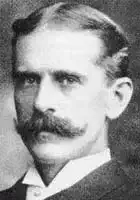
Henry Van Dyke
Hudson's Last Voyage
June 22, 1611
THE SHALLOP ON HUDSON BAY
One sail in sight upon the lonely sea
And only one, God knows! For never ship
But mine broke through the icy gates that guard
These waters, greater grown than any since
We left the shores of England. We were first,
My men, to battle in between the bergs
And floes to these wide waves. This gulf is mine;
I name it! and that flying sail is mine!
And there, hull-down below that flying sail,
The ship that staggers home is mine, mine, mine!
My ship Discoverie!
The sullen dogs
Of mutineers, the bitches' whelps that snatched
Their food and bit the hand that nourished them,
Have stolen her. You ingrate Henry Greene,
I picked you from the gutter of Houndsditch,
And paid your debts, and kept you in my house,
And brought you here to make a man of you!
You Robert Juet, ancient, crafty man,
Toothless and tremulous, how many times
Have I employed you as a master's mate
To give you bread? And you Abacuck Prickett,
You sailor-clerk, you salted puritan,
You knew the plot and silently agreed,
Salving your conscience with a pious lie!
Yes, all of you -- hounds, rebels, thieves! Bring back
My ship!
Too late, -- I rave, -- they cannot hear
My voice: and if they heard, a drunken laugh
Would be their answer; for their minds have caught
The fatal firmness of the fool's resolve,
That looks like courage but is only fear.
They'll blunder on, and lose my ship, and drown, --
Or blunder home to England and be hanged.
Their skeletons will rattle in the chains
Of some tall gibbet on the Channel cliffs,
While passing mariners look up and say:
"Those are the rotten bones of Hudson's men
"Who left their captain in the frozen North!"
O God of justice, why hast Thou ordained
Plans of the wise and actions of the brave
Dependent on the aid of fools and cowards?
Look, -- there she goes, -- her topsails in the sun
Gleam from the ragged ocean edge, and drop
Clean out of sight! So let the traitors go
Clean out of mind! We'll think of braver things!
Come closer in the boat, my friends. John King,
You take the tiller, keep her head nor'west.
You Philip Staffe, the only one who chose
Freely to share our little shallop's fate,
Rather than travel in the hell-bound ship, --
Too good an English seaman to desert
These crippled comrades, -- try to make them rest
More easy on the thwarts. And John, my son,
My little shipmate, come and lean your head
Against your father's knee. Do you recall
That April morn in Ethelburga's church,
Five years ago, when side by side we kneeled
To take the sacrament with all our men,
Before the Hopewell left St. Catherine's docks
On our first voyage? It was then I vowed
My sailor-soul and years to search the sea
Until we found the water-path that leads
From Europe into Asia.
I believe
That God has poured the ocean round His world,
Not to divide, but to unite the lands.
And all the English captains that have dared
In little ships to plough uncharted waves, --
Davis and Drake, Hawkins and Frobisher,
Raleigh and Gilbert, -- all the other names, --
Are written in the chivalry of God
As men who served His purpose. I would claim
A place among that knighthood of the sea;
And I have earned it, though my quest should fail!
For, mark me well, the honour of our life
Derives from this: to have a certain aim
Before us always, which our will must seek
Amid the peril of uncertain ways.
Then, though we miss the goal, our search is crowned
With courage, and we find along our path
A rich reward of unexpected things.
Press towards the aim: take fortune as it fares!
I know not why, but something in my heart
Has always whispered, "Westward seek your goal!"
Three times they sent me east, but still I turned
The bowsprit west, and felt among the floes
Of ruttling ice along the Gröneland coast,
And down the rugged shore of Newfoundland,
And past the rocky capes and wooded bays
Where Gosnold sailed, -- like one who feels his way
With outstretched hand across a darkened room, --
I groped among the inlets and the isles,
To find the passage to the Land of Spice.
I have not found it yet, -- but I have found
Things worth the finding!
Son, have you forgot
Those mellow autumn days, two years ago,
When first we sent our little ship Half-Moon, --
The flag of Holland floating at her peak, --
Across a sandy bar, and sounded in
Among the channels, to a goodly bay
Where all the navies of the world could ride?
A fertile island that the redmen called
Manhattan, lay above the bay: the land
Around was bountiful and friendly fair.
But never land was fair enough to hold
The seaman from the calling of the sea.
And so we bore to westward of the isle,
Along a mighty inlet, where the tide
Was troubled by a downward-flowing flood
That seemed to come from far away, -- perhaps
From some mysterious gulf of Tartary?
Inland we held our course; by palisades
Of naked rock where giants might have built
Their fortress; and by rolling hills adorned
With forests rich in timber for great ships;
Through narrows where the mountains shut us in
With frowning cliffs that seemed to bar the stream;
And then through open reaches where the banks
Sloped to the water gently, with their fields
Of corn and lentils smiling in the sun.
Ten days we voyaged through that placid land,
Until we came to shoals, and sent a boat
Upstream to find, -- what I already knew, --
We travelled on a river, not a strait.
But what a river! God has never poured
A stream more royal through a land more rich.
Even now I see it flowing in my dream,
While coming ages people it with men
Of manhood equal to the river's pride.
I see the wigwams of the redmen changed
To ample houses, and the tiny plots
Of maize and green tobacco broadened out
To prosperous farms, that spread o'er hill and dale
The many-coloured mantle of their crops;
I see the terraced vineyard on the slope
Where now the fox-grape loops its tangled vine;
And cattle feeding where the red deer roam;
And wild-bees gathered into busy hives,
To store the silver comb with golden sweet;
And all the promised land begins to flow
With milk and honey. Stately manors rise
Along the banks, and castles top the hills,
And little villages grow populous with trade,
Until the river runs as proudly as the Rhine, --
The thread that links a hundred towns and towers!
And looking deeper in my dream, I see
A mighty city covering the isle
They call Manhattan, equal in her state
To all the older capitals of earth, --
The gateway city of a golden world, --
A city girt with masts, and crowned with spires,
And swarming with a host of busy men,
While to her open door across the bay
The ships of all the nations flock like doves.
My name will be remembered there, for men
Will say, "This river and this isle were found
By Henry Hudson, on his way to seek
The Northwest Passage into Farthest Inde."
Yes! yes! I sought it then, I seek it still, --
My great adventure and my guiding star!
For look ye, friends, our voyage is not done;
We hold by hope as long as life endures!
Somewhere among these floating fields of ice,
Somewhere along this westward widening bay,
Somewhere beneath this luminous northern night,
The channel opens to the Orient, --
I know it, -- and some day a little ship
Will push her bowsprit in, and battle through!
And why not ours, -- to-morrow, -- who can tell?
The lucky chance awaits the fearless heart!
These are the longest days of all the year;
The world is round and God is everywhere,
And while our shallop floats we still can steer.
So point her up, John King, nor'west by north.
We 'l1 keep the honour of a certain aim
Amid the peril of uncertain ways,
And sail ahead, and leave the rest to God.
333

Henry Wadsworth Longfellow
To an Old Danish Song-Book
Welcome, my old friend,
Welcome to a foreign fireside,
While the sullen gales of autumn
Shake the windows.
The ungrateful world
Has, it seems, dealt harshly with thee,
Since, beneath the skies of Denmark,
First I met thee.
There are marks of age,
There are thumb-marks on thy margin,
Made by hands that clasped thee rudely,
At the alehouse.
Soiled and dull thou art;
Yellow are thy time-worn pages,
As the russet, rain-molested
Leaves of autumn.
Thou art stained with wine
Scattered from hilarious goblets,
As the leaves with the libations
Of Olympus.
Yet dost thou recall
Days departed, half-forgotten,
When in dreamy youth I wandered
By the Baltic,--
When I paused to hear
The old ballad of King Christian
Shouted from suburban taverns
In the twilight.
Thou recallest bards,
Who in solitary chambers,
And with hearts by passion wasted,
Wrote thy pages.
Thou recallest homes
Where thy songs of love and friendship
Made the gloomy Northern winter
Bright as summer.
Once some ancient Scald,
In his bleak, ancestral Iceland,
Chanted staves of these old ballads
To the Vikings.
Once in Elsinore,
At the court of old King Hamlet
Yorick and his boon companions
Sang these ditties.
Once Prince Frederick's Guard
Sang them in their smoky barracks;--
Suddenly the English cannon
Joined the chorus!
Peasants in the field,
Sailors on the roaring ocean,
Students, tradesmen, pale mechanics,
All have sung them.
Thou hast been their friend;
They, alas! have left thee friendless!
Yet at least by one warm fireside
Art thou welcome.
And, as swallows build
In these wide, old-fashioned chimneys,
So thy twittering songs shall nestle
In my bosom,--
Quiet, close, and warm,
Sheltered from all molestation,
And recalling by their voices
Youth and travel.
333

Lord Byron
Lines Written On A Blank Leaf Of 'The Pleasures Of Memory'
Absent or present, still to thee,
My friend, what magic spells belong!
As all can tell, who share, like me,
In turn thy converse and thy song.
But when the dreaded hour shall come
By Friendship ever deem'd too nigh,
And `MEMORY' o'er her Druid's tomb
Shall weep that aught of thee can die,
How fondly will she then repay
Thy homage offer'd at her shrine, to
And blend, while ages roll away,
Her name immortally with thine!
April 19, 1812
334
Henry Wadsworth Longfellow
The Bells Of San Blas
What say the Bells of San Blas
To the ships that southward pass
From the harbor of Mazatlan?
To them it is nothing more
Than the sound of surf on the shore,--
Nothing more to master or man.
But to me, a dreamer of dreams,
To whom what is and what seems
Are often one and the same,--
The Bells of San Blas to me
Have a strange, wild melody,
And are something more than a name.
For bells are the voice of the church;
They have tones that touch and search
The hearts of young and old;
One sound to all, yet each
Lends a meaning to their speech,
And the meaning is manifold.
They are a voice of the Past,
Of an age that is fading fast,
Of a power austere and grand,
When the flag of Spain unfurled
Its folds o'er this western world,
And the Priest was lord of the land.
The chapel that once looked down
On the little seaport town
Has crumbled into the dust;
And on oaken beams below
The bells swing to and fro,
And are green with mould and rust.
'Is, then, the old faith dead,'
They say, 'and in its stead
Is some new faith proclaimed,
That we are forced to remain
Naked to sun and rain,
Unsheltered and ashamed?
'Once, in our tower aloof,
We rang over wall and roof
Our warnings and our complaints;
And round about us there
The white doves filled the air,
Like the white souls of the saints.
'The saints! Ah, have they grown
Forgetful of their own?
Are they asleep, or dead,
That open to the sky
Their ruined Missions lie,
No longer tenanted?
'Oh, bring us back once more
The vanished days of yore,
When the world with faith was filled;
Bring back the fervid zeal,
The hearts of fire and steel,
The hands that believe and build.
'Then from our tower again
We will send over land and main
Our voices of command,
Like exiled kings who return
To their thrones, and the people learn
That the Priest is lord of the land!'
O Bells of San Blas in vain
Ye call back the Past again;
The Past is deaf to your prayer!
Out of the shadows of night
The world rolls into light;
It is daybreak everywhere.
330

Emily Dickinson
Knows how to forget!
Knows how to forget!
But could It teach it?
Easiest of Arts, they say
When one learn how
Dull Hearts have died
In the Acquisition
Sacrificed for Science
Is common, though, now-
I went to School
But was not wiser
Globe did not teach it
Nor Logarithm Show
"How to forget"!
Say-some-Philosopher!
Ah, to be erudite
Enough to know!
Is it in a Book?
So, I could buy it-
Is it like a Planet?
Telescopes would know-
If it be invention
It must have a Patent.
Rabbi of the Wise Book
Don't you know?
330

Carl Sandburg
Eleventh Avenue Racket
There is something terrible
about a hurdy-gurdy,
a gipsy man and woman,
and a monkey in red flannel
all stopping in front of a big house
with a sign “For Rent” on the door
and the blinds hanging loose
and nobody home.
I never saw this.
I hope to God I never will.
Whoop-de-doodle-de-doo.
Hoodle-de-harr-de-hum.
Nobody home? Everybody home.
Whoop-de-doodle-de-doo.
Mamie Riley married Jimmy Higgins last night: Eddie Jones died of whooping cough:
George Hacks got a job on the police force: the Rosenheims bought a brass bed: Lena
Hart giggled at a jackie: a pushcart man called tomaytoes, tomaytoes.
Whoop-de-doodle-de-doo.
Hoodle-de-harr-de-hum.
Nobody home? Everybody home.
331

William Butler Yeats
After Long Silence
Speech after long silence; it is right,
All other lovers being estranged or dead,
Unfriendly lamplight hid under its shade,
The curtains drawn upon unfriendly night,
That we descant and yet again descant
Upon the supreme theme of Art and Song:
Bodily decrepitude is wisdom; young
We loved each other and were ignorant.
All other lovers being estranged or dead,
Unfriendly lamplight hid under its shade,
The curtains drawn upon unfriendly night,
That we descant and yet again descant
Upon the supreme theme of Art and Song:
Bodily decrepitude is wisdom; young
We loved each other and were ignorant.
329
Emily Dickinson
The only ghost I ever saw
The only ghost I ever saw
Was dressed in mechlin, --so;
He wore no sandal on his foot,
And stepped like flakes of snow.
His gait was soundless, like the bird,
But rapid, like the roe;
His fashions quaint, mosaic,
Or, haply, mistletoe.
Hi conversation seldom,
His laughter like the breeze
That dies away in dimples
Among the pensive trees.
Our interview was transient, --
Of me, himself was shy;
And God forbid I look behind
Since that appalling day!
327
William Butler Yeats
Fallen Majesty
Although crowds gathered once if she but showed her face,
And even old men's eyes grew dim, this hand alone,
Like some last courtier at a gypsy camping-place
Babbling of fallen majesty, records what's gone.
The lineaments, a heart that laughter has made sweet,
These, these remain, but I record what's gone. A crowd
Will gather, and not know it walks the very street
Whereon a thing once walked that seemed a burning cloud.
328

James Whitcomb Riley
The Old Guitar
Neglected now is the old guitar
And moldering into decay;
Fretted with many a rift and scar
That the dull dust hides away,
While the spider spins a silver star
In its silent lips to-day.
The keys hold only nerveless strings--
The sinews of brave old airs
Are pulseless now; and the scarf that clings
So closely here declares
A sad regret in its ravelings
And the faded hue it wears.
But the old guitar, with a lenient grace,
Has cherished a smile for me;
And its features hint of a fairer face
That comes with a memory
Of a flower-and-perfume-haunted place
And a moonlit balcony.
Music sweeter than words confess,
Or the minstrel's powers invent,
Thrilled here once at the light caress
Of the fairy hands that lent
This excuse for the kiss I press
On the dear old instrument.
The rose of pearl with the jeweled stem
Still blooms; and the tiny sets
In the circle all are here; the gem
In the keys, and the silver frets;
But the dainty fingers that danced o'er them--
Alas for the heart's regrets!--
Alas for the loosened strings to-day,
And the wounds of rift and scar
On a worn old heart, with its roundelay
Enthralled with a stronger bar
That Fate weaves on, through a dull decay
Like that of the old guitar!
329
James Whitcomb Riley
How Did You Rest, Last Night?
'How did you rest, last night?'-I've
heard my gran'pap say
Them words a thousand times--that's right--
Jes them words thataway!
As punctchul-like as morning dast
To ever heave in sight
Gran'pap 'ud allus haf to ast-'
How did you rest, last night?'
Us young-uns used to grin,
At breakfast, on the sly,
And mock the wobble of his chin
And eyebrows belt so high
And kind: _'How did you rest, last night?'_
We'd mumble and let on
Our voices trimbled, and our sight
Was dim, and hearin' gone.
* * * * *
Bad as I used to be,
All I'm a-wantin' is
As puore and ca'm a sleep fer me
And sweet a sleep as his!
And so I pray, on Jedgment Day
To wake, and with its light
See _his_ face dawn, and hear him say-'
How did you rest, last night?'
329
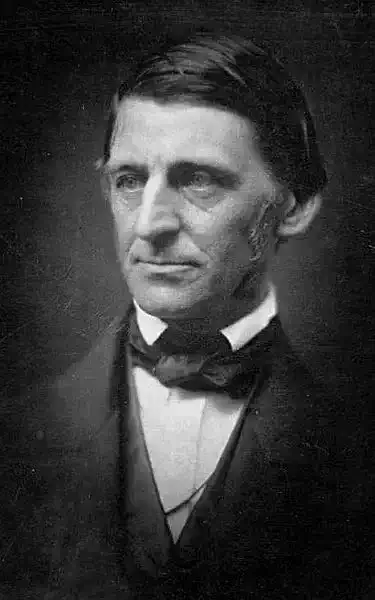
Ralph Waldo Emerson
Dirge
Knows he who tills this lonely field
To reap its scanty corn,
What mystic fruit his acres yield
At midnight and at morn?
In the long sunny afternoon,
The plain was full of ghosts,
I wandered up, I wandered down,
Beset by pensive hosts.
The winding Concord gleamed below,
Pouring as wide a flood
As when my brothers long ago,
Came with me to the wood.
But they are gone,— the holy ones,
Who trod with me this lonely vale,
The strong, star-bright companions
Are silent, low, and pale.
My good, my noble, in their prime,
Who made this world the feast it was,
Who learned with me the lore of time,
Who loved this dwelling-place.
They took this valley for their toy,
They played with it in every mood,
A cell for prayer, a hall for joy,
They treated nature as they would.
They colored the horizon round,
Stars flamed and faded as they bade,
All echoes hearkened for their sound,
They made the woodlands glad or mad.
I touch this flower of silken leaf
Which once our childhood knew
Its soft leaves wound me with a grief
Whose balsam never grew.
Hearken to yon pine warbler
Singing aloft in the tree;
Hearest thou, O traveller!
What he singeth to me?
Not unless God made sharp thine ear
With sorrow such as mine,
Out of that delicate lay couldst thou
The heavy dirge divine.
Go, lonely man, it saith,
They loved thee from their birth,
Their hands were pure, and pure their faith,
There are no such hearts on earth.
Ye drew one mother's milk,
One chamber held ye all;
A very tender history
Did in your childhood fall.
Ye cannot unlock your heart,
The key is gone with them;
The silent organ loudest chants
The master's requiem.
326
James Whitcomb Riley
Grandfather Squeers
'My grandfather Squeers,' said The Raggedy Man,
As he solemnly lighted his pipe and began-
'The most indestructible man, for his years,
And the grandest on earth, was my grandfather Squeers!
'He said, when he rounded his three-score-and-ten,
'I've the hang of it now and can do it again!'
'He had frozen his heels so repeatedly, he
Could tell by them just what the weather would be;
'And would laugh and declare, 'while the _Almanac_ would
Most falsely prognosticate, _he_ never could!'
'Such a hale constitution had grandfather Squeers
That, 'though he'd used '_navy_' for sixty odd years,
'He still chewed a dime's-worth six days of the week,
While the seventh he passed with a chew in each cheek:
'Then my grandfather Squeers had a singular knack
Of sitting around on the small of his back,
'With his legs like a letter Y stretched o'er the grate
Wherein 'twas his custom to ex-pec-tor-ate.
'He was fond of tobacco in _manifold_ ways,
And would sit on the door-step, of sunshiny days,
'And smoke leaf-tobacco he'd raised strictly for
The pipe he'd used all through The Mexican War.'
And The Raggedy Man said, refilling the bowl
Of his own pipe and leisurely picking a coal
From the stove with his finger and thumb, 'You can see
What a tee-nacious habit he's fastened on me!
'And my grandfather Squeers took a special delight
In pruning his corns every Saturday night
'With a horn-handled razor, whose edge he excused
By saying 'twas one that his grandfather used;
'And, though deeply etched in the haft of the same
Was the ever-euphonious Wostenholm's name,
''Twas my grandfather's custom to boast of the blade
As 'A Seth Thomas razor--the best ever made!'
'No Old Settlers' Meeting, or Pioneers' Fair,
Was complete without grandfather Squeers in the chair
'To lead off the programme by telling folks how
'He used to shoot deer where the Court-House stands now'-
'How 'he felt, of a truth, to live over the past,
When the country was wild and unbroken and vast,
''That the little log cabin was just plenty fine
For himself, his companion, and fambly of nine!-
''When they didn't have even a pump, or a tin,
But drunk surface-water, year out and year in,
''From the old-fashioned gourd that was sweeter, by odds,
Than the goblets of gold at the lips of the gods!''
Then The Raggedy Man paused to plaintively say
It was clockin' along to'rds the close of the day--
And he'd _ought_ to get back to his work on the lawn,--
Then dreamily blubbered his pipe and went on:
'His teeth were imperfect--my grandfather owned
That he couldn't eat oysters unless they were 'boned';
'And his eyes were so weak, and so feeble of sight,
He couldn't sleep with them unless, every night,
'He put on his spectacles--all he possessed,--
Three pairs--with his goggles on top of the rest.
'And my grandfather always, retiring at night,
Blew down the lamp-chimney to put out the light;
'Then he'd curl up on edge like a shaving, in bed,
And puff and smoke pipes in his sleep, it is said:
'And would snore oftentimes as the legends relate,
Till his folks were wrought up to a terrible state,-
'Then he'd snort, and rear up, and roll over; and there,
In the subsequent hush they could hear him chew air.
'And so glaringly bald was the top of his head
That many's the time he has musingly said,
'As his eyes journeyed o'er its reflex in the glass,-'
I must set out a few signs of _Keep Off the Grass!_'
'So remarkably deaf was my grandfather Squeers
That he had to wear lightning-rods over his ears
'To even hear thunder--and oftentimes then
He was forced to request it to thunder again.'
326
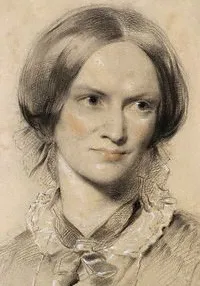
Charlotte Brontë
Mementos
ARRANGING longlocked
drawers and shelves
Of cabinets, shut up for years,
What a strange task we've set ourselves !
How still the lonely room appears !
How strange this mass of ancient treasures,
Mementos of past pains and pleasures;
These volumes, clasped with costly stone,
With print all faded, gilding gone;
These fans of leaves, from Indian trees
These
crimson shells, from Indian seas
These
tiny portraits, set in rings
Once,
doubtless, deemed such precious things;
Keepsakes bestowed by Love on Faith,
And worn till the receiver's death,
Now stored with cameos, china, shells,
In this old closet's dusty cells.
I scarcely think, for ten long years,
A hand has touched these relics old;
And, coating each, slowformed,
appears,
The growth of green and antique mould.
All in this house is mossing over;
All is unused, and dim, and damp;
Nor light, nor warmth, the rooms discover
Bereft
for years of fire and lamp.
The sun, sometimes in summer, enters
The casements, with reviving ray;
But the long rains of many winters
Moulder the very walls away.
And outside all is ivy, clinging
To chimney, lattice, gable grey;
Scarcely one little red rose springing
Through the green moss can force its way.
Unscared, the daw, and starling nestle,
Where the tall turret rises high,
And winds alone come near to rustle
The thick leaves where their cradles lie.
I sometimes think, when late at even
I climb the stair reluctantly,
Some shape that should be well in heaven,
Or ill elsewhere, will pass by me.
I fear to see the very faces,
Familiar thirty years ago,
Even in the old accustomed places
Which look so cold and gloomy now.
I've come, to close the window, hither,
At twilight, when the sun was down,
And Fear, my very soul would wither,
Lest something should be dimly shown.
Too much the buried form resembling,
Of her who once was mistress here;
Lest doubtful shade, or moonbeam trembling,
Might take her aspect, once so dear.
Hers was this chamber; in her time
It seemed to me a pleasant room,
For then no cloud of grief or crime
Had cursed it with a settled gloom;
I had not seen death's image laid
In shroud and sheet, on yonder bed.
Before she married, she was blest
Blest
in her youth, blest in her worth;
Her mind was calm, its sunny rest
Shone in her eyes more clear than mirth.
And when attired in rich array,
Light, lustrous hair about her brow,
She yonder sata
kind of day
Lit upwhat
seems so gloomy now.
These grim oak walls, even then were grim;
That old carved chair, was then antique;
But what around looked dusk and dim
Served as a foil to her fresh cheek;
Her neck, and arms, of hue so fair,
Eyes of unclouded, smiling, light;
Her soft, and curled, and floating hair,
Gems and attire, as rainbow bright.
Reclined in yonder deep recess,
Ofttimes she would, at evening, lie
Watching the sun; she seemed to bless
With happy glance the glorious sky.
She loved such scenes, and as she gazed,
Her face evinced her spirit's mood;
Beauty or grandeur ever raised
In her, a deepfelt
gratitude.
But of all lovely things, she loved
A cloudless moon, on summer night;
Full oft have I impatience proved
To see how long, her still delight
Would find a theme in reverie.
Out on the lawn, or where the trees
Let in the lustre fitfully,
As their boughs parted momently,
To the soft, languid, summer breeze.
Alas ! that she should e'er have flung
Those pure, though lonely joys away
Deceived
by false and guileful tongue,
She gave her hand, then suffered wrong;
Oppressed, illused,
she faded young,
And died of grief by slow decay.
Open that casketlook
how bright
Those jewels flash upon the sight;
The brilliants have not lost a ray
Of lustre, since her wedding day.
But seeupon
that pearly chain
How
dim lies time's discolouring stain !
I've seen that by her daughter worn:
For, e'er she died, a child was born;
A child that ne'er its mother knew,
That lone, and almost friendless grew;
For, ever, when its step drew nigh,
Averted was the father's eye;
And then, a life impure and wild
Made him a stranger to his child;
Absorbed in vice, he little cared
On what she did, or how she fared.
The love withheld, she never sought,
She grew uncherishedlearnt
untaught;
To her the inward life of thought
Full soon was open laid.
I know not if her friendlessness
Did sometimes on her spirit press,
But plaint she never made.
The bookshelves
were her darling treasure,
She rarely seemed the time to measure
While she could read alone.
And she too loved the twilight wood,
And often, in her mother's mood,
Away to yonder hill would hie,
Like her, to watch the setting sun,
Or see the stars born, one by one,
Out of the darkening sky.
Nor would she leave that hill till night
Trembled from pole to pole with light;
Even then, upon her homeward way,
Longlong
her wandering steps delayed
To quit the sombre forest shade,
Through which her eerie pathway lay.
You ask if she had beauty's grace ?
I know notbut
a nobler face
My eyes have seldom seen;
A keen and fine intelligence,
And, better still, the truest sense
Were in her speaking mien.
But bloom or lustre was there none,
Only at moments, fitful shone
An ardour in her eye,
That kindled on her cheek a flush,
Warm as a red sky's passing blush
And quick with energy.
Her speech, too, was not common speech,
No wish to shine, or aim to teach,
Was in her words displayed:
She still began with quiet sense,
But oft the force of eloquence
Came to her lips in aid;
Language and voice unconscious changed,
And thoughts, in other words arranged,
Her fervid soul transfused
Into the hearts of those who heard,
And transient strength and ardour stirred,
In minds to strength unused.
Yet in gay crowd or festal glare,
Grave and retiring was her air;
'Twas seldom, save with me alone,
That fire of feeling freely shone;
She loved not awe's nor wonder's gaze,
Nor even exaggerated praise,
Nor even notice, if too keen
The curious gazer searched her mien.
Nature's own green expanse revealed
The world, the pleasures, she could prize;
On free hillside,
in sunny field,
In quiet spots by woods concealed,
Grew wild and fresh her chosen joys,
Yet Nature's feelings deeply lay
In that endowed and youthful frame;
Shrined in her heart and hid from day,
They burned unseen with silent flame;
In youth's first search for mental light,
She lived but to reflect and learn,
But soon her mind's maturer might
For stronger task did pant and yearn;
And stronger task did fate assign,
Task that a giant's strength might strain;
To suffer long and ne'er repine,
Be calm in frenzy, smile at pain.
Pale with the secret war of feeling,
Sustained with courage, mute, yet high;
The wounds at which she bled, revealing
Only by altered cheek and eye;
She bore in silencebut
when passion
Surged in her soul with ceaseless foam,
The storm at last brought desolation,
And drove her exiled from her home.
And silent still, she straight assembled
The wrecks of strength her soul retained;
For though the wasted body trembled,
The unconquered mind, to quail, disdained.
She crossed the seanow
lone she wanders
By Seine's, or Rhine's, or Arno's flow;
Fain would I know if distance renders
Relief or comfort to her woe.
Fain would I know if, henceforth, ever,
These eyes shall read in hers again,
That light of love which faded never,
Though dimmed so long with secret pain.
She will return, but cold and altered,
Like all whose hopes too soon depart;
Like all on whom have beat, unsheltered,
The bitter blasts that blight the heart.
No more shall I behold her lying
Calm on a pillow, smoothed by me;
No more that spirit, worn with sighing,
Will know the rest of infancy.
If still the paths of lore she follow,
'Twill be with tired and goaded will;
She'll only toil, the aching hollow,
The joyless blank of life to fill.
And oh ! full oft, quite spent and weary,
Her hand will pause, her head decline;
That labour seems so hard and dreary,
On which no ray of hope may shine.
Thus the pale blight of time and sorrow
Will shade with grey her soft, dark hair
Then comes the day that knows no morrow,
And death succeeds to long despair.
So speaks experience, sage and hoary;
I see it plainly, know it well,
Like one who, having read a story,
Each incident therein can tell.
Touch not that ring, 'twas his, the sire
Of that forsaken child;
And nought his relics can inspire
Save memories, sindefiled.
I, who sat by his wife's deathbed,
I, who his daughter loved,
Could almost curse the guilty dead,
For woes, the guiltless proved.
And heaven did cursethey
found him laid,
When crime for wrath was rife,
Coldwith
the suicidal blade
Clutched in his desperate gripe.
'Twas near that long deserted hut,
Which in the wood decays,
Death's axe, selfwielded,
struck his root,
And lopped his desperate days.
You know the spot, where three black trees,
Lift up their branches fell,
And moaning, ceaseless as the seas,
Still seem, in every passing breeze,
The deed of blood to tell.
They named him mad, and laid his bones
Where holier ashes lie;
Yet doubt not that his spirit groans,
In hell's eternity.
But, lo ! night, closing o'er the earth,
Infects our thoughts with gloom;
Come, let us strive to rally mirth,
Where glows a clear and tranquil hearth
In some more cheerful room.
326
James Whitcomb Riley
The Old Swimmin' Hole
2
3
4
6
7
8
Oh! the old swimmin'-hole! whare the crick so still and deep
Looked like a baby-river that was laying half asleep,
And the gurgle of the worter round the drift jest below
Sounded like the laugh of something we onc't ust to know
Before we could remember anything but the eyes
Of the angels lookin' out as we left Paradise;
But the merry days of youth is beyond our controle,
And it's hard to part ferever with the old swimmin'-hole.
9 Oh! the old swimmin'-hole! In the happy days of yore,
When I ust to lean above it on the old sickamore,
11
12
13
14
16
Oh! it showed me a face in its warm sunny tide
That gazed back at me so gay and glorified,
It made me love myself, as I leaped to caress
My shadder smilin' up at me with sich tenderness.
But them days is past and gone, and old Time's tuck his toll
From the old man come back to the old swimmin'-hole.
17
18
19
21
22
23
24
Oh! the old swimmin'-hole! In the long, lazy days
When the humdrum of school made so many run-a-ways,
How plesant was the jurney down the old dusty lane,
Whare the tracks of our bare feet was all printed so plane
You could tell by the dent of the heel and the sole
They was lots o' fun on hands at the old swimmin'-hole.
But the lost joys is past! Let your tears in sorrow roll
Like the rain that ust to dapple up the old swimmin'-hole.
26
Thare the bullrushes growed, and the cattails so tall,
And the sunshine and shadder fell over it all;
27
28
29
31
32
And it mottled the worter with amber and gold
Tel the glad lilies rocked in the ripples that rolled;
And the snake-feeder's four gauzy wings fluttered by
Like the ghost of a daisy dropped out of the sky,
Or a wownded apple-blossom in the breeze's controle
As it cut acrost some orchard to'rds the old swimmin'-hole.
33
34
36
37
38
39
Oh! the old swimmin'-hole! When I last saw the place,
The scenes was all changed, like the change in my face;
The bridge of the railroad now crosses the spot
Whare the old divin'-log lays sunk and fergot.
And I stray down the banks whare the trees ust to be --
But never again will theyr shade shelter me!
And I wish in my sorrow I could strip to the soul,
And dive off in my grave like the old swimmin'-hole.
324
John Greenleaf Whittier
Chalkey Hall
How bland and sweet the greeting of this breeze
To him who flies
From crowded street and red wall's weary gleam,
Till far behind him like a hideous dream
The close dark city lies
Here, while the market murmurs, while men throng
The marble floor
Of Mammon's altar, from the crush and din
Of the world's madness let me gather in
My better thoughts once more.
Oh, once again revive, while on my ear
The cry of Gain
And low hoarse hum of Traffic die away,
Ye blessed memories of my early day
Like sere grass wet with rain!
Once more let God's green earth and sunset air
Old feelings waken;
Through weary years of toil and strife and ill,
Oh, let me feel that my good angel still
Hath not his trust forsaken.
And well do time and place befit my mood
Beneath the arms
Of this embracing wood, a good man made
His home, like Abraham resting in the shade
Of Mamre's lonely palms.
Here, rich with autumn gifts of countless years,
The virgin soil
Turned from the share he guided, and in rain
And summer sunshine throve the fruits and grain
Which blessed his honest toil.
Here, from his voyages on the stormy seas,
Weary and worn,
He came to meet his children and to bless
The Giver of all good in thankfulness
And praise for his return.
And here his neighbors gathered in to greet
Their friend again,
Safe from the wave and the destroying gales,
Which reap untimely green Bermuda's vales,
And vex the Carib main.
To hear the good man tell of simple truth,
Sown in an hour
Of weakness in some far-off Indian isle,
From the parched bosom of a barren soil,
Raised up in life and power.
How at those gatherings in Barbadian vales,
A tendering love
Came o'er him, like the gentle rain from heaven,
And words of fitness to his lips were given,
And strength as from above.
How the sad captive listened to the Word,
Until his chain
Grew lighter, and his wounded spirit felt
The healing balm of consolation melt
Upon its life-long pain
How the armed warrior sat him down to hear
Of Peace and Truth,
And the proud ruler and his Creole dame,
Jewelled and gorgeous in her beauty came,
And fair and bright-eyed youth.
Oh, far away beneath New England's sky,
Even when a boy,
Following my plough by Merrimac's green shore,
His simple record I have pondered o'er
With deep and quiet joy.
And hence this scene, in sunset glory warm,-Its
woods around,
Its still stream winding on in light and shade,
Its soft, green meadows and its upland glade,-To
me is holy ground.
And dearer far than haunts where Genius keeps
His vigils still;
Than that where Avon's son of song is laid,
Or Vaucluse hallowed by its Petrarch's shade,
Or Virgil's laurelled hill.
To the gray walls of fallen Paraclete,
To Juliet's urn,
Fair Arno and Sorrento's orange-grove,
Where Tasso sang, let young Romance and Love
Like brother pilgrims turn.
But here a deeper and serener charm
To all is given;
And blessed memories of the faithful dead
O'er wood and vale and meadow-stream have shed
The holy hues of Heaven!
323
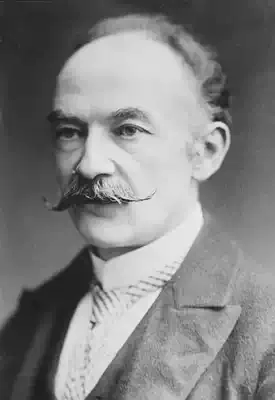
Thomas Hardy
Thoughts of Phena
at news of her death
Not a line of her writing have I
Not a thread of her hair,
No mark of her late time as dame in her dwelling, whereby
I may picture her there;
And in vain do I urge my unsight
To conceive my lost prize
At her close, whom I knew when her dreams were upbrimming with light
And with laughter her eyes.
What scenes spread around her last days,
Sad, shining, or dim?
Did her gifts and compassions enray and enarch her sweet ways
With an aureate nimb?
Or did life-light decline from her years,
And mischances control
Her full day-star; unease, or regret, or forebodings, or fears
Disennoble her soul?
Thus I do but the phantom retain
Of the maiden of yore
As my relic; yet haply the best of her--fined in my brain
It may be the more
That no line of her writing have I,
Nor a thread of her hair,
No mark of her late time as dame in her dwelling, whereby
I may picture her there.
March .
321
James Whitcomb Riley
Nothin' To Say
Nothin' to say, my daughter! Nothin' at all to say!
Gyrls that's in love, I've noticed, ginerly has their way!
Yer mother did, afore you, when her folks objected to me--
Yit here I am, and here you air; and yer mother--where is she?
You look lots like yer mother: Purty much same in size;
And about the same complected; and favor about the eyes:
Like her, too, about _livin_' here,--because _she_ couldn't stay:
It'll 'most seem like you was dead--like her!--But I hain't got nothin' to say!
She left you her little Bible--writ yer name acrost the page--
And left her ear bobs fer you, ef ever you come of age.
I've allus kep' 'em and gyuarded 'em, but ef yer goin' away--
Nothin' to say, my daughter! Nothin' at all to say!
You don't rikollect her, I reckon? No; you wasn't a year old then!
And now yer--how old _air_ you? W'y, child, not '_twenty_!' When?
And yer nex' birthday's in Aprile? and you want to git married that day?
... I wisht yer mother was livin'!--But--I hain't got nothin' to say!
Twenty year! and as good a gyrl as parent ever found!
There's a straw ketched onto yer dress there--I'll bresh it off--turn round.
(Her mother was jes' twenty when us two run away!)
Nothin' to say, my daughter! Nothin' at all to say!
322
William Butler Yeats
The Meditation Of The Old Fisherman
YOU waves, though you dance by my feet like children at play,
Though you glow and you glance, though you purr and you dart;
In the Junes that were warmer than these are, the waves were more gay,
When I was a boy with never a crack in my heart.
The herring are not in the tides as they were of old;
My sorrow! for many a creak gave the creel in the-cart
That carried the take to Sligo town to be sold,
When I was a boy with never a crack in my heart.
And ah, you proud maiden, you are not so fair when his oar
Is heard on the water, as they were, the proud and apart,
Who paced in the eve by the nets on the pebbly shore,
When I was a boy with never a crack in my heart.
321
Henry Wadsworth Longfellow
Voices Of The Night : Footsteps of Angels
When the hours of Day are numbered,
And the voices of the Night
Wake the better soul, that slumbered,
To a holy, calm delight;
Ere the evening lamps are lighted,
And, like phantoms grim and tall,
Shadows from the fitful firelight
Dance upon the parlor wall;
Then the forms of the departed
Enter at the open door;
The beloved, the true-hearted,
Come to visit me once more;
He, the young and strong, who cherished
Noble longings for the strife,
By the roadside fell and perished,
Weary with the march of life!
They, the holy ones and weakly,
Who the cross of suffering bore,
Folded their pale hands so meekly,
Spake with us on earth no more!
And with them the Being Beauteous,
Who unto my youth was given,
More than all things else to love me,
And is now a saint in heaven.
With a slow and noiseless footstep
Comes that messenger divine,
Takes the vacant chair beside me,
Lays her gentle hand in mine.
And she sits and gazes at me
With those deep and tender eyes,
Like the stars, so still and saint-like,
Looking downward from the skies.
Uttered not, yet comprehended,
Is the spirit's voiceless prayer,
Soft rebukes, in blessings ended,
Breathing from her lips of air.
Oh, though oft depressed and lonely,
All my fears are laid aside,
If I but remember only
Such as these have lived and died!
321
Henry Wadsworth Longfellow
Elliot's Oak
Thou ancient oak! whose myriad leaves are loud
With sounds of unintelligible speech,
Sounds as of surges on a shingly beach,
Or multitudinous murmurs of a crowd;
With some mysterious gift of tongues endowed,
Thou speakest a different dialect to each;
To me a language that no man can teach,
Of a lost race, long vanished like a cloud.
For underneath thy shade, in days remote,
Seated like Abraham at eventide
Beneath the oaks of Mamre, the unknown
Apostle of the Indians, Eliot, wrote
His Bible in a language that hath died
And is forgotten, save by thee alone.
321
John Greenleaf Whittier
The Countess
TO E. W.
I KNOW not, Time and Space so intervene,
Whether, still waiting with a trust serene,
Thou bearest up thy fourscore years and ten,
Or, called at last, art now Heaven's citizen;
But, here or there, a pleasant thought of thee,
Like an old friend, all day has been with me.
The shy, still boy, for whom thy kindly hand
Smoothed his hard pathway to the wonder-land
Of thought and fancy, in gray manhood yet
Keeps green the memory of his early debt.
To-day, when truth and falsehood speak their words
Through hot-lipped cannon and the teeth of swords,
Listening with quickened heart and ear intent
To each sharp clause of that stern argument,
I still can hear at times a softer note
Of the old pastoral music round me float,
While through the hot gleam of our civil strife
Looms the green mirage of a simpler life.
As, at his alien post, the sentinel
Drops the old bucket in the homestead well,
And hears old voices in the winds that toss
Above his head the live-oak's beard of moss,
So, in our trial-time, and under skies
Shadowed by swords like Islam's paradise,
I wait and watch, and let my fancy stray
To milder scenes and youth's Arcadian day;
And howsoe'er the pencil dipped in dreams
Shades the brown woods or tints the sunset streams,
The country doctor in the foreground seems,
Whose ancient sulky down the village lanes
Dragged, like a war-car, captive ills and pains.
I could not paint the scenery of my song,
Mindless of one who looked thereon so long;
Who, night and day, on duty's lonely round,
Made friends o' the woods and rocks, and knew the sound
Of each small brook, and what the hillside trees
Said to the winds that touched their leafy keys;
Who saw so keenly and so well could paint
The village-folk, with all their humors quaint,
The parson ambling on his wall-eyed roan.
Grave and erect, with white hair backward blown;
The tough old boatman, half amphibious grown;
The muttering witch-wife of the gossip's tale,
And the loud straggler levying his blackmail,-Old
customs, habits, superstitions, fears,
All that lies buried under fifty years.
To thee, as is most fit, I bring my lay,
And, grateful, own the debt I cannot pay.
. . . . . . . . . .
Over the wooded northern ridge,
Between its houses brown,
To the dark tunnel of the bridge
The street comes straggling down.
You catch a glimpse, through birch and pine,
Of gable, roof, and porch,
The tavern with its swinging sign,
The sharp horn of the church.
The river's steel-blue crescent curves
To meet, in ebb and flow,
The single broken wharf that serves
For sloop and gundelow.
With salt sea-scents along its shores
The heavy hay-boats crawl,
The long antennae of their oars
In lazy rise and fall.
Along the gray abutment's wall
The idle shad-net dries;
The toll-man in his cobbler's stall
Sits smoking with closed eyes.
You hear the pier's low undertone
Of waves that chafe and gnaw;
You start,--a skipper's horn is blown
To raise the creaking draw.
At times a blacksmith's anvil sounds
With slow and sluggard beat,
Or stage-coach on its dusty rounds
Fakes up the staring street.
A place for idle eyes and ears,
A cobwebbed nook of dreams;
Left by the stream whose waves are years
The stranded village seems.
And there, like other moss and rust,
The native dweller clings,
And keeps, in uninquiring trust,
The old, dull round of things.
The fisher drops his patient lines,
The farmer sows his grain,
Content to hear the murmuring pines
Instead of railroad-train.
Go where, along the tangled steep
That slopes against the west,
The hamlet's buried idlers sleep
In still profounder rest.
Throw back the locust's flowery plume,
The birch's pale-green scarf,
And break the web of brier and bloom
From name and epitaph.
A simple muster-roll of death,
Of pomp and romance shorn,
The dry, old names that common breath
Has cheapened and outworn.
Yet pause by one low mound, and part
The wild vines o'er it laced,
And read the words by rustic art
Upon its headstone traced.
Haply yon white-haired villager
Of fourscore years can say
What means the noble name of her
Who sleeps with common clay.
An exile from the Gascon land
Found refuge here and rest,
And loved, of all the village band,
Its fairest and its best.
He knelt with her on Sabbath morns,
He worshipped through her eyes,
And on the pride that doubts and scorns
Stole in her faith's surprise.
Her simple daily life he saw
By homeliest duties tried,
In all things by an untaught law
Of fitness justified.
For her his rank aside he laid;
He took the hue and tone
Of lowly life and toil, and made
Her simple ways his own.
Yet still, in gay and careless ease,
To harvest-field or dance
He brought the gentle courtesies,
The nameless grace of France.
And she who taught him love not less
From him she loved in turn
Caught in her sweet unconsciousness
What love is quick to learn.
Each grew to each in pleased accord,
Nor knew the gazing town
If she looked upward to her lord
Or he to her looked down.
How sweet, when summer's day was o'er,
His violin's mirth and wail,
The walk on pleasant Newbury's shore,
The river's moonlit sail!
Ah! life is brief, though love be long;
The altar and the bier,
The burial hymn and bridal song,
Were both in one short year!
Her rest is quiet on the hill,
Beneath the locust's bloom
Far off her lover sleeps as still
Within his scutcheoned tomb.
The Gascon lord, the village maid,
In death still clasp their hands;
The love that levels rank and grade
Unites their severed lands.
What matter whose the hillside grave,
Or whose the blazoned stone?
Forever to her western wave
Shall whisper blue Garonne!
O Love!--so hallowing every soil
That gives thy sweet flower room,
Wherever, nursed by ease or toil,
The human heart takes bloom!-
Plant of lost Eden, from the sod
Of sinful earth unriven,
White blossom of the trees of God
Dropped down to us from heaven!
This tangled waste of mound and stone
Is holy for thy sale;
A sweetness which is all thy own
Breathes out from fern and brake.
And while ancestral pride shall twine
The Gascon's tomb with flowers,
Fall sweetly here, O song of mine,
With summer's bloom and showers!
And let the lines that severed seem
Unite again in thee,
As western wave and Gallic stream
Are mingled in one sea!
317