
Memories and Recollections

Christina Rossetti
The First Day
I wish I could remember the first day,
First hour, first moment of your meeting me;
If bright or dim the season, it might be
Summer or winter for aught I can say.
So unrecorded did it slip away,
So blind was I to see and to foresee,
So dull to mark the budding of my tree
That would not blossom yet for many a May.
If only I could recollect it! Such
A day of days! I let it come and go
As traceless as a thaw of bygone snow.
It seemed to mean so little, meant so much!
If only now I could recall that touch,
First touch of hand in hand! - Did one but know!
276

Billy Collins
The Iron Bridge
I am standing on a disused iron bridge
that was erected in 1902,
according to the iron plaque bolted into a beam,
the year my mother turned one.
Imagine--a mother in her infancy,
and she was a Canadian infant at that,
one of the great infants of the province of Ontario.
But here I am leaning on the rusted railing
looking at the water below,
which is flat and reflective this morning,
sky-blue and streaked with high clouds,
and the more I look at the water,
which is like a talking picture,
the more I think of 1902
when workmen in shirts and caps
riveted this iron bridge together
across a thin channel joining two lakes
where wildflowers blow along the shore now
and pairs of swans float in the leafy coves.
1902--my mother was so tiny
she could have fit into one of those oval
baskets for holding apples,
which her mother could have lined with a soft cloth
and placed on the kitchen table
so she could keep an eye on infant Katherine
while she scrubbed potatoes or shelled a bag of peas,
the way I am keeping an eye on that cormorant
who just broke the glassy surface
and is moving away from me and the iron bridge,
swiveling his curious head,
slipping out to where the sun rakes the water
and filters through the trees that crowd the shore.
And now he dives,
disappears below the surface,
and while I wait for him to pop up,
I picture him flying underwater with his strange wings,
as I picture you, my tiny mother,
who disappeared last year,
flying somewhere with your strange wings,
your wide eyes, and your heavy wet dress,
kicking deeper down into a lake
with no end or name, some boundless province of water.
274
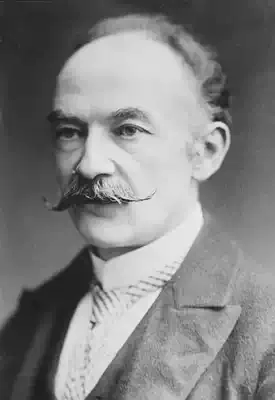
Thomas Hardy
The Self-Unseeing
Here is the ancient floor,
Footworn and hollowed and thin,
Here was the former door
Where the dead feet walked in.
She sat here in her chair,
Smiling into the fire;
He who played stood there,
Bowing it higher and higher.
Childlike, I danced in a dream;
Blessings emblazoned that day;
Everything glowed with a gleam;
Yet we were looking away!
273

Henry Lawson
The Soldier Birds
I mind the river from Mount Frome
To Ballanshantie’s Bridge,
The Mudgee Hills, and Buckaroo,
Lowe’s Peak, and Granite Ridge.
The “tailers” in the creek beneath,
The rugged she-oak boles,
The river cod where shallows linked,
The willowed water-holes.
I mind the blacksoil river flats,
The red soil levels, too,
The sidings where below the scrub
The golden wattles grew;
The track that ran by Tierney’s Gap,
The dusk and ghost alarms,
The glorious morning on the hills,
And all the German farms.
I mind the blue-grey gully bush,
The slab-and-shingle school,
The “soldier birds” that picked the crumbs
Beneath the infants’ stool.
(Ah! did those little soldier birds,
That whispered, ever know
That one of us should rise so high
And sadly sink so low?)
I mind the lessons that we droned
In books from Irish schools,
The canings and the keepings-in
For breaking bounds and rules.
Ah! little did the teacher dream
That one of us, perchance,
Might write in London to be read
In Germany and France.
I mind the days we played at camp
With billy-can and swag,
I mind the notes sent home by girls
When someone “played the wag.”
Ah! little did the master think
(Who’d lost the roving star)
What truants in their after years
Would play the wag so far.
I mind when first he gave to me
A pen and ink to write,
And, last, the “Fourth Class Forms” he made
I shared with Lucy White.
The other boys were other boys,
With cricket ball and bat,
They had a fine contempt for girls,
But they got over that.
The “rounders” where the girls came in—
The Tomboy and the rest—
The earnest game of Pris’ners’ Base—
The game that I liked best.
The kangarooing on the ridge,
And in the brown moonlight,
The “possuming” across the flats,
With dogs and gun at night.
The “specking” in old diggers’ heaps
For “colours” after rain,
The horse-shoes saved against the time
The circus came again,
And sold to Jimmy Siver-right—
The blacksmith on the flat;
The five-corners, the swimming hole—
Oh! I remember that!
I mind the holland “dinner bags”—
A book bag of green baize—
The bread and dripping, bread and meat,
And bread and treacle days.
The bread and butter swopped for meat,
The crumb we swopped for crust—
We’ve married—and divorced—since then,
And most old homes are dust.
It was the time, it was the place—
Australia’s hardest page—
When boys were cast for farming work
At fourteen years of age.
It was the time, it was the place,
The latter “Early Day,”
When boys ride home from old bark schools
And to the world away.
I’ve drifted through Port Said since then,
Naples and Leicester Square,
And Collins and Macquarie Streets—
I know the secrets there.
Ah me! The country boy and girl,
The country lass and lad,
As innocent as soldier birds,
Though we thought we were bad!
But, spite of all their daring truth,
And some work that shall last,
The bitter years of my brave youth
Are better in the past.
This does not call for bitterness,
Nor does it call for tears,
The purest little thing perhaps
I’ve printed here for years.
The railway runs by Mudgee Hills,
Old farms are lost or lone,
And children’s children sadly go
To schools of brick and stone.
Yet are the same. The Mudgee Hills
And Mudgee skies as fair—
And the little grey-clad soldier birds
Are just as busy there.
272
Henry Lawson
The Last Review
Turn the light down, nurse, and leave me, while I hold my last review,
For
the Bush
is slipping from me, and the town is going too:
Draw the blinds, the streets are lighted, and I hear the tramp of feet—
And I’m weary, very weary, of the
Faces in the Street
.
In the dens of Grind and Heartbreak, in the streets of Never-Rest,
I have lost the scent and colour and the music of the West:
And I would recall old faces with the memories they bring—
Where are Bill and Jim and Mary and the
Songs They used to Sing
?
They are coming! They are coming! they are passing through the room
With the smell of gum leaves burning, and the scent of
Wattle bloom!
And behind them in the timber, after dust and heat and toil,
Others sit beside the camp fire yarning while the billies boil.
In the Gap above the ridges there’s a flash and there’s a glow—
Swiftly down the scrub-clad siding come the
Lights of Cobb and Co
.:
Red face from the box-seat beaming—Oh, how plain those faces come!
From his ‘Golden-Hole’ ’tis Peter M’Intosh who’s going home.
Dusty patch in desolation, bare slab walls and earthen floor,
And a blinding drought is blazing from horizons to the door:
Milkless tea and ration sugar, damper junk and pumpkin mash—
And a
Day on our Selection
passes by me in a flash.
Rush of big wild-eyed store bullocks while the sheep crawl hopelessly,
And the loaded wool teams rolling, lurching on like ships at sea:
With his whip across his shoulder (and the wind just now abeam),
There goes
Jimmy Nowlett
ploughing through the dust beside his team!
Sunrise on the diggings! (Oh! what life and hearts and hopes are here)
From a hundred pointing forges comes a tinkle, tinkle clear—
Strings of drays with wash to puddle, clack of countless windlass boles,
Here and there
the red flag flying
, flying over golden holes.
Picturesque, unreal, romantic, chivalrous, and brave and free;
Clean in living, true in mateship—reckless generosity.
Mates are buried here as comrades who on fields of battle fall—
And—the dreams, the aching, hoping lover hearts beneath it all!
Rough-built theatres and stages where the world’s best actors trod—
Singers bringing reckless rovers nearer boyhood, home and God;
Paid in laughter, tears and nuggets in the play that fortune plays—
’Tis the palmy days of Gulgong—Gulgong in
the Roaring Days.
Pass the same old scenes before me—and again my heart can ache—
There the
Drover’s Wife
sits watching (not as Eve did) for a snake.
And I see the drear deserted goldfields when the night is late,
And the stony face of Mason watching by his
Father’s Mate.
And I see my
Haggard Women
plainly as they were in life,
’Tis the form of Mrs. Spicer and her friend,
Joe Wilson’s wife,
Sitting hand in hand
‘Past Carin
’,’ not a sigh and not a moan,
Staring steadily before her and the tears just trickle down.
It was
No Place for a Woman
—where the women worked like men—
From the Bush and Jones’ Alley come their haunting forms again.
And, let this thing be remembered when I’ve answered to the roll,
That I pitied haggard women—wrote for them with all my soul.
Narrow bed-room in the City in the hard days that are dead—
An alarm clock on the table, and a pale boy on the bed:
Arvie Aspinalls Alarm Clock with its harsh and startling call
Never more shall break his slumbers—I was Arvie Aspinall.
Maoriland
and
Steelman
, cynic, spieler, stiff-lipped, battler-through
(Kept a wife and child in comfort, but of course they never knew—
Thought he was an honest bagman)—Well, old man, you needn’t hug—
Sentimental; you of all men!—Steelman, Oh! I was a mug!
Ghostly lines of scrub at daybreak—dusty daybreak in the drought—
And a lonely swagman tramping on the track to
Further Out
:
Like a shade the form of Mitchell, nose-bag full and bluey up
And between the swag and shoulders lolls his foolish cattle-pup.
Kindly cynic, sad comedian! Mitchell! when you’ve left the Track,
And have shed your load of sorrow as we slipped our swags out back,
We shall have a yarn together in the land of
Rest Awhile
—
And across his ragged shoulder Mitchell smiles his quiet smile.
Shearing sheds and tracks and shanties—girls that wait at homestead gates—
Camps and stern-eyed Union leaders, and
Joe Wilson and his Mates
True and straight, and to my fancy, each one as he passes through
Deftly down upon the table slips a dusty ‘note’ or two.
So at last the end has found me—(end of all the human push)
And again in silence round me come my
Children of the Bush
!—
Listen, who are young, and let them—if I in late and bitter days
Wrote some reckless lines—forget them—there is little there to praise.
I was human, very human, and if in the days misspent
I have injured man or woman, it was done without intent.
If at times I blundered blindly—bitter heart and aching brow—
If I wrote a line unkindly—I am sorry for it now.
Days in London
like a nightmare—dreams of foreign lands and sea—
And
Australia
is the only land that seemeth real to me.
Tell the Bushmen to Australia and each other to be true—
‘Tell the boys to stick together!’ I have held my
Last Review.
272

John Greenleaf Whittier
The Garrison of Cape Ann
From the hills of home forth looking, far beneath the tent-like span
Of the sky, I see the white gleam of the headland of Cape Ann.
Well I know its coves and beaches to the ebb-tide glimmering down,
And the white-walled hamlet children of its ancient fishing town.
Long has passed the summer morning, and its memory waxes old,
When along yon breezy headlands with a pleasant friend I strolled.
Ah! the autumn sun is shining, and the ocean wind blows cool,
And the golden-rod and aster bloom around thy grave, Rantoul!
With the memory of that morning by the summer sea I blend
A wild and wondrous story, by the younger Mather penned,
In that quaint Magnalia Christi, with all strange and marvellous things,
Heaped up huge and undigested, like the chaos Ovid sings.
Dear to me these far, faint glimpses of the dual life of old,
Inward, grand with awe and reverence; outward, mean and coarse and cold;
Gleams of mystic beauty playing over dull and vulgar clay,
Golden-threaded fancies weaving in a web of hodden gray.
The great eventful Present hides the Past; but through the din
Of its loud life hints and echoes from the life behind steal in;
And the lore of homeland fireside, and the legendary rhyme,
Make the task of duty lighter which the true man owes his time.
So, with something of the feeling which the Covenanter knew,
When with pious chisel wandering Scotland's moorland graveyards through,
From the graves of old traditions I part the black- berry-vines,
Wipe the moss from off the headstones, and retouch the faded lines.
Where the sea-waves back and forward, hoarse with rolling pebbles, ran,
The garrison-house stood watching on the gray rocks of Cape Ann;
On its windy site uplifting gabled roof and palisade,
And rough walls of unhewn timber with the moonlight overlaid.
On his slow round walked the sentry, south and eastward looking forth
O'er a rude and broken coast-line, white with breakers stretching north,
Wood
and rock and gleaming sand-drift, jagged capes, with bush and tree,
Leaning inland from the smiting of the wild and gusty sea.
Before the deep-mouthed chimney, dimly lit by dying brands,
Twenty soldiers sat and waited, with their muskets in their hands;
On the rough-hewn oaken table the venison haunch was shared,
And the pewter tankard circled slowly round from beard to beard.
Long they sat and talked together,-talked of wizards Satan-sold;
Of all ghostly sights and noises,-signs and wonders manifold;
Of the spectre-ship of Salem, with the dead men in her shrouds,
Sailing sheer above the water, in the loom of morning clouds;
Of the marvellous valley hidden in the depths of Gloucester woods,
Full of plants that love the summer,-blooms of warmer latitudes;
Where the Arctic birch is braided by the tropic's flowery vines,
And the white magnolia-blossoms star the twilight of the pines!
But their voices sank yet lower, sank to husky tones of fear,
As they spake of present tokens of the powers of evil near;
Of a spectral host, defying stroke of steel and aim of gun;
Never yet was ball to slay them in the mould of mortals run.
Thrice, with plumes and flowing scalp-locks, from the midnight wood they came,
Thrice
around the block-house marching, met, unharmed, its volleyed flame;
Then, with mocking laugh and gesture, sunk in earth or lost in air,
All the ghostly wonder vanished, and the moonlit sands lay bare.
Midnight came; from out the forest moved a dusky mass that soon
Grew to warriors, plumed and painted, grimly marching in the moon.
'Ghosts or witches,' said the captain, 'thus I foil the Evil One!'
And he rammed a silver button, from his doublet, down his gun.
Once again the spectral horror moved the guarded wall about;
Once again the levelled muskets through the palisades flashed out,
With that deadly aim the squirrel on his tree-top might not shun,
Nor the beach-bird seaward flying with his slant wing to the sun.
Like the idle rain of summer sped the harmless shower of lead.
With a laugh of fierce derision, once again the phantoms fled;
Once again, without a shadow on the sands the moonlight lay,
And the white smoke curling through it drifted slowly down the bay!
'God preserve us!' said the captain; 'never mortal foes were there;
They have vanished with their leader, Prince and Power of the air!
Lay aside your useless weapons; skill and prowess naught avail;
They who do the Devil's service wear their master's coat of mail!'
So the night grew near to cock-crow, when again a warning call
Roused the score of weary soldiers watching round the dusky hall
And they looked to flint and priming, and they longed for break of day;
But the captain closed his Bible: 'Let us cease from man, and pray!'
To the men who went before us, all the unseen powers seemed near,
And their steadfast strength of courage struck its roots in holy fear.
Every hand forsook the musket, every head was bowed and bare,
Every stout knee pressed the flag-stones, as the captain led in prayer.
Ceased thereat the mystic marching of the spectres round the wall,
But a sound abhorred, unearthly, smote the ears and hearts of all,
Howls
of rage and shrieks of anguish! Never after mortal man
Saw the ghostly leaguers marching round the block-house of Cape Ann.
So to us who walk in summer through the cool and sea-blown town,
From the childhood of its people comes the solemn legend down.
Not in vain the ancient fiction, in whose moral lives the youth
And the fitness and the freshness of an undecaying truth.
Soon or late to all our dwellings come the spectres of the mind,
Doubts and fears and dread forebodings, in the darkness undefined;
Round us throng the grim projections of the heart and of the brain,
And our pride of strength is weakness, and the cunning hand is vain.
In the dark we cry like children; and no answer from on high
Breaks the crystal spheres of silence, and no white wings downward fly;
But the heavenly help we pray for comes to faith, and not to sight,
And our prayers themselves drive backward all the spirits of the night!
271

Emily Dickinson
On that dear Frame the Years had worn
On that dear Frame the Years had worn
Yet precious as the House
In which We first experienced Light
The Witnessing, to Us-
Precious! It was conceiveless fair
As Hands the Grave had grimed
Should softly place within our own
Denying that they died.
Yet precious as the House
In which We first experienced Light
The Witnessing, to Us-
Precious! It was conceiveless fair
As Hands the Grave had grimed
Should softly place within our own
Denying that they died.
270
Emily Dickinson
The bustle in a house
The bustle in a house
The morning after death
Is solemnest of industries
Enacted upon earth,-
The sweeping up the heart,
And putting love away
We shall not want to use again
Until eternity.
The morning after death
Is solemnest of industries
Enacted upon earth,-
The sweeping up the heart,
And putting love away
We shall not want to use again
Until eternity.
269
Emily Dickinson
When I was small, a Woman died
When I was small, a Woman died
Today-
her Only Boy
Went up from the Potomac-
His face all Victory
To look at her-How slowly
The Seasons must have turned
Till Bullets clipt an Angle
And He passed quickly round-
If pride shall be in Paradise-
Ourself cannot decide-
Of their imperial Conduct-
No person testified-
But, proud in Apparition-
That Woman and her Boy
Pass back and forth, before my Brain
As even in the sky
I'm confident that Bravoes-
Perpetual break abroad
For Braveries, remote as this
In Scarlet Maryland-
270
Henry Lawson
The Old Jimmy Woodser
The old Jimmy Woodser comes into the bar
Unwelcomed, unnoticed, unknown,
Too old and too odd to be drunk with, by far;
So he glides to the end where the lunch baskets are
And they say that he tipples alone.
His frockcoat is green and the nap is no more,
And his hat is not quite at its best;
He wears the peaked collar our grandfathers wore,
The black-ribbon tie that was legal of yore,
And the coat buttoned over his breast.
When first he came in, for a moment I thought
That my vision or wits were astray;
For a picture and page out of Dickens he brought--‘
Twas an old file dropped in from the Chancery Court
To the wine-vault just over the way.
But I dreamed, as he tasted his “bitter” to-night
And the lights in the bar-room grew dim,
That the shades of the friends of that other day’s light,
And of girls that were bright in our grandfathers” sight,
Lifted shadowy glasses to him.
Then I opened the door, and the old man passed out,
With his short, shuffling step and bowed head;
And I sighed; for I felt, as I turned me about,
An odd sense of respect---born of whisky no doubt---
For the life that was fifty years dead.
And I thought---there are times when our memory trends
Through the future, as ‘twere on its own---
That I, out-of-date ere my pilgrimage ends,
In a new-fashioned bar to dead loves and dead friends
Might drink, like the old man, alone.
268
Thomas Hardy
During Wind and Rain
THEY sing their dearest songs--
He, she, all of them--yea,
Treble and tenor and bass.
And one to play;
With the candles mooning each face....
Ah, no; the years O!
How the sick leaves reel down in throngs!
They clear the creeping moss--
Elders and juniors--aye,
Making the pathways neat
And the garden gay;
And they build a shady seat....
Ah, no; the years, the years;
See, the white storm-birds wing across!
They are blithely breakfasting all--
Men and maidens--yea,
Under the summer tree,
With a glimpse of the bay,
While pet fowl come to the knee....
Ah, no; the years O!
And the rotten rose is ripped from the wall.
They change to a high new house,
He, she, all of them--aye,
Clocks and carpets and chairs
On the lawn all day,
And brightest things that are theirs....
Ah, no; the years, the years;
Down their carved names the raindrop plows.
268

James Whitcomb Riley
When Mother Combed My Hair
When Memory, with gentle hand,
Has led me to that foreign land
Of childhood days, I long to be
Again the boy on bended knee,
With head a-bow, and drowsy smile
Hid in a mother's lap the while,
With tender touch and kindly care,
She bends above and combs my hair.
Ere threats of Time, or ghosts of cares
Had paled it to the hue it wears,
Its tangled threads of amber light
Fell o'er a forehead, fair and white,
That only knew the light caress
Of loving hands, or sudden press
Of kisses that were sifted there
The times when mother combed my hair.
But its last gleams of gold have slipped
Away; and Sorrow's manuscript
Is fashioned of the snowy brow--
So lined and underscored now
That you, to see it, scarce would guess
It e'er had felt the fond caress
Of loving lips, or known the care
Of those dear hands that combed my hair.
. . . . . . . .
I am so tired! Let me be
A moment at my mother's knee;
One moment--that I may forget
The trials waiting for me yet:
One moment free from every pain--
O! Mother! Comb my hair again!
And I will, oh, so humbly bow,
For I've a wife that combs it now.
267
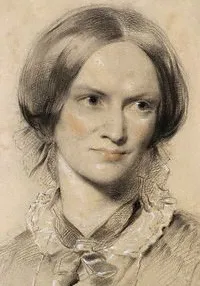
Charlotte Brontë
The Letter
WHAT is she writing ? Watch her now,
How fast her fingers move !
How eagerly her youthful brow
Is bent in thought above !
Her long curls, drooping, shade the light,
She puts them quick aside,
Nor knows, that band of crystals bright,
Her hasty touch untied.
It slips adown her silken dress,
Falls glittering at her feet;
Unmarked it falls, for she no less
Pursues her labour sweet.
The very loveliest hour that shines,
Is in that deep blue sky;
The golden sun of June declines,
It has not caught her eye.
The cheerful lawn, and unclosed gate,
The white road, far away,
In vain for her light footsteps wait,
She comes not forth today.
There is an open door of glass
Close by that lady's chair,
From thence, to slopes of mossy grass,
Descends a marble stair.
Tall plants of bright and spicy bloom
Around the threshold grow;
Their leaves and blossoms shade the room,
From that sun's deepening glow.
Why does she not a moment glance
Between the clustering flowers,
And mark in heaven the radiant dance
Of evening's rosy hours ?
O look again ! Still fixed her eye,
Unsmiling, earnest, still,
And fast her pen and fingers fly,
Urged by her eager will.
Her soul is in th' absorbing task;
To whom, then, doth she write ?
Nay, watch her still more closely, ask
Her own eyes' serious light;
Where do they turn, as now her pen
Hangs o'er th' unfinished line ?
Whence fell the tearful gleam that then
Did in their dark spheres shine ?
The summerparlour
looks so dark,
When from that sky you turn,
And from th' expanse of that green park,
You scarce may aught discern.
Yet o'er the piles of porcelain rare,
O'er flowerstand,
couch, and vase,
Sloped, as if leaning on the air,
One picture meets the gaze.
'Tis there she turns; you may not see
Distinct, what form defines
The clouded mass of mystery
Yon broad gold frame confines.
But look again; inured to shade
Your eyes now faintly trace
A stalwart form, a massive head,
A firm, determined face.
Black Spanish locks, a sunburnt cheek,
A brow high, broad, and white,
Where every furrow seems to speak
Of mind and moral might.
Is that her god ? I cannot tell;
Her eye a moment met
Th' impending picture, then it fell
Darkened and dimmed and wet.
A moment more, her task is done,
And sealed the letter lies;
And now, towards the setting sun
She turns her tearful eyes.
Those tears flow over, wonder not,
For by the inscription, see
In what a strange and distant spot
Her heart of hearts must be !
Three seas and many a league of land
That letter must pass o'er,
E'er read by him to whose loved hand
'Tis sent from England's shore.
Remote colonial wilds detain
Her husband, loved though stern;
She, 'mid that smiling English scene,
Weeps for his wished return.
267

Robert W. Service
Ghosts
I to a crumpled cabin came
upon a hillside high,
And with me was a withered dame
As weariful as I.
"It used to be our home," she said;
"How well I remember well!
Oh that our happy hearth should be
Today an empty shell!"
The door was flailing in the storm
That deafed us with its din;
The roof that kept us once so warm
Now let the snow-drift in.
The floor sagged to the sod below,
The walls caved crazily;
We only heard the wind of woe
Where once was glow and glee.
So there we stood disconsolate
Beneath the Midnight Dome,
And ancient miner and his mate,
Before our wedded home,
Where we had know such love and cheer . . .
I sighed, then soft she said:
"Do not regret - remember, dear,
We, too, are dead."
266
Thomas Hardy
The Souls of the Slain
I
The thick lids of Night closed upon me
Alone at the Bill
Of the Isle by the Race {} -
Many-caverned, bald, wrinkled of face -
And with darkness and silence the spirit was on me
To brood and be still.
II
No wind fanned the flats of the ocean,
Or promontory sides,
Or the ooze by the strand,
Or the bent-bearded slope of the land,
Whose base took its rest amid everlong motion
Of criss-crossing tides.
III
Soon from out of the Southward seemed nearing
A whirr, as of wings
Waved by mighty-vanned flies,
Or by night-moths of measureless size,
And in softness and smoothness well-nigh beyond hearing
Of corporal things.
IV
And they bore to the bluff, and alighted -
A dim-discerned train
Of sprites without mould,
Frameless souls none might touch or might hold -
On the ledge by the turreted lantern, farsighted
By men of the main.
V
And I heard them say "Home!" and I knew them
For souls of the felled
On the earth's nether bord
Under Capricorn, whither they'd warred,
And I neared in my awe, and gave heedfulness to them
With breathings inheld.
VI
Then, it seemed, there approached from the northward
A senior soul-flame
Of the like filmy hue:
And he met them and spake: "Is it you,
O my men?" Said they, "Aye! We bear homeward and hearthward
To list to our fame!"
VII
"I've flown there before you," he said then:
"Your households are well;
But--your kin linger less
On your glory arid war-mightiness
Than on dearer things."--"Dearer?" cried these from the dead then,
"Of what do they tell?"
VIII
"Some mothers muse sadly, and murmur
Your doings as boys -
Recall the quaint ways
Of your babyhood's innocent days.
Some pray that, ere dying, your faith had grown firmer,
And higher your joys.
IX
"A father broods: 'Would I had set him
To some humble trade,
And so slacked his high fire,
And his passionate martial desire;
Had told him no stories to woo him and whet him
To this due crusade!"
X
"And, General, how hold out our sweethearts,
Sworn loyal as doves?"
--"Many mourn; many think
It is not unattractive to prink
Them in sables for heroes. Some fickle and fleet hearts
Have found them new loves."
XI
"And our wives?" quoth another resignedly,
"Dwell they on our deeds?"
--"Deeds of home; that live yet
Fresh as new--deeds of fondness or fret;
Ancient words that were kindly expressed or unkindly,
These, these have their heeds."
XII
--"Alas! then it seems that our glory
Weighs less in their thought
Than our old homely acts,
And the long-ago commonplace facts
Of our lives--held by us as scarce part of our story,
And rated as nought!"
XIII
Then bitterly some: "Was it wise now
To raise the tomb-door
For such knowledge? Away!"
But the rest: "Fame we prized till to-day;
Yet that hearts keep us green for old kindness we prize now
A thousand times more!"
XIV
Thus speaking, the trooped apparitions
Began to disband
And resolve them in two:
Those whose record was lovely and true
Bore to northward for home: those of bitter traditions
Again left the land,
XV
And, towering to seaward in legions,
They paused at a spot
Overbending the Race -
That engulphing, ghast, sinister place -
Whither headlong they plunged, to the fathomless regions
Of myriads forgot.
XVI
And the spirits of those who were homing
Passed on, rushingly,
Like the Pentecost Wind;
And the whirr of their wayfaring thinned
And surceased on the sky, and but left in the gloaming
Sea-mutterings and me.
267
Henry Lawson
Billy of Queensland
“Queensland,” he heads his letters—that’s all:
The date, and the month, and the year in brief;
He often sends me a cheerful scrawl,
With an undertone of ancient grief.
The first seems familiar, but might have changed,
As often the writing of wanderers will;
He seems all over the world to have ranged,
And he signs himself William, or Billy, or Bill.
He might have been an old mate of mine—
A shearer, or one of the station hands.
(There were some of ’em died, who drop me a line,
Signing other names, and in other hands.
There was one who carried his swag with me
On the western tracks, when the world was young,
And now he is spouting democracy
In another land with another tongue.)
He cheers me up like an old mate, quite,
And swears at times like an old mate, too;
(Perhaps he knows that I never write
Except to say that I’m going to).
He says he is tired of telling lies
For a Blank he knows for a Gory Scamp—
But—I note the tone where the sunset dies
On the Outside Track or the cattle camp.
Who are you, Billy? But never mind—
Come to think of it, I forgot—
There were so many in days behind,
And all so true that it matters not.
It may be out in the Mulga scrub,
In the southern seas, or a London street—
(I hope it’s close to a bar or pub )
But I have a feeling that we shall meet.
265
Christina Rossetti
Echo
Come to me in the silence of the night;
Come in the speaking silence of a dream;
Come with soft rounded cheeks and eyes as bright
As sunlight on a stream;
Come back in tears,
O memory, hope, love of finished years.
O dream how sweet, too sweet, too bitter sweet,
Whose wakening should have been in Paradise,
Where souls brimfull of love abide and meet;
Where thirsting longing eyes
Watch the slow door
That opening, letting in, lets out no more.
Yet come to me in dreams, that I may live
My very life again though cold in death:
Come back to me in dreams, that I may give
Pulse for pulse, breath for breath:
Speak low, lean low
As long ago, my love, how long ago.
262
Thomas Hardy
The Rambler
I do not see the hills around,
Nor mark the tints the copses wear;
I do not note the grassy ground
And constellated daisies there.
I hear not the contralto note
Of cuckoos hid on either hand,
The whirr that shakes the nighthawk's throat
When eve's brown awning hoods the land.
Some say each songster, tree and mead--
All eloquent of love divine--
Receives their constant careful heed:
Such keen appraisement is not mine.
The tones around me that I hear,
The aspects, meanings, shapes I see,
Are those far back ones missed when near,
And now perceived too late by me!
265
Henry Lawson
Song of the Old Bullock-Driver
Far back in the days when the blacks used to ramble
In long single file ’neath the evergreen tree,
The wool-teams in season came down from Coonamble,
And journeyed for weeks on their way to the sea,
’Twas then that our hearts and our sinews were stronger,
For those were the days when the bushman was bred.
We journeyed on roads that were rougher and longer
Than roads where the feet of our grandchildren tread.
With mates who have gone to the great Never-Never,
And mates whom I’ve not seen for many a day,
I camped on the banks of the Cudgegong River
And yarned at the fire by the old bullock-dray.
I would summon them back from the far Riverina,
From days that shall be from all others distinct,
And sing to the sound of an old concertina
Their rugged old songs where strange fancies were linked.
We never were lonely, for, camping together,
We yarned and we smoked the long evenings away,
And little I cared for the signs of the weather
When snug in my hammock slung under the dray.
We rose with the dawn, were it ever so chilly,
When yokes and tarpaulins were covered with frost,
And toasted the bacon and boiled the black billy,
Where high on the camp-fire the branches were tossed.
On flats where the air was suggestive of ’possums,
And homesteads and fences were hinting of change,
We saw the faint glimmer of appletree blossoms
And far in the distance the blue of the range;
And here in the rain, there was small use in flogging
The poor, tortured bullocks that tugged at the load,
When down to the axles the waggons were bogging
And traffic was making a marsh of the road.
’Twas hard on the beasts on the terrible pinches,
Where two teams of bullocks were yoked to a load,
And tugging and slipping, and moving by inches,
Half-way to the summit they clung to the road.
And then, when the last of the pinches was bested,
(You’ll surely not say that a glass was a sin?)
The bullocks lay down ’neath the gum trees and rested —
The bullockies steered for the bar of the inn.
Then slowly we crawled by the trees that kept tally
Of miles that were passed on the long journey down.
We saw the wild beauty of Capertee Valley,
As slowly we rounded the base of the Crown.
But, ah! the poor bullocks were cruelly goaded
While climbing the hills from the flats and the vales;
’Twas here that the teams were so often unloaded
That all knew the meaning of ‘counting your bales.’
And, oh! but the best-paying load that I carried
Was one to the run where my sweetheart was nurse.
We courted awhile, and agreed to get married,
And couple our futures for better or worse.
And as my old feet grew too weary to drag on
The miles of rough metal they met by the way,
My eldest grew up and I gave him the waggon —
He’s plodding along by the bullocks to-day.
264
Emily Dickinson
Where I have lost, I softer tread
Where I have lost, I softer tread-
I sow sweet flower from garden bed-
I pause above that vanished head
And mourn.
Whom I have lost, I pious guard
From accent harsh, or ruthless word-
Feeling as if their pillow heard,
Though stone!
When I have lost, you'll know by this-
A Bonnet black-A dusk surplice-
A little tremor in my voice
Like this!
Why, I have lost, the people know
Who dressed in flocks of purest snow
Went home a century ago
Next Bliss!
264
Robert W. Service
Teddy Bear
O Teddy Bear! with your head awry
And your comical twisted smile,
You rub your eyes -- do you wonder why
You've slept such a long, long while?
As you lay so still in the cupboard dim,
And you heard on the roof the rain,
Were you thinking . . . what has become of him?
And when will he play again?
Do you sometimes long for a chubby hand,
And a voice so sweetly shrill?
O Teddy Bear! don't you understand
Why the house is awf'ly still?
You sit with your muzzle propped on your paws,
And your whimsical face askew.
Don't wait, don't wait for your friend . . . because
He's sleeping and dreaming too.
Aye, sleeping long. . . . You remember how
He stabbed our hearts with his cries?
And oh, the dew of pain on his brow,
And the deeps of pain in his eyes!
And, Teddy Bear! you remember, too,
As he sighed and sank to his rest,
How all of a sudden he smiled to you,
And he clutched you close to his breast.
I'll put you away, little Teddy Bear,
In the cupboard far from my sight;
Maybe he'll come and he'll kiss you there,
A wee white ghost in the night.
But me, I'll live with my love and pain
A weariful lifetime through;
And my Hope: will I see him again, again?
Ah, God! If I only knew!
265
Thomas Hardy
The Oxen
Christmas Eve, and twelve of the clock.
"Now they are all on their knees,"
An elder said as we sat in a flock
By the embers in hearthside ease.
We pictured the meek mild creatures where
They dwelt in their strawy pen,
Nor did it occur to one of us there
To doubt they were kneeling then.
So fair a fancy few would weave
In these years! Yet, I feel,
If someone said on Christmas Eve,
"Come; see the oxen kneel
"In the lonely barton by yonder coomb
Our childhood used to know,"
I should go with him in the gloom,
Hoping it might be so.
262
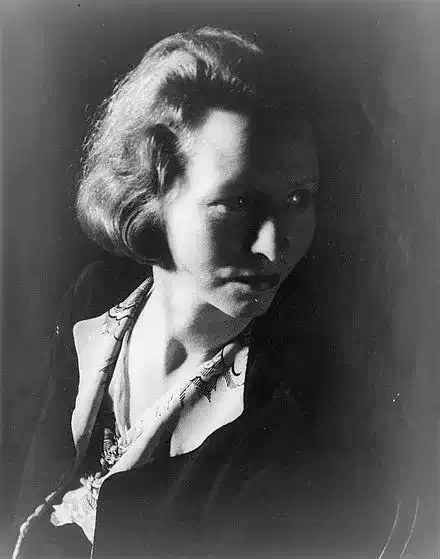
Edna St. Vincent Millay
Sonnets 04: Only Until This Cigarette Is Ended
Only until this cigarette is ended,
A little moment at the end of all,
While on the floor the quiet ashes fall,
And in the firelight to a lance extended,
Bizarrely with the jazzing music blended,
The broken shadow dances on the wall,
I will permit my memory to recall
The vision of you, by all my dreams attended.
And then adieu,—farewell!—the dream is done.
Yours is a face of which I can forget
The color and the features, every one,
The words not ever, and the smiles not yet;
But in your day this moment is the sun
Upon a hill, after the sun has set.
261
Thomas Hardy
The Bridge of Lodi (Spring, )
I
When of tender mind and body
I was moved by minstrelsy,
And that strain "The Bridge of Lodi"
Brought a strange delight to me.
II
In the battle-breathing jingle
Of its forward-footing tune
I could see the armies mingle,
And the columns cleft and hewn
III
On that far-famed spot by Lodi
Where Napoleon clove his way
To his fame, when like a god he
Bent the nations to his sway.
IV
Hence the tune came capering to me
While I traced the Rhone and Po;
Nor could Milan's Marvel woo me
From the spot englamoured so.
V
And to-day, sunlit and smiling,
Here I stand upon the scene,
With its saffron walls, dun tiling,
And its meads of maiden green,
VI
Even as when the trackway thundered
With the charge of grenadiers,
And the blood of forty hundred
Splashed its parapets and piers . . .
VII
Any ancient crone I'd toady
Like a lass in young-eyed prime,
Could she tell some tale of Lodi
At that moving mighty time.
VIII
So, I ask the wives of Lodi
For traditions of that day;
But alas! not anybody
Seems to know of such a fray.
IX
And they heed but transitory
Marketings in cheese and meat,
Till I judge that Lodi's story
Is extinct in Lodi's street.
X
Yet while here and there they thrid them
In their zest to sell and buy,
Let me sit me down amid them
And behold those thousands die . . .
XI
- Not a creature cares in Lodi
How Napoleon swept each arch,
Or where up and downward trod he,
Or for his memorial March!
XII
So that wherefore should I be here,
Watching Adda lip the lea,
When the whole romance to see here
Is the dream I bring with me?
XIII
And why sing "The Bridge of Lodi"
As I sit thereon and swing,
When none shows by smile or nod he
Guesses why or what I sing? . . .
XIV
Since all Lodi, low and head ones,
Seem to pass that story by,
It may be the Lodi-bred ones
Rate it truly, and not I.
XV
Once engrossing Bridge of Lodi,
Is thy claim to glory gone?
Must I pipe a palinody,
Or be silent thereupon?
XVI
And if here, from strand to steeple,
Be no stone to fame the fight,
Must I say the Lodi people
Are but viewing crime aright?
Nay; I'll sing "The Bridge of Lodi" -
That long-loved, romantic thing,
Though none show by smile or nod he
Guesses why and what I sing!
261