Memories and Recollections

Henry Lawson
The Memories They Bring
I would never waste the hours
Of the time that is mine own,
Writing verses about flowers
For their own sweet sakes alone;
Gushing as a schoolgirl gushes
Over babies at their best—
Or as poets trill of thrushes,
Larks, and starlings and the rest.
I am not a man who praises
Beauty that he cannot see,
But the buttercups and daisies
Bring my childhood back to me;
And before life’s bitter battle,
That breaks lion hearts and kills,
Oh the waratah and wattle
Saw my boyhood on the hills.
It was “Cissy” or Cecilia,
And I loved her very much,
When I wore the white camelia
That will wither at a touch.
Ah, the fairest chapter closes
With lilies white and blue,
When the wild days with the roses
Cast their glamour over you!
Vine leaves fall and laurels wither
(Madd’ning drink and pride insane),
And the fate that sends us hither
Ever takes us back again.
Fading flowers—slow pulsations—
Flowers pressed for memory
But the red and pink carnations
Speak most bitter things to me.
262

Robert W. Service
The Living Dead
Since I have come to years sedate
I see with more and more acumen
The bitter irony of Fate,
The vanity of all things human.
Why, just to-day some fellow said,
As I surveyed Fame's outer portal:
"By gad! I thought that you were dead."
Poor me, who dreamed to be immortal!
But that's the way with many men
Whose name one fancied time-defying;
We thought that they were dust and then
We found them living by their dying.
Like dogs we penmen have our day,
To brief best-sellerdom elected;
And then, "thumbs down," we slink away
And die forgotten and neglected.
Ah well, my lyric fling I've had;
A thousand bits of verse I've minted;
And some, alas! were very bad,
And some, alack! were best unprinted.
But if I've made my muse a bawd
(Since I am earthy as a ditch is),
I'll answer humbly to my God:
Most men at times have toyed with bitches.
Yes, I have played with Lady Rhyme,
And had a long and lovely innings;
And when the Umpire calls my time
I'll blandly quit and take my winnings.
I'll hie me to some Sleepydale,
And feed the ducks and pat the poodles,
And prime my paunch with cakes and ale,
And blether with the village noodles.
And then some day you'll idly scan
The Times obituary column,
And say: "Dear me, the poor old man!"
And for a moment you'll look solemn.
"So all this time he's been alive -
In realms of rhyme a second-rater . . .
But gad! to live to ninety-five:
Let's toast his ghost - a sherry, waiter!"
262
Henry Lawson
Old Tunes
When friends are listening round me, Jack, to hear my dying breath,
And I am lying in a sleep they say will end in death,
Don’t notice what the doctor says—and let the nurse complain——
I’ll tell you how to rouse me if I’ll ever wake again.
Just you bring in your fiddle, Jack, and set your heart in tune,
And strike up “Annie Laurie”, or “The Rising of the Moon”;
And if you see no token of a rising in my throat,
You’ll need to brace your mouth, old man—I’m booked by Charon’s boat.
And if you are not satisfied that I am off the scene,
Strike up “The Marseillaise”, or else “The Wearing of the Green”;
And should my fingers tremble not, then I have crossed the line,
But keep your fingers steady, Jack, and strike up “Auld Lang Syne”.
262

Emily Dickinson
Of nearness to her sundered Things
Of nearness to her sundered Things
The Soul has special times-
When Dimness-looks the OddityDistinctness-
easy-seems-
The Shapes we buried, dwell about,
Familiar, in the Rooms-
Untarnished by the Sepulchre,
The Mouldering Playmate comes-
In just the Jacket that he wore-
Long buttoned in the Mold
Since we-old mornings, Children-played
Divided-
by a world-
The Grave yields back her Robberies-
The Years, our pilfered Things-
Bright Knots of Apparitions
Salute us, with their wings-
As we-it were-that perished
Themself-
had just remained till we rejoin them-
And 'twas they, and not ourself
That mourned.
261
Henry Lawson
The Song of a Prison
Now this is the song of a prison—a song of a gaol or jug—
A ballad of quod or of chokey, the ultimate home of the mug.
The yard where the Foolish are drafted; Hell’s school where the harmless are taught;
For the big beast never is captured and the great thief never is caught.
A song of the trollop’s victim, and the dealer in doubtful eggs,
And a song of the man who was ruined by the lie with a thousand legs.
A song of suspected persons and rouge-and-vagabond pals,
And of persons beyond suspicion—the habitual criminals.
’Tis a song of the weary warders, whom prisoners call “the screws”—
A class of men who I fancy would cleave to the “Evening News.”
They look after their treasures sadly. By the screw of their keys they are known,
And they screw them many times daily before they draw their own.
It is written on paper pilfered from the prison printery,
With a stolen stump of a pencil that a felon smuggled for me.
And he’d have got twenty-four hours in the cells if he had been caught,
With bread to eat and water to drink and plenty of food for thought.
And I paid in chews of tobacco from one who is in for life;
But he is a decent fellow—he only murdered his wife.
(He is cherub-like, jolly, good-natured, and frank as the skies above,
And his Christian name is Joseph, and his other, ye gods! is Love!)
The Governor knows, and the Deputy, and all of the warders know,
Once a week, and on Sunday, we sit in a sinful row,
And bargain for chews of tobacco under the cover of prayer—
And the harmless Anglican chaplain is the only innocent there.
Staircase and doors of iron, no sign of a plank or brick,
Ceilings and floors of sandstone, and the cell walls two feet thick;
Cell like a large-sized coffin, or a small-sized tomb, and white,
And it strikes a chill to the backbone on the warmest summer night.
For fifteen hours they leave you to brood in the gloom and cold
On the cheats that you should have cheated, and the lies that you should have told;
On the money that would release you, you lent to many a friend,
And the many a generous action you suffered for in the end.
Grey daylight follows softly the heartless electric light
That printed the bars of the window on the wall of the cell all night
The darkness has vanished “hushing” when there is nothing to hush—
And I think of the old grey daylight on the teamster’s camp in the bush.
I think of the low bark homestead, the yard and the sinister bail,
And the shed in a hole in the gully—a pigsty compared with gaol;
The drought and the rows and the nagging; the hill where a flat grave is—
The gaol of my boyhood as dreadful and barren and grey as this.
We rise at six when the bell rings, and roll up our blankets neat,
Then we pace the cell till seven, brain-dulled, and with leaden feet.
Bolts clank, and the iron doors open, light floods from an iron-barred arch—
And we start with a start galvanic at the passionless, “Left—Quick march!”
Down the crooked and winding staircase in the great wrong-angular well,
Like the crooked stairs that of late years we have stumbled down to Hell;
We empty the tubs and muster, with the prison slouch and tread,
And we take to the cells our breakfast of hominy and of bread.
The church in its squat round tower, with Christ in His thorny wreath—
The reception house is below it, so the gates of Hell are beneath,
Where sinners are clad and numbered, when hope for a while has
And above us the gilded rooster that crowed when Peter lied.
What avail is the prayer of the abbess? Or the raving of Cock-eyed Liz?
The holy hermit in his cell, or the Holy Terror in his?
Brothers and sisters of Heaven, seen through the bars in a wall,
As we see the uncaught sinners—and God have mercy on all.
259

John Greenleaf Whittier
Kenoza Lake
As Adam did in Paradise,
To-day the primal right we claim
Fair mirror of the woods and skies,
We give to thee a name.
Lake of the pickerel!--let no more
The echoes answer back, 'Great Pond,'
But sweet Kenoza, from thy shore
And watching hills beyond,
Let Indian ghosts, if such there be
Who ply unseen their shadowy lines,
Call back the ancient name to thee,
As with the voice of pines.
The shores we trod as barefoot boys,
The nutted woods we wandered through,
To friendship, love, and social joys
We consecrate anew.
Here shall the tender song be sung,
And memory's dirges soft and low,
And wit shall sparkle on the tongue,
And mirth shall overflow,
Harmless as summer lightning plays
From a low, hidden cloud by night,
A light to set the hills ablaze,
But not a bolt to smite.
In sunny South and prairied West
Are exiled hearts remembering still,
As bees their hive, as birds their nest,
The homes of Haverhill.
They join us in our rites to-day;
And, listening, we may hear, erelong,
From inland lake and ocean bay,
The echoes of our song.
Kenoza! o'er no sweeter lake
Shall morning break or noon-cloud sail,-No
fairer face than thine shall take
The sunset's golden veil.
Long be it ere the tide of trade
Shall break with harsh-resounding din
The quiet of thy banks of shade,
And hills that fold thee in.
Still let thy woodlands hide the hare,
The shy loon sound his trumpet-note,
Wing-weary from his fields of air,
The wild-goose on thee float.
Thy peace rebuke our feverish stir,
Thy beauty our deforming strife;
Thy woods and waters minister
The healing of their life.
And sinless Mirth, from care released,
Behold, unawed, thy mirrored sky,
Smiling as smiled on Cana's feast
The Master's loving eye.
And when the summer day grows dim,
And light mists walk thy mimic sea,
Revive in us the thought of Him
Who walked on Galilee!
260
John Greenleaf Whittier
My Playmate
The pines were dark on Ramoth hill,
Their song was soft and low;
The blossoms in the sweet May wind
Were falling like the snow.
The blossoms drifted at our feet,
The orchard birds sang clear;
The sweetest and the saddest day
It seemed of all the year.
For, more to me than birds or flowers,
My playmate left her home,
And took with her the laughing spring,
The music and the bloom.
She kissed the lips of kith and kin,
She laid her hand in mine
What more could ask the bashful boy
Who fed her father's kine?
She left us in the bloom of May
The constant years told o'er
Their seasons with as sweet May morns,
But she came back no more.
I walk, with noiseless feet, the round
Of uneventful years;
Still o'er and o'er I sow the spring
And reap the autumn ears.
She lives where all the golden year
Her summer roses blow;
The dusky children of the sun
Before her come and go.
There haply with her jewelled hands
She smooths her silken gown,
No
more the homespun lap wherein
I shook the walnuts down.
The wild grapes wait us by the brook,
The brown nuts on the hill,
And still the May-day flowers make sweet
The woods of Follymill.
The lilies blossom in the pond,
The bird builds in the tree,
The dark pines sing on Ramoth hill
The slow song of the sea.
I wonder if she thinks of them,
And how the old time seems,
If ever the pines of Ramoth wood
Are sounding in her dreams.
I see her face, I hear her voice;
Does she remember mine?
And what to her is now the boy
Who fed her father's kine?
What cares she that the orioles build
For other eyes than ours,
That
other hands with nuts are filled,
And other laps with flowers?
O playmate in the golden time!
Our mossy seat is green,
Its fringing violets blossom yet,
The old trees o'er it lean.
The winds so sweet with birch and fern
A sweeter memory blow;
And there in spring the veeries sing
The song of long ago.
And still the pines of Ramoth wood
Are moaning like the sea,
The moaning of the sea of change
Between myself and thee!
258

William Wordsworth
The Reaper
Behold her, single in the field,
Yon solitary Highland Lass!
Reaping and singing by herself;
Stop here, or gently pass!
Alone she cuts and binds the grain,
And sings a melancholy strain;
O listen! for the vale profound
Is overflowing with the sound.
No nightingale did ever chaunt
More welcome notes to weary bands
Of travellers in some shady haunt,
Among Arabian sands:
A voice so thrilling ne'er was heard
In spring-time from the cuckoo-bird
Breaking the silence of the seas
Among the farthest Hebrides.
Will no one tell me what she sings?
Perhaps the plaintive numbers flow
For old, unhappy, far-off things,
And battles long ago:
Or is it some more humble lay,
Familiar matter of today?
Some natural sorrow, loss, or pain,
That has been, and may be again!
Whate'er the theme, the maiden sang
As if her song could have no ending;
I saw her singing at her work,
And o'er the sickle bending;
I listened, motionless and still;
And as I mounted up the hill
The music in my heart I bore,
Long after it was heard no more.
259
Robert W. Service
Jim
Never knew Jim, did you? Our boy Jim?
Bless you, there was the likely lad;
Supple and straight and long of limb,
Clean as a whistle, and just as glad.
Always laughing, wasn't he, dad?
Joy, pure joy to the heart of him,
And, oh, but the soothering ways he had,
Jim, our Jim!
But I see him best as a tiny tot,
A bonny babe, though it's me that speaks;
Laughing there in his little cot,
With his sunny hair and his apple cheeks.
And my! but the blue, blue eyes he'd got,
And just where his wee mouth dimpled dim
Such a fairy mark like a beauty spot -
That was Jim.
Oh, the war, the war! How my eyes were wet!
But he says: "Don't be sorrowing, mother dear;
You never knew me to fail you yet,
And I'll be back in a year, a year."
'Twas at Mons he fell, in the first attack;
For so they said, and their eyes were dim;
But I laughed in their faces: "He'll come back,
Will my Jim."
Now, we'd been wedded for twenty year,
And Jim was the only one we'd had;
So when I whispered in father's ear,
He wouldn't believe me -- would you, dad?
There! I must hurry . . . hear him cry?
My new little baby. . . . See! that's him.
What are we going to call him? Why,
Jim, just Jim.
Jim! For look at him laughing there
In the same old way in his tiny cot,
With his rosy cheeks and his sunny hair,
And look, just look . . . his beauty spot
In the selfsame place. . . . Oh, I can't explain,
And of course you think it's a mother's whim,
But I know, I know it's my boy again,
Same wee Jim.
Just come back as he said he would;
Come with his love and his heart of glee.
Oh, I cried and I cried, but the Lord was good;
From the shadow of Death he set Jim free.
So I'll have him all over again, you see.
Can you wonder my mother-heart's a-brim?
Oh, how happy we're going to be!
Aren't we, Jim?
258
Emily Dickinson
After a hundred years
After a hundred years
Nobody knows the place,--
Agony, that enacted there,
Motionless as peace.
Weeds triumphant ranged,
Strangers strolled and spelled
At the lone orthography
Of the elder dead.
Winds of summer fields
Recollect the way,--
Instinct picking up the key
Dropped by memory.
Nobody knows the place,--
Agony, that enacted there,
Motionless as peace.
Weeds triumphant ranged,
Strangers strolled and spelled
At the lone orthography
Of the elder dead.
Winds of summer fields
Recollect the way,--
Instinct picking up the key
Dropped by memory.
258
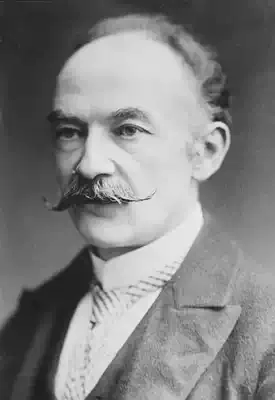
Thomas Hardy
Unknowing
WHEN, soul in soul reflected,
We breathed an æthered air,
When we neglected
All things elsewhere,
And left the friendly friendless
To keep our love aglow,
We deemed it endless...
--We did not know!
When, by mad passion goaded,
We planned to hie away,
But, unforeboded,
The storm-shafts gray
So heavily down-pattered
That none could forthward go,
Our lives seemed shattered...
--We did not know!
When I found you, helpless lying,
And you waived my deep misprise,
And swore me, dying,
In phantom-guise
To wing to me when grieving,
And touch away my woe,
We kissed, believing...
--We did not know!
But though, your powers outreckoning,
You hold you dead and dumb,
Or scorn my beckoning,
And will not come;
And I say, "'Twere mood ungainly
To store her memory so:"
I say it vainly--
I feel and know!
256
Thomas Hardy
Her Late Husband (King's-Hintock, -.)
"No--not where I shall make my own;
But dig his grave just by
The woman's with the initialed stone -
As near as he can lie -
After whose death he seemed to ail,
Though none considered why.
"And when I also claim a nook,
And your feet tread me in,
Bestow me, under my old name,
Among my kith and kin,
That strangers gazing may not dream
I did a husband win."
"Widow, your wish shall be obeyed;
Though, thought I, certainly
You'd lay him where your folk are laid,
And your grave, too, will be,
As custom hath it; you to right,
And on the left hand he."
"Aye, sexton; such the Hintock rule,
And none has said it nay;
But now it haps a native here
Eschews that ancient way . . .
And it may be, some Christmas night,
When angels walk, they'll say:
"'O strange interment! Civilized lands
Afford few types thereof;
Here is a man who takes his rest
Beside his very Love,
Beside the one who was his wife
In our sight up above!'"
256

Henry Wadsworth Longfellow
Tales Of A Wayside Inn : Part 3. Prelude
The evening came; the golden vane
A moment in the sunset glanced,
Then darkened, and then gleamed again,
As from the east the moon advanced
And touched it with a softer light;
While underneath, with flowing mane,
Upon the sign the Red Horse pranced,
And galloped forth into the night.
But brighter than the afternoon
That followed the dark day of rain,
And brighter than the golden vane
That glistened in the rising moon,
Within the ruddy fire-light gleamed;
And every separate window-pane,
Backed by the outer darkness, showed
A mirror, where the flamelets gleamed
And flickered to and fro, and seemed
A bonfire lighted in the road.
Amid the hospitable glow,
Like an old actor on the stage,
With the uncertain voice of age,
The singing chimney chanted low
The homely songs of long ago.
The voice that Ossian heard of yore,
When midnight winds were in his hall;
A ghostly and appealing call,
A sound of days that are no more!
And dark as Ossian sat the Jew,
And listened to the sound, and knew
The passing of the airy hosts,
The gray and misty cloud of ghosts
In their interminable flight;
And listening muttered in his beard,
With accent indistinct and weird,
'Who are ye, children of the Night?'
Beholding his mysterious face,
'Tell me,' the gay Sicilian said,
'Why was it that in breaking bread
At supper, you bent down your head
And, musing, paused a little space,
As one who says a silent grace?'
The Jew replied, with solemn air,
'I said the Manichaean's prayer.
It was his faith,--perhaps is mine,--
That life in all its forms is one,
And that its secret conduits run
Unseen, but in unbroken line,
From the great fountain-head divine
Through man and beast, through grain and grass.
Howe'er we struggle, strive, and cry,
From death there can be no escape,
And no escape from life, alas
Because we cannot die, but pass
From one into another shape:
It is but into life we die.
'Therefore the Manichaean said
This simple prayer on breaking bread,
Lest he with hasty hand or knife
Might wound the incarcerated life,
The soul in things that we call dead:
'I did not reap thee, did not bind thee,
I did not thrash thee, did not grind thee,
Nor did I in the oven bake thee!
It was not I, it was another
Did these things unto thee, O brother;
I only have thee, hold thee, break thee!''
'That birds have souls I can concede,'
The Poet cried, with glowing cheeks;
'The flocks that from their beds of reed
Uprising north or southward fly,
And flying write upon the sky
The biforked letter of the Greeks,
As hath been said by Rucellai;
All birds that sing or chirp or cry,
Even those migratory bands,
The minor poets of the air,
The plover, peep, and sanderling,
That hardly can be said to sing,
But pipe along the barren sands,--
All these have souls akin to ours;
So hath the lovely race of flowers:
Thus much I grant, but nothing more.
The rusty hinges of a door
Are not alive because they creak;
This chimney, with its dreary roar,
These rattling windows, do not speak!'
'To me they speak,' the Jew replied;
'And in the sounds that sink and soar,
I hear the voices of a tide
That breaks upon an unknown shore!'
Here the Sicilian interfered:
'That was your dream, then, as you dozed
A moment since, with eyes half-closed,
And murmured something in your beard.'
The Hebrew smiled, and answered, 'Nay;
Not that, but something very near;
Like, and yet not the same, may seem
The vision of my waking dream;
Before it wholly dies away,
Listen to me, and you shall hear.'
255
Henry Lawson
To a Pair of Blucher Boots
OLD acquaintance unforgotten,
Though you may be “ugly brutes”—
Though your leather’s cracked and rotten,
Worn-out pair of Blucher boots.
’Tis the richer man before you,
Dearer leathers grace his feet;
’Twas the better man that wore you
In the tramps through dust and heat!
Oft rebuffed by “super’s” snarling,
When I asked him for a “show”,
On that long tramp to the Darling
In the days of long ago;
Tell me, if you know it, whether,
As I sadly tramped away,
Bore I heavy on your leather,
Worn-out pair of Bluchers, say?
Though your leather’s cracked and rotten,
Though you may be ugly brutes,
I’ll preserve you unforgotten,
Worn-out pair of Blucher boots!
255
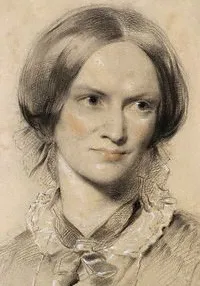
Charlotte Brontë
Evening Solace
THE human heart has hidden treasures,
In secret kept, in silence sealed;
The
thoughts, the hopes, the dreams, the pleasures,
Whose charms were broken if revealed.
And days may pass in gay confusion,
And nights in rosy riot fly,
While, lost in Fame's or Wealth's illusion,
The memory of the Past may die.
But, there are hours of lonely musing,
Such as in evening silence come,
When, soft as birds their pinions closing,
The heart's best feelings gather home.
Then in our souls there seems to languish
A tender grief that is not woe;
And thoughts that once wrung groans of anguish,
Now cause but some mild tears to flow.
And feelings, once as strong as passions,
Float softly backa
faded dream;
Our own sharp griefs and wild sensations,
The tale of others' sufferings seem.
Oh ! when the heart is freshly bleeding,
How longs it for that time to be,
When, through the mist of years receding,
Its woes but live in reverie !
And it can dwell on moonlight glimmer,
On evening shade and loneliness;
And, while the sky grows dim and dimmer,
Feel no untold and strange distress
Only
a deeper impulse given
By lonely hour and darkened room,
To solemn thoughts that soar to heaven,
Seeking a life and world to come.
255
Henry Lawson
The Heart of the Swag
Oh, the track through the scrub groweth ever more dreary,
And lower and lower his grey head doth bow;
For the swagman is old and the swagman is weary—
He’s been tramping for over a century now.
He tramps in a worn-out old “side spring” and “blucher,”
His hat is a ruin, his coat is a rag,
And he carries forever, far into the future,
The key of his life in the core of his swag.
There are old-fashioned portraits of girls who are grannies,
There are tresses of dark hair whose owner’s are grey;
There are faded old letters from Marys and Annies,
And Toms, Dicks, and Harrys, dead many a day.
There are broken-heart secrets and bitter-heart reasons—
They are sewn in a canvas or calico bag,
And wrapped up in oilskin through dark rainy seasons,
And he carries them safe in the core of his swag.
There are letters that should have been burnt in the past time,
For he reads them alone, and a devil it brings;
There were farewells that should have been said for the last time,
For, forever and ever the love for her springs.
But he keeps them all precious, and keeps them in order,
And no matter to man how his footsteps may drag,
There’s a friend who will find, when he crosses the Border,
That the Heart of the Man’s in the Heart of his swag.
254
Thomas Hardy
To An Orphan Child
A Whimsey
AH, child, thou art but half thy darling mother's;
Hers couldst thou wholly be,
My light in thee would outglow all in others;
She would relive to me.
But niggard Nature's trick of birth
Bars, lest she overjoy,
Renewal of the loved on earth
Save with alloy.
The Dame has no regard, alas, my maiden,
For love and loss like mine--
No sympathy with mind-sight memory-laden;
Only with fickle eyne.
To her mechanic artistry
My dreams are all unknown,
And why I wish that thou couldst be
But One's alone!
251

Mao Tsé-Tung
Reply to Mr. Liu Ya-Tzu
I still remember our drinking tea in Kwangchow
And your asking for verses in Chungking as the leaves yellowed.
Back in the old capital after thirty-one years,
At the season of falling flowers I read your polished lines.
Beware of heartbreak with grievance overfull,
Range far your eye over long vistas.
Do not say the waters of Kunming Lake are too shallow,
For watching fish they are better than Fuchun River.
248
Henry Lawson
The Professional Wanderer
When you’ve knocked about the country—been away from home for years;
When the past, by distance softened, nearly fills your eyes with tears—
You are haunted oft, wherever or however you may roam,
By a fancy that you ought to go and see the folks at home.
You forget the family quarrels—little things that used to jar—
And you think of how they’ll worry—how they wonder where you are;
You will think you served them badly, and your own part you’ll condemn,
And it strikes you that you’ll surely be a novelty to them,
For your voice has somewhat altered, and your face has somewhat changed—
And your views of men and matters over wider fields have ranged.
Then it’s time to save your money, or to watch it (how it goes!);
Then it’s time to get a ‘Gladstone’ and a decent suit of clothes;
Then it’s time to practise daily with a hair-brush and a comb,
Till you drop in unexpected on the folks and friends at home.
When you’ve been at home for some time, and the novelty’s worn off,
And old chums no longer court you, and your friends begin to scoff;
When ‘the girls’ no longer kiss you, crying ‘Jack! how you have changed!’
When you’re stale to your relations, and their manner seems estranged ;
When the old domestic quarrels, round the table thrice a day,
Make it too much like the old times—make you wish you’d stayed away,
When, in short, you’ve spent your money in the fulness of your heart,
And your clothes are getting shabby . . . Then it’s high time to depart.
248

D.H. Lawrence
Sorrow
Why does the thin grey strand
Floating up from the forgotten
Cigarette between my fingers,
Why does it trouble me?
Ah, you will understand;
When I carried my mother downstairs,
A few times only, at the beginning
Of her soft-foot malady,
I should find, for a reprimand
To my gaiety, a few long grey hairs
On the breast of my coat; and one by one
I let them float up the dark chimney.
248
Emily Dickinson
T was just this time last year I died.
'T was just this time last year I died.
I know I heard the corn,
When I was carried by the farms,-It
had the tassels on.
I thought how yellow it would look
When Richard went to mill;
And then I wanted to get out,
But something held my will.
I thought just how red apples wedged
The stubble's joints between;
And carts went stooping round the fields
To take the pumpkins in.
I wondered which would miss me least,
And when Thanksgiving came,
If father'd multiply the plates
To make an even sum.
And if my stocking hung too high,
Would it blur the Christmas glee,
That not a Santa Claus could reach
The altitude of me?
But this sort grieved myself, and so
I thought how it would be
When just this time, some perfect year,
Themselves should come to me.
246
Robert W. Service
Kings Must Die
Alphonso Rex who died in Rome
Was quite a fistful as a kid;
For when I visited his home,
That gorgeous palace in Madrid,
The grinning guide-chap showed me where
He rode his bronco up the stair.
That stairway grand of marbled might,
The most majestic in the land,
In statured splendour, flight on flight,
He urged his steed with whip in hand.
No lackey could restrain him for
He gained the gilded corridor.
He burst into the Royal suite,
And like a cowboy whooped with glee;
Dodging the charger's flying feet
The Chamberlain was shocked to see:
Imagine how it must have been a
Grief to Mother Queen Christina!
And so through sheer magnificence
I roamed from stately room to room,
Yet haunted ever by the sense
Of tragical dynastic doom.
The walls were wailing: Kings must die,
Being plain blokes like you and I.
Well, here's the moral to my rhyme:
When memories more worthy fade
We find that whimsically Time
Conserves some crazy escapade.
So as I left I stood to stare
With humorous enjoyment where
Alphonso crashed the Palace stair.
244
Henry Wadsworth Longfellow
Delia. (Birds Of Passage. Flight The Fifth)
Sweet as the tender fragrance that survives,
When martyred flowers breathe out their little lives,
Sweet as a song that once consoled our pain,
But never will be sung to us again,
Is thy remembrance. Now the hour of rest
Hath come to thee. Sleep, darling; it is best.
When martyred flowers breathe out their little lives,
Sweet as a song that once consoled our pain,
But never will be sung to us again,
Is thy remembrance. Now the hour of rest
Hath come to thee. Sleep, darling; it is best.
240