
Memories and Recollections
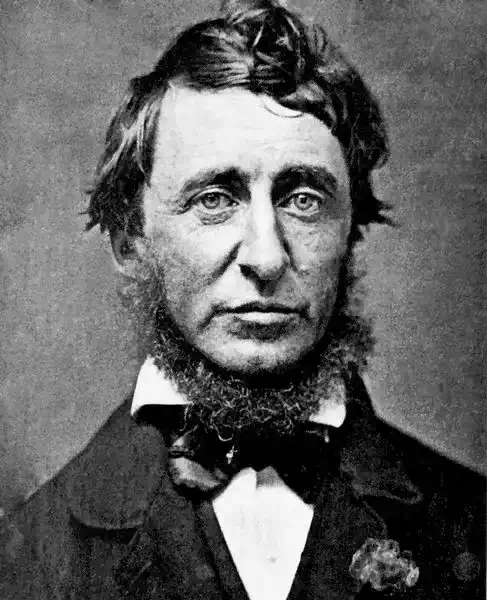
Henry David Thoreau
Winter Memories
Within the circuit of this plodding life
There enter moments of an azure hue,
Untarnished fair as is the violet
Or anemone, when the spring stew them
By some meandering rivulet, which make
The best philosophy untrue that aims
But to console man for his grievences.
I have remembered when the winter came,
High in my chamber in the frosty nights,
When in the still light of the cheerful moon,
On the every twig and rail and jutting spout,
The icy spears were adding to their length
Against the arrows of the coming sun,
How in the shimmering noon of winter past
Some unrecorded beam slanted across
The upland pastures where the Johnwort grew;
Or heard, amid the verdure of my mind,
The bee's long smothered hum, on the blue flag
Loitering amidst the mead; or busy rill,
Which now through all its course stands still and dumb
Its own memorial, - purling at its play
Along the slopes, and through the meadows next,
Until its youthful sound was hushed at last
In the staid current of the lowland stream;
Or seen the furrows shine but late upturned,
And where the fieldfare followed in the rear,
When all the fields around lay bound and hoar
Beneath a thick integument of snow.
So by God's cheap economy made rich
To go upon my winter's task again.
236

Robert W. Service
The Portrait
The portrait there above my bed
They tell me is a work of art;
My Wife,--since twenty years she's dead:
Her going nearly broke my heart.
Alas! No little ones we had
To light our hearth with joy and glee;
Yet as I linger lone and sad
I know she's waiting me.
The picture? Sargent painted it,
And it has starred in many a show.
Her eyes are on me where I sit,
And follow me where'er I go.
She'll smile like that when I am gone,
And I am frail and oh so ill!
Aye, when I'm waxen, cold and wan,
Lo! She'll be smiling still.
So I have bade them slash in strips
That relic of my paradise.
Let flame destroy those lovely lips
And char the starlight of her eyes!
No human gaze shall ever see
Her beauty,--stranger heart to stir:
Nay, her last smile shall be for me,
My last look be for her.
234

John Greenleaf Whittier
Raphael
I shall not soon forget that sight
The glow of Autumn's westering day,
A hazy warmth, a dreamy light,
On Raphael's picture lay.
It was a simple print I saw,
The fair face of a musing boy;
Yet, while I gazed, a sense of awe
Seemed blending with my joy.
A simple print,--the graceful flow
Of boyhood's soft and wavy hair,
And fresh young lip and cheek, and brow
Unmarked and clear, were there.
Yet through its sweet and calm repose
I saw the inward spirit shine;
It was as if before me rose
The white veil of a shrine.
As if, as Gothland's sage has told,
The hidden life, the man within,
Dissevered from its frame and mould,
By mortal eye were seen.
Was it the lifting of that eye,
The waving of that pictured hand?
Loose as a cloud-wreath on the sky,
I saw the walls expand.
The narrow room had vanished,--space,
Broad, luminous, remained alone,
Through which all hues and shapes of grace
And beauty looked or shone.
Around the mighty master came
The marvels which his pencil wrought,
Those miracles of power whose fame
Is wide as human thought.
There drooped thy more than mortal face,
O Mother, beautiful and mild
Enfolding in one dear embrace
Thy Saviour and thy Child!
The rapt brow of the Desert John;
The awful glory of that day
When all the Father's brightness shone
Through manhood's veil of clay.
And, midst gray prophet forms, and wild
Dark visions of the days of old,
How sweetly woman's beauty smiled
Through locks of brown and gold!
There Fornarina's fair young face
Once more upon her lover shone,
Whose model of an angel's grace
He borrowed from her own.
Slow passed that vision from my view,
But not the lesson which it taught;
The soft, calm shadows which it threw
Still rested on my thought:
The truth, that painter, bard, and sage,
Even in Earth's cold and changeful clime,
Plant for their deathless heritage
The fruits and flowers of time.
We shape ourselves the joy or fear
Of which the coming life is made,
And fill our Future's atmosphere
With sunshine or with shade.
The tissue of the Life to be
We weave with colors all our own,
And in the field of Destiny
We reap as we have sown.
Still shall the soul around it call
The shadows which it gathered here,
And, painted on the eternal wall,
The Past shall reappear.
Think ye the notes of holy song
On Milton's tuneful ear have died?
Think ye that Raphael's angel throng
Has vanished from his side?
Oh no!--We live our life again;
Or warmly touched, or coldly dim,
The pictures of the Past remain,--Man's
works shall follow him!
232

Christina Rossetti
Remember
Remember me when I am gone away,
Gone far away into the silent land;
When you can no more hold me by the hand,
Nor I half turn to go yet turning stay.
Remember me when no more day by day
You tell me of our future that you plann'd:
Only remember me; you understand
It will be late to counsel then or pray.
Yet if you should forget me for a while
And afterwards remember, do not grieve:
For if the darkness and corruption leave
A vestige of the thoughts that once I had,
Better by far you should forget and smile
Than that you should remember and be sad.
229
Christina Rossetti
At Home
When I was dead, my spirit turned
To seek the much-frequented house:
I passed the door, and saw my friends
Feasting beneath green orange boughs;
From hand to hand they pushed the wine,
They sucked the pulp of plum and peach;
They sang, they jested, and they laughed,
For each was loved of each.
I listened to thier honest chat:
Said one: "To-morrow we shall be
Plod plod along the featureless sands,
And coasting miles and miles of sea."
Said one: "Before the turn of tide
We will achieve the eyrie-seat."
Said one: "To-morrow shall be like
To-day, but much more sweet."
"To-morrow," said they, strong with hope,
And dwelt upon the pleasant way:
"To-morrow," cried they, one and all,
While no one spoke of yesterday.
Their life stood full at blessed noon;
I, only I, had passed away:
"To-morrow and to-day," they cried;
I was of yesterday.
I shivered comfortless, but cast
No chill across the table-cloth;
I, all-forgotten, shivered, sad
To stay, and yet to part how loth:
I passed from the familiar room,
I who from love had passed away,
Like the remembrance of a guest
That tarrieth but a day.
228
Robert W. Service
Song Of The Sardine
A fat man sat in an orchestra stall and his cheeks were wet with tears,
As he gazed at the primadonna tall, whom he hadn't seen in years.
"Oh don't you remember" he murmured low "that Spring in Montparnasse,
When hand in hand we used to go to our nightly singing class.
Ah me those days so gay and glad, so full of hope and cheer.
And that little super that we had of tinned sardines and beer.
When you looked so like a little queen with your proud and haughty air,
That I took from the box the last sardine and I twined it in your hair."
Alas I am only a stockbroker now while you are high and great,
The laurels of fame adorn your brow while on you Princes wait.
And as I sit so sadly here and list to your thrilling tones,
You cannot remember I sadly fear if my name is Smith or jones.
Yet Oh those days of long ago, when I had scarce a sou.
And as my bitter tears down flow I think again of you.
And once again I seem to see that mad of sweet sixteen,
Within whose tresses tenderly I twined that bright sardine.
Chorus:
Oh that sardine in your hair, I can see it shining there,
As I took it from its box, And I twined it in your locks.
Silver sardine in your hair. Like a jewel rich and rare,
Oh that little silver sardine in your hair.
226
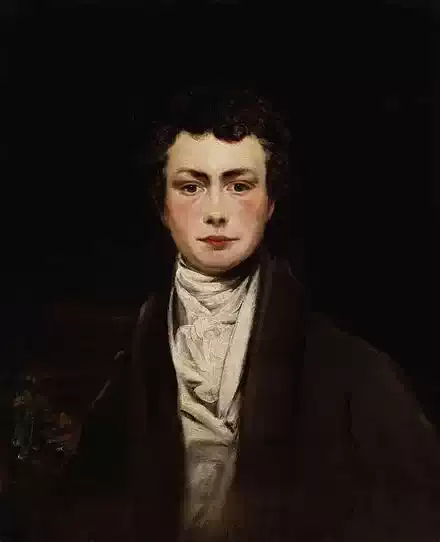
Thomas Moore
Go Where Glory Waits Thee
Go where glory waits thee,
But while fame elates thee,
Oh! still remember me.
When the praise thou meetest
To thine ear is sweetest,
Oh! then remember me.
Other arms may press thee,
Dearer friends caress thee,
All the joys that bless thee,
Sweeter far may be;
But when friends are nearest,
And when joys are dearest,
Oh! then remember me!
When, at eve, thou rovest
By the star thou lovest,
Oh! then remember me.
Think, when home returning,
Bright we've seen it burning,
Oh! thus remember me.
Oft as summer closes,
When thine eye reposes
On its lingering roses,
Once so loved by thee,
Think of her who wove them,
Her who made thee love them,
Oh! then remember me.
When, around thee dying,
Autumn leaves are lying,
Oh! then remember me.
And, at night, when gazing
On the gay hearth blazing,
Oh! still remember me.
Then should music, stealing
All the soul of feeling,
To thy heart appealing,
Draw one tear from thee;
Then let memory bring thee
Strains I used to sing thee, --
Oh! then remember me.
228

Thomas Hardy
I have lived with Shades
I
I have lived with Shades so long,
So long have talked to them,
I sped to street and throng,
That sometimes they
In their dim style
Will pause awhile
To hear my say;
II
And take me by the hand,
And lead me through their rooms
In the To-Be, where Dooms
Half-wove and shapeless stand:
And show from there
The dwindled dust
And rot and rust
Of things that were.
III
"Now turn," they said to me
One day: "Look whence we came,
And signify his name
Who gazes thence at thee" --
-- "Nor name nor race
Know I, or can,"
I said, "Of man
So commonplace."
IV
"He moves me not at all:
I note no ray or jot
Of rareness in his lot,
Or star exceptional.
Into the dim
Dead throngs around
He'll sink, nor sound
Be left of him."
V
"Yet," said they, "his frail speech,
Hath accents pitched like thine --
Thy mould and his define
A likeness each to each --
But go! Deep pain
Alas, would be
His name to thee,
And told in vain!"
229
Robert W. Service
My Library
Like prim Professor of a College
I primed my shelves with books of knowledge;
And now I stand before them dumb,
Just like a child that sucks its thumb,
And stares forlorn and turns away,
With dolls or painted bricks to play.
They glour at me, my tomes of learning.
"You dolt!" they jibe; "you undiscerning
Moronic oaf, you make a fuss,
With highbrow swank selecting us;
Saying: "I'll read you all some day' -
And now you yawn and turn away.
"Unwanted wait we with our store
Of facts and philosophic lore;
The scholarship of all the ages
Snug packed within our uncut pages;
The mystery of all mankind
In part revealed - but you are blind.
"You have no time to read, you tell us;
Oh, do not think that we are jealous
Of all the trash that wins your favour,
The flimsy fiction that you savour:
We only beg that sometimes you
Will spare us just an hour or two.
"For all the minds that went to make us
Are dust if folk like you forsake us,
And they can only live again
By virtue of your kindling brain;
In magice print they packed their best:
Come - try their wisdom to digest. . . ."
Said I: "Alas! I am not able;
I lay my cards upon the table,
And with deep shame and blame avow
I am too old to read you now;
So I will lock you in glass cases
And shun your sad, reproachful faces."
* * * * * * * * *
My library is noble planned,
Yet in it desolate I stand;
And though my thousand books I prize,
Feeling a witling in their eyes,
I turn from them in weariness
To wallow in the Daily Press.
For, oh, I never, never will
The noble field of knowledge till:
I pattern words with artful tricks,
As children play with painted bricks,
And realize with futile woe,
Nothing I know - nor want to know.
My library has windowed nooks;
And so I turn from arid books
To vastitude of sea and sky,
And like a child content am I
With peak and plain and brook and tree,
Crying: "Behold! the books for me:
Nature, be thou my Library!"
228

Spike Milligan
Goodbye S.S.
Go away girl, go away
and let me pack my dreams
Now where did I put those yesteryears
made up with broken seams
Where shall I sweep the pieces
my God they still look new
There's a taxi waiting at the door
but there's only room for you
and let me pack my dreams
Now where did I put those yesteryears
made up with broken seams
Where shall I sweep the pieces
my God they still look new
There's a taxi waiting at the door
but there's only room for you
226
Thomas Hardy
Neutral Tones
WE stood by a pond that winter day,
And the sun was white, as though chidden of God,
And a few leaves lay on the starving sod,
--They had fallen from an ash, and were gray.
Your eyes on me were as eyes that rove
Over tedious riddles solved years ago;
And some words played between us to and fro--
On which lost the more by our love.
The smile on your mouth was the deadest thing
Alive enough to have strength to die;
And a grin of bitterness swept thereby
Like an ominous bird a-wing....
Since then, keen lessons that love deceives,
And wrings with wrong, have shaped to me
Your face, and the God-curst sun, and a tree,
And a pond edged with grayish leaves.
226

Emily Dickinson
Like Some Old fashioned Miracle
Like Some Old fashioned Miracle
When Summertime is done-
Seems Summer's Recollection
And the Affairs of June
As infinite Tradition
As Cinderella's Bays-
Or Little John-of Lincoln Green-
Or Blue Beard's Galleries-
Her Bees have a fictitious Hum-
Her Blossoms, like a Dream-
Elate us-till we almost weep-
So plausible-they seem-
Her Memories like Strains-Review-
When Orchestra is dumb-
The Violin in Baize replaced-
And Ear-and Heaven-numb-
223
Thomas Hardy
On an Invitation to the United States
I
My ardours for emprize nigh lost
Since Life has bared its bones to me,
I shrink to seek a modern coast
Whose riper times have yet to be;
Where the new regions claim them free
From that long drip of human tears
Which peoples old in tragedy
Have left upon the centuried years.
II
For, wonning in these ancient lands,
Enchased and lettered as a tomb,
And scored with prints of perished hands,
And chronicled with dates of doom,
Though my own Being bear no bloom
I trace the lives such scenes enshrine,
Give past exemplars present room,
And their experience count as mine.
224
Thomas Hardy
Rome: At the Pyramid of Cestius. (Near the graves of Shelley & Keats)
Who, then, was Cestius,
And what is he to me? -
Amid thick thoughts and memories multitudinous
One thought alone brings he.
I can recall no word
Of anything he did;
For me he is a man who died and was interred
To leave a pyramid
Whose purpose was exprest
Not with its first design,
Nor till, far down in Time, beside it found their rest
Two countrymen of mine.
Cestius in life, maybe,
Slew, breathed out threatening;
I know not. This I know: in death all silently
He does a kindlier thing,
In beckoning pilgrim feet
With marble finger high
To where, by shadowy wall and history-haunted street,
Those matchless singers lie . . .
--Say, then, he lived and died
That stones which bear his name
Should mark, through Time, where two immortal Shades abide;
It is an ample fame.
225
Thomas Hardy
The House of Hospitalities
Here we broached the Christmas barrel,
Pushed up the charred log-ends;
Here we sang the Christmas carol,
And called in friends.
Time has tired me since we met here
When the folk now dead were young,
And the viands were outset here
And quaint songs sung.
And the worm has bored the viol
That used to lead the tune,
Rust eaten out the dial
That struck night's noon.
Now no Christmas brings in neighbours,
And the New Year comes unlit;
Where we sang the mole now labours,
And spiders knit.
Yet at midnight if here walking,
When the moon sheets wall and tree,
I see forms of old time talking,
Who smile on me.
222
Thomas Hardy
Rom: On the Palatine (April, )
We walked where Victor Jove was shrined awhile,
And passed to Livia's rich red mural show,
Whence, thridding cave and Criptoportico,
We gained Caligula's dissolving pile.
And each ranked ruin tended to beguile
The outer sense, and shape itself as though
It wore its marble hues, its pristine glow
Of scenic frieze and pompous peristyle.
When lo, swift hands, on strings nigh over-head,
Began to melodize a waltz by Strauss:
It stirred me as I stood, in Caesar's house,
Raised the old routs Imperial lyres had led,
And blended pulsing life with lives long done,
Till Time seemed fiction, Past and Present one.
222
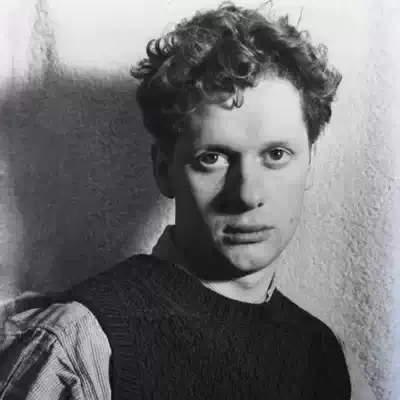
Dylan Thomas
Once It Was the Colour of Saying
Once it was the colour of saying
Soaked my table the uglier side of a hill
With a capsized field where a school sat still
And a black and white patch of girls grew playing;
The gentle seaslides of saying I must undo
That all the charmingly drowned arise to cockcrow and kill.
When I whistled with mitching boys through a reservoir park
Where at night we stoned the cold and cuckoo
Lovers in the dirt of their leafy beds,
The shade of their trees was a word of many shades
And a lamp of lightning for the poor in the dark;
Now my saying shall be my undoing,
And every stone I wind off like a reel.
218
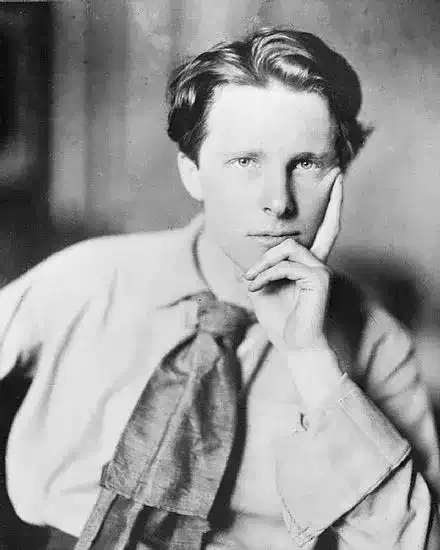
Rupert Brooke
The One Before the Last
I dreamt I was in love again
With the One Before the Last,
And smiled to greet the pleasant pain
Of that innocent young past.
But I jumped to feel how sharp had been
The pain when it did live,
How the faded dreams of Nineteen-ten
Were Hell in Nineteen-five.
The boy's woe was as keen and clear,
The boy's love just as true,
And the One Before the Last, my dear,
Hurt quite as much as you.
* * * * *
Sickly I pondered how the lover
Wrongs the unanswering tomb,
And sentimentalizes over
What earned a better doom.
Gently he tombs the poor dim last time,
Strews pinkish dust above,
And sighs, "The dear dead boyish pastime!
But THIS -- ah, God! -- is Love!"
-- Better oblivion hide dead true loves,
Better the night enfold,
Than men, to eke the praise of new loves,
Should lie about the old!
* * * * *
Oh! bitter thoughts I had in plenty.
But here's the worst of it --
I shall forget, in Nineteen-twenty,
YOU ever hurt abit!
218
Robert W. Service
The Little Old Log Cabin
When a man gits on his uppers in a hard-pan sort of town,
An' he ain't got nothin' comin' an' he can't afford ter eat,
An' he's in a fix for lodgin' an' he wanders up an' down,
An' you'd fancy he'd been boozin', he's so locoed 'bout the feet;
When he's feelin' sneakin' sorry an' his belt is hangin' slack,
An' his face is peaked an' gray-like an' his heart gits down an' whines,
Then he's apt ter git a-thinkin' an' a-wishin' he was back
In the little ol' log cabin in the shadder of the pines.
When he's on the blazin' desert an' his canteen's sprung a leak,
An' he's all alone an' crazy an' he's crawlin' like a snail,
An' his tongue's so black an' swollen that it hurts him fer to speak,
An' he gouges down fer water an' the raven's on his trail;
When he's done with care and cursin' an' he feels more like to cry,
An' he sees ol' Death a-grinnin' an' he thinks upon his crimes,
Then he's like ter hev' a vision, as he settles down ter die,
Of the little ol' log cabin an' the roses an' the vines.
Oh, the little ol' log cabin, it's a solemn shinin' mark,
When a feller gits ter sinnin' an' a-goin' ter the wall,
An' folks don't understand him an' he's gropin' in the dark,
An' he's sick of bein' cursed at an' he's longin' fer his call!
When the sun of life's a-sinkin' you can see it 'way above,
On the hill from out the shadder in a glory 'gin the sky,
An' your mother's voice is callin', an' her arms are stretched in love,
An' somehow you're glad you're goin', an' you ain't a-scared to die;
When you'll be like a kid again an' nestle to her breast,
An' never leave its shelter, an' forget, an' love, an' rest.
216
Rupert Brooke
The Treasure
When colour goes home into the eyes,
And lights that shine are shut again
With dancing girls and sweet birds' cries
Behind the gateways of the brain;
And that no-place which gave them birth, shall close
The rainbow and the rose: --
Still may Time hold some golden space
Where I'll unpack that scented store
Of song and flower and sky and face,
And count, and touch, and turn them o'er,
Musing upon them; as a mother, who
Has watched her children all the rich day through
Sits, quiet-handed, in the fading light,
When children sleep, ere night.
212

William Wordsworth
Surprised by Joy
Surprised By Joy
Surprised by joy — impatient as the Wind
I turned to share the transport--Oh! with whom
But Thee, deep buried in the silent tomb,
That spot which no vicissitude can find?
Love, faithful love, recalled thee to my mind--
But how could I forget thee? Through what power,
Even for the least division of an hour,
Have I been so beguiled as to be blind
To my most grievous loss?--That thought's return
Was the worst pang that sorrow ever bore,
Save one, one only, when I stood forlorn,
Knowing my heart's best treasure was no more;
That neither present time, nor years unborn
Could to my sight that heavenly face restore.
211
William Wordsworth
The Prelude, Book : School-time (Continued)
. Thus far, O Friend! have we, though leaving much
Unvisited, endeavour'd to retrace
My life through its first years, and measured back
The way I travell'd when I first began
To love the woods and fields; the passion yet
Was in its birth, sustain'd, as might befal,
By nourishment that came unsought, for still,
From week to week, from month to month, we liv'd
A round of tumult: duly were our games
Prolong'd in summer till the day-light fail'd;
No chair remain'd before the doors, the bench
And threshold steps were empty; fast asleep
The Labourer, and the old Man who had sate,
A later lingerer, yet the revelry
Continued, and the loud uproar: at last,
When all the ground was dark, and the huge clouds
Were edged with twinkling stars, to bed we went,
With weary joints, and with a beating mind.
Ah! is there one who ever has been young,
Nor needs a monitory voice to tame
The pride of virtue, and of intellect?
And is there one, the wisest and the best
Of all mankind, who does not sometimes wish
For things which cannot be, who would not give,
If so he might, to duty and to truth
The eagerness of infantine desire?
A tranquillizing spirit presses now
On my corporeal frame: so wide appears
The vacancy between me and those days,
Which yet have such self-presence in my mind
That, sometimes, when I think of them, I seem
Two consciousnesses, conscious of myself
And of some other Being. A grey Stone
Of native rock, left midway in the Square
Of our small market Village, was the home
And centre of these joys, and when, return'd
After long absence, thither I repair'd,
I found that it was split, and gone to build
A smart Assembly-room that perk'd and flar'd
With wash and rough-cast elbowing the ground
Which had been ours. But let the fiddle scream,
And be ye happy! yet, my Friends! I know
That more than one of you will think with me
Of those soft starry nights, and that old Dame
From whom the stone was nam'd who there had sate
And watch'd her Table with its huckster's wares
Assiduous, thro' the length of sixty years.
We ran a boisterous race; the year span round
With giddy motion. But the time approach'd
That brought with it a regular desire
For calmer pleasures, when the beauteous forms
Of Nature were collaterally attach'd
To every scheme of holiday delight,
And every boyish sport, less grateful else,
And languidly pursued. When summer came
It was the pastime of our afternoons
To beat along the plain of Windermere
With rival oars, and the selected bourne
Was now an Island musical with birds
That sang for ever; now a Sister Isle
Beneath the oaks' umbrageous covert, sown
With lillies of the valley, like a field;
And now a third small Island where remain'd
An old stone Table, and a moulder'd Cave,
A Hermit's history. In such a race,
So ended, disappointment could be none,
Uneasiness, or pain, or jealousy:
We rested in the shade, all pleas'd alike,
Conquer'd and Conqueror. Thus the pride of strength,
And the vain-glory of superior skill
Were interfus'd with objects which subdu'd
And temper'd them, and gradually produc'd
A quiet independence of the heart.
And to my Friend, who knows me, I may add,
Unapprehensive of reproof, that hence
Ensu'd a diffidence and modesty,
And I was taught to feel, perhaps too much,
The self-sufficing power of solitude.
No delicate viands sapp'd our bodily strength;
More than we wish'd we knew the blessing then
Of vigorous hunger, for our daily meals
Were frugal, Sabine fare! and then, exclude
A little weekly stipend, and we lived
Through three divisions of the quarter'd year
In pennyless poverty. But now, to School
Return'd, from the half-yearly holidays,
We came with purses more profusely fill'd,
Allowance which abundantly suffic'd
To gratify the palate with repasts
More costly than the Dame of whom I spake,
That ancient Woman, and her board supplied.
Hence inroads into distant Vales, and long
Excursions far away among the hills,
Hence rustic dinners on the cool green ground,
Or in the woods, or near a river side,
Or by some shady fountain, while soft airs
Among the leaves were stirring, and the sun
Unfelt, shone sweetly round us in our joy.
Nor is my aim neglected, if I tell
How twice in the long length of those half-years
We from our funds, perhaps, with bolder hand
Drew largely, anxious for one day, at least,
To feel the motion of the galloping Steed;
And with the good old Inn-keeper, in truth,
On such occasion sometimes we employ'd
Sly subterfuge; for the intended bound
Of the day's journey was too distant far
For any cautious man, a Structure famed
Beyond its neighbourhood, the antique Walls
Of that large Abbey which within the vale
Of Nightshade, to St. Mary's honour built,
Stands yet, a mouldering Pile, with fractured Arch,
Belfry, and Images, and living Trees,
A holy Scene! along the smooth green turf
Our Horses grazed: to more than inland peace
Left by the sea wind passing overhead
(Though wind of roughest temper) trees and towers
May in that Valley oftentimes be seen,
Both silent and both motionless alike;
Such is the shelter that is there, and such
The safeguard for repose and quietness.
Our steeds remounted, and the summons given,
With whip and spur we by the Chauntry flew
In uncouth race, and left the cross-legg'd Knight,
And the stone-Abbot, and that single Wren
Which one day sang so sweetly in the Nave
Of the old Church, that, though from recent showers
The earth was comfortless, and, touch'd by faint
Internal breezes, sobbings of the place,
And respirations, from the roofless walls
The shuddering ivy dripp'd large drops, yet still,
So sweetly 'mid the gloom the invisible Bird
Sang to itself, that there I could have made
My dwelling-place, and liv'd for ever there
To hear such music. Through the Walls we flew
And down the valley, and a circuit made
In wantonness of heart, through rough and smooth
We scamper'd homeward. Oh! ye Rocks and Streams,
And that still Spirit of the evening air!
Even in this joyous time I sometimes felt
Your presence, when with slacken'd step we breath'd
Along the sides of the steep hills, or when,
Lighted by gleams of moonlight from the sea,
We beat with thundering hoofs the level sand.
Upon the Eastern Shore of Windermere,
Above the crescent of a pleasant Bay,
There stood an Inn, no homely-featured Shed,
Brother of the surrounding Cottages,
But 'twas a splendid place, the door beset
With Chaises, Grooms, and Liveries, and within
Decanters, Glasses, and the blood-red Wine.
In ancient times, or ere the Hall was built
On the large Island, had this Dwelling been
More worthy of a Poet's love, a Hut,
Proud of its one bright fire, and sycamore shade.
But though the rhymes were gone which once inscribed
The threshold, and large golden characters
On the blue-frosted Signboard had usurp'd
The place of the old Lion, in contempt
And mockery of the rustic painter's hand,
Yet to this hour the spot to me is dear
With all its foolish pomp. The garden lay
Upon a slope surmounted by the plain
Of a small Bowling-green; beneath us stood
A grove; with gleams of water through the trees
And over the tree-tops; nor did we want
Refreshment, strawberries and mellow cream.
And there, through half an afternoon, we play'd
On the smooth platform, and the shouts we sent
Made all the mountains ring. But ere the fall
Of night, when in our pinnace we return'd
Over the dusky Lake, and to the beach
Of some small Island steer'd our course with one,
The Minstrel of our troop, and left him there,
And row'd off gently, while he blew his flute
Alone upon the rock; Oh! then the calm
And dead still water lay upon my mind
Even with a weight of pleasure, and the sky
Never before so beautiful, sank down
Into my heart, and held me like a dream.
Thus daily were my sympathies enlarged,
And thus the common range of visible things
Grew dear to me: already I began
To love the sun, a Boy I lov'd the sun,
Not as I since have lov'd him, as a pledge
And surety of our earthly life, a light
Which while we view we feel we are alive;
But, for this cause, that I had seen him lay
His beauty on the morning hills, had seen
The western mountain touch his setting orb,
In many a thoughtless hour, when, from excess
Of happiness, my blood appear'd to flow
With its own pleasure, and I breath'd with joy.
And from like feelings, humble though intense,
To patriotic and domestic love
Analogous, the moon to me was dear;
For I would dream away my purposes,
Standing to look upon her while she hung
Midway between the hills, as if she knew
No other region; but belong'd to thee,
Yea, appertain'd by a peculiar right
To thee and thy grey huts, my darling Vale!
Those incidental charms which first attach'd
My heart to rural objects, day by day
Grew weaker, and I hasten on to tell
How Nature, intervenient till this time,
And secondary, now at length was sought
For her own sake. But who shall parcel out
His intellect, by geometric rules,
Split, like a province, into round and square?
Who knows the individual hour in which
His habits were first sown, even as a seed,
Who that shall point, as with a wand, and say,
'This portion of the river of my mind
Came from yon fountain?' Thou, my Friend! art one
More deeply read in thy own thoughts; to thee
Science appears but, what in truth she is,
Not as our glory and our absolute boast,
But as a succedaneum, and a prop
To our infirmity. Thou art no slave
Of that false secondary power, by which,
In weakness, we create distinctions, then
Deem that our puny boundaries are things
Which we perceive, and not which we have made.
To thee, unblinded by these outward shows,
The unity of all has been reveal'd
And thou wilt doubt with me, less aptly skill'd
Than many are to class the cabinet
Of their sensations, and, in voluble phrase,
Run through the history and birth of each,
As of a single independent thing.
Hard task to analyse a soul, in which,
Not only general habits and desires,
But each most obvious and particular thought,
Not in a mystical and idle sense,
But in the words of reason deeply weigh'd,
Hath no beginning. Bless'd the infant Babe,
(For with my best conjectures I would trace
The progress of our Being) blest the Babe,
Nurs'd in his Mother's arms, the Babe who sleeps
Upon his Mother's breast, who, when his soul
Claims manifest kindred with an earthly soul,
Doth gather passion from his Mother's eye!
Such feelings pass into his torpid life
Like an awakening breeze, and hence his mind
Even [in the first trial of its powers]
Is prompt and watchful, eager to combine
In one appearance, all the elements
And parts of the same object, else detach'd
And loth to coalesce. Thus, day by day,
Subjected to the discipline of love,
His organs and recipient faculties
Are quicken'd, are more vigorous, his mind spreads,
Tenacious of the forms which it receives.
In one beloved presence, nay and more,
In that most apprehensive habitude
And those sensations which have been deriv'd
From this beloved Presence, there exists
A virtue which irradiates and exalts
All objects through all intercourse of sense.
No outcast he, bewilder'd and depress'd;
Along his infant veins are interfus'd
The gravitation and the filial bond
Of nature, that connect him with the world.
Emphatically such a Being lives,
An inmate of this active universe;
From nature largely he receives; nor so
Is satisfied, but largely gives again,
For feeling has to him imparted strength,
And powerful in all sentiments of grief,
Of exultation, fear, and joy, his mind,
Even as an agent of the one great mind,
Creates, creator and receiver both,
Working but in alliance with the works
Which it beholds.--Such, verily, is the first
Poetic spirit of our human life;
By uniform control of after years
In most abated or suppress'd, in some,
Through every change of growth or of decay,
Pre-eminent till death. From early days,
Beginning not long after that first time
In which, a Babe, by intercourse of touch,
I held mute dialogues with my Mother's heart
I have endeavour'd to display the means
Whereby this infant sensibility,
Great birthright of our Being, was in me
Augmented and sustain'd. Yet is a path
More difficult before me, and I fear
That in its broken windings we shall need
The chamois' sinews, and the eagle's wing:
For now a trouble came into my mind
From unknown causes. I was left alone,
Seeking the visible world, nor knowing why.
The props of my affections were remov'd,
And yet the building stood, as if sustain'd
By its own spirit! All that I beheld
Was dear to me, and from this cause it came,
That now to Nature's finer influxes
My mind lay open, to that more exact
And intimate communion which our hearts
Maintain with the minuter properties
Of objects which already are belov'd,
And of those only. Many are the joys
Of youth; but oh! what happiness to live
When every hour brings palpable access
Of knowledge, when all knowledge is delight,
And sorrow is not there. The seasons came,
And every season to my notice brought
A store of transitory qualities
Which, but for this most watchful power of love
Had been neglected, left a register
Of permanent relations, else unknown,
Hence life, and change, and beauty, solitude
More active, even, than 'best society',
Society made sweet as solitude
By silent inobtrusive sympathies,
And gentle agitations of the mind
From manifold distinctions, difference
Perceived in things, where to the common eye,
No difference is; and hence, from the same source
Sublimer joy; for I would walk alone,
In storm and tempest, or in starlight nights
Beneath the quiet Heavens; and, at that time,
Have felt whate'er there is of power in sound
To breathe an elevated mood, by form
Or image unprofaned; and I would stand,
Beneath some rock, listening to sounds that are
The ghostly language of the ancient earth,
Or make their dim abode in distant winds.
Thence did I drink the visionary power.
I deem not profitless those fleeting moods
Of shadowy exultation: not for this,
That they are kindred to our purer mind
And intellectual life; but that the soul,
Remembering how she felt, but what she felt
Remembering not, retains an obscure sense
Of possible sublimity, to which,
With growing faculties she doth aspire,
With faculties still growing, feeling still
That whatsoever point they gain, they still
Have something to pursue. And not alone,
In grandeur and in tumult, but no less
In tranquil scenes, that universal power
And fitness in the latent qualities
And essences of things, by which the mind
Is mov'd by feelings of delight, to me
Came strengthen'd with a superadded soul,
A virtue not its own. My morning walks
Were early; oft, before the hours of School
I travell'd round our little Lake, five miles
Of pleasant wandering, happy time! more dear
For this, that one was by my side, a Friend
Then passionately lov'd; with heart how full
Will he peruse these lines, this page, perhaps
A blank to other men! for many years
Have since flow'd in between us; and our minds,
Both silent to each other, at this time
We live as if those hours had never been.
Nor seldom did I lift our cottage latch
Far earlier, and before the vernal thrush
Was audible, among the hills I sate
Alone, upon some jutting eminence
At the first hour of morning, when the Vale
Lay quiet in an utter solitude.
How shall I trace the history, where seek
The origin of what I then have felt?
Oft in these moments such a holy calm
Did overspread my soul, that I forgot
That I had bodily eyes, and what I saw
Appear'd like something in myself, a dream,
A prospect in my mind. 'Twere long to tell
What spring and autumn, what the winter snows,
And what the summer shade, what day and night,
The evening and the morning, what my dreams
And what my waking thoughts supplied, to nurse
That spirit of religious love in which
I walked with Nature. But let this, at least
Be not forgotten, that I still retain'd
My first creative sensibility,
That by the regular action of the world
My soul was unsubdu'd. A plastic power
Abode with me, a forming hand, at times
Rebellious, acting in a devious mood,
A local spirit of its own, at war
With general tendency, but for the most
Subservient strictly to the external things
With which it commun'd. An auxiliar light
Came from my mind which on the setting sun
Bestow'd new splendor, the melodious birds,
The gentle breezes, fountains that ran on,
Murmuring so sweetly in themselves, obey'd
A like dominion; and the midnight storm
Grew darker in the presence of my eye.
Hence by obeisance, my devotion hence,
And hence my transport. Nor should this, perchance,
Pass unrecorded, that I still have lov'd
The exercise and produce of a toil
Than analytic industry to me
More pleasing, and whose character I deem
Is more poetic as resembling more
Creative agency. I mean to speak
Of that interminable building rear'd
By observation of affinities
In objects where no brotherhood exists
To common minds. My seventeenth year was come
And, whether from this habit, rooted now
So deeply in my mind, or from excess
Of the great social principle of life,
Coercing all things into sympathy,
To unorganic natures I transferr'd
My own enjoyments, or, the power of truth
Coming in revelation, I convers'd
With things that really are, I, at this time
Saw blessings spread around me like a sea.
Thus did my days pass on, and now at length
From Nature and her overflowing soul
I had receiv'd so much that all my thoughts
Were steep'd in feeling; I was only then
Contented when with bliss ineffable
I felt the sentiment of Being spread
O'er all that moves, and all that seemeth still,
O'er all, that, lost beyond the reach of thought
And human knowledge, to the human eye
Invisible, yet liveth to the heart,
O'er all that leaps, and runs, and shouts, and sings,
Or beats the gladsome air, o'er all that glides
Beneath the wave, yea, in the wave itself
And mighty depth of waters. Wonder not
If such my transports were; for in all things
I saw one life, and felt that it was joy.
One song they sang, and it was audible,
Most audible then when the fleshly ear,
O'ercome by grosser prelude of that strain,
Forgot its functions, and slept undisturb'd.
If this be error, and another faith
Find easier access to the pious mind,
Yet were I grossly destitute of all
Those human sentiments which make this earth
So dear, if I should fail, with grateful voice
To speak of you, Ye Mountains and Ye Lakes,
And sounding Cataracts! Ye Mists and Winds
That dwell among the hills where I was born.
If, in my youth, I have been pure in heart,
If, mingling with the world, I am content
With my own modest pleasures, and have liv'd,
With God and Nature communing, remov'd
From little enmities and low desires,
The gift is yours; if in these times of fear,
This melancholy waste of hopes o'erthrown,
If, 'mid indifference and apathy
And wicked exultation, when good men,
On every side fall off we know not how,
To selfishness, disguis'd in gentle names
Of peace, and quiet, and domestic love,
Yet mingled, not unwillingly, with sneers
On visionary minds; if in this time
Of dereliction and dismay, I yet
Despair not of our nature; but retain
A more than Roman confidence, a faith
That fails not, in all sorrow my support,
The blessing of my life, the gift is yours,
Ye mountains! thine, O Nature! Thou hast fed
My lofty speculations; and in thee,
For this uneasy heart of ours I find
A never-failing principle of joy,
And purest passion. Thou, my Friend! wert rear'd
In the great City, 'mid far other scenes;
But we, by different roads at length have gain'd
The self-same bourne. And for this cause to Thee
I speak, unapprehensive of contempt,
The insinuated scoff of coward tongues,
And all that silent language which so oft
In conversation betwixt man and man
Blots from the human countenance all trace
Of beauty and of love. For Thou hast sought
The truth in solitude, and Thou art one,
The most intense of Nature's worshippers
In many things my Brother, chiefly here
In this my deep devotion. Fare Thee well!
Health, and the quiet of a healthful mind
Attend thee! seeking oft the haunts of men,
And yet more often living with Thyself,
And for Thyself, so haply shall thy days
Be many, and a blessing to mankind.
212

Henry Lawson
Bush Hay
The stamp of Scotland is on his face,
But he sailed to the South a lad,
And he does not think of the black bleak hills
And the bitter hard youth he had;
He thinks of a nearer and dearer past
In the bright land far away,
When the teams went up and the teams came down,
In the days when they made bush hay.
The fare was rough and the bush was grim
In the “years of his pilgrimage”,
But he gained the strength that is still with him
In his hale, late middle age.
He thinks of the girl at the halfway inn
They use as a barn to-day—
Oh, she was a dumpling and he was thin
In the days when they made bush hay.
The ration teams to the Bathurst Plains
Were often a fortnight full.
And they branched all ways in the early days
And back to the port with wool.
They watched for the lights of old Cobb & Co.
That flashed to the West away,
When drivers drove six on a twelve-mile stage
In the days when they made bush hay.
He has made enough, and he’s sold his claim,
And he goes by the morning train,
From the gold-field town in the sultry West
To his home by the sea again,
Where a bustling old body’s expecting him
Whose hair is scarcely grey,
And she was the girl of the halfway house
In the days when they made bush hay.
209
William Wordsworth
To M.H.
Our walk was far among the ancient trees:
There was no road, nor any woodman's path;
But a thick umbrage--checking the wild growth
Of weed and sapling, along soft green turf
Beneath the branches--of itself had made
A track, that brought us to a slip of lawn,
And a small bed of water in the woods.
All round this pool both flocks and herds might drink
On its firm margin, even as from a well,
Or some stone-basin which the herdsman's hand
Had shaped for their refreshment; nor did sun,
Or wind from any quarter, ever come,
But as a blessing to this calm recess,
This glade of water and this one green field.
The spot was made by Nature for herself;
The travellers know it not, and 'twill remain
Unknown to them; but it is beautiful;
And if a man should plant his cottage near,
Should sleep beneath the shelter of its trees,
And blend its waters with his daily meal,
He would so love it, that in his death-hour
Its image would survive among his thoughts:
And therefore, my sweet MARY, this still Nook,
With all its beeches, we have named from You!
208