
Memories and Recollections

Henry Lawson
Till All the Bad Things Came Untrue
BY blacksoil plains burned grey with drought
Where desert shrubs and grasses grow,
Along the Land of Furthest Out
That only Overlanders know.
I dreamed I camped on river grass
In bends where river timber grew—
I dreamed, I dreamed the days to pass
Till all the bad things came untrue.
I dreamed that I was young again,
But was not young as I had been,
My path through life seemed fair and plain,
My sight and hearing clear and keen.
No longer bent nor lined and grey,
I met and loved and worshipped you—
I dreamed, I dreamed the days away
Till all the sad things came untrue.
I dreamed a home of freestone stood
With toned tiled roofs as roofs should be,
By cliff and fall and beach and wood
With wide verandahs to the sea.
I dreamed a hale gudeman and wife,
With sons and daughters well-to-do,
Lived there the glorious old home life
And all the mad things were untrue.
From blacksoil plains burned bare with drought
Where years are sown that never grow—
From dead grey creeks of dreams and drought,
Through black-ridged wastes of weirdest woe,
I tramped and camped with fearsome fare
Until the sea-scape came in view,
And lo! the home lay smiling there
And all the bad things were untrue.
210

D.H. Lawrence
Submergence
When along the pavement,
Palpitating flames of life,
People flicker round me,
I forget my bereavement,
The gap in the great constellation,
The place where a star used to be.
Nay, though the pole-star
Is blown out like a candle,
And all the heavens are wandering in disarray,
Yet when pleiads of people are
Deployed around me, and I see
The street’s long outstretched Milky Way,
When people flicker down the pavement,
I forget my bereavement.
208
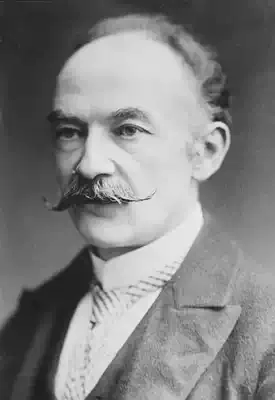
Thomas Hardy
The Ghost of the Past
We two kept house, the Past and I,
The Past and I;
I tended while it hovered nigh,
Leaving me never alone.
It was a spectral housekeeping
Where fell no jarring tone,
As strange, as still a housekeeping
As ever has been known.
As daily I went up the stair,
And down the stair,
I did not mind the Bygone there --
The Present once to me;
Its moving meek companionship
I wished might ever be,
There was in that companionship
Something of ecstasy.
It dwelt with me just as it was,
Just as it was
When first its prospects gave me pause
In wayward wanderings,
Before the years had torn old troths
As they tear all sweet things,
Before gaunt griefs had torn old troths
And dulled old rapturings.
And then its form began to fade,
Began to fade,
Its gentle echoes faintlier played
At eves upon my ear
Than when the autumn's look embrowned
The lonely chambers here,
The autumn's settling shades embrowned
Nooks that it haunted near.
And so with time my vision less,
Yea, less and less
Makes of that Past my housemistress,
It dwindles in my eye;
It looms a far-off skeleton
And not a comrade nigh,
A fitful far-off skeleton
Dimming as days draw by.
207

Robert W. Service
The Trapper's Christmas Eve
It's mighty lonesome-like and drear.
Above the Wild the moon rides high,
And shows up sharp and needle-clear
The emptiness of earth and sky;
No happy homes with love a-glow;
No Santa Claus to make believe:
Just snow and snow, and then more snow;
It's Christmas Eve, it's Christmas Eve.
And here am I where all things end,
And Undesirables are hurled;
A poor old man without a friend,
Forgot and dead to all the world;
Clean out of sight and out of mind . . .
Well, maybe it is better so;
We all in life our level find,
And mine, I guess, is pretty low.
Yet as I sit with pipe alight
Beside the cabin-fir
take to-night
The backward trail of fifty year.
The school-house and the Christmas tree;
The children with their cheeks a-glow;
Two bright blue eyes that smile on me . . .
Just half a century ago.
Again (it's maybe forty years),
With faith and trust almost divine,
These same blue eyes, abrim with tears,
Through depths of love look into mine.
A parting, tender, soft and low,
With arms that cling and lips that cleave . . .
Ah me! it's all so long ago,
Yet seems so sweet this Christmas Eve.
Just thirty years ago, again . . .
We say a bitter, last good-bye;
Our lips are white with wrath and pain;
Our little children cling and cry.
Whose was the fault? it matters not,
For man and woman both deceive;
It's buried now and all forgot,
Forgiven, too, this Christmas Eve.
And she (God pity me) is dead;
Our children men and women grown.
I like to think that they are wed,
With little children of their own,
That crowd around their Christmas tree . . .
I would not ever have them grieve,
Or shed a single tear for me,
To mar their joy this Christmas Eve.
Stripped to the buff and gaunt and still
Lies all the land in grim distress.
Like lost soul wailing, long and shrill,
A wolf-howl cleaves the emptiness.
Then hushed as Death is everything.
The moon rides haggard and forlorn . . .
"O hark the herald angels sing!"
God bless all men -- it's Christmas morn.
205
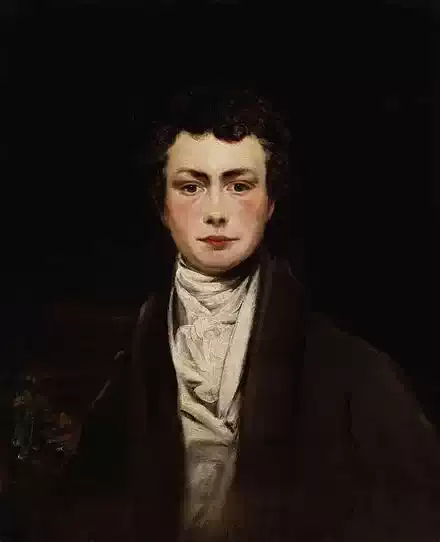
Thomas Moore
Twas One of Those Dreams
'TWAS one of those dreams, that by music are brought,
Like a bright summer haze, o'er the poet's warm thought --
When, lost in the future, his soul wanders on,
And all of this life, but its sweetness, is gone.
The wild notes he heard o'er the water were those
He had taught to sing Erin's dark bondage and woes,
And the breath of the bugle now wafted them o'er
From Dinis' green isle, to Glena's wooded shore.
He listen'd -- while, high o'er the eagle's rude nest,
The lingering sounds on their way loved to rest;
And the echoes sung back from their full mountain quire,
As if loath to let song to enchanting expire.
It seem'd as if every sweet note that died here
Was again brought to life in some airier sphere,
Some heaven in those hills, where the soul of the strain
That had ceased upon earth was awaking again!
Oh forgive, if, while listening to music, whose breath
Seem'd to circle his name with a charm against death,
He should feel a proud spirit within him proclaim,
"Even so shalt thou live in the echoes of Fame:
"Even so, though thy memory should now die away,
'Twill be caught up again in some happier day,
And the hearts and the voices of Erin prolong,
Through the answering Future, thy name and thy song."
202
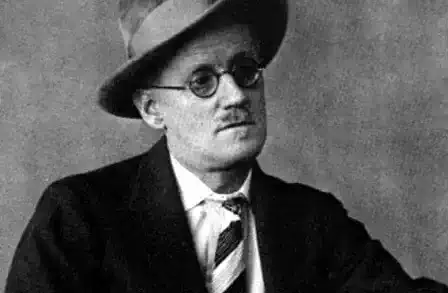
James Joyce
The Twilight Turns
The twilight turns from amethyst
To deep and deeper blue,
The lamp fills with a pale green glow
The trees of the avenue.
The old piano plays an air,
Sedate and slow and gay;
She bends upon the yellow keys,
Her head inclines this way.
Shy thought and grave wide eyes and hands
That wander as they list -- -
The twilight turns to darker blue
With lights of amethyst.
201
Robert W. Service
Book Lover
I keep collecting books I know
I'll never, never read;
My wife and daughter tell me so,
And yet I never head.
"Please make me," says some wistful tome,
"A wee bit of yourself."
And so I take my treasure home,
And tuck it in a shelf.
And now my very shelves complain;
They jam and over-spill.
They say: "Why don't you ease our strain?"
"some day," I say, "I will."
So book by book they plead and sigh;
I pick and dip and scan;
Then put them back, distrest that I
Am such a busy man.
Now, there's my Boswell and my Sterne,
my Gibbon and Defoe;
To savour Swift I'll never learn,
Montaigne I may not know.
On Bacon I will never sup,
For Shakespeare I've no time;
Because I'm busy making up
These jingly bits of rhyme.
Chekov is caviare to me,
While Stendhal makes me snore;
Poor Proust is not my cup of tea,
And Balzac is a bore.
I have their books, I love their names,
And yet alas! they head,
With Lawrence, Joyce and Henry James,
My Roster of Unread.
I think it would be very well
If I commit a crime,
And get put in a prison cell
And not allowed to rhyme;
Yet given all these worthy books
According to my need,
I now caress with loving looks,
But never, never read.
202
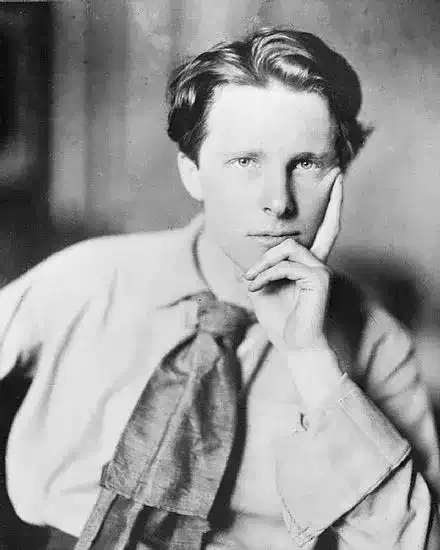
Rupert Brooke
Lines Written In The Belief That The Ancient Roman Festival Of The Dead Was Called Ambarvalia
Swings the way still by hollow and hill,
And all the world's a song;
"She's far," it sings me, "but fair," it rings me,
"Quiet," it laughs, "and strong!"
Oh! spite of the miles and years between us,
Spite of your chosen part,
I do remember; and I go
With laughter in my heart.
So above the little folk that know not,
Out of the white hill-town,
High up I clamber; and I remember;
And watch the day go down.
Gold is my heart, and the world's golden,
And one peak tipped with light;
And the air lies still about the hill
With the first fear of night;
Till mystery down the soundless valley
Thunders, and dark is here;
And the wind blows, and the light goes,
And the night is full of fear,
And I know, one night, on some far height,
In the tongue I never knew,
I yet shall hear the tidings clear
From them that were friends of you.
They'll call the news from hill to hill,
Dark and uncomforted,
Earth and sky and the winds; and I
Shall know that you are dead.
I shall not hear your trentals,
Nor eat your arval bread;
For the kin of you will surely do
Their duty by the dead.
Their little dull greasy eyes will water;
They'll paw you, and gulp afresh.
They'll sniffle and weep, and their thoughts will creep
Like flies on the cold flesh.
They will put pence on your grey eyes,
Bind up your fallen chin,
And lay you straight, the fools that loved you
Because they were your kin.
They will praise all the bad about you,
And hush the good away,
And wonder how they'll do without you,
And then they'll go away.
But quieter than one sleeping,
And stranger than of old,
You will not stir for weeping,
You will not mind the cold;
But through the night the lips will laugh not,
The hands will be in place,
And at length the hair be lying still
About the quiet face.
With snuffle and sniff and handkerchief,
And dim and decorous mirth,
With ham and sherry, they'll meet to bury
The lordliest lass of earth.
The little dead hearts will tramp ungrieving
Behind lone-riding you,
The heart so high, the heart so living,
Heart that they never knew.
I shall not hear your trentals,
Nor eat your arval bread,
Nor with smug breath tell lies of death
To the unanswering dead.
With snuffle and sniff and handkerchief,
The folk who loved you not
Will bury you, and go wondering
Back home. And you will rot.
But laughing and half-way up to heaven,
With wind and hill and star,
I yet shall keep, before I sleep,
Your Ambarvalia.
204
Thomas Moore
On Music
When through life unblest we rove,
Losing all that made life dear,
Should some notes we used to love,
In days of boyhood, meet our ear,
Oh! how welcome breathes the strain!
Wakening thoughts that long have slept,
Kindling former smiles again
In faded eyes that long have wept.
Like the gale, that sighs along
Beds of oriental flowers,
Is the grateful breath of song,
That once was heard in happier hours.
Fill'd with balm the gale sighs on,
Though the flowers have sunk in death;
So, when pleasure's dream is gone,
Its memory lives in Music's breath.
Music, oh, how faint, how weak,
Language fades before thy spell!
Why should Feeling ever speak,
When thou canst breathe her soul so well?
Friendship's balmy words may feign,
Love's are even more false than they;
Oh! 'tis only music's strain
Can sweetly soothe, and not betray.
201
Robert W. Service
Dance-Hall Girls
Where are the dames I used to know
In Dawson in the days of yore?
Alas, it's fifty years ago,
And most, I guess, have "gone before."
The swinging scythe is swift to mow
Alike the gallant and the fair;
And even I, with gouty toe,
Am glad to fill a rocking chair.
Ah me, I fear each gaysome girl
Who in champagne I used to toast,
or cozen in the waltz's whirl,
In now alas, a wistful ghost.
Oh where is Touch The Button Nell?
Or Minnie Dale or Rosa Lee,
Or Lorna Doone or Daisy Bell?
And where is Montreal Maree?
Fair ladies of my lusty youth,
I fear that you are dead and gone:
Where's Gertie of the Diamond Tooth,
And where the Mare of Oregon?
What's come of Violet de Vere,
Claw-fingered Kate and Gumboot Sue?
They've crossed the Great Divide, I fear;
Remembered now by just a few.
A few who like myself can see
Through half a century of haze
A heap of goodness in their glee
And kindness in their wanton ways.
Alas, my sourdough days are dead,
Yet let me toss a tankard down . . .
Here's hoping that you wed and bred,
And lives of circumspection led,
Gay dance-hall girls o Dawson Town!
200
Rupert Brooke
Hauntings
In the grey tumult of these after years
Oft silence falls; the incessant wranglers part;
And less-than-echoes of remembered tears
Hush all the loud confusion of the heart;
And a shade, through the toss'd ranks of mirth and crying
Hungers, and pains, and each dull passionate mood, --
Quite lost, and all but all forgot, undying,
Comes back the ecstasy of your quietude.
So a poor ghost, beside his misty streams,
Is haunted by strange doubts, evasive dreams,
Hints of a pre-Lethean life, of men,
Stars, rocks, and flesh, things unintelligible,
And light on waving grass, he knows not when,
And feet that ran, but where, he cannot tell.
197
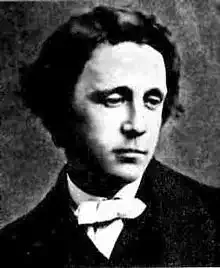
Lewis Carroll
A Boat beneath a Sunny Sky
A BOAT beneath a sunny sky,
Lingering onward dreamily
In an evening of July Children
three that nestle near,
Eager eye and willing ear,
Pleased a simple tale to hear Long
has paled that sunny sky:
Echoes fade and memories die:
Autumn frosts have slain July.
Still she haunts me, phantomwise,
Alice moving under skies
Never seen by waking eyes.
Children yet, the tale to hear,
Eager eye and willing ear,
Lovingly shall nestle near.
In a Wonderland they lie,
Dreaming as the days go by,
Dreaming as the summers die:
Ever drifting down the stream Lingering
in the golden dream Life,
what is it but a dream?
199
Robert W. Service
My Tails
I haven't worn my evening dress
For nearly twenty years;
Oh I'm unsocial, I confess,
A hermit, it appears.
So much moth-balled it's but away,
And though wee wifie wails,
Never unto my dimmest day
I'll don my tails.
How slim and trim I looked in them,
Though I was sixty old;
And now their sleekness I condemn
To lie in rigid fold.
I have a portrait of myself
Proud-printed in the Press,
In garb now doomed to wardrobe shelf,-My
evening dress.
So let this be my last request,
That when I come to die,
In tails I may be deftly drest,
With white waistcoat and tie.
No, not for me a vulgar shroud
My carcass to caress;--
Oh let me do my coffin proud
In evening dress!
195
James Joyce
Rain Has Fallen All the Day
Rain has fallen all the day.
O come among the laden trees:
The leaves lie thick upon the way
Of memories.
Staying a little by the way
Of memories shall we depart.
Come, my beloved, where I may
Speak to your heart.
O come among the laden trees:
The leaves lie thick upon the way
Of memories.
Staying a little by the way
Of memories shall we depart.
Come, my beloved, where I may
Speak to your heart.
193
Robert W. Service
At Thirty-Five
Three score and ten, the psalmist saith,
And half my course is well-nigh run;
I've had my flout at dusty death,
I've had my whack of feast and fun.
I've mocked at those who prate and preach;
I've laughed with any man alive;
But now with sobered heart I reach
The Great Divide of Thirty-five.
And looking back I must confess
I've little cause to feel elate.
I've played the mummer more or less;
I fumbled fortune, flouted fate.
I've vastly dreamed and little done;
I've idly watched my brothers strive:
Oh, I have loitered in the sun
By primrose paths to Thirty-five!
And those who matched me in the race,
Well, some are out and trampled down;
The others jog with sober pace;
Yet one wins delicate renown.
O midnight feast and famished dawn!
O gay, hard life, with hope alive!
O golden youth, forever gone,
How sweet you seem at Thirty-five!
Each of our lives is just a book
As absolute as Holy Writ;
We humbly read, and may not look
Ahead, nor change one word of it.
And here are joys and here are pains;
And here we fail and here we thrive;
O wondrous volume! what remains
When we reach chapter Thirty-five?
The very best, I dare to hope,
Ere Fate writes Finis to the tome;
A wiser head, a wider scope,
And for the gipsy heart, a home;
A songful home, with loved ones near,
With joy, with sunshine all alive:
Watch me grow younger every year --
Old Age! thy name is Thirty-five!
192
Thomas Hardy
In the Old Theatre, Fiesole (April, )
I traced the Circus whose gray stones incline
Where Rome and dim Etruria interjoin,
Till came a child who showed an ancient coin
That bore the image of a Constantine.
She lightly passed; nor did she once opine
How, better than all books, she had raised for me
In swift perspective Europe's history
Through the vast years of Caesar's sceptred line.
For in my distant plot of English loam
'Twas but to delve, and straightway there to find
Coins of like impress. As with one half blind
Whom common simples cure, her act flashed home
In that mute moment to my opened mind
The power, the pride, the reach of perished Rome.
190
Thomas Moore
How Dear to Me the Hour
How dear to me the hour when daylight dies,
And sunbeams melt along the silent sea,
For then sweet dreams of other days arise,
And memory breathes her vesper sigh to thee.
And, as I watch the line of light, that plays
Along the smooth wave toward the burning west,
I long to tread that golden path of rays,
And think 'twould lead to some bright isle of rest.
189
Rupert Brooke
Finding
From the candles and dumb shadows,
And the house where love had died,
I stole to the vast moonlight
And the whispering life outside.
But I found no lips of comfort,
No home in the moon's light
(I, little and lone and frightened
In the unfriendly night),
And no meaning in the voices. . . .
Far over the lands and through
The dark, beyond the ocean,
I willed to think of YOU!
For I knew, had you been with me
I'd have known the words of night,
Found peace of heart, gone gladly
In comfort of that light.
Oh! the wind with soft beguiling
Would have stolen my thought away;
And the night, subtly smiling,
Came by the silver way;
And the moon came down and danced to me,
And her robe was white and flying;
And trees bent their heads to me
Mysteriously crying;
And dead voices wept around me;
And dead soft fingers thrilled;
And the little gods whispered. . . .
But ever
Desperately I willed;
Till all grew soft and far
And silent . . .
And suddenly
I found you white and radiant,
Sleeping quietly,
Far out through the tides of darkness.
And I there in that great light
Was alone no more, nor fearful;
For there, in the homely night,
Was no thought else that mattered,
And nothing else was true,
But the white fire of moonlight,
And a white dream of you.
186
Rupert Brooke
Dining-Room Tea
When you were there, and you, and you,
Happiness crowned the night; I too,
Laughing and looking, one of all,
I watched the quivering lamplight fall
On plate and flowers and pouring tea
And cup and cloth; and they and we
Flung all the dancing moments by
With jest and glitter. Lip and eye
Flashed on the glory, shone and cried,
Improvident, unmemoried;
And fitfully and like a flame
The light of laughter went and came.
Proud in their careless transience moved
The changing faces that I loved.
Till suddenly, and otherwhence,
I looked upon your innocence.
For lifted clear and still and strange
From the dark woven flow of change
Under a vast and starless sky
I saw the immortal moment lie.
One Instant I, an instant, knew
As God knows all. And it and you
I, above Time, oh, blind! could see
In witless immortality.
I saw the marble cup; the tea,
Hung on the air, an amber stream;
I saw the fire’s unglittering gleam,
The painted flame, the frozen smoke.
No more the flooding lamplight broke
On flying eyes and lips and hair;
But lay, but slept unbroken there,
On stiller flesh, and body breathless,
And lips and laughter stayed and deathless,
And words on which no silence grew.
Light was more alive than you.
For suddenly, and otherwhence,
I looked on your magnificence.
I saw the stillness and the light,
And you, august, immortal, white,
Holy and strange; and every glint
Posture and jest and thought and tint
Freed from the mask of transiency,
Triumphant in eternity,
Immote, immortal.
Dazed at length
Human eyes grew, mortal strength
Wearied; and Time began to creep.
Change closed about me like a sleep.
Light glinted on the eyes I loved.
The cup was filled. The bodies moved.
The drifting petal came to ground.
The laughter chimed its perfect round.
The broken syllable was ended.
And I, so certain and so friended,
How could I cloud, or how distress,
The heaven of your unconsciousness?
Or shake at Time’s sufficient spell,
Stammering of lights unutterable?
The eternal holiness of you,
The timeless end, you never knew,
The peace that lay, the light that shone.
You never knew that I had gone
A million miles away, and stayed
A million years. The laughter played
Unbroken round me; and the jest
Flashed on. And we that knew the best
Down wonderful hours grew happier yet.
I sang at heart, and talked, and eat,
And lived from laugh to laugh, I too,
When you were there, and you, and you.
187
Thomas Moore
Sing, Sweet Harp
Sing, sweet Harp, oh sing to me
Some song of ancient days,
Whose sounds, in this sad memory,
Long-buried dreams shall raise; --
Some lay that tells of vanish'd fame,
Whose light once round us shone,
Of noble pride, now turn'd to shame,
And hopes for ever gone.
Sing, sad Harp, thus sing to me;
Alike our doom is cast,
Both lost to all but memory,
We live but in the past.
How mournfully the midnight air
Among thy chords doth sigh,
As if it sought some echo there,
Of voices long gone by; --
Of chieftains, now forgot, who seem'd
The foremost then in fame;
Of Bards who, once immortal deem'd,
Now sleep without a name.
In vain, sad Harp, the midnight air
Among thy chords doth sigh;
In vain it seeks an echo there
Of voices long gone by.
Couldst thou but call those spirits round,
Who once, in bower and hall,
Sate listening to thy magic sound,
Now mute and mouldering all; --
But, no; they would but wake to weep
Their children's slavery;
Then leave them in their dreamless sleep,
The dead, at least are free!
Hush, hush, sad Harp, that dreary tone,
That knell of Freedom's day;
Or, listening to its death-like moan,
Let me, too, die away.
186
James Joyce
Thou Leanest to the Shell of Night
Thou leanest to the shell of night,
Dear lady, a divining ear.
In that soft choiring of delight
What sound hath made thy heart to fear?
Seemed it of rivers rushing forth
From the grey deserts of the north?
That mood of thine
Is his, if thou but scan it well,
Who a mad tale bequeaths to us
At ghosting hour conjurable -- -
And all for some strange name he read
In Purchas or in Holinshed.
179
Thomas Hardy
The Roman Road
The Roman Road runs straight and bare
As the pale parting-line in hair
Across the heath. And thoughtful men
Contrast its days of Now and Then,
And delve, and measure, and compare;
Visioning on the vacant air
Helmeted legionnaires, who proudly rear
The Eagle, as they pace again
The Roman Road.
But no tall brass-helmeted legionnaire
Haunts it for me. Uprises there
A mother's form upon my ken,
Guiding my infant steps, as when
We walked that ancient thoroughfare,
The Roman Road.
183

Joyce Kilmer
Dave Lilly
There's a brook on the side of Greylock that used to be full of trout,
But there's nothing there now but minnows; they say it is all fished out.
I fished there many a Summer day some twenty years ago,
And I never quit without getting a mess of a dozen or so.
There was a man, Dave Lilly, who lived on the North Adams road,
And he spent all his time fishing, while his neighbors reaped and sowed.
He was the luckiest fisherman in the Berkshire hills, I think.
And when he didn't go fishing he'd sit in the tavern and drink.
Well, Dave is dead and buried and nobody cares very much;
They have no use in Greylock for drunkards and loafers and such.
But I always liked Dave Lilly, he was pleasant as you could wish;
He was shiftless and good-for-nothing, but he certainly could fish.
The other night I was walking up the hill from Williamstown
And I came to the brook I mentioned,
and I stopped on the bridge and sat down.
I looked at the blackened water with its little flecks of white
And I heard it ripple and whisper in the still of the Summer night.
And after I'd been there a minute it seemed to me I could feel
The presence of someone near me, and I heard the hum of a reel.
And the water was churned and broken, and something was brought to land
By a twist and flirt of a shadowy rod in a deft and shadowy hand.
I scrambled down to the brookside and hunted all about;
There wasn't a sign of a fisherman; there wasn't a sign of a trout.
But I heard somebody chuckle behind the hollow oak
And I got a whiff of tobacco like Lilly used to smoke.
It's fifteen years, they tell me, since anyone fished that brook;
And there's nothing in it but minnows that nibble the bait off your hook.
But before the sun has risen and after the moon has set
I know that it's full of ghostly trout for Lilly's ghost to get.
I guess I'll go to the tavern and get a bottle of rye
And leave it down by the hollow oak, where Lilly's ghost went by.
I meant to go up on the hillside and try to find his grave
And put some flowers on it -- but this will be better for Dave.
180
Robert W. Service
The March Of The Dead
The cruel war was over -- oh, the triumph was so sweet!
We watched the troops returning, through our tears;
There was triumph, triumph, triumph down the scarlet glittering street,
And you scarce could hear the music for the cheers.
And you scarce could see the house-tops for the flags that flew between;
The bells were pealing madly to the sky;
And everyone was shouting for the Soldiers of the Queen,
And the glory of an age was passing by.
And then there came a shadow, swift and sudden, dark and drear;
The bells were silent, not an echo stirred.
The flags were drooping sullenly, the men forgot to cheer;
We waited, and we never spoke a word.
The sky grew darker, darker, till from out the gloomy rack
There came a voice that checked the heart with dread:
"Tear down, tear down your bunting now, and hang up sable black;
They are coming -- it's the Army of the Dead."
They were coming, they were coming, gaunt and ghastly, sad and slow;
They were coming, all the crimson wrecks of pride;
With faces seared, and cheeks red smeared, and haunting eyes of woe,
And clotted holes the khaki couldn't hide.
Oh, the clammy brow of anguish! the livid, foam-flecked lips!
The reeling ranks of ruin swept along!
The limb that trailed, the hand that failed, the bloody finger tips!
And oh, the dreary rhythm of their song!
"They left us on the veldt-side, but we felt we couldn't stop
On this, our England's crowning festal day;
We're the men of Magersfontein, we're the men of Spion Kop,
Colenso -- we're the men who had to pay.
We're the men who paid the blood-price. Shall the grave be all our gain?
You owe us. Long and heavy is the score.
Then cheer us for our glory now, and cheer us for our pain,
And cheer us as ye never cheered before."
The folks were white and stricken, and each tongue seemed weighted with lead;
Each heart was clutched in hollow hand of ice;
And every eye was staring at the horror of the dead,
The pity of the men who paid the price.
They were come, were come to mock us, in the first flush of our peace;
Through writhing lips their teeth were all agleam;
They were coming in their thousands -- oh, would they never cease!
I closed my eyes, and then -- it was a dream.
There was triumph, triumph, triumph down the scarlet gleaming street;
The town was mad; a man was like a boy.
A thousand flags were flaming where the sky and city meet;
A thousand bells were thundering the joy.
There was music, mirth and sunshine; but some eyes shone with regret;
And while we stun with cheers our homing braves,
O God, in Thy great mercy, let us nevermore forget
The graves they left behind, the bitter graves.
177