
Death and Mourning

Robert W. Service
Old Bob
I guess folks think I'm mighty dumb
Since Jack and Jim and Joe
Have hit the trail to Kingdom Come
And left me here below:
Since Death, the bastard, bowled them out,
And left me faced with--Doubt.
My pals have all passed out on me
And I am by my lone;
Old Bill was last, and now I see
His name cut on a stone;
A marble slab, but not as fine
As I have picked for mine.
I nurse and curse rheumatic pain
As on the porch I sit;
With nothing special in my brain
I rock and smoke and spit:
When one is nearing to the end
One sorely needs a friend.
My Pals have gone,--in God's good earth
I guess they're packed up snug,
And since I have no guts for mirth
I zipper to my mug:
The question that I ponder on
Is--where the heck they've gone?
Read more →
175

Wilfred Owen
Conscious
His fingers wake, and flutter up the bed.
His eyes come open with a pull of will,
Helped by the yellow may-flowers by his head.
A blind-cord drawls across the window-sill . . .
How smooth the floor of the ward is! what a rug!
And who's that talking, somewhere out of sight?
Why are they laughing? What's inside that jug?
"Nurse! Doctor!" "Yes; all right, all right."
But sudden dusk bewilders all the air --
There seems no time to want a drink of water.
Nurse looks so far away. And everywhere
Music and roses burnt through crimson slaughter.
Cold; cold; he's cold; and yet so hot:
And there's no light to see the voices by --
No time to dream, and ask -- he knows not what.
Read more →
175
Robert W. Service
The Logger
In the moonless, misty night, with my little pipe alight,
I am sitting by the camp-fire's fading cheer;
Oh, the dew is falling chill on the dim, deer-haunted hill,
And the breakers in the bay are moaning drear.
The toilful hours are sped, the boys are long abed,
And I alone a weary vigil keep;
In the sightless, sullen sky I can hear the night-hawk cry,
And the frogs in frenzied chorus from the creek.
And somehow the embers' glow brings me back the long ago,
The days of merry laughter and light song;
When I sped the hours away with the gayest of the gay
In the giddy whirl of fashion's festal throng.
Oh, I ran a grilling race and I little recked the pace,
For the lust of youth ran riot in my blood;
But at last I made a stand in this God-forsaken land
Of the pine-tree and the mountain and the flood.
And now I've got to stay, with an overdraft to pay,
For pleasure in the past with future pain;
And I'm not the chap to whine, for if the chance were mine
I know I'd choose the old life once again.
With its woman's eyes a-shine, and its flood of golden wine;
Its fever and its frolic and its fun;
The old life with its din, its laughter and its sin -And
chuck me in the gutter when it's done.
Ah, well! it's past and gone, and the memory is wan,
That conjures up each old familiar face;
And here by fortune hurled, I am dead to all the world,
And I've learned to lose my pride and keep my place.
My ways are hard and rough, and my arms are strong and tough,
And I hew the dizzy pine till darkness falls;
And sometimes I take a dive, just to keep my heart alive,
Among the gay saloons and dancing halls.
In the distant, dinful town just a little drink to drown
The cares that crowd and canker in my brain;
Just a little joy to still set my pulses all a-thrill,
Then back to brutish labour once again.
And things will go on so until one day I shall know
That Death has got me cinched beyond a doubt;
Then I'll crawl away from sight, and morosely in the night
My weary, wasted life will peter out.
Then the boys will gather round, and they'll launch me in the ground,
And pile the stones the timber wolf to foil;
And the moaning pine will wave overhead a nameless grave,
Where the black snake in the sunshine loves to coil.
And they'll leave me there alone, and perhaps with softened tone
Speak of me sometimes in the camp-fire's glow,
As a played-out, broken chum, who has gone to Kingdom Come,
And who went the pace in England long ago.
Read more →
174

Homero
The Iliad: Book 19
Now when Dawn in robe of saffron was hasting from the streams of
Oceanus, to bring light to mortals and immortals, Thetis reached the
ships with the armour that the god had given her. She found her son
fallen about the body of Patroclus and weeping bitterly. Many also
of his followers were weeping round him, but when the goddess came
among them she clasped his hand in her own, saying, "My son, grieve as
we may we must let this man lie, for it is by heaven's will that he
has fallen; now, therefore, accept from Vulcan this rich and goodly
armour, which no man has ever yet borne upon his shoulders."
As she spoke she set the armour before Achilles, and it rang out
bravely as she did so. The Myrmidons were struck with awe, and none
dared look full at it, for they were afraid; but Achilles was roused
to still greater fury, and his eyes gleamed with a fierce light, for
he was glad when he handled the splendid present which the god had
made him. Then, as soon as he had satisfied himself with looking at
it, he said to his mother, "Mother, the god has given me armour,
meet handiwork for an immortal and such as no living could have
fashioned; I will now arm, but I much fear that flies will settle upon
the son of Menoetius and breed worms about his wounds, so that his
body, now he is dead, will be disfigured and the flesh will rot."
Silver-footed Thetis answered, "My son, be not disquieted about this
matter. I will find means to protect him from the swarms of noisome
flies that prey on the bodies of men who have been killed in battle.
He may lie for a whole year, and his flesh shall still be as sound
as ever, or even sounder. Call, therefore, the Achaean heroes in
assembly; unsay your anger against Agamemnon; arm at once, and fight
with might and main."
As she spoke she put strength and courage into his heart, and she
then dropped ambrosia and red nectar into the wounds of Patroclus,
that his body might suffer no change.
Then Achilles went out upon the seashore, and with a loud cry called
on the Achaean heroes. On this even those who as yet had stayed always
at the ships, the pilots and helmsmen, and even the stewards who
were about the ships and served out rations, all came to the place
of assembly because Achilles had shown himself after having held aloof
so long from fighting. Two sons of Mars, Ulysses and the son of
Tydeus, came limping, for their wounds still pained them; nevertheless
they came, and took their seats in the front row of the assembly. Last
of all came Agamemnon, king of men, he too wounded, for Coon son of
Antenor had struck him with a spear in battle.
When the Achaeans were got together Achilles rose and said, "Son
of Atreus, surely it would have been better alike for both you and me,
when we two were in such high anger about Briseis, surely it would
have been better, had Diana's arrow slain her at the ships on the
day when I took her after having sacked Lyrnessus. For so, many an
Achaean the less would have bitten dust before the foe in the days
of my anger. It has been well for Hector and the Trojans, but the
Achaeans will long indeed remember our quarrel. Now, however, let it
be, for it is over. If we have been angry, necessity has schooled
our anger. I put it from me: I dare not nurse it for ever;
therefore, bid the Achaeans arm forthwith that I may go out against
the Trojans, and learn whether they will be in a mind to sleep by
the ships or no. Glad, I ween, will he be to rest his knees who may
fly my spear when I wield it."
Thus did he speak, and the Achaeans rejoiced in that he had put away
his anger.
Then Agamemnon spoke, rising in his place, and not going into the
middle of the assembly. "Danaan heroes," said he, "servants of Mars,
it is well to listen when a man stands up to speak, and it is not
seemly to interrupt him, or it will go hard even with a practised
speaker. Who can either hear or speak in an uproar? Even the finest
orator will be disconcerted by it. I will expound to the son of
Peleus, and do you other Achaeans heed me and mark me well. Often have
the Achaeans spoken to me of this matter and upbraided me, but it
was not I that did it: Jove, and Fate, and Erinys that walks in
darkness struck me mad when we were assembled on the day that I took
from Achilles the meed that had been awarded to him. What could I
do? All things are in the hand of heaven, and Folly, eldest of
Jove's daughters, shuts men's eyes to their destruction. She walks
delicately, not on the solid earth, but hovers over the heads of men
to make them stumble or to ensnare them.
"Time was when she fooled Jove himself, who they say is greatest
whether of gods or men; for Juno, woman though she was, beguiled him
on the day when Alcmena was to bring forth mighty Hercules in the fair
city of Thebes. He told it out among the gods saying, 'Hear me all
gods and goddesses, that I may speak even as I am minded; this day
shall an Ilithuia, helper of women who are in labour, bring a man
child into the world who shall be lord over all that dwell about him
who are of my blood and lineage.' Then said Juno all crafty and full
of guile, 'You will play false, and will not hold to your word.
Swear me, O Olympian, swear me a great oath, that he who shall this
day fall between the feet of a woman, shall be lord over all that
dwell about him who are of your blood and lineage.'
"Thus she spoke, and Jove suspected her not, but swore the great
oath, to his much ruing thereafter. For Juno darted down from the high
summit of Olympus, and went in haste to Achaean Argos where she knew
that the noble wife of Sthenelus son of Perseus then was. She being
with child and in her seventh month, Juno brought the child to birth
though there was a month still wanting, but she stayed the offspring
of Alcmena, and kept back the Ilithuiae. Then she went to tell Jove
the son of Saturn, and said, 'Father Jove, lord of the lightning- I
have a word for your ear. There is a fine child born this day,
Eurystheus, son to Sthenelus the son of Perseus; he is of your
lineage; it is well, therefore, that he should reign over the
Argives.'
"On this Jove was stung to the very quick, and in his rage he caught
Folly by the hair, and swore a great oath that never should she
again invade starry heaven and Olympus, for she was the bane of all.
Then he whirled her round with a twist of his hand, and flung her down
from heaven so that she fell on to the fields of mortal men; and he
was ever angry with her when he saw his son groaning under the cruel
labours that Eurystheus laid upon him. Even so did I grieve when
mighty Hector was killing the Argives at their ships, and all the time
I kept thinking of Folly who had so baned me. I was blind, and Jove
robbed me of my reason; I will now make atonement, and will add much
treasure by way of amends. Go, therefore, into battle, you and your
people with you. I will give you all that Ulysses offered you
yesterday in your tents: or if it so please you, wait, though you
would fain fight at once, and my squires shall bring the gifts from my
ship, that you may see whether what I give you is enough."
And Achilles answered, "Son of Atreus, king of men Agamemnon, you
can give such gifts as you think proper, or you can withhold them:
it is in your own hands. Let us now set battle in array; it is not
well to tarry talking about trifles, for there is a deed which is as
yet to do. Achilles shall again be seen fighting among the foremost,
and laying low the ranks of the Trojans: bear this in mind each one of
you when he is fighting."
Then Ulysses said, "Achilles, godlike and brave, send not the
Achaeans thus against Ilius to fight the Trojans fasting, for the
battle will be no brief one, when it is once begun, and heaven has
filled both sides with fury; bid them first take food both bread and
wine by the ships, for in this there is strength and stay. No man
can do battle the livelong day to the going down of the sun if he is
without food; however much he may want to fight his strength will fail
him before he knows it; hunger and thirst will find him out, and his
limbs will grow weary under him. But a man can fight all day if he
is full fed with meat and wine; his heart beats high, and his strength
will stay till he has routed all his foes; therefore, send the
people away and bid them prepare their meal; King Agamemnon will bring
out the gifts in presence of the assembly, that all may see them and
you may be satisfied. Moreover let him swear an oath before the
Argives that he has never gone up into the couch of Briseis, nor
been with her after the manner of men and women; and do you, too, show
yourself of a gracious mind; let Agamemnon entertain you in his
tents with a feast of reconciliation, that so you may have had your
dues in full. As for you, son of Atreus, treat people more righteously
in future; it is no disgrace even to a king that he should make amends
if he was wrong in the first instance."
And King Agamemnon answered, "Son of Laertes, your words please me
well, for throughout you have spoken wisely. I will swear as you would
have me do; I do so of my own free will, neither shall I take the name
of heaven in vain. Let, then, Achilles wait, though he would fain
fight at once, and do you others wait also, till the gifts come from
my tent and we ratify the oath with sacrifice. Thus, then, do I charge
you: take some noble young Achaeans with you, and bring from my
tents the gifts that I promised yesterday to Achilles, and bring the
women also; furthermore let Talthybius find me a boar from those
that are with the host, and make it ready for sacrifice to Jove and to
the sun."
Then said Achilles, "Son of Atreus, king of men Agamemnon, see to
these matters at some other season, when there is breathing time and
when I am calmer. Would you have men eat while the bodies of those
whom Hector son of Priam slew are still lying mangled upon the
plain? Let the sons of the Achaeans, say I, fight fasting and
without food, till we have avenged them; afterwards at the going
down of the sun let them eat their fill. As for me, Patroclus is lying
dead in my tent, all hacked and hewn, with his feet to the door, and
his comrades are mourning round him. Therefore I can take thought of
nothing save only slaughter and blood and the rattle in the throat
of the dying."
Ulysses answered, "Achilles, son of Peleus, mightiest of all the
Achaeans, in battle you are better than I, and that more than a
little, but in counsel I am much before you, for I am older and of
greater knowledge. Therefore be patient under my words. Fighting is
a thing of which men soon surfeit, and when Jove, who is wars steward,
weighs the upshot, it may well prove that the straw which our
sickles have reaped is far heavier than the grain. It may not be
that the Achaeans should mourn the dead with their bellies; day by day
men fall thick and threefold continually; when should we have
respite from our sorrow? Let us mourn our dead for a day and bury them
out of sight and mind, but let those of us who are left eat and
drink that we may arm and fight our foes more fiercely. In that hour
let no man hold back, waiting for a second summons; such summons shall
bode ill for him who is found lagging behind at our ships; let us
rather sally as one man and loose the fury of war upon the Trojans."
When he had thus spoken he took with him the sons of Nestor, with
Meges son of Phyleus, Thoas, Meriones, Lycomedes son of Creontes,
and Melanippus, and went to the tent of Agamemnon son of Atreus. The
word was not sooner said than the deed was done: they brought out
the seven tripods which Agamemnon had promised, with the twenty
metal cauldrons and the twelve horses; they also brought the women
skilled in useful arts, seven in number, with Briseis, which made
eight. Ulysses weighed out the ten talents of gold and then led the
way back, while the young Achaeans brought the rest of the gifts,
and laid them in the middle of the assembly.
Agamemnon then rose, and Talthybius whose voice was like that of a
god came to him with the boar. The son of Atreus drew the knife
which he wore by the scabbard of his mighty sword, and began by
cutting off some bristles from the boar, lifting up his hands in
prayer as he did so. The other Achaeans sat where they were all silent
and orderly to hear the king, and Agamemnon looked into the vault of
heaven and prayed saying, "I call Jove the first and mightiest of
all gods to witness, I call also Earth and Sun and the Erinyes who
dwell below and take vengeance on him who shall swear falsely, that
I have laid no hand upon the girl Briseis, neither to take her to my
bed nor otherwise, but that she has remained in my tents inviolate. If
I swear falsely may heaven visit me with all the penalties which it
metes out to those who perjure themselves."
He cut the boar's throat as he spoke, whereon Talthybius whirled
it round his head, and flung it into the wide sea to feed the
fishes. Then Achilles also rose and said to the Argives, "Father Jove,
of a truth you blind men's eyes and bane them. The son of Atreus had
not else stirred me to so fierce an anger, nor so stubbornly taken
Briseis from me against my will. Surely Jove must have counselled
the destruction of many an Argive. Go, now, and take your food that we
may begin fighting."
On this he broke up the assembly, and every man went back to his own
ship. The Myrmidons attended to the presents and took them away to the
ship of Achilles. They placed them in his tents, while the
stable-men drove the horses in among the others.
Briseis, fair as Venus, when she saw the mangled body of
Patroclus, flung herself upon it and cried aloud, tearing her
breast, her neck, and her lovely face with both her hands. Beautiful
as a goddess she wept and said, "Patroclus, dearest friend, when I
went hence I left you living; I return, O prince, to find you dead;
thus do fresh sorrows multiply upon me one after the other. I saw
him to whom my father and mother married me, cut down before our city,
and my three own dear brothers perished with him on the self-same day;
but you, Patroclus, even when Achilles slew my husband and sacked
the city of noble Mynes, told me that I was not to weep, for you
said you would make Achilles marry me, and take me back with him to
Phthia, we should have a wedding feast among the Myrmidons. You were
always kind to me and I shall never cease to grieve for you."
She wept as she spoke, and the women joined in her lament-making
as though their tears were for Patroclus, but in truth each was
weeping for her own sorrows. The elders of the Achaeans gathered round
Achilles and prayed him to take food, but he groaned and would not
do so. "I pray you," said he, "if any comrade will hear me, bid me
neither eat nor drink, for I am in great heaviness, and will stay
fasting even to the going down of the sun."
On this he sent the other princes away, save only the two sons of
Atreus and Ulysses, Nestor, Idomeneus, and the knight Phoenix, who
stayed behind and tried to comfort him in the bitterness of his
sorrow: but he would not be comforted till he should have flung
himself into the jaws of battle, and he fetched sigh on sigh, thinking
ever of Patroclus. Then he said
"Hapless and dearest comrade, you it was who would get a good dinner
ready for me at once and without delay when the Achaeans were
hasting to fight the Trojans; now, therefore, though I have meat and
drink in my tents, yet will I fast for sorrow. Grief greater than this
I could not know, not even though I were to hear of the death of my
father, who is now in Phthia weeping for the loss of me his son, who
am here fighting the Trojans in a strange land for the accursed sake
of Helen, nor yet though I should hear that my son is no more- he
who is being brought up in Scyros- if indeed Neoptolemus is still
living. Till now I made sure that I alone was to fall here at Troy
away from Argos, while you were to return to Phthia, bring back my son
with you in your own ship, and show him all my property, my
bondsmen, and the greatness of my house- for Peleus must surely be
either dead, or what little life remains to him is oppressed alike
with the infirmities of age and ever present fear lest he should
hear the sad tidings of my death."
He wept as he spoke, and the elders sighed in concert as each
thought on what he had left at home behind him. The son of Saturn
looked down with pity upon them, and said presently to Minerva, "My
child, you have quite deserted your hero; is he then gone so clean out
of your recollection? There he sits by the ships all desolate for
the loss of his dear comrade, and though the others are gone to
their dinner he will neither eat nor drink. Go then and drop nectar
and ambrosia into his breast, that he may know no hunger."
With these words he urged Minerva, who was already of the same mind.
She darted down from heaven into the air like some falcon sailing on
his broad wings and screaming. Meanwhile the Achaeans were arming
throughout the host, and when Minerva had dropped nectar and
ambrosia into Achilles so that no cruel hunger should cause his
limbs to fail him, she went back to the house of her mighty father.
Thick as the chill snow-flakes shed from the hand of Jove and borne on
the keen blasts of the north wind, even so thick did the gleaming
helmets, the bossed shields, the strongly plated breastplates, and the
ashen spears stream from the ships. The sheen pierced the sky, the
whole land was radiant with their flashing armour, and the sound of
the tramp of their treading rose from under their feet. In the midst
of them all Achilles put on his armour; he gnashed his teeth, his eyes
gleamed like fire, for his grief was greater than he could bear. Thus,
then, full of fury against the Trojans, did he don the gift of the
god, the armour that Vulcan had made him.
First he put on the goodly greaves fitted with ancle-clasps, and
next he did on the breastplate about his chest. He slung the
silver-studded sword of bronze about his shoulders, and then took up
the shield so great and strong that shone afar with a splendour as
of the moon. As the light seen by sailors from out at sea, when men
have lit a fire in their homestead high up among the mountains, but
the sailors are carried out to sea by wind and storm far from the
haven where they would be- even so did the gleam of Achilles' wondrous
shield strike up into the heavens. He lifted the redoubtable helmet,
and set it upon his head, from whence it shone like a star, and the
golden plumes which Vulcan had set thick about the ridge of the
helmet, waved all around it. Then Achilles made trial of himself in
his armour to see whether it fitted him, so that his limbs could
play freely under it, and it seemed to buoy him up as though it had
been wings.
He also drew his father's spear out of the spear-stand, a spear so
great and heavy and strong that none of the Achaeans save only
Achilles had strength to wield it; this was the spear of Pelian ash
from the topmost ridges of Mt. Pelion, which Chiron had once given
to Peleus, fraught with the death of heroes. Automedon and Alcimus
busied themselves with the harnessing of his horses; they made the
bands fast about them, and put the bit in their mouths, drawing the
reins back towards the chariot. Automedon, whip in hand, sprang up
behind the horses, and after him Achilles mounted in full armour,
resplendent as the sun-god Hyperion. Then with a loud voice he
chided with his father's horses saying, "Xanthus and Balius, famed
offspring of Podarge- this time when we have done fighting be sure and
bring your driver safely back to the host of the Achaeans, and do
not leave him dead on the plain as you did Patroclus."
Then fleet Xanthus answered under the yoke- for white-armed Juno had
endowed him with human speech- and he bowed his head till his mane
touched the ground as it hung down from under the yoke-band. "Dread
Achilles," said he, "we will indeed save you now, but the day of
your death is near, and the blame will not be ours, for it will be
heaven and stern fate that will destroy you. Neither was it through
any sloth or slackness on our part that the Trojans stripped Patroclus
of his armour; it was the mighty god whom lovely Leto bore that slew
him as he fought among the foremost, and vouchsafed a triumph to
Hector. We two can fly as swiftly as Zephyrus who they say is fleetest
of all winds; nevertheless it is your doom to fall by the hand of a
man and of a god."
When he had thus said the Erinyes stayed his speech, and Achilles
answered him in great sadness, saying, "Why, O Xanthus, do you thus
foretell my death? You need not do so, for I well know that I am to
fall here, far from my dear father and mother; none the more, however,
shall I stay my hand till I have given the Trojans their fill of
fighting."
So saying, with a loud cry he drove his horses to the front.
Translated by Samuel Butler
Read more →
173
Robert W. Service
Our Pote
A pote is sure a goofy guy;
He ain't got guts like you or I
To tell the score;
He ain't goy gumption 'nuff to know
The game of life's to get the dough,
Then get some more.
Take Brother Bill, he used to be
The big shot of the family,
The first at school;
But since about a year ago,
Through readin' Longfeller and Poe,
He's most a fool.
He mopes around with dimwit stare;
You might as well jest not be there,
The way he looks;
You'd think he shuns the human race,
The how he buries down his face
In highbrow books.
I've seen him stand for near an hour,
Jest starin' at a simple flower
Sich waste o' time;
The scribblin' on an envelope . . .
Why, most of all his silly dope
Don't even rhyme.
Now Brother's Jim's an engineer,
And Brother Tim's a bank cashier,
While I keep store;
Yet Bill, the brightest of the flock,
Might be a lawyer or a doc,
And then some more.
But no, he moons and loafs about,
As if he tried to figger out
Why skies are blue;
Instead o' gittin' down to grips
Wi' life an' stackin' up the chips
Like me an' you.
* * * * * * * * * *
Well, since them final lines I wrote,
We're mournin' for our Brother Pote:
Bill crossed the sea
And solved his problem with the beat,
For now he lies in peace and rest
In Normandie.
He died the bravest of the brave,
And here I'm standin' by his grave
So far from home;
With just a wooden cross to tell
How in the blaze of battle hell
As gloriously there he fell Bill
wrote his "pome".
Read more →
166
Wilfred Owen
The Young Soldier
It is not death
Without hereafter
To one in dearth
Of life and its laughter,
Nor the sweet murder
Dealt slow and even
Unto the martyr
Smiling at heaven:
It is the smile
Faint as a (waning) myth,
Faint, and exceeding small
On a boy's murdered mouth.
Read more →
165
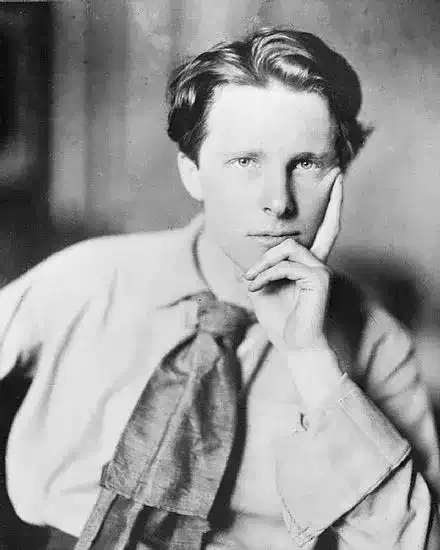
Rupert Brooke
Day That I Have Loved
Tenderly, day that I have loved, I close your eyes,
And smooth your quiet brow, and fold your thin dead hands.
The grey veils of the half-light deepen; colour dies.
I bear you, a light burden, to the shrouded sands,
Where lies your waiting boat, by wreaths of the sea's making
Mist-garlanded, with all grey weeds of the water crowned.
There you'll be laid, past fear of sleep or hope of waking;
And over the unmoving sea, without a sound,
Faint hands will row you outward, out beyond our sight,
Us with stretched arms and empty eyes on the far-gleaming
And marble sand. . . .
Beyond the shifting cold twilight,
Further than laughter goes, or tears, further than dreaming,
There'll be no port, no dawn-lit islands! But the drear
Waste darkening, and, at length, flame ultimate on the deep.
Oh, the last fire -- and you, unkissed, unfriended there!
Oh, the lone way's red ending, and we not there to weep!
(We found you pale and quiet, and strangely crowned with flowers,
Lovely and secret as a child. You came with us,
Came happily, hand in hand with the young dancing hours,
High on the downs at dawn!) Void now and tenebrous,
The grey sands curve before me. . . .
From the inland meadows,
Fragrant of June and clover, floats the dark, and fills
The hollow sea's dead face with little creeping shadows,
And the white silence brims the hollow of the hills.
Close in the nest is folded every weary wing,
Hushed all the joyful voices; and we, who held you dear,
Eastward we turn and homeward, alone, remembering . . .
Day that I loved, day that I loved, the Night is here!
Read more →
172
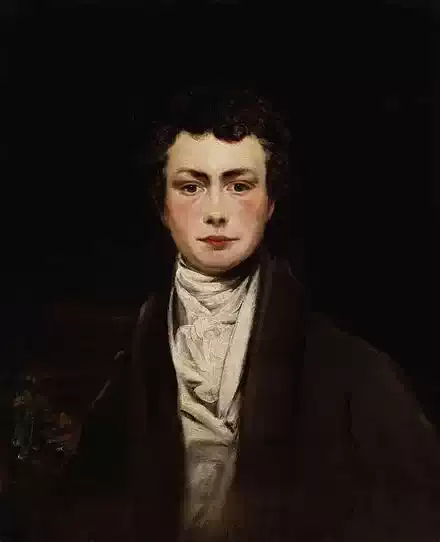
Thomas Moore
Oh! Breathe Not His Name
Oh! breathe not his name, let it sleep in the shade,
Where cold and unhonour'd his relics are laid:
Sad, silent, and dark, be the tears that we shed,
As the night-dew that falls on the grass o'er his head.
But the night-dew that falls, though in silence it weeps,
Shall brighten with verdure the grave where he sleeps;
And the tear that we shed, though in secret it rolls,
Shall long keep his memory green in our souls.
Read more →
168

Joyce Kilmer
To a Young Poet who Killed Himself
When you had played with life a space
And made it drink and lust and sing,
You flung it back into God's face
And thought you did a noble thing.
"Lo, I have lived and loved," you said,
"And sung to fools too dull to hear me.
Now for a cool and grassy bed
With violets in blossom near me."
Well, rest is good for weary feet,
Although they ran for no great prize;
And violets are very sweet,
Although their roots are in your eyes.
But hark to what the earthworms say
Who share with you your muddy haven:
"The fight was on -- you ran away.
You are a coward and a craven."
"The rug is ruined where you bled;
It was a dirty way to die!
To put a bullet through your head
And make a silly woman cry!
You could not vex the merry stars
Nor make them heed you, dead or living.
Not all your puny anger mars
God's irresistible forgiving.
"Yes, God forgives and men forget,
And you're forgiven and forgotten.
You may be gaily sinning yet
And quick and fresh instead of rotten.
And when you think of love and fame
And all that might have come to pass,
Then don't you feel a little shame?
And don't you think you were an ass?"
Read more →
167

Emily Dickinson
Robbed by Death—but that was easy
Robbed by Death—but that was easy—
To the failing Eye
I could hold the latest Glowing—
Robbed by Liberty
For Her Jugular Defences—
This, too, I endured—
Hint of Glory—it afforded—
For the Brave Beloved—
Fraud of Distance—Fraud of Danger,
Fraud of Death—to bear—
It is Bounty—to Suspense's
Vague Calamity—
Stalking our entire Possession
On a Hair's result—
Then—seesawing—coolly—on it—
Trying if it split—
Read more →
162
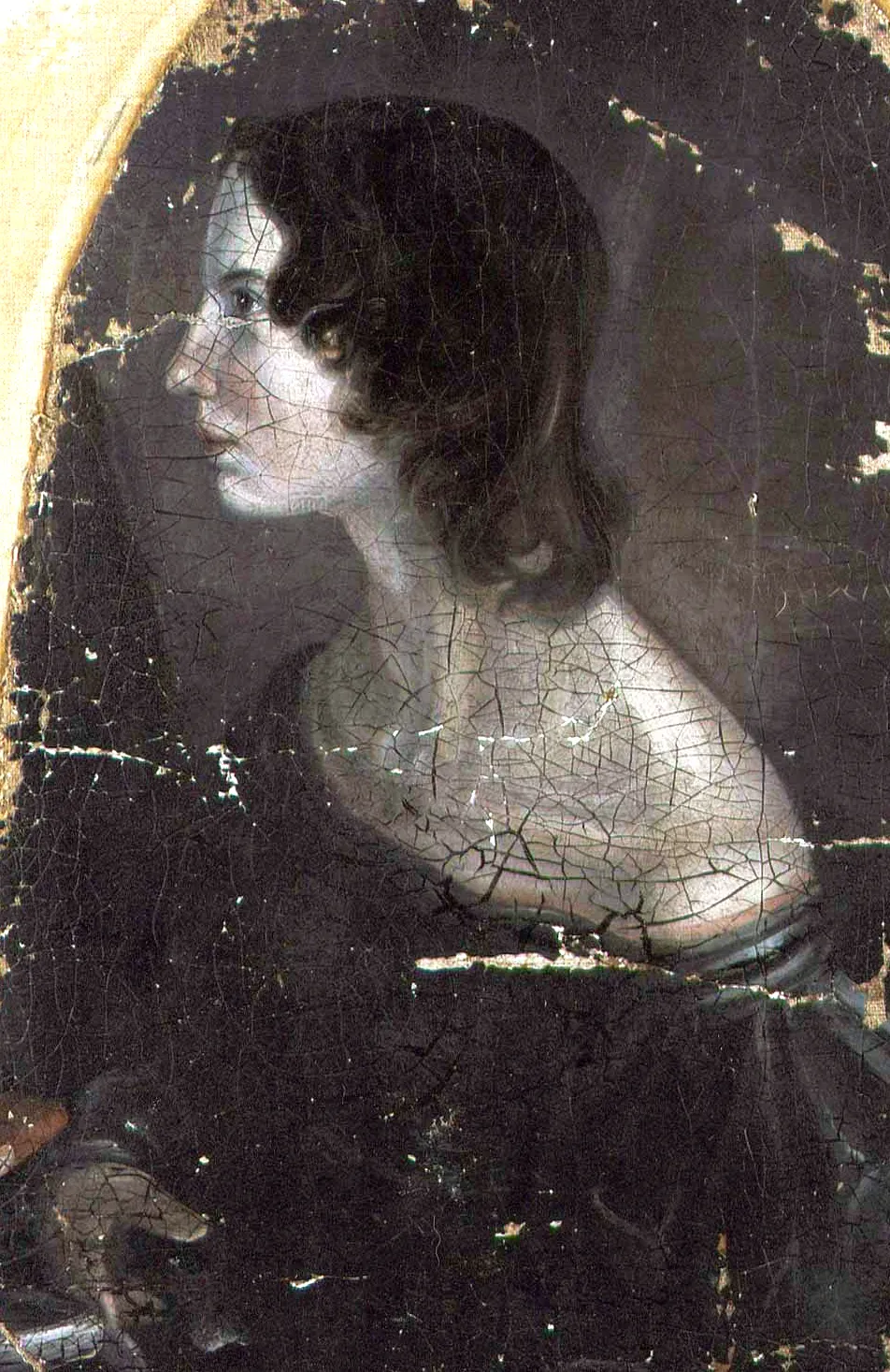
Emily Jane Brontë
Stanzas
I'll not weep that thou art going to leave me,
There's nothing lovely here;
And doubly will the dark world grieve me,
While thy heart suffers there.
I'll not weep, because the summer's glory
Must always end in gloom;
And, follow out the happiest story -
It closes with a tomb!
And I am weary of the anguish
Increasing winters bear;
Weary to watch the spirit languish
Through years of dead despair.
So, if a tear, when thou art dying,
Should haply fall from me,
It is but that my soul is sighing,
To go and rest with thee.
Read more →
171
Robert W. Service
The Wood-Cutter
The sky is like an envelope,
One of those blue official things;
And, sealing it, to mock our hope,
The moon, a silver wafer, clings.
What shall we find when death gives leave
To read--our sentence or reprieve?
I'm holding it down on God's scrap-pile, up on the fag-end of earth;
O'er me a menace of mountains, a river that grits at my feet;
Face to face with my soul-self, weighing my life at its worth;
Wondering what I was made for, here in my last retreat.
Last! Ah, yes, it's the finish. Have ever you heard a man cry?
(Sobs that rake him and rend him, right from the base of the chest.)
That's how I've cried, oh, so often; and now that my tears are dry,
I sit in the desolate quiet and wait for the infinite Rest.
Rest! Well, it's restful around me; it's quiet clean to the core.
The mountains pose in their ermine, in golden the hills are clad;
The big, blue, silt-freighted Yukon seethes by my cabin door,
And I think it's only the river that keeps me from going mad.
By day it's a ruthless monster, a callous, insatiate thing,
With oily bubble and eddy, with sudden swirling of breast;
By night it's a writhing Titan, sullenly murmuring,
Ever and ever goaded, and ever crying for rest.
It cries for its human tribute, but me it will never drown.
I've learned the lore of my river; my river obeys me well.
I hew and I launch my cordwood, and raft it to Dawson town,
Where wood means wine and women, and, incidentally, hell.
Hell and the anguish thereafter. Here as I sit alone
I'd give the life I have left me to lighten some load of care:
(The bitterest part of the bitter is being denied to atone;
Lips that have mocked at Heaven lend themselves ill to prayer.)
Impotent as a beetle pierced on the needle of Fate;
A wretch in a cosmic death-cell, peaks for my prison bars;
'Whelmed by a world stupendous, lonely and listless I wait,
Drowned in a sea of silence, strewn with confetti of stars.
See! from far up the valley a rapier pierces the night,
The white search-ray of a steamer. Swiftly, serenely it nears;
A proud, white, alien presence, a glittering galley of light,
Confident-poised, triumphant, freighted with hopes and fears.
I look as one looks on a vision; I see it pulsating by;
I glimpse joy-radiant faces; I hear the thresh of the wheel.
Hoof-like my heart beats a moment; then silence swoops from the sky.
Darkness is piled upon darkness. God only knows how I feel.
Maybe you've seen me sometimes; maybe you've pitied me then-The
lonely waif of the wood-camp, here by my cabin door.
Some day you'll look and see not; futile and outcast of men,
I shall be far from your pity, resting forevermore.
My life was a problem in ciphers, a weary and profitless sum.
Slipshod and stupid I worked it, dazed by negation and doubt.
Ciphers the total confronts me. Oh, Death, with thy moistened thumb,
Stoop like a petulant schoolboy, wipe me forever out!
Read more →
166
Robert W. Service
The Home-Coming
My boy's come back; he's here at last;
He came home on a special train.
My longing and my ache are past,
My only son is back again.
He's home with music, flags and flowers;
With peace and joy my heart's abrim;
He got here in the morning hours
With half the town to welcome him.
To hush my grief, night after night,
How I have digged my pillow deep,
And it would be the morning light
Before I sobbed myself to sleep.
And how I used to stare and stare
Across the harbour's yeasty foam,
Thinking he's fighting far out there . . .
But now with bells my boy's come home.
There's Mrs. Burke, she has her Ted,
But less the sight of his two eyes;
And Mrs. Smith - you know her Fred -
They took his legs off at the thighs.
How can these women happy be,
For all their bravery of talk,
One with a son who cannot see,
One with a boy who'll never walk.
I should be happier than they;
My lad came back without a scar,
And all the folks are proud they say,
To greet their hero of the war.
So in the gentle eventide
I'll give God thanks my Bert's come home. . . .
As peacefully I sit beside
His tiny mound of new-turned loam.
Read more →
173
Joyce Kilmer
The White Ships and the Red
(For Alden March)
With drooping sail and pennant
That never a wind may reach,
They float in sunless waters
Beside a sunless beach.
Their mighty masts and funnels
Are white as driven snow,
And with a pallid radiance
Their ghostly bulwarks glow.
Here is a Spanish galleon
That once with gold was gay,
Here is a Roman trireme
Whose hues outshone the day.
But Tyrian dyes have faded,
And prows that once were bright
With rainbow stains wear only
Death's livid, dreadful white.
White as the ice that clove her
That unforgotten day,
Among her pallid sisters
The grim Titanic lay.
And through the leagues above her
She looked aghast, and said:
"What is this living ship that comes
Where every ship is dead?"
The ghostly vessels trembled
From ruined stern to prow;
What was this thing of terror
That broke their vigil now?
Down through the startled ocean
A mighty vessel came,
Not white, as all dead ships must be,
But red, like living flame!
The pale green waves about her
Were swiftly, strangely dyed,
By the great scarlet stream that flowed
From out her wounded side.
And all her decks were scarlet
And all her shattered crew.
She sank among the white ghost ships
And stained them through and through.
The grim Titanic greeted her
"And who art thou?" she said;
"Why dost thou join our ghostly fleet
Arrayed in living red?
We are the ships of sorrow
Who spend the weary night,
Until the dawn of Judgment Day,
Obscure and still and white."
"Nay," said the scarlet visitor,
"Though I sink through the sea,
A ruined thing that was a ship,
I sink not as did ye.
For ye met with your destiny
By storm or rock or fight,
So through the lagging centuries
Ye wear your robes of white.
"But never crashing iceberg
Nor honest shot of foe,
Nor hidden reef has sent me
The way that I must go.
My wound that stains the waters,
My blood that is like flame,
Bear witness to a loathly deed,
A deed without a name.
"I went not forth to battle,
I carried friendly men,
The children played about my decks,
The women sang -- and then --
And then -- the sun blushed scarlet
And Heaven hid its face,
The world that God created
Became a shameful place!
"My wrong cries out for vengeance,
The blow that sent me here
Was aimed in Hell. My dying scream
Has reached Jehovah's ear.
Not all the seven oceans
Shall wash away that stain;
Upon a brow that wears a crown
I am the brand of Cain."
When God's great voice assembles
The fleet on Judgment Day,
The ghosts of ruined ships will rise
In sea and strait and bay.
Though they have lain for ages
Beneath the changeless flood,
They shall be white as silver,
But one -- shall be like blood.
Read more →
141
Thomas Moore
She is Far From the Land
She is far from the land where her young hero sleeps,
And lovers are round her, sighing;
But coldly she turns from their gaze, and weeps,
For her heart in his grave is lying.
She sings the wild song of her dear native plains,
Every note which he loved awaking; --
Ah! little they think, who delight in her strains,
How the heart of the Minstrel is breaking.
He had lived for his love, for his country he died,
They were all that to life had entwined him;
Nor soon shall the tears of his country be dried,
Nor long will his Love stay behind him.
Oh! make her a grave where the sunbeams rest,
When they promise a glorious morrow;
They'll shine o'er her sleep, like a smile from the West,
From her own loved island of sorrow.
Read more →
143

Siegfried Sassoon
The Troops
Dim, gradual thinning of the shapeless gloom
Shudders to drizzling daybreak that reveals
Disconsolate men who stamp their sodden boots
And turn dulled, sunken faces to the sky
Haggard and hopeless. They, who have beaten down
The stale despair of night, must now renew
Their desolation in the truce of dawn,
Murdering the livid hours that grope for peace.
Yet these, who cling to life with stubborn hands,
Can grin through storms of death and find a gap
In the clawed, cruel tangles of his defence.
They march from safety, and the bird-sung joy
Of grass-green thickets, to the land where all
Is ruin, and nothing blossoms but the sky
That hastens over them where they endure
Sad, smoking, flat horizons, reeking woods,
And foundered trench-lines volleying doom for doom.
O my brave brown companions, when your souls
Flock silently away, and the eyeless dead
Shame the wild beast of battle on the ridge,
Death will stand grieving in that field of war
Since your unvanquished hardihood is spent.
And through some mooned Valhalla there will pass
Battalions and battalions, scarred from hell;
The unreturning army that was youth;
The legions who have suffered and are dust.
Read more →
133
Siegfried Sassoon
An Old French Poet
When in your sober mood my body have ye laid
In sight and sound of things beloved, woodland and stream,
And the green turf has hidden the poor bones ye deem
No more a close companion with those rhymes we made;
Then, if some bird should pipe, or breezes stir the glade,
Thinking them for the while my voice, so let them seem
A fading message from the misty shores of dream,
Or wheresoever, following Death, my feet have strayed.
Read more →
136

Henry Lawson
Sacred to the Memory of “Unknown”
Oh, the wild black swans fly westward still,
While the sun goes down in glory—
And away o’er lonely plain and hill
Still runs the same old story:
The sheoaks sigh it all day long—
It is safe in the Big Scrub’s keeping—
’Tis the butcher-birds’ and the bell-birds’ song
In the gum where ‘Unknown’ lies sleeping—
(It is heard in the chat of the soldier-birds
O’er the grave where ‘Unknown’ lies sleeping).
Ah! the Bushmen knew not his name or land,
Or the shame that had sent him here—
But the Bushmen knew by the dead man’s hand
That his past life lay not near.
The law of the land might have watched for him,
Or a sweetheart, wife, or mother;
But they bared their heads, and their eyes were dim,
For he might have been a brother!
(Ah! the death he died brought him near to them,
For he might have been a brother.)
Oh, the wild black swans to the westward fade,
And the sunset burns to ashes,
And three times bright on an eastern range
The light of a big star flashes,
Like a signal sent to a distant strand
Where a dead man’s love sits weeping.
And the night comes grand to the Great Lone Land
O’er the grave where ‘Unknown’ lies sleeping,
And the big white stars in their clusters blaze
O’er the Bush where ‘Unknown’ lies sleeping.
Read more →
142
Robert W. Service
Days
I am a Day . . .
My sky is grey,
My wind is wild,
My sea high-piled:
In year of days the first
In misery . . .
Oh pity me!
I am a Day
Accurst.
"Sweet Day, not curst but blest:
Behold upon my breast
My baby born
Your early morn.
Safe in my arms alway . . .
Oh precious Day,
let tempest be,
You are to me
In heart of mine
Divine."
* * * * * * *
I am a Day . . .
From dawn's pure ray
Like to a peerless gem
In summer's diadem,
My sky so softly dreams,
my breeze is bland:
My sea is blue and creams
Upon the sand,
Behold! Of days the Queen
I reign serene.
"Oh Day, not blest but curst!
Let savage storm-rack burst,
i will not care . . .
For Lo! I bear
My baby's coffin to the height.
Ah! Would it were the foulest night
To match my mood''s
Ingratitude.
I cannot not pray . . .
Go your fell way,
Accursed Day!"
Read more →
154
Siegfried Sassoon
A Working Party
Three hours ago he blundered up the trench,
Sliding and poising, groping with his boots;
Sometimes he tripped and lurched against the walls
With hands that pawed the sodden bags of chalk.
He couldn't see the man who walked in front;
Only he heard the drum and rattle of feet
Stepping along barred trench boards, often splashing
Wretchedly where the sludge was ankle-deep.
Voices would grunt `Keep to your right -- make way!'
When squeezing past some men from the front-line:
White faces peered, puffing a point of red;
Candles and braziers glinted through the chinks
And curtain-flaps of dug-outs; then the gloom
Swallowed his sense of sight; he stooped and swore
Because a sagging wire had caught his neck.
A flare went up; the shining whiteness spread
And flickered upward, showing nimble rats
And mounds of glimmering sand-bags, bleached with rain;
Then the slow silver moment died in dark.
The wind came posting by with chilly gusts
And buffeting at the corners, piping thin.
And dreary through the crannies; rifle-shots
Would split and crack and sing along the night,
And shells came calmly through the drizzling air
To burst with hollow bang below the hill.
Three hours ago, he stumbled up the trench;
Now he will never walk that road again:
He must be carried back, a jolting lump
Beyond all needs of tenderness and care.
He was a young man with a meagre wife
And two small children in a Midland town,
He showed their photographs to all his mates,
And they considered him a decent chap
Who did his work and hadn't much to say,
And always laughed at other people's jokes
Because he hadn't any of his own.
That night when he was busy at his job
Of piling bags along the parapet,
He thought how slow time went, stamping his feet
And blowing on his fingers, pinched with cold.
He thought of getting back by half-past twelve,
And tot of rum to send him warm to sleep
In draughty dug-out frowsty with the fumes
Of coke, and full of snoring weary men.
He pushed another bag along the top,
Craning his body outward; then a flare
Gave one white glimpse of No Man's Land and wire;
And as he dropped his head the instant split
His startled life with lead, and all went out.
Read more →
147
Siegfried Sassoon
The Road
The road is thronged with women; soldiers pass
And halt, but never see them; yet they’re here—
A patient crowd along the sodden grass,
Silent, worn out with waiting, sick with fear.
The road goes crawling up a long hillside,
All ruts and stones and sludge, and the emptied dregs
Of battle thrown in heaps. Here where they died
Are stretched big-bellied horses with stiff legs,
And dead men, bloody-fingered from the fight,
Stare up at caverned darkness winking white.
You in the bomb-scorched kilt, poor sprawling Jock,
You tottered here and fell, and stumbled on,
Half dazed for want of sleep. No dream would mock
Your reeling brain with comforts lost and gone.
You did not feel her arms about your knees,
Her blind caress, her lips upon your head.
Too tired for thoughts of home and love and ease,
The road would serve you well enough for bed.
Read more →
142
Siegfried Sassoon
Hero
'Jack fell as he'd have wished,' the Mother said,
And folded up the letter that she'd read.
'The Colonel writes so nicely.' Something broke
In the tired voice that quavered to a choke.
She half looked up. 'We mothers are so proud
Of our dead soldiers.' Then her face was bowed.
Quietly the Brother Officer went out.
He'd told the poor old dear some gallant lies
That she would nourish all her days, no doubt.
For while he coughed and mumbled, her weak eyes
Had shone with gentle triumph, brimmed with joy,
Because he'd been so brave, her glorious boy.
He thought how 'Jack', cold-footed, useless swine,
Had panicked down the trench that night the mine
Went up at Wicked Corner; how he'd tried
To get sent home, and how, at last, he died,
Blown to small bits. And no one seemed to care
Except that lonely woman with white hair.
Read more →
145
Robert W. Service
The Last Supper
Marie Vaux of the Painted Lips,
And the mouth so mocking gay,
A wanton you to the finger-tips,
Who break men's hearts in play;
A thing of dust I have striven for,
Honour and manhood given for,
Headlong to ruin driven for,
And this is the last, you say. . . .
Drinking your wine with dainty sips,
Marie Vaux of the Painted Lips.
Marie Vaux of the Painted Lips,
ong have you held your sway;
I have laughed at your merry quips -
Now is my time to pay.
What we sow we must reap again;
When we laugh we must weep again;
So to-night we will sleep again,
Nor wake until Judgement Day. . . .
'Tis a poisoned wine that your palate lips,
Marie Vaux of the Painted Lips.
Marie Vaux of the Painted Lips,
Down on your knees and pray;
Pray your last ere the moment slips,
Pray ere the dark and the terror grips,
And the bright world fades away.
Pray for the peace and the rest of us:
Here comes the Shape in quest of us,
Now we must go away. . . .
You and I in the grave's eclipse,
Marie Vaux of the painted Lips.
Read more →
138
Siegfried Sassoon
The Investiture
GOD with a Roll of Honour in His hand
Sits welcoming the heroes who have died,
While sorrowless angels ranked on either side
Stand easy in Elysium’s meadow-land.
Then you come shyly through the garden gate,
Wearing a blood-soaked bandage on your head;
And God says something kind because you’re dead,
And homesick, discontented with your fate.
If I were there we’d snowball Death with skulls;
Or ride away to hunt in Devil’s Wood
With ghosts of puppies that we walked of old.
But you’re alone; and solitude annuls
Our earthly jokes; and strangely wise and good
You roam forlorn along the streets of gold.
Read more →
130