
Anguish

Emily Dickinson
We see-Comparatively
We see-Comparatively-
The Thing so towering high
We could not grasp its segment
Unaided-Yesterday-
This Morning's finer Verdict-
Makes scarcely worth the toil-
A furrow-Our Cordillera-
Our Apennine-a Knoll-
Perhaps 'tis kindly-done us-
The Anguish-and the loss-
The wrenching-for His Firmament
The Thing belonged to us-
To spare these Striding Spirits
Some Morning of Chagrin-
The waking in a Gnat's-embrace-
Our Giants-further on-
1,074
8
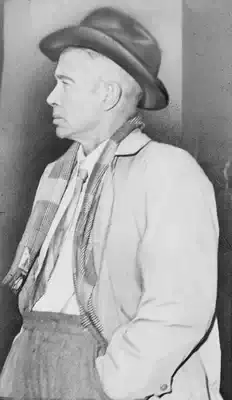
E. E. Cummings
I Am A Beggar Always
i am a beggar always
who begs in your mind
(slightly smiling, patient, unspeaking
with a sign on his
chest
BLIND)yes i
am this person of whom somehow
you are never wholly rid(and who
does not ask for more than
just enough dreams to
live on)
after all, kid
you might as well
toss him a few thoughts
a little love preferably,
anything which you can't
pass off on other people: for
instance a
plugged promise
the he will maybe (hearing something
fall into his hat)go wandering
after it with fingers;till having
found
what was thrown away
himself
taptaptaps out of your brain, hopes, life
to(carefully turning a
corner)never bother you any more
Anonymous submission.
1,450
1
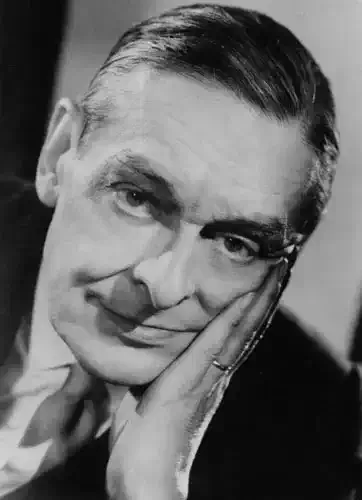
T. S. Eliot
The Love Song of J Alfred Prufrock
Sio credesse che mia risposta fosse
A persona che mai tornasse al mondo,
Questa fiamma staria senza piu scosse.
Ma perciocche giammai di questo fondo
Non torno vivo alcun, siodo il vero,
Senza tema dinfamia ti rispondo.
LET us go then, you and I,
When the evening is spread out against the sky
Like a patient etherised upon a table;
Let us go, through certain half-deserted streets,
The muttering retreats
Of restless nights in one-night cheap hotels
And sawdust restaurants with oyster-shells:
Streets that follow like a tedious argument
Of insidious intent
To lead you to an overwhelming question...
Oh, do not ask, "What is it?"
Let us go and make our visit.
In the room the women come and go
Talking of Michelangelo.
The yellow fog that rubs its back upon the window-panes,
The yellow smoke that rubs its muzzle on the window-panes
Licked its tongue into the corners of the evening,
Lingered upon the pools that stand in drains,
Let fall upon its back the soot that falls from chimneys,
Slipped by the terrace, made a sudden leap,
And seeing that it was a soft October night,
Curled once about the house, and fell asleep.
And indeed there will be time
For the yellow smoke that slides along the street,
Rubbing its back upon the window-panes;
There will be time, there will be time
To prepare a face to meet the faces that you meet;
There will be time to murder and create,
And time for all the works and days of hands
That lift and drop a question on your plate;
Time for you and time for me,
And time yet for a hundred indecisions,
And for a hundred visions and revisions,
Before the taking of a toast and tea.
In the room the women come and go
Talking of Michelangelo.
And indeed there will be time
To wonder, "Do I dare?" and, "Do I dare?"
Time to turn back and descend the stair,
With a bald spot in the middle of my hair—
[They will say: "How his hair is growing thin!"]
My morning coat, my collar mounting firmly to the chin,
My necktie rich and modest, but asserted by a simple pin—
[They will say: "But how his arms and legs are thin!"]
Do I dare
Disturb the universe?
In a minute there is time
For decisions and revisions which a minute will reverse.
For I have known them all already, known them all:—
Have known the evenings, mornings, afternoons,
I have measured out my life with coffee spoons;
I know the voices dying with a dying fall
Beneath the music from a farther room.
So how should I presume?
And I have known the eyes already, known them all—
The eyes that fix you in a formulated phrase,
And when I am formulated, sprawling on a pin,
When I am pinned and wriggling on the wall,
Then how should I begin
To spit out all the butt-ends of my days and ways?
And how should I presume?
And I have known the arms already, known them all—
Arms that are braceleted and white and bare
[But in the lamplight, downed with light brown hair!]
It is perfume from a dress
That makes me so digress?
Arms that lie along a table, or wrap about a shawl.
And should I then presume?
And how should I begin?
. . . . .
Shall I say, I have gone at dusk through narrow streets
And watched the smoke that rises from the pipes
Of lonely men in shirt-sleeves, leaning out of windows?...
I should have been a pair of ragged claws
Scuttling across the floors of silent seas.
. . . . .
And the afternoon, the evening, sleeps so peacefully!
Smoothed by long fingers,
Asleep ... tired ... or it malingers,
Stretched on the floor, here beside you and me.
Should I, after tea and cakes and ices,
Have the strength to force the moment to its crisis?
But though I have wept and fasted, wept and prayed,
Though I have seen my head [grown slightly bald] brought in upon a platter,
I am no prophet—and heres no great matter;
I have seen the moment of my greatness flicker,
And I have seen the eternal Footman hold my coat, and snicker,
And in short, I was afraid.
And would it have been worth it, after all,
After the cups, the marmalade, the tea,
Among the porcelain, among some talk of you and me,
Would it have been worth while,
To have bitten off the matter with a smile,
To have squeezed the universe into a ball
To roll it toward some overwhelming question,
To say: "I am Lazarus, come from the dead,
Come back to tell you all, I shall tell you all"—
If one, settling a pillow by her head,
Should say: "That is not what I meant at all.
That is not it, at all."
And would it have been worth it, after all,
Would it have been worth while,
After the sunsets and the dooryards and the sprinkled streets,
After the novels, after the teacups, after the skirts that trail along the floor—
And this, and so much more?—
It is impossible to say just what I mean!
But as if a magic lantern threw the nerves in patterns on a screen:
Would it have been worth while
If one, settling a pillow or throwing off a shawl,
And turning toward the window, should say:
"That is not it at all,
That is not what I meant, at all."
. . . . .
No! I am not Prince Hamlet, nor was meant to be;
Am an attendant lord, one that will do
To swell a progress, start a scene or two,
Advise the prince; no doubt, an easy tool,
Deferential, glad to be of use,
Politic, cautious, and meticulous;
Full of high sentence, but a bit obtuse;
At times, indeed, almost ridiculous—
Almost, at times, the Fool.
I grow old ... I grow old...
I shall wear the bottoms of my trousers rolled.
Shall I part my hair behind? Do I dare to eat a peach?
I shall wear white flannel trousers, and walk upon the beach.
I have heard the mermaids singing, each to each.
I do not think that they will sing to me.
I have seen them riding seaward on the waves
Combing the white hair of the waves blown back
When the wind blows the water white and black.
We have lingered in the chambers of the sea
By sea-girls wreathed with seaweed red and brown
Till human voices wake us, and we drown.
2,508

Rudyard Kipling
The Mary Gloster
I've paid for your sickest fancies; I've humoured your crackedest whim --
Dick, it's your daddy, dying; you've got to listen to him!
Good for a fortnight, am I? The doctor told you? He lied.
I shall go under by morning, and -- Put that nurse outside.
'Never seen death yet, Dickie? Well, now is your time to learn,
And you'll wish you held my record before it comes to your turn.
Not counting the Line and the Foundry, the yards and the village, too,
I've made myself and a million; but I'm damned if I made you.
Master at two-and-twenty, and married at twenty-three --
Ten thousand men on the pay-roll, and forty freighters at sea!
Fifty years between 'em, and every year of it fight,
And now I'm Sir Anthony Gloster, dying, a baronite:
For I lunched with his Royal 'Ighness -- what was it the papers a-had?
"Not least of our merchant-princes." Dickie, that's me, your dad!
I didn't begin with askings. I took my job and I stuck;
And I took the chances they wouldn't, an' now they're calling it luck.
Lord, what boats I've handled -- rotten and leaky and old!
Ran 'em, or -- opened the bilge-cock, precisely as I was told.
Grub that 'ud bind you crazy, and crews that 'ud turn you grey,
And a big fat lump of insurance to cover the risk on the way.
The others they dursn't do it; they said they valued their life
(They've served me since as skippers). I went, and I took my wife.
Over the world I drove 'em, married at twenty-three,
And your mother saving the money and making a man of me.
I was content to be master, but she said there was better behind;
She took the chances I wouldn't, and I followed your mother blind.
She egged me to borrow the money, an' she helped me to clear the loan,
When we bought half shares in a cheap 'un and hoisted a flag of our own.
Patching and coaling on credit, and living the Lord knew how,
We started the Red Ox freighters -- we've eight-and-thirty now.
And those were the days of clippers, and the freights were clipper-freights,
And we knew we were making our fortune, but she died in Macassar Straits --
By the Little Paternosters, as you come to the Union Bank --
And we dropped her in fourteen fathom; I pricked it off where she sank.
Owners we were, full owners, and the boat was christened for her,
And she died in the Mary Gloster. My heart, how young we were!
So I went on a spree round Java and well-nigh ran her ashore,
But your mother came and warned me and I wouldn't liquor no more:
Strict I stuck to my business, afraid to stop or I'd think,
Saving the money (she warned me), and letting the other men drink.
And I met M'Cullough in London (I'd turned five 'undred then),
And 'tween us we started the Foundry -- three forges and twenty men:
Cheap repairs for the cheap 'uns. It paid, and the business grew,
For I bought me a steam-lathe patent, and that was a gold mine too.
"Cheaper to build 'em than buy 'em," I said, but M'Cullough he shied,
And we wasted a year in talking before we moved to the Clyde.
And the Lines were all beginning, and we all of us started fair,
Building our engines like houses and staying the boilers square.
But M'Cullough 'e wanted cabins with marble and maple and all,
And Brussels an' Utrecht velvet, and baths and a Social Hall,
And pipes for closets all over, and cutting the frames too light,
But M'Cullough he died in the Sixties, and -- Well, I'm dying to-night. . . .
I knew -- I knew what was coming, when we bid on the Byfleet's keel --
They piddled and piffled with iron: I'd given my orders for steel!
Steel and the first expansions. It paid, I tell you, it paid,
When we came with our nine-knot freighters and collared the long-run trade!
And they asked me how I did it, and I gave 'em the Scripture text,
"You keep your light so shining a little in front o' the next!"
They copied all they could follow, but they couldn't copy my mind,
And I left 'em sweating and stealing a year and a half behind.
Then came the armour-contracts, but that was M'Cullough's side;
He was always best in the Foundry, but better, perhaps, he died.
I went through his private papers; the notes was plainer than print;
And I'm no fool to finish if a man'll give me a hint.
(I remember his widow was angry.) So I saw what the drawings meant,
And I started the six-inch rollers, and it paid me sixty per cent --
Sixty per cent with failures, and more than twice we could do,
And a quarter-million to credit, and I saved it all for you!
I thought -- it doesn't matter -- you seemed to favour your ma,
But you're nearer forty than thirty, and I know the kind you are.
Harrer an' Trinity College! I ought to ha' sent you to sea --
But I stood you an education, an' what have you done for me?
The things I knew was proper you wouldn't thank me to give,
And the things I knew was rotten you said was the way to live.
For you muddled with books and pictures, an' china an' etchin's an' fans,
And your rooms at college was beastly -- more like a whore's than a man's --
Till you married that thin-flanked woman, as white and as stale as a bone,
An' she gave you your social nonsense; but where's that kid o' your own?
I've seen your carriages blocking the half o' the Cromwell Road,
But never the doctor's brougham to help the missus unload.
(So there isn't even a grandchild, an' the Gloster family's done.)
Not like your mother, she isn't. She carried her freight each run.
But they died, the pore little beggars! At sea she had 'em -- they died.
Only you, an' you stood it; you haven't stood much beside.
Weak, a liar, and idle, and mean as a collier's whelp
Nosing for scraps in the galley. No help -- my son was no help!
So he gets three 'undred thousand, in trust and the interest paid.
I wouldn't give it you, Dickie -- you see, I made it in trade.
You're saved from soiling your fingers, and if you have no child,
It all comes back to the business. Gad, won't your wife be wild!
'Calls and calls in her carriage, her 'andkerchief up to 'er eye:
"Daddy! dear daddy's dyin'!" and doing her best to cry.
Grateful? Oh, yes, I'm grateful, but keep her away from here.
Your mother 'ud never ha' stood 'er, and, anyhow, women are queer. . . .
There's women will say I've married a second time.
Not quite! But give pore Aggie a hundred, and tell her your lawyers'll fight.
She was the best o' the boiling -- you'll meet her before it ends;
I'm in for a row with the mother -- I'll leave you settle my friends:
For a man he must go with a woman, which women don't understand --
Or the sort that say they can see it they aren't the marrying brand.
But I wanted to speak o' your mother that's Lady Gloster still --
I'm going to up and see her, without it's hurting the will.
Here! Take your hand off the bell-pull. Five thousand's waiting for you,
If you'll only listen a minute, and do as I bid you do.
They'll try to prove me crazy, and, if you bungle, they can;
And I've only you to trust to! (O God, why ain't he a man?)
There's some waste money on marbles, the same as M'Cullough tried --
Marbles and mausoleums -- but I call that sinful pride.
There's some ship bodies for burial -- we've carried 'em, soldered and packed;
Down in their wills they wrote it, and nobody called them cracked.
But me -- I've too much money, and people might. . . . All my fault:
It come o' hoping for grandsons and buying that Wokin' vault.
I'm sick o' the 'ole dam' business; I'm going back where I came.
Dick, you're the son o' my body, and you'll take charge o' the same!
I want to lie by your mother, ten thousand mile away,
And they'll want to send me to Woking; and that's where you'll earn your pay.
I've thought it out on the quiet, the same as it ought to be done --
Quiet, and decent, and proper -- an' here's your orders, my son.
You know the Line? You don't, though. You write to the Board, and tell
Your father's death has upset you an' you're goin' to cruise for a spell,
An' you'd like the Mary Gloster -- I've held her ready for this --
They'll put her in working order and you'll take her out as she is.
Yes, it was money idle when I patched her and put her aside
(Thank God, I can pay for my fancies!) -- the boat where your mother died,
By the Little Paternosters, as you come to the Union Bank,
We dropped her -- I think I told you -- and I pricked it off where she sank --
['Tiny she looked on the grating -- that oily, treacly sea --]
'Hundred and eighteen East, remember, and South just three.
Easy bearings to carry -- three South -- three to the dot;
But I gave M'Andrew a copy in case of dying -- or not.
And so you'll write to M'Andrew, he's Chief of the Maori Line;
They'll give him leave, if you ask 'em and say it's business o' mine.
I built three boats for the Maoris, an' very well pleased they were,
An' I've known Mac since the Fifties, and Mac knew me -- and her.
After the first stroke warned me I sent him the money to keep
Against the time you'd claim it, committin' your dad to the deep;
For you are the son o' my body, and Mac was my oldest friend,
I've never asked 'im to dinner, but he'll see it out to the end.
Stiff-necked Glasgow beggar, I've heard he's prayed for my soul,
But he couldn't lie if you paid him, and he'd starve before he stole!
He'll take the Mary in ballast -- you'll find her a lively ship;
And you'll take Sir Anthony Gloster, that goes on 'is wedding-trip,
Lashed in our old deck-cabin with all three port-holes wide,
The kick o' the screw beneath him and the round blue seas outside!
Sir Anthony Gloster's carriage -- our 'ouse-flag flyin' free --
Ten thousand men on the pay-roll and forty freighters at sea!
He made himself and a million, but this world is a fleetin' show,
And he'll go to the wife of 'is bosom the same as he ought to go --
By the heel of the Paternosters -- there isn't a chance to mistake --
And Mac'll pay you the money as soon as the bubbles break!
Five thousand for six weeks' cruising, the staunchest freighter afloat,
And Mac he'll give you your bonus the minute I'm out o' the boat!
He'll take you round to Macassar, and you'll come back alone;
He knows what I want o' the Mary. . . . I'll do what I please with my own.
Your mother 'ud call it wasteful, but I've seven-and-thirty more;
I'll come in my private carriage and bid it wait at the door. . . .
For my son 'e was never a credit: 'e muddled with books and art,
And 'e lived on Sir Anthony's money and 'e broke Sir Anthony's heart.
There isn't even a grandchild, and the Gloster family's done --
The only one you left me, O mother, the only one!
Harrer and Trinity College -- me slavin' early an' late --
An' he thinks I'm dying crazy, and you're in Macassar Strait!
Flesh o' my flesh, my dearie, for ever an' ever amen,
That first stroke come for a warning; I ought to ha' gone to you then,
But -- cheap repairs for a cheap 'un -- the doctors said I'd do:
Mary, why didn't you warn me? I've allus heeded to you,
Excep' -- I know -- about women; but you are a spirit now;
An', wife, they was only women, and I was a man. That's how.
An' a man 'e must go with a woman, as you could not understand;
But I never talked 'em secrets. I paid 'em out o' hand.
Thank Gawd, I can pay for my fancies! Now what's five thousand to me,
For a berth off the Paternosters in the haven where I would be?
I believe in the Resurrection, if I read my Bible plain,
But I wouldn't trust 'em at Wokin'; we're safer at sea again.
For the heart it shall go with the treasure -- go down to the sea in ships.
I'm sick of the hired women -- I'll kiss my girl on her lips!
I'll be content with my fountain, I'll drink from my own well,
And the wife of my youth shall charm me -- an' the rest can go to Hell!
(Dickie, he will, that's certain.) I'll lie in our standin'-bed,
An' Mac'll take her in ballast -- an' she trims best by the head. . . .
Down by the head an' sinkin', her fires are drawn and cold,
And the water's splashin' hollow on the skin of the empty hold --
Churning an' choking and chuckling, quiet and scummy and dark --
Full to her lower hatches and risin' steady. Hark!
That was the after-bulkhead. . . . She's flooded from stem to stern. . . .
Never seen death yet, Dickie? . . . Well, now is your time to learn!
1,313
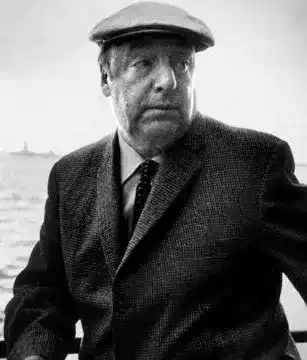
Pablo Neruda
I Explain A Few Things
You are going to ask: and where are the lilacs?
and the poppy-petalled metaphysics?
and the rain repeatedly spattering
its words and drilling them full
of apertures and birds?
I'll tell you all the news.
I lived in a suburb,
a suburb of Madrid, with bells,
and clocks, and trees.
From there you could look out
over Castille's dry face:
a leather ocean.
My house was called
the house of flowers, because in every cranny
geraniums burst: it was
a good-looking house
with its dogs and children.
Remember, Raul?
Eh, Rafel? Federico, do you remember
from under the ground
my balconies on which
the light of June drowned flowers in your mouth?
Brother, my brother!
Everything
loud with big voices, the salt of merchandises,
pile-ups of palpitating bread,
the stalls of my suburb of Arguelles with its statue
like a drained inkwell in a swirl of hake:
oil flowed into spoons,
a deep baying
of feet and hands swelled in the streets,
metres, litres, the sharp
measure of life,
stacked-up fish,
the texture of roofs with a cold sun in which
the weather vane falters,
the fine, frenzied ivory of potatoes,
wave on wave of tomatoes rolling down the sea.
And one morning all that was burning,
one morning the bonfires
leapt out of the earth
devouring human beings and
from then on fire,
gunpowder from then on,
and from then on blood.
Bandits with planes and Moors,
bandits with finger-rings and duchesses,
bandits with black friars spattering blessings
came through the sky to kill children
and the blood of children ran through the streets
without fuss, like children's blood.
Jackals that the jackals would despise,
stones that the dry thistle would bite on and spit out,
vipers that the vipers would abominate!
Face to face with you I have seen the blood
of Spain tower like a tide
to drown you in one wave
of pride and knives!
Treacherous
generals:
see my dead house,
look at broken Spain :
from every house burning metal flows
instead of flowers,
from every socket of Spain
Spain emerges
and from every dead child a rifle with eyes,
and from every crime bullets are born
which will one day find
the bull's eye of your hearts.
And you'll ask: why doesn't his poetry
speak of dreams and leaves
and the great volcanoes of his native land?
Come and see the blood in the streets.
Come and see
The blood in the streets.
Come and see the blood
In the streets!
1,428

William Blake
The Schoolboy
I love to rise in a summer morn
When the birds sing on every tree;
The distant huntsman winds his horn,
And the skylark sings with me.
O! what sweet company!
But to go to school on a summer morn,
O! it drives all joy away;
Under a cruel eye outworn,
The little ones spend the day
In sighing and dismay.
Ah! then at times I drooping sit,
And spend many an anxious hour,
Nor in my book can I take delight,
Nor sit in learning's bower,
Worn thro' with the dreary shower.
How can the bird that is born for joy
Sit in a cage and sing?
How can a child, when fears annoy,
But droop his tender wing,
And forget his youthful spring?
O! father and mother, if buds are nipped
And blossoms blown away,
And if the tender plants are stripped
Of their joy in the springing day,
By sorrow and care's dismay,
How shall the summer arise in joy,
Or the summer's fruits appear?
Or how shall we gather what griefs destroy,
Or bless the mellowing year,
When the blasts of winter appear?
1,307

William Shakespeare
Sonnet 29: When in disgrace with fortune and men's eyes
When in disgrace with fortune and men's eyes,
I all alone beweep my outcast state,
And trouble deaf heaven with my bootless cries,
And look upon myself and curse my fate,
wishing me like to one more rich in hope,
Featured like him, like him with friends possessed,
Desiring this man's art, and that man's scope,
With what I most enjoy contented least;
Yet in these thoughts myself almost despising,
Haply I think on thee--and then my state,
Like to the lark at break of day arising
From sullen earth sings hymns at heaven's gate;
For thy sweet love remembered such wealth brings,
That then I scorn to change my state with kings.
1,345

Oscar Wilde
The Harlot's House
We caught the tread of dancing feet,
We loitered down the moonlit street,
And stopped beneath the harlot's house.
Inside, above the din and fray,
We heard the loud musicians play
The "Treues Liebes Herz" of Strauss.
Like strange mechanical grotesques,
Making fantastic arabesques,
The shadows raced across the blind.
We watched the ghostly dancers spin
To sound of horn and violin,
Like black leaves wheeling in the wind.
Like wire-pulled automatons,
Slim silhouetted skeletons
Went sidling through the slow quadrille.
They took each other by the hand,
And danced a stately saraband;
Their laughter echoed thin and shrill.
Sometimes a clockwork puppet pressed
A phantom lover to her breast,
Sometimes they seemed to try to sing.
Sometimes a horrible marionette
Came out, and smaoked its cigarette
Upon the steps like a live thing.
Then, turning to my love, I said,
"The dead are dancing with the dead,
The dust is whirling with the dust."
But she--she heard the violin,
And left my side, and entered in:
Love passed into the house of lust.
Then suddenly the tune went false,
The shadows wearied of the waltz,
The shadows ceased to wheel and whirl.
And down the long and silent street,
The dawn, with silver-sandalled feet,
Crept like a frightened girl.
1,061

Lord Byron
Sonnet - to Genevra
Thy cheek is pale with thought, but not from woe,
And yet so lovely, that if Mirth could flush
Its rose of whiteness with the brightest blush,
My heart would wish away that ruder glow:
And dazzle not thy deepblue
eyesbut,
oh!
While gazing on them sterner eyes will gush,
And into mine my mother's weakness rush,
Soft as the last drops round Heaven's airy bow.
For, though thy long dark lashes low depending,
The soul of melancholy Gentleness
Gleams like a Seraph from the sky descending,
Above all pain, yet pitying all distress;
At once such majesty with sweetness blending,
I worship more, but cannot love thee less.
1,189

Philip Larkin
Aubade
I work all day, and get half-drunk at night.
Waking at four to soundless dark, I stare.
In time the curtain-edges will grow light.
Till then I see whats really always there:
Unresting death, a whole day nearer now,
Making all thought impossible but how
And where and when I shall myself die.
Arid interrogation: yet the dread
Of dying, and being dead,
Flashes afresh to hold and horrify.
The mind blanks at the glare. Not in remorse
-- The good not done, the love not givenn, time
Torn off unused -- nor wretchedly because
An only life can take so long to climb
Clear of its wrong beginnings, and may never;
But the total emptiness for ever,
The sure extinction that we travel to
And shall be lost in always. Not to be here,
Not to be anywhere,
And soon; nothing more terrible, nothing more true.
This is a special way of being afraid
No trick dispels. Religion used to try,
That vast moth-eaten musical brocade
Created to pretend we never die,
And specious stuff that says No rational being
Can fear a thing it will not feel, not seeing
That this is what we fear -- no sight, no sound,
No touch or taste or smell, nothing to think with,
Nothing to love or link with,
The anaesthetic from which none come round.
And so it stays just on the edge of vision,
A small unfocused blur, a standing chill
That slows each impulse down to indecision.
Most things may never happen: this one will,
And realisation of its rages out
In furnace-fear when we are caught without
People or drink. Courage is no good:
It means not scaring others. Being brave
Lets no one off the grave.
Death is no different whined at than withstood.
Slowly light strengthens, and the room takes shape.
It stands plain as a wardrobe, what we know,
Have always known, know that we cant escape,
Yet cant accept. One side will have to go.
Meanwhile telephones crouch, getting ready to ring
In locked-up offices, and all the uncaring
Intricate rented world beings to rouse.
The sky is white as clay, with no sun.
Work has to be done.
Postmen like doctors go from house to house.
1,131
Oscar Wilde
Taedium Vitae
To stab my youth with desperate knives, to wear
This paltry age's gaudy livery,
To let each base hand filch my treasury,
To mesh my soul within a woman's hair,
And be mere Fortune's lackeyed groom, - I swear
I love it not! these things are less to me
Than the thin foam that frets upon the sea,
Less than the thistledown of summer air
Which hath no seed: better to stand aloof
Far from these slanderous fools who mock my life
Knowing me not, better the lowliest roof
Fit for the meanest hind to sojourn in,
Than to go back to that hoarse cave of strife
Where my white soul first kissed the mouth of sin.
1,151
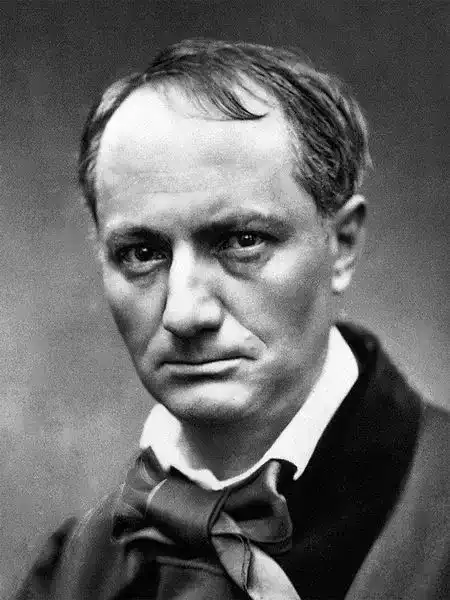
Charles Baudelaire
Anywhere Out of the World
This life is a hospital where every patient is possessed with the desire to change beds;
one man would like to
suffer in front of the stove, and another believes that he would recover his health
beside the window.
It always seems to me that I should feel well in the place where I am not, and this
question of removal is one
which I discuss incessantly with my soul.
'Tell me, my soul, poor chilled soul, what do you think of going to live in Lisbon? It
must be warm there, and there
you would invigorate yourself like a lizard. This city is on the sea-shore; they say that
it is built of marble
and that the people there have such a hatred of vegetation that they uproot all the
trees. There you have a landscape
that corresponds to your taste! a landscape made of light and mineral, and liquid to
reflect them!'
My soul does not reply.
'Since you are so fond of stillness, coupled with the show of movement, would you like
to settle in Holland,
that beatifying country? Perhaps you would find some diversion in that land whose
image you have so often admired
in the art galleries. What do you think of Rotterdam, you who love forests of masts,
and ships moored at the foot of
houses?'
My soul remains silent.
'Perhaps Batavia attracts you more? There we should find, amongst other things, the
spirit of Europe
married to tropical beauty.'
Not a word. Could my soul be dead?
'Is it then that you have reached such a degree of lethargy that you acquiesce in your
sickness? If so, let us
flee to lands that are analogues of death. I see how it is, poor soul! We shall pack our
trunks for Tornio. Let us go
farther still to the extreme end of the Baltic; or farther still from life, if that is possible;
let us settle at the Pole. There
the sun only grazes the earth obliquely, and the slow alternation of light and darkness
suppresses variety and
increases monotony, that half-nothingness. There we shall be able to take long baths
of darkness, while for our
amusement the aurora borealis shall send us its rose-coloured rays that are like the
reflection of Hell's own
fireworks!'
At last my soul explodes, and wisely cries out to me: 'No matter where! No matter
where! As long as it's out
of the world!'
1,154
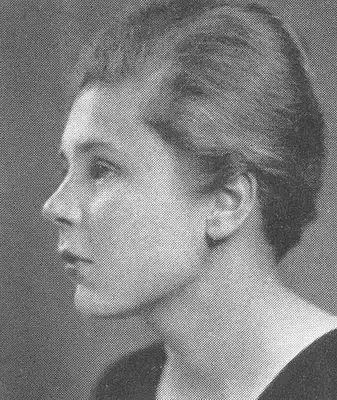
Elizabeth Bishop
I Am in Need of Music
I am in need of music that would flow
Over my fretful, feeling fingertips,
Over my bitter-tainted, trembling lips,
With melody, deep, clear, and liquid-slow.
Oh, for the healing swaying, old and low,
Of some song sung to rest the tired dead,
A song to fall like water on my head,
And over quivering limbs, dream flushed to glow!
There is a magic made by melody:
A spell of rest, and quiet breath, and cool
Heart, that sinks through fading colors deep
To the subaqueous stillness of the sea,
And floats forever in a moon-green pool,
Held in the arms of rhythm and of sleep.
1,210
Pablo Neruda
Walking Around
It so happens I am sick of being a man.
And it happens that I walk into tailorshops and movie
houses
dried up, waterproof, like a swan made of felt
steering my way in a water of wombs and ashes.
The smell of barbershops makes me break into hoarse
sobs.
The only thing I want is to lie still like stones or wool.
The only thing I want is to see no more stores, no gardens,
no more goods, no spectacles, no elevators.
It so happens that I am sick of my feet and my nails
and my hair and my shadow.
It so happens I am sick of being a man.
Still it would be marvelous
to terrify a law clerk with a cut lily,
or kill a nun with a blow on the ear.
It would be great
to go through the streets with a green knife
letting out yells until I died of the cold.
I don't want to go on being a root in the dark,
insecure, stretched out, shivering with sleep,
going on down, into the moist guts of the earth,
taking in and thinking, eating every day.
I don't want so much misery.
I don't want to go on as a root and a tomb,
alone under the ground, a warehouse with corpses,
half frozen, dying of grief.
That's why Monday, when it sees me coming
with my convict face, blazes up like gasoline,
and it howls on its way like a wounded wheel,
and leaves tracks full of warm blood leading toward the
night.
And it pushes me into certain corners, into some moist
houses,
into hospitals where the bones fly out the window,
into shoeshops that smell like vinegar,
and certain streets hideous as cracks in the skin.
There are sulphur-colored birds, and hideous intestines
hanging over the doors of houses that I hate,
and there are false teeth forgotten in a coffeepot,
there are mirrors
that ought to have wept from shame and terror,
there are umbrellas everywhere, and venoms, and umbilical
cords.
I stroll along serenely, with my eyes, my shoes,
my rage, forgetting everything,
I walk by, going through office buildings and orthopedic
shops,
and courtyards with washing hanging from the line:
underwear, towels and shirts from which slow
dirty tears are falling.
Translated by Robert Bly
1,069
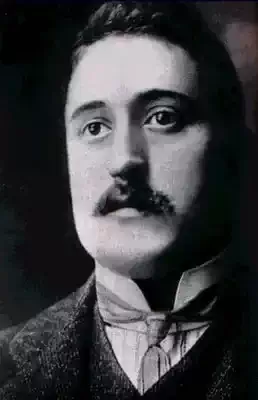
Guillaume Apollinaire
Palace
In deepest dream towards Rosemonde's palace
My barefoot brain inclined for the evening
Like a naked king the walls are waking
Beaten flesh and fresh-cut roses
You can see my thoughts immersed in roses
Smiling at the concert of the toads
They are in the mood for cypress bedposts
The sun is a broken mirror of the rose
What badly wounded bowman opened
Stigmata of palms on the windowpane
At the white lamb's love-feast I have tasted
Resins that bitter the Cyprian wine
On the jagged lap of the lascivious king
In the May-time of her age and finest frock
Mysterious Madame Rosemonde rolls
Her little round eyes like a Hun
Lady of my thoughts your pearly asshole
Is unrivalled by anything Oriental
For whom are you waiting
Deepest dreams en route to the Orient
Are my loveliest neighbors
Knock knock Come into the forecourt night is coming
In shadow the night-light is toasted tinsel
Hang your heads by the hair on the hat-rack
The evening sky is aglimmer with pins
We entered the dining room our noses
Caught a whiff of grease and mucus
Of twenty soup bowls three were urine
The king ate two poached eggs in bouillon
And then the scullions brought in the meat dishes
A standing roast of thoughts deceased in my brain
My lovely still-born dreams in slices still bloody
And gamy little meatballs of memory
Dead for millennia now these thoughts
Had a flavorless taste of frozen mammoth
Bones or visionaries danced out of ossuaries
The dance of death in the folds of my brain
And all those meats pronounced revelations
But Holy Christ!
A famished belly has no hearing
The guests continued their best mastications
Ah Holy Christ! cried out the rib-eyes
The huge pâtes the marrow and hot-pots
Tongues of fire o where is the pentecost
Of my thoughts for all places nations and times
1,128
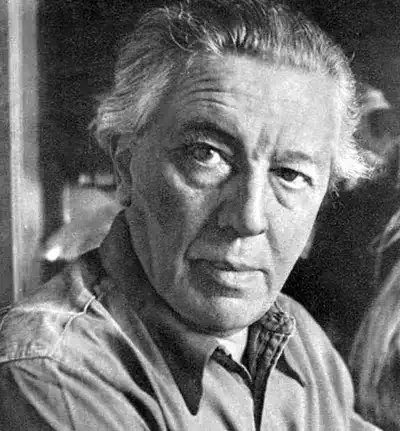
André Breton
The Spectral Attitudes
I attach no importance to life
I pin not the least of life's butterflies to importance
I do not matter to life
But the branches of salt the white branches
All the shadow bubbles
And the sea-anemones
Come down and breathe within my thoughts
They come from tears that are not mine
From steps I do not take that are steps twice
And of which the sand remembers the flood-tide
The bars are in the cage
And the birds come down from far above to sing before these bars
A subterranean passage unites all perfumes
A woman pledged herself there one day
This woman became so bright that I could no longer see her
With these eyes which have seen my own self burning
I was then already as old as I am now
And I watched over myself and my thoughts like a night watchman in an immense
factory Keeping watch alone
The circus always enchants the same tramlines
The plaster figures have lost nothing of their expression
They who bit the smile's fig
I know of a drapery in a forgotten town
If it pleased me to appear to you wrapped in this drapery
You would think that your end was approaching
Like mine
At last the fountains would understand that you must not say Fountain
The wolves are clothed in mirrors of snow
I have a boat detached from all climates
I am dragged along by an ice-pack with teeth of flame
I cut and cleave the wood of this tree that will always be green
A musician is caught up in the strings of his instrument
The skull and crossbones of the time of any childhood story
Goes on board a ship that is as yet its own ghost only
Perhaps there is a hilt to this sword
But already there is a duel in this hilt
During the duel the combatants are unarmed
Death is the least offence
The future never comes
The curtains that have never been raised
Float to the windows of houses that are to be built
The beds made of lilies
Slide beneath the lamps of dew
There will come an evening
The nuggets of light become still underneath the blue moss
The hands that tie and untie the knots of love and of air
Keep all their transparency for those who have eyes to see
They see the palms of hands
The crowns in eyes
But the brazier of crown and palms
Can scarcely be lit in the deepest part of the forest
There where the stags bend their heads to examine the years
Nothing more than a feeble beating is heard
From which sound a thousand louder or softer sounds proceed
And the beating goes on and on
There are dresses that vibrate
And their vibration is in unison with the beating
When I wish to see the faces of those that wear them
A great fog rises from the ground
At the bottom of the steeples behind the most elegant reservoirs of life and of wealth
In the gorges which hide themselves between two mountains
On the sea at the hour when the sun cools down
Those who make signs to me are separated by stars
And yet the carriage overturned at full speed
Carries as far as my last hesitation
That awaits me down there in the town where the statues of bronze
and of stone have changed places with statues of wax Banyans banyans.
988
William Shakespeare
Sonnet 94: They that have power to hurt and will do none
They that have power to hurt and will do none,
That do not do the thing, they most do show,
Who, moving others, are themselves as stone,
Unmovèd, cold, and to temptation slow,
They rightly do inherit heaven's graces,
And husband nature's riches from expense;
They are the lords and owners of their faces,
Others, but stewards of their excellence.
The summer's flower is to the summer sweet,
Though to itself, it only live and die,
But if that flower with base infection meet,
The basest weed outbraves his dignity.
For sweetest things turn sourest by their deeds;
Lilies that fester smell far worse than weeds.
985
Oscar Wilde
Soneto: E Tenebris
Come down, O Christ, and help me! reach Thy hand,
For I am drowning in a stormier sea
Than Simon on Thy lake of Galilee:
The wine of life is spilt upon the sand,
My heart is as some famine-murdered land
Whence all good things have perished utterly,
And well I know my soul in Hell must lie
If I this night before God's throne should stand.
'He sleeps perchance, or rideth to the chase,
Like Baal, when his prophets howled that name
From morn to noon on Carmel's smitten height.'
Nay, peace, I shall behold, before the night,
The feet of brass, the robe more white than flame,
The wounded hands, the weary human face.
914

John Keats
Why did I laugh tonight? No voice will tell
Why did I laugh tonight? No voice will tell
No God, no demon of severe response
Deigns to reply from heaven or from hell
Then to my human heart I turn at once:
Heart, thou and I are here, sad and alone,
Say, why did I laugh? O mortal pain!
O darkness! darkness! Forever must I moan
To question heaven and hell and heart in vain?
Why did I laugh? I know this being's lease
My fancy to it's utmost blisses spreads
Yet would I on this very midnight cease
And all the world's gaudy ensigns see in shreds
Verse, fame and beauty are intense indeed
But death intenser, death is life's high meed.
942
John Keats
Sonnet: When I Have Fears That I May Cease To Be
When I have fears that I may cease to be
Before my pen has glean'd my teeming brain,
Before high piled books, in charactry,
Hold like rich garners the full-ripen'd grain;
When I behold, upon the night's starr'd face,
Huge cloudy symbols of a high romance,
And think that I may never live to trace
Their shadows, with the magic hand of chance;
And when I feel, fair creature of an hour,
That I shall never look upon thee more,
Never have relish in the faery power
Of unreflecting love; -- then on the shore
Of the wide world I stand alone, and think
Till Love and Fame to nothingness do sink.
912

John Milton
Psalm 06
Aug. 13. 1653.
Lord in thine anger do not reprehend me
Nor in thy hot displeasure me correct;
Pity me Lord for I am much deject
Am very weak and faint; heal and amend me,
For all my bones, that even with anguish ake,
Are troubled, yea my soul is troubled sore
And thou O Lord how long? turn Lord, restore
My soul, O save me for thy goodness sake
For in death no remembrance is of thee;
Who in the grave can celebrate thy praise?
Wearied I am with sighing out my dayes.
Nightly my Couch I make a kind of Sea;
My Bed I water with my tears; mine Eie
Through grief consumes, is waxen old and dark
Ith' mid'st of all mine enemies that mark.
Depart all ye that work iniquitie.
Depart from me, for the voice of my weeping
The Lord hath heard, the Lord hath heard my prai'r
My supplication with acceptance fair
The Lord will own, and have me in his keeping.
Mine enemies shall all be blank and dash't
With much confusion; then grow red with shame,
They shall return in hast the way they came
And in a moment shall be quite abash't.
940

Elizabeth Barrett Browning
Sonnet XXV: A Heavy Heart, Belovèd
A heavy heart, Belovèd, have I borne
From year to year until I saw thy face,
And sorrow after sorrow took the place
Of all those natural joys as lightly worn
As the stringed pearls, each lifted in its turn
By a beating heart at dance-time. Hopes apace
Were changed to long despairs, till God's own grace
Could scarcely lift above the world forlorn
My heavy heart. Than thou didst bid me bring
And let it drop adown thy calmly great
Deep being! Fast it sinketh, as a thing
Which its own nature doth precipitate,
While thine doth close above it, mediating
Betwixt the stars and the unaccomplished fate.
916
Guillaume Apollinaire
In the Sante
I
Before I got into my cell
I had to strip my body bare
I heard an ominous voice say Well
Guillaume what are you doing here
Lazarus steps into the ground
Not out of it as he was bid
Adieu Adieu O singing round
Of years and girls the life I led
II
I'm no longer myself in here
I know
I'm number fifteen in the eleventh
Row
The sunlight filters downward through
The panes
And on these lines bright clowns alight
Like stains
They dance under my eyes while my
Ears follow
The feet of one whose feet above
Sound hollow
III
In a bear-pit like a bear
Every morning round I tramp
Round and round and round and round
The sky is like an iron clamp
In a bear-pit like a bear
Every morning round I tramp
In the next cell at the sink
Someone lets the water run
With his bunch of keys that clink
Let the goaler go and come
In the next cell at the sink
Someone lets the water run
IV
How bored I am between bare wall and wall
Whose colour pales and pines
A fly on the paper with extremely small
Steps runs across these lines
What will become of me O God Who know
My pain Who gave it me
Have pity on my dry eyes and my pallor
My chair which creaks and is not free
And all these poor hearts beating in this prison
And Love beside me seated
Pity above all my unstable reason
And this despair which threatens to defeat it
V
How long these hours take to go
As long as a whole funeral
You'll mourn the time you mourned you know
It will be gone too soon like all
Time past
too fast too long ago
VI
I hear the noises of the city
In the turning world beyond me
I see a sky which has no pity
And bare prison walls around me
The daylight disappears and now
A lamp is lit within the prison
We're all alone here in my cell
Beautiful light Beloved reason
918

Page 1
Next