
Anguish

Ezra Pound
The Garden
En robe de parade. Samain
Like a skein of loose silk blown against a wall
She walks by the railing of a path in Kensington Gardens,
And she is dying piece-meal
Tof a sort of emotional anaemia.
And round about there is a rabble
Of the filthy, sturdy, unkillable infants of the very poor.
They shall inherit the earth.
In her is the end of breeding.
Her boredom is exquisite and excessive.
She would like some one to speak to her,
And is almost afraid that I
Twill commit that indiscretion.
869
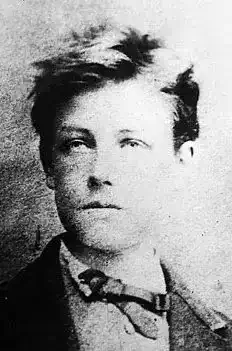
Arthur Rimbaud
Being Beauteous
Against a fall of snow, a Being Beauiful, and very tall.
Whistlings of death and circles of faint music
Make this adored body, swelling and trembling
Like a specter, rise...
Black and scarlet gashes burst in the gleaming flesh.
The true colors of life grow dark,
Shimmering and sperate
In the scaffolding, around the Vision.
Shiverings mutter and rise,
And the furious taste of these effects is charged
With deadly whistlings and the raucous music
That the world, far behind us, hurls at our mother of beauty...
She retreats, she rises up...
Oh! Our bones have put on new flesh, for love.
Oh ash-white face
Oh tousled hair
O crystal arms!
On this cannot I mean to destroy myself
In a swirling of trees and soft air!
893

Oscar Wilde
Tristitiae
O well for him who lives at ease
With garnered gold in wide domain,
Nor heeds the splashing of the rain,
The crashing down of forest trees.
O well for him who ne'er hath known
The travail of the hungry years,
A father grey with grief and tears,
A mother weeping all alone.
But well for him whose foot hath trod
The weary road of toil and strife,
Yet from the sorrows of his life.
Builds ladders to be nearer God.
800
Arthur Rimbaud
Song Of The Highest Tower
Idle youth
Enslaved to everything,
By being too sensitive
I have wasted my life.
Ah ! Let the time come
When hearts are enamoured.
I said to myself : let be,
And let no one see you :
Do without the promise
Of higher joys.
Let nothing delay you,
Majestic retirement.
I have endured so long
That I have forgotten everything ;
Fear and suffering
Have flown to the skies.
And morbid thirst
Darkens my veins.
Thus the meadow
Given over to oblivion,
Grown up, and flowering
With frankincense and tares
To the wild buzzing
Of a hundred filthy flies.
Oh ! the thousand bereavements
Of the poor soul
Which possesses only the image
Of Our Lady ! Can one pray
To the Virgin Mary ?
Idle youth
Enslaved by everything,
By being too sensitive
I have wasted my life.
Ah ! Let the time come
When hearts are enamoured !
833
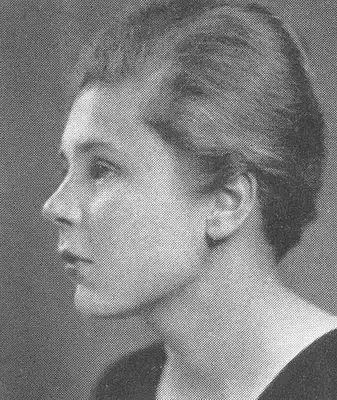
Elizabeth Bishop
The Man-moth
Here, above,
cracks in the buldings are filled with battered moonlight.
The whole shadow of Man is only as big as his hat.
It lies at his feet like a circle for a doll to stand on,
and he makes an inverted pin, the point magnetized to the moon.
He does not see the moon; he observes only her vast properties,
feeling the queer light on his hands, neither warm nor cold,
of a temperature impossible to records in thermometers.
But when the Man-Moth
pays his rare, although occasional, visits to the surface,
the moon looks rather different to him. He emerges
from an opening under the edge of one of the sidewalks
and nervously begins to scale the faces of the buildings.
He thinks the moon is a small hole at the top of the sky,
proving the sky quite useless for protection.
He trembles, but must investigate as high as he can climb.
Up the façades,
his shadow dragging like a photographer's cloth behind him
he climbs fearfully, thinking that this time he will manage
to push his small head through that round clean opening
and be forced through, as from a tube, in black scrolls on the light.
(Man, standing below him, has no such illusions.)
But what the Man-Moth fears most he must do, although
he fails, of course, and falls back scared but quite unhurt.
Then he returns
to the pale subways of cement he calls his home. He flits,
he flutters, and cannot get aboard the silent trains
fast enough to suit him. The doors close swiftly.
The Man-Moth always seats himself facing the wrong way
and the train starts at once at its full, terrible speed,
without a shift in gears or a gradation of any sort.
He cannot tell the rate at which he travels backwards.
Each night he must
be carried through artificial tunnels and dream recurrent dreams.
Just as the ties recur beneath his train, these underlie
his rushing brain. He does not dare look out the window,
for the third rail, the unbroken draught of poison,
runs there beside him. He regards it as a disease
he has inherited the susceptibility to. He has to keep
his hands in his pockets, as others must wear mufflers.
If you catch him,
hold up a flashlight to his eye. It's all dark pupil,
an entire night itself, whose haired horizon tightens
as he stares back, and closes up the eye. Then from the lids
one tear, his only possession, like the bee's sting, slips.
Slyly he palms it, and if you're not paying attention
he'll swallow it. However, if you watch, he'll hand it over,
cool as from underground springs and pure enough to drink.
774
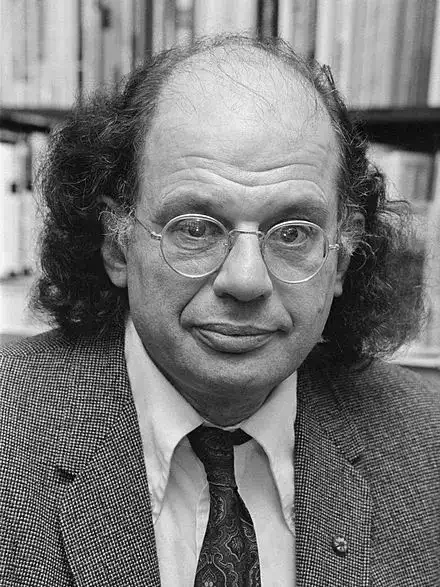
Allen Ginsberg
Feb. 29, 1958
Last nite I dreamed of T.S. Eliot
welcoming me to the land of dream
Sofas couches fog in England
Tea in his digs Chelsea rainbows
curtains on his windows, fog seeping in
the chimney but a nice warm house
and an incredibly sweet hooknosed
Eliot he loved me, put me up,
gave me a couch to sleep on,
conversed kindly, took me serious
asked my opinion on Mayakovsky
I read him Corso Creeley Kerouac
advised Burroughs Olson Huncke
the bearded lady in the Zoo, the
intelligent puma in Mexico City
6 chorus boys from Zanzibar
who chanted in wornout polygot
Swahili, and the rippling rythyms
of Ma Rainey and Vachel Lindsay.
On the Isle of the Queen
we had a long evening's conversation
Then he tucked me in my long
red underwear under a silken
blanket by the fire on the sofa
gave me English Hottie
and went off sadly to his bed,
Saying ah Ginsberg I am glad
to have met a fine young man like you.
At last, I woke ashamed of myself.
Is he that good and kind? Am I that great?
What's my motive dreaming his
manna? What English Department
would that impress? What failure
to be perfect prophet's made up here?
I dream of my kindness to T.S. Eliot
wanting to be a historical poet
and share in his finance of Imageryoverambitious
dream of eccentric boy.
God forbid my evil dreams come true.
Last nite I dreamed of Allen Ginsberg.
T.S. Eliot would've been ashamed of me.
758

Henry Wadsworth Longfellow
The Song Of Hiawatha XX: The Famine
Oh the long and dreary Winter!
Oh the cold and cruel Winter!
Ever thicker, thicker, thicker
Froze the ice on lake and river,
Ever deeper, deeper, deeper
Fell the snow o'er all the landscape,
Fell the covering snow, and drifted
Through the forest, round the village.
Hardly from his buried wigwam
Could the hunter force a passage;
With his mittens and his snow-shoes
Vainly walked he through the forest,
Sought for bird or beast and found none,
Saw no track of deer or rabbit,
In the snow beheld no footprints,
In the ghastly, gleaming forest
Fell, and could not rise from weakness,
Perished there from cold and hunger.
Oh the famine and the fever!
Oh the wasting of the famine!
Oh the blasting of the fever!
Oh the wailing of the children!
Oh the anguish of the women!
All the earth was sick and famished;
Hungry was the air around them,
Hungry was the sky above them,
And the hungry stars in heaven
Like the eyes of wolves glared at them!
Into Hiawatha's wigwam
Came two other guests, as silent
As the ghosts were, and as gloomy,
Waited not to be invited
Did not parley at the doorway
Sat there without word of welcome
In the seat of Laughing Water;
Looked with haggard eyes and hollow
At the face of Laughing Water.
And the foremost said: 'Behold me!
I am Famine, Bukadawin!'
And the other said: 'Behold me!
I am Fever, Ahkosewin!'
And the lovely Minnehaha
Shuddered as they looked upon her,
Shuddered at the words they uttered,
Lay down on her bed in silence,
Hid her face, but made no answer;
Lay there trembling, freezing, burning
At the looks they cast upon her,
At the fearful words they uttered.
Forth into the empty forest
Rushed the maddened Hiawatha;
In his heart was deadly sorrow,
In his face a stony firmness;
On his brow the sweat of anguish
Started, but it froze and fell not.
Wrapped in furs and armed for hunting,
With his mighty bow of ash-tree,
With his quiver full of arrows,
With his mittens, Minjekahwun,
Into the vast and vacant forest
On his snow-shoes strode he forward.
'Gitche Manito, the Mighty!'
Cried he with his face uplifted
In that bitter hour of anguish,
'Give your children food, O father!
Give us food, or we must perish!
Give me food for Minnehaha,
For my dying Minnehaha!'
Through the far-resounding forest,
Through the forest vast and vacant
Rang that cry of desolation,
But there came no other answer
Than the echo of his crying,
Than the echo of the woodlands,
'Minnehaha! Minnehaha!'
All day long roved Hiawatha
In that melancholy forest,
Through the shadow of whose thickets,
In the pleasant days of Summer,
Of that ne'er forgotten Summer,
He had brought his young wife homeward
From the land of the Dacotahs;
When the birds sang in the thickets,
And the streamlets laughed and glistened,
And the air was full of fragrance,
And the lovely Laughing Water
Said with voice that did not tremble,
'I will follow you, my husband!'
In the wigwam with Nokomis,
With those gloomy guests that watched her,
With the Famine and the Fever,
She was lying, the Beloved,
She, the dying Minnehaha.
'Hark!' she said; 'I hear a rushing,
Hear a roaring and a rushing,
Hear the Falls of Minnehaha
Calling to me from a distance!'
'No, my child!' said old Nokomis,
'`T is the night-wind in the pine-trees!'
'Look!' she said; 'I see my father
Standing lonely at his doorway,
Beckoning to me from his wigwam
In the land of the Dacotahs!'
'No, my child!' said old Nokomis.
'`T is the smoke, that waves and beckons!'
'Ah!' said she, 'the eyes of Pauguk
Glare upon me in the darkness,
I can feel his icy fingers
Clasping mine amid the darkness!
Hiawatha! Hiawatha!'
And the desolate Hiawatha,
Far away amid the forest,
Miles away among the mountains,
Heard that sudden cry of anguish,
Heard the voice of Minnehaha
Calling to him in the darkness,
'Hiawatha! Hiawatha!'
Over snow-fields waste and pathless,
Under snow-encumbered branches,
Homeward hurried Hiawatha,
Empty-handed, heavy-hearted,
Heard Nokomis moaning, wailing:
'Wahonowin! Wahonowin!
Would that I had perished for you,
Would that I were dead as you are!
Wahonowin!. Wahonowin!'
And he rushed into the wigwam,
Saw the old Nokomis slowly
Rocking to and fro and moaning,
Saw his lovely Minnehaha
Lying dead and cold before him,
And his bursting heart within him
Uttered such a cry of anguish,
That the forest moaned and shuddered,
That the very stars in heaven
Shook and trembled with his anguish.
Then he sat down, still and speechless,
On the bed of Minnehaha,
At the feet of Laughing Water,
At those willing feet, that never
More would lightly run to meet him,
Never more would lightly follow.
With both hands his face he covered,
Seven long days and nights he sat there,
As if in a swoon he sat there,
Speechless, motionless, unconscious
Of the daylight or the darkness.
Then they buried Minnehaha;
In the snow a grave they made her
In the forest deep and darksome
Underneath the moaning hemlocks;
Clothed her in her richest garments
Wrapped her in her robes of ermine,
Covered her with snow, like ermine;
Thus they buried Minnehaha.
And at night a fire was lighted,
On her grave four times was kindled,
For her soul upon its journey
To the Islands of the Blessed.
From his doorway Hiawatha
Saw it burning In the forest,
Lighting up the gloomy hemlocks;
From his sleepless bed uprising,
From the bed of Minnehaha,
Stood and watched it at the doorway,
That it might not be extinguished,
Might not leave her in the darkness.
'Farewell!' said he, 'Minnehaha!
Farewell, O my Laughing Water!
All my heart is buried with you,
All my thoughts go onward with you!
Come not back again to labor,
Come not back again to suffer,
Where the Famine and the Fever
Wear the heart and waste the body.
Soon my task will be completed,
Soon your footsteps I shall follow
To the Islands of the Blessed,
To the Kingdom of Ponemah,
To the Land of the Hereafter!'
783
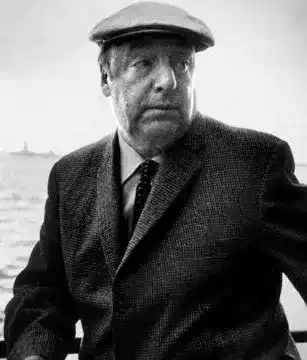
Pablo Neruda
I Crave Your Mouth, Your Voice, Your Hair
DON'T GO FAR OFF, NOT EVEN FOR A DAY
Don't go far off, not even for a day, because -because
-- I don't know how to say it: a day is long
and I will be waiting for you, as in an empty station
when the trains are parked off somewhere else, asleep.
Don't leave me, even for an hour, because
then the little drops of anguish will all run together,
the smoke that roams looking for a home will drift
into me, choking my lost heart.
Oh, may your silhouette never dissolve on the beach;
may your eyelids never flutter into the empty distance.
Don't leave me for a second, my dearest,
because in that moment you'll have gone so far
I'll wander mazily over all the earth, asking,
Will you come back? Will you leave me here, dying?
779

William Blake
Earth's Answer
Earth raised up her head
From the darkness dread and drear,
Her light fled,
Stony, dread,
And her locks covered with grey despair.
'Prisoned on watery shore,
Starry jealousy does keep my den
Cold and hoar;
Weeping o're,
I hear the father of the ancient men.
'Selfish father of men!
Cruel, jealous, selfish fear!
Can delight,
Chained in night,
The virgins of youth and morning bear?
'Does spring hide its joy,
When buds and blossoms grow?
Does the sower
Sow by night,
Or the plowman in darkness plough?
'Break this heavy chain,
That does freeze my bones around!
Selfish, vain,
Eternal bane,
That free love with bondage bound.'
735

Kazi Nazrul Islam
Poverty
O poverty, thou hast made me great.
Thou hast made me honoured like Christ
With his crown of thorns. Thou hast given me
Courage to reveal all. To thee I owe
My insolent, naked eyes and sharp tongue.
Thy curse has turned my violin to a sword.
O proud saint, thy terrible fire
Has rendered my heaven barren.
It has prematurely dried beauty.
My feelings and my life.
Time and again I stretched my lean, cupped hands
To accept the gift of the beautiful.
But those hungry ones always came before me.
And did snatch it away ruthlessly,
Now my word of imagination is
Dry as a vast desert.
And my own beautiful!
My yellow-stalked pensive desire
Wants to blossom like the fragrant shefali.
But thou cruel one
Dost ruthlessly break the soft stalk
As the woodcutter chopsthe branches
Off the trees. My heart grows tender
Like the autumn morning
It fills with love
Like the dew-laden earth.
But thou art the blazing sun
And thy fiery heart dries up the tiny dropp of the earth
I grow listless in the shadowy skirt of the earth
And my dreams of beauty and goodness vanish!
With a bitter tongue thou askest,
'What's the use of nectar?
It has no sting, no intoxication, no madness it.
The search for heaven's secred drink
Is not for the in this sorrow-filled earth.
Thou art the serpent, born in pai.
Thou will sit in the bower of thorns
And weave the garland of flowers.
I put on thy forehead the sing
Of suffering and woe.'
So I sing, I weave a garland,
While my throat is on fire,
And my serpent daughter bites me all over!
O unforgiving Durbasha! thou wanderest
From door to door with thy beggar's bowl.
Thou goes to the peaceful abode of
Some sleeping happy couple
And sternly callest, 'O fool,
Knowest thou, that this earth is not anybody's
Pleasure bower for luxury adn ease.
Here is sorrow and separation
And a hundred wants and disease.
Under the arms of the beloved
There are thorns in the bed,
And now must thou prepare
To savour these.' The unhappy home
Is shattered in a moment,
And woeful laments rend
The air. The light of joy is extinguished
And endless nights descends.
Thou walkest the road alone
Lean, hungry and starved.
Suddenly some sight makes thy eyebrows
Arch in annoyance and thine eyes
Blazeforth-fires of anger!
And lo! famine, pestilence and tornado
Visit the country, pleasuregarden burn,
Palaces tumble, thy law
Knows nothing but death and destruction.
Nor for thee the license of courtesy.
Thou seekest the unashaamed revelation of stark nakedness.
Thou knowest no timid hesitation or polite embarrassment
Thou dost raise high the lowly head.
At thy signal the travellers on the road to death
Put round their neck the fatal noose
With cheerful smile on their faces!
Nursing the fire of perennial want in their bosom
They worship the god of death in fiendish glee!
Thou tramplest the crown of Lakshmi
Under thy feet. What tune
Dost thou want to wiring
Out of her violin? At thy touch
the music turns into criesof anguish!
Waking up in the morning Iheard yesterday
The plantive Sanai mourning those
Who had not returned yet, At home
The singer cried for them and wept bitter tears
And floating with that music the soul of the beloved
Wandered far to the distant spot
Where the love anxiously waited.
This morning I got up
And heard the Sanai again
Crying as mournfully as ever.
And the pensive Shefalika,
sad as a widow's smile,
Falls in clusters, spreading
A mild fragrance in the air.
Today the butterfly dances in restless joy
Numbing the flowers with its kisses.
And the wings of the bee
Carry the yellow of the petals,
It's body covered with honey.
Life seems to have sprung up suddenly
On all sides. Asong of welcome
Comes unconsciously to my lips
And unbidden tears spring to my eyes
Some one seems to have entwined my soul
With that of mother-earth. She comes forward
And with her dust-adorned hands
Offers me her presents.
It seems to me that she is the youngest daughter of mine,
My darling child!
But suddenly wake up with a start. O cruel saint, being my child,
Thou weepest in my home, hungry and stoned!
O my child, my darling one
I could not give thee even a dropp of milk
No right have I to rejoice.
Poverty weeps within my doors forever
As my spouse and my child.
Who will play the flute?
Where shall I get the happy smile
Of the beautiful? Where the honeyed drink
I have drunk deep the hemlock
Of bitter tears!
And still even today
I hear the mournful tune of the Sanai.
[Translation: Kabir Chowdhury ]
753
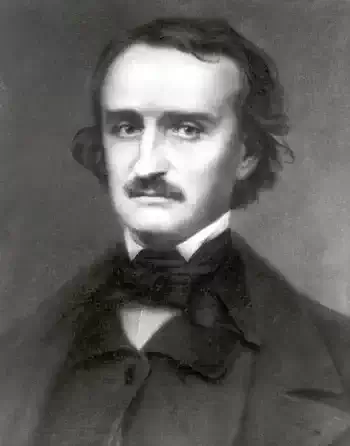
Edgar Allan Poe
The Haunted Palace
In the greenest of our valleys
By good angels tenanted,
Once a fair and stately palace
Radiant
palace- reared its head.
In the monarch Thought's dominion
It
stood there!
Never seraph spread a pinion
Over fabric half so fair!
Banners yellow, glorious, golden,
On its roof did float and flow,
(This- all this- was in the olden
Time long ago,)
And every gentle air that dallied,
In that sweet day,
Along the ramparts plumed and pallid,
A winged odor went away.
Wanderers in that happy valley,
Through two luminous windows, saw
Spirits moving musically,
To a lute's well-tuned law,
Round about a throne where, sitting
(Porphyrogene!)
In state his glory well-befitting,
The ruler of the realm was seen.
And all with pearl and ruby glowing
Was the fair palace door,
Through which came flowing, flowing, flowing,
And sparkling evermore,
A troop of Echoes, whose sweet duty
Was but to sing,
In voices of surpassing beauty,
The wit and wisdom of their king.
But evil things, in robes of sorrow,
Assailed the monarch's high estate.
(Ah, let us mourn!- for never morrow
Shall dawn upon him desolate!)
And round about his home the glory
That blushed and bloomed,
Is but a dim-remembered story
Of the old time entombed.
And travellers, now, within that valley,
Through the red-litten windows see
Vast forms, that move fantastically
To a discordant melody,
While, like a ghastly rapid river,
Through the pale door
A hideous throng rush out forever
And laugh- but smile no more.
-THE END
.
720
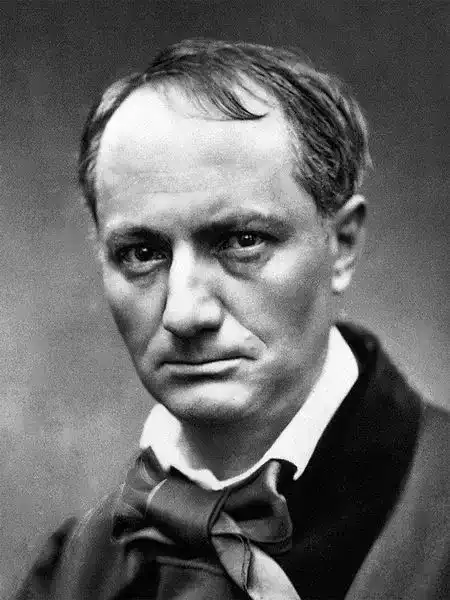
Charles Baudelaire
The Sick Muse
My impoverished muse, alas! What have you for me this morning?
Your empty eyes are stocked with nocturnal visions,
In your cheek's cold and taciturn reflection,
I see insanity and horror forming.
The green succubus and the red urchin,
Have they poured you fear and love from their urns?
The nightmare of a mutinous fist that despotically turns,
Does it drown you at the bottom of a loch beyond searching?
I wish that your breast exhaled the scent of sanity,
That your womb of thought was not a tomb more frequently
And that your Christian blood flowed around a buoy that was rhythmical,
Like the numberless sounds of antique syllables,
Where reigns in turn the father of songs,
Phoebus, and the great Pan, the harvest sovereign.
Translated by William A. Sigler
707
Charles Baudelaire
Voyage to Cythera
Free as a bird and joyfully my heart
Soared up among the rigging, in and out;
Under a cloudless sky the ship rolled on
Like an angel drunk with brilliant sun.
"That dark, grim island there--which would that be?"
"Cythera," we're told, "the legendary isle
Old bachelors tell stories of and smile.
There's really not much to it, you can see."
O place of many a mystic sacrament!
Archaic Aphrodite's splendid shade
Lingers above your waters like a scent
Infusing spirits with an amorous mood.
Worshipped from of old by every nation,
Myrtle-green isle, where each new bud discloses
Sighs of souls in loving adoration
Breathing like incense from a bank of roses
Or like a dove roo-cooing endlessly . . .
No; Cythera was a poor infertile rock,
A stony desert harrowed by the shriek
Of gulls. And yet there was something to see:
This was no temple deep in flowers and trees
With a young priestess moving to and fro,
Her body heated by a secret glow,
Her robe half-opening to every breeze;
But coasting nearer, close enough to land
To scatter flocks of birds as we passed by,
We saw a tall cypress-shaped thing at hand--
A triple gibbet black against the sky.
Ferocious birds, each perched on its own meal,
Were madly tearing at the thing that hung
And ripened; each, its filthy beak a drill,
Made little bleeding holes to root among.
The eyes were hollowed. Heavy guts cascading
Flowed like water halfway down the thighs;
The torturers, though gorged on these vile joys,
Had also put their beaks to use castrating
The corpse. A pack of dogs beneath its feet,
Their muzzles lifted, whirled and snapped and gnawed;
One bigger beast amidst this jealous lot
Looked like an executioner with his guard.
O Cytherean, child of this fair clime,
Silently you suffered these attacks,
Paying the penalty for whatever acts
Of infamy had kept you from a tomb.
Grotesquely dangling, somehow you brought on--
Violent as vomit rising from the chest,
Strong as a river bilious to taste--
A flow of sufferings I'd thought long gone.
Confronted with such dear remembered freight,
Poor devil, now it was my turn to feel
A panther's slavering jaws, a beak's cruel drill--
Once it was my flesh they loved to eat.
The sky was lovely, and the sea divine,
but something thick and binding like a shroud
Wrapped my heart in layers of black and blood;
Henceforth this allegory would be mine.
O Venus! On your isle what did I see
But my own image on the gallows tree?
O God, give me the strength to contemplate
My own heart, my own body without hate!
711
Henry Wadsworth Longfellow
The Song Of Hiawatha XV: Hiawatha's Lamentation
In those days the Evil Spirits,
All the Manitos of mischief,
Fearing Hiawatha's wisdom,
And his love for Chibiabos,
Jealous of their faithful friendship,
And their noble words and actions,
Made at length a league against them,
To molest them and destroy them.
Hiawatha, wise and wary,
Often said to Chibiabos,
'O my brother! do not leave me,
Lest the Evil Spirits harm you!'
Chibiabos, young and heedless,
Laughing shook his coal-black tresses,
Answered ever sweet and childlike,
'Do not fear for me, O brother!
Harm and evil come not near me!'
Once when Peboan, the Winter,
Roofed with ice the Big-Sea-Water,
When the snow-flakes, whirling downward,
Hissed among the withered oak-leaves,
Changed the pine-trees into wigwams,
Covered all the earth with silence,
Armed with arrows, shod with snow-shoes,
Heeding not his brother's warning,
Fearing not the Evil Spirits,
Forth to hunt the deer with antlers
All alone went Chibiabos.
Right across the Big-Sea-Water
Sprang with speed the deer before him.
With the wind and snow he followed,
O'er the treacherous ice he followed,
Wild with all the fierce commotion
And the rapture of the hunting.
But beneath, the Evil Spirits
Lay in ambush, waiting for him,
Broke the treacherous ice beneath him,
Dragged him downward to the bottom,
Buried in the sand his body.
Unktahee, the god of water,
He the god of the Dacotahs,
Drowned him in the deep abysses
Of the lake of Gitche Gumee.
From the headlands Hiawatha
Sent forth such a wail of anguish,
Such a fearful lamentation,
That the bison paused to listen,
And the wolves howled from the prairies,
And the thunder in the distance
Starting answered 'Baim-wawa!'
Then his face with black he painted,
With his robe his head he covered,
In his wigwam sat lamenting,
Seven long weeks he sat lamenting,
Uttering still this moan of sorrow:
'He is dead, the sweet musician!
He the sweetest of all singers!
He has gone from us forever,
He has moved a little nearer
To the Master of all music,
To the Master of all singing!
O my brother, Chibiabos!'
And the melancholy fir-trees
Waved their dark green fans above him,
Waved their purple cones above him,
Sighing with him to console him,
Mingling with his lamentation
Their complaining, their lamenting.
Came the Spring, and all the forest
Looked in vain for Chibiabos;
Sighed the rivulet, Sebowisha,
Sighed the rushes in the meadow.
From the tree-tops sang the bluebird,
Sang the bluebird, the Owaissa,
'Chibiabos! Chibiabos!
He is dead, the sweet musician!'
From the wigwam sang the robin,
Sang the robin, the Opechee,
'Chibiabos! Chibiabos!
He is dead, the sweetest singer!'
And at night through all the forest
Went the whippoorwill complaining,
Wailing went the Wawonaissa,
'Chibiabos! Chibiabos!
He is dead, the sweet musician!
He the sweetest of all singers!'
Then the Medicine-men, the Medas,
The magicians, the Wabenos,
And the Jossakeeds, the Prophets,
Came to visit Hiawatha;
Built a Sacred Lodge beside him,
To appease him, to console him,
Walked in silent, grave procession,
Bearing each a pouch of healing,
Skin of beaver, lynx, or otter,
Filled with magic roots and simples,
Filled with very potent medicines.
When he heard their steps approaching,
Hiawatha ceased lamenting,
Called no more on Chibiabos;
Naught he questioned, naught he answered,
But his mournful head uncovered,
From his face the mourning colors
Washed he slowly and in silence,
Slowly and in silence followed
Onward to the Sacred Wigwam.
There a magic drink they gave him,
Made of Nahma-wusk, the spearmint,
And Wabeno-wusk, the yarrow,
Roots of power, and herbs of healing;
Beat their drums, and shook their rattles;
Chanted singly and in chorus,
Mystic songs like these, they chanted.
'I myself, myself! behold me!
`T Is the great Gray Eagle talking;
Come, ye white crows, come and hear him!
The loud-speaking thunder helps me;
All the unseen spirits help me;
I can hear their voices calling,
All around the sky I hear them!
I can blow you strong, my brother,
I can heal you, Hiawatha!'
'Hi-au-ha!' replied the chorus,
'Wayha-way!' the mystic chorus.
Friends of mine are all the serpents!
Hear me shake my skin of hen-hawk!
Mahng, the white loon, I can kill him;
I can shoot your heart and kill it!
I can blow you strong, my brother,
I can heal you, Hiawatha !'
'Hi-au-ha!' replied the chorus,
'Wayhaway!' the mystic chorus.
'I myself, myself! the prophet!
When I speak the wigwam trembles,
Shakes the Sacred Lodge with terror,
Hands unseen begin to shake it!
When I walk, the sky I tread on
Bends and makes a noise beneath me!
I can blow you strong, my brother!
Rise and speak, O Hiawatha!'
'Hi-au-ha!' replied the chorus,
'Way-ha-way!' the mystic chorus.
Then they shook their medicine-pouches
O'er the head of Hiawatha,
Danced their medicine-dance around him;
And upstarting wild and haggard,
Like a man from dreams awakened,
He was healed of all his madness.
As the clouds are swept from heaven,
Straightway from his brain departed
All his moody melancholy;
As the ice is swept from rivers,
Straightway from his heart departed
All his sorrow and affliction.
Then they summoned Chibiabos
From his grave beneath the waters,
From the sands of Gitche Gumee
Summoned Hiawatha's brother.
And so mighty was the magic
Of that cry and invocation,
That he heard it as he lay there
Underneath the Big-Sea-Water;
From the sand he rose and listened,
Heard the music and the singing,
Came, obedient to the summons,
To the doorway of the wigwam,
But to enter they forbade him.
Through a chink a coal they gave him,
Through the door a burning fire-brand;
Ruler in the Land of Spirits,
Ruler o'er the dead, they made him,
Telling him a fire to kindle
For all those that died thereafter,
Camp-fires for their night encampments
On their solitary journey
To the kingdom of Ponemah,
To the land of the Hereafter.
From the village of his childhood,
From the homes of those who knew him,
Passing silent through the forest,
Like a smoke-wreath wafted sideways,
Slowly vanished Chibiabos!
Where he passed, the branches moved not,
Where he trod, the grasses bent not,
And the fallen leaves of last year
Made no sound beneath his footstep.
Four whole days he journeyed onward
Down the pathway of the dead men;
On the dead-man's strawberry feasted,
Crossed the melancholy river,
On the swinging log he crossed it,
Came unto the Lake of Silver,
In the Stone Canoe was carried
To the Islands of the Blessed,
To the land of ghosts and shadows.
On that journey, moving slowly,
Many weary spirits saw he,
Panting under heavy burdens,
Laden with war-clubs, bows and arrows,
Robes of fur, and pots and kettles,
And with food that friends had given
For that solitary journey.
'Ay! why do the living,' said they,
'Lay such heavy burdens on us!
Better were it to go naked,
Better were it to go fasting,
Than to bear such heavy burdens
On our long and weary journey!'
Forth then issued Hiawatha,
Wandered eastward, wandered westward,
Teaching men the use of simples
And the antidotes for poisons,
And the cure of all diseases.
Thus was first made known to mortals
All the mystery of Medamin,
All the sacred art of healing.
719

Alfred Lord Tennyson
Tithonus
The woods decay, the woods decay and fall,
The vapours weep their burthen to the ground,
Man comes and tills the field and lies beneath,
And after many a summer dies the swan.
Me only cruel immortality
Consumes; I wither slowly in thine arms,
Here at the quiet limit of the world,
A white-hair'd shadow roaming like a dream
The ever-silent spaces of the East,
Far-folded mists, and gleaming halls of morn.
Alas! for this gray shadow, once a man-So
glorious in his beauty and thy choice,
Who madest him thy chosen, that he seem'd
To his great heart none other than a God!
I ask'd thee, "Give me immortality."
Then didst thou grant mine asking with a smile,
Like wealthy men who care not how they give.
But thy strong Hours indignant work'd their wills,
And beat me down and marr'd and wasted me,
And tho' they could not end me, left me maim'd
To dwell in presence of immortal youth,
Immortal age beside immortal youth,
And all I was in ashes. Can thy love
Thy beauty, make amends, tho' even now,
Close over us, the silver star, thy guide,
Shines in those tremulous eyes that fill with tears
To hear me? Let me go: take back thy gift:
Why should a man desire in any way
To vary from the kindly race of men,
Or pass beyond the goal of ordinance
Where all should pause, as is most meet for all?
A soft air fans the cloud apart; there comes
A glimpse of that dark world where I was born.
Once more the old mysterious glimmer steals
From any pure brows, and from thy shoulders pure,
And bosom beating with a heart renew'd.
Thy cheek begins to redden thro' the gloom,
Thy sweet eyes brighten slowly close to mine,
Ere yet they blind the stars, and the wild team
Which love thee, yearning for thy yoke, arise,
And shake the darkness from their loosen'd manes,
And beat the twilight into flakes of fire.
Lo! ever thus thou growest beautiful
In silence, then before thine answer given
Departest, and thy tears are on my cheek.
Why wilt thou ever scare me with thy tears,
And make me tremble lest a saying learnt,
In days far-off, on that dark earth, be true?
"The Gods themselves cannot recall their gifts."
Ay me! ay me! with what another heart
In days far-off, and with what other eyes
I used to watch if I be he that watch'd
The lucid outline forming round thee; saw
The dim curls kindle into sunny rings;
Changed with thy mystic change, and felt my blood
Glow with the glow that slowly crimson'd all
Thy presence and thy portals, while I lay,
Mouth, forehead, eyelids, growing dewy-warm
With kisses balmier than half-opening buds
Of April, and could hear the lips that kiss'd
Whispering I knew not what of wild and sweet,
Like that strange song I heard Apollo sing,
While Ilion like a mist rose into towers.
Yet hold me not for ever in thine East;
How can my nature longer mix with thine?
Coldly thy rosy shadows bathe me, cold
Are all thy lights, and cold my wrinkled feet
Upon thy glimmering thresholds, when the steam
Floats up from those dim fields about the homes
Of happy men that have the power to die,
And grassy barrows of the happier dead.
Release me, and restore me to the ground;
Thou seest all things, thou wilt see my grave:
Thou wilt renew thy beauty morn by morn;
I earth in earth forget these empty courts,
And thee returning on thy silver wheels.
705

William Shakespeare
Sonnet 133: Beshrew that heart that makes my heart to groan
Beshrew that heart that makes my heart to groan
For that deep wound it gives my friend and me!
Is't not enough to torture me alone,
But slave to slavery my sweet'st friend must be?
Me from my self thy cruel eye hath taken,
And my next self thou harder hast engrossed.
Of him, myself, and thee I am forsaken—
A torment thrice threefold thus to be crossed.
Prison my heart in thy steel bosom's ward,
But then my friend's heart let my poor heart bail;
Whoe'er keeps me, let my heart be his guard,
Thou canst not then use rigour in my jail.
And yet thou wilt; for I, being pent in thee,
Perforce am thine, and all that is in me.
701
Pablo Neruda
Nothing But Death
There are cemeteries that are lonely,
graves full of bones that do not make a sound,
the heart moving through a tunnel,
in it darkness, darkness, darkness,
like a shipwreck we die going into ourselves,
as though we were drowning inside our hearts,
as though we lived falling out of the skin into the soul.
And there are corpses,
feet made of cold and sticky clay,
death is inside the bones,
like a barking where there are no dogs,
coming out from bells somewhere, from graves somewhere,
growing in the damp air like tears of rain.
Sometimes I see alone
coffins under sail,
embarking with the pale dead, with women that have dead hair,
with bakers who are as white as angels,
and pensive young girls married to notary publics,
caskets sailing up the vertical river of the dead,
the river of dark purple,
moving upstream with sails filled out by the sound of death,
filled by the sound of death which is silence.
Death arrives among all that sound
like a shoe with no foot in it, like a suit with no man in it,
comes and knocks, using a ring with no stone in it, with no
finger in it,
comes and shouts with no mouth, with no tongue, with no
throat.
Nevertheless its steps can be heard
and its clothing makes a hushed sound, like a tree.
I'm not sure, I understand only a little, I can hardly see,
but it seems to me that its singing has the color of damp violets,
of violets that are at home in the earth,
because the face of death is green,
and the look death gives is green,
with the penetrating dampness of a violet leaf
and the somber color of embittered winter.
But death also goes through the world dressed as a broom,
lapping the floor, looking for dead bodies,
death is inside the broom,
the broom is the tongue of death looking for corpses,
it is the needle of death looking for thread.
Death is inside the folding cots:
it spends its life sleeping on the slow mattresses,
in the black blankets, and suddenly breathes out:
it blows out a mournful sound that swells the sheets,
and the beds go sailing toward a port
where death is waiting, dressed like an admiral.
Translated by Robert Bly
669

John Keats
Ode on Melancholy
No, no! go not to Lethe, neither twist
Wolf's-bane, tight-rooted, for its poisonous wine;
Nor suffer thy pale forehead to be kissed
By nightshade, ruby grape of Proserpine;
Make not your rosary of yew-berries,
Nor let the beetle nor the death-moth be
Your mournful Psyche, nor the downy owl
A partner in your sorrow's mysteries;
For shade to shade will come too drowsily,
And drown the wakeful anguish of the soul.
But when the melancholy fit shall fall
Sudden from heaven like a weeping cloud,
That fosters the droop-headed flowers all,
And hides the green hill in an April shroud;
Then glut thy sorrow on a morning rose,
Or on the rainbow of the salt sand-wave,
Or on the wealth of globed peonies;
Or if thy mistress some rich anger shows,
Emprison her soft hand, and let her rave,
And feed deep, deep upon her peerless eyes.
She dwells with Beauty -- Beauty that must die;
And Joy, whose hand is ever at his lips
Bidding adieu; and aching Pleasure nigh,
Turning to poison while the bee-mouth sips;
Ay, in the very temple of delight
Veiled Melancholy has her sovran shrine,
Though seen of none save him whose strenuous
tongue
Can burst Joy's grape against his palate fine;
His soul shall taste the sadness of her might,
And be among her cloudy trophies hung.
669
William Shakespeare
Sonnet 90: Then hate me when thou wilt; if ever, now
Then hate me when thou wilt; if ever, now;
Now, while the world is bent my deeds to cross,
Join with the spite of fortune, make me bow,
And do not drop in for an after-loss:
Ah, do not, when my heart hath 'scoped this sorrow,
Come in the rearward of a conquer'd woe;
Give not a windy night a rainy morrow,
To linger out a purposed overthrow.
If thou wilt leave me, do not leave me last,
When other petty griefs have done their spite
But in the onset come; so shall I taste
At first the very worst of fortune's might,
And other strains of woe, which now seem woe,
Compared with loss of thee will not seem so.
669
Pablo Neruda
The Weary One
The weary one, orphan
of the masses, the self,
the crushed one, the one made of concrete,
the one without a country in crowded restaurants,
he who wanted to go far away, always farther away,
didn't know what to do there, whether he wanted
or didn't want to leave or remain on the island,
the hesitant one, the hybrid, entangled in himself,
had no place here: the straight-angled stone,
the infinite look of the granite prism,
the circular solitude all banished him:
he went somewhere else with his sorrows,
he returned to the agony of his native land,
to his indecisions, of winter and summer.
678
Allen Ginsberg
Hospital Window
At gauzy dusk, thin haze like cigarette smoke
ribbons past Chrysler Building's silver fins
tapering delicately needletopped, Empire State's
taller antenna filmed milky lit amid blocks
black and white apartmenting veil'd sky over Manhattan,
offices new built dark glassed in blueish heaven--The East
50's & 60's covered with castles & watertowers, seven storied
tar-topped house-banks over York Avenue, late may-green trees
surrounding Rockefellers' blue domed medical arbor--
Geodesic science at the waters edge--Cars running up
East River Drive, & parked at N.Y. Hospital's oval door
where perfect tulips flower the health of a thousand sick souls
trembling inside hospital rooms. Triboro bridge steel-spiked
penthouse orange roofs, sunset tinges the river and in a few
Bronx windows, some magnesium vapor brilliances're
spotted five floors above E 59th St under grey painted bridge
trestles. Way downstream along the river, as Monet saw Thames
100 years ago, Con Edison smokestacks 14th street,
& Brooklyn Bridge's skeined dim in modern mists--
Pipes sticking up to sky nine smokestacks huge visible--
U.N. Building hangs under an orange crane, & red lights on
vertical avenues below the trees turn green at the nod
of a skull with a mild nerve ache. Dim dharma, I return
to this spectacle after weeks of poisoned lassitude, my thighs
belly chest & arms covered with poxied welts,
head pains fading back of the neck, right eyebrow cheek
mouth paralyzed--from taking the wrong medicine, sweated
too much in the forehead helpless, covered my rage from
gorge to prostate with grinding jaw and tightening anus
not released the weeping scream of horror at robot Mayaguez
World self ton billions metal grief unloaded
Pnom Penh to Nakon Thanom, Santiago & Tehran.
Fresh warm breeze in the window, day's release
>from pain, cars float downside the bridge trestle
and uncounted building-wall windows multiplied a mile
deep into ash-delicate sky beguile
my empty mind. A seagull passes alone wings
spread silent over roofs.
668

Lord Byron
Childe Harold's Pilgrimage: A Romaunt. Canto III.
I.
Is thy face like thy mother's, my fair child!
Ada! sole daughter of my house and heart?
When last I saw thy young blue eyes they smiled,
And then we parted,not
as now we part,
But with a hope.
Awaking
with a start,
The waters heave around me; and on high
The winds lift up their voices: I depart,
Whither I know not; but the hour's gone by,
When Albion's lessening shores could grieve or glad mine eye.
II.
Once more upon the waters! yet once more!
And the waves bound beneath me as a steed
That knows his rider. Welcome, to their roar!
Swift be their guidance, wheresoe'er it lead!
Though the strain'd mast should quiver as a reed,
And the rent canvas fluttering strew the gale,
Still must I on; for I am as a weed,
Flung from the rock, on Ocean's foam, to sail
Where'er the surge may sweep, or tempest's breath prevail.
III.
In my youth's summer I did sing of One,
The wandering outlaw of his own dark mind;
Again I seize the theme then but begun,
And bear it with me, as the rushing wind
Bears the cloud onwards: in that Tale I find
The furrows of long thought, and driedup
tears,
Which, ebbing, leave a sterile track behind,
O'er which all heavily the journeying years
Plod the last sands of life,where
not a flower appears.
IV.
Since my young days of passionjoy,
or pain,
Perchance my heart and harp have lost a string,
And both may jar: it may be, that in vain
I would essay as I have sung to sing.
Yet, though a dreary strain, to this I cling;
So that it wean me from the weary dream
Of selfish grief or gladnessso
it fling
Forgetfulness around meit
shall seem
To me, though to none else, a not ungrateful theme.
V.
He, who grown aged in this world of woe,
In deeds, not years, piercing the depths of life,
So that no wonder waits him; nor below
Can love, or sorrow, fame, ambition, strife,
Cut to his heart again with the keen knife
Of silent, sharp endurance: he can tell
Why thought seeks refuge in lone caves, yet rife
With airy images, and shapes which dwell
Still unimpair'd, though old, in the soul's haunted cell.
VI.
'Tis to create, and in creating life
A being more intense, that we endow
With form our fancy, gaining as we give
The life we image, even as I do now.
What am I? Nothing; but not so art thou,
Soul of my thought! with whom I traverse earth,
Invisible but gazing, as I grow
Mix'd with thy spirit, blended with thy birth,
And feeling still with thee in my crush'd feeling's dearth.
VII.
Yet must I think less wildly:
I
have thought
Too long and darkly, till my brain became,
In its own eddy boiling and o'erwrought,
A whirling gulf of phantasy and flame:
And thus, untaught in youth my heart to tame,
My springs of life were poison'd. 'Tis too late!
Yet am I chang'd; though still enough the same
In strength to bear what time can not abate,
And feed on bitter fruits without accusing Fate.
VIII.
Something too much of this:but
now 'tis past,
And the spell closes with its silent seal.
Long absent HAROLD reappears
at last;
He of the breast which fain no more would feel,
Wrung with the wounds which kill not, but ne'er heal;
Yet Time, who changes all, had altered him
In sould and aspect as in age: years steal
Fire from the mind as vigour from the limb;
And life's enchanted cup but sparkles near the brim.
IX.
His had been quaff'd too quickly, and he found
The dregs were wormwood; but he fill'd again,
And from a purer fount, on holier ground,
And deem'd its spring perpetual; but in vain!
Still round him clung invisibly a chain
Which gall'd for ever, fettering though unseen,
And heavy though it clank'd not; worn with pain,
Which pined although it spoke not, and grew keen,
Entering with every step, he took, through many a scene.
X.
Secure in guarded coldness, he had mix'd
Again in fancied safety with his kind,
And deem'd his spirit now so firmly fix'd
And sheath'd with an invulnerable mind,
That, if no joy, no sorrow lurk'd behind;
And he, as one, might midst the many stand
Unheeded, searching through the crowd to find
Fit speculation! such as in strange land
He found in wonderworks
of God and Nature's hand.
XI.
But who can view the ripened rose, nor seek
To wear it? who can curiously behold
The smoothness and the sheen of beauty's cheek,
Nor feel the heart can never all grow old?
Who can contemplate Fame through clouds unfold
The star which rises o'er her steep, nor climb?
Harold, once more within the vortex, roll'd
On with the giddy circle, chasing Time,
Yet with a nobler aim than in his youth's fond prime.
XII.
But soon he knew himself the most unfit
Of men to herd with man; with whom he held
Little in common; untaught to submit
His thoughts to others, though his soul was quell'd
In youth by his own thoughts; still uncompell'd,
He would not yield dominion of his mind
To spirits against whom his own rebell'd;
Proud though in desolation; which could find
A life within itself, to breathe without mankind.
XIII.
Where rose the mountains, there to him were friends;
Where roll'd the ocean, theron was his home;
Where a blue sky, and glowing clime, extends,
He had the passion and the power to roam;
The desert, forest, cavern, breaker's foam,
Were unto him companionship; they spake
A mutual language, clearer than the tome
Of his land's tongue, which he would oft forsake
For Nature's pages glass'd by sunbeams on the lake.
XIV.
Like the Chaldean, he could watch the stars,
Till he had peopled them with beings bright
As their own beams; and earth, and earthborn
jars,
And human frailties, were forgotten quite:
Could he have kept his spirit to that flight
He had been happy; but this clay will sink
Its spark immortal, envying it the light
To which it mounts, as if to break the link
That keeps us from yon heaven which woos us to its brink.
XV.
But in Man's dwellings he became a thing
Restless and worn, and stern and wearisome,
Droop'd as a wildborn
falcon with clipt wing,
To whom the boundless air alone were home:
Then came his fit again, which to o'ercome,
As eagerly the barr'dup
bird will beat
His breast and beak against his wiry dome
Till the blood tinge his plumage, so the heat
Of his impeded soul would through his bosom eat.
XVI.
Selfexiled
Harold wanders forth again,
With nought of hope left, but with less of gloom;
The very knowledge that he lived in vain,
That all was over on this side the tomb,
Had made Despair a smilingness assume,
Which, though 'twer wild,as
on the plundered wreck
When mariners would madly meet their doom
With draughts intemperate on the sinking deck,
Did
yet inspire a cheer, which he forbore to check.
XVII.
Stop!for
thy tread is on an Empire's dust!
An earthquake's spoil is sepulchred below!
Is the spot mark'd with no colossal bust?
Nor column trophied for triumphal show?
None; but the moral's truth tells simpler so,
As the ground was before, thus let it be;
How
that red rain hath made the harvest grow!
And is this all the world has gained by thee
Thou first and last of fields! kingmaking
Victory?
XVIII.
And Harold stands upon this place of skulls,
The grave of France, the deadly Waterloo!
How in an hour the power which gave annuls
Its gifts, transferring fame as fleeting too!
In 'pride of place' here last the eagle flew,
Then tore with bloody talon the rent plain,
Pierced by the shaft of banded nations through;
Ambition's life and labours all were vain;
He wears the shattered links of the world's broken chain.
XIX.
Fit retribution! Gaul may champ the bit
And foam in fetters;but
is Earth more free?
Did nations combat to make One submit;
Or league to teach all kings true sovereignty?
What! shall reviving Thraldom again be
The patchedup
idol of enlightened days?
Shall we, who struck the Lion down, shall we
Pay the Wolf homage? proffering lowly gaze
And servile knees to thrones? No; prove before ye praise!
XX.
If not, o'er one fallen despot boast no more!
In vain fair cheeks were furrowed with hot tears
For Europe's flowers long rooted up before
The trampler of her vineyards; in vain years
Of death, depopulation, bondage, fears,
Have all been borne, and broken by the accord
Of rousedup
millions: all tha tmost endears
Glory, is when the myrtle wreathes a sword
Such as Harmodius drew on Athen's tyrant lord.
XXI.
There was a sound of revelry by night,
And Belgium's capital had gathered then
Her Beauty and her Chivalry, and bright
The lamps shone o'er fair women and brave men;
A thousand hearts beat happily; and when
Music arose with its voluptuous swell,
Soft eyes look'd love to eyes which spake again,
And all went merry as a marriagebell;
But hush! hark! a deep sound strikes like a rising knell!
XXII.
Did ye not hear it?
No;
'twas but the wind,
Or the car rattling o'er the stony stret;
On with the dance! let joy e unconfined;
No sleep till morn, when Youth and Pleasure meet
To chase the glowing Hours with flying feet
But,
hark!that
heavy sound breaks in once more,
As if the clouds its echo would repeat;
And nearer, clearer, deadlier than before!
Arm! Arm! and outit
isthe
cannon's opening roar!
XXIII.
Within a windowed niche of that high hall
Sate Brunswick's fated chieftain; he did hear
That sound the first amidst the festival,
And caught its tone with Death's prophetic ear;
And when they smiled because he deem'd it near,
His heart more turly knew hat peal too well
Which stretch'd his father on a bloody bier,
And roused the vengeance blood alone could quell:
He rush'd into the field, and, foremost fighting, fell.
XXIV.
Ah! then and there was hurrying to and fro,
And gathering tears, and tremblings of distress,
And cheeks all pale, which but an hour ago
Blush'd at the priase of their own loveliness;
And there were sudden partings, such as press
The life from out young hearts, and choking sighs
Which ne'er might be repeated; who could guess
If ever more should meet those mutual eyes,
Since upon nights so sweet such awful morn could rise?
XXV.
And there was mounting in hot haste: the steed,
The mustering squadron, and the clattering car,
Went pouring forward in impetuous speed,
And swiftly forming in the ranks of war;
And the deep thunder peal on peal afar;
And near, the beat of the alarming drum
Roused up the soldier ere the morning star;
While throng'd the citizens with terror dumb,
Or whispering, with white lips'
The foe! They come! they come!'
XXVI.
And wild and high the 'Cameron's gathering' rose!
The warnote
of Lochiel, which Albyn's hills
Have heard, and heard, too, have her Saxon foes:
How
in the noon of night that pibroch thrills,
Savage and shrill! But with the breath which fills
Their mountainpipe,
so fill the mountaineers
With the fierce native daring which instils
The stirring memory of a thousand years,
And Evan's, Donald's fame rings in each clansman's ears!
XXVII.
And Ardennes waves above them her green leaves,
Dewy with nature's teardrops,
as they pass,
Grieving, if aught inanimate e'er grieves,
Over the unreturning brave,alas!
Ere evening to be trodden like the grass
Which now beneath them, but above shall grow
In its next verdure, when this fiery mass
Of living valour, rolling on the foe
And burning with high hope, shall moulder cold and low.
XXVIII.
Last noon beheld them full of lusty life,
Last eve in Beauty's circle proudly gay,
The midnight brought the signalsound
of strife,
The morn the marshalling in arms,the
day
Battle's magnificentlystern
array!
The thunderclouds
close o'er it, which when rent
The earth is covered thick with other clay,
Which her own clay shall cover, heaped and pent,
Rider and horse,friend,
foe,in
one red burial blent!
XXIX.
Their praise is hymn'd by loftier harps than mine;
Yet one I would select from that proud throng,
Partly because they blend me with his line,
And partly that I did his sire some wrong,
And partly that bright names will hallow song;
And his was of the bravest, and when shower'd
The deathbolts
deadliest the thinn'd files along,
Even where the thickest of war's tempest lower'd,
They reach'd no nobler breast than thine, young, gallant Howard!
XXX.
There have been tears and breaking hearts for thee,
And mine were nothing, had I such to give;
But when I stood beneath the fresh green tree,
Which living waves where thou didst cease to live,
And saw around me the wide field revive
With fruits and fertile promise, and the Spring
Come forth her work of gladness to contrive,
With all her reckless birds upon the wing,
I turn'd from all she brought to those she could not bring.
XXXI.
I turn'd to thee, to thousands, of whom each
And one as all a ghastly gap did make
In his own kind and kindred, whom to teach
Forgetfulness were mercy for their sake;
The Archangel's trump, not Glory's, must awake
Those whom they thirst for; though the sound of Fame
May for a moment sooth, it cannot slake
The fever of vain longing, and the name
So honoured but assumes a stronger, bitterer claim.
XXXII.
They mourn, but smile at length; and, smiling, mourn:
The tree will wither long before it fall;
The hull drives on, though mast and sail be torn;
The rooftree
sinks, but moulders on the hall
In massy hoariness; the ruined wall
Stands when its windworn
batlements are gone;
The bars survive the captive they enthral;
The day drags through though storms keep out the sun;
And thus the heart will break, yet brokenly live on:
XXXIII.
Even as a broken mirrow, which the glass
In every fragment multiplies; and makes
A thousand images of one that was,
The same, and still the more, the more it breaks;
And thus the heart will do which not forsakes,
Living in shattered guise, and still, and cold,
And bloodless, with its sleepless sorrow aches,
Yet withers on till all without is old,
Shewing no visible sign, for such things are untold.
XXXIV.
There is a very life in our despair,
Vitality of poison,a
quick root
Which feeds these deadly brances; for it were
As nothing did we die; but Life will suit
Itself to Sorrow's most detested fruit,
Like to the apples on the Dead Sea's shore,
All ashes to the taste: Did man compute
Existence by enjoyment, and count o'er
Such hours 'gainst years of life,says,
would he name threescore?
XXXV.
The Psalmist numbered out the years of man:
They are enough; and if thy tale be true,
Thou, who didst grudge him even that fleeting span,
More than enough, thoufatal Waterloo!
Millions of tongues record thee, and anew
Their children's lips shall echo them, and say'
Here, where the sword united nations drew,
Our countrymen were warring on that day!'
And this is much, and all which will not pass away.
XXXVI.
There sunk the greatest, nor the worst of men,
Whose spirit antithetically mixt
One moment of the mightiest, and again
On little objects with like firmness fixt,
Extreme in all things! hadst thou been betwixt,
Thy throne had still been thine, or never been;
For daring made thy rise as fall: thou seek'st
Even now to reassume
the imperial mien,
And shake the world, the Thunderer of the scene!
XXXVII.
Conqueror and captive of the earth art thou!
She trembles at thee still, and thy wild name
Was ne'er more bruited in men's minds than now
That thou art nothing, save the jest of Fame,
Who wooed thee once, thy vassal, and became
The flatterer of thy fierceness, till thou wert
A god unto thyself; nor less the same
To the astounded kingdoms all inert,
Who deem'd thee for a time whate'er thou didst assert.
XXXVIII.
Oh, more or less than manin
high or low,
Battling with nations, flying from the field;
Now making monarchs' necks thy footstool, now
More than thy meanest soldier taught to yield;
An empire thou couldst crush, command, rebuild,
But govern not thy pettiest passion, nor,
However deeply in men's spirits skill'd,
Look through thine own, nor curb the lust of war,
Nor learn that tempted Fate will leave the loftiest star.
XXXIX.
Yet well thy sould hath brook'd the turning tide
With that untaught innate philosophy,
Which, be it wisdom, coldness, or deep pride,
Is gall and wormwood to an enemy.
When the whole host of hatred stood hard by,
To watch and mock thee shrinking, thou hast smiled
With a sedate and allenduring
eye;
When
Fortune fled her spoil'd and favourite child,
He stood unbowed beneath the ills upon him piled.
XL.
Sager than in thy fortunes; for in them
Ambition steel'd thee on too far to show
That just habitual scorn which could contemn
Men and their thoughts; 'twas wise to feel, not so
To wear it ever on thy lip and brow,
And spurn the instruments thou wert to use
Till they were turn'd unto thine overthrow:
'Tis but a worthless world to win or lose;
So hath it proved to thee, and all such lot who choose.
XLI.
If, like a tower upon a headlong rock,
Thou hadst been made to stand or fall alone,
Such scorn of man had help'd to brave the shock;
But men's thoughts were the steps which paved thy throne,
Their admiratio nthy best weapon sone;
The part of Philip's son was thine, not then
(Unless aside thy purple had been thrown)
Like stern Diogenes to mock at men;
For sceptred cynics earth were far too wide a den.
XLII.
But quiet to quick bosoms is a hell,
And there had been thy bane; there is a fire
And motion of the sould which will not dwell
In its own narrow being, but aspire
Beyond the fitting medium of desire;
And, but once kindled, quenchless evermore,
Preys upon high adventure, nor can tire
Of aught but rest; a fever at the core,
Fatal to him who bears, to all who ever bore.
XLIII.
This makes the madmen who have made men mad
By their contagion; Conquerors and Kings,
Founders of sects and systems, to whom add
Sophists, Bards, Statesmen, all unquiet things
Which stir too strongly the soul's secret springs,
And are themselves the fools to whose they fool;
Envied, yet how unenviable! what stings
Are theirs! One breast laid open were a school
Which would unteach mankind the lust to shine or rule:
XLIV.
Their breath is agitation, and their life
A storm whereon they ride, to sink at last,
And yet so nurs'd and bigotted to strife,
That should their days, surviving perils past,
Melt to calm twilight, they feel overcast
With sorrow and supineness, and so die;
Even as a flame unfed, which runs to waste
With its own flickering, or a sword laid by
Which eats into itself, and rusts ingloriously.
XLV.
He who ascends to mountaintops,
shall find
The loftiest peaks most wrapt in clouds and snow;
He who surpasses or subdues mankind,
Must look down on the hate of those below.
Though high above the sun of glory glow,
And far beneath the earth and ocean ocean spread,
Round him are icy rocks, and loudly blow
Contending tempests on his naked head,
And thus reward the toils which to those summits led.
XLVI.
Away with these! true Wisdom's world will be
Within its own creation, or in thine,
Maternal Nature! for who teems like thee,
Thus on the banks of thy majestic Rhine?
There Harold gazes on a work divine,
A blending of all beauties; streams and dells,
Fruit, foilage, crag, wood, cornfield, mountain, vine,
And chiefless castles breathing stern farewells
From gray but leafy walls, where Ruin greenly dwells.
XLVII.
And there they stand, as stands a lofty mind,
Worn, but unstooping to the baser crowd,
All tenantless, save to the crannying wind,
Or holding dark communion with the cloud.
There was a day when they were young and proud,
Banners on high, and battles pass'd below;
But they who fought are in a bloody shroud,
And those which waved are shredless dust ere now,
And the bleak battlements shall bear no future blow.
XLVIII.
Beneath these battlements, within those walls,
Power dwelt amidst her passions; in proud state
Each robber chief upheld his armed halls,
Doing his evil will, nor less elate
Than mightier heroes of a longer date.
What want these outlaws conquerors should have
But History's purchased page to call them great?
A wider space, an ornamented grave?
Their hopes were not less warm, their souls were full as brave.
XLIX.
In their baronial feuds and single fields,
What deed of prowess unrecorded died!
And Love, which lent a blazon to their shields,
With emblems well devised by amorous pride,
Through all the mail of iron hearts would glide;
But still their flame was fierceness, and drew on
Keen contest and destruction near allied,
And many a tower for some fair mischief won,
Saw the discoloured Rhine beneath its ruin run.
L.
But Thou, exulting and abounding river!
Making thy waves a blessing as they flow
Through banks whose beauty would endure for ever
Could man but leave thy bright creation so,
Nor its fair promise from the surface mow
With the sharp scythe of conflict,then
to see
Thy valley of sweet waters, were to know
Earth paved like Heaven; and to seem such to me
Even now what wants thy stream?that
it should Lethe be.
LI.
A thousand battles have assail'd thy banks,
But these and half their fame have pass'd away,
And Slaughter heap'd on high his weltering ranks;
Their very graves are gone, band what are they?
Thy tide wash'd down the blood of yesterday,
And all was stainless, and on thy clear stream
Glass'd with its dancing light the sunny ray;
But o'er the blackened memory's blighting dream
Thy waves would vainly roll, all sweeping as they seem.
LII.
Thus Harold inly said, and pass'd along,
Yet not insensibly to all which here
Awoke the jocund birds to early song
In glens which might have made even exile dear:
Though on his brow were graven lines austere,
And tranquil sternnes which had ta'en the place
Of feelings fierier far but less severe,
Joy was not always absent from his face,
But o'er it in such scenes would steal with transient trace.
LIII.
Nor was all love shut from him, though his days
Of passion had consumed themselves to dust.
It is in vain that we would coldly gaze
On such as smile upon us; the heart must
Leak kindly back to kindness, though disgust
Hath wean'd it from all worldlings: thus he felt,
For there was soft remembrance, and sweet trust
In one fond breast, to which his own would melt,
And in its tenderer hour on that his bosom dwelt.
LIV.
And he had learn'd to love,
I
know not why,
For this in such as him seems strange of mood,
The
helpless looks of blooming infancy,
Even in its earliest nurture; what subdued,
To change like this, a mind so far imbued
With scorn of man, it little boots to know;
But thus it was; and though in solitude
Small power the nipp'd affections have to grow,
In him this glowed when all beside had ceased to glow.
LV.
And there was one soft breast, as hath been said,
Which unto his was bound by stronger ties
Than the church links withal; and, though unwed,
That love was pure, and, far above disguise,
Had stood the test of mortal enmities
Still undivided, and cemented more
By peril, dreaded most in female eyes;
But this was firm, and from a foreign shore
Well to that heart might his these absent greetings pour!
1
The castled crag of Drachenfels
Frowns o'er the wide and winding Rhine,
Whose breast of waters broadly swells
Between the banks which bear the vine,
And hills all rich with blossomed trees,
And fields which promise corn and wine,
And scattered cities crowning these,
Whose far white walls along them shine,
Have strewed a scene, which I should see
With double joy were thou with me!
2
And peasant girls, with deep blue eyes,
And hand which offer early flowers,
Walk smiling o'er this paradise
Above, the frequent feudal towers
Through green leaves lift their walls of grey,
And many a rock which steeply lours,
And noble arch in proud decay,
Look o'er this vale of vintagebowers;
But one thing want these banks of Rhine,Thy
gentle hand to clasp in mine!
3
I send the lilies given to me;
Though long before thy hand they touch,
I know that they must withered be,
But yet reject them not as such;
For I have cherish'd them as dear,
Because they yet may meet thine eye,
And guide thy sould to mine even here,
When thou behold'st them drooping night,
And knowst them gathered by the Rhine,
And offered from my heart to thine!
4
The river nobly foams and flows,
The charm of this enchanted ground,
And all its thousand turns disclose
Some fresher beauty varying round;
The haughtiest breast its wish might bound
Through life to dwell delighted here;
Nor could on earth a spot be found
To nature and to me so dear,
Could thy dear eyes in following mine
Still sweeten more these banks of Rhine!
LVI.
By Coblentz, on a rise of gentle ground,
There is a small and simply pyramid,
Crowning the summit of the verdant mound;
Beneath its base are heroes' ashes hid,
Our enemy's,but
let not that forbid
Honour to Marceau! o'er whose early tomb
Tears, big tears, gush'd from the rough soldier's lid,
Lamenting and yet envying such a doom,
Falling for France, whose rights he battled to resume.
LVII.
Brief, brave, and glorious was his young career,
His
mourners were two hosts, his friends and foes;
And fitly may the stranger lingering here
Pray for his gallant spirit's bright repose;
For he was Freedom's champion, one of those,
The few in number, who had not o'erstept
The charter to chastise which she bestows
On such as wield her weapons; he had kept
The whiteness of his soul, and thus men o'er him wept.
LVIII.
Here Ehrenbreitstein, with her shattered wall
Black with the miner's blast, upon her height
Yet shows of what she was, when shell and ball
Rebounding idly on her strength did light;
A tower of victory! from whence the flight
Of baffled foes was watch'd along the plain:
But Peace destroy'd what War could never blight,
And laid those proud roofs bare to Summer's rain
On
which the iron shower for years had pour'd in vain.
LIX.
Adieu to thee, fair Rhine! How long delighted
The stranger fain would linger on his way!
Thine is a scene alike where souls united
Or lonely Contemplation thus might stray;
And could the ceaseless vultures cease to prey
On selfcondemning
bosoms, it were here,
Where Nature, nor too sombre nor too gay,
Wild but not rude, awful yet not austere,
Is to the mellow Earth as Autumn to the year.
LX.
Adieu to thee again! a vain adieu!
There can be found no farewell to scene like thine;
The mind is coloured by thy every hue;
And if reluctantly the eyes resign
Their cherish'd gaze upon thee, lovely Rhine!
'Tis with the thankful glance of parting praise;
More mighty spots may risemore
glaring shine,
But none unite in one attaching maze
The brilliant, fair, and soft,the
glories of old days,
LXI.
The negligently grand, the fruitful bloom
Of coming ripeness, the white city's sheen,
The rolling stream, the precipice's gloom,
The forest's growth, and Gothic's walls between,
The wild rocks shaped as they had turrets been
In mockery of man's art; and these withal
A race of faces happy as the scene,
Whose fertile bounties extend to all,
Still sprining o'er thy banks, though Empires near them fall.
LXII.
But these recede. Above me are the Alps,
The palaces of Nature, whose vast walls
Have pinnacled in clouds their snowy scalps,
And throned Eternity in icy halls
Of cold sublimity, where forms and falls
The avalanchethe
thunderbolt of snow!
All which expands the spirit, yet appals,
Gather around these summits, as to show
How Earth may pierce to Heaven, yet leave vain man below.
LXIII.
But ere these matchless heights I dare to scan,
There is a spot should not be pass'd in vain,
Morat!
the proud, the patriot field! where man
May gaze on ghastly trophies of the slain,
Nor blush for those who conquered on that plain;
Here Burgundy bequeath'd his tombless host,
A bony heap, through ages to remain,
Themselves their monument;the
Stygian coast
Unsepulchred they roam'd, and shriek'd each wandering ghost.
LXIV.
While Waterloo with Cannae's carnage vies,
Morat and Marathon twin names shall stand;
They were true Glory's stainless victories,
Won by the unambitious heart and hand
Of a proud, brotherly, and civic band,
All unbought champions in no princely cause
Of viceentail'd
Corruption; they no land
Doom'd to bewail the blasphemy of laws
Making kings' rights divine, by some Draconic clause.
LXV.
By a lone wall a lonelier column rears
A gray and griefworn
aspect of old days,
'Tis the last remnant of the wreck of years,
And looks as with the wildbewildered
gaze
Of one to stone converted by amaze,
Yet still with consciousness; and there it stands
Making a marvel that it not decays,
When the coeval pride of human hands,
Levell'd Aventicum, hath strewed her subject lands.
LXVI.
And thereoh!
sweet and sacred be the name!
Juliathe
daughter, the devotedgave
Her youth to Heaven; her heart, beneath a claim
Nearest to Heaven's, broke o'er a father's grave.
Justice is sworn 'gainst tears, and hers would crave
The life she lived in; but the judge was just,
And then she died on him she could not save.
Their tomb was simple, and without a bust,
And held within their urn one mind, one heart, one dust.
LXVII.
But these are deeds which should not ass away,
And names that must not wither, though the earth
Forgets her empires with a just decay,
The enslavers and the enslaved, their death and birth;
The high, the mountainmajesty
of worth
Should be, and shall, survivor of its woe,
And from its immortality look forth
In the sun's face, like yonder Alpine snow;
Imperishably pure beyond all things below.
LXVIII.
Lake Leman woos me with its crystal face,
The mirror where the stars and mountains view
The stillness of their aspect in each trace
Its clear depth yields of their far height and hue:
There is too much of man here, to look through
With a fit mindt he might which I behold;
But soon in me shall Loneliness renew
Thoughts hid, but not less cherish'd than of old,
Ere mingling with the herd had penn'd me in their fold.
LXIX.
To fly from, need not be to hate, mankind;
All are not fit with them to stire and toil,
Nor is it discontent to keep the mind
Deep in its fountain, lest it overvoil
In the hot throng, where we become the spoil
Of our infection, till too late and long
We may deplore and struggle with the coil,
In wretched interchange of wrong for wrong
'Midst a contentious world, striving where none are strong.
LXX.
There, in a moment, we may plunge our years
In fatal penitence, and in the blight
Of our own soul, turn all our blood to tears,
And colour things to come with hues of Night;
The race of life becomes a hopeless flight
To those that walk in darkness: on the sea,
The boldest steer but where their ports invite,
But there are wanderers o'er Eternity
Whose bark drives on and one, and anchored ne'er shall be.
LXXI.
Is it not better, then, to be alone,
And love Earth only for its earthly sake?
By the blue rushing of the arrowy Rhone,
Or the pure bosom of its nursing lake,
Which feeds it as a mother who doth make
A fair but froward infant her own care,
Kissing its cries away as these awake;
Is
it not better thus our lives to wear,
Than join the crushing crowd, doom'd to inflict or bear?
LXXII.
I live not in myself, but I become
Portion of that around me; and to me
High mountains are a feeling, but the hum
Of human cities torture: I can see
Nothing to loathe in nature, save to be
A link reluctant in a fleshly chain,
Class'd among creatures, when the soul can flee,
And with the sky, the peak, the heaving plain
Of ocean, or the stars, mingle, and not in vain.
LXXIII.
And thus I am absorb'd, and this is life:
I look upon the peopled desart past,
As on a place of agony and strife,
Where, for some sin, to Sorrow I was cast,
To act and suffer, but remount at last
With a fresh pinion; which I feel to spring,
Though young, yet waxing vigorous, as the blast
Which it would cope with, on delighted wing,
Spurning the claycold
bonds with round our being cling.
LXXIV.
And when, at length, the mind shall all be free
From what it hates in this degraded form,
Reft of its carnal life, save what shall be
Existent happier in the fly and worm,
When
elements to elements conform,
And dust is as it should be, shall I note
Feel all I see, less dazzling, but more warm?
The bodiless thought? the Spirit of each spot?
Of which, even now, I share at times the immortal lot?
LXXV.
Are not the mountains, waves, and skies, a part
Of me and of my soul, as I of them?
Is not the love of these deep in my heart
With a pure passion? should I not contemn
All objects, if compared with these? and stem
A tide of suffering, rather than forego
Such feelings for the hard and worldly phlegm
Of those whose eyes are only turn'd below,
Gazing upon the ground, with thoughts which dare not glow?
LXXVI.
But this is not my theme; and I return
To that which is immediate, and require
Those who find contemplation in the urn,
To look on One, whose dust was once all fire,
A native of the land where I respire
The clear air for a whilea
passing guest,
Where he became a being,whose
desire
Was to be glorious; 'twas a foolish quest,
The which to gain and keep, he sacrificied all rest.
LXXVII.
Here the selftorturing
sophist, wild Rousseau,
The apostle of affliction, he who threw
Enchantment over passion, and from woe
Wrung overwhelming eloquence, first drew
The breath which made him wretched; yet he knew
How to make madness beautiful, and cast
O'er erring deeds and thoughts, a heavenly hue
Of words, like sunbeams, dazzling as they past
The eyes, which o'er them shed tears feelingly and fast.
LXXVIII.
His love was passion's essenceas
a tree
On fire by lightning; with ethereal flame
Kindled he was, and blasted; for to be
Thus, and enamoured, were in him the same.
But his was not the love of living dame,
Nor of the dead who rise upon our dreams
But of ideal beauty, which became
In him existence, and o'erflowering teems
Along his burning page, distempered though it seems
LXXIX.
This breathed itself to life in Júlie, this
Invested her with all that's wild and sweet;
This hallowed, too, the memorable kiss
Which every morn his fevered lip would greet,
From hers, who but with friendship his would meet;
But to that gentle touch, through brain and breast
Flash'd the thrill'd spirit's lovedevouring
heat;
In that absorbing sigh perchance more blest,
Than vulgar minds may be with all they seek possest.
LXXX.
His life was one long war with selfsought
foes,
Or friends by him selfbanish'd;
for his mind
Had grown Suspicion's sanctuary, and chose
For its own cruel sacrifice, the kind,
'Gainst whom he raged with fury strange and blind.
But he was phrenzied,wherefore,
who may know?
Since cause might be which skill could never find;
But he was phrenzied by disease or woe,
To that worst pitch of all, which wears a reasoning show.
LXXXI.
For then he was inspired, and from him came,
As from the Pythian's mystic cave of your,
Those oracles which set the world in flame,
Nor ceased to burn till kingdoms were no more:
Did he not this for France? which lay before
Bowed to the inborn tyranny of years?
Broken and trembling, to the yoke she bore,
Till by the voice of him and his compeers,
Roused up too much wrath which follows o'ergrown fears?
LXXXII.
They made themselves a fearful monument!
The wreck of old opinionsthings
which grew
Breathed from the birth of time: the veil they rent,
And what behind it lay, all earth shall view.
But good with ill they also overthrew,
Leaving but ruins, wherewith to rebuild
Upon the same foundation, and renew
Dungeons and thrones, which the same hour refill'd,
As heretofore, because ambitio was selfwill'd.
LXXXIII.
But this will not endure, nor be endured!
Mankind have felt their strength, and made it felt.
They might have used it better, but, allured
By their new vigour, sternly have they dealt
On one another; pity ceased to melt
With her once natural charities. But they,
Who in oppression's darkness caved had dwelt,
They were not eagles, nourish'd with the day;
What marvel then, at times, if they mistook their prey?
LXXXIV.
What deep wounds ever closed without a scar?
The heart's bleed longest, and but heal to wear
That which disfigures it; and they who war
With their own hopes, and have been vanquish'd, bear
Silence, but not submission: in his lair
Fix'd Passion holds his breath, until the hour
Which shall atone for years; none need despair:
It came, it cometh, and will come,the
power
To punish or forgivein
one we shall be slower.
LXXXV.
Clear, placid Leman! thy contrasted lake,
With the wild world I dwelt in, is a thing
Which warns me, with its stillness, to forsake
Earth's troubled waters for a purer spring.
This quiet sail is as a noiseless wing
To waft me from distraction; once I loved
Torn ocean's roar, but thy soft murmuring
Sounds sweet as if a sister's voice reproved,
That I with stern delights should e'er have been so moved.
LXXXVI.
It is the hush of night, and all between
Thy margin and the mountains, dusk, yet clear,
Mellowed and mingling, yet distinctly seen,
Save darken'd Jura, whose capt heights appear
Precipitously steep; and drawing near,
There breathes a living fragrance from the shore,
Of flowers yet fresh with childhood; on the ear
Drops the light drip of the suspended oar,
Or chirps the grasshopped one goodnight
carol more;
LXXXVII.
He is an evening reveller, who makes
His life an infancy, and sings his fill;
At intervals, some bird from out the brakes,
Starts into voice a moment, then is still.
There seems a floating whisper on the hill,
But that is fancy, for the starlight dews
All silently their tears of love instil,
Weeping themselves away, till they infuse
Deep into Nature's breast the spirit of her hues.
LXXXVIII.
Ye stars! which are the poetry of heaven!
If in your bright leaves we would read the fate
Of men and empires,'
tis to be forgiven,
That in our aspirations to be great,
Our destinies o'erleap their mortal state,
And claim a kindred with you; for ye are
A beauty and a mystery, and create
In us such love and reverence from afar,
That fortune, fame, power, life, have named themselves a star.
LXXXIX.
All heaven and earth are stillthough
not in sleep,
But breathless, as we grow when feeling most;
And silent, as we stand in thoughts too deep:
All
heaven and earth are still: From the high host
Of stars, to the lull'd lake and mountaincoast,
All is concentered in a life intense,
Where not a beam, nor air, nor leaf is lost,
But hath a part of beings, and a sense
Of that which is of all Creator and defence.
XC.
Then stirs the feeling infinite, so felt
In solitude, where we are least alone;
A truth, which through our being then doth melt
And purifies from self: it is a tone,
The soul and source of music, which makes known
Eternal harmony, and sheds a charm,
Like to the fabled Cytherea's zone,
Binding all things with beauty;'
twould disarm
The spectre Death, had he substantial power to harm.
XCI.
Not vainly did the early Persian make
His altar the high places and the peak
Of eartho'ergazing
mountains, and thus take
A fit and unwall'd temple, there to seek
The Spirit, in whose honour shrines are weak,
Uprear'd of human hands. Come, and compare
Columns and idoldwellings,
Goth or Greek,
With Nature's realms of worship, earth and air,
Nor fix on fond abodes to circumscribe thy prayer!
XCII.
The sky is changed!and
such a change! Oh night,
And storm, and darkness, ye are wondrous strong,
Yet lovely in your strength, as is the light
Of a dark eye in woman! Far along,
From peak to peak, the rattling crags among
Leaps the live thunder! Not from one lone cloud,
But every mountain now hath found a tongue,
And Jura answers, through her misty shroud,
Back to the joyous Alps, who call to her aloud!
XCIII.
And this is in the night:
Most
glorious night!
Thou wert not sent for slumber! let me be
A sharer in thy fierce and far delight,
A
portion of the tempest and of thee!
How the lit lake shines, a phosphoric sea,
And the big rain comes dancing to the earth!
And now again 'tis black,and
now, the glee
Of the loud hills shakes with its mountainmirth,
As if they did rejoice o'er a young earthquake's birth.
XCIV.
Now, where the swift Rhone cleaves his way between
Heights which appear as lovers who have parted
In hate, whose mining depths so intervene,
That they can meet no more, though brokenhearted;
Though in their souls, which thus each other thwarted,
Love was the very root of the fond rage
Which blighted their life's bloom, and then departed:
Itself
expired, but leaving them an age
Of years all winters,war
within themselves to wage.
XCV.
Now, where the quick Rhone thus hath cleft his way,
The mightiest of the storms hath ta'en his stand:
For here, not one, but many, make their play,
And fling their thunderbolts
from hand to hand,
Flashinig and cast around: of all the band,
The brightest throught these parted hills hath fork'd
His lightnings,as
if he did understand,
That in such gaps as desolation work'd,
There the hot shaft should blast whatever therein lurk'd.
XCVI.
Sky, mountains, river, winds, lake, lightnings! ye!
With night, and clouds, and thunder, and a soul
To make these felt and feeling, well may be
Things that have made me watchful; the far rool
Of your departing voices, is the knoll
Of what in me is sleepless,if
I rest.
But where of ye, oh tempests! is the goal?
Are ye like those within the human breast?
Or do ye find, at length, like eagles, some high nest?
XCVII.
Could I embody and unbosom now
That which is most within me,could
I wreak
My thoughts upon expression, and thus throw
Soul, heart, mind, passions, feelings, strong or weak,
All that I would have sought, and all I seek,
Bear, know, feel, and yet breathinto
one word,
And that one word were Lightning, I would speak;
But as it is, I live and die unheard,
With a most voiceless thought, sheathing it as a sword.
XCVIII.
The morn is up again, the dewy morn,
With breath all incense, and with cheek all bloom,
Laughing the clouds away with playful scorn,
And living as if earth contain'd no tomb,
And
glowing into day: we may resume
The march of our existence: and thus I,
Still on thy shores, fair Leman! may find room
And food for meditation, nor pass by
Much, that may give us pause, if pondered fittingly.
XCIX.
Clarens! sweet Clarens, birthplace
of deep Love!
Thine air is the young breath of passionate thought;
Thy trees take root in Love; the snows above
The very Glaciers have his colours caught,
And sunset
into rosehues
sees them wrought
By rays which sleep there lovingly: the rocks,
The permanent crags, tell here of Love, who sought
In them a refuge from the worldly shocks,
Which stir and sting the soul with hope that woos, then mocks.
C.
Clarens! by heavenly feet thy paths are trod,
Undying
Love's who here ascends a throne
To which the steps are mountains; where the god
Is a pervading life and light,so
shown
Not on those summits solely, nor alone
In the still cave and forest: o'er the flower
His eye is sparkling, and his breath hath blown,
His soft and summer breath, whose tender power
Passes the strength of storms in their most desolate hour.
CI.
All things are here of him; from the black pines,
Which are his shade on high, and the loud roar
Of torrents, where he listeneth, to the vines
Which slope his green path downward to the shore,
Where the bowed waters meet him, and adore,
Kissing his feet with murmurs; and the wood,
The covert of old trees, with trunks all hoar,
But light leaves, young as joy, stands were it stood,
Offering to him, and his, a populous solitude,
CII.
A populous solitude of bees and birds,
And fairy form'd and many coloured things,
Who worship him with notes more sweet than words,
And innocently open their glad wings,
Fearless and full of life: the gush of springs,
And fall of lofty fountains, and the bend
Of stirring brances, and the bud which brings
The swiftest thought of beauty, here extend,
Mingling, and made by Love, unto one mighty end.
CIII.
He who hath loved not, here would learn that lore,
And make his heart a spirit; he who knows
That tender mystery, will love the more,
For this is Love's recess, where vain men's woes,
And the world's waste, have driven him far from those,
For 'tis his nature to advance or die;
He stands not still, but or decays, or grows
Into a boundless blessing, which may vie
With the immortal lights, in its eternity!
CIV.
'Twas not for fiction chose Rousseau this spot,
Peopling it with affections; but he found
It was the scene which passio nmust allot
To the mind's purifed beings; 'twas the ground
Where early Love his Psyche's zone unbound,
And hallowed it with loveliness: 'tis ne,
And wonderful, and deep, and hath a sound,
And sense, and sight of sweetness; here the Rhone
Hath spread himself a couch, the Alps have rear'd a throne.
CV.
Lausanne! and Ferney! ye have been the abodes
Of names which unto you bequeath'd a name;
Mortals, who sought and found, by dangerous roads,
A path to perpetuity of fame:
They were gigantic minds, and their steep aim,
Was, Titanlike,
on daring doubts to pile
Thoughts which should call down thunder, and the flame
Of Heaven, again assail'd, if Heaven the while
On man and man's research could deign to more than smile.
CVI.
The one was fire and fickleness, a child,
Most mutable in wishes, but in mind,
A wit as various,gay,
grave, sage, or wild,
Historian,
board, philosopher, combined;
He multiplied himself among mankind,
The Proteus of their talents: But his own
Breathed most in ridicult,which,
as the wind,
Blew where it listed, laying all things prine,
Now
to o'erthrow a fool, and now to shake a throne.
CVII.
The other, deep and slow, exhausting thought,
And hiving wisdom with each studious year,
In meditation dwelt, with learning wrought,
And shaped his weapon with an edge severe,
Sapping a solemn creed with solemn sneer;
The lord of irony,that
masterspell,
Which stung his foes to wrath, which grew from fear,
And doom'd him to the zealot's ready Hell,
Which answers to all doubts so eloquently well.
CVIII.
Yet, peace be with their ashes,for
by them,
If merited, the penalty is paid;
It is not ours to judge,far
less condemn;
The hour must come when such things shall be made
Known unto all,or
hope and dread allay'd
By slumber, on one pillow,in
the dust,
Which, thus much we are sure, must lie decay'd;
And when it shall revive, as is our trust,
'Twill be to be forgiven, or suffer what is just.
CIX.
But let me quit man's works, again to read
His Maker's, spread around me, and suspend
This page, which from my reveries I feed,
Until it seems prolonging without end.
The clouds above me to the white Alps tend,
And I must pierce them, and survey whate'er
May be permitted, as my steps I bend
To their most great and growing region, where
The earth to her embrace compels the powers of air.
CX.
Italia! too, Italia! looking on thee,
Full flashes on the soul the light of ages,
Since the fierce Carthaginian almost won thee,
TO the last halo of the chiefs and sages,
Who glorify thy consecrated pages;
Thou wert the throne and grave of empires; still,
The fount at which the panting mind assuages
Her thirst for knowledge, quaffing there her fill,
Flowers from the eternal source of Rome's imperial hill.
CXI.
Thus far I have proceeded in a theme
Renewed with no kind auspices:to
feel
We are not what we have been, and to deem
We are not what we should be,and
to steel
The heart against itself; and to conceal,
With a proud caution, love, or hate, or aught,
Passion
or feeling, purpose, grief or zeal,
Which
is the tyrant spirit of our thought,
Is a stern task of soul:
No
matter,it
is taught.
CXII.
And for these words, thus woven into song,
It may be that they are a harmless wile,
The
colouring of the scenes which fleet along,
Which I would seize, in passing, to beguile
My breast, or that of others, for a while.
Fame is the thirst of youth,but
I am not
So young as to regard men's frown or smile,
As loss or guerdon of a glorious lot;
I stood and stand alone,remembered
or forgot.
CXIII.
I have not loved the world, nor the world me;
I have not flattered its rank breath, nor bow'd
To its idolatries a patient knee,
Nor
coin'd my cheek to smiles,nor
cried aloud
In worship of an echo; in the crowd
They could not deem me one of such; I stood
Among them, but not of them; in a shroud
Of thoughts which were not their thoughts, and still could,
Had I not filed my mind, which thus itself subdued.
CXIV.
I have not loved the world, nor the world me,
But
let us part fair foes; I do believe,
Though I have found them not, that there may be
Words which are things,hopes
which will not deceive,
And virtues which are merciful, nor weave
Snares for the failing: I would also deem
O'er others' griefs that some sincerely grieve;
That two, or one, are almost what the seem,
That
goodness is no name, and happiness no dream.
CXV.
My daughter! with thy name this song begun
My
daughter! with thy name thus much shall end
I
see thee not,
I
hear thee not,but
none
Can be so wrapt in thee; thou art the friend
To whom the shadows of far years extend:
Albeit my brow thou never should'st behold,
My voice shall with thy future visions blend,
And reach into thy heart,when
mine is cold,
A
token and a tone, even from thy father's mould.
CXVI.
To aid thy mind's development,to
watch
Thy dawn of litle joys,to
sit and see
Almost thy very growth,to
view thee catch
Knowledge of objects,wonders
yet to thee!
To hold thee lightly on a gentle knee,
And print on thy soft cheek a parent's kiss,
Thsi,
it should seem, was not reserv'd for me;
Yet this was in my nature:as
it is,
I know not what is there, yet something like to this.
CXVII.
Yet, though dull Hate as duty should be taught,
I know that thou wilt love me; though my name
Should be shut from thee, as a spell still fraught
With desolation,and
a broken claim:
Though the grave closed between us,'
twere the same,
I know that thou wilt love me; thought to drain
My blood from out thy being, were an aim,
And an attainment,all
would be in vain,
Still
thou would'st love me, still that more than life retain.
CXVIII.
The child of love,though
born in bitterness,
And nurtured in convulsion,of
thy sire
These were the elements,and
thine no less.
As yet such are around thee,but
thy fire
Shall be more tempered, and thy hope far higher.
Sweet be thy cradled slumbers! O'er the sea,
And from the mountains where I now respire,
Fain would I waft such blessing upon thee,
As, with a sigh, I deem thou might'st have been to me!
675
Henry Wadsworth Longfellow
Ultima Thule: Jugurtha
How cold are thy baths, Apollo!
Cried the African monarch, the splendid,
As down to his death in the hollow
Dark dungeons of Rome he descended,
Uncrowned, unthroned, unattended;
How cold are thy baths, Apollo!
How cold are thy baths, Apollo!
Cried the Poet, unknown, unbefriended,
As the vision, that lured him to follow,
With the mist and the darkness blended,
And the dream of his life was ended;
How cold are thy baths, Apollo!
673
John Keats
Hyperion. Book I
Deep in the shady sadness of a vale
Far sunken from the healthy breath of morn,
Far from the fiery noon, and eve's one star,
Sat gray-hair'd Saturn, quiet as a stone,
Still as the silence round about his lair;
Forest on forest hung above his head
Like cloud on cloud. No stir of air was there,
Not so much life as on a summer's day
Robs not one light seed from the feather'd grass,
But where the dead leaf fell, there did it rest.
A stream went voiceless by, still deadened more
By reason of his fallen divinity
Spreading a shade: the Naiad 'mid her reeds
Press'd her cold finger closer to her lips.
Along the margin-sand large foot-marks went,
No further than to where his feet had stray'd,
And slept there since. Upon the sodden ground
His old right hand lay nerveless, listless, dead,
Unsceptred; and his realmless eyes were closed;
While his bow'd head seem'd list'ning to the Earth,
His ancient mother, for some comfort yet.
It seem'd no force could wake him from his place;
But there came one, who with a kindred hand
Touch'd his wide shoulders, after bending low
With reverence, though to one who knew it not.
She was a Goddess of the infant world;
By her in stature the tall Amazon
Had stood a pigmy's height: she would have ta'en
Achilles by the hair and bent his neck;
Or with a finger stay'd Ixion's wheel.
Her face was large as that of Memphian sphinx,
Pedestal'd haply in a palace court,
When sages look'd to Egypt for their lore.
But oh! how unlike marble was that face:
How beautiful, if sorrow had not made
Sorrow more beautiful than Beauty's self.
There was a listening fear in her regard,
As if calamity had but begun;
As if the vanward clouds of evil days
Had spent their malice, and the sullen rear
Was with its stored thunder labouring up.
One hand she press'd upon that aching spot
Where beats the human heart, as if just there,
Though an immortal, she felt cruel pain:
The other upon Saturn's bended neck
She laid, and to the level of his ear
Leaning with parted lips, some words she spake
In solemn tenor and deep organ tone:
Some mourning words, which in our feeble tongue
Would come in these like accents; O how frail
To that large utterance of the early Gods!
'Saturn, look up!--though wherefore, poor old King?
I have no comfort for thee, no not one:
I cannot say, 'O wherefore sleepest thou?'
For heaven is parted from thee, and the earth
Knows thee not, thus afflicted, for a God;
And ocean too, with all its solemn noise,
Has from thy sceptre pass'd; and all the air
Is emptied of thine hoary majesty.
Thy thunder, conscious of the new command,
Rumbles reluctant o'er our fallen house;
And thy sharp lightning in unpractised hands
Scorches and burns our once serene domain.
O aching time! O moments big as years!
All as ye pass swell out the monstrous truth,
And press it so upon our weary griefs
That unbelief has not a space to breathe.
Saturn, sleep on:--O thoughtless, why did I
Thus violate thy slumbrous solitude?
Why should I ope thy melancholy eyes?
Saturn, sleep on! while at thy feet I weep.'
As when, upon a tranced summer-night,
Those green-rob'd senators of mighty woods,
Tall oaks, branch-charmed by the earnest stars,
Dream, and so dream all night without a stir,
Save from one gradual solitary gust
Which comes upon the silence, and dies off,
As if the ebbing air had but one wave;
So came these words and went; the while in tears
She touch'd her fair large forehead to the ground,
Just where her fallen hair might be outspread
A soft and silken mat for Saturn's feet.
One moon, with alteration slow, had shed
Her silver seasons four upon the night,
And still these two were postured motionless,
Like natural sculpture in cathedral cavern;
The frozen God still couchant on the earth,
And the sad Goddess weeping at his feet:
Until at length old Saturn lifted up
His faded eyes, and saw his kingdom gone,
And all the gloom and sorrow ofthe place,
And that fair kneeling Goddess; and then spake,
As with a palsied tongue, and while his beard
Shook horrid with such aspen-malady:
'O tender spouse of gold Hyperion,
Thea, I feel thee ere I see thy face;
Look up, and let me see our doom in it;
Look up, and tell me if this feeble shape
Is Saturn's; tell me, if thou hear'st the voice
Of Saturn; tell me, if this wrinkling brow,
Naked and bare of its great diadem,
Peers like the front of Saturn? Who had power
To make me desolate? Whence came the strength?
How was it nurtur'd to such bursting forth,
While Fate seem'd strangled in my nervous grasp?
But it is so; and I am smother'd up,
And buried from all godlike exercise
Of influence benign on planets pale,
Of admonitions to the winds and seas,
Of peaceful sway above man's harvesting,
And all those acts which Deity supreme
Doth ease its heart of love in.--I am gone
Away from my own bosom: I have left
My strong identity, my real self,
Somewhere between the throne, and where I sit
Here on this spot of earth. Search, Thea, search!
Open thine eyes eterne, and sphere them round
Upon all space: space starr'd, and lorn of light;
Space region'd with life-air; and barren void;
Spaces of fire, and all the yawn of hell.--
Search, Thea, search! and tell me, if thou seest
A certain shape or shadow, making way
With wings or chariot fierce to repossess
A heaven he lost erewhile: it must--it must
Be of ripe progress--Saturn must be King.
Yes, there must be a golden victory;
There must be Gods thrown down, and trumpets blown
Of triumph calm, and hymns of festival
Upon the gold clouds metropolitan,
Voices of soft proclaim, and silver stir
Of strings in hollow shells; and there shall be
Beautiful things made new, for the surprise
Of the sky-children; I will give command:
Thea! Thea! Thea! where is Saturn?'
This passion lifted him upon his feet,
And made his hands to struggle in the air,
His Druid locks to shake and ooze with sweat,
His eyes to fever out, his voice to cease.
He stood, and heard not Thea's sobbing deep;
A little time, and then again he snatch'd
Utterance thus.--'But cannot I create?
Cannot I form? Cannot I fashion forth
Another world, another universe,
To overbear and crumble this to nought?
Where is another Chaos? Where?'--That word
Found way unto Olympus, and made quake
The rebel three.--Thea was startled up,
And in her bearing was a sort of hope,
As thus she quick-voic'd spake, yet full of awe.
'This cheers our fallen house: come to our friends,
O Saturn! come away, and give them heart;
I know the covert, for thence came I hither.'
Thus brief; then with beseeching eyes she went
With backward footing through the shade a space:
He follow'd, and she turn'd to lead the way
Through aged boughs, that yielded like the mist
Which eagles cleave upmounting from their nest.
Meanwhile in other realms big tears were shed,
More sorrow like to this, and such like woe,
Too huge for mortal tongue or pen of scribe:
The Titans fierce, self-hid, or prison-bound,
Groan'd for the old allegiance once more,
And listen'd in sharp pain for Saturn's voice.
But one of the whole mammoth-brood still kept
His sov'reigny, and rule, and majesy;--
Blazing Hyperion on his orbed fire
Still sat, still snuff'd the incense, teeming up
From man to the sun's God: yet unsecure:
For as among us mortals omens drear
Fright and perplex, so also shuddered he--
Not at dog's howl, or gloom-bird's hated screech,
Or the familiar visiting of one
Upon the first toll of his passing-bell,
Or prophesyings of the midnight lamp;
But horrors, portion'd to a giant nerve,
Oft made Hyperion ache. His palace bright,
Bastion'd with pyramids of glowing gold,
And touch'd with shade of bronzed obelisks,
Glar'd a blood-red through all its thousand courts,
Arches, and domes, and fiery galleries;
And all its curtains of Aurorian clouds
Flush'd angerly: while sometimes eagles' wings,
Unseen before by Gods or wondering men,
Darken'd the place; and neighing steeds were heard
Not heard before by Gods or wondering men.
Also, when he would taste the spicy wreaths
Of incense, breath'd aloft from sacred hills,
Instead of sweets, his ample palate took
Savor of poisonous brass and metal sick:
And so, when harbor'd in the sleepy west,
After the full completion of fair day,--
For rest divine upon exalted couch,
And slumber in the arms of melody,
He pac'd away the pleasant hours of ease
With stride colossal, on from hall to hall;
While far within each aisle and deep recess,
His winged minions in close clusters stood,
Amaz'd and full offear; like anxious men
Who on wide plains gather in panting troops,
When earthquakes jar their battlements and towers.
Even now, while Saturn, rous'd from icy trance,
Went step for step with Thea through the woods,
Hyperion, leaving twilight in the rear,
Came slope upon the threshold of the west;
Then, as was wont, his palace-door flew ope
In smoothest silence, save what solemn tubes,
Blown by the serious Zephyrs, gave of sweet
And wandering sounds, slow-breathed melodies;
And like a rose in vermeil tint and shape,
In fragrance soft, and coolness to the eye,
That inlet to severe magnificence
Stood full blown, for the God to enter in.
He enter'd, but he enter'd full of wrath;
His flaming robes stream'd out beyond his heels,
And gave a roar, as if of earthly fire,
That scar'd away the meek ethereal Hours
And made their dove-wings tremble. On he flared
From stately nave to nave, from vault to vault,
Through bowers of fragrant and enwreathed light,
And diamond-paved lustrous long arcades,
Until he reach'd the great main cupola;
There standing fierce beneath, he stampt his foot,
And from the basements deep to the high towers
Jarr'd his own golden region; and before
The quavering thunder thereupon had ceas'd,
His voice leapt out, despite of godlike curb,
To this result: 'O dreams of day and night!
O monstrous forms! O effigies of pain!
O spectres busy in a cold, cold gloom!
O lank-eared phantoms of black-weeded pools!
Why do I know ye? why have I seen ye? why
Is my eternal essence thus distraught
To see and to behold these horrors new?
Saturn is fallen, am I too to fall?
Am I to leave this haven of my rest,
This cradle of my glory, this soft clime,
This calm luxuriance of blissful light,
These crystalline pavilions, and pure fanes,
Of all my lucent empire? It is left
Deserted, void, nor any haunt of mine.
The blaze, the splendor, and the symmetry,
I cannot see but darkness, death, and darkness.
Even here, into my centre of repose,
The shady visions come to domineer,
Insult, and blind, and stifle up my pomp.-Fall!--
No, by Tellus and her briny robes!
Over the fiery frontier of my realms
I will advance a terrible right arm
Shall scare that infant thunderer, rebel Jove,
And bid old Saturn take his throne again.'--
He spake, and ceas'd, the while a heavier threat
Held struggle with his throat but came not forth;
For as in theatres of crowded men
Hubbub increases more they call out 'Hush!'
So at Hyperion's words the phantoms pale
Bestirr'd themselves, thrice horrible and cold;
And from the mirror'd level where he stood
A mist arose, as from a scummy marsh.
At this, through all his bulk an agony
Crept gradual, from the feet unto the crown,
Like a lithe serpent vast and muscular
Making slow way, with head and neck convuls'd
From over-strained might. Releas'd, he fled
To the eastern gates, and full six dewy hours
Before the dawn in season due should blush,
He breath'd fierce breath against the sleepy portals,
Clear'd them of heavy vapours, burst them wide
Suddenly on the ocean's chilly streams.
The planet orb of fire, whereon he rode
Each day from east to west the heavens through,
Spun round in sable curtaining of clouds;
Not therefore veiled quite, blindfold, and hid,
But ever and anon the glancing spheres,
Circles, and arcs, and broad-belting colure,
Glow'd through, and wrought upon the muffling dark
Sweet-shaped lightnings from the nadir deep
Up to the zenith,--hieroglyphics old,
Which sages and keen-eyed astrologers
Then living on the earth, with laboring thought
Won from the gaze of many centuries:
Now lost, save what we find on remnants huge
Of stone, or rnarble swart; their import gone,
Their wisdom long since fled.--Two wings this orb
Possess'd for glory, two fair argent wings,
Ever exalted at the God's approach:
And now, from forth the gloom their plumes immense
Rose, one by one, till all outspreaded were;
While still the dazzling globe maintain'd eclipse,
Awaiting for Hyperion's command.
Fain would he have commanded, fain took throne
And bid the day begin, if but for change.
He might not:--No, though a primeval God:
The sacred seasons might not be disturb'd.
Therefore the operations of the dawn
Stay'd in their birth, even as here 'tis told.
Those silver wings expanded sisterly,
Eager to sail their orb; the porches wide
Open'd upon the dusk demesnes of night
And the bright Titan, phrenzied with new woes,
Unus'd to bend, by hard compulsion bent
His spirit to the sorrow of the time;
And all along a dismal rack of clouds,
Upon the boundaries of day and night,
He stretch'd himself in grief and radiance faint.
There as he lay, the Heaven with its stars
Look'd down on him with pity, and the voice
Of Coelus, from the universal space,
Thus whisper'd low and solemn in his ear:
'O brightest of my children dear, earth-born
And sky-engendered, son of mysteries
All unrevealed even to the powers
Which met at thy creating; at whose joys
And palpitations sweet, and pleasures soft,
I, Coelus, wonder, how they came and whence;
And at the fruits thereof what shapes they be,
Distinct, and visible; symbols divine,
Manifestations of that beauteous life
Diffus'd unseen throughout eternal space:
Of these new-form'd art thou, O brightest child!
Of these, thy brethren and the Goddesses!
There is sad feud among ye, and rebellion
Of son against his sire. I saw him fall,
I saw my first-born tumbled from his throne!
To me his arms were spread, to me his voice
Found way from forth the thunders round his head!
Pale wox I, and in vapours hid my face.
Art thou, too, near such doom? vague fear there is:
For I have seen my sons most unlike Gods.
Divine ye were created, and divine
In sad demeanour, solemn, undisturb'd,
Unruffled, like high Gods, ye liv'd and ruled:
Now I behold in you fear, hope, and wrath;
Actions of rage and passion; even as
I see them, on the mortal world beneath,
In men who die.--This is the grief, O son!
Sad sign of ruin, sudden dismay, and fall!
Yet do thou strive; as thou art capable,
As thou canst move about, an evident God;
And canst oppose to each malignant hour
Ethereal presence:--I am but a voice;
My life is but the life of winds and tides,
No more than winds and tides can I avail:--
But thou canst.--Be thou therefore in the van
Of circumstance; yea, seize the arrow's barb
Before the tense string murmur.--To the earth!
For there thou wilt find Saturn, and his woes.
Meantime I will keep watch on thy bright sun,
And of thy seasons be a careful nurse.'--
Ere half this region-whisper had come down,
Hyperion arose, and on the stars
Lifted his curved lids, and kept them wide
Until it ceas'd; and still he kept them wide:
And still they were the same bright, patient stars.
Then with a slow incline of his broad breast,
Like to a diver in the pearly seas,
Forward he stoop'd over the airy shore,
And plung'd all noiseless into the deep night.
672