
Nostalgia
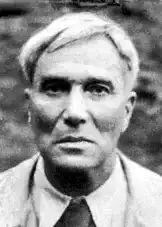
Boris Pasternak
August
This was its promise, held to faithfully:
The early morning sun came in this way
Until the angle of its saffron beam
Between the curtains and the sofa lay,
And with its ochre heat it spread across
The village houses, and the nearby wood,
Upon my bed and on my dampened pillow
And to the corner where the bookcase stood.
Then I recalled the reason why my pillow
Had been so dampened by those tears that fell
I'd
dreamt I saw you coming one by one
Across the wood to wish me your farewell.
You came in ones and twos, a straggling crowd;
Then suddenly someone mentioned a word:
It was the sixth of August, by Old Style,
And the Transfiguration of Our Lord.
For from Mount Tabor usually this day
There comes a light without a flame to shine,
And autumn draws all eyes upon itself
As clear and unmistaken as a sign.
But you came forward through the tiny, stripped,
The pauperly and trembling alder grove,
Into the graveyard's coppice, russet-red,
Which, like stamped gingerbread, lay there and glowed.
And with the silence of those high treetops
Was neighbour only the imposing sky
And in the echoed crowing of the cocks
The distances and distances rang by:
There in the churchyard underneath the trees,
Like some surveyor from the government
Death gazed on my pale face to estimate
How large a grave would suit my measurement.
All those who stood there could distinctly hear
A quiet voice emerge from where I lay:
The voice was mine, my past; prophetic words
That sounded now, unsullied by decay:
'Farewell, wonder of azure and of gold
Surrounding the Transfiguration's power:
Assuage now with a woman's last caress
The bitterness of my predestined hour!
'Farewell timeless expanse of passing years!
Farewell, woman who flung your challenge steeled
Against the abyss of humiliations:
For it is I who am your battlefield!
'Farewell, you span of open wings outspread,
The voluntary obstinacy of flight,
O figure of the world revealed in speech,
Creative genius, wonder-working might!'
644

Claude Mckay
When Dawn Comes to the City
The tired cars go grumbling by,
The moaning, groaning cars,
And the old milk carts go rumbling by
Under the same dull stars.
Out of the tenements, cold as stone,
Dark figures start for work;
I watch them sadly shuffle on,
'Tis dawn, dawn in New York.
But I would be on the island of the sea,
In the heart of the island of the sea,
Where the cocks are crowing, crowing, crowing,
And the hens are cackling in the rose-apple tree,
Where the old draft-horse is neighing, neighing, neighing,
Out on the brown dew-silvered lawn,
And the tethered cow is lowing, lowing, lowing,
And dear old Ned is braying, braying, braying,
And the shaggy Nannie goat is calling, calling, calling
From her little trampled corner of the long wide lea
That stretches to the waters of the hill-stream falling
Sheer upon the flat rocks joyously!
There, oh, there! on the island of the sea,
There would I be at dawn.
The tired cars go grumbling by,
The crazy, lazy cars,
And the same milk carts go rumbling by
Under the dying stars.
A lonely newsboy hurries by,
Humming a recent ditty;
Red streaks strike through the gray of the sky,
The dawn comes to the city.
But I would be on the island of the sea,
In the heart of the island of the sea,
Where the cocks are crowing, crowing, crowing,
And the hens are cackling in the rose-apple tree,
Where the old draft-horse is neighing, neighing, neighing
Out on the brown dew-silvered lawn,
And the tethered cow is lowing, lowing, lowing,
And dear old Ned is braying, braying, braying,
And the shaggy Nannie goat is calling, calling, calling,
From her little trampled corner of the long wide lea
That stretches to the waters of the hill-stream falling
Sheer upon the flat rocks joyously!
There, oh, there! on the island of the sea,
There I would be at dawn.
632

Rudyard Kipling
The Song of Diego Valdez
The God of Fair Beginnings
Hath prospered here my hand --
The cargoes of my lading,
And the keels of my command.
For out of many ventures
That sailed with hope as high,
My own have made the better trade,
And Admiral am I.
To me my King's much honour,
To me my people's love --
To me the pride of Princes
And power all pride above;
To me the shouting cities,
To me the mob's refrain: --
"Who knows not noble Valdez
"Hath never heard of Spain."
But I remember comrades --
Old playmates on new seas --
Whenas we traded orpiment
Among the savages --
A thousand leagues to south'ard
And thirty years removed --
They knew nor noble Valdez,
But me they knew and loved.
Then they that found good liquor,
They drank it not alone,
And they that found fair plunder,
They told us every one,
About our chosen islands
Or secret shoals between,
When, weary from far voyage,
We gathered to careen.
Were burned our breaming-fagots
All pale along the shore:
There rose our worn pavilions --
A sail above an oar:
As flashed each yeaming anchor
Through mellow seas afire,
So swift our careless captains
Rowed each to his desire.
Where lay our loosened harness?
Where turned our naked feet?
Whose tavern 'mid the palm-trees?
What quenchings of what heat?
Oh, fountain in the desert!
Oh, cistern in the waste!
Oh, bread we ate in secret!
Oh, cup we spilled in haste!
The youth new-taught of longing,
The widow curbed and wan,
The goodwife proud at season,
And the maid aware of man --
All souls unslaked, consuming,
Defrauded in delays,
Desire not more their quittance
Than I those forfeit days!
I dreamed to wait my pleasure
Unchanged my spring would bide:
Wherefore, to wait my pleasure,
I put my spring aside
Till, first in face of Fortune,
And last in mazed disdain,
I made Diego Valdez
High Admiral of Spain.
Then walked no wind 'neath Heaven
Nor surge that did not aid --
I dared extreme occasion,
Nor ever one betrayed.
They wrought a deeper treason --
(Led seas that served my needs!)
They sold Diego Valdez
To bondage of great deeds.
The tempest flung me seaward,
And pinned and bade me hold
The course I might not alter --
And men esteemed me bold!
The calms embayed my quarry,
The fog-wreath sealed his eyes;
The dawn-wind brought my topsails --
And men esteemed me wise!
Yet, 'spite my tyrant triumphs,
Bewildered, dispossessed --
My dream held I beore me
My vision of my rest;
But, crowned by Fleet and People,
And bound by King and Pope --
Stands here Diego Valdez
To rob me of my hope.
No prayer of mine shall move him.
No word of his set free
The Lord of Sixty Pennants
And the Steward of the Sea.
His will can loose ten thousand
To seek their loves again --
But not Diego Valdez,
High Admiral of Spain.
There walks no wind 'neath Heaven
Nor wave that shall restore
The old careening riot
And the clamorous, crowded shore --
The fountain in the desert,
The cistern in the waste,
The bread we ate in secret,
The cup we spilled in haste.
Now call I to my Captains --
For council fly the sign --
Now leap their zealous galleys,
Twelve-oared, across the brine.
To me the straiter prison,
To me the heavier chain --
To me Diego Valdez,
High Admiral of Spain!
633
Rudyard Kipling
The Broken Men
For things we never mention,
For Art misunderstood --
For excellent intention
That did not turn to good;
From ancient tales' renewing,
From clouds we would not clear --
Beyond the Law's pursuing
We fled, and settled here.
We took no tearful leaving,
We bade no long good-byes;
Men talked of crime and thieving,
Men wrote of fraud and lies.
To save our injured feelings
'T was time and time to go --
Behind was dock and Dartmoor,
Ahead lay Callao!
The widow and the orphan
That pray for ten per cent,
They clapped their trailers on us
To spy the road we went.
They watched the foreign sailings
(They scan the shipping still),
And that's your Christian people
Returning good for ill!
God bless the thoughtfull islands
Where never warrants come;
God bless the just Republics
That give a man a home,
That ask no foolish questions,
But set him on his feet;
And save his wife and daughters
From the workhouse and the street!
On church and square and market
The noonday silence falls;
You'll hear the drowsy mutter
Of the fountain in our halls.
Asleep amid the yuccas
The city takes her ease --
Till twilight brings the land-wind
To the clicking jalousies.
Day long the diamond weather,
The high, unaltered blue --
The smell of goats and incense
And the mule-bells tinkling through.
Day long the warder ocean
That keeps us from our kin,
And once a month our levee
When the English mail comes in.
You'll find us up and waiting
To treat you at the bar;
You'll find us less exclusive
Than the average English are.
We'll meet you with a carriage,
Too glad to show you round,
But -- we do not lunch on steamers,
For they are English ground.
We sail o' nights to England
And join our smiling Boards --
Our wives go in with Viscounts
And our daughters dance with Lords,
But behind our princely doings,
And behind each coup we make,
We feel there's Something Waiting,
And -- we meet It when we wake.
Ah God! One sniff of England --
To greet our flesh and blood --
To hear the traffic slurring
Once more through London mud!
Our towns of wasted honour --
Our streets of lost delight!
How stands the old Lord Warden?
Are Dover's cliffs still white?
626

Johann Wolfgang von Goethe
Welcome And Farewell
QUICK throbb'd my heart: to norse! haste, haste,
And lo! 'twas done with speed of light;
The evening soon the world embraced,
And o'er the mountains hung the night.
Soon stood, in robe of mist, the oak,
A tow'ring giant in his size,
Where darkness through the thicket broke,
And glared with hundred gloomy eyes.
From out a hill of clouds the moon
With mournful gaze began to peer:
The winds their soft wings flutter'd soon,
And murmur'd in mine awe-struck ear;
The night a thousand monsters made,
Yet fresh and joyous was my mind;
What fire within my veins then play'd!
What glow was in my bosom shrin'd!
I saw thee, and with tender pride
Felt thy sweet gaze pour joy on me;
While all my heart was at thy side.
And every breath I breath'd for thee.
The roseate hues that spring supplies
Were playing round thy features fair,
And love for me--ye Deities!
I hoped it, I deserved it ne'er!
But, when the morning sun return'd,
Departure filled with grief my heart:
Within thy kiss, what rapture burn'd!
But in thy look, what bitter smart!
I went--thy gaze to earth first roved
Thou follow'dst me with tearful eye:
And yet, what rapture to be loved!
And, Gods, to love--what ecstasy!
604

Edna St. Vincent Millay
Sonnet III: Mindful of you the sodden earth
Mindful of you the sodden earth in spring,
And all the flowers that in the springtime grow,
And dusty roads, and thistles, and the slow
Rising of the round moon, all throats that sing
The summer through, and each departing wing,
And all the nests that the bared branches show,
And all winds that in any weather blow,
And all the storms that the four seasons bring.
You go no more on your exultant feet
Up paths that only mist and morning knew,
Or watch the wind, or listen to the beat
Of a bird's wings too high in air to view,--
But you were something more than young and sweet
And fair,--and the long year remembers you.
603
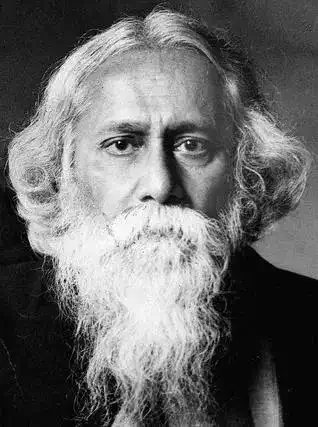
Rabindranath Tagore
The Gift
I want to give you something, my child, for we are drifting in the
stream of the world.
Our lives will be carried apart, and our love forgotten.
But I am not so foolish as to hope that I could buy your heart
with my gifts.
Young is your life, your path long, and you drink the love we
bring you at one draught and turn and run away from us.
You have your play and your playmates. What harm is there if
you have no time or thought for us!
We, indeed, have leisure enough in old age to count the days
that are past, to cherish in our hearts what our hands have lost
for ever.
The river runs swift with a song, breaking through all
barriers. But the mountain stays and remembers, and follows her
with his love.
600
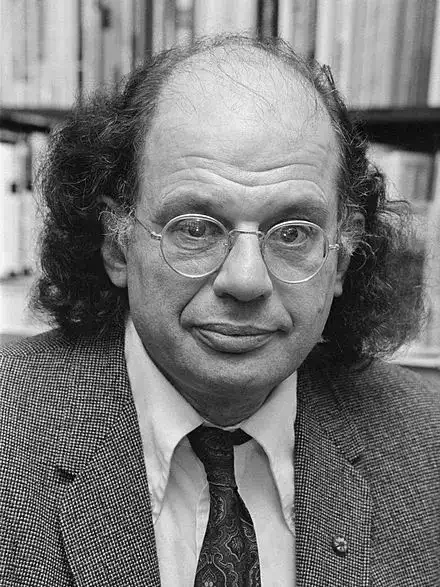
Allen Ginsberg
Haiku (Never Published)
Drinking my tea
Without sugar
No
difference.
The sparrow shits
upside down
--ah! my brain & eggs
Mayan head in a
Pacific driftwood bole
--Someday I'll live in N.Y.
Looking over my shoulder
my behind was covered
with cherry blossoms.
Winter Haiku
I didn't know the names
of the flowers--now
my garden is gone.
I slapped the mosquito
and missed.
What made me do that?
Reading haiku
I am unhappy,
longing for the Nameless.
A frog floating
in the drugstore jar:
summer rain on grey pavements.
(after Shiki)
On the porch
in my shorts;
auto lights in the rain.
Another year
has past-the world
is no different.
The first thing I looked for
in my old garden was
The Cherry Tree.
My old desk:
the first thing I looked for
in my house.
My early journal:
the first thing I found
in my old desk.
My mother's ghost:
the first thing I found
in the living room.
I quit shaving
but the eyes that glanced at me
remained in the mirror.
The madman
emerges from the movies:
the street at lunchtime.
Cities of boys
are in their graves,
and in this town...
Lying on my side
in the void:
the breath in my nose.
On the fifteenth floor
the dog chews a bone-
Screech of taxicabs.
A hardon in New York,
a boy
in San Fransisco.
The moon over the roof,
worms in the garden.
I rent this house.
[Haiku composed in the backyard cottage at 1624
Milvia Street, Berkeley 1955, while reading R.H.
Blyth's 4 volumes, "Haiku."]
607
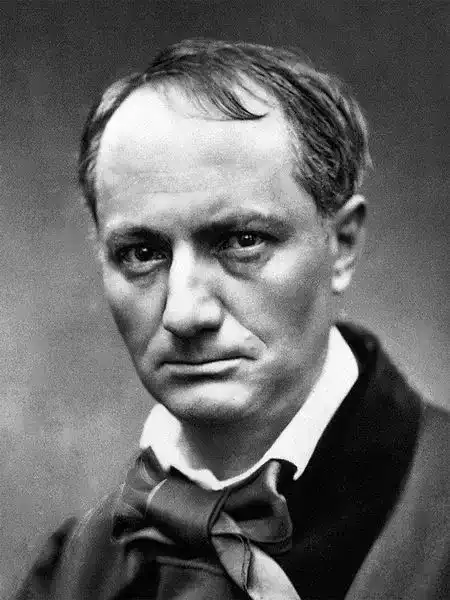
Charles Baudelaire
The Balcony
Mother of memories, mistress of mistresses,
O you, all my pleasures! O you, all my learning!
You will remember the joy of caresses,
the sweetness of home and the beauty of evening,
Mother of memories, mistress of mistresses!
On evenings lit by the glow of the ashes
and on the balcony, veiled, rose-coloured, misted,
how gentle your breast was, how good your heart to me!
We have said things meant for eternity,
on evenings lit by the glow of the ashes.
How lovely the light is on sultry evenings!
How deep the void grows! How powerful the heart is!
As I leaned towards you, queen of adored ones
I thought I breathed perfume from your blood’s kiss.
How lovely the light is on sultry evenings!
The night it was thickening and closing around us,
and my eyes in the dark were divining your glance,
and I drank your nectar. Oh sweetness! Oh poison!
your feet held, here, in these fraternal hands.
The night it was thickening and closing around us.
I know how to summon up happiest moments,
and relive my past, there, curled, touching your knees.
What good to search for your languorous beauties
but in your dear body, and your heart so sweet?
I know how to summon up happiest moments!
Those vows, those perfumes, those infinite kisses,
will they be reborn, from gulfs beyond soundings,
as the suns that are young again climb in the sky,
after they’ve passed through the deepest of drownings?
-O vows! O perfumes! O infinite kisses
595
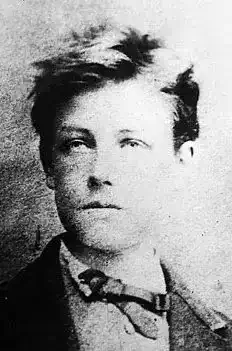
Arthur Rimbaud
O Seasons, O Chateaux
1. (From: Fetes de la Patience)
O seasons, O chateaux,
Where is the flawless soul?
O seasons, O chateaux,
The magic study I pursued,
Of happiness, none can elude.
O may it live, each time
The Gallic cock makes rhyme.
Nothing else I desire,
It’s possessed my life entire.
That charm! It’s taken heart and soul
Scattered all my effort so.
Where’s the sense in what I say?
It makes the whole thing fly away!
O seasons, O chateaux!
O Seasons, O Chateaux
2. (From: Une Saison en Enfer)
O seasons, O chateaux!
Where is the flawless soul?
The magic study I pursued,
Of happiness, none can elude.
A health to it, each time
The Gallic cock makes rhyme.
Ah! There’s nothing I desire,
It’s possessed my life entire.
That charm has taken heart and soul
Scattered all my efforts so.
O seasons, O chateaux!
The hour of its flight, alas!
Will be the hour I pass.
O seasons, O chateaux!
O seasons, O chateaux,
Where is the flawless soul?
O seasons, O chateaux,
The magic study I pursued,
Of happiness, none can elude.
O may it live, each time
The Gallic cock makes rhyme.
Nothing else I desire,
It’s possessed my life entire.
That charm! It’s taken heart and soul
Scattered all my effort so.
Where’s the sense in what I say?
It makes the whole thing fly away!
O seasons, O chateaux!
O Seasons, O Chateaux
2. (From: Une Saison en Enfer)
O seasons, O chateaux!
Where is the flawless soul?
The magic study I pursued,
Of happiness, none can elude.
A health to it, each time
The Gallic cock makes rhyme.
Ah! There’s nothing I desire,
It’s possessed my life entire.
That charm has taken heart and soul
Scattered all my efforts so.
O seasons, O chateaux!
The hour of its flight, alas!
Will be the hour I pass.
O seasons, O chateaux!
585

Lord Byron
To Romance
Parent of golden dreams, Romance!
Auspicious Queen of childish joys,
Who lead'st along, in airy dance,
Thy votive train of girls and boys;
At length, in spells no longer bound,
I break the fetters of my youth;
No more I tread thy mystic round,
But leave thy realms for those of Truth.
And yet 'tis hard to quit the dreams
Which haunt the unsuspicious soul,
Where every nymph a goddess seems,
Whose eyes through rays immortal roll;
While Fancy holds her boundless reign,
And all assume a varied hue;
When Virgins seem no longer vain,
And even Woman's smiles are true.
And must we own thee, but a name,
And from thy hall of clouds descend?
Nor find a Sylph in every dame,
A Pylades in every friend?
But leave, at once, thy realms of air i
To mingling bands of fairy elves;
Confess that woman's false as fair,
And friends have feeling forthemselves?
With shame, I own, I've felt thy sway;
Repentant, now thy reign is o'er;
No more thy precepts I obey,
No more on fancied pinions soar;
Fond fool! to love a sparkling eye,
And think that eye to truth was dear;
To trust a passing wanton's sigh,
And melt beneath a wanton's tear!
Romance! disgusted with deceit,
Far from thy motley court I fly,
Where Affectation holds her seat,
And sickly Sensibility;
Whose silly tears can never flow
For any pangs excepting thine;
Who turns aside from real woe,
To steep in dew thy gaudy shrine.
Now join with sable Sympathy,
With cypress crown'd, array'd in weeds,
Who heaves with thee her simple sigh,
Whose breast for every bosom bleeds;
And call thy sylvan female choir,
To mourn a Swain for ever gone,
Who once could glow with equal fire,
But bends not now before thy throne.
Ye genial Nymphs, whose ready tears
On all occasions swiftly flow;
Whose bosoms heave with fancied fears,
With fancied flames and phrenzy glow
Say, will you mourn my absent name,
Apostate from your gentle train
An infant Bard, at least, may claim
From you a sympathetic strain.
Adieu, fond race! a long adieu!
The hour of fate is hovering nigh;
E'en now the gulf appears in view,
Where unlamented you must lie:
Oblivion's blackening lake is seen,
Convuls'd by gales you cannot weather,
Where you, and eke your gentle queen,
Alas! must perish altogether.
579
Boris Pasternak
There'll be no one in the house...
There'll be no one in the house
Save for twilight. All alone,
Winter's day seen in the space that's
Made by curtains left undrawn.
Only flash-past of the wet white
Snowflake clusters, glimpsed and gone.
Only roofs and snow, and save for
Roofs and snow-no one at home.
Once more, frost will trace its patterns,
I'll be haunted once again
By my last year's melancholy,
By that other wintertime.
Once more, I'll be troubled by an
Old unexpiated shame,
And the icy firewood famine
Will press on the window-pane.
But the quiver of intrusion
Through those curtains folds will run.
Measuring silence with your footsteps,
Like the future, in you'll come.
You'll appear there in the doorway
Wearing something white and plain,
Something in the very stuff from
Which the snowflakes too are sewn.
572

John Keats
Robin Hood
NO! those days are gone away,
And their hours are old and gray,
And their minutes buried all
Under the down-trodden pall
Ofthe leaves of many years:
Many times have winter's shears,
Frozen North, and chilling East,
Sounded tempests to the feast
Of the forest's whispering fleeces,
Since men knew nor rent nor leases.
No, the bugle sounds no more,
And the twanging bow no more;
Silent is the ivory shrill
Past the heath and up the hill;
There is no mid-forest laugh,
Where lone Echo gives the half
To some wight, amaz'd to hear
Jesting, deep in forest drear.
On the fairest time of June
You may go, with sun or moon,
Or the seven stars to light you,
Or the polar ray to right you;
But you never may behold
Little John, or Robin bold;
Never one, of all the clan,
Thrumming on an empty can
Some old hunting ditty, while
He doth his green way beguile
To fair hostess Merriment,
Down beside the pasture Trent;
For he left the merry tale,
Messenger for spicy ale.
Gone, the merry morris din;
Gone, the song of Gamelyn;
Gone, the tough-belted outlaw
Idling in the "grene shawe";
All are gone away and past!
And if Robin should be cast
Sudden from his turfed grave,
And if Marian should have
Once again her forest days,
She would weep, and he would craze:
He would swear, for all his oaks,
Fall'n beneath the dockyard strokes,
Have rotted on the briny seas;
She would weep that her wild bees
Sang not to her---strange! that honey
Can't be got without hard money!
So it is; yet let us sing
Honour to the old bow-string!
Honour to the bugle-horn!
Honour to the woods unshorn!
Honour to the Lincoln green!
Honour to the archer keen!
Honour to tight little John,
And the horse he rode upon!
Honour to bold Robin Hood,
Sleeping in the underwood!
Honour to maid Marian,
And to all the Sherwood clan!
Though their days have hurried by
Let us two a burden try.
577

Kazi Nazrul Islam
Why?
Why must a thorn
The flower adorn?
Why is a lotus born
With the prick of a thorn?
Why in these eyes
Must sorrowful tears lie?
Why must we have hearts When love departs?
Why instead of rain
The lightning's hound.
The swallows beckoned
Into the shadow of the cloud?
If the buds-appear,
Why must flowers wither;
Why the tinsel of calumny
The brow of moon must wear?
Thy the yearning for beauty must
Weep, entrapped in lust?
Would the cheek
Sans black mole
Look bleak?
In this thorny bower,
Oh poet paint your rosy picture.
Your abode lies
In the tears of your eyes.
578
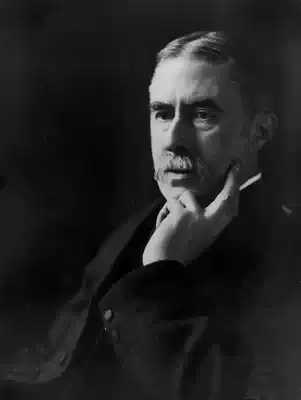
Alfred Edward Housman
In Valleys of Springs and Rivers
"Clunton and Clunbury,
Clungunford and Clun,
Are the quietest places
Under the sun."
In valleys of springs and rivers,
By Ony and Teme and Clun,
The country for easy livers,
The quietest under the sun,
We still had sorrows to lighten,
One could not be always glad,
And lads knew trouble at Knighton
When I was a Knighton lad.
By bridges that Thames runs under,
In London, the town built ill,
'Tis sure small matter for wonder
If sorrow is with one still.
And if as a lad grows older
The troubles he bears are more,
He carries his griefs on a shoulder
That handselled them long before.
Where shall one halt to deliver
This luggage I'd lief set down?
Not Thames, not Teme is the river,
Nor London nor Knighton the town:
'Tis a long way further than Knighton,
A quieter place than Clun,
Where doomsday may thunder and lighten
And little 'twill matter to one.
567

Ella Wheeler Wilcox
Songs Of A Country Home
I
Who has not felt his heart leap up, and glow
What time the tulips first begin to blow,
Has one sweet joy, still left for him to know.
It is like early loves' imagining;
That fragile pleasure, which the Tulips bring,
When suddenly we see them, in the Spring.
Not all the gardens later royal train,
Not great triumphant Roses, when they reign,
Can bring that delicate delight again.
II
One of the sweetest hours is this;
(Of all I think we like it best
A little restful oasis,
Between the breakfast, and the post.
Just south of coffee, and of toast,
Just north of daily task and duty;
Just west of dreams, this Island gleams,
A fertile spot of peace and beauty.
We wander out across the lawn;
We idle by a bush in bloom;
The Household pets come following on;
Or if the day is one of gloom,
We loiter in a pleasant room
Or from a casement, lean and chatter.
Then comes the mail, like sudden hail,
And off we scatter.
III
When roses die, in languid August days,
We leave the Garden, to its fallen ways;
And seek the shelter of wide porticos,
Where Honeysuckle, in defiance blows
Undaunted by the Sun's too ardent rays.
The matron Summer, turns a wistful gaze
Across green valleys, back to tender Mays;
And something of her large contentment goes,
When roses die.
Yet all her subtle fascination stays
To lure us into idle sweet delays.
The lowered awning, by the hammock shows
Inviting nooks for dreaming and repose;
Oh, restful are the pleasures of those days
When roses die.
IV
The summer folk, fled back to town;
The green woods changed to red and brown;
A sound upon the frosty air
Of windows closing everywhere.
And then the log, lapped by a blaze.
Oh, what is better than these days;
With books and friends and love a-near;
Go on, gay world, but leave me here.
568
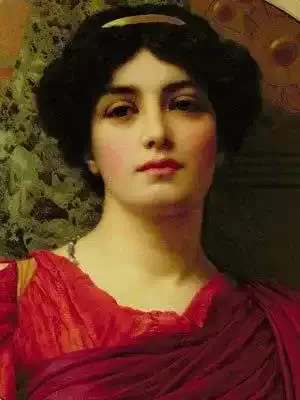
Safo
Anactoria
Yes, Atthis, you may be sure
Even in Sardis
Anactoria will think often of us
of the life we shared here, when you seemed
the Goddess incarnate
to her and your singing pleased her best
Now among Lydian women she in her
turn stands first as the redfingered
moon rising at sunset takes
precedence over stars around her;
her light spreads equally
on the salt sea and fields thick with bloom
Delicious dew pours down to freshen
roses, delicate thyme
and blossoming sweet clover; she wanders
aimlessly, thinking of gentle
Atthis, her heart hanging
heavy with longing in her little breast
She shouts aloud, Come! we know it;
thousand-eared night repeats that cry
across the sea shining between us
Sappho
tr. Barnard
564
Boris Pasternak
Unique Days
How I remember solstice days
Through many winters long completed!
Each unrepeatable, unique,
And each one countless times repeated.
Of all these days, these only days,
When one rejoiced in the impression
That time had stopped, there grew in years
An unforgettable succession.
Each one of them I can evoke.
The year is to midwinter moving,
The roofs are dripping, roads are soaked,
And on the ice the sun is brooding.
Then lovers hastily are drawn
To one another, vague and dreaming,
And in the heat, upon a tree
The sweating nesting-box is steaming.
And sleepy clock-hands laze away
The clockface wearily ascending.
Eternal, endless is the day,
And the embrace is never-ending.
565
Alfred Edward Housman
Tell me not here, it needs not saying
Tell me not here, it needs not saying,
What tune the enchantress plays
In aftermaths of soft September
Or under blanching mays,
For she and I were long acquainted
And I knew all her ways.
On russet floors, by waters idle,
The pine lets fall its cone;
The cuckoo shouts all day at nothing
In leafy dells alone;
And traveller’s joy beguiles in autumn
Hearts that have lost their own.
On acres of the seeded grasses
The changing burnish heaves;
Or marshalled under moons of harvest
Stand still all night the sheaves;
Or beeches strip in storms for winter
And stain the wind with leaves.
Posses, as I possessed a season,
The countries I resign,
Where over elmy plains the highway
Would mount the hills and shine,
And full of shade the pillared forest
Would murmur and be mine.
For nature, heartless, witless nature,
Will neither care nor know
What stranger’s feet may find the meadow
And trespass there and go,
Nor ask amid the dews of morning
If they are mine or no.
561
Lord Byron
There Was A Time, I Need Not Name
There was a time, I need not name,
Since it will ne'er forgotten be,
When all our feelings were the same
As still my soul hath been to thee.
And from that hour when first thy tongue
Confess'd a love which equall'd mine,
Though many a grief my heart hath wrung,
Unknown, and thus unfelt, by thine,
None, none hath sunk so deep as this
To
think how all that love hath flown;
Transient as every faithless kiss,
But transient in thy breast alone.
And yet my heart some solace knew,
When late I heard thy lips declare,
In accents once imagined true,
Remembrance of the days that were.
Yes! my adored, yet most unkind!
Though thou wilt never love again,
To me 'tis doubly sweet to find
Remembrance of that love remain.
Yes! 'tis a glorious thought to me,
Nor longer shall my soul repine,
Whate'er thou art or e'er shalt be,
Thou hast been dearly, solely mine.
555
Kazi Nazrul Islam
Evening Star
Oh, dear evening star
Whose bride art thou with veils,
In the glances of your eyes,
Whose forgotten face dwells?
Evening lamp, with a vei
I to hide,
And casting glances at this bride,
Though often her looks quiver,
This goes on for ever.
Whose lost bride is she?
At dusk, mute and beside me,
To arouse the yearning for a home,
In the heart of a homeless wanderer.
Perpetually you rise and sink,
With a tender pallid wink,
For whom, you heavenly bride?
Where does your beloved abide!
[Translation: Syed Mujibul Huq]
554
Arthur Rimbaud
Working People
O that warm February morning!
The untimely south came
to stir up our absurd paupers' memories,
our young distress.
Henrika had on a brown
and white checked cotton skirt
which must have been worn in the last century,
a bonnet with ribbons and a silk scarf.
It was much sadder than any mourning.
We were taking a stroll in the suburbs.
The weather was overcast
and that wind from the south
excited all the evil odors of the desolate
garden and the dried fields.
It did not seem to weary my wife as it did me.
In a puddle left by the rains of the preceding month,
on a fairly high path,
she called my attention to some very little fishes.
The city with its smoke and its factory noises
followed us far out along the roads.
O other world, habituation
blessed by sky and shade!
The south brought black miserable memories
of my childhood, my summer despairs,
the horrible quantity of strength
and of knowledge that fate has always kept from me.
No! we will not spend the summer
in this avaricious country
where we shall never be anything
but affianced orphans.
I want this hardened arm
to stop dragging _a cherished image._
554
Kazi Nazrul Islam
With the late Monsoon's light clouds
With the late Monsoon's light clouds wander my mind,
Toward Malabika's home along the Reva's lonely shore.
My mind is propelled by the lazy wind like a light-winged bird.
My pining darling cries alone her hair loosened,
Looking now at the cloud now at the river
Where the dark village-girl wipes her tears unseen,
Where alone my beloved sits by the window thither goes my mind.
[Original: Aj sraboner loghu megher; Translation: Abu Rushd]
554
Kazi Nazrul Islam
At My Gaze No Longer Laughs the Rose
At my gaze no longer laughs the rose,
At the music of my words no longer blossoms forth the flowers
What is the use of going to the fair
With the garland of the withered smile?
Dose the dark night amaze her disheveled hair
Without looking at the moon for a while?
The southern wind brings the springs yet
But in the garden the nightingale sings no more.
No more does the wild flower in the forest
Dance at the sight of the moon
Something is lost, something is missing,
My heart feels so empty and old.
Ah me, at whose cruel touch
Has my heart grown so cold!
[Translation: Kabir Chowdhury]
557