
Nostalgia

Boris Pasternak
Spasskoe
In Spasskoe, unforgettable September sheds its leaves.
Isn’t it time to close up the summer-house?
Echo traps the thudding of axe-blows in the trees,
and, past the fence, barters a herd-boy’s shout.
Last night the marsh by the park shivered, too.
The moment the sun rises it vanishes.
The bluebell can’t drink the rheumatic dew,
and a dirty lilac stain soils the birches.
The wood’s downcast. It wants to sleep, as well,
under the snow, in the deep quiet of the bear’s den.
The park, gaping, framed by tree-trunks stands still,
in neat obituary-columns, its edges blackened.
Has the birch copse stopped fading, staining,
its shade more watery still, and growing thin?
And again, you’re, fifteen – it’s still complaining –
again – ‘oh child, oh, what shall we do with them?’
They’re already so many it’s time to stop playing.
They’re – birds in the bushes, mushrooms in the trees.
Already we’ve veiled our horizon with them, shrouding
each other’s landscape with fog-bound mysteries.
The comic, on the night of his death, typhus-stricken,
hears a peal: it’s Homeric laughter from the box.
Today in Spasskoe, the same grief, in hallucination,
stares, from the road, at a house of weathered logs.
556
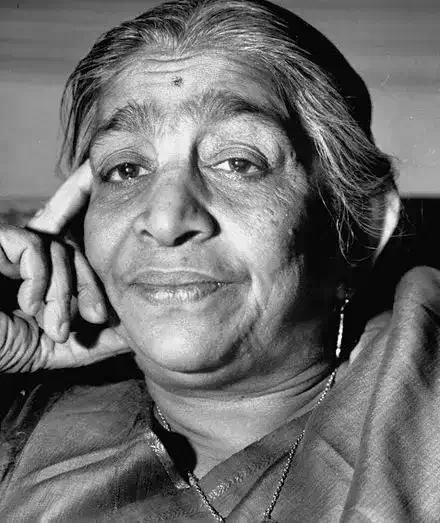
Sarojini Naidu
To A Buddha Seated On A Lotus
LORD BUDDHA, on thy Lotus-throne,
With praying eyes and hands elate,
What mystic rapture dost thou own,
Immutable and ultimate?
What peace, unravished of our ken,
Annihilate from the world of men?
The wind of change for ever blows
Across the tumult of our way,
To-morrow's unborn griefs depose
The sorrows of our yesterday.
Dream yields to dream, strife follows strife,
And Death unweaves the webs of Life.
For us the travail and the heat,
The broken secrets of our pride,
The strenuous lessons of defeat,
The flower deferred, the fruit denied;
But not the peace, supremely won,
Lord Buddha, of thy Lotus-throne.
With futile hands we seek to gain
Our inaccessible desire,
Diviner summits to attain,
With faith that sinks and feet that tire;
But nought shall conquer or control
The heavenward hunger of our soul.
The end, elusive and afar,
Still lures us with its beckoning flight,
And all our mortal moments are
A session of the Infinite.
How shall we reach the great, unknown
Nirvana of thy Lotus-throne?
559
Boris Pasternak
Winter Nears
Winter nears. Once more
the bear’s secret retreat
will vanish under mud’s floor,
to a child’s fretful grief.
Huts will wake in the water,
reflecting paths of smoke,
circled by autumn’s tremor
lovers meet by the fire to talk.
Denizens of the harsh North
whose roof is the clear air,
‘In this sign conquer’, set forth,
marks each unreachable lair.
I love you, provincial haunts,
off the map, the road, past the farms,
the more tired and faded the book,
the greater for me its charms.
Slow files of carts lumbering by
you spell out an alphabet flowing
from meadow to meadow. And I
found you always my favourite reading.
And it’s suddenly written again,
here in first snow is the spider’s
cursive script, runners of sleighs,
where ice on the page embroiders.
A silvered hazel October.
Pewter glow since frost began.
Autumn twilight, of Chekhov,
Tchaikovsky, and Levitan.
556
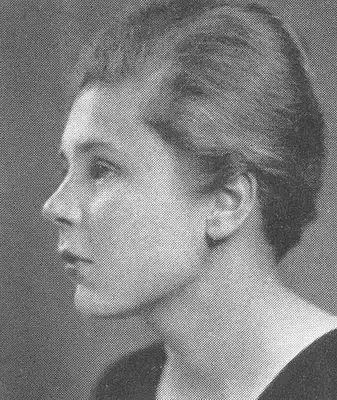
Elizabeth Bishop
Trouvée
Oh, why should a hen
have been run over
on West 4th Street
in the middle of summer?
She was a white hen
--red-and-white now, of course.
How did she get there?
Where was she going?
Her wing feathers spread
flat, flat in the tar,
all dirtied, and thin
as tissue paper.
A pigeon, yes,
or an English sparrow,
might meet such a fate,
but not that poor fowl.
Just now I went back
to look again.
I hadn't dreamed it:
there is a hen
turned into a quaint
old country saying
scribbled in chalk
(except for the beak).
556

Elizabeth Barrett Browning
Aurora Leigh (excerpts)
[Book 1]
I am like,
They tell me, my dear father. Broader brows
Howbeit, upon a slenderer undergrowth
Of delicate features, -- paler, near as grave ;
But then my mother's smile breaks up the whole,
And makes it better sometimes than itself.
So, nine full years, our days were hid with God
Among his mountains : I was just thirteen,
Still growing like the plants from unseen roots
In tongue-tied Springs, -- and suddenly awoke
To full life and life 's needs and agonies,
With an intense, strong, struggling heart beside
A stone-dead father. Life, struck sharp on death,
Makes awful lightning. His last word was, `Love --'
`Love, my child, love, love !' -- (then he had done with grief)
`Love, my child.' Ere I answered he was gone,
And none was left to love in all the world.
There, ended childhood. What succeeded next
I recollect as, after fevers, men
Thread back the passage of delirium,
Missing the turn still, baffled by the door ;
Smooth endless days, notched here and there with knives ;
A weary, wormy darkness, spurr'd i' the flank
With flame, that it should eat and end itself
Like some tormented scorpion. Then at last
I do remember clearly, how there came
A stranger with authority, not right,
(I thought not) who commanded, caught me up
From old Assunta's neck ; how, with a shriek,
She let me go, -- while I, with ears too full
Of my father's silence, to shriek back a word,
In all a child's astonishment at grief
Stared at the wharf-edge where she stood and moaned,
My poor Assunta, where she stood and moaned !
The white walls, the blue hills, my Italy,
Drawn backward from the shuddering steamer-deck,
Like one in anger drawing back her skirts
Which supplicants catch at. Then the bitter sea
Inexorably pushed between us both,
And sweeping up the ship with my despair
Threw us out as a pasture to the stars.
Ten nights and days we voyaged on the deep ;
Ten nights and days, without the common face
Of any day or night ; the moon and sun
Cut off from the green reconciling earth,
To starve into a blind ferocity
And glare unnatural ; the very sky
(Dropping its bell-net down upon the sea
As if no human heart should 'scape alive,)
Bedraggled with the desolating salt,
Until it seemed no more that holy heaven
To which my father went. All new and strange
The universe turned stranger, for a child.
Then, land ! -- then, England ! oh, the frosty cliffs
Looked cold upon me. Could I find a home
Among those mean red houses through the fog ?
And when I heard my father's language first
From alien lips which had no kiss for mine
I wept aloud, then laughed, then wept, then wept,
And some one near me said the child was mad
Through much sea-sickness. The train swept us on.
Was this my father's England ? the great isle ?
The ground seemed cut up from the fellowship
Of verdure, field from field, as man from man ;
The skies themselves looked low and positive,
As almost you could touch them with a hand,
And dared to do it they were so far off
From God's celestial crystals ; all things blurred
And dull and vague. Did Shakspeare and his mates
Absorb the light here ? -- not a hill or stone
With heart to strike a radiant colour up
Or active outline on the indifferent air.
I think I see my father's sister stand
Upon the hall-step of her country-house
To give me welcome. She stood straight and calm,
Her somewhat narrow forehead braided tight
As if for taming accidental thoughts
From possible pulses ; brown hair pricked with grey
By frigid use of life, (she was not old
Although my father's elder by a year)
A nose drawn sharply yet in delicate lines ;
A close mild mouth, a little soured about
The ends, through speaking unrequited loves
Or peradventure niggardly half-truths ;
Eyes of no colour, -- once they might have smiled,
But never, never have forgot themselves
In smiling ; cheeks, in which was yet a rose
Of perished summers, like a rose in a book,
Kept more for ruth than pleasure, -- if past bloom,
Past fading also.
She had lived, we'll say,
A harmless life, she called a virtuous life,
A quiet life, which was not life at all,
(But that, she had not lived enough to know)
Between the vicar and the country squires,
The lord-lieutenant looking down sometimes
From the empyrean to assure their souls
Against chance-vulgarisms, and, in the abyss
The apothecary, looked on once a year
To prove their soundness of humility.
The poor-club exercised her Christian gifts
Of knitting stockings, stitching petticoats,
Because we are of one flesh after all
And need one flannel (with a proper sense
Of difference in the quality) -- and still
The book-club, guarded from your modern trick
Of shaking dangerous questions from the crease,
Preserved her intellectual. She had lived
A sort of cage-bird life, born in a cage,
Accounting that to leap from perch to perch
Was act and joy enough for any bird.
Dear heaven, how silly are the things that live
In thickets, and eat berries !
I, alas,
A wild bird scarcely fledged, was brought to her cage,
And she was there to meet me. Very kind.
Bring the clean water, give out the fresh seed.
She stood upon the steps to welcome me,
Calm, in black garb. I clung about her neck, --
Young babes, who catch at every shred of wool
To draw the new light closer, catch and cling
Less blindly. In my ears, my father's word
Hummed ignorantly, as the sea in shells,
`Love, love, my child.' She, black there with my grief,
Might feel my love -- she was his sister once,
I clung to her. A moment, she seemed moved,
Kissed me with cold lips, suffered me to cling,
And drew me feebly through the hall into
The room she sate in.
There, with some strange spasm
Of pain and passion, she wrung loose my hands
Imperiously, and held me at arm's length,
And with two grey-steel naked-bladed eyes
Searched through my face, -- ay, stabbed it through and through,
Through brows and cheeks and chin, as if to find
A wicked murderer in my innocent face,
If not here, there perhaps. Then, drawing breath,
She struggled for her ordinary calm
And missed it rather, -- told me not to shrink,
As if she had told me not to lie or swear, -
`She loved my father, and would love me too
As long as I deserved it.' Very kind.
[Book 5]
AURORA LEIGH, be humble. Shall I hope
To speak my poems in mysterious tune
With man and nature ? -- with the lava-lymph
That trickles from successive galaxies
Still drop by drop adown the finger of God
In still new worlds ? -- with summer-days in this ?
That scarce dare breathe they are so beautiful ?--
With spring's delicious trouble in the ground,
Tormented by the quickened blood of roots,
And softly pricked by golden crocus-sheaves
In token of the harvest-time of flowers ?--
With winters and with autumns, -- and beyond,
With the human heart's large seasons, when it hopes
And fears, joys, grieves, and loves ? -- with all that strain
Of sexual passion, which devours the flesh
In a sacrament of souls ? with mother's breasts
Which, round the new-made creatures hanging there,
Throb luminous and harmonious like pure spheres ? --
With multitudinous life, and finally
With the great escapings of ecstatic souls,
Who, in a rush of too long prisoned flame,
Their radiant faces upward, burn away
This dark of the body, issuing on a world,
Beyond our mortal ? -- can I speak my verse
Sp plainly in tune to these things and the rest,
That men shall feel it catch them on the quick,
As having the same warrant over them
To hold and move them if they will or no,
Alike imperious as the primal rhythm
Of that theurgic nature ? I must fail,
Who fail at the beginning to hold and move
One man, -- and he my cousin, and he my friend,
And he born tender, made intelligent,
Inclined to ponder the precipitous sides
Of difficult questions ; yet, obtuse to me,
Of me, incurious ! likes me very well,
And wishes me a paradise of good,
Good looks, good means, and good digestion, -- ay,
But otherwise evades me, puts me off
With kindness, with a tolerant gentleness, --
Too light a book for a grave man's reading ! Go,
Aurora Leigh : be humble.
There it is,
We women are too apt to look to One,
Which proves a certain impotence in art.
We strain our natures at doing something great,
Far less because it 's something great to do,
Than haply that we, so, commend ourselves
As being not small, and more appreciable
To some one friend. We must have mediators
Betwixt our highest conscience and the judge ;
Some sweet saint's blood must quicken in our palms
Or all the life in heaven seems slow and cold :
Good only being perceived as the end of good,
And God alone pleased, -- that's too poor, we think,
And not enough for us by any means.
Ay, Romney, I remember, told me once
We miss the abstract when we comprehend.
We miss it most when we aspire, -- and fail.
Yet, so, I will not. -- This vile woman's way
Of trailing garments, shall not trip me up :
I 'll have no traffic with the personal thought
In art's pure temple. Must I work in vain,
Without the approbation of a man ?
It cannot be ; it shall not. Fame itself,
That approbation of the general race,
Presents a poor end, (though the arrow speed,
Shot straight with vigorous finger to the white,)
And the highest fame was never reached except
By what was aimed above it. Art for art,
And good for God Himself, the essential Good !
We 'll keep our aims sublime, our eyes erect,
Although our woman-hands should shake and fail ;
And if we fail .. But must we ? -
Shall I fail ?
The Greeks said grandly in their tragic phrase,
`Let no one be called happy till his death.'
To which I add, -- Let no one till his death
Be called unhappy. Measure not the work
Until the day 's out and the labour done,
Then bring your gauges. If the day's work 's scant,
Why, call it scant ; affect no compromise ;
And, in that we have nobly striven at least,
Deal with us nobly, women though we be.
And honour us with truth if not with praise.
548

Ezra Pound
Translations And Adaptations From Heine
FROM ‘DIE HEIMKEHR'
I
Is your hate, then, of such measure?
Do you, truly, so detest me?
Through all the world will I complain
Of how you have addressed me.
O ye lips that are ungrateful,
Hath it never once distressed you,
That you can say such awful things
Of any one who ever kissed you?
II
So thou hast forgotten fully
That I so long held thy heart wholly,
Thy little heart, so sweet and false and small
That there's no thing more sweet or false at all.
Love and lay thou hast forgotten fully,
And my heart worked at them unduly.
I know not if the love or if the lay were better stuff,
But I know now, they both were good enough.
III
Tell me where thy lovely love is,
Whom thou once did sing so sweetly,
When the fairy flames enshrouded
Thee, and held thy heart completely.
All the flames are dead and sped now
And my heart is cold and sere;
Behold this book, the urn of ashes,
Tis my true love's sepulchre.
IV
I dreamt that I was God Himself
Whom heavenly joy immerses,
And all the angels sat about
And praised my verses.
V
The mutilated choir boys
When I begin to sing
Complain about the awful noise
And call my voice too thick a thing.
When light their voices lift them up,
Bright notes against the ear,
Through trills and runs like crystal,
Ring delicate and clear.
They sing of Love that's grown desirous,
Of Love, and joy that is Love's inmost part,
And all the ladies swim through tears
Toward such a work of art.
VI
This delightful young man
Should not lack for honourers,
He propitiates me with oysters,
With Rhine wine and liqueurs.
How his coat and pants adorn him!
Yet his ties are more adorning,
In these he daily comes to ask me:
'Are you feeling well this morning?'
He speaks of my extended fame,
My wit, charm, definitions,
And is diligent to serve me,
Is detailed in his provisions.
In evening company he sets his face
In most spirituel positions,
And declaims before the ladies
My god-like compositions.
what comfort is it for me
To find him such, when the days bring
No comfort, at my time of life when
All good things go vanishing.
TRANSLATOR TO TRANSLATED
O Harry Heine, curses be,
I live too late to sup with thee!
Who can demolish at such polished ease
Philistia's pomp and Art's pomposities!
VII
SONG FROM 'DIE HARZREISE'
I am the Princess Ilza
In Ilsenstein I fare,
Come with me to that castle
And we'll be happy there.
Thy head will I cover over
With my waves' clarity
Till thou forget thy sorrow,
wounded sorrowfully.
Thou wilt in my white arms then
Nay, on my breast thou must
Forget and rest and dream there
For thine old legend-lust.
My lips and my heart are thine there
As they were his and mine.
His? Why the good King Harry's,
And he is dead lang syne.
Dead men stay alway dead men.
Life is the live man's part,
And I am fair and golden
With joy breathless at heart.
If my heart stay below there,
My crystal halls ring clear
To the dance of lords and ladies
In all their splendid gear.
The silken trains go rustling,
The spur-clinks sound between,
The dark dwarfs blow and bow there
Small horn and violin.
Yet shall my white arms hold thee,
That bound King Harry about.
Ah, I covered his ears with them
When the trumpet rang out.
VIII
NIGHT SONG
And have you thoroughly kissed my lips;
There was no particular haste,
And are you not ready when evening's come?
There's no particular haste.
You've got the whole night before you,
Heart's-all-beloved-my-own;
In an uninterrupted night one can
Get a good deal of kissing done.
553

Lord Byron
We Sate Down And Wept By The Waters
I.
We sate down and wept by the waters
Of Babel, and thought of the day
When our foe, in the hue of his slaughters,
Made Salem's high places his prey;
And ye, oh her desolate daughters!
Were scattered all weeping away.
II.
While sadly we gazed on the river
Which roll'd on in freedom below,
They demanded the song; but, oh never
That triumph the stranger shall know!
May this right hand be withered for ever,
Ere it string our high harp for the foe!
III.
On the willow that harp is suspended,
Oh Salem! its sound should be free;
And the hour when thy glories were ended
But left me that token of thee:
And ne'er shall its soft tones be blended
With the voice of the spoiler by me!
553
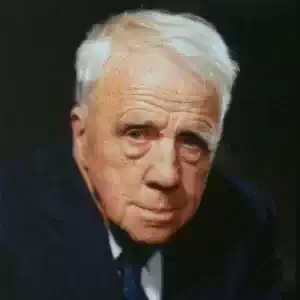
Robert Frost
My November Guest
My Sorrow, when she's here with me,
Thinks these dark days of autumn rain
Are beautiful as days can be;
She loves the bare, the withered tree;
She walks the sodden pasture lane.
Her pleasure will not let me stay.
She talks and I am fain to list:
She's glad the birds are gone away,
She's glad her simple worsted grey
Is silver now with clinging mist.
The desolate, deserted trees,
The faded earth, the heavy sky,
The beauties she so truly sees,
She thinks I have no eye for these,
And vexes me for reason why.
Not yesterday I learned to know
The love of bare November days
Before the coming of the snow,
But it were vain to tell her so,
And they are better for her praise
546
Lord Byron
To Edward Noel Long, Esq.
'Nil ego contulerim jucundo sanus amico.' — Horace.
Dear Long, in this sequester'd scene,
While all around in slumber lie,
The joyous days, which ours have been
Come rolling fresh on Fancy's eye;
Thus, if, amidst the gathering storm,
While clouds the darken'd noon deform,
Yon heaven assumes a varied glow,
I hail the sky's celestial bow,
Which spreads the sign of future peace,
And bids the war of tempests cease.
Ah! though the present brings but pain,
I think those days may come again;
Or if, in melancholy mood,
Some lurking envious fear intrude,
To check my bosom's fondest thought,
And interrupt the golden dream
I crush the fiend with malice fraught,
And, still, indulge my wonted theme.
Although we ne'er again can trace,
In Granta's vale, the pedant's lore,
Nor through the groves of Ida chace
Our raptured visions, as before;
Though Youth has flown on rosy pinion,
And Manhood claims his stern dominion,
Age will not every hope destroy,
But yields some hours of sober joy.
Yes, I will hope that Time's broad wing
Will shed around some dews of spring:
But, if his scythe must sweep the flowers
Which bloom among the fairy bowers,
Where smiling Youth delights to dwell,
And hearts with early rapture swell;
In frowning Age, with cold control,
Confines the current of the soul,
Congeals the tear of Pity's eye,
Or checks the sympathetic sigh,
Or hears, unmov'd, Misfortune's groan,
And bids me feel for self alone;
Oh! may my bosom never learn
To soothe its wonted heedless flow;
Still may I rove untutor'd, wild,
But ne'er forget another's woe.
Yes, as you knew me in the days
O'er which Remembrance yet delays
And even in age, at heart a child.
Though, now, on airy visions borne,
To you my soul is still the same.
Oft has it ben my fate to mourn,
And all my former joys are tame:
But, hence! ye hours of sabl hue!
Your frowns are gone, my sorrows o'er:
By every bliss my childhood knew,
I'll think upon your shade no more.
Thus, when the whirlwind's rage is past,
And caves their sullen roar enclose,
We heed no more the wintery blast,
When lull'd by zephyr to repose.
Full often has my infant Muse
Attun'd to love her languid lyre;
But, now, without a theme to choose,
The strains in stolen sighs expire.
My youthful nymps, alas! are flown;
E — is a wife, and C — a mother,
And Carolina sighs alone,
And Mary's given to another;
And Cora's eye, which roll'd on me,
Can now no more my love recall In
truth, dear LONG, 'twas time to flee For
Cora's eye will shine on all.
And though the Sun, with genial rays,
His beams aike to all displays,
And every lady's eye's a sun,
These last should be confin'd to one.
The souls' meridian don't become her,
Whose sun desplays a general summer!
Thus faint is every former flame,
And Passion's self is now a name;
As, when the ebbing flames are low,
The aid which once improv'd their light,
And bade them burn with fiercer glow,
Now quenches all their sparks in night;
Thus has it been with Passion's fires,
As many a boy and girl remembers,
While all the force of love expires,
Extinguish'd with the dying embers.
But now, dear LONG, 'tis midnight's noon,
And clouds obscure the watery moon,
Whose beauties I shall not rehearse,
Describ'd in every stripling's verse;
For why should I the path go o'er
Which every bard has trod before?
Yet ere yon silver lamp of night
Has thrice perform'd her stated round,
Has thrice retraced her path of light,
And chased away the gloom profound,
I trust that we, my gentle Friend,
Shall see her rolling orbit wend,
Above the dearloved
peaceful seat,
Which once contain'd our youth's retreat;
And then, with those our childhood knew,
We'll mingle in the festive crew;
While many a tale of former day
Shall wing the laughing hours away;
And all the flow of souls shall pour
Tha sacred intellectual shower,
Nor cease, till Luna's waning horn
Scarce glimmers through the mist of Morn.
542

William Butler Yeats
September 1913
What need you, being come to sense,
But fumble in a greasy till
And add the halfpence to the pence
And prayer to shivering prayer, until
You have dried the marrow from the bone?
For men were born to pray and save:
Romantic Ireland's dead and gone,
It's with O'Leary in the grave.
Yet they were of a different kind,
The names that stilled your childish play,
They have gone about the world like wind,
But little time had they to pray
For whom the hangman's rope was spun,
And what, God help us, could they save?
Romantic Ireland's dead and gone,
It's with O'Leary in the grave.
Was it for this the wild geese spread
The grey wing upon every tide;
For this that all that blood was shed,
For this Edward Fitzgerald died,
And Robert Emmet and Wolfe Tone,
All that delirium of the brave?
Romantic Ireland's dead and gone,
It's with O'Leary in the grave.
Yet could we turn the years again,
And call those exiles as they were
In all their loneliness and pain,
You'd cry, 'Some woman's yellow hair
Has maddened every mother's son':
They weighed so lightly what they gave.
But let them be, they're dead and gone,
They're with O'Leary in the grave.
536
Lord Byron
Lachin Y Gair
Away, ye gay landscapes, ye garden of roses!
In you let the minions of luxury rove;
Restore me to the rocks, where the snowflake reposes,
Though still they are sacred to freedom and love:
Yet, Caledonia, beloved are thy mountains,
Round their white summits though elements war;
Though cataracts foam 'stead of smoothflowing
fountains,
I sigh for the valley of dark Loch na Garr.
Ah! there my young footsteps in infancy wandered;
My cap was teh bonnet, my cloak was the plaid;
On chieftains long perished my memory pondered,
As daily I strode through the pinecovered
glade;
I sought not my home till the day's dying glory
Gave place to the rays of the bright polar star;
For fancy was cheered by traditional story,
Disclosed by the natives of dark Loch na Garr.
"Shades of the dead! have I not heard your voices
Rise on the nightrolling
breath of the gale?"
Surely the soul of the hero rejoices,
And rides on the wind, o'er his own Highland vale.
Rouch Loch na Garr while the stormy mist gathers,
Winter presides in his cold icy car:
Clouds there encircle the forms of my fathers;
They dwell in the tempests of dark Loch na Garr.
"Illstarred,
though brave, did no visions foreboding
Tell you that fate had forsaken your cause?"
Ah! were you destined to die at Culloden,
Victory crowned not your fall with applause:
Still were you happy in death's earthy slumber,
You rest with your clan in the caves of Braemar;
The pibroch resounds, to the piper's loud number,
Your deeds on the echoes of dark Loch na Garr.
Years have rolled on, Loch na Garr, since I left you,
Years must elapse ere I tread you again:
Nature of verdure and flowers has bereft you,
Yet still are you dearer than Albion's plain.
England! thy beauties are tame and domestic
To one who has roved o'er the mountains afar:
Oh for the crags that are wild and majestic!
The steep frowning glories of the dark Loch na Garr.
521

Paul Laurence Dunbar
A Golden Day
I Found you and I lost you,
All on a gleaming day.
The day was filled with sunshine,
And the land was full of May.
A golden bird was singing
Its melody divine,
I found you and I loved you,
And all the world was mine.
I found you and I lost you,
All on a golden day,
But when I dream of you, dear,
It is always brimming May.
All on a gleaming day.
The day was filled with sunshine,
And the land was full of May.
A golden bird was singing
Its melody divine,
I found you and I loved you,
And all the world was mine.
I found you and I lost you,
All on a golden day,
But when I dream of you, dear,
It is always brimming May.
521
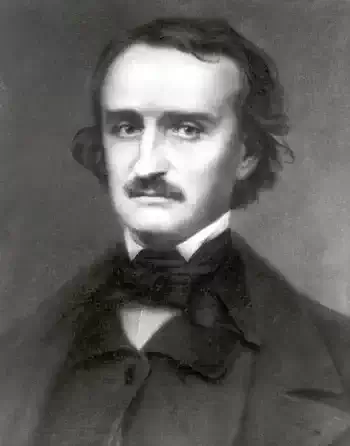
Edgar Allan Poe
Alone
From childhood's hour I have not been
As others were; I have not seen
As others saw; I could not bring
My passions from a common spring.
From the same source I have not taken
My sorrow; I could not awaken
My heart to joy at the same tone;
And all I loved, I loved alone.
Then- in my childhood, in the dawn
Of a most stormy life- was drawn
From every depth of good and ill
The mystery which binds me still:
From the torrent, or the fountain,
From the red cliff of the mountain,
From the sun that round me rolled
In its autumn tint of gold,
From the lightning in the sky
As it passed me flying by,
From the thunder and the storm,
And the cloud that took the form
(When the rest of Heaven was blue)
Of a demon in my view.
523
Ezra Pound
Society
The family position was waning,
And on this account the little Aurelia,
Who had laughed on eighteen summers,
Now bears the palsied contact of Phidippus.
And on this account the little Aurelia,
Who had laughed on eighteen summers,
Now bears the palsied contact of Phidippus.
525
Boris Pasternak
Beloved, with the spent and sickly fumes...
Beloved, with the spent and sickly fumes
Of rumour's cinders all the air is filled,
But you are the engrossing lexicon
Of fame mysterious and unrevealed,
And fame it is the soil's strong pull.
Would that I more erect were sprung!
But even so I shall be called
The native son of my own native tongue.
The poets' age no longer sets their rhyme,
Now, in the sweep of country plots and roads,
Lermontov is rhymed with summertime,
And Pushkin rhymes with geese and snow.
And my wish is that when we die,
Our circle closed, and hence depart,
We shall be set in closer rhyme
Than binds the auricle and the heart.
And may our harmony unified
Some listener's muffled ear caress
With all that we do now imbibe,
And shall draw in through mouths of grass.
526

Rudyard Kipling
Chant-Pagan
ENGLISH IRREGULAR, DISCHARGED
Me that 'ave been what I've been --
Me that 'ave gone where I've gone --
Me that 'ave seen what I've seen --
'Ow can I ever take on
With awful old England again,
An' 'ouses both sides of the street,
And 'edges two sides of the lane,
And the parson an' gentry between,
An' touchin' my 'at when we meet --
Me that 'ave been what I've been?
Me that 'ave watched 'arf a world
'Eave up all shiny with dew,
Kopje on kop to the sun,
An' as soon as the mist let 'em through
Our 'elios winkin' like fun --
Three sides of a ninety-mile square,
Over valleys as big as a shire --
"Are ye there? Are ye there? Are ye there?"
An' then the blind drum of our fire . . .
An' I'm rollin' 'is lawns for the Squire,
Me!
Me htat 'ave rode through the dark
Forty mile, often, on end,
Along the Ma'ollisberg Range,
With only the stars for my mark
An' only the night for my friend,
An' things runnin' off as you pass,
An' things jumpin' up in the grass,
An' the silence, the shine an' the size
Of the 'igh, unexpressible skies --
I am takin' some letters almost
As much as a mile to the post,
An' "mind you come back with the change!"
Me!
Me that saw Barberton took
When we dropped through the clouds on their 'ead,
An' they 'ove the guns over and fled --
Me that was through Di'mond I'll,
An' Pieters an' Springs an' Belfast --
From Dundee to Vereeniging all --
Me that stuck out to the last
(An' five bloomin' bars on my chest) --
I am doin' my Sunday-school best,
By the 'elp of the Squire an' 'is wife
(Not to mention the 'ousemaid an' cook),
To come in an' 'ands up an' be still,
An' honestly work for my bread,
My livin' in that state of life
To which it shall please God to call
Me!
Me that 'ave followed my trade
In the place where the Lightnin's are made;
"Twixt the Rains and the Sun and the Moon --
Me that lay down an' got up
Three years with the sky for my roof --
That 'ave ridden my 'unger an' thirst
Six thousand raw mile on the hoof,
With the Vaal and the Orange for cup,
An' the Brandwater Basin for dish, --
Oh! it's 'ard to be'ave as they wish
(Too 'ard, an' a little too soon),
I'll 'ave to think over it first --
Me!
I will arise an' get 'ence --
I will trek South and make sure
If it's only my fancy or not
That the sunshine of England is pale,
And the breezes of England are stale,
An' there's something' gone small with the lot.
For I know of a sun an' a wind,
An' some plains and a mountain be'ind,
An' some graves by a barb-wire fence,
An' a Dutchman I've fought 'oo might give
Me a job where I ever inclined
To look in an' offsaddle an' live
Where there's neither a road nor a tree --
But only my Maker an' me,
An I think it will kill me or cure,
So I think I will go there an' see.
520
Lord Byron
Farewell To The Muse
Thou Power! who hast ruled me through Infancy's days,
Young offspring of Fancy, 'tis time we should part;
Then rise on the gale this the last of my lays,
The coldest effusion which springs from my heart.
This bosom, responsive to rapture no more,
Shall hush thy wild notes, nor implore thee to sing;
The feelings of childhood, which taught thee to soar,
Are wafted far distant on Apathy's wing.
Though simple the themes of my rude flowing Lyre,
Yet even these themes are departed for ever;
No more beam the eyes which my dream could inspire,
My visions are flown, to return, alas, never!
When drain'd is the nectar which gladdens the bowl,
How vain is the effort delight to prolong!
When cold is the beauty which dwelt in my soul,
What magic of Fancy can lengthen my song?
Can the lips sing of Love in the desert alone,
Of kisses and smiles which they now must resign?
Or dwell with delight on the hours that are flown?
Ah, no! for those hours can no longer be mine.
Can they speak of the friends that I lived but to love?
Ah, surely Affection ennobles the strain!
But how can my numbers in sympathy move,
When I scarcely can hope to behold them again?
Can I sing of the deeds which my Fathers have done,
And raise my loud harp to the fame of my Sires?
For glories like theirs, oh, how faint is my tone!
For Heroes' exploits how unequal my fires!
Untouch'd, then, my Lyre shall reply to the blast'
Tis hush'd; and my feeble endeavors are o'er;
And those who have heard it will pardon the past,
When they know that its murmurs shall vibrate no more.
And soon shall its wild erring notes be forgot,
Since early affection and love is o'ercast:
Oh! blest had my Fate been, and happy my lot,
Had the first strain of love been the dearest, the last.
Farewell, my young Muse! since we now can ne'er meet;
If our songs have been languid, they surely are few:
Let us hope that the present at least will be sweet
The
presentwhich
seals our eternal Adieu.
516

Johann Wolfgang von Goethe
To Mignon
OVER vale and torrent far
Rolls along the sun's bright car.
Ah! he wakens in his course
Mine, as thy deep-seated smart
In the heart.
Ev'ry morning with new force.
Scarce avails night aught to me;
E'en the visions that I see
Come but in a mournful guise;
And I feel this silent smart
In my heart
With creative pow'r arise.
During many a beauteous year
I have seen ships 'neath me steer,
As they seek the shelt'ring bay;
But, alas, each lasting smart
In my heart
Floats not with the stream away.
I must wear a gala dress,
Long stored up within my press,
For to-day to feasts is given;
None know with what bitter smart
Is my heart
Fearfully and madly riven.
Secretly I weep each tear,
Yet can cheerful e'en appear,
With a face of healthy red;
For if deadly were this silent smart
In my heart,
Ah, I then had long been dead!
THE MOUNTAIN CASTLE.
THERE stands on yonder high mountain
A castle built of yore,
Where once lurked horse and horseman
In rear of gate and of door.
Now door and gate are in ashes,
And all around is so still;
And over the fallen ruins
I clamber just as I will.
Below once lay a cellar,
With costly wines well stor'd;
No more the glad maid with her pitcher
Descends there to draw from the hoard.
No longer the goblet she places
Before the guests at the feast;
The flask at the meal so hallow'd
No longer she fills for the priest.
No more for the eager squire
The draught in the passage is pour'd;
No more for the flying present
Receives she the flying reward.
For all the roof and the rafters,
They all long since have been burn'd,
And stairs and passage and chapel
To rubbish and ruins are turn'd.
Yet when with lute and with flagon,
When day was smiling and bright,
I've watch'd my mistress climbing
To gain this perilous height,
Then rapture joyous and radiant
The silence so desolate brake,
And all, as in days long vanish'd,
Once more to enjoyment awoke;
As if for guests of high station
The largest rooms were prepared;
As if from those times so precious
A couple thither had fared;
As if there stood in his chapel
The priest in his sacred dress,
And ask'd: "Would ye twain be united?"
And we, with a smile, answer'd, "Yes!"
And songs that breath'd a deep feeling,
That touched the heart's innermost chord,
The music-fraught mouth of sweet echo,
Instead of the many, outpour'd.
And when at eve all was hidden
In silence unbroken and deep,
The glowing sun then look'd upwards,
And gazed on the summit so steep.
And squire and maiden then glitter'd
As bright and gay as a lord,
She seized the time for her present,
And he to give her reward.
518
Lord Byron
To The Countess Of Blessington
You have ask'd for a verse:the
request
In a rhymer 'twere strange to deny;
But my Hippocrene was but my breast,
And my feelings (its fountain) are dry.
Were I now as I was, I had sung
What Lawrence has painted so well;
But the strain would expire on my tongue,
And the theme is too soft for my shell.
I am ashes where once I was fire,
And the bard in my bosom is dead;
What I loved I now merely admire,
And my heart is as grey as my head.
My life is not dated by years
There
are moments which act as plough;
And there is not a furrow appears
But is deep in my soul as my brow.
Let the young and the brilliant aspire
To sing what I gaze on in vain;
For sorrow has torn from my lyre
The string which was worthy the strain.
518

Anonymous
Waly, Waly
O WALY, waly, up the bank,
And waly, waly, doun the brae,
And waly, waly, yon burn-side,
Where I and my Love wont to gae!
I lean'd my back unto an aik,
I thocht it was a trustie tree;
But first it bow'd and syne it brak--
Sae my true love did lichtlie me.
O waly, waly, gin love be bonnie
A little time while it is new!
But when 'tis auld it waxeth cauld,
And fades awa' like morning dew.
O wherefore should I busk my heid,
Or wherefore should I kame my hair?
For my true Love has me forsook,
And says he'll never lo'e me mair.
Now Arthur's Seat sall be my bed,
The sheets sall ne'er be 'filed by me;
Saint Anton's well sall be my drink;
Since my true Love has forsaken me.
Marti'mas wind, when wilt thou blaw,
And shake the green leaves aff the tree?
O gentle Death, when wilt thou come?
For of my life I am wearìe.
'Tis not the frost, that freezes fell,
Nor blawing snaw's inclemencie,
'Tis not sic cauld that makes me cry;
But my Love's heart grown cauld to me.
When we cam in by Glasgow toun,
We were a comely sicht to see;
My Love was clad in the black velvet,
And I mysel in cramasie.
But had I wist, before I kist,
That love had been sae ill to win,
I had lock'd my heart in a case o' gowd,
And pinn'd it wi' a siller pin.
And O! if my young babe were born,
And set upon the nurse's knee;
And I mysel were dead and gane,
And the green grass growing over me!
516

Robert Browning
Heap cassia, sandal-buds and stripes
Heap cassia, sandal-buds and stripes
Of labdanum, and aloe-balls,
Smeared with dull nard an Indian wipes
From out her hair: such balsam falls
Down sea-side mountain pedestals,
From tree-tops where tired winds are fain,
Spent with the vast and howling main,
To treasure half their island-gain.
And strew faint sweetness from some old
Egyptian's fine worm-eaten shroud
Which breaks to dust when once unrolled;
Or shredded perfume, like a cloud
From closet long to quiet vowed,
With mothed and dropping arras hung,
Mouldering her lute and books among,
As when a queen, long dead, was young.
517
Rudyard Kipling
Christmas in India
Dim dawn behind the tamerisks -- the sky is saffron-yellow --
As the women in the village grind the corn,
And the parrots seek the riverside, each calling to his fellow
That the Day, the staring Easter Day is born.
Oh the white dust on the highway! Oh the stenches in the byway!
Oh the clammy fog that hovers
And at Home they're making merry 'neath the white and scarlet berry --
What part have India's exiles in their mirth?
Full day begind the tamarisks -- the sky is blue and staring --
As the cattle crawl afield beneath the yoke,
And they bear One o'er the field-path, who is past all hope or caring,
To the ghat below the curling wreaths of smoke.
Call on Rama, going slowly, as ye bear a brother lowly --
Call on Rama -- he may hear, perhaps, your voice!
With our hymn-books and our psalters we appeal to other altars,
And to-day we bid "good Christian men rejoice!"
High noon behind the tamarisks -- the sun is hot above us --
As at Home the Christmas Day is breaking wan.
They will drink our healths at dinner -- those who tell us how they love us,
And forget us till another year be gone!
Oh the toil that knows no breaking! Oh the Heimweh, ceaseless, aching!
Oh the black dividing Sea and alien Plain!
Youth was cheap -- wherefore we sold it.
Gold was good -- we hoped to hold it,
And to-day we know the fulness of our gain.
Grey dusk behind the tamarisks -- the parrots fly together --
As the sun is sinking slowly over Home;
And his last ray seems to mock us shackled in a lifelong tether.
That drags us back how'er so far we roam.
Hard her service, poor her payment -- she is ancient, tattered raiment --
India, she the grim Stepmother of our kind.
If a year of life be lent her, if her temple's shrine we enter,
The door is hut -- we may not look behind.
Black night behind the tamarisks -- the owls begin their chorus --
As the conches from the temple scream and bray.
With the fruitless years behind us, and the hopeless years before us,
Let us honor, O my brother, Christmas Day!
Call a truce, then, to our labors -- let us feast with friends and neighbors,
And be merry as the custom of our caste;
For if "faint and forced the laughter," and if sadness follow after,
We are richer by one mocking Christmas past.
512

Rabindranath Tagore
Lover's Gifts XVI: She Dwelt Here by the Pool
She dwelt here by the pool with its landing-stairs in ruins. Many
an evening she had watched the moon made dizzy by the shaking of
bamboo leaves, and on many a rainy day the smell of the wet earth
had come to her over the young shoots of rice.
Her pet name is known here among those date-palm groves and
in the courtyards where girls sit and talk while stitching their
winter quilts. The water in this pool keeps in its depth the memory
of her swimming limbs, and her wet feet had left their marks, day
after day, on the footpath leading to the village.
The women who come to-day with their vessels to the water have
all seen her smile over simple jests, and the old peasant, taking
his bullocks to their bath, used to stop at her door every day to
greet her.
Many a sailing-boat passes by this village; many a traveller
takes rest beneath that banyan tree; the ferry-boat crosses to
yonder ford carrying crowds to the market; but they never notice
this spot by the village road, near the pool with its ruined
landing-stairs,-where dwelt she whom I love.
515
Rabindranath Tagore
The Gardener XLVI: You Left Me
You left me and went on your way.
I thought I should mourn for you
and set your solitary image in my
heart wrought in a golden song.
But ah, my evil fortune, time is
short.
Youth wanes year after year; the
spring days are fugitive; the frail
flowers die for nothing, and the wise
man warns me that life is but a
dewdrop on the lotus leaf.
Should I neglect all this to gaze after
one who has turned her back on me?
That would be rude and foolish,
for time is short.
Then, come, my rainy nights with
pattering feet; smile, my golden
autumn; come, careless April, scattering
your kisses abroad.
You come, and you, and you also!
My loves, you know we are mortals.
Is it wise to break one's heart for the
one who takes her heart away? For
time is short.
It is sweet to sit in a corner to muse
and write in rhymes that you are all
my world.
It is heroic to hug one's sorrow and
determine not to be consoled.
But a fresh face peeps across my
door and raise its eyes to my eyes.
I cannot but wipe away my tears
and change the tune of my song.
For time is short.
515