
Nostalgia

Alfred Lord Tennyson
The Lady of Shalott
On either side the river lie
Long fields of barley and of rye,
That clothe the wold and meet the sky;
And through the field the road run by
To many-tower'd Camelot;
And up and down the people go,
Gazing where the lilies blow
Round an island there below,
The island of Shalott.
Willows whiten, aspens quiver,
Little breezes dusk and shiver
Through the wave that runs for ever
By the island in the river
Flowing down to Camelot.
Four grey walls, and four grey towers,
Overlook a space of flowers,
And the silent isle imbowers
The Lady of Shalott.
Only reapers, reaping early,
In among the beared barley
Hear a song that echoes cheerly
From the river winding clearly;
Down to tower'd Camelot;
And by the moon the reaper weary,
Piling sheaves in uplands airy,
Listening, whispers, " 'Tis the fairy
The Lady of Shalott."
There she weaves by night and day
A magic web with colours gay.
She has heard a whisper say,
A curse is on her if she stay
To look down to Camelot.
She knows not what the curse may be,
And so she weaveth steadily,
And little other care heat she,
The Lady of Shalott.
And moving through a mirror clear
That hangs before her all the year,
Shadows of the world appear.
There she sees the highway near
Winding down to Camelot;
And sometimes through the mirror blue
The knights come riding two and two.
She hath no loyal Knight and true,
The Lady of Shalott.
But in her web she still delights
To weave the mirror's magic sights,
For often through the silent nights
A funeral, with plumes and lights
And music, went to Camelot;
Or when the Moon was overhead,
Came two young lovers lately wed.
"I am half sick of shadows," said
The Lady of Shalott.
A bow-shot from her bower-eaves,
He rode between the barley sheaves,
The sun came dazzling thro' the leaves,
And flamed upon the brazen greaves
Of bold Sir Lancelot.
A red-cross knight for ever kneel'd
To a lady in his shield,
That sparkled on the yellow field,
Beside remote Shalott.
His broad clear brow in sunlight glow'd;
On burnish'd hooves his war-horse trode;
From underneath his helmet flow'd
His coal-black curls as on he rode,
As he rode down to Camelot.
From the bank and from the river
He flashed into the crystal mirror,
"Tirra lirra," by the river
Sang Sir Lancelot.
She left the web, she left the loom,
She made three paces through the room,
She saw the helmet and the plume,
She look'd down to Camelot.
Out flew the web and floated wide;
The mirror crack'd from side to side;
"The curse is come upon me," cried
The Lady of Shalott.
In the stormy east-wind straining,
The pale yellow woods were waning,
The broad stream in his banks complaining.
Heavily the low sky raining
Over tower'd Camelot;
Down she came and found a boat
Beneath a willow left afloat,
And around about the prow she wrote
The Lady of Shalott.
And down the river's dim expanse
Like some bold seer in a trance,
Seeing all his own mischance -
With a glassy countenance
Did she look to Camelot.
And at the closing of the day
She loosed the chain, and down she lay;
The broad stream bore her far away,
The Lady of Shalott.
Heard a carol, mournful, holy,
Chanted loudly, chanted lowly,
Till her blood was frozen slowly,
And her eyes were darkened wholly,
Turn'd to tower'd Camelot.
For ere she reach'd upon the tide
The first house by the water-side,
Singing in her song she died,
The Lady of Shalott.
Under tower and balcony,
By garden-wall and gallery,
A gleaming shape she floated by,
Dead-pale between the houses high,
Silent into Camelot.
Out upon the wharfs they came,
Knight and Burgher, Lord and Dame,
And around the prow they read her name,
The Lady of Shalott.
Who is this? And what is here?
And in the lighted palace near
Died the sound of royal cheer;
And they crossed themselves for fear,
All the Knights at Camelot;
But Lancelot mused a little space
He said, "She has a lovely face;
God in his mercy lend her grace,
The Lady of Shalott."
.
515

Rabindranath Tagore
The Gardener XLVI: You Left Me
You left me and went on your way.
I thought I should mourn for you
and set your solitary image in my
heart wrought in a golden song.
But ah, my evil fortune, time is
short.
Youth wanes year after year; the
spring days are fugitive; the frail
flowers die for nothing, and the wise
man warns me that life is but a
dewdrop on the lotus leaf.
Should I neglect all this to gaze after
one who has turned her back on me?
That would be rude and foolish,
for time is short.
Then, come, my rainy nights with
pattering feet; smile, my golden
autumn; come, careless April, scattering
your kisses abroad.
You come, and you, and you also!
My loves, you know we are mortals.
Is it wise to break one's heart for the
one who takes her heart away? For
time is short.
It is sweet to sit in a corner to muse
and write in rhymes that you are all
my world.
It is heroic to hug one's sorrow and
determine not to be consoled.
But a fresh face peeps across my
door and raise its eyes to my eyes.
I cannot but wipe away my tears
and change the tune of my song.
For time is short.
515

Ella Wheeler Wilcox
Memory's Mansion
In Memory's Mansion are wonderful rooms,
And I wander about them at will;
And I pause at the casements, where boxes of blooms
Are sending sweet scents o'er the sill.
I lean from a window that looks on a lawn;
From a turret that looks on the wave.
But I draw down the shade when I see on some glade
A stone standing guard by a grave.
To Memory's attic I clambered one day
When the roof was resounding with rain,
And there, among relics long hidden away,
I rummaged with heart ache and pain.
A hope long surrendered and covered with dust,
A pastime, out-grown and forgot,
And a fragment of love all corroded with rust,
Were lying heaped up in one spot.
And there on the floor of that garret was tossed
A friendship too fragile to last,
With pieces of dearly bought pleasures that cost
Vast fortunes of pain in the past,
A fabric of passion, once vivid and bright,
As the breast of a robin in Spring,
Was spread out before me-a terrible sight-
A moth-eaten rag of a thing.
Then down the deep stairway I hurriedly went,
And into fair chambers below;
But the mansion seemed filled with the old attic scent
Wherever my footsteps would go.
Though in Memory's House I still wander full oft,
No more to the garret I climb;
And I leave all the rubbish heaped there in the loft
To the hands of the Housekeeper, Time.
508
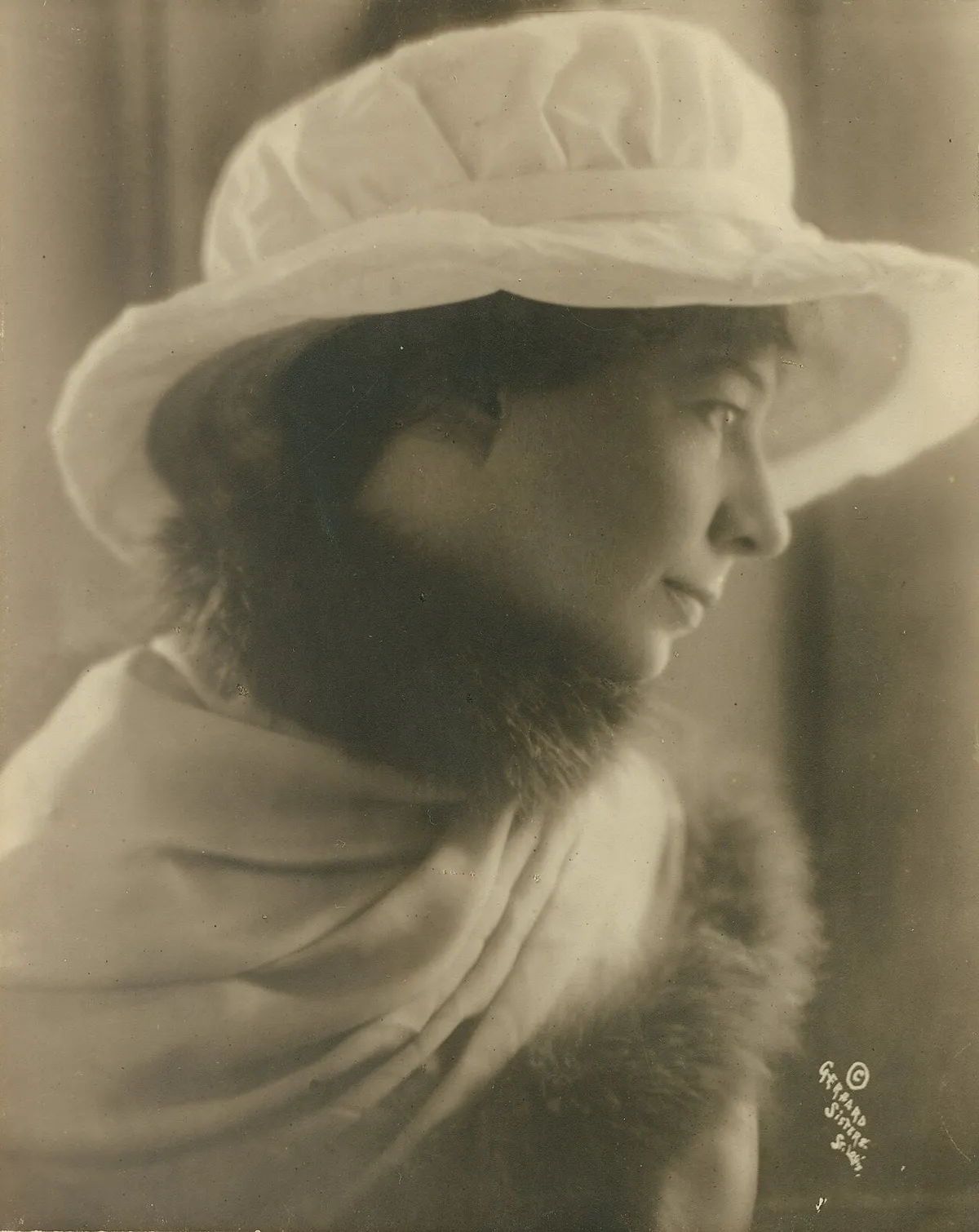
Sara Teasdale
Did You Never Know?
Did you never know, long ago, how much you loved me --
That your love would never lessen and never go?
You were young then, proud and fresh-hearted,
You were too young to know.
Fate is a wind, and red leaves fly before it
Far apart, far away in the gusty time of year --
Seldom we meet now, but when I hear you speaking,
I know your secret, my dear, my dear.
506
Safo
Tonight I've watched
Tonight I've watched
the moon and then
the Pleiades
go down
The night is now
half-gone; youth
goes; I am
in bed alone
the moon and then
the Pleiades
go down
The night is now
half-gone; youth
goes; I am
in bed alone
508

Henry Wadsworth Longfellow
Autumnal Nightfall
Round Autumn's mouldering urn
Loud mourns the chill and cheerless gale,
When nightfall shades the quiet vale
And stars in beauty burn.
'Tis the year's eventide.
The wind, like one that sighs in pain
O?er joys that ne'er will bloom again
Mourns on the far hillside.
And yet my pensive eye
Rests on the faint blue mountain long;
And for the fairy-land of song,
That lies beyond, I sigh.
The moon unveils her brow;
In the mid-sky her urn glows bright,
And in her sad and mellowing light
The valley sleeps below.
Upon the hazel gray
The lyre of Autumn hangs unstrung
And o?er its tremulous chords are flung
The fringes of decay.
I stand deep musing here,
Beneath the dark and motionless beech,
Whilst wandering winds of nightfall reach
My melancholy ear.
The air breathes chill and free:
A spirit in soft music calls
From Autumn's gray and moss-grown halls,
And round her withered tree.
The hoar and mantled oak,
With moss and twisted ivy brown,
Bends in its lifeless beauty down
Where weeds the fountain choke.
That fountain's hollow voice
Echoes the sound of precious things;
Of early feeling's tuneful springs
Choked with our blighted joys.
Leaves, that the night-wind bears
To earth's cold bosom with a sign,
Are types of our mortality,
And of our fading years.
The tree that shades the plain,
Wasting and hoar as time decays,
Spring shall renew with cheerful days,--
But not my joys again.
500

Rudyard Kipling
Philadelphia
If you're off to Philadelphia in the morning,
You mustn't take my stories for a guide.
There's little left, indeed, of the city you will read of,
And all the folk I write about have died.
Now few will understand if you mention Talleyrand,
Or remember what his cunning and his skill did;
And the cabmen at the wharf do not know Count Zinzendorf,
Nor the Church in Philadelphia he builded.
It is gone, gone, gone with lost Atlantis,
(Never say I didn't give you warning).
In Seventeen Ninety-three 'twas there for all to see,
But it's not in Philadelphia this morning.
If you're off to Philadelphia in the morning,
You mustn't go by anything I've said.
Bob Bicknell's Southern Stages have been laid aside for ages,
But the Limited will take you there instead.
Toby Hirte can't be seen at One Hundred and Eighteen
North Second Street--no matter when you call;
And I fear you'll search in vain for the wash-house down the lane
Where Pharaoh played the fiddle at the ball.
It is gone, gone, gone with Thebes the Golden,
(Never say I didn't give you warning).
In Seventeen Ninety-four 'twas a famous dancing floor--
But it's not in Philadelphia this morning.
If you're off to Philadelphia in the morning,
You must telegraph for rooms at some Hotel.
You needn't try your luck at Epply's or "The Buck,"
Though the Father of his Country liked them well.
It is not the slightest use to inquire for Adam Goos,
Or to ask where Pastor Meder has removed--so
You must treat as out of date the story I relate
Of the Church in Philadelphia he loved so.
He is gone, gone, gone with Martin Luther
(Never say I didn't give you warning)
In Seventeen Ninety-five he was, (rest his soul!) alive.
But he's not in Philadelphia this morning.
If you're off to Philadelphia this morning,
And wish to prove the truth of what I say,
I pledge my word you'll find the pleasant land behind
Unaltered since Red Jacket rode that way.
Still the pine-woods scent the noon; still the catbird sings his
tune;
Still autumn sets the maple-forest blazing;
Still the grape-vine through the dusk flings her soul-compelling
musk;
Still the fire-flies in the corn make night amazing!
They are there, there, there with Earth immortal
( Citizens, I give you friendly warning )
The thins that truly last when men and times have passed,
They are all in Pennsylvania this morning!
503
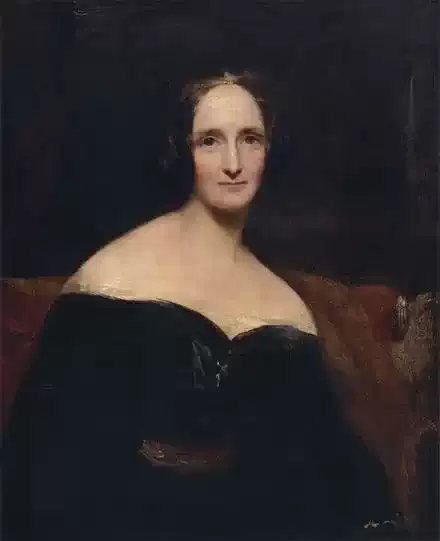
Percy Bysshe Shelley
A Lament
O World! O Life! O Time!
On whose last steps I climb,
Trembling at that where I had stood before;
When will return the glory of your prime?
No more -Oh, never more!
Out of the day and night
A joy has taken flight:
Fresh spring, and summer, and winter hoar
Move my faint heart with grief, but with delight
No more -Oh, never more!
502
Rudyard Kipling
The Ladies
I've taken my fun where I've found it;
I've rogued an' I've ranged in my time;
I've 'ad my pickin' o' sweet'earts,
An' four o' the lot was prime.
One was an 'arf-caste widow,
One was a woman at Prome,
One was the wife of a jemadar-sais, [Head-groom.]
An' one is a girl at 'ome.
Now I aren't no 'and with the ladies,
For, takin' 'em all along,
You never can say till you've tried 'em,
An' then you are like to be wrong.
There's times when you'll think that you mightn't,
There's times when you'll know that you might;
But the things you will learn from the Yellow an' Brown,
They'll 'elp you a lot with the White!
I was a young un at 'Oogli,
Shy as a girl to begin;
Aggie de Castrer she made me,
An' Aggie was clever as sin;
Older than me, but my first un --
More like a mother she were --
Showed me the way to promotion an' pay,
An' I learned about women from 'er!
Then I was ordered to Burma,
Actin' in charge o' Bazar,
An' I got me a tiddy live 'eathen
Through buyin' supplies off 'er pa.
Funny an' yellow an' faithful --
Doll in a teacup she were,
But we lived on the square, like a true-married pair,
An' I learned about women from 'er!
Then we was shifted to Neemuch
(Or I might ha' been keepin' 'er now),
An' I took with a shiny she-devil,
The wife of a nigger at Mhow;
'Taught me the gipsy-folks' bolee; [Slang.]
Kind o' volcano she were,
For she knifed me one night 'cause I wished she was white,
And I learned about women from 'er!
Then I come 'ome in the trooper,
'Long of a kid o' sixteen --
Girl from a convent at Meerut,
The straightest I ever 'ave seen.
Love at first sight was 'er trouble,
She didn't know what it were;
An' I wouldn't do such, 'cause I liked 'er too much,
But -- I learned about women from 'er!
I've taken my fun where I've found it,
An' now I must pay for my fun,
For the more you 'ave known o' the others
The less will you settle to one;
An' the end of it's sittin' and thinkin',
An' dreamin' Hell-fires to see;
So be warned by my lot (which I know you will not),
An' learn about women from me!
What did the Colonel's Lady think?
Nobody never knew.
Somebody asked the Sergeant's wife,
An' she told 'em true!
When you get to a man in the case,
They're like as a row of pins --
For the Colonel's Lady an' Judy O'Grady
Are sisters under their skins!
498
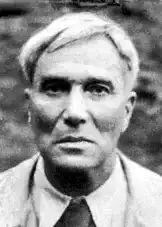
Boris Pasternak
Nostalgia
To give this book a dedication
The desert sickened,
And lions roared, and dawns of tigers
Took hold of Kipling.
A dried-up well of dreadful longing
Was gaping, yawning.
They swayed and shivered, rubbing shoulders,
Sleek-skinned and tawny.
Since then continuing forever
Their sway in scansion,
They stroll in mist through dewy meadows
Dreamt up by Ganges.
Creeping at dawn in pits and hollows
Cold sunrays fumble.
Funereal, incense-laden dampness
Pervades the jungle.
497

William Butler Yeats
The Song Of The Happy Shepherd
THE woods of Arcady are dead,
And over is their antique joy;
Of old the world on dreaming fed;
Grey Truth is now her painted toy;
Yet still she turns her restless head:
But O, sick children of the world,
Of all the many changing things
In dreary dancing past us whirled,
To the cracked tune that Chronos sings,
Words alone are certain good.
Where are now the warring kings,
Word be-mockers? -- By the Rood,
Where are now the watring kings?
An idle word is now their glory,
By the stammering schoolboy said,
Reading some entangled story:
The kings of the old time are dead;
The wandering earth herself may be
Only a sudden flaming word,
In clanging space a moment heard,
Troubling the endless reverie.
Then nowise worship dusty deeds,
Nor seek, for this is also sooth,
To hunger fiercely after truth,
Lest all thy toiling only breeds
New dreams, new dreams; there is no truth
Saving in thine own heart. Seek, then,
No learning from the starry men,
Who follow with the optic glass
The whirling ways of stars that pass --
Seek, then, for this is also sooth,
No word of theirs -- the cold star-bane
Has cloven and rent their hearts in twain,
And dead is all their human truth.
Go gather by the humming sea
Some twisted, echo-harbouring shell.
And to its lips thy story tell,
And they thy comforters will be.
Rewording in melodious guile
Thy fretful words a little while,
Till they shall singing fade in ruth
And die a pearly brotherhood;
For words alone are certain good:
Sing, then, for this is also sooth.
I must be gone: there is a grave
Where daffodil and lily wave,
And I would please the hapless faun,
Buried under the sleepy ground,
With mirthful songs before the dawn.
His shouting days with mirth were crowned;
And still I dream he treads the lawn,
Walking ghostly in the dew,
Pierced by my glad singing through,
My songs of old earth's dreamy youth:
But ah! she dreams not now; dream thou!
For fair are poppies on the brow:
Dream, dream, for this is also sooth.
498
William Butler Yeats
Towards Break Of Day
WAS it the double of my dream
The woman that by me lay
Dreamed, or did we halve a dream
Under the first cold gleam of day?
I thought: 'There is a waterfall
Upon Ben Bulben side
That all my childhood counted dear;
Were I to travel far and wide
I could not find a thing so dear.'
My memories had magnified
So many times childish delight.
I would have touched it like a child
But knew my finger could but have touched
Cold stone and water. I grew wild.
Even accusing Heaven because
It had set down among its laws:
Nothing that we love over-much
Is ponderable to our touch.
I dreamed towards break of day,
The cold blown spray in my nostril.
But she that beside me lay
Had watched in bitterer sleep
The marvellous stag of Arthur,
That lofty white stag, leap
From mountain steep to steep.
499

John Keats
Song of the Indian Maid, from 'Endymion'
O SORROW!
Why dost borrow
The natural hue of health, from vermeil lips?-
To give maiden blushes
To the white rose bushes?
Or is it thy dewy hand the daisy tips?
O Sorrow!
Why dost borrow
The lustrous passion from a falcon-eye?-To
give the glow-worm light?
Or, on a moonless night,
To tinge, on siren shores, the salt sea-spry?
O Sorrow!
Why dost borrow
The mellow ditties from a mourning tongue?-To
give at evening pale
Unto the nightingale,
That thou mayst listen the cold dews among?
O Sorrow!
Why dost borrow
Heart's lightness from the merriment of May?-A
lover would not tread
A cowslip on the head,
Though he should dance from eve till peep of day-Nor
any drooping flower
Held sacred for thy bower,
Wherever he may sport himself and play.
To Sorrow
I bade good morrow,
And thought to leave her far away behind;
But cheerly, cheerly,
She loves me dearly;
She is so constant to me, and so kind:
I would deceive her
And so leave her,
But ah! she is so constant and so kind.
Beneath my palm-trees, by the river side,
I sat a-weeping: in the whole world wide
There was no one to ask me why I wept,-
And so I kept
Brimming the water-lily cups with tears
Cold as my fears.
Beneath my palm-trees, by the river side,
I sat a-weeping: what enamour'd bride,
Cheated by shadowy wooer from the clouds,
But hides and shrouds
Beneath dark palm-trees by a river side?
And as I sat, over the light blue hills
There came a noise of revellers: the rills
Into the wide stream came of purple hue-
'Twas Bacchus and his crew!
The earnest trumpet spake, and silver thrills
From kissing cymbals made a merry din-
'Twas Bacchus and his kin!
Like to a moving vintage down they came,
Crown'd with green leaves, and faces all on flame;
All madly dancing through the pleasant valley,
To scare thee, Melancholy!
O then, O then, thou wast a simple name!
And I forgot thee, as the berried holly
By shepherds is forgotten, when in June
Tall chestnuts keep away the sun and moon:-
I rush'd into the folly!
Within his car, aloft, young Bacchus stood,
Trifling his ivy-dart, in dancing mood,
With sidelong laughing;
And little rills of crimson wine imbrued
His plump white arms and shoulders, enough white
For Venus' pearly bite;
And near him rode Silenus on his ass,
Pelted with flowers as he on did pass
Tipsily quaffing.
'Whence came ye, merry Damsels! whence came ye,
So many, and so many, and such glee?
Why have ye left your bowers desolate,
Your lutes, and gentler fate?'-'
We follow Bacchus! Bacchus on the wing,
A-conquering!
Bacchus, young Bacchus! good or ill betide,
We dance before him thorough kingdoms wide:--
Come hither, lady fair, and joined be
To our wild minstrelsy!'
'Whence came ye, jolly Satyrs! whence came ye,
So many, and so many, and such glee?
Why have ye left your forest haunts, why left
Your nuts in oak-tree cleft?'-'
For wine, for wine we left our kernel tree;
For wine we left our heath, and yellow brooms,
And cold mushrooms;
For wine we follow Bacchus through the earth;
Great god of breathless cups and chirping mirth!
Come hither, lady fair, and joined be
To our mad minstrelsy!'
Over wide streams and mountains great we went,
And, save when Bacchus kept his ivy tent,
Onward the tiger and the leopard pants,
With Asian elephants:
Onward these myriads--with song and dance,
With zebras striped, and sleek Arabians' prance,
Web-footed alligators, crocodiles,
Bearing upon their scaly backs, in files,
Plump infant laughers mimicking the coil
Of seamen, and stout galley-rowers' toil:
With toying oars and silken sails they glide,
Nor care for wind and tide.
Mounted on panthers' furs and lions' manes,
From rear to van they scour about the plains;
A three days' journey in a moment done;
And always, at the rising of the sun,
About the wilds they hunt with spear and horn,
On spleenful unicorn.
I saw Osirian Egypt kneel adown
Before the vine-wreath crown!
I saw parch'd Abyssinia rouse and sing
To the silver cymbals' ring!
I saw the whelming vintage hotly pierce
Old Tartary the fierce!
The kings of Ind their jewel-sceptres vail,
And from their treasures scatter pearled hail;
Great Brahma from his mystic heaven groans,
And all his priesthood moans,
Before young Bacchus' eye-wink turning pale.
Into these regions came I, following him,
Sick-hearted, weary--so I took a whim
To stray away into these forests drear,
Alone, without a peer:
And I have told thee all thou mayest hear.
Young Stranger!
I've been a ranger
In search of pleasure throughout every clime;
Alas! 'tis not for me!
Bewitch'd I sure must be,
To lose in grieving all my maiden prime.
Come then, Sorrow,
Sweetest Sorrow!
Like an own babe I nurse thee on my breast:
I thought to leave thee,
And deceive thee,
But now of all the world I love thee best.
There is not one,
No, no, not one
But thee to comfort a poor lonely maid;
Thou art her mother,
And her brother,
Her playmate, and her wooer in the shade.
Why dost borrow
The natural hue of health, from vermeil lips?-
To give maiden blushes
To the white rose bushes?
Or is it thy dewy hand the daisy tips?
O Sorrow!
Why dost borrow
The lustrous passion from a falcon-eye?-To
give the glow-worm light?
Or, on a moonless night,
To tinge, on siren shores, the salt sea-spry?
O Sorrow!
Why dost borrow
The mellow ditties from a mourning tongue?-To
give at evening pale
Unto the nightingale,
That thou mayst listen the cold dews among?
O Sorrow!
Why dost borrow
Heart's lightness from the merriment of May?-A
lover would not tread
A cowslip on the head,
Though he should dance from eve till peep of day-Nor
any drooping flower
Held sacred for thy bower,
Wherever he may sport himself and play.
To Sorrow
I bade good morrow,
And thought to leave her far away behind;
But cheerly, cheerly,
She loves me dearly;
She is so constant to me, and so kind:
I would deceive her
And so leave her,
But ah! she is so constant and so kind.
Beneath my palm-trees, by the river side,
I sat a-weeping: in the whole world wide
There was no one to ask me why I wept,-
And so I kept
Brimming the water-lily cups with tears
Cold as my fears.
Beneath my palm-trees, by the river side,
I sat a-weeping: what enamour'd bride,
Cheated by shadowy wooer from the clouds,
But hides and shrouds
Beneath dark palm-trees by a river side?
And as I sat, over the light blue hills
There came a noise of revellers: the rills
Into the wide stream came of purple hue-
'Twas Bacchus and his crew!
The earnest trumpet spake, and silver thrills
From kissing cymbals made a merry din-
'Twas Bacchus and his kin!
Like to a moving vintage down they came,
Crown'd with green leaves, and faces all on flame;
All madly dancing through the pleasant valley,
To scare thee, Melancholy!
O then, O then, thou wast a simple name!
And I forgot thee, as the berried holly
By shepherds is forgotten, when in June
Tall chestnuts keep away the sun and moon:-
I rush'd into the folly!
Within his car, aloft, young Bacchus stood,
Trifling his ivy-dart, in dancing mood,
With sidelong laughing;
And little rills of crimson wine imbrued
His plump white arms and shoulders, enough white
For Venus' pearly bite;
And near him rode Silenus on his ass,
Pelted with flowers as he on did pass
Tipsily quaffing.
'Whence came ye, merry Damsels! whence came ye,
So many, and so many, and such glee?
Why have ye left your bowers desolate,
Your lutes, and gentler fate?'-'
We follow Bacchus! Bacchus on the wing,
A-conquering!
Bacchus, young Bacchus! good or ill betide,
We dance before him thorough kingdoms wide:--
Come hither, lady fair, and joined be
To our wild minstrelsy!'
'Whence came ye, jolly Satyrs! whence came ye,
So many, and so many, and such glee?
Why have ye left your forest haunts, why left
Your nuts in oak-tree cleft?'-'
For wine, for wine we left our kernel tree;
For wine we left our heath, and yellow brooms,
And cold mushrooms;
For wine we follow Bacchus through the earth;
Great god of breathless cups and chirping mirth!
Come hither, lady fair, and joined be
To our mad minstrelsy!'
Over wide streams and mountains great we went,
And, save when Bacchus kept his ivy tent,
Onward the tiger and the leopard pants,
With Asian elephants:
Onward these myriads--with song and dance,
With zebras striped, and sleek Arabians' prance,
Web-footed alligators, crocodiles,
Bearing upon their scaly backs, in files,
Plump infant laughers mimicking the coil
Of seamen, and stout galley-rowers' toil:
With toying oars and silken sails they glide,
Nor care for wind and tide.
Mounted on panthers' furs and lions' manes,
From rear to van they scour about the plains;
A three days' journey in a moment done;
And always, at the rising of the sun,
About the wilds they hunt with spear and horn,
On spleenful unicorn.
I saw Osirian Egypt kneel adown
Before the vine-wreath crown!
I saw parch'd Abyssinia rouse and sing
To the silver cymbals' ring!
I saw the whelming vintage hotly pierce
Old Tartary the fierce!
The kings of Ind their jewel-sceptres vail,
And from their treasures scatter pearled hail;
Great Brahma from his mystic heaven groans,
And all his priesthood moans,
Before young Bacchus' eye-wink turning pale.
Into these regions came I, following him,
Sick-hearted, weary--so I took a whim
To stray away into these forests drear,
Alone, without a peer:
And I have told thee all thou mayest hear.
Young Stranger!
I've been a ranger
In search of pleasure throughout every clime;
Alas! 'tis not for me!
Bewitch'd I sure must be,
To lose in grieving all my maiden prime.
Come then, Sorrow,
Sweetest Sorrow!
Like an own babe I nurse thee on my breast:
I thought to leave thee,
And deceive thee,
But now of all the world I love thee best.
There is not one,
No, no, not one
But thee to comfort a poor lonely maid;
Thou art her mother,
And her brother,
Her playmate, and her wooer in the shade.
496
Percy Bysshe Shelley
To Wordsworth
Poet of Nature, thou hast wept to know
That things depart which never may return:
Childhood and youth, friendship and love's first glow,
Have fled like sweet dreams, leaving thee to mourn.
These common woes I feel. One loss is mine
Which thou too feel'st, yet I alone deplore.
Thou wert as a lone star, whose light did shine
On some frail bark in winter's midnight roar:
Thou hast like to a rock-built refuge stood
Above the blind and battling multitude:
In honoured poverty thy voice did weave
Songs consecrate to truth and liberty,--
Deserting these, thou leavest me to grieve,
Thus having been, that thou shouldst cease to be.
497
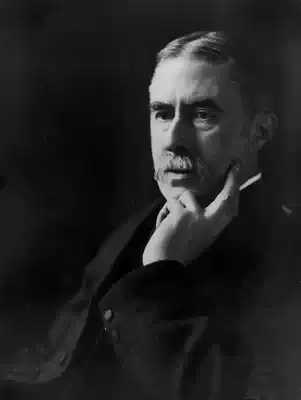
Alfred Edward Housman
The Winds Out of the West Land Blow
The winds out of the west land blow,
My friends have breathed them there;
Warm with the blood of lads I know
Comes east the sighing air.
It fanned their temples, filled their lungs,
Scattered their forelocks free;
My friends made words of it with tongues
That talk no more to me.
Their voices, dying as they fly,
Thick on the wind are sown;
The names of men blow soundless by,
My fellows' and my own.
Oh lads, at home I heard you plain,
But here your speech is still,
And down the sighing wind in vain
You hollo from the hill.
The wind and I, we both were there,
But neither long abode;
Now through the friendless world we fare
And sigh upon the road.
495
Rabindranath Tagore
The Gardener LXI: Peace, My Heart
Peace, my heart, let the time for
the parting be sweet.
Let it not be a death but completeness.
Let love melt into memory and pain
into songs.
Let the flight through the sky end
in the folding of the wings over the
nest.
Let the last touch of your hands be
gentle like the flower of the night.
Stand still, O Beautiful End, for a
moment, and say your last words in
silence.
I bow to you and hold up my lamp
to light you on your way.
487
Rabindranath Tagore
Lover's Gifts XXII: I Shall Gladly Suffer
I shall gladly suffer the pride of culture to die out in my house,
if only in some happy future I am born a herd-boy in the Brinda
forest.
The herd-boy who grazes his cattle sitting under the banyan
tree, and idly weaves gunja flowers into garlands, who loves to
splash and plunge in the Jamuna's cool deep stream.
He calls his companions to wake up when morning dawns, and all
the houses in the lane hum with the sound of the churn, clouds of
dust are raised by the cattle, the maidens come out in the
courtyard to milk the king.
As the shadows deepen under the tomal trees, and the dusk
gathers on the river-banks; when the milkmaids, while crossing the
turbulent water, tremble with fear; and loud peacocks, with tails
outspread, dance in the forest, he watchers the summer clouds.
When the April night is sweet as a fresh-blown flower, he
disappears in the forest with a peacock's plume in his hair; the
swing ropes are twined with flowers on the branches; the south wind
throbs with music, and the merry shepherd boys crowd on the banks
of the blue river.
No, I will never be the leader, brothers, of this new age of
new Bengal; I shall not trouble to light the lamp of culture for
the benighted. If only I could be born, under the shady asoka
groves, in some village of Brinda, where milk is churned by the
maidens!
487
Sara Teasdale
Change
Remember me as I was then;
Turn from me now, but always see
The laughing shadowy girl who stood
At midnight by the flowering tree,
With eyes that love had made as bright
As the trembling stars of the summer night.
Turn from me now, but always hear
The muted laughter in the dew
Of that one year of youth we had,
The only youth we ever knew --
Turn from me now, or you will see
What other years have done to me.
489

Ezra Pound
Invern
Earth's winter cometh
And I being part of all
And sith the spirit of all moveth in me
I must needs bear earth's winter
Drawn cold and grey with hours
And joying in a momentary sun,
Lo I am withered with waiting till my spring cometh!
Or crouch covetous of warmth
O'er scant-logged ingle blaze,
Must take cramped joy in tomed Longinus
That, read I him first time
The woods agleam with summer
Or mid desirous winds of spring,
Had set me singing spheres
Or made heart to wander forth among warm roses
Or curl in grass next neath a kindly moon.
486
Alfred Edward Housman
White in the Moon the Long Road Lies
White in the moon the long road lies,
The moon stands blank above;
White in the moon the long road lies
That leads me from my love.
Still hangs the hedge without a gust,
Still, still the shadows stay:
My feet upon the moonlit dust
Pursue the ceaseless way.
The world is round, so travellers tell,
And straight though reach the track,
Trudge on, trudge on, 'twill all be well,
The way will guide one back.
But ere the circle homeward hies
Far, far must it remove:
White in the moon the long road lies
That leads me from my love.
483

Christina Rossetti
Song IV
Oh roses for the flush of youth,
And laurel for the perfect prime;
But pluck an ivy branch for me
Grown old before my time.
Oh violets for the grave of youth,
And bay for those dead in their prime;
Give me the withered leaves I chose
Before in the old time.
And laurel for the perfect prime;
But pluck an ivy branch for me
Grown old before my time.
Oh violets for the grave of youth,
And bay for those dead in their prime;
Give me the withered leaves I chose
Before in the old time.
485
Alfred Edward Housman
Along The Field as We Came By
ALONG the field as we came by
A year ago, my love and I,
The aspen over stile and stone
Was talking to itself alone.
‘Oh who are these that kiss and pass?
A country lover and his lass;
Two lovers looking to be wed;
And time shall put them both to bed,
But she shall lie with earth above,
And he beside another love.’
And sure enough beneath the tree
There walks another love with me,
And overhead the aspen heaves
Its rainy-sounding silver leaves;
And I spell nothing in their stir,
But now perhaps they speak to her,
And plain for her to understand
They talk about a time at hand
When I shall sleep with clover clad,
And she beside another lad.
483
Sara Teasdale
The Years
To-night I close my eyes and see
A strange procession passing me --
The years before I saw your face
Go by me with a wistful grace;
They pass, the sensitive, shy years,
As one who strives to dance, half blind with tears.
The years went by and never knew
That each one brought me nearer you;
Their path was narrow and apart
And yet it led me to your heart --
Oh, sensitive, shy years, oh, lonely years,
That strove to sing with voices drowned in tears.
486
Sara Teasdale
Summer Night, Riverside
In the wild, soft summer darkness
How many and many a night we two together
Sat in the park and watched the Hudson
Wearing her lights like golden spangles
Glinting on black satin.
The rail along the curving pathway
Was low in a happy place to let us cross,
And down the hill a tree that dripped with bloom
Sheltered us,
While your kisses and the flowers,
Falling, falling,
Tangled my hair. . . .
The frail white stars moved slowly over the sky.
And now, far off
In the fragrant darkness
The tree is tremulous again with bloom,
For June comes back.
To-night what girl
Dreamily before her mirror shakes from her hair
This year's blossoms, clinging in its coils?
483