
Passion
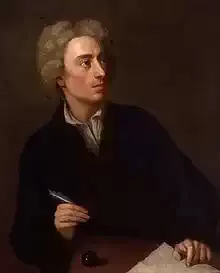
Alexander Pope
Sappho to Phaon (Ovid Heroid XV)
Say, lovely youth, that dost my heart command,
Can Phaon's eyes forget his Sappho's hand?
Must then her name the wretched writer prove,
To thy remembrance lost, as to thy love?
Ask not the cause that I new numbers choose,
The Lute neglected, and the Lyric muse;
Love taught my tears in adder notes to flow,
And tun'd my heart to Elegies of woe,
I burn, I burn, as when thro' ripen'd corn
By driving winds the spreading flames are borne!
Phaon to Aetna's scorching fields retires,
While I consume with more than Aetna's fires!
No more my soul a charm in music finds,
Music has charms alone for peaceful minds.
Soft scenes of solitude no more can please,
Love enters there, and I'm my own disease.
No more the Lesbian dames my passion move,
Once the dear objects of my guilty love;
All other loves are lost in only thine,
Ah youth ungrateful to a flame like mine!
Whom would not all those blooming charms surprize,
Those heav'nly looks, and dear deluding eyes?
The harp and bow would you like Phoebus bear,
A brighter Phoebus Phaon might appear;
Would you with ivy wreath your flowing hair,
Not Bacchus' self with Phaon could compare:
Yet Phoebus lov'd, and Bacchus felt the flame,
One Daphne warm'd, and one the Cretan dame,
Nymphs that in verse no more could rival me,
That ev'n those Gods contend in charms with thee.
The Muses teach me all their softest lays,
And the wide world resounds with Sappho's praise.
Tho' great Alcaeus more sublimely sings,
And strikes with bolder rage the sounding strings,
No less renown attends the moving lyre,
Which Venus tunes, and all her loves inspire;
To me what nature has in charms deny'd,
Is well by wit's more lasting flames supply'd.
Tho' short my stature, yet my name extends
To heav'n itself, and earth's remotest ends.
Brown as I am, an Ethiopian dame
Inspir'd young Perseus with a gen'rous flame;
Turtles and doves of diff'ring hues unite,
And glossy jet is pair'd with shining white.
If to no charms thou wilt thy heart resign,
But such as merit, such as equal thine,
By none, alas! by none thou canst be mov'd,
Phaon alone by Phaon must be lov'd!
Yet once thy Sappho could thy cares employ,
Once in her arms you center'd all your joy:
No time the dear remembrance can remove,
For oh! how vast a memory has love!
My music, then, you could for ever hear,
And all my words were music to your ear;
You stopp'd with kisses my enchanting tongue,
And found my kisses sweeter than my song.
In all I pleas'd, but most in what was best;
And the last joy was dearer than the rest.
Then with each word, each glance, each motion fir'd,
You still enjoy'd, and yet you still desir'd,
'Till all dissolving in the trance we lay,
And in tumultuous raptures died away.
The fair Sicilians now thy soul inflame;
Why was I born, ye Gods, a Lesbian dame?
But ah beware, Sicilian nymphs! nor boast
That wand'ring heart which I so lately lost;
Nor be with all those tempting words abus'd,
Those tempting words were all to Sappho us'd.
And you that rule Sicilia's happy plains,
Have pity, Venus, on your Poet's pains!
Shall fortune still in one sad tenor run,
And still increase the woes so soon begun?
Inur'd to sorrow from my tender years,
My parent's ashes drank my early tears:
My brother next, neglecting wealth and fame,
Ignobly burn'd in a destructive flame:
An infant daughter late my griefs increas'd,
And all a mother's cares distract my breast.
Alas, what more could fate itself impose,
But thee, the last and greatest of my woes?
No more my robes in waving purple flow,
Nor on my hand the sparkling di'monds glow;
No more my locks in ringlets curl'd diffuse
The costly sweetness of Arabian dews,
Nor braids of gold the varied tresses bind,
That fly disorder'd with the wanton wind,
For whom should Sappho use such arts as these?
He's gone, whom only she desir'd to please!
Cupid's light darts my tender bosom move,
Still is there cause for Sappho still to love:
So from my birth the Sisters fix'd my doom,
And gave to Venus all my life to come;
Or while my Muse in melting notes complains,
My yielding heart keeps measure to my strains.
By charms like thine which all my soul have won,
Who might not - ah! who would not be undone?
For those Aurora Cephalus might scorn,
And with fresh blushes paint the conscious morn.
For those might Cynthia lengthen Phaon's sleep,
And bit Endymion nightly tend his sheep.
Venus for those had rapt thee to the skies,
But Mars on thee might look with Venus' eyes.
O scarce a youth, yet scarce a tender boy!
O useful time for lovers to employ!
Pride of thy age, and glory of thy race,
Come to these arms, and melt in this embrace!
The vows you never will return, receive;
And take at least the love you will not give.
See, while I write, my words are lost in tears;
The less my sense, the more my love appears.
Sure 'twas not much to bid one kind adieu,
(At least to feign was never hard to you)
Farewell, my Lesbian love, you might have said,
Or coldly thus, Farewell, oh Lesbian maid!
No tear did you, no parting kiss receive,
Nor knew I then how much I was to grieve.
No lover's gift your Sappho could confer,
And wrongs and woes were all you left with her.
No charge I gave you, and no charge could give,
But this, Be mindful of our loves, and live.
Now by the Nine, those pow'rs ador'd by me,
And Love, the God that ever waits on thee,
When first I heard (from whom I hardly knew)
That you were fled, and all my joys with you,
Like some sad statue, speechless, pale I stood,
Grief chill'd my breast, and stopp'd my freezing blood;
No sigh to rise, no tear had powr to flow,
Fix'd in a stupid lethargy of woe:
But when its way th' impetuous passion found,
I rend my tresses, and my breast I wound,
I rave, then weep, I curse, and then complain,
Now swell to rage, no melt in tears again.
Not fiercer pangs distract the mournful dame,
Whose first-born infant feeds the fun'ral flame.
My scornful brother with a smile appears,
Insults my woes, and triumphs in my tears;
His hated image ever haunts my eyes,
And why this grief? thy daughter lives, he cries.
Stung with my Love, and furious with despair,
All torn my garments, and my bosom bare,
My woes, thy crimes, I to the world proclaim;
Such inconsistent things are love and shame!
'Tis thou art all my care and my delight,
My daily longing, and my dream by night:
Oh night more pleasing than the brightest day,
When fancy gives what absence takes away,
And, dress'd in all its visionary charms,
Restores my fair deserter to my arms!
Then round your neck in wanton wreaths I twine,
Then you, methinks, as fondly circle mine:
A thousand tender words I hear and speak;
A thousand melting kisses give, and take:
Then fiercer joys, I blush to mention these,
Yet while I blush, confess how much they please.
But when, with day, the sweet delusions fly,
And all things wake to life and joy, but I,
As if once more forsaken, I complain,
And close my eyes to dream of you again;
Then frantic rise, and like some Fury rove
Thro' lonely plains, and thro' the silent grove,
As if the silent grove, and lonely plains,
That knew my pleasures, could relieve my pains.
I view the Grotto, once the scene of love,
The rocks around, the hanging roofs above,
That charm'd me more, with native moss o'ergrown,
Than Phyrgian marble, or the Parian stone.
I find the shades that veil'd our joys before;
But, Phaon gone, those shades delight no more.
Here the press'd herbs with bending tops betray
Where oft entwin'd in am'rous folds we lay;
I kiss that earth which once was press'd by you,
And all with tears the with'ring herbs bedew.
For thee the fading trees appear to mourn,
And birds defer their songs till thy return;
Night shades the grove,s and all in silence lie,
All but the mournful Philomel and I:
With mournful Philomel I join my strain,
Of Tereus she, of Phaeon I complain.
A spring there is, whose silver waters show,
Clear as a glass, the shining sands below:
A flow'ry Lotos spreads its arms above,
Shades all the banks, and seems itself a grove;
Eternal greens the mossy margin grace,
Watch'd by the sylvan Genius of the place.
Here as I lay, and swell'd with tears the flood,
Before my sight a wat'ry Virgin stood:
She stood and cry'd, 'O you that love in vain!
'Fly hence, and seek the fair Leucadian main;
'There stands a rock, from whose impending steep
'Apollo's fane surveys the rolling deep;
'There injur'd lovers, leaping from above,
'Their flames extinguish, and forget to love.
'Deucalion once, with hopeless fury burn'd,
'In vain he lov'd, relentless Pyrrha scorn'd;
'But when from hence he plung'd into the main,
'Deucalion scorn'd, and Pyrrha lov'd in vain.
Haste, Sappho, haste, from high Leucadia throw
'Thy wretched weight, nor dread the deeps below!'
She spoke, and vanish'd with the voice - I rise,
And silent tears fall trickling from my eyes.
I go, ye Nymphs! those rocks and seas to prove;
How much I fear, but ah, how much I love!
I go, ye Nymphs! where furious love inspires;
Let female fears submit to female fires.
To rocks and seas I fly from Phaon's hate,
And hope from seas and rocks a milder fate.
Ye gentle gales, beneath my body blow,
And softly lay me on the waves below!
And thou, kind Love, my sinking limbs sustain,
Spread thy soft wings, and waft me o'er the main,
Nor let a Lover's death the guiltless flood profane!
On Phoebus' shrine my harp I'll then bestow,
And this Inscription shall be plac'd below.
'Here she who sung, to him that did inspire,
'Sappho to Phoebus consecrates her Lyre;
'What suits with Sappho, Phoebus, suits with thee;
The Gift, the giver, and the God agree.'
But why, alas, relentless youth, ah why
To distant seas must tender Sappho fly?
Thy charms than those may far more pow'rful be,
And Phoebus' self is less a God to me.
Ah! canst thou doom me to the rocks and sea,
O far more faithless and more hard than they?
Ah! canst thou rather see this tender breast
Dash'd on these rocks than to thy bosom prest?
This breast which once, in vain! you lik'd so well;
Where Loves play'd, and where the Muses dwell.
Alas! the Muses now no more inspire,
Untun'd my lute, and silent is my lyre,
My languid numbers have forgot to flow,
And fancy sinks beneath a weight of woe.
Ye Lesbian virgins, and ye Lesbian dames,
Themes of my verse, and objects of my flames,
No more your groves with my glad songs shall ring,
No more these hands shall touch the trembling string:
My Phaon's fled, and I those arts resign
(Wretch that I am, to call that Phaon mine!)
Return, fair youth, return, and bring along
Joy to my soul, and vigour to my song:
Absent from thee, the Poet's flame expires;
But ah! how fiercely burn the Lover's fires!
Gods! can no pray'rs, no sighs, no numbers move
One savage heart, or teach it how to love?
The winds my pray'rs, my sighs, my numbers bear,
The flying winds have lost them all in air!
Oh when, alas! shall more auspicious gales
To these fond eyes restore thy welcome sails?
If you return - ah why these long delays?
Poor Sappho dies while careless Phaon stays.
O launch thy bark, secure of prosp'rous gales;
Cupid for thee shall spread the swelling gales;
I you will fly - (yet ah! what cause can be,
Too cruel youth, that you should fly from me?)
If not from Phaon I must hope for ease,
Ah let me seek it from the raging seas:
To raging seas unpity'd I'll remove,
And either cease to live or cease to love!
355
John Donne
Break of Day
'Tis true, 'tis day; what though it be?
O wilt thou therefore rise from me?
Why should we rise, because 'tis light?
Did we lie down, because 'twas night?
Love which in spite of darkness brought us hither
Should in despite of light keep us together.
Light hath no tongue, but is all eye;
If it could speak as well as spy,
This were the worst that it could say -
That being well, I fain would stay,
And that I loved my heart and honour so,
That I would not from her, that had them, go.
Must business thee from hence remove?
Oh, that's the worst disease of love!
The poor, the foul, the false, love can
Admit, but not the busied man.
He which hath business, and makes love, doth do
Such wrong as when a married man doth woo.
356

Robert Browning
Mesmerism
I.
All I believed is true!
I am able yet
All I want, to get
By a method as strange as new:
Dare I trust the same to you?
II.
If at night, when doors are shut,
And the wood-worm picks,
And the death-watch ticks,
And the bar has a flag of smut,
And a cat's in the water-butt---
III.
And the socket floats and flares,
And the house-beams groan,
And a foot unknown
Is surmised on the garret-stairs,
And the locks slip unawares---
IV.
And the spider, to serve his ends,
By a sudden thread,
Arms and legs outspread,
On the table's midst descends,
Comes to find, God knows what friends!---
V.
If since eve drew in, I say,
I have sat and brought
(So to speak) my thought
To bear on the woman away,
Till I felt my hair turn grey---
VI.
Till I seemed to have and hold,
In the vacancy
'Twixt the wall and me,
From the hair-plait's chestnut gold
To the foot in its muslin fold---
VII.
Have and hold, then and there,
Her, from head to foot,
Breathing and mute,
Passive and yet aware,
In the grasp of my steady stare---
VIII.
Hold and have, there and then,
All her body and soul
That completes my whole,
All that women add to men,
In the clutch of my steady ken---
IX.
Having and holding, till
I imprint her fast
On the void at last
As the sun does whom he will
By the calotypist's skill---
X.
Then,---if my heart's strength serve,
And through all and each
Of the veils I reach
To her soul and never swerve,
Knitting an iron nerve---
XI.
Command her soul to advance
And inform the shape
Which has made escape
And before my countenance
Answers me glance for glance---
XII.
I, still with a gesture fit
Of my hands that best
Do my soul's behest,
Pointing the power from it,
While myself do steadfast sit---
XIII.
Steadfast and still the same
On my object bent,
While the hands give vent
To my ardour and my aim
And break into very flame---
XIV.
Then I reach, I must believe,
Not her soul in vain,
For to me again
It reaches, and past retrieve
Is wound in the toils I weave;
XV.
And must follow as I require,
As befits a thrall,
Bringing flesh and all,
Essence and earth-attire,
To the source of the tractile fire:
XVI.
Till the house called hers, not mine,
With a growing weight
Seems to suffocate
If she break not its leaden line
And escape from its close confine.
XVII.
Out of doors into the night!
On to the maze
Of the wild wood-ways,
Not turning to left nor right
From the pathway, blind with sight---
XVIII.
Making thro' rain and wind
O'er the broken shrubs,
'Twixt the stems and stubs,
With a still, composed, strong mind,
Nor a care for the world behind---
XIX.
Swifter and still more swift,
As the crowding peace
Doth to joy increase
In the wide blind eyes uplift
Thro' the darkness and the drift!
XX.
While I---to the shape, I too
Feel my soul dilate
Nor a whit abate,
And relax not a gesture due,
As I see my belief come true.
XXI.
For, there! have I drawn or no
Life to that lip?
Do my fingers dip
In a flame which again they throw
On the cheek that breaks a-glow?
XXII.
Ha! was the hair so first?
What, unfilleted,
Made alive, and spread
Through the void with a rich outburst,
Chestnut gold-interspersed?
XXTII.
Like the doors of a casket-shrine,
See, on either side,
Her two arms divide
Till the heart betwixt makes sign,
Take me, for I am thine!
XXIV.
``Now---now''---the door is heard!
Hark, the stairs! and near---
Nearer---and here---
``Now!'' and at call the third
She enters without a word.
XXV.
On doth she march and on
To the fancied shape;
It is, past escape,
Herself, now: the dream is done
And the shadow and she are one.
XXVI.
First I will pray. Do Thou
That ownest the soul,
Yet wilt grant control
To another, nor disallow
For a time, restrain me now!
XXVII.
I admonish me while I may,
Not to squander guilt,
Since require Thou wilt
At my hand its price one day
What the price is, who can say?
352

Ella Wheeler Wilcox
The Wheel of the Breast
Through rivers of veins on the nameless quest
The tide of my life goes hurriedly sweeping,
Till it reaches that curious wheel o' the breast,
The human heart, which is never at rest.
Faster, faster, it cries, and leaping,
Plunging, dashing, speeding away,
The wheel and the river work night and day.
I know not wherefore, I know not whither,
This strange tide rushes with such mad force:
It glides on hither, it slides on thither,
Over and over the selfsame course,
With never an outlet and never a source;
And it lashes itself to the heat of passion
And whirls the heart in a mill-wheel fashion.
I can hear in the hush of the still, still night,
The ceaseless sound of that mighty river;
I can hear it gushing, gurgling, rushing,
With a wild, delirious, strange delight,
And a conscious pride in its sense of might,
As it hurries and worries my heart forever.
And I wonder oft as I lie awake,
And list to the river that seethes and surges
Over the wheel that it chides and urges—
I wonder oft if that wheel will break
With the mighty pressure it bears, some day,
Or slowly and wearily wear away.
For little by little the heart is wearing,
Like the wheel of the mill, as the tide goes tearing
And plunging hurriedly through my breast,
In a network of veins on a nameless quet,
From and forth, unto unknown oceans,
Bringing its cargoes of fierce emotions,
With never a pause or an hour for rest.
339

Johann Wolfgang von Goethe
When The Fox Dies, His Skin Counts
WE young people in the shade
Sat one sultry day;
Cupid came, and "Dies the Fox"
With us sought to play.
Each one of my friends then sat
By his mistress dear;
Cupid, blowing out the torch,
Said: "The taper's here!"
Then we quickly sent around
The expiring brand;
Each one put it hastily
ln his neighbour's hand.
Dorilis then gave it me,
With a scoffing jest;
Sudden into flame it broke,
By my fingers press'd.
And it singed my eyes and face,
Set my breast on fire;
Then above my head the blaze
Mounted ever higher.
Vain I sought to put it out;
Ever burned the flame;
Stead of dying, soon the Fox
Livelier still became.
330
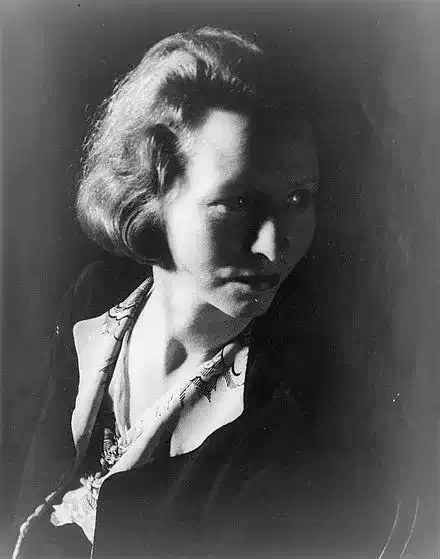
Edna St. Vincent Millay
I, Being Born a Woman and Distressed
I, being born a woman and distressed
By all the needs and notions of my kind,
Am urged by your propinquity to find
Your person fair, and feel a certain zest
To bear your body's weight upon my breast:
So subtly is the fume of life designed,
To clarify the pulse and cloud the mind,
And leave me once again undone, possessed.
Think not for this, however, the poor treason
Of my stout blood against my staggering brain,
I shall remember you with love, or season
My scorn wtih pity, -- let me make it plain:
I find this frenzy insufficient reason
For conversation when we meet again.
331

James Whitcomb Riley
Bedouin
O love is like an untamed steed!--
So hot of heart and wild of speed,
And with fierce freedom so in love,
The desert is not vast enough,
With all its leagues of glimmering sands,
To pasture it! Ah, that my hands
Were more than human in their strength,
That my deft lariat at length
Might safely noose this splendid thing
That so defies all conquering!
Ho! but to see it whirl and reel--
The sands spurt forward--and to feel
The quivering tension of the thong
That throned me high, with shriek and song!
To grapple tufts of tossing mane--
To spurn it to its feet again,
And then, sans saddle, rein or bit,
To lash the mad life out of it!
318
James Whitcomb Riley
Judith
O her eyes are amber-fine--
Dark and deep as wells of wine,
While her smile is like the noon
Splendor of a day of June.
If she sorrow--lo! her face
It is like a flowery space
In bright meadows, overlaid
With light clouds and lulled with shade
If she laugh--it is the trill
Of the wayward whippoorwill
Over upland pastures, heard
Echoed by the mocking-bird
In dim thickets dense with bloom
And blurred cloyings of perfume.
If she sigh--a zephyr swells
Over odorous asphodels
And wan lilies in lush plots
Of moon-drown'd forget-me-nots.
Then, the soft touch of her hand--
Takes all breath to understand
What to liken it thereto!--
Never roseleaf rinsed with dew
Might slip soother-suave than slips
Her slow palm, the while her lips
Swoon through mine, with kiss on kiss
Sweet as heated honey is.
317
Johann Wolfgang von Goethe
Book Of Suleika - The Loving One Again
WRITES he in Neski,
Faithfully speaks he;
Writes he in Tali,
Joy to give, seeks he:
Writes he in either,
Good!--for he loves!
Faithfully speaks he;
Writes he in Tali,
Joy to give, seeks he:
Writes he in either,
Good!--for he loves!
313

Henry Wadsworth Longfellow
The Song Of Hiawatha XII: The Son Of The Evening Star
Can it be the sun descending
O'er the level plain of water?
Or the Red Swan floating, flying,
Wounded by the magic arrow,
Staining all the waves with crimson,
With the crimson of its life-blood,
Filling all the air with splendor,
With the splendor of its plumage?
Yes; it is the sun descending,
Sinking down into the water;
All the sky is stained with purple,
All the water flushed with crimson!
No; it is the Red Swan floating,
Diving down beneath the water;
To the sky its wings are lifted,
With its blood the waves are reddened!
Over it the Star of Evening
Melts and trembles through the purple,
Hangs suspended in the twilight.
No; it is a bead of wampum
On the robes of the Great Spirit
As he passes through the twilight,
Walks in silence through the heavens.
This with joy beheld Iagoo
And he said in haste: 'Behold it!
See the sacred Star of Evening!
You shall hear a tale of wonder,
Hear the story of Osseo,
Son of the Evening Star, Osseo!
'Once, in days no more remembered,
Ages nearer the beginning,
When the heavens were closer to us,
And the Gods were more familiar,
In the North-land lived a hunter,
With ten young and comely daughters,
Tall and lithe as wands of willow;
Only Oweenee, the youngest,
She the wilful and the wayward,
She the silent, dreamy maiden,
Was the fairest of the sisters.
'All these women married warriors,
Married brave and haughty husbands;
Only Oweenee, the youngest,
Laughed and flouted all her lovers,
All her young and handsome suitors,
And then married old Osseo,
Old Osseo, poor and ugly,
Broken with age and weak with coughing,
Always coughing like a squirrel.
'Ah, but beautiful within him
Was the spirit of Osseo,
From the Evening Star descended,
Star of Evening, Star of Woman,
Star of tenderness and passion!
All its fire was in his bosom,
All its beauty in his spirit,
All its mystery in his being,
All its splendor in his language!
'And her lovers, the rejected,
Handsome men with belts of wampum,
Handsome men with paint and feathers.
Pointed at her in derision,
Followed her with jest and laughter.
But she said: 'I care not for you,
Care not for your belts of wampum,
Care not for your paint and feathers,
Care not for your jests and laughter;
I am happy with Osseo!'
'Once to some great feast invited,
Through the damp and dusk of evening,
Walked together the ten sisters,
Walked together with their husbands;
Slowly followed old Osseo,
With fair Oweenee beside him;
All the others chatted gayly,
These two only walked in silence.
'At the western sky Osseo
Gazed intent, as if imploring,
Often stopped and gazed imploring
At the trembling Star of Evening,
At the tender Star of Woman;
And they heard him murmur softly,
'Ah, showain nemeshin, Nosa!
Pity, pity me, my father!'
'Listen!' said the eldest sister,
'He is praying to his father!
What a pity that the old man
Does not stumble in the pathway,
Does not break his neck by falling!'
And they laughed till all the forest
Rang with their unseemly laughter.
'On their pathway through the woodlands
Lay an oak, by storms uprooted,
Lay the great trunk of an oak-tree,
Buried half in leaves and mosses,
Mouldering, crumbling, huge and hollow.
And Osseo, when he saw it,
Gave a shout, a cry of anguish,
Leaped into its yawning cavern,
At one end went in an old man,
Wasted, wrinkled, old, and ugly;
From the other came a young man,
Tall and straight and strong and handsome.
'Thus Osseo was transfigured,
Thus restored to youth and beauty;
But, alas for good Osseo,
And for Oweenee, the faithful!
Strangely, too, was she transfigured.
Changed into a weak old woman,
With a staff she tottered onward,
Wasted, wrinkled, old, and ugly!
And the sisters and their husbands
Laughed until the echoing forest
Rang with their unseemly laughter.
'But Osseo turned not from her,
Walked with slower step beside her,
Took her hand, as brown and withered
As an oak-leaf is in Winter,
Called her sweetheart, Nenemoosha,
Soothed her with soft words of kindness,
Till they reached the lodge of feasting,
Till they sat down in the wigwam,
Sacred to the Star of Evening,
To the tender Star of Woman.
'Wrapt in visions, lost in dreaming,
At the banquet sat Osseo;
All were merry, all were happy,
All were joyous but Osseo.
Neither food nor drink he tasted,
Neither did he speak nor listen;
But as one bewildered sat he,
Looking dreamily and sadly,
First at Oweenee, then upward
At the gleaming sky above them.
'Then a voice was heard, a whisper,
Coming from the starry distance,
Coming from the empty vastness,
Low, and musical, and tender;
And the voice said: 'O Osseo!
O my son, my best beloved!
Broken are the spells that bound you,
All the charms of the magicians,
All the magic powers of evil;
Come to me; ascend, Osseo!
''Taste the food that stands before you:
It is blessed and enchanted,
It has magic virtues in it,
It will change you to a spirit.
All your bowls and all your kettles
Shall be wood and clay no longer;
But the bowls be changed to wampum,
And the kettles shall be silver;
They shall shine like shells of scarlet,
Like the fire shall gleam and glimmer.
''And the women shall no longer
Bear the dreary doom of labor,
But be changed to birds, and glisten
With the beauty of the starlight,
Painted with the dusky splendors
Of the skies and clouds of evening!'
'What Osseo heard as whispers,
What as words he comprehended,
Was but music to the others,
Music as of birds afar off,
Of the whippoorwill afar off,
Of the lonely Wawonaissa
Singing in the darksome forest.
'Then the lodge began to tremble,
Straight began to shake and tremble,
And they felt it rising, rising,
Slowly through the air ascending,
From the darkness of the tree-tops
Forth into the dewy starlight,
Till it passed the topmost branches;
And behold! the wooden dishes
All were changed to shells of scarlet!
And behold! the earthen kettles
All were changed to bowls of silver!
And the roof-poles of the wigwam
Were as glittering rods of silver,
And the roof of bark upon them
As the shining shards of beetles.
'Then Osseo gazed around him,
And he saw the nine fair sisters,
All the sisters and their husbands,
Changed to birds of various plumage.
Some were jays and some were magpies,
Others thrushes, others blackbirds;
And they hopped, and sang, and twittered,
Perked and fluttered all their feathers,
Strutted in their shining plumage,
And their tails like fans unfolded.
'Only Oweenee, the youngest,
Was not changed, but sat in silence,
Wasted, wrinkled, old, and ugly,
Looking sadly at the others;
Till Osseo, gazing upward,
Gave another cry of anguish,
Such a cry as he had uttered
By the oak-tree in the forest.
'Then returned her youth and beauty,
And her soiled and tattered garments
Were transformed to robes of ermine,
And her staff became a feather,
Yes, a shining silver feather!
'And again the wigwam trembled,
Swayed and rushed through airy currents,
Through transparent cloud and vapor,
And amid celestial splendors
On the Evening Star alighted,
As a snow-flake falls on snow-flake,
As a leaf drops on a river,
As the thistledown on water.
'Forth with cheerful words of welcome
Came the father of Osseo,
He with radiant locks of silver,
He with eyes serene and tender.
And he said: `My son, Osseo,
Hang the cage of birds you bring there,
Hang the cage with rods of silver,
And the birds with glistening feathers,
At the doorway of my wigwam.'
'At the door he hung the bird-cage,
And they entered in and gladly
Listened to Osseo's father,
Ruler of the Star of Evening,
As he said: `O my Osseo!
I have had compassion on you,
Given you back your youth and beauty,
Into birds of various plumage
Changed your sisters and their husbands;
Changed them thus because they mocked you
In the figure of the old man,
In that aspect sad and wrinkled,
Could not see your heart of passion,
Could not see your youth immortal;
Only Oweenee, the faithful,
Saw your naked heart and loved you.
'`In the lodge that glimmers yonder,
In the little star that twinkles
Through the vapors, on the left hand,
Lives the envious Evil Spirit,
The Wabeno, the magician,
Who transformed you to an old man.
Take heed lest his beams fall on you,
For the rays he darts around him
Are the power of his enchantment,
Are the arrows that he uses.'
'Many years, in peace and quiet,
On the peaceful Star of Evening
Dwelt Osseo with his father;
Many years, in song and flutter,
At the doorway of the wigwam,
Hung the cage with rods of silver,
And fair Oweenee, the faithful,
Bore a son unto Osseo,
With the beauty of his mother,
With the courage of his father.
'And the boy grew up and prospered,
And Osseo, to delight him,
Made him little bows and arrows,
Opened the great cage of silver,
And let loose his aunts and uncles,
All those birds with glossy feathers,
For his little son to shoot at.
'Round and round they wheeled and darted,
Filled the Evening Star with music,
With their songs of joy and freedom
Filled the Evening Star with splendor,
With the fluttering of their plumage;
Till the boy, the little hunter,
Bent his bow and shot an arrow,
Shot a swift and fatal arrow,
And a bird, with shining feathers,
At his feet fell wounded sorely.
'But, O wondrous transformation!
`T was no bird he saw before him,
`T was a beautiful young woman,
With the arrow in her bosom!
'When her blood fell on the planet,
On the sacred Star of Evening,
Broken was the spell of magic,
Powerless was the strange enchantment,
And the youth, the fearless bowman,
Suddenly felt himself descending,
Held by unseen hands, but sinking
Downward through the empty spaces,
Downward through the clouds and vapors,
Till he rested on an island,
On an island, green and grassy,
Yonder in the Big-Sea-Water.
'After him he saw descending
All the birds with shining feathers,
Fluttering, falling, wafted downward,
Like the painted leaves of Autumn;
And the lodge with poles of silver,
With its roof like wings of beetles,
Like the shining shards of beetles,
By the winds of heaven uplifted,
Slowly sank upon the island,
Bringing back the good Osseo,
Bringing Oweenee, the faithful.
'Then the birds, again transfigured,
Reassumed the shape of mortals,
Took their shape, but not their stature;
They remained as Little People,
Like the pygmies, the Puk-Wudjies,
And on pleasant nights of Summer,
When the Evening Star was shining,
Hand in hand they danced together
On the island's craggy headlands,
On the sand-beach low and level.
'Still their glittering lodge is seen there,
On the tranquil Summer evenings,
And upon the shore the fisher
Sometimes hears their happy voices,
Sees them dancing in the starlight !'
When the story was completed,
When the wondrous tale was ended,
Looking round upon his listeners,
Solemnly Iagoo added:
'There are great men, I have known such,
Whom their people understand not,
Whom they even make a jest of,
Scoff and jeer at in derision.
From the story of Osseo
Let us learn the fate of jesters!'
All the wedding guests delighted
Listened to the marvellous story,
Listened laughing and applauding,
And they whispered to each other:
'Does he mean himself, I wonder?
And are we the aunts and uncles?'
Then again sang Chibiabos,
Sang a song of love and longing,
In those accents sweet and tender,
In those tones of pensive sadness,
Sang a maiden's lamentation
For her lover, her Algonquin.
'When I think of my beloved,
Ah me! think of my beloved,
When my heart is thinking of him,
O my sweetheart, my Algonquin!
'Ah me! when I parted from him,
Round my neck he hung the wampum,
As a pledge, the snow-white wampum,
O my sweetheart, my Algonquin!
'`I will go with you, he whispered,
Ah me! to your native country;
Let me go with you, he whispered,
O my sweetheart, my Algonquin!
'Far away, away, I answered,
Very far away, I answered,
Ah me! is my native country,
O my sweetheart, my Algonquin!
'When I looked back to behold him,
Where we parted, to behold him,
After me he still was gazing,
O my sweetheart, my Algonquin!
'By the tree he still was standing,
By the fallen tree was standing,
That had dropped into the water,
O my sweetheart, my Algonquin!
'When I think of my beloved,
Ah me! think of my beloved,
When my heart is thinking of him,
O my sweetheart, my Algonquin!'
Such was Hiawatha's Wedding,
Such the dance of Pau-Puk-Keewis,
Such the story of Iagoo,
Such the songs of Chibiabos;
Thus the wedding banquet ended,
And the wedding guests departed,
Leaving Hiawatha happy
With the night and Minnehaha.
309
Johann Wolfgang von Goethe
In A Word
THUS to be chain'd for ever, can I bear?
A very torment that, in truth, would be.
This very day my new resolve shall see.-I'll
not go near the lately-worshipp'd Fair.
Yet what excuse, my heart, can I prepare
In such a case, for not consulting thee?
But courage! while our sorrows utter we
In tones where love, grief, gladness have a share.
But see! the minstrel's bidding to obey,
Its melody pours forth the sounding lyre,
Yearning a sacrifice of love to bring.
Scarce wouldst thou think it--ready is the lay;
Well, but what then? Methought in the first fire
We to her presence flew, that lay to sing.
305
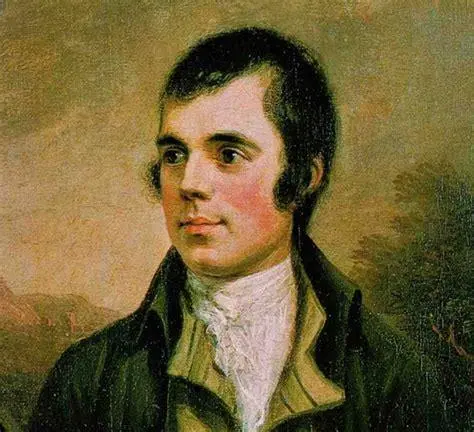
Robert Burns
Anna
Yestreen I had a pint o' wine,
A place where body saw na;
Yestreen lay on this breast o' mine
The gowden locks of Anna.
The hungry Jew in wilderness
Rejoicing o'er his manna
Was naething to my hiney bliss
Upon the lips of Anna.
Ye Monarchs take the East and West
Frae Indus to Savannah:
Gie me within my straining grasp
The melting form of Anna!
There I'll despise Imperial charms,
An empress or sultana,
While dying raptures in her arms,
I give an' take wi' Anna!
Awa, thou flaunting God of Day!
Awa, thou pale Diana!
Ilk star, gae hide thy twinkling ray,
When I'm to meet my Anna!
Come, in thy raven plumage, Night
(Sun, Moon, and Stars, withdrawn a')
And bring an Angel-pen to write
My transports with my Anna!
The Kirk an State may join, an tell
To do sic things I maunna:
The Kirk an State may gae to Hell,
And I'll gae to my Anna.
She is the sunshine o' my e'e,
To live but her I canna:
Had I on earth but wishes three,
The first should be my Anna.
294
James Whitcomb Riley
An Autumnal Extravaganza
With a sweeter voice than birds
Dare to twitter in their sleep,
Pipe for me a tune of words,
Till my dancing fancies leap
Into freedom vaster far
Than the realms of Reason are!
Sing for me with wilder fire
Than the lover ever sung,
From the time he twanged the lyre
When the world was baby-young.
O my maiden Autumn, you--
You have filled me through and through
With a passion so intense,
All of earthly eloquence
Fails, and falls, and swoons away
In your presence. Like as one
Who essays to look the sun
Fairly in the face, I say,
Though my eyes you dazzle blind
Greater dazzled is my mind.
So, my Autumn, let me kneel
At your feet and worship you!
Be my sweetheart; let me feel
Your caress; and tell me too
Why your smiles bewilder me--
Glancing into laughter, then
Trancing into calm again,
Till your meaning drowning lies
In the dim depths of your eyes.
Let me see the things you see
Down the depths of mystery!
Blow aside the hazy veil
From the daylight of your face
With the fragrance-ladened gale
Of your spicy breath and chase
Every dimple to its place.
Lift your gipsy finger-tips
To the roses of your lips,
And fling down to me a bud--
But an unblown kiss--but one--
It shall blossom in my blood,
Even after life is done--
When I dare to touch the brow
Your rare hair is veiling now--
When the rich, red-golden strands
Of the treasure in my hands
Shall be all of worldly worth
Heaven lifted from the earth,
Like a banner to have set
On its highest minaret.
280
Robert Burns
Bonie Peggy Alison
Tune - "The Braes o' Balquhidder."
Chor. - And I'll kiss thee yet, yet,
And I'll kiss thee o'er again:
And I'll kiss thee yet, yet,
My bonie Peggy Alison.
Ilk care and fear, when thou art near
I evermair defy them, O!
Young kings upon their hansel throne
Are no sae blest as I am, O!
And I'll kiss thee yet, yet, &c.
When in my arms, wi' a' thy charms,
I clasp my countless treasure, O!
I seek nae mair o' Heaven to share
Than sic a moment's pleasure, O!
And I'll kiss thee yet, yet, &c.
And by thy een sae bonie blue,
I swear I'm thine for ever, O!
And on thy lips I seal my vow,
And break it shall I never, O!
And I'll kiss thee yet, yet, &c.
275

Gwendolyn Brooks
She did not scream.
She stood there.
But a hatred for him burst into glorious flower,
And its perfume enclasped them--big,
Bigger than all magnolias.
The last bleak news of the ballad.
The rest of the rugged music.
The last quatrain.
But a hatred for him burst into glorious flower,
And its perfume enclasped them--big,
Bigger than all magnolias.
The last bleak news of the ballad.
The rest of the rugged music.
The last quatrain.
271

Anonymous
Quia Amore Langueo
IN a valley of this restles mind
I sought in mountain and in mead,
Trusting a true love for to find.
Upon an hill then took I heed;
A voice I heard (and near I yede)
In great dolour complaining tho:
See, dear soul, how my sides bleed
Quia amore langueo.
Upon this hill I found a tree,
Under a tree a man sitting;
From head to foot wounded was he;
His hearte blood I saw bleeding:
A seemly man to be a king,
A gracious face to look unto.
I asked why he had paining;
[He said,] Quia amore langueo.
I am true love that false was never;
My sister, man's soul, I loved her thus.
Because we would in no wise dissever
I left my kingdom glorious.
I purveyed her a palace full precious;
She fled, I followed, I loved her so
That I suffered this pain piteous
Quia amore langueo.
My fair love and my spouse bright!
I saved her from beating, and she hath me bet;
I clothed her in grace and heavenly light;
This bloody shirt she hath on me set;
For longing of love yet would I not let;
Sweete strokes are these: lo!
I have loved her ever as I her het
Quia amore langueo.
I crowned her with bliss and she me with thorn;
I led her to chamber and she me to die;
I brought her to worship and she me to scorn;
I did her reverence and she me villany.
To love that loveth is no maistry;
Her hate made never my love her foe:
Ask me then no question why--
Quia amore langueo.
Look unto mine handes, man!
These gloves were given me when I her sought;
They be not white, but red and wan;
Embroidered with blood my spouse them brought.
They will not off; I loose hem nought;
I woo her with hem wherever she go.
These hands for her so friendly fought
Quia amore langueo.
Marvel not, man, though I sit still.
See, love hath shod me wonder strait:
Buckled my feet, as was her will,
With sharpe nails (well thou may'st wait!)
In my love was never desait;
All my membres I have opened her to;
My body I made her herte's bait
Quia amore langueo.
In my side I have made her nest;
Look in, how weet a wound is here!
This is her chamber, here shall she rest,
That she and I may sleep in fere.
Here may she wash, if any filth were;
Here is seat for all her woe;
Come when she will, she shall have cheer
Quia amore langueo.
I will abide till she be ready,
I will her sue if she say nay;
If she be retchless I will be greedy,
If she be dangerous I will her pray;
If she weep, then bide I ne may:
Mine arms ben spread to clip her me to.
Cry once, I come: now, soul, assay
Quia amore langueo.
Fair love, let us go play:
Apples ben ripe in my gardayne.
I shall thee clothe in a new array,
Thy meat shall be milk, honey and wine.
Fair love, let us go dine:
Thy sustenance is in my crippe, lo!
Tarry thou not, my fair spouse mine,
Quia amore langueo.
If thou be foul, I shall thee make clean;
If thou be sick, I shall thee heal;
If thou mourn ought, I shall thee mene;
Why wilt thou not, fair love, with me deal?
Foundest thou ever love so leal?
What wilt thou, soul, that I shall do?
I may not unkindly thee appeal
Quia amore langueo.
What shall I do now with my spouse
But abide her of my gentleness,
Till that she look out of her house
Of fleshly affection? love mine she is;
Her bed is made, her bolster is bliss,
Her chamber is chosen; is there none mo.
Look out on me at the window of kindeness
Quia amore langueo.
My love is in her chamber: hold your peace!
Make ye no noise, but let her sleep.
My babe I would not were in disease,
I may not hear my dear child weep.
With my pap I shall her keep;
Ne marvel ye not though I tend her to:
This wound in my side had ne'er be so deep
But Quia amore langueo.
Long thou for love never so high,
My love is more than thine may be.
Thou weepest, thou gladdest, I sit thee by:
Yet wouldst thou once, love, look unto me!
Should I always feede thee
With children meat? Nay, love, not so!
I will prove thy love with adversite
Quia amore langueo.
Wax not weary, mine own wife!
What mede is aye to live in comfort?
In tribulation I reign more rife
Ofter times than in disport.
In weal and in woe I am aye to support:
Mine own wife, go not me fro!
Thy mede is marked, when thou art mort:
Quia amore langueo.
260

William Wordsworth
Hart-Leap Well
The Knight had ridden down from Wensley Moor
With the slow motion of a summer's cloud,
And now, as he approached a vassal's door,
"Bring forth another horse!" he cried aloud.
"Another horse!"--That shout the vassal heard
And saddled his best Steed, a comely grey;
Sir Walter mounted him; he was the third
Which he had mounted on that glorious day.
Joy sparkled in the prancing courser's eyes;
The horse and horseman are a happy pair;
But, though Sir Walter like a falcon flies,
There is a doleful silence in the air.
A rout this morning left Sir Walter's Hall,
That as they galloped made the echoes roar;
But horse and man are vanished, one and all;
Such race, I think, was never seen before.
Sir Walter, restless as a veering wind,
Calls to the few tired dogs that yet remain:
Blanch, Swift, and Music, noblest of their kind,
Follow, and up the weary mountain strain.
The Knight hallooed, he cheered and chid them on
With suppliant gestures and upbraidings stern;
But breath and eyesight fail; and, one by one,
The dogs are stretched among the mountain fern.
Where is the throng, the tumult of the race?
The bugles that so joyfully were blown?
--This chase it looks not like an earthly chase;
Sir Walter and the Hart are left alone.
The poor Hart toils along the mountainside;
I will not stop to tell how far he fled,
Nor will I mention by what death he died;
But now the Knight beholds him lying dead.
Dismounting, then, he leaned against a thorn;
He had no follower, dog, nor man, nor boy:
He neither cracked his whip, nor blew his horn,
But gazed upon the spoil with silent joy.
Close to the thorn on which Sir Walter leaned,
Stood his dumb partner in this glorious feat;
Weak as a lamb the hour that it is yeaned;
And white with foam as if with cleaving sleet.
Upon his side the Hart was lying stretched:
His nostril touched a spring beneath a hill,
And with the last deep groan his breath had fetched
The waters of the spring were trembling still.
And now, too happy for repose or rest,
(Never had living man such joyful lot!)
Sir Walter walked all round, north, south, and west,
And gazed and gazed upon that darling spot.
And climbing up the hill--(it was at least
Four roods of sheer ascent) Sir Walter found
Three several hoof-marks which the hunted Beast
Had left imprinted on the grassy ground.
Sir Walter wiped his face, and cried, "Till now
Such sight was never seen by human eyes:
Three leaps have borne him from this lofty brow,
Down to the very fountain where he lies.
"I'll build a pleasure-house upon this spot,
And a small arbour, made for rural joy;
'Twill be the traveller's shed, the pilgrim's cot,
A place of love for damsels that are coy.
"A cunning artist will I have to frame
A basin for that fountain in the dell!
And they who do make mention of the same,
From this day forth, shall call it HART-LEAP WELL.
"And, gallant Stag! to make thy praises known,
Another monument shall here be raised;
Three several pillars, each a rough-hewn stone,
And planted where thy hoofs the turf have grazed.
"And, in the summer-time when days are long,
I will come hither with my Paramour;
And with the dancers and the minstrel's song
We will make merry in that pleasant bower.
"Till the foundations of the mountains fail
My mansion with its arbour shall endure;--
The joy of them who till the fields of Swale,
And them who dwell among the woods of Ure!"
Then home he went, and left the Hart, stone-dead,
With breathless nostrils stretched above the spring.
--Soon did the Knight perform what he had said;
And far and wide the fame thereof did ring.
Ere thrice the Moon into her port had steered,
A cup of stone received the living well;
Three pillars of rude stone Sir Walter reared,
And built a house of pleasure in the dell.
And near the fountain, flowers of stature tall
With trailing plants and trees were intertwined,--
Which soon composed a little sylvan hall,
A leafy shelter from the sun and wind.
And thither, when the summer days were long,
Sir Walter led his wondering Paramour;
And with the dancers and the minstrel's song
Made merriment within that pleasant bower.
The Knight, Sir Walter, died in course of time,
And his bones lie in his paternal vale.--
But there is matter for a second rhyme,
And I to this would add another tale.
PART SECOND
THE moving accident is not my trade;
To freeze the blood I have no ready arts:
'Tis my delight, alone in summer shade,
To pipe a simple song for thinking hearts.
As I from Hawes to Richmond did repair,
It chanced that I saw standing in a dell
Three aspens at three corners of a square;
And one, not four yards distant, near a well.
What this imported I could ill divine:
And, pulling now the rein my horse to stop,
I saw three pillars standing in a line,--
The last stone-pillar on a dark hill-top.
The trees were grey, with neither arms nor head;
Half wasted the square mound of tawny green;
So that you just might say, as then I said,
"Here in old time the hand of man hath been."
I looked upon the hill both far and near,
More doleful place did never eye survey;
It seemed as if the spring-time came not here,
And Nature here were willing to decay.
I stood in various thoughts and fancies lost,
When one, who was in shepherd's garb attired,
Came up the hollow:--him did I accost,
And what this place might be I then inquired.
The Shepherd stopped, and that same story told
Which in my former rhyme I have rehearsed.
"A jolly place," said he, "in times of old!
But something ails it now: the spot is curst.
"You see these lifeless stumps of aspen wood--
Some say that they are beeches, others elms--
These were the bower; and here a mansion stood,
The finest palace of a hundred realms!
"The arbour does its own condition tell;
You see the stones, the fountain, and the stream;
But as to the great Lodge! you might as well
Hunt half a day for a forgotten dream.
"There's neither dog nor heifer, horse nor sheep,
Will wet his lips within that cup of stone;
And oftentimes, when all are fast asleep,
This water doth send forth a dolorous groan.
"Some say that here a murder has been done,
And blood cries out for blood: but, for my part,
I've guessed, when I've been sitting in the sun,
That it was all for that unhappy Hart.
"What thoughts must through the creature's brain have past!
Even from the topmost stone, upon the steep,
Are but three bounds--and look, Sir, at this last--
O Master! it has been a cruel leap.
"For thirteen hours he ran a desperate race;
And in my simple mind we cannot tell
What cause the Hart might have to love this place,
And come and make his deathbed near the well.
"Here on the grass perhaps asleep he sank,
Lulled by the fountain in the summer-tide;
This water was perhaps the first he drank
When he had wandered from his mother's side.
"In April here beneath the flowering thorn
He heard the birds their morning carols sing;
And he, perhaps, for aught we know, was born
Not half a furlong from that self-same spring.
"Now, here is neither grass nor pleasant shade;
The sun on drearier hollow never shone;
So will it be, as I have often said,
Till trees, and stones, and fountain, all are gone."
"Grey-headed Shepherd, thou hast spoken well;
Small difference lies between thy creed and mine:
This Beast not unobserved by Nature fell;
His death was mourned by sympathy divine.
"The Being, that is in the clouds and air,
That is in the green leaves among the groves,
Maintains a deep and reverential care
For the unoffending creatures whom he loves.
"The pleasure-house is dust:--behind, before,
This is no common waste, no common gloom;
But Nature, in due course of time, once more
Shall here put on her beauty and her bloom.
"She leaves these objects to a slow decay,
That what we are, and have been, may be known;
But at the coming of the milder day,
These monuments shall all be overgrown.
"One lesson, Shepherd, let us two divide,
Taught both by what she shows, and what conceals;
Never to blend our pleasure or our pride
With sorrow of the meanest thing that feels."
262

Emily Dickinson
Wild Nights-Wild Nights!
Wild Nights-Wild Nights!
Were I with thee
Wild Nights should be
Our luxury!
Futile-the Winds-
To a Heart in port-
Done with the Compass-
Done with the Chart!
Rowing in Eden-
Ah, the Sea!
Might I but moor-Tonight-
In Thee!
Were I with thee
Wild Nights should be
Our luxury!
Futile-the Winds-
To a Heart in port-
Done with the Compass-
Done with the Chart!
Rowing in Eden-
Ah, the Sea!
Might I but moor-Tonight-
In Thee!
261
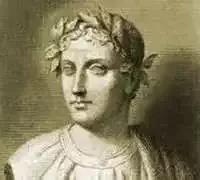
Horácio
BkI:XXVII Entanglement
To fight with wine-cups intended for pleasure
only suits Thracians: forget those barbarous
games, and keep modest Bacchus away
from all those bloodthirsty quarrels of yours.
The Persian scimitar’s quite out of keeping
with the wine and the lamplight: my friends restrain
all that impious clamour, and rest
on the couches, lean back on your elbows.
So you want me to drink up my share, as well,
of the heavy Falernian? Then let’s hear
Opuntian Megylla’s brother tell
by what wound, and what arrow, blessed, he dies.
Does your will waver? I’ll drink on no other
terms. Whatever the passion rules over you,
it’s not with a shameful fire it burns,
and you always sin with the noblest
of lovers. Whoever it is, ah, come now,
let it be heard by faithful ears – oh, you wretch!
What a Charybdis you’re swimming in,
my boy, you deserve a far better flame!
What magician, with Thessalian potions,
what enchantress, or what god could release you?
Caught by the triple-formed Chimaera,
even Pegasus could barely free you.
260
Edna St. Vincent Millay
Sonnets 02: Into The Golden Vessel Of Great Song
Into the golden vessel of great song
Let us pour all our passion; breast to breast
Let other lovers lie, in love and rest;
Not we,—articulate, so, but with the tongue
Of all the world: the churning blood, the long
Shuddering quiet, the desperate hot palms pressed
Sharply together upon the escaping guest,
The common soul, unguarded, and grown strong.
Longing alone is singer to the lute;
Let still on nettles in the open sigh
The minstrel, that in slumber is as mute
As any man, and love be far and high,
That else forsakes the topmost branch, a fruit
Found on the ground by every passer-by.
242
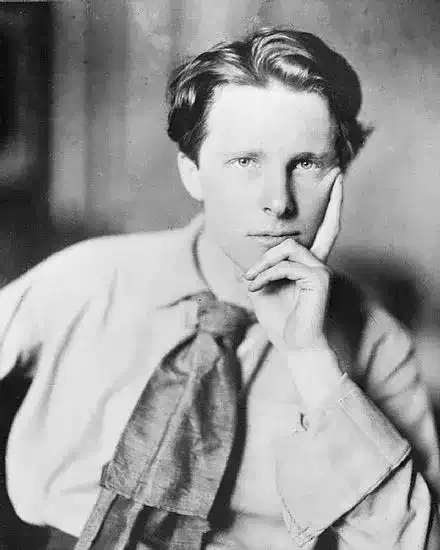
Rupert Brooke
Mummia
As those of old drank mummia
To fire their limbs of lead,
Making dead kings from Africa
Stand pandar to their bed;
Drunk on the dead, and medicined
With spiced imperial dust,
In a short night they reeled to find
Ten centuries of lust.
So I, from paint, stone, tale, and rhyme,
Stuffed love's infinity,
And sucked all lovers of all time
To rarify ecstasy.
Helen's the hair shuts out from me
Verona's livid skies;
Gypsy the lips I press; and see
Two Antonys in your eyes.
The unheard invisible lovely dead
Lie with us in this place,
And ghostly hands above my head
Close face to straining face;
Their blood is wine along our limbs;
Their whispering voices wreathe
Savage forgotten drowsy hymns
Under the names we breathe;
Woven from their tomb, and one with it,
The night wherein we press;
Their thousand pitchy pyres have lit
Your flaming nakedness.
For the uttermost years have cried and clung
To kiss your mouth to mine;
And hair long dust was caught, was flung,
Hand shaken to hand divine,
And Life has fired, and Death not shaded,
All Time's uncounted bliss,
And the height o' the world has flamed and faded,
Love, that our love be this!
238
Anonymous
Devotion, Captain Tobias Hume's The First Part of Airs, &c.
FAIN would I change that note
To which fond Love hath charm'd me
Long, long to sing by rote,
Fancying that that harm'd me:
Yet when this thought doth come,
'Love is the perfect sum
Of all delight,'
I have no other choice
Either for pen or voice
To sing or write.
O Love! they wrong thee much
That say thy sweet is bitter,
When thy rich fruit is such
As nothing can be sweeter.
Fair house of joy and bliss,
Where truest pleasure is,
I do adore thee:
I know thee what thou art,
I serve thee with my heart,
And fall before thee.
224

Robert W. Service
Unholy Trinity
Though Virtue hurt you Vice is nice;
Aye, Parson says it's wrong,
Yet for my pleasing I'll suffice
With Women, Wine and Song.
But though it be with jocund glee
my tavern voice is ringing,
Had I to chuck on of the three,
By gad! I'd give up singing.
Bu not the vine. What draught divine
Could better souse my throttle?
God never meant that mellow wine
Should languish in the bottle.
So Cellerman, your best bring up;
Let silver cobwebs mist it;
When gold or ruby brims the cup,
Could even saint resist it?
I love the ladies, yes, I do,
I always did and will;
I like with dainty dames to coo,
And have been known to bill.
Yes, I agree it's wrong of me,
So call me grey rapscallion,
But when a lusty lass I see
I whinny like a stallion.
Oh let me be a reprobate,
Your canting care defying;
I'll court that gay triumvirate
Right to the day I'm dying.
So troll until the rafter rings,
And may my life be long
To praise the Lord for precious things
like Women, Wine and Song.
223
Rupert Brooke
The Call
Out of the nothingness of sleep,
The slow dreams of Eternity,
There was a thunder on the deep:
I came, because you called to me.
I broke the Night's primeval bars,
I dared the old abysmal curse,
And flashed through ranks of frightened stars
Suddenly on the universe!
The eternal silences were broken;
Hell became Heaven as I passed. --
What shall I give you as a token,
A sign that we have met, at last?
I'll break and forge the stars anew,
Shatter the heavens with a song;
Immortal in my love for you,
Because I love you, very strong.
Your mouth shall mock the old and wise,
Your laugh shall fill the world with flame,
I'll write upon the shrinking skies
The scarlet splendour of your name,
Till Heaven cracks, and Hell thereunder
Dies in her ultimate mad fire,
And darkness falls, with scornful thunder,
On dreams of men and men's desire.
Then only in the empty spaces,
Death, walking very silently,
Shall fear the glory of our faces
Through all the dark infinity.
So, clothed about with perfect love,
The eternal end shall find us one,
Alone above the Night, above
The dust of the dead gods, alone.
223