
Protest, Resistance and Revolution

William Butler Yeats
The Ghost Of Roger Casement
O WHAT has made that sudden noise?
What on the threshold stands?
It never crossed the sea because
John Bull and the sea are friends;
But this is not the old sea
Nor this the old seashore.
What gave that roar of mockery,
That roar in the sea's roar?
The ghost of Roger Casement
Is beating on the door.
John Bull has stood for Parliament,
A dog must have his day,
The country thinks no end of him,
For he knows how to say,
At a beanfeast or a banquet,
That all must hang their trust
Upon the British Empire,
Upon the Church of Christ.
The ghost of Roger Casement
Is beating on the door.
John Bull has gone to India
And all must pay him heed,
For histories are there to prove
That none of another breed
Has had a like inheritance,
Or sucked such milk as he,
And there's no luck about a house
If it lack honesty.
The ghost of Roger Casement
Is beating on the door.
I poked about a village church
And found his family tomb
And copied out what I could read
In that religious gloom;
Found many a famous man there;
But fame and virtue rot.
Draw round, beloved and bitter men,
Draw round and raise a shout;
The ghost of Roger Casement
Is beating on the door.
436

Claude Mckay
Enslaved
Oh when I think of my long-suffering race,
For weary centuries despised, oppressed,
Enslaved and lynched, denied a human place
In the great life line of the Christian West;
And in the Black Land disinherited,
Robbed in the ancient country of its birth,
My heart grows sick with hate, becomes as lead,
For this my race that has no home on earth.
Then from the dark depths of my soul I cry
To the avenging angel to consume
The white man's world of wonders utterly:
Let it be swallowed up in earth's vast womb,
Or upward roll as sacrificial smoke
To liberate my people from its yoke!
435

Rudyard Kipling
Belts
There was a row in Silver Street that's near to Dublin Quay,
Between an Irish regiment an' English cavalree;
It started at Revelly an' it lasted on till dark:
The first man dropped at Harrison's, the last forninst the Park.
For it was: -- "Belts, belts, belts, an' that's one for you!"
An' it was "Belts, belts, belts, an' that's done for you!"
O buckle an' tongue
Was the song that we sung
From Harrison's down to the Park!
There was a row in Silver Street -- the regiments was out,
They called us "Delhi Rebels", an' we answered "Threes about!"
That drew them like a hornet's nest -- we met them good an' large,
The English at the double an' the Irish at the charge.
Then it was: -- "Belts . . .
There was a row in Silver Street -- an' I was in it too;
We passed the time o' day, an' then the belts went whirraru!
I misremember what occurred, but subsequint the storm
A Freeman's Journal Supplemint was all my uniform.
O it was: -- "Belts . . .
There was a row in Silver Street -- they sent the Polis there,
The English were too drunk to know, the Irish didn't care;
But when they grew impertinint we simultaneous rose,
Till half o' them was Liffey mud an' half was tatthered clo'es.
For it was: -- "Belts . . .
There was a row in Silver Street -- it might ha' raged till now,
But some one drew his side-arm clear, an' nobody knew how;
'Twas Hogan took the point an' dropped; we saw the red blood run:
An' so we all was murderers that started out in fun.
While it was: -- "Belts . . .
There was a row in Silver Street -- but that put down the shine,
Wid each man whisperin' to his next: "'Twas never work o' mine!"
We went away like beaten dogs, an' down the street we bore him,
The poor dumb corpse that couldn't tell the bhoys were sorry for him.
When it was: -- "Belts . . .
There was a row in Silver Street -- it isn't over yet,
For half of us are under guard wid punishments to get;
'Tis all a merricle to me as in the Clink I lie:
There was a row in Silver Street -- begod, I wonder why!
But it was: -- "Belts, belts, belts, an' that's one for you!"
An' it was "Belts, belts, belts, an' that's done for you!"
O buckle an' tongue
Was the song that we sung
From Harrison's down to the Park!
433
Rudyard Kipling
The Song of the Old Guard
Know this, my brethren, Heaven is clear
And all the clouds are gone--
The Proper Sort shall flourish now,
Good times are coming on"--
The evil that was threatened late
To all of our degree
Hath passed in discord and debate,
And,Hey then up go we!
A common people strove in vain
To shame us unto toil,
But they are spent and we remain,
And we shall share the spoil
According to our several needs
As Beauty shall decree,
As Age ordains or Birth concedes,
And, Hey then up go we!
And they that with accursed zeal
Our Service would amend,
Shall own the odds and come to heel
Ere worse befall their end:
For though no naked word be wrote
Yet plainly shall they see
What pinneth Orders on their coat,
And, Hey then up go we!
Our doorways that, in time of fear,
We opened overwide
Shall softly close from year to year
Till all be purified;
For though no fluttering fan be heard .
Nor chaff be seen to flee--
The Lord shall winnow the Lord's Preferred--
And, Hey then up go we!
Our altars which the heathen brake
Shall rankly smoke anew,
And anise, mint and cummin take
Their dread and sovereign due,
Whereby the buttons of our trade
Shall soon restored be
With curious work in gilt and braid,
And, Hey then up go we!
Then come, my brethren, and prepare
The candlesticks and bells,
The scarlet, brass, and badger's hair
Wherein our Honour dwells,
And straitly fence and strictly keep
The Ark's integrity
Till Armageddon break our sleep . . .
And, Hey then go we!
431
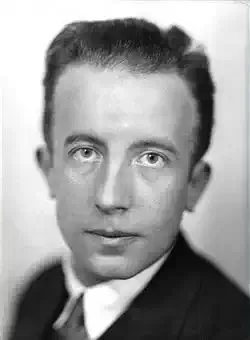
Paul Éluard
Head Against The Walls
There were only a few of them
In all the earth
Each one thought he was alone
They sang, they were right
To sing
But they sang the way you sack a city
The way you kill yourself.
Frayed moist night
Shall we endure you
Longer
Shall we not shake
Your cloacal evidence
We shall not wait for a morning
Made to measure
We wanted to see in other people's eyes
Their nights of love exhausted
They dream only of dying
Their lovely flesh forgotten
Bees caught in their honey
They are ignorant of life
And we suffer everywhere
Red roofs dissolve under the tongue
Dog days in the full beds
Come, empty your sacks of fresh blood
There is still a shadow here
A shred of imbecile there
In the wind their masks, their cast-offs
In lead their traps, their chains
And their prudent blind-men's gestures
There is fire under rocks
If you put out the fire
Be careful we have
Despite the night it breeds
More strength than the belly
Of your wives and sisters
And we will reproduce
Without them but by ax strokes
In your prisons
Torrents of stone labors of foam
Where eyes float without rancor
Just eyes without hope
That know you
And that you should have put out
Rather than ignore
With a safety pin quicker than your gibbets
We shall take our booty where we want it to be
430
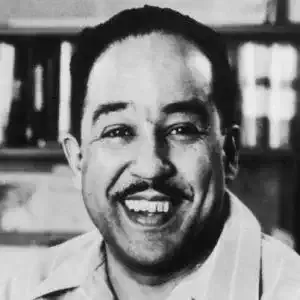
Langston Hughes
Oppression
Now dreams
Are not available
To the dreamers,
Nor songs
To the singers.
In some lands
Dark night
And cold steel
Prevail
But the dream
Will come back,
And the song
Break
Its jail.
Are not available
To the dreamers,
Nor songs
To the singers.
In some lands
Dark night
And cold steel
Prevail
But the dream
Will come back,
And the song
Break
Its jail.
429
William Butler Yeats
Three Songs To The One Burden
THE Roaring Tinker if you like,
But Mannion is my name,
And I beat up the common sort
And think it is no shame.
The common breeds the common,
A lout begets a lout,
So when I take on half a score
I knock their heads about.
From mountain to mountain ride the fierce horsemen.
All Mannions come from Manannan,
Though rich on every shore
He never lay behind four walls
He had such character,
Nor ever made an iron red
Nor soldered pot or pan;
His roaring and his ranting
Best please a wandering man.
From mountain to mountain ride the fierce horsemen.
Could Crazy Jane put off old age
And ranting time renew,
Could that old god rise up again
We'd drink a can or two,
And out and lay our leadership
On country and on town,
Throw likely couples into bed
And knock the others down.
From mountain to mountain ride the fierce horsemen.
II
My name is Henry Middleton,
I have a small demesne,
A small forgotten house that's set
On a storm-bitten green.
I scrub its floors and make my bed,
I cook and change my plate,
The post and garden-boy alone
Have keys to my old gate.
From mountain to mountain ride the fierce horsemen.
Though I have locked my gate on them,
I pity all the young,
I know what devil's trade they learn
From those they live among,
Their drink, their pitch-and-toss by day,
Their robbery by night;
The wisdom of the people's gone,
How can the young go straight?
From mountain to mountain ride the fierce horsemen.
When every Sunday afternoon
On the Green Lands I walk
And wear a coat in fashion.
Memories of the talk
Of henwives and of queer old men
Brace me and make me strong;
There's not a pilot on the perch
Knows I have lived so long.
From mountain to mountain ride the fierce horsemen.
III
Come gather round me, players all:
Come praise Nineteen-Sixteen,
Those from the pit and gallery
Or from the painted scene
That fought in the Post Office
Or round the City Hall,
praise every man that came again,
Praise every man that fell.
From mountain to mountain ride the fierce horsemen.
Who was the first man shot that day?
The player Connolly,
Close to the City Hall he died;
Catriage and voice had he;
He lacked those years that go with skill,
But later might have been
A famous, a brilliant figure
Before the painted scene.
From mountain to mountain ride the fierce horsemen.
Some had no thought of victory
But had gone out to die
That Ireland's mind be greater,
Her heart mount up on high;
And yet who knows what's yet to come?
For patrick pearse had said
That in every generation
Must Ireland's blood be shed.
From mountain to mountain ride the fierce horsemen.
426
Rudyard Kipling
The Outlaws
Through learned and laborious years
They set themselves to find
Fresh terrors and undreamed-of fears
To heap upon mankind.
ALl that they drew from Heaven above
Or digged from earth beneath,
They laid into their treasure-trove
And arsenals of death:
While, for well-weighed advantage sake,
Ruler and ruled alike
Built up the faith they meant to break
When the fit hour should strike.
They traded with the careless earth,
And good return it gave:
They plotted by their neighbour's hearth
The means to make him slave.
When all was ready to their hand
They loosed their hidden sword,
And utterly laid waste a land
Their oath was pledged to guard.
Coldly they went about to raise
To life and make more dread
Abominations of old days,
That men believed were dead.
They paid the price to reach their goal
Across a world in flame;
But their own hate slew their own soul
Before that victory came.
426
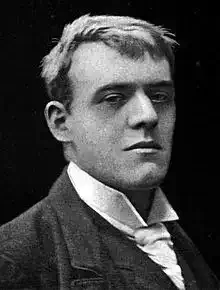
Hilaire Belloc
On Torture: A Public Singer
Torture will give a dozen pence or more
To keep a drab from bawling at his door.
The public taste is quite a different thing-
Torture is positively paid to sing.
To keep a drab from bawling at his door.
The public taste is quite a different thing-
Torture is positively paid to sing.
424

Robert Louis Stevenson
If This Were Faith
God, if this were enough,
That I see things bare to the buff
And up to the buttocks in mire;
That I ask nor hope nor hire,
Nut in the husk,
Nor dawn beyond the dusk,
Nor life beyond death:
God, if this were faith!
Having felt thy wind in my face
Spit sorrow and disgrace,
Having seen thine evil doom
In Golgotha and Khartoum,
And the brutes, the work of thine hands,
Fill with injustice lands
And stain with blood the sea:
If still in my veins the glee
Of the black night and the sun
And the lost battle, run:
If, an adept,
The iniquitous lists I still accept
With joy, and joy to endure and be withstood,
And still to battle and perish for a dream of good:
God, if that were enough!
If to feel, in the ink of the slough,
And the sink of the mire,
Veins of glory and fire
Run through and transpierce and transpire,
And a secret purpose of glory in every part,
And the answering glory of battle fill my heart;
To thrill with the joy of girded men
To go on for ever and fail and go on again,
And be mauled to the earth and arise,
And contend for the shade of a word and a thing
not seen with the eyes:
With the half of a broken hope for a pillow at night
That somehow the right is the right
And the smooth shall bloom from the rough:
Lord, if that were enough!
422

Alfred Lord Tennyson
The Princess: A Medley: Our Enemies have Fall'n
Our enemies have fall'n, have fall'n: the seed,
The little seed they laugh'd at in the dark,
Has risen and cleft the soil, and grown a bulk
Of spanless girth, that lays on every side
A thousand arms and rushes to the Sun.
Our enemies have fall'n, have fall'n: they came;
The leaves were wet with women's tears: they heard
A noise of songs they would not understand:
They mark'd it with the red cross to the fall,
And would have strown it, and are fall'n themselves.
Our enemies have fall'n, have fall'n: they came,
The woodmen with their axes: lo the tree!
But we will make it faggots for the hearth,
And shape it plank and beam for roof and floor,
And boats and bridges for the use of men.
Our enemies have fall'n, have fall'n: they struck;
With their own blows they hurt themselves, nor knew
There dwelt an iron nature in the grain:
The glittering axe was broken in their arms,
Their arms were shatter'd to the shoulder blade.
Our enemies have fall'n, but this shall grow
A night of Summer from the heat, a breadth
Of Autumn, dropping fruits of power; and roll'd
With music in the growing breeze of Time,
The tops shall strike from star to star, the fangs
Shall move the stony bases of the world.
418
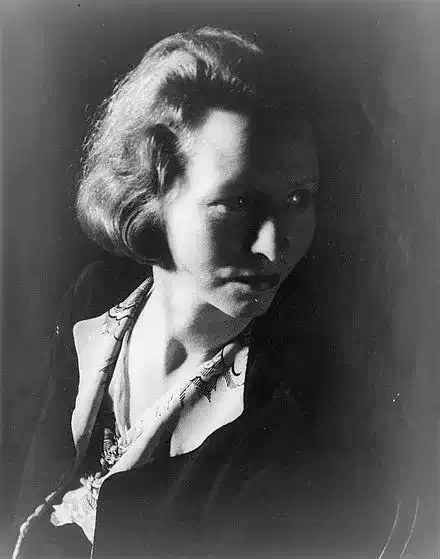
Edna St. Vincent Millay
Apostrophe To Man
(On reflecting that the world
is ready to go to war again)
Detestable race, continue to expunge yourself, die out.
Breed faster, crowd, encroach, sing hymns, build
bombing airplanes;
Make speeches, unveil statues, issue bonds, parade;
Convert again into explosives the bewildered ammonia
and the distracted cellulose;
Convert again into putrescent matter drawing flies
The hopeful bodies of the young; exhort,
Pray, pull long faces, be earnest,
be all but overcome, be photographed;
Confer, perfect your formulae, commercialize
Bacateria harmful to human tissue,
Put death on the market;
Breed, crowd, encroach,
expand, expunge yourself, die out,
Homo called sapiens.
418
Langston Hughes
Dream Boogie
Good morning, daddy!
Ain't you heard
The boogie-woogie rumble
Of a dream deferred?
Listen closely:
You'll hear their feet
Beating out and beating out a -
You think
It's a happy beat?
Listen to it closely:
Ain't you heard
something underneath
like a -
What did I say?
Sure,
I'm happy!
Take it away!
Hey, pop!
Re-bop!
Mop!
Y-e-a-h!
Ain't you heard
The boogie-woogie rumble
Of a dream deferred?
Listen closely:
You'll hear their feet
Beating out and beating out a -
You think
It's a happy beat?
Listen to it closely:
Ain't you heard
something underneath
like a -
What did I say?
Sure,
I'm happy!
Take it away!
Hey, pop!
Re-bop!
Mop!
Y-e-a-h!
414
Alfred Lord Tennyson
Beautiful City
Beautiful city
Beautiful city, the centre and crater of European confusion,
O you with your passionate shriek for the rights of an equal
humanity,
How often your Re-volution has proven but E-volution
Roll’d again back on itself in the tides of a civic insanity!
Beautiful city, the centre and crater of European confusion,
O you with your passionate shriek for the rights of an equal
humanity,
How often your Re-volution has proven but E-volution
Roll’d again back on itself in the tides of a civic insanity!
399

Carl Sandburg
Ready to Kill
Ten minutes now I have been looking at this.
I have gone by here before and wondered about it.
This is a bronze memorial of a famous general
Riding horseback with a flag and a sword and a revolver
on him.
I want to smash the whole thing into a pile of junk to be
hauled away to the scrap yard.
I put it straight to you,
After the farmer, the miner, the shop man, the factory
hand, the fireman and the teamster,
Have all been remembered with bronze memorials,
Shaping them on the job of getting all of us
Something to eat and something to wear,
When they stack a few silhouettes
Against the sky
Here in the park,
And show the real huskies that are doing the work of
the world, and feeding people instead of butchering them,
Then maybe I will stand here
And look easy at this general of the army holding a flag
in the air,
And riding like hell on horseback
Ready to kill anybody that gets in his way,
Ready to run the red blood and slush the bowels of men
all over the sweet new grass of the prairie.
396

Ella Wheeler Wilcox
Good Templars' Song
AIR-'O SUSANNAH!'
Ye soldiers in the temperance cause,
Our work is but begun.
Oh! sit not down in idleness
And think the field is won.
Our lambs are straying from the fold,
The wolves are on the track:
Oh! can you sit and see them go,
Nor strive to bring them back?
Chorus:
O Good Templars!
There's work for us to-day.
Then gird your armor on again,
And only pause to pray.
Whichever way the eye may turn,
It sees the rum-shop stand
With open door and flowing bowl,
A viper in the land.
The grapes are hanging from the vines,
All ready for the press.
Before, behind, on every side
Are seeds of drunkenness.
Our foes are all untiring,
But God is with the right,
And we will conquer at the last-
Then onward to the fight!
Ay, onward to the battle-field,
Each woman, child, and man!
King Alcohol shall yet go down
With all his demon clan.
397
Carl Sandburg
Always The Mob
Jesus emptied the devils of one man into forty hogs and the hogs took the edge of a
high rock and dropped off and down into the sea: a mob.
The sheep on the hills of Australia, blundering fourfooted in the sunset mist to the
dark, they go one way, they hunt one sleep, they find one pocket of grass for all.
Karnak? Pyramids? Sphinx paws tall as a coolie? Tombs kept for kings and sacred
cows? A mob.
Young roast pigs and naked dancing girls of Belshazzar, the room where a thousand sat
guzzling when a hand wrote: Mene, mene, tekel, upharsin? A mob.
The honeycomb of green that won the sun as the Hanging Gardens of Nineveh, flew to
its shape at the hands of a mob that followed the fingers of Nebuchadnezzar: a mob of
one hand and one plan.
Stones of a circle of hills at Athens, staircases of a mountain in Peru, scattered clans of
marble dragons in China: each a mob on the rim of a sunrise: hammers and wagons
have them now.
Locks and gates of Panama? The Union Pacific crossing deserts and tunneling
mountains? The Woolworth on land and the Titanic at sea? Lighthouses blinking a coast
line from Labrador to Key West? Pig iron bars piled on a barge whistling in a fog off
Sheboygan? A mob: hammers and wagons have them to-morrow.
The mob? A typhoon tearing loose an island from thousand-year moorings and
bastions, shooting a volcanic ash with a fire tongue that licks up cities and peoples.
Layers of worms eating rocks and forming loam and valley floors for potatoes, wheat,
watermelons.
The mob? A jag of lightning, a geyser, a gravel mass loosening…
The mob … kills or builds … the mob is Attila or Ghengis Khan, the mob is Napoleon,
Lincoln.
I am born in the mob—I die in the mob—the same goes for you—I don’t care who you
are.
I cross the sheets of fire in No Man’s land for you, my brother—I slip a steel tooth into
your throat, you my brother—I die for you and I kill you—It is a twisted and gnarled
thing, a crimson wool:
One more arch of stars,
In the night of our mist,
In the night of our tears.
389
Ella Wheeler Wilcox
The Temperance Army
Though you see no banded army,
Though you hear no cannons rattle,
We are in a mighty contest,
We are fighting a great battle.
We are few, but we are right:
And we wage the holy fight,
Night and day, and day and night.
If we do not fail or falter,
If we do not sleep or slumber,
We shall win in this great contest,
Though the foe is twice our number.
This the burden of our song,
'We are few, but we are strong,
And right must triumph over wrong.'
O my sisters! O my brothers!
There is death all round about us.
Must we, then, sit down discouraged?
Will you let the wine-cup rout us?
Hear the drunkard's awful wail!
See the mourners, bowed and pale!
Will you, coward, then say 'fail'?
Say not that your heart is with us
When you do not help or aid us.
All who love the cause sincerely
Can do something: God has made us
Tongues to talk with: you can say
Something, if you will, each day,
That will help us on our way,
Though you are not highly gifted,
Though you are not bard or poet,
Though you cannot preach or lecture,
You can love the cause, and show it
Boldly, in each thing you do.
Seeking all that's pure and true,
This will be a help from you.
You can say the liquor traffic
Is a curse to any nation;
You can say that prohibition
Is a blessing and salvation.
You can sow good seeds, and, though
You may never see them grow,
They will not be lost, I know.
In this mighty temperance contest,
Where no guns or cannons rattle,
Though you cannot lead the army
Or be chieftain of the battle,
With that mighty sword, the tongue,
You can fight against the wrong,
You can sing some temperance song.
Say not that you cannot aid us!
Drops of water make the river-
Make the mighty Mississippi,
That flows on hand on for ever.
Every word you say for Right
Gives us courage, gives us might,
And brings nearer, morn and night.
383

Nazim Hikmet
A Sad State Of Freedom
You waste the attention of your eyes,
the glittering labour of your hands,
and knead the dough enough for dozens of loaves
of which you'll taste not a morsel;
you are free to slave for others--
you are free to make the rich richer.
The moment you're born
they plant around you
mills that grind lies
lies to last you a lifetime.
You keep thinking in your great freedom
a finger on your temple
free to have a free conscience.
Your head bent as if half-cut from the nape,
your arms long, hanging,
your saunter about in your great freedom:
you're free
with the freedom of being unemployed.
You love your country
as the nearest, most precious thing to you.
But one day, for example,
they may endorse it over to America,
and you, too, with your great freedom--
you have the freedom to become an air-base.
You may proclaim that one must live
not as a tool, a number or a link
but as a human being--
then at once they handcuff your wrists.
You are free to be arrested, imprisoned
and even hanged.
There's neither an iron, wooden
nor a tulle curtain
in your life;
there's no need to choose freedom:
you are free.
But this kind of freedom
is a sad affair under the stars.
Translated by Taner Baybars
381
Claude Mckay
The Lynching
His Spirit in smoke ascended to high heaven.
His father, by the cruelest way of pain,
Had bidden him to his bosom once again;
The awful sin remained still unforgiven.
All night a bright and solitary star
(Perchance the one that ever guided him,
Yet gave him up at last to Fate's wild whim)
Hung pitifully o'er the swinging char.
Day dawned, and soon the mixed crowds came to view
The ghastly body swaying in the sun
The women thronged to look, but never a one
Showed sorrow in her eyes of steely blue;
And little lads, lynchers that were to be,
Danced round the dreadful thing in fiendish glee.
377
Ella Wheeler Wilcox
Where Are The Temperance People? In Reply To A Query
Where are the temperance people?
Well, scattered here and there:
Some gathering in their produce
To show at the autumn fair;
Some threshing wheat for market,
And others threshing rye,
That will go to the fat distiller
For whiskey by-and-by.
And some are selling their hop crops
At a first-rate price, this year,
And the seller pockets the money,
While the drunkard swallows the beer.
And some 'staunch temperance workers'(?)
Who'd do anything for the cause,
Save to give it a dime or a moment,
Or work for temperance laws,
May be seen from now to election,
Near any tavern stand
Where liquor flows in plenty,
With a voter on either hand.
And these temperance office-seekers
That we hear of far and near
Are the ones who furnish the money
That buys the lager-beer.
But these are only the black sheep
Who want the temperance name
Without living up to the precepts,
And so bring themselves to shame.
And the true, brave temperance people,
Who have the cause at heart,
Are doing the work that's nearest,
Each his allotted part:
Some lifting the fallen drunkard,
Some preaching unto men,
Some aiding the cause with money,
And others with the pen.
Each has a different mission,
Each works in a different way,
But their works shall melt together
In one grand result, some day.
And one, our chief (God bless him),
Is working day and night:
With his sword of burning eloquence,
He is fighting the noble fight.
Whether in lodge or convention,
Whether at home or abroad,
He is reaping a golden harvest
To lay at the feet of God.
Where are the temperance people?
All scattered here and there,
Sowing the seeds of righteous deeds,
That the harvest may be fair.
379

Walt Whitman
Still, Though The One I Sing
STILL, though the one I sing,
(One, yet of contradictions made,) I dedicate to Nationality,
I leave in him Revolt, (O latent right of insurrection! O quenchless,
indispensable fire!)
(One, yet of contradictions made,) I dedicate to Nationality,
I leave in him Revolt, (O latent right of insurrection! O quenchless,
indispensable fire!)
376

John Greenleaf Whittier
Moloch In State Street
THE moon has set: while yet the dawn
Breaks cold and gray,
Between the midnight and the morn
Bear off your prey!
On, swift and still! the conscious street
Is panged and stirred;
Tread light! that fall of serried feet
The dead have heard!
The first drawn blood of Freedom's veins
Gushed where ye tread;
Lo! through the dusk the martyr-stains
Blush darkly red!
Beneath the slowly waning stars
And whitening day,
What stern and awful presence bars
That sacred way?
What faces frown upon ye, dark
With shame and pain?
Come these from Plymouth's Pilgrim bark?
Is that young Vane?
Who, dimly beckoning, speed ye on
With mocking cheer?
Lo! spectral Andros, Hutchinson,
And Gage are here!
For ready mart or favoring blast
Through Moloch's fire,
Flesh of his flesh, unsparing, passed
The Tyrian sire.
Ye make that ancient sacrifice
Of Man to Gain,
Your traffic thrives, where freedom dies,
Beneath the chain.
Ye sow to-day; your harvest, scorn
And hate, is near;
How think ye freemen, mountain-born,
The tale will hear?
Thank God! our mother State can yet
Her fame retrieve;
To you and to your children let
The scandal cleave.
Chain Hall and Pulpit, Court and Press,
Make gods of gold;
Let honor, truth, and manliness
Like wares be sold.
Your hoards are great, your walls are strong,
But God is just;
The gilded chambers built by wrong
Invite the rust.
What! know ye not the gains of Crime
Are dust and dross;
Its ventures on the waves of time
Foredoomed to loss!
And still the Pilgrim State remains
What she hath been;
Her inland hills, her seaward plains,
Still nurture men!
Nor wholly lost the fallen mart;
Her olden blood
Through many a free and generous heart
Still pours its flood.
That brave old blood, quick-flowing yet,
Shall know no check,
Till a free people's foot is set
On Slavery's neck.
Even now, the peal of bell and gun,
And hills aflame,
Tell of the first great triumph won
In Freedom's name.
The long night dies: the welcome gray
Of dawn we see;
Speed up the heavens thy perfect day,
God of the free!
375
William Butler Yeats
The O'Rahilly
SING of the O'Rahilly,
Do not deny his right;
Sing a 'the' before his name;
Allow that he, despite
All those learned historians,
Established it for good;
He wrote out that word himself,
He christened himself with blood.
How goes the weather?
Sing of the O'Rahilly
That had such little sense
He told Pearse and Connolly
He'd gone to great expense
Keeping all the Kerry men
Out of that crazy fight;
That he might be there himself
Had travelled half the night.
How goes the weather?
'Am I such a craven that
I should not get the word
But for what some travelling man
Had heard I had not heard?'
Then on pearse and Connolly
He fixed a bitter look:
'Because I helped to wind the clock
I come to hear it strike.'
How goes the weather?
What remains to sing about
But of the death he met
Stretched under a doorway
Somewhere off Henry Street;
They that found him found upon
The door above his head
'Here died the O'Rahilly.
R.I.P.' writ in blood.
How goes the weather.?
372