
Protest, Resistance and Revolution
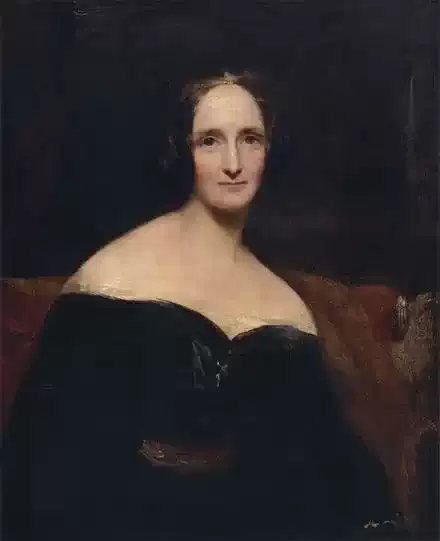
Percy Bysshe Shelley
English In
An old, mad, blind, despised, and dying king,--
Princes, the dregs of their dull race, who
Through public scorn,--mud from a muddy spring,--
Rulers who neither see, nor feel, nor know,
But leech-like to their fainting country cling,
Till they drop, blind in blood, without a blow,--
A people starved and stabbed in the untilled field,--
An army, which liberticide and prey
Makes as a two-edged sword to all who wield,--
Golden and sanguine laws which tempt and slay;
Religion Christless, Godless--a book sealed;
A Senate, Time's worst statute unrepealed,--
Are graves, from which a glorious Phantom may
Burst, to illumine our tempestuous day.
506

Kazi Nazrul Islam
O Destitutes!
With the curved smile on your tender lips, O crescent, is it a crooked suggestion?
Are you looking for companions to join you to loot every home in desperation?
As if at the command of Allah you are proclaiming from the sky,
O martyrs, why the rich do not pay zakat any more - ask, ask them why?
In surplus of these wealthy and rich, there is definitely a right
of all those hungry and deprived: this is Allah's message, so clear and trite.
Take away their surplus and their undeserving wealth; yes, take away!
You will be fulfilling a divine command, who stands in the way?
Why are you like living dead, imprisoned by powerlessness or decrepitude,
The plate of food rests close to you, yet why embracing death in hunger is your
attitude?
Have you no courage to extend your hand! Is your hand disabled or feeble?
I am, the bandit, here to collect the poor-due; get up and join me, don't quibble!
I have brought the message of Allah through the Eid's crescent that shines above,
We will break our fast with all those treasured surplus during this Ramadan - a month
we all love.
Everyone will eat and satisfy their hunger during this Eid celebration,
Don't despair and resign; rather loot your share of the blessings of God in rightful
jubilation.
[Original: Sharbohara (eid) by Kazi Nazrul Islam; Translation: Mohammad Omar
Farooq]
501

Ella Wheeler Wilcox
An Inspiration
However the battle is ended,
Though proudly the victor comes
With fluttering flags and prancing nags
And echoing roll of drums.
Still truth proclaims this motto,
In letters of living light, -
No Question is ever settled,
Until it is settled right.
Though the heel of the strong oppressor
May grind the weak to dust,
And the voices of fame with one acclaim
May call him great and just,
Let those who applaud take warning,
And keep this motto in sight, -
No question is ever settled
Until it is settled right.
Let those who have failed take courage;
Tho' the enemy seems to have won,
Tho' his ranks are strong, if he be in the wrong
The battle is not yet done;
For, as sure as the morning follows
The darkest hour of the night,
No question is ever settled
Until it is settled right.
O man bowed down with labor!
O woman, young, yet old!
O heart oppressed in the toiler's breast
And crushed by the power of gold!
Keep on with your weary battle
Against triumphant might;
No question is ever settled
Until it is settled right.
498

Rudyard Kipling
What Happened
Hurree Chunder Mookerjee, pride of Bow Bazaar,
Owner of a native press, "Barrishter-at-Lar,"
Waited on the Government with a claim to wear
Sabres by the bucketful, rifles by the pair.
Then the Indian Government winked a wicked wink,
Said to Chunder Mookerjee: "Stick to pen and ink.
They are safer implements, but, if you insist,
We will let you carry arms wheresoe'er you list."
Hurree Chunder Mookerjee sought the gunsmith and
Bought the tubes of Lancaster, Ballard, Dean, and Bland,
Bought a shiny bowie-knife, bought a town-made sword,
Jingled like a carriage-horse when he went abroad.
But the Indian Government, always keen to please,
Also gave permission to horrid men like these --
Yar Mahommed Yusufzai, down to kill or steal,
Chimbu Singh from Bikaneer, Tantia the Bhil;
Killar Khan the Marri chief, Jowar Singh the Sikh,
Nubbee Baksh Punjabi Jat, Abdul Huq Rafiq --
He was a Wahabi; last, little Boh Hla-oo
Took advantage of the Act -- took a Snider too.
They were unenlightened men, Ballard knew them not.
They procured their swords and guns chiefly on the spot;
And the lore of centuries, plus a hundred fights,
Made them slow to disregard one another's rights.
With a unanimity dear to patriot hearts
All those hairy gentlemen out of foreign parts
Said: "The good old days are back -- let us go to war!"
Swaggered down the Grand Trunk Road into Bow Bazaar,
Nubbee Baksh Punjabi Jat found a hide-bound flail;
Chimbu Singh from Bikaneer oiled his Tonk jezail;
Yar Mahommed Yusufzai spat and grinned with glee
As he ground the butcher-knife of the Khyberee.
Jowar Singh the Sikh procured sabre, quoit, and mace,
Abdul Huq, Wahabi, jerked his dagger from its place,
While amid the jungle-grass danced and grinned and jabbered
Little Boh Hla-oo and cleared his dah-blade from the scabbard.
What became of Mookerjee? Smoothly, who can say?
Yar Mahommed only grins in a nasty way,
Jowar Singh is reticent, Chimbu Singh is mute.
But the belts of all of them simply bulge with loot.
What became of Ballard's guns? Afghans black and grubby
Sell them for their silver weight to the men of Pubbi;
And the shiny bowie-knife and the town-made sword are
Hanging in a Marri camp just across the Border.
What became of Mookerjee? Ask Mahommed Yar
Prodding Siva's sacred bull down the Bow Bazaar.
Speak to placid Nubbee Baksh -- question land and sea --
Ask the Indian Congressmen -- only don't ask me!
499
Kazi Nazrul Islam
Struggle
You lived for so long,
Now once put your life on the line;
The same hands you use for only prayers,
With weapons let once those shine.
Tearing off the crescent from sky,
Decorate your flag that is crimson red;
Let the seniles live longer
You offer your precious life, go ahead.
[Original: Shadhona (Bengali) ,
Translation: Mohammad Omar Farooq]
495

Alfred Lord Tennyson
Boadicea
While about the shore of Mona those Neronian legionaries
Burnt and broke the grove and altar of the Druid and Druidess,
Far in the East Boadicea, standing loftily charioted,
Mad and maddening all that heard her in her fierce volubility,
Girt by half the tribes of Britain, near the colony Camulodune,
Yell'd and shriek'd between her daughters o'er a wild confederacy.
`They that scorn the tribes and call us Britain's barbarous populaces,
Did they hear me, would they listen, did they pity me supplicating?
Shall I heed them in their anguish? shall I brook to be supplicated?
Hear Icenian, Catieuchlanian, hear Coritanian, Trinobant!
Must their ever-ravening eagle's beak and talon annihilate us?
Tear the noble hear of Britain, leave it gorily quivering?
Bark an answer, Britain's raven! bark and blacken innumerable,
Blacken round the Roman carrion, make the carcase a skeleton,
Kite and kestrel, wolf and wolfkin, from the wilderness, wallow in it,
Till the face of Bel be brighten'd, Taranis be propitiated.
Lo their colony half-defended! lo their colony, Camulodune!
There the horde of Roman robbers mock at a barbarous adversary.
There the hive of Roman liars worship a gluttonous emperor-idiot.
Such is Rome, and this her deity: hear it, Spirit of Cassivelaun!
`Hear it, Gods! the Gods have heard it, O Icenian, O Coritanian!
Doubt not ye the Gods have answer'd, Catieuchlanian, Trinobant.
These have told us all their anger in miraculous utterances,
Thunder, a flying fire in heaven, a murmur heard aerially,
Phantom sound of blows descending, moan of an enemy massacred,
Phantom wail of women and children, multitudinous agonies.
Bloodily flow'd the Tamesa rolling phantom bodies of horses and men;
Then a phantom colony smoulder'd on the refluent estuary;
Lastly yonder yester-even, suddenly giddily tottering--
There was one who watch'd and told me--down their statue of Victory fell.
Lo their precious Roman bantling, lo the colony Camulodune,
Shall we teach it a Roman lesson? shall we care to be pitiful?
Shall we deal with it as an infant? shall we dandle it amorously?
`Hear Icenian, Catieuchlanian, hear Coritanian, Trinobant!
While I roved about the forest, long and bitterly meditating,
There I heard them in the darkness, at the mystical ceremony,
Loosely robed in flying raiment, sang the terrible prophetesses.
"Fear not, isle of blowing woodland, isle of silvery parapets!
Tho' the Roman eagle shadow thee, tho' the gathering enemy narrow thee,
Thou shalt wax and he shall dwindle, thou shalt be the mighty one yet!
Thine the liberty, thine the glory, thine the deeds to be celebrated,
Thine the myriad-rolling ocean, light and shadow illimitable,
Thine the lands of lasting summer, many-blossoming Paradises,
Thine the North and thine the South and thine the battle-thunder of God."
So they chanted: how shall Britain light upon auguries happier?
So they chanted in the darkness, and there cometh a victory now.
Hear Icenian, Catieuchlanian, hear Coritanian, Trinobant!
Me the wife of rich Prasutagus, me the lover of liberty,
Me they seized and me they tortured, me they lash'd and humiliated,
Me the sport of ribald Veterans, mine of ruffian violators!
See they sit, they hide their faces, miserable in ignominy!
Wherefore in me burns an anger, not by blood to be satiated.
Lo the palaces and the temple, lo the colony Camulodune!
There they ruled, and thence they wasted all the flourishing territory,
Thither at their will they haled the yellow-ringleted Britoness--
Bloodily, bloodily fall the battle-axe, unexhausted, inexorable.
Shout Icenian, Catieuchlanian, shout Coritanian, Trinobant,
Till the victim hear within and yearn to hurry precipitously
Like the leaf in a roaring whirlwind, like the smoke in a hurricane whirl'd.
Lo the colony, there they rioted in the city of Cunobeline!
There they drank in cups of emerald, there at tables of ebony lay,
Rolling on their purple couches in their tender effeminacy.
There they dwelt and there they rioted; there--there--they dwell no more.
Burst the gates, and burn the palaces, break the works of the statuary,
Take the hoary Roman head and shatter it, hold it abominable,
Cut the Roman boy to pieces in his lust and voluptuousness,
Lash the maiden into swooning, me they lash'd and humiliated,
Chop the breasts from off the mother, dash the brains of the little one out,
Up my Britons, on my chariot, on my chargers, trample them under us.'
So the Queen Boadicea, standing loftily charioted,
Brandishing in her hand a dart and rolling glances lioness-like,
Yell'd and shriek'd between her daughters in her fierce volubility.
Till her people all around the royal chariot agitated,
Madly dash'd the darts together, writhing barbarous lineaments,
Made the noise of frosty woodlands, when they shiver in January,
Roar'd as when the rolling breakers boom and blanch on the precipices,
Yell'd as when the winds of winter tear an oak on a promontory.
So the silent colony hearing her tumultuous adversaries
Clash the darts and on the buckler beat with rapid unanimous hand,
Thought on all her evil tyrannies, all her pitiless avarice,
Till she felt the heart within her fall and flutter tremulously,
Then her pulses at the clamoring of her enemy fainted away.
Out of evil evil flourishes, out of tyranny tyranny buds.
Ran the land with Roman slaughter, multitudinous agonies.
Perish'd many a maid and matron, many a valorous legionary.
Fell the colony, city, and citadel, London, Verulam, Camulodune.
482

John Keats
The Gadfly
1.
All gentle folks who owe a grudge
To any living thing
Open your ears and stay your t[r]udge
Whilst I in dudgeon sing.
2.
The Gadfly he hath stung me sore--
O may he ne'er sting you!
But we have many a horrid bore
He may sting black and blue.
3.
Has any here an old grey Mare
With three legs all her store,
O put it to her Buttocks bare
And straight she'll run on four.
4.
Has any here a Lawyer suit
Of 1743,
Take Lawyer's nose and put it to't
And you the end will see.
5.
Is there a Man in Parliament
Dum[b-] founder'd in his speech,
O let his neighbour make a rent
And put one in his breech.
6.
O Lowther how much better thou
Hadst figur'd t'other day
When to the folks thou mad'st a bow
And hadst no more to say.
7.
If lucky Gadfly had but ta'en
His seat * * * * * * * * *
And put thee to a little pain
To save thee from a worse.
8.
Better than Southey it had been,
Better than Mr. D-------,
Better than Wordsworth too, I ween,
Better than Mr. V-------.
9.
Forgive me pray good people all
For deviating so --
In spirit sure I had a call -
And now I on will go.
10.
Has any here a daughter fair
Too fond of reading novels,
Too apt to fall in love with care
And charming Mister Lovels,
11.
O put a Gadfly to that thing
She keeps so white and pert --
I mean the finger for the ring,
And it will breed a wort.
12.
Has any here a pious spouse
Who seven times a day
Scolds as King David pray'd, to chouse
And have her holy way -13.
O let a Gadfly's little sting
Persuade her sacred tongue
That noises are a common thing,
But that her bell has rung.
14.
And as this is the summon bo
num of all conquering,
I leave 'withouten wordes mo'
The Gadfly's little sting.
482
Rudyard Kipling
The Dutch in the Medway
If wars were won by feasting,
Or victory by song,
Or safety found in sleeping sound,
How England would be strong!
But honour and dominion
Are not maintainéd so,
They're only got by sword and shot,
And this the Dutchmen know!
The moneys that should feed us,
You spend on your delight,
How can you then have sailor-men
To aid you in your fight?
Our fish and cheese are rotten,
Which makes the scurvy grow—
We cannot serve you if we starve,
And this the Dutchmen know!
Our ships in every harbour
Be neither whole nor sound,
And, when we seek to mend a leak,
No oakum can be found,
Or, if it is, the caulkers,
And carpenters also,
For lack of pay have gone away,
And this the Dutchmen know!
Mere powder, guns, and bullets,
We scarce can get at all,
Their price was spent in merriment
And revel at Whitehall,
While we in tattered doublets
From ship to ship must row,
Beseeching friends for odds and ends—
And this the Dutchmen know!
No King will heed our warnings,
No Court will pay our claims—
Our King and Court for their disport
Do sell the very Thames!
For, now De Ruyter's topsails,
Off naked Chatham show,
We dare not meet him with our fleet—
And this the Dutchmen know!
482

Henry Lawson
The Federal City
OH! the folly, the waste, and the pity! Oh, the time that is flung behind!
They are seeking a site for a city, whose eyes shall be always blind,
Whose love for their ease grows greater, and whose care for their country less—
They are seeking a site for a city—a City of Selfishness.
In ignorance, deafness, blindness, in the cities by the sea,
With waste of time and of money, and with local jealousy;
With Anti-Federal envy, and personal paltriness,
They are seeking a site for a city—while Australia moans in distress.
By the coast with the people crowding, where Australia’s danger lies,
By the hills and the clear, cool rivers, and under the softer skies,
Where the fat shall not melt, and the ranter grow cool in the fresh’ning breeze,
And the dwellers drivel in comfort and the boodlers swindle at ease.
They are seeking a site for a city in the beauty spots of the land,
While I see so plainly, my children, where the Federal towers should stand!
Where the heart of Australia beats strongest and highest in desert air.
Make a site for a Federal City, and build you your capital there!
Where the crowd should be drawn from the coast line to the great bush that cradled
the race,
Where the bush might be armed and directed should the seaboard be lost for a space;
Where the waste should be watered and gardened, in the drought-land of Never
Despair,
There build you your Federal City, and make you a paradise there.
It shall be a world-wide object-lesson; it shall stand while a bushman is true,
And I tell you the bushmen will build it to show what a nation can do;
And there shall Australia sit queenly, and there shall her children be schooled,
For, I say, from the heart of Australia shall the whole of Australia be ruled.
479

Ezra Pound
Safe And Sound
My name is Nunty Cormorant
And my finance is sound,
I lend you Englishmen hot air
At one and three the pound.
I lend you Englishmen hot air
And I get all the beef
While you stalwart sheep of freedom
Are on the poor relief.
Wot oh! my buxom hearties,
What ain't got work no more
And don't know what bug is a-bitin'
To keep your feelin's sore,
There is blokes in automobiles
And their necks sunk into fur
That keep on gettin' usury
To make 'em cosier.
I read these fellers puts it
Most tidily away
And then lends out their printed slips
To keep the wolf away
From the vaults and combination
Safes in Thread and Needle street.
I wouldn't 'ave the needle
If I had more grub to eat.
Oh the needle is your portion,
My sufferin' fellow men,
Till the King shall take the notion
To own his coin again.
479
Ella Wheeler Wilcox
The Cry Of The People
Fire! Fire! Fire! the cry rang out on the night air,
The roving winds caught it up, and the very heavens resounded.
Louder and louder still, by voices grown hoarse with terror,
The cry went up and out and a nation stood still to listen.
'Come, for the love of God, and help us fight the demon!
Come and help us to chain the fiend that is making us homeless:
His hot and scorching breath has melted our hard-earned fortunes,
And, not contented with this, he is snatching our loved ones from us.
The air is thick with the stream that pours in clouds from his nostrils:
Come, for the love of God, and help us to fetter or slay him.'
The ear of the Nation heard, the heart of the Nation responded:
The smith left anvil and forge, and hastened to render assistance;
The clergyman went from the pulpit, the lawyer went from his office,
The houses of trade were closed, and a Nation was in commotion.
For the hungry tongue of Fire was lapping the skirts of the city,
The royal Queen of the West, and her people were crying in anguish.
Nobly and well they worked, till they chained and fettered the demon,
Bound him hand and foot, and hindered his work of destruction.
Over the land on wires, over the mighty cable,
Flashed the terrible truth: 'Ruin and destitution
Reigns where but yesterday there was lavish wealth and plenty.'
And up from the South came aid, and aid came down from the Northland,
And it came from East and West, wholesome food for the hungry,
Shelter for houseless heads, and clothes to cover the naked.
Hark! there's a sound abroad, like the cry of a suffering people,
Loud and louder it swells, and echoes from ocean to ocean,
The raving winds catch it up, and from throats that are hoarse with crying
The wail goes up and out, but is answered only by echoes.
'Come for the love of God, and help us to fetter the demon
That is taking the bread from our mouths, and the mouths of our helpless children;
He is walking abroad in the land, and all things perish before him:
Homesteads crumble away, and fortunes vanish like snow wreaths;
And, not contented with this, he is slaying our best and our fairest,
Stealing the brains of the wise, and bringing the young to the gallows;
He is making the home forlorn, and crowding the jails and the prisons,
He moves the hand of the thief-he drives the assassin's dagger.'
The ear of the Nation is deaf, the heart of the Nation is hardened:
The smith at his anvil and forge sings in the midst of his labor;
The clergyman stands in his pulpit, and prays for the soul of the sinner,
But says no word of the fiend who wrecked and ruined the mortal;
The lawyer smokes his cigar or sips his glass of Burgundy;
The merchant, day after day, thinks only of buying and selling.
And up and down through the land, night and day, walks the demon,
Poverty, sorrow, and shame follow the print of his footsteps.
The cry of the people goes up, a cry of anguish and pleading,
But only a few respond, a few too feeble to chain him.
The multitude stands aloof, or aids the fiend of destruction,
While he tramples under his hoofs hundreds and thousands of victims-
And the multitude's ear is deaf to the wail of the beggared orphans.
Shame, oh! shame to the Nation that leaves the demon of Traffic
Free to roam through the land, and pillage and rob the helpless.
Shame to the multitude that will not render assistance,
But leaves a few to do what many can only accomplish.
Arouse! ye listless hosts! and answer the suffering people!
Spring to the aid of the million, as ye sprang to the aid of the thousand:
As you fettered the demon Fire, fetter the demon Traffic,
Who slays his tens of thousands, where the other slew only hundreds.
477
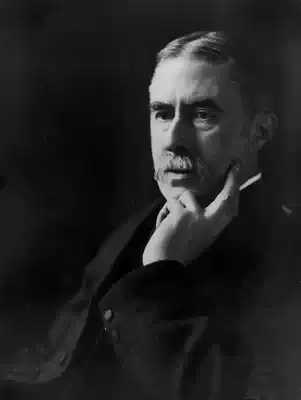
Alfred Edward Housman
Oh Who Is That Young Sinner
Oh who is that young sinner with the handcuffs on his wrists?
And what has he been after that they groan and shake their fists?
And wherefore is he wearing such a conscience-stricken air?
Oh they're taking him to prison for the color of his hair.
'Tis a shame to human nature, such a head of hair as his;
In the good old time 'twas hanging for the color that it is;
Though hanging isn't bad enough and flaying would be fair
For the nameless and abominable color of his hair.
Oh a deal of pains he's taken and a pretty price he's paid
To hide his poll or dye it of a mentionable shade;
But they've pulled the beggar's hat off for the world to see and stare,
And they're taking him to justice for the color of his hair.
Now 'tis oakum for his fingers and the treadmill for his feet,
And the quarry-gang on Portland in the cold and in the heat,
And between his spells of labor in the time he has to spare
He can curse the God that made him for the color of his hair.
476
Rudyard Kipling
Mesopotamia
They shall not return to us, the resolute, the young,
The eager and whole-hearted whom we gave:
But the men who left them thriftily to die in their own dung,
Shall they come with years and honour to the grave?
They shall not return to us; the strong men coldly slain
In sight of help denied from day to day:
But the men who edged their agonies and chid them in their pain,
Are they too strong and wise to put away?
Our dead shall not return to us while Day and Night divide--
Never while the bars of sunset hold.
But the idle-minded overlings who quibbled while they died,
Shall they thrust for high employments as of old?
Shall we only threaten and be angry for an hour:
When the storm is ended shall we find
How softly but how swiftly they have sidled back to power
By the favour and contrivance of their kind?
Even while they soothe us, while they promise large amends,
Even while they make a show of fear,
Do they call upon their debtors, and take counsel with their
friends,
To conform and re-establish each career?
Their lives cannot repay us--their death could not undo--
The shame that they have laid upon our race.
But the slothfulness that wasted and the arrogance that slew,
Shell we leave it unabated in its place?
472

Robert Browning
Holy-Cross Day
ON WHICH THE JEWS WERE FORCED TO
ATTEND AN ANNUAL CHRISTIAN SERMON
IN ROME.
[``Now was come about Holy-Cross Day,
and now must my lord preach his first sermon
to the Jews: as it was of old cared for in tine
merciful bowels of the Church, that, so to
speak, a crumb at least from her conspicuous
table here in Rome should be, though but
once yearly, cast to the famishing dogs, under-trampled
and bespitten-upon beneath the feet
of the guests. And a moving sight in truth,
this, of so many of the besotted blind restif
and ready-to-perish Hebrews! now maternally
brought---nay (for He saith, `Compel them
to come in') haled, as it were, by the head and
hair, and against their obstinate hearts, to partake
of the heavenly grace. What awakening,
what striving with tears, what working of a
yeasty conscience! Nor was my lord wanting
to himself on so apt an occasion; witness
the abundance of conversions which did incontinently
reward him: though not to my
lord be altogether the glory.''---_Diary by the
Bishop's Secretary,_ .]
What the Jews really said, on thus being
driven to church, was rather to this effect:---
I.
Fee, faw, fum! bubble and squeak!
Blessedest Thursday's the fat of the week.
Rumble and tumble, sleek and rough,
Stinking and savoury, simug and gruff,
Take the church-road, for the bell's due chime
Gives us the summons---'tis sermon-time!
II.
Bob, here's Barnabas! Job, that's you?
Up stumps Solomon---bustling too?
Shame, man! greedy beyond your years
To handsel the bishop's shaving-shears?
Fair play's a jewel! Leave friends in the lurch?
Stand on a line ere you start for the church!
III.
Higgledy piggledy, packed we lie,
Rats in a hamper, swine in a stye,
Wasps in a bottle, frogs in a sieve,
Worms in a carcase, fleas in a sleeve.
Hist! square shoulders, settle your thumbs
And buzz for the bishop---here he comes.
IV.
Bow, wow, wow---a bone for the dog!
I liken his Grace to an acorned hog.
What, a boy at his side, with the bloom of a lass,
To help and handle my lord's hour-glass!
Didst ever behold so lithe a chine?
His cheek hath laps like a fresh-singed swine.
V.
Aaron's asleep---shove hip to haunch,
Or somebody deal him a dig in the paunch!
Look at the purse with the tassel and knob,
And the gown with the angel and thingumbob!
What's he at, quotha? reading his text!
Now you've his curtsey---and what comes next?
VI.
See to our converts---you doomed black dozen---
No stealing away---nor cog nor cozen!
You five, that were thieves, deserve it fairly;
You seven, that were beggars, will live less sparely;
You took your turn and dipped in the hat,
Got fortune---and fortune gets you; mind that!
VII.
Give your first groan---compunction's at work;
And soft! from a Jew you mount to a Turk.
Lo, Micah,---the selfsame beard on chin
He was four times already converted in!
Here's a knife, clip quick---it's a sign of grace---
Or he ruins us all with his hanging-face.
VIII.
Whom now is the bishop a-leering at?
I know a point where his text falls pat.
I'll tell him to-morrow, a word just now
Went to my heart and made me vow
I meddle no more with the worst of trades---
Let somebody else pay his serenades.
IX.
Groan all together now, whee-hee-hee!
It's a-work, it's a-work, ah, woe is me!
It began, when a herd of us, picked and placed,
Were spurred through the Corso, stripped to the waist;
Jew brutes, with sweat and blood well spent
To usher in worthily Christian Lent.
X.
It grew, when the hangman entered our bounds,
Yelled, pricked us out to his church like hounds:
It got to a pitch, when the hand indeed
Which gutted my purse would throttle my creed:
And it overflows when, to even the odd,
Men I helped to their sins help me to their God.
XI.
But now, while the scapegoats leave our flock,
And the rest sit silent and count the clock,
Since forced to muse the appointed time
On these precious facts and truths sublime,---
Let us fitly ennploy it, under our breath,
In saying Ben Ezra's Song of Death.
XII.
For Rabbi Ben Ezra, the night he died,
Called sons and sons' sons to his side,
And spoke, ``This world has been harsh and strange;
``Something is wrong: there needeth a change.
``But what, or where? at the last or first?
``In one point only we sinned, at worst.
XIII.
``The Lord will have mercy on Jacob yet,
``And again in his border see Israel set.
``When Judah beholds Jerusalem,
``The stranger-seed shall be joined to them:
``To Jacob's House shall the Gentiles cleave.
``So the Prophet saith and his sons believe.
XIV.
``Ay, the children of the chosen race
``Shall carry and bring them to their place:
``In the land of the Lord shall lead the same,
``Bondsmen and handmaids. Who shall blame,
``When the slaves enslave, the oppressed ones o'er
``The oppressor triumph for evermore?
XV.
``God spoke, and gave us the word to keep,
``Bade never fold the hands nor sleep
``'Mid a faithless world,---at watch and ward,
``Till Christ at the end relieve our guard.
``By His servant Moses the watch was set:
``Though near upon cock-crow, we keep it yet.
XVI.
``Thou! if thou wast He, who at mid-watch came,
``By the starlight, naming a dubious name!
``And if, too heavy with sleep---too rash
``With fear---O Thou, if that martyr-gash
``Fell on Thee coming to take thine own,
``And we gave the Cross, when we owed the Throne---
XVII.
``Thou art the Judge. We are bruised thus.
``But, the Judgment over, join sides with us!
``Thine too is the cause! and not more thine
``Than ours, is the work of these dogs and swine,
``Whose life laughs through and spits at their creed!
``Who maintain Thee in word, and defy Thee in deed!
XVIII.
``We withstood Christ then? Be mindful how
``At least we withstand Barabbas now!
``Was our outrage sore? But the worst we spared,
``To have called these---Christians, had we dared!
``Let defiance to them pay mistrust of Thee,
``And Rome make amends for Calvary!
XIX.
``By the torture, prolonged from age to age,
``By the infamy, Israel's heritage,
``By the Ghetto's plague, by the garb's disgrace,
``By the badge of shame, by the felon's place,
``By the branding-tool, the bloody whip,
``And the summons to Christian fellowship,---
XX.
``We boast our proof that at least the Jew
``Would wrest Christ's name from the Devil's crew.
``Thy face took never so deep a shade
``But we fought them in it, God our aid!
``A trophy to bear, as we marchs, thy band,
``South, East, and on to the Pleasant Land!''
[_Pope Gregory XVI. abolished this bad
business of the Sermon._---R. B.]
467
Ezra Pound
Song Of The Six Hundred M.P.'S
‘We are 'ere met together
in this momentous hower,
Ter lick th' bankers' dirty boots
an' keep the Bank in power.’
We are 'ere met together
ter grind the same old axes
And keep the people in its place
a'payin' us the taxes.
We are six hundred beefy men
(but mostly gas and suet)
An’ every year we meet to let
some other feller do it.'
I see their 'igh 'ats on the seats
an' them sprawling on the benches
And thinks about a Rowton 'ouse
and a lot of small street stenches.
'O Britain, muvver of parliaments,
'ave you seen yer larst sweet litter?
Could yeh swap th' brains of orl this lot
fer 'arft a pint o' bitter?'
‘I couldn't,' she sez, ‘an' I aint tried,
They're me own,' she sez to me,
‘As footlin' a lot as was ever spawned
to defend democracy.'
469
Ezra Pound
Salvationists
I
Come, my songs, let us speak of perfection
We shall get ourselves rather disliked.
II
Ah yes, my songs, let us resurrect
The very excellent term Rusticus.
Let us apply it in all its opprobrium
To those to whom it applies.
And you may decline to make them immortal,
For we shall consider them and their state
In delicate
Opulent silence.
III
Come, my songs,
Let us take arms against this sea of stupidities-
Beginning with Mumpodorus;
And against this sea of vulgarities
Beginning with Nimmim;
And against this sea of imbeciles
All the Bulmenian literati.
459
Kazi Nazrul Islam
Resurrection
Wake up
You captives of hunger, arise.
You harassed, down-trodden masses,
Spell thunder at the oppressors -
The stirred voices of the sufferers cry.
A new world reborn is soon to dawn.
These fetters of ancient scriptures
Wrought this utter ruin;
Come, let us break in,
Shattering the devil's dungeon.
Wake up,
Ye, hapless masses, arise,
So that no 'one beneath
The feet of others lies.
On a new foundation
A young world shall dawn.
Listen, you tyrant!
Listen, you rich!
Though destitute,
Through the war,
Our rights
We shall recover
With the unity of sufferers
All the world over.
[Translation: Syed Mujibul Huq]
460
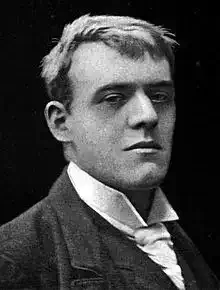
Hilaire Belloc
The Pelagian Drinking Song
Pelagius lived at Kardanoel
And taught a doctrine there
How, whether you went to heaven or to hell
It was your own affair.
It had nothing to do with the Church, my boy,
But was your own affair.
No, he didn't believe
In Adam and Eve
He put no faith therein!
His doubts began
With the Fall of Man
And he laughed at Original Sin.
With my row-ti-tow
Ti-oodly-ow
He laughed at original sin.
Then came the bishop of old Auxerre
Germanus was his name
He tore great handfuls out of his hair
And he called Pelagius shame.
And with his stout Episcopal staff
So thoroughly whacked and banged
The heretics all, both short and tall --
They rather had been hanged.
Oh he whacked them hard, and he banged them long
Upon each and all occasions
Till they bellowed in chorus, loud and strong
Their orthodox persuasions.
With my row-ti-tow
Ti-oodly-ow
Their orthodox persuasions.
Now the faith is old and the Devil bold
Exceedingly bold indeed.
And the masses of doubt that are floating about
Would smother a mortal creed.
But we that sit in a sturdy youth
And still can drink strong ale
Let us put it away to infallible truth
That always shall prevail.
And thank the Lord
For the temporal sword
And howling heretics too.
And all good things
Our Christendom brings
But especially barley brew!
With my row-ti-tow
Ti-oodly-ow
Especially barley brew!
458
Alfred Edward Housman
The Laws of God, The Laws of Man
The laws of God, the laws of man,
He may keep that will and can;
Not I: let God and man decree
Laws for themselves and not for me;
And if my ways are not as theirs
Let them mind their own affairs.
Their deeds I judge and much condemn,
Yet when did I make laws for them?
Please yourselves, say I, and they
Need only look the other way.
But no, they will not; they must still
Wrest their neighbor to their will,
And make me dance as they desire
With jail and gallows and hell-fire.
And how am I to face the odds
Of man's bedevilment and God's?
I, a stranger and afraid
In a world I never made.
They will be master, right or wrong;
Though both are foolish, both are strong.
And since, my soul, we cannot fly
To Saturn nor to Mercury,
Keep we must, if keep we can,
These foreign laws of God and man.
453

William Blake
If It Is True What the Prophets Write
If it is true, what the Prophets write,
That the heathen gods are all stocks and stones,
Shall we, for the sake of being polite,
Feed them with the juice of our marrow-bones?
And if Bezaleel and Aholiab drew
What the finger of God pointed to their view,
Shall we suffer the Roman and Grecian rods
To compel us to worship them as gods?
They stole them from the temple of the Lord
And worshipp'd them that they might make inspirèd art abhorr'd;
The wood and stone were call'd the holy things,
And their sublime intent given to their kings.
All the atonements of Jehovah spurn'd,
And criminals to sacrifices turn'd.
452
Percy Bysshe Shelley
To The Men Of England
Men of England, wherefore plough
For the lords who lay ye low?
Wherefore weave with toil and care
The rich robes your tyrants wear?
Wherefore feed and clothe and save,
From the cradle to the grave,
Those ungrateful drones who would
Drain your sweat -- nay, drink your blood?
Wherefore, Bees of England, forge
Many a weapon, chain, and scourge,
That these stingless drones may spoil
The forced produce of your toil?
Have ye leisure, comfort, calm,
Shelter, food, love's gentle balm?
Or what is it ye buy so dear
With your pain and with your fear?
The seed ye sow another reaps;
The wealth ye find another keeps;
The robes ye weave another wears;
The arms ye forge another bears.
Sow seed, -- but let no tyrant reap;
Find wealth, -- let no imposter heap;
Weave robes, -- let not the idle wear;
Forge arms, in your defence to bear.
Shrink to your cellars, holes, and cells;
In halls ye deck another dwells.
Why shake the chains ye wrought? Ye see
The steel ye tempered glance on ye.
With plough and spade and hoe and loom,
Trace your grave, and build your tomb,
And weave your winding-sheet, till fair
England be your sepulchre!
449

Henry Van Dyke
The Vain King
In robes of Tyrian blue the King was drest,
A jewelled collar shone upon his breast,
A giant ruby glittered in his crown -----
Lord of rich lands and many a splendid town.
In him the glories of an ancient line
Of sober kings, who ruled by right divine,
Were centred; and to him with loyal awe
The people looked for leadership and law.
Ten thousand knights, the safeguard of the land,
Lay like a single sword within his hand;
A hundred courts, with power of life and death,
Proclaimed decrees justice by his breath;
And all the sacred growths that men had known
Of order and of rule upheld his throne.
Proud was the King: yet not with such a heart
As fits a man to play a royal part.
Not his the pride that honours as a trust
The right to rule, the duty to be just:
Not his the dignity that bends to bear
The monarch's yoke, the master's load of care,
And labours like the peasant at his gate,
To serve the people and protect the State.
Another pride was his, and other joys:
To him the crown and sceptre were but toys,
With which he played at glory's idle game,
To please himself and win the wreaths of fame.
The throne his fathers held from age to age
Built for King Martin to diplay at will,
His mighty strength and universal skill.
No conscious child, that, spoiled with praising, tries
At every step to win admiring eyes, ----
No favourite mountebank, whose acting draws
From gaping crowds loud thunder of applause,
Was vainer than the King: his only thirst
Was to be hailed, in every race, the first.
When tournament was held, in knightly guise
The King would ride the lists and win the prize;
When music charmed the court, with golden lyre
The King would take the stage and lead the choir;
In hunting, his the lance to slay the boar;
In hawking, see his falcon highest soar;
In painting, he would wield the master's brush;
In high debate, -----"the King is speaking! Hush!"
Thus, with a restless heart, in every field
He sought renown, and found his subjects yield
As if he were a demi-god revealed.
But while he played the petty games of life
His kingdom fell a prey to inward strife;
Corruption through the court unheeded crept,
And on the seat of honour justice slept.
The strong trod down the weak; the helpless poor
Groaned under burdens grievous to endure.
The nation's wealth was spent in vain display,
And weakness wore the nation's heart away.
Yet think not Earth is blind to human woes ---
Man has more friends and helpers than he knows;
And when a patient people are oppressed,
The land that bore them feels it in her breast.
Spirits of field and flood, of heath and hill,
Are grieved and angry at the spreading ill;
The trees complain together in the night,
Voices of wrath are heard along the height,
And secret vows are sworn, by stream and strand,
To bring the tyrant low and liberate the land.
But little recked the pampered King of these;
He heard no voice but such as praise and please.
Flattered and fooled, victor in every sport,
One day he wandered idly with his court
Beside the river, seeking to devise
New ways to show his skill to wondering eyes.
There in the stream a patient fisher stood,
And cast his line across the rippling flood.
His silver spoil lay near him on the green:
"Such fish," the courtiers cried, "were never seen!"
"Three salmon larger than a cloth-yard shaft--"
This man must be the master of his craft!"
"An easy art!" the jealous King replied:
"Myself could learn it better, if I tried,
"And catch a hundred larger fish a week--"
Wilt thou accept the challenge, fellow? Speak!"
The fisher turned, came near, and bent his knee:
"'Tis not for kings to strive with such as me;
"Yet if the King commands it, I obey.
"But one condition of the strife I pray:
"The fisherman who brings the least to land
"Shall do whate'er the other may command."
Loud laughed the King: "A foolish fisher thou!
"For I shall win and rule thee then as now."
So to Prince John, a sober soul, sedate
And slow, King Martin left the helm of state,
While to the novel game with eager zest
He all his time and all his powers addrest.
Sure such a sight was never seen before!
For robed and crowned the monarch trod the shore;
His golden hooks were decked with feathers fine,
His jewelled reel ran out a silken line.
With kingly strokes he flogged the crystal stream,
Far-off the salmon saw his tackle gleam;
Careless of kings, they eyed with calm disdain
The gaudy lure, and Martin fished in vain.
On Friday, when the week was almost spent,
He scanned his empty creel with discontent,
Called for a net, and cast it far and wide,
And drew --- a thousand minnows from the tide!
Then came the fisher to conclude the match,
And at the monarch's feet spread out his catch ---
A hundred salmon, greater than before --"
I win!" he cried: "the King must pay the score."
Then Martin, angry, threw his tackle down:
"Rather than lose this game I'd lose me crown!"
"Nay, thou has lost them both," the fisher said;
And as he spoke a wondrous light was shed
Around his form; he dropped his garments mean,
And in his place the River-god was seen.
"Thy vanity hast brought thee in my power,
"And thou shalt pay the forfeit at this hour:
"For thou hast shown thyself a royal fool,
"Too proud to angle, and too vain to rule.
"Eager to win in every trivial strife, --"
Go! Thou shalt fish for minnows all thy life!"
Wrathful, the King the scornful sentence heard;
He strove to answer, but he only chirr-r-ed:
His Tyrian robe was changed to wings of blue,
His crown became a crest, --- away he flew!
And still, along the reaches of the stream,
The vain King-fisher flits, an azure gleam, ---
You see his ruby crest, you hear his jealous scream.
440
Ezra Pound
Alf’s Fifth Bit
The pomps of butchery, financial power,
Told 'em to die in war, and then to save,
Then cut their saving to the half or lower;
When will this system lie down in its grave?
The pomps of Fleet St., festering year on year,
Hid truth and lied, and lied and hid the facts.
The pimps of Whitehall ever more in fear,
Hid health statistics, dodged the Labour Acts.
All drew their pay, and as the pay grew less,
The money rotten and more rotten yet,
Hid more statistics, more feared to confess
C.3, C.4, 'twere better to forget
How many weak of mind, how much tuberculosis
Filled the back alleys and the back to back houses.
'The medical report this week discloses . . .'
'Time for that question!' Front Bench interposes.
Time for that question? and the time is NOW.
Who ate the profits, and who locked 'em in
The unsafe safe, wherein all rots, and no man can say how
What was the nation's, now by Norman's kin
Is one day blown up large, the next, ducked in?
436

Henry Wadsworth Longfellow
To William E. Channing
The pages of thy book I read,
And as I closed each one,
My heart, responding, ever said,
"Servant of God! well done!"
Well done! Thy words are great and bold;
At times they seem to me,
Like Luther's, in the days of old,
Half-battles for the free.
Go on, until this land revokes
The old and chartered Lie,
The feudal curse, whose whips and yokes
Insult humanity.
A voice is ever at thy side
Speaking in tones of might,
Like the prophetic voice, that cried
To John in Patmos, "Write!"
Write! and tell out this bloody tale;
Record this dire eclipse,
This Day of Wrath, this Endless Wail,
This dread Apocalypse!
435