
Protest, Resistance and Revolution

Lord Byron
The Island: Canto I.
I.
The morning watch was come; the vessel lay
Her course, and gently made her liquid way;
The cloven billow flashed from off her prow
In furrows formed by that majestic plough;
The waters with their world were all before;
Behind, the South Sea's many an islet shore.
The quiet night, now dappling, 'gan to wane,
Dividing darkness from the dawning main;
The dolphins, not unconscious of the day,
Swam high, as eager of the coming ray;
The stars from broader beams began to creep,
And lift their shining eyelids from the deep;
The sail resumed its lately shadowed white,
And the wind fluttered with a freshening flight;
The purpling Ocean owns the coming Sun,
But ere he breaka
deed is to be done.
e
II.
The gallant Chief within his cabin slept,
Secure in those by whom the watch was kept:
His dreams were of Old England's welcome shore,
Of toils rewarded, and of dangers o'er;
His name was added to the glorious roll
Of those who search the stormsurrounded
Pole.
The worst was over, and the rest seemed sure,
And why should not his slumber be secure?
Alas! his deck was trod by unwilling feet,
And wilder hands would hold the vessel's sheet;
Young hearts, which languished for some sunny isle,
Where summer years and summer women smile;
Men without country, who, too long estranged,
Had found no native home, or found it changed,
And, half uncivilised, preferred the cave
Of some soft savage to the uncertain wave
The
gushing fruits that nature gave untilled;
The wood without a pathbut
where they willed;
The field o'er which promiscuous Plenty poured
Her horn; the equal land without a lord;
The wishwhich
ages have not yet subdued
In manto
have no master save his mood
The earth, whose mine was on its face, unsold,
The glowing sun and produce all its gold;
The Freedom which can call each grot a home;
The general garden, where all steps may roam,
Where Nature owns a nation as her child,
Exulting in the enjoyment of the wild
Their shells, their fruits, the only wealth they know,
Their unexploring navy, the canoe
Their sport, the dashing breakers and the chase;
Their strangest sight, an European face
Such was the country which these strangers yearned
To see againa
sight they dearly earned.
III.
Awake, bold Bligh! the foe is at the gate!
Awake! awake!
Alas!
it is too late!
Fiercely beside thy cot the mutineer
Stands, and proclaims the reign of rage and fear.
Thy limbs are bound, the bayonet at thy breast;
The hands, which trembled at thy voice, arrest;
Dragged o'er the deck, no more at thy command
The obedient helm shall veer, the sail expand;
That savage Spirit, which would lull by wrath
Its desperate escape from Duty's path,
Glares round thee, in the scarce believing eyes
Of those who fear the Chief they sacrifice:
For ne'er can Man his conscience all assuage,
Unless he drain the wine of PassionRage.
IV.
In vain, not silenced by the eye of Death,
Thou call'st the loyal with thy menaced breath
They come not; they are few, and, overawed,
Must acquiesce, while sterner hearts applaud.
In vain thou dost demand the cause: a curse
Is all the answer, with the threat of worse.
Full in thine eyes is waved the glittering blade,
Close to thy throat the pointed bayonet laid.
The levelled muskets circle round thy breast
In hands as steeled to do the deadly rest.
Thou dar'st them to their worst, exclaiming'
Fire!'
But they who pitied not could yet admire;
Some lurking remnant of their former awe
Restrained them longer than their broken law;
They would not dip their souls at once in blood,
But left thee to the mercies of the flood.
V.
'Hoist out the boat!' was now the leader's cry;
And who dare answer 'No!' to Mutiny,
In the first dawning of the drunken hour,
The Saturnalia of unhopedfor
power?
The boat is lowered with all the haste of hate,
With its slight plank between thee and thy fate;
Her only cargo such a scant supply
As promises the death their hands deny;
And just enough of water and of bread
To keep, some days, the dying from the dead:
Some cordage, canvass, sails, and lines, and twine,
But treasures all to hermits of the brine,
Were added after, to the earnest prayer
Of those who saw no hope, save sea and air;
And last, that trembling vassal of the Pole
The feeling compass
Navigation's
soul.
VI.
And now the selfelected
Chief finds time
To stun the first sensation of his crime,
And raise it in his followers'
Ho! the bowl!'
Lest passion should return to reason's shoal.
'Brandy for heroes!' Burke could once exclaim
No
doubt a liquid path to Epic fame;
And such the newborn
heroes found it here,
And drained the draught with an applauding cheer,
'Huzza! for Otaheite!' was the cry.
How strange such shouts from sons of Mutiny!
The gentle island, and the genial soil,
The friendly hearts, the feasts without a toil,
The courteous manners but from nature caught,
The wealth unhoarded, and the love unbought; sic
Could these have charms for rudest seaboys,
driven
Before the mast by every wind of heaven?
And now, even now prepared with others' woes
To earn mild Virtue's vain desire, repose?
Alas! such is our nature! all but aim
At the same end by pathways not the same;
Our meansour
birthour
nation, and our name,
Our fortunetempereven
our outward frame,
Are far more potent o'er our yielding clay
Than aught we know beyond our little day.
Yet still there whispers the small voice within,
Heard through Gain's silence, and o'er Glory's din:
Whatever creed be taught, or land be trod,
Man's conscience is the Oracle of God.
VII.
The launch is crowded with the faithful few
Who wait their Chief, a melancholy crew:
But some remained reluctant on the deck
Of that proud vesselnow
a moral wreck
And
viewed their Captain's fate with piteous eyes;
While others scoffed his augured miseries,
Sneered at the prospect of his pigmy sail,
And the slight bark so laden and so frail.
The tender nautilus, who steers his prow,
The seaborn
sailor of his shell canoe,
The ocean Mab, the fairy of the sea,
Seems far less fragile, and, alas! more free.
He, when the lightningwinged
Tornados sweep
The surge, is safehis
port is in the deep
And
triumphs o'er the armadas of Mankind,
Which shake the World, yet crumble in the wind.
VIII.
When all was now prepared, the vessel clear
Which hailed her master in the mutineer,
A seaman, less obdurate than his mates,
Showed the vain pity which but irritates;
Watched his late Chieftain with exploring eye,
And told, in signs, repentant sympathy;
Held the moist shaddock to his parchéd mouth,
Which felt Exhaustion's deep and bitter drouth.
But soon observed, this guardian was withdrawn,
Nor further Mercy clouds Rebellion's dawn.
Then forward stepped the bold and froward boy
His Chief had cherished only to destroy,
And, pointing to the helpless prow beneath,
Exclaimed, 'Depart at once! delay is death!'
Yet then, even then, his feelings ceased not all:
In that last moment could a word recall
Remorse for the black deed as yet half done,
And what he hid from many showed to one:
When Bligh in stern reproach demanded where
Was now his grateful sense of former care?
Where all his hopes to see his name aspire,
And blazon Britain's thousand glories higher?
His feverish lips thus broke their gloomy spell,
''Tis that! 'Tis that! I am in hell! in hell!'
No more he said; but urging to the bark
His Chief, commits him to his fragile ark;
These the sole accents from his tongue that fell,
But volumes lurked below his fierce farewell.
IX.
The arctic Sun rose broad above the wave;
The breeze now sank, now whispered from his cave;
As on the Aeolian harp, his fitful wings
Now swelled, now fluttered o'er his Ocean strings.
With slow, despairing oar, the abandoned skiff
Ploughs its drear progress to the scarce seen cliff,
Which lifts its peak a cloud above the main:
That boat and ship shall never meet again!
But 'tis not mine to tell their tale of grief,
Their constant peril, and their scant relief;
Their days of danger, and their nights of pain;
Their manly courage even when deemed in vain;
The sapping famine, rendering scarce a son
Known to his mother in the skeleton;
The ills that lessened still their little store,
And starved even Hunger till he wrung no more;
The varying frowns and favours of the deep,
That now almost ingulfs, then leaves to creep
With crazy oar and shattered strength along
The tide that yields reluctant to the strong;
The incessant fever of that arid thirst
Which welcomes, as a well, the clouds that burst
Above their naked bones, and feels delight
In the cold drenching of the stormy night,
And from the outspread canvass gladly wrings
A drop to moisten Life's allgasping
springs;
The savage foe escaped, to seek again
More hospitable shelter from the main;
The ghastly Spectres which were doomed at last
To tell as true a tale of dangers past,
As ever the dark annals of the deep
Disclosed for man to dread or woman weep.
X.
We leave them to their fate, but not unknown
Nor unredressed. Revenge may have her own:
Roused Discipline aloud proclaims their cause,
And injured Navies urge their broken laws.
Pursue we on his track the mutineer,
Whom distant vengeance had not taught to fear.
Wide o'er the waveaway!
away! away!
Once more his eyes shall hail the welcome bay;
Once more the happy shores without a law
Receive the outlaws whom they lately saw;
Nature, and Nature's goddess
Womanwoos
To lands where, save their conscience, none accuse;
Where all partake the earth without dispute,
And bread itself is gathered as a fruit;
Where none contest the fields, the woods, the streams
The goldless Age, where Gold disturbs no dreams,
Inhabits or inhabited the shore,
Till Europe taught them better than before;
Bestowed her customs, and amended theirs,
But left her vices also to their heirs.
Away with this! behold them as they were,
Do good with Nature, or with Nature err.
'Huzza! for Otaheite!' was the cry,
As stately swept the gallant vessel by.
The breeze springs up; the lately flapping sail
Extends its arch before the growing gale;
In swifter ripples stream aside the seas,
Which her bold bow flings off with dashing ease.
Thus Argo ploughed the Euxine's virgin foam,
But those she wafted still looked back to home;
These spurn their country with their rebel bark,
And fly her as the raven fled the Ark;
And yet they seek to nestle with the dove,
And tame their fiery spirits down to Love.
569
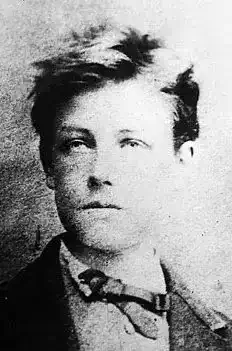
Arthur Rimbaud
Jeanne-Marie's Hands
Jeanne-Marie has strong hands; dark hands tanned by the summer,
pale hands like dead hands. Are they the hands of Donna Juana?
Did they get their dusky cream colour
sailing on pools of sensual pleasure?
Have they dipped into moons, in ponds of serenity?
Have they drunk heat from barbarous skies, calm upon enchanting knees?
Have they rolled cigars, or traded in diamonds?
Have they tossed golden flowers at the glowing feet of Madonnas?
It is the black blood of belladonnas that blazes and sleeps in their palms.
Hands which drive the diptera with which
the auroral bluenesses buzz, towards the nectars?
Hands which measure out poisons?
Oh what Dream has stiffened them in pandiculations?
Some extraordinary dream of the Asias, of Khenghavars or Zions?
These hands have neither sold oranges
nor become sunburnt at the feet of the gods:
these hands have never washed the napkins of heavy babies without eyes.
These are not the hands of a tart,
nor of working women with round foreheads burnt
by a sun which is drunk with the smell of tar,
in woods that sink of factories.
These are benders of backbones; hands that never work harm;
more inevitable than machines, stronger than carthorses!
Stirring like furnaces, shaking off all their chills of fear,
their flesh sings Marseillaises, and never Eleisons!
They could grasp your necks, O evil women;
they could pulverize your hands, noblewomen;
your infamous hands full of white and of carmine.
The splendour of these hands of love turns the heads of the lambs!
On their spicy fingers the great sun sets a ruby!
A dark stain of the common people makes then brown
like the nipples of the women of yesterday,
but it is the backs of these Hands which every
proud Rebel desires to kiss! Marvelous,
they have paled in the great sunshine full of love of the cause
on the bronze casing of machine-guns throughout insurgent Paris!
Ah, sometimes, O blessed Hands, at your wrists,
Hands where our never-sobered lips tremble,
cries out a chain of bright links!
And there's a strange and sudden
Start in our beings when,
sometimes, they try, angelic Hands,
to make your sunburn fade away
by making your fingers bleed!
567
Arthur Rimbaud
Historic Evening
On an evening, for example, when the naive tourist has retired
from our economic horrors, a master's hand awakens
the meadow's harpsichord;
they are playing cards at the bottom of the pond,
mirror conjuring up favorites and queens;
there are saints, veils, threads of harmony,
and legendary chromatics in the setting sun.
He shudders as the hunts and hordes go by.
Comedy drips on the grass stages.
And the distress of the poor and of the weak
on those stupid planes! Before his slave's vision,
Germany goes scaffolding toward moons;
Tartar deserts light up; ancient revolts ferment
in the center of the Celestial Empire;
over stairways and armchairs of rock, a little world, wan and flat,
Africa and Occidents, will be erected.
Then a ballet of familiar seas and nights,
worthless chemistry and impossible melodies. The same bourgeois magic
wherever the mail-train sets you down.
Even the most elementary physicist feels that it is no longer possible
to submit to this personal atmosphere, fog of physical remorse,
which to acknowledge is already an affliction. No!
The moment of the seething cauldron, of seas removed,
of subterranean conflagrations, of the planet swept away,
and the consequent exterminations, certitudes indicated
with so little malice by the Bible and by the Norns
and for which serious persons should be on the alert
554

Kazi Nazrul Islam
Forgive us, O Prophet!
We haven't embraced your message,
Please forgive us, O Prophet!
We have forgotten your ideals
And the path for us that you did set.
Please forgive us, O Prophet!
You trampled like dust
Luxury and wealth, O master!
You never dreamed that
We will be kings or lords of disaster!
In this world's resource and treasure
Everyone has right of due measure;
You proclaimed, on this earth,
Equal son's treatment all will get.
Please forgive us, O Prophet!
In your religion, toward the unbelievers
You did not direct any hate;
You served them as your fellows,
For all of them was open your hospitable gate.
To demolish temples of others anywhere on land,
O valiant, you did not ever command;
Now even difference in opinion from others
We can't bear or tolerate.
Please forgive us, O Prophet!
You did not seek in the name of faith
Meaningless and shameful killing or fight;
You did not place sword in our hand,
Rather gave us guidance, so noble and upright.
Ignoring your tolerance and magnanimity
We have elevated fanaticism to a new nobility;
Is that why, from the heavenly fountain,
Does not flow that mercy, so divine and great?
Please forgive us, O Prophet!
We haven't embraced your message
Please forgive us, O Prophet!
We have forgotten your ideals
And the path for us that you did set.
Please forgive us, O Prophet!
[Translation: Mohammad Omar Farooq]
Please forgive us, O Prophet!
We have forgotten your ideals
And the path for us that you did set.
Please forgive us, O Prophet!
You trampled like dust
Luxury and wealth, O master!
You never dreamed that
We will be kings or lords of disaster!
In this world's resource and treasure
Everyone has right of due measure;
You proclaimed, on this earth,
Equal son's treatment all will get.
Please forgive us, O Prophet!
In your religion, toward the unbelievers
You did not direct any hate;
You served them as your fellows,
For all of them was open your hospitable gate.
To demolish temples of others anywhere on land,
O valiant, you did not ever command;
Now even difference in opinion from others
We can't bear or tolerate.
Please forgive us, O Prophet!
You did not seek in the name of faith
Meaningless and shameful killing or fight;
You did not place sword in our hand,
Rather gave us guidance, so noble and upright.
Ignoring your tolerance and magnanimity
We have elevated fanaticism to a new nobility;
Is that why, from the heavenly fountain,
Does not flow that mercy, so divine and great?
Please forgive us, O Prophet!
We haven't embraced your message
Please forgive us, O Prophet!
We have forgotten your ideals
And the path for us that you did set.
Please forgive us, O Prophet!
[Translation: Mohammad Omar Farooq]
552

Rudyard Kipling
The Last of the Light Brigade
There were thirty million English who talked of England's might,
There were twenty broken troopers who lacked a bed for the night.
They had neither food nor money, they had neither service nor trade;
They were only shiftless soldiers, the last of the Light Brigade.
They felt that life was fleeting; they knew not that art was long,
That though they were dying of famine, they lived in deathless song.
They asked for a little money to keep the wolf from the door;
And the thirty million English sent twenty pounds and four!
They laid their heads together that were scarred and lined and grey;
Keen were the Russian sabres, but want was keener than they;
And an old Troop-Sergeant muttered, "Let us go to the man who writes
The things on Balaclava the kiddies at school recites."
They went without bands or colours, a regiment ten-file strong,
To look for the Master-singer who had crowned them all in his song;
And, waiting his servant's order, by the garden gate they stayed,
A desolate little cluster, the last of the Light Brigade.
They strove to stand to attention, to straighten the toil-bowed back;
They drilled on an empty stomach, the loose-knit files fell slack;
With stooping of weary shoulders, in garments tattered and frayed,
They shambled into his presence, the last of the Light Brigade.
The old Troop-Sergeant was spokesman, and "Beggin' your pardon," he said,
"You wrote o' the Light Brigade, sir. Here's all that isn't dead.
An' it's all come true what you wrote, sir, regardin' the mouth of hell;
For we're all of us nigh to the workhouse, an, we thought we'd call an' tell.
"No, thank you, we don't want food, sir; but couldn't you take an' write
A sort of 'to be continued' and 'see next page' o' the fight?
We think that someone has blundered, an' couldn't you tell 'em how?
You wrote we were heroes once, sir. Please, write we are starving now."
The poor little army departed, limping and lean and forlorn.
And the heart of the Master-singer grew hot with "the scorn of scorn."
And he wrote for them wonderful verses that swept the land like flame,
Till the fatted souls of the English were scourged with the thing called Shame.
O thirty million English that babble of England's might,
Behold there are twenty heroes who lack their food to-night;
Our children's children are lisping to "honour the charge they made-"
And we leave to the streets and the workhouse the charge of the Light Brigade!
552

William Blake
The French Revolution (excerpt)
Thee the ancientest peer, Duke of Burgundy, rose from the monarch's right hand, red
as wines
From his mountains; an odor of war, like a ripe vineyard, rose from his garments,
And the chamber became as a clouded sky; o'er the council he stretch'd his red limbs,
Cloth'd in flames of crimson; as a ripe vineyard stretches over sheaves of corn,
The fierce Duke hung over the council; around him crowd, weeping in his burning robe,
A bright cloud of infant souls; his words fall like purple autumn on the sheaves:
'Shall this marble built heaven become a clay cottage, this earth an oak stool and
these mowers
From the Atlantic mountains mow down all this great starry harvest of six thousand
years?
And shall Necker, the hind of Geneva, stretch out his crook'd sickle o'er fertile
France
Till our purple and crimson is faded to russet, and the kingdoms of earth bound in
sheaves,
And the ancient forests of chivalry hewn, and the joys of the combat burnt for
fuel;
Till the power and dominion is rent from the pole, sword and sceptre from sun and
moon,
The law and gospel from fire and air, and eternal reason and science
From the deep and the solid, and man lay his faded head down on the rock
Of eternity, where the eternal lion and eagle remain to devour?
This to prevent--urg'd by cries in day, and prophetic dreams hovering in night,
To enrich the lean earth that craves, furrow'd with plows, whose seed is
departing from her--
Thy nobles have gather'd thy starry hosts round this rebellious city,
To rouze up the ancient forests of Europe, with clarions of cloud breathing war,
To hear the horse neigh to the drum and trumpet, and the trumpet and war
shout reply.
Stretch the hand that beckons the eagles of heaven; they cry over Paris, and
wait
Till Fayette point his finger to Versailles; the eagles of heaven must have their
prey!'
He ceas'd, and burn'd silent; red clouds roll round Necker; a weeping is heard
o'er the palace.
Like a dark cloud Necker paus'd, and like thunder on the just man's burial day he
paus'd;
Silent sit the winds, silent the meadows, while the husbandman and woman of
weakness
And bright children look after him into the grave, and water his clay with love,
Then turn towards pensive fields; so Necker paus'd, and his visage was covered
with clouds.
The King lean'd on his mountains, then lifted his head and look'd on his armies,
that shone
Through heaven, tinging morning with beams of blood; then turning to Burgundy,
troubled:
'Burgundy, thou wast born a lion! My soul is o'ergrown with distress.
For the nobles of France, and dark mists roll round me and blot the writing of
God
Written in my bosom. Necker rise! leave the kingdom, thy life is surrounded with
snares.
We have call'd an Assembly, but not to destroy; we have given gifts, not to the
weak;
I hear rushing of muskets, and bright'ning of swords, and visages redd'ning with
war,
Frowning and looking up from brooding villages and every dark'ning city.
Ancient wonders frown over the kingdom, and cries of women and babes are
heard,
And tempests of doubt roll around me, and fierce sorrows, because of the nobles
of France.
Depart! answer not! for the tempest must fall, as in years that are passed away.'
541
Rudyard Kipling
The Anvil
England's on the anvil--hear the hammers ring--
Clanging from the Severn to the Tyne!
Never was a blacksmith like our Norman King--
England's being hammered, hammered, hammered into line!
England's on the anvil! Heavy are the blows!
(But the work will be a marvel when it's done.)
Little bits of Kingdoms cannot stand against their foes.
England's being hammered hammered, hammered into one!
There shall be one people--it shall serve one Lord--
(Neither Prist nor Baron shall escape!)
It shall have one speech and law, soul and strength and sword.
England's being hammered, hammered, hammered into
shape!
544
Kazi Nazrul Islam
Fanaticism is not Religion!
Bullying, hypocrisy or fanaticism: that's not what religion is all about
According to all scriptures, fanatics are disciples of the devil: no doubt.
The one and only Creator of all: He is the loving Master ever;
That there is more than one Creator, no true religion can claim so; never.
Even then, partnership to God is attributed by Satan the smitten
Yet his judge is only God, no one else: in the Qur'an it is written.
Man can't be Satan's judge or try him; indeed, either to the Hell
or to Heaven, what human power can push him or propel?
'Guide only those who are lost' - this is a divine command,
Any wrongdoing even against the unbelievers: in the Qur'an it is patently banned.
Why do people sin, or why some go astray as human being?
Why some people come to this world handicapped, or without the power of seeing?
Why are some ever-destitutes, and some are ever-so-rich?
Why some always live in peace, while others are destined to trouble's ditch?
Which preacher or Mullah knows its mystery, please tell me
They have carried the load of scriptures - Qur'an, Vedas - like no more than a donkey.
Even to that wretched who did not call Him, as to the provision for his hunger,
Why God did not Himself deprive him, who can communicate to a scripture-monger?
His creation - like the open-wide sky - embraces all, none barred;
His air and wind flows everywhere: mosque, temple, or earth's every corner or yard.
On the basis of faith, the light of His sun and moon does not ever discriminate,
it comes to every home or nation; where does it cause any division or foster hate?
His rain comes in shower flowing in the field and yard of all the faithful,
His fire, water, air serve everyone - to the ingrate and the grateful.
His water brings the blessings of flower and fruit to the garden of every nation,
Who, yet, preaches hatred and division in His love's congregation?
No saint, dervish, yogi, a prophet or a messenger truly divine,
Ever reviled others' faith or religion - who isn't aware of this wisdom so fine?
Under the guise of religion, the bullies and the pretenders have a pact;
they stir up the ignorant mass as part of their vile selfish act.
They foster hatred and prejudice among different faith or nation;
these devils cherish power, while feeding themselves is their only preoccupation.
Under the guise of religious movements, these ugly faces
claim that, if in power, they will help their fellows, or that's how they make their cases.
Fame and medals of aristocrats these Zaminders, loan sharks, and filthy rich get
In reality, they care about none; on their own welfare their eyes are set.
All the wealth they amass, have they ever given anyone anything?
Has ever a homeless found shelter in their fancy, luxurious building?
In the name of nationality or religion, poison is what they spread;
These are poisonous snakes; Finish them - don't you dread!
One is not a believer who doesn't have tolerance or patience - a virtue so auspicious
They are gangs of demons, worse than titans or monsters - utterly vicious.
Those who are oppressors, they have no specific religion or affiliation,
They block people from the divine ray; these friends of darkness believe in no
reconciliation.
They bring agitation and hatred among people, and help break any relation,
They are monsters who snatch away others' food and water in disgraceful jubilation.
We must know that these people in their death's pang,
suffer in this life, as shame over their head does hang.
The ultimate Judge who has no partner, He
punishes whom in just a while, you will, yes you will, see.
We are poor, destitute, oppressed and weak!
To lead us astray those who incessantly tweak;
They breed discord, disturbance, and pursue their selfish fortune,
In the Qur'an God addresses these wretcheds: 'Turn into apes' to play their tune.
[Original: Gorami Dharmo Noy
Translation: Mohammad Omar Farooq ]
544
Rudyard Kipling
The Fabulists
-
When all the world would keep a matter hid,
Since Truth is seldom Friend to any crowd,
Men write in Fable, as old AEsop did,
Jesting at that which none will name aloud.
And this they needs must do, or it will fall
Unless they please they are not heard at all.
When desperate Folly daily laboureth
To work confusion upon all we have,
When diligent Sloth demandeth Freedom's death,
And banded Fear commandeth Honour's grave--
Even in that certain hour before the fall,
Unless men please they are not heard at all.
Needs must all please, yet some not all for need,
Needs must all toil, yet some not all for gain,
But that men taking pleasure may take heed
Whom present toil shall snatch from later pain.
Thus some have toiled, but their reward was small
Since, though they pleased, they were not heard at all.
This was the lock that lay upon our lips,
This was the yoke that we have undergone,
Denying us all pleasant fellowships
As in our time and generation.
Our pleasures unpursued age past recall,
And for our pains--we are not heard at all.
What man hears aught except the groaning guns?
What man heeds aught save what each instant brings?
When each man's life all imaged life outruns,
What man shall pleasure in imaginings?
So it hath fallen, as it was bound to fall,
We are not, nor we were not, heard at all.
540

William Butler Yeats
September 1913
What need you, being come to sense,
But fumble in a greasy till
And add the halfpence to the pence
And prayer to shivering prayer, until
You have dried the marrow from the bone?
For men were born to pray and save:
Romantic Ireland's dead and gone,
It's with O'Leary in the grave.
Yet they were of a different kind,
The names that stilled your childish play,
They have gone about the world like wind,
But little time had they to pray
For whom the hangman's rope was spun,
And what, God help us, could they save?
Romantic Ireland's dead and gone,
It's with O'Leary in the grave.
Was it for this the wild geese spread
The grey wing upon every tide;
For this that all that blood was shed,
For this Edward Fitzgerald died,
And Robert Emmet and Wolfe Tone,
All that delirium of the brave?
Romantic Ireland's dead and gone,
It's with O'Leary in the grave.
Yet could we turn the years again,
And call those exiles as they were
In all their loneliness and pain,
You'd cry, 'Some woman's yellow hair
Has maddened every mother's son':
They weighed so lightly what they gave.
But let them be, they're dead and gone,
They're with O'Leary in the grave.
536
Rudyard Kipling
The Reeds of Runnymede
Magna Charta, June ,
At Runnymede, At Runnymede,
What say the reeds at Runnymede?
The lissom reeds that give and take,
That bend so far, but never break,
They keep the sleepy Thames awake
With tales of John at Runnymede.
At Runnymede, at Runnymede,
Oh, hear the reeds at Runnymede:--
"You mustn't sell, delay, deny,
A freeman's right or liberty.
It makes the stubborn Englishry,
We saw 'em roused at Runnymede!
"When through our ranks the Barons came,
With little thought of praise or blame,
But resolute to pay a game,
They lumbered up to Runnymede;
And there they launched in solid time
The first attack on Right Divine--
The curt, uncompromising 'Sign!'
That settled John at Runnymede.
"At Runnymede, at Runnymede,
Your rights were won at Runnymede!
No freeman shall be fined or bound,
Or dispossessed or freehold ground,
Except by lawful judgment found
And passed upon him by his peers.
Forget not, after all these years,
The Charter Signed at Runnymede."
And still when Mob or Monarch lays
Too rude hand on English ways,
The whisper wakes, the shudder plays,
Across the reeds at Runnymede.
And Tames, that knows the moods of kings,
And crowds and priests and suchlike things,
Rolls deep and dreadful as he brings
Their warning down from Runnymede!
533
Rudyard Kipling
Ulster
("Their webs shall not become garments, neither shall they
cover themselves with their works: their works are works
of inquity and the act of violence is in their hands." --
Isaiah lix. .)
The dark eleventh hour
Draws on and sees us sold
To every evil power
We fought against of old.
Rebellion, rapine hate
Oppression, wrong and greed
Are loosed to rule our fate,
By England's act and deed.
The Faith in which we stand,
The laws we made and guard,
Our honour, lives, and land
Are given for reward
To Murder done by night,
To Treason taught by day,
To folly, sloth, and spite,
And we are thrust away.
The blood our fathers spilt,
Our love, our toils, our pains,
Are counted us for guilt,
And only bind our chains.
Before an Empire's eyes
The traitor claims his price.
What need of further lies?
We are the sacrifice.
We asked no more than leave
To reap where we had sown,
Through good and ill to cleave
To our own flag and throne.
Now England's shot and steel
Beneath that flag must show
How loyal hearts should kneel
To England's oldest foe.
We know the war prepared
On every peaceful home,
We know the hells declared
For such as serve not Rome --
The terror, threats, and dread
In market, hearth, and field --
We know, when all is said,
We perish if we yield.
Believe, we dare not boast,
Believe, we do not fear --
We stand to pay the cost
In all that men hold dear.
What answer from the North?
One Law, one Land, one Throne.
If England drive us forth
We shall not fall alone!
527
Kazi Nazrul Islam
Those Iron Gates of Prison
Destroy those iron gates of prison,
demolisth the blood-stained stony altars
of chain worshipping!
O youthful Shiva,
blow your horn of universal cataclysm!
Let the flag of destruction
rise amidst the rubble of prison walls
of the East! !
Play the music of the festival of Shiva!
Who's the master? Who's the king?
Who is it
that punishes the truth of freedom?
Ha! Ha! Ha! It's a laugh-
God is to be hanged?
Rumor-mongerwho
teaches this pitiful 'trugh'?
O you forgetful Madman shake
- shake the prisons
with your forceful cataclysmic pulls!
Send your Haidari call,
play your war-drumscall
Death
towards Life!
There, the Baishakhi storm is dancingare
you just going to sit through your days?
Let's see
you shake up the foundation
of that terrible prison.
Kick - break the locks!
All those prisonsset
them on fire,
burn them down, uproot them forever!
Translation: Sajed Kamal
529
Kazi Nazrul Islam
The Muslims No Longer Rise
The Muslims no longer rise
With the same old fervour of faith,
With which they conquered the world apace
Burnt and bleak is the bower of birds
whose chirpings changed the fate of worlds,
And during the days of revolt
The Obedience to Allah brought!
No more is Siddiq's Sincerity!
No more is Umar's Sacrifice!
No more is Bilal's Faith!
No more is Ali's Zulfiqar! N
No more are Martyrs now
For Allah's Cause, to fight with vow
Our arms no longer strong!
Khalid, Musa and Tarik are gone!
Gone is the peacock's Throne!
To-day the beggars play the ruling role !
Islam only in the books,
And the Muslims in the graves.
[Original in Bangla: Jage na she loye ar; Kazi Nazrul Islam
Translation: Mizanur Rahman]
523
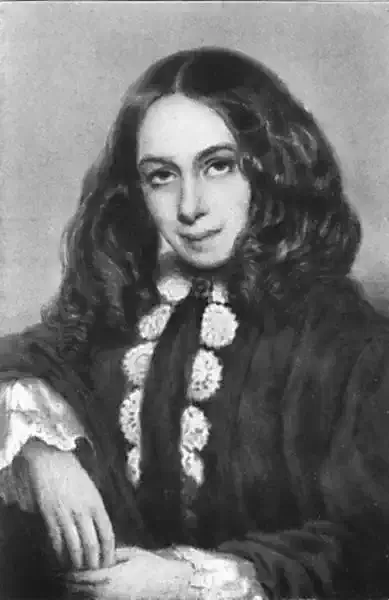
Elizabeth Barrett Browning
A Curse For A Nation
I heard an angel speak last night,
And he said 'Write!
Write a Nation's curse for me,
And send it over the Western Sea.'
I faltered, taking up the word:
'Not so, my lord!
If curses must be, choose another
To send thy curse against my brother.
'For I am bound by gratitude,
By love and blood,
To brothers of mine across the sea,
Who stretch out kindly hands to me.'
'Therefore,' the voice said, 'shalt thou write
My curse to-night.
From the summits of love a curse is driven,
As lightning is from the tops of heaven.'
'Not so,' I answered. 'Evermore
My heart is sore
For my own land's sins: for little feet
Of children bleeding along the street:
'For parked-up honors that gainsay
The right of way:
For almsgiving through a door that is
Not open enough for two friends to kiss:
'For love of freedom which abates
Beyond the Straits:
For patriot virtue starved to vice on
Self-praise, self-interest, and suspicion:
'For an oligarchic parliament,
And bribes well-meant.
What curse to another land assign,
When heavy-souled for the sins of mine?'
'Therefore,' the voice said, 'shalt thou write
My curse to-night.
Because thou hast strength to see and hate
A foul thing done within thy gate.'
'Not so,' I answered once again.
'To curse, choose men.
For I, a woman, have only known
How the heart melts and the tears run down.'
'Therefore,' the voice said, 'shalt thou write
My curse to-night.
Some women weep and curse, I say
(And no one marvels), night and day.
'And thou shalt take their part to-night,
Weep and write.
A curse from the depths of womanhood
Is very salt, and bitter, and good.'
So thus I wrote, and mourned indeed,
What all may read.
And thus, as was enjoined on me,
I send it over the Western Sea.
The Curse
Because ye have broken your own chain
With the strain
Of brave men climbing a Nation's height,
Yet thence bear down with brand and thong
On souls of others, -- for this wrong
This is the curse. Write.
Because yourselves are standing straight
In the state
Of Freedom's foremost acolyte,
Yet keep calm footing all the time
On writhing bond-slaves, -- for this crime
This is the curse. Write.
Because ye prosper in God's name,
With a claim
To honor in the old world's sight,
Yet do the fiend's work perfectly
In strangling martyrs, -- for this lie
This is the curse. Write.
Ye shall watch while kings conspire
Round the people's smouldering fire,
And, warm for your part,
Shall never dare -- O shame!
To utter the thought into flame
Which burns at your heart.
This is the curse. Write.
Ye shall watch while nations strive
With the bloodhounds, die or survive,
Drop faint from their jaws,
Or throttle them backward to death;
And only under your breath
Shall favor the cause.
This is the curse. Write.
Ye shall watch while strong men draw
The nets of feudal law
To strangle the weak;
And, counting the sin for a sin,
Your soul shall be sadder within
Than the word ye shall speak.
This is the curse. Write.
When good men are praying erect
That Christ may avenge His elect
And deliver the earth,
The prayer in your ears, said low,
Shall sound like the tramp of a foe
That's driving you forth.
This is the curse. Write.
When wise men give you their praise,
They shall praise in the heat of the phrase,
As if carried too far.
When ye boast your own charters kept true,
Ye shall blush; for the thing which ye do
Derides what ye are.
This is the curse. Write.
When fools cast taunts at your gate,
Your scorn ye shall somewhat abate
As ye look o'er the wall;
For your conscience, tradition, and name
Explode with a deadlier blame
Than the worst of them all.
This is the curse. Write.
Go, wherever ill deeds shall be done,
Go, plant your flag in the sun
Beside the ill-doers!
And recoil from clenching the curse
Of God's witnessing Universe
With a curse of yours.
This is the curse. Write.
523
Kazi Nazrul Islam
Pioneers, O Pioneers
O you who look so soiled and weary,
Collect your armour for the struggle,
Your rusty shovels, heavy hammers,
To save the earth from dire disaster.
We have no time for sport or revels,
No leisure for procrastinating.
The war's begun in deadly earnest;
We've deeds to plant and crops to harvest.
I see the young on fire and marching
Onward past mountains, vales and rivers,
Unbent and proud man's heritage,
Freedom and honour, in their keeping.
The ancient East, inert, feeble,
A waits a voice to end its slumber.
We will once more awaken, rouse it,
And set it stirring, breathing, moving.
The murky past is dead and buried.
We must emerge from sunless caverns
Into broad uplands bright and shining,
Create a world of newer splendour.
We'll scale the peaks and cross the gorges,
And overcome what risks lie hidden.
We'll fell old trees to build our bridges
And go down in the mines for treasure.
We are awake, no longer sleeping;
We have descended from the plateaus,
Reckless of hungry wounded tigers
And we must move and look not backwards.
We are beholden to those countries,
Egypt and China, Spain and Norway,
Russia, Korea, who have broken
Their age-old chains and savoured freedom.
O Fortune's darlings, I, the poet,
Have nought to offer but my anguish,
My hopes, My dreams, the red blood dripping
From Within my heart beating wildly.
Invoke the gods of ruthless terror,
Shrink not from blood, as green and daring
You must unfurl your country's banner
Armed to the teeth and marching forward.
Listen! beloved fearless children;
Wild beasts and vultures squeak behind you,
And rotting corpses leer, or, frowning,
Earn praise from those who're scared of movement.
Let not these horrors daunt Or frighten;
But torch in hand advance, resistless;
The battlefield is strewn with martyrs
Who died in hundreds faces shining.
The earth is pulsing with a new life,
A tremor coursing through its arteries.
Ours is the strength of many armies;
Our comrades wait in every hamlet.
Sailors and ploughmen, slaves and masters,
Workers and lovers, waifs and prisoners,
Unhappy men who know no laughter-
They too are actors in Our drama.
The day that wanes, the night that follows,
The planets which you see revolving,
Children not born yet, our future soldiers,
They too are bound on this quest endless.
Sisters, awake, your brothers need you
They'll lag behind if you are missing;
Arise and join them, Jet the vanguard
Move forward, rank on rank in order.
I hear the sound of bells announcing
The coming age, when dreams and reveries
Will be fulfilled, and hopes turn rosy,
And we will reach our destination.
We have no use for lifeless knowledge
Stored in thick tomes; We want no false dreams
Or short-lived joys, bejewelled footwear,
Or cushioned thrones, no wealth that's rotten.
We shall survive on bread and water.
And sleep on hard floors, learn to hate those
Who are enslaved by greed, those gluttons;
We will go forward, we the fighters.
Do wipe away your tears, my comrades,
And rest a while if are weary,
Do not lose heart if night is falling,
Our will is firm, our aim is steady.
[Translation: Syed Sajjad Husain]
524

Ezra Pound
These Fought in Any Case
These fought in any case,
and some believing
pro domo, in any case .....
Died some, pro patria,
walked eye-deep in hell
believing in old men's lies, then unbelieving
came home, home to a lie,
home to many deceits,
home to old lies and new infamy;
usury age-old and age-thick
and liars in public places.
Daring as never before, wastage as never before.
Young blood and high blood,
fair cheeks, and fine bodies;
fortitude as never before
frankness as never before,
disillusions as never told in the old days,
hysterias, trench confessions,
laughter out of dead bellies.
517

Walt Whitman
A Boston Ballad, 1854
TO get betimes in Boston town, I rose this morning early;
Here's a good place at the corner--I must stand and see the show.
Clear the way there, Jonathan!
Way for the President's marshal! Way for the government cannon!
Way for the Federal foot and dragoons--and the apparitions copiously
tumbling.
I love to look on the stars and stripes--I hope the fifes will play
Yankee Doodle.
How bright shine the cutlasses of the foremost troops!
Every man holds his revolver, marching stiff through Boston town.
A fog follows--antiques of the same come limping,
Some appear wooden-legged, and some appear bandaged and bloodless.
Why this is indeed a show! It has called the dead out of the earth!
The old grave-yards of the hills have hurried to see!
Phantoms! phantoms countless by flank and rear!
Cock'd hats of mothy mould! crutches made of mist!
Arms in slings! old men leaning on young men's shoulders!
What troubles you, Yankee phantoms? What is all this chattering of
bare gums?
Does the ague convulse your limbs? Do you mistake your crutches for
fire-locks, and level them?
If you blind your eyes with tears, you will not see the President's
marshal;
If you groan such groans, you might balk the government cannon.
For shame, old maniacs! Bring down those toss'd arms, and let your
white hair be;
Here gape your great grand-sons--their wives gaze at them from the
windows,
See how well dress'd--see how orderly they conduct themselves.
Worse and worse! Can't you stand it? Are you retreating?
Is this hour with the living too dead for you?
Retreat then! Pell-mell!
To your graves! Back! back to the hills, old limpers!
I do not think you belong here, anyhow.
But there is one thing that belongs here--shall I tell you what it
is, gentlemen of Boston?
I will whisper it to the Mayor--he shall send a committee to England;
They shall get a grant from the Parliament, go with a cart to the
royal vault--haste!
Dig out King George's coffin, unwrap him quick from the graveclothes,
box up his bones for a journey;
Find a swift Yankee clipper--here is freight for you, black-bellied
clipper,
Up with your anchor! shake out your sails! steer straight toward
Boston bay.
Now call for the President's marshal again, bring out the government
cannon,
Fetch home the roarers from Congress, make another procession, guard
it with foot and dragoons.
This centre-piece for them:
Look! all orderly citizens--look from the windows, women!
The committee open the box, set up the regal ribs, glue those that
will not stay,
Clap the skull on top of the ribs, and clap a crown on top of the
skull.
You have got your revenge, old buster! The crown is come to its own,
and more than its own.
Stick your hands in your pockets, Jonathan--you are a made man from
this day;
You are mighty cute--and here is one of your bargains.
517
Rudyard Kipling
A General Summary
We are very slightly changed
From the semi-apes who ranged
India's Prehistoric clay;
He that drew the longest bow
Ran his brother down, you know,
As we run men down to-day.
"Dowb," the first of all his race,
Met the Mammoth face to face
On the lake or in the cave:
Stole the steadiest canoe,
Ate the quarry others slew,
Died -- and took the finest grave.
When they scratched the reindeer-bone,
Some one made the sketch his own,
Filched it from the artist -- then,
Even in those early days,
Won a simple Viceroy's praise
Through the toil of other men.
Ere they hewed the Sphinx's visage
Favouritism governed kissage,
Even as it does in this age.
Who shall doubt "the secret hid
Under Cheops' pyramid"
Was that the contractor did
Cheops out of several millions?
Or that Joseph's sudden rise
To comptroller of Supplies
Was a fraud of monstrous size
On King Pharaoh's swart Civilians?
Thus, the artless songs I sing
Do not deal with anything
New or never said before.
As it was in the beginning
Is to-day official sinning,
And shall be for evermore!
517
Rudyard Kipling
Macdonough's Song
Whether the State can loose and bind
In Heaven as well as on Earth:
If it be wiser to kill mankind
Before or after the birth--
These are matters of high concern
Where State-kept schoolmen are;
But Holy State (we have lived to learn)
Endeth in Holy War.
Whether The People be led by The Lord,
Or lured by the loudest throat:
If it be quicker to die by the sword
Or cheaper to die by vote--
These are things we have dealt with once,
(And they will not rise from their grave)
For Holy People, however it runs,
Endeth in wholly Slave.
Whatsoever, for any cause,
Seeketh to take or give
Power above or beyond the Laws,
Suffer it not to live!
Holy State or Holy King--
Or Holy People's Will--
Have no truck with the senseless thing.
Order the guns and kill!
Saying --after--me:--
Once there was The People--Terror gave it birth;
Once there was The People and it made a Hell of Earth.
Earth arose and crushed it. Listen, O ye slain!
Once there was The People--it shall never be again!
517
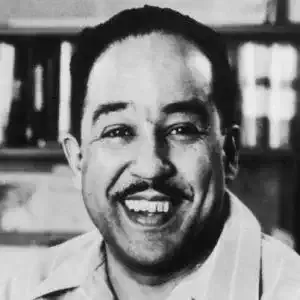
Langston Hughes
Madam and The Rent Man
The rent man knocked.
He said, Howdy-do?
I said, What
Can I do for you?
He said, You know
Your rent is due.
I said, Listen,
Before I'd pay
I'd go to Hades
And rot away!
The sink is broke,
The water don't run,
And you ain't done a thing
You promised to've done.
Back window's cracked,
Kitchen floor squeaks,
There's rats in the cellar,
And the attic leaks.
He said, Madam,
It's not up to me.
I'm just the agent,
Don't you see?
I said, Naturally,
You pass the buck.
If it's money you want
You're out of luck.
He said, Madam,
I ain't pleased!
I said, Neither am I.
So we agrees!
518
Walt Whitman
Turn, O Libertad
TURN, O Libertad, for the war is over,
(From it and all henceforth expanding, doubting no more, resolute,
sweeping the world,)
Turn from lands retrospective, recording proofs of the past;
From the singers that sing the trailing glories of the past;
From the chants of the feudal world--the triumphs of kings, slavery,
caste;
Turn to the world, the triumphs reserv'd and to come--give up that
backward world;
Leave to the singers of hitherto--give them the trailing past;
But what remains, remains for singers for you--wars to come are for
you;
(Lo! how the wars of the past have duly inured to you--and the wars
of the present also inure:)
--Then turn, and be not alarm'd, O Libertad--turn your undying
face,
To where the future, greater than all the past,
Is swiftly, surely preparing for you.
509
Ezra Pound
Sestina: Altaforte
Loquitur: En Bertrans de Born.
Dante Alighieri put this man in hell for that he was a
stirrer-up of strife.
Eccovi!
Judge ye!
Have I dug him up again?
The scene in at his castle, Altaforte. "Papiols" is his jongleur.
"The Leopard," the device of Richard (Cúur de Lion).
I
Damn it all! all this our South stinks peace.
You whoreson dog, Papiols, come! Let's to music!
I have no life save when the swords clash.
But ah! when I see the standards gold, vair, purple, opposing
And the broad fields beneath them turn crimson,
Then howl I my heart nigh mad with rejoicing.
II
In hot summer have I great rejoicing
When the tempests kill the earth's foul peace,
And the lightnings from black heav'n flash crimson,
And the fierce thunders roar me their music
And the winds shriek through the clouds mad, opposing,
And through all the riven skies God's swords clash.
III
Hell grant soon we hear again the swords clash!
And the shrill neighs of destriers in battle rejoicing,
Spiked breast to spiked breast opposing!
Better one hour's stour than a year's peace
With fat boards, bawds, wine and frail music!
Bah! there's no wine like the blood's crimson!
IV
And I love to see the sun rise blood-crimson.
And I watch his spears through the dark clash
And it fills all my heart with rejoicing
And pries wide my mouth with fast music
When I see him so scorn and defy peace,
His lone might 'gainst all darkness opposing.
V
The man who fears war and squats opposing
My words for stour, hath no blood of crimson
But is fit only to rot in womanish peace
Far from where worth's won and the swords clash
For the death of such sluts I go rejoicing;
Yea, I fill all the air with my music.
VI
Papiols, Papiols, to the music!
There's no sound like to swords swords opposing,
No cry like the battle's rejoicing
When our elbows and swords drip the crimson
And our charges 'gainst "The Leopard's" rush clash.
May God damn for ever all who cry "Peace!"
VII
And let the music of the swords make them crimson!
Hell grant soon we hear again the swords clash!
Hell blot black for always the thought "Peace!"
508
Walt Whitman
Apostroph
O MATER! O fils!
O brood continental!
O flowers of the prairies!
O space boundless! O hum of mighty products!
O you teeming cities! O so invincible, turbulent, proud!
O race of the future! O women!
O fathers! O you men of passion and the storm!
O native power only! O beauty!
O yourself! O God! O divine average!
O you bearded roughs! O bards! O all those slumberers!
O arouse! the dawn bird's throat sounds shrill! Do you not hear the
cock crowing?
O, as I walk'd the beach, I heard the mournful notes foreboding a
tempest--the low, oft-repeated shriek of the diver, the long
lived loon;
O I heard, and yet hear, angry thunder;--O you sailors! O ships! make
quick preparation!
O from his masterful sweep, the warning cry of the eagle!
(Give way there, all! It is useless! Give up your spoils;)
O sarcasms! Propositions! (O if the whole world should prove indeed a
sham, a sell!)
O I believe there is nothing real but America and freedom!
O to sternly reject all except Democracy!
O imperator! O who dare confront you and me?
O to promulgate our own! O to build for that which builds for
mankind!
O feuillage! O North! O the slope drained by the Mexican sea!
O all, all inseparable--ages, ages, ages!
O a curse on him that would dissever this Union for any reason
whatever!
O climates, labors! O good and evil! O death!
O you strong with iron and wood! O Personality!
O the village or place which has the greatest man or woman! even if
it be only a few ragged huts;
O the city where women walk in public processions in the streets, the
same as the men;
O a wan and terrible emblem, by me adopted!
O shapes arising! shapes of the future centuries!
O muscle and pluck forever for me!
O workmen and workwomen forever for me!
O farmers and sailors! O drivers of horses forever for me!
O I will make the new bardic list of trades and tools!
O you coarse and wilful! I love you!
O South! O longings for my dear home! O soft and sunny airs!
O pensive! O I must return where the palm grows and the mocking-bird
sings, or else I die!
O equality! O organic compacts! I am come to be your born poet!
O whirl, contest, sounding and resounding! I am your poet, because I
am part of you;
O days by-gone! Enthusiasts! Antecedents!
O vast preparations for These States! O years!
O what is now being sent forward thousands of years to come!
O mediums! O to teach! to convey the invisible faith!
To promulge real things! to journey through all The States!
O creation! O to-day! O laws! O unmitigated adoration!
O for mightier broods of orators, artists, and singers!
O for native songs! carpenter's, boatman's, ploughman's songs!
shoemaker's songs!
O haughtiest growth of time! O free and extatic!
O what I, here, preparing, warble for!
O you hastening light! O the sun of the world will ascend, dazzling,
and take his height--and you too will ascend;
O so amazing and so broad! up there resplendent, darting and
burning;
O prophetic! O vision staggered with weight of light! with pouring
glories!
O copious! O hitherto unequalled!
O Libertad! O compact! O union impossible to dissever!
O my Soul! O lips becoming tremulous, powerless!
O centuries, centuries yet ahead!
O voices of greater orators! I pause--I listen for you
O you States! Cities! defiant of all outside authority! I spring at
once into your arms! you I most love!
O you grand Presidentiads! I wait for you!
New history! New heroes! I project you!
Visions of poets! only you really last! O sweep on! sweep on!
O Death! O you striding there! O I cannot yet!
O heights! O infinitely too swift and dizzy yet!
O purged lumine! you threaten me more than I can stand!
O present! I return while yet I may to you!
O poets to come, I depend upon you!
508