
Protest, Resistance and Revolution

Kazi Nazrul Islam
Coming of Anondomoyee
How much longer will you
stay hidden behind a clay statue?
Heaven today is subjugated by merciless tyrants.
God's children are getting whipped, heroic youth-hanged.
India today is a butchery-when will you arrive, O Destroyer?
God's soldiers are serving terms of hard labor exiled to desolate islands.
Who will come to the battlefield
unless you come with your sword in your hand?
[Translation: Sajed Kamal]
690

Henry Wadsworth Longfellow
The Challenge of Thor
I am the God Thor,
I am the War God,
I am the Thunderer!
Here in my Northland,
My fastness and fortress,
Reign I forever!
Here amid icebergs
Rule I the nations;
This is my hammer,
Miölner the mighty;
Giants and sorcerers
Cannot withstand it!
These are the gauntlets
Wherewith I wield it,
And hurl it afar off;
This is my girdle;
Whenever I brace it,
Strength is redoubled!
The light thou beholdest
Stream through the heavens,
In flashes of crimson,
Is but my red beard
Blown by the night-wind,
Affrighting the nations!
Jove is my brother;
Mine eyes are the lightning;
The wheels of my chariot
Roll in the thunder,
The blows of my hammer
Ring in the earthquake!
Force rules the world still,
Has ruled it, shall rule it;
Meekness is weakness,
Strength is triumphant,
Over the whole earth
Still is it Thor's Day!
Thou art a God too,
O Galilean!
And thus singled-handed
Unto the combat,
Gauntlet or Gospel,
Here I defy thee!
687
Kazi Nazrul Islam
Song of the Student
We are the power, we are the strength,
We the band of students.
The stormy wind makes obeisance tonus
And clouds and airships bow
Before us, the students class.
We can move in the darkness of the night
Needing no guiding light.
We walk with bare feet
Ever ready to dangers meet.
We move like a terrific flood
Making the stony earth scarlet with our blood.
Throughout the ages
Our blood has wet this soil.
We are not afraid of work or toil,
We the student class.
We hold the reins of the horse
Of the great King Deat.
Our lifeless corpse
Will write the history of our fights.
In the country of laughter, whenever needed,
We bring tears, bitter and cold.
We the students, mighty bold.
When everybody gives wise counsel
We are the people who err.
When the cautious one builds embankments
We sit still and do not stir.
We are the dare-devil youth
Who care for none,
We make our path slippery with blood,
We the student class.
The light of knowledge shines in our eyes,
And in our hearts burn boble ideas.
On our lips dwell no lies,
Which only proclaim
Effortlessly and with ease
The call of all times,
That has survived through war and peace,
And we have made the white lilies
Purple with our blood,
We the students; who move like a mighty flood.
In these terrible days of revolution
We are eager to march ahead and fight,
So that light may burst out
Ending the eternal darkness of the night.
In us seeks the twentieth century
Her emancipation.
With our tears of glory
The mother-earth clothes herself
In resignation.
There is no fear of death for us,
The mighty student class.
We dream of a joyous future, gay and bright,
Built on hope and love,
The milky-way in the sky
Shows us our path, straight and wide.
Let the dream of millions come true and right,
Let them see the splendid sight
Through the eyes of us.
The student class.
Translation: Kabir Chowdhury
694

Elizabeth Bishop
Roosters
At four o'clock
in the gun-metal blue dark
we hear the first crow of the first cock
just below
the gun-metal blue window
and immediately there is an echo
off in the distance,
then one from the backyard fence,
then one, with horrible insistence,
grates like a wet match
from the broccoli patch,
flares,and all over town begins to catch.
Cries galore
come from the water-closet door,
from the dropping-plastered henhouse floor,
where in the blue blur
their rusting wives admire,
the roosters brace their cruel feet and glare
with stupid eyes
while from their beaks there rise
the uncontrolled, traditional cries.
Deep from protruding chests
in green-gold medals dressed,
planned to command and terrorize the rest,
the many wives
who lead hens' lives
of being courted and despised;
deep from raw throats
a senseless order floats
all over town. A rooster gloats
over our beds
from rusty irons sheds
and fences made from old bedsteads,
over our churches
where the tin rooster perches,
over our little wooden northern houses,
making sallies
from all the muddy alleys,
marking out maps like Rand McNally's:
glass-headed pins,
oil-golds and copper greens,
anthracite blues, alizarins,
each one an active
displacement in perspective;
each screaming, "This is where I live!"
Each screaming
"Get up! Stop dreaming!"
Roosters, what are you projecting?
You, whom the Greeks elected
to shoot at on a post, who struggled
when sacrificed, you whom they labeled
"Very combative..."
what right have you to give
commands and tell us how to live,
cry "Here!" and "Here!"
and wake us here where are
unwanted love, conceit and war?
The crown of red
set on your little head
is charged with all your fighting blood
Yes, that excrescence
makes a most virile presence,
plus all that vulgar beauty of iridescence
Now in mid-air
by two they fight each other.
Down comes a first flame-feather,
and one is flying,
with raging heroism defying
even the sensation of dying.
And one has fallen
but still above the town
his torn-out, bloodied feathers drift down;
and what he sung
no matter. He is flung
on the gray ash-heap, lies in dung
with his dead wives
with open, bloody eyes,
while those metallic feathers oxidize.
St. Peter's sin
was worse than that of Magdalen
whose sin was of the flesh alone;
of spirit, Peter's,
falling, beneath the flares,
among the "servants and officers."
Old holy sculpture
could set it all together
in one small scene, past and future:
Christ stands amazed,
Peter, two fingers raised
to surprised lips, both as if dazed.
But in between
a little cock is seen
carved on a dim column in the travertine,
explained by gallus canit;
flet Petrus underneath it,
There is inescapable hope, the pivot;
yes, and there Peter's tears
run down our chanticleer's
sides and gem his spurs.
Tear-encrusted thick
as a medieval relic
he waits. Poor Peter, heart-sick,
still cannot guess
those cock-a-doodles yet might bless,
his dreadful rooster come to mean forgiveness,
a new weathervane
on basilica and barn,
and that outside the Lateran
there would always be
a bronze cock on a porphyry
pillar so the people and the Pope might see
that event the Prince
of the Apostles long since
had been forgiven, and to convince
all the assembly
that "Deny deny deny"
is not all the roosters cry.
In the morning
a low light is floating
in the backyard, and gilding
from underneath
the broccoli, leaf by leaf;
how could the night have come to grief?
gilding the tiny
floating swallow's belly
and lines of pink cloud in the sky,
the day's preamble
like wandering lines in marble,
The cocks are now almost inaudible.
The sun climbs in,
following "to see the end,"
faithful as enemy, or friend.
682
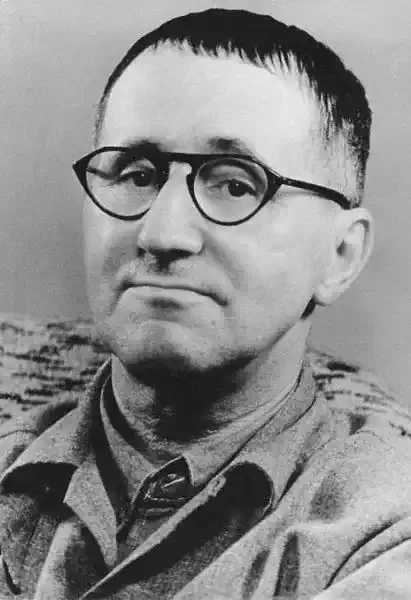
Bertolt Brecht
Mack the Knife
Oh, the shark has pretty teeth, dear
And he shows them pearly white.
Just a jack knife has Macheath, dear
And he keeps it out of sight.
When the shark bites with his teeth, dear
Scarlet billows start to spread.
Fancy gloves, though, wears Macheath, dear
So there's not a trace of red.
On the side-walk Sunday morning
Lies a body oozing life;
Someone's sneaking 'round the corner.
Is that someone Mack the Knife?
From a tugboat by the river
A cement bag's dropping down;
The cement's just for the weight, dear.
Bet you Mackie's back in town.
Louie Miller disappeared, dear
After drawing out his cash;
And Macheath spends like a sailor.
Did our boy do something rash?
Sukey Tawdry, Jenny Diver,
Polly Peachum, Lucy Brown
Oh, the line forms on the right, dear
Now that Mackie's back in town.
667
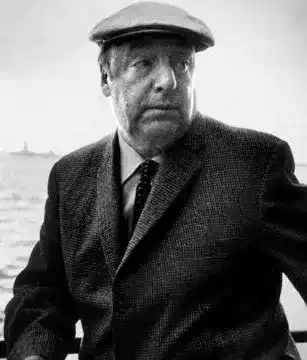
Pablo Neruda
Canto XII from The Heights of Macchu Picchu
Arise to birth with me, my brother.
Give me your hand out of the depths
sown by your sorrows.
You will not return from these stone fastnesses.
You will not emerge from subterranean time.
Your rasping voice will not come back,
nor your pierced eyes rise from their sockets.
Look at me from the depths of the earth,
tiller of fields, weaver, reticent shepherd,
groom of totemic guanacos,
mason high on your treacherous scaffolding,
iceman of Andean tears,
jeweler with crushed fingers,
farmer anxious among his seedlings,
potter wasted among his clays-bring
to the cup of this new life
your ancient buried sorrows.
Show me your blood and your furrow;
say to me: here I was scourged
because a gem was dull or because the earth
failed to give up in time its tithe of corn or stone.
Point out to me the rock on which you stumbled,
the wood they used to crucify your body.
Strike the old flints
to kindle ancient lamps, light up the whips
glued to your wounds throughout the centuries
and light the axes gleaming with your blood.
I come to speak for your dead mouths.
Throughout the earth
let dead lips congregate,
out of the depths spin this long night to me
as if I rode at anchor here with you.
And tell me everything, tell chain by chain,
and link by link, and step by step;
sharpen the knives you kept hidden away,
thrust them into my breast, into my hands,
like a torrent of sunbursts,
an Amazon of buried jaguars,
and leave me cry: hours, days and years,
blind ages, stellar centuries.
And give me silence, give me water, hope.
Give me the struggle, the iron, the volcanoes.
Let bodies cling like magnets to my body.
Come quickly to my veins and to my mouth.
Speak through my speech, and through my blood.
661
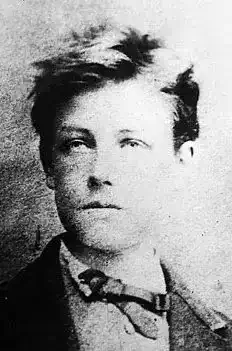
Arthur Rimbaud
Le Forgeron (The Blacksmith)
Le bras sur un marteau gigantesque, effrayant
D'ivresse et de grandeur, le front large, riant
Comme un clairon d'airain, avec toute sa bouche,
Et prenant ce gros-là dans son regard farouche,
Le Forgeron parlait à Louis Seize, un jour
Que le Peuple était là, se tordant tout autour,
Et sur les lambris d'or traînait sa veste sale.
Or le bon roi, debout sur son ventre, était pâle
Pâle comme un vaincu qu'on prend pour le gibet,
Et, soumis comme un chien, jamais ne regimbait,
Car ce maraud de forge aux énormes épaules
Lui disait de vieux mots et des choses si drôles,
Que cela l'empoignait au front, comme cela !
'Donc, Sire, tu sais bien, nous chantions tra la la
Et nous piquions les boeufs vers les sillons des autres :
Le Chanoine au soleil disait ses patenôtres
Sur des chapelets clairs grenés de pièces d'or.
Le Seigneur, à cheval, passait, sonnant du cor,
Et l'un avec la hart, l'autre avec la cravache,
Nous fouaillaient ; Hébétés comme des yeux de vache,
Nos yeux ne pleuraient pas : nous allions ! nous allions !
Et quand nous avions mis le pays en sillons,
Quand nous avions laissé dans cette terre noire
Un peu de notre chair... nous avions un pourboire :
-Nous venions voir flamber nos taudis dans la nuit ;
Nos enfants y faisaient un gâteau fort bien cuit !...
'Oh ! je ne me plains pas. Je te dis mes bêtises :
-C'est entre nous. J'admets que tu me contredises...
Or, n'est-ce pas joyeux de voir, au mois de juin
Dans les granges entrer des voitures de foin
Enormes ? De sentir l'odeur de ce qui pousse,
Des vergers quand il pleut un peu, de l'herbe rousse ?
De voir les champs de blé, les épis pleins de grain,
De penser que cela prépare bien du pain ?...
-Oui, l'on pourrait, plus fort, au fourneau qui s'allume,
Chanter joyeusement en martelant l'enclume,
Si l'on était certain qu'on pourrait prendre un peu,
Étant homme, à la fin !, de ce que donne Dieu !...
-Mais voilà, c'est toujours la même vieille histoire !
'... Oh ! je sais, maintenant ! Moi, je ne peux plus croire,
Quand j'ai deux bonnes mains, mon front et mon marteau,
Qu'un homme vienne là, dague sous le manteau
Et me dise : Maraud, ensemence ma terre ;
Que l'on arrive encor, quand ce serait la guerre,
Me prendre mon garçon comme cela, chez moi !...
-Moi, je serais un homme, et toi tu serais roi,
Tu me dirais : Je veux ! - Tu vois bien, c'est stupide !...
Tu crois que j'aime à voir ta baraque splendide,
Tes officiers dorés, tes mille chenapans,
Tes palsembleu bâtards tournant comme des paons ?
Ils ont rempli ton nid de l'odeur de nos filles,
Et de petits billets pour nous mettre aux Bastilles,
Et nous dirions : C'est bien : les pauvres à genoux !...
Nous dorerions ton Louvre en donnant nos gros sous,
Et tu te soûlerais, tu ferais belle fête,
Et tes Messieurs riraient, les reins sur notre tête !...
'Non ! Ces saletés-là datent de nos papas !
Oh ! Le Peuple n'est plus une putain ! Trois pas,
Et, tous, nous avons mis ta Bastille en poussière !
Cette bête suait du sang à chaque pierre...
Et c'était dégoûtant, la Bastille debout
Avec ses murs lépreux qui nous rappelaient tout
Et, toujours, nous tenaient enfermés dans leur ombre !
-Citoyen ! citoyen ! c'était le passé sombre
Qui croulait, qui râlait, quand nous prîmes la tour !
Nous avions quelque chose au coeur comme l'amour :
Nous avions embrassé nos fils sur nos poitrines,
Et, comme des chevaux, en soufflant des narines,
Nous marchions, nous chantions, et ça nous battait là,
Nous allions au soleil, front haut, comme cela,
Dans Paris accourant devant nos vestes sales !...
Enfin ! Nous nous sentions hommes ! Nous étions pâles,
Sire ; nous étions soûls de terribles espoirs,
Et quand nous fûmes là, devant les donjons noirs,
Agitant nos clairons et nos feuilles de chêne,
Les piques à la main ; nous n'eûmes pas de haine :
-Nous nous sentions si forts ! nous voulions être doux !
'Et depuis ce jour-là, nous sommes comme fous...
Le flot des ouvriers a monté dans la rue
Et ces maudits s'en vont, foule toujours accrue,
Comme des revenants, aux portes des richards !...
Moi, je cours avec eux assommer les mouchards,
Et je vais dans Paris le marteau sur l'épaule,
Farouche, à chaque coin balayant quelque drôle,
Et, si tu me riais au nez, je te tuerais !...
-Puis, tu dois y compter, tu te feras des frais
Avec tes avocats, qui prennent nos requêtes
Pour se les renvoyer comme sur des raquettes,
Et, tout bas, les malins ! Nous traitant de gros sots !
Pour mitonner des lois, ranger des de petits pots
Pleins de menus décrets, de méchantes droguailles,
S'amuser à couper proprement quelques tailles,
Puis se boucher le nez quand nous passons près d'eux,
- Ces chers avocassiers qui nous trouvent crasseux ! -
Pour débiter là-bas des milliers de sornettes
Et ne rien redouter sinon les baïonnettes,
Nous en avons assez, de tous ces cerveaux plats !
Ils embêtent le peuple !... Ah ! ce sont là les plats
Que tu nous sers, bourgeois, quand nous sommes féroces,
Quand nous cassons déjà les sceptres et les crosses !...'
Puis il le prend au bras, arrache le velours
Des rideaux, et lui montre, en bas, les larges cours
Où fourmille, où fourmille, où se lève la foule,
La foule épouvantable avec des bruits de houle,
Hurlant comme une chienne, hurlant comme une mer,
Avec ses bâtons forts et ses piques de fer,
Ses clameurs, ses grands cris de halles et de bouges,
Tas sombre de haillons taché de bonnets rouges !
L'Homme, par la fenêtre ouverte, montre tout
Au Roi pâle, suant qui chancelle debout,
Malade à regarder cela !...
spacespacespacespacespacespacespacespace'C'est la Crapule,
Sire ! ça bave aux murs, ça roule, ça pullule...
-Puisqu'ils ne mangent pas, Sire, ce sont les gueux !
-Je suis un forgeron : ma femme est avec eux :
Folle ! Elle vient chercher du pain aux Tuileries :
-On ne veut pas de nous dans les boulangeries !...
J'ai trois petits ; -Je suis crapule ! - Je connais
Des vieilles qui s'en vont pleurant sous leurs bonnets,
Parce qu'on leur a pris leur garçon ou leur fille :
-C'est la crapule. - Un homme était à la bastille,
D'autres étaient forçats ; c'étaient des citoyens
Honnêtes ; Libérés, ils sont comme des chiens ;
On les insulte ! Alors, ils ont là quelque chose
Qui leur fait mal, allez ! C'est terrible, et c'est cause
Que, se sentant brisés, que, se sentant damnés,
Ils viennent maintenant hurler sous votre nez !...
-Crapules : - Là-dedans sont des filles, infâmes
Parce que -, sachant bien que c'est faible, les femmes,
Messeigneurs de la cour, que ça veut toujours bien, -
Vous leur avez sali leur âme, comme rien !
Vos belles, aujourd'hui, sont là : - C'est la Crapule...
'Oh ! tous les Malheureux, tout ceux dont le dos brûle
Sous le soleil féroce, et qui vont, et qui vont,
Et dans ce travail-là sentent crever leur front,
Chapeau bas, mes bourgeois ! Oh ! ceux-là sont les hommes !
-Nous sommes Ouvriers ! Sire, Ouvriers ! - nous sommes
Pour les grands temps nouveaux où l'on voudra savoir,
Où l'homme forgera du matin jusqu'au soir,
Où, lentement vainqueur, il chassera les choses
Poursuivant les grands buts, cherchant les grandes causes,
Et montera sur Tout comme sur un cheval !
Oh ! nous sommes contents, nous aurons bien du mal !
-Tout ce qu'on ne sait pas, c'est peut-être terrible.
Nous pendrons nos marteaux, nous passerons au crible
Tout ce que nous savons, puis, Frères, en avant !...
-Nous faisons quelquefois ce grand rêve émouvant
De vivre simplement, ardemment, sans rien dire
De mauvais, travaillant sous l'auguste sourire
D'une femme qu'on aime avec un noble amour !
Et l'on travaillerait fièrement tout le jour,
Ecoutant le devoir comme un clairon qui sonne :
Et l'on se trouverait fort heureux, et personne,
Oh ! personne ! surtout, ne vous ferait plier !...
On aurait un fusil au-dessus du foyer....
'Oh ! mais ! l'air est tout plein d'une odeur de bataille !
Que te disais-je donc ? Je suis de la canaille !'
Translation by A. S. Kline
His hand on a gigantic hammer, terrifying
In size and drunkenness, vast-browed, laughing
Like a bronze trumpet, his whole mouth displayed,
Devouring the fat man, now, with his wild gaze,
The Blacksmith spoke with Louis, with the king,
The People there, all around him, cavorting,
Trailing their dirty coats down gilded panels.
But the dear king, belly upright, was pallid,
Pale as the victim led to the guillotine,
Submissive like a dog, cowed by the scene,
Since that wide-shouldered forge-black soul
Spoke of things past and other things so droll,
He had him by the short hairs, just like that!
‘Now, Sir, you know how we’d sing tra-la-la,
And drive the ox down other people’s furrows:
The Canon spun paternosters in the shadows
On rosaries bright with golden coins adorned,
Some Lord, astride, passed blowing on his horn,
One with the noose, another with whip-blows
Lashed us on. – Dazed like the eyes of cows,
Our eyes no longer wept; on and on we went,
And when we’d ploughed a whole continent,
When we had left behind in that black soil
A little of our own flesh…to reward our toil:
They’d set alight our hovels in the night;
Our little ones made burnt cakes alright.
…Oh, I’m not complaining! All my follies,
They’re between us. I’ll let you contradict.
But, isn’t it fine to see, in the month of June,
The enormous hay-wains entering the barns?
To smell the odour of burgeoning things,
The orchards in fine rain, the oats reddening?
To see wheat, wheat, ears filled with grain,
To think it promises us good bread again?...
Oh! You’d go to the forge, be more cheerful,
Sing and hammer joyfully at the anvil,
If you were sure to gain a little in the end –
Being, in fact, a man – of what God intends!
– But there it is, always the same old story!...
But now I know! I don’t credit it any more,
Owning two strong hands, a head, a hammer,
That a man in a cloak, wearing a dagger
Can say: go and sow my land, there, fellow;
Or that another, if maybe war should follow,
Can take my son like that, from where I’m living!
– Suppose I were a man, and you a king,
You’d say: I will it!... – What stupidity.
You think your splendid barn pleases me,
Your gilded servants, your thousand rogues,
Your fancy bastards, peacocks in a row:
Filling your nest with our daughters’ odour,
Warrants to the Bastille for us, moreover
That we should say: fine: make the poor poorer!
We’ll give you our last sous to gild the Louvre!
While you get drunk and enjoy the feast,
– And they all laugh, riding our backs beneath!
No. Those puerilities were our fathers!
The People is no one’s whore now, three steps further
And then, we razed your Bastille to the ground.
That monster sweated blood from every mound,
Was an abomination, that Bastille standing,
With leprous walls its every story yielding,
And, we forever held fast in its shadow!
– Citizen! That was the past, its sorrow,
That broke, and died, when we stormed the tower!
We had something in our hearts like true ardour.
We had clutched our children to our breast.
And like chargers, snorting at the contest,
We went, proud and strong, beating here inside…
We marched in the sun – like this – heads high
Into Paris! They greeted us in our ragged clothes.
At last! We felt ourselves Men! We were sallow,
Sire, drunk, and pallid with terrifying hopes:
And there, in front of those black prison slopes,
Waving our bugles and our sprigs of oak,
Pikes in our fists; did we feel hatred, no!
– We felt such strength we wanted to be gentle! ...
And since that day, we have proved elementals!
A mass of workers sprang up in the street,
And, cursed, are gone, a swelling crowd replete
With ghostly shades, to haunt the rich man’s gate.
I, I run with them, and set informers straight:
I scour Paris, dark-faced, wild, hammer on shoulder,
Sweeping something droll out of every corner,
And, if you smile at me, then I’ll do for you!
– Well, count on it: all this is going to cost you
And your men in black, culling our requests
To bat them about on their racquets all in jest,
And whisper, the rascals, softly: “Oh, what sots!”
To cook up laws, and stick up little pots,
Filled with cute pink decrees, and sugar pills,
Cutting us down to size, to amuse themselves,
Then they hold their noses when we pass by,
– Our kind representatives who hate the sty! –
Fearful of nothing, nothing, but bayonets….
That’s fine. Enough of snuff and lorgnettes!
We’ve had our fill, here, of those dull heads
And bellies of gods. Ah! That’s the bread
You serve us, bourgeoisie, while we rage here,
While we shatter the sceptre and the crozier!...’
He takes his arm, tears back the velvet curtain
And shows the vast courtyards beneath them,
Where the mob swarms, and seethes, where rise,
Out of the frightful mob those storm-filled cries,
Howling as bitches howl, or like the sea,
With their knotted stakes, their pikes of steel,
With the clamour of their market-halls and slums,
A ragged mass of blood-stained caps, and drums:
The Man, through the open window, shows all
To the pale sweating king, reeling, about to fall,
Sick at the sight of it!
‘Those are the Scum, Sire.
Licking the walls, seething, rising higher:
– But then they’ve not eaten, Sire, these beggars!
I’m a blacksmith: my wife, madwoman, is there!
She thinks she’ll get bread at the Tuileries!
– They’ll have none of us in the bakeries.
I’ve three youngsters. I’m scum, too – I know
Old women weeping under their bonnets so
Because they’ve taken a daughter or a son:
One man was in the Bastille – oh, they’re scum –
Another the galleys: both honest citizens.
Freed, they’re treated like dogs, these men:
Insulted! Then, they have something here
That hurts them, see! It’s terrible, it’s clear
They feel broken, feel themselves damned,
There, screaming beneath you where you stand!
Scum. – Down there girls, infamous, shriek,
Because – well, you knew girls were weak –
Gentlemen of the court – gave all you sought –
You’d spit on their souls, as if they were naught!
Now, your pretty ones are there. They’re scum.
Oh, all the Wretched, whose backs, in the fierce sun
Burn, and yet they still work on and on,
Feeling their heads burst with their exertion,
Hats off, you bourgeoisie! Those are Men.
We are the Workers, Sire! Workers! And then
We’re for the great new age, of knowledge, light,
When Man will forge from morning to night,
Pursuing great effects, chasing great causes,
When he will tame things, slowly victorious,
And like a horse, mount the mighty All!
Oh! Splendour of the forges! And no more
Evil, then! – What’s unknown, its terror maybe
We’ll know! – Hammer in hand, let’s sieve freely
All that we know: then, Brothers, we’ll go on!
Sometimes we dream that dream’s vast emotion
Of the simple ardent life, where you revile
All evil, working beneath the august smile,
Of a woman you love with love’s nobility:
And all day long you labour on proudly,
Hearing the clarion call of duty sounding!
And you feel so happy; and nothing, nothing,
Oh, above all, no-one makes you kneel!
Over the fireplace, there, you’d have a rifle…
Oh! But the air is filled with the scent of battle.
What did I say? I too am one of the rascals!
And there are still sharks and informers.
But we are free! With our moments of terror
When we feel we are great, so great! Just now
I was talking of peaceful work, of how…
Look at that sky! – Too small for us, you see,
If we feared the heat, we’d live on our knees!
Look at that sky! – I’ll return to the crowd,
To the vast fearful mob who cry aloud
And roll your cannon through the cobbles’ sty;
– Oh! We will wash them clean when we die!
– And if, against our cries and our vengeance,
The claws of old gilded kings, all over France,
Urge on their regiments in full battle-dress,
Well then, you lot? Shit to those dogs, no less!’
– He shoulders his hammer once more.
The crowd
Feels soul-drunk close to that man, and now
Through the great courtyard, all those rooms,
Where Paris pants and the voices boom,
A shudder shakes the immense populace.
Then, with his broad hand, its grimy grace
Gilded, while the pot-bellied king sweats,
The Blacksmith set his red cap on that head!
655
Arthur Rimbaud
The Parisian Orgy
O cowards! There she is!
Pile out into the stations!
The sun with its fiery lungs blew clear
the boulevards that, one evening,
the Barbarians filled.
Here is the holy City, seated in the West! Come!
We'll stave off the return of the fires;
here are the quays, here are the boulevards,
here are the houses against the pale,
radiant blue-starred, one evening,
by the red flashes of bombs!
Hide the dead places with forests of planks!
Affrighted, the dying daylight freshens your looks.
Look at the red-headed troop of the wrigglers of hips:
be mad, you'll be comical, being haggard!
Pack of bitches on heat, eating poultices:
the cry from the houses of gold calls you!
Plunder! Eat! See the night of joy and deep twitchings
coming down on the street.
O desolate drinkers, Drink! When the light comes,
intense and crazed, to ransack round you the rustling luxuries,
you're not going to dribbe into your glasses
without motion or sound, with your eyes lost in white distances?
Knock it back: to the Queen whose buttocks cascade in folds!
Listen to the working of stupid tearing hiccups!
Listen to them leaping n the fiery night:
the panting idiots, the aged, the nonentities, the lackeys!
O hearts of filth, appalling mouths;
work harder, mouths of foul stenches!
Wine for these ignoble torpors, at these tables…
Your bellies are melting with shame, O Conquerors!
Open your nostrils to these superb nauseas!
Steep the tendons of your necks in strong poisons!
Laying his crossed hands on the napes of your childish necks,
the Poet says to you: 'O cowards! Be mad!
Because you are ransacking the guts of Woman,
you fear another convulsion from her, crying out,
and stifling your infamous perching on her breast with a horrible pressure.
Syphilitics, madmen, kings, puppets, ventriloquists!
What can you matter to Paris the whore?
Your souls or your bodies, your poisons or your rags?
She'll shake you off, you pox-rotten snarlers!
And when you are down, whimpering on your bellies,
your sides wrung, clamouring for your money back, distracted,
the red harlot with her breasts swelling
with battles will clench her hard fists,
far removed from your stupor!'
When your feet, Paris, danced so hard in anger!
When you had so many knife wounds; when you lay helpless,
still retaining in your clear eyes a little of the goodness
of the tawny spring; O city in pain;
O city almost dead, with your face and your two breasts
pointing towards the Future
which opens to your pallor its thousand million gates;
city whom the dark Past could bless:
Body galvanized back to life to suffer tremendous pains,
you are drinking in dreadful life once more!
You feel he ghastly pale worms flooding back in your veins,
the icy fingers prowling on your unclouded love!
And it does you no harm.
The worms, the pale worms, will obstruct your breath of Progress no more
than the Stryx could extinguish the eyes of the Caryatides,
from whose blue sills fell tears of sidereal gold.
Although it is frightful to see you again
covered in this fashion; although no city was ever made
into a more foul-smelling ulcer
on the face of green Nature, the Poet says to you:
'Your beauty is Marvelous!' The tempest sealed you in supreme poetry;
the huge stirring of strength comes to your aid;
your work comes to the boil, death groans, O chosen City!
Hoard in your heart the stridors of the ominous trumpet.
The Poet will take the sobs of the Infamous
the hate of the Galley-slaves, the clamour of the Damned;
and the beams of his love will scourge Womankind.
His verses will leap out: There's for you! There! Villains! -Society,
and everything, is restored: - the orgies are weeping
with dry sobs in the old brothels:
and on the reddened walls the gaslights in frenzy flare
balefully upwards to the wan blue skies!
655
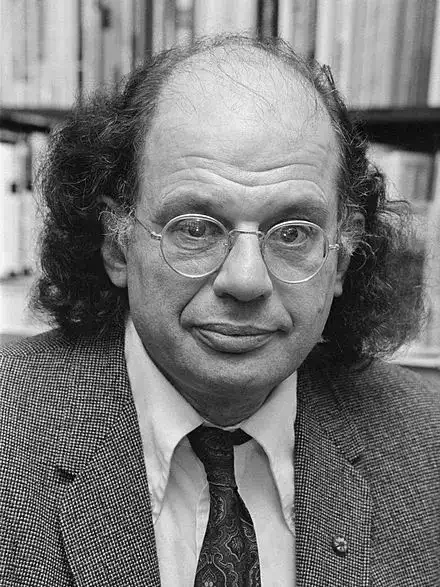
Allen Ginsberg
Nagasaki Days
I -- A Pleasant Afternoon
for Michael Brownstein and Dick Gallup
One day 3 poets and 60 ears sat under a green-striped Chautauqua
tent in Aurora
listening to Black spirituals, tapping their feet, appreciating
words singing by in mountain winds
on a pleasant sunny day of rest -- the wild wind blew thru
blue Heavens
filled with fluffy clouds stretched from Central City to Rocky
Flats, Plutonium sizzled in its secret bed,
hot dogs sizzled in the Lion's Club lunchwagon microwave
mouth, orangeade bubbled over in waxen cups
Traffic moved along Colefax, meditators silent in the Diamond
Castle shrine-room at Boulder followed the breath going
out of their nostrils,
Nobody could remember anything, spirits flew out of mouths
& noses, out of the sky, across Colorado plains & the
tent flapped happily open spacious & didn't fall down.
June 18, 1978
II -- Peace Protest
Cumulus clouds float across blue sky
over the white-walled Rockwell Corporation factory
-- am I going to stop that?
*
Rocky Mountains rising behind us
Denver shining in morning light
-- Led away from the crowd by police and photographers
*
Middleaged Ginsberg and Ellsberg taken down the road
to the greyhaired Sheriff's van --
But what about Einstein? What about Einstein? Hey, Einstein
Come back!
III -- Golden Courthouse
Waiting for the Judge, breathing silent
Prisoners, witnesses, Police -
the stenographer yawns into her palms.
August 9, 1978
IV -- Everybody's Fantasy
I walked outside & the bomb'd
dropped lots of plutonium
all over the Lower East Side
There weren't any buildings left just
iron skeletons
groceries burned, potholes open to
stinking sewer waters
There were people starving and crawling
across the desert
the Martian UFOs with blue
Light destroyer rays
passed over and dried up all the
waters
Charred Amazon palmtrees for
hundreds of miles on both sides
of the river
August 10, 1978
V -- Waiting Room at the Rocky Flats Plutonium Plant
"Give us the weapons we need to protect ourselves!"
the bareheaded guard lifts his flyswatter above the desk
-- whap!
*
A green-letter'd shield on the pressboard wall!
"Life is fragile. Handle with care" --
My Goodness! here's where they make the nuclear bomb
triggers.
August 17, 1978
VI -- Numbers in Red Notebook
2,000,000 killed in Vietnam
13,000,000 refugees in Indochina 1972
200,000,000 years for the Galaxy to revolve on its core
24,000 the Babylonian Great Year
24,000 half life of plutonium
2,000 the most I ever got for a poetry reading
80,000 dolphins killed in the dragnet
4,000,000,000 years earth been born
Summer 1978
652
Kazi Nazrul Islam
The War Drum
O come, come along!
There sounds the war-drum
from beyond the vast deep.
O come, come along!
Islam is about to die.
The devils have taken over,
they brag and rejoice,
they crush under their feet
the skulls of martyrs.
O come, come along! Die if you must,
but let not your manhood be disgraced!
Grab the crest of the gale
in the iron fist of a Muslim,
sound the horn and unfurl the flag.
The heroes are eager to fight,
listen not to the soft words of the cowards!
Your honour and life are at stake today!
O come, come along!
There sounds the war-drum
from beyond the vast deep.
O come, come along!
There you can hear the ringing of the weapons!
Alas, how can one stay away
and tolerate this disgrace?
O come, come along!
Your brothers look at you
with pensive eyes.
Oh, how ashamed it makes me feel!
Won't the sword flash out yet
in your hands?
Won't the flood in your veins
dance with joy
as you hear the war-drums beat?
O come, come along!
We are vigorous and full of life,
In our hands alone does the sword
find a fitting place!
Ignoble are they who fall in a faint
and kiss the ground with chains
around their neck. How dare a cur kick at a lion?
Will an elephant be moulded by a jackal?
There you can hear the ringing of the weapons
O come, come along!
There sound the war-drums, t
here sound the battle-cries!
There the lion-hearted heroes roar!
O come, come along!
Give up all sadness of the mind,
abandon your chest of wealth,
take up arms, and let your heart beat
with a noble rage!
O come, come along,
dance with joy, and fight for justice and truth!
come, brother, give up your life today
in the name of Allah!
See how the battle-cry of Faith
resound throughout the earth and the sky!
Hear the roars go up:
'No giving up today
Only taking over! '
Be ready now for the supreme sacrifice! .
Oh, all glory is about to disappear!
O come, come along!
There you can hear the ringing of the arms,
there you can hear the war-drums beat!
O come, come along!
Don your battle dress!
Will you hide your face in shame?
How far is the land
where everyday heroes celebrate
the festival of death
and spill gaily the blood of the foe?
Put on the attire of the brave
and rush to the land of those heroic people.
Today men of a captive land
go to secure the freedom of a free country!
O come, come along!
Say: Long live truth!
Long live the heroic and the noble!
Let the timids die!
As women hear the war-drums beat
they too laugh happily and clap their hands,
they too rush to the battle-field!
We want to fight!
We want to fight!
So beat the drum,
put your helmet on,
hold aloft the sword in your hand
For justice and truth we fight,
clad in crimson clothes are we!
O come, come along!
There sound the war-drums,
there they don the battle-dress!
O come, come along
There the bugler sounds the call for war
at the door of the seige,
there the canons break out in a song!
O come, come along!
There sound the war-drums,
there sound the battle-cries!
Come, raise your voice now
like the great Hazrat Ali's,
there is nothing to fear!
You will surely slay the false giant,
you will surely make truth prevail!
Have no fear as you march along
to kill your foe!
We are bold and fearless,
there is no timidity in our blood.
Holding high the standard of truth and justice
we shall destroy tile tyrants.
We are invincible,
we are full of love;
yet we can bear at ease our chest
before the sword!
The fighters are we,
we he long to the breed of real martyrs,
we gladly embrace death
fighting the tyrants.
Smilingly we receive the thrust
of the sword
On our breast.
We sing the victory of Freedom!
O come, come along!
There sound the war-drums
from beyond the vast deep! !
[Translation: Kabir Chowdhury]
There sounds the war-drum
from beyond the vast deep.
O come, come along!
Islam is about to die.
The devils have taken over,
they brag and rejoice,
they crush under their feet
the skulls of martyrs.
O come, come along! Die if you must,
but let not your manhood be disgraced!
Grab the crest of the gale
in the iron fist of a Muslim,
sound the horn and unfurl the flag.
The heroes are eager to fight,
listen not to the soft words of the cowards!
Your honour and life are at stake today!
O come, come along!
There sounds the war-drum
from beyond the vast deep.
O come, come along!
There you can hear the ringing of the weapons!
Alas, how can one stay away
and tolerate this disgrace?
O come, come along!
Your brothers look at you
with pensive eyes.
Oh, how ashamed it makes me feel!
Won't the sword flash out yet
in your hands?
Won't the flood in your veins
dance with joy
as you hear the war-drums beat?
O come, come along!
We are vigorous and full of life,
In our hands alone does the sword
find a fitting place!
Ignoble are they who fall in a faint
and kiss the ground with chains
around their neck. How dare a cur kick at a lion?
Will an elephant be moulded by a jackal?
There you can hear the ringing of the weapons
O come, come along!
There sound the war-drums, t
here sound the battle-cries!
There the lion-hearted heroes roar!
O come, come along!
Give up all sadness of the mind,
abandon your chest of wealth,
take up arms, and let your heart beat
with a noble rage!
O come, come along,
dance with joy, and fight for justice and truth!
come, brother, give up your life today
in the name of Allah!
See how the battle-cry of Faith
resound throughout the earth and the sky!
Hear the roars go up:
'No giving up today
Only taking over! '
Be ready now for the supreme sacrifice! .
Oh, all glory is about to disappear!
O come, come along!
There you can hear the ringing of the arms,
there you can hear the war-drums beat!
O come, come along!
Don your battle dress!
Will you hide your face in shame?
How far is the land
where everyday heroes celebrate
the festival of death
and spill gaily the blood of the foe?
Put on the attire of the brave
and rush to the land of those heroic people.
Today men of a captive land
go to secure the freedom of a free country!
O come, come along!
Say: Long live truth!
Long live the heroic and the noble!
Let the timids die!
As women hear the war-drums beat
they too laugh happily and clap their hands,
they too rush to the battle-field!
We want to fight!
We want to fight!
So beat the drum,
put your helmet on,
hold aloft the sword in your hand
For justice and truth we fight,
clad in crimson clothes are we!
O come, come along!
There sound the war-drums,
there they don the battle-dress!
O come, come along
There the bugler sounds the call for war
at the door of the seige,
there the canons break out in a song!
O come, come along!
There sound the war-drums,
there sound the battle-cries!
Come, raise your voice now
like the great Hazrat Ali's,
there is nothing to fear!
You will surely slay the false giant,
you will surely make truth prevail!
Have no fear as you march along
to kill your foe!
We are bold and fearless,
there is no timidity in our blood.
Holding high the standard of truth and justice
we shall destroy tile tyrants.
We are invincible,
we are full of love;
yet we can bear at ease our chest
before the sword!
The fighters are we,
we he long to the breed of real martyrs,
we gladly embrace death
fighting the tyrants.
Smilingly we receive the thrust
of the sword
On our breast.
We sing the victory of Freedom!
O come, come along!
There sound the war-drums
from beyond the vast deep! !
[Translation: Kabir Chowdhury]
648

William Blake
The Song of Los
AFRICA
I will sing you a song of Los. the Eternal Prophet:
He sung it to four harps at the tables of Eternity.
In heart-formed Africa.
Urizen faded! Ariston shudderd!
And thus the Song began
Adam stood in the garden of Eden:
And Noah on the mountains of Ararat;
They saw Urizen give his Laws to the Nations
By the hands of the children of Los.
Adam shudderd! Noah faded! black grew the sunny African
When Rintrah gave Abstract Philosophy to Brama in the East:
(Night spoke to the Cloud!
Lo these Human form'd spirits in smiling hipocrisy. War
Against one another; so let them War on; slaves to the eternal Elements)
Noah shrunk, beneath the waters;
Abram fled in fires from Chaldea;
Moses beheld upon Mount Sinai forms of dark delusion:
To Trismegistus. Palamabron gave an abstract Law:
To Pythagoras Socrates & Plato.
Times rolled on o'er all the sons of Har, time after time
Orc on Mount Atlas howld, chain'd down with the Chain of Jealousy
Then Oothoon hoverd over Judah & Jerusalem
And Jesus heard her voice (a man of sorrows) he recievd
A Gospel from wretched Theotormon.
The human race began to wither, for the healthy built
Secluded places, fearing the joys of Love
And the disease'd only propagated:
So Antamon call'd up Leutha from her valleys of delight:
And to Mahomet a loose Bible gave.
But in the North, to Odin, Sotha gave a Code of War,
Because of Diralada thinking to reclaim his joy.
These were the Churches: Hospitals: Castles: Palaces:
Like nets & gins & traps to catch the joys of Eternity
And all the rest a desart;
Till like a dream Eternity was obliterated & erased.
Since that dread day when Har and Heva fled.
Because their brethren & sisters liv'd in War & Lust;
And as they fled they shrunk
Into two narrow doleful forms:
Creeping in reptile flesh upon
The bosom of the ground:
And all the vast of Nature shrunk
Before their shrunken eyes.
Thus the terrible race of Los & Enitharmon gave
Laws & Religions to the sons of Har binding them more
And more to Earth: closing and restraining:
Till a Philosophy of Five Senses was complete
Urizen wept & gave it into the hands of Newton & Locke
Clouds roll heavy upon the Alps round Rousseau & Voltaire:
And on the mountains of Lebanon round the deceased Gods
Of Asia; & on the deserts of Africa round the Fallen Angels
The Guardian Prince of Albion burns in his nightly tent
ASIA
The Kings of Asia heard
The howl rise up from Europe!
And each ran out from his Web;
From his ancient woven Den;
For the darkness of Asia was startled
At the thick-flaming, thought-creating fires of Orc.
And the Kings of Asia stood
And cried in bitterness of soul.
Shall not the King call for Famine from the heath?
Nor the Priest, for Pestilence from the fen?
To restrain! to dismay! to thin!
The inhabitants of mountain and plain;
In the day, of full-feeding prosperity;
And the night of delicious songs.
Shall not the Councellor throw his curb
Of Poverty on the laborious?
To fix the price of labour;
To invent allegoric riches:
And the privy admonishers of men
Call for fires in the City
For heaps of smoking ruins,
In the night of prosperity & wantonness
To turn man from his path,
To restrain the child from the womb,
To cut off the bread from the city,
That the remnant may learn to obey.
That the pride of the heart may fail;
That the lust of the eyes may be quench'd:
That the delicate ear in its infancy
May be dull'd; and the nostrils clos'd up;
To teach mortal worms the path
That leads from the gates of the Grave.
Urizen heard them cry!
And his shudd'ring waving wings
Went enormous above the red flames
Drawing clouds of despair thro' the heavens
Of Europe as he went:
And his Books of brass iron & gold
Melted over the land as he flew,
Heavy-waving, howling, weeping.
And he stood over Judea:
And stay'd in his ancient place:
And stretch'd his clouds over Jerusalem;
For Adam, a mouldering skeleton
Lay bleach'd on the garden of Eden;
And Noah as white as snow
On the mountains of Ararat.
Then the thunders of Urizen bellow'd aloud
From his woven darkness above.
Orc raging in European darkness
Arose like a pillar of fire above the Alps
Like a serpent of fiery flame!
The sullen Earth
Shrunk!
Forth from the dead dust rattling bones to bones
Join: shaking convuls'd the shivring clay breathes
And all flesh naked stands: Fathers and Friends;
Mothers & Infants; Kings & Warriors:
The Grave shrieks with delight, & shakes
Her hollow womb, & clasps the solid stem:
Her bosom swells with wild desire:
And milk & blood & glandous wine.
643

Rudyard Kipling
Screw-Guns
Smokin' my pipe on the mountings, sniffin' the mornin' cool,
I walks in my old brown gaiters along o' my old brown mule,
With seventy gunners be'ind me, an' never a beggar forgets
It's only the pick of the Army
that handles the dear little pets -- 'Tss! 'Tss!
For you all love the screw-guns -- the screw-guns they all love you!
So when we call round with a few guns,
o' course you will know what to do -- hoo! hoo!
Jest send in your Chief an' surrender --
it's worse if you fights or you runs:
You can go where you please, you can skid up the trees,
but you don't get away from the guns!
They sends us along where the roads are, but mostly we goes where they ain't:
We'd climb up the side of a sign-board an' trust to the stick o' the paint:
We've chivied the Naga an' Looshai, we've give the Afreedeeman fits,
For we fancies ourselves at two thousand,
we guns that are built in two bits -- 'Tss! 'Tss!
For you all love the screw-guns . . .
If a man doesn't work, why, we drills 'im an' teaches 'im 'ow to behave;
If a beggar can't march, why, we kills 'im an' rattles 'im into 'is grave.
You've got to stand up to our business an' spring without snatchin' or fuss.
D'you say that you sweat with the field-guns?
By God, you must lather with us -- 'Tss! 'Tss!
For you all love the screw-guns . . .
The eagles is screamin' around us, the river's a-moanin' below,
We're clear o' the pine an' the oak-scrub,
we're out on the rocks an' the snow,
An' the wind is as thin as a whip-lash what carries away to the plains
The rattle an' stamp o' the lead-mules --
the jinglety-jink o' the chains -- 'Tss! 'Tss!
For you all love the screw-guns . . .
There's a wheel on the Horns o' the Mornin',
an' a wheel on the edge o' the Pit,
An' a drop into nothin' beneath you as straight as a beggar can spit:
With the sweat runnin' out o' your shirt-sleeves,
an' the sun off the snow in your face,
An' 'arf o' the men on the drag-ropes
to hold the old gun in 'er place -- 'Tss! 'Tss!
For you all love the screw-guns . . .
Smokin' my pipe on the mountings, sniffin' the mornin' cool,
I climbs in my old brown gaiters along o' my old brown mule.
The monkey can say what our road was --
the wild-goat 'e knows where we passed.
Stand easy, you long-eared old darlin's!
Out drag-ropes! With shrapnel! Hold fast -- 'Tss! 'Tss!
For you all love the screw-guns -- the screw-guns they all love you!
So when we take tea with a few guns,
o' course you will know what to do -- hoo! hoo!
Jest send in your Chief an' surrender --
it's worse if you fights or you runs:
You may hide in the caves, they'll be only your graves,
but you can't get away from the guns!
639
Kazi Nazrul Islam
Kings and Subjects
I am the bard of equality.
At the crossroads I sing,
Where pity and sympathy
Have made us all comrades and brother
It is a simple question,
We are all children of this earth,
But can you tell me
Why are some kings, rolling in luxury
And some subjects, starving in gutters?
But it is a queer philosophy,
If I state this simple truth
I am charged with sedition.
The subject can turn a traitor as simply as that.
But whom shall I ask
Why a king should not be condemned
As a traitor to the people
For his thousand crimes and follies
It is the people who create kings
And not the kings the people
Is that the reason
Why the king tortures the people?
Is that the way
They express their gratitude?
How can you smile, friend?
We are only coolies and servants
In our own home and land.
We have given up our manliness,
Our strength, and power.
And what have we got?
Rendered eunuchs we are guarding today
The lascivious harem of the tyrant king.
Whom shall I relate to
This sad and tragic tale?
In our Own land we are the ruled and the oppressed.
Those who make up the very country
Have no right in it
While the rulers enjoy,
The people remain starved and hungry.
Whom shall I complain to
Of this grievous injustice?
All around we hear the sycophants crying
'God save the king, Glory to him',
We the people are always judged.
Is there no Hall of Justice for the kings and the
monarchs?
The war-drums sound deafeningly
And the country's youth rush
To the battle-field to die with smiles on their lips.
But the tender and loving hearts, losing their dear
ones,
Weep bitter tears at home.
And the ravens fly over their roofs.
The royal road is ready..
The victorious chariot will soon pass by
Rejoice, O Citizens!
Have not your sons come back?
Did not your brothers return? Are your husbands dead?
Why weep for them? They sleep in the lap
Of the Goddess of victory.
A dark shadow of gloom and grief
Envelopes the country today,
God save the King, glory to him?
Rejoice, O Citizens,
For the king has come out of his fort today
After so many days.
The King's chariot is flying fast,
Trampling under the wheels
The returned heroes,
Trampling underneath
The brave crippled soldiers and the glorious dead.
O the one-armed and the one-legged
Soldiers of the King,
Keep off the roads and move away
If you want to save your lives today.
Well, friend,
That is exactly what happens,
The people fight and win the battles
And sing the King's praises,
The people provide their rulers
With food and apparel.
The people serve the king with devotion and humility
Only to be rewarded like this.
Isn't that a queer justice, friend?
We have to bow down and make obeisance
To the servants who are paid from our money.
Come, O you all, and have a look
At those glorious Public Servants of our land.
The wheels of Time revolve,
And yet here in our country
Over millions of men
Rule a hundred thieves.
It is no wishful thinking,
Nor is the day very far
When all the kings of the world
Will, in unison, sing
The People's Victory.
[Original: Raja-Proja; Translation: Kabir Chowdhury]
638
Kazi Nazrul Islam
In Salutation of One God
Let them spread jealousy, prejudice and defamation,
We will offer justice, peace and one God's proclamation.
Let them seek narrowness, pigeon-hole and mud from pond,
We will seek open space, shining light and love's bond.
Let them seek slave's life, we seek martyr's honor,
They fear death; while we search - it's hiding in which corner?
They won't die; if battle starts, they will hide behind a bush,
Nail-less, toothless - still boisterous, busy in giving each other a push.
They are lifeless, yet move by vile selfishness and greed,
They are jinns, ghosts, or mummies, from base desires can't be freed.
We are the new youth of Bengal; to wrestle with death we enjoy,
Due to grace we spare them, thinking them as ant or toy.
They are ever-skeptical about everything, also about human progress in future,
These disbelievers are disciples of Satan; pessimism and wrong vision they nurture.
They say, people will all be atheist, and anarchy is what they will bring,
We say, they will be believers, so that the song of heavenly bond they will sing.
Let them seek unhappiness, we will seek His forgiveness and love,
Let the ghosts seek graveyards, we will cherish the Garden from above.
People can see west's world wars, as punishment inflicted from Him,
And then turn away from more selfishness, singing peace and justice's hymn.
Let the owls stay in their hole, expecting no more sunrise,
Crows won't attack them again, let it be their claw-and-beak's demise.
Believers never say such things, they seek ray of hope and light,
Standing up against oppression and suffering, the believers delight.
The believers say, if we all turned toward Him in unison,
Shower of His mercy will bring on this earth like daily Eid celebration.
From seven heavens these believers want to bring colorful rainbow,
God never withholds His bounties; When does He ever say 'No? '
Those who seek mischief and unhappiness, exactly that they will get,
Let them choose as they wish; on the path of our choice our foot will set.
They seek the kingdom of monsters, we want God's kingdom,
This world then would experience peace, joy and freedom.
Our Lord's treasure is ever full, we won't lack anything anymore,
They want to fight over corpses like vultures or wild boar.
May God save us all, so that we don't tread that path of doom,
One God is our Lord, His everlasting beauty you always see abloom.
All the vices in this world, let it disappear, let it go away,
This world's darkness and hatred, may the ray of His love keep at bay.
From all the narrowness and prejudice may mankind's heart be free,
Let His light shine from every home under every blooming tree.
Those foster riot to loot, they are greedy monsters or gangsters,
Path of goodness and virtue they won't see, they will bring only disasters.
They are ever after vice, they are ever after conflict,
Their life is devoid of rhythm, they are spoiled, corpse-addict.
By God's soldiers, they will surely be overcome, in future that is near
These pirates - plunderer of crops and harvests - are ever so familiar.
They are spiders, creatures of darkness; stay away from their home and den,
In abandoned corners lie their web, they haven't seen life's vibrant garden.
Believe in God, in one and only God, in day as well as night
Heavenly ride will be with you, with God's sword in hand to fight.
Those who want to pass their life in sleep and laziness' fashion,
They don't want moon or sun, they are living dead, bound for humiliation.
Whose dream is everlasting youth, come, come that new generation,
Your sacrifice and work brought progress that are worthy of celebration.
Let them enjoy mud-slinging, their weapons are malice and vilification,
We will throw bouquet at them, and trumpet to one God our salutation.
[Translation: Mohammad Omar Farooq]
638
Kazi Nazrul Islam
The Resurgence (Islamic Lyric)
There sounds the drum!
There on the ruined tower, dark and blank,
Flutters the once-mighty flag.
Raise your head, mussalmans,
Gird your loins and advance
The call of the New Age has come.
With the Kalma on your lips
And the sabre swinging against your hips,
With the fiery enthusiasm of Islam ill your
Shake off your lethargy and start.
With the love of Allah in your soul
Answer the call and take up your role.
There is nothing for you to dread.
You have that glorious amulet,
The Holy Quran, tied round your neck.
A pity that you overslept
And missed the Fazr prayer.
Neither did you awaken
When the Zohr did beckon.
And the Asr prayer you whiled away
In idleness and play.
The call for the Mughrib has also sounded.
You must hurry now to the Esha prayer.
Some room is still available there,
We are not really
Creatures of pomp and luxury.
Our Calipha once ru.led over half the universe
Dressed in clothes no better than beggers.
Once we only desired death
In the cause of our faith,
But now such a people as our's
Are numbed in a drunken stupor
While outside there rages a violent storm.
We had nothing but a dry piece of bread,
But we had a mighty faith and none did we dread,
A noble spirit of sacrifice we possessed.
And we moved from place to place without sleep or rest,
Always as victors great.
Let us bring back to our life
That faith and spirit of sacrifice:
Let the cry of Allah-o-Akbar
Resound in the lips of all.
Let the world tremble again
At the sound of that clarion call.
[Translation: Kabir Chowdhury]
616
Kazi Nazrul Islam
I Sing of Heroes
I sing of Heroes -
The youth, the revolutionary,
Who armed with a sharp Excalibur
Today go forth in all directions
With valiant steps and steady
Upon a campaign for the impossible,
The Egyptian Pyramids of Antiquity,
Stand as a chronicle of such campaign,
Heroes whose mere breath
doth drive away into oblivion
The dead leaves of moth-eaten scriptures
Who hew down the haunts and
temples of false gods. .
And the time-honoured ale-house
Of the grand hypocrite
In the person of a reputed Moralist;
Whose mighty streams of. ideal reform
Swept away the long-standing nuisance
The awful and heavy stocks and stones of customs,
The old fossils of dead scriptures.
Those who came fearlessly
To the temple of the unreal
Armed with the stout relentless club,
To break the bondage of 'Maya'
And did with undaunted courage
Strike, by means of mighty hammer
The Chinese walls of superstition.
Those who ploughed the Burial Ground
And pushed away the dead bones
To layout a garden of blooming flowers,
Who now crowd the sea shore of life,
As 'Cynosure of neighbouring eyes'
I sing of Heroes.
Who today march forward
Upon the path of life in tune, with the world
-At dead of night the other day
A passenger who, all alone,
launched his boat
On the dangerous Deep,
Did not return to the shore next morning.
In memory of that fearless adventurer
I shed my tears and write an Elegy
Even today in the stil
Iness of Night
Even today I keep sleepless night
And sing a song of welcome to him
He who did not return on the morrow
Did indeed take an aerial journey over night,
As a traveller of infinite space
In search of a far-off New World.
The eternal Sentinel at the gate of Death
Trembles in fear of him,
And keeps ever-wakeful vigils.
Those who under the mighty impulse of life
Pursue Death ceaselessly
In the depths of the ocean,
In the boundless sky,
And all over the surface of the Globe,
Those who go down into the Hades
And despoil the palace of Yakshas
of its rare gems,
Who disregarding the nite of the
terrible cobra
Steal the jewel from its head,
Who have controlled the thunder of Bajrapani,
And made the proud lightning,
Daughter of the clouds,
A captive and a maid -
I have come to salute and sing
Of those who are attended by the wind
As an obedient servant
Refreshing them with its balmy breath -
My wailings and lamentations ill all the air for those
Who mount the Scaffold
And the Scaffold itself is tired now
Of hanging them.
And in whose prison,
Behold, the fair Dawn held in fetters
Doth wake up and smile
A flowery smile!
[Ami gai tari gaan; Translation: Abdul Hakim]
623
Kazi Nazrul Islam
Robbers and Dacoits
Who calls you a dacoit, friend,
Who calls you a robber?
All around dacoits reign today,
And thieves prosper.
Who is judging the robbers and the dacoits?
Who is the lord of justice?
Ask him, friend, who is not a dacoit today,
Who is not a robber chief.
My lord, raise your mace of justice and punish
Those wealthy and the rich who thrived
Robbing the humble poor and the deprive.
Today the greater the robber, the bigger the thief
and the cleverer the cheat
The more honourable, the more distinguished
and the more dignified his seat
In the assembly of nations.
All around
Bricks red with the blood of the subjects
Go to raise the king's palaces
And the factories of the gangster-rich flourish
Rendering thousands homeless.
The cunning devils start mills
Where men are ground to pieces,
Where from hungry millions emerge,
Sucked dry like sugarcane,
Bereft of their juices.
Squeezing out the life blood of millions of men
The mill owners amass vast wealth in their hidden den.
The money lenders grow rich
Robbing the helpless,
And the Zamindars on joy rides go
Rendering the weak homeless.
The greedy merchants in this earth
Have built a house of prostitution of wealth
There the vice Saki dances and drinks
The gold demon's health.
Losing health, food, life, hope, language and all
Bankrupt man is heading to a terrible fall.
There is no way of escape
The gold-hungry monsters have dug
Deep invincible moats all around,
The world today is a prison sound
With cruel gangsters working as sentinel.
Thieves are friends here
Cheats are comrades dear.
Who calls you a dacoit, dear friend?
Who calls you a robber?
You may have stolen money or goods,
But you have not dug a dagger
In some one's tender-heart.
You may be thieves all right
But not inhuman like the so-called great
You can turn Valmikis yet
When true men you meet
You who are the Ratnakars.
[Original: Chor-Dakaat; Translation: Kabir Chowdhury]
Who calls you a robber?
All around dacoits reign today,
And thieves prosper.
Who is judging the robbers and the dacoits?
Who is the lord of justice?
Ask him, friend, who is not a dacoit today,
Who is not a robber chief.
My lord, raise your mace of justice and punish
Those wealthy and the rich who thrived
Robbing the humble poor and the deprive.
Today the greater the robber, the bigger the thief
and the cleverer the cheat
The more honourable, the more distinguished
and the more dignified his seat
In the assembly of nations.
All around
Bricks red with the blood of the subjects
Go to raise the king's palaces
And the factories of the gangster-rich flourish
Rendering thousands homeless.
The cunning devils start mills
Where men are ground to pieces,
Where from hungry millions emerge,
Sucked dry like sugarcane,
Bereft of their juices.
Squeezing out the life blood of millions of men
The mill owners amass vast wealth in their hidden den.
The money lenders grow rich
Robbing the helpless,
And the Zamindars on joy rides go
Rendering the weak homeless.
The greedy merchants in this earth
Have built a house of prostitution of wealth
There the vice Saki dances and drinks
The gold demon's health.
Losing health, food, life, hope, language and all
Bankrupt man is heading to a terrible fall.
There is no way of escape
The gold-hungry monsters have dug
Deep invincible moats all around,
The world today is a prison sound
With cruel gangsters working as sentinel.
Thieves are friends here
Cheats are comrades dear.
Who calls you a dacoit, dear friend?
Who calls you a robber?
You may have stolen money or goods,
But you have not dug a dagger
In some one's tender-heart.
You may be thieves all right
But not inhuman like the so-called great
You can turn Valmikis yet
When true men you meet
You who are the Ratnakars.
[Original: Chor-Dakaat; Translation: Kabir Chowdhury]
610
Rudyard Kipling
Lukannon
I met my mates in the morning (and oh, but I am old!)
Where roaring on the ledges the summer ground-swell rolled;
I heard them lift the chorus that dropped the breakers' song --
The beaches of Lukannon -- two million voices strong!
The song of pleasant stations beside the salt lagoons,
The song of blowing squadrons that shuffled down the dunes,
The song of midnight dances that churned the sea to flame --
The beaches of Lukannon -- before the sealers came!
I met my mates in the morning (I'll never meet them more!);
They came and went in legions that darkened all the shore.
And through the foam-flecked offing as far as voice could reach
We hailed the landing-parties and we sang them up the beach.
The beaches of Lukannon -- the winter-wheat so tall --
The dripping, crinkled lichens, and the sea-fog drenching all!
The platforms of our playground, all shining smooth and worn!
The beaches of Lukannon -- the home where we were born!
I meet my mates in the morning, a broken, scattered band.
Men shoot us in the water and club us on the land;
Men drive us to the Salt House like silly sheep and tame,
And still we sing Lukannon -- before the sealers came.
Wheel down, wheel down to southward; oh, Gooverooska go!
And tell the Deep-Sea Viceroys! the story of our woe;
Ere, empty as the shark's egg the tempest flings ashore,
The beaches of Lukannon shall know their sons no more!
601
Bertolt Brecht
Not What Was Meant
When the Academy of Arts demanded freedom
Of artistic expression from narrow-minded bureaucrats
There was a howl and a clamour in its immediate vicinity
But roaring above everything
Came a deafening thunder of applause
From beyond the Sector boundary.
Freedom! it roared. Freedom for the artists!
Freedom all round! Freedom for all!
Freedom for the exploiters! Freedom for the warmongers!
Freedom for the Ruhr cartels! Freedom for Hitler's generals!
Softly, my dear fellows...
The Judas kiss for the artists follows
Hard on the Judas kiss for the workers.
The arsonist with his bottle of petrol
Sneaks up grinning to
The Academy of Arts.
But it was not to embrace him, just
To knock the bottle out of his dirty hand that
We asked for elbow room.
Even the narrowest minds
In which peace is harboured
Are more welcome to the arts than the art lover
Who is also a lover of the art of war.
594
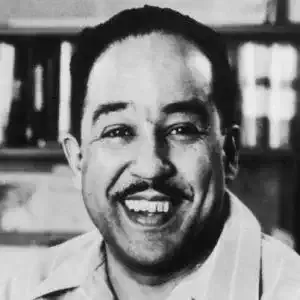
Langston Hughes
Democracy
Democracy will not come
Today, this year
Nor ever
Through compromise and fear.
I have as much right
As the other fellow has
To stand
On my two feet
And own the land.
I tire so of hearing people say,
Let things take their course.
Tomorrow is another day.
I do not need my freedom when I'm dead.
I cannot live on tomorrow's bread.
Freedom
Is a strong seed
Planted
In a great need.
I live here, too.
I want freedom
Just as you.
589
Kazi Nazrul Islam
Rise Up, O Farmer!
O farmer, where is tile smile of your face?
Where is' your shepherd's bamboo flute'!
Where is your jute?
Who plunders it from your stock on riverside?
Who robs you of huge golden paddy grown in your fields?
The empty corn-bin in your courtyard resembles a husband-less daughter
lamenting in her father's home.
Your rural fields present winter-crops as though painted, why
does your son ask for salt and green chilies while eating?
It seems that the government has taxed on your curry too.
Have your sugar-canes been sweetened by the juice of your tears?
Who have drunk milk exploiting your cow?
Alas, your milk pot docs not hold even the starch of boiled rice.
Your younger child with high fever is healed up,
since he is sleeping in tile graveyard.
And he seems to drag her elder sister towards the grave, too.
The girl is calling him deliriously.
Mother replaces milk will oyster,
father weeps on his way to field burying his son;
around him tile fields are full of paddy and the sky is full of delight.
It seems that today's horizon is red by sucking' a farmer's blood.
Fields overflow with paddy, markets with goods,
the wharps with jute-loaded boats.
Who eats away tile crops of your field,who
are those swarm of locusts?
Why are you so destitute in this realm of merrymaking?
Why does the son of your home go to the grave?
Your cattle grazes in the vast pastures, but you get no milk,
O farmer, your hopes of living have gone away long before,
how do you stand lamentations beside a tomb?
Can't you wake up the burning of thunder in your arid bones?
How long shall you see with eyes wide open the theft by burglars?
Don't you possess a bamboo-stick even?
You may have no blood in your body, yet we want all your bones.
The plunderer robbing you of your boiled rice day
and night has ascended to affluency sucking your blood.
Your bone shall cause the bones of those plunderers decay,
and your rib-bones will turn into war swords.
Allah, the Benevolent, gives water to your fields,
energy to your wind to bloom flowers,
sun and moon rise up to grow your crops, would
those gifts of Allah again be plundered by that demon?
Though the sky is all clear, there is no hope.
Though Khuda's mercy comes in torrents,
you don't reach it. So raise up your hands straight,
that would give you instant strength.
Your crops shall fill your granary, and God shall bless you.
[Original: Otth re chashi; Translation: Mohammad Nurul Huda]
585

Ella Wheeler Wilcox
Greeting Poem
There was a sound in the wind to-day,
Like a joyous cymbal ringing!
And the leaves of the trees talked with the breeze,
And they altogether were singing,
For they knew that an army, both bold and strong,
A brave, brave army, was coming,
Not with the fife and sounds of strife,
With marshal music and drumming,
Not with stern faces and gleaming swords,
That would make blood to flow like water,
While brother and brother should slay each other
On wholesale fields of slaughter;
But rather like rills from a thousand hills,
That ripple through valley and heather,
On, on to the sea, with a song of glee,
Till they meet and mingle together.
They come from the South, and the East, and the West,
The bravest and best in the nation.
They come at no idle and aimless quest,
But to work for a world's salvation.
From the Scot's fair land and from England's strand,
O'er mountain and heather and ocean,
They come; and the foe by their coming shall know
The strength of a Templar's devotion.
On the earnest brows, in the thoughtful eyes,
We read the unchanging story-
They fight in their might for the truth and the right,
And not for vain name or glory.
O grandest of armies! O bravest of bands!
We give you a cordial greeting,
And the blood of our warm hearts beats in the hands
That are offered to you in meeting.
The heart of a Templar is never cold,
Nor stands it aloof from a brother,
And his hand is steady, and always ready
To clasp the hand of another.
In God's great Book, where but angels look,
On pages of spotless beauty
Are written in letters of living light
A Templar's vow and his duty.
'For ever and ever,' the promise reads,
For ever and ever 'twas given.
And who keeps or breaks the pledge that he takes
Must meet the record in heaven.
Our order is noble and grand and strong,
And is gathering strength each hour,
And the good of the earth proclaim its worth,
While the foe turns pale at its power.
And we of the State that men call great,
The nation's brave 'Badger' daughter,
Step by step as we go, are defeating the foe,
While we add to the hosts of cold water.
With a chief at our head whom the foe may well dread,
The Sherman or Grant of our battles,
By day and by night we fight the good fight,
Though never a cannon rattles.
For the tongue and the pen are the swords of our men,
And prayer keeps them whetted and polished;
They will let God's light in on the foe's licensed sin,
Till the traffic of death is abolished.
With cunning hands we fashioned the strands
Of a stout restraining tether,
To fasten the beast, for a season at least,
And our statesmen tied it together.
The beast strains the rope with the idle hope
Of making it weaker or longer,
But the Templars to-day are working away
To make it shorter and stronger.
We give you greeting-we need your aid!
There is work for many a morrow,
There are beautiful souls going down in the bowls,
There are homes that are burdened with sorrow,
There are mourning captives all over the earth,
Hugging the fetters that bind them.
We must show them the light, we must set them aright,
We must work for them all as we find them.
With a soaring 'Faith,' that is stronger than death,
We must work while the day hangs o'er us.
We are brave and strong, and our battle-song
Has 'Hope' for the ringing chorus.
With 'Charity' broad as the mercy of God,
We must lift up the fallen neighbor,
And the Lord's dear band, in the angel land,
Will smile on our blesséd labor.
Welcome, brave warriors in God's holy cause!
The hearts in our bosoms are beating
As one heart to-night, filled with pride and delight-
Welcome, thrice welcome, our greeting.
And though soon between will lie long miles of green,
Though oceans divide us for ever,
The ties which now bind heart with heart, mind with mind,
The hand of Death only can sever.
584
Rudyard Kipling
Beast and Man in India
They killed a Child to please the Gods
In Earth's young penitence,
And I have bled in that Babe's stead
Because of innocence.
I bear the sins of sinful men
That have no sin of my own,
They drive me forth to Heaven's wrath
Unpastured and alone.
I am the meat of sacrifice,
The ransom of man's guilt,
For they give my life to the altar-knife
Wherever shrine is built.
The Goat.
Between the waving tufts of jungle-grass,
Up from the river as the twilight falls,
Across the dust-beclouded plain they pass
On to the village walls.
Great is the sword and mighty is the pen,
But over all the labouring ploughman's blade--
For on its oxen and its husbandmen
An Empire's strength is laid.
The Oxen.
The torn boughs trailing o'er the tusks aslant,
The saplings reeling in the path he trod,
Declare his might--our lord the Elephant,
Chief of the ways of God.
The black bulk heaving where the oxen pant,
The bowed head toiling where the guns careen,
Declare our might--our slave the Elephant,
And servant of the Queen.
The Elephant.
Dark children of the mere and marsh,
Wallow and waste and lea,
Outcaste they wait at the village gate
With folk of low degree.
Their pasture is in no man's land,
Their food the cattle's scorn;
Their rest is mire and their desire
The thicket and the thorn.
But woe to those that break their sleep,
And woe to those that dare
To rouse the herd-bull from his keep,
The wild boar from his lair!
Pigs and Buffaloes.
The beasts are very wise,
Their mouths are clean of lies,
They talk one to the other,
Bullock to bullock's brother
Resting after their labours,
Each in stall with his neighbours.
But man with goad and whip,
Breaks up their fellowship,
Shouts in their silky ears
Filling their soul with fears.
When he has ploughed the land,
He says: "They understand."
But the beasts in stall together,
Freed from the yoke and tether,
Say as the torn flanks smoke:
"Nay, 'twas the whip that spoke."
572
Arthur Rimbaud
The Customs Men
Those who say Gord Struth; those who say Swelp Me pensioned
soldiers and sailors, the wreckage of Empire are
nothing, nothing at all, compared with the warriors of Excise
who slash the blue frontiers with their great axe-blows.
Pipes in their teeth, blades in their hands, deep, unruffled,
when darkness noses at the woods like a cow's muzzle, off they go,
leading their dogs, to hold their nocturnal and terrible revels!
They report the bacchantes to the laws of today.
They clap hands on the shoulders of Fausts and of Devils:
'Now then, none of that, you old dodgers! Put those bundles down!'
And, when his serene highness accosts the young,
the Customs Man holds fast to all contraband charms!
The Inferno for Offenders whom his hand has frisked!
563