
Animals and Nature
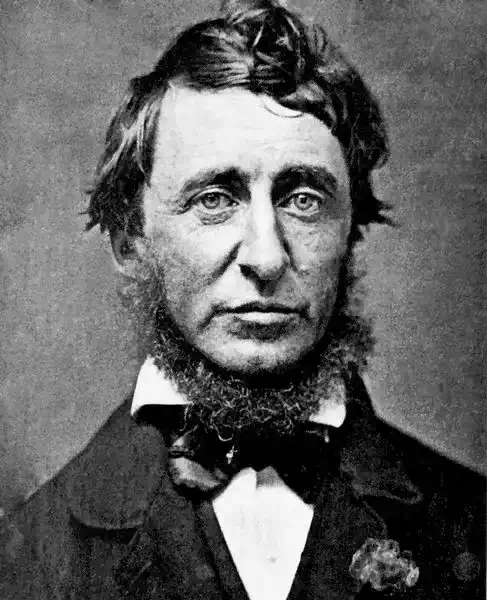
Henry David Thoreau
To a Marsh Hawk in Spring
There is health in thy gray wing,
Health of nature’s furnishing.
Say, thou modern-winged antique,
Was thy mistress ever sick?
In each heaving of thy wing
Thou dost health and leisure bring,
Thou dost waive disease and pain
And resume new life again.
Health of nature’s furnishing.
Say, thou modern-winged antique,
Was thy mistress ever sick?
In each heaving of thy wing
Thou dost health and leisure bring,
Thou dost waive disease and pain
And resume new life again.
262

Christina Rossetti
A Motherless Soft Lambkin
A motherless soft lambkin
Along upon a hill;
No mother's fleece to shelter him
And wrap him from the cold: I'll
run to him and comfort him,
I'll fetch him, that I will;
I'll care for him and feed him
Until he's strong and bold.
Along upon a hill;
No mother's fleece to shelter him
And wrap him from the cold: I'll
run to him and comfort him,
I'll fetch him, that I will;
I'll care for him and feed him
Until he's strong and bold.
256

Ogden Nash
The Hippopotamus
Behold the hippopotamus!
We laugh at how he looks to us,
And yet in moments dank and grim,
I wonder how we look to him.
Peace, peace, thou hippopotamus!
We really look all right to us,
As you no doubt delight the eye
Of other hippopotami.
We laugh at how he looks to us,
And yet in moments dank and grim,
I wonder how we look to him.
Peace, peace, thou hippopotamus!
We really look all right to us,
As you no doubt delight the eye
Of other hippopotami.
258

William Wordsworth
The Reaper
Behold her, single in the field,
Yon solitary Highland Lass!
Reaping and singing by herself;
Stop here, or gently pass!
Alone she cuts and binds the grain,
And sings a melancholy strain;
O listen! for the vale profound
Is overflowing with the sound.
No nightingale did ever chaunt
More welcome notes to weary bands
Of travellers in some shady haunt,
Among Arabian sands:
A voice so thrilling ne'er was heard
In spring-time from the cuckoo-bird
Breaking the silence of the seas
Among the farthest Hebrides.
Will no one tell me what she sings?
Perhaps the plaintive numbers flow
For old, unhappy, far-off things,
And battles long ago:
Or is it some more humble lay,
Familiar matter of today?
Some natural sorrow, loss, or pain,
That has been, and may be again!
Whate'er the theme, the maiden sang
As if her song could have no ending;
I saw her singing at her work,
And o'er the sickle bending;
I listened, motionless and still;
And as I mounted up the hill
The music in my heart I bore,
Long after it was heard no more.
259

John Greenleaf Whittier
From Snow-Bound, 11:1-40, 116-154
The sun that brief December day
Rose cheerless over hills of gray,
And, darkly circled, gave at noon
A sadder light than waning moon.
Slow tracing down the thickening sky
Its mute and ominous prophecy,
A portent seeming less than threat,
It sank from sight before it set.
A chill no coat, however stout,
Of homespun stuff could quite shut out,
A hard, dull bitterness of cold,
That checked, mid-vein, the circling race
Of life-blood in the sharpened face,
The coming of the snow-storm told.
The wind blew east: we heard the roar
Of Ocean on his wintry shore,
And felt the strong pulse throbbing there
Beat with low rhythm our inland air.
Meanwhile we did your nightly chores,-Brought
in the wood from out of doors,
Littered the stalls, and from the mows
Raked down the herd's-grass for the cows;
Heard the horse whinnying for his corn;
And, sharply clashing horn on horn,
Impatient down the stanchion rows
The cattle shake their walnut bows;
While, peering from his early perch
Upon the scaffold's pole of birch,
The cock his crested helmet bent
And down his querulous challenge sent.
Unwarmed by any sunset light
The gray day darkened into night,
A night made hoary with the swarm
And whirl-dance of the blinding storm,
As zigzag, wavering to and fro
Crossed and recrossed the wingèd snow:
And ere the early bed-time came
The white drift piled the window-frame,
And through the glass the clothes-line posts
Looked in like tall and sheeted ghosts.
*
As night drew on, and, from the crest
Of wooded knolls that ridged the west,
The sun, a snow-blown traveller, sank
From sight beneath the smothering bank,
We piled, with care, our nightly stack
Of wood against the chimney-back,-The
oaken log, green, huge, and thick,
And on its top the stout back-stick;
The knotty forestick laid apart,
And filled between with curious art
The ragged brush; then, hovering near,
We watched the first red blaze appear,
Heard the sharp crackle, caught the gleam
On whitewashed wall and sagging beam,
Until the old, rude-furnished room
Burst, flower-like, into rosy bloom;
While radiant with a mimic flame
Outside the sparkling drift became,
And through the bare-boughed lilac-tree
Our own warm hearth seemed blazing free.
The crane and pendent trammels showed,
The Turks' heads on the andirons glowed;
While childish fancy, prompt to tell
The meaning of the miracle,
Whispered the old rhyme: "Under the tree,
When fire outdoors burns merrily,
There the witches are making tea."
The moon above the eastern wood
Shone at its full; the hill-range stood
Transfigured in the silver flood,
Its blown snows flashing cold and keen,
Dead white, save where some sharp ravine
Took shadow, or the somber green
Of hemlocks turned to pitchy black
Against the whiteness at their back.
For such a world and such a night
Most fitting that unwarming light,
Which only seemed where'er it fell
To make the coldness visible.
257

Robert W. Service
Pooch
Nurse, won't you let him in?
He's barkin' an' scratchen' the door,
Makin' so dreffel a din
I jest can't sleep any more;
Out there in the dark an' the cold,
Hark to him scrape an' whine,
Breakin' his heart o' gold,
Poor little pooch o' mine.
Nurse, I was sat in ma seat
In front o' the barber shop,
When there he was lickin' ma feet
As if he would never stop;
Then all of a sudden I see
That dog-catcher moseyin' by:
"Whose mongrel is that?" says he;
"It's ma pedigree pup," says I.
Nurse, he was starved an' a-stray,
But his eyes was plumbful o' trust.
How could I turn him away?
I throwed him a bit o' a crust,
An' he choked as he gluped it up,
Then down at ma feet he curled:
Poor little pitiful pup!
Hadn't a friend in the world.
Nurse, I was friendless too,
So we was makin' a pair.
I'm black as a cast-off shoe,
But that li'le dog didn't care.
He loved me as much as though
Ma skin was pearly an' white:
Somehow dogs seem to know
When a man's heart's all right.
Nurse, we was thick as thieves;
Nothin' could pry us apart,
An' now to hear how he grieves
Is twistin' a knife in ma heart.
As I worked at ma shoe-shine stand
He'd watch me wi' eyes o' love,
A-wigglin' an' lickin' ma hand
Like I was a god above.
Nurse, I sure had no luck
That night o' the rain an' then fog;
There was that thunderin' truck,
And right in the way - ma dog.
Oh, I was a fool, I fear;
It's harder to think than to feel . . .
I dashed in, flung the pup clear,
But - I went under the wheel. . . .
Nurse, it's a-gittin' dark;
Guess ma time's about up:
Don't seem to hear him bark,
Poor, broken-hearted pup! . . .
Why, here he is, darn his skin!
Lickin' ma face once more:
How did the cuss get in?
Musta' busted the door.
God, I'm an ol' black coon,
But You ain't conscious o' race.
I gotta be goin' soon,
I'll be meetin' You face to face.
I'se been sinful, dice an' hooch,
But Lordy, before I die
I'se a-prayin': "Be good to ma pooch" . . .
That's all - little mutt, good-bye.
259

Emily Dickinson
How happy is the little Stone
How happy is the little Stone
That rambles in the Road alone,
And doesn't care about Careers
And Exigencies never fears-
Whose Coat of elemental Brown
A passing Universe put on,
And independent as the Sun
Associates or glows alone,
Fulfilling absolute Decree
In casual simplicity-
That rambles in the Road alone,
And doesn't care about Careers
And Exigencies never fears-
Whose Coat of elemental Brown
A passing Universe put on,
And independent as the Sun
Associates or glows alone,
Fulfilling absolute Decree
In casual simplicity-
254
Robert W. Service
The Three Voices
The waves have a story to tell me,
As I lie on the lonely beach;
Chanting aloft in the pine-tops,
The wind has a lesson to teach;
But the stars sing an anthem of glory
I cannot put into speech.
The waves tell of ocean spaces,
Of hearts that are wild and brave,
Of populous city places,
Of desolate shores they lave,
Of men who sally in quest of gold
To sink in an ocean grave.
The wind is a mighty roamer;
He bids me keep me free,
Clean from the taint of the gold-lust,
Hardy and pure as he;
Cling with my love to nature,
As a child to the mother-knee.
But the stars throng out in their glory,
And they sing of the God in man;
They sing of the Mighty Master,
Of the loom his fingers span,
Where a star or a soul is a part of the whole,
And weft in the wondrous plan.
Here by the camp-fire's flicker,
Deep in my blanket curled,
I long for the peace of the pine-gloom,
When the scroll of the Lord is unfurled,
And the wind and the wave are silent,
And world is singing to world.
255
Christina Rossetti
A White Hen Sitting
A white hen sitting
On white eggs three:
Next, three speckled chickens
As plump as plump can be.
An owl, and a hawk,
And a bat come to see:
But chicks beneath their mother's wing
Squat safe as safe can be.
On white eggs three:
Next, three speckled chickens
As plump as plump can be.
An owl, and a hawk,
And a bat come to see:
But chicks beneath their mother's wing
Squat safe as safe can be.
255

Edward Lear
The Quangle Wangle's Hat
I.
On the top of the Crumpetty Tree
The Quangle Wangle sat,
But his face you could not see,
On account of his Beaver Hat.
For his Hat was a hundred and two feet wide,
With ribbons and bibbons on every side
And bells, and buttons, and loops, and lace,
So that nobody every could see the face
Of the Quangle Wangle Quee.II.
The Quangle Wangle said
To himself on the Crumpetty Tree, -"
Jam; and jelly; and bread;
"Are the best of food for me!
"But the longer I live on this Crumpetty Tree
"The plainer than ever it seems to me
"That very few people come this way
"And that life on the whole is far from gay!"
Said the Quangle Wangle Quee.III.
But there came to the Crumpetty Tree,
Mr. and Mrs. Canary;
And they said, -- "Did every you see
"Any spot so charmingly airy?
"May we build a nest on your lovely Hat?
"Mr. Quangle Wangle, grant us that!
"O please let us come and build a nest
"Of whatever material suits you best,
"Mr. Quangle Wangle Quee!"IV.
And besides, to the Crumpetty Tree
Came the Stork, the Duck, and the Owl;
The Snail, and the Bumble-Bee,
The Frog, and the Fimble Fowl;
(The Fimble Fowl, with a corkscrew leg;)
And all of them said, -- "We humbly beg,
"We may build out homes on your lovely Hat, -"
Mr. Quangle Wangle, grant us that!
"Mr. Quangle Wangle Quee!"V.
And the Golden Grouse came there,
And the Pobble who has no toes, -And
the small Olympian bear, -
And the Dong with a luminous nose.
And the Blue Baboon, who played the Flute, -And
the Orient Calf from the Land of Tute, -And
the Attery Squash, and the Bisky Bat, -All
came and built on the lovely Hat
Of the Quangle Wangle Quee.VI.
And the Quangle Wangle said
To himself on the Crumpetty Tree, -"
When all these creatures move
"What a wonderful noise there'll be!"
And at night by the light of the Mulberry moon
They danced to the Flute of the Blue Baboon,
On the broad green leaves of the Crumpetty Tree,
And all were as happy as happy could be,
With the Quangle Wangle Quee.
254
Christina Rossetti
The Peacock Has A Score Of Eyes
The peacock has a score of eyes,
With which he cannot see;
The cod-fish has a silent sound,
However that may be;
No dandelions tell the time,
Although they turn to clocks;
Cat's-cradle does not hold the cat,
Nor foxglove fit the fox.
With which he cannot see;
The cod-fish has a silent sound,
However that may be;
No dandelions tell the time,
Although they turn to clocks;
Cat's-cradle does not hold the cat,
Nor foxglove fit the fox.
254
Ogden Nash
The Rhinoceros
The rhino is a homely beast,
For human eyes he's not a feast.
Farwell, farewell, you old rhinoceros,
I'll stare at something less prepoceros.
For human eyes he's not a feast.
Farwell, farewell, you old rhinoceros,
I'll stare at something less prepoceros.
255
Robert W. Service
The Ballad Of Casey's Billy-Goat
You've heard of "Casey at The Bat,"
And "Casey's Tabble Dote";
But now it's time
To write a rhyme
Of "Casey's Billy-goat."
Pat Casey had a billy-goat he gave the name of Shamus,
Because it was (the neighbours said) a national disgrace.
And sure enough that animal was eminently famous
For masticating every rag of laundry round the place.
For shirts to skirts prodigiously it proved its powers of chewing;
The question of digestion seemed to matter not at all;
But you'll agree, I think with me, its limit of misdoing
Was reached the day it swallowed Missis Rooney's ould red shawl.
Now Missis Annie Rooney was a winsome widow women,
And many a bouncing boy had sought to make her change her name;
And living just across the way 'twas surely only human
A lonesome man like Casey should be wishfully the same.
So every Sunday, shaved and shined, he'd make the fine occasion
To call upon the lady, and she'd take his and coat;
And supping tea it seemed that she might yield to his persuasion,
But alas! he hadn't counted on that devastating goat.
For Shamus loved his master with a deep and dumb devotion,
And everywhere that Casey went that goat would want to go;
And though I cannot analyze a quadruped's emotion,
They said the baste was jealous, and I reckon it was so.
For every time that Casey went to call on Missis Rooney,
Beside the gate the goat would wait with woefulness intense;
Until one day it chanced that they were fast becoming spooney,
When Shamus spied that ould red shawl a-flutter on the fence.
Now Missis Rooney loved that shawl beyond all rhyme or reason,
And maybe 'twas an heirloom or a cherished souvenir;
For judging by the way she wore it season after season,
I might have been as precious as a product of Cashmere.
So Shamus strolled towards it, and no doubt the colour pleased him,
For he biffed it and he sniffed it, as most any goat might do;
Then his melancholy vanished as a sense of hunger seized him,
And he wagged his tail with rapture as he started in to chew.
"Begorrah! you're a daisy," said the doting Mister Casey
to the blushing Widow Rooney as they parted at the door.
"Wid yer tinderness an' tazin' sure ye've set me heart a-blazin',
And I dread the day I'll nivver see me Anniw anny more."
"Go on now wid yer blarney," said the widow softly sighing;
And she went to pull his whiskers, when dismay her bosom smote. . . .
Her ould red shawl! 'Twas missin' where she'd left it bravely drying -
Then she saw it disappearing - down the neck of Casey's goat.
Fiercely flamed her Irish temper, "Look!" says she, "The thavin' divvle!
Sure he's made me shawl his supper. Well, I hope it's to his taste;
But excuse me, Mister Casey, if I seem to be oncivil,
For I'll nivver wed a man wid such a misbegotten baste."
So she slammed the door and left him in a state of consternation,
And he couldn't understand it, till he saw that grinning goat:
Then with eloquence he cussed it, and his final fulmination
Was a poem of profanity impossible to quote.
So blasting goats and petticoats and feeling downright sinful,
Despairfully he wandered in to Shinnigan's shebeen;
And straightway he proceeded to absorb a might skinful
Of the deadliest variety of Shinnigan's potheen.
And when he started homeward it was in the early morning,
But Shamus followed faithfully, a yard behind his back;
Then Casey slipped and stumbled, and without the slightest warning
like a lump of lead he tumbled - right across the railroad track.
And there he lay, serenely, and defied the powers to budge him,
Reposing like a baby, with his head upon the rail;
But Shamus seemed unhappy, and from time to time would nudge him,
Though his prods to protestation were without the least avail.
Then to that goatish mind, maybe, a sense of fell disaster
Came stealing like a spectre in the dim and dreary dawn;
For his bleat of warning blended with the snoring of his master
In a chorus of calamity - but Casey slumbered on.
Yet oh, that goat was troubled, for his efforts were redoubled;
Now he tugged at Casey's whisker, now he nibbled at his ear;
Now he shook him by the shoulder, and with fear become bolder,
He bellowed like a fog-horn, but the sleeper did not hear.
Then up and down the railway line he scampered for assistance;
But anxiously he hurried back and sought with tug and strain
To pull his master off the track . . . when sudden! in the distance
He heard the roar and rumble of the fast approaching train.
Did Shamus faint and falter? No, he stood there stark and splendid.
True, his tummy was distended, but he gave his horns a toss.
By them his goathood's honour would be gallantly defended,
And if their valour failed him - he would perish with his boss
So dauntlessly he lowered his head, and ever clearer, clearer,
He heard the throb and thunder of the Continental Mail.
He would face the mighty monster. It was coming nearer, nearer;
He would fight it, he would smite it, but he'd never show his tail.
Can you see that hirsute hero, standing there in tragic glory?
Can you hear the Pullman porters shrieking horror to the sky?
No, you can't; because my story has no end so grim and gory,
For Shamus did not perish and his master did not die.
At this very present moment Casey swaggers hale and hearty,
And Shamus strolls beside him with a bright bell at his throat;
While recent Missis Rooney is the gayest of the party,
For now she's Missis Casey and she's crazy for that goat.
You're wondering what happened? Well, you know that truth is stranger
Than the wildest brand of fiction, so Ill tell you without shame. . . .
There was Shamus and his master in the face of awful danger,
And the giant locomotive dashing down in smoke and flame. . . .
What power on earth could save them? Yet a golden inspiration
To gods and goats alike may come, so in that brutish brain
A thought was born - the ould red shawl. . . . Then rearing with elation,
Like lightning Shamus threw it up - AND FLAGGED AND STOPPED THE TRAIN.
256

Henry Wadsworth Longfellow
Tales Of A Wayside Inn : Part 3. Prelude
The evening came; the golden vane
A moment in the sunset glanced,
Then darkened, and then gleamed again,
As from the east the moon advanced
And touched it with a softer light;
While underneath, with flowing mane,
Upon the sign the Red Horse pranced,
And galloped forth into the night.
But brighter than the afternoon
That followed the dark day of rain,
And brighter than the golden vane
That glistened in the rising moon,
Within the ruddy fire-light gleamed;
And every separate window-pane,
Backed by the outer darkness, showed
A mirror, where the flamelets gleamed
And flickered to and fro, and seemed
A bonfire lighted in the road.
Amid the hospitable glow,
Like an old actor on the stage,
With the uncertain voice of age,
The singing chimney chanted low
The homely songs of long ago.
The voice that Ossian heard of yore,
When midnight winds were in his hall;
A ghostly and appealing call,
A sound of days that are no more!
And dark as Ossian sat the Jew,
And listened to the sound, and knew
The passing of the airy hosts,
The gray and misty cloud of ghosts
In their interminable flight;
And listening muttered in his beard,
With accent indistinct and weird,
'Who are ye, children of the Night?'
Beholding his mysterious face,
'Tell me,' the gay Sicilian said,
'Why was it that in breaking bread
At supper, you bent down your head
And, musing, paused a little space,
As one who says a silent grace?'
The Jew replied, with solemn air,
'I said the Manichaean's prayer.
It was his faith,--perhaps is mine,--
That life in all its forms is one,
And that its secret conduits run
Unseen, but in unbroken line,
From the great fountain-head divine
Through man and beast, through grain and grass.
Howe'er we struggle, strive, and cry,
From death there can be no escape,
And no escape from life, alas
Because we cannot die, but pass
From one into another shape:
It is but into life we die.
'Therefore the Manichaean said
This simple prayer on breaking bread,
Lest he with hasty hand or knife
Might wound the incarcerated life,
The soul in things that we call dead:
'I did not reap thee, did not bind thee,
I did not thrash thee, did not grind thee,
Nor did I in the oven bake thee!
It was not I, it was another
Did these things unto thee, O brother;
I only have thee, hold thee, break thee!''
'That birds have souls I can concede,'
The Poet cried, with glowing cheeks;
'The flocks that from their beds of reed
Uprising north or southward fly,
And flying write upon the sky
The biforked letter of the Greeks,
As hath been said by Rucellai;
All birds that sing or chirp or cry,
Even those migratory bands,
The minor poets of the air,
The plover, peep, and sanderling,
That hardly can be said to sing,
But pipe along the barren sands,--
All these have souls akin to ours;
So hath the lovely race of flowers:
Thus much I grant, but nothing more.
The rusty hinges of a door
Are not alive because they creak;
This chimney, with its dreary roar,
These rattling windows, do not speak!'
'To me they speak,' the Jew replied;
'And in the sounds that sink and soar,
I hear the voices of a tide
That breaks upon an unknown shore!'
Here the Sicilian interfered:
'That was your dream, then, as you dozed
A moment since, with eyes half-closed,
And murmured something in your beard.'
The Hebrew smiled, and answered, 'Nay;
Not that, but something very near;
Like, and yet not the same, may seem
The vision of my waking dream;
Before it wholly dies away,
Listen to me, and you shall hear.'
255
William Wordsworth
The Primrose of the Rock
A Rock there is whose homely front
The passing traveller slights;
Yet there the glow-worms hang their lamps,
Like stars, at various heights;
And one coy Primrose to that Rock
The vernal breeze invites.
What hideous warfare hath been waged,
What kingdoms overthrown,
Since first I spied that Primrose-tuft
And marked it for my own;
A lasting link in Nature's chain
From highest heaven let down!
The flowers, still faithful to the stems,
Their fellowship renew;
The stems are faithful to the root,
That worketh out of view;
And to the rock the root adheres
In every fibre true.
Close clings to earth the living rock,
Though threatening still to fall:
The earth is constant to her sphere;
And God upholds them all:
So blooms this lonely Plant, nor dreads
Her annual funeral.
Here closed the meditative strain;
But air breathed soft that day,
The hoary mountain-heights were cheered,
The sunny vale looked gay;
And to the Primrose of the Rock
I gave this after-lay.
I sang-Let myriads of bright flowers,
Like Thee, in field and grove
Revive unenvied;-mightier far,
Than tremblings that reprove
Our vernal tendencies to hope,
Is God's redeeming love;
That love which changed-for wan disease,
For sorrow that had bent
O'er hopeless dust, for withered age-
Their moral element,
And turned the thistles of a curse
To types beneficent.
Sin-blighted though we are, we too,
The reasoning Sons of Men,
From one oblivious winter called
Shall rise, and breathe again;
And in eternal summer lose
Our threescore years and ten.
To humbleness of heart descends
This prescience from on high,
The faith that elevates the just,
Before and when they die;
And makes each soul a separate heaven
A court for Deity.
256
Robert W. Service
The Cuckoo
No lyric line I ever penned
The praise this parasitic bird;
And what is more, I don't intend
To write a laudatory word,
Since in my garden robins made
A nest with eggs of dainty spot,
And then a callous cuckoo laid
A lone on on the lot.
Of course the sillies hatched it out
Along with their two tiny chicks,
And there it threw its weight about,
But with the others would not mix.
In fact, it seemed their guts to hate,
And crossly kicked them to the ground,
So that next morning, sorry fate!
Two babes stone dead I found.
These stupid robins, how they strove
To gluttonize that young cuckoo!
And like a prodigy it throve,
And daily greedier it grew.
How it would snap and glup and spit!
Till finally it came to pass,
Growing too big the nest to fit,
It fell out on the grass.
So for a week they fed it there,
As in a nook of turf it lay;
But it was scornful of their care,
for it was twice as big as they.
When lo! one afternoon I heard
A flutelike call: Cuckoo! Cuckoo!
Then suddenly that foulsome bird
Flapped to its feet and flew.
I'm sure it never said goodbye
To its fond foster Pa and Ma,
Though to their desolated sigh
It might have chirruped: "Au revoir."
But no, it went in wanton mood,
Flying the coop for climates new
And so I say: "Ingratitude,
They name's Cuckoo."
255

James Whitcomb Riley
When The Frost Is On The Punkin
When the frost is on the punkin and the fodder's in the shock
And you hear the kyouck and gobble of the struttin' turkey cock
And the clackin' of the guineys, and the cluckin' of the hens
And the rooster's hallylooyer as he tiptoes on the fence
O, it's then's the times a feller is a-feelin' at his best
With the risin' sun to greet him from a night of peaceful rest
As he leaves the house, bareheaded, and goes out to feed the stock
When the frost is on the punkin and the fodder's in the shock
They's something kindo' harty-like about the atmusfere
When the heat of summer's over and the coolin' fall is here
Of course we miss the flowers, and the blossums on the trees
And the mumble of the hummin'-birds and buzzin' of the bees
But the air's so appetizin'; and the landscape through the haze
Of a crisp and sunny morning of the airly autumn days
Is a pictur' that no painter has the colorin' to mock
When the frost is on the punkin and the fodder's in the shock.
The husky, rusty russel of the tossels of the corn,
And the raspin' of the tangled leaves, as golden as the morn;
The stubble in the furries kindo' lonesome-like, but still
A-preachin' sermuns to us of the barns they growed to fill;
The strawstack in the medder, and the reaper in the shed;
The hosses in theyr stalls below the clover over-head!
O, it sets my hart a-clickin' like the tickin' of a clock,
When the frost is on the punkin and the fodder's in the shock!
Then your apples all is gethered, and the ones a feller keeps
Is poured around the celler-floor in red and yeller heaps;
And your cider-makin' 's over, and your wimmern-folks is through
With their mince and apple butter, and theyr souse and saussage, too!
I don't know how to tell it but ef sich a thing could be
As the Angels wantin' boardin', and they'd call around on me
I'd want to 'commodate 'em all the whole-indurin' flock
When the frost is on the punkin and the fodder's in the shock!
254

Henry Lawson
The Muscovy Duck
The rooster is a brainless dude, although he sports a crest,
The hen’s an awful fool we know, though hen-eggs are the best;
She’ll flutter, cackling, anywhere save through a gate or door,
And try to hatch a door-knob, too, for forty days or more.
The turkey is of small account, we’ll let it go in peace,
And other fowls are ornaments, and geese are simply geese;
But over all that cackle, hiss, or gobble, quack, or cluck,
My favourite shall always be the quaint Muscovy duck.
I’m fond of Mrs Muscovy, I think she knows the most
Of all the different kinds of fowls that poultry-breeders boast.
She knows best how to build her nest when laying time is past,
And you should see the knowing pride with which she sets at last.
She waddles out for food and drink—she’s not afraid of us,
And if we fix her now and then she doesn’t make a fuss;
No frantic flaps of useless wings, no cackle, hiss, nor cluck,
She’s queen of all philosophers—the quaint Muscovy duck.
It is a wondrous thing to see, and a wondrous thing to tell,
Her ducklings know as much as ducks the day they leave the shell.
That she is proud as proud can be, is plain to any dunce—
The little ducklings set to work to grow up ducks at once;
And, on a sunny winter’s day, ’tis a good thing for the eyes
To see her waddle round and watch her ducklings catching flies,
I love her for her waddle, and her patience, and her pluck,
Her wag of tail and nod of head—the quaint Muscovy duck.
254

Jack Kerouac
Mexico City Blues (Roosevelt was worth 6, 7 million dollars)
Roosevelt was worth 6, 7 million dollars
He was Tight
Frog waits
Till poor fly
Flies by
And then they got him
The pool of clear rocks
Covered with vegetable scum
Covered the rocks
Clear the pool
Covered the warm surface
Covered the lotus
Dusted the watermelon flower
Aerial the Pad
Clean queer the clear
blue water
AND THEN THEY GOT HIM
The Oil of the Olive
Bittersweet taffies
Bittersweet cabbage
Cabbage soup made right
A hunk a grass
Sauerkraut let work
in a big barrel
Stunk but Good
254
Ogden Nash
The Solitary Huntsman
The solitary huntsman
No coat of pink doth wear,
But midnight black from cap to spur
Upon his midnight mare.
He drones a tuneless jingle
In lieu of tally-ho:
“I’ll catch a fox
And put him in a box
And never let him go.”
The solitary huntsman,
He follows silent hounds.
No horn proclaims his joyless sport,
And never a hoofbeat sounds.
His hundred hounds, his thousands,
Their master’s will they know:
To catch a fox
And put him in a box
And never let him go.
For all the fox’s doubling
They track him to his den.
The chase may fill a morning,
Or threescore years and ten.
The huntsman never sated
Screaks to his saddlebow,
“I’ll catch another fox
And put him in a box
And never let him go.”
253
Henry Lawson
Grey Wolves Grey
The Russian march is soft and slow,
Through dust and heat, or slush and snow,
When the Russian skies hang grey and low
To the frontiers far where the Russians go;
And they march to-night and they march to-day
Like the grey wolves grey, like the grey wolves grey.
Nor song nor sound their track reveals,
Save the ceaseless “clock” of the waggon wheels;
But a rift in the mist shows a glint of sun
On the long, dark shape of a toiling gun;
And they strain by night and they drag by day
To a distant goal, like the grey wolves grey.
As the horses toil at the ends of trains,
And the ends of roads on the Blacksoil Plains.
And Ivan digs in the frozen clay,
And he rolls the logs a bed to lay
For a gun that’s five hundred miles away,
But as sure to come as the grey wolves grey.
He is marching on with a purpose grand,
For brother Slav in another land;
Whose tongue, perchance, he cannot understand.—
But he knows the cry from the far-away,
And he smells the blood like the grey wolves grey.
And Ivan’s wife in her den at home,
While hunger looms and his lean wolves come—
With her grey-black bread like the Darling mud,
And her tea-bricks bound with the bullock’s blood—
She shields her cubs by night and day
Like the crouching sluts of the grey wolves grey.
And I march with Ivan where’er he be,
With the foreign blood that is strong in me,
And the love and the hate that is fantasy,
Like the ghosts of a father’s memory.
With the blood that is strange to us to-day
As the strange wild blood of the grey wolves grey.
Grey wolves,
Grey wolves—
The strange wild blood of the grey wolves grey.
253
Emily Dickinson
When I have seen the Sun emerge
When I have seen the Sun emerge
From His amazing House-
And leave a Day at every Door
A Deed, in every place-
Without the incident of Fame
Or accident of Noise-
The Earth has seemed to me a Drum,
Pursued of little Boys
From His amazing House-
And leave a Day at every Door
A Deed, in every place-
Without the incident of Fame
Or accident of Noise-
The Earth has seemed to me a Drum,
Pursued of little Boys
253
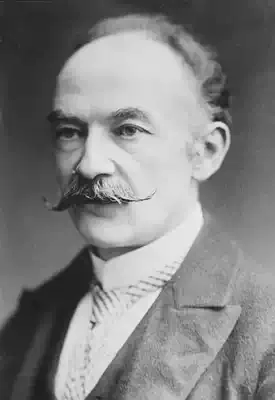
Thomas Hardy
The Darkling Thrush
The Darkling Thrush
I leant upon a coppice gate,
When Frost was spectre-gray,
And Winter's dregs made desolate
The weakening eye of day.
The tangled vine-stems scored the sky
Like strings of broken lyres,
And all mankind that haunted nigh
Had sought their household fires.
The land's sharp features seemed to me
The Century's corpse outleant,
Its crypt the cloudy canopy,
The wind its death-lament.
The ancient pulse of germ and birth
Was shrunken hard and dry,
And every spirit upon earth
Seemed fervorless as I.
At once a voice arose among
The bleak twigs overhead,
In a full-throated evensong
Of joy illimited.
An ancient thrush, frail, gaunt and small,
With blast-beruffled plume,
Had chosen thus to fling his soul
Upon the growing gloom.
So little cause for carolings
Of such ecstatic sound
Was written on terrestrial things
Afar or nigh around,
That I could think there trembled through
His happy good-night air
Some blessed Hope, whereof he knew,
And I was unaware.
254