
Animals and Nature

Henry Lawson
In Possum Land
In Possum Land the nights are fair,
The streams are fresh and clear;
No dust is in the moonlit air;
No traffic jars the ear.
With Possums gambolling overhead,
'Neath western stars so grand,
Ah! would that we could make our bed
Tonight in Possum Land.
The streams are fresh and clear;
No dust is in the moonlit air;
No traffic jars the ear.
With Possums gambolling overhead,
'Neath western stars so grand,
Ah! would that we could make our bed
Tonight in Possum Land.
253

Edward Lear
He Lived at Dingle Bank
He lived at Dingle Bank - he did; -
He lived at Dingle Bank;
And in his garden was one Quail,
Four tulips and a Tank:
And from his window he could see
The otion and the River Dee.
His house stood on a Cliff, - it did,
Its aspic it was cool;
And many thousand little boys
Resorted to his school,
Where if of progress they could boast
He gave them heaps of buttered toast.
But he grew rabid-wroth, he did,
If they neglected books,
And dragged them to adjacent Cliffs
With beastly Button Hooks,
And there with fatuous glee he threw
Them down into the ocean blue.
And in the sea they sway, they did, -
All playfully about,
And some eventually became
Sponges, or speckled trout: -
But Liverpool doth all bewail
Their Fate; - likewise his Garden Quail.
252

Christina Rossetti
Playing At Bob Cherry
Playing at bob cherry
Tom and Nell and Hugh:
Cherry bob! cherry bob!
There's a bob for you.
Tom bobs a cherry
For gaping snapping Hugh,
While curly-pated Nelly
Snaps at it too.
Look, look, look -
Oh what a sight to see!
The wind is playing cherry bob
With the cherry tree.
Tom and Nell and Hugh:
Cherry bob! cherry bob!
There's a bob for you.
Tom bobs a cherry
For gaping snapping Hugh,
While curly-pated Nelly
Snaps at it too.
Look, look, look -
Oh what a sight to see!
The wind is playing cherry bob
With the cherry tree.
251
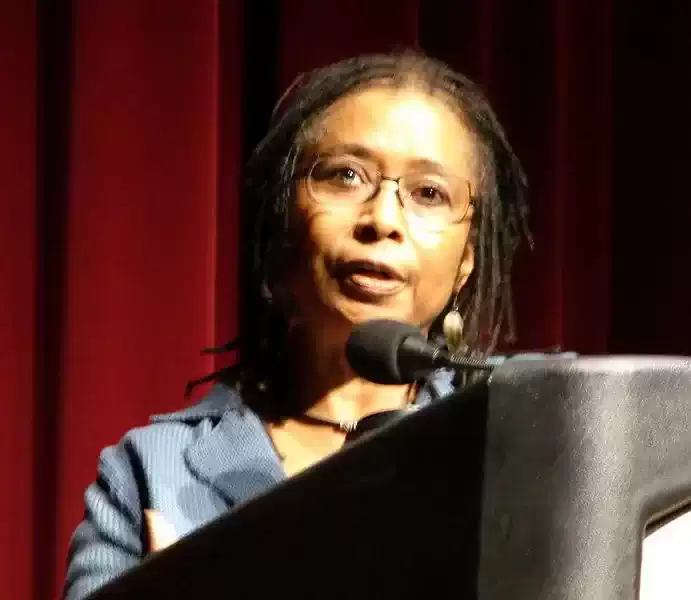
Alice Walker
From: Poems To My Girls
I
How can Humanity
look the deer
in
the face?
How can Mommy,
having erected
my fence?
How can Humanity
look the deer
in
the face?
How can Mommy,
having erected
my fence?
251

Henry Wadsworth Longfellow
Evangeline: Part The First. II.
NOW had the season returned, when the nights grow colder and longer,
And the retreating sun the sign of the Scorpion enters.
Birds of passage sailed through the leaden air, from the ice-bound,
Desolate northern bays to the shores of tropical islands.
Harvests were gathered in; and wild with the winds of September
Wrestled the trees of the forest, as Jacob of old with the angel.
All the signs foretold a winter long and inclement.
Bees, with prophetic instinct of want, had hoarded their honey
Till the hives overflowed; and the Indian hunters asserted
Cold would the winter be, for thick was the fur of the foxes.
Such was the advent of autumn. Then followed that beautiful season,
Called by the pious Acadian peasants the Summer of All-Saints!
Filled was the air with a dreamy and magical light; and the landscape
Lay as if new-created in all the freshness of childhood.
Peace seemed to reign upon earth, and the restless heart of the ocean
Was for a moment consoled. All sounds were in harmony blended.
Voices of children at play, the crowing of cocks in the farm-yards,
Whir of wings in the drowsy air, and the cooing of pigeons,
All were subdued and low as the murmurs of love, and the great sun
Looked with the eye of love through the golden vapors around him;
While arrayed in its robes of russet and scarlet and yellow,
Bright with the sheen of the dew, each glittering tree of the forest
Flashed like the plane-tree the Persian adorned with mantles and jewels.
Now recommenced the reign of rest and affection and stillness.
Day with its burden and heat had departed, and twilight descending
Brought back the evening star to the sky, and the herds to the homestead.
Pawing the ground they came, and resting their necks on each other,
And with their nostrils distended inhaling the freshness of evening.
Foremost, bearing the bell, Evangeline's beautiful heifer,
Proud of her snow-white hide, and the ribbon that waved from her collar,
Quietly paced and slow, as if conscious of human affection.
Then came the shepherd back with his bleating flocks from the seaside,
Where was their favorite pasture. Behind them followed the watch-dog,
Patient, full of importance, and grand in the pride of his instinct,
Walking from side to side with a lordly air, and superbly
Waving his bushy tail, and urging forward the stragglers;
Regent of flocks was he when the shepherd slept; their protector,
When from the forest at night, through the starry silence, the wolves howled.
Late, with the rising moon, returned the wains from the marshes,
Laden with briny hay, that filled the air with its odor.
Cheerily neighed the steeds, with dew on their manes and their fetlocks,
While aloft on their shoulders the wooden and ponderous saddles,
Painted with brilliant dyes, and adorned with tassels of crimson,
Nodded in bright array, like hollyhocks heavy with blossoms.
Patiently stood the cows meanwhile, and yielded their udders
Unto the milkmaid's hand; whilst loud and in regular cadence
Into the sounding pails the foaming streamlets descended.
Lowing of cattle and peals of laughter were heard in the farm-yard,
Echoed back by the barns. Anon they sank into stillness;
Heavily closed, with a jarring sound, the valves of the barn-doors,
Rattled the wooden bars, and all for a season was silent.
In-doors, warm by the wide-mouthed fireplace, idly the farmer
Sat in his elbow-chair; and watched how the flames and the smoke-wreaths
Struggled together like foe in a burning city. Behind him,
Nodding and mocking along the wall, with gestures fantastic,
Darted his own huge shadow, and vanished away into darkness.
Faces, clumsily carved in oak, on the back of his arm-chair
Laughed in the flickering light, and the pewter plates on the dresser
Caught and reflected the flame, as shields of armies the sunshine.
Fragments of song the old man sang, and carols of Christmas,
Such as at home, in the olden time, his fathers before him
Sang in their Norman orchards and bright Burgundian vineyards.
Close at her father's side was the gentle Evangeline seated,
Spinning flax for the loom, that stood in the corner behind her.
Silent awhile were its treadles, at rest was its diligent shuttle,
While the monotonous drone of the wheel, like the drone of a bagpipe,
Followed the old man's song, and united the fragments together.
As in a church, when the chant of the choir at intervals ceases,
Footfalls are heard in the aisles, or words of the priest at the altar,
So, in each pause of the song, with measured motion the clock clicked.
Thus as they sat, there were footsteps heard, and, suddenly lifted,
Sounded the wooden latch, and the door swung back on its hinges.
Benedict knew by the hob-nailed shoes it was Basil the blacksmith,
And by her beating heart Evangeline knew who was with him.
'Welcome!' the farmer exclaimed, as their footsteps paused on the threshold,
'Welcome, Basil, my friend! Come, take thy place on the settle
Close by the chimney-side, which is always empty without thee;
Take from the shelf overhead thy pipe and the box of tobacco;
Never so much thyself art thou as when through the curling
Smoke of the pipe or the forge thy friendly and jovial face gleams
Round and red as the harvest moon through the mist of the marshes.'
Then, with a smile of content, thus answered Basil the blacksmith,
Taking with easy air the accustomed seat by the fireside:'
Benedict Bellefontaine, thou hast ever thy jest and thy ballad!
Ever in cheerfullest mood art thou, when others are filled with
Gloomy forebodings of ill, and see only ruin before them.
Happy art thou, as if every day thou hadst picked up a horseshoe.'
Pausing a moment, to take the pipe that Evangeline brought him,
And with a coal from the embers had lighted, he slowly continued:'
Four days now are passed since the English ships at their anchors
Ride in the Gaspereau's mouth, with their cannon pointed against us,
What their design may be is unknown; but all are commanded
On the morrow to meet in the church, where his Majesty's mandate
Will be proclaimed as law in the land. Alas! in the mean time
Many surmises of evil alarm the hearts of the people.'
Then made answer the farmer:-'Perhaps some friendlier purpose
Brings these ships to our shores. Perhaps the harvests in England
By untimely rains or untimelier heat have been blighted,
And from our bursting barns they would feed their cattle and children.'
'Not so thinketh the folk in the village,' said, warmly, the blacksmith,
Shaking his head, as in doubt; then, heaving a sigh, he continued:
'Louisburg is not forgotten, nor Beau Séjour, nor Port Royal.
Many already have fled to the forest, and lurk on its outskirts,
Waiting with anxious hearts the dubious fate of to-morrow.
Arms have been taken from us, and warlike weapons of all kinds;
Nothing is left but the blacksmith's sledge and the scythe of the mower.'
Then with a pleasant smile made answer the jovial farmer:'
Safer are we unarmed, in the midst of our flocks and our cornfields,
Safer within these peaceful dikes, besieged by the ocean,
Than our fathers in forts, besieged by the enemy's cannon.
Fear no evil, my friend, and to-night may no shadow of sorrow
Fall on this house and hearth; for this is the night of the contract.
Built are the house and the barn. The merry lads of the village
Strongly have built them and well; and, breaking the glebe round about them,
Filled the barn with hay, and the house with food for a twelvemonth.
René Leblanc will be here anon, with his papers and inkhorn.
Shall we not then be glad, and rejoice in the joy of our children?'
As apart by the window she stood, with her hand in her lover's,
Blushing Evangeline heard the words that her father had spoken,
And, as they died on his lips, the worthy notary entered.
252

Robert W. Service
Ant Hill
Black ants have made a musty mound
My purple pine tree under,
And I am often to be found,
Regarding it with wonder.
Yet as I watch, somehow it;s odd,
Above their busy striving
I feel like an ironic god
Surveying human striving.
Then one day came my serving maid,
And just in time I caught her,
For on each lusty arm she weighed
A pail of boiling water.
She said with glee: "When this I spill,
Of life they'll soon be lacking."
Said I: "If even one you kill,
You bitch! I'll send you packing."
Just think - ten thousand eager lives
In that toil-worn upcasting,
Their homes, their babies and their wives
Destroyed in one fell blasting!
Imagine that swift-scalding hell! . . .
And though, mayhap, it seems a
Fantastic, far-fetched parallel -
Remember . . . Hiroshima.
252

Emily Dickinson
Some Rainbow—coming from the Fair!
Some Rainbow—coming from the Fair!
Some Vision of the World Cashmere—
I confidently see!
Or else a Peacock's purple Train
Feather by feather—on the plain
Fritters itself away!
The dreamy Butterflies bestir!
Lethargic pools resume the whir
Of last year's sundered tune!
From some old Fortress on the sun
Baronial Bees—march—one by one—
In murmuring platoon!
The Robins stand as thick today
As flakes of snow stood yesterday—
On fence—and Roof—and Twig!
The Orchis binds her feather on
For her old lover - Don the Sun!
Revisiting the Bog!
Without Commander! Countless! Still!
The Regiments of Wood and Hill
In bright detachment stand!
Behold! Whose Multitudes are these?
The children of whose turbaned seas—
Or what Circassian Land?
251

William Wordsworth
The Tables Turned
Up! up! my Friend, and quit your books;
Or surely you'll grow double:
Up! up! my Friend, and clear your looks;
Why all this toil and trouble?
The sun above the mountain's head,
A freshening lustre mellow
Through all the long green fields has spread,
His first sweet evening yellow.
Books! 'tis a dull and endless strife:
Come, hear the woodland linnet,
How sweet his music! on my life,
There's more of wisdom in it.
And hark! how blithe the throstle sings!
He, too, is no mean preacher:
Come forth into the light of things,
Let Nature be your teacher.
She has a world of ready wealth,
Our minds and hearts to bless--
Spontaneous wisdom breathed by health,
Truth breathed by cheerfulness.
One impulse from a vernal wood
May teach you more of man,
Of moral evil and of good,
Than all the sages can.
Sweet is the lore which Nature brings;
Our meddling intellect
Mis-shapes the beauteous forms of things:--
We murder to dissect.
Enough of Science and of Art;
Close up those barren leaves;
Come forth, and bring with you a heart
That watches and receives.
251

D.H. Lawrence
Tortoise Shell
The Cross, the Cross
Goes deeper in than we know,
Deeper into life;
Right into the marrow
And through the bone.
Along the back of the baby tortoise
The scales are locked in an arch like a bridge,
Scale-lapping, like a lobster's sections
Or a bee's.
Then crossways down his sides
Tiger-stripes and wasp-bands.
Five, and five again, and five again,
And round the edges twenty-five little ones,
The sections of the baby tortoise shell.
Four, and a keystone;
Four, and a keystone;
Four, and a keystone;
Then twenty-four, and a tiny little keystone.
It needed Pythagoras to see life playing with counters on the living back
Of the baby tortoise;
Life establishing the first eternal mathematical tablet,
Not in stone, like the Judean Lord, or bronze, but in life-clouded, life-rosy tortoise shell.
The first little mathematical gentleman
Stepping, wee mite, in his loose trousers
Under all the eternal dome of mathematical law.
Fives, and tens,
Threes and fours and twelves,
All the volte face of decimals,
The whirligig of dozens and the pinnacle of seven.
Turn him on his back,
The kicking little beetle,
And there again, on his shell-tender, earth-touching belly,
The long cleavage of division, upright of the eternal cross
And on either side count five,
On each side, two above, on each side, two below
The dark bar horizontal.
The Cross!
It goes right through him, the sprottling insect,
Through his cross-wise cloven psyche,
Through his five-fold complex-nature.
So turn him over on his toes again;
Four pin-point toes, and a problematical thumb-piece,
Four rowing limbs, and one wedge-balancing head,
Four and one makes five, which is the clue to all mathematics.
The Lord wrote it all down on the little slate
Of the baby tortoise.
Outward and visible indication of the plan within,
The complex, manifold involvednes,s of an individual creature
Plotted out
On this small bird, this rudiment,
This little dome, this pediment
Of all creation,
This slow one.
251

Anonymous
Cuckoo Song
Sing, cuccu, nu! Sing, cuccu!
Sing, cuccu! Sing, cuccu, nu!
Sumer is icumen in;
Lhud{.e} sing, cuccu!
Groweth sed, and bloweth med,
And springth the wud{.e} nu.
Sing, cuccu!
Aw{.e} bleteth after lomb,
Lhouth after calv{.e} cu;
Bulluc sterteth, buck{.e} verteth;
Mur.e sing, cuccu!
Cuccu! cuccu!
Wel sing{.e}s thu, cuccu;
Ne swik thu naver nu.
252
Emily Dickinson
From Cocoon forth a Butterfly
From Cocoon forth a Butterfly
As Lady from her Door
Emerged-a Summer Afternoon-
Repairing Everywhere-
Without Design-that I could trace
Except to stray abroad
On Miscellaneous Enterprise
The Clovers-understood-
Her pretty Parasol be seen
Contracting in a Field
Where Men made Hay-
Then struggling hard
With an opposing Cloud-
Where Parties-Phantom as Herself-
To Nowhere-seemed to go
In purposeless Circumference-
As 'twere a Tropic Show-
And notwithstanding Bee-that worked-
And Flower-that zealous blew-
This Audience of Idleness
Disdained them, from the Sky-
Till Sundown crept-a steady Tide-
And Men that made the Hay-
And Afternoon-and ButterflyExtinguished-
in the Sea-
252
Emily Dickinson
Summer Shower
A drop fell on the apple tree,
Another on the roof;
A half a dozen kissed the eaves,
And made the gables laugh.
A few went out to help the brook,
That went to help the sea.
Myself conjectured, Were they pearls,
What necklaces could be!
The dust replaced in hoisted roads,
The birds jocoser sung;
The sunshine threw his hat away,
The orchards spangles hung.
The breezes brought dejected lutes,
And bathed them in the glee;
The East put out a single flag,
And signed the fete away.
250
Christina Rossetti
Rushes In A Watery Place
Rushes in a watery place,
And reeds in a hollow;
A soaring skylark in the sky,
A darting swallow;
And where pale blossom used to hang
Ripe fruit to follow.
And reeds in a hollow;
A soaring skylark in the sky,
A darting swallow;
And where pale blossom used to hang
Ripe fruit to follow.
248
Horácio
BkIII:XXII To Diana
Virgin protectress of the mountain and the grove,
who, called on three times, hears young girls, labouring
through childbirth, and rescues them from dying, O
triple formed goddess,
may it be yours, this pine-tree above my farm,
so that I may, happily, through passing years,
offer it the blood of a boar, that’s trying
its first sidelong thrusts.
who, called on three times, hears young girls, labouring
through childbirth, and rescues them from dying, O
triple formed goddess,
may it be yours, this pine-tree above my farm,
so that I may, happily, through passing years,
offer it the blood of a boar, that’s trying
its first sidelong thrusts.
249
Robert W. Service
Worms
Worms finer for fishing you couldn't be wishing;
I delved them dismayed from the velvety sod;
The rich loam upturning I gathered them squirming,
big, fat, gleamy earthworms, all ripe for my rod.
Thinks I, without waiting, my hook I'll be baiting,
And flip me a fish from the foam of the pool;
Then Mother beholding, came crying and scolding:
"You're late, ye young devil! Be off to the school."
So grabbing me bait-tin I dropped them fat worms in,
With globs of green turf for their comfort and cheer;
And there, clean forgotten, no doubt dead and rotten;
I left them to languish for nigh on a year.
One day to be cleaning the byre I was meaning,
When seeing that old rusty can on the shelf,
Says I: "To my thinking, them worms must be stinking:
Begorrah! I'd better find out for myself."
So I opened the tin, held my nose and looked in;
And what did I see? Why, most nothing at all.
Just darkness and dank. and . . . a something that stank,
Tucked down in a corner, a greasy grey ball.
My worms -no, not dead, but thin as a thread,
Each seemed to reproach me, protesting its worth:
So softly I took them and tenderly shook them
Back into the bosom of mothering earth.
I'm now in the City; 'tis grand, but I pity
The weariful wretches that crawl in its grime;
The dregs and the scum and the spawn of the slum,
And the poor little children that's cradled in crime.
Sure I see them in terms of my pitiful worms,
surviving despite desperation and doom,
And I wish I was God, with a smile and a nod
To set them all down in a valley of bloom,
Saying: "Let these rejoice with a wonderful voice
For mothering earth and for fathering sea,
And healing of sun, for each weariful one
Of these poor human worms is a wee bit of me. . . .
Let your be the blame and yours be the shame:
What ye do unto them ye do also to ME."
248
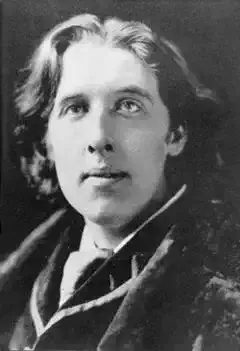
Oscar Wilde
By The Arno
THE oleander on the wall
Grows crimson in the dawning light,
Though the grey shadows of the night
Lie yet on Florence like a pall.
The dew is bright upon the hill,
And bright the blossoms overhead,
But ah! the grasshoppers have fled,
The little Attic song is still.
Only the leaves are gently stirred
By the soft breathing of the gale,
And in the almond-scented vale
The lonely nightingale is heard.
The day will make thee silent soon,
O nightingale sing on for love!
While yet upon the shadowy grove
Splinter the arrows of the moon.
Before across the silent lawn
In sea-green mist the morning steals,
And to love's frightened eyes reveals
The long white fingers of the dawn
Fast climbing up the eastern sky
To grasp and slay the shuddering night,
All careless of my heart's delight,
Or if the nightingale should die.
249
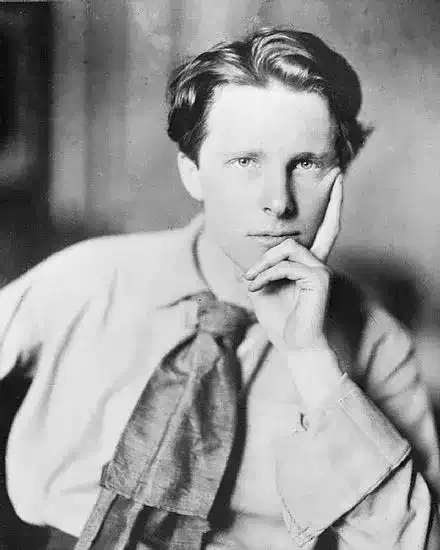
Rupert Brooke
The Fish
In a cool curving world he lies
And ripples with dark ecstasies.
The kind luxurious lapse and steal
Shapes all his universe to feel
And know and be; the clinging stream
Closes his memory, glooms his dream,
Who lips the roots o’ the shore, and glides
Superb on unreturning tides.
Those silent waters weave for him
A fluctuant mutable world and dim,
Where wavering masses bulge and gape
Mysterious, and shape to shape
Dies momently through whorl and hollow,
And form and line and solid follow
Solid and line and form to dream
Fantastic down the eternal stream;
An obscure world, a shifting world,
Bulbous, or pulled to thin, or curled,
Or serpentine, or driving arrows,
Or serene slidings, or March narrows.
There slipping wave and shore are one,
And weed and mud. No ray of sun,
But glow to glow fades down the deep
(As dream to unknown dream in sleep);
Shaken translucency illumes
The hyaline of drifting glooms;
The strange soft-handed depth subdues
Drowned colour there, but black to hues,
As death to living, decomposes—
Red darkness of the heart of roses,
Blue brilliant from dead starless skies,
And gold that lies behind the eyes,
The unknown unnameable sightless white
That is the essential flame of night,
Lustreless purple, hooded green,
The myriad hues that lie between
Darkness and darkness!…
And all’s one.
Gentle, embracing, quiet, dun,
The world he rests in, world he knows,
Perpetual curving. Only—grows
An eddy in that ordered falling,
A knowledge from the gloom, a calling
Weed in the wave, gleam in the mud—
The dark fire leaps along his blood;
Dateless and deathless, blind and still,
The intricate impulse works its will;
His woven world drops back; and he,
Sans providence, sans memory,
Unconscious and directly driven,
Fades to some dank sufficient heaven.
O world of lips, O world of laughter,
Where hope is fleet and thought flies after,
Of lights in the clear night, of cries
That drift along the wave and rise
Thin to the glittering stars above,
You know the hands, the eyes of love!
The strife of limbs, the sightless clinging,
The infinite distance, and the singing
Blown by the wind, a flame of sound,
The gleam, the flowers, and vast around
The horizon, and the heights above—
You know the sigh, the song of love!
But there the night is close, and there
Darkness is cold and strange and bare;
And the seered deeps are whisperless;
And rhythm is all deliciousness;
And joy is in the throbbing tide,
Whose intricate fingers beat and glide
In felt bewildering harmonies
Of trembling touch; and music is
The exquisite knocking of the blood.
Space is no more, under the mud;
His bliss is older than the sun.
Silent and straight the waters run.
The lights, the cries, the willows dim,
And the dark tide are one with him.
247

James Whitcomb Riley
Billy's Alphabetical Animal Show
A was an elegant Ape
Who tied up his ears with red tape,
And wore a long veil
Half revealing his tail
Which was trimmed with jet bugles and crape.
B was a boastful old Bear
Who used to say,--'Hoomh! I declare
I can eat--if you'll get me
The children, and let me--
Ten babies, teeth, toenails and hair!'
C was a Codfish who sighed
When snatched from the home of his pride,
But could he, embrined,
Guess this fragrance behind,
How glad he would be that he died!
D was a dandified Dog
Who said,--'Though it's raining like fog
I wear no umbrellah,
Me boy, for a fellah
Might just as well travel incog!'
E was an elderly Eel
Who would say,--'Well, I really feel--
As my grandchildren wriggle
And shout 'I should giggle'--
A trifle run down at the heel!'
F was a Fowl who conceded
_Some_ hens might hatch more eggs than _she_ did,--
But she'd children as plenty
As eighteen or twenty,
And that was quite all that she needed.
G was a gluttonous Goat
Who, dining one day, _table-d'hote,_
Ordered soup-bone, _au fait_,
And fish, _papier-mache_,
And a _filet_ of Spring overcoat.
H was a high-cultured Hound
Who could clear forty feet at a bound,
And a coon once averred
That his howl could be heard
For five miles and three-quarters around.
I was an Ibex ambitious
To dive over chasms auspicious;
He would leap down a peak
And not light for a week,
And swear that the jump was delicious.
J was a Jackass who said
He had such a bad cold in his head,
If it wasn't for leaving
The rest of us grieving,
He'd really rather be dead.
K was a profligate Kite
Who would haunt the saloons every night;
And often he ust
To reel back to his roost
Too full to set up on it right.
L was a wary old Lynx
Who would say,--'Do you know wot I thinks?--
I thinks ef you happen
To ketch me a-nappin'
I'm ready to set up the drinks!'
M was a merry old Mole,
Who would snooze all the day in his hole,
Then--all night, a-rootin'
Around and galootin'-He'd
sing 'Johnny, Fill up the Bowl!'
N was a caustical Nautilus
Who sneered, 'I suppose, when they've _caught_ all us,
Like oysters they'll serve us,
And can us, preserve us,
And barrel, and pickle, and bottle us!'
O was an autocrat Owl--
Such a wise--such a wonderful fowl!
Why, for all the night through
He would hoot and hoo-hoo,
And hoot and hoo-hooter and howl!
P was a Pelican pet,
Who gobbled up all he could get;
He could eat on until
He was full to the bill,
And there he had lodgings to let!
Q was a querulous Quail,
Who said: 'It will little avail
The efforts of those
Of my foes who propose
To attempt to put salt on my tail!'
R was a ring-tailed Raccoon,
With eyes of the tinge of the moon,
And his nose a blue-black,
And the fur on his back
A sad sort of sallow maroon.
S is a Sculpin--you'll wish
Very much to have one on your dish,
Since all his bones grow
On the outside, and so
He's a very desirable fish.
T was a Turtle, of wealth,
Who went round with particular stealth,-'
Why,' said he, 'I'm afraid
Of being waylaid
When I even walk out for my health!'
U was a Unicorn curious,
With one horn, of a growth so _luxurious_,
He could level and stab it--
If you didn't grab it--
Clean through you, he was so blamed furious!
V was a vagabond Vulture
Who said: 'I don't want to insult yer,
But when you intrude
Where in lone solitude
I'm a-preyin', you're no man o' culture!'
W was a wild _Wood_chuck,
And you can just bet that he _could_ 'chuck'
He'd eat raw potatoes,
Green corn, and tomatoes,
And tree roots, and call it all '_good_ chuck!'
X was a kind of X-cuse
Of a some-sort-o'-thing that got loose
Before we could name it,
And cage it, and tame it,
And bring it in general use.
Y is the Yellowbird,--bright
As a petrified lump of star-light,
Or a handful of lightning-
Bugs, squeezed in the tight'ning
Pink fist of a boy, at night.
Z is the Zebra, of course!--
A kind of a clown-of-a-horse,--
Each other despising,
Yet neither devising
A way to obtain a divorce!
& here is the famous--what-is-it?
Walk up, Master Billy, and quiz it:
You've seen the _rest_ of 'em-Ain't
this the _best_ of 'em,
Right at the end of your visit?
245
Christina Rossetti
Minnie And Mattie
Minnie and Mattie
And fat little May,
Out in the country,
Spending a day.
Such a bright day,
With the sun glowing,
And the trees half in leaf,
And the grass growing.
Pinky white pigling
Squeals through his snout,
Woolly white lambkin
Frisks all about.
Cluck! cluck! the nursing hen
Summons her folk, -
Ducklings all downy soft
Yellow as yolk.
Cluck! cluck! the mother hen
Summons her chickens
To peck the dainty bits
Found in her pickings.
Minnie and Mattie
And May carry posies,
Half of sweet violets,
Half of primroses.
Give the sun time enough,
Glowing and glowing,
He'll rouse the roses
And bring them blowing.
Don't wait for roses
Losing to-day,
O Minnie, Mattie,
And wise little May.
Violets and primroses
Blossom to-day
For Minnie and Mattie
And fat little May.
245
Emily Dickinson
Because the Bee may blameless hum
Because the Bee may blameless hum
For Thee a Bee do I become
List even unto Me.
Because the Flowers unafraid
May lift a look on thine, a Maid
Alway a Flower would be.
Nor Robins, Robins need not hide
When Thou upon their Crypts intrude
So Wings bestow on Me
Or Petals, or a Dower of Buzz
That Bee to ride, or Flower of Furze
I that way worship Thee.
246
Emily Dickinson
She sped as Petals of a Rose
She sped as Petals of a Rose
Offended by the Wind-
A frail Aristocrat of Time
Indemnity to find-
Leaving on nature-a Default
As Cricket or as Bee-
But Andes in the Bosoms where
She had begun to lie-
Offended by the Wind-
A frail Aristocrat of Time
Indemnity to find-
Leaving on nature-a Default
As Cricket or as Bee-
But Andes in the Bosoms where
She had begun to lie-
245
Anonymous
This Pig Went to Market
This pig went to market,
That pig staid at home;
This pig had roast meat,
That pig had none;
This pig went to the barn-door,
And cry'd week, week, for more.
That pig staid at home;
This pig had roast meat,
That pig had none;
This pig went to the barn-door,
And cry'd week, week, for more.
247
Robert W. Service
The Three Bares
Ma tried to wash her garden slacks but couldn't get 'em clean
And so she thought she'd soak 'em in a bucket o' benzine.
It worked all right. She wrung 'em out then wondered what she'd do
With all that bucket load of high explosive residue.
She knew that it was dangerous to scatter it around,
For Grandpa liked to throw his lighted matches on the ground.
Somehow she didn't dare to pour it down the kitchen sink,
And what the heck to do with it, poor Ma jest couldn't think.
Then Nature seemed to give the clue, as down the garden lot
She spied the edifice that graced a solitary spot,
Their Palace of Necessity, the family joy and pride,
Enshrined in morning-glory vine, with graded seats inside;
Jest like that cabin Goldylocks found occupied by three,
But in this case B-E-A-R was spelt B-A-R-E----
A tiny seat for Baby Bare, a medium for Ma,
A full-sized section sacred to the Bare of Grandpapa.
Well, Ma was mighty glad to get that worry off her mind,
And hefting up the bucket so combustibly inclined,
She hurried down the garden to that refuge so discreet,
And dumped the liquid menace safely through the centre seat.
Next morning old Grandpa arose; he made a hearty meal,
And sniffed the air and said: 'By Gosh! how full of beans I feel.
Darned if I ain't as fresh as paint; my joy will be complete
With jest a quiet session on the usual morning seat;
To smoke me pipe an' meditate, an' maybe write a pome,
For that's the time when bits o' rhyme gits jiggin' in me dome.'
He sat down on that special seat slicked shiny by his age,
And looking like Walt Whitman, jest a silver-whiskered sage,
He filled his corn-cob to the brim and tapped it snugly down,
And chuckled: 'Of a perfect day I reckon this the crown.'
He lit the weed, it soothed his need, it was so soft and sweet:
And then he dropped the lighted match clean through the middle seat.
His little grand-child Rosyleen cried from the kichen door:
'Oh, Ma, come quick; there's sompin wrong; I heared a dreffel roar;
Oh, Ma, I see a sheet of flame; it's rising high and higher...
Oh, Mummy dear, I sadly fear our comfort-cot's caught fire.'
Poor Ma was thrilled with horror at them words o' Rosyleen.
She thought of Grandpa's matches and that bucket of benzine;
So down the garden geared on high, she ran with all her power,
For regular was Grandpa, and she knew it was his hour.
Then graspin' gaspin' Rosyleen she peered into the fire,
A roarin' soarin' furnace now, perchance old Grandpa's pyre....
But as them twain expressed their pain they heard a hearty cheer----
Behold the old rapscallion squattinn' in the duck pond near,
His silver whiskers singed away, a gosh-almighty wreck,
Wi' half a yard o' toilet seat entwined about his neck....
He cried: 'Say, folks, oh, did ye hear the big blow-out I made?
It scared me stiff - I hope you-uns was not too much afraid?
But now I best be crawlin' out o' this dog-gasted wet....
For what I aim to figger out is----WHAT THE HECK I ET?'
247
Robert W. Service
His Boys
"I'm going, Billy, old fellow. Hist, lad! Don't make any noise.
There's Boches to beat all creation, the pitch of a bomb away.
I've fixed the note to your collar, you've got to get back to my Boys,
You've got to get back to warn 'em before it's the break of day."
The order came to go forward to a trench-line traced on the map;
I knew the brass-hats had blundered, I knew and I told 'em so;
I knew if I did as they ordered I would tumble into a trap,
And I tried to explain, but the answer came like a pistol: "Go."
Then I thought of the Boys I commanded -- I always called them "my Boys" --
The men of my own recruiting, the lads of my countryside;
Tested in many a battle, I knew their sorrows and joys,
And I loved them all like a father, with more than a father's pride.
To march my Boys to a shambles as soon as the dawn of day;
To see them helplessly slaughtered, if all that I guessed was true;
My Boys that trusted me blindly, I thought and I tried to pray,
And then I arose and I muttered: "It's either them or it's you."
I rose and I donned my rain-coat; I buckled my helmet tight.
I remember you watched me, Billy, as I took my cane in my hand;
I vaulted over the sandbags into the pitchy night,
Into the pitted valley that served us as No Man's Land.
I strode out over the hollow of hate and havoc and death,
From the heights the guns were angry, with a vengeful snarling of steel;
And once in a moment of stillness I heard hard panting breath,
And I turned . . . it was you, old rascal, following hard on my heel.
I fancy I cursed you, Billy; but not so much as I ought!
And so we went forward together, till we came to the valley rim,
And then a star-shell sputtered . . . it was even worse than I thought,
For the trench they told me to move in was packed with Boche to the brim.
They saw me too, and they got me; they peppered me till I fell;
And there I scribbled my message with my life-blood ebbing away;
"Now, Billy, you fat old duffer, you've got to get back like hell;
And get them to cancel that order before it's the dawn of day.
"Billy, old boy, I love you, I kiss your shiny black nose;
Now, home there. . . . Hurry, you devil, or I'll cut you to ribands. . . . See . . ."
Poor brute! he's off! and I'm dying. . . . I go as a soldier goes.
I'm happy. My Boys, God bless 'em! . . . It had to be them or me.
246