
Serenity and Inner Peace
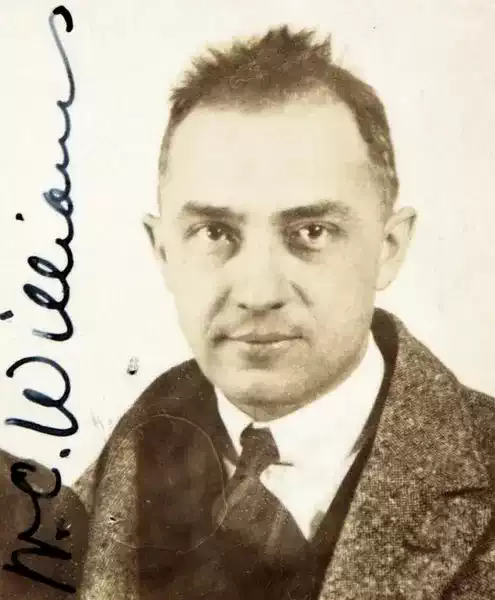
William Carlos Williams
Nantucket
Flowers through the window
lavender and yellow
changed by white curtains –
Smell of cleanliness –
Sunshine of late afternoon –
On the glass tray
a glass pitcher, the tumbler
turned down, by which
a key is lying – And the
immaculate white bed
lavender and yellow
changed by white curtains –
Smell of cleanliness –
Sunshine of late afternoon –
On the glass tray
a glass pitcher, the tumbler
turned down, by which
a key is lying – And the
immaculate white bed
385

Kabir
Abode of the Beloved
Oh Companion That Abode Is Unmatched,
Where My Complete Beloved Is.
In that Place There Is No Happiness or Unhappiness,
No Truth or Untruth
Neither Sin Nor Virtue.
There Is No Day or Night, No Moon or Sun,
There Is Radiance Without Light.
There Is No Knowledge or Meditation
No Repetition of Mantra or Austerities,
Neither Speech Coming From Vedas or Books.
Doing, Not-Doing, Holding, Leaving
All These Are All Lost Too In This Place.
No Home, No Homeless, Neither Outside or Inside,
Micro and Macrocosm Are Non-Existent.
Five Elemental Constituents and the Trinity Are Both Not There
Witnessing Un-struck Shabad Sound is Also Not There.
No Root or Flower, Neither Branch or Seed,
Without a Tree Fruits are Adorning,
Primordial Om Sound, Breath-Synchronized Soham,
This and That - All Are Absent, The Breath Too Unknown
Where the Beloved Is There is Utterly Nothing
Says Kabir I Have Come To Realize.
Whoever Sees My Indicative Sign
Will Accomplish the Goal of Liberation.
383

Sara Teasdale
White Fog
Heaven-invading hills are drowned
In wide moving waves of mist,
Phlox before my door are wound
In dripping wreaths of amethyst.
Ten feet away the solid earth
Changes into melting cloud,
There is a hush of pain and mirth,
No bird has heart to speak aloud.
Here in a world without a sky,
Without the ground, without the sea,
The one unchanging thing is I,
Myself remains to comfort me.
380

William Butler Yeats
In The Seven Woods
I HAVE heard the pigeons of the Seven Woods
Make their faint thunder, and the garden bees
Hum in the lime-tree flowers; and put away
The unavailing outcries and the old bitterness
That empty the heart. I have forgot awhile
Tara uprooted, and new commonness
Upon the throne and crying about the streets
And hanging its paper flowers from post to post,
Because it is alone of all things happy.
I am contented, for I know that Quiet
Wanders laughing and eating her wild heart
Among pigeons and bees, while that Great Archer,
Who but awaits His hour to shoot, still hangs
A cloudy quiver over Pairc-na-lee.
375

John Clare
The Old Cottagers
The little cottage stood alone, the pride
Of solitude surrounded every side.
Bean fields in blossom almost reached the wall;
A garden with its hawthorn hedge was all
The space between.--Green light did pass
Through one small window, where a looking-glass
Placed in the parlour, richly there revealed
A spacious landscape and a blooming field.
The pasture cows that herded on the moor
Printed their footsteps to the very door,
Where little summer flowers with seasons blow
And scarcely gave the eldern leave to grow.
The cuckoo that one listens far away
Sung in the orchard trees for half the day;
And where the robin lives, the village guest,
In the old weedy hedge the leafy nest
Of the coy nightingale was yearly found,
Safe from all eyes as in the loneliest ground;
And little chats that in bean stalks will lie
A nest with cobwebs there will build, and fly
Upon the kidney bean that twines and towers
Up little poles in wreaths of scarlet flowers.
There a lone couple lived, secluded there
From all the world considers joy or care,
Lived to themselves, a long lone journey trod,
And through their Bible talked aloud to God;
While one small close and cow their wants maintained,
But little needing, and but little gained.
Their neighbour's name was peace, with her they went,
With tottering age, and dignified content,
Through a rich length of years and quiet days,
And filled the neighbouring village with their praise.
374

James Whitcomb Riley
A Summer Afternoon
A languid atmosphere, a lazy breeze,
With labored respiration, moves the wheat
From distant reaches, till the golden seas
Break in crisp whispers at my feet.
My book, neglected of an idle mind,
Hides for a moment from the eyes of men;
Or lightly opened by a critic wind,
Affrightedly reviews itself again.
Off through the haze that dances in the shine
The warm sun showers in the open glade,
The forest lies, a silhouette design
Dimmed through and through with shade.
A dreamy day; and tranquilly I lie
At anchor from all storms of mental strain;
With absent vision, gazing at the sky,
"Like one that hears it rain."
The Katydid, so boisterous last night,
Clinging, inverted, in uneasy poise,
Beneath a wheat-blade, has forgotten quite
If "Katy DID or DIDN'T" make a noise.
The twitter, sometimes, of a wayward bird
That checks the song abruptly at the sound,
And mildly, chiding echoes that have stirred,
Sink into silence, all the more profound.
And drowsily I hear the plaintive strain
Of some poor dove . . . Why, I can scarcely keep
My heavy eyelids--there it is again-"
Coo-coo!"--I mustn't--"Coo-coo!"--fall asleep!
367

Henry Wadsworth Longfellow
Songo River. (Birds Of Passage. Flight The Fourth)
Nowhere such a devious stream,
Save in fancy or in dream,
Winding slow through bush and brake,
Links together lake and lake.
Walled with woods or sandy shelf,
Ever doubling on itself
Flows the stream, so still and slow
That it hardly seems to flow.
Never errant knight of old,
Lost in woodland or on wold,
Such a winding path pursued
Through the sylvan solitude.
Never school-boy, in his quest
After hazel-nut or nest,
Through the forest in and out
Wandered loitering thus about.
In the mirror of its tide
Tangled thickets on each side
Hang inverted, and between
Floating cloud or sky serene.
Swift or swallow on the wing
Seems the only living thing,
Or the loon, that laughs and flies
Down to those reflected skies.
Silent stream! thy Indian name
Unfamiliar is to fame;
For thou hidest here alone,
Well content to be unknown.
But thy tranquil waters teach
Wisdom deep as human speech,
Moving without haste or noise
In unbroken equipoise.
Though thou turnest no busy mill,
And art ever calm and still,
Even thy silence seems to say
To the traveller on his way:-
'Traveller, hurrying from the heat
Of the city, stay thy feet!
Rest awhile, nor longer waste
Life with inconsiderate haste!
'Be not like a stream that brawls
Loud with shallow waterfalls,
But in quiet self-control
Link together soul and soul.'
361

Robert Louis Stevenson
In the Highlands
IN the highlands, in the country places,
Where the old plain men have rosy faces,
And the young fair maidens
Quiet eyes;
Where essential silence cheers and blesses,
And for ever in the hill-recesses
Her more lovely music
Broods and dies--
O to mount again where erst I haunted;
Where the old red hills are bird-enchanted,
And the low green meadows
Bright with sward;
And when even dies, the million-tinted,
And the night has come, and planets glinted,
Lo, the valley hollow
Lamp-bestarr'd!
O to dream, O to awake and wander
There, and with delight to take and render,
Through the trance of silence,
Quiet breath!
Lo! for there, among the flowers and grasses,
Only the mightier movement sounds and passes;
Only winds and rivers,
Life and death.
350
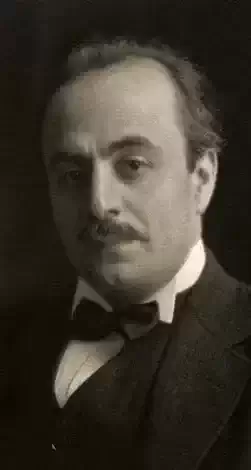
Khalil Gibran
Reason and Passion XV
And the priestess spoke again and said: "Speak to us of Reason and Passion."
And he answered saying:
Your soul is oftentimes a battlefield, upon which your reason and your judgment wage
war against passion and your appetite.
Would that I could be the peacemaker in your soul, that I might turn the discord and
the rivalry of your elements into oneness and melody.
But how shall I, unless you yourselves be also the peacemakers, nay, the lovers of all
your elements?
Your reason and your passion are the rudder and the sails of your seafaring soul.
If either your sails or our rudder be broken, you can but toss and drift, or else be held
at a standstill in mid-seas.
For reason, ruling alone, is a force confining; and passion, unattended, is a flame that
burns to its own destruction.
Therefore let your soul exalt your reason to the height of passion; that it may sing;
And let it direct your passion with reason, that your passion may live through its own
daily resurrection, and like the phoenix rise above its own ashes.
I would have you consider your judgment and your appetite even as you would two
loved guests in your house.
Surely you would not honour one guest above the other; for he who is more mindful of
one loses the love and the faith of both.
Among the hills, when you sit in the cool shade of the white poplars, sharing the peace
and serenity of distant fields and meadows - then let your heart say in silence, "God
rests in reason."
And when the storm comes, and the mighty wind shakes the forest, and thunder and
lightning proclaim the majesty of the sky, - then let your heart say in awe, "God moves
in passion."
And since you are a breath In God's sphere, and a leaf in God's forest, you too should
rest in reason and move in passion.
351
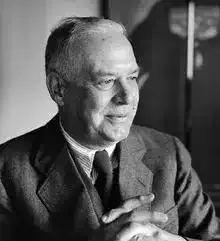
Wallace Stevens
The House Was Quiet And The World Was Calm
The house was quiet and the world was calm.
The reader became the book; and summer night
Was like the conscious being of the book.
The house was quiet and the world was calm.
The words were spoken as if there was no book,
Except that the reader leaned above the page,
Wanted to lean, wanted much to be
The scholar to whom his book is true, to whom
The summer night is like a perfection of thought.
The house was quiet because it had to be.
The quiet was part of the meaning, part of the mind:
The access of perfection to the page.
And the world was calm. The truth in a calm world,
In which there is no other meaning, itself
Is calm, itself is summer and night, itself
Is the reader leaning late and reading there.
351
Henry Wadsworth Longfellow
Ultima Thule: Night
Into the darkness and the hush of night
Slowly the landscape sinks, and fades away,
And with it fade the phantoms of the day,
The ghosts of men and things, that haunt the light,
The crowd, the clamor, the pursuit, the flight,
The unprofitable splendor and display,
The agitations, and the cares that prey
Upon our hearts, all vanish out of sight.
The better life begins; the world no more
Molests us; all its records we erase
From the dull commonplace book of our lives,
That like a palimpsest is written o'er
With trivial incidents of time and place,
And lo! the ideal, hidden beneath, revives.
344

Robert W. Service
Atoll
The woes of men beyond my ken
Mean nothing more to me.
Behold my world, and Eden hurled
From Heaven to the Sea;
A jeweled home, in fending foam
Tempestuously tossed;
A virgin isle none dare defile,
Far-flung, forgotten, lost.
And here I dwell, where none may tell
Me tales of mortal strife;
Let millions die, immune am I,
And radiant with life.
No echo comes of evil drums,
To vex my dawns divine;
Aloof, alone I hold my throne,
And Majesty is mine.
Ghost ships pass by, and glad am I
They make no sign to me.
The green corn springs, the gilt vine clings,
The net is in the sea.
My paradise around me lies,
Remote from wrath and wrong;
My isle is clean, unsought, unseen,
And innocent with song.
Here let me dwell in beauty's spell,
As tranquil as a tree;
Here let me bide, where wind and tide
Bourdon that I am free;
Here let me know from human woe
The rapture of release:
The rich caress of Loveliness,
The plenitude of Peace.
337
Henry Wadsworth Longfellow
Ultima Thule: Elegiac
Dark is the morning with mist; in the narrow mouth of the harbor
Motionless lies the sea, under its curtain of cloud;
Dreamily glimmer the sails of ships on the distant horizon,
Like to the towers of a town, built on the verge of the sea.
Slowly and stately and still, they sail forth into the ocean;
With them sail my thoughts over the limitless deep,
Farther and farther away, borne on by unsatisfied longings,
Unto Hesperian isles, unto Ausonian shores.
Now they have vanished away, have disappeared in the ocean;
Sunk are the towers of the town into the depths of the sea!
All have vanished but those that, moored in the neighboring
roadstead,
Sailless at anchor ride, looming so large in the mist.
Vanished, too, are the thoughts, the dim, unsatisfied longings;
Sunk are the turrets of cloud into the ocean of dreams;
While in a haven of rest my heart is riding at anchor,
Held by the chains of love, held by the anchors of trust!
336
James Whitcomb Riley
A Passing Hail
Let us rest ourselves a bit!
Worry?-- wave your hand to it --
Kiss your finger-tips and smile
It farewell a little while.
Weary of the weary way
We have come from Yesterday,
Let us fret not, instead,
Of the wary way ahead.
Let us pause and catch our breath
On the hither side of death,
While we see the tender shoots
Of the grasses -- not the roots,--
While we yet look down -- not up --
To seek out the buttercup
And the daisy where they wave
O'er the green home of the grave.
Let us launch us smoothly on
The soft billows of the lawn,
And drift out across the main
Of our childish dreams again:
Voyage off, beneath the trees,
O'er the field's enchanted seas,
Where the lilies are our sails,
And our sea-gulls, nightingales:
Where no wilder storm shall beat
Than the wind that waves the wheat,
And no tempest-burst above
The old laughs we used to love:
Lose all troubles -- gain release,
Languor, and exceeding peace,
Cruising idly o'er the vast,
Calm mid-ocean of the Past.
Let us rest ourselves a bit!
Worry? -- Wave your hand to it --
Kiss your finger-tips and smile
It fare well a little while.
335
Henry Wadsworth Longfellow
Wanderer's Night Songs. (From Goethe)
I.
Thou that from the heavens art,
Every pain and sorrow stillest,
And the doubly wretched heart
Doubly with refreshment fillest,
I am weary with contending!
Why this rapture and unrest?
Peace descending
Come ah, come into my breast!
II.
O'er all the hill-tops
Is quiet now,
In all the tree-tops
Hearest thou
Hardly a breath;
The birds are asleep in the trees:
Wait; soon like these
Thou too shalt rest.
330

Emily Dickinson
If I should die
If I should die,
And you should live-
And time should gurgle on-
And morn should beam-
And noon should burn-
As it has usual done-
If Birds should build as early
And Bees as bustling go-
One might depart at option
From enterprise below!
'Tis sweet to know that stocks will stand
When we with Daisies lie-
That Commerce will continue-
And Trades as briskly fly-
It makes the parting tranquil
And keeps the soul serene-
That gentlemen so sprightly
Conduct the pleasing scene!
329

Christina Rossetti
Hopping Frog, Hop Here And Be Seen
Hopping frog, hop here and be seen,
I'll not pelt you with stick or stone:
Your cap is laced and your coat is green;
Good bye, we'll let each other alone.
Plodding toad, plod here and be looked at,
You the finger of scorn is crooked at:
But though you're lumpish, you're harmless too;
You won't hurt me, and I won't hurt you.
I'll not pelt you with stick or stone:
Your cap is laced and your coat is green;
Good bye, we'll let each other alone.
Plodding toad, plod here and be looked at,
You the finger of scorn is crooked at:
But though you're lumpish, you're harmless too;
You won't hurt me, and I won't hurt you.
325

Dorothy Parker
Afternoon
When I am old, and comforted,
And done with this desire,
With Memory to share my bed
And Peace to share my fire,
I'll comb my hair in scalloped bands
Beneath my laundered cap,
And watch my cool and fragile hands
Lie light upon my lap.
And I will have a sprigged gown
With lace to kiss my throat;
I'll draw my curtain to the town,
And hum a purring note.
And I'll forget the way of tears,
And rock, and stir my tea.
But oh, I wish those blessed years
Were further than they be!
325
James Whitcomb Riley
He And I
Just drifting on together--
He and I--
As through the balmy weather
Of July
Drift two thistle-tufts imbedded
Each in each--by zephyrs wedded--
Touring upward, giddy-headed,
For the sky.
And, veering up and onward,
Do we seem
Forever drifting dawnward
In a dream,
Where we meet song-birds that know us,
And the winds their kisses blow us,
While the years flow far below us
Like a stream.
And we are happy--very--
He and I--
Aye, even glad and merry
Though on high
The heavens are sometimes shrouded
By the midnight storm, and clouded
Till the pallid moon is crowded
From the sky.
My spirit ne'er expresses
Any choice
But to clothe him with caresses
And rejoice;
And as he laughs, it is in
Such a tone the moonbeams glisten
And the stars come out to listen
To his voice.
And so, whate'er the weather,
He and I,--
With our lives linked thus together,
Float and fly
As two thistle-tufts imbedded
Each in each--by zephyrs wedded--
Touring upward, giddy-headed,
For the sky.
He and I--
As through the balmy weather
Of July
Drift two thistle-tufts imbedded
Each in each--by zephyrs wedded--
Touring upward, giddy-headed,
For the sky.
And, veering up and onward,
Do we seem
Forever drifting dawnward
In a dream,
Where we meet song-birds that know us,
And the winds their kisses blow us,
While the years flow far below us
Like a stream.
And we are happy--very--
He and I--
Aye, even glad and merry
Though on high
The heavens are sometimes shrouded
By the midnight storm, and clouded
Till the pallid moon is crowded
From the sky.
My spirit ne'er expresses
Any choice
But to clothe him with caresses
And rejoice;
And as he laughs, it is in
Such a tone the moonbeams glisten
And the stars come out to listen
To his voice.
And so, whate'er the weather,
He and I,--
With our lives linked thus together,
Float and fly
As two thistle-tufts imbedded
Each in each--by zephyrs wedded--
Touring upward, giddy-headed,
For the sky.
322
Henry Wadsworth Longfellow
The Herons Of Elmwood. (Birds Of Passage. Flight The Fifth)
Warm and still is the summer night,
As here by the river's brink I wander;
White overhead are the stars, and white
The glimmering lamps on the hillside yonder.
Silent are all the sounds of day;
Nothing I hear but the chirp of crickets,
And the cry of the herons winging their way
O'er the poet's house in the Elmwood thickets.
Call to him, herons, as slowly you pass
To your roosts in the haunts of the exiled thrushes,
Sing him the song of the green morass;
And the tides that water the reeds and rushes.
Sing him the mystical Song of the Hern,
And the secret that baffles our utmost seeking;
For only a sound of lament we discern,
And cannot interpret the words you are speaking.
Sing of the air, and the wild delight
Of wings that uplift and winds that uphold you,
The joy of freedom, the rapture of flight
Through the drift of the floating mists that infold you.
Of the landscape lying so far below,
With its towns and rivers and desert places;
And the splendor of light above, and the glow
Of the limitless, blue, ethereal spaces.
Ask him if songs of the Troubadours,
Or of Minnesingers in old black-letter,
Sound in his ears more sweet than yours,
And if yours are not sweeter and wilder and better.
Sing to him, say to him, here at his gate,
Where the boughs of the stately elms are meeting,
Some one hath lingered to meditate,
And send him unseen this friendly greeting;
That many another hath done the same,
Though not by a sound was the silence broken;
The surest pledge of a deathless name
Is the silent homage of thoughts unspoken.
319
Emily Dickinson
It ceased to hurt me, though so slow
It ceased to hurt me, though so slow
I could not feel the Anguish go-
But only knew by looking back-
That something-had benumbed the Track-
Nor when it altered, I could say,
For I had worn it, every day,
As constant as the Childish frock-
I hung upon the Peg, at night.
But not the Grief-that nestled close
As needles-ladies softly press
To Cushions Cheeks-
To keep their place-
Nor what consoled it, I could trace-
Except, whereas 'twas WildernessIt's
better-almost Peace-
319

Jack Kerouac
How to Meditate
-lights outfall,
hands a-clasped, into instantaneous
ecstasy like a shot of heroin or morphine,
the gland inside of my brain discharging
the good glad fluid (Holy Fluid) as
i hap-down and hold all my body parts
down to a deadstop trance-Healing
all my sicknesses-erasing all-not
even the shred of a 'I-hope-you' or a
Loony Balloon left in it, but the mind
blank, serene, thoughtless. When a thought
comes a-springing from afar with its heldforth
figure of image, you spoof it out,
you spuff it off, you fake it, and
it fades, and thought never comes-and
with joy you realize for the first time
'thinking's just like not thinking-
So I don't have to think
any
more'
316

Walter de la Mare
The Ghost
Peace in thy hands,
Peace in thine eyes,
Peace on thy brow;
Flower of a moment in the eternal hour,
Peace with me now.
Not a wave breaks,
Not a bird calls,
My heart, like a sea,
Silent after a storm that hath died,
Sleeps within me.
All the night's dews,
All the world's leaves,
All winter's snow
Seem with their quiet to have stilled in life's dream
All sorrowing now.
311
Christina Rossetti
Spring Quiet
Gone were but the Winter,
Come were but the Spring,
I would go to a covert
Where the birds sing;
Where in the whitethorn
Singeth a thrush,
And a robin sings
In the holly-bush.
Full of fresh scents
Are the budding boughs
Arching high over
A cool green house:
Full of sweet scents,
And whispering air
Which sayeth softly:
"We spread no snare;
"Here dwell in safety,
Here dwell alone,
With a clear stream
And a mossy stone.
"Here the sun shineth
Most shadily;
Here is heard an echo
Of the far sea,
Though far off it be."
293