
Dreams and Imagination
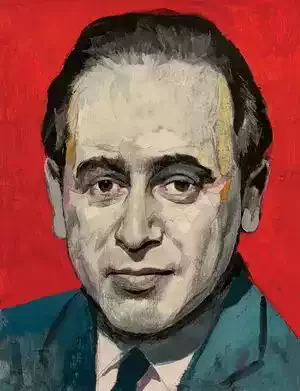
Paul Celan
Ice, Eden
Moon waxes in its Reeds,
and all that’s turned to frost
with us, burns there and sees.
It sees, for it has Eyes,
Earths they are, and bright.
Night, Night, Alkalis.
It sees, this Child of Sight.
It sees, it sees, we see,
I see you, you too see.
Ice will rise again before
This Hour shall cease to be.
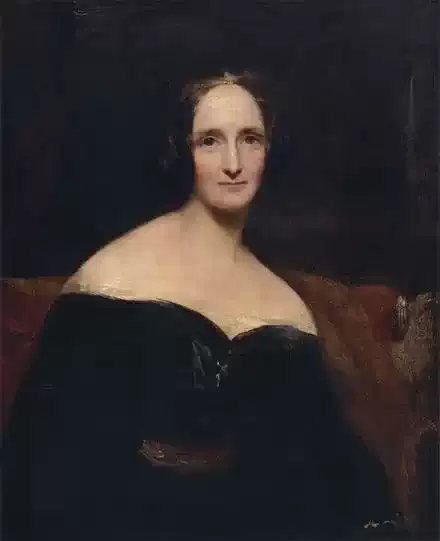
Percy Bysshe Shelley
The Two Spirits: An Allegory
O thou, who plum'd with strong desire
Wouldst float above the earth, beware!
A Shadow tracks thy flight of fire--
Night is coming!
Bright are the regions of the air,
And among the winds and beams
It were delight to wander there--
Night is coming!SECOND SPIRIT
The deathless stars are bright above;
If I would cross the shade of night,
Within my heart is the lamp of love,
And that is day!
And the moon will smile with gentle light
On my golden plumes where'er they move;
The meteors will linger round my flight,
And make night day.FIRST SPIRIT
But if the whirlwinds of darkness waken
Hail, and lightning, and stormy rain;
See, the bounds of the air are shaken--
Night is coming!
The red swift clouds of the hurricane
Yon declining sun have overtaken,
The clash of the hail sweeps over the plain--
Night is coming!SECOND SPIRIT
I see the light, and I hear the sound;
I'll sail on the flood of the tempest dark,
With the calm within and the light around
Which makes night day:
And thou, when the gloom is deep and stark,
Look from thy dull earth, slumber-bound,
My moon-like flight thou then mayst mark
On high, far away.----
Some say there is a precipice
Where one vast pine is frozen to ruin
O'er piles of snow and chasms of ice
Mid Alpine mountains;
And that the languid storm pursuing
That winged shape, for ever flies
Round those hoar branches, aye renewing
Its aëry fountains.
Some say when nights are dry and dear,
And the death-dews sleep on the morass,
Sweet whispers are heard by the traveller,
Which make night day:
And a silver shape like his early love doth pass
Upborne by her wild and glittering hair,
And when he awakes on the fragrant grass,
He finds night day.
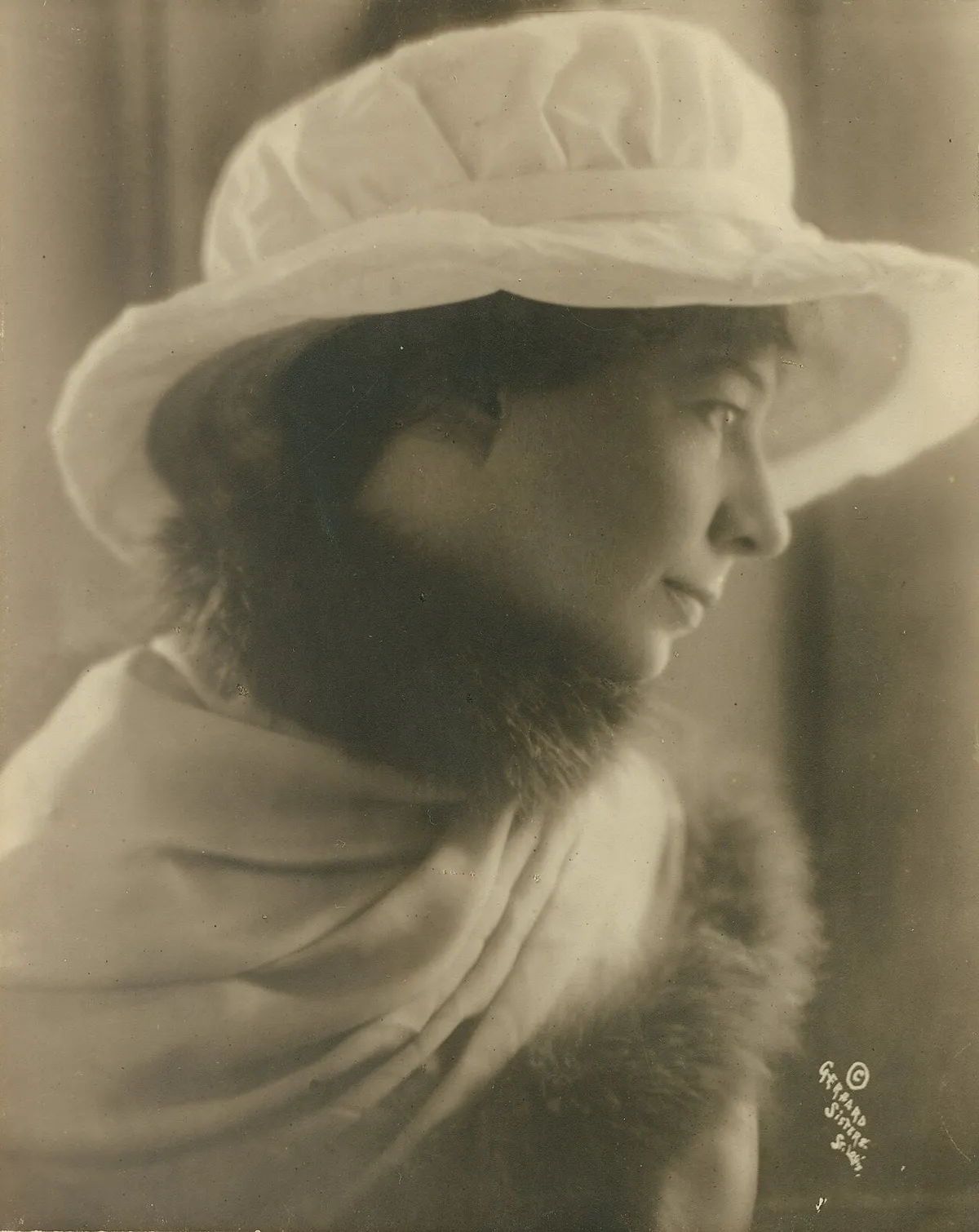
Sara Teasdale
The Crystal Gazer
I shall take my scattered selves and make them one.
I shall fuse them into a polished crystal ball
Where I can see the moon and the flashing sun.
I Shall sit like a sibyl, hour after hour intent.
Watching the future come and the present go -
And the little shifting pictures of people rushing
In tiny self-importance to and fro.

Rudyard Kipling
The Playmate
Her steadfast eyelids tell me so
When, at the hour the lights divide,
She steals as summonsed to my side.
When, finger on the pursed lip
In secret, mirthful fellowship,
She, heralding new -- framed delights,
Breathes, "This shall be a Night of Nights!"
Then, out of Time and out of Space,
Is built an Hour and a Place
Where all an earnest, baffled Earth
Blunders and trips to make us mirth;
Whence from the trivial flux of Things,
Rise inconceived miscarryings,
Outrageous but immortal, shown,
Of Her great love, to me alone...
She is not Wisdom, but, maybe,
Wiser than all the Norns is She:
And more than Wisdom I prefer
To wait on Her, -- to wait on Her!

William Blake
Milton: The Sky is an Immortal Tent Built by the Sons of Los
And every space that a man views around his dwelling-place
Standing on his own roof or in his garden on a mount
Of twenty-five cubits in height, such space is his universe:
And on its verge the sun rises and sets, the clouds bow
To meet the flat earth and the sea in such an order'd space:
The starry heavens reach no further, but here bend and set
On all sides, and the two Poles turn on their valves of gold:
And if he moves his dwelling-place, his heavens also move
Where'er he goes, and all his neighbourhood bewail his loss.
Such are the spaces called Earth and such its dimension.
As to that false appearance which appears to the reasoner
As of a globe rolling through voidness, it is a delusion of Ulro.
The microscope knows not of this nor the telescope: they alter
The ratio of the spectator's organs, but leave objects untouch'd.
For every space larger than a red globule of Man's blood
Is visionary, and is created by the Hammer of Los;
And every space smaller than a globule of Man's blood opens
Into Eternity of which this vegetable Earth is but a shadow.
The red globule is the unwearied sun by Los created
To measure time and space to mortal men every morning

William Shakespeare
Fairy Land ii
Thorny hedgehogs, be not seen;
Newts and blind-worms, do no wrong;
Come not near our fairy queen.
Philomel, with melody,
Sing in our sweet lullaby;
Lulla, lulla, lullaby; lulla, lulla, lullaby!
Never harm,
Nor spell nor charm,
Come our lovely lady nigh;
So, good night, with lullaby.
Weaving spiders, come not here;
Hence, you long-legg'd spinners, hence!
Beetles black, approach not near;
Worm nor snail, do no offence.
Philomel, with melody,
Sing in our sweet lullaby;
Lulla, lulla, lullaby; lulla, lulla, lullaby!
Never harm,
Nor spell nor charm,
Come our lovely lady nigh;
So, good night, with lullaby.
Robert Frost
For once, then Something
Always wrong to the light, so never seeing
Deeper down in the well than where the water
Gives me back in a shining surface picture
Me myself in the summer heaven godlike
Looking out of a wreath of fern and cloud puffs.
Once, when trying with chin against a well-curb,
I discerned, as I thought, beyond the picture,
Through the picture, a something white, uncertain,
Something more of the depths--and then I lost it.
Water came to rebuke the too clear water.
One drop fell from a fern, and lo, a ripple
Shook whatever it was lay there at bottom,
Blurred it, blotted it out. What was that whiteness?
Truth? A pebble of quartz? For once, then, something.
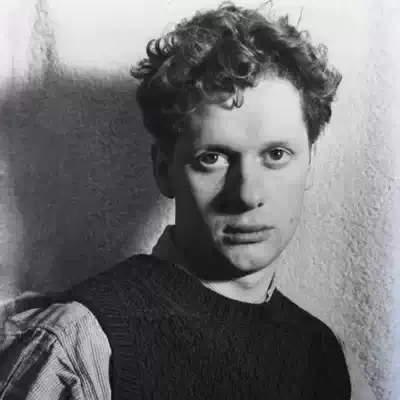
Dylan Thomas
Vision and Prayer
Are you
Who is born
In the next room
So loud to my own
That I can hear the womb
Opening and the dark run
Over the ghost and the dropped son
Behind the wall thin as a wren's bone?
In the birth bloody room unknown
To the burn and turn of time
And the heart print of man
Bows no baptism
But dark alone
Blessing on
The wild
Child.
Paul Celan
When You Lie
in the Bed of lost Flag-Cloth,
with blue-black Syllables, in Snow-Eyelash-Shadow,
the Crane through Thoughtshowers,
comes gliding, steelyyou
open for him.
His beak ticks the Hour for you
at every Mouth – at every
bell-stroke, with red-hot Rope, a Silent-
Millennium,
Un-Pulse and Pulse
mint each other to death,
the Dollars, the Cents,
rain hard through your Pores,
in
Second-Shapes
you fly there and bar
the Doors Yesterday and Tomorrow – phosphorescent,
Forever-Teeth,
buds the one, and buds the
other breast,
towards the Grasping, under
the Thrusts –: so thick,
so deeply
strewn
the starry
Crane-
Seed.

William Butler Yeats
To Some I Have Talked With By The Fire
My heart would brim with dreams about the times
When we bent down above the fading coals
And talked of the dark folk who live in souls
Of passionate men, like bats in the dead trees;
And of the wayward twilight companies
Who sigh with mingled sorrow and content,
Because their blossoming dreams have never bent
Under the fruit of evil and of good:
And of the embattled flaming multitude
Who rise, wing above wing, flame above flame,
And, like a storm, cry the Ineffable Name,
And with the clashing of their sword-blades make
A rapturous music, till the morning break
And the white hush end all but the loud beat
Of their long wings, the flash of their white feet.

Ella Wheeler Wilcox
The River Of Sleep
Curious isles without number.
We'll visit them all as we leisurely creep
Down the winding stream whose current is deep,
In our beautiful barge of Slumber.
The very first isle in this wonderful stream
Quite close to the shore is lying,
And after a supper of cakes and cream
We come to the Night-Mare-Isle with a scream,
And hurry away from it crying.
And next is the Island-of-Lullaby,
And every one there rejoices.
The winds are only a perfumed sigh,
And the birds that sing in the treetops try
To imitate Mothers' voices.
A little beyond is the Isle-of-Dreams;
Oh, that is the place to be straying.
Everything there is just as it seems;
Dolls are real and sunshine gleams,
And no one calls us from playing.
And then we come to the drollest isle,
And the funniest sounds come pouring
Down from its borderlands once in a while,
And we lean o'er our barge and listen and smile;
For that is the Isle-of-Snoring.
And the very last isle in the River of Sleep
Is the sunshiny Isle-of-Waking.
We see it first with our eyes a-peep,
And we give a yawn-then away we leap,
The barge of Slumber forsaking.
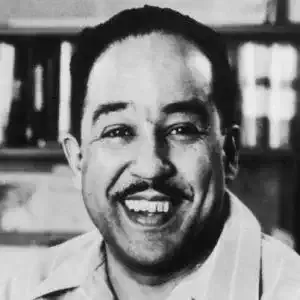
Langston Hughes
Dreams
For if dreams die
Life is a broken-winged bird
That cannot fly.
Hold fast to dreams
For when dreams go
Life is a barren field
Frozen with snow.
William Butler Yeats
The Song Of Wandering Aengus
Because a fire was in my head,
And cut and peeled a hazel wand,
And hooked a berry to a thread;
And when white moths were on the wing,
And moth-like stars were flickering out,
I dropped the berry in a stream
And caught a little silver trout.
When I had laid it on the floor
I went to blow the fire aflame,
But something rustled on the floor,
And some one called me by my name:
It had become a glimmering girl
With apple blossom in her hair
Who called me by my name and ran
And faded through the brightening air.
Though I am old with wandering
Through hollow lads and hilly lands.
I will find out where she has gone,
And kiss her lips and take her hands;
And walk among long dappled grass,
And pluck till time and times are done
The silver apples of the moon,
The golden apples of the sun.

Robert Louis Stevenson
A Good Play
All made of the back-bedroom chairs,
And filled it full of soft pillows
To go a-sailing on the billows.
We took a saw and several nails,
And water in the nursery pails;
And Tom said, "Let us also take
An apple and a slice of cake;"--
Which was enough for Tom and me
To go a-sailing on, till tea.
We sailed along for days and days,
And had the very best of plays;
But Tom fell out and hurt his knee,
So there was no one left but me.
William Butler Yeats
The Withering Of The Boughs
'Let peewit call and curlew cry where they will,
I long for your merry and tender and pitiful words,
For the roads are unending, and there is no place to my mind.'
The honey-pale moon lay low on the sleepy hill,
And I fell asleep upon lonely Echtge of streams.
No boughs have withered because of the wintry wind;
The boughs have withered because I have told them my dreams.
I know of the leafy paths that the witches take
Who come with their crowns of pearl and their spindles of wool,
And their secret smile, out of the depths of the lake;
I know where a dim moon drifts, where the Danaan kind
Wind and unwind their dances when the light grows cool
On the island lawns, their feet where the pale foam gleams.
No boughs have withered because of the wintry wind;
The boughs have withered because I have told them my dreams.
I know of the sleepy country, where swans fly round
Coupled with golden chains, and sing as they fly.
A king and a queen are wandering there, and the sound
Has made them so happy and hopeless, so deaf and so blind
With wisdom, they wander till all the years have gone by;
I know, and the curlew and peewit on Echtge of streams.
No boughs have withered because of the wintry wind;
The boughs have withered because I have told them my dreams.
William Blake
Ah! Sunflower
Who countest the steps of the sun;
Seeking after that sweet golden clime
Where the traveller's journey is done;
Where the Youth pined away with desire,
And the pale virgin shrouded in snow,
Arise from their graves, and aspire
Where my Sunflower wishes to go!
Ella Wheeler Wilcox
Dream Town
Off and away to dream town?
Oh, such a journey as that will be,
All dressed in a snow white gown.
No shoe or stocking, they think it shocking
To wear such things in dream town street,
For it's paved with posies and leaves of roses,
So nothing can hurt your feet.
We leave our baggage and clothes behind
When we set out on this jaunt,
The folks who live there are very kind,
They give us whatever we want;
Sometimes a dolly we take, if she's jolly
And good all the day before.
But they've dolls without number in that land of slumber,
And of toys there's a wonderful store.
We shut up our eyes when we set out,
Though why I never have guessed,
There's some good reason I haven't a doubt,
Since every one says it is best.
I think we go faster and keep off disaster,
By folding our eyelids down;
By dropping that curtain I'm almost certain,
The sooner we get to dream town.
Just inside of the city gate,
Smiling and rosy and bright,
The boys and the girls of dream town wait
To play with us all the night.
So rocking and rocking, without shoe or stocking,
All dressed in a little white gown,
Singing and humming, we're coming, we're coming
Into the gates of dream town.

Ezra Pound
Homage To Sextus Propertius - X
And intoxicated,
and no servant was leading me,
And a minute crowd of small boys came from opposite,
I do not know what boys,
And I am afraid of numerical estimate,
And some of them shook little torches,
and others held onto arrows,
And the rest laid their chains upon me,
and they were naked, the lot of them,
And one of the lot was given to lust.
'That incensed female has consigned him to our pleasure.'
So spoke. And the noose was over my neck.
And another said 'Get him plumb in the middle!
'Shove along there, shove along!'
And another broke in upon this:
'He thinks that we are not gods,'
'And she has been waiting for the scoundrel,
and in a new Sidonian night cap,
And with more than Arabian odours,
God knows where he has been.
She could scarcely keep her eyes open
enter that much for his bail.
Get along now!'
We were coming near to the house,
and they gave another yank to my cloak,
And it was morning, and I wanted to see if she was alone and resting,
And Cynthia was alone in her bed.
I was stupefied.
I had never seen her looking so beautiful,
No, not when she was tunick'd in purple.
Such aspect was presented to me, me recently emerged from my visions,
You will observe that pure form has its value.
‘You are a very early inspector of mistresses.
‘Do you think I have adopted your habits?'
There were upon the bed no signs of a voluptuous encounter,
No signs of a second incumbent.
She continued:
'No incubus has crushed his body against me,
‘Though spirits are celebrated for adultery.
‘And I am going to the temple of Vesta . . .'
and so on.
Since that day I have had no pleasant nights.

Carl Sandburg
Work Gangs
Box cars run by a mile long.
And I wonder what they say to each other
When they stop a mile long on a sidetrack.
Maybe their chatter goes:
I came from Fargo with a load of wheat up to the danger line.
I came from Omaha with a load of shorthorns and they splintered my boards.
I came from Detroit heavy with a load of fivers.
I carried apples from the Hood river last year and this year bunches of bananas from
Florida; they look for me with watermelons from Mississippi next year.
Hammers and shovels of work gangs sleep in shop corners
when the dark stars come on the sky and the night watchmen walk and look.
Then the hammer heads talk to the handles,
then the scoops of the shovels talk,
how the day’s work nicked and trimmed them,
how they swung and lifted all day,
how the hands of the work gangs smelled of hope.
In the night of the dark stars
when the curve of the sky is a work gang handle,
in the night on the mile long sidetracks,
in the night where the hammers and shovels sleep in corners,
the night watchmen stuff their pipes with dreams—
and sometimes they doze and don’t care for nothin’,
and sometimes they search their heads for meanings, stories, stars.
The stuff of it runs like this:
A long way we come; a long way to go; long rests and long deep sniffs for our lungs on
the way.
Sleep is a belonging of all; even if all songs are old songs and the singing heart is
snuffed out like a switchman’s lantern with the oil gone, even if we forget our names
and houses in the finish, the secret of sleep is left us, sleep belongs to all, sleep is the
first and last and best of all.
People singing; people with song mouths connecting with song hearts; people who
must sing or die; people whose song hearts break if there is no song mouth; these are
my people.

Emily Dickinson
In Winter in my Room
I came upon a Worm-
Pink, lank and warm-
But as he was a worm
And worms presume
Not quite with him at home-
Secured him by a string
To something neighboring
And went along.
A Trifle afterward
A thing occurred
I'd not believe it if I heard
But state with creeping blood-
A snake with mottles rare
Surveyed my chamber floor
In feature as the worm before
But ringed with power-
The very string with which
I tied him-too
When he was mean and new
That string was there-
I shrank-"How fair you are"!
Propitiation's claw"
Afraid," he hissed
"Of me"?
"No cordiality"-
He fathomed me-
Then to a Rhythm Slim
Secreted in his Form
As Patterns swim
Projected him.
That time I flew
Both eyes his way
Lest he pursue
Nor ever ceased to run
Till in a distant Town
Towns on from mine
I set me down
This was a dream.

Robert Browning
Women And Roses
I dream of a red-rose tree.
And which of its roses three
Is the dearest rose to me?
II.
Round and round, like a dance of snow
In a dazzling drift, as its guardians, go
Floating the women faded for ages,
Sculptured in stone, on the poet's pages.
Then follow women fresh and gay,
Living and loving and loved to-day.
Last, in the rear, flee the multitude of maidens,
Beauties yet unborn. And all, to one cadence,
They circle their rose on my rose tree.
III.
Dear rose, thy term is reached,
Thy leaf hangs loose and bleached:
Bees pass it unimpeached.
IV.
Stay then, stoop, since I cannot climb,
You, great shapes of the antique time!
How shall I fix you, fire you, freeze you,
Break my heart at your feet to please you?
Oh, to possess and be possessed!
Hearts that beat 'neath each pallid breast!
Once but of love, the poesy, the passion,
Drink but once and die!---In vain, the same fashion,
They circle their rose on my rose tree.
V.
Dear rose, thy joy's undimmed,
Thy cup is ruby-rimmed,
Thy cup's heart nectar-brimmed.
VI.
Deep, as drops from a statue's plinth
The bee sucked in by the hyacinth,
So will I bury me while burning,
Quench like him at a plunge my yearning,
Eyes in your eyes, lips on your lips!
Fold me fast where the cincture slips,
Prison all my soul in eternities of pleasure,
Girdle me for once! But no---the old measure,
They circle their rose on my rose tree.
VII.
Dear rose without a thorn,
Thy bud's the babe unborn:
First streak of a new morn.
VIII.
Wings, lend wings for the cold, the clear!
What is far conquers what is near.
Roses will bloom nor want beholders,
Sprung from the dust where our flesh moulders.
What shall arrive with the cycle's change?
A novel grace and a beauty strange.
I will make an Eve, be the artist that began her,
Shaped her to his mind!---Alas! in like manner
They circle their rose on my rose tree.
William Butler Yeats
The Double Vision Of Michael Robartes
ON the grey rock of Cashel the mind's eye
Has called up the cold spirits that are born
When the old moon is vanished from the sky
And the new still hides her horn.
Under blank eyes and fingers never still
The particular is pounded till it is man.
When had I my own will?
O not since life began.
Constrained, arraigned, baffled, bent and unbent
By these wire-jointed jaws and limbs of wood,
Themselves obedient,
Knowing not evil and good;
Obedient to some hidden magical breath.
They do not even feel, so abstract are they.
So dead beyond our death,
Triumph that we obey.
On the grey rock of Cashel I suddenly saw
A Sphinx with woman breast and lion paw.
A Buddha, hand at rest,
Hand lifted up that blest;
And right between these two a girl at play
That, it may be, had danced her life away,
For now being dead it seemed
That she of dancing dreamed.
Although I saw it all in the mind's eye
There can be nothing solider till I die;
I saw by the moon's light
Now at its fifteenth night.
One lashed her tail; her eyes lit by the moon
Gazed upon all things known, all things unknown,
In triumph of intellect
With motionless head erect.
That other's moonlit eyeballs never moved,
Being fixed on all things loved, all things unloved.
Yet little peace he had,
For those that love are sad.
Little did they care who danced between,
And little she by whom her dance was seen
So she had outdanced thought.
Body perfection brought,
For what but eye and ear silence the mind
With the minute particulars of mankind?
Mind moved yet seemed to stop
As 'twere a spinning-top.
In contemplation had those three so wrought
Upon a moment, and so stretched it out
That they, time overthrown,
Were dead yet flesh and bone.
I knew that I had seen, had seen at last
That girl my unremembering nights hold fast
Or else my dreams that fly
If I should rub an eye,
And yet in flying fling into my meat
A crazy juice that makes the pulses beat
As though I had been undone
By Homer's Paragon
Who never gave the burning town a thought;
To such a pitch of folly I am brought,
Being caught between the pull
Of the dark moon and the full,
The commonness of thought and images
That have the frenzy of our western seas.
Thereon I made my moan,
And after kissed a stone,
And after that arranged it in a song
Seeing that I, ignorant for So long,
Had been rewarded thus
In Cormac's ruined house.
MICHAEL ROBARTES AND THE DANCER
He. Opinion is not worth a rush;
In this altar-piece the knight,
Who grips his long spear so to push
That dragon through the fading light,
Loved the lady; and it's plain
The half-dead dragon was her thought,
That every morning rose again
And dug its claws and shrieked and fought.
Could the impossible come to pass
She would have time to turn her eyes,
Her lover thought, upon the glass
And on the instant would grow wise.
She. You mean they argued.
He. Put it so;
But bear in mind your lover's wage
Is what your looking-glass can show,
And that he will turn green with rage
At all that is not pictured there.
She. May I not put myself to college?
He. Go pluck Athene by the hair;
For what mere book can grant a knowledge
With an impassioned gravity
Appropriate to that beating breast,
That vigorous thigh, that dreaming eye?
And may the Devil take the rest.
She. And must no beautiful woman be
Learned like a man?
He. Paul Veronese
And all his sacred company
Imagined bodies all their days
By the lagoon you love so much,
For proud, soft, ceremonious proof
That all must come to sight and touch;
While Michael Angelo's Sistine roof,
His 'Morning' and his 'Night' disclose
How sinew that has been pulled tight,
Or it may be loosened in repose,
Can rule by supernatural right
Yet be but sinew.
She. I have heard said
There is great danger in the body.
He. Did God in portioning wine and bread
Give man His thought or His mere body?
She. My wretched dragon is perplexed.
Hec. I have principles to prove me right.
It follows from this Latin text
That blest souls are not composite,
And that all beautiful women may
Live in uncomposite blessedness,
And lead us to the like -- if they
Will banish every thought, unless
The lineaments that please their view
When the long looking-glass is full,
Even from the foot-sole think it too.
She. They say such different things at school.
Langston Hughes
Dream Boogie
Ain't you heard
The boogie-woogie rumble
Of a dream deferred?
Listen closely:
You'll hear their feet
Beating out and beating out a -
You think
It's a happy beat?
Listen to it closely:
Ain't you heard
something underneath
like a -
What did I say?
Sure,
I'm happy!
Take it away!
Hey, pop!
Re-bop!
Mop!
Y-e-a-h!
William Butler Yeats
The Fairy Pendant
First Fairy: Afar from our lawn and our levee,
O sister of sorrowful gaze!
Where the roses in scarlet are heavy
And dream of the end of their days,
You move in another dominion
And hang o'er the historied stone:
Unpruned in your beautiful pinion
Who wander and whisper alone.
All: Come away while the moon's in the woodland,
We'll dance and then feast in a dairy.
Though youngest of all in our good band,
You are wasting away, little fairy.
Second Fairy: Ah! cruel ones, leave me alone now
While I murmur a little and ponder
The history here in the stone now;
Then away and away I will wander,
And measure the minds of the flowers,
And gaze on the meadow-mice wary,
And number their days and their hours--
All: You're wasting away, little fairy.
Second Fairy: O shining ones, lightly with song pass,
Ah! leave me, I pray you and beg.
My mother drew forth from the long grass
A piece of a nightingle's egg,
And cradled me here where are sung,
Of birds even, longings for aery
Wild wisdoms of spirit and tongue.
All: You're wasting away, little fairy.
First Fairy [turning away]: Though the tenderest roses were round you,
The soul of this pitiless place
With pitiless magic has bound you--
Ah! woe for the loss of your face,
And the loss of your laugh with its lightness--
Ah! woe for your wings and your head--
Ah! woe for your eyes and their brightness--
Ah! woe for your slippers of red.
We'll dance and then feast in a dairy.
Though youngest of all in our good band,
She's wasting away, little fairy.