
Dreams and Imagination

William Butler Yeats
A Song From The Player Queen
MY mother dandled me and sang,
"How young it is, how young!'
And made a golden cradle
That on a willow swung.
"He went away,' my mother sang,
"When I was brought to bed,'
And all the while her needle pulled
The gold and silver thread.
She pulled the thread and bit the thread
And made a golden gown,
And wept because she had dreamt that I
Was born to wear a crown.
"When she was got,' my mother sang,
I heard a sea-mew cry,
And saw a flake of the yellow foam
That dropped upon my thigh."
How therefore could she help but braid
The gold into my hair,
And dream that I should carry
The golden top of care?
412

Robert Louis Stevenson
The Land of Story-Books
At evening when the lamp is lit,
Around the fire my parents sit;
They sit at home and talk and sing,
And do not play at anything.
Now, with my little gun, I crawl
All in the dark along the wall,
And follow round the forest track
Away behind the sofa back.
There, in the night, where none can spy,
All in my hunter's camp I lie,
And play at books that I have read
Till it is time to go to bed.
These are the hills, these are the woods,
These are my starry solitudes;
And there the river by whose brink
The roaring lions come to drink.
I see the others far away
As if in firelit camp they lay,
And I, like to an Indian scout,
Around their party prowled about.
So when my nurse comes in for me,
Home I return across the sea,
And go to bed with backward looks
At my dear land of Story-books.
406

Ella Wheeler Wilcox
About May
One night Nurse Sleep held out her hand
To tired little May.
'Come, go with me to Wonderland,'
She said, 'I know the way.
Just rock-a-by-hum-m-m,
And lo! we come
To the place where the dream-girls play.'
But naughty May, she wriggled away
From Sleep's soft arms, and said:
'I must stay awake till I eat my cake,
And then I will go to bed;
With a by-lo, away I will go.'
But the good nurse shook her head.
She shook her head and away she sped,
While May sat munching her crumb.
But after the cake there came an ache,
Though May cried: 'Come, Sleep, come,
And it's oh! my! let us by-lo-by'-
All save the echoes were dumb.
She ran after Sleep toward Wonderland,
Ran till the morning light;
And just as she caught her and grasped her hand,
A nightmare gave her a fright.
And it's by-lo, I hope she'll know
Better another night.
400
William Butler Yeats
Solomon And The Witch
AND thus declared that Arab lady:
'Last night, where under the wild moon
On grassy mattress I had laid me,
Within my arms great Solomon,
I suddenly cried out in a strange tongue
Not his, not mine.'
Who understood
Whatever has been said, sighed, sung,
Howled, miau-d, barked, brayed, belled, yelled, cried, crowed,
Thereon replied: 'A cockerel
Crew from a blossoming apple bough
Three hundred years before the Fall,
And never crew again till now,
And would not now but that he thought,
Chance being at one with Choice at last,
All that the brigand apple brought
And this foul world were dead at last.
He that crowed out eternity
Thought to have crowed it in again.
For though love has a spider's eye
To find out some appropriate pain --
Aye, though all passion's in the glance --
For every nerve, and tests a lover
With cruelties of Choice and Chance;
And when at last that murder's over
Maybe the bride-bed brings despair,
For each an imagined image brings
And finds a real image there;
Yet the world ends when these two things,
Though several, are a single light,
When oil and wick are burned in one;
Therefore a blessed moon last night
Gave Sheba to her Solomon.'
'Yet the world stays.'
'If that be so,
Your cockerel found us in the wrong
Although he thought it. worth a crow.
Maybe an image is too strong
Or maybe is not strong enough.'
'The night has fallen; not a sound
In the forbidden sacred grove
Unless a petal hit the ground,
Nor any human sight within it
But the crushed grass where we have lain!
And the moon is wilder every minute.
O! Solomon! let us try again.'
401

Walter de la Mare
Tartary
If I were Lord of Tartary,
Myself, and me alone,
My bed should be of ivory,
Of beaten gold my throne;
And in my court should peacocks flaunt,
And in my forests tigers haunt,
And in my pools great fishes slant
Their fins athwart the sun.
If I were Lord of Tartary,
Trumpeters every day
To all my meals should summon me,
And in my courtyards bray;
And in the evening lamps should shine,
Yellow as honey, red as wine,
While harp, and flute, and mandoline
Made music sweet and gay.
If I were Lord of Tartary,
I'd wear a robe of beads,
White, and gold, and green they'd be --
And small and thick as seeds;
And ere should wane the morning star,
I'd don my robe and scimitar.
And zebras seven should draw my car
Through Tartary's dark gleades.
Lord of the fruits of Tartary.
Her rivers silver-pale!
Lord of the hills of Tartary.
Glen, thicket, wood, and dale!
Her flashing stars, her scented breeze,
Her trembling lakes, like foamless seas,
Her bird-delighting citron-trees,
In every purple vale!
396

Emily Dickinson
So from the mould
So from the mould
Scarlet and Gold
Many a Bulb will rise-
Hidden away, cunningly, From sagacious eyes.
So from Cocoon
Many a Worm
Leap so Highland gay,
Peasants like me,
Peasants like Thee
Gaze perplexedly!
Scarlet and Gold
Many a Bulb will rise-
Hidden away, cunningly, From sagacious eyes.
So from Cocoon
Many a Worm
Leap so Highland gay,
Peasants like me,
Peasants like Thee
Gaze perplexedly!
398
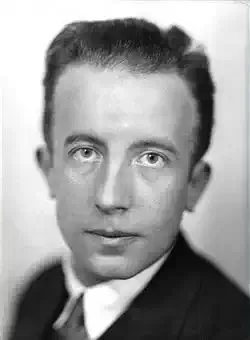
Paul Éluard
At the Window
I have not always had this certainty, this pessimism which reassures the best among
us. There was
a time when my friends laughed at me. I was not the master of my words. A certain
indifference, I
have not always known well what I wanted to say, but most often it was because I had
nothing to
say. The necessity of speaking and the desire not to be heard. My life hanging only by
a thread.
There was a time when I seemed to understand nothing. My chains floated on the
water.
All my desires are born of my dreams. And I have proven my love with words. To what
fantastic
creatures have I entrusted myself, in what dolorous and ravishing world has my
imagination
enclosed me? I am sure of having been loved in the most mysterious of domains, my
own. The
language of my love does not belong to human language, my human body does not
touch the flesh
of my love. My amorous imagination has always been constant and high enough so
that nothing
could attempt to convince me of error.
398
Walter de la Mare
Music
When music sounds, gone is the earth I know,
And all her lovely things even lovelier grow;
Her flowers in vision flame, her forest trees
Lift burdened branches, stilled with ecstasies.
When music sounds, out of the water rise
Naiads whose beauty dims my waking eyes,
Rapt in strange dreams burns each enchanted face,
With solemn echoing stirs their dwelling-place.
When music sounds, all that I was I am
Ere to this haunt of brooding dust I came;
And from Time's woods break into distant song
The swift-winged hours, as I hasten along.
396
Robert Louis Stevenson
My Ship and I
O it's I that am the captain of a tidy little ship,
Of a ship that goes a sailing on the pond;
And my ship it keeps a-turning all around and all about;
But when I'm a little older, I shall find the secret out
How to send my vessel sailing on beyond.
For I mean to grow a little as the dolly at the helm,
And the dolly I intend to come alive;
And with him beside to help me, it's a-sailing I shall go,
It's a-sailing on the water, when the jolly breezes blow
And the vessel goes a dive-dive-dive.
O it's then you'll see me sailing through the rushes and the reeds,
And you'll hear the water singing at the prow;
For beside the dolly sailor, I'm to voyage and explore,
To land upon the island where no dolly was before,
And to fire the penny cannon in the bow.
394
Robert Louis Stevenson
Historical Associations
Dear Uncle Jim. this garden ground
That now you smoke your pipe around,
has seen immortal actions done
And valiant battles lost and won.
Here we had best on tip-toe tread,
While I for safety march ahead,
For this is that enchanted ground
Where all who loiter slumber sound.
Here is the sea, here is the sand,
Here is the simple Shepherd's Land,
Here are the fairy hollyhocks,
And there are Ali Baba's rocks.
But yonder, see! apart and high,
Frozen Siberia lies; where I,
With Robert Bruce William Tell,
Was bound by an enchanter's spell.
390
Walter de la Mare
The Spirit of Air
Coral and clear emerald,
And amber from the sea,
Lilac-coloured amethyst,
Chalcedony;
The lovely Spirit of Air
Floats on a cloud and doth ride,
Clad in the beauties of earth
Like a bride.
So doth she haunt me; and words
Tell but a tithe of the tale.
Sings all the sweetness of Spring
Even in the nightengale?
Nay, but with echoes she cries
Of the valley of love;
Dews on the thorns of her feet,
And darkness above.
385
William Butler Yeats
The Man Who Dreamed Of Faeryland
HE stood among a crowd at Dromahair;
His heart hung all upon a silken dress,
And he had known at last some tenderness,
Before earth took him to her stony care;
But when a man poured fish into a pile,
It Seemed they raised their little silver heads,
And sang what gold morning or evening sheds
Upon a woven world-forgotten isle
Where people love beside the ravelled seas;
That Time can never mar a lover's vows
Under that woven changeless roof of boughs:
The singing shook him out of his new ease.
He wandered by the sands of Lissadell;
His mind ran all on money cares and fears,
And he had known at last some prudent years
Before they heaped his grave under the hill;
But while he passed before a plashy place,
A lug-worm with its grey and muddy mouth
Sang that somewhere to north or west or south
There dwelt a gay, exulting, gentle race
Under the golden or the silver skies;
That if a dancer stayed his hungry foot
It seemed the sun and moon were in the fruit:
And at that singing he was no more wise.
He mused beside the well of Scanavin,
He mused upon his mockers: without fail
His sudden vengeance were a country tale,
When earthy night had drunk his body in;
But one small knot-grass growing by the pool
Sang where -- unnecessary cruel voice --
Old silence bids its chosen race rejoice,
Whatever ravelled waters rise and fall
Or stormy silver fret the gold of day,
And midnight there enfold them like a fleece
And lover there by lover be at peace.
The tale drove his fine angry mood away.
He slept under the hill of Lugnagall;
And might have known at last unhaunted sleep
Under that cold and vapour-turbaned steep,
Now that the earth had taken man and all:
Did not the worms that spired about his bones
proclaim with that unwearied, reedy cry
That God has laid His fingers on the sky,
That from those fingers glittering summer runs
Upon the dancer by the dreamless wave.
Why should those lovers that no lovers miss
Dream, until God burn Nature with a kiss?
The man has found no comfort in the grave.
384

Henry Wadsworth Longfellow
Sandalphon. (Birds Of Passage. Flight The First)
Have you read in the Talmud of old,
In the Legends the Rabbins have told
Of the limitless realms of the air,--
Have you read it,--the marvellous story
Of Sandalphon, the Angel of Glory,
Sandalphon, the Angel of Prayer?
How, erect, at the outermost gates
Of the City Celestial he waits,
With his feet on the ladder of light,
That, crowded with angels unnumbered,
By Jacob was seen, as he slumbered
Alone in the desert at night?
The Angels of Wind and of Fire
Chant only one hymn, and expire
With the song's irresistible stress;
Expire in their rapture and wonder,
As harp-strings are broken asunder
By music they throb to express.
But serene in the rapturous throng,
Unmoved by the rush of the song,
With eyes unimpassioned and slow,
Among the dead angels, the deathless
Sandalphon stands listening breathless
To sounds that ascend from below;--
From the spirits on earth that adore,
From the souls that entreat and implore
In the fervor and passion of prayer;
From the hearts that are broken with losses,
And weary with dragging the crosses
Too heavy for mortals to bear.
And he gathers the prayers as he stands,
And they change into flowers in his hands,
Into garlands of purple and red;
And beneath the great arch of the portal,
Through the streets of the City Immortal
Is wafted the fragrance they shed.
It is but a legend, I know,--
A fable, a phantom, a show,
Of the ancient Rabbinical lore;
Yet the old mediaeval tradition,
The beautiful, strange superstition,
But haunts me and holds me the more.
When I look from my window at night,
And the welkin above is all white,
All throbbing and panting with stars,
Among them majestic is standing
Sandalphon the angel, expanding
His pinions in nebulous bars.
And the legend, I feel, is a part
Of the hunger and thirst of the heart,
The frenzy and fire of the brain,
That grasps at the fruitage forbidden,
The golden pomegranates of Eden,
To quiet its fever and pain.
381
William Butler Yeats
Under The Round Tower
'ALTHOUGH I'd lie lapped up in linen
A deal I'd sweat and little earn
If I should live as live the neighbours,'
Cried the beggar, Billy Byrne;
'Stretch bones till the daylight come
On great-grandfather's battered tomb.'
Upon a grey old battered tombstone
In Glendalough beside the stream
Where the O'Byrnes and Byrnes are buried,
He stretched his bones and fell in a dream
Of sun and moon that a good hour
Bellowed and pranced in the round tower;
Of golden king and Silver lady,
Bellowing up and bellowing round,
Till toes mastered a sweet measure,
Mouth mastered a sweet sound,
Prancing round and prancing up
Until they pranced upon the top.
That golden king and that wild lady
Sang till stars began to fade,
Hands gripped in hands, toes close together,
Hair spread on the wind they made;
That lady and that golden king
Could like a brace of blackbirds sing.
'It's certain that my luck is broken,'
That rambling jailbird Billy said;
'Before nightfall I'll pick a pocket
And snug it in a feather bed.
I cannot find the peace of home
On great-grandfather's battered tomb.'
380

Carl Sandburg
Mamie
Mamie beat her head against the bars of a little Indiana town and dreamed of romance
and big things off somewhere the way the railroad trains all ran.
She could see the smoke of the engines get lost down where the streaks of steel
flashed in the sun and when the newspapers came in on the morning mail she knew
there was a big Chicago far off, where all the trains ran.
She got tired of the barber shop boys and the post office chatter and the church gossip
and the old pieces the band played on the Fourth of July and Decoration Day
And sobbed at her fate and beat her head against the bars and was going to kill herself
When the thought came to her that if she was going to die she might as well die
struggling for a clutch of romance among the streets of Chicago.
She has a job now at six dollars a week in the basement of the Boston Store
And even now she beats her head against the bars in the same old way and wonders if
there is a bigger place the railroads run to from Chicago where maybe there is
romance
and big things
and real dreams
that never go smash.
377
Robert Louis Stevenson
Looking-Glass River
Smooth it glides upon its travel,
Here a wimple, there a gleam--
O the clean gravel!
O the smooth stream!
Sailing blossoms, silver fishes,
Pave pools as clear as air--
How a child wishes
To live down there!
We can see our colored faces
Floating on the shaken pool
Down in cool places,
Dim and very cool;
Till a wind or water wrinkle,
Dipping marten, plumping trout,
Spreads in a twinkle
And blots all out.
See the rings pursue each other;
All below grows black as night,
Just as if mother
Had blown out the light!
Patience, children, just a minute--
See the spreading circles die;
The stream and all in it
Will clear by-and-by.
375

Walt Whitman
Visor'd
A MASK--a perpetual natural disguiser of herself,
Concealing her face, concealing her form,
Changes and transformations every hour, every moment,
Falling upon her even when she sleeps.
Concealing her face, concealing her form,
Changes and transformations every hour, every moment,
Falling upon her even when she sleeps.
375
Walter de la Mare
Alexander
It was the Great Alexander,
Capped with a golden helm,
Sate in the ages, in his floating ship,
In a dead calm.
Voices of sea-maids singing
Wandered across the deep:
The sailors labouring on their oars
Rowed as in sleep.
All the high pomp of Asia,
Charmed by that siren lay,
Out of their weary and dreaming minds
Faded away.
Like a bold boy sate their Captain,
His glamour withered and gone,
In the souls of his brooding mariners,
While the song pined on.
Time like a falling dew,
Life like the scene of a dream
Laid between slumber and slumber
Only did seem. . . .
O Alexander, then,
In all us mortals too,
Wax not so overbold
On the wave dark-blue!
Come the calm starry night,
Who then will hear
Aught save the singing
Of the sea-maids clear?
376
Robert Louis Stevenson
Envoy For A Child's Garden Of Verses
WHETHER upon the garden seat
You lounge with your uplifted feet
Under the May's whole Heaven of blue;
Or whether on the sofa you,
No grown up person being by,
Do some soft corner occupy;
Take you this volume in your hands
And enter into other lands,
For lo! (as children feign) suppose
You, hunting in the garden rows,
Or in the lumbered attic, or
The cellar - a nail-studded door
And dark, descending stairway found
That led to kingdoms underground:
There standing, you should hear with ease
Strange birds a-singing, or the trees
Swing in big robber woods, or bells
On many fairy citadels:
There passing through (a step or so -
Neither mamma nor nurse need know!)
From your nice nurseries you would pass,
Like Alice through the Looking-Glass
Or Gerda following Little Ray,
To wondrous countries far away.
Well, and just so this volume can
Transport each little maid or man
Presto from where they live away
Where other children used to play.
As from the house your mother sees
You playing round the garden trees,
So you may see if you but look
Through the windows of this book
Another child far, far away
And in another garden play.
But do not think you can at all,
By knocking on the window, call
That child to hear you. He intent
Is still on his play-business bent.
He does not hear, he will not look,
Nor yet be lured out of this book.
For long ago, the truth to say,
He has grown up and gone away;
And it is but a child of air
That lingers in the garden there.
374

John Clare
I Dreamt Of Robin
I opened the casement this morn at starlight,
And, the moment I got out of bed,
The daisies were quaking about in their white
And the cowslip was nodding its head.
The grass was all shivers, the stars were all bright,
And Robin that should come at e'en--
I thought that I saw him, a ghost by moonlight,
Like a stalking horse stand on the green.
I went bed agen and did nothing but dream
Of Robin and moonlight and flowers.
He stood like a shadow transfixed by a stream,
And I couldn't forget him for hours.
I'd just dropt asleep when I dreamed Robin spoke,
And the casement it gave such a shake,
As if every pane in the window was broke;
Such a patter the gravel did make.
So I up in the morning before the cock crew
And to strike me a light I sat down.
I saw from the door all his track in the dew
And, I guess, called 'Come in and sit down.'
And one, sure enough, tramples up to the door,
And who but young Robin his sen?
And ere the old folks were half willing to stir
We met, kissed, and parted agen.
373
Henry Wadsworth Longfellow
Kéramos
Turn, turn, my wheel? Turn round and round
Without a pause, without a sound:
So spins the flying world away!
This clay, well mixed with marl and sand,
Follows the motion of my hand;
Far some must follow, and some command,
Though all are made of clay!
Thus sang the Potter at his task
Beneath the blossoming hawthorn-tree,
While o'er his features, like a mask,
The quilted sunshine and leaf-shade
Moved, as the boughs above him swayed,
And clothed him, till he seemed to be
A figure woven in tapestry,
So sumptuously was he arrayed
In that magnificent attire
Of sable tissue flaked with fire.
Like a magician he appeared,
A conjurer without book or beard;
And while he plied his magic art--
For it was magical to me--
I stood in silence and apart,
And wondered more and more to see
That shapeless, lifeless mass of clay
Rise up to meet the master's hand,
And now contract and now expand,
And even his slightest touch obey;
While ever in a thoughtful mood
He sang his ditty, and at times
Whistled a tune between the rhymes,
As a melodious interlude.
Turn, turn, my wheel! All things must change
To something new, to something strange;
Nothing that is can pause or stay;
The moon will wax, the moon will wane,
The mist and cloud will turn to rain,
The rain to mist and cloud again,
To-morrow be to-day.
Thus still the Potter sang, and still,
By some unconscious act of will,
The melody and even the words
Were intermingled with my thought
As bits of colored thread are caught
And woven into nests of birds.
And thus to regions far remote,
Beyond the ocean's vast expanse,
This wizard in the motley coat
Transported me on wings of song,
And by the northern shores of France
Bore me with restless speed along.
What land is this that seems to be
A mingling of the land and sea?
This land of sluices, dikes, and dunes?
This water-net, that tessellates
The landscape? this unending maze
Of gardens, through whose latticed gates
The imprisoned pinks and tulips gaze;
Where in long summer afternoons
The sunshine, softened by the haze,
Comes streaming down as through a screen;
Where over fields and pastures green
The painted ships float high in air,
And over all and everywhere
The sails of windmills sink and soar
Like wings of sea-gulls on the shore?
What land is this? Yon pretty town
Is Delft, with all its wares displayed;
The pride, the market-place, the crown
And centre of the Potter's trade.
See! every house and room is bright
With glimmers of reflected light
From plates that on the dresser shine;
Flagons to foam with Flemish beer,
Or sparkle with the Rhenish wine,
And pilgrim flasks with fleurs-de-lis,
And ships upon a rolling sea,
And tankards pewter topped, and queer
With comic mask and musketeer!
Each hospitable chimney smiles
A welcome from its painted tiles;
The parlor walls, the chamber floors,
The stairways and the corridors,
The borders of the garden walks,
Are beautiful with fadeless flowers,
That never droop in winds or showers,
And never wither on their stalks.
Turn, turn, my wheel! All life is brief;
What now is bud wilt soon be leaf,
What now is leaf will soon decay;
The wind blows east, the wind blows west;
The blue eyes in the robin's nest
Will soon have wings and beak and breast,
And flutter and fly away.
Now southward through the air I glide,
The song my only pursuivant,
And see across the landscape wide
The blue Charente, upon whose tide
The belfries and the spires of Saintes
Ripple and rock from side to side,
As, when an earthquake rends its walls,
A crumbling city reels and falls.
Who is it in the suburbs here,
This Potter, working with such cheer,
In this mean house, this mean attire,
His manly features bronzed with fire,
Whose figulines and rustic wares
Scarce find him bread from day to day?
This madman, as the people say,
Who breaks his tables and his chairs
To feed his furnace fires, nor cares
Who goes unfed if they are fed,
Nor who may live if they are dead?
This alchemist with hollow cheeks
And sunken, searching eyes, who seeks,
By mingled earths and ores combined
With potency of fire, to find
Some new enamel, hard and bright,
His dream, his passion, his delight?
O Palissy! within thy breast
Burned the hot fever of unrest;
Thine was the prophets vision, thine
The exultation, the divine
Insanity of noble minds,
That never falters nor abates,
But labors and endures and waits,
Till all that it foresees it finds,
Or what it cannot find creates!
Turn, turn, my wheel! This earthen jar
A touch can make, a touch can mar;
And shall it to the Potter say,
What makest thou. Thou hast no hand?
As men who think to understand
A world by their Creator planned,
Who wiser is than they.
Still guided by the dreamy song,
As in a trance I float along
Above the Pyrenean chain,
Above the fields and farms of Spain,
Above the bright Majorcan isle,
That lends its softened name to art,--
A spot, a dot upon the chart,
Whose little towns, red-roofed with tile,
Are ruby-lustred with the light
Of blazing furnaces by night,
And crowned by day with wreaths of smoke.
Then eastward, wafted in my flight
On my enchanter's magic cloak,
I sail across the Tyrrhene Sea
Into the land of Italy,
And o'er the windy Apennines,
Mantled and musical with pines.
The palaces, the princely halls,
The doors of houses and the walls
Of churches and of belfry towers,
Cloister and castle, street and mart,
Are garlanded and gay with flowers
That blossom in the fields of art.
Here Gubbio's workshops gleam and glow
With brilliant, iridescent dyes,
The dazzling whiteness of the snow,
The cobalt blue of summer skies;
And vase and scutcheon, cup and plate,
In perfect finish emulate
Faenza, Florence, Pesaro.
Forth from Urbino's gate there came
A youth with the angelic name
Of Raphael, in form and face
Himself angelic, and divine
In arts of color and design.
From him Francesco Xanto caught
Something of his transcendent grace,
And into fictile fabrics wrought
Suggestions of the master's thought.
Nor less Maestro Giorgio shines
With madre-perl and golden lines
Of arabesques, and interweaves
His birds and fruits and flowers and leaves
About some landscape, shaded brown,
With olive tints on rock and town.
Behold this cup within whose bowl,
Upon a ground of deepest blue
With yellow-lustred stars o'erlaid,
Colors of every tint and hue
Mingle in one harmonious whole!
With large blue eyes and steadfast gaze,
Her yellow hair in net and braid,
Necklace and ear-rings all ablaze
With golden lustre o'er the glaze,
A woman's portrait; on the scroll,
Cana, the Beautiful! A name
Forgotten save for such brief fame
As this memorial can bestow,--
A gift some lover long ago
Gave with his heart to this fair dame.
A nobler title to renown
Is thine, O pleasant Tuscan town,
Seated beside the Arno's stream;
For Lucca della Robbia there
Created forms so wondrous fair,
They made thy sovereignty supreme.
These choristers with lips of stone,
Whose music is not heard, but seen,
Still chant, as from their organ-screen,
Their Maker's praise; nor these alone,
But the more fragile forms of clay,
Hardly less beautiful than they,
These saints and angels that adorn
The walls of hospitals, and tell
The story of good deeds so well
That poverty seems less forlorn,
And life more like a holiday.
Here in this old neglected church,
That long eludes the traveller's search,
Lies the dead bishop on his tomb;
Earth upon earth he slumbering lies,
Life-like and death-like in the gloom;
Garlands of fruit and flowers in bloom
And foliage deck his resting place;
A shadow in the sightless eyes,
A pallor on the patient face,
Made perfect by the furnace heat;
All earthly passions and desires
Burnt out by purgatorial fires;
Seeming to say, 'Our years are fleet,
And to the weary death is sweet.'
But the most wonderful of all
The ornaments on tomb or wall
That grace the fair Ausonian shores
Are those the faithful earth restores,
Near some Apulian town concealed,
In vineyard or in harvest field,--
Vases and urns and bas-reliefs,
Memorials of forgotten griefs,
Or records of heroic deeds
Of demigods and mighty chiefs:
Figures that almost move and speak,
And, buried amid mould and weeds,
Still in their attitudes attest
The presence of the graceful Greek,--
Achilles in his armor dressed,
Alcides with the Cretan bull,
And Aphrodite with her boy,
Or lovely Helena of Troy,
Still living and still beautiful.
Turn, turn, my wheel! 'T is nature's plan
The child should grow into the man,
The man grow wrinkled, old, and gray;
In youth the heart exults and sings,
The pulses leap, the feet have wings;
In age the cricket chirps, and brings
The harvest home of day.
And now the winds that southward blow,
And cool the hot Sicilian isle,
Bear me away. I see below
The long line of the Libyan Nile,
Flooding and feeding the parched land
With annual ebb and overflow,
A fallen palm whose branches lie
Beneath the Abyssinian sky,
Whose roots are in Egyptian sands,
On either bank huge water-wheels,
Belted with jars and dripping weeds,
Send forth their melancholy moans,
As if, in their gray mantles hid,
Dead anchorites of the Thebaid
Knelt on the shore and told their beads,
Beating their breasts with loud appeals
And penitential tears and groans.
This city, walled and thickly set
With glittering mosque and minaret,
Is Cairo, in whose gay bazaars
The dreaming traveller first inhales
The perfume of Arabian gales,
And sees the fabulous earthen jars,
Huge as were those wherein the maid
Morgiana found the Forty Thieves
Concealed in midnight ambuscade;
And seeing, more than half believes
The fascinating tales that run
Through all the Thousand Nights and One,
Told by the fair Scheherezade.
More strange and wonderful than these
Are the Egyptian deities,
Ammonn, and Emeth, and the grand
Osiris, holding in his hand
The lotus; Isis, crowned and veiled;
The sacred Ibis, and the Sphinx;
Bracelets with blue enamelled links;
The Scarabee in emerald mailed,
Or spreading wide his funeral wings;
Lamps that perchance their night-watch kept
O'er Cleopatra while she slept,--
All plundered from the tombs of kings.
Turn, turn, my wheel! The human race,
Of every tongue, of every place,
Caucasian, Coptic, or Malay,
All that inhabit this great earth,
Whatever be their rank or worth,
Are kindred and allied by birth,
And made of the same clay.
O'er desert sands, o'er gulf and bay,
O'er Ganges and o'er Himalay,
Bird-like I fly, and flying sing,
To flowery kingdoms of Cathay,
And bird-like poise on balanced wing
Above the town of King-te-tching,
A burning town, or seeming so,--
Three thousand furnaces that glow
Incessantly, and fill the air
With smoke uprising, gyre on gyre
And painted by the lurid glare,
Of jets and flashes of red fire.
As leaves that in the autumn fall,
Spotted and veined with various hues,
Are swept along the avenues,
And lie in heaps by hedge and wall,
So from this grove of chimneys whirled
To all the markets of the world,
These porcelain leaves are wafted on,--
Light yellow leaves with spots and stains
Of violet and of crimson dye,
Or tender azure of a sky
Just washed by gentle April rains,
And beautiful with celadon.
Nor less the coarser household wares,--
The willow pattern, that we knew
In childhood, with its bridge of blue
Leading to unknown thoroughfares;
The solitary man who stares
At the white river flowing through
Its arches, the fantastic trees
And wild perspective of the view;
And intermingled among these
The tiles that in our nurseries
Filled us with wonder and delight,
Or haunted us in dreams at night.
And yonder by Nankin, behold!
The Tower of Porcelain, strange and old,
Uplifting to the astonished skies
Its ninefold painted balconies,
With balustrades of twining leaves,
And roofs of tile, beneath whose eaves
Hang porcelain bells that all the time
Ring with a soft, melodious chime;
While the whole fabric is ablaze
With varied tints, all fused in one
Great mass of color, like a maze
Of flowers illumined by the sun.
Turn, turn, my wheel! What is begun
At daybreak must at dark be done,
To-morrow will be another day;
To-morrow the hot furnace flame
Will search the heart and try the frame,
And stamp with honor or with shame
These vessels made of clay.
Cradled and rocked in Eastern seas,
The islands of the Japanese
Beneath me lie; o'er lake and plain
The stork, the heron, and the crane
Through the clear realms of azure drift,
And on the hillside I can see
The villages of Imari,
Whose thronged and flaming workshops lift
Their twisted columns of smoke on high,
Cloud cloisters that in ruins lie,
With sunshine streaming through each rift,
And broken arches of blue sky.
All the bright flowers that fill the land,
Ripple of waves on rock or sand,
The snow on Fusiyama's cone,
The midnight heaven so thickly sown
With constellations of bright stars,
The leaves that rustle, the reeds that make
A whisper by each stream and lake,
The saffron dawn, the sunset red,
Are painted on these lovely jars;
Again the skylark sings, again
The stork, the heron, and the crane
Float through the azure overhead,
The counterfeit and counterpart
Of Nature reproduced in Art.
Art is the child of Nature; yes,
Her darling child, in whom we trace
The features of the mother's face,
Her aspect and her attitude,
All her majestic loveliness
Chastened and softened and subdued
Into a more attractive grace,
And with a human sense imbued.
He is the greatest artist, then,
Whether of pencil or of pen,
Who follows Nature. Never man,
As artist or as artisan,
Pursuing his own fantasies,
Can touch the human heart, or please,
Or satisfy our nobler needs,
As he who sets his willing feet
In Nature's footprints, light and fleet,
And follows fearless where she leads.
Thus mused I on that morn in May,
Wrapped in my visions like the Seer,
Whose eyes behold not what is near,
But only what is far away,
When, suddenly sounding peal on peal,
The church-bell from the neighboring town
Proclaimed the welcome hour of noon.
The Potter heard, and stopped his wheel,
His apron on the grass threw down,
Whistled his quiet little tune,
Not overloud nor overlong,
And ended thus his simple song:
Stop, stop, my wheel! Too soon, too soon
The noon will be the afternoon,
Too soon to-day be yesterday;
Behind us in our path we cast
The broken potsherds of the past,
And all are ground to dust a last,
And trodden into clay!
367
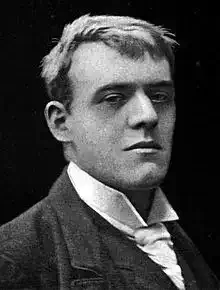
Hilaire Belloc
The Night
Most Holy Night, that still dost keep
The keys of all the doors of sleep,
To me when my tired eyelids close
Give thou repose.
And let the far lament of them
That chaunt the dead day’s requiem
Make in my ears, who wakeful lie,
Soft lullaby.
Let them that guard the hornàed Moon
By my bedside their memories croon.
So shall I have new dreams and blest
In my brief rest.
Fold thy great wings about my face,
Hide day-dawn from my resting-place,
And cheat me with thy false delight,
Most Holy Night.
366
Henry Wadsworth Longfellow
The Two Rivers
Slowly the hour-hand of the clock moves round;
So slowly that no human eye hath power
To see it move! Slowly in shine or shower
The painted ship above it, homeward bound,
Sails, but seems motionless, as if aground;
Yet both arrive at last; and in his tower
The slumberous watchman wakes and strikes the hour,
A mellow, measured, melancholy sound.
Midnight! the outpost of advancing day!
The frontier town and citadel of night!
The watershed of Time, from which the streams
Of Yesterday and To-morrow take their way,
One to the land of promise and of light,
One to the land of darkness and of dreams!
II.
O River of Yesterday, with current swift
Through chasms descending, and soon lost to sight,
I do not care to follow in their flight
The faded leaves, that on thy bosom drift!
O River of To-morrow, I uplift
Mine eyes, and thee I follow, as the night
Wanes into morning, and the dawning light
Broadens, and all the shadows fade and shift!
I follow, follow, where thy waters run
Through unfrequented, unfamiliar fields,
Fragrant with flowers and musical with song;
Still follow, follow; sure to meet the sun,
And confident, that what the future yields
Will be the right, unless myself be wrong.
III.
Yet not in vain, O River of Yesterday,
Through chasms of darkness to the deep descending,
I heard thee sobbing in the rain, and blending
Thy voice with other voices far away.
I called to thee, and yet thou wouldst not stay,
But turbulent, and with thyself contending,
And torrent-like thy force on pebbles spending,
Thou wouldst not listen to a poet's lay.
Thoughts, like a loud and sudden rush of wings,
Regrets and recollections of things past,
With hints and prophecies of things to be,
And inspirations, which, could they be things,
And stay with us, and we could hold them fast,
Were our good angels,--these I owe to thee.
IV.
And thou, O River of To-morrow, flowing
Between thy narrow adamantine walls,
But beautiful, and white with waterfalls,
And wreaths of mist, like hands the pathway showing;
I hear the trumpets of the morning blowing,
I hear thy mighty voice, that calls and calls,
And see, as Ossian saw in Morven's halls,
Mysterious phantoms, coming, beckoning, going!
It is the mystery of the unknown
That fascinates us; we are children still,
Wayward and wistful; with one hand we cling
To the familiar things we call our own,
And with the other, resolute of will,
Grope in the dark for what the day will bring.
366
Henry Wadsworth Longfellow
King Trisanku
Viswamitra the Magician,
By his spells and incantations,
Up to Indra's realms elysian
Raised Trisanku, king of nations.
Indra and the gods offended
Hurled him downward, and descending
In the air he hung suspended,
With these equal powers contending.
Thus by aspirations lifted,
By misgivings downward driven,
Human hearts are tossed and drifted
Midway between earth and heaven.
362