
Dreams and Imagination

Edna St. Vincent Millay
Humoresque
"Heaven bless the babe!" they said.
"What queer books she must have read!"
(Love, by whom I was beguiled,
Grant I may not bear a child.)
"Little does she guess to-day
What the world may be!" they say.
(Snow, drift deep and cover
Till the spring my murdered lover.)
"What queer books she must have read!"
(Love, by whom I was beguiled,
Grant I may not bear a child.)
"Little does she guess to-day
What the world may be!" they say.
(Snow, drift deep and cover
Till the spring my murdered lover.)
363

James Whitcomb Riley
A Home-Made Fairy Tale
Bud, come here to your uncle a spell,
And I'll tell you something you mustn't tell--
For it's a secret and shore-'nuf true,
And maybe I oughtn't to tell it to you--!
But out in the garden, under the shade
Of the apple-trees, where we romped and played
Till the moon was up, and you thought I'd gone
Fast asleep--, That was all put on!
For I was a-watchin' something queer
Goin' on there in the grass, my dear--!
'Way down deep in it, there I see
A little dude-Fairy who winked at me,
And snapped his fingers, and laughed as low
And fine as the whine of a mus-kee-to!
I kept still-- watchin' him closer-- and
I noticed a little guitar in his hand,
Which he leant 'ginst a little dead bee-- and laid
His cigarette down on a clean grass-blade,
And then climbed up on the shell of a snail--
Carefully dusting his swallowtail--
And pulling up, by a waxed web-thread,
This little guitar, you remember. I said!
And there he trinkled and trilled a tune--,
'My Love, so Fair, Tans in the Moon!'
Till presently, out of the clover-top
He seemed to be singing to, came k'pop!
The purtiest, daintiest Fairy face
In all this world, or any place!
Then the little ser'nader waved his hand,
As much as to say, 'We'll excuse you!' and
I heard, as I squinted my eyelids to,
A kiss like the drip of a drop of dew!
359
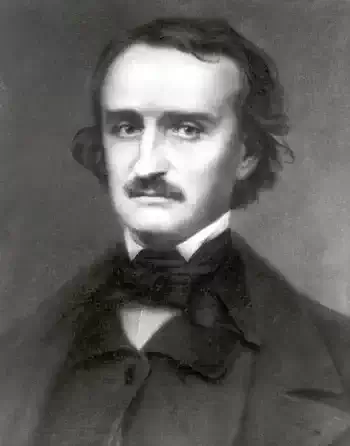
Edgar Allan Poe
Dreams
Oh! that my young life were a lasting dream!
My spirit not awakening, till the beam
Of an Eternity should bring the morrow.
Yes! tho' that long dream were of hopeless sorrow,
'Twere better than the cold reality
Of waking life, to him whose heart must be,
And hath been still, upon the lovely earth,
A chaos of deep passion, from his birth.
But should it be- that dream eternally
Continuing- as dreams have been to me
In my young boyhood- should it thus be given,
'Twere folly still to hope for higher Heaven.
For I have revell'd, when the sun was bright
I' the summer sky, in dreams of living light
And loveliness,- have left my very heart
In climes of my imagining, apart
From mine own home, with beings that have been
Of mine own thought- what more could I have seen?
'Twas once- and only once- and the wild hour
From my remembrance shall not pass- some power
Or spell had bound me- 'twas the chilly wind
Came o'er me in the night, and left behind
Its image on my spirit- or the moon
Shone on my slumbers in her lofty noon
Too coldly- or the stars- howe'er it was
That dream was as that night-wind- let it pass.
I have been happy, tho' in a dream.
I have been happy- and I love the theme:
Dreams! in their vivid coloring of life,
As in that fleeting, shadowy, misty strife
Of semblance with reality, which brings
To the delirious eye, more lovely things
Of Paradise and Love- and all our own!
Than young Hope in his sunniest hour hath known.
359
Edgar Allan Poe
A Dream
In visions of the dark night
I have dreamed of joy departed
But
a waking dream of life and light
Hath left me broken-hearted.
Ah! what is not a dream by day
To him whose eyes are cast
On things around him with a ray
Turned back upon the past?
That holy dream- that holy dream,
While all the world were chiding,
Hath cheered me as a lovely beam
A lonely spirit guiding.
What though that light, thro' storm and night,
So trembled from afar
What
could there be more purely bright
In Truth's day-star?
360
Edna St. Vincent Millay
The Bean-Stalk
Ho, Giant! This is I!
I have built me a bean-stalk into your sky!
La,—but it's lovely, up so high!
This is how I came,—I put
Here my knee, there my foot,
Up and up, from shoot to shoot—
And the blessed bean-stalk thinning
Like the mischief all the time,
Till it took me rocking, spinning,
In a dizzy, sunny circle,
Making angles with the root,
Far and out above the cackle
Of the city I was born in,
Till the little dirty city
In the light so sheer and sunny
Shone as dazzling bright and pretty
As the money that you find
In a dream of finding money—
What a wind! What a morning!—
Till the tiny, shiny city,
When I shot a glance below,
Shaken with a giddy laughter,
Sick and blissfully afraid,
Was a dew-drop on a blade,
And a pair of moments after
Was the whirling guess I made,—
And the wind was like a whip
Cracking past my icy ears,
And my hair stood out behind,
And my eyes were full of tears,
Wide-open and cold,
More tears than they could hold,
The wind was blowing so,
And my teeth were in a row,
Dry and grinning,
And I felt my foot slip,
And I scratched the wind and whined,
And I clutched the stalk and jabbered,
With my eyes shut blind,—
What a wind! What a wind!
Your broad sky, Giant,
Is the shelf of a cupboard;
I make bean-stalks, I'm
A builder, like yourself,
But bean-stalks is my trade,
I couldn't make a shelf,
Don't know how they're made,
Now, a bean-stalk is more pliant—
La, what a climb!
359
Boris Pasternak
It's spring, I leave a street where poplars...
It's spring, I leave a street where poplars are astonished,
Where distance is alarmed and the house fears it may fall.
Where air is blue just like the linen bundle
A discharged patient takes from hospital,
Where dusk is empty, like a broken tale,
Abandoned by a star, without conclusion,
So that expressionless, unfathomable,
A thousand clamouring eyes are in confusion.
356

Henry Wadsworth Longfellow
Ultima Thule: The Poet And His Songs
As the birds come in the Spring,
We know not from where;
As the stars come at evening
From depths of the air;
As the rain comes from the cloud,
And the brook from the ground;
As suddenly, low or loud,
Out of silence a sound;
As the grape comes to the vine,
The fruit to the tree;
As the wind comes to the pine,
And the tide to the sea;
As come the white sails of ships
O'er the ocean's verge;
As comes the smile to the lips,
The foam to the surge;
So come to the Poet his songs,
All hitherward blown
From the misty realm, that belongs
To the vast Unknown.
His, and not his, are the lays
He sings; and their fame
Is his, and not his; and the praise
And the pride of a name.
For voices pursue him by day,
And haunt him by night,
And he listens, and needs must obey,
When the Angel says: 'Write!'
357
Henry Wadsworth Longfellow
Tales Of A Wayside Inn : Part 2. The Musician's Tale; The Ballad of Carmilhan -
II.
The jolly skipper paused awhile,
And then again began;
'There is a Spectre Ship,' quoth he,
'A ship of the Dead that sails the sea,
And is called the Carmilhan.
'A ghostly ship, with a ghostly crew,
In tempests she appears;
And before the gale, or against the gale,
She sails without a rag of sail,
Without a helmsman steers.
'She haunts the Atlantic north and south,
But mostly the mid-sea,
Where three great rocks rise bleak and bare
Like furnace-chimneys in the air,
And are called the Chimneys Three.
'And ill betide the luckless ship
That meets the Carmilhan;
Over her decks the seas will leap,
She must go down into the deep,
And perish mouse and man.'
The captain of the Valdemar
Laughed loud with merry heart.
'I should like to see this ship,' said he;
'I should like to find these Chimneys Three,
That are marked down in the chart.
'I have sailed right over the spot,' he said
'With a good stiff breeze behind,
When the sea was blue, and the sky was clear,--
You can follow my course by these pinholes here,--
And never a rock could find.'
And then he swore a dreadful oath,
He swore by the Kingdoms Three,
That, should he meet the Carmilhan,
He would run her down, although he ran
Right into Eternity!
All this, while passing to and fro,
The cabin-boy had heard;
He lingered at the door to hear,
And drank in all with greedy ear,
And pondered every word.
He was a simple country lad,
But of a roving mind.
'Oh, it must be like heaven,' thought he,
'Those far-off foreign lands to see,
And fortune seek and find!'
But in the fo'castle, when he heard
The mariners blaspheme,
He thought of home, he thought of God,
And his mother under the churchyard sod,
And wished it were a dream.
One friend on board that ship had he;
T was the Klaboterman,
Who saw the Bible in his chest,
And made a sign upon his breast,
All evil things to ban.
354

Robert Louis Stevenson
The Land of Counterpane
When I was sick and lay a-bed,
I had two pillows at my head,
And all my toys beside me lay,
To keep me happy all the day.
And sometimes for an hour or so
I watched my leaden soldiers go,
With different uniforms and drills,
Among the bed-clothes, through the hills;
And sometimes sent my ships in fleets
All up and down among the sheets;
Or brought my trees and houses out,
And planted cities all about.
I was the giant great and still
That sits upon the pillow-hill,
And sees before him, dale and plain,
The pleasant land of counterpane.
354

William Butler Yeats
The Valley of the Black Pig
The dews drop slowly and dreams gather: unknown spears
Suddenly hurtle before my dream-awakened eyes,
And then the clash of fallen horsemen and the cries
Of unknown perishing armies beat about my ears.
We who still labour by the cromlech on the shore,
The grey caim on the hill, when day sinks drowned in dew,
Being weary of the world's empires, bow down to you.
Master of the still stars and of the flaming door.
355
Henry Van Dyke
Undine
'T was far away and long ago,
When I was but a dreaming boy,
This fairy tale of love and woe
Entranced my heart with tearful joy;
And while with white Undine I wept,
Your spirit, -- ah, how strange it seems, --
Was cradled in some star, and slept,
Unconscious of her coming dreams.
When I was but a dreaming boy,
This fairy tale of love and woe
Entranced my heart with tearful joy;
And while with white Undine I wept,
Your spirit, -- ah, how strange it seems, --
Was cradled in some star, and slept,
Unconscious of her coming dreams.
352

Christina Rossetti
Dream-Love
Young Love lies sleeping
In May-time of the year,
Among the lilies,
Lapped in the tender light:
White lambs come grazing,
White doves come building there:
And round about him
The May-bushes are white.
Soft moss the pillow
For oh, a softer cheek;
Broad leaves cast shadow
Upon the heavy eyes:
There winds and waters
Grow lulled and scarcely speak;
There twilight lingers
The longest in the skies.
Young Love lies dreaming;
But who shall tell the dream?
A perfect sunlight
On rustling forest tips;
Or perfect moonlight
Upon a rippling stream;
Or perfect silence,
Or song of cherished lips.
Burn odours round him
To fill the drowsy air;
Weave silent dances
Around him to and fro;
For oh, in waking
The sights are not so fair,
And song and silence
Are not like these below.
Young Love lies dreaming
Till summer days are gone,—
Dreaming and drowsing
Away to perfect sleep:
He sees the beauty
Sun hath not looked upon,
And tastes the fountain
Unutterably deep.
Him perfect music
Doth hush unto his rest,
And through the pauses
The perfect silence calms:
Oh, poor the voices
Of earth from east to west,
And poor earth's stillness
Between her stately palms.
Young Love lies drowsing
Away to poppied death;
Cool shadows deepen
Across the sleeping face:
So fails the summer
With warm, delicious breath;
And what hath autumn
To give us in its place?
Draw close the curtains
Of branched evergreen;
Change cannot touch them
With fading fingers sere:
Here the first violets
Perhaps will bud unseen,
And a dove, may be,
Return to nestle here.
353

Carl Sandburg
Child Moon
The child's wonder
At the old moon
Comes back nightly.
She points her finger
To the far silent yellow thing
Shining through the branches
Filtering on the leaves a golden sand,
Crying with her little tongue, “See the moon!”
And in her bed fading to sleep
With babblings of the moon on her little mouth.
At the old moon
Comes back nightly.
She points her finger
To the far silent yellow thing
Shining through the branches
Filtering on the leaves a golden sand,
Crying with her little tongue, “See the moon!”
And in her bed fading to sleep
With babblings of the moon on her little mouth.
350

Walter de la Mare
Off the Ground
Three jolly Farmers
Once bet a pound
Each dance the others would
Off the ground.
Out of their coats
They slipped right soon,
And neat and nicesome
Put each his shoon.
One--Two--Three!
And away they go,
Not too fast,
And not too slow;
Out from the elm-tree's
Noonday shadow,
Into the sun
And across the meadow.
Past the schoolroom,
With knees well bent,
Fingers a flicking,
They dancing went.
Up sides and over,
And round and round,
They crossed click-clacking
The Parish bound;
By Tupman's meadow
They did their mile,
Tee-to-tum
On a three-barred stile.
Then straight through Whipham,
Downhill to Week,
Footing it lightsome,
But not too quick,
Up fields to Watchet
And on through Wye,
Till seven fine churches
They'd seen slip by --
Seven fine churches,
And five old mills,
Farms in the valley,
And sheep on the hills;
Old Man's Acre
And Dead Man's Pool
All left behind,
As they danced through Wool.
And Wool gone by,
Like tops that seem
To spin in sleep
They danced in dream:
Withy -- Wellover --
Wassop -- Wo --
Like an old clock
Their heels did go.
A league and a league
And a league they went,
And not one weary,
And not one spent.
And log, and behold!
Past Willow-cum-Leigh
Stretched with its waters
The great green sea.
Says Farmer Bates,
'I puffs and I blows,
What's under the water,
Why, no man knows !'
Says Farmer Giles,
'My mind comes weak,
And a good man drownded
Is far to seek. '
But Farmer Turvey,
On twirling toes,
Up's with his gaiters,
And in he goes:
Down where the mermaids
Pluck and play
On their twangling harps
In a sea-green day;
Down where the mermaids
Finned and fair,
Sleek with their combs
Their yellow hair. . . .
Bates and Giles --
On the shingle sat,
Gazing at Turvey's
Floating hat.
But never a ripple
Nor bubble told
Where he was supping
Off plates of gold.
Never an echo
Rilled through the sea
Of the feasting and dancing
And minstrelsy.
They called -- called -- called;
Came no reply:
Nought but the ripples'
Sandy sigh.
Then glum and silent
They sat instead,
Vacantly brooding
On home and bed,
Till both together
Stood up and said: --
'Us knows not, dreams not,
Where you be,
Turvey, unless
In the deep blue sea;
But axcusing silver --
And it comes most willing --
Here's us two paying our forty shilling;
For it's sartin sure, Turvey,
Safe and sound,
You danced us a square, Turvey,
Off the ground.'
350

Emily Dickinson
The wind trapped like a tired man
The wind tapped like a tired man,
And like a host, 'Come in,'
I boldly answered; entered then
My residence within
A rapid, footless guest,
To offer whom a chair
Were as impossible as hand
A sofa to the air.
No bone had he to bind him,
His speech was like the push
Of numerous humming-birds at once
From a superior bush.
His countenance a billow,
His fingers, if he pass,
Let go a music, as of tunes
Blown tremulous in glass.
He visited, still flitting;
Then, like a timid man,
Again he tapped--'t was flurriedly--
And I became alone.
347
James Whitcomb Riley
An Impetuous Resolve
When little Dickie Swope's a man,
He's go' to be a Sailor;
An' little Hamey Tincher, he's
A-go' to be a Tailor:
Bud Mitchell, he's a-go' to be
A stylish Carriage-Maker;
An' when _I_ grow a grea'-big man,
I'm go' to be a Baker!
An' Dick'll buy his sailor-suit
O' Hame; and Hame'll take it
An' buy as fine a double-rigg
As ever Bud can make it:
An' nen all three'll drive roun' fer me
An' we'll drive off togevver,
A-slingin' pie-crust 'long the road
Ferever an' ferever!
347
Henry Van Dyke
The White Bees
I
LEGEND
Long ago Apollo called to Aristæus,
youngest of the shepherds,
Saying, "I will make you keeper of my bees."
Golden were the hives, and golden was the honey;
golden, too, the music,
Where the honey-makers hummed among the trees.
Happy Aristæus loitered in the garden, wandered
in the orchard,
Careless and contented, indolent and free;
Lightly took his labour, lightly took his pleasure,
till the fated moment
When across his pathway came Eurydice.
Then her eyes enkindled burning love within him;
drove him wild with longing,
For the perfect sweetness of her flower-like face;
Eagerly he followed, while she fled before him,
over mead and mountain,
On through field and forest, in a breathless race.
But the nymph, in flying, trod upon a serpent;
like a dream she vanished;
Pluto's chariot bore her down among the dead;
Lonely Aristæus, sadly home returning, found his
garden empty,
All the hives deserted, all the music fled.
Mournfully bewailing, -- "ah, my honey-makers,
where have you departed?" --
Far and wide he sought them, over sea and shore;
Foolish is the tale that says he ever found them,
brought them home in triumph,
Joys that once escape us fly for evermore.
Yet I dream that somewhere, clad in downy
whiteness, dwell the honey-makers,
In aerial gardens that no mortal sees:
And at times returning, lo, they flutter round us,
gathering mystic harvest,
So I weave the legend of the long-lost bees.
II
THE SWARMING OF THE BEES
I
WHO can tell the hiding of the white bees' nest?
Who can trace the guiding of their swift home flight?
Far would be his riding on a life-long quest:
Surely ere it ended would his beard grow white.
Never in the coming of the rose-red Spring,
Never in the passing of the wine-red Fall,
May you hear the humming of the white bee's wing
Murmur o'er the meadow, ere the night bells call.
Wait till winter hardens in the cold grey sky,
Wait till leaves are fallen and the brooks all freeze,
Then above the gardens where the dead flowers lie,
Swarm the merry millions of the wild white bees.
II
Out of the high-built airy hive,
Deep in the clouds that veil the sun,
Look how the first of the swarm arrive;
Timidly venturing, one by one,
Down through the tranquil air,
Wavering here and there,
Large, and lazy in flight, --
Caught by a lift of the breeze,
Tangled among the naked trees, --
Dropping then, without a sound,
Feather-white, feather-light,
To their rest on the ground.
III
Thus the swarming is begun.
Count the leaders, every one
Perfect as a perfect star
Till the slow descent is done.
Look beyond them, see how far
Down the vistas dim and grey,
Multitudes are on the way.
Now a sudden brightness
Dawns within the sombre day,
Over fields of whiteness;
And the sky is swiftly alive
With the flutter and the flight
Of the shimmering bees, that pour
From the hidden door of the hive
Till you can count no more.
IV
Now on the branches of hemlock and pine
Thickly they settle and cluster and swing,
Bending them low; and the trellised vine
And the dark elm-boughs are traced with a line
Of beauty wherever the white bees cling.
Now they are hiding the wrecks of the flowers,
Softly, softly, covering all,
Over the grave of the summer hours
Spreading a silver pall.
Now they are building the broad roof ledge,
Into a cornice smooth and fair,
Moulding the terrace, from edge to edge,
Into the sweep of a marble stair.
Wonderful workers, swift and dumb,
Numberless myriads, still they come,
Thronging ever faster, faster, faster!
Where is their queen? Who is their master?
The gardens are faded, the fields are frore,
How will they fare in a world so bleak?
Where is the hidden honey they seek?
What is the sweetness they toil to store
In the desolate day, where no blossoms gleam?
Forgetfulness and a dream!
V
But now the fretful wind awakes;
I hear him girding at the trees;
He strikes the bending boughs, and shakes
The quiet clusters of the bees
To powdery drift;
He tosses them away,
He drives them like spray;
He makes them veer and shift
Around his blustering path.
In clouds blindly whirling,
In rings madly swirling,
Full of crazy wrath,
So furious and fast they fly
They blur the earth and blot the sky
In wild, white mirk.
They fill the air with frozen wings
And tiny, angry, icy stings;
They blind the eyes, and choke the breath,
They dance a maddening dance of death
Around their work,
Sweeping the cover from the hill,
Heaping the hollows deeper still,
Effacing every line and mark,
And swarming, storming in the dark
Through the long night;
Until, at dawn, the wind lies down,
Weary of fight.
The last torn cloud, with trailing gown,
Passes the open gates of light;
And the white bees are lost in flight.
VI
Look how the landscape glitters wide and still,
Bright with a pure surprise!
The day begins with joy, and all past ill,
Buried in white oblivion, lies
Beneath the snowdrifts under crystal skies.
New hope, new love, new life, new cheer,
Flow in the sunrise beam,--
The gladness of Apollo when he sees,
Upon the bosom of the wintry year,
The honey-harvest of his wild white bees,
Forgetfulness and a dream!
III
LEGEND
LISTEN, my beloved, while the silver morning,
like a tranquil vision,
Fills the world around us and our hearts with peace;
Quiet is the close of Aristæus' legend, happy is
the ending --
Listen while I tell you how he found release.
Many months he wandered far away in sadness,
desolately thinking
Only of the vanished joys he could not find;
Till the great Apollo, pitying his shepherd, loosed
him from the burden
Of a dark, reluctant, backward-looking mind.
Then he saw around him all the changeful beauty
of the changing seasons,
In the world-wide regions where his journey lay;
Birds that sang to cheer him, flowers that bloomed
beside him, stars that shone to guide him, -Traveller's
joy was plenty all along the way!
Everywhere he journeyed strangers made him
welcome, listened while he taught them
Secret lore of field and forest he had learned:
How to train the vines and make the olives fruitful;
how to guard the sheepfolds;
How to stay the fever when the dog-star burned.
Friendliness and blessing followed in his footsteps;
richer were the harvests,
Happier the dwellings, wheresoe'er he came;
Little children loved him, and he left behind him,
in the hour of parting,
Memories of kindness and a god-like name.
So he travelled onward, desolate no longer,
patient in his seeking,
Reaping all the wayside comfort of his quest;
Till at last in Thracia, high upon Mount Hæmus,
far from human dwelling,
Weary Aristæus laid him down to rest.
Then the honey-makers, clad in downy whiteness,
fluttered soft around him,
Wrapt him in a dreamful slumber pure and deep.
This is life, beloved: first a sheltered garden,
then a troubled journey,
Joy and pain of seeking, -- and at last we sleep!
LEGEND
Long ago Apollo called to Aristæus,
youngest of the shepherds,
Saying, "I will make you keeper of my bees."
Golden were the hives, and golden was the honey;
golden, too, the music,
Where the honey-makers hummed among the trees.
Happy Aristæus loitered in the garden, wandered
in the orchard,
Careless and contented, indolent and free;
Lightly took his labour, lightly took his pleasure,
till the fated moment
When across his pathway came Eurydice.
Then her eyes enkindled burning love within him;
drove him wild with longing,
For the perfect sweetness of her flower-like face;
Eagerly he followed, while she fled before him,
over mead and mountain,
On through field and forest, in a breathless race.
But the nymph, in flying, trod upon a serpent;
like a dream she vanished;
Pluto's chariot bore her down among the dead;
Lonely Aristæus, sadly home returning, found his
garden empty,
All the hives deserted, all the music fled.
Mournfully bewailing, -- "ah, my honey-makers,
where have you departed?" --
Far and wide he sought them, over sea and shore;
Foolish is the tale that says he ever found them,
brought them home in triumph,
Joys that once escape us fly for evermore.
Yet I dream that somewhere, clad in downy
whiteness, dwell the honey-makers,
In aerial gardens that no mortal sees:
And at times returning, lo, they flutter round us,
gathering mystic harvest,
So I weave the legend of the long-lost bees.
II
THE SWARMING OF THE BEES
I
WHO can tell the hiding of the white bees' nest?
Who can trace the guiding of their swift home flight?
Far would be his riding on a life-long quest:
Surely ere it ended would his beard grow white.
Never in the coming of the rose-red Spring,
Never in the passing of the wine-red Fall,
May you hear the humming of the white bee's wing
Murmur o'er the meadow, ere the night bells call.
Wait till winter hardens in the cold grey sky,
Wait till leaves are fallen and the brooks all freeze,
Then above the gardens where the dead flowers lie,
Swarm the merry millions of the wild white bees.
II
Out of the high-built airy hive,
Deep in the clouds that veil the sun,
Look how the first of the swarm arrive;
Timidly venturing, one by one,
Down through the tranquil air,
Wavering here and there,
Large, and lazy in flight, --
Caught by a lift of the breeze,
Tangled among the naked trees, --
Dropping then, without a sound,
Feather-white, feather-light,
To their rest on the ground.
III
Thus the swarming is begun.
Count the leaders, every one
Perfect as a perfect star
Till the slow descent is done.
Look beyond them, see how far
Down the vistas dim and grey,
Multitudes are on the way.
Now a sudden brightness
Dawns within the sombre day,
Over fields of whiteness;
And the sky is swiftly alive
With the flutter and the flight
Of the shimmering bees, that pour
From the hidden door of the hive
Till you can count no more.
IV
Now on the branches of hemlock and pine
Thickly they settle and cluster and swing,
Bending them low; and the trellised vine
And the dark elm-boughs are traced with a line
Of beauty wherever the white bees cling.
Now they are hiding the wrecks of the flowers,
Softly, softly, covering all,
Over the grave of the summer hours
Spreading a silver pall.
Now they are building the broad roof ledge,
Into a cornice smooth and fair,
Moulding the terrace, from edge to edge,
Into the sweep of a marble stair.
Wonderful workers, swift and dumb,
Numberless myriads, still they come,
Thronging ever faster, faster, faster!
Where is their queen? Who is their master?
The gardens are faded, the fields are frore,
How will they fare in a world so bleak?
Where is the hidden honey they seek?
What is the sweetness they toil to store
In the desolate day, where no blossoms gleam?
Forgetfulness and a dream!
V
But now the fretful wind awakes;
I hear him girding at the trees;
He strikes the bending boughs, and shakes
The quiet clusters of the bees
To powdery drift;
He tosses them away,
He drives them like spray;
He makes them veer and shift
Around his blustering path.
In clouds blindly whirling,
In rings madly swirling,
Full of crazy wrath,
So furious and fast they fly
They blur the earth and blot the sky
In wild, white mirk.
They fill the air with frozen wings
And tiny, angry, icy stings;
They blind the eyes, and choke the breath,
They dance a maddening dance of death
Around their work,
Sweeping the cover from the hill,
Heaping the hollows deeper still,
Effacing every line and mark,
And swarming, storming in the dark
Through the long night;
Until, at dawn, the wind lies down,
Weary of fight.
The last torn cloud, with trailing gown,
Passes the open gates of light;
And the white bees are lost in flight.
VI
Look how the landscape glitters wide and still,
Bright with a pure surprise!
The day begins with joy, and all past ill,
Buried in white oblivion, lies
Beneath the snowdrifts under crystal skies.
New hope, new love, new life, new cheer,
Flow in the sunrise beam,--
The gladness of Apollo when he sees,
Upon the bosom of the wintry year,
The honey-harvest of his wild white bees,
Forgetfulness and a dream!
III
LEGEND
LISTEN, my beloved, while the silver morning,
like a tranquil vision,
Fills the world around us and our hearts with peace;
Quiet is the close of Aristæus' legend, happy is
the ending --
Listen while I tell you how he found release.
Many months he wandered far away in sadness,
desolately thinking
Only of the vanished joys he could not find;
Till the great Apollo, pitying his shepherd, loosed
him from the burden
Of a dark, reluctant, backward-looking mind.
Then he saw around him all the changeful beauty
of the changing seasons,
In the world-wide regions where his journey lay;
Birds that sang to cheer him, flowers that bloomed
beside him, stars that shone to guide him, -Traveller's
joy was plenty all along the way!
Everywhere he journeyed strangers made him
welcome, listened while he taught them
Secret lore of field and forest he had learned:
How to train the vines and make the olives fruitful;
how to guard the sheepfolds;
How to stay the fever when the dog-star burned.
Friendliness and blessing followed in his footsteps;
richer were the harvests,
Happier the dwellings, wheresoe'er he came;
Little children loved him, and he left behind him,
in the hour of parting,
Memories of kindness and a god-like name.
So he travelled onward, desolate no longer,
patient in his seeking,
Reaping all the wayside comfort of his quest;
Till at last in Thracia, high upon Mount Hæmus,
far from human dwelling,
Weary Aristæus laid him down to rest.
Then the honey-makers, clad in downy whiteness,
fluttered soft around him,
Wrapt him in a dreamful slumber pure and deep.
This is life, beloved: first a sheltered garden,
then a troubled journey,
Joy and pain of seeking, -- and at last we sleep!
347
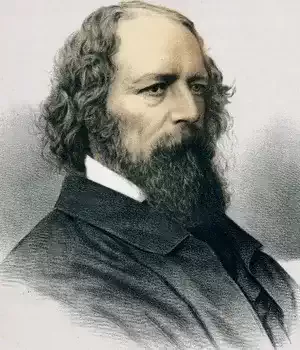
Alfred Lord Tennyson
Minnie and Winnie
Minnie and Winnie
Slept in a shell.
Sleep, little ladies!
And they slept well.
Pink was the shell within,
Silver without;
Sounds of the great sea
Wander'd about.
Sleep, little ladies!
Wake not soon!
Echo on echo
Dies to the moon.
Two bright stars
Peep'd into the shell.
"What are you dreaming of?
Who can tell?"
Started a green linnet
Out of the croft;
Wake, little ladies,
The sun is aloft!
347
Henry Van Dyke
The Black Birds
I
Once, only once, I saw it clear, --
That Eden every human heart has dreamed
A hundred times, but always far away!
Ah, well do I remember how it seemed,
Through the still atmosphere
Of that enchanted day,
To lie wide open to my weary feet:
A little land of love and joy and rest,
With meadows of soft green,
Rosy with cyclamen, and sweet
With delicate breath of violets unseen, --
And, tranquil 'mid the bloom
As if it waited for a coming guest,
A little house of peace and joy and love
Was nested like a snow-white dove
From the rough mountain where I stood,
Homesick for happiness,
Only a narrow valley and a darkling wood
To cross, and then the long distress
Of solitude would be forever past, --
I should be home at last.
But not too soon! oh, let me linger here
And feed my eyes, hungry with sorrow,
On all this loveliness, so near,
And mine to-morrow!
Then, from the wood, across the silvery blue,
A dark bird flew,
Silent, with sable wings.
Close in his wake another came, --
Fragments of midnight floating through
The sunset flame, --
Another and another, weaving rings
Of blackness on the primrose sky, --
Another, and another, look, a score,
A hundred, yes, a thousand rising heavily
From that accursed, dumb, and ancient wood, --
They boiled into the lucid air
Like smoke from some deep caldron of despair!
And more, and more, and ever more,
The numberless, ill-omened brood,
Flapping their ragged plumes,
Possessed the landscape and the evening light
With menaces and glooms.
Oh, dark, dark, dark they hovered o'er the place
Where once I saw the little house so white
Amid the flowers, covering every trace
Of beauty from my troubled sight, --
And suddenly it was night!
II
At break of day I crossed the wooded vale;
And while the morning made
A trembling light among the tree-tops pale,
I saw the sable birds on every limb,
Clinging together closely in the shade,
And croaking placidly their surly hymn.
But, oh, the little land of peace and love
That those night-loving wings had poised above, --
Where was it gone?
Lost, lost forevermore!
Only a cottage, dull and gray,
In the cold light of dawn,
With iron bars across the door:
Only a garden where the withering heads
Of flowers, presaging decay,
Hung over barren beds:
Only a desolate field that lay
Untilled beneath the desolate day, --
Where Eden seemed to bloom I found but these!
So, wondering, I passed along my way,
With anger in my heart, too deep for words,
Against that grove of evil-sheltering trees,
And the black magic of the croaking birds.
343
Henry Wadsworth Longfellow
Voices Of The Night : Prelude
Pleasant it was, when woods were green,
And winds were soft and low,
To lie amid some sylvan scene,
Where, the long drooping boughs between
Shadows dark and sunlight sheen
Alternate come and go;
Or where the denser grove receives
No sunlight from above
But the dark foliage interweaves
In one unbroken roof of leaves,
Underneath whose sloping eaves
The shadows hardly move.
Beneath some patriarchal tree
I lay upon the ground;
His hoary arms uplifted he,
And all the broad leaves over me
Clapped their little hands in glee,
With one continuous sound;--
A slumberous sound,--a sound that brings
The feelings of a dream,--
As of innumerable wings,
As, when a bell no longer swings,
Faint the hollow murmur rings
O'er meadow, lake, and stream.
And dreams of that which cannot die,
Bright visins, came to me,
As lapped in thought I used to lie,
And gaze into the summer sky,
Where the sailing clouds went by,
Like ships upon the sea;
Dreams that the soul of youth engage
Ere Fancy has been quelled;
Old legends of the monkish page.
Traditions of the saint and sage,
Tales that have the rime of age,
And chronicles of Eld.
And, loving still these quaint old themes,
Even in the city's throng
I feel the freshness of the streams,
That, crossed by shades and sunny gleams,
Water the green land of dreams,
The holy land of song.
Therefore, at Pentecost, which brings
The Spring, clothed like a bride,
When nestling buds unfold their wings,
And bishop's-caps have golden rings,
Musing upon many things,
I sought the woodlands wide.
The green trees whispered low and mild,
It was a sound of joy!
They were my playmates when a child
And rocked me in their arms so wild!
Still they looked at me and smiled
As if I were a boy;
And ever whispered, mild and low,
'Come, be a child once more!'
And waved their long arms to and fro,
And beckoned solemnly and slow;
O, I could not choose but go
Into the woodlands hoar;
Into the blithe and breathing air,
Into the solemn wood.
Solemn and silent everywhere!
Nature with folded hands seemed there,
Kneeling at her evening prayer!
Like one in prayer I stood.
Before me rose an avenue
Of tall and sombrous pines;
Abroad their fan-like branches grew,
And, where the sunshine darted throught
Spread a vapor soft and blue,
In long and sloping lines.
And, falling on my weary brain,
Like a fast-falling shower,
The dreams of youth came back again,
Low lispings of the summer rain,
Dropping on the ripened grain,
As once upon the flower.
Visions of childhood! Stay, O stay!
Ye were so sweet and wild!
And distant voices seemed to say,
'It cannot be! They pass away!
Other themes demand thy lay;
Thou art no more a child!
'The land of Song within thee lies,
Watered by living springs;
The lids of Fancy's sleepless eyes
Are gates unto that Paradise;
Holy thoughts, like stars, arise,
Its clouds are angels' wings.
'Learn, that henceforth thy song shall be
Not mountains capped with snow,
Nor forests sounding like the sea,
Nor rivers flowing ceaselessly,
Where the woodlands bend to see
The bending heavens below.
'There is a forest where the din
Of iron branches sounds!
A mighty river roara between,
And whosoever looks therein,
Sees the heavens all black with sin,--
Sees not ita depths, nor bounds.
'Athwart the swinging branches cast,
Soft rays of sunshine pour;
Then comes the fearful wintry blast;
Our hopes, like withered leaves, fall fast;
Pallid lips say, 'It is past!
We can return no more!'
'Look, then, into thine heart, and write!
Yes, into Life's deep stream!
All forms of sorrow and delight,
All solemn Voices of the Night,
That can soothe thee, or affright,--
Be these henceforth thy theme.'
338

John Greenleaf Whittier
My Dream
In my dream, methought I trod,
Yesternight, a mountain road;
Narrow as Al Sirat's span,
High as eagle's flight, it ran.
Overhead, a roof of cloud
With its weight of thunder bowed;
Underneath, to left and right,
Blankness and abysmal night.
Here and there a wild-flower blushed,
Now and then a bird-song gushed;
Now and then, through rifts of shade,
Stars shone out, and sunbeams played.
But the goodly company,
Walking in that path with me,
One by one the brink o'erslid,
One by one the darkness hid.
Some with wailing and lament,
Some with cheerful courage went;
But, of all who smiled or mourned,
Never one to us returned.
Anxiously, with eye and ear,
Questioning that shadow drear,
Never hand in token stirred,
Never answering voice I heard!
Steeper, darker!--lo! I felt
From my feet the pathway melt.
Swallowed by the black despair,
And the hungry jaws of air,
Past the stony-throated caves,
Strangled by the wash of waves,
Past the splintered crags, I sank
On a green and flowery bank,-
Soft as fall of thistle-down,
Lightly as a cloud is blown,
Soothingly as childhood pressed
To the bosom of its rest.
Of the sharp-horned rocks instead,
Green the grassy meadows spread,
Bright with waters singing by
Trees that propped a golden sky.
Painless, trustful, sorrow-free,
Old lost faces welcomed me,
With whose sweetness of content
Still expectant hope was blent.
Waking while the dawning gray
Slowly brightened into day,
Pondering that vision fled,
Thus unto myself I said:-
'Steep and hung with clouds of strife
Is our narrow path of life;
And our death the dreaded fall
Through the dark, awaiting all.
'So, with painful steps we climb
Up the dizzy ways of time,
Ever in the shadow shed
By the forecast of our dread.
'Dread of mystery solved alone,
Of the untried and unknown;
Yet the end thereof may seem
Like the falling of my dream.
'And this heart-consuming care,
All our fears of here or there,
Change and absence, loss and death,
Prove but simple lack of faith.'
Thou, O Most Compassionate!
Who didst stoop to our estate,
Drinking of the cup we drain,
Treading in our path of pain,-
Through the doubt and mystery,
Grant to us thy steps to see,
And the grace to draw from thence
Larger hope and confidence.
Show thy vacant tomb, and let,
As of old, the angels sit,
Whispering, by its open door
'Fear not! He hath gone before!'
340
Emily Dickinson
A Murmur in the Trees-to note
A Murmur in the Trees-to note-
Not loud enough-for Wind-
A Star-not far enough to seek-
Nor near enough-to find-
A long-long Yellow-on the Lawn-
A Hubbub-as of feet-
Not audible-as Ours-to Us-
But dapperer-More Sweet-
A Hurrying Home of little Men
To Houses unperceived-
All this-and more-if I should tell-
Would never be believed-
Of Robins in the Trundle bed
How many I espy
Whose Nightgowns could not hide the Wings-
Although I heard them try-
But then I promised ne'er to tell-
How could I break My Word?
So go your Way-and I'll go Mine-
No fear you'll miss the Road.
338
Emily Dickinson
These tested Our Horizon
These tested Our Horizon-
Then disappeared
As Birds before achieving
A Latitude.
Our Retrospection of Them
A fixed Delight,
But our Anticipation
A Dice-a Doubt-
Then disappeared
As Birds before achieving
A Latitude.
Our Retrospection of Them
A fixed Delight,
But our Anticipation
A Dice-a Doubt-
335
Henry Wadsworth Longfellow
The Castle-Builder. (Birds Of Passage. Flight The Third)
A gentle boy, with soft and silken locks,
A dreamy boy, with brown and tender eyes,
A castle-builder, with his wooden blocks,
And towers that touch imaginary skies.
A fearless rider on his father's knee,
An eager listener unto stories told
At the Round Table of the nursery,
Of heroes and adventures manifold.
There will be other towers for thee to build;
There will be other steeds for thee to ride;
There will be other legends, and all filled
With greater marvels and more glorified.
Build on, and make thy castles high and fair,
Rising and reaching upward to the skies;
Listen to voices in the upper air,
Nor lose thy simple faith in mysteries.
336