
Dreams and Imagination

William Shakespeare
Twelve O'Clock - Fairy time
Through the house give glimmering light
By the dead and drowsy fire;
Every elf and fairy sprite
hop as light as bird from brier.
Now, until the break of day
Through this house each fairy stray.
By the dead and drowsy fire;
Every elf and fairy sprite
hop as light as bird from brier.
Now, until the break of day
Through this house each fairy stray.
334
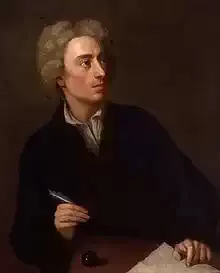
Alexander Pope
The Rape of the Lock: Canto 1
Nolueram, Belinda, tuos violare capillos;
Sedjuvat, hoc precibus me tribuisse tuis.
(Martial, Epigrams 12.84)
What dire offence from am'rous causes springs,
What mighty contests rise from trivial things,
I sing--This verse to Caryl, Muse! is due:
This, ev'n Belinda may vouchsafe to view:
Slight is the subject, but not so the praise,
If she inspire, and he approve my lays.
Say what strange motive, Goddess! could compel
A well-bred lord t' assault a gentle belle?
O say what stranger cause, yet unexplor'd,
Could make a gentle belle reject a lord?
In tasks so bold, can little men engage,
And in soft bosoms dwells such mighty rage?
Sol thro' white curtains shot a tim'rous ray,
And op'd those eyes that must eclipse the day;
Now lap-dogs give themselves the rousing shake,
And sleepless lovers, just at twelve, awake:
Thrice rung the bell, the slipper knock'd the ground,
And the press'd watch return'd a silver sound.
Belinda still her downy pillow press'd,
Her guardian sylph prolong'd the balmy rest:
'Twas he had summon'd to her silent bed
The morning dream that hover'd o'er her head;
A youth more glitt'ring than a birthnight beau,
(That ev'n in slumber caus'd her cheek to glow)
Seem'd to her ear his winning lips to lay,
And thus in whispers said, or seem'd to say.
"Fairest of mortals, thou distinguish'd care
Of thousand bright inhabitants of air!
If e'er one vision touch'd thy infant thought,
Of all the nurse and all the priest have taught,
Of airy elves by moonlight shadows seen,
The silver token, and the circled green,
Or virgins visited by angel pow'rs,
With golden crowns and wreaths of heav'nly flow'rs,
Hear and believe! thy own importance know,
Nor bound thy narrow views to things below.
Some secret truths from learned pride conceal'd,
To maids alone and children are reveal'd:
What tho' no credit doubting wits may give?
The fair and innocent shall still believe.
Know then, unnumber'd spirits round thee fly,
The light militia of the lower sky;
These, though unseen, are ever on theg,
Hang o'er the box, and hover round the Ring.
Think what an equipage thou hast in air,
And view with scorn two pages and a chair.
As now your own, our beings were of old,
And once inclos'd in woman's beauteous mould;
Thence, by a soft transition, we repair
From earthly vehicles to these of air.
Think not, when woman's transient breath is fled,
That all her vanities at once are dead;
Succeeding vanities she still regards,
And tho' she plays no more, o'erlooks the cards.
Her joy in gilded chariots, when alive,
And love of ombre, after death survive.
For when the fair in all their pride expire,
To their first elements their souls retire:
The sprites of fiery termagants in flame
Mount up, and take a Salamander's name.
Soft yielding minds to water glide away,
And sip with Nymphs, their elemental tea.
The graver prude sinks downward to a Gnome,
In search of mischief still on earth to roam.
The light coquettes in Sylphs aloft repair,
And sport and flutter in the fields of air.
Know further yet; whoever fair and chaste
Rejects mankind, is by some sylph embrac'd:
For spirits, freed from mortal laws, with ease
Assume what sexes and what shapes they please.
What guards the purity of melting maids,
In courtly balls, and midnight masquerades,
Safe from the treach'rous friend, the daring spark,
The glance by day, the whisper in the dark,
When kind occasion prompts their warm desires,
When music softens, and when dancing fires?
'Tis but their sylph, the wise celestials know,
Though honour is the word with men below.
Some nymphs there are, too conscious of their face,
For life predestin'd to the gnomes' embrace.
These swell their prospects and exalt their pride,
When offers are disdain'd, and love denied:
Then gay ideas crowd the vacant brain,
While peers, and dukes, and all their sweeping train,
And garters, stars, and coronets appear,
And in soft sounds 'Your Grace' salutes their ear.
'Tis these that early taint the female soul,
Instruct the eyes of young coquettes to roll,
Teach infant cheeks a bidden blush to know,
And little hearts to flutter at a beau.
Oft, when the world imagine women stray,
The Sylphs through mystic mazes guide their way,
Thro' all the giddy circle they pursue,
And old impertinence expel by new.
What tender maid but must a victim fall
To one man's treat, but for another's ball?
When Florio speaks, what virgin could withstand,
If gentle Damon did not squeeze her hand?
With varying vanities, from ev'ry part,
They shift the moving toyshop of their heart;
Where wigs with wigs, with sword-knots sword-knots strive,
Beaux banish beaux, and coaches coaches drive.
This erring mortals levity may call,
Oh blind to truth! the Sylphs contrive it all.
Of these am I, who thy protection claim,
A watchful sprite, and Ariel is my name.
Late, as I rang'd the crystal wilds of air,
In the clear mirror of thy ruling star
I saw, alas! some dread event impend,
Ere to the main this morning sun descend,
But Heav'n reveals not what, or how, or where:
Warn'd by the Sylph, oh pious maid, beware!
This to disclose is all thy guardian can.
Beware of all, but most beware of man!"
He said; when Shock, who thought she slept too long,
Leap'd up, and wak'd his mistress with his tongue.
'Twas then, Belinda, if report say true,
Thy eyes first open'd on a billet-doux;
Wounds, charms, and ardors were no sooner read,
But all the vision vanish'd from thy head.
And now, unveil'd, the toilet stands display'd,
Each silver vase in mystic order laid.
First, rob'd in white, the nymph intent adores
With head uncover'd, the cosmetic pow'rs.
A heav'nly image in the glass appears,
To that she bends, to that her eyes she rears;
Th' inferior priestess, at her altar's side,
Trembling, begins the sacred rites of pride.
Unnumber'd treasures ope at once, and here
The various off'rings of the world appear;
From each she nicely culls with curious toil,
And decks the goddess with the glitt'ring spoil.
This casket India's glowing gems unlocks,
And all Arabia breathes from yonder box.
The tortoise here and elephant unite,
Transform'd to combs, the speckled and the white.
Here files of pins extend their shining rows,
Puffs, powders, patches, bibles, billet-doux.
Now awful beauty puts on all its arms;
The fair each moment rises in her charms,
Repairs her smiles, awakens ev'ry grace,
And calls forth all the wonders of her face;
Sees by degrees a purer blush arise,
And keener lightnings quicken in her eyes.
The busy Sylphs surround their darling care;
These set the head, and those divide the hair,
Some fold the sleeve, whilst others plait the gown;
And Betty's prais'd for labours not her own.
329
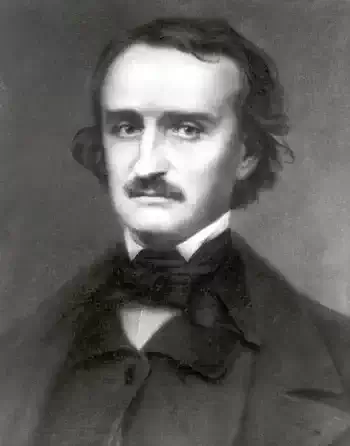
Edgar Allan Poe
To -- -- --. Ulalume: A Ballad
The skies they were ashen and sober;
The leaves they were crisped and sere
The
leaves they were withering and sere;
It was night in the lonesome October
Of my most immemorial year;
It was hard by the dim lake of Auber,
In the misty mid region of WeirIt
was down by the dank tarn of Auber,
In the ghoul-haunted woodland of Weir.
Here once, through an alley Titanic,
Of cypress, I roamed with my SoulOf
cypress, with Psyche, my Soul.
There were days when my heart was volcanic
As the scoriac rivers that roll
As
the lavas that restlessly roll
Their sulphurous currents down Yaanek
In the ultimate climes of the pole
That
groan as they roll down Mount Yaanek
In the realms of the boreal pole.
Our talk had been serious and sober,
But our thoughts they were palsied and sere
Our
memories were treacherous and sere
For we knew not the month was October,
And we marked not the night of the year(
Ah, night of all nights in the year!)
We noted not the dim lake of Auber(
Though once we had journeyed down here),
Remembered not the dank tarn of Auber,
Nor the ghoul-haunted woodland of Weir.
And now, as the night was senescent,
And star-dials pointed to morn
As
the star-dials hinted of morn
At the end of our path a liquescent
And nebulous lustre was born,
Out of which a miraculous crescent
Arose with a duplicate horn
Astarte's
bediamonded crescent
Distinct with its duplicate horn.
And I said- 'She is warmer than Dian:
She rolls through an ether of sighs
She
revels in a region of sighs:
She has seen that the tears are not dry on
These cheeks, where the worm never dies,
And has come past the stars of the Lion,
To point us the path to the skies
To
the Lethean peace of the skies
Come up, in despite of the Lion,
To shine on us with her bright eyes
Come up through the lair of the Lion,
With love in her luminous eyes.'
But Psyche, uplifting her finger,
Said- 'Sadly this star I mistrust
Her
pallor I strangely mistrust:
Oh, hasten!- oh, let us not linger!
Oh, fly!- let us fly!- for we must.'
In terror she spoke, letting sink her
Wings until they trailed in the dust
In agony sobbed, letting sink her
Plumes till they trailed in the dust
Till
they sorrowfully trailed in the dust.
I replied- 'This is nothing but dreaming:
Let us on by this tremulous light!
Let us bathe in this crystalline light!
Its Sybilic splendor is beaming
With Hope and in Beauty to-night:
See!-
it flickers up the sky through the night!
Ah, we safely may trust to its gleaming,
And be sure it will lead us aright
We safely may trust to a gleaming
That cannot but guide us aright,
Since it flickers up to Heaven through the night.'
Thus I pacified Psyche and kissed her,
And tempted her out of her gloom
And
conquered her scruples and gloom;
And we passed to the end of the vista,
But were stopped by the door of a tomb
By
the door of a legended tomb;
And I said- 'What is written, sweet sister,
On the door of this legended tomb?'
She replied- 'Ulalume- Ulalume'
Tis the vault of thy lost Ulalume!'
Then my heart it grew ashen and sober
As the leaves that were crisped and sere
As
the leaves that were withering and sere
And I cried- 'It was surely October
On this very night of last year
That I journeyed- I journeyed down here
That
I brought a dread burden down here
On
this night of all nights in the year,
Ah, what demon has tempted me here?
Well I know, now, this dim lake of AuberThis
misty mid region of WeirWell
I know, now, this dank tarn of Auber,
This ghoul-haunted woodland of Weir.'
330

Walter de la Mare
The Keys of Morning
While at her bedroom window once,
Learning her task for school,
Little Louisa lonely sat
In the morning clear and cool,
She slanted her small bead-brown eyes
Across the empty street,
And saw Death softly watching her
In the sunshine pale and sweet.
His was a long lean sallow face;
He sat with half-shut eyes,
Like a old sailor in a ship
Becalmed 'neath tropic skies.
Beside him in the dust he had set
His staff and shady hat;
These, peeping small, Louisa saw
Quite clearly where she sat -
The thinness of his coal-black locks,
His hands so long and lean
They scarcely seemed to grasp at all
The keys that hung between:
Both were of gold, but one was small,
And with this last did he
Wag in the air, as if to say,
"Come hither, child, to me!"
Louisa laid her lesson book
On the cold window-sill;
And in the sleepy sunshine house
Went softly down, until
She stood in the half-opened door,
And peeped. But strange to say
Where Death just now had sunning sat
Only a shadow lay:
Just the tall chimney's round-topped cowl,
And the small sun behind,
Had with its shadow in the dust
Called sleepy Death to mind.
But most she thought how strange it was
Two keys that he should bear,
And that, when beckoning, he should wag
The littlest in the air.
331

Johann Wolfgang von Goethe
Love As A Landscape Painter
ON a rocky peak once sat I early,
Gazing on the mist with eyes unmoving;
Stretch'd out like a pall of greyish texture,
All things round, and all above it cover'd.
Suddenly a boy appear'd beside me,
Saying "Friend, what meanest thou by gazing
On the vacant pall with such composure?
Hast thou lost for evermore all pleasure
Both in painting cunningly, and forming?"
On the child I gazed, and thought in secret:
"Would the boy pretend to be a master?"
"Wouldst thou be for ever dull and idle,"
Said the boy, "no wisdom thou'lt attain to;
See, I'll straightway paint for thee a figure,--
How to paint a beauteous figure, show thee."
And he then extended his fore-finger,-(
Ruddy was it as a youthful rosebud)
Tow'rd the broad and far outstretching carpet,
And began to draw there with his finger.
First on high a radiant sun he painted,
Which upon mine eyes with splendour glisten'd,
And he made the clouds with golden border,
Through the clouds he let the sunbeams enter;
Painted then the soft and feathery summits
Of the fresh and quicken'd trees, behind them
One by one with freedom drew the mountains;
Underneath he left no lack of water,
But the river painted so like Nature,
That it seem'd to glitter in the sunbeams,
That it seem'd against its banks to murmur.
Ah, there blossom'd flowers beside the river,
And bright colours gleam'd upon the meadow,
Gold, and green, and purple, and enamell'd,
All like carbuncles and emeralds seeming!
Bright and clear he added then the heavens,
And the blue-tinged mountains far and farther,
So that I, as though newborn, enraptured
Gazed on, now the painter, now the picture.
Then spake he: "Although I have convinced thee
That this art I understand full surely,
Yet the hardest still is left to show thee."
Thereupon he traced, with pointed finger,
And with anxious care, upon the forest,
At the utmost verge, where the strong sunbeams
From the shining ground appear'd reflected,
Traced the figure of a lovely maiden,
Fair in form, and clad in graceful fashion,
Fresh the cheeks beneath her brown locks' ambush,
And the cheeks possess'd the selfsame colour
As the finger that had served to paint them.
"Oh thou boy!" exclaim'd I then, "what master
In his school received thee as his pupil,
Teaching thee so truthfully and quickly
Wisely to begin, and well to finish?"
Whilst I still was speaking, lo, a zephyr
Softly rose, and set the tree-tops moving,
Curling all the wavelets on the river,
And the perfect maiden's veil, too, fill'd it,
And to make my wonderment still greater,
Soon the maiden set her foot in motion.
On she came, approaching tow'rd the station
Where still sat I with my arch instructor.
As now all, yes, all thus moved together,--
Flowers, river, trees, the veil,--all moving,--
And the gentle foot of that most fair one,
Can ye think that on my rock I linger'd,
Like a rock, as though fast-chain'd and silent?
328

Henry Wadsworth Longfellow
Travels By The Fireside. (Birds Of Passage. Flight The Fourth)
The ceaseless rain is falling fast,
And yonder gilded vane,
Immovable for three days past,
Points to the misty main,
It drives me in upon myself
And to the fireside gleams,
To pleasant books that crowd my shelf,
And still more pleasant dreams,
I read whatever bards have sung
Of lands beyond the sea,
And the bright days when I was young
Come thronging back to me.
In fancy I can hear again
The Alpine torrent's roar,
The mule-bells on the hills of Spain,
The sea at Elsinore.
I see the convent's gleaming wall
Rise from its groves of pine,
And towers of old cathedrals tall,
And castles by the Rhine.
I journey on by park and spire,
Beneath centennial trees,
Through fields with poppies all on fire,
And gleams of distant seas.
I fear no more the dust and heat,
No more I feel fatigue,
While journeying with another's feet
O'er many a lengthening league.
Let others traverse sea and land,
And toil through various climes,
I turn the world round with my hand
Reading these poets' rhymes.
From them I learn whatever lies
Beneath each changing zone,
And see, when looking with their eyes,
Better than with mine own.
327

James Whitcomb Riley
The Raggedy Man
2
3
4
6
7
8
O the Raggedy Man! He works fer Pa;
An' he's the goodest man ever you saw!
He comes to our house every day,
An' waters the horses, an' feeds 'em hay;
An' he opens the shed -- an' we all ist laugh
When he drives out our little old wobble-ly calf;
An' nen -- ef our hired girl says he can --
He milks the cow fer 'Lizabuth Ann. -9
Ain't he a' awful good Raggedy Man?
Raggedy! Raggedy! Raggedy Man!
11
12
13
14
16
17
W'y, The Raggedy Man -- he's ist so good,
He splits the kindlin' an' chops the wood;
An' nen he spades in our garden, too,
An' does most things 'at boys can't do. --
He clumbed clean up in our big tree
An' shooked a' apple down fer me --
An' 'nother 'n', too, fer 'Lizabuth Ann -18
19
An' 'nother 'n', too, fer The Raggedy Man. -Ain't
he a' awful kind Raggedy Man?
Raggedy! Raggedy! Raggedy Man!
21
22
An' The Raggedy Man one time say he
Pick' roast' rambos from a' orchurd-tree,
23 An' et 'em -- all ist roast' an' hot! -24
An' it's so, too! -- 'cause a corn-crib got
Afire one time an' all burn' down
26 On "The Smoot Farm," 'bout four mile from town -27
On "The Smoot Farm"! Yes -- an' the hired han'
28
29
'At worked there nen 'uz The Raggedy Man! -Ain't
he the beatin'est Raggedy Man?
Raggedy! Raggedy! Raggedy Man!
31
32
33
34
36
37
38
39
41
The Raggedy Man's so good an' kind
He'll be our "horsey," an' "haw" an' mind
Ever'thing 'at you make him do --
An' won't run off -- 'less you want him to!
I drived him wunst way down our lane
An' he got skeered, when it 'menced to rain,
An' ist rared up an' squealed and run
Purt' nigh away! -- an' it's all in fun!
Nen he skeered ag'in at a' old tin can ...
Whoa! y' old runaway Raggedy Man!
Raggedy! Raggedy! Raggedy Man!
42
43
44
An' The Raggedy Man, he knows most rhymes,
An' tells 'em, ef I be good, sometimes:
Knows 'bout Giunts, an' Griffuns, an' Elves,
46
47
48
An' the Squidgicum-Squees 'at swallers the'rselves:
An', wite by the pump in our pasture-lot,
He showed me the hole 'at the Wunks is got,
'At lives 'way deep in the ground, an' can
49 Turn into me, er 'Lizabuth Ann!
50 Er Ma, er Pa, er The Raggedy Man!
51 Ain't he a funny old Raggedy Man?
52 Raggedy! Raggedy! Raggedy Man!
53 An' wunst, when The Raggedy Man come late,
54 An' pigs ist root' thue the garden-gate,
55 He 'tend like the pigs 'uz bears an' said,
56 "Old Bear-shooter'll shoot 'em dead!"
57 An' race' an' chase' 'em, an' they'd ist run
58 When he pint his hoe at 'em like it's a gun
59 An' go "Bang! -- Bang!" nen 'tend he stan'
60 An' load up his gun ag'in! Raggedy Man!
61 He's an old Bear-shooter Raggedy Man!
62 Raggedy! Raggedy! Raggedy Man!
63 An' sometimes The Raggedy Man lets on
64 We're little prince-children, an' old King's gone
65 To git more money, an' lef' us there -66
And Robbers is ist thick ever'where;
67 An' nen -- ef we all won't cry, fer shore -68
The Raggedy Man he'll come and "'splore
69 The Castul-halls," an' steal the "gold" -70
An' steal us, too, an' grab an' hold
71 An' pack us off to his old "Cave"! -- An'
72 Haymow's the "cave" o' The Raggedy Man! -73
Raggedy! Raggedy! Raggedy Man!
74 The Raggedy Man -- one time, when he
75 Wuz makin' a little bow-'n'-orry fer me,
76 Says "When you're big like your Pa is,
77 Air you go' to keep a fine store like his -78
An' be a rich merchunt -- an' wear fine clothes? -79
Er what air you go' to be, goodness knows?"
80 An' nen he laughed at 'Lizabuth Ann,
81 An' I says "'M go' to be a Raggedy Man! -82
I'm ist go' to be a nice Raggedy Man!"
83 Raggedy! Raggedy! Raggedy Man!
324
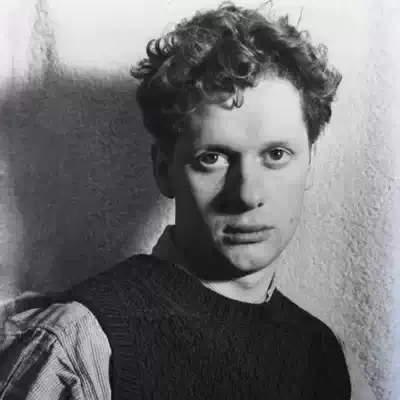
Dylan Thomas
Clown in the Moon
My tears are like the quiet drift
Of petals from some magic rose;
And all my grief flows from the rift
Of unremembered skies and snows.
I think, that if I touched the earth,
It would crumble;
It is so sad and beautiful,
So tremulously like a dream.
Of petals from some magic rose;
And all my grief flows from the rift
Of unremembered skies and snows.
I think, that if I touched the earth,
It would crumble;
It is so sad and beautiful,
So tremulously like a dream.
324
James Whitcomb Riley
The Pixy People
It was just a very
Merry fairy dream!--
All the woods were airy
With the gloom and gleam;
Crickets in the clover
Clattered clear and strong,
And the bees droned over
Their old honey-song.
In the mossy passes,
Saucy grasshoppers
Leapt about the grasses
And the thistle-burs;
And the whispered chuckle
Of the katydid
Shook the honeysuckle
Blossoms where he hid.
Through the breezy mazes
Of the lazy June,
Drowsy with the hazes
Of the dreamy noon,
Little Pixy people
Winged above the walk,
Pouring from the steeple
Of a mullein-stalk.
One--a gallant fellow--
Evidently King,--
Wore a plume of yellow
In a jewelled ring
On a pansy bonnet,
Gold and white and blue,
With the dew still on it,
And the fragrance, too.
One--a dainty lady,--
Evidently Queen,--
Wore a gown of shady
Moonshine and green,
With a lace of gleaming
Starlight that sent
All the dewdrops dreaming
Everywhere she went.
One wore a waistcoat
Of roseleaves, out and in,
And one wore a faced-coat
Of tiger-lily-skin;
And one wore a neat coat
Of palest galingale;
And one a tiny street-coat,
And one a swallow-tail.
And Ho! sang the King of them,
And Hey! sang the Queen;
And round and round the ring of them
Went dancing o'er the green;
And Hey! sang the Queen of them,
And Ho! sang the King--
And all that I had seen of them
--Wasn't anything!
It was just a very
Merry fairy dream!--
All the woods were airy
With the gloom and gleam;
Crickets in the clover
Clattered clear and strong,
And the bees droned over
Their old honey-song!
Merry fairy dream!--
All the woods were airy
With the gloom and gleam;
Crickets in the clover
Clattered clear and strong,
And the bees droned over
Their old honey-song.
In the mossy passes,
Saucy grasshoppers
Leapt about the grasses
And the thistle-burs;
And the whispered chuckle
Of the katydid
Shook the honeysuckle
Blossoms where he hid.
Through the breezy mazes
Of the lazy June,
Drowsy with the hazes
Of the dreamy noon,
Little Pixy people
Winged above the walk,
Pouring from the steeple
Of a mullein-stalk.
One--a gallant fellow--
Evidently King,--
Wore a plume of yellow
In a jewelled ring
On a pansy bonnet,
Gold and white and blue,
With the dew still on it,
And the fragrance, too.
One--a dainty lady,--
Evidently Queen,--
Wore a gown of shady
Moonshine and green,
With a lace of gleaming
Starlight that sent
All the dewdrops dreaming
Everywhere she went.
One wore a waistcoat
Of roseleaves, out and in,
And one wore a faced-coat
Of tiger-lily-skin;
And one wore a neat coat
Of palest galingale;
And one a tiny street-coat,
And one a swallow-tail.
And Ho! sang the King of them,
And Hey! sang the Queen;
And round and round the ring of them
Went dancing o'er the green;
And Hey! sang the Queen of them,
And Ho! sang the King--
And all that I had seen of them
--Wasn't anything!
It was just a very
Merry fairy dream!--
All the woods were airy
With the gloom and gleam;
Crickets in the clover
Clattered clear and strong,
And the bees droned over
Their old honey-song!
324
Henry Wadsworth Longfellow
The Golden Legend: II. A Farm In The Odenwald
A garden; morning;_ PRINCE HENRY _seated, with a
book_. ELSIE, _at a distance, gathering flowers._
_Prince Henry (reading)._ One morning, all alone,
Out of his convent of gray stone,
Into the forest older, darker, grayer,
His lips moving as if in prayer,
His head sunken upon his breast
As in a dream of rest,
Walked the Monk Felix. All about
The broad, sweet sunshine lay without,
Filling the summer air;
And within the woodlands as he trod,
The twilight was like the Truce of God
With worldly woe and care;
Under him lay the golden moss;
And above him the boughs of hemlock-tree
Waved, and made the sign of the cross,
And whispered their Benedicites;
And from the ground
Rose an odor sweet and fragrant
Of the wild flowers and the vagrant
Vines that wandered,
Seeking the sunshine, round and round.
These he heeded not, but pondered
On the volume in his hand,
A volume of Saint Augustine;
Wherein he read of the unseen
Splendors of God's great town
In the unknown land,
And, with his eyes cast down
In humility, he said:
'I believe, O God,
What herein I have read,
But alas! I do not understand!'
And lo! he heard
The sudden singing of a bird,
A snow-white bird, that from a cloud
Dropped down,
And among the branches brown
Sat singing
So sweet, and clear, and loud,
It seemed a thousand harp strings ringing.
And the Monk Felix closed his book,
And long, long,
With rapturous look,
He listened to the song,
And hardly breathed or stirred,
Until he saw, as in a vision,
The land Elysian,
And in the heavenly city heard
Angelic feet
Fall on the golden flagging of the street.
And he would fain
Have caught the wondrous bird,
But strove in vain;
For it flew away, away,
Far over hill and dell,
And instead of its sweet singing
He heard the convent bell
Suddenly in the silence ringing
For the service of noonday.
And he retraced
His pathway homeward sadly and in haste.
In the convent there was a change!
He looked for each well known face,
But the faces were new and strange;
New figures sat in the oaken stalls,
New voices chaunted in the choir,
Yet the place was the same place,
The same dusky walls
Of cold, gray stone,
The same cloisters and belfry and spire.
A stranger and alone
Among that brotherhood
The Monk Felix stood
'Forty years,' said a Friar.
'Have I been Prior
Of this convent in the wood,
But for that space
Never have I beheld thy face!'
The heart of the Monk Felix fell:
And he answered with submissive tone,
'This morning, after the hour of Prime,
I left my cell,
And wandered forth alone,
Listening all the time
To the melodious singing
Of a beautiful white bird,
Until I heard
The bells of the convent ringing
Noon from their noisy towers,
It was as if I dreamed;
For what to me had seemed
Moments only, had been hours!'
'Years!' said a voice close by.
It was an aged monk who spoke,
From a bench of oak
Fastened against the wall;-
He was the oldest monk of all.
For a whole century
Had he been there,
Serving God in prayer,
The meekest and humblest of his creatures.
He remembered well the features
Of Felix, and he said,
Speaking distinct and slow:
'One hundred years ago,
When I was a novice in this place,
There was here a monk, full of God's grace,
Who bore the name
Of Felix, and this man must be the same.'
And straightway
They brought forth to the light of day
A volume old and brown,
A huge tome, bound
With brass and wild-boar's hide,
Therein were written down
The names of all who had died
In the convent, since it was edified.
And there they found,
Just as the old monk said,
That on a certain day and date,
One hundred years before,
Had gone forth from the convent gate
The Monk Felix, and never more
Had entered that sacred door.
He had been counted among the dead!
And they knew, at last,
That, such had been the power
Of that celestial and immortal song,
A hundred years had passed,
And had not seemed so long
As a single hour!
(ELSIE _comes in with flowers._)
_Elsie._ Here are flowers for you,
But they are not all for you.
Some of them are for the Virgin
And for Saint Cecilia.
_Prince Henry._ As thou standest there,
Thou seemest to me like the angel
That brought the immortal roses
To Saint Cecilia's bridal chamber.
_Elsie._ But these will fade.
_Prince Henry._ Themselves will fade,
But not their memory,
And memory has the power
To re-create them from the dust.
They remind me, too,
Of martyred Dorothea,
Who from celestial gardens sent
Flowers as her witnesses
To him who scoffed and doubted.
_Elsie._ Do you know the story
Of Christ and the Sultan's daughter?
That is the prettiest legend of them all.
_Prince Henry._ Then tell it to me.
But first come hither.
Lay the flowers down beside me.
And put both thy hands in mine.
Now tell me the story.
_Elsie._ Early in the morning
The Sultan's daughter
Walked in her father's garden,
Gathering the bright flowers,
All full of dew.
_Prince Henry._ Just as thou hast been doing
This morning, dearest Elsie.
_Elsie._ And as she gathered them,
She wondered more and more
Who was the Master of the Flowers,
And made them grow
Out of the cold, dark earth.
'In my heart,' she said,
'I love him; and for him
Would leave my father's palace,
To labor in his garden.'
_Prince Henry._ Dear, innocent child!
How sweetly thou recallest
The long-forgotten legend,
That in my early childhood
My mother told me!
Upon my brain
It reappears once more,
As a birth-mark on the forehead
When a hand suddenly
Is laid upon it, and removed!
_Elsie._ And at midnight,
As she lay upon her bed,
She heard a voice
Call to her from the garden,
And, looking forth from her window,
She saw a beautiful youth
Standing among the flowers.
It was the Lord Jesus;
And she went down to him,
And opened the door for him;
And he said to her, 'O maiden!
Thou hast thought of me with love,
And for thy sake
Out of my Father's kingdom
Have I come hither:
I am the Master of the Flowers.
My garden is in Paradise,
And if thou wilt go with me,
Thy bridal garland
Shall be of bright red flowers.'
And then he took from his finger
A golden ring,
And asked the Sultan's daughter
If she would be his bride.
And when she answered him with love,
His wounds began to bleed,
And she said to him,
'O Love! how red thy heart is,
And thy hands are full of roses,'
'For thy sake,' answered he,
'For thy sake is my heart so red,
For thee I bring these roses.
I gathered them at the cross
Whereon I died for thee!
Come, for my Father calls.
Thou art my elected bride!'
And the Sultan's daughter
Followed him to his Father's garden.
_Prince Henry._ Wouldst thou have done so, Elsie?
_Elsie._ Yes, very gladly.
_Prince Henry._ Then the Celestial Bridegroom
Will come for thee also.
Upon thy forehead he will place,
Not his crown of thorns,
But a crown of roses.
In thy bridal chamber,
Like Saint Cecilia,
Thou shall hear sweet music,
And breathe the fragrance
Of flowers immortal!
Go now and place these flowers
Before her picture.
* * * * *
A ROOM IN THE FARM-HOUSE.
* * * * *
_Twilight._ URSULA _spinning._ GOTTLIEB _asleep in his
chair._
_Ursula._ Darker and darker! Hardly a glimmer
Of light comes in at the window-pane;
Or is it my eyes are growing dimmer?
I cannot disentangle this skein,
Nor wind it rightly upon the reel.
Elsie!
_Gottlieb (starting)_. The stopping of thy wheel
Has wakened me out of a pleasant dream.
I thought I was sitting beside a stream,
And heard the grinding of a mill,
When suddenly the wheels stood still,
And a voice cried 'Elsie' in my ear!
It startled me, it seemed so near.
_Ursula._ I was calling her: I want a light.
I cannot see to spin my flax.
Bring the lamp, Elsie. Dost thou hear?
_Elsie (within)._ In a moment!
_Gottlieb._ Where are Bertha and Max?
_Ursula._ They are sitting with Elsie at the door.
She is telling them stories of the wood,
And the Wolf, and Little Red Ridinghood.
_Gottlieb_. And where is the Prince?
_Ursula_. In his room overhead;
I heard him walking across the floor,
As he always does, with a heavy tread.
(ELSIE _comes in with a lamp_. MAX _and_ BERTHA _follow her;
and they all sing the Evening Song on the lighting of the lamps_.)
EVENING SONG.
O gladsome light
Of the Father Immortal,
And of the celestial
Sacred and blessed
Jesus, our Saviour!
Now to the sunset
Again hast thou brought us;
And, seeing the evening
Twilight, we bless thee,
Praise thee, adore thee!
Father omnipotent!
Son, the Life-giver!
Spirit, the Comforter!
Worthy at all times
Of worship and wonder!
_Prince Henry (at the door)_. Amen!
_Ursula_. Who was it said Amen?
_Elsie_. It was the Prince: he stood at the door,
And listened a moment, as we chaunted
The evening song. He is gone again.
I have often seen him there before.
_Ursula_. Poor Prince!
_Gottlieb_. I thought the house was haunted!
Poor Prince, alas! and yet as mild
And patient as the gentlest child!
_Max._ I love him because he is so good,
And makes me such fine bows and arrows,
To shoot at the robins and the sparrows,
And the red squirrels in the wood!
_Bertha._ I love him, too!
_Gottlieb._ Ah, yes! we all
Love him, from the bottom of our hearts;
He gave us the farm, the house, and the grange,
He gave us the horses and the carts,
And the great oxen in the stall,
The vineyard, and the forest range!
We have nothing to give him but our love!
_Bertha._ Did he give us the beautiful stork above
On the chimney-top, with its large, round nest?
_Gottlieb._ No, not the stork; by God in heaven,
As a blessing, the dear, white stork was given;
But the Prince has given us all the rest.
God bless him, and make him well again.
_Elsie._ Would I could do something for his sake,
Something to cure his sorrow and pain!
_Gottlieb._ That no one can; neither thou nor I,
Nor any one else.
_Elsie._ And must he die?
_Ursula._ Yes; if the dear God does not take
Pity upon him, in his distress,
And work a miracle!
_Gottlieb._ Or unless
Some maiden, of her own accord,
Offers her life for that of her lord,
And is willing to die in his stead.
_Elsie._ I will!
_Ursula._ Prithee, thou foolish child, be still!
Thou shouldst not say what thou dost not mean!
_Elsie._ I mean it truly!
_Max._ O father! this morning,
Down by the mill, in the ravine,
Hans killed a wolf, the very same
That in the night to the sheepfold came,
And ate up my lamb, that was left outside.
_Gottlieb._ I am glad he is dead. It will be a warning
To the wolves in the forest, far and wide.
_Max._ And I am going to have his hide!
_Bertha._ I wonder if this is the wolf that ate
Little Red Ridinghood!
_Ursula._ O, no!
That wolf was killed a long while ago.
Come, children, it is growing late.
_Max._ Ah, how I wish I were a man,
As stout as Hans is, and as strong!
I would do nothing else, the whole day long,
But just kill wolves.
_Gottlieb._ Then go to bed,
And grow as fast as a little boy can.
Bertha is half asleep already.
See how she nods her heavy head,
And her sleepy feet are so unsteady
She will hardly be able to creep upstairs.
_Ursula._ Good-night, my children. Here's the light.
And do not forget to say your prayers
Before you sleep.
_Gottlieb._ Good-night!
_Max and Bertha._ Good-night!
(_They go out with_ ELSIE.)
_Ursula, (spinning)._ She is a strange and wayward child,
That Elsie of ours. She looks so old,
And thoughts and fancies weird and wild
Seem of late to have taken hold
Of her heart, that was once so docile and mild!
_Gottlieb._ She is like all girls.
_Ursula._ Ah no, forsooth!
Unlike all I have ever seen.
For she has visions and strange dreams,
And in all her words and ways, she seems
Much older than she is in truth.
Who would think her but fourteen?
And there has been of late such a change!
My heart is heavy with fear and doubt
That she may not live till the year is out.
She is so strange,--so strange,--so strange!
_Gottlieb._ I am not troubled with any such fear!
She will live and thrive for many a year.
* * * * *
ELSIE'S CHAMBER.
* * * * *
_Night._ ELSIE _praying._
_Elsie._ My Redeemer and my Lord,
I beseech thee, I entreat thee,
Guide me in each act and word,
That hereafter I may meet thee,
Watching, waiting, hoping, yearning,
With my lamp well trimmed and burning!
Interceding
With these bleeding
Wounds upon thy hands and side,
For all who have lived and erred
Thou hast suffered, thou hast died,
Scourged, and mocked, and crucified,
And in the grave hast thou been buried!
If my feeble prayer can reach thee,
O my Saviour, I beseech thee,
Even as thou hast died for me,
More sincerely
Let me follow where thou leadest,
Let me, bleeding as thou bleedest,
Die, if dying I may give
Life to one who asks to live,
And more nearly,
Dying thus, resemble thee!
* * * * *
THE CHAMBER OF GOTTLIEB AND URSULA.
* * * * *
_Midnight._ ELSIE _standing by their bedside, weeping._
_Gottlieb._ The wind is roaring; the rushing rain
Is loud upon roof and window-pane,
As if the Wild Huntsman of Rodenstein,
Boding evil to me and mine,
Were abroad to-night with his ghostly train!
In the brief lulls of the tempest wild,
The dogs howl in the yard; and hark!
Some one is sobbing in the dark,
Here in the chamber!
_Elsie._ It is I.
_Ursula._ Elsie! what ails thee, my poor child?
_Elsie._ I am disturbed and much distressed,
In thinking our dear Prince must die,
I cannot close mine eyes, nor rest.
_Gottlieb._ What wouldst thou? In the Power Divine
His healing lies, not in our own;
It is in the hand of God alone.
_Elsie._ Nay, he has put it into mine,
And into my heart!
_Gottlieb._ Thy words are wild!
_Ursula._ What dost thou mean? my child! my child!
_Elsie._ That for our dear Prince Henry's sake
I will myself the offering make,
And give my life to purchase his.
_Ursula_ Am I still dreaming, or awake?
Thou speakest carelessly of death,
And yet thou knowest not what it is.
_Elsie._ 'T is the cessation of our breath.
Silent and motionless we lie;
And no one knoweth more than this.
I saw our little Gertrude die,
She left off breathing, and no more
I smoothed the pillow beneath her head.
She was more beautiful than before.
Like violets faded were her eyes;
By this we knew that she was dead.
Through the open window looked the skies
Into the chamber where she lay,
And the wind was like the sound of wings,
As if angels came to bear her away.
Ah! when I saw and felt these things,
I found it difficult to stay;
I longed to die, as she had died,
And go forth with her, side by side.
The Saints are dead, the Martyrs dead,
And Mary, and our Lord, and I
Would follow in humility
The way by them illumined!
_Ursula._ My child! my child! thou must not die!
_Elsie_ Why should I live? Do I not know
The life of woman is full of woe?
Toiling on and on and on,
With breaking heart, and tearful eyes,
And silent lips, and in the soul
The secret longings that arise,
Which this world never satisfies!
Some more, some less, but of the whole
Not one quite happy, no, not one!
_Ursula._ It is the malediction of Eve!
_Elsie._ In place of it, let me receive
The benediction of Mary, then.
_Gottlieb._ Ah, woe is me! Ah, woe is me!
Most wretched am I among men!
_Ursula._ Alas! that I should live to see
Thy death, beloved, and to stand
Above thy grave! Ah, woe the day!
_Elsie._ Thou wilt not see it. I shall lie
Beneath the flowers of another land,
For at Salerno, far away
Over the mountains, over the sea,
It is appointed me to die!
And it will seem no more to thee
Than if at the village on market-day
I should a little longer stay
Than I am used.
_Ursula._ Even as thou sayest!
And how my heart beats, when thou stayest!
I cannot rest until my sight
Is satisfied with seeing thee.
What, then, if thou wert dead?
_Gottlieb_ Ah me!
Of our old eyes thou art the light!
The joy of our old hearts art thou!
And wilt thou die?
_Ursula._ Not now! not now!
_Elsie_ Christ died for me, and shall not I
Be willing for my Prince to die?
You both are silent; you cannot speak.
This said I, at our Saviour's feast,
After confession, to the priest,
And even he made no reply.
Does he not warn us all to seek
The happier, better land on high,
Where flowers immortal never wither,
And could he forbid me to go thither?
_Gottlieb._ In God's own time, my heart's delight!
When he shall call thee, not before!
_Elsie._ I heard him call. When Christ ascended
Triumphantly, from star to star,
He left the gates of heaven ajar.
I had a vision in the night,
And saw him standing at the door
Of his Father's mansion, vast and splendid,
And beckoning to me from afar.
I cannot stay!
_Gottlieb._ She speaks almost
As if it were the Holy Ghost
Spake through her lips, and in her stead!
What if this were of God?
_Ursula._ Ah, then
Gainsay it dare we not.
_Gottlieb._ Amen!
Elsie! the words that thou hast said
Are strange and new for us to hear,
And fill our hearts with doubt and fear.
Whether it be a dark temptation
Of the Evil One, or God's inspiration,
We in our blindness cannot say.
We must think upon it, and pray;
For evil and good in both resembles.
If it be of God, his will be done!
May he guard us from the Evil One!
How hot thy hand is! how it trembles!
Go to thy bed, and try to sleep.
_Ursula._ Kiss me. Good-night; and do not weep!
(ELSIE _goes out._)
Ah, what an awful thing is this!
I almost shuddered at her kiss.
As if a ghost had touched my cheek,
I am so childish and so weak!
As soon as I see the earliest gray
Of morning glimmer in the east,
I will go over to the priest,
And hear what the good man has to say!
* * * * *
A VILLAGE CHURCH.
* * * * *
_A woman kneeling at the confessional.
The Parish Priest (from within)_. Go, sin no
more! Thy penance o'er,
A new and better life begin!
God maketh thee forever free
From the dominion of thy sin!
Go, sin no more! He will restore
The peace that filled thy heart before,
And pardon thine iniquity!
(_The woman goes out. The Priest comes forth, and
walks slowly up and down the church_.)
O blessed Lord! how much I need
Thy light to guide me on my way!
So many hands, that, without heed,
Still touch thy wounds, and make them bleed!
So many feet, that, day by day,
Still wander from thy fold astray!
Unless thou fill me with thy light,
I cannot lead thy flock aright;
Nor, without thy support, can bear
The burden of so great a care,
But am myself a castaway!
(_A pause_.)
The day is drawing to its close;
And what good deeds, since first it rose,
Have I presented, Lord, to thee,
As offerings of my ministry?
What wrong repressed, what right maintained
What struggle passed, what victory gained,
What good attempted and attained?
Feeble, at best, is my endeavor!
I see, but cannot reach, the height
That lies forever in the light,
And yet forever and forever,
When seeming just within my grasp,
I feel my feeble hands unclasp,
And sink discouraged into night!
For thine own purpose, thou hast sent
The strife and the discouragement!
(_A pause_.)
Why stayest thou, Prince of Hoheneck?
Why keep me pacing to and fro
Amid these aisles of sacred gloom,
Counting my footsteps as I go,
And marking with each step a tomb?
Why should the world for thee make room,
And wait thy leisure and thy beck?
Thou comest in the hope to hear
Some word of comfort and of cheer.
What can I say? I cannot give
The counsel to do this and live;
But rather, firmly to deny
The tempter, though his power is strong,
And, inaccessible to wrong,
Still like a martyr live and die!
(_A pause_.)
The evening air grows dusk and brown;
I must go forth into the town,
To visit beds of pain and death,
Of restless limbs, and quivering breath,
And sorrowing hearts, and patient eyes
That see, through tears, the sun go down,
But never more shall see it rise.
The poor in body and estate,
The sick and the disconsolate.
Must not on man's convenience wait.
(_Goes out. Enter_ LUCIFER, _as a Priest_. LUCIFER,
_with a genuflexion, mocking_.)
This is the Black Pater-noster.
God was my foster,
He fostered me
Under the book of the Palm-tree!
St. Michael was my dame.
He was born at Bethlehem,
He was made of flesh and blood.
God send me my right food,
My right food, and shelter too,
That I may to yon kirk go,
To read upon yon sweet book
Which the mighty God of heaven shook.
Open, open, hell's gates!
Shut, shut, heaven's gates!
All the devils in the air
The stronger be, that hear the Black Prayer!
(_Looking round the church_.)
What a darksome and dismal place!
I wonder that any man has the face
To call such a hole the House of the Lord,
And the Gate of Heaven,--yet such is the word.
Ceiling, and walls, and windows old,
Covered with cobwebs, blackened with mould;
Dust on the pulpit, dust on the stairs,
Dust on the benches, and stalls, and chairs!
The pulpit, from which such ponderous sermons
Have fallen down on the brains of the Germans,
With about as much real edification
As if a great Bible, bound in lead,
Had fallen, and struck them on the head;
And I ought to remember that sensation!
Here stands the holy water stoup!
Holy-water it may be to many,
But to me, the veriest Liquor Gehennae!
It smells like a filthy fast day soup!
Near it stands the box for the poor;
With its iron padlock, safe and sure,
I and the priest of the parish know
Whither all these charities go;
Therefore, to keep up the institution,
I will add my little contribution!
(_He puts in money._)
Underneath this mouldering tomb,
With statue of stone, and scutcheon of brass,
Slumbers a great lord of the village.
All his life was riot and pillage,
But at length, to escape the threatened doom
Of the everlasting, penal fire,
He died in the dress of a mendicant friar,
And bartered his wealth for a daily mass.
But all that afterward came to pass,
And whether he finds it dull or pleasant,
Is kept a secret for the present,
At his own particular desire.
And here, in a corner of the wall,
Shadowy, silent, apart from all,
With its awful portal open wide,
And its latticed windows on either side,
And its step well worn by the bended knees
Of one or two pious centuries,
Stands the village confessional!
Within it, as an honored guest,
I will sit me down awhile and rest!
(_Seats himself in the confessional_.)
Here sits the priest, and faint and low,
Like the sighing of an evening breeze,
Comes through these painted lattices
The ceaseless sound of human woe,
Here, while her bosom aches and throbs
With deep and agonizing sobs,
That half are passion, half contrition,
The luckless daughter of perdition
Slowly confesses her secret shame!
The time, the place, the lover's name!
Here the grim murderer, with a groan,
From his bruised conscience rolls the stone,
Thinking that thus he can atone
For ravages of sword and flame!
Indeed, I marvel, and marvel greatly,
How a priest can sit here so sedately,
Reading, the whole year out and in,
Naught but the catalogue of sin,
And still keep any faith whatever
In human virtue! Never! never!
I cannot repeat a thousandth part
Of the horrors and crimes and sins and woes
That arise, when with palpitating throes
The graveyard in the human heart
Gives up its dead, at the voice of the priest,
As if he were an archangel, at least.
It makes a peculiar atmosphere,
This odor of earthly passions and crimes,
Such as I like to breathe, at times,
And such as often brings me here
In the hottest and most pestilential season.
To-day, I come for another reason;
To foster and ripen an evil thought
In a heart that is almost to madness wrought,
And to make a murderer out of a prince,
A sleight of hand I learned long since!
He comes In the twilight he will not see
the difference between his priest and me!
In the same net was the mother caught!
(_Prince Henry entering and kneeling at the confessional._)
Remorseful, penitent, and lowly,
I come to crave, O Father holy,
Thy benediction on my head.
_Lucifer_. The benediction shall be said
After confession, not before!
'T is a God speed to the parting guest,
Who stands already at the door,
Sandalled with holiness, and dressed
In garments pure from earthly stain.
Meanwhile, hast thou searched well thy breast?
Does the same madness fill thy brain?
Or have thy passion and unrest
Vanished forever from thy mind?
_Prince Henry_. By the same madness still made blind,
By the same passion still possessed,
I come again to the house of prayer,
A man afflicted and distressed!
As in a cloudy atmosphere,
Through unseen sluices of the air,
A sudden and impetuous wind
Strikes the great forest white with fear,
And every branch, and bough, and spray
Points all its quivering leaves one way,
And meadows of grass, and fields of grain,
And the clouds above, and the slanting rain,
And smoke from chimneys of the town,
Yield themselves to it, and bow down,
So does this dreadful purpose press
Onward, with irresistible stress,
And all my thoughts and faculties,
Struck level by the strength of this,
From their true inclination turn,
And all stream forward to Salem!
_Lucifer_. Alas! we are but eddies of dust,
Uplifted by the blast, and whirled
Along the highway of the world
A moment only, then to fall
Back to a common level all,
At the subsiding of the gust!
_Prince Henry_. O holy Father! pardon in me
The oscillation of a mind
Unsteadfast, and that cannot find
Its centre of rest and harmony!
For evermore before mine eyes
This ghastly phantom flits and flies,
And as a madman through a crowd,
With frantic gestures and wild cries,
It hurries onward, and aloud
Repeats its awful prophecies!
Weakness is wretchedness! To be strong
Is to be happy! I am weak,
And cannot find the good I seek,
Because I feel and fear the wrong!
_Lucifer_. Be not alarmed! The Church is kind--
And in her mercy and her meekness
She meets half-way her children's weakness,
Writes their transgressions in the dust!
Though in the Decalogue we find
The mandate written, 'Thou shalt not kill!'
Yet there are cases when we must.
In war, for instance, or from scathe
To guard and keep the one true Faith!
We must look at the Decalogue in the light
Of an ancient statute, that was meant
For a mild and general application,
To be understood with the reservation,
That, in certain instances, the Right
Must yield to the Expedient!
Thou art a Prince. If thou shouldst die,
What hearts and hopes would prostrate he!
What noble deeds, what fair renown,
Into the grave with thee go down!
What acts of valor and courtesy
Remain undone, and die with thee!
Thou art the last of all thy race!
With thee a noble name expires,
And vanishes from the earth's face
The glorious memory of thy sires!
She is a peasant. In her veins
Flows common and plebeian blood;
It is such as daily and hourly stains
The dust and the turf of battle plains,
By vassals shed, in a crimson flood,
Without reserve, and without reward,
At the slightest summons of their lord!
But thine is precious, the fore-appointed
Blood of kings, of God's anointed!
Moreover, what has the world in store
For one like her, but tears and toil?
Daughter of sorrow, serf of the soil,
A peasant's child and a peasant's wife,
And her soul within her sick and sore
With the roughness and barrenness of life!
I marvel not at the heart's recoil
From a fate like this, in one so tender,
Nor at its eagerness to surrender
All the wretchedness, want, and woe
That await it in this world below,
For the unutterable splendor
Of the world of rest beyond the skies.
So the Church sanctions the sacrifice:
Therefore inhale this healing balm,
And breathe this fresh life into thine;
Accept the comfort and the calm
She offers, as a gift divine,
Let her fall down and anoint thy feet
With the ointment costly and most sweet
Of her young blood, and thou shall live.
_Prince Henry._ And will the righteous Heaven forgive?
No action, whether foul or fair,
Is ever done, but it leaves somewhere
A record, written by fingers ghostly,
As a blessing or a curse, and mostly
In the greater weakness or greater strength
Of the acts which follow it, till at length
The wrongs of ages are redressed,
And the justice of God made manifest!
_Lucifer_ In ancient records it is stated
That, whenever an evil deed is done,
Another devil is created
To scourge and torment the offending one!
But evil is only good perverted,
And Lucifer, the Bearer of Light,
But an angel fallen and deserted,
Thrust from his Father's house with a curse
Into the black and endless night.
_Prince Henry._ If justice rules the universe,
From the good actions of good men
Angels of light should be begotten,
And thus the balance restored again.
_Lucifer._ Yes; if the world were not so rotten,
And so given over to the Devil!
_Prince Henry._ But this deed, is it good or evil?
Have I thine absolution free
To do it, and without restriction?
_Lucifer._ Ay; and from whatsoever sin
Lieth around it and within,
From all crimes in which it may involve thee,
I now release thee and absolve thee!
_Prince Henry._ Give me thy holy benediction.
_Lucifer._ (_stretching forth his hand and muttering_),
Maledictione perpetua
Maledicat vos
Pater eternus!
_The Angel_ (_with the aeolian harp_). Take heed! take heed!
Noble art thou in thy birth,
By the good and the great of earth
Hast thou been taught!
Be noble in every thought
And in every deed!
Let not the illusion of thy senses
Betray thee to deadly offences.
Be strong! be good! be pure!
The right only shall endure,
All things else are but false pretences!
I entreat thee, I implore,
Listen no more
To the suggestions of an evil spirit,
That even now is there,
Making the foul seem fair,
And selfishness itself a virtue and a merit!
* * * * *
A ROOM IN THE FARM-HOUSE.
* * * * *
_Gottlieb_. It is decided! For many days,
And nights as many, we have had
A nameless terror in our breast,
Making us timid, and afraid
Of God, and his mysterious ways!
We have been sorrowful and sad;
Much have we suffered, much have prayed
That he would lead us as is best,
And show us what his will required.
It is decided; and we give
Our child, O Prince, that you may live!
_Ursula_. It is of God. He has inspired
This purpose in her; and through pain,
Out of a world of sin and woe,
He takes her to himself again.
The mother's heart resists no longer;
With the Angel of the Lord in vain
It wrestled, for he was the stronger.
_Gottlieb_. As Abraham offered long ago
His son unto the Lord, and even
The Everlasting Father in heaven
Gave his, as a lamb unto the slaughter,
So do I offer up my daughter!
(URSULA _hides her face_.)
_Elsie_. My life is little,
Only a cup of water,
But pure and limpid.
Take it, O my Prince!
Let it refresh you,
Let it restore you.
It is given willingly,
It is given freely;
May God bless the gift!
_Prince Henry._ And the giver!
_Gottlieb._ Amen!
_Prince Henry._ I accept it!
_Gottlieb._ Where are the children?
_Ursula._ They are already asleep.
_Gottlieb._ What if they were dead?
* * * * *
IN THE GARDEN.
* * * * *
_Elsie._ I have one thing to ask of you.
_Prince Henry._ What is it?
It is already granted.
_Elsie._ Promise me,
When we are gone from here, and on our way
Are journeying to Salerno, you will not,
By word or deed, endeavor to dissuade me
And turn me from my purpose, but remember
That as a pilgrim to the Holy City
Walks unmolested, and with thoughts of pardon
Occupied wholly, so would I approach
The gates of Heaven, in this great jubilee,
With my petition, putting off from me
All thoughts of earth, as shoes from off my feet.
Promise me this.
_Prince Henry._ Thy words fall from thy lips
Like roses from the lips of Angelo: and angels
Might stoop to pick them up!
_Elsie._ Will you not promise?
_Prince Henry._ If ever we depart upon this journey,
So long to one or both of us, I promise.
_Elsie._ Shall we not go, then? Have you lifted me
Into the air, only to hurl me back
Wounded upon the ground? and offered me
The waters of eternal life, to bid me
Drink the polluted puddles of this world?
_Prince Henry._ O Elsie! what a lesson thou dost teach me!
The life which is, and that which is to come,
Suspended hang in such nice equipoise
A breath disturbs the balance; and that scale
In which we throw our hearts preponderates,
And the other, like an empty one, flies up,
And is accounted vanity and air!
To me the thought of death is terrible,
Having such hold on life. To thee it is not
So much even as the lifting of a latch;
Only a step into the open air
Out of a tent already luminous
With light that shines through its transparent walls!
O pure in heart! from thy sweet dust shall grow
Lilies, upon whose petals will be written
'Ave Maria' in characters of gold!
321

Emily Dickinson
A Book
There is no frigate like a book
To take us lands away,
Nor any coursers like a page
Of prancing poetry.
This traverse may the poorest take
Without oppress of toll;
How frugal is the chariot
That bears a human soul!
To take us lands away,
Nor any coursers like a page
Of prancing poetry.
This traverse may the poorest take
Without oppress of toll;
How frugal is the chariot
That bears a human soul!
320
James Whitcomb Riley
The Treasure Of The Wise Man
O the night was dark and the night was late,
And the robbers came to rob him;
And they picked the locks of his palace-gate,
The robbers that came to rob him--
They picked the locks of his palace-gate,
Seized his jewels and gems of state,
His coffers of gold and his priceless plate,--
The robbers that came to rob him.
But loud laughed he in the morning red!--
For of what had the robbers robbed him?--
Ho! hidden safe, as he slept in bed,
When the robbers came to rob him,--
They robbed him not of a golden shred
Of the childish dreams in his wise old head-'
And they're welcome to all things else,' he said,
When the robbers came to rob him.
321
James Whitcomb Riley
Craqueodoom
The Crankadox leaned o'er the edge of the moon
And wistfully gazed on the sea
Where the Gryxabodill madly whistled a tune
To the air of 'Ti-fol-de-ding-dee.'
The quavering shriek of the Fly-up-the-creek
Was fitfully wafted afar
To the Queen of the Wunks as she powdered her cheek
With the pulverized rays of a star.
The Gool closed his ear on the voice of the Grig,
And his heart it grew heavy as lead
As he marked the Baldekin adjusting his wing
On the opposite side of his head,
And the air it grew chill as the Gryxabodill
Raised his dank, dripping fins to the skies,
And plead with the Plunk for the use of her bill
To pick the tears out of his eyes.
The ghost of the Zhack flitted by in a trance,
And the Squidjum hid under a tub
As he heard the loud hooves of the Hooken advance
With a rub-a-dub--dub-a-dub--dub!
And the Crankadox cried, as he lay down and died,
'My fate there is none to bewail,'
While the Queen of the Wunks drifted over the tide
With a long piece of crape to her tail.
317
James Whitcomb Riley
The Circus-Day Parade
Oh, the Circus-Day parade! How the bugles played and played!
And how the glossy horses tossed their flossy manes, and neighed,
As the rattle and the rhyme of the tenor-drummer's time
Filled all the hungry hearts of us with melody sublime!
How the grand band-wagon shone with a splendor all its own,
And glittered with a glory that our dreams had never known!
And how the boys behind, high and low of every kind,
Marched in unconscious capture, with a rapture undefined!
How the horsemen, two and two, with their plumes of white and blue,
And crimson, gold and purple, nodding by at me and you.
Waved the banners that they bore, as the Knights in days of yore,
Till our glad eyes gleamed and glistened like the spangles that they wore!
How the graceless-graceful stride of the elephant was eyed,
And the capers of the little horse that cantered at his side!
How the shambling camels, tame to the plaudits of their fame,
With listless eyes came silent, masticating as they came.
How the cages jolted past, with each wagon battened fast,
And the mystery within it only hinted of at last
From the little grated square in the rear, and nosing there
The snout of some strange animal that sniffed the outer air!
And, last of all, The Clown, making mirth for all the town,
With his lips curved ever upward and his eyebrows ever down,
And his chief attention paid to the little mule that played
A tattoo on the dashboard with his heels, in the parade.
Oh! the Circus-Day parade! How the bugles played and played!
And how the glossy horses tossed their flossy manes and neighed.
As the rattle and the rhyme of the tenor-drummer's time
Filled all the hungry hearts of us with melody sublime!
312
Emily Dickinson
The Soul has Bandaged moments
The Soul has Bandaged moments-
When too appalled to stir-
She feels some ghastly Fright come up
And stop to look at her-
Salute her-with long fingers-
Caress her freezing hair-
Sip, Goblin, from the very lips
The Lover-hovered-o'er-
Unworthy, that a thought so mean
Accost a Theme-so-fair-
The soul has moments of Escape-
When bursting all the doors-
She dances like a Bomb, abroad,
And swings upon the Hours,
As do the Bee-delirious borne-
Long Dungeoned from his Rose-
Touch Liberty-then know no more,
But Noon, and Paradise-
The Soul's retaken moments-
When, Felon led along,
With shackles on the plumed feet,
And staples, in the Song,
The Horror welcomes her, again,
These, are not brayed of Tongue-
309
James Whitcomb Riley
No Boy Knows
There are many things that boys may know--
Why this and that are thus and so,--
Who made the world in the dark and lit
The great sun up to lighten it:
Boys know new things every day--
When they study, or when they play,--
When they idle, or sow and reap--
But no boy knows when he goes to sleep.
Boys who listen--or should, at least,--
May know that the round old earth rolls East;--
And know that the ice and the snow and the rain--
Ever repeating their parts again--
Are all just water the sunbeams first
Sip from the earth in their endless thirst,
And pour again till the low streams leap.--
But no boy knows when he goes to sleep.
A boy may know what a long glad while
It has been to him since the dawn's first smile,
When forth he fared in the realm divine
Of brook-laced woodland and spun-sunshine;--
He may know each call of his truant mates,
And the paths they went,--and the pasture-gates
Of the 'cross-lots home through the dusk so deep.--
But no boy knows when he goes to sleep.
O I have followed me, o'er and o'er,
From the flagrant drowse on the parlor-floor,
To the pleading voice of the mother when
I even doubted I heard it then--
To the sense of a kiss, and a moonlit room,
And dewy odors of locust-bloom--
A sweet white cot--and a cricket's cheep.--
But no boy knows when he goes to sleep.
308

Gwendolyn Brooks
Kitchenette Building
We are things of dry hours and the involuntary plan,
Grayed in, and gray. "Dream" mate, a giddy sound, not strong
Like "rent", "feeding a wife", "satisfying a man".
But could a dream sent up through onion fumes
Its white and violet, fight with fried potatoes
And yesterday's garbage ripening in the hall,
Flutter, or sing an aria down these rooms,
Even if we were willing to let it in,
Had time to warm it, keep it very clean,
Anticipate a message, let it begin?
We wonder. But not well! not for a minute!
Since Number Five is out of the bathroom now,
We think of lukewarm water, hope to get in it.
307
Henry Wadsworth Longfellow
Flower-De-Luce: Palingenesis
I lay upon the headland-height, and listened
To the incessant sobbing of the sea
In caverns under me,
And watched the waves, that tossed and fled and glistened,
Until the rolling meadows of amethyst
Melted away in mist.
Then suddenly, as one from sleep, I started;
For round about me all the sunny capes
Seemed peopled with the shapes
Of those whom I had known in days departed,
Apparelled in the loveliness which gleams
On faces seen in dreams.
A moment only, and the light and glory
Faded away, and the disconsolate shore
Stood lonely as before;
And the wild-roses of the promontory
Around me shuddered in the wind, and shed
Their petals of pale red.
There was an old belief that in the embers
Of all things their primordial form exists,
And cunning alchemists
Could re-create the rose with all its members
From its own ashes, but without the bloom,
Without the lost perfume.
Ah me! what wonder-working, occult science
Can from the ashes in our hearts once more
The rose of youth restore?
What craft of alchemy can bid defiance
To time and change, and for a single hour
Renew this phantom-flower?
'O, give me back,' I cried, 'the vanished splendors,
The breath of morn, and the exultant strife,
When the swift stream of life
Bounds o'er its rocky channel, and surrenders
The pond, with all its lilies, for the leap
Into the unknown deep!'
And the sea answered, with a lamentation,
Like some old prophet wailing, and it said,
'Alas! thy youth is dead!
It breathes no more, its heart has no pulsation;
In the dark places with the dead of old
It lies forever cold!'
Then said I, 'From its consecrated cerements
I will not drag this sacred dust again,
Only to give me pain;
But, still remembering all the lost endearments,
Go on my way, like one who looks before,
And turns to weep no more.'
Into what land of harvests, what plantations
Bright with autumnal foliage and the glow
Of sunsets burning low;
Beneath what midnight skies, whose constellations
Light up the spacious avenues between
This world and the unseen!
Amid what friendly greetings and caresses,
What households, though not alien, yet not mine,
What bowers of rest divine;
To what temptations in lone wildernesses,
What famine of the heart, what pain and loss,
The bearing of what cross!
I do not know; nor will I vainly question
Those pages of the mystic book which hold
The story still untold,
But without rash conjecture or suggestion
Turn its last leaves in reverence and good heed,
Until 'The End' I read.
307

Phillis Wheatley
On Imagination
THY various works, imperial queen, we see,
How bright their forms! how deck'd with pomp
by thee!
Thy wond'rous acts in beauteous order stand,
And all attest how potent is thine hand.
From Helicon's refulgent heights attend,
Ye sacred choir, and my attempts befriend:
To tell her glories with a faithful tongue,
Ye blooming graces, triumph in my song.
Now here, now there, the roving Fancy flies,
Till some lov'd object strikes her wand'ring eyes,
Whose silken fetters all the senses bind,
And soft captivity involves the mind.
Imagination! who can sing thy force?
Or who describe the swiftness of thy course?
Soaring through air to find the bright abode,
Th' empyreal palace of the thund'ring God,
We on thy pinions can surpass the wind,
And leave the rolling universe behind:
From star to star the mental optics rove,
Measure the skies, and range the realms above.
There in one view we grasp the mighty whole,
Or with new worlds amaze th' unbounded soul.
Though Winter frowns to Fancy's raptur'd eyes
The fields may flourish, and gay scenes arise;
The frozen deeps may break their iron bands,
And bid their waters murmur o'er the sands.
Fair Flora may resume her fragrant reign,
And with her flow'ry riches deck the plain;
Sylvanus may diffuse his honours round,
And all the forest may with leaves be crown'd:
Show'rs may descend, and dews their gems disclose,
And nectar sparkle on the blooming rose.
Such is thy pow'r, nor are thine orders vain,
O thou the leader of the mental train:
In full perfection all thy works are wrought,
And thine the sceptre o'er the realms of thought.
Before thy throne the subject-passions bow,
Of subject-passions sov'reign ruler thou;
At thy command joy rushes on the heart,
And through the glowing veins the spirits dart.
Fancy might now her silken pinions try
To rise from earth, and sweep th' expanse on high:
From Tithon's bed now might Aurora rise,
Her cheeks all glowing with celestial dies,
While a pure stream of light o'erflows the skies.
The monarch of the day I might behold,
And all the mountains tipt with radiant gold,
But I reluctant leave the pleasing views,
Which Fancy dresses to delight the Muse;
Winter austere forbids me to aspire,
And northern tempests damp the rising fire;
They chill the tides of Fancy's flowing sea,
Cease then, my song, cease the unequal lay.
300
James Whitcomb Riley
In Bohemia
Ha! My dear! I'm back again--
Vendor of Bohemia's wares!
Lordy! How it pants a man
Climbing up those awful stairs!
Well, I've made the dealer say
Your sketch _might_ sell, anyway!
And I've made a publisher
Hear my poem, Kate, my dear.
In Bohemia, Kate, my dear--
Lodgers in a musty flat
On the top floor--living here
Neighborless, and used to that,--
Like a nest beneath the eaves,
So our little home receives
Only guests of chirping cheer-We'll
be happy, Kate, my dear!
Under your north-light there, you
At your easel, with a stain
On your nose of Prussian blue,
Paint your bits of shine and rain;
With my feet thrown up at will
O'er my littered window-sill,
I write rhymes that ring as clear
As your laughter, Kate, my dear.
Puff my pipe, and stroke my hair--
Bite my pencil-tip and gaze
At you, mutely mooning there
O'er your 'Aprils' and your 'Mays!'
Equal inspiration in
Dimples of your cheek and chin,
And the golden atmosphere
Of your paintings, Kate, my dear!
_Trying_! Yes, at times it is,
To clink happy rhymes, and fling
On the canvas scenes of bliss,
When we are half famishing!--
When your 'jersey' rips in spots,
And your hat's 'forget-me-nots'
Have grown tousled, old and sere--
It is trying, Kate, my dear!
But--as sure--_some_ picture sells,
And--sometimes--the poetry--
Bless us! How the parrot yells
His acclaims at you and me!
How we revel then in scenes
Of high banqueting!--sardines-Salads--
olives--and a sheer
Pint of sherry, Kate, my dear!
Even now I cross your palm,
With this great round world of gold!-'
Talking wild?' Perhaps I am--
Then, this little five-year-old!--
Call it anything you will,
So it lifts your face until
I may kiss away that tear
Ere it drowns me, Kate, my dear.
296
Emily Dickinson
I meant to have but modest needs
I meant to have but modest needs-
Such as Content-and Heaven-
Within my income-these could lie
And Life and I-keep even-
But since the last-included both-
It would suffice my Prayer
But just for One-to stipulate-
And Grace would grant the Pair-
And so-upon this wise-I prayed-
Great Spirit-Give to me
A Heaven not so large as Yours,
But large enough-for me-
A Smile suffused Jehovah's face-
The Cherubim-withdrew-
Grave Saints stole out to look at me-
And showed their dimples-too-
I left the Place, with all my might-
I threw my Prayer away-
The Quiet Ages picked it up-
And Judgment-twinkled-too-
Tat one so honest-be extant-
It take the Tale for true-
That "Whatsoever Ye shall ask-
Itself be given You"-
But I, grown shrewder-scan the Skies
With a suspicious Air-
As Children-swindled for the first
All Swindlers-be-infer-
295

Henry Lawson
The Wander-Light
And they heard the tent-poles clatter,
And the fly in twain was torn –
'Tis the soiled rag of a tatter
Of the tent where I was born.
And what matters it, I wonder?
Brick or stone or calico? –
Or a bush you were born under,
When it happened long ago?
And my beds were camp beds and tramp beds and damp beds,
And my beds were dry beds on drought-stricken ground,
Hard beds and soft beds, and wide beds and narrow –
For my beds were strange beds the wide world round.
And the old hag seemed to ponder
('Twas my mother told me so),
And she said that I would wander
Where but few would think to go.
"He will fly the haunts of tailors,
He will cross the ocean wide,
For his fathers, they were sailors
All on his good father's side."
Behind me, before me, Oh! my roads are stormy
The thunder of skies and the sea's sullen sound,
The coaster or liner, the English or foreign,
The state-room or steerage the wide world round.
And the old hag she seemed troubled
As she bent above the bed,
"He will dream things and he'll see things
To come true when he is dead.
He will see things all too plainly,
And his fellows will deride,
For his mothers they were gipsies
All on his good mother's side."
And my dreams are strange dreams, are day dreams, are grey dreams,
And my dreams are wild dreams, and old dreams and new;
They haunt me and daunt me with fears of the morrow –
My brothers they doubt me – but my dreams come true.
And so I was born of fathers
From where ice-bound harbours are
Men whose strong limbs never rested
And whose blue eyes saw afar.
Till, for gold, one left the ocean,
Seeking over plain and hill;
And so I was born of mothers
Whose deep minds were never still.
I rest not, 'tis best not, the world is a wide one
And, caged for an hour, I pace to and fro;
I see things and dree things and plan while I'm sleeping,
I wander for ever and dream as I go.
I have stood by Table Mountain
On the Lion at Capetown,
And I watched the sunset fading
From the roads that I marked down,
And I looked out with my brothers
From the heights behind Bombay,
Gazing north and west and eastward,
Over roads I'll tread some day.
For my ways are strange ways and new ways and old ways,
And deep ways and steep ways and high ways and low;
I'm at home and at ease on a track that I know not,
And restless and lost on a road that I know.
292
Emily Dickinson
The Way I read a Letter's—this
The Way I read a Letter's—this—
'Tis first—I lock the Door—
And push it with my fingers—next—
For transport it be sure—
And then I go the furthest off
To counteract a knock—
Then draw my little Letter forth
And slowly pick the lock—
Then—glancing narrow, at the Wall—
And narrow at the floor
For firm Conviction of a Mouse
Not exorcised before—
Peruse how infinite I am
To no one that You—know—
And sigh for lack of Heaven—but not
The Heaven God bestow—
293
James Whitcomb Riley
While The Musician Played
O it was but a dream I had
While the musician played!--
And here the sky, and here the glad
Old ocean kissed the glade--
And here the laughing ripples ran,
And here the roses grew
That threw a kiss to every man
That voyaged with the crew.
Our silken sails in lazy folds
Drooped in the breathless breeze:
As o'er a field of marigolds
Our eyes swam o'er the seas;
While here the eddies lisped and purled
Around the island's rim,
And up from out the underworld
We saw the mermen swim.
And it was dawn and middle-day
And midnight--for the moon
On silver rounds across the bay
Had climbed the skies of June--
And there the glowing, glorious king
Of day ruled o'er his realm,
With stars of midnight glittering
About his diadem.
The seagull reeled on languid wing
In circles round the mast,
We heard the songs the sirens sing
As we went sailing past;
And up and down the golden sands
A thousand fairy throngs
Flung at us from their flashing hands
The echoes of their songs.
O it was but a dream I had
While the musician played--
For here the sky, and here the glad
Old ocean kissed the glade;
And here the laughing ripples ran,
And here the roses grew
That threw a kiss to every man
That voyaged with the crew.
292