
Dreams and Imagination
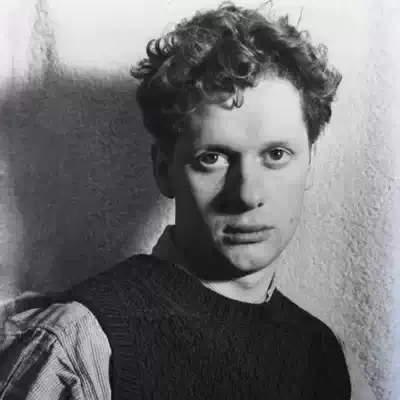
Dylan Thomas
I Fellowed Sleep
I fellowed sleep who kissed me in the brain,
Let fall the tear of time; the sleeper's eye,
Shifting to light, turned on me like a moon.
So, planning-heeled, I flew along my man
And dropped on dreaming and the upward sky.
I fled the earth and, naked, climbed the weather,
Reaching a second ground far from the stars;
And there we wept I and a ghostly other,
My mothers-eyed, upon the tops of trees;
I fled that ground as lightly as a feather.
'My fathers' globe knocks on its nave and sings.'
'This that we tread was, too, your father's land.'
'But this we tread bears the angelic gangs
Sweet are their fathered faces in their wings.'
'These are but dreaming men. Breathe, and they fade.'
Faded my elbow ghost, the mothers-eyed,
As, blowing on the angels, I was lost
On that cloud coast to each grave-grabbing shade;
I blew the dreaming fellows to their bed
Where still they sleep unknowing of their ghost.
Then all the matter of the living air
Raised up a voice, and, climbing on the words,
I spelt my vision with a hand and hair,
How light the sleeping on this soily star,
How deep the waking in the worlded clouds.
There grows the hours' ladder to the sun,
Each rung a love or losing to the last,
The inches monkeyed by the blood of man.
And old, mad man still climbing in his ghost,
My fathers' ghost is climbing in the rain.
291
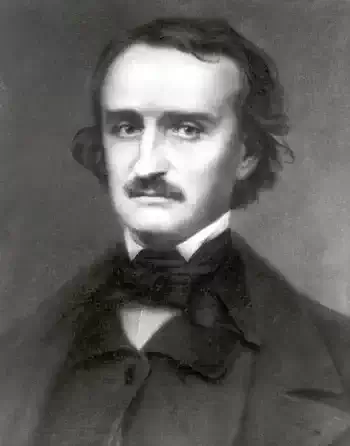
Edgar Allan Poe
A Dream Within A Dream
Take this kiss upon the brow!
And, in parting from you now,
Thus much let me avow
You
are not wrong, who deem
That my days have been a dream;
Yet if hope has flown away
In a night, or in a day,
In a vision, or in none,
Is it therefore the less gone?
All that we see or seem
Is but a dream within a dream.
I stand amid the roar
Of a surf-tormented shore,
And I hold within my hand
Grains of the golden sand
How
few! yet how they creep
Through my fingers to the deep,
While I weep- while I weep!
O God! can I not grasp
Them with a tighter clasp?
O God! can I not save
One from the pitiless wave?
Is all that we see or seem
But a dream within a dream?
287

Henry Wadsworth Longfellow
Flower-De-Luce: The Bridge Of Cloud
Burn, O evening hearth, and waken
Pleasant visions, as of old!
Though the house by winds be shaken,
Safe I keep this room of gold!
Ah, no longer wizard Fancy
Builds her castles in the air,
Luring me by necromancy
Up the never-ending stair!
But, instead, she builds me bridges
Over many a dark ravine,
Where beneath the gusty ridges
Cataracts dash and roar unseen.
And I cross them, little heeding
Blast of wind or torrent's roar,
As I follow the receding
Footsteps that have gone before.
Naught avails the imploring gesture,
Naught avails the cry of pain!
When I touch the flying vesture,
'Tis the gray robe of the rain.
Baffled I return, and, leaning
O'er the parapets of cloud,
Watch the mist that intervening
Wraps the valley in its shroud.
And the sounds of life ascending
Faintly, vaguely, meet the ear,
Murmur of bells and voices blending
With the rush of waters near.
Well I know what there lies hidden,
Every tower and town and farm,
And again the land forbidden
Reassumes its vanished charm.
Well I know the secret places,
And the nests in hedge and tree;
At what doors are friendly faces,
In what hearts are thoughts of me.
Through the mist and darkness sinking,
Blown by wind and beaten by shower,
Down I fling the thought I'm thinking,
Down I toss this Alpine flower.
288

Emily Dickinson
I have a King, who does not speak
I have a King, who does not speak
So-
wondering-thro' the hours meek
I trudge the day away-
Half glad when it is night, and sleep,
If, haply, thro' a dream, to peep
In parlors, shut by day.
And if I do-when morning comes-
It is as if a hundred drums
Did round my pillow roll,
And shouts fill all my Childish sky,
And Bells keep saying "Victory"
From steeples in my soul!
And if I don't-the little Bird
Within the Orchard, is not heard,
And I omit to pray
"Father, thy will be done" today
For my will goes the other way,
And it were perjury!
286
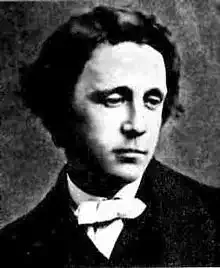
Lewis Carroll
Little Birds
Little Birds are dining
Warily and well,
Hid in mossy cell:
Hid, I say, by waiters
Gorgeous in their gaiters I've
a Tale to tell.
Little Birds are feeding
Justices with jam,
Rich in frizzled ham:
Rich, I say, in oysters
Haunting shady cloisters That
is what I am.
Little Birds are teaching
Tigresses to smile,
Innocent of guile:
Smile, I say, not smirkle Mouth
a semicircle,
That's the proper style!
Little Birds are sleeping
All among the pins,
Where the loser wins:
Where, I say, he sneezes
When and how he pleases So
the Tale begins.
Little Birds are writing
Interesting books,
To be read by cooks:
Read, I say, not roasted Letterpress,
when toasted,
Loses its good looks.
Little Birds are playing
Bagpipes on the shore,
Where the tourists snore:
"Thanks!" they cry. "'Tis thrilling!
Take, oh take this shilling!
Let us have no more!"
Little Birds are bathing
Crocodiles in cream,
Like a happy dream:
Like, but not so lasting Crocodiles,
when fasting,
Are not all they seem!
Little Birds are choking
Baronets with bun,
Taught to fire a gun:
Taught, I say, to splinter
Salmon in the winter Merely
for the fun.
Little Birds are hiding
Crimes in carpetbags,
Blessed by happy stags:
Blessed, I say, though beaten Since
our friends are eaten
When the memory flags.
Little Birds are tasting
Gratitude and gold,
Pale with sudden cold:
Pale, I say, and wrinkled When
the bells have tinkled,
And the Tale is told.
286
Emily Dickinson
Perhaps I Asked Too Large
Perhaps I asked too large --
I take -- no less than skies --
For Earths, grow thick as
Berries, in my native town --
My Basked holds -- just -- Firmaments --
Those -- dangle easy -- on my arm,
But smaller bundles -- Cram.
I take -- no less than skies --
For Earths, grow thick as
Berries, in my native town --
My Basked holds -- just -- Firmaments --
Those -- dangle easy -- on my arm,
But smaller bundles -- Cram.
285

Muhammad Iqbal
The Crescent
The sun's boat is broken and drowned in the Nile
But a piece is floating about on the water of the Nile
The twilight's pure blood drips into the sky's basin
Has the lancet of Nature drawn the sun's blood?
Has the sky stolen the ear ring of the evening's bride?
Or has the fragile cord in the Nile's waters strolling?
Your caravan is afoot without help of bell's call
The human ear cannot hear your foot-steps' sound
You show the spectacle of rise and fall to the eyes
Where is your home? To which country are you going?
O star-like planet take me with yourself
The prick of Longing's thorn keeps me restless
I am seeking light, I am weary in this habitation
I am the restless child in the existence's school…
282
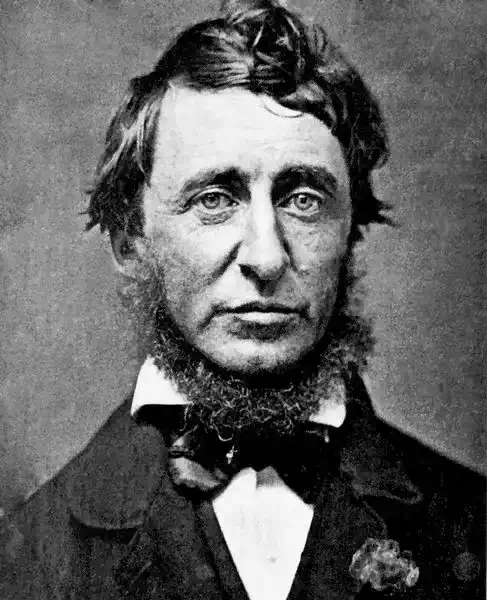
Henry David Thoreau
Light-Winged Smoke
LIGHT-WINGED Smoke, Icarian bird,
Melting thy pinions in thy upward flight,
Lark without song, and the messenger of dawn,
Circling above the hamlets as thy nest;
Or else, departing dream, and shadowy form
Of midnight vision, gathering up thy skirts;
By night star-veiling, and by day
Darkening the light and blotting out the sun;
Go thou my incense upward from this hearth,
And ask the gods to pardon this clear flame.
281

Henry Lawson
The Water Lily
A lonely young wife
In her dreaming discerns
A lily-decked pool
With a border of ferns,
And a beautiful child,
With butterfly wings,
Trips down to the edge of the water and sings:
‘Come, mamma! come!
‘Quick! follow me—
‘Step out on the leaves of the water-lily!’
And the lonely young wife,
Her heart beating wild,
Cries, ‘Wait till I come,
‘Till I reach you, my child!’
But the beautiful child
With butterfly wings
Steps out on the leaves of the lily and sings:
‘Come, mamma! come!
‘Quick! follow me!
‘And step on the leaves of the water-lily!
And the wife in her dreaming
Steps out on the stream,
But the lily leaves sink
And she wakes from her dream.
Ah, the waking is sad,
For the tears that it brings,
And she knows ’tis her dead baby’s spirit that sings:
‘Come, mamma! come!
‘Quick! follow me!
‘Step out on the leaves of the water-lily!’
281

Billy Collins
Neither Snow
When all of a sudden the city air filled with snow,
the distinguishable flakes
blowing sideways,
looked like krill
fleeing the maw of an advancing whale.
At least they looked that way to me
from the taxi window,
and since I happened to be sitting
that fading Sunday afternoon
in the very center of the universe,
who was in a better position
to say what looked like what,
which thing resembled some other?
Yes, it was a run of white plankton
borne down the Avenue of the Americas
in the stream of the wind,
phosphorescent against the weighty buildings.
Which made the taxi itself,
yellow and slow-moving,
a kind of undersea creature,
I thought as I wiped the fog from the glass,
and me one of its protruding eyes,
an eye on a stem
swiveling this way and that
monitoring one side of its world,
observing tons of water
tons of people
colored signs and lights
and now a wildly blowing race of snow.
279

James Whitcomb Riley
The Nine Little Goblins
They all climbed up on a high board-fence--
Nine little Goblins, with green-glass eyes--
Nine little Goblins that had no sense,
And couldn't tell coppers from cold mince pies;
And they all climbed up on the fence, and sat--
And I asked them what they were staring at.
And the first one said, as he scratched his head
With a queer little arm that reached out of his ear
And rasped its claws in his hair so red-'
This is what this little arm is fer!'
And he scratched and stared, and the next one said,
'How on earth do _you_ scratch your head?'
And he laughed like the screech of a rusty hinge--
Laughed and laughed till his face grew black;
And when he choked, with a final twinge
Of his stifling laughter, he thumped his back
With a fist that grew on the end of his tail
Till the breath came back to his lips so pale.
And the third little Goblin leered round at me--
And there were no lids on his eyes at all--
And he clucked one eye, and he says, says he,
'What is the style of your socks this fall?'
And he clapped his heels--and I sighed to see
That he had hands where his feet should be.
Then a bald-faced Goblin, gray and grim,
Bowed his head, and I saw him slip
His eyebrows off, as I looked at him,
And paste them over his upper lip;
And then he moaned in remorseful pain-'
Would--Ah, would I'd me brows again!'
And then the whole of the Goblin band
Rocked on the fence-top to and fro,
And clung, in a long row, hand in hand,
Singing the songs that they used to know--
Singing the songs that their grandsires sung
In the goo-goo days of the Goblin-tongue.
And ever they kept their green-glass eyes
Fixed on me with a stony stare--
Till my own grew glazed with a dread surmise,
And my hat whooped up on my lifted hair,
And I felt the heart in my breast snap to
As you've heard the lid of a snuff-box do.
And they sang 'You're asleep! There is no board-fence,
And never a Goblin with green-glass eyes!-'
Tis only a vision the mind invents
After a supper of cold mince-pies,--
And you're doomed to dream this way,' they said,-'_
And you sha'n't wake up till you're clean plum dead!_'
280
James Whitcomb Riley
A Dream Of Long Ago
Lying listless in the mosses
Underneath a tree that tosses
Flakes of sunshine, and embosses
Its green shadow with the snow-Drowsy-
eyed, I sink in slumber
Born of fancies without number--
Tangled fancies that encumber
Me with dreams of long ago.
Ripples of the river singing;
And the water-lilies swinging
Bells of Parian, and ringing
Peals of perfume faint and fine,
While old forms and fairy faces
Leap from out their hiding-places
In the past, with glad embraces
Fraught with kisses sweet as wine.
Willows dip their slender fingers
O'er the little fisher's stringers,
While he baits his hook and lingers
Till the shadows gather dim;
And afar off comes a calling
Like the sounds of water falling,
With the lazy echoes drawling
Messages of haste to him.
Little naked feet that tinkle
Through the stubble-fields, and twinkle
Down the winding road, and sprinkle
Little mists of dusty rain,
While in pasture-lands the cattle
Cease their grazing with a rattle
Of the bells whose clappers tattle
To their masters down the lane.
Trees that hold their tempting treasures
O'er the orchard's hedge embrasures,
Furnish their forbidden pleasures
As in Eden lands of old;
And the coming of the master
Indicates a like disaster
To the frightened heart that faster
Beats pulsations manifold.
Puckered lips whose pipings tingle
In staccato notes that mingle
Musically with the jingle-
Haunted winds that lightly fan
Mellow twilights, crimson-tinted
By the sun, and picture-printed
Like a book that sweetly hinted
Of the Nights Arabian.
Porticoes with columns plaited
And entwined with vines and freighted
With a bloom all radiated
With the light of moon and star;
Where some tender voice is winging
In sad flights of song, and singing
To the dancing fingers flinging
Dripping from the sweet guitar.
Would my dreams were never taken
From me: that with faith unshaken
I might sleep and never waken
On a weary world of woe!
Links of love would never sever
As I dreamed them, never, never!
I would glide along forever
Through the dreams of long ago.
280
Emily Dickinson
Heaven is what I cannot reach!
Heaven is what I cannot reach!
The apple on the tree,
Provided it do hopelss hang,
That 'heaven' is, to me.
The color on the cruising cloud,
The interdicted ground
Behind the hill, the house behind, -There
Paradise is found!
The apple on the tree,
Provided it do hopelss hang,
That 'heaven' is, to me.
The color on the cruising cloud,
The interdicted ground
Behind the hill, the house behind, -There
Paradise is found!
279

D.H. Lawrence
Dreams Old
I have opened the window to warm my hands on the sill
Where the sunlight soaks in the stone: the afternoon
Is full of dreams, my love, the boys are all still
In a wistful dream of Lorna Doone.
The clink of the shunting engines is sharp and fine,
Like savage music striking far off, and there
On the great, uplifted blue palace, lights stir and shine
Where the glass is domed in the blue, soft air.
There lies the world, my darling, full of wonder and wistfulness and strange
Recognition and greetings of half-acquaint things, as I greet the cloud
Of blue palace aloft there, among misty indefinite dreams that range
At the back of my life’s horizon, where the dreamings of past lives crowd.
Over the nearness of Norwood Hill, through the mellow veil
Of the afternoon glows to me the old romance of David and Dora,
With the old, sweet, soothing tears, and laughter that shakes the sail
Of the ship of the soul over seas where dreamed dreams lure the unoceaned explorer.
All the bygone, hushèd years
Streaming back where the mist distils
Into forgetfulness: soft-sailing waters where fears
No longer shake, where the silk sail fills
With an unfelt breeze that ebbs over the seas, where the storm
Of living has passed, on and on
Through the coloured iridescence that swims in the warm
Wake of the tumult now spent and gone,
Drifts my boat, wistfully lapsing after
The mists of vanishing tears and the echo of laughter.
276
Henry Lawson
A Bush Girl
She's milking in the rain and dark,
As did her mother in the past.
The wretched shed of poles and bark,
Rent by the wind, is leaking fast.
She sees the “home-roof” black and low,
Where, balefully, the hut-fire gleams—
And, like her mother, long ago,
She has her dreams; she has her dreams.
The daybreak haunts the dreary scene,
The brooding ridge, the blue-grey bush,
The “yard” where all her years have been,
Is ankle-deep in dung and slush;
She shivers as the hour drags on,
Her threadbare dress of sackcloth seems—
But, like her mother, years agone,
She has her dreams; she has her dreams.
The sullen “breakfast” where they cut
The blackened “junk.” The lowering face,
As though a crime were in the hut,
As though a curse was on the place;
The muttered question and reply,
The tread that shakes the rotting beams,
The nagging mother, thin and dry—
God help the girl! She has her dreams.
Then for “th’ separator” start,
Most wretched hour in all her life,
With “horse” and harness, dress and cart,
No Chinaman would give his “wife”;
Her heart is sick for light and love,
Her face is often fair and sweet,
And her intelligence above
The minds of all she’s like to meet.
She reads, by slush-lamp light, may be,
When she has dragged her dreary round,
And dreams of cities by the sea
(Where butter’s up, so much the pound),
Of different men from those she knows,
Of shining tides and broad, bright streams;
Of theatres and city shows,
And her release! She has her dreams.
Could I gain her a little rest,
A little light, if but for one,
I think that it would be the best
Of any good I may have done.
But, after all, the paths we go
Are not so glorious as they seem,
And—if t’will help her heart to know—
I’ve had my dream. ’Twas but a dream.
274

Robert W. Service
Flight
On silver sand where ripples curled
I counted sea-gulls seven;
Shy, secret screened from all the world,
And innocent as heaven.
They did not of my nearness know,
For dawn was barely bright,
And they were still, like spots of snow
In that pale, pearly light.
Then one went forth unto the sea
That rippled up in gold,
And there were rubies flashing free
From out its wing-unfold;
It ducked and dived in pretty play,
The while the other six
So gravely sat it seemed that they
Were marvelled by its tricks.
Then with a sudden flurry each
Down-rushed to join its mate,
And in a flash that sickle beach
With rapture was elate.
With joy they pranked till everyone
Was diamonded with spray,
Then flicked with flame to greet the sun
They rose and winged away.
But with their going, oh, the surge
Of loss they left in me!
For in my heart was born the urge,
The passion to be free.
And where each dawn with terror brings
Some tale of bale and blight,
Who would not envy silver wings,
The sea-gull in its flight!
Let me not know the soils of woe
That chain this stricken earth;
Let me forget the fear and fret
That bind men from their birth;
Let me be the one with wind and sun,
With earth and sky and sea. . . .
Oh, let me teach in living speech
God's glory - Liberty.
271

Emily Jane Brontë
A Day Dream
On a sunny brae, alone I lay
One summer afternoon;
It was the marriage-time of May
With her young lover, June.
From her mother's heart, seemed loath to part
That queen of bridal charms,
But her father smiled on the fairest child
He ever held in his arms.
The trees did wave their plumy crests,
The glad birds caroled clear;
And I, of all the wedding guests,
Was only sullen there!
There was not one, but wished to shun
My aspect void of cheer;
The very grey rocks, looking on,
Asked, "What do you here?"
And I could utter no reply;
In sooth, I did not know
Why I had brought a clouded eye
To greet the general glow.
So, resting on a heathy bank,
I took my heart to me;
And we together sadly sank
Into a reverie.
We thought, "When winter comes again,
Where will these bright things be?
All vanished, like a vision vain,
An unreal mockery!
The birds that now so blithely sing,
Through deserts, frozen dry,
Poor spectres of the perished spring,
In famished troops, will fly.
And why should we be glad at all?
The leaf is hardly green,
Before a token of its fall
Is on the surface seen!"
Now, whether it were really so,
I never could be sure;
But as in fit of peevish woe,
I stretched me on the moor.
A thousand thousand gleaming fires
Seemed kindling in the air;
A thousand thousand silvery lyres
Resounded far and near:
Methought, the very breath I breathed
Was full of sparks divine,
And all my heather-couch was wreathed
By that celestial shine!
And, while the wide earth echoing rung
To their strange minstrelsy,
The little glittering spirits sung,
Or seemed to sing, to me.
"O mortal! mortal! let them die;
Let time and tears destroy,
That we may overflow the sky
With universal joy!
Let grief distract the sufferer's breast,
And night obscure his way;
They hasten him to endless rest,
And everlasting day.
To thee the world is like a tomb,
A desert's naked shore;
To us, in unimagined bloom,
It brightens more and more!
And could we lift the veil, and give
One brief glimpse to thine eye,
Thou wouldst rejoice for those that live,
Because they live to die."
The music ceased; the noonday dream,
Like dream of night, withdrew;
But Fancy, still, will sometimes deem
Her fond creation true.
270
D.H. Lawrence
Dreams
All people dream, but not equally.
Those who dream by night in the dusty recesses of their mind,
Wake in the morning to find that it was vanity.
But the dreamers of the day are dangerous people,
For they dream their dreams with open eyes,
And make them come true.
Those who dream by night in the dusty recesses of their mind,
Wake in the morning to find that it was vanity.
But the dreamers of the day are dangerous people,
For they dream their dreams with open eyes,
And make them come true.
270

Christina Rossetti
A Dream
Once in a dream (for once I dreamed of you)
We stood together in an open field;
Above our heads two swift-winged pigeons wheeled,
Sporting at ease and courting full in view.
When loftier still a broadening darkness flew,
Down-swooping, and a ravenous hawk revealed;
Too weak to fight, too fond to fly, they yield;
So farewell life and love and pleasures new.
Then as their plumes fell fluttering to the ground,
Their snow-white plumage flecked with crimson drops,
I wept, and thought I turned towards you to weep:
But you were gone; while rustling hedgerow tops
Bent in a wind which bore to me a sound
Of far-off piteous bleat of lambs and sheep.
270
Emily Dickinson
Snow flakes
Snow flakes.
I counted till they danced so
Their slippers leaped the town,
And then I took a pencil
To note the rebels down.
And then they grew so jolly
I did resign the prig,
And ten of my once stately toes
Are marshalled for a jig!
I counted till they danced so
Their slippers leaped the town,
And then I took a pencil
To note the rebels down.
And then they grew so jolly
I did resign the prig,
And ten of my once stately toes
Are marshalled for a jig!
268
Henry Lawson
The Boss's Boots
The Shearers squint along the pens, they squint along the ‘shoots;’
The shearers squint along the board to catch the Boss’s boots;
They have no time to straighten up, they have no time to stare,
But when the Boss is looking on, they like to be aware.
The ‘rouser’ has no soul to save. Condemn the rouseabout!
And sling ’em in, and rip ’em through, and get the bell-sheep out ;
And skim it by the tips at times, or take it with the roots—
But ‘pink’ ’em nice and pretty when you see the Boss’s boots.
The shearing super sprained his foot, as bosses sometimes do—
And wore, until the shed cut out, one ‘side-spring’ and one shoe;
And though he changed his pants at times—some worn-out and some neat—
No ‘tiger’ there could possibly mistake the Boss’s feet.
The Boss affected larger boots than many Western men,
And Jim the Ringer swore the shoe was half as big again;
And tigers might have heard the boss ere any harm was done—
For when he passed it was a sort of dot and carry one.
But now there comes a picker-up who sprained his ankle, too,
And limping round the shed he found the Boss’s cast-off shoe.
He went to work, all legs and arms, as green-hand rousers will,
And never dreamed of Boss’s boots—much less of Bogan Bill.
Ye sons of sin that tramp and shear in hot and dusty scrubs,
Just keep away from ‘headin’ ’em,’ and keep away from pubs,
And keep away from handicaps—for so your sugar scoots—
And you may own a station yet and wear the Boss’s boots.
And Bogan by his mate was heard to mutter through his hair:
‘The Boss has got a rat to-day: he’s buckin’ everywhere—
‘He’s trainin’ for a bike, I think, the way he comes an’ scoots,
‘He’s like a bloomin’ cat on mud the way he shifts his boots.’
Now Bogan Bill was shearing rough and chanced to cut a teat ;
He stuck his leg in front at once, and slewed the ewe a bit;
He hurried up to get her through, when, close beside his shoot,
He saw a large and ancient shoe, in mateship with a boot.
He thought that he’d be fined all right—he couldn’t turn the ‘yoe;’
The more he wished the boss away, the more he wouldn’t go;
And Bogan swore amenfully—beneath his breath he swore—
And he was never known to ‘pink’ so prettily before.
And Bogan through his bristling scalp in his mind’s eye could trace,
The cold, sarcastic smile that lurked about the Boss’s face;
He cursed him with a silent curse in language known to few,
He cursed him from his boot right up, and then down to his shoe.
But while he shore so mighty clean, and while he screened the teat,
He fancied there was something wrong about the Boss’s feet:
The boot grew unfamiliar, and the odd shoe seemed awry,
And slowly up the trouser went the tail of Bogan’s eye,
Then swiftly to the features from a plaited green-hide belt—
You’d have to ring a shed or two to feel as Bogan felt—
For ’twas his green-hand picker-up (who wore a vacant look),
And Bogan saw the Boss outside consulting with his cook.
And Bogan Bill was hurt and mad to see that rouseabout
And Bogan laid his ‘Wolseley’ down and knocked that rouser out;
He knocked him right across the board, he tumbled through the shoot—
‘I’ll learn the fool,’ said Bogan Bill, ‘to flash the Boss’s boot!’
The rouser squints along the pens, he squints along the shoots,
And gives his men the office when they miss the Boss’s boots.
They have no time to straighten up, they’re too well-bred to stare,
But when the Boss is looking on they like to be aware.
The rouser has no soul to lose—it’s blarst the rouseabout!
And rip ’em through and yell for ‘tar’ and get the bell-sheep out,
And take it with the scum at times or take it with the roots,—
But ‘pink’ ’em nice and pretty when you see the Boss’s boots.
267
James Whitcomb Riley
Mr. Hammond's Parable--The Dreamer
I
He was a Dreamer of the Days:
Indolent as a lazy breeze
Of midsummer, in idlest ways
Lolling about in the shade of trees.
The farmer turned--as he passed him by
Under the hillside where he kneeled
Plucking a flower--with scornful eye
And rode ahead in the harvest field
Muttering--'Lawz! ef that-air shirk
Of a boy was mine fer a week er so,
He'd quit _dreamin'_ and git to work
And _airn_ his livin'--er--Well! _I_ know!'
And even kindlier rumor said,
Tapping with finger a shaking head,-'
Got such a curious kind o' way-Wouldn't
surprise me much, I say!'
Lying limp, with upturned gaze
Idly dreaming away his days.
No companions? Yes, a book
Sometimes under his arm he took
To read aloud to a lonesome brook.
And school-boys, truant, once had heard
A strange voice chanting, faint and dim--
Followed the echoes, and found it him,
Perched in a tree-top like a bird,
Singing, clean from the highest limb;
And, fearful and awed, they all slipped by
To wonder in whispers if he could fly.
'Let him alone!' his father said
When the old schoolmaster came to say,
'He took no part in his books to-day--
Only the lesson the readers read.--
His mind seems sadly going astray!'
'Let him alone!' came the mournful tone,
And the father's grief in his sad eyes shone--
Hiding his face in his trembling hand,
Moaning, 'Would I could understand!
But as heaven wills it I accept
Uncomplainingly!' So he wept.
Then went 'The Dreamer' as he willed,
As uncontrolled as a light sail filled
Flutters about with an empty boat
Loosed from its moorings and afloat:
Drifted out from the busy quay
Of dull school-moorings listlessly;
Drifted off on the talking breeze,
All alone with his reveries;
Drifted on, as his fancies wrought-
Out on the mighty gulfs of thought.
II
The farmer came in the evening gray
And took the bars of the pasture down;
Called to the cows in a coaxing way,
'Bess' and 'Lady' and 'Spot' and 'Brown,'
While each gazed with a wide-eyed stare,
As though surprised at his coming there--
Till another tone, in a higher key,
Brought their obeyance lothfully.
Then, as he slowly turned and swung
The topmost bar to its proper rest,
Something fluttered along and clung
An instant, shivering at his breast--
A wind-scared fragment of legal cap,
Which darted again, as he struck his hand
On his sounding chest with a sudden slap,
And hurried sailing across the land.
But as it clung he had caught the glance
Of a little penciled countenance,
And a glamour of written words; and hence,
A minute later, over the fence,
'Here and there and gone astray
Over the hills and far away,'
He chased it into a thicket of trees
And took it away from the captious breeze.
A scrap of paper with a rhyme
Scrawled upon it of summertime:
A pencil-sketch of a dairy-maid,
Under a farmhouse porch's shade,
Working merrily; and was blent
With her glad features such sweet content,
That a song she sung in the lines below
Seemed delightfully _apropos_:--
267
James Whitcomb Riley
A Wrangdillion
Dexery-tethery! down in the dike,
Under the ooze and the slime,
Nestles the wraith of a reticent Gryke,
Blubbering bubbles of rhyme:
Though the reeds touch him and tickle his teeth--
Though the Graigroll and the Cheest
Pluck at the leaves of his laureate-wreath,
Nothing affects him the least.
He sinks to the dregs in the dead o' the night,
And he shuffles the shadows about
As he gathers the stars in a nest of delight
And sets there and hatches them out:
The Zhederrill peers from his watery mine
In scorn with the Will-o'-the-wisp,
As he twinkles his eyes in a whisper of shine
That ends in a luminous lisp.
The Morning is born like a baby of gold,
And it lies in a spasm of pink,
And rallies the Cheest for the horrible cold
He has dragged to the willowy brink,
The Gryke blots his tears with a scrap of his grief,
And growls at the wary Graigroll
As he twunkers a tune on a Tiljicum leaf
And hums like a telegraph pole.
268

John Greenleaf Whittier
The Vanishers
Sweetest of all childlike dreams
In the simple Indian lore
Still to me the legend seems
Of the shapes who flit before.
Flitting, passing, seen and gone,
Never reached nor found at rest,
Baffling search, but beckoning on
To the Sunset of the Blest.
From the clefts of mountain rocks,
Through the dark of lowland firs,
Flash the eyes and flow the locks
Of the mystic Vanishers!
And the fisher in his skiff,
And the hunter on the moss,
Hear their call from cape and cliff,
See their hands the birch-leaves toss.
Wistful, longing, through the green
Twilight of the clustered pines,
In their faces rarely seen
Beauty more than mortal shines.
Fringed with gold their mantles flow
On the slopes of westering knolls;
In the wind they whisper low
Of the Sunset Land of Souls.
Doubt who may, O friend of mine!
Thou and I have seen them too;
On before with beck and sign
Still they glide, and we pursue.
More than clouds of purple trail
In the gold of setting day;
More than gleams of wing or sail
Beckon from the sea-mist gray.
Glimpses of immortal youth,
Gleams and glories seen and flown,
Far-heard voices sweet with truth,
Airs from viewless Eden blown;
Beauty that eludes our grasp,
Sweetness that transcends our taste,
Loving hands we may not clasp,
Shining feet that mock our haste;
Gentle eyes we closed below,
Tender voices heard once more,
Smile and call us, as they go
On and onward, still before.
Guided thus, O friend of mine
Let us walk our little way,
Knowing by each beckoning sign
That we are not quite astray.
Chase we still, with baffled feet,
Smiling eye and waving hand,
Sought and seeker soon shall meet,
Lost and found, in Sunset Land
269