
Betrayal and Disappointment
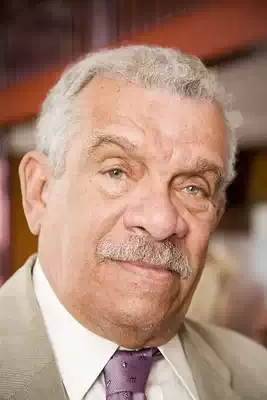
Derek Walcott
A City's Death By Fire
After that hot gospeller has levelled all but the churched sky,
I wrote the tale by tallow of a city's death by fire;
Under a candle's eye, that smoked in tears, I
Wanted to tell, in more than wax, of faiths that were snapped like wire.
All day I walked abroad among the rubbled tales,
Shocked at each wall that stood on the street like a liar;
Loud was the bird-rocked sky, and all the clouds were bales
Torn open by looting, and white, in spite of the fire.
By the smoking sea, where Christ walked, I asked, why
Should a man wax tears, when his wooden world fails?
In town, leaves were paper, but the hills were a flock of faiths;
To a boy who walked all day, each leaf was a green breath
Rebuilding a love I thought was dead as nails,
Blessing the death and the baptism by fire.
1,443
Derek Walcott
Blues
Those five or six young guys
lunched on the stoop
that oven-hot summer night
whistled me over. Nice
and friendly. So, I stop.
MacDougal or Christopher
Street in chains of light.
A summer festival. Or some
saint's. I wasn't too far from
home, but not too bright
for a nigger, and not too dark.
I figured we were all
one, wop, nigger, jew,
besides, this wasn't Central Park.
I'm coming on too strong? You figure
right! They beat this yellow nigger
black and blue.
Yeah. During all this, scared
on case one used a knife,
I hung my olive-green, just-bought
sports coat on a fire plug.
I did nothing. They fought
each other, really. Life
gives them a few kcks,
that's all. The spades, the spicks.
My face smashed in, my bloddy mug
pouring, my olive-branch jacket saved
from cuts and tears,
I crawled four flights upstairs.
Sprawled in the gutter, I
remember a few watchers waved
loudly, and one kid's mother shouting
like 'Jackie' or 'Terry,'
'now that's enough!'
It's nothing really.
They don't get enough love.
You know they wouldn't kill
you. Just playing rough,
like young Americans will.
Still it taught me somthing
about love. If it's so tough,
forget it.
1,112

Federico García Lorca
The Faithless Wife
So I took her to the river
believing she was a maiden,
but she already had a husband.
It was on St. James night
and almost as if I was obliged to.
The lanterns went out
and the crickets lighted up.
In the farthest street corners
I touched her sleeping breasts
and they opened to me suddenly
like spikes of hyacinth.
The starch of her petticoat
sounded in my ears
like a piece of silk
rent by ten knives.
Without silver light on their foliage
the trees had grown larger
and a horizon of dogs
barked very far from the river.
Past the blackberries,
the reeds and the hawthorne
underneath her cluster of hair
I made a hollow in the earth
I took off my tie,
she too off her dress.
I, my belt with the revolver,
She, her four bodices.
Nor nard nor mother-o’-pearl
have skin so fine,
nor does glass with silver
shine with such brilliance.
Her thighs slipped away from me
like startled fish,
half full of fire,
half full of cold.
That night I ran
on the best of roads
mounted on a nacre mare
without bridle stirrups.
As a man, I won’t repeat
the things she said to me.
The light of understanding
has made me more discreet.
Smeared with sand and kisses
I took her away from the river.
The swords of the lilies
battled with the air.
I behaved like what I am,
like a proper gypsy.
I gave her a large sewing basket,
of straw-colored satin,
but I did not fall in love
for although she had a husband
she told me she was a maiden
when I took her to the river.
959

William Blake
A Poison Tree
I was angry with my friend:
I told my wrath, my wrath did end.
I was angry with my foe:
I told it not, my wrath did grow.
And I watered it in fears,
Night and morning with my tears;
And I sunned it with smiles,
And with soft deceitful wiles.
And it grew both day and night,
Till it bore an apple bright.
And my foe beheld it shine.
And he knew that it was mine,
And into my garden stole
When the night had veiled the pole;
In the morning glad I see
My foe outstretched beneath the tree.
838
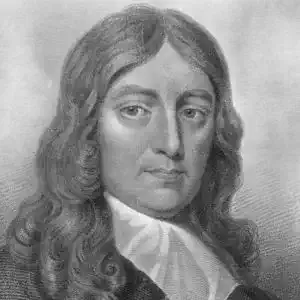
John Milton
Samson Agonistes (excerpts)
[Samson's Opening Speech]
A little onward lend thy guiding hand
To these dark steps, a little further on;
For yonder bank hath choice of sun or shade,
There I am wont to sit, when any chance
Relieves me from my task of servile toil,
Daily in the common prison else enjoin'd me,
Where I a prisoner chain'd, scarce freely draw
The air imprison'd also, close and damp,
Unwholesome draught: but here I feel amends,
The breath of Heav'n fresh-blowing, pure and sweet,
With day-spring born; here leave me to respire.
This day a solemn feast the people hold
To Dagon, their sea-idol, and forbid
Laborious works; unwillingly this rest
Their superstition yields me; hence with leave
Retiring from the popular noise, I seek
This unfrequented place to find some ease;
Ease to the body some, none to the mind
From restless thoughts, that like a deadly swarm
Of hornets arm'd, no sooner found alone,
But rush upon me thronging, and present
Times past, what once I was, and what am now.
O wherefore was my birth from Heaven foretold
Twice by an angel, who at last in sight
Of both my parents all in flames ascended
From off the altar, where an off'ring burn'd,
As in a fiery column charioting
His godlike presence, and from some great act
Of benefit reveal'd to Abraham's race?
Why was my breeding order'd and prescrib'd
As of a person separate to God,
Design'd for great exploits; if I must die
Betray'd, captiv'd, and both my eyes put out,
Made of my enemies the scorn and gaze;
To grind in brazen fetters under task
With this Heav'n-gifted strength? O glorious strength
Put to the labour of a beast, debas'd
Lower than bondslave! Promise was that I
Should Israel from Philistian yoke deliver;
Ask for this great deliverer now, and find him
Eyeless in Gaza at the mill with slaves,
Himself in bonds under Philistian yoke.
Yet stay, let me not rashly call in doubt
Divine prediction; what if all foretold
Had been fulfill'd but through mine own default,
Whom have I to complain of but myself?
Who this high gift of strength committed to me,
In what part lodg'd, how easily bereft me,
Under the seal of silence could not keep,
But weakly to a woman must reveal it
O'ercome with importunity and tears.
O impotence of mind, in body strong!
But what is strength without a double share
Of wisdom? vast, unwieldy, burdensome,
Proudly secure, yet liable to fall
By weakest subtleties, not made to rule,
But to subserve where wisdom bears command.
God, when he gave me strength, to show withal
How slight the gift was, hung it in my hair.
But peace, I must not quarrel with the will
Of highest dispensation, which herein
Haply had ends above my reach to know:
Suffices that to me strength is my bane,
And proves the source of all my miseries;
So many, and so huge, that each apart
Would ask a life to wail, but chief of all,
O loss of sight, of thee I most complain!
Blind among enemies, O worse than chains,
Dungeon, or beggary, or decrepit age!
Light, the prime work of God, to me is extinct,
And all her various objects of delight
Annull'd, which might in part my grief have eas'd,
Inferior to the vilest now become
Of man or worm; the vilest here excel me:
They creep, yet see, I, dark in light, expos'd
To daily fraud, contempt, abuse, and wrong,
Within doors, or without, still as a fool,
In power of others, never in my own;
Scarce half I seem to live, dead more than half.
O dark, dark, dark, amid the blaze of noon,
Irrecoverably dark, total eclipse
Without all hope of day!
O first created Beam, and thou great Word,
"Let there be light, and light was over all,"
Why am I thus bereav'd thy prime decree?
The sun to me is dark
And silent as the moon,
When she deserts the night,
Hid in her vacant interlunar cave.
Since light so necessary is to life,
And almost life itself, if it be true
That light is in the soul,
She all in every part, why was the sight
To such a tender ball as th' eye confin'd?
So obvious and so easy to be quench'd,
And not as feeling through all parts diffus'd,
That she might look at will through every pore?
Then had I not been thus exil'd from light,
As in the land of darkness, yet in light,
To live a life half dead, a living death,
And buried; but O yet more miserable!
Myself my sepulchre, a moving grave;
Buried, yet not exempt
By privilege of death and burial
From worst of other evils, pains and wrongs;
But made hereby obnoxious more
To all the miseries of life,
Life in captivity
Among inhuman foes.
But who are these? for with joint pace I hear
The tread of many feet steering this way;
Perhaps my enemies who come to stare
At my affliction, and perhaps to insult,
Their daily practice to afflict me more.
...
[Chorus, Manoah, Samson]
CHORUS.
Just are the ways of God,
And justifiable to men;
Unless there be who think not God at all:
If any be, they walk obscure;
For of such doctrine never was there school,
But the heart of the fool,
And no man therein doctor but himself.
Yet more there be who doubt his ways not just,
As to his own edicts found contradicting,
Then give the reins to wand'ring thought,
Regardless of his glory's diminution;
Till by their own perplexities involv'd
They ravel more, still less resolv'd,
But never find self-satisfying solution.
As if they would confine th' interminable,
And tie him to his own prescript,
Who made our laws to bind us, not himself,
And hath full right to exempt
Whom so it pleases him by choice
From national obstriction, without taint
Of sin, or legal debt;
For with his own laws he can best dispense.
He would not else, who never wanted means,
Nor in respect of the enemy just cause
To set his people free,
Have prompted this heroic Nazarite,
Against his vow of strictest purity,
To seek in marriage that fallacious bride,
Unclean, unchaste.
Down, Reason, then; at least vain reasonings down;
Though Reason here aver
That moral verdit quits her of unclean:
Unchaste was subsequent, her stain, not his.
But see, here comes thy reverend sire,
With careful step, locks white as down,
Old Manoa: advise
Forthwith how thou ought'st to receive him.
SAMSON.
Ay me, another inward grief awak'd,
With mention of that name renews th' assault.
MANOA.
Brethren and men of Dan, for such ye seem,
Though in this uncouth place; if old respect,
As I suppose, towards your once gloried friend,
My son, now captive, hither hath inform'd
Your younger feet, while mine cast back with age
Came lagging after; say if he be here.
CHORUS.
As signal now in low dejected state,
As erst in highest, behold him where he lies.
MANOA.
O miserable change! is this the man,
That invincible Samson, far renown'd,
The dread of Israel's foes, who with a strength
Equivalent to angels' walk'd their streets,
None offering fight; who single combatant
Duell'd their armies rank'd in proud array,
Himself an army, now unequal match
To save himself against a coward arm'd
At one spear's length. O ever failing trust
In mortal strength! and oh, what not in man
Deceivable and vain! Nay what thing good
Pray'd for, but often proves our woe, our bane?
I pray'd for children, and thought barrenness
In wedlock a reproach; I gain'd a son,
And such a son as all men hail'd me happy;
Who would be now a father in my stead?
O wherefore did God grant me my request,
And as a blessing with such pomp adorn'd?
Why are his gifts desirable, to tempt
Our earnest prayers, then giv'n with solemn hand
As graces, draw a scorpion's tail behind?
For this did the Angel twice descend? for this
Ordain'd thy nurture holy, as of a plant;
Select, and sacred, glorious for a while,
The miracle of men: then in an hour
Ensnar'd, assaulted, overcome, led bound,
Thy foes' derision, captive, poor, and blind,
Into a dungeon thrust, to work with slaves?
Alas! methinks whom God hath chosen once
To worthiest deeds, if he through frailty err
He should not so o'erwhelm, and as a thrall
Subject him to so foul indignities,
Be it but for honour's sake of former deeds.
...
[Chorus, Manoh, Samson, Dalilah]
SAMSON.
His pardon I implore; but as for life,
To what end should I seek it? when in strength
All mortals I excell'd, and great in hopes
With youthful courage and magnanimous thoughts
Of birth from Heav'n foretold and high exploits,
Full of divine instinct, after some proof
Of acts indeed heroic, far beyond
The sons of Anak, famous now and blaz'd,
Fearless of danger, like a petty god
I walk'd about, admir'd of all, and dreaded
On hostile ground, none daring my affront.
Then swoll'n with pride into the snare I fell
Of fair fallacious looks, venereal trains,
Softn'd with pleasure and voluptuous life;
At length to lay my head and hallow'd pledge
Of all my strength in the lascivious lap
Of a deceitful concubine who shore me
Like a tame wether, all my precious fleece,
Then turn'd me out ridiculous, despoil'd,
Shav'n, and disarm'd among my enemies.
CHORUS.
Desire of wine and all delicious drinks,
Which many a famous warrior overturns,
Thou couldst repress, nor did the dancing ruby
Sparkling out-pour'd, the flavour, or the smell,
Or taste that cheers the heart of gods and men,
Allure thee from the cool crystalline stream.
SAMSON.
Wherever fountain or fresh current flow'd
Against the eastern ray, translucent, pure,
With touch ætherial of Heav'n's fiery rod
I drank, from the clear milky juice allaying
Thirst, and refresh'd; nor envied them the grape
Whose heads that turbulent liquor fills with fumes.
CHORUS.
O madness, to think use of strongest wines
And strongest drinks our chief support of health,
When God with these forbidd'n made choice to rear
His mighty champion, strong above compare,
Whose drink was only from the liquid brook.
SAMSON.
But what avail'd this temperance, not complete
Against another object more enticing?
What boots it at one gate to make defence,
And at another to let in the foe,
Effeminately vanquish'd? by which means,
Now blind, disheartn'd, sham'd, dishonour'd, quell'd,
To what can I be useful, wherein serve
My nation, and the work from Heav'n impos'd,
But to sit idle on the household hearth,
A burdenous drone; to visitants a gaze,
Or pitied object, these redundant locks
Robustious to no purpose clust'ring down,
Vain monument of strength; till length of years
And sedentary numbness craze my limbs
To a contemptible old age obscure?
Here rather let me drudge and earn my bread,
Till vermin or the draff of servile food
Consume me, and oft-invocated death
Hast'n the welcome end of all my pains.
MANOA.
Wilt thou then serve the Philistines with that gift
Which was expressly giv'n thee to annoy them?
Better at home lie bed-rid, not only idle,
Inglorious, unemploy'd, with age out-worn.
But God, who caus'd a fountain at thy prayer
From the dry ground to spring, thy thirst to allay
After the brunt of battle, can as easy
Cause light again within thy eyes to spring,
Wherewith to serve him better than thou hast;
And I persuade me so; why else this strength
Miraculous yet remaining in those locks?
His might continues in thee not for naught,
Nor shall his wondrous gifts be frustrate thus.
SAMSON.
All otherwise to me my thoughts portend,
That these dark orbs no more shall treat with light,
Nor th' other light of life continue long,
But yield to double darkness nigh at hand:
So much I feel my genial spirits droop,
My hopes all flat; Nature within me seems
In all her functions weary of herself;
My race of glory run, and race of shame,
And I shall shortly be with them that rest.
MANOA.
Believe not these suggestions which proceed
From anguish of the mind and humours black,
That mingle with thy fancy. I however
Must not omit a father's timely care
To prosecute the means of thy deliverance
By ransom or how else: meanwhile be calm,
And healing words from these thy friends admit.
SAMSON.
O that torment should not be confin'd
To the body's wounds and sores,
With maladies innumerable
In heart, head, breast, and reins;
But must secret passage find
To th' inmost mind,
There exercise all his fierce accidents,
And on her purest spirits prey,
As on entrails, joints, and limbs,
With answerable pains, but more intense,
Though void of corporal sense.
My griefs not only pain me
As a ling'ring disease,
But finding no redress, ferment and rage,
Nor less than wounds immedicable
Rankle, and fester, and gangrene,
To black mortification.
Thoughts, my tormentors, arm'd with deadly stings
Mangle my apprehensive tenderest parts,
Exasperate, exulcerate, and raise
Dire inflammation which no cooling herb
Or med'cinal liquor can assuage,
Nor breath of vernal air from snowy Alp.
Sleep hath forsook and giv'n me o'er
To death's benumbing opium as my only cure;
Thence faintings, swoonings of despair,
And sense of Heav'n's desertion.
I was his nursling once and choice delight,
His destin'd from the womb,
Promis'd by heavenly message twice descending.
Under his special eye
Abstemious I grew up and thriv'd amain;
He led me on to mightiest deeds
Above the nerve of mortal arm
Against the uncircumcis'd, our enemies;
But now hath cast me off as never known,
And to those cruel enemies,
Whom I by his appointment had provok'd,
Left me all helpless with th' irreparable loss
Of sight, reserv'd alive to be repeated
The subject of their cruelty, or scorn.
Nor am I in the list of them that hope;
Hopeless are all my evils, all remediless;
This one prayer yet remains, might I be heard,
No long petition, speedy death,
The close of all my miseries, and the balm.
CHORUS.
Many are the sayings of the wise
In ancient and in modern books enroll'd,
Extolling patience as the truest fortitude;
And to the bearing well of all calamities,
All chances incident to man's frail life
Consolatories writ
With studied argument, and much persuasion sought,
Lenient of grief and anxious thought;
But with th' afflicted in his pangs their sound
Little prevails, or rather seems a tune
Harsh, and of dissonant mood from his complaint,
Unless he feel within
Some source of consolation from above;
Secret refreshings, that repair his strength,
And fainting spirits uphold.
God of our Fathers, what is man!
That thou towards him with hand so various,
Or might I say contrarious,
Temper'st thy providence through his short course:
Not evenly, as thou rul'st
The Angelic orders and inferior creatures mute,
Irrational and brute.
Nor do I name of men the common rout,
That wand'ring loose about
Grow up and perish, as the summer fly,
Heads without name no more remember'd;
But such as thou has solemnly elected,
With gifts and graces eminently adorn'd
To some great work, thy glory,
And people's safety, which in part they effect:
Yet toward these thus dignifi'd, thou oft
Amidst their highth of noon,
Changest thy countenance, and thy hand with no regard
Of highest favours past
From thee on them, or them to thee of service.
Nor only dost degrade them, or remit
To life obscur'd, which were a fair dismission,
But throw'st them lower than thou didst exalt them high,
Unseemly falls in human eye,
Too grievous for the trespass or omission,
Oft leav'st them to the hostile sword
Of heathen and profane, their carcasses
To dogs and fowls a prey, or else captiv'd:
Or to the unjust tribunals, under change of times,
And condemnation of the ingrateful multitude.
If these they scape, perhaps in poverty
With sickness and disease thou bow'st them down,
Painful diseases and deform'd,
In crude old age;
Though not disordinate, yet causeless suff'ring
The punishment of dissolute days: in fine,
Just or unjust, alike seem miserable,
For oft alike both come to evil end.
So deal not with this once thy glorious champion,
The image of thy strength, and mighty minister.
What do I beg? how hast thou dealt already?
Behold him in this state calamitous, and turn
His labours, for thou canst, to peaceful end.
But who is this, what thing of sea or land?
Female of sex it seems,
That so bedeck'd, ornate, and gay,
Comes this way sailing
Like a stately ship
Of Tarsus, bound for th' isles
Of Javan or Gadire
With all her bravery on, and tackle trim,
Sails fill'd, and streamers waving,
Courted by all the winds that hold them play,
An amber scent of odorous perfume
Her harbinger, a damsel train behind;
Some rich Philistian matron she may seem,
And now at nearer view, no other certain
Than Dalila thy wife.
SAMSON.
My wife! my traitress! let her not come near me.
CHORUS.
Yet on she moves, now stands and eyes thee fix'd,
About t' have spoke, but now, with head declin'd
Like a fair flower surcharg'd with dew, she weeps,
And words address'd seem into tears dissolv'd,
Wetting the borders of her silk'n veil;
But now again she makes address to speak.
DALILAH.
With doubtful feet and wavering resolution
I came, still dreading thy displeasure, Samson,
Which to have merited, without excuse,
I cannot but acknowledge; yet if tears
May expiate (though the fact more evil drew
In the perverse event than I foresaw)
My penance hath not slack'n'd, though my pardon
No way assur'd. But conjugal affection
Prevailing over fear, and timorous doubt
Hath led me on desirous to behold
Once more thy face, and know of thy estate.
If aught in my ability may serve
To light'n what thou suffer'st, and appease
Thy mind with what amends is in my power,
Though late, yet in some part to recompense
My rash but more unfortunate misdeed.
SAMSON.
Out, out hyena! these are thy wonted arts,
And arts of every woman false like thee,
To break all faith, all vows, deceive, betray,
Then as repentant to submit, beseech,
And reconcilement move with feign'd remorse,
Confess, and promise wonders in her change,
Not truly penitent, but chief to try
Her husband, how far urg'd his patience bears,
His virtue or weakness which way to assail:
Then with more cautious and instructed skill
Again transgresses, and again submits;
That wisest and best men, full oft beguil'd,
With goodness principl'd not to reject
The penitent, but ever to forgive,
Are drawn to wear out miserable days,
Entangl'd with a pois'nous bosom-snake,
If not by quick destruction soon cut off
As I by thee, to ages an example.
...
[Chorus, Harapha, Samson]
CHORUS.
Look now for no enchanting voice, nor fear
The bait of honied words; a rougher tongue
Draws hitherward, I know him by his stride,
The giant Harapha of Gath, his look
Haughty as is his pile high-built and proud.
Comes he in peace? What wind hath blown him hither
I less conjecture than when first I saw
The sumptuous Dalila floating this way:
His habit carries peace, his brow defiance.
SAMSON.
Or peace or not, alike to me he comes.
CHORUS.
His fraught we soon shall know, he now arrives.
HARAPHA.
I come not Samson, to condole thy chance,
As these perhaps, yet wish it had not been,
Though for no friendly intent. I am of Gath;
Men call me Harapha, of stock renown'd
As Og, or Anak, and the Emims old
That Kiriathaim held: thou knowst me now
If thou at all art known. Much I have heard
Of thy prodigious might and feats perform'd
Incredible to me, in this displeas'd,
That I was never present on the place
Of those encounters, where we might have tri'd
Each other's force in camp or listed field;
And now am come to see of whom such noise
Hath walk'd about, and each limb to survey,
If thy appearance answer loud report.
SAMSON.
The way to know were not to see but taste.
HARAPHA.
Dost thou already single me; I thought
Gyves and the mill had tam'd thee? O that fortune
Had brought me to the field where thou art fam'd
To have wrought such wonders with an ass's jaw;
I should have forc'd thee soon wish other arms,
Or left thy carcase where the ass lay thrown:
So had the glory of prowess been recover'd
To Palestine, won by a Philistine
From the unforeskinn'd race, of whom thou bear'st
The highest name for valiant acts; that honour
Certain to have won by mortal duel from thee,
I lose, prevented by thy eyes put out.
SAMSON.
Boast not of what thou would'st have done, but do
What then thou would'st, thou seest it in thy hand.
HARAPHA.
To combat with a blind man I disdain,
And thou hast need much washing to be touch'd.
SAMSON.
Such usage as your honourable lords
Afford me, assassinated and betray'd,
Who durst not with their whole united powers
In fight withstand me single and unarm'd,
Nor in the house with chamber ambushes
Close-banded durst attack me, no not sleeping,
Till they had hir'd a woman with their gold,
Breaking her marriage faith to circumvent me.
Therefore without feign'd shifts let be assign'd
Some narrow place enclos'd, where sight may give thee,
Or rather flight, no great advantage on me;
Then put on all thy gorgeous arms, thy helmet
And brigandine of brass, thy broad habergeon,
Vant-brass and greaves, and gauntlet, add thy spear,
A weaver's beam, and seven-times-folded shield:
I only with an oak'n staff will meet thee,
And raise such outcries on thy clatter'd iron,
Which long shall not withhold me from thy head,
That in a little time, while breath remains thee,
Thou oft shalt wish thyself at Gath to boast
Again in safety what thou would'st have done
To Samson, but shalt never see Gath more.
HARAPHA.
Thou durst not thus disparage glorious arms
Which greatest heroes have in battle worn,
Their ornament and safety, had not spells
And black enchantments, some magician's art
Arm'd thee or charm'd thee strong, which thou from Heaven
Feign'dst at thy birth was giv'n thee in thy hair,
Where strength can least abide, though all thy hairs
Were bristles rang'd like those that ridge the back
Of chaf'd wild boars, or ruffl'd porcupines.
SAMSON.
I know no spells, use no forbidden arts;
My trust is in the living God who gave me
At my nativity this strength, diffus'd
No less through all my sinews, joints and bones,
Than thine, while I preserv'd these locks unshorn,
The pledge of my unviolated vow.
For proof hereof, if Dagon be thy god,
Go to his temple, invocate his aid
With solemnest devotion, spread before him
How highly it concerns his glory now
To frustrate and dissolve these magic spells,
Which I to be the power of Israel's God
Avow, and challenge Dagon to the test,
Offering to combat thee his champion bold,
With th' utmost of his godhead seconded:
Then thou shalt see, or rather to thy sorrow
Soon feel, whose God is strongest, thine or mine.
HARAPHA.
Presume not on thy God, whate'er he be,
Thee he regards not, owns not, hath cut off
Quite from his people, and delivered up
Into thy enemies' hand, permitted them
To put out both thine eyes, and fetter'd send thee
Into the common prison, there to grind
Among the slaves and asses thy comrades,
As good for nothing else, no better service
With those thy boist'rous locks, no worthy match
For valour to assail, nor by the sword
Of noble warrior, so to stain his honour,
But by the barber's razor best subdu'd.
SAMSON.
All these indignities, for such they are
From thine, these evils I deserve and more,
Acknowledge them from God inflicted on me
Justly, yet despair not of his final pardon
Whose ear is ever open; and his eye
Gracious to re-admit the suppliant;
In confidence whereof I once again
Defy thee to the trial of mortal fight,
By combat to decide whose god is God,
Thine or whom I with Israel's sons adore.
HARAPHA.
Fair honour that thou dost thy God, in trusting
He will accept thee to defend his cause,
A murtherer, a revolter, and a robber.
SAMSON.
Tongue-doughty giant, how dost thou prove me
these?
HARAPHA.
Is not thy nation subject to our lords?
Their magistrates confess'd it, when they took thee
As a league-breaker and deliver'd bound
Into our hands: for had'st thou not committed
Notorious murder on those thirty men
At Askalon, who never did thee harm,
Then like a robber stripp'dst them of their robes?
The Philistines, when thou hadst broke the league,
Went up with armed powers thee only seeking,
To others did no violence nor spoil.
SAMSON.
Among the daughters of the Philistines
I chose a wife, which argu'd me no foe;
And in your city held my nuptial feast:
But your ill-meaning politician lords,
Under pretence of bridal friends and guests,
Appointed to await me thirty spies,
Who threat'ning cruel death, constrain'd the bride
To wring from me and tell to them my secret,
That solv'd the riddle which I had propos'd.
When I perceiv'd all set on enmity,
As on my enemies, wherever chanc'd,
I us'd hostility, and took their spoil
To pay my underminers in their coin.
My nation was subjected to your lords?
It was the force of conquest; force with force
Is well ejected when the conquer'd can.
But I a private person, whom my country
As a league-breaker gave up bound, presum'd
Single rebellion and did hostile acts.
I was no private but a person rais'd
With strength sufficient and command from Heav'n
To free my country; if their servile minds
Me their deliverer sent would not receive,
But to their masters gave me up for nought,
Th' unworthier they; whence to this day they serve.
I was to do my part from Heav'n assign'd,
And had perform'd it if my known offence
Had not disabl'd me, not all your force:
These shifts refuted, answer thy appellant,
Though by his blindness maim'd for high attempts,
Who now defies thee thrice to single fight,
As a petty enterprise of small enforce.
HARAPHA.
With thee, a man condemn'd, a slave enroll'd,
Due by the law to capital punishment?
To fight with thee no man of arms will deign.
SAMSON.
Cam'st thou for this, vain boaster, to survey me,
To descant on my strength, and give thy verdit?
Come nearer, part not hence so slight inform'd;
But take good heed my hand survey not thee.
HARAPHA.
O Baal-zebub! can my ears unus'd
Hear these dishonours, and not render death?
SAMSON.
No man withholds thee, nothing from thy hand
Fear I incurable; bring up thy van,
My heels are fetter'd, but my fist is free.
HARAPHA.
This insolence other kind of answer fits.
SAMSON.
Go baffl'd coward, lest I run upon thee,
Though in these chains, bulk without spirit vast,
And with one buffet lay thy structure low,
Or swing thee in the air, then dash thee down
To the hazard of thy brains and shatter'd sides.
HARAPHA.
By Astaroth, ere long thou shalt lament
These braveries, in irons loaden on thee.
CHORUS.
His giantship is gone somewhat crestfall'n,
Stalking with less unconsci'nable strides,
And lower looks, but in a sultry chafe.
SAMSON.
I dread him not, nor all his giant-brood,
Though fame divulge him father of five sons
All of gigantic size, Goliah chief.
CHORUS.
He will directly to the lords, I fear,
And with malicious counsel stir them up
Some way or other yet further to afflict thee.
SAMSON.
He must allege some cause, and offer'd fight
Will not dare mention, lest a question rise
Whether he durst accept the offer or not,
And that he durst not plain enough appear'd.
Much more affliction than already felt
They cannot well impose, nor I sustain;
If they intend advantage of my labours,
The work of many hands, which earns my keeping
With no small profit daily to my owners.
But come what will, my deadliest foe will prove
My speediest friend, by death to rid me hence,
The worst that he can give, to me the best.
Yet so it may fall out, because their end
Is hate, not help to me, it may with mine
Draw their own ruin who attempt the deed.
CHORUS.
Oh how comely it is and how reviving
To the spirits of just men long oppress'd,
When God into the hands of their deliverer
Puts invincible might
To quell the mighty of the Earth, th' oppressor,
The brute and boist'rous force of violent men,
Hardy and industrious to support
Tyrannic power, but raging to pursue
The righteous and all such as honour truth;
He all their ammunition
And feats of war defeats
With plain heroic magnitude of mind
And celestial vigour arm'd;
Their armouries and magazines contemns,
Renders them useless, while
With winged expedition
Swift as the lightning glance he executes
His errand on the wicked, who surpris'd
Lose their defence distracted and amaz'd.
But patience is more oft the exercise
Of saints, the trial of their fortitude,
Making them each his own deliverer,
And victor over all
That tyranny or fortune can inflict.
Either of these is in thy lot,
Samson, with might endu'd
Above the sons of men; but sight bereav'd
May chance to number thee with those
Whom patience finally must crown.
This idol's day hath been to thee no day of rest,
Labouring thy mind
More than the working day thy hands;
And yet perhaps more trouble is behind,
For I descry this way
Some other tending; in his hand
A sceptre or quaint staff he bears,
Comes on amain, speed in his look.
By his habit I discern him now
A public officer, and now at hand.
His message will be short and voluble.
OFFICER.
Ebrews, the pris'ner Samson here I seek.
CHORUS.
His manacles remark him, there he sits.
OFFICER.
Samson, to thee our lords thus bid me say;
This day to Dagon is a solemn feast,
With sacrifices, triumph, pomp, and games;
Thy strength they know surpassing human rate,
And now some public proof thereof require
To honour this great feast, and great assembly;
Rise therefore with all speed and come along,
Where I will see thee heart'n'd and fresh clad
To appear as fits before th' illustrious lords.
SAMSON.
Thou knowst I am an Ebrew, therefore tell them,
Our law forbids at their religious rites
My presence; for that cause I cannot come.
OFFICER.
This answer, be assur'd, will not content them.
SAMSON.
Have they not sword-players, and ev'ry sort
Of gymnic artists, wrestlers, riders, runners,
Jugglers and dancers, antics, mummers, mimics,
But they must pick me out with shackles tir'd,
And over-labour'd at their public mill,
To make them sport with blind activity?
Do they not seek occasion of new quarrels
On my refusal to distress me more,
Or make a game of my calamities?
Return the way thou cam'st; I will not come.
OFFICER.
Regard thyself, this will offend them highly.
SAMSON.
Myself? my conscience and internal peace.
Can they think me so broken, so debas'd
With corporal servitude, that my mind ever
Will condescend to such absurd commands?
Although their drudge, to be their fool or jester,
And in my midst of sorrow and heart-grief
To shew them feats, and play before their god
The worst of all indignities, yet on me
Join'd with extreme contempt? I will not come.
OFFICER.
My message was impos'd on me with speed,
Brooks no delay: is this thy resolution?
SAMSON.
So take it with what speed thy message needs.
OFFICER.
I am sorry what this stoutness will produce.
SAMSON.
Perhaps thou shalt have cause to sorrow indeed.
CHORUS.
Consider, Samson; matters now are strain'd
Up to the highth, whether to hold or break;
He's gone, and who knows how he may report
Thy words by adding fuel to the flame?
Expect another message more imperious,
More lordly thund'ring than thou well wilt bear.
SAMSON.
Shall I abuse this consecrated gift
Of strength, again returning with my hair
After my great transgression, so requite
Favour renew'd, and add a greater sin
By prostituting holy things to idols;
A Nazarite in place abominable
Vaunting my strength in honour to their Dagon?
Besides, how vile, contemptible, ridiculous,
What act more execrably unclean, profane?
CHORUS.
Yet with this strength thou serv'st the Philistines,
Idolatrous, uncircumcis'd, unclean.
SAMSON.
Not in their idol worship, but by labour
Honest and lawful to deserve my food
Of those who have me in their civil power.
CHORUS.
Where the heart joins not, outward acts defile not.
SAMSON.
Where outward force constrains, the sentence holds;
But who constrains me to the temple of Dagon,
Not dragging? the Philistian lords command.
Commands are no constraints. If I obey them,
I do it freely; venturing to displease
God for the fear of man, and man prefer,
Set God behind: which in his jealousy
Shall never, unrepented, find forgiveness.
Yet that he may dispense with me or thee
Present in temples at idolatrous rites
For some important cause, thou needst not doubt.
CHORUS.
How thou wilt here come off surmounts my reach.
SAMSON.
Be of good courage, I begin to feel
Some rousing motions in me which dispose
To something extraordinary my thoughts.
I with this messenger will go along,
Nothing to do, be sure, that may dishonour
Our law, or stain my vow of Nazarite.
If there be aught of presage in the mind,
This day will be remarkable in my life
By some great act, or of my days the last.
CHORUS.
In time thou hast resolv'd, the man returns.
OFFICER.
Samson, this second message from our lords
To thee I am bid say. Art thou our slave,
Our captive, at the public mill our drudge,
And dar'st thou at our sending and command
Dispute thy coming? come without delay;
Or we shall find such engines to assail
And hamper thee, as thou shalt come of force,
Though thou wert firmlier fast'nd than a rock.
SAMSON.
I could be well content to try their art,
Which to no few of them would prove pernicious;
Yet knowing their advantages too many,
Because they shall not trail me through their streets
Like a wild beast, I am content to go.
Masters' commands come with a power resistless
To such as owe them absolute subjection;
And for a life who will not change his purpose?
(So mutable are all the ways of men)
Yet this be sure, in nothing to comply
Scandalous or forbidden in our law.
OFFICER.
I praise thy resolution, doff these links:
By this compiance thou wilt win the lords
To favour, and perhaps to set thee free.
SAMSON.
Brethren farewell, your company along
I will not wish, lest it perhaps offend them
To see me girt with friends; and how the sight
Of me as of a common enemy,
So dreaded once, may now exasperate them
I know not. Lords are lordliest in their wine;
And the well-feasted priest then soonest fir'd
With zeal, if aught religion seem concern'd:
No less the people on their holy-days
Impetuous, insolent, unquenchable;
Happ'n what may, of me expect to hear
Nothing dishonourable, impure, unworthy
Our God, our law, my nation, or myself;
The last of me or no I cannot warrant.
...
[Messenger, Manoah, Chorus]
MESSENGER.
Occasions drew me early to this city,
And as the gates I enter'd with sun-rise,
The morning trumpets festival proclaim'd
Through each high street: little I had dispatch'd
When all abroad was rumour'd that this day
Samson should be brought forth to shew the people
Proof of his mighty strength in feats and games;
I sorrow'd at his captive state, but minded
Not to be absent at that spectacle.
The building was a spacious theatre
Half round on two main pillars vaulted high,
With seats where all the lords and each degree
Of sort, might sit in order to behold,
The other side was op'n, where the throng
On banks and scaffolds under sky might stand;
I among these aloof obscurely stood.
The feast and noon grew high, and sacrifice
Had fill'd their hearts with mirth, high cheer, and wine,
When to their sports they turn'd. Immediately
Was Samson as a public servant brought,
In their state livery clad; before him pipes
And timbrels, on each side went armed guards,
Both horse and foot before him and behind,
Archers, and slingers, cataphracts and spears.
At sight of him the people with a shout
Rifted the air clamouring their god with praise,
Who had made their dreadful enemy their thrall.
He patient but undaunted, where they led him
Came to the place, and what was set before him
Which without help of eye, might be assay'd,
To heave, pull, draw, or break, he still perform'd
All with incredible, stupendous force,
None daring to appear antagonist.
At length for intermission sake they led him
Between the pillars; he his guide requested
(For so from such as nearer stood we heard)
As over-tir'd to let him lean a while
With both his arms on those two massy pillars
That to the arched roof gave main support.
He unsuspicious led him; which when Samson
Felt in his arms, with head a while inclin'd,
And eyes fast fix'd he stood, as one who pray'd,
Or some great matter in his mind revolv'd.
At last with head erect thus cried aloud,
"Hitherto, Lords, what your commands impos'd
I have perform'd, as reason was, obeying,
Not without wonder or delight beheld.
Now of my own accord such other trial
I mean to show you of my strength, yet greater,
As with amaze shall strike all who behold."
This utter'd, straining all his nerves he bow'd,
As with the force of winds and waters pent,
When mountains tremble, those two massy pillars
With horrible convulsion to and fro;
He tugg'd, he shook, till down they came and drew
The whole roof after them, with burst of thunder
Upon the heads of all who sate beneath,
Lords, ladies, captains, counsellors, or priests,
Their choice nobility and flower, not only
Of this but each Philistian city round,
Met from all parts to solemnize this feast.
Samson with these immix'd, inevitably
Pull'd down the same destruction on himself;
The vulgar only scap'd who stood without.
CHORUS.
O dearly-bought revenge, yet glorious!
Living or dying thou hast fulfill'd
The work for which thou wast foretold
To Israel, and now ly'st victorious
Among thy slain self-kill'd,
Not willingly, but tangl'd in the fold
Of dire necessity, whose law in death conjoin'd
Thee with thy slaughter'd foes in number more
Than all thy life had slain before.
SEMICHORUS.
While their hearts were jocund and sublime,
Drunk with idolatry, drunk with wine,
And fat regorg'd of bulls and goats,
Chaunting their idol, and preferring
Before our living Dread who dwells
In Silo his bright sanctuary:
Among them he a spirit of phrenzy sent,
Who hurt their minds,
And urg'd them on with mad desire
To call in haste for their destroyer;
They only set on sport and play
Unweetingly importun'd
Their own destruction to come speedy upon them.
So fond are mortal men
Fall'n into wrath divine,
As their own ruin on themselves to invite,
Insensate left, or to sense reprobate,
And with blindness internal struck.
SEMICHORUS.
But he, though blind of sight,
Despis'd and thought extinguish'd quite,
With inward eyes illuminated
His fiery virtue rous'd
From under ashes into sudden flame,
And as an ev'ning dragon came,
Assailant on the perched roosts,
And nests in order rang'd
Of tame villatic fowl; but as an eagle
His cloudless thunder bolted on their heads.
So virtue giv'n for lost,
Depress'd, and overthrown, as seem'd,
Like that self-begott'n bird
In the Arabian woods embost,
That no second knows nor third,
And lay erewhile a holocaust,
From out her ashy womb now teem'd,
Revives, reflourishes, then vigorous most
When most unactive deem'd,
And though her body die, her fame survives,
A secular bird, ages of lives.
MANOA.
Come, come, no time for lamentation now,
Nor much more cause: Samson hath quit himself
Like Samson, and heroicly hath finish'd
A life heroic, on his enemies
Fully reveng'd; hath left them years of mourning,
And lamentation to the sons of Caphtor
Through all Philistian bounds; to Israel
Honour hath left, and freedom, let but them
Find courage to lay hold on this occasion;
To himself and father's house eternal fame;
And which is best and happiest yet, all this
With God not parted from him, as was fear'd,
But favouring and assisting to the end.
Nothing is here for tears, nothing to wail
Or knock the breast, no weakness, no contempt,
Dispraise, or blame, nothing but well and fair,
And what may quiet us in a death so noble.
Let us go find the body where it lies
Soak'd in his enemies' blood, and from the stream
With layers pure and cleansing herbs wash off
The clotted gore. I with what speed the while
(Gaza is not in plight to say us nay)
Will send for all my kindred, all my friends
To fetch him hence and solemnly attend
With silent obsequy and funeral train
Home to his father's house. There will I build him
A monument, and plant it round with shade
Of laurel ever green, and branching palm,
With all his trophies hung, and acts enroll'd
In copious legend, or sweet lyric song.
Thither shall all the valiant youth resort,
And from his memory inflame their breasts
To matchless valour, and adventures high;
The virgins also shall on feastful days
Visit his tomb with flowers, only bewailing
His lot unfortunate in nuptial choice,
From whence captivity and loss of eyes.
CHORUS.
All is best, though we oft doubt,
What th' unsearchable dispose
Of Highest Wisdom brings about,
And ever best found in the close.
Oft he seems to hide his face,
But unexpectedly returns
And to his faithful champion hath in place
Bore witness gloriously; whence Gaza mourns
And all that band them to resist
His uncontrollable intent.
His servants he with new acquist
Of true experience from this great event
With peace and consolation hath dismist,
And calm of mind, all passion spent.
798

Robert Browning
The Patriot
AN OLD STORY.
I.
It was roses, roses, all the way,
With myrtle mixed in my path like mad:
The house-roofs seemed to heave and sway,
The church-spires flamed, such flags they had,
A year ago on this very day.
II.
The air broke into a mist with bells,
The old walls rocked with the crowd and cries.
Had I said, ``Good folk, mere noise repels---
But give me your sun from yonder skies!''
They had answered, ``And afterward, what else?''
III.
Alack, it was I who leaped at the sun
To give it my loving friends to keep!
Nought man could do, have I left undone:
And you see my harvest, what I reap
This very day, now a year is run.
IV.
There's nobody on the house-tops now---
Just a palsied few at the windows set;
For the best of the sight is, all allow,
At the Shambles' Gate---or, better yet,
By the very scaffold's foot, I trow.
V.
I go in the rain, and, more than needs,
A rope cuts both my wrists behind;
And I think, by the feel, my forehead bleeds,
For they fling, whoever has a mind,
Stones at me for my year's misdeeds.
VI.
Thus I entered, and thus I go!
In triumphs, people have dropped down dead.
``Paid by the world, what dost thou owe
``Me?''---God might question; now instead,
'Tis God shall repay: I am safer so.
815
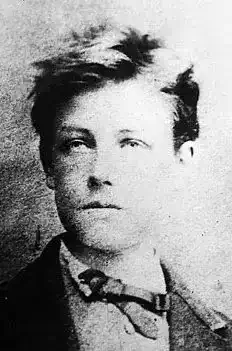
Arthur Rimbaud
Stolen Heart
My sad heart slobbers at the poop
my heart covered with tobacco-spit
They spew streams of soup at it
My sad heart drools at the poop
Under the jeerings of the soldiers
who break out laughing
my sad heart drools at the poop
mt heart covered with tobacco-spit.
Ithypallic and soldierish
Their jeerings have depraved it
In the rudder you see frescoes
Ithypallic and soldierish
O, abracadabratic waves
Take my heart, let it be washed!
Ithypallic and soldierish
their jeerings have depraved it.
When they have used up their quid
How will I act, O stolen heart?
There will be Bacchic hiccups
When they have used up their quid
I will have stomach retchings
If my heart is degraded;
When they have used up their quid
How will I act, O stolen heart?
translated by Wallace Fowlie
704

Lord Byron
Herod's Lament For Mariamne
Oh, Mariamne! now for thee
The heart of which thou bled'st is bleeding;
Revenge is lost in agony,
And wild remorse to rage succeeding.
Oh, Mariamne! where art thou?
Thou canst not hear my bitter pleading:
Ah! could'st thouthou
would'st pardon now,
Though Heaven were to my prayer unheeding.
And is she dead?and
did they dare
Obey my frenzy's jealous raving?
My wrath but doom'd my own despair:
The sword that smote her's o'er me waving.
But
thou art cold, my murder'd love!
And this dark heart is vainly craving
For her who soars alone above,
And leaves my soul unworthy saving.
She's gone, who shared my diadem;
She sunk, with her my joys entombing;
I swept that flower from Judah's stem,
Whose leaves for me alone were blooming;
And mine's the guilt, and mine the hell,
This bosom's desolation dooming;
And I have earn'd those tortures well,
Which unconsumed are still consuming!
703

Kazi Nazrul Islam
Coward
I know,
Why you do not look back
You have left your abode
For the temple of God
To while away the time
With the dolls.
And to flitter the self away
Oh dear,
Not knowing that playing with heart:
Leads up to endless tears.
So great is the debt
When the eyes meet, |
And the moments smack.
I know,
Why you do not look back.
I know,
Why you do not look back.
When the eyes get lost In the eyes.
And the word slowly dies..
When you are all alone.
In the sanctum of your home
There is collyrium In your bright eyes
And not the tears.
No deceit rings
In the anklets you wear.
As you walk,
I know,
Why you do hot look back
I know,
Why you do not look back,
When no creepers
On your feet roll
As you stroll,
In the wilderness.
You plucked flowers
In sheer absent mindness,
Without hurting your fingers.
Not knowing the truth either
That, with the garlands
The heart also withers.
Not knowing that
Behind a scurrilous mouth,
A loneliness lurks.
I know,
Why you do not look back.
I am conscious
Of your deceitfulness and skill
But you never knew, indeed
That on your cheeks,
There is a hue
Of pomegranate seeds.
Never knew that,
The timid hearts of women,
Like a creeper laden with a bee,
For those untold words and the denials
Shiver in agony.
And as much as the eye wails
The modesty prevails;
I know you coward,
Why your own image
That you unwittingly fear.
Of man, you have known,
And he is a stone
To whom you never bowed.
You have desired
A pair of covetous hands
And bowed to touch the feet,
Not knowing though
A heart becomes a touch-stone
With another touch on it.
I know coward
Why you wander.
I know what is your fear
When the desires of the heart
In the two shores of body whisper.
The fragrance of
A blooming heart
The petals can never thwart.
However much you wish to hide,
It breaks far and wide.
All the secret words
Have gathered in you dear
I know what is your fear.
I know,
Why you cannot say openly:
The nightingale has carried
The message secretly.
The words you wanted to hear,
How did she know of it, oh dear?
The same words
The bride murmured
Gently raising her eyes:
Who knew that in her cruel fingers
Such magic lies.
I know,
Why you cannot say openly.
I know,
Why no ornaments you wear
The flame of agony
Has burnt your flesh Into gold oh dear!
To adorn a doll
Of clay with attire?
Why should gold
Mere gold desire?
Leaving the shores of the body
The mind seeks purity.
The agony of mine, oh dear.
Now adorns your beauty
I know,
Why no ornament you wear.
I know
They will not abide;
The maiden
Who slept in the night
Woke up as a bride.
She swims with the foam
Not really knowing
The oyster's home.
The pearl you have found
But the shell of the eyes
In the tears got drowned
When the burden
Is too heavy to bear,
The heart also sinks
In utter despair.
Oh unlucky woman!
How shall you make it clear?
[Original: Bhiru; Translation: Syed Mujibul Huq]
684
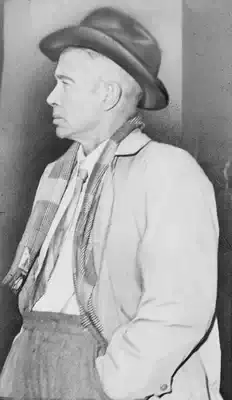
E. E. Cummings
it may not always be so
it may not always be so; and i say
that if your lips, which i have loved, should touch
another's, and your dear strong fingers clutch
his heart, as mine in time not far away;
if on another's face your sweet hair lay
in such a silence as i know, or such
great writhing words as, uttering overmuch,
stand helplessly before the spirit at bay;
if this should be, i say if this should be -you
of my heart, send me a little word;
that i may go unto him, and take his hands,
saying, Accept all happiness from me.
Then shall i turn my face, and hear one bird
sing terribly afar in the lost lands.
662
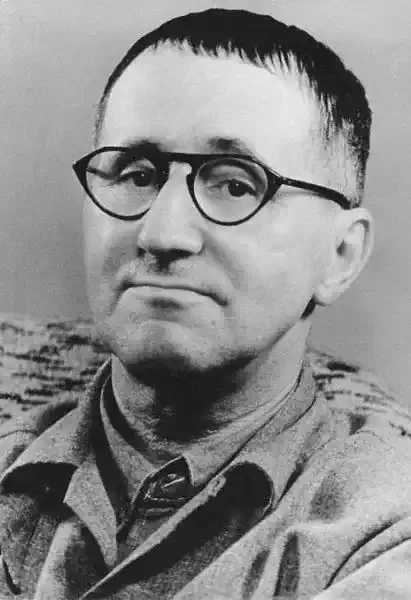
Bertolt Brecht
Radio Poem
You little box, held to me escaping
So that your valves should not break
Carried from house to house to ship from sail to train,
So that my enemies might go on talking to me,
Near my bed, to my pain
The last thing at night, the first thing in the morning,
Of their victories and of my cares,
Promise me not to go silent all of a sudden.
658
Arthur Rimbaud
Shame
So long as the blade has not
Cut off that brain,
That white, green and fatty parcel,
Whose steam is never fresh,
Ah ! He, should cut off his
Nose, his lips, his ears,
His belly ! And abandon
But no, truly, I believe that so long as
The blade to his head,
And the stone to his side,
And the flame to his guts
Have not done execution, the tiresome
Child, the so stupid animal,
Must never for an instant cease
To cheat and betray
And like a Rocky Mountain cat ;
To make all places stink !
But still when he dies,
O my God !
May there rise up some prayer !
662
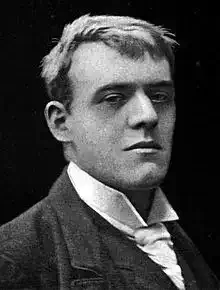
Hilaire Belloc
Epitah on the Politician Himself
Here richly, with ridiculous display,
The Politician's corpse was laid away.
While all of his acquaintance sneered and slanged
I wept: for I had longed to see him hanged.
Another on the Same
This, the last ornament among the peers,
Bribed, bullied, swindled and blackmailed for years:
But Death's what even Politicians fail
To bribe or swindle, bully or blackmail.
On Another Politician
The Politician, dead and turned to clay,
Will make a clout to keep the wind away.
I am not fond of draughts, and yet I doubt
If I could get myself to touch that clout.
On Yet Another
Fame to her darling Shifter glory gives;
And Shifter is immortal while he lives.
Epitah Upon Himself
Lauda tu Ilarion audacem et splendidum,
Who was always beginning things and never ended 'em.
647
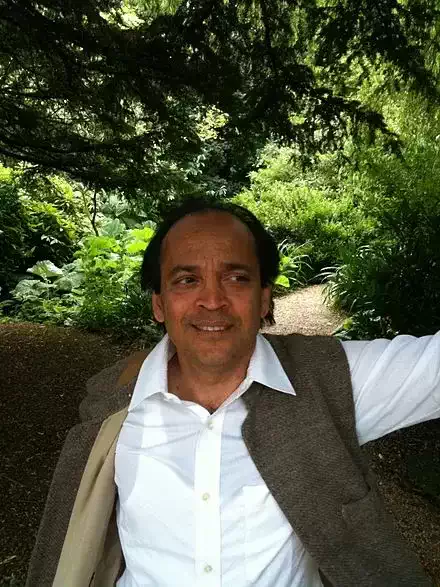
Vikram Seth
Interpretation
Somewhere within your loving look I sense,
Without the least intention to deceive,
Without suspicion, without evidence,
Somewhere within your heart the heart to leave.
Without the least intention to deceive,
Without suspicion, without evidence,
Somewhere within your heart the heart to leave.
629

Ella Wheeler Wilcox
Life's Scars
They say the world is round, and yet
I often think it square,
So many little hurts we get
From corners here and there.
But one great truth in life I've found,
While journeying to the West-
The only folks who really wound
Are those we love the best.
The man you thoroughly despise
Can rouse your wrath, 'tis true;
Annoyance in your heart will rise
At things mere strangers do;
But those are only passing ills;
This rule all lives will prove;
The rankling wound which aches and thrills
Is dealt by hands we love.
The choicest garb, the sweetest grace,
Are oft to strangers shown;
The careless mien, the frowning face,
Are given to our own.
We flatter those we scarcely know,
We please the fleeting guest,
And deal full many a thoughtless blow
To those who love us best.
Love does not grow on every tree,
Nor true hearts yearly bloom.
Alas for those who only see
This cut across a tomb!
But, soon or late, the fact grows plain
To all through sorrow's test:
The only folks who give us pain
Are those we love the best.
638
Vikram Seth
Protocols
What can I say to you? How can I retract
All that that fool my voice has spoken -
Now that the facts are plain, the placid surface cracked,
The protocols of friendship broken?
I cannot walk by day as now I walk at dawn
Past the still house where you lie sleeping.
May the sun burn these footprints on the lawn
And hold you in its warmth and keeping.
628
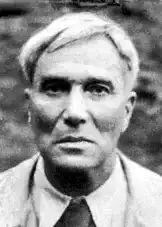
Boris Pasternak
Change
I used to glorify the poor,
Not simply lofty views expressing:
Their lives alone, I felt, were true,
Devoid of pomp and window-dressing.
No stranger to the manor house,
Its finery and lordly tenor,
I was a friend of down-and-outs,
And shunned the idly sponging manner.
For choosing friendship in the ranks
Of working people, though no rebel,
I had the honour to be stamped
As also one among the rabble.
The state of basements, unadorned,
Of attics with no frills or curtains
Was tangible without pretence
And full of substance, weighty, certain.
And I went bad when rot defaced
Our time, and life became infested,
When grief was censured as disgrace
And all played optimists and yes-men.
My faith in those who seemed my friends
Was broken and our ties were sundered.
I, too, lost Man, the Human, since
He had been lost by all and sundry.
621
Lord Byron
Don Juan: Canto The Fifth
When amatory poets sing their loves
In liquid lines mellifluously bland,
And pair their rhymes as Venus yokes her doves,
They little think what mischief is in hand;
The greater their success the worse it proves,
As Ovid's verse may give to understand;
Even Petrarch's self, if judged with due severity,
Is the Platonic pimp of all posterity.
I therefore do denounce all amorous writing,
Except in such a way as not to attract;
Plainsimpleshort,
and by no means inviting,
But with a moral to each error tack'd,
Form'd rather for instructing than delighting,
And with all passions in their turn attack'd;
Now, if my Pegasus should not be shod ill,
This poem will become a moral model.
The European with the Asian shore
Sprinkled with palaces; the ocean stream
Here and there studded with a seventyfour;
Sophia's cupola with golden gleam;
The cypress groves; Olympus high and hoar;
The twelve isles, and the more than I could dream,
Far less describe, present the very view
Which charm'd the charming Mary Montagu.
I have a passion for the name of 'Mary,'
For once it was a magic sound to me;
And still it half calls up the realms of fairy,
Where I beheld what never was to be;
All feelings changed, but this was last to vary,
A spell from which even yet I am not quite free:
But I grow sadand
let a tale grow cold,
Which must not be pathetically told.
The wind swept down the Euxine, and the wave
Broke foaming o'er the blue Symplegades;
'T is a grand sight from off 'the Giant's Grave
To watch the progress of those rolling seas
Between the Bosphorus, as they lash and lave
Europe and Asia, you being quite at ease;
There 's not a sea the passenger e'er pukes in,
Turns up more dangerous breakers than the Euxine.
'T was a raw day of Autumn's bleak beginning,
When nights are equal, but not so the days;
The Parcae then cut short the further spinning
Of seamen's fates, and the loud tempests raise
The waters, and repentance for past sinning
In all, who o'er the great deep take their ways:
They vow to amend their lives, and yet they don't;
Because if drown'd, they can'tif
spared, they won't.
A crowd of shivering slaves of every nation,
And age, and sex, were in the market ranged;
Each bevy with the merchant in his station:
Poor creatures! their good looks were sadly changed.
All save the blacks seem'd jaded with vexation,
From friends, and home, and freedom far estranged;
The negroes more philosophy display'd,Used
to it, no doubt, as eels are to be flay'd.
Juan was juvenile, and thus was full,
As most at his age are, of hope and health;
Yet I must own he looked a little dull,
And now and then a tear stole down by stealth;
Perhaps his recent loss of blood might pull
His spirit down; and then the loss of wealth,
A mistress, and such comfortable quarters,
To be put up for auction amongst Tartars,
Were things to shake a stoic; ne'ertheless,
Upon the whole his carriage was serene:
His figure, and the splendour of his dress,
Of which some gilded remnants still were seen,
Drew all eyes on him, giving them to guess
He was above the vulgar by his mien;
And then, though pale, he was so very handsome;
And thenthey
calculated on his ransom.
Like a backgammon board the place was dotted
With whites and blacks, in groups on show for sale,
Though rather more irregularly spotted:
Some bought the jet, while others chose the pale.
It chanced amongst the other people lotted,
A man of thirty rather stout and hale,
With resolution in his dark grey eye,
Next Juan stood, till some might choose to buy.
He had an English look; that is, was square
In make, of a complexion white and ruddy,
Good teeth, with curling rather dark brown hair,
And, it might be from thought or toil or study,
An open brow a little mark'd with care:
One arm had on a bandage rather bloody;
And there he stood with such sangfroid,
that greater
Could scarce be shown even by a mere spectator.
But seeing at his elbow a mere lad,
Of a high spirit evidently, though
At present weigh'd down by a doom which had
O'erthrown even men, he soon began to show
A kind of blunt compassion for the sad
Lot of so young a partner in the woe,
Which for himself he seem'd to deem no worse
Than any other scrape, a thing of course.
'My boy!' said he, 'amidst this motley crew
Of Georgians, Russians, Nubians, and what not,
All ragamuffins differing but in hue,
With whom it is our luck to cast our lot,
The only gentlemen seem I and you;
So let us be acquainted, as we ought:
If I could yield you any consolation,
'T would give me pleasure.
Pray,
what is your nation?'
When Juan answer'd'
Spanish!' he replied,
'I thought, in fact, you could not be a Greek;
Those servile dogs are not so proudly eyed:
Fortune has play'd you here a pretty freak,
But that 's her way with all men, till they 're tried;
But never mind,she
'll turn, perhaps, next week;
She has served me also much the same as you,
Except that I have found it nothing new.'
'Pray, sir,' said Juan, 'if I may presume,
What brought you here?''
Oh! nothing very rare
Six
Tartars and a dragchain.'
'
To this doom
But what conducted, if the question's fair,
Is that which I would learn.''
I served for some
Months with the Russian army here and there,
And taking lately, by Suwarrow's bidding,
A town, was ta'en myself instead of Widdin.'
'Have you no friends?''
I hadbut,
by God's blessing,
Have not been troubled with them lately. Now
I have answer'd all your questions without pressing,
And you an equal courtesy should show.'
'Alas!' said Juan, ''t were a tale distressing,
And long besides.''
Oh! if 't is really so,
You 're right on both accounts to hold your tongue;
A sad tale saddens doubly, when 't is long.
'But droop not: Fortune at your time of life,
Although a female moderately fickle,
Will hardly leave you (as she 's not your wife)
For any length of days in such a pickle.
To strive, too, with our fate were such a strife
As if the cornsheaf
should oppose the sickle:
Men are the sport of circumstances, when
The circumstances seem the sport of men.'
''T is not,' said Juan, 'for my present doom
I mourn, but for the past;
I
loved a maid:'He
paused, and his dark eye grew full of gloom;
A single tear upon his eyelash staid
A moment, and then dropp'd; 'but to resume,
'T is not my present lot, as I have said,
Which I deplore so much; for I have borne
Hardships which have the hardiest overworn,
'On the rough deep. But this last blow'
and here
He stopp'd again, and turn'd away his face.
'Ay,' quoth his friend, 'I thought it would appear
That there had been a lady in the case;
And these are things which ask a tender tear,
Such as I, too, would shed if in your place:
I cried upon my first wife's dying day,
And also when my second ran away:
'My third'
'
Your third!' quoth Juan, turning round;
'You scarcely can be thirty: have you three?'
'Noonly
two at present above ground:
Surely 't is nothing wonderful to see
One person thrice in holy wedlock bound!'
'Well, then, your third,' said Juan; 'what did she?
She did not run away, too,did
she, sir?'
'No, faith.''
What then?''
I ran away from her.'
'You take things coolly, sir,' said Juan. 'Why,'
Replied the other, 'what can a man do?
There still are many rainbows in your sky,
But mine have vanish'd. All, when life is new,
Commence with feelings warm, and prospects high;
But time strips our illusions of their hue,
And one by one in turn, some grand mistake
Casts off its bright skin yearly like the snake.
''T is true, it gets another bright and fresh,
Or fresher, brighter; but the year gone through,
This skin must go the way, too, of all flesh,
Or sometimes only wear a week or two;
Love
's the first net which spreads its deadly mesh;
Ambition, Avarice, Vengeance, Glory, glue
The glittering limetwigs
of our latter days,
Where still we flutter on for pence or praise.'
'All this is very fine, and may be true,'
Said Juan; 'but I really don't see how
It betters present times with me or you.'
'No?' quoth the other; 'yet you will allow
By setting things in their right point of view,
Knowledge, at least, is gain'd; for instance, now,
We know what slavery is, and our disasters
May teach us better to behave when masters.'
'Would we were masters now, if but to try
Their present lessons on our Pagan friends here,'
Said Juan,swallowing
a heartburning
sigh:
'Heaven help the scholar whom his fortune sends here!'
'Perhaps we shall be one day, by and by,'
Rejoin'd the other, when our bad luck mends here;
Meantime (yon old black eunuch seems to eye us)
'But after all, what is our present state?
'T is bad, and may be betterall
men's lot:
Most men are slaves, none more so than the great,
To their own whims and passions, and what not;
Society itself, which should create
Kindness, destroys what little we had got:
To feel for none is the true social art
Of the world's stoicsmen
without a heart.'
Just now a black old neutral personage
Of the third sex stept up, and peering over
The captives, seem'd to mark their looks and age,
And capabilities, as to discover
If they were fitted for the purposed cage:
No lady e'er is ogled by a lover,
Horse by a blackleg, broadcloth by a tailor,
Fee by a counsel, felon by a jailor,
As is a slave by his intended bidder.
'T is pleasant purchasing our fellowcreatures;
And all are to be sold, if you consider
Their passions, and are dext'rous; some by features
Are bought up, others by a warlike leader,
Some by a placeas
tend their years or natures;
The most by ready cashbut
all have prices,
From crowns to kicks, according to their vices.
The eunuch, having eyed them o'er with care,
Turn'd to the merchant, and begun to bid
First but for one, and after for the pair;
They haggled, wrangled, swore, tooso
they did!
As though they were in a mere Christian fair
Cheapening an ox, an ass, a lamb, or kid;
So that their bargain sounded like a battle
For this superior yoke of human cattle.
At last they settled into simple grumbling,
And pulling out reluctant purses, and
Turning each piece of silver o'er, and tumbling
Some down, and weighing others in their hand,
And by mistake sequins with paras jumbling,
Until the sum was accurately scann'd,
And then the merchant giving change, and signing
Receipts in full, began to think of dining.
I wonder if his appetite was good?
Or, if it were, if also his digestion?
Methinks at meals some odd thoughts might intrude,
And conscience ask a curious sort of question,
About the right divine how far we should
Sell flesh and blood. When dinner has opprest one,
I think it is perhaps the gloomiest hour
Which turns up out of the sad twentyfour.
Voltaire says 'No:' he tells you that Candide
Found life most tolerable after meals;
He 's wrongunless
man were a pig, indeed,
Repletion rather adds to what he feels,
Unless he 's drunk, and then no doubt he 's freed
From his own brain's oppression while it reels.
Of food I think with Philip's son, or rather
Ammon's (ill pleased with one world and one father);
I think with Alexander, that the act
Of eating, with another act or two,
Makes us feel our mortality in fact
Redoubled; when a roast and a ragout,
And fish, and soup, by some side dishes back'd,
Can give us either pain or pleasure, who
Would pique himself on intellects, whose use
Depends so much upon the gastric juice?
The other evening ('t was on Friday last)This
is a fact and no poetic fable
Just
as my great coat was about me cast,
My hat and gloves still lying on the table,
I heard a shot'
t was eight o'clock scarce past
And,
running out as fast as I was able,
I found the military commandant
Stretch'd in the street, and able scarce to pant.
Poor fellow! for some reason, surely bad,
They had slain him with five slugs; and left him there
To perish on the pavement: so I had
Him borne into the house and up the stair,
And stripp'd and look'd to
But
why should I ad
More circumstances? vain was every care;
The man was gone: in some Italian quarrel
Kill'd by five bullets from an old gunbarrel.
I gazed upon him, for I knew him well;
And though I have seen many corpses, never
Saw one, whom such an accident befell,
So calm; though pierced through stomach, heart, and liver,
He seem'd to sleep,for
you could scarcely tell
(As he bled inwardly, no hideous river
Of gore divulged the cause) that he was dead:
So as I gazed on him, I thought or said
'Can this be death? then what is life or death?
Speak!' but he spoke not: 'Wake!' but still he slept:'
But yesterday and who had mightier breath?
A thousand warriors by his word were kept
In awe: he said, as the centurion saith,
'Go,' and he goeth; 'come,' and forth he stepp'd.
The trump and bugle till he spake were dumb
And
now nought left him but the muffled drum.'
And they who waited once and worshipp'dthey
With their rough faces throng'd about the bed
To gaze once more on the commanding clay
Which for the last, though not the first, time bled:
And such an end! that he who many a day
Had faced Napoleon's foes until they fled,
The
foremost in the charge or in the sally,
Should now be butcher'd in a civic alley.
The scars of his old wounds were near his new,
Those honourable scars which brought him fame;
And horrid was the contrast to the view
But
let me quit the theme; as such things claim
Perhaps even more attention than is due
From me: I gazed (as oft I have gazed the same)
To try if I could wrench aught out of death
Which should confirm, or shake, or make a faith;
But it was all a mystery. Here we are,
And there we go:but
where? five bits of lead,
Or three, or two, or one, send very far!
And is this blood, then, form'd but to be shed?
Can every element our elements mar?
And airearthwaterfire
liveand
we dead?
We whose minds comprehend all things? No more;
But let us to the story as before.
The purchaser of Juan and acquaintance
Bore off his bargains to a gilded boat,
Embark'd himself and them, and off they went thence
As fast as oars could pull and water float;
They look'd like persons being led to sentence,
Wondering what next, till the caique was brought
Up in a little creek below a wall
O'ertopp'd with cypresses, darkgreen
and tall.
Here their conductor tapping at the wicket
Of a small iron door, 't was open'd, and
He led them onward, first through a low thicket
Flank'd by large groves, which tower'd on either hand:
They almost lost their way, and had to pick it
For night was dosing ere they came to land.
The eunuch made a sign to those on board,
Who row'd off, leaving them without a word.
As they were plodding on their winding way
Through orange bowers, and jasmine, and so forth
(Of which I might have a good deal to say,
There being no such profusion in the North
Of oriental plants, 'et cetera,'
But that of late your scribblers think it worth
Their while to rear whole hotbeds in their works
Because one poet travell'd 'mongst the Turks)
As they were threading on their way, there came
Into Don Juan's head a thought, which he
Whisper'd to his companion:'
t was the same
Which might have then occurr'd to you or me.
'Methinks,' said he, 'it would be no great shame
If we should strike a stroke to set us free;
Let 's knock that old black fellow on the head,
And march away'
t were easier done than said.'
'Yes,' said the other, 'and when done, what then?
How get out? how the devil got we in?
And when we once were fairly out, and when
From Saint Bartholomew we have saved our skin,
Tomorrow
'd see us in some other den,
And worse off than we hitherto have been;
Besides, I 'm hungry, and just now would take,
Like Esau, for my birthright a beefsteak.
'We must be near some place of man's abode;
For
the old negro's confidence in creeping,
With his two captives, by so queer a road,
Shows that he thinks his friends have not been sleeping;
A single cry would bring them all abroad:
'T is therefore better looking before leaping
And
there, you see, this turn has brought us through,
By Jove, a noble palace!lighted
too.'
It was indeed a wide extensive building
Which open'd on their view, and o'er the front
There seem'd to be besprent a deal of gilding
And various hues, as is the Turkish wont,
A
gaudy taste; for they are little skill'd in
The arts of which these lands were once the font:
Each villa on the Bosphorus looks a screen
New painted, or a pretty operascene.
And nearer as they came, a genial savour
Of certain stews, and roastmeats,
and pilaus,
Things which in hungry mortals' eyes find favour,
Made Juan in his harsh intentions pause,
And put himself upon his good behaviour:
His friend, too, adding a new saving clause,
Said, 'In Heaven's name let's get some supper now,
And then I 'm with you, if you 're for a row.'
Some talk of an appeal unto some passion,
Some to men's feelings, others to their reason;
The last of these was never much the fashion,
For reason thinks all reasoning out of season.
Some speakers whine, and others lay the lash on,
But more or less continue still to tease on,
With arguments according to their 'forte;'
But no one dreams of ever being short.
But I digress: of all appeals,although
I grant the power of pathos, and of gold,
Of beauty, flattery, threats, a shilling,no
Method 's more sure at moments to take hold
Of the best feelings of mankind, which grow
More tender, as we every day behold,
Than that allsoftening,
overpowering knell,
The tocsin of the soulthe
dinnerbell.
Turkey contains no bells, and yet men dine;
And Juan and his friend, albeit they heard
No Christian knoll to table, saw no line
Of lackeys usher to the feast prepared,
Yet smelt roastmeat,
beheld a huge fire shine,
And cooks in motion with their clean arms bared,
And gazed around them to the left and right
With the prophetic eye of appetite.
And giving up all notions of resistance,
They follow'd close behind their sable guide,
Who little thought that his own crack'd existence
Was on the point of being set aside:
He motion'd them to stop at some small distance,
And knocking at the gate, 't was open'd wide,
And a magnificent large hall display'd
The Asian pomp of Ottoman parade.
I won't describe; description is my forte,
But every fool describes in these bright days
His wondrous journey to some foreign court,
And spawns his quarto, and demands your praise
Death
to his publisher, to him 't is sport;
While Nature, tortured twenty thousand ways,
Resigns herself with exemplary patience
To guidebooks,
rhymes, tours, sketches, illustrations.
Along this hall, and up and down, some, squatted
Upon their hams, were occupied at chess;
Others in monosyllable talk chatted,
And some seem'd much in love with their own dress.
And divers smoked superb pipes decorated
With amber mouths of greater price or less;
And several strutted, others slept, and some
Prepared for supper with a glass of rum.
As the black eunuch enter'd with his brace
Of purchased Infidels, some raised their eyes
A moment without slackening from their pace;
But those who sate ne'er stirr'd in anywise:
One or two stared the captives in the face,
Just as one views a horse to guess his price;
Some nodded to the negro from their station,
But no one troubled him with conversation.
He leads them through the hall, and, without stopping,
On through a farther range of goodly rooms,
Splendid but silent, save in one, where, dropping,
A marble fountain echoes through the glooms
Of night which robe the chamber, or where popping
Some female head most curiously presumes
To thrust its black eyes through the door or lattice,
As wondering what the devil a noise that is.
Some faint lamps gleaming from the lofty walls
Gave light enough to hint their farther way,
But not enough to show the imperial halls,
In all the flashing of their full array;
Perhaps there 's nothing
I
'll not say appals,
But saddens more by night as well as day,
Than an enormous room without a soul
To break the lifeless splendour of the whole.
Two or three seem so little, one seems nothing:
In deserts, forests, crowds, or by the shore,
There solitude, we know, has her full growth in
The spots which were her realms for evermore;
But in a mighty hall or gallery, both in
More modern buildings and those built of yore,
A kind of death comes o'er us all alone,
Seeing what 's meant for many with but one.
A neat, snug study on a winter's night,
A book, friend, single lady, or a glass
Of claret, sandwich, and an appetite,
Are things which make an English evening pass;
Though certes by no means so grand a sight
As is a theatre lit up by gas.
I pass my evenings in long galleries solely,
And that 's the reason I 'm so melancholy.
Alas! man makes that great which makes him little:
I grant you in a church 't is very well:
What speaks of Heaven should by no means be brittle,
But strong and lasting, till no tongue can tell
Their names who rear'd it; but huge houses fit ill
And
huge tombs worsemankind,
since Adam fell:
Methinks the story of the tower of Babel
Might teach them this much better than I 'm able.
Babel was Nimrod's huntingbox,
and then
A town of gardens, walls, and wealth amazing,
Where Nabuchadonosor, king of men,
Reign'd, till one summer's day he took to grazing,
And Daniel tamed the lions in their den,
The people's awe and admiration raising;
'T was famous, too, for Thisbe and for Pyramus,
And the calumniated queen Semiramis.
That injured Queen by chroniclers so coarse
Has been accused (I doubt not by conspiracy)
Of an improper friendship for her horse
(Love, like religion, sometimes runs to heresy):
This monstrous tale had probably its source
(For such exaggerations here and there I see)
In writing 'Courser' by mistake for 'Courier:'
I wish the case could come before a jury here.
But to resume,should
there be (what may not
Be in these days?) some infidels, who don't,
Because they can't find out the very spot
Of that same Babel, or because they won't
(Though Claudius Rich, Esquire, some bricks has got,
And written lately two memoirs upon't),
Believe the Jews, those unbelievers, who
Must be believed, though they believe not you,
Yet let them think that Horace has exprest
Shortly and sweetly the masonic folly
Of those, forgetting the great place of rest,
Who give themselves to architecture wholly;
We know where things and men must end at best:
A moral (like all morals) melancholy,
And 'Et sepulchri immemor struis domos'
Shows that we build when we should but entomb us.
At last they reach'd a quarter most retired,
Where echo woke as if from a long slumber;
Though full of all things which could be desired,
One wonder'd what to do with such a number
Of articles which nobody required;
Here wealth had done its utmost to encumber
With furniture an exquisite apartment,
Which puzzled Nature much to know what Art meant.
It seem'd, however, but to open on
A range or suite of further chambers, which
Might lead to heaven knows where; but in this one
The movables were prodigally rich:
Sofas 't was half a sin to sit upon,
So costly were they; carpets every stitch
Of workmanship so rare, they made you wish
You could glide o'er them like a golden fish.
The black, however, without hardly deigning
A glance at that which wrapt the slaves in wonder,
Trampled what they scarce trod for fear of staining,
As if the milky way their feet was under
With all its stars; and with a stretch attaining
A certain press or cupboard niched in yonder
In
that remote recess which you may see
Or
if you don't the fault is not in me,
I wish to be perspicuous; and the black,
I say, unlocking the recess, pull'd forth
A quantity of clothes fit for the back
Of any Mussulman, whate'er his worth;
And of variety there was no lack
And
yet, though I have said there was no dearth,
He chose himself to point out what he thought
Most proper for the Christians he had bought.
The suit he thought most suitable to each
Was, for the elder and the stouter, first
A Candiote cloak, which to the knee might reach,
And trousers not so tight that they would burst,
But such as fit an Asiatic breech;
A shawl, whose folds in Cashmire had been nurst,
Slippers of saffron, dagger rich and handy;
In short, all things which form a Turkish Dandy.
While he was dressing, Baba, their black friend,
Hinted the vast advantages which they
Might probably attain both in the end,
If they would but pursue the proper way
Which fortune plainly seem'd to recommend;
And then he added, that he needs must say,
''T would greatly tend to better their condition,
If they would condescend to circumcision.
'For his own part, he really should rejoice
To see them true believers, but no less
Would leave his proposition to their choice.'
The other, thanking him for this excess
Of goodness, in thus leaving them a voice
In such a trifle, scarcely could express
'Sufficiently' (he said) 'his approbation
Of all the customs of this polish'd nation.
'For his own sharehe
saw but small objection
To so respectable an ancient rite;
And, after swallowing down a slight refection,
For which he own'd a present appetite,
He doubted not a few hours of reflection
Would reconcile him to the business quite.'
'Will it?' said Juan, sharply: 'Strike me dead,
But they as soon shall circumcise my head!
'Cut off a thousand heads, before'
'
Now, pray,'
Replied the other, 'do not interrupt:
You put me out in what I had to say.
Sir!as
I said, as soon as I have supt,
I shall perpend if your proposal may
Be such as I can properly accept;
Provided always your great goodness still
Remits the matter to our own freewill.'
Baba eyed Juan, and said, 'Be so good
As dress yourself'
and pointed out a suit
In which a Princess with great pleasure would
Array her limbs; but Juan standing mute,
As not being in a masquerading mood,
Gave it a slight kick with his Christian foot;
And when the old negro told him to 'Get ready,'
Replied, 'Old gentleman, I 'm not a lady.'
'What you may be, I neither know nor care,'
Said Baba; 'but pray do as I desire:
I have no more time nor many words to spare.'
'At least,' said Juan, 'sure I may enquire
The cause of this odd travesty?''
Forbear,'
Said Baba, 'to be curious; 't will transpire,
No doubt, in proper place, and time, and season:
I have no authority to tell the reason.'
'Then if I do,' said Juan, 'I 'll be'
'
Hold!'
Rejoin'd the negro, 'pray be not provoking;
This spirit 's well, but it may wax too bold,
And you will find us not top fond of joking.'
'What, sir!' said Juan, 'shall it e'er be told
That I unsex'd my dress?' But Baba, stroking
The things down, said, 'Incense me, and I call
Those who will leave you of no sex at all.
'I offer you a handsome suit of clothes:
A woman's, true; but then there is a cause
Why you should wear them.''
What, though my soul loathes
The effeminate garb?'thus,
after a short pause,
Sigh'd Juan, muttering also some slight oaths,
'What the devil shall I do with all this gauze?'
Thus he profanely term'd the finest lace
Which e'er set off a marriagemorning
face.
And then he swore; and, sighing, on he slipp'd
A pair of trousers of fleshcolour'd
silk;
Next with a virgin zone he was equipp'd,
Which girt a slight chemise as white as milk;
But tugging on his petticoat, he tripp'd,
Whichas
we sayor,
as the Scotch say, whilk
(The rhyme obliges me to this; sometimes
Monarchs are less imperative than rhymes)
Whilk, which (or what you please), was owing to
His garment's novelty, and his being awkward:
And yet at last he managed to get through
His toilet, though no doubt a little backward:
The negro Baba help'd a little too,
When some untoward part of raiment stuck hard;
And, wrestling both his arms into a gown,
He paused, and took a survey up and down.
One difficulty still remain'dhis
hair
Was hardly long enough; but Baba found
So many false long tresses all to spare,
That soon his head was most completely crown'd,
After the manner then in fashion there;
And this addition with such gems was bound
As suited the ensemble of his toilet,
While Baba made him comb his head and oil it.
And now being femininely all array'd,
With some small aid from scissors, paint, and tweezers,
He look'd in almost all respects a maid,
And Baba smilingly exclaim'd, 'You see, sirs,
A perfect transformation here display'd;
And now, then, you must come along with me, sirs,
That isthe
Lady:' clapping his hands twice,
Four blacks were at his elbow in a trice.
'You, sir,' said Baba, nodding to the one,
'Will please to accompany those gentlemen
To supper; but you, worthy Christian nun,
Will follow me: no trifling, sir; for when
I say a thing, it must at once be done.
What fear you? think you this a lion's den?
Why, 't is a palace; where the truly wise
Anticipate the Prophet's paradise.
'You fool! I tell you no one means you harm.'
'So much the better,' Juan said, 'for them;
Else they shall feel the weight of this my arm,
Which is not quite so light as you may deem.
I yield thus far; but soon will break the charm
If any take me for that which I seem:
So that I trust for everybody's sake,
That this disguise may lead to no mistake.'
'Blockhead! come on, and see,' quoth Baba; while
Don Juan, turning to his comrade, who
Though somewhat grieved, could scarce forbear a smile
Upon the metamorphosis in view,'
Farewell!' they mutually exclaim'd: 'this soil
Seems fertile in adventures strange and new;
One 's turn'd half Mussulman, and one a maid,
By this old black enchanter's unsought aid.'
'Farewell!' said Juan: 'should we meet no more,
I wish you a good appetite.''
Farewell!'
Replied the other; 'though it grieves me sore;
When we next meet we 'll have a tale to tell:
We needs must follow when Fate puts from shore.
Keep your good name; though Eve herself once fell.'
'Nay,' quoth the maid, 'the Sultan's self shan't carry me,
Unless his highness promises to marry me.
And thus they parted, each by separate doors;
Baba led Juan onward room by room
Through glittering galleries and o'er marble floors,
Till a gigantic portal through the gloom,
Haughty and huge, along the distance lowers;
And wafted far arose a rich perfume:
It seem'd as though they came upon a shrine,
For all was vast, still, fragrant, and divine.
The giant door was broad, and bright, and high,
Of gilded bronze, and carved in curious guise;
Warriors thereon were battling furiously;
Here stalks the victor, there the vanquish'd lies;
There captives led in triumph droop the eye,
And in perspective many a squadron flies:
It seems the work of times before the line
Of Rome transplanted fell with Constantine.
This massy portal stood at the wide close
Of a huge hall, and on its either side
Two little dwarfs, the least you could suppose,
Were sate, like ugly imps, as if allied
In mockery to the enormous gate which rose
O'er them in almost pyramidic pride:
The gate so splendid was in all its features,
You never thought about those little creatures,
Until you nearly trod on them, and then
You started back in horror to survey
The wondrous hideousness of those small men,
Whose colour was not black, nor white, nor grey,
But an extraneous mixture, which no pen
Can trace, although perhaps the pencil may;
They were misshapen
pigmies, deaf and dumb
Monsters,
who cost a no less monstrous sum.
Their duty wasfor
they were strong, and though
They look'd so little, did strong things at times
To
ope this door, which they could really do,
The hinges being as smooth as Rogers' rhymes;
And now and then, with tough strings of the bow,
As is the custom of those Eastern climes,
To give some rebel Pacha a cravat;
For mutes are generally used for that.
They spoke by signsthat
is, not spoke at all;
And looking like two incubi, they glared
As Baba with his fingers made them fall
To heaving back the portal folds: it scared
Juan a moment, as this pair so small
With shrinking serpent optics on him stared;
It was as if their little looks could poison
Or fascinate whome'er they fix'd their eyes on.
Before they enter'd, Baba paused to hint
To Juan some slight lessons as his guide:
'If you could just contrive,' he said, 'to stint
That somewhat manly majesty of stride,
'T would be as well, and (though there 's not much in 't)
To swing a little less from side to side,
Which has at times an aspect of the oddest;
And
also could you look a little modest,
''T would be convenient; for these mutes have eyes
Like needles, which may pierce those petticoats;
And if they should discover your disguise,
You know how near us the deep Bosphorus floats;
And you and I may chance, ere morning rise,
To find our way to Marmora without boats,
Stitch'd up in sacksa
mode of navigation
A good deal practised here upon occasion.'
With this encouragement, he led the way
Into a room still nobler than the last;
A rich confusion form'd a disarray
In such sort, that the eye along it cast
Could hardly carry anything away,
Object on object flash'd so bright and fast;
A dazzling mass of gems, and gold, and glitter,
Magnificently mingled in a litter.
Wealth had done wonderstaste
not much; such things
Occur in Orient palaces, and even
In the more chasten'd domes of Western kings
(Of which I have also seen some six or seven),
Where I can't say or gold or diamond flings
Great lustre, there is much to be forgiven;
Groups of bad statues, tables, chairs, and pictures,
On which I cannot pause to make my strictures.
In this imperial hall, at distance lay
Under a canopy, and there reclined
Quite in a confidential queenly way,
A lady; Baba stopp'd, and kneeling sign'd
To Juan, who though not much used to pray,
Knelt down by instinct, wondering in his mind,
What all this meant: while Baba bow'd and bended
His head, until the ceremony ended.
The lady rising up with such an air
As Venus rose with from the wave, on them
Bent like an antelope a Paphian pair
Of eyes, which put out each surrounding gem;
And raising up an arm as moonlight fair,
She sign'd to Baba, who first kiss'd the hem
Of her deep purple robe, and speaking low,
Pointed to Juan who remain'd below.
Her presence was as lofty as her state;
Her beauty of that overpowering kind,
Whose force description only would abate:
I 'd rather leave it much to your own mind,
Than lessen it by what I could relate
Of forms and features; it would strike you blind
Could I do justice to the full detail;
So, luckily for both, my phrases fail.
Thus much however I may add,her
years
Were ripe, they might make sixandtwenty
springs;
But there are forms which Time to touch forbears,
And turns aside his scythe to vulgar things,
Such as was Mary's Queen of Scots; truetears
And love destroy; and sapping sorrow wrings
Charms from the charmer, yet some never grow
Ugly; for instance
Ninon
de l'Enclos.
She spake some words to her attendants, who
Composed a choir of girls, ten or a dozen,
And were all clad alike; like Juan, too,
Who wore their uniform, by Baba chosen;
They form'd a very nymphlike
looking crew,
Which might have call'd Diana's chorus 'cousin,'
As far as outward show may correspond;
I won't be bail for anything beyond.
They bow'd obeisance and withdrew, retiring,
But not by the same door through which came in
Baba and Juan, which last stood admiring,
At some small distance, all he saw within
This strange saloon, much fitted for inspiring
Marvel and praise; for both or none things win;
And I must say, I ne'er could see the very
Great happiness of the 'Nil Admirari.'
'Not to admire is all the art I know
(Plain truth, dear Murray, needs few flowers of speech)
To make men happy, or to keep them so'
(So take it in the very words of Creech)Thus
Horace wrote we all know long ago;
And thus Pope quotes the precept to reteach
From his translation; but had none admired,
Would Pope have sung, or Horace been inspired?
Baba, when all the damsels were withdrawn,
Motion'd to Juan to approach, and then
A second time desired him to kneel down,
And kiss the lady's foot; which maxim when
He heard repeated, Juan with a frown
Drew himself up to his full height again,
And said, 'It grieved him, but he could not stoop
To any shoe, unless it shod the Pope.'
Baba, indignant at this illtimed
pride,
Made fierce remonstrances, and then a threat
He mutter'd (but the last was given aside)
About a bowstringquite
in vain; not yet
Would Juan bend, though 't were to Mahomet's bride:
There 's nothing in the world like etiquette
In kingly chambers or imperial halls,
As also at the race and county balls.
He stood like Atlas, with a world of words
About his ears, and nathless would not bend:
The blood of all his line 's Castilian lords
Boil'd in his veins, and rather than descend
To stain his pedigree a thousand swords
A thousand times of him had made an end;
At length perceiving the 'foot' could not stand,
Baba proposed that he should kiss the hand.
Here was an honourable compromise,
A halfway
house of diplomatic rest,
Where they might meet in much more peaceful guise;
And Juan now his willingness exprest
To use all fit and proper courtesies,
Adding, that this was commonest and best,
For through the South the custom still commands
The gentleman to kiss the lady's hands.
And he advanced, though with but a bad grace,
Though on more thoroughbred
or fairer fingers
No lips e'er left their transitory trace;
On such as these the lip too fondly lingers,
And for one kiss would fain imprint a brace,
As you will see, if she you love shall bring hers
In contact; and sometimes even a fair stranger's
An almost twelvemonth's constancy endangers.
The lady eyed him o'er and o'er, and bade
Baba retire, which he obey'd in style,
As if well used to the retreating trade;
And taking hints in good part all the while,
He whisper'd Juan not to be afraid,
And looking on him with a sort of smile,
Took leave, with such a face of satisfaction
As good men wear who have done a virtuous action.
When he was gone, there was a sudden change:
I know not what might be the lady's thought,
But o'er her bright brow flash'd a tumult strange,
And into her dear cheek the blood was brought,
Bloodred
as sunset summer clouds which range
The verge of Heaven; and in her large eyes wrought,
A mixture of sensations might be scann'd,
Of half voluptuousness and half command.
Her form had all the softness of her sex,
Her features all the sweetness of the devil,
When he put on the cherub to perplex
Eve, and paved (God knows how) the road to evil;
The sun himself was scarce more free from specks
Than she from aught at which the eye could cavil;
Yet, somehow, there was something somewhere wanting,
As if she rather order'd than was granting.
Something imperial, or imperious, threw
A chain o'er all she did; that is, a chain
Was thrown as 't were about the neck of you,
And
rapture's self will seem almost a pain
With aught which looks like despotism in view:
Our souls at least are free, and 't is in vain
We would against them make the flesh obey
The
spirit in the end will have its way.
Her very smile was haughty, though so sweet;
Her very nod was not an inclination;
There was a selfwill
even in her small feet,
As though they were quite conscious of her station
They
trod as upon necks; and to complete
Her state (it is the custom of her nation),
A poniard deck'd her girdle, as the sign
She was a sultan's bride (thank Heaven, not mine!).
'To hear and to obey' had been from birth
The law of all around her; to fulfill
All phantasies which yielded joy or mirth,
Had been her slaves' chief pleasure, as her will;
Her blood was high, her beauty scarce of earth:
Judge, then, if her caprices e'er stood still;
Had she but been a Christian, I 've a notion
We should have found out the 'perpetual motion.'
Whate'er she saw and coveted was brought;
Whate'er she did not see, if she supposed
It might be seen, with diligence was sought,
And when 't was found straightway the bargain closed;
There was no end unto the things she bought,
Nor to the trouble which her fancies caused;
Yet even her tyranny had such a grace,
The women pardon'd all except her face.
Juan, the latest of her whims, had caught
Her eye in passing on his way to sale;
She order'd him directly to be bought,
And Baba, who had ne'er been known to fail
In any kind of mischief to be wrought,
At all such auctions knew how to prevail:
She had no prudence, but he had; and this
Explains the garb which Juan took amiss.
His youth and features favour'd the disguise,
And, should you ask how she, a sultan's bride,
Could risk or compass such strange phantasies,
This I must leave sultanas to decide:
Emperors are only husbands in wives' eyes,
And kings and consorts oft are mystified,
As we may ascertain with due precision,
Some by experience, others by tradition.
But to the main point, where we have been tending:
She
now conceived all difficulties past,
And deem'd herself extremely condescending
When, being made her property at last,
Without more preface, in her blue eyes blending
Passion and power, a glance on him she cast,
And merely saying, 'Christian, canst thou love?'
Conceived that phrase was quite enough to move
And so it was, in proper time and place;
But Juan, who had still his mind o'erflowing
With Haidee's isle and soft Ionian face,
Felt the warm blood, which in his face was glowing,
Rush back upon his heart, which fill'd apace,
And left his cheeks as pale as snowdrops blowing;
These words went through his soul like Arabspears,
So that he spoke not, but burst into tears.
She was a good deal shock'd; not shock'd at tears,
For women shed and use them at their liking;
But there is something when man's eye appears
Wet, still more disagreeable and striking;
A woman's teardrop
melts, a man's half sears,
Like molten lead, as if you thrust a pike in
His heart to force it out, for (to be shorter)
To them 't is a relief, to us a torture.
And she would have consoled, but knew not how:
Having no equals, nothing which had e'er
Infected her with sympathy till now,
And never having dreamt what 't was to bear
Aught of a serious, sorrowing kind, although
There might arise some pouting petty care
To cross her brow, she wonder'd how so near
Her eyes another's eye could shed a tear.
But nature teaches more than power can spoil,
And, when a strong although a strange sensation
Movesfemale
hearts are such a genial soil
For kinder feelings, whatsoe'er their nation,
They naturally pour the 'wine and oil,'
Samaritans in every situation;
And thus Gulbeyaz, though she knew not why,
Felt an odd glistening moisture in her eye.
But tears must stop like all things else; and soon
Juan, who for an instant had been moved
To such a sorrow by the intrusive tone
Of one who dared to ask if 'he had loved,'
Call'd back the stoic to his eyes, which shone
Bright with the very weakness he reproved;
And although sensitive to beauty, he
Felt most indignant still at not being free.
Gulbeyaz, for the first time in her days,
Was much embarrass'd, never having met
In all her life with aught save prayers and praise;
And as she also risk'd her life to get
Him whom she meant to tutor in love's ways
Into a comfortable teteatete,
To lose the hour would make her quite a martyr,
And they had wasted now almost a quarter.
I also would suggest the fitting time
To gentlemen in any such like case,
That is to say in a meridian clime
With
us there is more law given to the chase,
But here a small delay forms a great crime:
So recollect that the extremest grace
Is just two minutes for your declaration
A
moment more would hurt your reputation.
Juan's was good; and might have been still better,
But he had got Haidee into his head:
However strange, he could not yet forget her,
Which made him seem exceedingly illbred.
Gulbeyaz, who look'd on him as her debtor
For having had him to her palace led,
Began to blush up to the eyes, and then
Grow deadly pale, and then blush back again.
At length, in an imperial way, she laid
Her hand on his, and bending on him eyes
Which needed not an empire to persuade,
Look'd into his for love, where none replies:
Her brow grew black, but she would not upbraid,
That being the last thing a proud woman tries;
She rose, and pausing one chaste moment, threw
Herself upon his breast, and there she grew.
This was an awkward test, as Juan found,
But he was steel'd by sorrow, wrath, and pride:
With gentle force her white arms he unwound,
And seated her all drooping by his side,
Then rising haughtily he glanced around,
And looking coldly in her face, he cried,
'The prison'd eagle will not pair, nor
Serve a Sultana's sensual phantasy.
'Thou ask'st if I can love? be this the proof
How much I have lovedthat
I love not thee!
In this vile garb, the distaff, web, and woof,
Were fitter for me: Love is for the free!
I am not dazzled by this splendid roof,
Whate'er thy power, and great it seems to be;
Heads bow, knees bend, eyes watch around a throne,
And hands obeyour
hearts are still our own.'
This was a truth to us extremely trite;
Not so to her, who ne'er had heard such things:
She deem'd her least command must yield delight,
Earth being only made for queens and kings.
If hearts lay on the left side or the right
She hardly knew, to such perfection brings
Legitimacy its born votaries, when
Aware of their due royal rights o'er men.
Besides, as has been said, she was so fair
As even in a much humbler lot had made
A kingdom or confusion anywhere,
And also, as may be presumed, she laid
Some stress on charms, which seldom are, if e'er,
By their possessors thrown into the shade:
She thought hers gave a double 'right divine;'
And half of that opinion 's also mine.
Remember, or (if you can not) imagine,
Ye, who have kept your chastity when young,
While some more desperate dowager has been waging
Love with you, and been in the dogdays
stung
By your refusal, recollect her raging!
Or recollect all that was said or sung
On such a subject; then suppose the face
Of a young downright beauty in this case.
Suppose,but
you already have supposed,
The spouse of Potiphar, the Lady Booby,
Phaedra, and all which story has disclosed
Of good examples; pity that so few by
Poets and private tutors are exposed,
To educateye
youth of Europeyou
by!
But when you have supposed the few we know,
You can't suppose Gulbeyaz' angry brow.
A tigress robb'd of young, a lioness,
Or any interesting beast of prey,
Are similes at hand for the distress
Of ladies who can not have their own way;
But though my turn will not be served with less,
These don't express one half what I should say:
For what is stealing young ones, few or many,
To cutting short their hopes of having any?
The love of offspring 's nature's general law,
From tigresses and cubs to ducks and ducklings;
There 's nothing whets the beak, or arms the claw
Like an invasion of their babes and sucklings;
And all who have seen a human nursery, saw
How mothers love their children's squalls and chucklings;
This strong extreme effect (to tire no longer
Your patience) shows the cause must still be stronger.
If I said fire flash'd from Gulbeyaz' eyes,
'T were nothingfor
her eyes flash'd always fire;
Or said her cheeks assumed the deepest dyes,
I should but bring disgrace upon the dyer,
So supernatural was her passion's rise;
For ne'er till now she knew a check'd desire:
Even ye who know what a check'd woman is
(Enough, God knows!) would much fall short of this.
Her rage was but a minute's, and 't was well
A
moment's more had slain her; but the while
It lasted 't was like a short glimpse of hell:
Nought 's more sublime than energetic bile,
Though horrible to see yet grand to tell,
Like ocean warring 'gainst a rocky isle;
And the deep passions flashing through her form
Made her a beautiful embodied storm.
A vulgar tempest 't were to a typhoon
To match a common fury with her rage,
And yet she did not want to reach the moon,
Like moderate Hotspur on the immortal page;
Her anger pitch'd into a lower tune,
Perhaps the fault of her soft sex and age
Her
wish was but to 'kill, kill, kill,' like Lear's,
And then her thirst of blood was quench'd in tears.
A storm it raged, and like the storm it pass'd,
Pass'd without wordsin
fact she could not speak;
And then her sex's shame broke in at last,
A sentiment till then in her but weak,
But now it flow'd in natural and fast,
As water through an unexpected leak;
For she felt humbledand
humiliation
Is sometimes good for people in her station
It teaches them that they are flesh and blood,
It also gently hints to them that others,
Although of clay, are yet not quite of mud;
That urns and pipkins are but fragile brothers,
And works of the same pottery, bad or good,
Though not all born of the same sires and mothers:
It teaches
Heaven
knows only what it teaches,
But sometimes it may mend, and often reaches.
Her first thought was to cut off Juan's head;
Her second, to cut only hisacquaintance;
Her third, to ask him where he had been bred;
Her fourth, to rally him into repentance;
Her fifth, to call her maids and go to bed;
Her sixth, to stab herself; her seventh, to sentence
The lash to Baba:but
her grand resource
Was to sit down again, and cry of course.
She thought to stab herself, but then she had
The dagger close at hand, which made it awkward;
For Eastern stays are little made to pad,
So that a poniard pierces if 't is stuck hard:
She thought of killing Juanbut,
poor lad!
Though he deserved it well for being so backward,
The cutting off his head was not the art
Most likely to attain her aimhis
heart.
Juan was moved; he had made up his mind
To be impaled, or quarter'd as a dish
For dogs, or to be slain with pangs refined,
Or thrown to lions, or made baits for fish,
And thus heroically stood resign'd,
Rather than sinexcept
to his own wish:
But all his great preparatives for dying
Dissolved like snow before a woman crying.
As through his palms Bob Acres' valour oozed,
So Juan's virtue ebb'd, I know not how;
And first he wonder'd why he had refused;
And then, if matters could be made up now;
And next his savage virtue he accused,
Just as a friar may accuse his vow,
Or as a dame repents her of her oath,
Which mostly ends in some small breach of both.
So he began to stammer some excuses;
But words are not enough in such a matter,
Although you borrow'd all that e'er the muses
Have sung, or even a Dandy's dandiest chatter,
Or all the figures Castlereagh abuses;
Just as a languid smile began to flatter
His peace was making, but before he ventured
Further, old Baba rather briskly enter'd.
'Bride of the Sun! and Sister of the Moon!'
('T was thus he spake) 'and Empress of the Earth!
Whose frown would put the spheres all out of tune,
Whose smile makes all the planets dance with mirth,
Your slave brings tidingshe
hopes not too soon
Which
your sublime attention may be worth:
The Sun himself has sent me like a ray,
To hint that he is coming up this way.'
'Is it,' exclaim'd Gulbeyaz, 'as you say?
I wish to heaven he would not shine till morning!
But bid my women form the milky way.
Hence, my old comet! give the stars due warning
And,
Christian! mingle with them as you may,
And as you 'd have me pardon your past scorning'
Here they were interrupted by a humming
Sound, and then by a cry, 'The Sultan 's coming!'
First came her damsels, a decorous file,
And then his Highness' eunuchs, black and white;
The train might reach a quarter of a mile:
His majesty was always so polite
As to announce his visits a long while
Before he came, especially at night;
For being the last wife of the Emperour,
She was of course the favorite of the four.
His Highness was a man of solemn port,
Shawl'd to the nose, and bearded to the eyes,
Snatch'd from a prison to preside at court,
His lately bowstrung brother caused his rise;
He was as good a sovereign of the sort
As any mention'd in the histories
Of Cantemir, or Knolles, where few shine
Save Solyman, the glory of their line.
He went to mosque in state, and said his prayers
With more than 'Oriental scrupulosity;'
He left to his vizier all state affairs,
And show'd but little royal curiosity:
I know not if he had domestic cares
No
process proved connubial animosity;
Four wives and twice five hundred maids, unseen,
Were ruled as calmly as a Christian queen.
If now and then there happen'd a slight slip,
Little was heard of criminal or crime;
The story scarcely pass'd a single lip
The
sack and sea had settled all in time,
From which the secret nobody could rip:
The Public knew no more than does this rhyme;
No scandals made the daily press a curse
Morals
were better, and the fish no worse.
He saw with his own eyes the moon was round,
Was also certain that the earth was square,
Because he had journey'd fifty miles, and found
No sign that it was circular anywhere;
His empire also was without a bound:
'T is true, a little troubled here and there,
By rebel pachas, and encroaching giaours,
But then they never came to 'the Seven Towers;'
Except in shape of envoys, who were sent
To lodge there when a war broke out, according
To the true law of nations, which ne'er meant
Those scoundrels, who have never had a sword in
Their dirty diplomatic hands, to vent
Their spleen in making strife, and safely wording
Their lies, yclep'd despatches, without risk or
The singeing of a single inky whisker.
He had fifty daughters and four dozen sons,
Of whom all such as came of age were stow'd,
The former in a palace, where like nuns
They lived till some Bashaw was sent abroad,
When she, whose turn it was, was wed at once,
Sometimes at six years oldthough
it seems odd,
'T is true; the reason is, that the Bashaw
Must make a present to his sire in law.
His sons were kept in prison, till they grew
Of years to fill a bowstring or the throne,
One or the other, but which of the two
Could yet be known unto the fates alone;
Meantime the education they went through
Was princely, as the proofs have always shown:
So that the heir apparent still was found
No less deserving to be hang'd than crown'd.
His majesty saluted his fourth spouse
With all the ceremonies of his rank,
Who clear'd her sparkling eyes and smooth'd her brows,
As suits a matron who has play'd a prank;
These must seem doubly mindful of their vows,
To save the credit of their breaking bank:
To no men are such cordial greetings given
As those whose wives have made them fit for heaven.
His Highness cast around his great black eyes,
And looking, as he always look'd, perceived
Juan amongst the damsels in disguise,
At which he seem'd no whit surprised nor grieved,
But just remark'd with air sedate and wise,
While still a fluttering sigh Gulbeyaz heaved,
'I see you 've bought another girl; 't is pity
That a mere Christian should be half so pretty.'
This compliment, which drew all eyes upon
The newbought
virgin, made her blush and shake.
Her comrades, also, thought themselves undone:
Oh! Mahomet! that his majesty should take
Such notice of a giaour, while scarce to one
Of them his lips imperial ever spake!
There was a general whisper, toss, and wriggle,
But etiquette forbade them all to giggle.
The Turks do well to shutat
least, sometimes
The women up, because, in sad reality,
Their chastity in these unhappy climes
Is not a thing of that astringent quality
Which in the North prevents precocious crimes,
And makes our snow less pure than our morality;
The sun, which yearly melts the polar ice,
Has quite the contrary effect on vice.
Thus in the East they are extremely strict,
And Wedlock and a Padlock mean the same;
Excepting only when the former 's pick'd
It ne'er can be replaced in proper frame;
Spoilt, as a pipe of claret is when prick'd:
But then their own Polygamy 's to blame;
Why don't they knead two virtuous souls for life
Into that moral centaur, man and wife?
Thus far our chronicle; and now we pause,
Though not for want of matter; but 't is time
According to the ancient epic laws,
To slacken sail, and anchor with our rhyme.
Let this fifth canto meet with due applause,
The sixth shall have a touch of the sublime;
Meanwhile, as Homer sometimes sleeps, perhaps
You 'll pardon to my muse a few short naps.
594
Bertolt Brecht
Questions
Write me what you're wearing! Is it warm?
Write me how you lie! Do you lie there softly?
Write me how you look! Is it still the same?
Write me what you're missing! Is it my arm?
Write me how you are! Have you been spared?
Write me what they're doing! Do you have enough courage?
Write me what you're doing! Is it good?
Write me, who are you thinking of? Is it me?
Freely, I've given you only my questions.
And I hear the answers, how they fall.
When you're tired, I can't carry it for you.
If you're hungry, I have nothing for you to eat.
And so now I leave the world
No longer there, as if I've forgotten you.
584

Alfred Lord Tennyson
The Princess (part 1)
A prince I was, blue-eyed, and fair in face,
Of temper amorous, as the first of May,
With lengths of yellow ringlet, like a girl,
For on my cradle shone the Northern star.
There lived an ancient legend in our house.
Some sorcerer, whom a far-off grandsire burnt
Because he cast no shadow, had foretold,
Dying, that none of all our blood should know
The shadow from the substance, and that one
Should come to fight with shadows and to fall.
For so, my mother said, the story ran.
And, truly, waking dreams were, more or less,
An old and strange affection of the house.
Myself too had weird seizures, Heaven knows what:
On a sudden in the midst of men and day,
And while I walked and talked as heretofore,
I seemed to move among a world of ghosts,
And feel myself the shadow of a dream.
Our great court-Galen poised his gilt-head cane,
And pawed his beard, and muttered 'catalepsy'.
My mother pitying made a thousand prayers;
My mother was as mild as any saint,
Half-canonized by all that looked on her,
So gracious was her tact and tenderness:
But my good father thought a king a king;
He cared not for the affection of the house;
He held his sceptre like a pedant's wand
To lash offence, and with long arms and hands
Reached out, and picked offenders from the mass
For judgment.
Now it chanced that I had been,
While life was yet in bud and blade, bethrothed
To one, a neighbouring Princess: she to me
Was proxy-wedded with a bootless calf
At eight years old; and still from time to time
Came murmurs of her beauty from the South,
And of her brethren, youths of puissance;
And still I wore her picture by my heart,
And one dark tress; and all around them both
Sweet thoughts would swarm as bees about their queen.
But when the days drew nigh that I should wed,
My father sent ambassadors with furs
And jewels, gifts, to fetch her: these brought back
A present, a great labour of the loom;
And therewithal an answer vague as wind:
Besides, they saw the king; he took the gifts;
He said there was a compact; that was true:
But then she had a will; was he to blame?
And maiden fancies; loved to live alone
Among her women; certain, would not wed.
That morning in the presence room I stood
With Cyril and with Florian, my two friends:
The first, a gentleman of broken means
(His father's fault) but given to starts and bursts
Of revel; and the last, my other heart,
And almost my half-self, for still we moved
Together, twinned as horse's ear and eye.
Now, while they spake, I saw my father's face
Grow long and troubled like a rising moon,
Inflamed with wrath: he started on his feet,
Tore the king's letter, snowed it down, and rent
The wonder of the loom through warp and woof
From skirt to skirt; and at the last he sware
That he would send a hundred thousand men,
And bring her in a whirlwind: then he chewed
The thrice-turned cud of wrath, and cooked his spleen,
Communing with his captains of the war.
At last I spoke. 'My father, let me go.
It cannot be but some gross error lies
In this report, this answer of a king,
Whom all men rate as kind and hospitable:
Or, maybe, I myself, my bride once seen,
Whate'er my grief to find her less than fame,
May rue the bargain made.' And Florian said:
'I have a sister at the foreign court,
Who moves about the Princess; she, you know,
Who wedded with a nobleman from thence:
He, dying lately, left her, as I hear,
The lady of three castles in that land:
Through her this matter might be sifted clean.'
And Cyril whispered: 'Take me with you too.'
Then laughing 'what, if these weird seizures come
Upon you in those lands, and no one near
To point you out the shadow from the truth!
Take me: I'll serve you better in a strait;
I grate on rusty hinges here:' but 'No!'
Roared the rough king, 'you shall not; we ourself
Will crush her pretty maiden fancies dead
In iron gauntlets: break the council up.'
But when the council broke, I rose and past
Through the wild woods that hung about the town;
Found a still place, and plucked her likeness out;
Laid it on flowers, and watched it lying bathed
In the green gleam of dewy-tasselled trees:
What were those fancies? wherefore break her troth?
Proud looked the lips: but while I meditated
A wind arose and rushed upon the South,
And shook the songs, the whispers, and the shrieks
Of the wild woods together; and a Voice
Went with it, 'Follow, follow, thou shalt win.'
Then, ere the silver sickle of that month
Became her golden shield, I stole from court
With Cyril and with Florian, unperceived,
Cat-footed through the town and half in dread
To hear my father's clamour at our backs
With Ho! from some bay-window shake the night;
But all was quiet: from the bastioned walls
Like threaded spiders, one by one, we dropt,
And flying reached the frontier: then we crost
To a livelier land; and so by tilth and grange,
And vines, and blowing bosks of wilderness,
We gained the mother city thick with towers,
And in the imperial palace found the king.
His name was Gama; cracked and small his voice,
But bland the smile that like a wrinkling wind
On glassy water drove his cheek in lines;
A little dry old man, without a star,
Not like a king: three days he feasted us,
And on the fourth I spake of why we came,
And my bethrothed. 'You do us, Prince,' he said,
Airing a snowy hand and signet gem,
'All honour. We remember love ourselves
In our sweet youth: there did a compact pass
Long summers back, a kind of ceremony--
I think the year in which our olives failed.
I would you had her, Prince, with all my heart,
With my full heart: but there were widows here,
Two widows, Lady Psyche, Lady Blanche;
They fed her theories, in and out of place
Maintaining that with equal husbandry
The woman were an equal to the man.
They harped on this; with this our banquets rang;
Our dances broke and buzzed in knots of talk;
Nothing but this; my very ears were hot
To hear them: knowledge, so my daughter held,
Was all in all: they had but been, she thought,
As children; they must lose the child, assume
The woman: then, Sir, awful odes she wrote,
Too awful, sure, for what they treated of,
But all she is and does is awful; odes
About this losing of the child; and rhymes
And dismal lyrics, prophesying change
Beyond all reason: these the women sang;
And they that know such things--I sought but peace;
No critic I--would call them masterpieces:
They mastered me. At last she begged a boon,
A certain summer-palace which I have
Hard by your father's frontier: I said no,
Yet being an easy man, gave it: and there,
All wild to found an University
For maidens, on the spur she fled; and more
We know not,--only this: they see no men,
Not even her brother Arac, nor the twins
Her brethren, though they love her, look upon her
As on a kind of paragon; and I
(Pardon me saying it) were much loth to breed
Dispute betwixt myself and mine: but since
(And I confess with right) you think me bound
In some sort, I can give you letters to her;
And yet, to speak the truth, I rate your chance
Almost at naked nothing.'
Thus the king;
And I, though nettled that he seemed to slur
With garrulous ease and oily courtesies
Our formal compact, yet, not less (all frets
But chafing me on fire to find my bride)
Went forth again with both my friends. We rode
Many a long league back to the North. At last
From hills, that looked across a land of hope,
We dropt with evening on a rustic town
Set in a gleaming river's crescent-curve,
Close at the boundary of the liberties;
There, entered an old hostel, called mine host
To council, plied him with his richest wines,
And showed the late-writ letters of the king.
He with a long low sibilation, stared
As blank as death in marble; then exclaimed
Averring it was clear against all rules
For any man to go: but as his brain
Began to mellow, 'If the king,' he said,
'Had given us letters, was he bound to speak?
The king would bear him out;' and at the last--
The summer of the vine in all his veins-'
No doubt that we might make it worth his while.
She once had past that way; he heard her speak;
She scared him; life! he never saw the like;
She looked as grand as doomsday and as grave:
And he, he reverenced his liege-lady there;
He always made a point to post with mares;
His daughter and his housemaid were the boys:
The land, he understood, for miles about
Was tilled by women; all the swine were sows,
And all the dogs'-
But while he jested thus,
A thought flashed through me which I clothed in act,
Remembering how we three presented Maid
Or Nymph, or Goddess, at high tide of feast,
In masque or pageant at my father's court.
We sent mine host to purchase female gear;
He brought it, and himself, a sight to shake
The midriff of despair with laughter, holp
To lace us up, till, each, in maiden plumes
We rustled: him we gave a costly bribe
To guerdon silence, mounted our good steeds,
And boldly ventured on the liberties.
We followed up the river as we rode,
And rode till midnight when the college lights
Began to glitter firefly-like in copse
And linden alley: then we past an arch,
Whereon a woman-statue rose with wings
From four winged horses dark against the stars;
And some inscription ran along the front,
But deep in shadow: further on we gained
A little street half garden and half house;
But scarce could hear each other speak for noise
Of clocks and chimes, like silver hammers falling
On silver anvils, and the splash and stir
Of fountains spouted up and showering down
In meshes of the jasmine and the rose:
And all about us pealed the nightingale,
Rapt in her song, and careless of the snare.
There stood a bust of Pallas for a sign,
By two sphere lamps blazoned like Heaven and Earth
With constellation and with continent,
Above an entry: riding in, we called;
A plump-armed Ostleress and a stable wench
Came running at the call, and helped us down.
Then stept a buxom hostess forth, and sailed,
Full-blown, before us into rooms which gave
Upon a pillared porch, the bases lost
In laurel: her we asked of that and this,
And who were tutors. 'Lady Blanche' she said,
'And Lady Psyche.' 'Which was prettiest,
Best-natured?' 'Lady Psyche.' 'Hers are we,'
One voice, we cried; and I sat down and wrote,
In such a hand as when a field of corn
Bows all its ears before the roaring East;
'Three ladies of the Northern empire pray
Your Highness would enroll them with your own,
As Lady Psyche's pupils.'
This I sealed:
The seal was Cupid bent above a scroll,
And o'er his head Uranian Venus hung,
And raised the blinding bandage from his eyes:
I gave the letter to be sent with dawn;
And then to bed, where half in doze I seemed
To float about a glimmering night, and watch
A full sea glazed with muffled moonlight, swell
On some dark shore just seen that it was rich.
As through the land at eve we went,
And plucked the ripened ears,
We fell out, my wife and I,
O we fell out I know not why,
And kissed again with tears.
And blessings on the falling out
That all the more endears,
When we fall out with those we love
And kiss again with tears!
For when we came where lies the child
We lost in other years,
There above the little grave,
O there above the little grave,
We kissed again with tears.
576
Robert Browning
The Lost Leader
I.
Just for a handful of silver he left us,
Just for a riband to stick in his coat---
Found the one gift of which fortune bereft us,
Lost all the others she lets us devote;
They, with the gold to give, doled him out silver,
So much was theirs who so little allowed:
How all our copper had gone for his service!
Rags---were they purple, his heart had been proud!
We that had loved him so, followed him, honoured him,
Lived in his mild and magnificent eye,
Learned his great language, caught his clear accents,
Made him our pattern to live and to die!
Shakespeare was of us, Milton was for us,
Burns, Shelley, were with us,---they watch from their graves!
He alone breaks from the van and the free-men,
---He alone sinks to the rear and the slaves!
II.
We shall march prospering,---not thro' his presence;
Songs may inspirit us,---not from his lyre;
Deeds will be done,---while he boasts his quiescence,
Still bidding crouch whom the rest bade aspire:
Blot out his name, then, record one lost soul more,
One task more declined, one more foot-path untrod,
One more devils'-triumph and sorrow for angels,
One wrong more to man, one more insult to God!
Life's night begins: let him never come back to us!
There would be doubt, hesitation and pain,
Forced praise on our part---the glimmer of twilight,
Never glad confident morning again!
Best fight on well, for we taught him---strike gallantly,
Menace our heart ere we master his own;
Then let him receive the new knowledge and wait us,
Pardoned in heaven, the first by the throne!
925
Boris Pasternak
Imitators
A boat came in; the cliff was baked;
The noisy boat-chain fell and clanked on
The sand-an iron rattle-snake,
A rattling rust among the plankton.
And two got out; and from the cliff
I felt like calling down, 'Forgive me,
But would you kindly throw yourselves
Apart or else into the river?
Your miming is without a fault-
Of course the seeker finds the fancied-
But stop this playing with the boat!
Your model on the cliff resents it.'
541

John Keats
Lamia. Part II
Love in a hut, with water and a crust,
Is—Love, forgive us!—cinders, ashes, dust;
Love in a palace is perhaps at last
More grievous torment than a hermit’s fast:—
That is a doubtful tale from faery land,
Hard for the non-elect to understand.
Had Lycius liv’d to hand his story down,
He might have given the moral a fresh frown,
Or clench’d it quite: but too short was their bliss
To breed distrust and hate, that make the soft voice hiss.
Besides, there, nightly, with terrific glare,
Love, jealous grown of so complete a pair,
Hover’d and buzz’d his wings, with fearful roar,
Above the lintel of their chamber door,
And down the passage cast a glow upon the floor.
For all this came a ruin: side by side
They were enthroned, in the even tide,
Upon a couch, near to a curtaining
Whose airy texture, from a golden string,
Floated into the room, and let appear
Unveil’d the summer heaven, blue and clear,
Betwixt two marble shafts:—there they reposed,
Where use had made it sweet, with eyelids closed,
Saving a tythe which love still open kept,
That they might see each other while they almost slept;
When from the slope side of a suburb hill,
Deafening the swallow’s twitter, came a thrill
Of trumpets—Lycius started—the sounds fled,
But left a thought, a buzzing in his head.
For the first time, since first he harbour’d in
That purple-lined palace of sweet sin,
His spirit pass’d beyond its golden bourn
Into the noisy world almost forsworn.
The lady, ever watchful, penetrant,
Saw this with pain, so arguing a want
Of something more, more than her empery
Of joys; and she began to moan and sigh
Because he mused beyond her, knowing well
That but a moment’s thought is passion’s passing bell.
“Why do you sigh, fair creature?” whisper’d he:
“Why do you think?” return’d she tenderly:
“You have deserted me;—where am I now?
“Not in your heart while care weighs on your brow:
“No, no, you have dismiss’d me; and I go
“From your breast houseless: ay, it must be so.”
He answer’d, bending to her open eyes,
Where he was mirror’d small in paradise,
“My silver planet, both of eve and morn!
“Why will you plead yourself so sad forlorn,
“While I am striving how to fill my heart
“With deeper crimson, and a double smart?
“How to entangle, trammel up and snare
“Your soul in mine, and labyrinth you there
“Like the hid scent in an unbudded rose?
“Ay, a sweet kiss—you see your mighty woes.
“My thoughts! shall I unveil them? Listen then!
“What mortal hath a prize, that other men
“May be confounded and abash’d withal,
“But lets it sometimes pace abroad majestical,
“And triumph, as in thee I should rejoice
“Amid the hoarse alarm of Corinth’s voice.
“Let my foes choke, and my friends shout afar,
“While through the thronged streets your bridal car
“Wheels round its dazzling spokes.”—The lady’s cheek
Trembled; she nothing said, but, pale and meek,
Arose and knelt before him, wept a rain
Of sorrows at his words; at last with pain
Beseeching him, the while his hand she wrung,
To change his purpose. He thereat was stung,
Perverse, with stronger fancy to reclaim
Her wild and timid nature to his aim:
Besides, for all his love, in self despite,
Against his better self, he took delight
Luxurious in her sorrows, soft and new.
His passion, cruel grown, took on a hue
Fierce and sanguineous as ’twas possible
In one whose brow had no dark veins to swell.
Fine was the mitigated fury, like
Apollo’s presence when in act to strike
The serpent—Ha, the serpent! certes, she
Was none. She burnt, she lov’d the tyranny,
And, all subdued, consented to the hour
When to the bridal he should lead his paramour.
Whispering in midnight silence, said the youth,
“Sure some sweet name thou hast, though, by my truth,
“I have not ask’d it, ever thinking thee
“Not mortal, but of heavenly progeny,
“As still I do. Hast any mortal name,
“Fit appellation for this dazzling frame?
“Or friends or kinsfolk on the citied earth,
“To share our marriage feast and nuptial mirth?”
“I have no friends,” said Lamia, “no, not one;
“My presence in wide Corinth hardly known:
“My parents’ bones are in their dusty urns
“Sepulchred, where no kindled incense burns,
“Seeing all their luckless race are dead, save me,
“And I neglect the holy rite for thee.
“Even as you list invite your many guests;
“But if, as now it seems, your vision rests
“With any pleasure on me, do not bid
“Old Apollonius—from him keep me hid.”
Lycius, perplex’d at words so blind and blank,
Made close inquiry; from whose touch she shrank,
Feigning a sleep; and he to the dull shade
Of deep sleep in a moment was betray’d.
It was the custom then to bring away
The bride from home at blushing shut of day,
Veil’d, in a chariot, heralded along
By strewn flowers, torches, and a marriage song,
With other pageants: but this fair unknown
Had not a friend. So being left alone,
(Lycius was gone to summon all his kin)
And knowing surely she could never win
His foolish heart from its mad pompousness,
She set herself, high-thoughted, how to dress
The misery in fit magnificence.
She did so, but ’tis doubtful how and whence
Came, and who were her subtle servitors.
About the halls, and to and from the doors,
There was a noise of wings, till in short space
The glowing banquet-room shone with wide-arched grace.
A haunting music, sole perhaps and lone
Supportress of the faery-roof, made moan
Throughout, as fearful the whole charm might fade.
Fresh carved cedar, mimicking a glade
Of palm and plantain, met from either side,
High in the midst, in honour of the bride:
Two palms and then two plantains, and so on,
From either side their stems branch’d one to one
All down the aisled place; and beneath all
There ran a stream of lamps straight on from wall to wall.
So canopied, lay an untasted feast
Teeming with odours. Lamia, regal drest,
Silently paced about, and as she went,
In pale contented sort of discontent,
Mission’d her viewless servants to enrich
The fretted splendour of each nook and niche.
Between the tree-stems, marbled plain at first,
Came jasper pannels; then, anon, there burst
Forth creeping imagery of slighter trees,
And with the larger wove in small intricacies.
Approving all, she faded at self-will,
And shut the chamber up, close, hush’d and still,
Complete and ready for the revels rude,
When dreadful guests would come to spoil her solitude.
The day appear’d, and all the gossip rout.
O senseless Lycius! Madman! wherefore flout
The silent-blessing fate, warm cloister’d hours,
And show to common eyes these secret bowers?
The herd approach’d; each guest, with busy brain,
Arriving at the portal, gaz’d amain,
And enter’d marveling: for they knew the street,
Remember’d it from childhood all complete
Without a gap, yet ne’er before had seen
That royal porch, that high-built fair demesne;
So in they hurried all, maz’d, curious and keen:
Save one, who look’d thereon with eye severe,
And with calm-planted steps walk’d in austere;
’Twas Apollonius: something too he laugh’d,
As though some knotty problem, that had daft
His patient thought, had now begun to thaw,
And solve and melt:—’twas just as he foresaw.
He met within the murmurous vestibule
His young disciple. “’Tis no common rule,
“Lycius,” said he, “for uninvited guest
“To force himself upon you, and infest
“With an unbidden presence the bright throng
“Of younger friends; yet must I do this wrong,
“And you forgive me.” Lycius blush’d, and led
The old man through the inner doors broad-spread;
With reconciling words and courteous mien
Turning into sweet milk the sophist’s spleen.
Of wealthy lustre was the banquet-room,
Fill’d with pervading brilliance and perfume:
Before each lucid pannel fuming stood
A censer fed with myrrh and spiced wood,
Each by a sacred tripod held aloft,
Whose slender feet wide-swerv’d upon the soft
Wool-woofed carpets: fifty wreaths of smoke
From fifty censers their light voyage took
To the high roof, still mimick’d as they rose
Along the mirror’d walls by twin-clouds odorous.
Twelve sphered tables, by silk seats insphered,
High as the level of a man’s breast rear’d
On libbard’s paws, upheld the heavy gold
Of cups and goblets, and the store thrice told
Of Ceres’ horn, and, in huge vessels, wine
Came from the gloomy tun with merry shine.
Thus loaded with a feast the tables stood,
Each shrining in the midst the image of a God.
When in an antichamber every guest
Had felt the cold full sponge to pleasure press’d,
By minist’ring slaves, upon his hands and feet,
And fragrant oils with ceremony meet
Pour’d on his hair, they all mov’d to the feast
In white robes, and themselves in order placed
Around the silken couches, wondering
Whence all this mighty cost and blaze of wealth could spring.
Soft went the music the soft air along,
While fluent Greek a vowel’d undersong
Kept up among the guests discoursing low
At first, for scarcely was the wine at flow;
But when the happy vintage touch’d their brains,
Louder they talk, and louder come the strains
Of powerful instruments:—the gorgeous dyes,
The space, the splendour of the draperies,
The roof of awful richness, nectarous cheer,
Beautiful slaves, and Lamia’s self, appear,
Now, when the wine has done its rosy deed,
And every soul from human trammels freed,
No more so strange; for merry wine, sweet wine,
Will make Elysian shades not too fair, too divine.
Soon was God Bacchus at meridian height;
Flush’d were their cheeks, and bright eyes double bright:
Garlands of every green, and every scent
From vales deflower’d, or forest-trees branch rent,
In baskets of bright osier’d gold were brought
High as the handles heap’d, to suit the thought
Of every guest; that each, as he did please,
Might fancy-fit his brows, silk-pillow’d at his ease.
What wreath for Lamia? What for Lycius?
What for the sage, old Apollonius?
Upon her aching forehead be there hung
The leaves of willow and of adder’s tongue;
And for the youth, quick, let us strip for him
The thyrsus, that his watching eyes may swim
Into forgetfulness; and, for the sage,
Let spear-grass and the spiteful thistle wage
War on his temples. Do not all charms fly
At the mere touch of cold philosophy?
There was an awful rainbow once in heaven:
We know her woof, her texture; she is given
In the dull catalogue of common things.
Philosophy will clip an Angel’s wings,
Conquer all mysteries by rule and line,
Empty the haunted air, and gnomed mine—
Unweave a rainbow, as it erewhile made
The tender-person’d Lamia melt into a shade.
By her glad Lycius sitting, in chief place,
Scarce saw in all the room another face,
Till, checking his love trance, a cup he took
Full brimm’d, and opposite sent forth a look
’Cross the broad table, to beseech a glance
From his old teacher’s wrinkled countenance,
And pledge him. The bald-head philosopher
Had fix’d his eye, without a twinkle or stir
Full on the alarmed beauty of the bride,
Brow-beating her fair form, and troubling her sweet pride.
Lycius then press’d her hand, with devout touch,
As pale it lay upon the rosy couch:
’Twas icy, and the cold ran through his veins;
Then sudden it grew hot, and all the pains
Of an unnatural heat shot to his heart.
“Lamia, what means this? Wherefore dost thou start?
“Know’st thou that man?” Poor Lamia answer’d not.
He gaz’d into her eyes, and not a jot
Own’d they the lovelorn piteous appeal:
More, more he gaz’d: his human senses reel:
Some hungry spell that loveliness absorbs;
There was no recognition in those orbs.
“Lamia!” he cried—and no soft-toned reply.
The many heard, and the loud revelry
Grew hush; the stately music no more breathes;
The myrtle sicken’d in a thousand wreaths.
By faint degrees, voice, lute, and pleasure ceased;
A deadly silence step by step increased,
Until it seem’d a horrid presence there,
And not a man but felt the terror in his hair.
“Lamia!” he shriek’d; and nothing but the shriek
With its sad echo did the silence break.
“Begone, foul dream!” he cried, gazing again
In the bride’s face, where now no azure vein
Wander’d on fair-spaced temples; no soft bloom
Misted the cheek; no passion to illume
The deep-recessed vision:—all was blight;
Lamia, no longer fair, there sat a deadly white.
“Shut, shut those juggling eyes, thou ruthless man!
“Turn them aside, wretch! or the righteous ban
“Of all the Gods, whose dreadful images
“Here represent their shadowy presences,
“May pierce them on the sudden with the thorn
“Of painful blindness; leaving thee forlorn,
“In trembling dotage to the feeblest fright
“Of conscience, for their long offended might,
“For all thine impious proud-heart sophistries,
“Unlawful magic, and enticing lies.
“Corinthians! look upon that gray-beard wretch!
“Mark how, possess’d, his lashless eyelids stretch
“Around his demon eyes! Corinthians, see!
“My sweet bride withers at their potency.”
“Fool!” said the sophist, in an under-tone
Gruff with contempt; which a death-nighing moan
From Lycius answer’d, as heart-struck and lost,
He sank supine beside the aching ghost.
“Fool! Fool!” repeated he, while his eyes still
Relented not, nor mov’d; “from every ill
“Of life have I preserv’d thee to this day,
“And shall I see thee made a serpent’s prey?
Then Lamia breath’d death breath; the sophist’s eye,
Like a sharp spear, went through her utterly,
Keen, cruel, perceant, stinging: she, as well
As her weak hand could any meaning tell,
Motion’d him to be silent; vainly so,
He look’d and look’d again a level--No!
“A Serpent!” echoed he; no sooner said,
Than with a frightful scream she vanished:
And Lycius’ arms were empty of delight,
As were his limbs of life, from that same night.
On the high couch he lay!—his friends came round--
Supported him—no pulse, or breath they found,
And, in its marriage robe, the heavy body wound.
542
Alfred Lord Tennyson
Guinevere
Queen Guinevere had fled the court, and sat
There in the holy house at Almesbury
Weeping, none with her save a little maid,
A novice: one low light betwixt them burned
Blurred by the creeping mist, for all abroad,
Beneath a moon unseen albeit at full,
The white mist, like a face-cloth to the face,
Clung to the dead earth, and the land was still.
For hither had she fled, her cause of flight
Sir Modred; he that like a subtle beast
Lay couchant with his eyes upon the throne,
Ready to spring, waiting a chance: for this
He chilled the popular praises of the King
With silent smiles of slow disparagement;
And tampered with the Lords of the White Horse,
Heathen, the brood by Hengist left; and sought
To make disruption in the Table Round
Of Arthur, and to splinter it into feuds
Serving his traitorous end; and all his aims
Were sharpened by strong hate for Lancelot.
For thus it chanced one morn when all the court,
Green-suited, but with plumes that mocked the may,
Had been, their wont, a-maying and returned,
That Modred still in green, all ear and eye,
Climbed to the high top of the garden-wall
To spy some secret scandal if he might,
And saw the Queen who sat betwixt her best
Enid, and lissome Vivien, of her court
The wiliest and the worst; and more than this
He saw not, for Sir Lancelot passing by
Spied where he couched, and as the gardener's hand
Picks from the colewort a green caterpillar,
So from the high wall and the flowering grove
Of grasses Lancelot plucked him by the heel,
And cast him as a worm upon the way;
But when he knew the Prince though marred with dust,
He, reverencing king's blood in a bad man,
Made such excuses as he might, and these
Full knightly without scorn; for in those days
No knight of Arthur's noblest dealt in scorn;
But, if a man were halt or hunched, in him
By those whom God had made full-limbed and tall,
Scorn was allowed as part of his defect,
And he was answered softly by the King
And all his Table. So Sir Lancelot holp
To raise the Prince, who rising twice or thrice
Full sharply smote his knees, and smiled, and went:
But, ever after, the small violence done
Rankled in him and ruffled all his heart,
As the sharp wind that ruffles all day long
A little bitter pool about a stone
On the bare coast.
But when Sir Lancelot told
This matter to the Queen, at first she laughed
Lightly, to think of Modred's dusty fall,
Then shuddered, as the village wife who cries
`I shudder, some one steps across my grave;'
Then laughed again, but faintlier, for indeed
She half-foresaw that he, the subtle beast,
Would track her guilt until he found, and hers
Would be for evermore a name of scorn.
Henceforward rarely could she front in hall,
Or elsewhere, Modred's narrow foxy face,
Heart-hiding smile, and gray persistent eye:
Henceforward too, the Powers that tend the soul,
To help it from the death that cannot die,
And save it even in extremes, began
To vex and plague her. Many a time for hours,
Beside the placid breathings of the King,
In the dead night, grim faces came and went
Before her, or a vague spiritual fear--
Like to some doubtful noise of creaking doors,
Heard by the watcher in a haunted house,
That keeps the rust of murder on the walls--
Held her awake: or if she slept, she dreamed
An awful dream; for then she seemed to stand
On some vast plain before a setting sun,
And from the sun there swiftly made at her
A ghastly something, and its shadow flew
Before it, till it touched her, and she turned--
When lo! her own, that broadening from her feet,
And blackening, swallowed all the land, and in it
Far cities burnt, and with a cry she woke.
And all this trouble did not pass but grew;
Till even the clear face of the guileless King,
And trustful courtesies of household life,
Became her bane; and at the last she said,
`O Lancelot, get thee hence to thine own land,
For if thou tarry we shall meet again,
And if we meet again, some evil chance
Will make the smouldering scandal break and blaze
Before the people, and our lord the King.'
And Lancelot ever promised, but remained,
And still they met and met. Again she said,
`O Lancelot, if thou love me get thee hence.'
And then they were agreed upon a night
(When the good King should not be there) to meet
And part for ever. Vivien, lurking, heard.
She told Sir Modred. Passion-pale they met
And greeted. Hands in hands, and eye to eye,
Low on the border of her couch they sat
Stammering and staring. It was their last hour,
A madness of farewells. And Modred brought
His creatures to the basement of the tower
For testimony; and crying with full voice
`Traitor, come out, ye are trapt at last,' aroused
Lancelot, who rushing outward lionlike
Leapt on him, and hurled him headlong, and he fell
Stunned, and his creatures took and bare him off,
And all was still: then she, `The end is come,
And I am shamed for ever;' and he said,
`Mine be the shame; mine was the sin: but rise,
And fly to my strong castle overseas:
There will I hide thee, till my life shall end,
There hold thee with my life against the world.'
She answered, `Lancelot, wilt thou hold me so?
Nay, friend, for we have taken our farewells.
Would God that thou couldst hide me from myself!
Mine is the shame, for I was wife, and thou
Unwedded: yet rise now, and let us fly,
For I will draw me into sanctuary,
And bide my doom.' So Lancelot got her horse,
Set her thereon, and mounted on his own,
And then they rode to the divided way,
There kissed, and parted weeping: for he past,
Love-loyal to the least wish of the Queen,
Back to his land; but she to Almesbury
Fled all night long by glimmering waste and weald,
And heard the Spirits of the waste and weald
Moan as she fled, or thought she heard them moan:
And in herself she moaned `Too late, too late!'
Till in the cold wind that foreruns the morn,
A blot in heaven, the Raven, flying high,
Croaked, and she thought, `He spies a field of death;
For now the Heathen of the Northern Sea,
Lured by the crimes and frailties of the court,
Begin to slay the folk, and spoil the land.'
And when she came to Almesbury she spake
There to the nuns, and said, `Mine enemies
Pursue me, but, O peaceful Sisterhood,
Receive, and yield me sanctuary, nor ask
Her name to whom ye yield it, till her time
To tell you:' and her beauty, grace and power,
Wrought as a charm upon them, and they spared
To ask it.
So the stately Queen abode
For many a week, unknown, among the nuns;
Nor with them mixed, nor told her name, nor sought,
Wrapt in her grief, for housel or for shrift,
But communed only with the little maid,
Who pleased her with a babbling heedlessness
Which often lured her from herself; but now,
This night, a rumour wildly blown about
Came, that Sir Modred had usurped the realm,
And leagued him with the heathen, while the King
Was waging war on Lancelot: then she thought,
`With what a hate the people and the King
Must hate me,' and bowed down upon her hands
Silent, until the little maid, who brooked
No silence, brake it, uttering, `Late! so late!
What hour, I wonder, now?' and when she drew
No answer, by and by began to hum
An air the nuns had taught her; `Late, so late!'
Which when she heard, the Queen looked up, and said,
`O maiden, if indeed ye list to sing,
Sing, and unbind my heart that I may weep.'
Whereat full willingly sang the little maid.
`Late, late, so late! and dark the night and chill!
Late, late, so late! but we can enter still.
Too late, too late! ye cannot enter now.
`No light had we: for that we do repent;
And learning this, the bridegroom will relent.
Too late, too late! ye cannot enter now.
`No light: so late! and dark and chill the night!
O let us in, that we may find the light!
Too late, too late: ye cannot enter now.
`Have we not heard the bridegroom is so sweet?
O let us in, though late, to kiss his feet!
No, no, too late! ye cannot enter now.'
So sang the novice, while full passionately,
Her head upon her hands, remembering
Her thought when first she came, wept the sad Queen.
Then said the little novice prattling to her,
`O pray you, noble lady, weep no more;
But let my words, the words of one so small,
Who knowing nothing knows but to obey,
And if I do not there is penance given--
Comfort your sorrows; for they do not flow
From evil done; right sure am I of that,
Who see your tender grace and stateliness.
But weigh your sorrows with our lord the King's,
And weighing find them less; for gone is he
To wage grim war against Sir Lancelot there,
Round that strong castle where he holds the Queen;
And Modred whom he left in charge of all,
The traitor--Ah sweet lady, the King's grief
For his own self, and his own Queen, and realm,
Must needs be thrice as great as any of ours.
For me, I thank the saints, I am not great.
For if there ever come a grief to me
I cry my cry in silence, and have done.
None knows it, and my tears have brought me good:
But even were the griefs of little ones
As great as those of great ones, yet this grief
Is added to the griefs the great must bear,
That howsoever much they may desire
Silence, they cannot weep behind a cloud:
As even here they talk at Almesbury
About the good King and his wicked Queen,
And were I such a King with such a Queen,
Well might I wish to veil her wickedness,
But were I such a King, it could not be.'
Then to her own sad heart muttered the Queen,
`Will the child kill me with her innocent talk?'
But openly she answered, `Must not I,
If this false traitor have displaced his lord,
Grieve with the common grief of all the realm?'
`Yea,' said the maid, `this is all woman's grief,
That SHE is woman, whose disloyal life
Hath wrought confusion in the Table Round
Which good King Arthur founded, years ago,
With signs and miracles and wonders, there
At Camelot, ere the coming of the Queen.'
Then thought the Queen within herself again,
`Will the child kill me with her foolish prate?'
But openly she spake and said to her,
`O little maid, shut in by nunnery walls,
What canst thou know of Kings and Tables Round,
Or what of signs and wonders, but the signs
And simple miracles of thy nunnery?'
To whom the little novice garrulously,
`Yea, but I know: the land was full of signs
And wonders ere the coming of the Queen.
So said my father, and himself was knight
Of the great Table--at the founding of it;
And rode thereto from Lyonnesse, and he said
That as he rode, an hour or maybe twain
After the sunset, down the coast, he heard
Strange music, and he paused, and turning--there,
All down the lonely coast of Lyonnesse,
Each with a beacon-star upon his head,
And with a wild sea-light about his feet,
He saw them--headland after headland flame
Far on into the rich heart of the west:
And in the light the white mermaiden swam,
And strong man-breasted things stood from the sea,
And sent a deep sea-voice through all the land,
To which the little elves of chasm and cleft
Made answer, sounding like a distant horn.
So said my father--yea, and furthermore,
Next morning, while he past the dim-lit woods,
Himself beheld three spirits mad with joy
Come dashing down on a tall wayside flower,
That shook beneath them, as the thistle shakes
When three gray linnets wrangle for the seed:
And still at evenings on before his horse
The flickering fairy-circle wheeled and broke
Flying, and linked again, and wheeled and broke
Flying, for all the land was full of life.
And when at last he came to Camelot,
A wreath of airy dancers hand-in-hand
Swung round the lighted lantern of the hall;
And in the hall itself was such a feast
As never man had dreamed; for every knight
Had whatsoever meat he longed for served
By hands unseen; and even as he said
Down in the cellars merry bloated things
Shouldered the spigot, straddling on the butts
While the wine ran: so glad were spirits and men
Before the coming of the sinful Queen.'
Then spake the Queen and somewhat bitterly,
`Were they so glad? ill prophets were they all,
Spirits and men: could none of them foresee,
Not even thy wise father with his signs
And wonders, what has fallen upon the realm?'
To whom the novice garrulously again,
`Yea, one, a bard; of whom my father said,
Full many a noble war-song had he sung,
Even in the presence of an enemy's fleet,
Between the steep cliff and the coming wave;
And many a mystic lay of life and death
Had chanted on the smoky mountain-tops,
When round him bent the spirits of the hills
With all their dewy hair blown back like flame:
So said my father--and that night the bard
Sang Arthur's glorious wars, and sang the King
As wellnigh more than man, and railed at those
Who called him the false son of Gorlos:
For there was no man knew from whence he came;
But after tempest, when the long wave broke
All down the thundering shores of Bude and Bos,
There came a day as still as heaven, and then
They found a naked child upon the sands
Of dark Tintagil by the Cornish sea;
And that was Arthur; and they fostered him
Till he by miracle was approven King:
And that his grave should be a mystery
From all men, like his birth; and could he find
A woman in her womanhood as great
As he was in his manhood, then, he sang,
The twain together well might change the world.
But even in the middle of his song
He faltered, and his hand fell from the harp,
And pale he turned, and reeled, and would have fallen,
But that they stayed him up; nor would he tell
His vision; but what doubt that he foresaw
This evil work of Lancelot and the Queen?'
Then thought the Queen, `Lo! they have set her on,
Our simple-seeming Abbess and her nuns,
To play upon me,' and bowed her head nor spake.
Whereat the novice crying, with clasped hands,
Shame on her own garrulity garrulously,
Said the good nuns would check her gadding tongue
Full often, `and, sweet lady, if I seem
To vex an ear too sad to listen to me,
Unmannerly, with prattling and the tales
Which my good father told me, check me too
Nor let me shame my father's memory, one
Of noblest manners, though himself would say
Sir Lancelot had the noblest; and he died,
Killed in a tilt, come next, five summers back,
And left me; but of others who remain,
And of the two first-famed for courtesy--
And pray you check me if I ask amiss-
But pray you, which had noblest, while you moved
Among them, Lancelot or our lord the King?'
Then the pale Queen looked up and answered her,
`Sir Lancelot, as became a noble knight,
Was gracious to all ladies, and the same
In open battle or the tilting-field
Forbore his own advantage, and the King
In open battle or the tilting-field
Forbore his own advantage, and these two
Were the most nobly-mannered men of all;
For manners are not idle, but the fruit
Of loyal nature, and of noble mind.'
`Yea,' said the maid, `be manners such fair fruit?'
Then Lancelot's needs must be a thousand-fold
Less noble, being, as all rumour runs,
The most disloyal friend in all the world.'
To which a mournful answer made the Queen:
`O closed about by narrowing nunnery-walls,
What knowest thou of the world, and all its lights
And shadows, all the wealth and all the woe?
If ever Lancelot, that most noble knight,
Were for one hour less noble than himself,
Pray for him that he scape the doom of fire,
And weep for her that drew him to his doom.'
`Yea,' said the little novice, `I pray for both;
But I should all as soon believe that his,
Sir Lancelot's, were as noble as the King's,
As I could think, sweet lady, yours would be
Such as they are, were you the sinful Queen.'
So she, like many another babbler, hurt
Whom she would soothe, and harmed where she would heal;
For here a sudden flush of wrathful heat
Fired all the pale face of the Queen, who cried,
`Such as thou art be never maiden more
For ever! thou their tool, set on to plague
And play upon, and harry me, petty spy
And traitress.' When that storm of anger brake
From Guinevere, aghast the maiden rose,
White as her veil, and stood before the Queen
As tremulously as foam upon the beach
Stands in a wind, ready to break and fly,
And when the Queen had added `Get thee hence,'
Fled frighted. Then that other left alone
Sighed, and began to gather heart again,
Saying in herself, `The simple, fearful child
Meant nothing, but my own too-fearful guilt,
Simpler than any child, betrays itself.
But help me, heaven, for surely I repent.
For what is true repentance but in thought--
Not even in inmost thought to think again
The sins that made the past so pleasant to us:
And I have sworn never to see him more,
To see him more.'
And even in saying this,
Her memory from old habit of the mind
Went slipping back upon the golden days
In which she saw him first, when Lancelot came,
Reputed the best knight and goodliest man,
Ambassador, to lead her to his lord
Arthur, and led her forth, and far ahead
Of his and her retinue moving, they,
Rapt in sweet talk or lively, all on love
And sport and tilts and pleasure, (for the time
Was maytime, and as yet no sin was dreamed,)
Rode under groves that looked a paradise
Of blossom, over sheets of hyacinth
That seemed the heavens upbreaking through the earth,
And on from hill to hill, and every day
Beheld at noon in some delicious dale
The silk pavilions of King Arthur raised
For brief repast or afternoon repose
By couriers gone before; and on again,
Till yet once more ere set of sun they saw
The Dragon of the great Pendragonship,
That crowned the state pavilion of the King,
Blaze by the rushing brook or silent well.
But when the Queen immersed in such a trance,
And moving through the past unconsciously,
Came to that point where first she saw the King
Ride toward her from the city, sighed to find
Her journey done, glanced at him, thought him cold,
High, self-contained, and passionless, not like him,
`Not like my Lancelot'--while she brooded thus
And grew half-guilty in her thoughts again,
There rode an armd warrior to the doors.
A murmuring whisper through the nunnery ran,
Then on a sudden a cry, `The King.' She sat
Stiff-stricken, listening; but when armd feet
Through the long gallery from the outer doors
Rang coming, prone from off her seat she fell,
And grovelled with her face against the floor:
There with her milkwhite arms and shadowy hair
She made her face a darkness from the King:
And in the darkness heard his armd feet
Pause by her; then came silence, then a voice,
Monotonous and hollow like a Ghost's
Denouncing judgment, but though changed, the King's:
`Liest thou here so low, the child of one
I honoured, happy, dead before thy shame?
Well is it that no child is born of thee.
The children born of thee are sword and fire,
Red ruin, and the breaking up of laws,
The craft of kindred and the Godless hosts
Of heathen swarming o'er the Northern Sea;
Whom I, while yet Sir Lancelot, my right arm,
The mightiest of my knights, abode with me,
Have everywhere about this land of Christ
In twelve great battles ruining overthrown.
And knowest thou now from whence I come--from him
From waging bitter war with him: and he,
That did not shun to smite me in worse way,
Had yet that grace of courtesy in him left,
He spared to lift his hand against the King
Who made him knight: but many a knight was slain;
And many more, and all his kith and kin
Clave to him, and abode in his own land.
And many more when Modred raised revolt,
Forgetful of their troth and fealty, clave
To Modred, and a remnant stays with me.
And of this remnant will I leave a part,
True men who love me still, for whom I live,
To guard thee in the wild hour coming on,
Lest but a hair of this low head be harmed.
Fear not: thou shalt be guarded till my death.
Howbeit I know, if ancient prophecies
Have erred not, that I march to meet my doom.
Thou hast not made my life so sweet to me,
That I the King should greatly care to live;
For thou hast spoilt the purpose of my life.
Bear with me for the last time while I show,
Even for thy sake, the sin which thou hast sinned.
For when the Roman left us, and their law
Relaxed its hold upon us, and the ways
Were filled with rapine, here and there a deed
Of prowess done redressed a random wrong.
But I was first of all the kings who drew
The knighthood-errant of this realm and all
The realms together under me, their Head,
In that fair Order of my Table Round,
A glorious company, the flower of men,
To serve as model for the mighty world,
And be the fair beginning of a time.
I made them lay their hands in mine and swear
To reverence the King, as if he were
Their conscience, and their conscience as their King,
To break the heathen and uphold the Christ,
To ride abroad redressing human wrongs,
To speak no slander, no, nor listen to it,
To honour his own word as if his God's,
To lead sweet lives in purest chastity,
To love one maiden only, cleave to her,
And worship her by years of noble deeds,
Until they won her; for indeed I knew
Of no more subtle master under heaven
Than is the maiden passion for a maid,
Not only to keep down the base in man,
But teach high thought, and amiable words
And courtliness, and the desire of fame,
And love of truth, and all that makes a man.
And all this throve before I wedded thee,
Believing, "lo mine helpmate, one to feel
My purpose and rejoicing in my joy."
Then came thy shameful sin with Lancelot;
Then came the sin of Tristram and Isolt;
Then others, following these my mightiest knights,
And drawing foul ensample from fair names,
Sinned also, till the loathsome opposite
Of all my heart had destined did obtain,
And all through thee! so that this life of mine
I guard as God's high gift from scathe and wrong,
Not greatly care to lose; but rather think
How sad it were for Arthur, should he live,
To sit once more within his lonely hall,
And miss the wonted number of my knights,
And miss to hear high talk of noble deeds
As in the golden days before thy sin.
For which of us, who might be left, could speak
Of the pure heart, nor seem to glance at thee?
And in thy bowers of Camelot or of Usk
Thy shadow still would glide from room to room,
And I should evermore be vext with thee
In hanging robe or vacant ornament,
Or ghostly footfall echoing on the stair.
For think not, though thou wouldst not love thy lord,
Thy lord hast wholly lost his love for thee.
I am not made of so slight elements.
Yet must I leave thee, woman, to thy shame.
I hold that man the worst of public foes
Who either for his own or children's sake,
To save his blood from scandal, lets the wife
Whom he knows false, abide and rule the house:
For being through his cowardice allowed
Her station, taken everywhere for pure,
She like a new disease, unknown to men,
Creeps, no precaution used, among the crowd,
Makes wicked lightnings of her eyes, and saps
The fealty of our friends, and stirs the pulse
With devil's leaps, and poisons half the young.
Worst of the worst were that man he that reigns!
Better the King's waste hearth and aching heart
Than thou reseated in thy place of light,
The mockery of my people, and their bane.'
He paused, and in the pause she crept an inch
Nearer, and laid her hands about his feet.
Far off a solitary trumpet blew.
Then waiting by the doors the warhorse neighed
At a friend's voice, and he spake again:
`Yet think not that I come to urge thy crimes,
I did not come to curse thee, Guinevere,
I, whose vast pity almost makes me die
To see thee, laying there thy golden head,
My pride in happier summers, at my feet.
The wrath which forced my thoughts on that fierce law,
The doom of treason and the flaming death,
(When first I learnt thee hidden here) is past.
The pang--which while I weighed thy heart with one
Too wholly true to dream untruth in thee,
Made my tears burn--is also past--in part.
And all is past, the sin is sinned, and I,
Lo! I forgive thee, as Eternal God
Forgives: do thou for thine own soul the rest.
But how to take last leave of all I loved?
O golden hair, with which I used to play
Not knowing! O imperial-moulded form,
And beauty such as never woman wore,
Until it became a kingdom's curse with thee--
I cannot touch thy lips, they are not mine,
But Lancelot's: nay, they never were the King's.
I cannot take thy hand: that too is flesh,
And in the flesh thou hast sinned; and mine own flesh,
Here looking down on thine polluted, cries
"I loathe thee:" yet not less, O Guinevere,
For I was ever virgin save for thee,
My love through flesh hath wrought into my life
So far, that my doom is, I love thee still.
Let no man dream but that I love thee still.
Perchance, and so thou purify thy soul,
And so thou lean on our fair father Christ,
Hereafter in that world where all are pure
We two may meet before high God, and thou
Wilt spring to me, and claim me thine, and know
I am thine husband--not a smaller soul,
Nor Lancelot, nor another. Leave me that,
I charge thee, my last hope. Now must I hence.
Through the thick night I hear the trumpet blow:
They summon me their King to lead mine hosts
Far down to that great battle in the west,
Where I must strike against the man they call
My sister's son--no kin of mine, who leagues
With Lords of the White Horse, heathen, and knights,
Traitors--and strike him dead, and meet myself
Death, or I know not what mysterious doom.
And thou remaining here wilt learn the event;
But hither shall I never come again,
Never lie by thy side; see thee no more--
Farewell!'
And while she grovelled at his feet,
She felt the King's breath wander o'er her neck,
And in the darkness o'er her fallen head,
Perceived the waving of his hands that blest.
Then, listening till those armd steps were gone,
Rose the pale Queen, and in her anguish found
The casement: `peradventure,' so she thought,
`If I might see his face, and not be seen.'
And lo, he sat on horseback at the door!
And near him the sad nuns with each a light
Stood, and he gave them charge about the Queen,
To guard and foster her for evermore.
And while he spake to these his helm was lowered,
To which for crest the golden dragon clung
Of Britain; so she did not see the face,
Which then was as an angel's, but she saw,
Wet with the mists and smitten by the lights,
The Dragon of the great Pendragonship
Blaze, making all the night a steam of fire.
And even then he turned; and more and more
The moony vapour rolling round the King,
Who seemed the phantom of a Giant in it,
Enwound him fold by fold, and made him gray
And grayer, till himself became as mist
Before her, moving ghostlike to his doom.
Then she stretched out her arms and cried aloud
`Oh Arthur!' there her voice brake suddenly,
Then--as a stream that spouting from a cliff
Fails in mid air, but gathering at the base
Re-makes itself, and flashes down the vale--
Went on in passionate utterance:
`Gone--my lord!
Gone through my sin to slay and to be slain!
And he forgave me, and I could not speak.
Farewell? I should have answered his farewell.
His mercy choked me. Gone, my lord the King,
My own true lord! how dare I call him mine?
The shadow of another cleaves to me,
And makes me one pollution: he, the King,
Called me polluted: shall I kill myself?
What help in that? I cannot kill my sin,
If soul be soul; nor can I kill my shame;
No, nor by living can I live it down.
The days will grow to weeks, the weeks to months
The months will add themselves and make the years,
The years will roll into the centuries,
And mine will ever be a name of scorn.
I must not dwell on that defeat of fame.
Let the world be; that is but of the world.
What else? what hope? I think there was a hope,
Except he mocked me when he spake of hope;
His hope he called it; but he never mocks,
For mockery is the fume of little hearts.
And blessd be the King, who hath forgiven
My wickedness to him, and left me hope
That in mine own heart I can live down sin
And be his mate hereafter in the heavens
Before high God. Ah great and gentle lord,
Who wast, as is the conscience of a saint
Among his warring senses, to thy knights--
To whom my false voluptuous pride, that took
Full easily all impressions from below,
Would not look up, or half-despised the height
To which I would not or I could not climb--
I thought I could not breathe in that fine air
That pure severity of perfect light--
I yearned for warmth and colour which I found
In Lancelot--now I see thee what thou art,
Thou art the highest and most human too,
Not Lancelot, nor another. Is there none
Will tell the King I love him though so late?
Now--ere he goes to the great Battle? none:
Myself must tell him in that purer life,
But now it were too daring. Ah my God,
What might I not have made of thy fair world,
Had I but loved thy highest creature here?
It was my duty to have loved the highest:
It surely was my profit had I known:
It would have been my pleasure had I seen.
We needs must love the highest when we see it,
Not Lancelot, nor another.'
Here her hand
Grasped, made her vail her eyes: she looked and saw
The novice, weeping, suppliant, and said to her,
`Yea, little maid, for am I not forgiven?'
Then glancing up beheld the holy nuns
All round her, weeping; and her heart was loosed
Within her, and she wept with these and said,
`Ye know me then, that wicked one, who broke
The vast design and purpose of the King.
O shut me round with narrowing nunnery-walls,
Meek maidens, from the voices crying "shame."
I must not scorn myself: he loves me still.
Let no one dream but that he loves me still.
So let me, if you do not shudder at me,
Nor shun to call me sister, dwell with you;
Wear black and white, and be a nun like you,
Fast with your fasts, not feasting with your feasts;
Grieve with your griefs, not grieving at your joys,
But not rejoicing; mingle with your rites;
Pray and be prayed for; lie before your shrines;
Do each low office of your holy house;
Walk your dim cloister, and distribute dole
To poor sick people, richer in His eyes
Who ransomed us, and haler too than I;
And treat their loathsome hurts and heal mine own;
And so wear out in almsdeed and in prayer
The sombre close of that voluptuous day,
Which wrought the ruin of my lord the King.'
She said: they took her to themselves; and she
Still hoping, fearing `is it yet too late?'
Dwelt with them, till in time their Abbess died.
Then she, for her good deeds and her pure life,
And for the power of ministration in her,
And likewise for the high rank she had borne,
Was chosen Abbess, there, an Abbess, lived
For three brief years, and there, an Abbess, past
To where beyond these voices there is peace.
534
Page 1
Next