
Life

Rudyard Kipling
Sestina Of The Tramp-Royal
Speakin' in general, I 'ave tried 'em all,
The 'appy roads that take you o'er the world.
Speakin' in general, I 'ave found them good
For such as cannot use one bed too long,
But must get 'ence, the same as I 'ave done,
An' go observin' matters till they die.
What do it matter where or 'ow we die,
So long as we've our 'ealth to watch it all --
The different ways that different things are done,
An' men an' women lovin' in this world --
Takin' our chances as they come along,
An' when they ain't, pretendin' they are good?
In cash or credit -- no, it aren't no good;
You 'ave to 'ave the 'abit or you'd die,
Unless you lived your life but one day long,
Nor didn't prophesy nor fret at all,
But drew your tucker some'ow from the world,
An' never bothered what you might ha' done.
But, Gawd, what things are they I 'aven't done?
I've turned my 'and to most, an' turned it good,
In various situations round the world --
For 'im that doth not work must surely die;
But that's no reason man should labour all
'Is life on one same shift; life's none so long.
Therefore, from job to job I've moved along.
Pay couldn't 'old me when my time was done,
For something in my 'ead upset me all,
Till I 'ad dropped whatever 'twas for good,
An', out at sea, be'eld the dock-lights die,
An' met my mate -- the wind that tramps the world!
It's like a book, I think, this bloomin' world,
Which you can read and care for just so long,
But presently you feel that you will die
Unless you get the page you're readin' done,
An' turn another -- likely not so good;
But what you're after is to turn 'em all.
Gawd bless this world! Whatever she 'ath done --
Excep' when awful long -- I've found it good.
So write, before I die, "'E liked it all!"
572
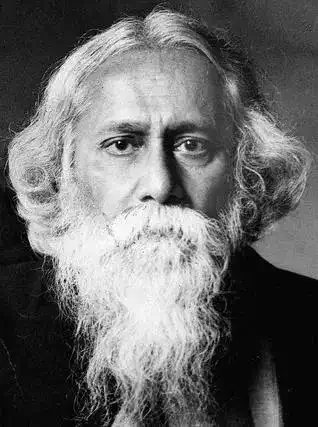
Rabindranath Tagore
Stray Birds 81 - 90
WHAT is this unseen flame of darkness
whose sparks are the stars?
82
LET life be beautiful like summer flowers
and death like autumn leaves.
88
HE who wants to do good knocks at the gate;
he who loves
finds the gate open.
84
IN death the many becomes one;
in life the one becomes many.
Religion will be one
when God is dead.
85
THE artist is the lover of Nature,
therefore he is her slave
and her master.
86
'HOW far are you from me, O Fruit?'
'I am hidden in your heart, O Flower.'
87
THIS longing is for the one who is felt in the dark,
but not seen in the day.
88
'YOU are the big drop of dew under the lotus leaf,
I am the smaller one on its upper side,
' said the dewdrop to the lake.
89
THE scabbard is content to be dull
when it protects the keenness of the sword.
90
IN darkness
the One appears as uniform;
in the light
the One appears as manifold.
560
Rabindranath Tagore
Lover's Gifts LIV: In the Beginning of Time
In the beginning of time, there rose from the churning of God's
dream two women. One is the dancer at the court of paradise, the
desired of men, she who laughs and plucks the minds of the wise
from their cold meditations and of fools from their emptiness; and
scatters them like seeds with careless hands in the extravagant
winds of March, in the flowering frenzy of May.
The other is the crowned queen of heaven, the mother, throned
on the fullness of golden autumn; she who in the harvest-time
brings straying hearts to the smile sweet as tears, the beauty deep
as the sea of silence, -brings them to the temple of the Unknown,
at the holy confluence of Life and Death.
528
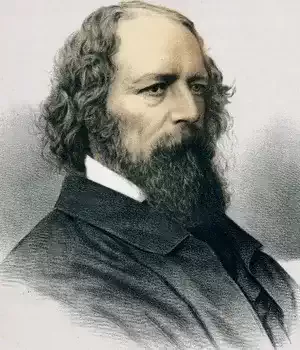
Alfred Lord Tennyson
The Oak
Live thy Life,
Young and old,
Like yon oak,
Bright in spring,
Living gold;
Summer-rich
Then; and then
Autumn-changed
Soberer-hued
Gold again.
All his leaves
Fall'n at length,
Look, he stands,
Trunk and bough
Naked strength.
Young and old,
Like yon oak,
Bright in spring,
Living gold;
Summer-rich
Then; and then
Autumn-changed
Soberer-hued
Gold again.
All his leaves
Fall'n at length,
Look, he stands,
Trunk and bough
Naked strength.
524
Rabindranath Tagore
Face To Face
Day after day, O lord of my life,
shall I stand before thee face to face.
With folded hands, O lord of all worlds,
shall I stand before thee face to face.
Under thy great sky in solitude and silence,
with humble heart shall I stand before thee face to face.
In this laborious world of thine, tumultuous with toil
and with struggle, among hurrying crowds
shall I stand before thee face to face.
And when my work shall be done in this world,
O King of kings, alone and speechless
shall I stand before thee face to face.
shall I stand before thee face to face.
With folded hands, O lord of all worlds,
shall I stand before thee face to face.
Under thy great sky in solitude and silence,
with humble heart shall I stand before thee face to face.
In this laborious world of thine, tumultuous with toil
and with struggle, among hurrying crowds
shall I stand before thee face to face.
And when my work shall be done in this world,
O King of kings, alone and speechless
shall I stand before thee face to face.
517
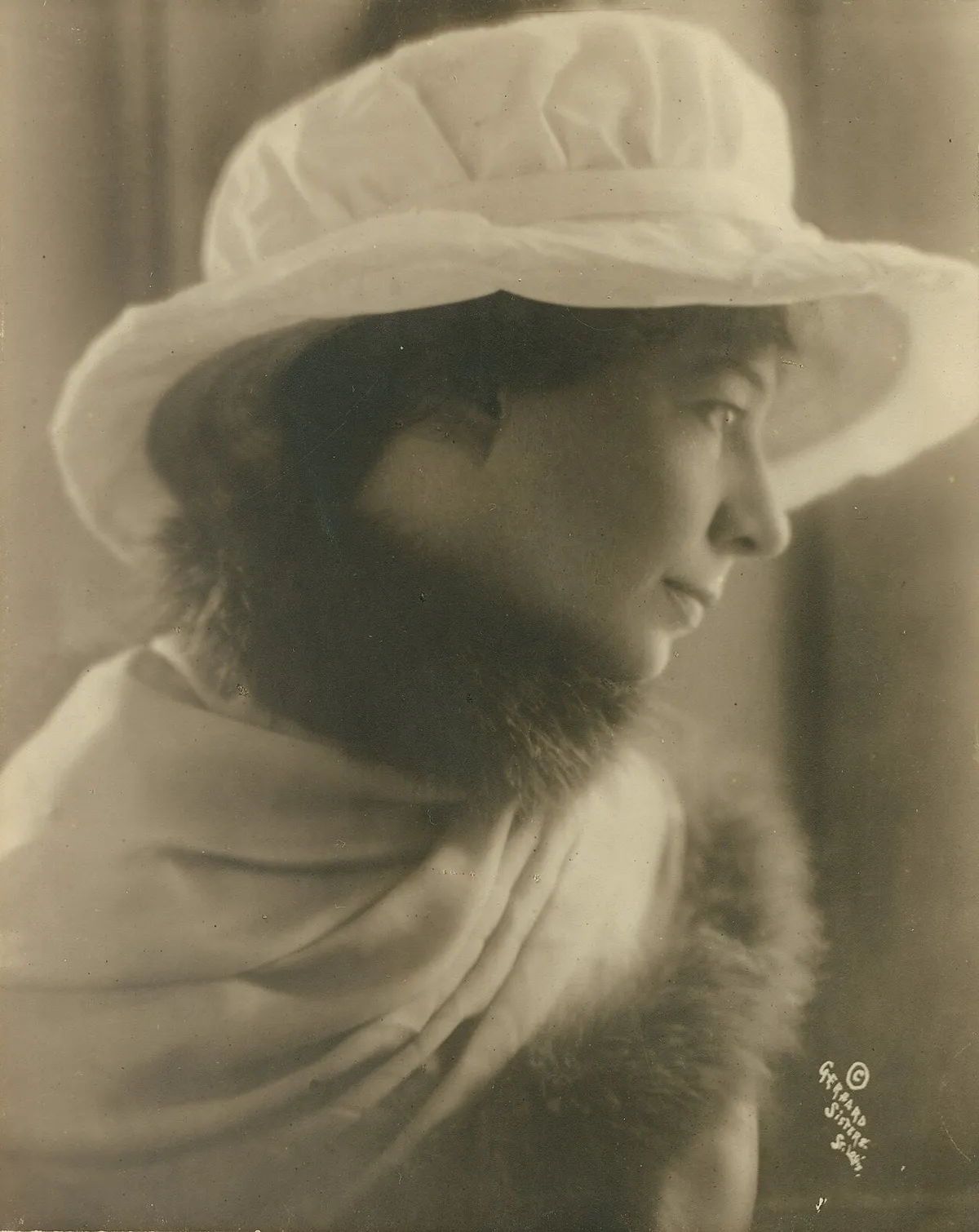
Sara Teasdale
Come
Come, when the pale moon like a petal
Floats in the pearly dusk of spring,
Come with arms outstretched to take me,
Come with lips pursed up to cling.
Come, for life is a frail moth flying,
Caught in the web of the years that pass,
And soon we two, so warm and eager,
Will be as the gray stones in the grass.
Floats in the pearly dusk of spring,
Come with arms outstretched to take me,
Come with lips pursed up to cling.
Come, for life is a frail moth flying,
Caught in the web of the years that pass,
And soon we two, so warm and eager,
Will be as the gray stones in the grass.
518
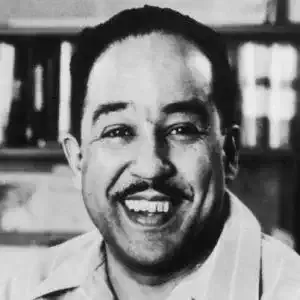
Langston Hughes
Mother to Son
Well, son, I'll tell you:
Life for me ain't been no crystal stair.
It's had tacks in it,
And splinters,
And boards torn up,
And places with no carpet on the floor—
Bare.
But all the time
I'se been a-climbin' on,
And reachin' landin's,
And turnin' corners,
And sometimes goin' in the dark
Where there ain't been no light.
So, boy, don't you turn back.
Don't you set down on the steps.
'Cause you finds it's kinder hard.
Don't you fall now—
For I'se still goin', honey,
I'se still climbin',
And life for me ain't been no crystal stair.
513
Rabindranath Tagore
Lover's Gifts XL: A Message Came
A message came from my youth of vanished days, saying, " I wait for
you among the quivering of unborn May, where smiles ripen for tears
and hours ache with songs unsung."
It says, "Come to me across the worn-out track of age, through
the gates of death. For dreams fade, hopes fail, the fathered
fruits of the year decay, but I am the eternal truth, and you shall
meet me again and again in your voyage of life from shore to
shore."
509
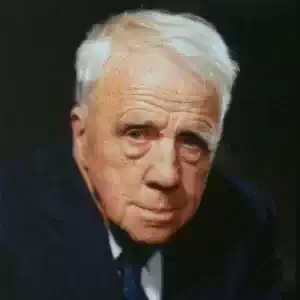
Robert Frost
The Road Not Taken
Two roads diverged in a yellow wood,
And sorry I could not travel both
And be one traveler, long I stood
And looked down one as far as I could
To where it bent in the undergrowth;
Then took the other, just as fair,
And having perhaps the better claim
Because it was grassy and wanted wear,
Though as for that the passing there
Had worn them really about the same,
And both that morning equally lay
In leaves no step had trodden black.
Oh, I marked the first for another day!
Yet knowing how way leads on to way
I doubted if I should ever come back.
I shall be telling this with a sigh
Somewhere ages and ages hence:
Two roads diverged in a wood, and I,
I took the one less traveled by,
And that has made all the difference.
503
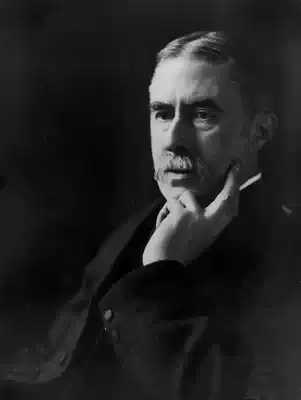
Alfred Edward Housman
Think No More, Lad
Think no more, lad; laugh, be jolly:
Why should men make haste to die?
Empty heads and tongues a-talking
Make the rough road easy walking,
And the feather pate of folly
Bears the falling sky.
Oh, 'tis jesting, dancing, drinking
Spins the heavy world around.
If young hearts were not so clever,
Oh, they would be young for ever:
Think no more; 'tis only thinking
Lays lads underground.
496
Alfred Edward Housman
From Far, From Eve and Morning
From far, from eve and morning
And yon twelve-winded sky,
The stuff of life to knit me
Blew hither: here am I.
Now-- for a breath I tarry
Nor yet disperse apart--
Take my hand quick and tell me,
What have you in your heart.
Speak now, and I will answer;
How shall I help you, say;
Ere to the wind's twelve quarters
I take my endless way.
490
Rudyard Kipling
The Fall of Jock Gillespie
This fell when dinner-time was done --
'Twixt the first an' the second rub --
That oor mon Jock cam' hame again
To his rooms ahist the Club.
An' syne he laughed, an' syne he sang,
An' syne we thocht him fou,
An' syne he trumped his partner's trick,
An' garred his partner rue.
Then up and spake an elder mon,
That held the Spade its Ace --
God save the lad! Whence comes the licht
"That wimples on his face?"
An' Jock he sniggered, an' Jock he smiled,
An' ower the card-brim wunk: --
"I'm a' too fresh fra' the stirrup-peg,
"May be that I am drunk."
"There's whusky brewed in Galashils
"An' L. L. L. forbye;
"But never liquor lit the lowe
"That keeks fra' oot your eye.
"There's a third o' hair on your dress-coat breast,
"Aboon the heart a wee?"
"Oh! that is fra' the lang-haired Skye
"That slobbers ower me."
"Oh! lang-haired Skyes are lovin' beasts,
"An' terrier dogs are fair,
"But never yet was terrier born,
"Wi' ell-lang gowden hair!
"There's a smirch o' pouther on your breast,
"Below the left lappel?"
"Oh! that is fra' my auld cigar,
"Whenas the stump-end fell."
"Mon Jock, ye smoke the Trichi coarse,
"For ye are short o' cash,
"An' best Havanas Couldna leave
"Sae white an' pure an ash.
"This nicht ye stopped a story braid,
"An' stopped it wi' a curse.
"Last nicht ye told that tale yoursel' --
"An' capped it wi' a worse!
"Oh! we're no fou! Oh! we're no fou!
"But plainly we can ken
"Ye're fallin', fallin' fra the band
"O' cantie single men!"
An' it fell when sirris-shaws were sere,
An' the nichts were lang and mirk,
In braw new breeks, wi' a gowden ring,
Oor Jocke gaed to the Kirk!
489

Ezra Pound
Au Jardin
O you away high there,
you that lean
From amber lattices upon the cobalt night,
I am below amid the pine trees,
Amid the little pine trees, hear me!
'The jester walked in the garden.'
Did he so?
Well, there's no use your loving me
That way, Lady;
For I've nothing but songs to give you.
I am set wide upon the world's ways
To say that life is, some way, a gay thing,
But you never string two days upon one wire
But there'll come sorrow of it.
And I loved a love once,
Over beyond the moon there,
I loved a love once,
And, may be, more times,
But she danced like a pink moth in the shrubbery.
Oh, I know you women from the 'other folk',
And it'll all come right,
O' Sundays.
'The jester walked in the garden.'
Did he so?
488

Johann Wolfgang von Goethe
Spirit Song Over The Waters
THE soul of man
Resembleth water:
From heaven it cometh,
To heaven it soareth.
And then again
To earth descendeth,
Changing ever.
Down from the lofty
Rocky wall
Streams the bright flood,
Then spreadeth gently
In cloudy billows
O'er the smooth rock,
And welcomed kindly,
Veiling, on roams it,
Soft murmuring,
Tow'rd the abyss.
Cliffs projecting
Oppose its progress,--
Angrily foams it
Down to the bottom,
Step by step.
Now, in flat channel,
Through the meadowland steals it,
And in the polish'd lake
Each constellation
Joyously peepeth.
Wind is the loving
Wooer of waters;
Wind blends together
Billows all-foaming.
Spirit of man,
Thou art like unto water!
Fortune of man,
Thou art like unto wind!
486
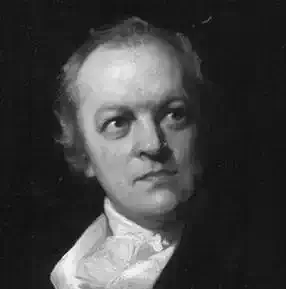
William Blake
Preludium to America
The shadowy Daughter of Urthona stood before red Orc,
When fourteen suns had faintly journey'd o'er his dark abode:
His food she brought in iron baskets, his drink in cups of iron:
Crown'd with a helmet and dark hair the nameless female stood;
A quiver with its burning stores, a bow like that of night,
When pestilence is shot from heaven: no other arms she need!
Invulnerable though naked, save where clouds roll round her loins
Their awful folds in the dark air: silent she stood as night;
For never from her iron tongue could voice or sound arise,
But dumb till that dread day when Orc assay'd his fierce embrace.
'Dark Virgin,' said the hairy youth, 'thy father stern, abhorr'd,
Rivets my tenfold chains while still on high my spirit soars;
Sometimes an Eagle screaming in the sky, sometimes a Lion
Stalking upon the mountains, and sometimes a Whale, I lash
The raging fathomless abyss; anon a Serpent folding
Around the pillars of Urthona, and round thy dark limbs
On the Canadian wilds I fold; feeble my spirit folds,
For chain'd beneath I rend these caverns: when thou bringest food
I howl my joy, and my red eyes seek to behold thy face--
In vain! these clouds roll to and fro, and hide thee from my sight.'
Silent as despairing love, and strong as jealousy,
The hairy shoulders rend the links; free are the wrists of fire;
Round the terrific loins he seiz'd the panting, struggling womb;
It joy'd: she put aside her clouds and smiled her first-born smile,
As when a black cloud shews its lightnings to the silent deep.
Soon as she saw the terrible boy, then burst the virgin cry:
'I know thee, I have found thee, and I will not let thee go:
Thou art the image of God who dwells in darkness of Africa,
And thou art fall'n to give me life in regions of dark death.
On my American plains I feel the struggling afflictions
Endur'd by roots that writhe their arms into the nether deep.
I see a Serpent in Canada who courts me to his love,
In Mexico an Eagle, and a Lion in Peru;
I see a Whale in the south-sea, drinking my soul away.
O what limb-rending pains I feel! thy fire and my frost
Mingle in howling pains, in furrows by thy lightnings rent.
This is eternal death, and this the torment long foretold.'
487
Alfred Lord Tennyson
All Things will Die
All Things will Die
Clearly the blue river chimes in its flowing
Under my eye;
Warmly and broadly the south winds are blowing
Over the sky.
One after another the white clouds are fleeting;
Every heart this May morning in joyance is beating
Full merrily;
Yet all things must die.
The stream will cease to flow;
The wind will cease to blow;
The clouds will cease to fleet;
The heart will cease to beat;
For all things must die.
All things must die.
Spring will come never more.
O, vanity!
Death waits at the door.
See! our friends are all forsaking
The wine and the merrymaking.
We are call’d–we must go.
Laid low, very low,
In the dark we must lie.
The merry glees are still;
The voice of the bird
Shall no more be heard,
Nor the wind on the hill.
O, misery!
Hark! death is calling
While I speak to ye,
The jaw is falling,
The red cheek paling,
The strong limbs failing;
Ice with the warm blood mixing;
The eyeballs fixing.
Nine times goes the passing bell:
Ye merry souls, farewell.
The old earth
Had a birth,
As all men know,
Long ago.
And the old earth must die.
So let the warm winds range,
And the blue wave beat the shore;
For even and morn
Ye will never see
Thro’ eternity.
All things were born.
Ye will come never more,
For all things must die.
481
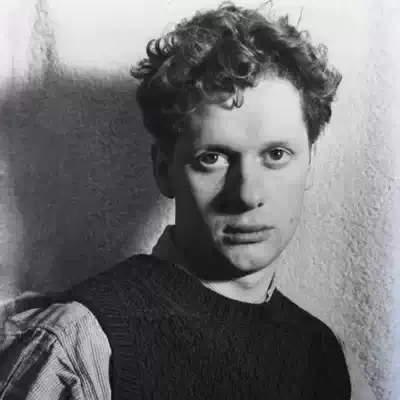
Dylan Thomas
In The White Giant's Thigh
Through throats where many rivers meet, the curlews cry,
Under the conceiving moon, on the high chalk hill,
And there this night I walk in the white giant's thigh
Where barren as boulders women lie longing still
To labour and love though they lay down long ago.
Through throats where many many rivers meet, the women pray,
Pleading in the waded bay for the seed to flow
Though the names on their weed grown stones are rained away,
And alone in the night's eternal, curving act
They yearn with tongues of curlews for the unconceived
And immemorial sons of the cudgelling, hacked
Hill. Who once in gooseskin winter loved all ice leaved
In the courters' lanes, or twined in the ox roasting sun
In the wains tonned so high that the wisps of the hay
Clung to the pitching clouds, or gay with any one
Young as they in the after milking moonlight lay
Under the lighted shapes of faith and their moonshade
Petticoats galed high, or shy with the rough riding boys,
Now clasp me to their grains in the gigantic glade,
Who once, green countries since, were a hedgerow of joys.
Time by, their dust was flesh the swineherd rooted sly,
Flared in the reek of the wiving sty with the rush
Light of his thighs, spreadeagle to the dunghill sky,
Or with their orchard man in the core of the sun's bush
Rough as cows' tongues and thrashed with brambles their buttermilk
Manes, under the quenchless summer barbed gold to the bone,
Or rippling soft in the spinney moon as the silk
And ducked and draked white lake that harps to a hail stone.
Who once were a bloom of wayside brides in the hawed house
And heard the lewd, wooed field flow to the coming frost,
The scurrying, furred small friars squeal, in the dowse
Of day, in the thistle aisles, till the white owl crossed
Their breast, the vaulting does roister, the horned bucks climb
Quick in the wood at love, where a torch of foxes foams,
All birds and beasts of the linked night uproar and chime
And the mole snout blunt under his pilgrimage of domes,
Or, butter fat goosegirls, bounced in a gambo bed,
Their breasts full of honey, under their gander king
Trounced by his wings in the hissing shippen, long dead
And gone that barley dark where their clogs danced in the spring,
And their firefly hairpins flew, and the ricks ran round-
(But nothing bore, no mouthing babe to the veined hives
Hugged, and barren and bare on Mother Goose's ground
They with the simple Jacks were a boulder of wives)--
Now curlew cry me down to kiss the mouths of their dust.
The dust of their kettles and clocks swings to and fro
Where the hay rides now or the bracken kitchens rust
As the arc of the billhooks that flashed the hedges low
And cut the birds' boughs that the minstrel sap ran red.
They from houses where the harvest kneels, hold me hard,
Who heard the tall bell sail down the Sundays of the dead
And the rain wring out its tongues on the faded yard,
Teach me the love that is evergreen after the fall leaved
Grave, after Belovéd on the grass gulfed cross is scrubbed
Off by the sun and Daughters no longer grieved
Save by their long desires in the fox cubbed
Streets or hungering in the crumbled wood: to these
Hale dead and deathless do the women of the hill
Love for ever meridian through the courters' trees
And the daughters of darkness flame like Fawkes fires still.
480

Lord Byron
Fill The Goblet Again: A Song
Fill the goblet again! for I never before
Felt the glow which now gladdens my heart to its core;
Let us drink!who
would not?since,
through life's varied round,
In the goblet alone no deception is found.
I have tried in its turn all that life can supply;
I have bask'd in the beam of a dark rolling eye;
I have loved!who
has not?but
what heart can declare
That pleasure existed while passion was there?
In the days of my youth, when the heart's in its spring,
And dreams that affection can never take wing,
I had friends!who
has not?but
what tongue will avow,
That friends, rosy wine! are so faithful as thou?
The heart of a mistress some boy may estrange,
Friendship shifts with the sunbeamthou
never canst change;
Thou grow'st oldwho
does not?but
on earth what appears,
Whose virtues, like thine, still increase with its years?
Yet if blest to the utmost that love can bestow,
Should a rival bow down to our idol below,
We aree jealous!who
is not?thou
hast no such alloy;
For the more that enjoy thee, the more we enjoy.
Then the season of youth and its vanities past,
For refuge we fly to the goblet at last;
There we finddo
we not?in
the flow of the soul,
That truth, as of yore, is confined to the bowl.
When the box of Pandora was opened on earth,
And Misery's triumph commenced over Mirth,
Hope was left,was
she not?but
the goblet we kiss,
And care not for Hope, who are certain of bliss.
Long life to the grape! for when summer is flown,
The age of our nectar shall gladden our own:
We must diewho
shall not?
May
our sins be forgiven,
And Hebe shall never be idle in heaven.
481

John Clare
Hen's Nest
Among the orchard weeds, from every search,
Snugly and sure, the old hen’s nest is made,
Who cackles every morning from her perch
To tell the servant girl new eggs are laid;
Who lays her washing by, and far and near
Goes seeking all about from day to day,
And stung with nettles tramples everywhere;
But still the cackling pullet lays away.
The boy on Sundays goes the stack to pull
In hopes to find her there, but naught is seen,
And takes his hat and thinks to find it full,
She’s laid so long so many might have been.
But naught is found and all is given o’er
Till the young brood come chirping to the door.
473
Robert Frost
On Looking Up by Chance at the Constellations
You'll wait a long, long time for anything much
To happen in heaven beyond the floats of cloud
And the Northern Lights that run like tingling nerves.
The sun and moon get crossed, but they never touch,
Nor strike out fire from each other nor crash out loud.
The planets seem to interfere in their curves -
But nothing ever happens, no harm is done.
We may as well go patiently on with our life,
And look elsewhere than to stars and moon and sun
For the shocks and changes we need to keep us sane.
It is true the longest drout will end in rain,
The longest peace in China will end in strife.
Still it wouldn't reward the watcher to stay awake
In hopes of seeing the calm of heaven break
On his particular time and personal sight.
That calm seems certainly safe to last to-night.
471

Ella Wheeler Wilcox
Sunshine And Shadow
Life has its shadows, as well as its sun;
Its lights and its shades, all twined together.
I tried to single them out, one by one,
Single and count them, determining whether
There was less blue than there was grey,
And more of the deep night than of the day.
But dear me, dear me, my task’s but begun,
And I am not half way into the sun.
For the longer I look on the bright side of earth,
The more of the beautiful do I discover;
And really, I never knew what life was worth
Till I searched the wide storehouse of happiness over.
It is filled from the cellar well up to the skies,
With things meant to gladden the heart and the eyes.
The doors are unlocked, you can enter each room,
That lies like a beautiful garden in bloom.
Yet life has its shadow, as well as its sun;
Earth has its storehouse of joy and sorrow.
But the first is so wide – and my task’s but begun –
That the last must be left for a far-distant morrow.
I will count up the blessings God gave in a row,
But dear me! When I get through them, I know
I shall have little tine left for the rest,
For life is a swift-flowing river at best.
466
Ella Wheeler Wilcox
The Two Glasses
There sat two glasses, filled to the brim,
On a rich man's table, rim to rim.
One was ruddy and red as blood,
And one was clear as the crystal flood.
Said the glass of wine to his paler brother,
"Let us tell tales of the past to each other;
I can tell of banquet, and revel, and mirth,
Where I was a king, for I ruled in might;
For the proudest and grandest souls on earth
Fell under my touch, as though struck with blight.
From the heads of kings I have torn the crown;
From the heights of fame I have hurled men down.
I have blasted many an honored name;
I have taken virtue and given shame;
I have tempted the youth with a sip, a taste,
That has made his future a barren waste.
Far greater than any king am I,
Or than any army beneath the sky.
I have made the arm of the driver fail,
And sent the train from the iron rail.
I have made good ships go down at sea,
And the shrieks of the lost were sweet to me.
Fame, strength, wealth, genius before me fall;
Ho, ho! pale brother," said the wine,
"Can you boast of deeds as great as mine?"
Said the water-glass: "I cannot boast
Of a king dethroned, or a murdered host,
But I can tell of hearts that were sad
By my crystal drops made bright and glad;
Of thirsts I have quenched, and brows I have laved;
Of hands I have cooled, and souls I have saved.
I have leaped through the valley, dashed down the mountain,
Slept in the sunshine, and dripped from the fountain.
I have burst my cloud-fetters, and dropped from the sky,
And everywhere gladdened the prospect and eye;
I have eased the hot forehead of fever and pain;
I have made the parched meadows grow fertile with grain.
I can tell of the powerful wheel of the mill,
That ground out the flower, and turned at my will.
I can tell of manhood debased by you,
That I have uplifted and crowned anew;
I cheer, I help, I strengthen and aid;
I gladden the heart of man and maid;
I set the wine-chained captive free,
And all are better for knowing me."
These are the tales they told each other,
The glass of wine and its paler brother,
As they sat together, filled to the brim,
On a rich man's table, rim to rim.
On a rich man's table, rim to rim.
One was ruddy and red as blood,
And one was clear as the crystal flood.
Said the glass of wine to his paler brother,
"Let us tell tales of the past to each other;
I can tell of banquet, and revel, and mirth,
Where I was a king, for I ruled in might;
For the proudest and grandest souls on earth
Fell under my touch, as though struck with blight.
From the heads of kings I have torn the crown;
From the heights of fame I have hurled men down.
I have blasted many an honored name;
I have taken virtue and given shame;
I have tempted the youth with a sip, a taste,
That has made his future a barren waste.
Far greater than any king am I,
Or than any army beneath the sky.
I have made the arm of the driver fail,
And sent the train from the iron rail.
I have made good ships go down at sea,
And the shrieks of the lost were sweet to me.
Fame, strength, wealth, genius before me fall;
Ho, ho! pale brother," said the wine,
"Can you boast of deeds as great as mine?"
Said the water-glass: "I cannot boast
Of a king dethroned, or a murdered host,
But I can tell of hearts that were sad
By my crystal drops made bright and glad;
Of thirsts I have quenched, and brows I have laved;
Of hands I have cooled, and souls I have saved.
I have leaped through the valley, dashed down the mountain,
Slept in the sunshine, and dripped from the fountain.
I have burst my cloud-fetters, and dropped from the sky,
And everywhere gladdened the prospect and eye;
I have eased the hot forehead of fever and pain;
I have made the parched meadows grow fertile with grain.
I can tell of the powerful wheel of the mill,
That ground out the flower, and turned at my will.
I can tell of manhood debased by you,
That I have uplifted and crowned anew;
I cheer, I help, I strengthen and aid;
I gladden the heart of man and maid;
I set the wine-chained captive free,
And all are better for knowing me."
These are the tales they told each other,
The glass of wine and its paler brother,
As they sat together, filled to the brim,
On a rich man's table, rim to rim.
468
Dylan Thomas
When, Like a Running Grave
When, like a running grave, time tracks you down,
Your calm and cuddled is a scythe of hairs,
Love in her gear is slowly through the house,
Up naked stairs, a turtle in a hearse,
Hauled to the dome,
Comes, like a scissors stalking, tailor age,
Deliver me who timid in my tribe,
Of love am barer than Cadaver's trap
Robbed of the foxy tongue, his footed tape
Of the bone inch
Deliver me, my masters, head and heart,
Heart of Cadaver's candle waxes thin,
When blood, spade-handed, and the logic time
Drive children up like bruises to the thumb,
From maid and head,
For, sunday faced, with dusters in my glove,
Chaste and the chaser, man with the cockshut eye,
I, that time's jacket or the coat of ice
May fail to fasten with a virgin o
In the straight grave,
Stride through Cadaver's country in my force,
My pickbrain masters morsing on the stone
Despair of blood faith in the maiden's slime,
Halt among eunuchs, and the nitric stain
On fork and face.
Time is a foolish fancy, time and fool.
No, no, you lover skull, descending hammer
Descends, my masters, on the entered honour.
You hero skull, Cadaver in the hangar
Tells the stick, 'fail.'
Joy is no knocking nation, sir and madam,
The cancer's fashion, or the summer feather
Lit on the cuddled tree, the cross of fever,
Not city tar and subway bored to foster
Man through macadam.
I dump the waxlights in your tower dome.
Joy is the knock of dust, Cadaver's shoot
Of bud of Adam through his boxy shift,
Love's twilit nation and the skull of state,
Sir, is your doom.
Everything ends, the tower ending and,
(Have with the house of wind), the leaning scene,
Ball of the foot depending from the sun,
(Give, summer, over), the cemented skin,
The actions' end.
All, men my madmen, the unwholesome wind
With whistler's cough contages, time on track
Shapes in a cinder death; love for his trick,
Happy Cadaver's hunger as you take
The kissproof world.
464

John Keats
Two Or Three
Two or three Posies
With two or three simples--
Two or three Noses
With two or three pimples--
Two or three wise men
And two or three ninny's--
Two or three guineas--
Two or three raps
At two or three doors--
Two or three naps
Of two or three hours--
Two or three Cats
And two or three mice--
Two or three sprats
At a very great price--
Two or three sandies
And two or three tabbies--
Two or three dandies
And two Mrs.------
Two or three Smiles
And two or three frowns--
Two or three Miles
To two or three towns--
Two or three pegs
For two or three bonnets--
Two or three dove eggs
To hatch into sonnets.
458