
Life
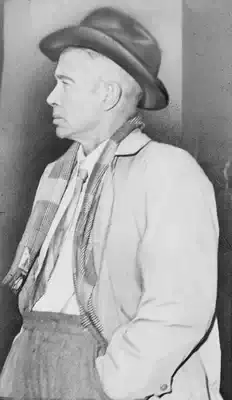
E. E. Cummings
Since feeling is first
since feeling is first
who pays any attention
to the syntax of things
will never wholly kiss you;
wholly to be a fool
while spring is in the world
my blood approves,
and kisses are a better fate
than wisdom
lady i swear by all flowers. Dont cry
-the best gesture of my brain is less than
your eyelids flutter which says
we are for each other: then
laugh, leaning back in my arms
for lifes not a paragraph
and death i think is no parenthesis
1,463

Christina Rossetti
Up-Hill
Does the road wind up-hill all the way?
Yes, to the very end.
Will the days journey take the whole long day?
From morn to night, my friend.
But is there for the night a resting-place?
A roof for when the slow dark hours begin.
May not the darkness hide it from my face?
You cannot miss that inn.
Shall I meet other wayfarers at night?
Those who have gone before.
Then must I knock, or call when ust in sight?
They will not keep you standing at that door.
Shall I find comfort, travel-sore and weak?
Of labor you shall find the sum.
Will there be beds for me and all who seek?
Yea, beds for all who come.
1,452

Rudyard Kipling
The Mary Gloster
I've paid for your sickest fancies; I've humoured your crackedest whim --
Dick, it's your daddy, dying; you've got to listen to him!
Good for a fortnight, am I? The doctor told you? He lied.
I shall go under by morning, and -- Put that nurse outside.
'Never seen death yet, Dickie? Well, now is your time to learn,
And you'll wish you held my record before it comes to your turn.
Not counting the Line and the Foundry, the yards and the village, too,
I've made myself and a million; but I'm damned if I made you.
Master at two-and-twenty, and married at twenty-three --
Ten thousand men on the pay-roll, and forty freighters at sea!
Fifty years between 'em, and every year of it fight,
And now I'm Sir Anthony Gloster, dying, a baronite:
For I lunched with his Royal 'Ighness -- what was it the papers a-had?
"Not least of our merchant-princes." Dickie, that's me, your dad!
I didn't begin with askings. I took my job and I stuck;
And I took the chances they wouldn't, an' now they're calling it luck.
Lord, what boats I've handled -- rotten and leaky and old!
Ran 'em, or -- opened the bilge-cock, precisely as I was told.
Grub that 'ud bind you crazy, and crews that 'ud turn you grey,
And a big fat lump of insurance to cover the risk on the way.
The others they dursn't do it; they said they valued their life
(They've served me since as skippers). I went, and I took my wife.
Over the world I drove 'em, married at twenty-three,
And your mother saving the money and making a man of me.
I was content to be master, but she said there was better behind;
She took the chances I wouldn't, and I followed your mother blind.
She egged me to borrow the money, an' she helped me to clear the loan,
When we bought half shares in a cheap 'un and hoisted a flag of our own.
Patching and coaling on credit, and living the Lord knew how,
We started the Red Ox freighters -- we've eight-and-thirty now.
And those were the days of clippers, and the freights were clipper-freights,
And we knew we were making our fortune, but she died in Macassar Straits --
By the Little Paternosters, as you come to the Union Bank --
And we dropped her in fourteen fathom; I pricked it off where she sank.
Owners we were, full owners, and the boat was christened for her,
And she died in the Mary Gloster. My heart, how young we were!
So I went on a spree round Java and well-nigh ran her ashore,
But your mother came and warned me and I wouldn't liquor no more:
Strict I stuck to my business, afraid to stop or I'd think,
Saving the money (she warned me), and letting the other men drink.
And I met M'Cullough in London (I'd turned five 'undred then),
And 'tween us we started the Foundry -- three forges and twenty men:
Cheap repairs for the cheap 'uns. It paid, and the business grew,
For I bought me a steam-lathe patent, and that was a gold mine too.
"Cheaper to build 'em than buy 'em," I said, but M'Cullough he shied,
And we wasted a year in talking before we moved to the Clyde.
And the Lines were all beginning, and we all of us started fair,
Building our engines like houses and staying the boilers square.
But M'Cullough 'e wanted cabins with marble and maple and all,
And Brussels an' Utrecht velvet, and baths and a Social Hall,
And pipes for closets all over, and cutting the frames too light,
But M'Cullough he died in the Sixties, and -- Well, I'm dying to-night. . . .
I knew -- I knew what was coming, when we bid on the Byfleet's keel --
They piddled and piffled with iron: I'd given my orders for steel!
Steel and the first expansions. It paid, I tell you, it paid,
When we came with our nine-knot freighters and collared the long-run trade!
And they asked me how I did it, and I gave 'em the Scripture text,
"You keep your light so shining a little in front o' the next!"
They copied all they could follow, but they couldn't copy my mind,
And I left 'em sweating and stealing a year and a half behind.
Then came the armour-contracts, but that was M'Cullough's side;
He was always best in the Foundry, but better, perhaps, he died.
I went through his private papers; the notes was plainer than print;
And I'm no fool to finish if a man'll give me a hint.
(I remember his widow was angry.) So I saw what the drawings meant,
And I started the six-inch rollers, and it paid me sixty per cent --
Sixty per cent with failures, and more than twice we could do,
And a quarter-million to credit, and I saved it all for you!
I thought -- it doesn't matter -- you seemed to favour your ma,
But you're nearer forty than thirty, and I know the kind you are.
Harrer an' Trinity College! I ought to ha' sent you to sea --
But I stood you an education, an' what have you done for me?
The things I knew was proper you wouldn't thank me to give,
And the things I knew was rotten you said was the way to live.
For you muddled with books and pictures, an' china an' etchin's an' fans,
And your rooms at college was beastly -- more like a whore's than a man's --
Till you married that thin-flanked woman, as white and as stale as a bone,
An' she gave you your social nonsense; but where's that kid o' your own?
I've seen your carriages blocking the half o' the Cromwell Road,
But never the doctor's brougham to help the missus unload.
(So there isn't even a grandchild, an' the Gloster family's done.)
Not like your mother, she isn't. She carried her freight each run.
But they died, the pore little beggars! At sea she had 'em -- they died.
Only you, an' you stood it; you haven't stood much beside.
Weak, a liar, and idle, and mean as a collier's whelp
Nosing for scraps in the galley. No help -- my son was no help!
So he gets three 'undred thousand, in trust and the interest paid.
I wouldn't give it you, Dickie -- you see, I made it in trade.
You're saved from soiling your fingers, and if you have no child,
It all comes back to the business. Gad, won't your wife be wild!
'Calls and calls in her carriage, her 'andkerchief up to 'er eye:
"Daddy! dear daddy's dyin'!" and doing her best to cry.
Grateful? Oh, yes, I'm grateful, but keep her away from here.
Your mother 'ud never ha' stood 'er, and, anyhow, women are queer. . . .
There's women will say I've married a second time.
Not quite! But give pore Aggie a hundred, and tell her your lawyers'll fight.
She was the best o' the boiling -- you'll meet her before it ends;
I'm in for a row with the mother -- I'll leave you settle my friends:
For a man he must go with a woman, which women don't understand --
Or the sort that say they can see it they aren't the marrying brand.
But I wanted to speak o' your mother that's Lady Gloster still --
I'm going to up and see her, without it's hurting the will.
Here! Take your hand off the bell-pull. Five thousand's waiting for you,
If you'll only listen a minute, and do as I bid you do.
They'll try to prove me crazy, and, if you bungle, they can;
And I've only you to trust to! (O God, why ain't he a man?)
There's some waste money on marbles, the same as M'Cullough tried --
Marbles and mausoleums -- but I call that sinful pride.
There's some ship bodies for burial -- we've carried 'em, soldered and packed;
Down in their wills they wrote it, and nobody called them cracked.
But me -- I've too much money, and people might. . . . All my fault:
It come o' hoping for grandsons and buying that Wokin' vault.
I'm sick o' the 'ole dam' business; I'm going back where I came.
Dick, you're the son o' my body, and you'll take charge o' the same!
I want to lie by your mother, ten thousand mile away,
And they'll want to send me to Woking; and that's where you'll earn your pay.
I've thought it out on the quiet, the same as it ought to be done --
Quiet, and decent, and proper -- an' here's your orders, my son.
You know the Line? You don't, though. You write to the Board, and tell
Your father's death has upset you an' you're goin' to cruise for a spell,
An' you'd like the Mary Gloster -- I've held her ready for this --
They'll put her in working order and you'll take her out as she is.
Yes, it was money idle when I patched her and put her aside
(Thank God, I can pay for my fancies!) -- the boat where your mother died,
By the Little Paternosters, as you come to the Union Bank,
We dropped her -- I think I told you -- and I pricked it off where she sank --
['Tiny she looked on the grating -- that oily, treacly sea --]
'Hundred and eighteen East, remember, and South just three.
Easy bearings to carry -- three South -- three to the dot;
But I gave M'Andrew a copy in case of dying -- or not.
And so you'll write to M'Andrew, he's Chief of the Maori Line;
They'll give him leave, if you ask 'em and say it's business o' mine.
I built three boats for the Maoris, an' very well pleased they were,
An' I've known Mac since the Fifties, and Mac knew me -- and her.
After the first stroke warned me I sent him the money to keep
Against the time you'd claim it, committin' your dad to the deep;
For you are the son o' my body, and Mac was my oldest friend,
I've never asked 'im to dinner, but he'll see it out to the end.
Stiff-necked Glasgow beggar, I've heard he's prayed for my soul,
But he couldn't lie if you paid him, and he'd starve before he stole!
He'll take the Mary in ballast -- you'll find her a lively ship;
And you'll take Sir Anthony Gloster, that goes on 'is wedding-trip,
Lashed in our old deck-cabin with all three port-holes wide,
The kick o' the screw beneath him and the round blue seas outside!
Sir Anthony Gloster's carriage -- our 'ouse-flag flyin' free --
Ten thousand men on the pay-roll and forty freighters at sea!
He made himself and a million, but this world is a fleetin' show,
And he'll go to the wife of 'is bosom the same as he ought to go --
By the heel of the Paternosters -- there isn't a chance to mistake --
And Mac'll pay you the money as soon as the bubbles break!
Five thousand for six weeks' cruising, the staunchest freighter afloat,
And Mac he'll give you your bonus the minute I'm out o' the boat!
He'll take you round to Macassar, and you'll come back alone;
He knows what I want o' the Mary. . . . I'll do what I please with my own.
Your mother 'ud call it wasteful, but I've seven-and-thirty more;
I'll come in my private carriage and bid it wait at the door. . . .
For my son 'e was never a credit: 'e muddled with books and art,
And 'e lived on Sir Anthony's money and 'e broke Sir Anthony's heart.
There isn't even a grandchild, and the Gloster family's done --
The only one you left me, O mother, the only one!
Harrer and Trinity College -- me slavin' early an' late --
An' he thinks I'm dying crazy, and you're in Macassar Strait!
Flesh o' my flesh, my dearie, for ever an' ever amen,
That first stroke come for a warning; I ought to ha' gone to you then,
But -- cheap repairs for a cheap 'un -- the doctors said I'd do:
Mary, why didn't you warn me? I've allus heeded to you,
Excep' -- I know -- about women; but you are a spirit now;
An', wife, they was only women, and I was a man. That's how.
An' a man 'e must go with a woman, as you could not understand;
But I never talked 'em secrets. I paid 'em out o' hand.
Thank Gawd, I can pay for my fancies! Now what's five thousand to me,
For a berth off the Paternosters in the haven where I would be?
I believe in the Resurrection, if I read my Bible plain,
But I wouldn't trust 'em at Wokin'; we're safer at sea again.
For the heart it shall go with the treasure -- go down to the sea in ships.
I'm sick of the hired women -- I'll kiss my girl on her lips!
I'll be content with my fountain, I'll drink from my own well,
And the wife of my youth shall charm me -- an' the rest can go to Hell!
(Dickie, he will, that's certain.) I'll lie in our standin'-bed,
An' Mac'll take her in ballast -- an' she trims best by the head. . . .
Down by the head an' sinkin', her fires are drawn and cold,
And the water's splashin' hollow on the skin of the empty hold --
Churning an' choking and chuckling, quiet and scummy and dark --
Full to her lower hatches and risin' steady. Hark!
That was the after-bulkhead. . . . She's flooded from stem to stern. . . .
Never seen death yet, Dickie? . . . Well, now is your time to learn!
1,313
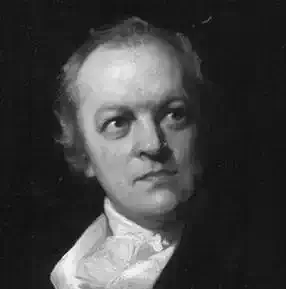
William Blake
Proverbs of Hell (Excerpt from The Marriage of Heaven and H
In seed time learn, in harvest teach, in winter enjoy.
Drive your cart and your plow over the bones of the dead.
The road of excess leads to the palace of wisdom.
Prudence is a rich, ugly old maid courted by Incapacity.
He who desires but acts not, breeds pestilence.
The cut worm forgives the plow.
Dip him in the river who loves water.
A fool sees not the same tree that a wise man sees.
He whose face gives no light, shall never become a star.
Eternity is in love with the productions of time.
The busy bee has no time for sorrow.
The hours of folly are measur'd by the clock; but of wisdom, no clock can measure.
All wholesome food is caught without a net or a trap.
Bring out number, weight and measure in a year of dearth.
No bird soars too high, if he soars with his own wings.
A dead body revenges not injuries.
The most sublime act is to set another before you.
If the fool would persist in his folly he would become wise.
Folly is the cloak of knavery.
Shame is Pride's cloke.
Prisons are built with stones of law, brothels with bricks of religion.
The pride of the peacock is the glory of God.
The lust of the goat is the bounty of God.
The wrath of the lion is the wisdom of God.
The nakedness of woman is the work of God.
Excess of sorrow laughs. Excess of joy weeps.
The roaring of lions, the howling of wolves, the raging of the stormy sea, and the
destructive sword, are portions of eternity, too great for the eye of man.
The fox condemns the trap, not himself.
Joys impregnate. Sorrows bring forth.
Let man wear the fell of the lion, woman the fleece of the sheep.
The bird a nest, the spider a web, man friendship.
The selfish, smiling fool, and the sullen, frowning fool shall be both thought wise, that
they may be a rod.
What is now proved was once only imagin'd.
The rat, the mouse, the fox, the rabbit watch the roots; the lion, the tyger, the horse,
the elephant watch the fruits.
The cistern contains: the fountain overflows.
One thought fills immensity.
Always be ready to speak your mind, and a base man will avoid you.
Every thing possible to be believ'd is an image of truth.
The eagle never lost so much time as when he submitted to learn of the crow.
The fox provides for himself, but God provides for the lion.
Think in the morning. Act in the noon. Eat in the evening. Sleep in the night.
He who has suffer'd you to impose on him, knows you.
As the plow follows words, so God rewards prayers.
The tygers of wrath are wiser than the horses of instruction.
Expect poison from the standing water.
You never know what is enough unless you know what is more than enough.
Listen to the fool's reproach! it is a kingly title!
The eyes of fire, the nostrils of air, the mouth of water, the beard of earth.
The weak in courage is strong in cunning.
The apple tree never asks the beech how he shall grow; nor the lion, the horse, how
he shall take his prey.
The thankful receiver bears a plentiful harvest.
If others had not been foolish, we should be so.
The soul of sweet delight can never be defil'd.
When thou seest an eagle, thou seest a portion of genius; lift up thy head!
As the caterpiller chooses the fairest leaves to lay her eggs on, so the priest lays his
curse on the fairest joys.
To create a little flower is the labour of ages.
Damn braces. Bless relaxes.
The best wine is the oldest, the best water the newest.
Prayers plow not! Praises reap not!
Joys laugh not! Sorrows weep not!
The head Sublime, the heart Pathos, the genitals Beauty, the hands and feet
Proportion.
As the air to a bird or the sea to a fish, so is contempt to the contemptible.
The crow wish'd every thing was black, the owl that every thing was white.
Exuberance is Beauty.
If the lion was advised by the fox, he would be cunning.
Improvement makes strait roads; but the crooked roads without improvement are
roads of genius.
Sooner murder an infant in its cradle than nurse unacted desires.
Where man is not, nature is barren.
Truth can never be told so as to be understood, and not be believ'd.
Enough! or too much.
1,225

Theodore Roethke
The Waking
I wake to sleep, and take my waking slow.
I feel my fate in what I cannot fear.
I learn by going where I have to go.
We think by feeling. What is there to know?
I hear my being dance from ear to ear.
I wake to sleep, and take my waking slow.
Of those so close beside me, which are you?
God bless the Ground! I shall walk softly there,
And learn by going where I have to go.
Light takes the Tree; but who can tell us how?
The lowly worm climbs up a winding stair;
I wake to sleep, and take my waking slow.
Great Nature has another thing to do
To you and me, so take the lively air,
And, lovely, learn by going where to go.
This shaking keeps me steady. I should know.
What falls away is always. And is near.
I wake to sleep, and take my waking slow.
I learn by going where I have to go.
1,303
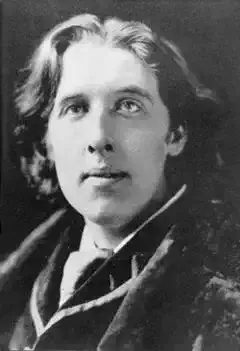
Oscar Wilde
Desespoir
The seasons send their ruin as they go,
For in the spring the narciss shows its head
Nor withers till the rose has flamed to red,
And in the autumn purple violets blow,
And the slim crocus stirs the winter snow;
Wherefore yon leafless trees will bloom again
And this grey land grow green with summer rain
And send up cowslips for some boy to mow.
But what of life whose bitter hungry sea
Flows at our heels, and gloom of sunless night
Covers the days which never more return?
Ambition, love and all the thoughts that burn
We lose too soon, and only find delight
In withered husks of some dead memory.
1,306
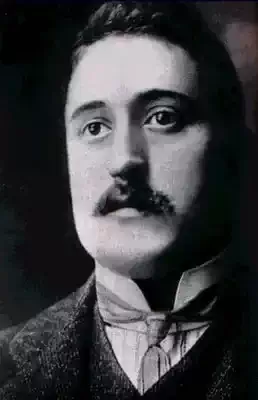
Guillaume Apollinaire
The Bestiary: or Orpheus’s Procession
(Le Bestiaire ou Cortège d’Orphée)
Orpheus
Admire the vital power
And nobility of line:
It’s the voice that the light made us understand here
That Hermes Trismegistus writes of in Pimander.
The Tortoise
From magic Thrace, O delerium!
My sure fingers sound the strings.
The creatures pass to the sounds
Of my tortoise, and the songs I sing.
The Horse
My harsh dreams knew the riding of you
My gold-charioted fate will be your lovely car
That for reins will hold tight to frenzy,
My verses, the patterns of all poetry.
The Tibetan Goat
The fleece of this goat and even
That gold one which cost such pain
To Jason’s not worth a sou towards
The tresses with which I’m taken.
The Serpent
You set yourself against beauty.
And how many women have been
victims of your cruelty!
Eve, Eurydice, Cleopatra:
I know three or four more after.
The Cat
I wish there to be in my house:
A woman possessing reason,
A cat among books passing by,
Friends for every season
Lacking whom I’m barely alive.
The Lion
O lion, miserable image
Of kings lamentably chosen,
Now you’re only born in a cage
In Hamburg, among the Germans.
The Hare
Don’t be fearful and lascivious
Like the hare and the amorous.
But always let your brain weave
The full form that conceives.
The Rabbit
There’s another cony I remember
That I’d so like to take alive.
Its haunt is there among the thyme
In the valleys of the Land of Tender.
The Dromedary
With his four dromedaries
Don Pedro of Alfaroubeira
Travels the world and admires her.
He does what I would rather
If I’d those four dromedaries.
The Mouse
Sweet days, the mice of time,
You gnaw my life, moon by moon.
God! I’ve twenty eight years soon,
and badly spent ones I imagine.
The Elephant
I carry treasure in my mouth,
As an elephant his ivory.
At the price of flowing words,
Purple death!…I buy my glory.
Orpheus
Look at this pestilential tribe
Its thousand feet, its hundred eyes:
Beetles, insects, lice
And microbes more amazing
Than the world’s seventh wonder
And the palace of Rosamunde!
The Caterpillar
Work leads us to riches.
Poor poets, work on!
The caterpillar’s endless sigh
Becomes the lovely butterfly.
The Fly
The songs that our flies know
Were taught to them in Norway
By flies who are they say
Divinities of snow.
The Flea
Fleas, friends, lovers too,
How cruel are those who love us!
All our blood pours out for them.
The well-beloved are wretched then.
The Grasshopper
Here’s the slender grasshopper
The food that fed Saint John.
May my verse be similar,
A treat for the best of men.
Orpheus
His heart was the bait: the heavens were the pond!
For, fisherman, what fresh or seawater catch
equals him, either in form or savour,
that lovely divine fish, Jesus, My Saviour?
The Dolphin
Dolphins, playing in the sea
The wave is bitter gruel.
Does my joy sometimes erupt?
Yet life is still so cruel.
The Octopus
Hurling his ink at skies above,
Sucking the blood of what he loves
And finding it delicious,
Is myself the monster, vicious.
The Jellyfish
Medusas, miserable heads
With hairs of violet
You enjoy the hurricane
And I enjoy the very same.
The Lobster
Uncertainty, O my delights
You and I we go
As lobsters travel onwards, quite
Backwards, Backwards, O.
The Carp
In your pools, and in your ponds,
Carp, you indeed live long!
Is it that death forgets to free
You fishes of melancholy?
Orpheus
The female of the Halcyon,
Love, the seductive Sirens,
All know the fatal songs
Dangerous and inhuman.
Don’t listen to those cursed birds
But Paradisial Angels’ words.
The Sirens
Do I know where your ennui’s from, Sirens,
When you grieve so widely under the stars?
Sea, I am like you, filled with broken voices,
And my ships, singing, give a name to the years.
The Dove
Dove, both love and spirit
Who engendered Jesus Christ,
Like you I love a Mary.
And so with her I marry.
The Peacock
In spreading out his fan, this bird,
Whose plumage drags on earth, I fear,
Appears more lovely than before,
But makes his derrière appear.
The Owl
My poor heart’s an owl
One woos, un-woos, re-woos.
Of blood, of ardour, he’s the fowl.
I praise those who love me, too.
Ibis
Yes, I’ll pass fearful shadows
O certain death, let it be so!
Latin mortal dreadful word,
Ibis, Nile’s native bird.
The Ox
This cherubim sings the praises
Of Paradise where, with Angels,
We’ll live once more, dear friends,
When the good God intends.
Orpheus
Admire the vital power
And nobility of line:
It’s the voice that the light made us understand here
That Hermes Trismegistus writes of in Pimander.
The Tortoise
From magic Thrace, O delerium!
My sure fingers sound the strings.
The creatures pass to the sounds
Of my tortoise, and the songs I sing.
The Horse
My harsh dreams knew the riding of you
My gold-charioted fate will be your lovely car
That for reins will hold tight to frenzy,
My verses, the patterns of all poetry.
The Tibetan Goat
The fleece of this goat and even
That gold one which cost such pain
To Jason’s not worth a sou towards
The tresses with which I’m taken.
The Serpent
You set yourself against beauty.
And how many women have been
victims of your cruelty!
Eve, Eurydice, Cleopatra:
I know three or four more after.
The Cat
I wish there to be in my house:
A woman possessing reason,
A cat among books passing by,
Friends for every season
Lacking whom I’m barely alive.
The Lion
O lion, miserable image
Of kings lamentably chosen,
Now you’re only born in a cage
In Hamburg, among the Germans.
The Hare
Don’t be fearful and lascivious
Like the hare and the amorous.
But always let your brain weave
The full form that conceives.
The Rabbit
There’s another cony I remember
That I’d so like to take alive.
Its haunt is there among the thyme
In the valleys of the Land of Tender.
The Dromedary
With his four dromedaries
Don Pedro of Alfaroubeira
Travels the world and admires her.
He does what I would rather
If I’d those four dromedaries.
The Mouse
Sweet days, the mice of time,
You gnaw my life, moon by moon.
God! I’ve twenty eight years soon,
and badly spent ones I imagine.
The Elephant
I carry treasure in my mouth,
As an elephant his ivory.
At the price of flowing words,
Purple death!…I buy my glory.
Orpheus
Look at this pestilential tribe
Its thousand feet, its hundred eyes:
Beetles, insects, lice
And microbes more amazing
Than the world’s seventh wonder
And the palace of Rosamunde!
The Caterpillar
Work leads us to riches.
Poor poets, work on!
The caterpillar’s endless sigh
Becomes the lovely butterfly.
The Fly
The songs that our flies know
Were taught to them in Norway
By flies who are they say
Divinities of snow.
The Flea
Fleas, friends, lovers too,
How cruel are those who love us!
All our blood pours out for them.
The well-beloved are wretched then.
The Grasshopper
Here’s the slender grasshopper
The food that fed Saint John.
May my verse be similar,
A treat for the best of men.
Orpheus
His heart was the bait: the heavens were the pond!
For, fisherman, what fresh or seawater catch
equals him, either in form or savour,
that lovely divine fish, Jesus, My Saviour?
The Dolphin
Dolphins, playing in the sea
The wave is bitter gruel.
Does my joy sometimes erupt?
Yet life is still so cruel.
The Octopus
Hurling his ink at skies above,
Sucking the blood of what he loves
And finding it delicious,
Is myself the monster, vicious.
The Jellyfish
Medusas, miserable heads
With hairs of violet
You enjoy the hurricane
And I enjoy the very same.
The Lobster
Uncertainty, O my delights
You and I we go
As lobsters travel onwards, quite
Backwards, Backwards, O.
The Carp
In your pools, and in your ponds,
Carp, you indeed live long!
Is it that death forgets to free
You fishes of melancholy?
Orpheus
The female of the Halcyon,
Love, the seductive Sirens,
All know the fatal songs
Dangerous and inhuman.
Don’t listen to those cursed birds
But Paradisial Angels’ words.
The Sirens
Do I know where your ennui’s from, Sirens,
When you grieve so widely under the stars?
Sea, I am like you, filled with broken voices,
And my ships, singing, give a name to the years.
The Dove
Dove, both love and spirit
Who engendered Jesus Christ,
Like you I love a Mary.
And so with her I marry.
The Peacock
In spreading out his fan, this bird,
Whose plumage drags on earth, I fear,
Appears more lovely than before,
But makes his derrière appear.
The Owl
My poor heart’s an owl
One woos, un-woos, re-woos.
Of blood, of ardour, he’s the fowl.
I praise those who love me, too.
Ibis
Yes, I’ll pass fearful shadows
O certain death, let it be so!
Latin mortal dreadful word,
Ibis, Nile’s native bird.
The Ox
This cherubim sings the praises
Of Paradise where, with Angels,
We’ll live once more, dear friends,
When the good God intends.
950

William Shakespeare
Sonnet 146: Poor soul, the centre of my sinful earth
Poor soul, the centre of my sinful earth,
[......] these rebel powers that thee array,
Why dost thou pine within and suffer dearth,
Painting thy outward walls so costly gay?
Why so large cost, having so short a lease,
Dost thou upon thy fading mansion spend?
Shall worms, inheritors of this excess,
Eat up thy charge? Is this thy body's end?
Then soul, live thou upon thy servant's loss
And let that pine to aggravate thy store;
Buy terms divine in selling hours of dross;
Within be fed, without be rich no more.
So shalt thou feed on Death, that feeds on men,
And, Death once dead, there's no more dying then.
948
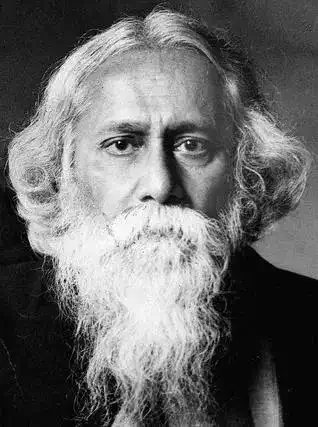
Rabindranath Tagore
Stream Of Life
The same stream of life that runs through my veins night and day
runs through the world and dances in rhythmic measures.
It is the same life that shoots in joy through the dust of the earth
in numberless blades of grass
and breaks into tumultuous waves of leaves and flowers.
It is the same life that is rocked in the ocean-cradle of birth
and of death, in ebb and in flow.
I feel my limbs are made glorious by the touch of this world of life.
And my pride is from the life-throb of ages dancing in my blood this moment.
886
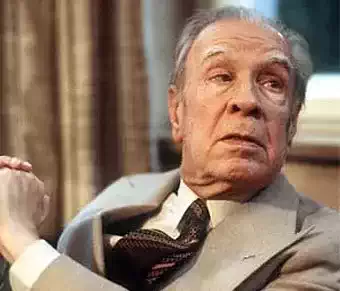
Jorge Luis Borges
Limits
Of all the streets that blur in to the sunset,
There must be one (which, I am not sure)
That I by now have walked for the last time
Without guessing it, the pawn of that Someone
Who fixes in advance omnipotent laws,
Sets up a secret and unwavering scale
for all the shadows, dreams, and forms
Woven into the texture of this life.
If there is a limit to all things and a measure
And a last time and nothing more and forgetfulness,
Who will tell us to whom in this house
We without knowing it have said farewell?
Through the dawning window night withdraws
And among the stacked books which throw
Irregular shadows on the dim table,
There must be one which I will never read.
There is in the South more than one worn gate,
With its cement urns and planted cactus,
Which is already forbidden to my entry,
Inaccessible, as in a lithograph.
There is a door you have closed forever
And some mirror is expecting you in vain;
To you the crossroads seem wide open,
Yet watching you, four-faced, is a Janus.
There is among all your memories one
Which has now been lost beyond recall.
You will not be seen going down to that fountain
Neither by white sun nor by yellow moon.
You will never recapture what the Persian
Said in his language woven with birds and roses,
When, in the sunset, before the light disperses,
You wish to give words to unforgettable things.
And the steadily flowing Rhone and the lake,
All that vast yesterday over which today I bend?
They will be as lost as Carthage,
Scourged by the Romans with fire and salt.
At dawn I seem to hear the turbulent
Murmur of crowds milling and fading away;
They are all I have been loved by, forgotten by;
Space, time, and Borges now are leaving me.
774

Walt Whitman
Miracles
WHY! who makes much of a miracle?
As to me, I know of nothing else but miracles,
Whether I walk the streets of Manhattan,
Or dart my sight over the roofs of houses toward the sky,
Or wade with naked feet along the beach, just in the edge of the
water,
Or stand under trees in the woods,
Or talk by day with any one I love--or sleep in the bed at night with
any one I love,
Or sit at table at dinner with my mother,
Or look at strangers opposite me riding in the car,
Or watch honey-bees busy around the hive, of a summer forenoon,
Or animals feeding in the fields,
Or birds--or the wonderfulness of insects in the air,
Or the wonderfulness of the sun-down--or of stars shining so quiet
and bright,
Or the exquisite, delicate, thin curve of the new moon in spring;
Or whether I go among those I like best, and that like me best-
mechanics, boatmen, farmers,
Or among the savans--or to the soiree--or to the opera,
Or stand a long while looking at the movements of machinery,
Or behold children at their sports,
Or the admirable sight of the perfect old man, or the perfect old
woman,
Or the sick in hospitals, or the dead carried to burial,
Or my own eyes and figure in the glass;
These, with the rest, one and all, are to me miracles,
The whole referring--yet each distinct, and in its place.
To me, every hour of the light and dark is a miracle,
Every cubic inch of space is a miracle,
Every square yard of the surface of the earth is spread with the
same,
Every foot of the interior swarms with the same;
Every spear of grass--the frames, limbs, organs, of men and women,
and all that concerns them,
All these to me are unspeakably perfect miracles.
To me the sea is a continual miracle;
The fishes that swim--the rocks--the motion of the waves--the ships,
with men in them,
What stranger miracles are there?
741
Rudyard Kipling
The White Seal
Oh! hush thee, my baby, the night is behind us,
And black are the waters that sparkled so green.
The moon, o'er the combers, looks downward to find us
At rest in the hollows that rustle between.
Where billow meets billow, there soft be thy pillow;
Ah, weary wee flipperling, curl at thy ease!
The storm shall not wake thee, nor shark overtake thee,
Asleep in the arms of the slow-swinging seas.
You mustn't swim till you're six weeks old,
Or your head will be sunk by your heels;
And summer gales and Killer Whales
Are bad for baby seals.
Are bad for baby seals, dear rat,
As bad as bad can be.
But splash and grow strong,
And you can't be wrong,
Child of the Open Sea!
730
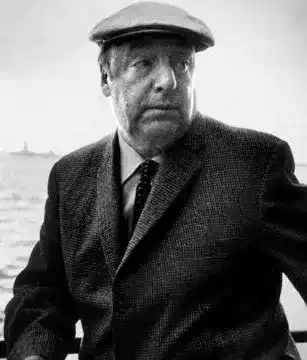
Pablo Neruda
Ode to the Book
When I close a book
I open life.
I hear
faltering cries
among harbours.
Copper ignots
slide down sand-pits
to Tocopilla.
Night time.
Among the islands
our ocean
throbs with fish,
touches the feet, the thighs,
the chalk ribs
of my country.
The whole of night
clings to its shores, by dawn
it wakes up singing
as if it had excited a guitar.
The ocean's surge is calling.
The wind
calls me
and Rodriguez calls,
and Jose Antonio--
I got a telegram
from the "Mine" Union
and the one I love
(whose name I won't let out)
expects me in Bucalemu.
No book has been able
to wrap me in paper,
to fill me up
with typography,
with heavenly imprints
or was ever able
to bind my eyes,
I come out of books to people orchards
with the hoarse family of my song,
to work the burning metals
or to eat smoked beef
by mountain firesides.
I love adventurous
books,
books of forest or snow,
depth or sky
but hate
the spider book
in which thought
has laid poisonous wires
to trap the juvenile
and circling fly.
Book, let me go.
I won't go clothed
in volumes,
I don't come out
of collected works,
my poems
have not eaten poems-they
devour
exciting happenings,
feed on rough weather,
and dig their food
out of earth and men.
I'm on my way
with dust in my shoes
free of mythology:
send books back to their shelves,
I'm going down into the streets.
I learned about life
from life itself,
love I learned in a single kiss
and could teach no one anything
except that I have lived
with something in common among men,
when fighting with them,
when saying all their say in my song.
710
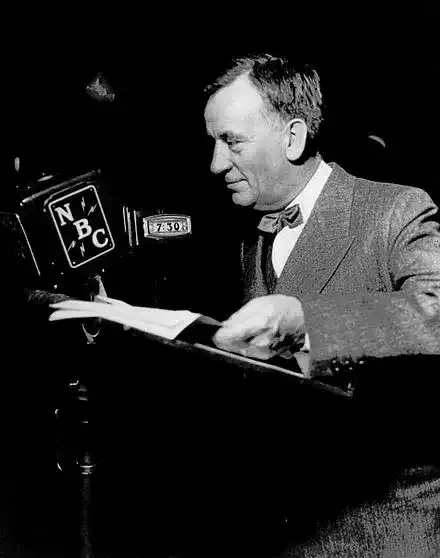
Edgar Albert Guest
Life's Slacker
The saddest sort of death to die
Would be to quit the game called life
And know, beneath the gentle sky,
You'd lived a slacker in the strife.
That nothing men on earth would find
To mark the spot that you had filled;
That you must go and leave behind
No patch of soil your hands had tilled.
I know no greater shame than this:
To feel that yours were empty years;
That after death no man would miss
Your presence in this vale of tears;
That you had breathed the fragrant air
And sat by kindly fires that burn,
And in earth's riches had a share
But gave no labor in return.
Yet some men die this way, nor care:
They enter and they leave life's door
And at the end, their record's bare—
The world's no better than before.
A few false tears are shed, and then,
In busy service, they're forgot.
We have no time to mourn for men
Who lived on earth but served it not.
A man in perfect peace to die
Must leave some mark of toil behind,
Some building towering to the sky,
Some symbol that his heart was kind,
Some roadway where strange feet may tread
That out of gratitude he made;
He cannot bravely look ahead
Unless his debt to life is paid.
693
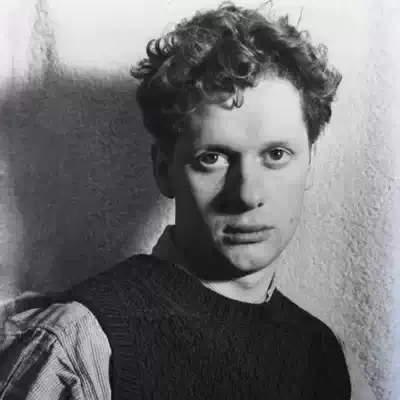
Dylan Thomas
Author's Prologue
This day winding down now
At God speeded summer's end
In the torrent salmon sun,
In my seashaken house
On a breakneck of rocks
Tangled with chirrup and fruit,
Froth, flute, fin, and quill
At a wood's dancing hoof,
By scummed, starfish sands
With their fishwife cross
Gulls, pipers, cockles, and snails,
Out there, crow black, men
Tackled with clouds, who kneel
To the sunset nets,
Geese nearly in heaven, boys
Stabbing, and herons, and shells
That speak seven seas,
Eternal waters away
From the cities of nine
Days' night whose towers will catch
In the religious wind
Like stalks of tall, dry straw,
At poor peace I sing
To you strangers (though song
Is a burning and crested act,
The fire of birds in
The world's turning wood,
For my swan, splay sounds),
Out of these seathumbed leaves
That will fly and fall
Like leaves of trees and as soon
Crumble and undie
Into the dogdayed night.
Seaward the salmon, sucked sun slips,
And the dumb swans drub blue
My dabbed bay's dusk, as I hack
This rumpus of shapes
For you to know
How I, a spining man,
Glory also this star, bird
Roared, sea born, man torn, blood blest.
Hark: I trumpet the place,
From fish to jumping hill! Look:
I build my bellowing ark
To the best of my love
As the flood begins,
Out of the fountainhead
Of fear, rage read, manalive,
Molten and mountainous to stream
Over the wound asleep
Sheep white hollow farms
To Wales in my arms.
Hoo, there, in castle keep,
You king singsong owls, who moonbeam
The flickering runs and dive
The dingle furred deer dead!
Huloo, on plumbed bryns,
O my ruffled ring dove
in the hooting, nearly dark
With Welsh and reverent rook,
Coo rooning the woods' praise,
who moons her blue notes from her nest
Down to the curlew herd!
Ho, hullaballoing clan
Agape, with woe
In your beaks, on the gabbing capes!
Heigh, on horseback hill, jack
Whisking hare! who
Hears, there, this fox light, my flood ship's
Clangour as I hew and smite
(A clash of anvils for my
Hubbub and fiddle, this tune
On atounged puffball)
But animals thick as theives
On God's rough tumbling grounds
(Hail to His beasthood!).
Beasts who sleep good and thin,
Hist, in hogback woods! The haystacked
Hollow farms ina throng
Of waters cluck and cling,
And barnroofs cockcrow war!
O kingdom of neighbors finned
Felled and quilled, flash to my patch
Work ark and the moonshine
Drinking Noah of the bay,
With pelt, and scale, and fleece:
Only the drowned deep bells
Of sheep and churches noise
Poor peace as the sun sets
And dark shoals every holy field.
We will ride out alone then,
Under the stars of Wales,
Cry, Multiudes of arks! Across
The water lidded lands,
Manned with their loves they'll move
Like wooden islands, hill to hill.
Huloo, my prowed dove with a flute!
Ahoy, old, sea-legged fox,
Tom tit and Dai mouse!
My ark sings in the sun
At God speeded summer's end
And the flood flowers now.
At God speeded summer's end
In the torrent salmon sun,
In my seashaken house
On a breakneck of rocks
Tangled with chirrup and fruit,
Froth, flute, fin, and quill
At a wood's dancing hoof,
By scummed, starfish sands
With their fishwife cross
Gulls, pipers, cockles, and snails,
Out there, crow black, men
Tackled with clouds, who kneel
To the sunset nets,
Geese nearly in heaven, boys
Stabbing, and herons, and shells
That speak seven seas,
Eternal waters away
From the cities of nine
Days' night whose towers will catch
In the religious wind
Like stalks of tall, dry straw,
At poor peace I sing
To you strangers (though song
Is a burning and crested act,
The fire of birds in
The world's turning wood,
For my swan, splay sounds),
Out of these seathumbed leaves
That will fly and fall
Like leaves of trees and as soon
Crumble and undie
Into the dogdayed night.
Seaward the salmon, sucked sun slips,
And the dumb swans drub blue
My dabbed bay's dusk, as I hack
This rumpus of shapes
For you to know
How I, a spining man,
Glory also this star, bird
Roared, sea born, man torn, blood blest.
Hark: I trumpet the place,
From fish to jumping hill! Look:
I build my bellowing ark
To the best of my love
As the flood begins,
Out of the fountainhead
Of fear, rage read, manalive,
Molten and mountainous to stream
Over the wound asleep
Sheep white hollow farms
To Wales in my arms.
Hoo, there, in castle keep,
You king singsong owls, who moonbeam
The flickering runs and dive
The dingle furred deer dead!
Huloo, on plumbed bryns,
O my ruffled ring dove
in the hooting, nearly dark
With Welsh and reverent rook,
Coo rooning the woods' praise,
who moons her blue notes from her nest
Down to the curlew herd!
Ho, hullaballoing clan
Agape, with woe
In your beaks, on the gabbing capes!
Heigh, on horseback hill, jack
Whisking hare! who
Hears, there, this fox light, my flood ship's
Clangour as I hew and smite
(A clash of anvils for my
Hubbub and fiddle, this tune
On atounged puffball)
But animals thick as theives
On God's rough tumbling grounds
(Hail to His beasthood!).
Beasts who sleep good and thin,
Hist, in hogback woods! The haystacked
Hollow farms ina throng
Of waters cluck and cling,
And barnroofs cockcrow war!
O kingdom of neighbors finned
Felled and quilled, flash to my patch
Work ark and the moonshine
Drinking Noah of the bay,
With pelt, and scale, and fleece:
Only the drowned deep bells
Of sheep and churches noise
Poor peace as the sun sets
And dark shoals every holy field.
We will ride out alone then,
Under the stars of Wales,
Cry, Multiudes of arks! Across
The water lidded lands,
Manned with their loves they'll move
Like wooden islands, hill to hill.
Huloo, my prowed dove with a flute!
Ahoy, old, sea-legged fox,
Tom tit and Dai mouse!
My ark sings in the sun
At God speeded summer's end
And the flood flowers now.
688
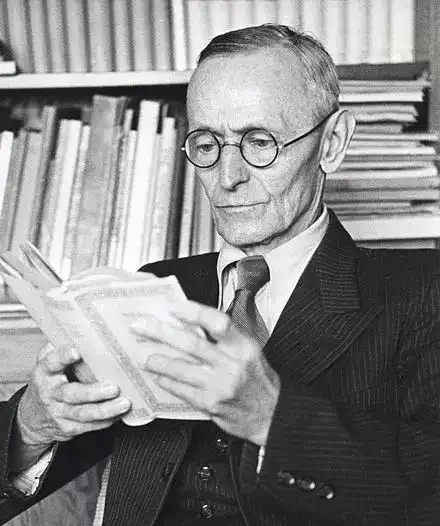
Hermann Hesse
A Swarm Of Gnats
Many thousand glittering motes
Crowd forward greedily together
In trembling circles.
Extravagantly carousing away
For a whole hour rapidly vanishing,
They rave, delirious, a shrill whir,
Shivering with joy against death.
While kingdoms, sunk into ruin,
Whose thrones, heavy with gold, instantly scattered
Into night and legend, without leaving a trace,
Have never known so fierce a dancing.
Translated by James Wright
675
Pablo Neruda
Ode to Clothes
Every morning you wait,
clothes, over a chair,
to fill yourself with
my vanity, my love,
my hope, my body.
Barely
risen from sleep,
I relinquish the water,
enter your sleeves,
my legs look for
the hollows of your legs,
and so embraced
by your indefatigable faithfulness
I rise, to tread the grass,
enter poetry,
consider through the windows,
the things,
the men, the women,
the deeds and the fights
go on forming me,
go on making me face things
working my hands,
opening my eyes,
using my mouth,
and so,
clothes,
I too go forming you,
extending your elbows,
snapping your threads,
and so your life expands
in the image of my life.
In the wind
you billow and snap
as if you were my soul,
at bad times
you cling
to my bones,
vacant, for the night,
darkness, sleep
populate with their phantoms
your wings and mine.
I wonder
if one day
a bullet
from the enemy
will leave you stained with my blood
and then
you will die with me
or one day
not quite
so dramatic
but simple,
you will fall ill,
clothes,
with me,
grow old
with me, with my body
and joined
we will enter
the earth.
Because of this
each day
I greet you
with reverence and then
you embrace me and I forget you,
because we are one
and we will go on
facing the wind, in the night,
the streets or the fight,
a single body,
one day, one day, some day, still.
668
Pablo Neruda
The Wide Ocean
Ocean, if you were to give, a measure, a ferment, a fruit
of your gifts and destructions, into my hand,
I would choose your far-off repose, your contour of steel,
your vigilant spaces of air and darkness,
and the power of your white tongue,
that shatters and overthrows columns,
breaking them down to your proper purity.
Not the final breaker, heavy with brine,
that thunders onshore, and creates
the silence of sand, that encircles the world,
but the inner spaces of force,
the naked power of the waters,
the immoveable solitude, brimming with lives.
It is Time perhaps, or the vessel filled
with all motion, pure Oneness,
that death cannot touch, the visceral green
of consuming totality.
Only a salt kiss remains of the drowned arm,
that lifts a spray: a humid scent,
of the damp flower, is left,
from the bodies of men. Your energies
form, in a trickle that is not spent,
form, in retreat into silence.
The falling wave,
arch of identity, shattering feathers,
is only spume when it clears,
and returns to its source, unconsumed.
Your whole force heads for its origin.
The husks that your load threshes,
are only the crushed, plundered, deliveries,
that your act of abundance expelled,
all those that take life from your branches.
Your form extends beyond breakers,
vibrant, and rhythmic, like the chest, cloaking
a single being, and its breathings,
that lift into the content of light,
plains raised above waves,
forming the naked surface of earth.
You fill your true self with your substance.
You overflow curve with silence.
The vessel trembles with your salt and sweetness,
the universal cavern of waters,
and nothing is lost from you, as it is
from the desolate crater, or the bay of a hill,
those empty heights, signs, scars,
guarding the wounded air.
Your petals throbbing against the Earth,
trembling your submarine harvests,
your menace thickening the smooth swell,
with pulsations and swarming of schools,
and only the thread of the net raises
the dead lightning of fish-scale,
one wounded millimetre, in the space
of your crystal completeness.
660
Rabindranath Tagore
Playthings
Child, how happy you are sitting in the dust, playing with a broken twig all the
morning.
I smile at your play with that little bit of a broken twig.
I am busy with my accounts, adding up figures by the hour.
Perhaps you glance at me and think, "What a stupid game to spoil your morning
with!"
Child, I have forgotten the art of being absorbed in sticks and mud-pies.
I seek out costly playthings, and gather lumps of gold and silver.
With whatever you find you create your glad games, I spend both my time and my
strength over things I never can obtain.
In my frail canoe I struggle to cross the sea of desire, and forget that I too am
playing a game.
659
Walt Whitman
Kosmos
WHO includes diversity, and is Nature,
Who is the amplitude of the earth, and the coarseness and sexuality
of the earth, and the great charity of the earth, and the
equilibrium also,
Who has not look'd forth from the windows, the eyes, for nothing, or
whose brain held audience with messengers for nothing;
Who contains believers and disbelievers--Who is the most majestic
lover;
Who holds duly his or her triune proportion of realism, spiritualism,
and of the aesthetic, or intellectual,
Who, having consider'd the Body, finds all its organs and parts good;
Who, out of the theory of the earth, and of his or her body,
understands by subtle analogies all other theories,
The theory of a city, a poem, and of the large politics of These
States;
Who believes not only in our globe, with its sun and moon, but in
other globes, with their suns and moons;
Who, constructing the house of himself or herself, not for a day, but
for all time, sees races, eras, dates, generations,
The past, the future, dwelling there, like space, inseparable
together.
642
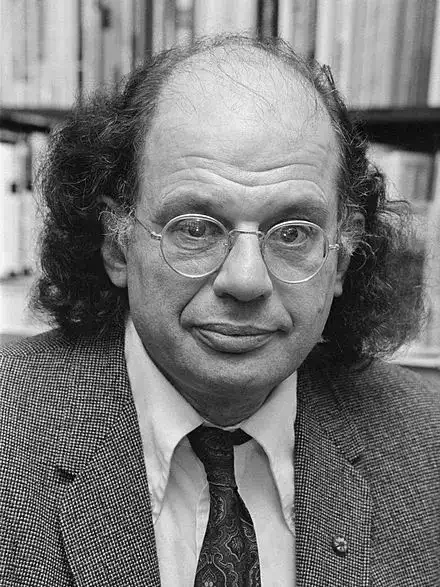
Allen Ginsberg
When the Light Appears
You'll bare your bones you'll grow you'll pray you'll only know
When the light appears, boy, when the light appears
You'll sing & you'll love you'll praise blue heavens above
When the light appears, boy, when the light appears
You'll whimper & you'll cry you'll get yourself sick and sigh
You'll sleep & you'll dream you'll only know what you mean
When the light appears, boy, when the light appears
You'll come & you'll go, you'll wander to and fro
You'll go home in despair you'll wonder why'd you care
You'll stammer & you'll lie you'll ask everybody why
You'll cough and you'll pout you'll kick your toe with gout
You'll jump you'll shout you'll knock you're friends about
You'll bawl and you'll deny & announce your eyes are dry
You'll roll and you'll rock you'll show your big hard cock
You'll love and you'll grieve & one day you'll come believe
As you whistle & you smile the lord made you worthwhile
You'll preach and you'll glide on the pulpit in your pride
Sneak & slide across the stage like a river in high tide
You'll come fast or come on slow just the same you'll never know
When the light appears, boy, when the light appears
When the light appears, boy, when the light appears
You'll sing & you'll love you'll praise blue heavens above
When the light appears, boy, when the light appears
You'll whimper & you'll cry you'll get yourself sick and sigh
You'll sleep & you'll dream you'll only know what you mean
When the light appears, boy, when the light appears
You'll come & you'll go, you'll wander to and fro
You'll go home in despair you'll wonder why'd you care
You'll stammer & you'll lie you'll ask everybody why
You'll cough and you'll pout you'll kick your toe with gout
You'll jump you'll shout you'll knock you're friends about
You'll bawl and you'll deny & announce your eyes are dry
You'll roll and you'll rock you'll show your big hard cock
You'll love and you'll grieve & one day you'll come believe
As you whistle & you smile the lord made you worthwhile
You'll preach and you'll glide on the pulpit in your pride
Sneak & slide across the stage like a river in high tide
You'll come fast or come on slow just the same you'll never know
When the light appears, boy, when the light appears
607

Kazi Nazrul Islam
Life
An awakening pervades
The meadows and wilderness
Let not your slumber
Make it go in vain.
The lightning is beckoning
With thunder and rain.
The heaven is awake
The earth is awake
Oh, wake up for heaven's sake.
Beneath the earth
And under the feet
Those who lay dead
They shall now sprout
Like the green grass
With new blades.
A verdant earth is awaiting
The advent of a spring-shower.
The bud that the thunder
Failed to burst into new blossom
Out of joy, it will now bloom.
[Original: Jibon; Translation: Syed Mujibul Huq]
591

Henry Wadsworth Longfellow
In The Harbour: Sundown
The summer sun is sinking low;
Only the tree-tops redden and glow:
Only the weathercock on the spire
Of the neighboring church is a flame of fire;
All is in shadow below.
O beautiful, awful summer day,
What hast thou given, what taken away?
Life and death, and love and hate,
Homes made happy or desolate,
Hearts made sad or gay!
On the road of life one mile-stone more!
In the book of life one leaf turned o'er!
Like a red seal is the setting sun
On the good and the evil men have done,--
Naught can to-day restore!
597
Rabindranath Tagore
On the Seashore
On the seashore of endless worlds children meet.
The infinite sky is motionless overhead and the restless water is boisterous. On the
seashore of endless worlds the children meet with shouts and dances.
They build their houses with sand, and they play with empty shells. With withered
leaves they weave their boats and smilingly float them on the vast deep. Children have
their play on the seashore of worlds.
They know not how to swim, they know not how to cast nets. Pearl-fishers dive for
pearls, merchants sail in their ships, while children gather pebbles and scatter them
again. They seek not for hidden treasures, they know not how to cast nets.
The sea surges up with laughter, and pale gleams the smile of the sea-beach.
Death-dealing waves sing meaningless ballads to the children, even like a mother while
rocking her baby's cradle. The sea plays with children, and pale gleams the smile of the
sea-beach.
On the seashore of endless worlds children meet. Tempest roams in the pathless
sky, ships are wrecked in the trackless water, death is abroad and children play. On
the seashore of endless worlds is the great meeting of children.
574
Page 1
Next