
Soul

Elizabeth Barrett Browning
Sonnet XXVI: I Lived With Visions
I lived with visions for my company
Instead of men and women, years ago,
And found them gentle mates, nor thought to know
A sweeter music than they played to me.
But soon their trailing purple was not free
Of this world's dust, their lutes did silent grow,
And I myself grew faint and blind below
Their vanishing eyes. Then thou didst come--to be,
Belovèd, what they seemed. Their shining fronts,
Their songs, their splendors (better, yet the same,
As river water hallowed into fonts),
Met in thee, and from out thee overcame
My soul with satisfaction of all wants:
Because God's gifts put man's best dreams to shame.
Read more →
Instead of men and women, years ago,
And found them gentle mates, nor thought to know
A sweeter music than they played to me.
But soon their trailing purple was not free
Of this world's dust, their lutes did silent grow,
And I myself grew faint and blind below
Their vanishing eyes. Then thou didst come--to be,
Belovèd, what they seemed. Their shining fronts,
Their songs, their splendors (better, yet the same,
As river water hallowed into fonts),
Met in thee, and from out thee overcame
My soul with satisfaction of all wants:
Because God's gifts put man's best dreams to shame.
816
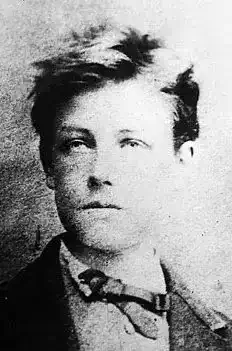
Arthur Rimbaud
L'Idole.. Sonnet Du Trou Du Cul
Obscur et froncé comme un oeillet violet
Il respire, humblement tapi parmi la mousse.
Humide encor d'amour qui suit la fuite douce
Des Fesses blanches jusqu'au coeur de son ourlet.
Des filaments pareils à des larmes de lait
Ont pleuré, sous le vent cruel qui les repousse,
À travers de petits caillots de marne rousse
Pour s'aller perdre où la pente les appelait.
Mon Rêve s'aboucha souvent à sa ventouse ;
Mon âme, du coït matériel jalouse,
En fit son larmier fauve et son nid de sanglots.
C'est l'olive pâmée, et la flûte caline ;
C'est le tube où descend la céleste praline :
Chanaan féminin dans les moiteurs enclos !
Albert Mérat.
The Idol.
Sonnet to an Asshole
Dark and wrinkled like a purple pink
It breathes, nestling humbly among the still-damp
Froth of love that follows the gentle slope
Of the white buttocks to its crater's edge.
Filaments like tears of milk
Have wept in the cruel wind which pushes them back,
Across little clots of reddish marl
To lose themselves where the slope called them.
My dream has often kissed its opening;
My soul, jealous of physical coitus,
Has made this its fawn-coloured tear-bottle and its nest of sobs.
It is the rapturous olive and the wheedling flute,
The tube from which the heavenly burnt almond falls:
Feminine Canaan enclosed among moistures.
Albert Mérat.
P.V.-A.R.
Read more →
Il respire, humblement tapi parmi la mousse.
Humide encor d'amour qui suit la fuite douce
Des Fesses blanches jusqu'au coeur de son ourlet.
Des filaments pareils à des larmes de lait
Ont pleuré, sous le vent cruel qui les repousse,
À travers de petits caillots de marne rousse
Pour s'aller perdre où la pente les appelait.
Mon Rêve s'aboucha souvent à sa ventouse ;
Mon âme, du coït matériel jalouse,
En fit son larmier fauve et son nid de sanglots.
C'est l'olive pâmée, et la flûte caline ;
C'est le tube où descend la céleste praline :
Chanaan féminin dans les moiteurs enclos !
Albert Mérat.
The Idol.
Sonnet to an Asshole
Dark and wrinkled like a purple pink
It breathes, nestling humbly among the still-damp
Froth of love that follows the gentle slope
Of the white buttocks to its crater's edge.
Filaments like tears of milk
Have wept in the cruel wind which pushes them back,
Across little clots of reddish marl
To lose themselves where the slope called them.
My dream has often kissed its opening;
My soul, jealous of physical coitus,
Has made this its fawn-coloured tear-bottle and its nest of sobs.
It is the rapturous olive and the wheedling flute,
The tube from which the heavenly burnt almond falls:
Feminine Canaan enclosed among moistures.
Albert Mérat.
P.V.-A.R.
806
Elizabeth Barrett Browning
Sonnet XLII: My Future
My future will not copy fair my past -
I wrote that once; and thinking at my side
My ministering life-angel justified
The word by his appealing look upcast
To the white throne of God, I turned at last,
And there, instead, saw thee, not unallied
To angels in thy soul! Then I, long tried
By natural ills, received the comfort fast,
While budding, at thy sight, my pilgrim's staff
Gave out green leaves with morning dews impearled.
I seek no copy now of life's first half:
Leave here the pages with long musing curled,
And write me new my future's epigraph,
New angel mine, unhoped for in the world!
Read more →
I wrote that once; and thinking at my side
My ministering life-angel justified
The word by his appealing look upcast
To the white throne of God, I turned at last,
And there, instead, saw thee, not unallied
To angels in thy soul! Then I, long tried
By natural ills, received the comfort fast,
While budding, at thy sight, my pilgrim's staff
Gave out green leaves with morning dews impearled.
I seek no copy now of life's first half:
Leave here the pages with long musing curled,
And write me new my future's epigraph,
New angel mine, unhoped for in the world!
801
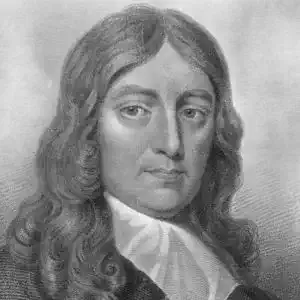
John Milton
Samson Agonistes (excerpts)
[Samson's Opening Speech]
A little onward lend thy guiding hand
To these dark steps, a little further on;
For yonder bank hath choice of sun or shade,
There I am wont to sit, when any chance
Relieves me from my task of servile toil,
Daily in the common prison else enjoin'd me,
Where I a prisoner chain'd, scarce freely draw
The air imprison'd also, close and damp,
Unwholesome draught: but here I feel amends,
The breath of Heav'n fresh-blowing, pure and sweet,
With day-spring born; here leave me to respire.
This day a solemn feast the people hold
To Dagon, their sea-idol, and forbid
Laborious works; unwillingly this rest
Their superstition yields me; hence with leave
Retiring from the popular noise, I seek
This unfrequented place to find some ease;
Ease to the body some, none to the mind
From restless thoughts, that like a deadly swarm
Of hornets arm'd, no sooner found alone,
But rush upon me thronging, and present
Times past, what once I was, and what am now.
O wherefore was my birth from Heaven foretold
Twice by an angel, who at last in sight
Of both my parents all in flames ascended
From off the altar, where an off'ring burn'd,
As in a fiery column charioting
His godlike presence, and from some great act
Of benefit reveal'd to Abraham's race?
Why was my breeding order'd and prescrib'd
As of a person separate to God,
Design'd for great exploits; if I must die
Betray'd, captiv'd, and both my eyes put out,
Made of my enemies the scorn and gaze;
To grind in brazen fetters under task
With this Heav'n-gifted strength? O glorious strength
Put to the labour of a beast, debas'd
Lower than bondslave! Promise was that I
Should Israel from Philistian yoke deliver;
Ask for this great deliverer now, and find him
Eyeless in Gaza at the mill with slaves,
Himself in bonds under Philistian yoke.
Yet stay, let me not rashly call in doubt
Divine prediction; what if all foretold
Had been fulfill'd but through mine own default,
Whom have I to complain of but myself?
Who this high gift of strength committed to me,
In what part lodg'd, how easily bereft me,
Under the seal of silence could not keep,
But weakly to a woman must reveal it
O'ercome with importunity and tears.
O impotence of mind, in body strong!
But what is strength without a double share
Of wisdom? vast, unwieldy, burdensome,
Proudly secure, yet liable to fall
By weakest subtleties, not made to rule,
But to subserve where wisdom bears command.
God, when he gave me strength, to show withal
How slight the gift was, hung it in my hair.
But peace, I must not quarrel with the will
Of highest dispensation, which herein
Haply had ends above my reach to know:
Suffices that to me strength is my bane,
And proves the source of all my miseries;
So many, and so huge, that each apart
Would ask a life to wail, but chief of all,
O loss of sight, of thee I most complain!
Blind among enemies, O worse than chains,
Dungeon, or beggary, or decrepit age!
Light, the prime work of God, to me is extinct,
And all her various objects of delight
Annull'd, which might in part my grief have eas'd,
Inferior to the vilest now become
Of man or worm; the vilest here excel me:
They creep, yet see, I, dark in light, expos'd
To daily fraud, contempt, abuse, and wrong,
Within doors, or without, still as a fool,
In power of others, never in my own;
Scarce half I seem to live, dead more than half.
O dark, dark, dark, amid the blaze of noon,
Irrecoverably dark, total eclipse
Without all hope of day!
O first created Beam, and thou great Word,
"Let there be light, and light was over all,"
Why am I thus bereav'd thy prime decree?
The sun to me is dark
And silent as the moon,
When she deserts the night,
Hid in her vacant interlunar cave.
Since light so necessary is to life,
And almost life itself, if it be true
That light is in the soul,
She all in every part, why was the sight
To such a tender ball as th' eye confin'd?
So obvious and so easy to be quench'd,
And not as feeling through all parts diffus'd,
That she might look at will through every pore?
Then had I not been thus exil'd from light,
As in the land of darkness, yet in light,
To live a life half dead, a living death,
And buried; but O yet more miserable!
Myself my sepulchre, a moving grave;
Buried, yet not exempt
By privilege of death and burial
From worst of other evils, pains and wrongs;
But made hereby obnoxious more
To all the miseries of life,
Life in captivity
Among inhuman foes.
But who are these? for with joint pace I hear
The tread of many feet steering this way;
Perhaps my enemies who come to stare
At my affliction, and perhaps to insult,
Their daily practice to afflict me more.
...
[Chorus, Manoah, Samson]
CHORUS.
Just are the ways of God,
And justifiable to men;
Unless there be who think not God at all:
If any be, they walk obscure;
For of such doctrine never was there school,
But the heart of the fool,
And no man therein doctor but himself.
Yet more there be who doubt his ways not just,
As to his own edicts found contradicting,
Then give the reins to wand'ring thought,
Regardless of his glory's diminution;
Till by their own perplexities involv'd
They ravel more, still less resolv'd,
But never find self-satisfying solution.
As if they would confine th' interminable,
And tie him to his own prescript,
Who made our laws to bind us, not himself,
And hath full right to exempt
Whom so it pleases him by choice
From national obstriction, without taint
Of sin, or legal debt;
For with his own laws he can best dispense.
He would not else, who never wanted means,
Nor in respect of the enemy just cause
To set his people free,
Have prompted this heroic Nazarite,
Against his vow of strictest purity,
To seek in marriage that fallacious bride,
Unclean, unchaste.
Down, Reason, then; at least vain reasonings down;
Though Reason here aver
That moral verdit quits her of unclean:
Unchaste was subsequent, her stain, not his.
But see, here comes thy reverend sire,
With careful step, locks white as down,
Old Manoa: advise
Forthwith how thou ought'st to receive him.
SAMSON.
Ay me, another inward grief awak'd,
With mention of that name renews th' assault.
MANOA.
Brethren and men of Dan, for such ye seem,
Though in this uncouth place; if old respect,
As I suppose, towards your once gloried friend,
My son, now captive, hither hath inform'd
Your younger feet, while mine cast back with age
Came lagging after; say if he be here.
CHORUS.
As signal now in low dejected state,
As erst in highest, behold him where he lies.
MANOA.
O miserable change! is this the man,
That invincible Samson, far renown'd,
The dread of Israel's foes, who with a strength
Equivalent to angels' walk'd their streets,
None offering fight; who single combatant
Duell'd their armies rank'd in proud array,
Himself an army, now unequal match
To save himself against a coward arm'd
At one spear's length. O ever failing trust
In mortal strength! and oh, what not in man
Deceivable and vain! Nay what thing good
Pray'd for, but often proves our woe, our bane?
I pray'd for children, and thought barrenness
In wedlock a reproach; I gain'd a son,
And such a son as all men hail'd me happy;
Who would be now a father in my stead?
O wherefore did God grant me my request,
And as a blessing with such pomp adorn'd?
Why are his gifts desirable, to tempt
Our earnest prayers, then giv'n with solemn hand
As graces, draw a scorpion's tail behind?
For this did the Angel twice descend? for this
Ordain'd thy nurture holy, as of a plant;
Select, and sacred, glorious for a while,
The miracle of men: then in an hour
Ensnar'd, assaulted, overcome, led bound,
Thy foes' derision, captive, poor, and blind,
Into a dungeon thrust, to work with slaves?
Alas! methinks whom God hath chosen once
To worthiest deeds, if he through frailty err
He should not so o'erwhelm, and as a thrall
Subject him to so foul indignities,
Be it but for honour's sake of former deeds.
...
[Chorus, Manoh, Samson, Dalilah]
SAMSON.
His pardon I implore; but as for life,
To what end should I seek it? when in strength
All mortals I excell'd, and great in hopes
With youthful courage and magnanimous thoughts
Of birth from Heav'n foretold and high exploits,
Full of divine instinct, after some proof
Of acts indeed heroic, far beyond
The sons of Anak, famous now and blaz'd,
Fearless of danger, like a petty god
I walk'd about, admir'd of all, and dreaded
On hostile ground, none daring my affront.
Then swoll'n with pride into the snare I fell
Of fair fallacious looks, venereal trains,
Softn'd with pleasure and voluptuous life;
At length to lay my head and hallow'd pledge
Of all my strength in the lascivious lap
Of a deceitful concubine who shore me
Like a tame wether, all my precious fleece,
Then turn'd me out ridiculous, despoil'd,
Shav'n, and disarm'd among my enemies.
CHORUS.
Desire of wine and all delicious drinks,
Which many a famous warrior overturns,
Thou couldst repress, nor did the dancing ruby
Sparkling out-pour'd, the flavour, or the smell,
Or taste that cheers the heart of gods and men,
Allure thee from the cool crystalline stream.
SAMSON.
Wherever fountain or fresh current flow'd
Against the eastern ray, translucent, pure,
With touch ætherial of Heav'n's fiery rod
I drank, from the clear milky juice allaying
Thirst, and refresh'd; nor envied them the grape
Whose heads that turbulent liquor fills with fumes.
CHORUS.
O madness, to think use of strongest wines
And strongest drinks our chief support of health,
When God with these forbidd'n made choice to rear
His mighty champion, strong above compare,
Whose drink was only from the liquid brook.
SAMSON.
But what avail'd this temperance, not complete
Against another object more enticing?
What boots it at one gate to make defence,
And at another to let in the foe,
Effeminately vanquish'd? by which means,
Now blind, disheartn'd, sham'd, dishonour'd, quell'd,
To what can I be useful, wherein serve
My nation, and the work from Heav'n impos'd,
But to sit idle on the household hearth,
A burdenous drone; to visitants a gaze,
Or pitied object, these redundant locks
Robustious to no purpose clust'ring down,
Vain monument of strength; till length of years
And sedentary numbness craze my limbs
To a contemptible old age obscure?
Here rather let me drudge and earn my bread,
Till vermin or the draff of servile food
Consume me, and oft-invocated death
Hast'n the welcome end of all my pains.
MANOA.
Wilt thou then serve the Philistines with that gift
Which was expressly giv'n thee to annoy them?
Better at home lie bed-rid, not only idle,
Inglorious, unemploy'd, with age out-worn.
But God, who caus'd a fountain at thy prayer
From the dry ground to spring, thy thirst to allay
After the brunt of battle, can as easy
Cause light again within thy eyes to spring,
Wherewith to serve him better than thou hast;
And I persuade me so; why else this strength
Miraculous yet remaining in those locks?
His might continues in thee not for naught,
Nor shall his wondrous gifts be frustrate thus.
SAMSON.
All otherwise to me my thoughts portend,
That these dark orbs no more shall treat with light,
Nor th' other light of life continue long,
But yield to double darkness nigh at hand:
So much I feel my genial spirits droop,
My hopes all flat; Nature within me seems
In all her functions weary of herself;
My race of glory run, and race of shame,
And I shall shortly be with them that rest.
MANOA.
Believe not these suggestions which proceed
From anguish of the mind and humours black,
That mingle with thy fancy. I however
Must not omit a father's timely care
To prosecute the means of thy deliverance
By ransom or how else: meanwhile be calm,
And healing words from these thy friends admit.
SAMSON.
O that torment should not be confin'd
To the body's wounds and sores,
With maladies innumerable
In heart, head, breast, and reins;
But must secret passage find
To th' inmost mind,
There exercise all his fierce accidents,
And on her purest spirits prey,
As on entrails, joints, and limbs,
With answerable pains, but more intense,
Though void of corporal sense.
My griefs not only pain me
As a ling'ring disease,
But finding no redress, ferment and rage,
Nor less than wounds immedicable
Rankle, and fester, and gangrene,
To black mortification.
Thoughts, my tormentors, arm'd with deadly stings
Mangle my apprehensive tenderest parts,
Exasperate, exulcerate, and raise
Dire inflammation which no cooling herb
Or med'cinal liquor can assuage,
Nor breath of vernal air from snowy Alp.
Sleep hath forsook and giv'n me o'er
To death's benumbing opium as my only cure;
Thence faintings, swoonings of despair,
And sense of Heav'n's desertion.
I was his nursling once and choice delight,
His destin'd from the womb,
Promis'd by heavenly message twice descending.
Under his special eye
Abstemious I grew up and thriv'd amain;
He led me on to mightiest deeds
Above the nerve of mortal arm
Against the uncircumcis'd, our enemies;
But now hath cast me off as never known,
And to those cruel enemies,
Whom I by his appointment had provok'd,
Left me all helpless with th' irreparable loss
Of sight, reserv'd alive to be repeated
The subject of their cruelty, or scorn.
Nor am I in the list of them that hope;
Hopeless are all my evils, all remediless;
This one prayer yet remains, might I be heard,
No long petition, speedy death,
The close of all my miseries, and the balm.
CHORUS.
Many are the sayings of the wise
In ancient and in modern books enroll'd,
Extolling patience as the truest fortitude;
And to the bearing well of all calamities,
All chances incident to man's frail life
Consolatories writ
With studied argument, and much persuasion sought,
Lenient of grief and anxious thought;
But with th' afflicted in his pangs their sound
Little prevails, or rather seems a tune
Harsh, and of dissonant mood from his complaint,
Unless he feel within
Some source of consolation from above;
Secret refreshings, that repair his strength,
And fainting spirits uphold.
God of our Fathers, what is man!
That thou towards him with hand so various,
Or might I say contrarious,
Temper'st thy providence through his short course:
Not evenly, as thou rul'st
The Angelic orders and inferior creatures mute,
Irrational and brute.
Nor do I name of men the common rout,
That wand'ring loose about
Grow up and perish, as the summer fly,
Heads without name no more remember'd;
But such as thou has solemnly elected,
With gifts and graces eminently adorn'd
To some great work, thy glory,
And people's safety, which in part they effect:
Yet toward these thus dignifi'd, thou oft
Amidst their highth of noon,
Changest thy countenance, and thy hand with no regard
Of highest favours past
From thee on them, or them to thee of service.
Nor only dost degrade them, or remit
To life obscur'd, which were a fair dismission,
But throw'st them lower than thou didst exalt them high,
Unseemly falls in human eye,
Too grievous for the trespass or omission,
Oft leav'st them to the hostile sword
Of heathen and profane, their carcasses
To dogs and fowls a prey, or else captiv'd:
Or to the unjust tribunals, under change of times,
And condemnation of the ingrateful multitude.
If these they scape, perhaps in poverty
With sickness and disease thou bow'st them down,
Painful diseases and deform'd,
In crude old age;
Though not disordinate, yet causeless suff'ring
The punishment of dissolute days: in fine,
Just or unjust, alike seem miserable,
For oft alike both come to evil end.
So deal not with this once thy glorious champion,
The image of thy strength, and mighty minister.
What do I beg? how hast thou dealt already?
Behold him in this state calamitous, and turn
His labours, for thou canst, to peaceful end.
But who is this, what thing of sea or land?
Female of sex it seems,
That so bedeck'd, ornate, and gay,
Comes this way sailing
Like a stately ship
Of Tarsus, bound for th' isles
Of Javan or Gadire
With all her bravery on, and tackle trim,
Sails fill'd, and streamers waving,
Courted by all the winds that hold them play,
An amber scent of odorous perfume
Her harbinger, a damsel train behind;
Some rich Philistian matron she may seem,
And now at nearer view, no other certain
Than Dalila thy wife.
SAMSON.
My wife! my traitress! let her not come near me.
CHORUS.
Yet on she moves, now stands and eyes thee fix'd,
About t' have spoke, but now, with head declin'd
Like a fair flower surcharg'd with dew, she weeps,
And words address'd seem into tears dissolv'd,
Wetting the borders of her silk'n veil;
But now again she makes address to speak.
DALILAH.
With doubtful feet and wavering resolution
I came, still dreading thy displeasure, Samson,
Which to have merited, without excuse,
I cannot but acknowledge; yet if tears
May expiate (though the fact more evil drew
In the perverse event than I foresaw)
My penance hath not slack'n'd, though my pardon
No way assur'd. But conjugal affection
Prevailing over fear, and timorous doubt
Hath led me on desirous to behold
Once more thy face, and know of thy estate.
If aught in my ability may serve
To light'n what thou suffer'st, and appease
Thy mind with what amends is in my power,
Though late, yet in some part to recompense
My rash but more unfortunate misdeed.
SAMSON.
Out, out hyena! these are thy wonted arts,
And arts of every woman false like thee,
To break all faith, all vows, deceive, betray,
Then as repentant to submit, beseech,
And reconcilement move with feign'd remorse,
Confess, and promise wonders in her change,
Not truly penitent, but chief to try
Her husband, how far urg'd his patience bears,
His virtue or weakness which way to assail:
Then with more cautious and instructed skill
Again transgresses, and again submits;
That wisest and best men, full oft beguil'd,
With goodness principl'd not to reject
The penitent, but ever to forgive,
Are drawn to wear out miserable days,
Entangl'd with a pois'nous bosom-snake,
If not by quick destruction soon cut off
As I by thee, to ages an example.
...
[Chorus, Harapha, Samson]
CHORUS.
Look now for no enchanting voice, nor fear
The bait of honied words; a rougher tongue
Draws hitherward, I know him by his stride,
The giant Harapha of Gath, his look
Haughty as is his pile high-built and proud.
Comes he in peace? What wind hath blown him hither
I less conjecture than when first I saw
The sumptuous Dalila floating this way:
His habit carries peace, his brow defiance.
SAMSON.
Or peace or not, alike to me he comes.
CHORUS.
His fraught we soon shall know, he now arrives.
HARAPHA.
I come not Samson, to condole thy chance,
As these perhaps, yet wish it had not been,
Though for no friendly intent. I am of Gath;
Men call me Harapha, of stock renown'd
As Og, or Anak, and the Emims old
That Kiriathaim held: thou knowst me now
If thou at all art known. Much I have heard
Of thy prodigious might and feats perform'd
Incredible to me, in this displeas'd,
That I was never present on the place
Of those encounters, where we might have tri'd
Each other's force in camp or listed field;
And now am come to see of whom such noise
Hath walk'd about, and each limb to survey,
If thy appearance answer loud report.
SAMSON.
The way to know were not to see but taste.
HARAPHA.
Dost thou already single me; I thought
Gyves and the mill had tam'd thee? O that fortune
Had brought me to the field where thou art fam'd
To have wrought such wonders with an ass's jaw;
I should have forc'd thee soon wish other arms,
Or left thy carcase where the ass lay thrown:
So had the glory of prowess been recover'd
To Palestine, won by a Philistine
From the unforeskinn'd race, of whom thou bear'st
The highest name for valiant acts; that honour
Certain to have won by mortal duel from thee,
I lose, prevented by thy eyes put out.
SAMSON.
Boast not of what thou would'st have done, but do
What then thou would'st, thou seest it in thy hand.
HARAPHA.
To combat with a blind man I disdain,
And thou hast need much washing to be touch'd.
SAMSON.
Such usage as your honourable lords
Afford me, assassinated and betray'd,
Who durst not with their whole united powers
In fight withstand me single and unarm'd,
Nor in the house with chamber ambushes
Close-banded durst attack me, no not sleeping,
Till they had hir'd a woman with their gold,
Breaking her marriage faith to circumvent me.
Therefore without feign'd shifts let be assign'd
Some narrow place enclos'd, where sight may give thee,
Or rather flight, no great advantage on me;
Then put on all thy gorgeous arms, thy helmet
And brigandine of brass, thy broad habergeon,
Vant-brass and greaves, and gauntlet, add thy spear,
A weaver's beam, and seven-times-folded shield:
I only with an oak'n staff will meet thee,
And raise such outcries on thy clatter'd iron,
Which long shall not withhold me from thy head,
That in a little time, while breath remains thee,
Thou oft shalt wish thyself at Gath to boast
Again in safety what thou would'st have done
To Samson, but shalt never see Gath more.
HARAPHA.
Thou durst not thus disparage glorious arms
Which greatest heroes have in battle worn,
Their ornament and safety, had not spells
And black enchantments, some magician's art
Arm'd thee or charm'd thee strong, which thou from Heaven
Feign'dst at thy birth was giv'n thee in thy hair,
Where strength can least abide, though all thy hairs
Were bristles rang'd like those that ridge the back
Of chaf'd wild boars, or ruffl'd porcupines.
SAMSON.
I know no spells, use no forbidden arts;
My trust is in the living God who gave me
At my nativity this strength, diffus'd
No less through all my sinews, joints and bones,
Than thine, while I preserv'd these locks unshorn,
The pledge of my unviolated vow.
For proof hereof, if Dagon be thy god,
Go to his temple, invocate his aid
With solemnest devotion, spread before him
How highly it concerns his glory now
To frustrate and dissolve these magic spells,
Which I to be the power of Israel's God
Avow, and challenge Dagon to the test,
Offering to combat thee his champion bold,
With th' utmost of his godhead seconded:
Then thou shalt see, or rather to thy sorrow
Soon feel, whose God is strongest, thine or mine.
HARAPHA.
Presume not on thy God, whate'er he be,
Thee he regards not, owns not, hath cut off
Quite from his people, and delivered up
Into thy enemies' hand, permitted them
To put out both thine eyes, and fetter'd send thee
Into the common prison, there to grind
Among the slaves and asses thy comrades,
As good for nothing else, no better service
With those thy boist'rous locks, no worthy match
For valour to assail, nor by the sword
Of noble warrior, so to stain his honour,
But by the barber's razor best subdu'd.
SAMSON.
All these indignities, for such they are
From thine, these evils I deserve and more,
Acknowledge them from God inflicted on me
Justly, yet despair not of his final pardon
Whose ear is ever open; and his eye
Gracious to re-admit the suppliant;
In confidence whereof I once again
Defy thee to the trial of mortal fight,
By combat to decide whose god is God,
Thine or whom I with Israel's sons adore.
HARAPHA.
Fair honour that thou dost thy God, in trusting
He will accept thee to defend his cause,
A murtherer, a revolter, and a robber.
SAMSON.
Tongue-doughty giant, how dost thou prove me
these?
HARAPHA.
Is not thy nation subject to our lords?
Their magistrates confess'd it, when they took thee
As a league-breaker and deliver'd bound
Into our hands: for had'st thou not committed
Notorious murder on those thirty men
At Askalon, who never did thee harm,
Then like a robber stripp'dst them of their robes?
The Philistines, when thou hadst broke the league,
Went up with armed powers thee only seeking,
To others did no violence nor spoil.
SAMSON.
Among the daughters of the Philistines
I chose a wife, which argu'd me no foe;
And in your city held my nuptial feast:
But your ill-meaning politician lords,
Under pretence of bridal friends and guests,
Appointed to await me thirty spies,
Who threat'ning cruel death, constrain'd the bride
To wring from me and tell to them my secret,
That solv'd the riddle which I had propos'd.
When I perceiv'd all set on enmity,
As on my enemies, wherever chanc'd,
I us'd hostility, and took their spoil
To pay my underminers in their coin.
My nation was subjected to your lords?
It was the force of conquest; force with force
Is well ejected when the conquer'd can.
But I a private person, whom my country
As a league-breaker gave up bound, presum'd
Single rebellion and did hostile acts.
I was no private but a person rais'd
With strength sufficient and command from Heav'n
To free my country; if their servile minds
Me their deliverer sent would not receive,
But to their masters gave me up for nought,
Th' unworthier they; whence to this day they serve.
I was to do my part from Heav'n assign'd,
And had perform'd it if my known offence
Had not disabl'd me, not all your force:
These shifts refuted, answer thy appellant,
Though by his blindness maim'd for high attempts,
Who now defies thee thrice to single fight,
As a petty enterprise of small enforce.
HARAPHA.
With thee, a man condemn'd, a slave enroll'd,
Due by the law to capital punishment?
To fight with thee no man of arms will deign.
SAMSON.
Cam'st thou for this, vain boaster, to survey me,
To descant on my strength, and give thy verdit?
Come nearer, part not hence so slight inform'd;
But take good heed my hand survey not thee.
HARAPHA.
O Baal-zebub! can my ears unus'd
Hear these dishonours, and not render death?
SAMSON.
No man withholds thee, nothing from thy hand
Fear I incurable; bring up thy van,
My heels are fetter'd, but my fist is free.
HARAPHA.
This insolence other kind of answer fits.
SAMSON.
Go baffl'd coward, lest I run upon thee,
Though in these chains, bulk without spirit vast,
And with one buffet lay thy structure low,
Or swing thee in the air, then dash thee down
To the hazard of thy brains and shatter'd sides.
HARAPHA.
By Astaroth, ere long thou shalt lament
These braveries, in irons loaden on thee.
CHORUS.
His giantship is gone somewhat crestfall'n,
Stalking with less unconsci'nable strides,
And lower looks, but in a sultry chafe.
SAMSON.
I dread him not, nor all his giant-brood,
Though fame divulge him father of five sons
All of gigantic size, Goliah chief.
CHORUS.
He will directly to the lords, I fear,
And with malicious counsel stir them up
Some way or other yet further to afflict thee.
SAMSON.
He must allege some cause, and offer'd fight
Will not dare mention, lest a question rise
Whether he durst accept the offer or not,
And that he durst not plain enough appear'd.
Much more affliction than already felt
They cannot well impose, nor I sustain;
If they intend advantage of my labours,
The work of many hands, which earns my keeping
With no small profit daily to my owners.
But come what will, my deadliest foe will prove
My speediest friend, by death to rid me hence,
The worst that he can give, to me the best.
Yet so it may fall out, because their end
Is hate, not help to me, it may with mine
Draw their own ruin who attempt the deed.
CHORUS.
Oh how comely it is and how reviving
To the spirits of just men long oppress'd,
When God into the hands of their deliverer
Puts invincible might
To quell the mighty of the Earth, th' oppressor,
The brute and boist'rous force of violent men,
Hardy and industrious to support
Tyrannic power, but raging to pursue
The righteous and all such as honour truth;
He all their ammunition
And feats of war defeats
With plain heroic magnitude of mind
And celestial vigour arm'd;
Their armouries and magazines contemns,
Renders them useless, while
With winged expedition
Swift as the lightning glance he executes
His errand on the wicked, who surpris'd
Lose their defence distracted and amaz'd.
But patience is more oft the exercise
Of saints, the trial of their fortitude,
Making them each his own deliverer,
And victor over all
That tyranny or fortune can inflict.
Either of these is in thy lot,
Samson, with might endu'd
Above the sons of men; but sight bereav'd
May chance to number thee with those
Whom patience finally must crown.
This idol's day hath been to thee no day of rest,
Labouring thy mind
More than the working day thy hands;
And yet perhaps more trouble is behind,
For I descry this way
Some other tending; in his hand
A sceptre or quaint staff he bears,
Comes on amain, speed in his look.
By his habit I discern him now
A public officer, and now at hand.
His message will be short and voluble.
OFFICER.
Ebrews, the pris'ner Samson here I seek.
CHORUS.
His manacles remark him, there he sits.
OFFICER.
Samson, to thee our lords thus bid me say;
This day to Dagon is a solemn feast,
With sacrifices, triumph, pomp, and games;
Thy strength they know surpassing human rate,
And now some public proof thereof require
To honour this great feast, and great assembly;
Rise therefore with all speed and come along,
Where I will see thee heart'n'd and fresh clad
To appear as fits before th' illustrious lords.
SAMSON.
Thou knowst I am an Ebrew, therefore tell them,
Our law forbids at their religious rites
My presence; for that cause I cannot come.
OFFICER.
This answer, be assur'd, will not content them.
SAMSON.
Have they not sword-players, and ev'ry sort
Of gymnic artists, wrestlers, riders, runners,
Jugglers and dancers, antics, mummers, mimics,
But they must pick me out with shackles tir'd,
And over-labour'd at their public mill,
To make them sport with blind activity?
Do they not seek occasion of new quarrels
On my refusal to distress me more,
Or make a game of my calamities?
Return the way thou cam'st; I will not come.
OFFICER.
Regard thyself, this will offend them highly.
SAMSON.
Myself? my conscience and internal peace.
Can they think me so broken, so debas'd
With corporal servitude, that my mind ever
Will condescend to such absurd commands?
Although their drudge, to be their fool or jester,
And in my midst of sorrow and heart-grief
To shew them feats, and play before their god
The worst of all indignities, yet on me
Join'd with extreme contempt? I will not come.
OFFICER.
My message was impos'd on me with speed,
Brooks no delay: is this thy resolution?
SAMSON.
So take it with what speed thy message needs.
OFFICER.
I am sorry what this stoutness will produce.
SAMSON.
Perhaps thou shalt have cause to sorrow indeed.
CHORUS.
Consider, Samson; matters now are strain'd
Up to the highth, whether to hold or break;
He's gone, and who knows how he may report
Thy words by adding fuel to the flame?
Expect another message more imperious,
More lordly thund'ring than thou well wilt bear.
SAMSON.
Shall I abuse this consecrated gift
Of strength, again returning with my hair
After my great transgression, so requite
Favour renew'd, and add a greater sin
By prostituting holy things to idols;
A Nazarite in place abominable
Vaunting my strength in honour to their Dagon?
Besides, how vile, contemptible, ridiculous,
What act more execrably unclean, profane?
CHORUS.
Yet with this strength thou serv'st the Philistines,
Idolatrous, uncircumcis'd, unclean.
SAMSON.
Not in their idol worship, but by labour
Honest and lawful to deserve my food
Of those who have me in their civil power.
CHORUS.
Where the heart joins not, outward acts defile not.
SAMSON.
Where outward force constrains, the sentence holds;
But who constrains me to the temple of Dagon,
Not dragging? the Philistian lords command.
Commands are no constraints. If I obey them,
I do it freely; venturing to displease
God for the fear of man, and man prefer,
Set God behind: which in his jealousy
Shall never, unrepented, find forgiveness.
Yet that he may dispense with me or thee
Present in temples at idolatrous rites
For some important cause, thou needst not doubt.
CHORUS.
How thou wilt here come off surmounts my reach.
SAMSON.
Be of good courage, I begin to feel
Some rousing motions in me which dispose
To something extraordinary my thoughts.
I with this messenger will go along,
Nothing to do, be sure, that may dishonour
Our law, or stain my vow of Nazarite.
If there be aught of presage in the mind,
This day will be remarkable in my life
By some great act, or of my days the last.
CHORUS.
In time thou hast resolv'd, the man returns.
OFFICER.
Samson, this second message from our lords
To thee I am bid say. Art thou our slave,
Our captive, at the public mill our drudge,
And dar'st thou at our sending and command
Dispute thy coming? come without delay;
Or we shall find such engines to assail
And hamper thee, as thou shalt come of force,
Though thou wert firmlier fast'nd than a rock.
SAMSON.
I could be well content to try their art,
Which to no few of them would prove pernicious;
Yet knowing their advantages too many,
Because they shall not trail me through their streets
Like a wild beast, I am content to go.
Masters' commands come with a power resistless
To such as owe them absolute subjection;
And for a life who will not change his purpose?
(So mutable are all the ways of men)
Yet this be sure, in nothing to comply
Scandalous or forbidden in our law.
OFFICER.
I praise thy resolution, doff these links:
By this compiance thou wilt win the lords
To favour, and perhaps to set thee free.
SAMSON.
Brethren farewell, your company along
I will not wish, lest it perhaps offend them
To see me girt with friends; and how the sight
Of me as of a common enemy,
So dreaded once, may now exasperate them
I know not. Lords are lordliest in their wine;
And the well-feasted priest then soonest fir'd
With zeal, if aught religion seem concern'd:
No less the people on their holy-days
Impetuous, insolent, unquenchable;
Happ'n what may, of me expect to hear
Nothing dishonourable, impure, unworthy
Our God, our law, my nation, or myself;
The last of me or no I cannot warrant.
...
[Messenger, Manoah, Chorus]
MESSENGER.
Occasions drew me early to this city,
And as the gates I enter'd with sun-rise,
The morning trumpets festival proclaim'd
Through each high street: little I had dispatch'd
When all abroad was rumour'd that this day
Samson should be brought forth to shew the people
Proof of his mighty strength in feats and games;
I sorrow'd at his captive state, but minded
Not to be absent at that spectacle.
The building was a spacious theatre
Half round on two main pillars vaulted high,
With seats where all the lords and each degree
Of sort, might sit in order to behold,
The other side was op'n, where the throng
On banks and scaffolds under sky might stand;
I among these aloof obscurely stood.
The feast and noon grew high, and sacrifice
Had fill'd their hearts with mirth, high cheer, and wine,
When to their sports they turn'd. Immediately
Was Samson as a public servant brought,
In their state livery clad; before him pipes
And timbrels, on each side went armed guards,
Both horse and foot before him and behind,
Archers, and slingers, cataphracts and spears.
At sight of him the people with a shout
Rifted the air clamouring their god with praise,
Who had made their dreadful enemy their thrall.
He patient but undaunted, where they led him
Came to the place, and what was set before him
Which without help of eye, might be assay'd,
To heave, pull, draw, or break, he still perform'd
All with incredible, stupendous force,
None daring to appear antagonist.
At length for intermission sake they led him
Between the pillars; he his guide requested
(For so from such as nearer stood we heard)
As over-tir'd to let him lean a while
With both his arms on those two massy pillars
That to the arched roof gave main support.
He unsuspicious led him; which when Samson
Felt in his arms, with head a while inclin'd,
And eyes fast fix'd he stood, as one who pray'd,
Or some great matter in his mind revolv'd.
At last with head erect thus cried aloud,
"Hitherto, Lords, what your commands impos'd
I have perform'd, as reason was, obeying,
Not without wonder or delight beheld.
Now of my own accord such other trial
I mean to show you of my strength, yet greater,
As with amaze shall strike all who behold."
This utter'd, straining all his nerves he bow'd,
As with the force of winds and waters pent,
When mountains tremble, those two massy pillars
With horrible convulsion to and fro;
He tugg'd, he shook, till down they came and drew
The whole roof after them, with burst of thunder
Upon the heads of all who sate beneath,
Lords, ladies, captains, counsellors, or priests,
Their choice nobility and flower, not only
Of this but each Philistian city round,
Met from all parts to solemnize this feast.
Samson with these immix'd, inevitably
Pull'd down the same destruction on himself;
The vulgar only scap'd who stood without.
CHORUS.
O dearly-bought revenge, yet glorious!
Living or dying thou hast fulfill'd
The work for which thou wast foretold
To Israel, and now ly'st victorious
Among thy slain self-kill'd,
Not willingly, but tangl'd in the fold
Of dire necessity, whose law in death conjoin'd
Thee with thy slaughter'd foes in number more
Than all thy life had slain before.
SEMICHORUS.
While their hearts were jocund and sublime,
Drunk with idolatry, drunk with wine,
And fat regorg'd of bulls and goats,
Chaunting their idol, and preferring
Before our living Dread who dwells
In Silo his bright sanctuary:
Among them he a spirit of phrenzy sent,
Who hurt their minds,
And urg'd them on with mad desire
To call in haste for their destroyer;
They only set on sport and play
Unweetingly importun'd
Their own destruction to come speedy upon them.
So fond are mortal men
Fall'n into wrath divine,
As their own ruin on themselves to invite,
Insensate left, or to sense reprobate,
And with blindness internal struck.
SEMICHORUS.
But he, though blind of sight,
Despis'd and thought extinguish'd quite,
With inward eyes illuminated
His fiery virtue rous'd
From under ashes into sudden flame,
And as an ev'ning dragon came,
Assailant on the perched roosts,
And nests in order rang'd
Of tame villatic fowl; but as an eagle
His cloudless thunder bolted on their heads.
So virtue giv'n for lost,
Depress'd, and overthrown, as seem'd,
Like that self-begott'n bird
In the Arabian woods embost,
That no second knows nor third,
And lay erewhile a holocaust,
From out her ashy womb now teem'd,
Revives, reflourishes, then vigorous most
When most unactive deem'd,
And though her body die, her fame survives,
A secular bird, ages of lives.
MANOA.
Come, come, no time for lamentation now,
Nor much more cause: Samson hath quit himself
Like Samson, and heroicly hath finish'd
A life heroic, on his enemies
Fully reveng'd; hath left them years of mourning,
And lamentation to the sons of Caphtor
Through all Philistian bounds; to Israel
Honour hath left, and freedom, let but them
Find courage to lay hold on this occasion;
To himself and father's house eternal fame;
And which is best and happiest yet, all this
With God not parted from him, as was fear'd,
But favouring and assisting to the end.
Nothing is here for tears, nothing to wail
Or knock the breast, no weakness, no contempt,
Dispraise, or blame, nothing but well and fair,
And what may quiet us in a death so noble.
Let us go find the body where it lies
Soak'd in his enemies' blood, and from the stream
With layers pure and cleansing herbs wash off
The clotted gore. I with what speed the while
(Gaza is not in plight to say us nay)
Will send for all my kindred, all my friends
To fetch him hence and solemnly attend
With silent obsequy and funeral train
Home to his father's house. There will I build him
A monument, and plant it round with shade
Of laurel ever green, and branching palm,
With all his trophies hung, and acts enroll'd
In copious legend, or sweet lyric song.
Thither shall all the valiant youth resort,
And from his memory inflame their breasts
To matchless valour, and adventures high;
The virgins also shall on feastful days
Visit his tomb with flowers, only bewailing
His lot unfortunate in nuptial choice,
From whence captivity and loss of eyes.
CHORUS.
All is best, though we oft doubt,
What th' unsearchable dispose
Of Highest Wisdom brings about,
And ever best found in the close.
Oft he seems to hide his face,
But unexpectedly returns
And to his faithful champion hath in place
Bore witness gloriously; whence Gaza mourns
And all that band them to resist
His uncontrollable intent.
His servants he with new acquist
Of true experience from this great event
With peace and consolation hath dismist,
And calm of mind, all passion spent.
Read more →
A little onward lend thy guiding hand
To these dark steps, a little further on;
For yonder bank hath choice of sun or shade,
There I am wont to sit, when any chance
Relieves me from my task of servile toil,
Daily in the common prison else enjoin'd me,
Where I a prisoner chain'd, scarce freely draw
The air imprison'd also, close and damp,
Unwholesome draught: but here I feel amends,
The breath of Heav'n fresh-blowing, pure and sweet,
With day-spring born; here leave me to respire.
This day a solemn feast the people hold
To Dagon, their sea-idol, and forbid
Laborious works; unwillingly this rest
Their superstition yields me; hence with leave
Retiring from the popular noise, I seek
This unfrequented place to find some ease;
Ease to the body some, none to the mind
From restless thoughts, that like a deadly swarm
Of hornets arm'd, no sooner found alone,
But rush upon me thronging, and present
Times past, what once I was, and what am now.
O wherefore was my birth from Heaven foretold
Twice by an angel, who at last in sight
Of both my parents all in flames ascended
From off the altar, where an off'ring burn'd,
As in a fiery column charioting
His godlike presence, and from some great act
Of benefit reveal'd to Abraham's race?
Why was my breeding order'd and prescrib'd
As of a person separate to God,
Design'd for great exploits; if I must die
Betray'd, captiv'd, and both my eyes put out,
Made of my enemies the scorn and gaze;
To grind in brazen fetters under task
With this Heav'n-gifted strength? O glorious strength
Put to the labour of a beast, debas'd
Lower than bondslave! Promise was that I
Should Israel from Philistian yoke deliver;
Ask for this great deliverer now, and find him
Eyeless in Gaza at the mill with slaves,
Himself in bonds under Philistian yoke.
Yet stay, let me not rashly call in doubt
Divine prediction; what if all foretold
Had been fulfill'd but through mine own default,
Whom have I to complain of but myself?
Who this high gift of strength committed to me,
In what part lodg'd, how easily bereft me,
Under the seal of silence could not keep,
But weakly to a woman must reveal it
O'ercome with importunity and tears.
O impotence of mind, in body strong!
But what is strength without a double share
Of wisdom? vast, unwieldy, burdensome,
Proudly secure, yet liable to fall
By weakest subtleties, not made to rule,
But to subserve where wisdom bears command.
God, when he gave me strength, to show withal
How slight the gift was, hung it in my hair.
But peace, I must not quarrel with the will
Of highest dispensation, which herein
Haply had ends above my reach to know:
Suffices that to me strength is my bane,
And proves the source of all my miseries;
So many, and so huge, that each apart
Would ask a life to wail, but chief of all,
O loss of sight, of thee I most complain!
Blind among enemies, O worse than chains,
Dungeon, or beggary, or decrepit age!
Light, the prime work of God, to me is extinct,
And all her various objects of delight
Annull'd, which might in part my grief have eas'd,
Inferior to the vilest now become
Of man or worm; the vilest here excel me:
They creep, yet see, I, dark in light, expos'd
To daily fraud, contempt, abuse, and wrong,
Within doors, or without, still as a fool,
In power of others, never in my own;
Scarce half I seem to live, dead more than half.
O dark, dark, dark, amid the blaze of noon,
Irrecoverably dark, total eclipse
Without all hope of day!
O first created Beam, and thou great Word,
"Let there be light, and light was over all,"
Why am I thus bereav'd thy prime decree?
The sun to me is dark
And silent as the moon,
When she deserts the night,
Hid in her vacant interlunar cave.
Since light so necessary is to life,
And almost life itself, if it be true
That light is in the soul,
She all in every part, why was the sight
To such a tender ball as th' eye confin'd?
So obvious and so easy to be quench'd,
And not as feeling through all parts diffus'd,
That she might look at will through every pore?
Then had I not been thus exil'd from light,
As in the land of darkness, yet in light,
To live a life half dead, a living death,
And buried; but O yet more miserable!
Myself my sepulchre, a moving grave;
Buried, yet not exempt
By privilege of death and burial
From worst of other evils, pains and wrongs;
But made hereby obnoxious more
To all the miseries of life,
Life in captivity
Among inhuman foes.
But who are these? for with joint pace I hear
The tread of many feet steering this way;
Perhaps my enemies who come to stare
At my affliction, and perhaps to insult,
Their daily practice to afflict me more.
...
[Chorus, Manoah, Samson]
CHORUS.
Just are the ways of God,
And justifiable to men;
Unless there be who think not God at all:
If any be, they walk obscure;
For of such doctrine never was there school,
But the heart of the fool,
And no man therein doctor but himself.
Yet more there be who doubt his ways not just,
As to his own edicts found contradicting,
Then give the reins to wand'ring thought,
Regardless of his glory's diminution;
Till by their own perplexities involv'd
They ravel more, still less resolv'd,
But never find self-satisfying solution.
As if they would confine th' interminable,
And tie him to his own prescript,
Who made our laws to bind us, not himself,
And hath full right to exempt
Whom so it pleases him by choice
From national obstriction, without taint
Of sin, or legal debt;
For with his own laws he can best dispense.
He would not else, who never wanted means,
Nor in respect of the enemy just cause
To set his people free,
Have prompted this heroic Nazarite,
Against his vow of strictest purity,
To seek in marriage that fallacious bride,
Unclean, unchaste.
Down, Reason, then; at least vain reasonings down;
Though Reason here aver
That moral verdit quits her of unclean:
Unchaste was subsequent, her stain, not his.
But see, here comes thy reverend sire,
With careful step, locks white as down,
Old Manoa: advise
Forthwith how thou ought'st to receive him.
SAMSON.
Ay me, another inward grief awak'd,
With mention of that name renews th' assault.
MANOA.
Brethren and men of Dan, for such ye seem,
Though in this uncouth place; if old respect,
As I suppose, towards your once gloried friend,
My son, now captive, hither hath inform'd
Your younger feet, while mine cast back with age
Came lagging after; say if he be here.
CHORUS.
As signal now in low dejected state,
As erst in highest, behold him where he lies.
MANOA.
O miserable change! is this the man,
That invincible Samson, far renown'd,
The dread of Israel's foes, who with a strength
Equivalent to angels' walk'd their streets,
None offering fight; who single combatant
Duell'd their armies rank'd in proud array,
Himself an army, now unequal match
To save himself against a coward arm'd
At one spear's length. O ever failing trust
In mortal strength! and oh, what not in man
Deceivable and vain! Nay what thing good
Pray'd for, but often proves our woe, our bane?
I pray'd for children, and thought barrenness
In wedlock a reproach; I gain'd a son,
And such a son as all men hail'd me happy;
Who would be now a father in my stead?
O wherefore did God grant me my request,
And as a blessing with such pomp adorn'd?
Why are his gifts desirable, to tempt
Our earnest prayers, then giv'n with solemn hand
As graces, draw a scorpion's tail behind?
For this did the Angel twice descend? for this
Ordain'd thy nurture holy, as of a plant;
Select, and sacred, glorious for a while,
The miracle of men: then in an hour
Ensnar'd, assaulted, overcome, led bound,
Thy foes' derision, captive, poor, and blind,
Into a dungeon thrust, to work with slaves?
Alas! methinks whom God hath chosen once
To worthiest deeds, if he through frailty err
He should not so o'erwhelm, and as a thrall
Subject him to so foul indignities,
Be it but for honour's sake of former deeds.
...
[Chorus, Manoh, Samson, Dalilah]
SAMSON.
His pardon I implore; but as for life,
To what end should I seek it? when in strength
All mortals I excell'd, and great in hopes
With youthful courage and magnanimous thoughts
Of birth from Heav'n foretold and high exploits,
Full of divine instinct, after some proof
Of acts indeed heroic, far beyond
The sons of Anak, famous now and blaz'd,
Fearless of danger, like a petty god
I walk'd about, admir'd of all, and dreaded
On hostile ground, none daring my affront.
Then swoll'n with pride into the snare I fell
Of fair fallacious looks, venereal trains,
Softn'd with pleasure and voluptuous life;
At length to lay my head and hallow'd pledge
Of all my strength in the lascivious lap
Of a deceitful concubine who shore me
Like a tame wether, all my precious fleece,
Then turn'd me out ridiculous, despoil'd,
Shav'n, and disarm'd among my enemies.
CHORUS.
Desire of wine and all delicious drinks,
Which many a famous warrior overturns,
Thou couldst repress, nor did the dancing ruby
Sparkling out-pour'd, the flavour, or the smell,
Or taste that cheers the heart of gods and men,
Allure thee from the cool crystalline stream.
SAMSON.
Wherever fountain or fresh current flow'd
Against the eastern ray, translucent, pure,
With touch ætherial of Heav'n's fiery rod
I drank, from the clear milky juice allaying
Thirst, and refresh'd; nor envied them the grape
Whose heads that turbulent liquor fills with fumes.
CHORUS.
O madness, to think use of strongest wines
And strongest drinks our chief support of health,
When God with these forbidd'n made choice to rear
His mighty champion, strong above compare,
Whose drink was only from the liquid brook.
SAMSON.
But what avail'd this temperance, not complete
Against another object more enticing?
What boots it at one gate to make defence,
And at another to let in the foe,
Effeminately vanquish'd? by which means,
Now blind, disheartn'd, sham'd, dishonour'd, quell'd,
To what can I be useful, wherein serve
My nation, and the work from Heav'n impos'd,
But to sit idle on the household hearth,
A burdenous drone; to visitants a gaze,
Or pitied object, these redundant locks
Robustious to no purpose clust'ring down,
Vain monument of strength; till length of years
And sedentary numbness craze my limbs
To a contemptible old age obscure?
Here rather let me drudge and earn my bread,
Till vermin or the draff of servile food
Consume me, and oft-invocated death
Hast'n the welcome end of all my pains.
MANOA.
Wilt thou then serve the Philistines with that gift
Which was expressly giv'n thee to annoy them?
Better at home lie bed-rid, not only idle,
Inglorious, unemploy'd, with age out-worn.
But God, who caus'd a fountain at thy prayer
From the dry ground to spring, thy thirst to allay
After the brunt of battle, can as easy
Cause light again within thy eyes to spring,
Wherewith to serve him better than thou hast;
And I persuade me so; why else this strength
Miraculous yet remaining in those locks?
His might continues in thee not for naught,
Nor shall his wondrous gifts be frustrate thus.
SAMSON.
All otherwise to me my thoughts portend,
That these dark orbs no more shall treat with light,
Nor th' other light of life continue long,
But yield to double darkness nigh at hand:
So much I feel my genial spirits droop,
My hopes all flat; Nature within me seems
In all her functions weary of herself;
My race of glory run, and race of shame,
And I shall shortly be with them that rest.
MANOA.
Believe not these suggestions which proceed
From anguish of the mind and humours black,
That mingle with thy fancy. I however
Must not omit a father's timely care
To prosecute the means of thy deliverance
By ransom or how else: meanwhile be calm,
And healing words from these thy friends admit.
SAMSON.
O that torment should not be confin'd
To the body's wounds and sores,
With maladies innumerable
In heart, head, breast, and reins;
But must secret passage find
To th' inmost mind,
There exercise all his fierce accidents,
And on her purest spirits prey,
As on entrails, joints, and limbs,
With answerable pains, but more intense,
Though void of corporal sense.
My griefs not only pain me
As a ling'ring disease,
But finding no redress, ferment and rage,
Nor less than wounds immedicable
Rankle, and fester, and gangrene,
To black mortification.
Thoughts, my tormentors, arm'd with deadly stings
Mangle my apprehensive tenderest parts,
Exasperate, exulcerate, and raise
Dire inflammation which no cooling herb
Or med'cinal liquor can assuage,
Nor breath of vernal air from snowy Alp.
Sleep hath forsook and giv'n me o'er
To death's benumbing opium as my only cure;
Thence faintings, swoonings of despair,
And sense of Heav'n's desertion.
I was his nursling once and choice delight,
His destin'd from the womb,
Promis'd by heavenly message twice descending.
Under his special eye
Abstemious I grew up and thriv'd amain;
He led me on to mightiest deeds
Above the nerve of mortal arm
Against the uncircumcis'd, our enemies;
But now hath cast me off as never known,
And to those cruel enemies,
Whom I by his appointment had provok'd,
Left me all helpless with th' irreparable loss
Of sight, reserv'd alive to be repeated
The subject of their cruelty, or scorn.
Nor am I in the list of them that hope;
Hopeless are all my evils, all remediless;
This one prayer yet remains, might I be heard,
No long petition, speedy death,
The close of all my miseries, and the balm.
CHORUS.
Many are the sayings of the wise
In ancient and in modern books enroll'd,
Extolling patience as the truest fortitude;
And to the bearing well of all calamities,
All chances incident to man's frail life
Consolatories writ
With studied argument, and much persuasion sought,
Lenient of grief and anxious thought;
But with th' afflicted in his pangs their sound
Little prevails, or rather seems a tune
Harsh, and of dissonant mood from his complaint,
Unless he feel within
Some source of consolation from above;
Secret refreshings, that repair his strength,
And fainting spirits uphold.
God of our Fathers, what is man!
That thou towards him with hand so various,
Or might I say contrarious,
Temper'st thy providence through his short course:
Not evenly, as thou rul'st
The Angelic orders and inferior creatures mute,
Irrational and brute.
Nor do I name of men the common rout,
That wand'ring loose about
Grow up and perish, as the summer fly,
Heads without name no more remember'd;
But such as thou has solemnly elected,
With gifts and graces eminently adorn'd
To some great work, thy glory,
And people's safety, which in part they effect:
Yet toward these thus dignifi'd, thou oft
Amidst their highth of noon,
Changest thy countenance, and thy hand with no regard
Of highest favours past
From thee on them, or them to thee of service.
Nor only dost degrade them, or remit
To life obscur'd, which were a fair dismission,
But throw'st them lower than thou didst exalt them high,
Unseemly falls in human eye,
Too grievous for the trespass or omission,
Oft leav'st them to the hostile sword
Of heathen and profane, their carcasses
To dogs and fowls a prey, or else captiv'd:
Or to the unjust tribunals, under change of times,
And condemnation of the ingrateful multitude.
If these they scape, perhaps in poverty
With sickness and disease thou bow'st them down,
Painful diseases and deform'd,
In crude old age;
Though not disordinate, yet causeless suff'ring
The punishment of dissolute days: in fine,
Just or unjust, alike seem miserable,
For oft alike both come to evil end.
So deal not with this once thy glorious champion,
The image of thy strength, and mighty minister.
What do I beg? how hast thou dealt already?
Behold him in this state calamitous, and turn
His labours, for thou canst, to peaceful end.
But who is this, what thing of sea or land?
Female of sex it seems,
That so bedeck'd, ornate, and gay,
Comes this way sailing
Like a stately ship
Of Tarsus, bound for th' isles
Of Javan or Gadire
With all her bravery on, and tackle trim,
Sails fill'd, and streamers waving,
Courted by all the winds that hold them play,
An amber scent of odorous perfume
Her harbinger, a damsel train behind;
Some rich Philistian matron she may seem,
And now at nearer view, no other certain
Than Dalila thy wife.
SAMSON.
My wife! my traitress! let her not come near me.
CHORUS.
Yet on she moves, now stands and eyes thee fix'd,
About t' have spoke, but now, with head declin'd
Like a fair flower surcharg'd with dew, she weeps,
And words address'd seem into tears dissolv'd,
Wetting the borders of her silk'n veil;
But now again she makes address to speak.
DALILAH.
With doubtful feet and wavering resolution
I came, still dreading thy displeasure, Samson,
Which to have merited, without excuse,
I cannot but acknowledge; yet if tears
May expiate (though the fact more evil drew
In the perverse event than I foresaw)
My penance hath not slack'n'd, though my pardon
No way assur'd. But conjugal affection
Prevailing over fear, and timorous doubt
Hath led me on desirous to behold
Once more thy face, and know of thy estate.
If aught in my ability may serve
To light'n what thou suffer'st, and appease
Thy mind with what amends is in my power,
Though late, yet in some part to recompense
My rash but more unfortunate misdeed.
SAMSON.
Out, out hyena! these are thy wonted arts,
And arts of every woman false like thee,
To break all faith, all vows, deceive, betray,
Then as repentant to submit, beseech,
And reconcilement move with feign'd remorse,
Confess, and promise wonders in her change,
Not truly penitent, but chief to try
Her husband, how far urg'd his patience bears,
His virtue or weakness which way to assail:
Then with more cautious and instructed skill
Again transgresses, and again submits;
That wisest and best men, full oft beguil'd,
With goodness principl'd not to reject
The penitent, but ever to forgive,
Are drawn to wear out miserable days,
Entangl'd with a pois'nous bosom-snake,
If not by quick destruction soon cut off
As I by thee, to ages an example.
...
[Chorus, Harapha, Samson]
CHORUS.
Look now for no enchanting voice, nor fear
The bait of honied words; a rougher tongue
Draws hitherward, I know him by his stride,
The giant Harapha of Gath, his look
Haughty as is his pile high-built and proud.
Comes he in peace? What wind hath blown him hither
I less conjecture than when first I saw
The sumptuous Dalila floating this way:
His habit carries peace, his brow defiance.
SAMSON.
Or peace or not, alike to me he comes.
CHORUS.
His fraught we soon shall know, he now arrives.
HARAPHA.
I come not Samson, to condole thy chance,
As these perhaps, yet wish it had not been,
Though for no friendly intent. I am of Gath;
Men call me Harapha, of stock renown'd
As Og, or Anak, and the Emims old
That Kiriathaim held: thou knowst me now
If thou at all art known. Much I have heard
Of thy prodigious might and feats perform'd
Incredible to me, in this displeas'd,
That I was never present on the place
Of those encounters, where we might have tri'd
Each other's force in camp or listed field;
And now am come to see of whom such noise
Hath walk'd about, and each limb to survey,
If thy appearance answer loud report.
SAMSON.
The way to know were not to see but taste.
HARAPHA.
Dost thou already single me; I thought
Gyves and the mill had tam'd thee? O that fortune
Had brought me to the field where thou art fam'd
To have wrought such wonders with an ass's jaw;
I should have forc'd thee soon wish other arms,
Or left thy carcase where the ass lay thrown:
So had the glory of prowess been recover'd
To Palestine, won by a Philistine
From the unforeskinn'd race, of whom thou bear'st
The highest name for valiant acts; that honour
Certain to have won by mortal duel from thee,
I lose, prevented by thy eyes put out.
SAMSON.
Boast not of what thou would'st have done, but do
What then thou would'st, thou seest it in thy hand.
HARAPHA.
To combat with a blind man I disdain,
And thou hast need much washing to be touch'd.
SAMSON.
Such usage as your honourable lords
Afford me, assassinated and betray'd,
Who durst not with their whole united powers
In fight withstand me single and unarm'd,
Nor in the house with chamber ambushes
Close-banded durst attack me, no not sleeping,
Till they had hir'd a woman with their gold,
Breaking her marriage faith to circumvent me.
Therefore without feign'd shifts let be assign'd
Some narrow place enclos'd, where sight may give thee,
Or rather flight, no great advantage on me;
Then put on all thy gorgeous arms, thy helmet
And brigandine of brass, thy broad habergeon,
Vant-brass and greaves, and gauntlet, add thy spear,
A weaver's beam, and seven-times-folded shield:
I only with an oak'n staff will meet thee,
And raise such outcries on thy clatter'd iron,
Which long shall not withhold me from thy head,
That in a little time, while breath remains thee,
Thou oft shalt wish thyself at Gath to boast
Again in safety what thou would'st have done
To Samson, but shalt never see Gath more.
HARAPHA.
Thou durst not thus disparage glorious arms
Which greatest heroes have in battle worn,
Their ornament and safety, had not spells
And black enchantments, some magician's art
Arm'd thee or charm'd thee strong, which thou from Heaven
Feign'dst at thy birth was giv'n thee in thy hair,
Where strength can least abide, though all thy hairs
Were bristles rang'd like those that ridge the back
Of chaf'd wild boars, or ruffl'd porcupines.
SAMSON.
I know no spells, use no forbidden arts;
My trust is in the living God who gave me
At my nativity this strength, diffus'd
No less through all my sinews, joints and bones,
Than thine, while I preserv'd these locks unshorn,
The pledge of my unviolated vow.
For proof hereof, if Dagon be thy god,
Go to his temple, invocate his aid
With solemnest devotion, spread before him
How highly it concerns his glory now
To frustrate and dissolve these magic spells,
Which I to be the power of Israel's God
Avow, and challenge Dagon to the test,
Offering to combat thee his champion bold,
With th' utmost of his godhead seconded:
Then thou shalt see, or rather to thy sorrow
Soon feel, whose God is strongest, thine or mine.
HARAPHA.
Presume not on thy God, whate'er he be,
Thee he regards not, owns not, hath cut off
Quite from his people, and delivered up
Into thy enemies' hand, permitted them
To put out both thine eyes, and fetter'd send thee
Into the common prison, there to grind
Among the slaves and asses thy comrades,
As good for nothing else, no better service
With those thy boist'rous locks, no worthy match
For valour to assail, nor by the sword
Of noble warrior, so to stain his honour,
But by the barber's razor best subdu'd.
SAMSON.
All these indignities, for such they are
From thine, these evils I deserve and more,
Acknowledge them from God inflicted on me
Justly, yet despair not of his final pardon
Whose ear is ever open; and his eye
Gracious to re-admit the suppliant;
In confidence whereof I once again
Defy thee to the trial of mortal fight,
By combat to decide whose god is God,
Thine or whom I with Israel's sons adore.
HARAPHA.
Fair honour that thou dost thy God, in trusting
He will accept thee to defend his cause,
A murtherer, a revolter, and a robber.
SAMSON.
Tongue-doughty giant, how dost thou prove me
these?
HARAPHA.
Is not thy nation subject to our lords?
Their magistrates confess'd it, when they took thee
As a league-breaker and deliver'd bound
Into our hands: for had'st thou not committed
Notorious murder on those thirty men
At Askalon, who never did thee harm,
Then like a robber stripp'dst them of their robes?
The Philistines, when thou hadst broke the league,
Went up with armed powers thee only seeking,
To others did no violence nor spoil.
SAMSON.
Among the daughters of the Philistines
I chose a wife, which argu'd me no foe;
And in your city held my nuptial feast:
But your ill-meaning politician lords,
Under pretence of bridal friends and guests,
Appointed to await me thirty spies,
Who threat'ning cruel death, constrain'd the bride
To wring from me and tell to them my secret,
That solv'd the riddle which I had propos'd.
When I perceiv'd all set on enmity,
As on my enemies, wherever chanc'd,
I us'd hostility, and took their spoil
To pay my underminers in their coin.
My nation was subjected to your lords?
It was the force of conquest; force with force
Is well ejected when the conquer'd can.
But I a private person, whom my country
As a league-breaker gave up bound, presum'd
Single rebellion and did hostile acts.
I was no private but a person rais'd
With strength sufficient and command from Heav'n
To free my country; if their servile minds
Me their deliverer sent would not receive,
But to their masters gave me up for nought,
Th' unworthier they; whence to this day they serve.
I was to do my part from Heav'n assign'd,
And had perform'd it if my known offence
Had not disabl'd me, not all your force:
These shifts refuted, answer thy appellant,
Though by his blindness maim'd for high attempts,
Who now defies thee thrice to single fight,
As a petty enterprise of small enforce.
HARAPHA.
With thee, a man condemn'd, a slave enroll'd,
Due by the law to capital punishment?
To fight with thee no man of arms will deign.
SAMSON.
Cam'st thou for this, vain boaster, to survey me,
To descant on my strength, and give thy verdit?
Come nearer, part not hence so slight inform'd;
But take good heed my hand survey not thee.
HARAPHA.
O Baal-zebub! can my ears unus'd
Hear these dishonours, and not render death?
SAMSON.
No man withholds thee, nothing from thy hand
Fear I incurable; bring up thy van,
My heels are fetter'd, but my fist is free.
HARAPHA.
This insolence other kind of answer fits.
SAMSON.
Go baffl'd coward, lest I run upon thee,
Though in these chains, bulk without spirit vast,
And with one buffet lay thy structure low,
Or swing thee in the air, then dash thee down
To the hazard of thy brains and shatter'd sides.
HARAPHA.
By Astaroth, ere long thou shalt lament
These braveries, in irons loaden on thee.
CHORUS.
His giantship is gone somewhat crestfall'n,
Stalking with less unconsci'nable strides,
And lower looks, but in a sultry chafe.
SAMSON.
I dread him not, nor all his giant-brood,
Though fame divulge him father of five sons
All of gigantic size, Goliah chief.
CHORUS.
He will directly to the lords, I fear,
And with malicious counsel stir them up
Some way or other yet further to afflict thee.
SAMSON.
He must allege some cause, and offer'd fight
Will not dare mention, lest a question rise
Whether he durst accept the offer or not,
And that he durst not plain enough appear'd.
Much more affliction than already felt
They cannot well impose, nor I sustain;
If they intend advantage of my labours,
The work of many hands, which earns my keeping
With no small profit daily to my owners.
But come what will, my deadliest foe will prove
My speediest friend, by death to rid me hence,
The worst that he can give, to me the best.
Yet so it may fall out, because their end
Is hate, not help to me, it may with mine
Draw their own ruin who attempt the deed.
CHORUS.
Oh how comely it is and how reviving
To the spirits of just men long oppress'd,
When God into the hands of their deliverer
Puts invincible might
To quell the mighty of the Earth, th' oppressor,
The brute and boist'rous force of violent men,
Hardy and industrious to support
Tyrannic power, but raging to pursue
The righteous and all such as honour truth;
He all their ammunition
And feats of war defeats
With plain heroic magnitude of mind
And celestial vigour arm'd;
Their armouries and magazines contemns,
Renders them useless, while
With winged expedition
Swift as the lightning glance he executes
His errand on the wicked, who surpris'd
Lose their defence distracted and amaz'd.
But patience is more oft the exercise
Of saints, the trial of their fortitude,
Making them each his own deliverer,
And victor over all
That tyranny or fortune can inflict.
Either of these is in thy lot,
Samson, with might endu'd
Above the sons of men; but sight bereav'd
May chance to number thee with those
Whom patience finally must crown.
This idol's day hath been to thee no day of rest,
Labouring thy mind
More than the working day thy hands;
And yet perhaps more trouble is behind,
For I descry this way
Some other tending; in his hand
A sceptre or quaint staff he bears,
Comes on amain, speed in his look.
By his habit I discern him now
A public officer, and now at hand.
His message will be short and voluble.
OFFICER.
Ebrews, the pris'ner Samson here I seek.
CHORUS.
His manacles remark him, there he sits.
OFFICER.
Samson, to thee our lords thus bid me say;
This day to Dagon is a solemn feast,
With sacrifices, triumph, pomp, and games;
Thy strength they know surpassing human rate,
And now some public proof thereof require
To honour this great feast, and great assembly;
Rise therefore with all speed and come along,
Where I will see thee heart'n'd and fresh clad
To appear as fits before th' illustrious lords.
SAMSON.
Thou knowst I am an Ebrew, therefore tell them,
Our law forbids at their religious rites
My presence; for that cause I cannot come.
OFFICER.
This answer, be assur'd, will not content them.
SAMSON.
Have they not sword-players, and ev'ry sort
Of gymnic artists, wrestlers, riders, runners,
Jugglers and dancers, antics, mummers, mimics,
But they must pick me out with shackles tir'd,
And over-labour'd at their public mill,
To make them sport with blind activity?
Do they not seek occasion of new quarrels
On my refusal to distress me more,
Or make a game of my calamities?
Return the way thou cam'st; I will not come.
OFFICER.
Regard thyself, this will offend them highly.
SAMSON.
Myself? my conscience and internal peace.
Can they think me so broken, so debas'd
With corporal servitude, that my mind ever
Will condescend to such absurd commands?
Although their drudge, to be their fool or jester,
And in my midst of sorrow and heart-grief
To shew them feats, and play before their god
The worst of all indignities, yet on me
Join'd with extreme contempt? I will not come.
OFFICER.
My message was impos'd on me with speed,
Brooks no delay: is this thy resolution?
SAMSON.
So take it with what speed thy message needs.
OFFICER.
I am sorry what this stoutness will produce.
SAMSON.
Perhaps thou shalt have cause to sorrow indeed.
CHORUS.
Consider, Samson; matters now are strain'd
Up to the highth, whether to hold or break;
He's gone, and who knows how he may report
Thy words by adding fuel to the flame?
Expect another message more imperious,
More lordly thund'ring than thou well wilt bear.
SAMSON.
Shall I abuse this consecrated gift
Of strength, again returning with my hair
After my great transgression, so requite
Favour renew'd, and add a greater sin
By prostituting holy things to idols;
A Nazarite in place abominable
Vaunting my strength in honour to their Dagon?
Besides, how vile, contemptible, ridiculous,
What act more execrably unclean, profane?
CHORUS.
Yet with this strength thou serv'st the Philistines,
Idolatrous, uncircumcis'd, unclean.
SAMSON.
Not in their idol worship, but by labour
Honest and lawful to deserve my food
Of those who have me in their civil power.
CHORUS.
Where the heart joins not, outward acts defile not.
SAMSON.
Where outward force constrains, the sentence holds;
But who constrains me to the temple of Dagon,
Not dragging? the Philistian lords command.
Commands are no constraints. If I obey them,
I do it freely; venturing to displease
God for the fear of man, and man prefer,
Set God behind: which in his jealousy
Shall never, unrepented, find forgiveness.
Yet that he may dispense with me or thee
Present in temples at idolatrous rites
For some important cause, thou needst not doubt.
CHORUS.
How thou wilt here come off surmounts my reach.
SAMSON.
Be of good courage, I begin to feel
Some rousing motions in me which dispose
To something extraordinary my thoughts.
I with this messenger will go along,
Nothing to do, be sure, that may dishonour
Our law, or stain my vow of Nazarite.
If there be aught of presage in the mind,
This day will be remarkable in my life
By some great act, or of my days the last.
CHORUS.
In time thou hast resolv'd, the man returns.
OFFICER.
Samson, this second message from our lords
To thee I am bid say. Art thou our slave,
Our captive, at the public mill our drudge,
And dar'st thou at our sending and command
Dispute thy coming? come without delay;
Or we shall find such engines to assail
And hamper thee, as thou shalt come of force,
Though thou wert firmlier fast'nd than a rock.
SAMSON.
I could be well content to try their art,
Which to no few of them would prove pernicious;
Yet knowing their advantages too many,
Because they shall not trail me through their streets
Like a wild beast, I am content to go.
Masters' commands come with a power resistless
To such as owe them absolute subjection;
And for a life who will not change his purpose?
(So mutable are all the ways of men)
Yet this be sure, in nothing to comply
Scandalous or forbidden in our law.
OFFICER.
I praise thy resolution, doff these links:
By this compiance thou wilt win the lords
To favour, and perhaps to set thee free.
SAMSON.
Brethren farewell, your company along
I will not wish, lest it perhaps offend them
To see me girt with friends; and how the sight
Of me as of a common enemy,
So dreaded once, may now exasperate them
I know not. Lords are lordliest in their wine;
And the well-feasted priest then soonest fir'd
With zeal, if aught religion seem concern'd:
No less the people on their holy-days
Impetuous, insolent, unquenchable;
Happ'n what may, of me expect to hear
Nothing dishonourable, impure, unworthy
Our God, our law, my nation, or myself;
The last of me or no I cannot warrant.
...
[Messenger, Manoah, Chorus]
MESSENGER.
Occasions drew me early to this city,
And as the gates I enter'd with sun-rise,
The morning trumpets festival proclaim'd
Through each high street: little I had dispatch'd
When all abroad was rumour'd that this day
Samson should be brought forth to shew the people
Proof of his mighty strength in feats and games;
I sorrow'd at his captive state, but minded
Not to be absent at that spectacle.
The building was a spacious theatre
Half round on two main pillars vaulted high,
With seats where all the lords and each degree
Of sort, might sit in order to behold,
The other side was op'n, where the throng
On banks and scaffolds under sky might stand;
I among these aloof obscurely stood.
The feast and noon grew high, and sacrifice
Had fill'd their hearts with mirth, high cheer, and wine,
When to their sports they turn'd. Immediately
Was Samson as a public servant brought,
In their state livery clad; before him pipes
And timbrels, on each side went armed guards,
Both horse and foot before him and behind,
Archers, and slingers, cataphracts and spears.
At sight of him the people with a shout
Rifted the air clamouring their god with praise,
Who had made their dreadful enemy their thrall.
He patient but undaunted, where they led him
Came to the place, and what was set before him
Which without help of eye, might be assay'd,
To heave, pull, draw, or break, he still perform'd
All with incredible, stupendous force,
None daring to appear antagonist.
At length for intermission sake they led him
Between the pillars; he his guide requested
(For so from such as nearer stood we heard)
As over-tir'd to let him lean a while
With both his arms on those two massy pillars
That to the arched roof gave main support.
He unsuspicious led him; which when Samson
Felt in his arms, with head a while inclin'd,
And eyes fast fix'd he stood, as one who pray'd,
Or some great matter in his mind revolv'd.
At last with head erect thus cried aloud,
"Hitherto, Lords, what your commands impos'd
I have perform'd, as reason was, obeying,
Not without wonder or delight beheld.
Now of my own accord such other trial
I mean to show you of my strength, yet greater,
As with amaze shall strike all who behold."
This utter'd, straining all his nerves he bow'd,
As with the force of winds and waters pent,
When mountains tremble, those two massy pillars
With horrible convulsion to and fro;
He tugg'd, he shook, till down they came and drew
The whole roof after them, with burst of thunder
Upon the heads of all who sate beneath,
Lords, ladies, captains, counsellors, or priests,
Their choice nobility and flower, not only
Of this but each Philistian city round,
Met from all parts to solemnize this feast.
Samson with these immix'd, inevitably
Pull'd down the same destruction on himself;
The vulgar only scap'd who stood without.
CHORUS.
O dearly-bought revenge, yet glorious!
Living or dying thou hast fulfill'd
The work for which thou wast foretold
To Israel, and now ly'st victorious
Among thy slain self-kill'd,
Not willingly, but tangl'd in the fold
Of dire necessity, whose law in death conjoin'd
Thee with thy slaughter'd foes in number more
Than all thy life had slain before.
SEMICHORUS.
While their hearts were jocund and sublime,
Drunk with idolatry, drunk with wine,
And fat regorg'd of bulls and goats,
Chaunting their idol, and preferring
Before our living Dread who dwells
In Silo his bright sanctuary:
Among them he a spirit of phrenzy sent,
Who hurt their minds,
And urg'd them on with mad desire
To call in haste for their destroyer;
They only set on sport and play
Unweetingly importun'd
Their own destruction to come speedy upon them.
So fond are mortal men
Fall'n into wrath divine,
As their own ruin on themselves to invite,
Insensate left, or to sense reprobate,
And with blindness internal struck.
SEMICHORUS.
But he, though blind of sight,
Despis'd and thought extinguish'd quite,
With inward eyes illuminated
His fiery virtue rous'd
From under ashes into sudden flame,
And as an ev'ning dragon came,
Assailant on the perched roosts,
And nests in order rang'd
Of tame villatic fowl; but as an eagle
His cloudless thunder bolted on their heads.
So virtue giv'n for lost,
Depress'd, and overthrown, as seem'd,
Like that self-begott'n bird
In the Arabian woods embost,
That no second knows nor third,
And lay erewhile a holocaust,
From out her ashy womb now teem'd,
Revives, reflourishes, then vigorous most
When most unactive deem'd,
And though her body die, her fame survives,
A secular bird, ages of lives.
MANOA.
Come, come, no time for lamentation now,
Nor much more cause: Samson hath quit himself
Like Samson, and heroicly hath finish'd
A life heroic, on his enemies
Fully reveng'd; hath left them years of mourning,
And lamentation to the sons of Caphtor
Through all Philistian bounds; to Israel
Honour hath left, and freedom, let but them
Find courage to lay hold on this occasion;
To himself and father's house eternal fame;
And which is best and happiest yet, all this
With God not parted from him, as was fear'd,
But favouring and assisting to the end.
Nothing is here for tears, nothing to wail
Or knock the breast, no weakness, no contempt,
Dispraise, or blame, nothing but well and fair,
And what may quiet us in a death so noble.
Let us go find the body where it lies
Soak'd in his enemies' blood, and from the stream
With layers pure and cleansing herbs wash off
The clotted gore. I with what speed the while
(Gaza is not in plight to say us nay)
Will send for all my kindred, all my friends
To fetch him hence and solemnly attend
With silent obsequy and funeral train
Home to his father's house. There will I build him
A monument, and plant it round with shade
Of laurel ever green, and branching palm,
With all his trophies hung, and acts enroll'd
In copious legend, or sweet lyric song.
Thither shall all the valiant youth resort,
And from his memory inflame their breasts
To matchless valour, and adventures high;
The virgins also shall on feastful days
Visit his tomb with flowers, only bewailing
His lot unfortunate in nuptial choice,
From whence captivity and loss of eyes.
CHORUS.
All is best, though we oft doubt,
What th' unsearchable dispose
Of Highest Wisdom brings about,
And ever best found in the close.
Oft he seems to hide his face,
But unexpectedly returns
And to his faithful champion hath in place
Bore witness gloriously; whence Gaza mourns
And all that band them to resist
His uncontrollable intent.
His servants he with new acquist
Of true experience from this great event
With peace and consolation hath dismist,
And calm of mind, all passion spent.
798
John Milton
Il Penseroso
HENCE, vain deluding Joys,
............The brood of Folly without father bred!
How little you bested
............Or fill the fixed mind with all your toys!
Dwell in some idle brain,
............And fancies fond with gaudy shapes possess,
As thick and numberless
............As the gay motes that people the sun-beams,
Or likest hovering dreams,
............The fickle pensioners of Morpheus' train.
But, hail! thou Goddess sage and holy!
Hail, divinest Melancholy!
Whose saintly visage is too bright
To hit the sense of human sight,
And therefore to our weaker view
O'erlaid with black, staid Wisdom's hue;
Black, but such as in esteem
Prince Memnon's sister might beseem,
Or that starred Ethiop queen that strove
To set her beauty's praise above
The Sea-Nymphs, and their powers offended.
Yet thou art higher far descended:
Thee bright-haired Vesta long of yore
To solitary Saturn bore;
His daughter she; in Saturn's reign
Such mixture was not held a stain.
Oft in glimmering bowers and glades
He met her, and in secret shades
Of woody Ida's inmost grove,
Whilst yet there was no fear of Jove.
Come, pensive Nun, devout and pure,
Sober, steadfast, and demure,
All in a robe of darkest grain,
Flowing with majestic train,
And sable stole of cypress lawn
Over thy decent shoulders drawn.
Come; but keep thy wonted state,
With even step, and musing gait,
And looks commercing with the skies,
Thy rapt soul sitting in thine eyes:
There, held in holy passion still,
Forget thyself to marble, till
With a sad leaden downward cast
Thou fix them on the earth as fast.
And join with thee calm Peace and Quiet,
Spare Fast, that oft with gods doth diet,
And hears the Muses in a ring
Aye round about Jove's altar sing;
And add to these retired Leisure,
That in trim gardens takes his pleasure;
But, first and chiefest, with thee bring
Him that yon soars on golden wing,
Guiding the fiery-wheeled throne,
The Cherub Contemplation;
And the mute Silence hist along,
'Less Philomel will deign a song,
In her sweetest saddest plight,
Smoothing the rugged brow of Night,
While Cynthia checks her dragon yoke
Gently o'er the accustomed oak.
Sweet bird, that shunn'st the noise of folly,
Most musical, most melancholy!
Thee, chauntress, oft the woods among
I woo, to hear thy even-song;
And, missing thee,
I walk unseen
On the dry smooth-shaven green,
To behold the wandering moon,
Riding near her highest noon,
Like one that had been led astray
Through the heaven's wide pathless way,
And oft, as if her head she bowed,
Stooping through a fleecy cloud.
Oft, on a plat of rising ground,
I hear the far-off curfew sound,
Over some wide-watered shore,
Swinging slow with sullen roar;
Or, if the air will not permit,
Some still removed place will fit,
Where glowing embers through the room
Teach light to counterfeit a gloom,
Far from all resort of mirth,
Save the cricket on the hearth,
Or the bellman's drowsy charm
To bless the doors from nightly harm.
Or let my lamp, at midnight hour,
Be seen in some high lonely tower,
Where I may oft outwatch the Bear,
With thrice great Hermes, or unsphere
The spirit of Plato, to unfold
What worlds or what vast regions hold
The immortal mind that hath forsook
Her mansion in this fleshly nook;
And of those demons that are found
In fire, air, flood, or underground,
Whose power hath a true consent
With planet or with element.
Sometime let gorgeous Tragedy
In sceptred pall come sweeping by,
Presenting Thebes, or Pelops' line,
Or the tale of Troy divine,
Or what (though rare) of later age
Ennobled hath the buskined stage.
But, O sad Virgin! that thy power
Might raise Musaeus from his bower;
Or bid the soul of Orpheus sing
Such notes as, warbled to the string,
Drew iron tears down Pluto's cheek,
And made Hell grant what love did seek;
Or call up him that left half-told
The story of Cambuscan bold,
Of Camball, and of Algarsife,
And who had Canace to wife,
That owned the virtuous ring and glass,
And of the wondrous horse of brass
On which the Tartar king did ride;
And if aught else great bards beside
In sage and solemn tunes have sung,
Of turneys, and of trophies hung,
Of forests, and enchantments drear,
Where more is meant than meets the ear.
Thus, Night, oft see me in thy pale career,
Till civil-suited Morn appear,
Not tricked and frounced, as she was wont
With the Attic boy to hunt,
But kerchieft in a comely cloud
While rocking winds are piping loud,
Or ushered with a shower still,
When the gust hath blown his fill,
Ending on the rustling leaves,
With minute-drops from off the eaves.
And, when the sun begins to fling
His flaring beams, me, Goddess, bring
To arched walks of twilight groves,
And shadows brown, that Sylvan loves,
Of pine, or monumental oak,
Where the rude axe with heaved stroke
Was never heard the nymphs to daunt,
Or fright them from their hallowed haunt.
There, in close covert, by some brook,
Where no profaner eye may look,
Hide me from day's garish eye,
While the bee with honeyed thigh,
That at her flowery work doth sing,
And the waters murmuring,
With such consort as they keep,
Entice the dewy-feathered Sleep.
And let some strange mysterious dream
Wave at his wings, in airy stream
Of lively portraiture displayed,
Softly on my eyelids laid;
And, as I wake, sweet music breathe
Above, about, or underneath,
Sent by some Spirit to mortals good,
Or the unseen Genius of the wood.
But let my due feet never fail
To walk the studious cloister's pale,
And love the high embowed roof,
With antique pillars massy proof,
And storied windows richly dight,
Casting a dim religious light.
There let the pealing organ blow,
To the full-voiced quire below,
In service high and anthems clear,
As may with sweetness, through mine ear,
Dissolve me into ecstasies,
And bring all Heaven before mine eyes.
And may at last my weary age
Find out the peaceful hermitage,
The hairy gown and mossy cell,
Where I may sit and rightly spell
Of every star that heaven doth shew,
And every herb that sips the dew,
Till old experience do attain
To something like prophetic strain.
These pleasures, Melancholy, give;
And I with thee will choose to live.
Read more →
............The brood of Folly without father bred!
How little you bested
............Or fill the fixed mind with all your toys!
Dwell in some idle brain,
............And fancies fond with gaudy shapes possess,
As thick and numberless
............As the gay motes that people the sun-beams,
Or likest hovering dreams,
............The fickle pensioners of Morpheus' train.
But, hail! thou Goddess sage and holy!
Hail, divinest Melancholy!
Whose saintly visage is too bright
To hit the sense of human sight,
And therefore to our weaker view
O'erlaid with black, staid Wisdom's hue;
Black, but such as in esteem
Prince Memnon's sister might beseem,
Or that starred Ethiop queen that strove
To set her beauty's praise above
The Sea-Nymphs, and their powers offended.
Yet thou art higher far descended:
Thee bright-haired Vesta long of yore
To solitary Saturn bore;
His daughter she; in Saturn's reign
Such mixture was not held a stain.
Oft in glimmering bowers and glades
He met her, and in secret shades
Of woody Ida's inmost grove,
Whilst yet there was no fear of Jove.
Come, pensive Nun, devout and pure,
Sober, steadfast, and demure,
All in a robe of darkest grain,
Flowing with majestic train,
And sable stole of cypress lawn
Over thy decent shoulders drawn.
Come; but keep thy wonted state,
With even step, and musing gait,
And looks commercing with the skies,
Thy rapt soul sitting in thine eyes:
There, held in holy passion still,
Forget thyself to marble, till
With a sad leaden downward cast
Thou fix them on the earth as fast.
And join with thee calm Peace and Quiet,
Spare Fast, that oft with gods doth diet,
And hears the Muses in a ring
Aye round about Jove's altar sing;
And add to these retired Leisure,
That in trim gardens takes his pleasure;
But, first and chiefest, with thee bring
Him that yon soars on golden wing,
Guiding the fiery-wheeled throne,
The Cherub Contemplation;
And the mute Silence hist along,
'Less Philomel will deign a song,
In her sweetest saddest plight,
Smoothing the rugged brow of Night,
While Cynthia checks her dragon yoke
Gently o'er the accustomed oak.
Sweet bird, that shunn'st the noise of folly,
Most musical, most melancholy!
Thee, chauntress, oft the woods among
I woo, to hear thy even-song;
And, missing thee,
I walk unseen
On the dry smooth-shaven green,
To behold the wandering moon,
Riding near her highest noon,
Like one that had been led astray
Through the heaven's wide pathless way,
And oft, as if her head she bowed,
Stooping through a fleecy cloud.
Oft, on a plat of rising ground,
I hear the far-off curfew sound,
Over some wide-watered shore,
Swinging slow with sullen roar;
Or, if the air will not permit,
Some still removed place will fit,
Where glowing embers through the room
Teach light to counterfeit a gloom,
Far from all resort of mirth,
Save the cricket on the hearth,
Or the bellman's drowsy charm
To bless the doors from nightly harm.
Or let my lamp, at midnight hour,
Be seen in some high lonely tower,
Where I may oft outwatch the Bear,
With thrice great Hermes, or unsphere
The spirit of Plato, to unfold
What worlds or what vast regions hold
The immortal mind that hath forsook
Her mansion in this fleshly nook;
And of those demons that are found
In fire, air, flood, or underground,
Whose power hath a true consent
With planet or with element.
Sometime let gorgeous Tragedy
In sceptred pall come sweeping by,
Presenting Thebes, or Pelops' line,
Or the tale of Troy divine,
Or what (though rare) of later age
Ennobled hath the buskined stage.
But, O sad Virgin! that thy power
Might raise Musaeus from his bower;
Or bid the soul of Orpheus sing
Such notes as, warbled to the string,
Drew iron tears down Pluto's cheek,
And made Hell grant what love did seek;
Or call up him that left half-told
The story of Cambuscan bold,
Of Camball, and of Algarsife,
And who had Canace to wife,
That owned the virtuous ring and glass,
And of the wondrous horse of brass
On which the Tartar king did ride;
And if aught else great bards beside
In sage and solemn tunes have sung,
Of turneys, and of trophies hung,
Of forests, and enchantments drear,
Where more is meant than meets the ear.
Thus, Night, oft see me in thy pale career,
Till civil-suited Morn appear,
Not tricked and frounced, as she was wont
With the Attic boy to hunt,
But kerchieft in a comely cloud
While rocking winds are piping loud,
Or ushered with a shower still,
When the gust hath blown his fill,
Ending on the rustling leaves,
With minute-drops from off the eaves.
And, when the sun begins to fling
His flaring beams, me, Goddess, bring
To arched walks of twilight groves,
And shadows brown, that Sylvan loves,
Of pine, or monumental oak,
Where the rude axe with heaved stroke
Was never heard the nymphs to daunt,
Or fright them from their hallowed haunt.
There, in close covert, by some brook,
Where no profaner eye may look,
Hide me from day's garish eye,
While the bee with honeyed thigh,
That at her flowery work doth sing,
And the waters murmuring,
With such consort as they keep,
Entice the dewy-feathered Sleep.
And let some strange mysterious dream
Wave at his wings, in airy stream
Of lively portraiture displayed,
Softly on my eyelids laid;
And, as I wake, sweet music breathe
Above, about, or underneath,
Sent by some Spirit to mortals good,
Or the unseen Genius of the wood.
But let my due feet never fail
To walk the studious cloister's pale,
And love the high embowed roof,
With antique pillars massy proof,
And storied windows richly dight,
Casting a dim religious light.
There let the pealing organ blow,
To the full-voiced quire below,
In service high and anthems clear,
As may with sweetness, through mine ear,
Dissolve me into ecstasies,
And bring all Heaven before mine eyes.
And may at last my weary age
Find out the peaceful hermitage,
The hairy gown and mossy cell,
Where I may sit and rightly spell
Of every star that heaven doth shew,
And every herb that sips the dew,
Till old experience do attain
To something like prophetic strain.
These pleasures, Melancholy, give;
And I with thee will choose to live.
787
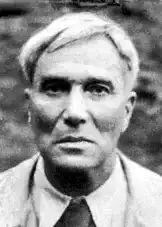
Boris Pasternak
The Weeping Garden
It’s terrible! – all drip and listening.
Whether, as ever, it’s loneliness,
splashing a branch, like lace, on the window,
or whether perhaps there’s a witness.
Choked there beneath its swollen
burden – earth’s nostrils, and audibly,
like August, far off in the distance,
midnight, ripening slow with the fields.
No sound. No one’s in hiding.
Confirming its pure desolation,
it returns to its game – slipping
from roof, to gutter, slides on.
I’ll moisten my lips, listening:
whether, as ever, I’m loneliness,
and ready maybe for weeping,
or whether perhaps there’s a witness.
But, silence. No leaves trembling.
Nothing to see: sobs, and cries
being swallowed, slippers splashing,
between them, tears and sighs.
Read more →
Whether, as ever, it’s loneliness,
splashing a branch, like lace, on the window,
or whether perhaps there’s a witness.
Choked there beneath its swollen
burden – earth’s nostrils, and audibly,
like August, far off in the distance,
midnight, ripening slow with the fields.
No sound. No one’s in hiding.
Confirming its pure desolation,
it returns to its game – slipping
from roof, to gutter, slides on.
I’ll moisten my lips, listening:
whether, as ever, I’m loneliness,
and ready maybe for weeping,
or whether perhaps there’s a witness.
But, silence. No leaves trembling.
Nothing to see: sobs, and cries
being swallowed, slippers splashing,
between them, tears and sighs.
759

William Wordsworth
The Kitten And Falling Leaves
THAT way look, my Infant, lo!
What a pretty baby-show!
See the kitten on the wall,
Sporting with the leaves that fall,
Withered leaves---one---two---and three---
From the lofty elder-tree!
Through the calm and frosty air
Of this morning bright and fair,
Eddying round and round they sink
Softly, slowly: one might think,
From the motions that are made,
Every little leaf conveyed
Sylph or Faery hither tending,---
To this lower world descending,
Each invisible and mute,
In his wavering parachute.
---But the Kitten, how she starts,
Crouches, stretches, paws, and darts!
First at one, and then its fellow
Just as light and just as yellow;
There are many now---now one---
Now they stop and there are none
What intenseness of desire
In her upward eye of fire!
With a tiger-leap half way
Now she meets the coming prey,
Lets it go as fast, and then
Has it in her power again:
Now she works with three or four,
Like an Indian conjurer;
Quick as he in feats of art,
Far beyond in joy of heart.
Were her antics played in the eye
Of a thousand standers-by,
Clapping hands with shout and stare,
What would little Tabby care
For the plaudits of the crowd?
Over happy to be proud,
Over wealthy in the treasure
Of her own exceeding pleasure!
'Tis a pretty baby-treat;
Nor, I deem, for me unmeet;
Here, for neither Babe nor me,
Other play-mate can I see.
Of the countless living things,
That with stir of feet and wings
(In the sun or under shade,
Upon bough or grassy blade)
And with busy revellings,
Chirp and song, and murmurings,
Made this orchard's narrow space,
And this vale so blithe a place;
Multitudes are swept away
Never more to breathe the day:
Some are sleeping; some in bands
Travelled into distant lands;
Others slunk to moor and wood,
Far from human neighborhood;
And, among the Kinds that keep
With us closer fellowship,
With us openly abide,
All have laid their mirth aside.
Where is he that giddy Sprite,
Blue-cap, with his colors bright,
Who was blest as bird could be,
Feeding in the apple-tree;
Made such wanton spoil and rout,
Turning blossoms inside out;
Hung---head pointing towards the ground---
Fluttered, perched, into a round
Bound himself, and then unbound;
Lithest, gaudiest Harlequin!
Prettiest Tumbler ever seen!
Light of heart and light of limb;
What is now become of Him?
Lambs, that through the mountains went
Frisking, bleating merriment,
When the year was in its prime,
They are sobered by this time.
If you look to vale or hill,
If you listen, all is still,
Save a little neighboring rill,
That from out the rocky ground
Strikes a solitary sound.
Vainly glitter hill and plain,
And the air is calm in vain;
Vainly Morning spreads the lure
Of a sky serene and pure;
Creature none can she decoy
Into open sign of joy:
Is it that they have a fear
Of the dreary season near?
Or that other pleasures be
Sweeter even than gaiety ?
Yet, whate'er enjoyments dwell
In the impenetrable cell
Of the silent heart which Nature
Furnishes to every creature;
Whatsoe'er we feel and know
Too sedate for outward show,
Such a light of gladness breaks,
Pretty Kitten! from thy freaks,---
Spreads with such a living grace
O'er my little Dora's face;
Yes, the sight so stirs and charms
Thee, Baby, laughing in my arms,
That almost I could repine
That your transports are not mine,
That I do not wholly fare
Even as ye do, thoughtless pair!
And I will have my careless season
Spite of melancholy reason,
Will walk through life in such a way
That, when time brings on decay,
Now and then I may possess
Hours of perfect gladsomeness.
---Pleased by any random toy;
By a kitten's busy joy,
Or an infant's laughing eye
Sharing in the ecstasy;
I would fare like that or this,
Find my wisdom in my bliss;
Keep the sprightly soul awake,
And have faculties to take,
Even from things by sorrow wrought,
Matter for a jocund thought,
Spite of care, and spite of grief,
To gambol with Life's falling Leaf.
Read more →
What a pretty baby-show!
See the kitten on the wall,
Sporting with the leaves that fall,
Withered leaves---one---two---and three---
From the lofty elder-tree!
Through the calm and frosty air
Of this morning bright and fair,
Eddying round and round they sink
Softly, slowly: one might think,
From the motions that are made,
Every little leaf conveyed
Sylph or Faery hither tending,---
To this lower world descending,
Each invisible and mute,
In his wavering parachute.
---But the Kitten, how she starts,
Crouches, stretches, paws, and darts!
First at one, and then its fellow
Just as light and just as yellow;
There are many now---now one---
Now they stop and there are none
What intenseness of desire
In her upward eye of fire!
With a tiger-leap half way
Now she meets the coming prey,
Lets it go as fast, and then
Has it in her power again:
Now she works with three or four,
Like an Indian conjurer;
Quick as he in feats of art,
Far beyond in joy of heart.
Were her antics played in the eye
Of a thousand standers-by,
Clapping hands with shout and stare,
What would little Tabby care
For the plaudits of the crowd?
Over happy to be proud,
Over wealthy in the treasure
Of her own exceeding pleasure!
'Tis a pretty baby-treat;
Nor, I deem, for me unmeet;
Here, for neither Babe nor me,
Other play-mate can I see.
Of the countless living things,
That with stir of feet and wings
(In the sun or under shade,
Upon bough or grassy blade)
And with busy revellings,
Chirp and song, and murmurings,
Made this orchard's narrow space,
And this vale so blithe a place;
Multitudes are swept away
Never more to breathe the day:
Some are sleeping; some in bands
Travelled into distant lands;
Others slunk to moor and wood,
Far from human neighborhood;
And, among the Kinds that keep
With us closer fellowship,
With us openly abide,
All have laid their mirth aside.
Where is he that giddy Sprite,
Blue-cap, with his colors bright,
Who was blest as bird could be,
Feeding in the apple-tree;
Made such wanton spoil and rout,
Turning blossoms inside out;
Hung---head pointing towards the ground---
Fluttered, perched, into a round
Bound himself, and then unbound;
Lithest, gaudiest Harlequin!
Prettiest Tumbler ever seen!
Light of heart and light of limb;
What is now become of Him?
Lambs, that through the mountains went
Frisking, bleating merriment,
When the year was in its prime,
They are sobered by this time.
If you look to vale or hill,
If you listen, all is still,
Save a little neighboring rill,
That from out the rocky ground
Strikes a solitary sound.
Vainly glitter hill and plain,
And the air is calm in vain;
Vainly Morning spreads the lure
Of a sky serene and pure;
Creature none can she decoy
Into open sign of joy:
Is it that they have a fear
Of the dreary season near?
Or that other pleasures be
Sweeter even than gaiety ?
Yet, whate'er enjoyments dwell
In the impenetrable cell
Of the silent heart which Nature
Furnishes to every creature;
Whatsoe'er we feel and know
Too sedate for outward show,
Such a light of gladness breaks,
Pretty Kitten! from thy freaks,---
Spreads with such a living grace
O'er my little Dora's face;
Yes, the sight so stirs and charms
Thee, Baby, laughing in my arms,
That almost I could repine
That your transports are not mine,
That I do not wholly fare
Even as ye do, thoughtless pair!
And I will have my careless season
Spite of melancholy reason,
Will walk through life in such a way
That, when time brings on decay,
Now and then I may possess
Hours of perfect gladsomeness.
---Pleased by any random toy;
By a kitten's busy joy,
Or an infant's laughing eye
Sharing in the ecstasy;
I would fare like that or this,
Find my wisdom in my bliss;
Keep the sprightly soul awake,
And have faculties to take,
Even from things by sorrow wrought,
Matter for a jocund thought,
Spite of care, and spite of grief,
To gambol with Life's falling Leaf.
764

Ezra Pound
Poetic Eggs
I am a grave poetic hen
That lays poetic eggs
And to enhance my temperament
A little quiet begs.
We make the yolk philosophy,
True beauty the albumen.
And then gum on a shell of form
To make the screed sound human.
Read more →
That lays poetic eggs
And to enhance my temperament
A little quiet begs.
We make the yolk philosophy,
True beauty the albumen.
And then gum on a shell of form
To make the screed sound human.
751

Antonio Roberval Miketen
Opportunioty of the Rose
I
The Song of João Moura
The bullfighter shouted in the center of the arena
and the horse danced in the depth of fear.
II
Picasso wanted to paint an arena,
full-sized, accurate,
with miuras with needle-sharp horns, carved
under the sleek black mountains.
On the canvas of the painter bad omens show:
in Guernica, did he paint the victory of the bull?
Consider that the arenas are human roses
ready to burst with the rage of the blood.
If Picassos dream were not so absurd,
Manolete, for sure, in his gala outfit
remembering Linares, would give himself to the bull:
would he repeat, once again, the faena of the rose?
III
Why do we trust the bull with the evidence of the wait,
on this chancy dove, innocent yet a beast?
IV
At the very moment when the body is dressed in gala
the heat of the shroud increases its nakednes.
V
Tragedy of "YIYO"
The mortal spike ripping the flesh
of the bullfighter makes sprout a brutal beauty.
VI
Will I see the day when the bull will find its luck
in the prime of the fake womb of the reckless veronica?
Read more →
The Song of João Moura
The bullfighter shouted in the center of the arena
and the horse danced in the depth of fear.
II
Picasso wanted to paint an arena,
full-sized, accurate,
with miuras with needle-sharp horns, carved
under the sleek black mountains.
On the canvas of the painter bad omens show:
in Guernica, did he paint the victory of the bull?
Consider that the arenas are human roses
ready to burst with the rage of the blood.
If Picassos dream were not so absurd,
Manolete, for sure, in his gala outfit
remembering Linares, would give himself to the bull:
would he repeat, once again, the faena of the rose?
III
Why do we trust the bull with the evidence of the wait,
on this chancy dove, innocent yet a beast?
IV
At the very moment when the body is dressed in gala
the heat of the shroud increases its nakednes.
V
Tragedy of "YIYO"
The mortal spike ripping the flesh
of the bullfighter makes sprout a brutal beauty.
VI
Will I see the day when the bull will find its luck
in the prime of the fake womb of the reckless veronica?
767

Kazi Nazrul Islam
Come on Quick go to Madina
Come on quick those who wish
To the city of Madina to go:
At the Landing-ghat is already in
The sacred boat with virtues filled!
Abu Bakr and Umar Khattab,
Usman and All Haider,
They are the sailers true of the golden boat
No fear for you, sinners! No fear any more!
The Captain of this Boat is Ahmad.
The sailors all are seasoned hands.
Hearken to the chorus they sing:
There is no god but God!
No nervousness please
In this sea of sins
Despite the tempest
That may hoot and hiss!
Those who have the Fare of Faith,
Let them come to this golden boat;
Anchoring at the kalima's Port,
Trailing the Rope of Dispensation!
From the Hurs and Fairies in Heaven
For you all this invitation!
[Original in Bangla: Jabi ke Madinay; Translation: Mizanur Rahman]
Read more →
To the city of Madina to go:
At the Landing-ghat is already in
The sacred boat with virtues filled!
Abu Bakr and Umar Khattab,
Usman and All Haider,
They are the sailers true of the golden boat
No fear for you, sinners! No fear any more!
The Captain of this Boat is Ahmad.
The sailors all are seasoned hands.
Hearken to the chorus they sing:
There is no god but God!
No nervousness please
In this sea of sins
Despite the tempest
That may hoot and hiss!
Those who have the Fare of Faith,
Let them come to this golden boat;
Anchoring at the kalima's Port,
Trailing the Rope of Dispensation!
From the Hurs and Fairies in Heaven
For you all this invitation!
[Original in Bangla: Jabi ke Madinay; Translation: Mizanur Rahman]
753
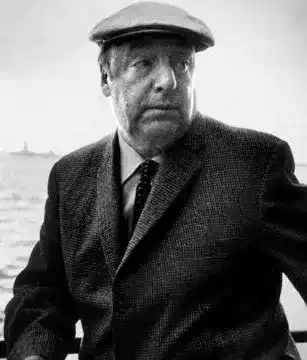
Pablo Neruda
Poetry
And it was at that age ... Poetry arrived
in search of me. I don't know, I don't know where
it came from, from winter or a river.
I don't know how or when,
no they were not voices, they were not
words, nor silence,
but from a street I was summoned,
from the branches of night,
abruptly from the others,
among violent fires
or returning alone,
there I was without a face
and it touched me.
I did not know what to say, my mouth
had no way
with names,
my eyes were blind,
and something started in my soul,
fever or forgotten wings,
and I made my own way,
deciphering
that fire,
and I wrote the first faint line,
faint, without substance, pure
nonsense,
pure wisdom
of someone who knows nothing,
and suddenly I saw
the heavens
unfastened
and open,
planets,
palpitating plantations,
shadow perforated,
riddled
with arrows, fire and flowers,
the winding night, the universe.
And I, infinitesimal being,
drunk with the great starry
void,
likeness, image of
mystery,
felt myself a pure part
of the abyss,
I wheeled with the stars,
my heart broke loose on the wind.
Read more →
in search of me. I don't know, I don't know where
it came from, from winter or a river.
I don't know how or when,
no they were not voices, they were not
words, nor silence,
but from a street I was summoned,
from the branches of night,
abruptly from the others,
among violent fires
or returning alone,
there I was without a face
and it touched me.
I did not know what to say, my mouth
had no way
with names,
my eyes were blind,
and something started in my soul,
fever or forgotten wings,
and I made my own way,
deciphering
that fire,
and I wrote the first faint line,
faint, without substance, pure
nonsense,
pure wisdom
of someone who knows nothing,
and suddenly I saw
the heavens
unfastened
and open,
planets,
palpitating plantations,
shadow perforated,
riddled
with arrows, fire and flowers,
the winding night, the universe.
And I, infinitesimal being,
drunk with the great starry
void,
likeness, image of
mystery,
felt myself a pure part
of the abyss,
I wheeled with the stars,
my heart broke loose on the wind.
767
Elizabeth Barrett Browning
Sonnet XX: Belovèd, My Belovèd
Belovèd, my Belovèd, when I think
That thou wast in the world a year ago,
What time I sat alone here in the snow
And saw no footprint, heard the silence sink
No moment at thy voice, but, link by link
Went counting all my chains as if that so
They never could fall off at any blow
Struck by thy possible hand,--why, thus I drink
Of life's great cup of wonder! Wonderful,
Never to feel thee thrill the day or night
With personal act or speech,--nor ever cull
Some prescience of thee with the blossoms white
Thou sawest growing! Atheists are as dull
Who cannot guess God's presence out of sight.
Read more →
That thou wast in the world a year ago,
What time I sat alone here in the snow
And saw no footprint, heard the silence sink
No moment at thy voice, but, link by link
Went counting all my chains as if that so
They never could fall off at any blow
Struck by thy possible hand,--why, thus I drink
Of life's great cup of wonder! Wonderful,
Never to feel thee thrill the day or night
With personal act or speech,--nor ever cull
Some prescience of thee with the blossoms white
Thou sawest growing! Atheists are as dull
Who cannot guess God's presence out of sight.
759
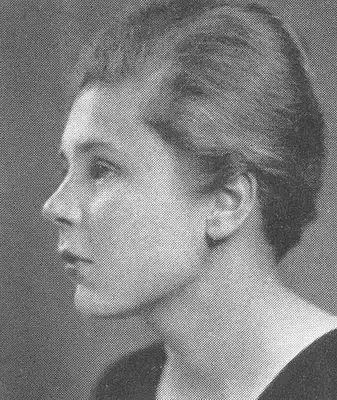
Elizabeth Bishop
The Man-moth
Here, above,
cracks in the buldings are filled with battered moonlight.
The whole shadow of Man is only as big as his hat.
It lies at his feet like a circle for a doll to stand on,
and he makes an inverted pin, the point magnetized to the moon.
He does not see the moon; he observes only her vast properties,
feeling the queer light on his hands, neither warm nor cold,
of a temperature impossible to records in thermometers.
But when the Man-Moth
pays his rare, although occasional, visits to the surface,
the moon looks rather different to him. He emerges
from an opening under the edge of one of the sidewalks
and nervously begins to scale the faces of the buildings.
He thinks the moon is a small hole at the top of the sky,
proving the sky quite useless for protection.
He trembles, but must investigate as high as he can climb.
Up the façades,
his shadow dragging like a photographer's cloth behind him
he climbs fearfully, thinking that this time he will manage
to push his small head through that round clean opening
and be forced through, as from a tube, in black scrolls on the light.
(Man, standing below him, has no such illusions.)
But what the Man-Moth fears most he must do, although
he fails, of course, and falls back scared but quite unhurt.
Then he returns
to the pale subways of cement he calls his home. He flits,
he flutters, and cannot get aboard the silent trains
fast enough to suit him. The doors close swiftly.
The Man-Moth always seats himself facing the wrong way
and the train starts at once at its full, terrible speed,
without a shift in gears or a gradation of any sort.
He cannot tell the rate at which he travels backwards.
Each night he must
be carried through artificial tunnels and dream recurrent dreams.
Just as the ties recur beneath his train, these underlie
his rushing brain. He does not dare look out the window,
for the third rail, the unbroken draught of poison,
runs there beside him. He regards it as a disease
he has inherited the susceptibility to. He has to keep
his hands in his pockets, as others must wear mufflers.
If you catch him,
hold up a flashlight to his eye. It's all dark pupil,
an entire night itself, whose haired horizon tightens
as he stares back, and closes up the eye. Then from the lids
one tear, his only possession, like the bee's sting, slips.
Slyly he palms it, and if you're not paying attention
he'll swallow it. However, if you watch, he'll hand it over,
cool as from underground springs and pure enough to drink.
Read more →
cracks in the buldings are filled with battered moonlight.
The whole shadow of Man is only as big as his hat.
It lies at his feet like a circle for a doll to stand on,
and he makes an inverted pin, the point magnetized to the moon.
He does not see the moon; he observes only her vast properties,
feeling the queer light on his hands, neither warm nor cold,
of a temperature impossible to records in thermometers.
But when the Man-Moth
pays his rare, although occasional, visits to the surface,
the moon looks rather different to him. He emerges
from an opening under the edge of one of the sidewalks
and nervously begins to scale the faces of the buildings.
He thinks the moon is a small hole at the top of the sky,
proving the sky quite useless for protection.
He trembles, but must investigate as high as he can climb.
Up the façades,
his shadow dragging like a photographer's cloth behind him
he climbs fearfully, thinking that this time he will manage
to push his small head through that round clean opening
and be forced through, as from a tube, in black scrolls on the light.
(Man, standing below him, has no such illusions.)
But what the Man-Moth fears most he must do, although
he fails, of course, and falls back scared but quite unhurt.
Then he returns
to the pale subways of cement he calls his home. He flits,
he flutters, and cannot get aboard the silent trains
fast enough to suit him. The doors close swiftly.
The Man-Moth always seats himself facing the wrong way
and the train starts at once at its full, terrible speed,
without a shift in gears or a gradation of any sort.
He cannot tell the rate at which he travels backwards.
Each night he must
be carried through artificial tunnels and dream recurrent dreams.
Just as the ties recur beneath his train, these underlie
his rushing brain. He does not dare look out the window,
for the third rail, the unbroken draught of poison,
runs there beside him. He regards it as a disease
he has inherited the susceptibility to. He has to keep
his hands in his pockets, as others must wear mufflers.
If you catch him,
hold up a flashlight to his eye. It's all dark pupil,
an entire night itself, whose haired horizon tightens
as he stares back, and closes up the eye. Then from the lids
one tear, his only possession, like the bee's sting, slips.
Slyly he palms it, and if you're not paying attention
he'll swallow it. However, if you watch, he'll hand it over,
cool as from underground springs and pure enough to drink.
776
Elizabeth Bishop
A Prodigal
The brown enormous odor he lived by
was too close, with its breathing and thick hair,
for him to judge. The floor was rotten; the sty
was plastered halfway up with glass-smooth dung.
Light-lashed, self-righteous, above moving snouts,
the pigs' eyes followed him, a cheerful stare-even
to the sow that always ate her young-till,
sickening, he leaned to scratch her head.
But sometimes mornings after drinking bouts
(he hid the pints behind the two-by-fours),
the sunrise glazed the barnyard mud with red
the burning puddles seemed to reassure.
And then he thought he almost might endure
his exile yet another year or more.
But evenings the first star came to warn.
The farmer whom he worked for came at dark
to shut the cows and horses in the barn
beneath their overhanging clouds of hay,
with pitchforks, faint forked lightnings, catching light,
safe and companionable as in the Ark.
The pigs stuck out their little feet and snored.
The lantern--like the sun, going away-laid
on the mud a pacing aureole.
Carrying a bucket along a slimy board,
he felt the bats' uncertain staggering flight,
his shuddering insights, beyond his control,
touching him. But it took him a long time
finally to make up his mind to go home.
Read more →
was too close, with its breathing and thick hair,
for him to judge. The floor was rotten; the sty
was plastered halfway up with glass-smooth dung.
Light-lashed, self-righteous, above moving snouts,
the pigs' eyes followed him, a cheerful stare-even
to the sow that always ate her young-till,
sickening, he leaned to scratch her head.
But sometimes mornings after drinking bouts
(he hid the pints behind the two-by-fours),
the sunrise glazed the barnyard mud with red
the burning puddles seemed to reassure.
And then he thought he almost might endure
his exile yet another year or more.
But evenings the first star came to warn.
The farmer whom he worked for came at dark
to shut the cows and horses in the barn
beneath their overhanging clouds of hay,
with pitchforks, faint forked lightnings, catching light,
safe and companionable as in the Ark.
The pigs stuck out their little feet and snored.
The lantern--like the sun, going away-laid
on the mud a pacing aureole.
Carrying a bucket along a slimy board,
he felt the bats' uncertain staggering flight,
his shuddering insights, beyond his control,
touching him. But it took him a long time
finally to make up his mind to go home.
761

Henry Wadsworth Longfellow
The Sound of the Sea
The sea awoke at midnight from its sleep,
And round the pebbly beaches far and wide
I heard the first wave of the rising tide
Rush onward with uninterrupted sweep;
A voice out of the silence of the deep,
A sound mysteriously multiplied
As of a cataract from the mountain's side,
Or roar of winds upon a wooded steep.
So comes to us at times, from the unknown
And inaccessible solitudes of being,
The rushing of the sea-tides of the soul;
And inspirations, that we deem our own,
Are some divine of foreshadowing and foreseeing
Of things beyond our reason or control.
Read more →
And round the pebbly beaches far and wide
I heard the first wave of the rising tide
Rush onward with uninterrupted sweep;
A voice out of the silence of the deep,
A sound mysteriously multiplied
As of a cataract from the mountain's side,
Or roar of winds upon a wooded steep.
So comes to us at times, from the unknown
And inaccessible solitudes of being,
The rushing of the sea-tides of the soul;
And inspirations, that we deem our own,
Are some divine of foreshadowing and foreseeing
Of things beyond our reason or control.
788
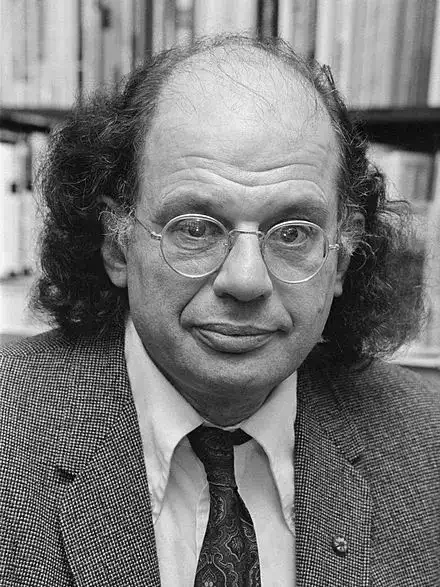
Allen Ginsberg
Kaddish, Part I
Strange now to think of you, gone without corsets & eyes, while I walk on
the sunny pavement of Greenwich Village.
downtown Manhattan, clear winter noon, and I've been up all night, talking,
talking, reading the Kaddish aloud, listening to Ray Charles blues
shout blind on the phonograph
the rhythm the rhythm--and your memory in my head three years after-And
read Adonais' last triumphant stanzas aloud--wept, realizing
how we suffer--
And how Death is that remedy all singers dream of, sing, remember,
prophesy as in the Hebrew Anthem, or the Buddhist Book of Answers--
and my own imagination of a withered leaf--at dawn--
Dreaming back thru life, Your time--and mine accelerating toward Apocalypse,
the final moment--the flower burning in the Day--and what comes after,
looking back on the mind itself that saw an American city
a flash away, and the great dream of Me or China, or you and a phantom
Russia, or a crumpled bed that never existed-
like a poem in the dark--escaped back to Oblivion--
No more to say, and nothing to weep for but the Beings in the Dream,
trapped in its disappearance,
sighing, screaming with it, buying and selling pieces of phantom, worshipping
each other,
worshipping the God included in it all--longing or inevitability?--while it
lasts, a Vision--anything more?
It leaps about me, as I go out and walk the street, look back over my shoulder,
Seventh Avenue, the battlements of window office buildings shouldering
each other high, under a cloud, tall as the sky an instant--and
the sky above--an old blue place.
or down the Avenue to the south, to--as I walk toward the Lower East Side
--where you walked 50 years ago, little girl--from Russia, eating the
first poisonous tomatoes of America frightened on the dock
then struggling in the crowds of Orchard Street toward what?--toward
Newark-
toward candy store, first home-made sodas of the century, hand-churned ice
cream in backroom on musty brownfloor boards--
Toward education marriage nervous breakdown, operation, teaching school,
and learning to be mad, in a dream--what is this life?
Toward the Key in the window--and the great Key lays its head of light
on top of Manhattan, and over the floor, and lays down on the
sidewalk--in a single vast beam, moving, as I walk down First toward
the Yiddish Theater--and the place of poverty
you knew, and I know, but without caring now--Strange to have moved
thru Paterson, and the West, and Europe and here again,
with the cries of Spaniards now in the doorstops doors and dark boys on
the street, firs escapes old as you
--Tho you're not old now, that's left here with me--
Myself, anyhow, maybe as old as the universe--and I guess that dies with
us--enough to cancel all that comes--What came is gone forever
every time-
That's good!
That leaves it open for no regret--no fear radiators, lacklove,
torture even toothache in the end--
Though while it comes it is a lion that eats the soul--and the lamb, the soul,
in us, alas, offering itself in sacrifice to change's fierce hunger--hair
and teeth--and the roar of bonepain, skull bare, break rib, rot-skin,
braintricked Implacability.
Ai! ai!we do worse! We are in a fix!
And you're out, Death let you out,
Death had the Mercy, you're done with your century, done with
God, done with the path thru it--Done with yourself at last--Pure
--Back to the Babe dark before your Father, before us all--before the
world--
There, rest.
No more suffering for you.
I know where you've gone, it's good.
No more flowers in the summer fields of New York, no joy now, no more
fear of Louis,
and no more of his sweetness and glasses, his high school decades, debts,
loves, frightened telephone calls, conception beds, relatives, hands--
No more of sister Elanor,--she gone before you--we kept it secret you
killed her--or she killed herself to bear with you--an arthritic heart
--But Death's killed you both--No matter--
Nor your memory of your mother, 1915 tears in silent movies weeks and
weeks--forgetting, agrieve watching Marie Dressler address humanity,
Chaplin dance in youth,
or Boris Godunov, Chaliapin's at the Met, halling his voice of a weeping Czar
--by standing room with Elanor & Max--watching also the Capital
ists take seats in Orchestra, white furs, diamonds,
with the YPSL's hitch-hiking thru Pennsylvania, in black baggy gym skirts
pants, photograph of 4 girls holding each other round the waste, and
laughing eye, too coy, virginal solitude of 1920
all girls grown old, or dead now, and that long hair in the grave--lucky to
have husbands later--
You made it--I came too--Eugene my brother before (still grieving now and
will gream on to his last stiff hand, as he goes thru his cancer--or kill
--later perhaps--soon he will think--)
And it's the last moment I remember, which I see them all, thru myself, now
--tho not you
I didn't foresee what you felt--what more hideous gape of bad mouth came
first--to you--and were you prepared?
To go where?
In that Dark--that--in that God? a radiance? A Lord in the
Void?Like an eye in the black cloud in a dream?
Adonoi at last, with
you?
Beyond my remembrance! Incapable to guess! Not merely the yellow skull
in the grave, or a box of worm dust, and a stained ribbon--Deathshead
with Halo?can you believe it?
Is it only the sun that shines once for the mind, only the flash of existence,
than none ever was?
Nothing beyond what we have--what you had--that so pitiful--yet Triumph,
to have been here, and changed, like a tree, broken, or flower--fed to the
ground--but made, with its petals, colored, thinking Great Universe,
shaken, cut in the head, leaf stript, hid in an egg crate hospital, cloth
wrapped, sore--freaked in the moon brain, Naughtless.
No flower like that flower, which knew itself in the garden, and fought the
knife--lost
Cut down by an idiot Snowman's icy--even in the Spring--strange ghost
thought some--Death--Sharp icicle in his hand--crowned with old
roses--a dog for his eyes--cock of a sweatshop--heart of electric
irons.
All the accumulations of life, that wear us out--clocks, bodies, consciousness,
shoes, breasts--begotten sons--your Communism--'Paranoia' into
hospitals.
You once kicked Elanor in the leg, she died of heart failure later.
You of
stroke.
Asleep?within a year, the two of you, sisters in death.
Is
Elanor happy?
Max grieves alive in an office on Lower Broadway, lone large mustache over
midnight Accountings, not sure.
His life passes--as he sees--and
what does he doubt now?
Still dream of making money, or that might
have made money, hired nurse, had children, found even your Immortality,
Naomi?
I'll see him soon.
Now I've got to cut through to talk to you as I didn't
when you had a mouth.
Forever.And we're bound for that, Forever like Emily Dickinson's horses
--headed to the End.
They know the way--These Steeds--run faster than we think--it's our own
life they cross--and take with them.
Magnificent, mourned no more, marred of heart, mind behind, married
dreamed, mortal changed--Ass and face done with murder.
In the world, given, flower maddened, made no Utopia, shut under
pine, almed in Earth, blamed in Lone, Jehovah, accept.
Nameless, One Faced, Forever beyond me, beginningless, endless,
Father in death.
Tho I am not there for this Prophecy, I am unmarried, I'm
hymnless, I'm Heavenless, headless in blisshood I would still adore
Thee, Heaven, after Death, only One blessed in Nothingness, not
light or darkness, Dayless Eternity-Take
this, this Psalm, from me, burst from my hand in a day, some
of my Time, now given to Nothing--to praise Thee--But Death
This is the end, the redemption from Wilderness, way for the Wonderer,
House sought for All, black handkerchief washed clean by weeping
--page beyond Psalm--Last change of mine and Naomi--to God's perfect
Darkness--Death, stay thy phantoms!
II
Over and over--refrain--of the Hospitals--still haven't written your
history--leave it abstract--a few images
run thru the mind--like the saxophone chorus of houses and years-remembrance
of electrical shocks.
By long nites as a child in Paterson apartment, watching over your
nervousness--you were fat--your next move-
By that afternoon I stayed home from school to take care of you-once
and for all--when I vowed forever that once man disagreed with my
opinion of the cosmos, I was lost-
By my later burden--vow to illuminate mankind--this is release of
particulars--(mad as you)--(sanity a trick of agreement)-But
you stared out the window on the Broadway Church corner, and
spied a mystical assassin from Newark,
So phoned the Doctor--'OK go way for a rest'--so I put on my coat
and walked you downstreet--On the way a grammarschool boy screamed,
unaccountably--'Where you goin Lady to Death'? I shuddered-
and you covered your nose with motheaten fur collar, gas mask
against poison sneaked into downtown atmosphere, sprayed by Grandma-
And was the driver of the cheesebox Public Service bus a member of
the gang?
You shuddered at his face, I could hardly get you on--to New
York, very Times Square, to grab another Greyhound--
Read more →
the sunny pavement of Greenwich Village.
downtown Manhattan, clear winter noon, and I've been up all night, talking,
talking, reading the Kaddish aloud, listening to Ray Charles blues
shout blind on the phonograph
the rhythm the rhythm--and your memory in my head three years after-And
read Adonais' last triumphant stanzas aloud--wept, realizing
how we suffer--
And how Death is that remedy all singers dream of, sing, remember,
prophesy as in the Hebrew Anthem, or the Buddhist Book of Answers--
and my own imagination of a withered leaf--at dawn--
Dreaming back thru life, Your time--and mine accelerating toward Apocalypse,
the final moment--the flower burning in the Day--and what comes after,
looking back on the mind itself that saw an American city
a flash away, and the great dream of Me or China, or you and a phantom
Russia, or a crumpled bed that never existed-
like a poem in the dark--escaped back to Oblivion--
No more to say, and nothing to weep for but the Beings in the Dream,
trapped in its disappearance,
sighing, screaming with it, buying and selling pieces of phantom, worshipping
each other,
worshipping the God included in it all--longing or inevitability?--while it
lasts, a Vision--anything more?
It leaps about me, as I go out and walk the street, look back over my shoulder,
Seventh Avenue, the battlements of window office buildings shouldering
each other high, under a cloud, tall as the sky an instant--and
the sky above--an old blue place.
or down the Avenue to the south, to--as I walk toward the Lower East Side
--where you walked 50 years ago, little girl--from Russia, eating the
first poisonous tomatoes of America frightened on the dock
then struggling in the crowds of Orchard Street toward what?--toward
Newark-
toward candy store, first home-made sodas of the century, hand-churned ice
cream in backroom on musty brownfloor boards--
Toward education marriage nervous breakdown, operation, teaching school,
and learning to be mad, in a dream--what is this life?
Toward the Key in the window--and the great Key lays its head of light
on top of Manhattan, and over the floor, and lays down on the
sidewalk--in a single vast beam, moving, as I walk down First toward
the Yiddish Theater--and the place of poverty
you knew, and I know, but without caring now--Strange to have moved
thru Paterson, and the West, and Europe and here again,
with the cries of Spaniards now in the doorstops doors and dark boys on
the street, firs escapes old as you
--Tho you're not old now, that's left here with me--
Myself, anyhow, maybe as old as the universe--and I guess that dies with
us--enough to cancel all that comes--What came is gone forever
every time-
That's good!
That leaves it open for no regret--no fear radiators, lacklove,
torture even toothache in the end--
Though while it comes it is a lion that eats the soul--and the lamb, the soul,
in us, alas, offering itself in sacrifice to change's fierce hunger--hair
and teeth--and the roar of bonepain, skull bare, break rib, rot-skin,
braintricked Implacability.
Ai! ai!we do worse! We are in a fix!
And you're out, Death let you out,
Death had the Mercy, you're done with your century, done with
God, done with the path thru it--Done with yourself at last--Pure
--Back to the Babe dark before your Father, before us all--before the
world--
There, rest.
No more suffering for you.
I know where you've gone, it's good.
No more flowers in the summer fields of New York, no joy now, no more
fear of Louis,
and no more of his sweetness and glasses, his high school decades, debts,
loves, frightened telephone calls, conception beds, relatives, hands--
No more of sister Elanor,--she gone before you--we kept it secret you
killed her--or she killed herself to bear with you--an arthritic heart
--But Death's killed you both--No matter--
Nor your memory of your mother, 1915 tears in silent movies weeks and
weeks--forgetting, agrieve watching Marie Dressler address humanity,
Chaplin dance in youth,
or Boris Godunov, Chaliapin's at the Met, halling his voice of a weeping Czar
--by standing room with Elanor & Max--watching also the Capital
ists take seats in Orchestra, white furs, diamonds,
with the YPSL's hitch-hiking thru Pennsylvania, in black baggy gym skirts
pants, photograph of 4 girls holding each other round the waste, and
laughing eye, too coy, virginal solitude of 1920
all girls grown old, or dead now, and that long hair in the grave--lucky to
have husbands later--
You made it--I came too--Eugene my brother before (still grieving now and
will gream on to his last stiff hand, as he goes thru his cancer--or kill
--later perhaps--soon he will think--)
And it's the last moment I remember, which I see them all, thru myself, now
--tho not you
I didn't foresee what you felt--what more hideous gape of bad mouth came
first--to you--and were you prepared?
To go where?
In that Dark--that--in that God? a radiance? A Lord in the
Void?Like an eye in the black cloud in a dream?
Adonoi at last, with
you?
Beyond my remembrance! Incapable to guess! Not merely the yellow skull
in the grave, or a box of worm dust, and a stained ribbon--Deathshead
with Halo?can you believe it?
Is it only the sun that shines once for the mind, only the flash of existence,
than none ever was?
Nothing beyond what we have--what you had--that so pitiful--yet Triumph,
to have been here, and changed, like a tree, broken, or flower--fed to the
ground--but made, with its petals, colored, thinking Great Universe,
shaken, cut in the head, leaf stript, hid in an egg crate hospital, cloth
wrapped, sore--freaked in the moon brain, Naughtless.
No flower like that flower, which knew itself in the garden, and fought the
knife--lost
Cut down by an idiot Snowman's icy--even in the Spring--strange ghost
thought some--Death--Sharp icicle in his hand--crowned with old
roses--a dog for his eyes--cock of a sweatshop--heart of electric
irons.
All the accumulations of life, that wear us out--clocks, bodies, consciousness,
shoes, breasts--begotten sons--your Communism--'Paranoia' into
hospitals.
You once kicked Elanor in the leg, she died of heart failure later.
You of
stroke.
Asleep?within a year, the two of you, sisters in death.
Is
Elanor happy?
Max grieves alive in an office on Lower Broadway, lone large mustache over
midnight Accountings, not sure.
His life passes--as he sees--and
what does he doubt now?
Still dream of making money, or that might
have made money, hired nurse, had children, found even your Immortality,
Naomi?
I'll see him soon.
Now I've got to cut through to talk to you as I didn't
when you had a mouth.
Forever.And we're bound for that, Forever like Emily Dickinson's horses
--headed to the End.
They know the way--These Steeds--run faster than we think--it's our own
life they cross--and take with them.
Magnificent, mourned no more, marred of heart, mind behind, married
dreamed, mortal changed--Ass and face done with murder.
In the world, given, flower maddened, made no Utopia, shut under
pine, almed in Earth, blamed in Lone, Jehovah, accept.
Nameless, One Faced, Forever beyond me, beginningless, endless,
Father in death.
Tho I am not there for this Prophecy, I am unmarried, I'm
hymnless, I'm Heavenless, headless in blisshood I would still adore
Thee, Heaven, after Death, only One blessed in Nothingness, not
light or darkness, Dayless Eternity-Take
this, this Psalm, from me, burst from my hand in a day, some
of my Time, now given to Nothing--to praise Thee--But Death
This is the end, the redemption from Wilderness, way for the Wonderer,
House sought for All, black handkerchief washed clean by weeping
--page beyond Psalm--Last change of mine and Naomi--to God's perfect
Darkness--Death, stay thy phantoms!
II
Over and over--refrain--of the Hospitals--still haven't written your
history--leave it abstract--a few images
run thru the mind--like the saxophone chorus of houses and years-remembrance
of electrical shocks.
By long nites as a child in Paterson apartment, watching over your
nervousness--you were fat--your next move-
By that afternoon I stayed home from school to take care of you-once
and for all--when I vowed forever that once man disagreed with my
opinion of the cosmos, I was lost-
By my later burden--vow to illuminate mankind--this is release of
particulars--(mad as you)--(sanity a trick of agreement)-But
you stared out the window on the Broadway Church corner, and
spied a mystical assassin from Newark,
So phoned the Doctor--'OK go way for a rest'--so I put on my coat
and walked you downstreet--On the way a grammarschool boy screamed,
unaccountably--'Where you goin Lady to Death'? I shuddered-
and you covered your nose with motheaten fur collar, gas mask
against poison sneaked into downtown atmosphere, sprayed by Grandma-
And was the driver of the cheesebox Public Service bus a member of
the gang?
You shuddered at his face, I could hardly get you on--to New
York, very Times Square, to grab another Greyhound--
783
John Milton
Sonnet 14
XIV
When Faith and Love which parted from thee never,
Had ripen'd thy just soul to dwell with God,
Meekly thou didst resign this earthy load
Of Death, call'd Life; which us from Life doth sever
Thy Works and Alms and all thy good Endeavour
Staid not behind, nor in the grave were trod;
But as Faith pointed with her golden rod,
Follow'd thee up to joy and bliss for ever.
Love led them on, and Faith who knew them best
Thy hand-maids, clad them o're with purple beams
And azure wings, that up they flew so drest,
And speak the truth of thee on glorious Theams
Before the Judge, who thenceforth bid thee rest
And drink thy fill of pure immortal streams.
Note: Camb. Autograph supplies title, On the Religious
Memory of Catherine Thomson, my Christian Friend, deceased
16 Decemb., 1646.
Read more →
When Faith and Love which parted from thee never,
Had ripen'd thy just soul to dwell with God,
Meekly thou didst resign this earthy load
Of Death, call'd Life; which us from Life doth sever
Thy Works and Alms and all thy good Endeavour
Staid not behind, nor in the grave were trod;
But as Faith pointed with her golden rod,
Follow'd thee up to joy and bliss for ever.
Love led them on, and Faith who knew them best
Thy hand-maids, clad them o're with purple beams
And azure wings, that up they flew so drest,
And speak the truth of thee on glorious Theams
Before the Judge, who thenceforth bid thee rest
And drink thy fill of pure immortal streams.
Note: Camb. Autograph supplies title, On the Religious
Memory of Catherine Thomson, my Christian Friend, deceased
16 Decemb., 1646.
763
Allen Ginsberg
Wales Visitation
White fog lifting & falling on mountain-brow
Trees moving in rivers of wind
The clouds arise
as on a wave, gigantic eddy lifting mist
above teeming ferns exquisitely swayed
along a green crag
glimpsed thru mullioned glass in valley raine—
Bardic, O Self, Visitacione, tell naught
but what seen by one man in a vale in Albion,
of the folk, whose physical sciences end in Ecology,
the wisdom of earthly relations,
of mouths & eyes interknit ten centuries visible
orchards of mind language manifest human,
of the satanic thistle that raises its horned symmetry
flowering above sister grass-daisies’ pink tiny
bloomlets angelic as lightbulbs—
Remember 160 miles from London’s symmetrical thorned tower
& network of TV pictures flashing bearded your Self
the lambs on the tree-nooked hillside this day bleating
heard in Blake’s old ear, & the silent thought of Wordsworth in eld Stillness
clouds passing through skeleton arches of Tintern Abbey—
Bard Nameless as the Vast, babble to Vastness!
All the Valley quivered, one extended motion, wind
undulating on mossy hills
a giant wash that sank white fog delicately down red runnels
on the mountainside
whose leaf-branch tendrils moved asway
in granitic undertow down—
and lifted the floating Nebulous upward, and lifted the arms of the trees
and lifted the grasses an instant in balance
and lifted the lambs to hold still
and lifted the green of the hill, in one solemn wave
A solid mass of Heaven, mist-infused, ebbs thru the vale,
a wavelet of Immensity, lapping gigantic through Llanthony Valley,
the length of all England, valley upon valley under Heaven’s ocean
tonned with cloud-hang,
—Heaven balanced on a grassblade.
Roar of the mountain wind slow, sigh of the body,
One Being on the mountainside stirring gently
Exquisite scales trembling everywhere in balance,
one motion thru the cloudy sky-floor shifting on the million feet of daisies,
one Majesty the motion that stirred wet grass quivering
to the farthest tendril of white fog poured down
through shivering flowers on the mountain’s head—
No imperfection in the budded mountain,
Valleys breathe, heaven and earth move together,
daisies push inches of yellow air, vegetables tremble,
grass shimmers green
sheep speckle the mountainside, revolving their jaws with empty eyes,
horses dance in the warm rain,
tree-lined canals network live farmland,
blueberries fringe stone walls on hawthorn’d hills,
pheasants croak on meadows haired with fern—
Out, out on the hillside, into the ocean sound, into delicate gusts of wet air,
Fall on the ground, O great Wetness, O Mother, No harm on your body!
Stare close, no imperfection in the grass,
each flower Buddha-eye, repeating the story,
myriad-formed—
Kneel before the foxglove raising green buds, mauve bells dropped
doubled down the stem trembling antennae,
& look in the eyes of the branded lambs that stare
breathing stockstill under dripping hawthorn—
I lay down mixing my beard with the wet hair of the mountainside,
smelling the brown vagina-moist ground, harmless,
tasting the violet thistle-hair, sweetness—
One being so balanced, so vast, that its softest breath
moves every floweret in the stillness on the valley floor,
trembles lamb-hair hung gossamer rain-beaded in the grass,
lifts trees on their roots, birds in the great draught
hiding their strength in the rain, bearing same weight,
Groan thru breast and neck, a great Oh! to earth heart
Calling our Presence together
The great secret is no secret
Senses fit the winds,
Visible is visible,
rain-mist curtains wave through the bearded vale,
gray atoms wet the wind’s kabbala
Crosslegged on a rock in dusk rain,
rubber booted in soft grass, mind moveless,
breath trembles in white daisies by the roadside,
Heaven breath and my own symmetric
Airs wavering thru antlered green fern
drawn in my navel, same breath as breathes thru Capel-Y-Ffn,
Sounds of Aleph and Aum
through forests of gristle,
my skull and Lord Hereford’s Knob equal,
All Albion one.
What did I notice? Particulars! The
vision of the great One is myriad—
smoke curls upward from ashtray,
house fire burned low,
The night, still wet & moody black heaven
starless
upward in motion with wet wind.
Read more →
Trees moving in rivers of wind
The clouds arise
as on a wave, gigantic eddy lifting mist
above teeming ferns exquisitely swayed
along a green crag
glimpsed thru mullioned glass in valley raine—
Bardic, O Self, Visitacione, tell naught
but what seen by one man in a vale in Albion,
of the folk, whose physical sciences end in Ecology,
the wisdom of earthly relations,
of mouths & eyes interknit ten centuries visible
orchards of mind language manifest human,
of the satanic thistle that raises its horned symmetry
flowering above sister grass-daisies’ pink tiny
bloomlets angelic as lightbulbs—
Remember 160 miles from London’s symmetrical thorned tower
& network of TV pictures flashing bearded your Self
the lambs on the tree-nooked hillside this day bleating
heard in Blake’s old ear, & the silent thought of Wordsworth in eld Stillness
clouds passing through skeleton arches of Tintern Abbey—
Bard Nameless as the Vast, babble to Vastness!
All the Valley quivered, one extended motion, wind
undulating on mossy hills
a giant wash that sank white fog delicately down red runnels
on the mountainside
whose leaf-branch tendrils moved asway
in granitic undertow down—
and lifted the floating Nebulous upward, and lifted the arms of the trees
and lifted the grasses an instant in balance
and lifted the lambs to hold still
and lifted the green of the hill, in one solemn wave
A solid mass of Heaven, mist-infused, ebbs thru the vale,
a wavelet of Immensity, lapping gigantic through Llanthony Valley,
the length of all England, valley upon valley under Heaven’s ocean
tonned with cloud-hang,
—Heaven balanced on a grassblade.
Roar of the mountain wind slow, sigh of the body,
One Being on the mountainside stirring gently
Exquisite scales trembling everywhere in balance,
one motion thru the cloudy sky-floor shifting on the million feet of daisies,
one Majesty the motion that stirred wet grass quivering
to the farthest tendril of white fog poured down
through shivering flowers on the mountain’s head—
No imperfection in the budded mountain,
Valleys breathe, heaven and earth move together,
daisies push inches of yellow air, vegetables tremble,
grass shimmers green
sheep speckle the mountainside, revolving their jaws with empty eyes,
horses dance in the warm rain,
tree-lined canals network live farmland,
blueberries fringe stone walls on hawthorn’d hills,
pheasants croak on meadows haired with fern—
Out, out on the hillside, into the ocean sound, into delicate gusts of wet air,
Fall on the ground, O great Wetness, O Mother, No harm on your body!
Stare close, no imperfection in the grass,
each flower Buddha-eye, repeating the story,
myriad-formed—
Kneel before the foxglove raising green buds, mauve bells dropped
doubled down the stem trembling antennae,
& look in the eyes of the branded lambs that stare
breathing stockstill under dripping hawthorn—
I lay down mixing my beard with the wet hair of the mountainside,
smelling the brown vagina-moist ground, harmless,
tasting the violet thistle-hair, sweetness—
One being so balanced, so vast, that its softest breath
moves every floweret in the stillness on the valley floor,
trembles lamb-hair hung gossamer rain-beaded in the grass,
lifts trees on their roots, birds in the great draught
hiding their strength in the rain, bearing same weight,
Groan thru breast and neck, a great Oh! to earth heart
Calling our Presence together
The great secret is no secret
Senses fit the winds,
Visible is visible,
rain-mist curtains wave through the bearded vale,
gray atoms wet the wind’s kabbala
Crosslegged on a rock in dusk rain,
rubber booted in soft grass, mind moveless,
breath trembles in white daisies by the roadside,
Heaven breath and my own symmetric
Airs wavering thru antlered green fern
drawn in my navel, same breath as breathes thru Capel-Y-Ffn,
Sounds of Aleph and Aum
through forests of gristle,
my skull and Lord Hereford’s Knob equal,
All Albion one.
What did I notice? Particulars! The
vision of the great One is myriad—
smoke curls upward from ashtray,
house fire burned low,
The night, still wet & moody black heaven
starless
upward in motion with wet wind.
757
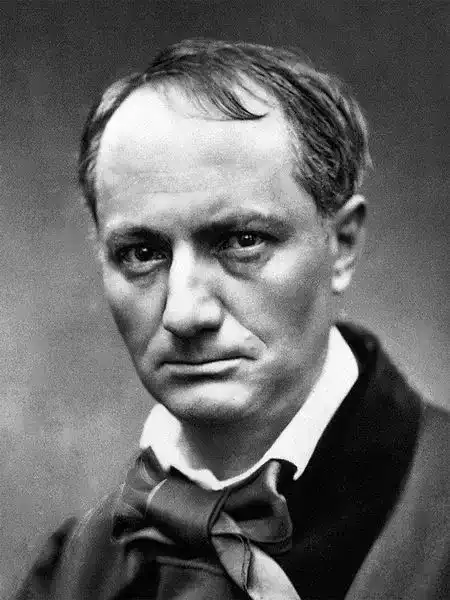
Charles Baudelaire
Her Hair
O fleece, that down the neck waves to the nape!
O curls! O perfume nonchalant and rare!
O ecstasy! To fill this alcove shape
With memories that in these tresses sleep,
I would shake them like penions in the air!
Languorous Asia, burning Africa,
And a far world, defunct almost, absent,
Within your aromatic forest stay!
As other souls on music drift away,
Mine, O my love! still floats upon your scent.
I shall go there where, full of sap, both tree
And man swoon in the heat of the southern climates;
Strong tresses be the swell that carries me!
I dream upon your sea of amber
Of dazzling sails, of oarsmen, masts, and flames:
A sun-drenched and reverberating port,
Where I imbibe colour and sound and scent;
Where vessels, gliding through the gold and moiré,
Open their vast arms as they leave the shore
To clasp the pure and shimmering firmament.
I'll plunge my head, enamored of its pleasure,
In this black ocean where the other hides;
My subtle spirit then will know a measure
Of fertile idleness and fragrant leisure,
Lulled by the infinite rhythm of its tides!
Pavilion, of autumn-shadowed tresses spun,
You give me back the azure from afar;
And where the twisted locks are fringed with down
Lurk mingled odors I grow drunk upon
Of oil of coconut, of musk, and tar.
A long time! always! my hand in your hair
Will sow the stars of sapphire, pearl, ruby,
That you be never deaf to my desire,
My oasis and my gourd whence I aspire
To drink deep of the wine of memory.
Read more →
O curls! O perfume nonchalant and rare!
O ecstasy! To fill this alcove shape
With memories that in these tresses sleep,
I would shake them like penions in the air!
Languorous Asia, burning Africa,
And a far world, defunct almost, absent,
Within your aromatic forest stay!
As other souls on music drift away,
Mine, O my love! still floats upon your scent.
I shall go there where, full of sap, both tree
And man swoon in the heat of the southern climates;
Strong tresses be the swell that carries me!
I dream upon your sea of amber
Of dazzling sails, of oarsmen, masts, and flames:
A sun-drenched and reverberating port,
Where I imbibe colour and sound and scent;
Where vessels, gliding through the gold and moiré,
Open their vast arms as they leave the shore
To clasp the pure and shimmering firmament.
I'll plunge my head, enamored of its pleasure,
In this black ocean where the other hides;
My subtle spirit then will know a measure
Of fertile idleness and fragrant leisure,
Lulled by the infinite rhythm of its tides!
Pavilion, of autumn-shadowed tresses spun,
You give me back the azure from afar;
And where the twisted locks are fringed with down
Lurk mingled odors I grow drunk upon
Of oil of coconut, of musk, and tar.
A long time! always! my hand in your hair
Will sow the stars of sapphire, pearl, ruby,
That you be never deaf to my desire,
My oasis and my gourd whence I aspire
To drink deep of the wine of memory.
765

Ella Wheeler Wilcox
Solitude
Laugh, and the world laughs with you;
Weep, and you weep alone.
For the sad old earth must borrow it's mirth,
But has trouble enough of its own.
Sing, and the hills will answer;
Sigh, it is lost on the air.
The echoes bound to a joyful sound,
But shrink from voicing care.
Rejoice, and men will seek you;
Grieve, and they turn and go.
They want full measure of all your pleasure,
But they do not need your woe.
Be glad, and your friends are many;
Be sad, and you lose them all.
There are none to decline your nectared wine,
But alone you must drink life's gall.
Feast, and your halls are crowded;
Fast, and the world goes by.
Succeed and give, and it helps you live,
But no man can help you die.
There is room in the halls of pleasure
For a long and lordly train,
But one by one we must all file on
Through the narrow aisles of pain.
Read more →
Weep, and you weep alone.
For the sad old earth must borrow it's mirth,
But has trouble enough of its own.
Sing, and the hills will answer;
Sigh, it is lost on the air.
The echoes bound to a joyful sound,
But shrink from voicing care.
Rejoice, and men will seek you;
Grieve, and they turn and go.
They want full measure of all your pleasure,
But they do not need your woe.
Be glad, and your friends are many;
Be sad, and you lose them all.
There are none to decline your nectared wine,
But alone you must drink life's gall.
Feast, and your halls are crowded;
Fast, and the world goes by.
Succeed and give, and it helps you live,
But no man can help you die.
There is room in the halls of pleasure
For a long and lordly train,
But one by one we must all file on
Through the narrow aisles of pain.
760
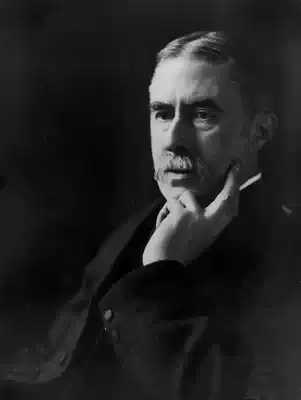
Alfred Edward Housman
Farewell to Barn and Stack and Tree
"Farewell to barn and stack and tree,
Farewell to Severn shore.
Terence, look your last at me,
For I come home no more.
"The sun burns on the half-mown hill,
By now the blood is dried;
And Maurice amongst the hay lies still
And my knife is in his side.
"My mother thinks us long away;
'Tis time the field were mown.
She had two sons at rising day,
To-night she'll be alone.
"And here's a bloody hand to shake,
And oh, man, here's good-bye;
We'll sweat no more on scythe and rake,
My bloody hands and I.
"I wish you strength to bring you pride,
And a love to keep you clean,
And I wish you luck, come Lammastide,
At racing on the green.
"Long for me the rick will wait,
And long will wait the fold,
And long will stand the empty plate,
And dinner will be cold."
Read more →
Farewell to Severn shore.
Terence, look your last at me,
For I come home no more.
"The sun burns on the half-mown hill,
By now the blood is dried;
And Maurice amongst the hay lies still
And my knife is in his side.
"My mother thinks us long away;
'Tis time the field were mown.
She had two sons at rising day,
To-night she'll be alone.
"And here's a bloody hand to shake,
And oh, man, here's good-bye;
We'll sweat no more on scythe and rake,
My bloody hands and I.
"I wish you strength to bring you pride,
And a love to keep you clean,
And I wish you luck, come Lammastide,
At racing on the green.
"Long for me the rick will wait,
And long will wait the fold,
And long will stand the empty plate,
And dinner will be cold."
783
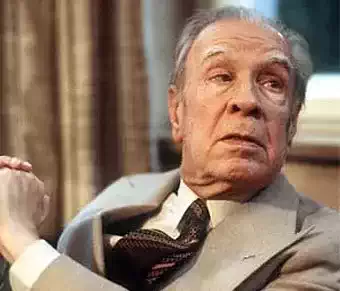
Jorge Luis Borges
Limits
Of all the streets that blur in to the sunset,
There must be one (which, I am not sure)
That I by now have walked for the last time
Without guessing it, the pawn of that Someone
Who fixes in advance omnipotent laws,
Sets up a secret and unwavering scale
for all the shadows, dreams, and forms
Woven into the texture of this life.
If there is a limit to all things and a measure
And a last time and nothing more and forgetfulness,
Who will tell us to whom in this house
We without knowing it have said farewell?
Through the dawning window night withdraws
And among the stacked books which throw
Irregular shadows on the dim table,
There must be one which I will never read.
There is in the South more than one worn gate,
With its cement urns and planted cactus,
Which is already forbidden to my entry,
Inaccessible, as in a lithograph.
There is a door you have closed forever
And some mirror is expecting you in vain;
To you the crossroads seem wide open,
Yet watching you, four-faced, is a Janus.
There is among all your memories one
Which has now been lost beyond recall.
You will not be seen going down to that fountain
Neither by white sun nor by yellow moon.
You will never recapture what the Persian
Said in his language woven with birds and roses,
When, in the sunset, before the light disperses,
You wish to give words to unforgettable things.
And the steadily flowing Rhone and the lake,
All that vast yesterday over which today I bend?
They will be as lost as Carthage,
Scourged by the Romans with fire and salt.
At dawn I seem to hear the turbulent
Murmur of crowds milling and fading away;
They are all I have been loved by, forgotten by;
Space, time, and Borges now are leaving me.
Read more →
There must be one (which, I am not sure)
That I by now have walked for the last time
Without guessing it, the pawn of that Someone
Who fixes in advance omnipotent laws,
Sets up a secret and unwavering scale
for all the shadows, dreams, and forms
Woven into the texture of this life.
If there is a limit to all things and a measure
And a last time and nothing more and forgetfulness,
Who will tell us to whom in this house
We without knowing it have said farewell?
Through the dawning window night withdraws
And among the stacked books which throw
Irregular shadows on the dim table,
There must be one which I will never read.
There is in the South more than one worn gate,
With its cement urns and planted cactus,
Which is already forbidden to my entry,
Inaccessible, as in a lithograph.
There is a door you have closed forever
And some mirror is expecting you in vain;
To you the crossroads seem wide open,
Yet watching you, four-faced, is a Janus.
There is among all your memories one
Which has now been lost beyond recall.
You will not be seen going down to that fountain
Neither by white sun nor by yellow moon.
You will never recapture what the Persian
Said in his language woven with birds and roses,
When, in the sunset, before the light disperses,
You wish to give words to unforgettable things.
And the steadily flowing Rhone and the lake,
All that vast yesterday over which today I bend?
They will be as lost as Carthage,
Scourged by the Romans with fire and salt.
At dawn I seem to hear the turbulent
Murmur of crowds milling and fading away;
They are all I have been loved by, forgotten by;
Space, time, and Borges now are leaving me.
774
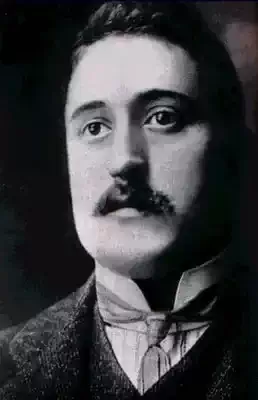
Guillaume Apollinaire
Hotels
The room is free
Each for himself
A new arrival
Pays by the month
The boss is doubtful
Whether you’ll pay
Like a top
I spin on the way
The traffic noise
My neighbour gross
Who puffs an acrid
English smoke
O La Vallière
Who limps and smiles
In my prayers
The bedside table
And all the company
in this hotel
know the languages
of Babel
Let’s shut our doors
With a double lock
And each adore
his lonely love
Read more →
Each for himself
A new arrival
Pays by the month
The boss is doubtful
Whether you’ll pay
Like a top
I spin on the way
The traffic noise
My neighbour gross
Who puffs an acrid
English smoke
O La Vallière
Who limps and smiles
In my prayers
The bedside table
And all the company
in this hotel
know the languages
of Babel
Let’s shut our doors
With a double lock
And each adore
his lonely love
748

Rabindranath Tagore
The Chanpa Flower
Supposing I became a chanpa flower, just for fun, and grew on a
branch high up that tree, and shook in the wind with laughter and
danced upon the newly budded leaves, would you know me, mother?
You would call, "Baby, where are you?" and I should laugh to
myself and keep quite quiet.
I should slyly open my petals and watch you at your work.
When after your bath, with wet hair spread on your shoulders,
you walked through the shadow of the champ tree to the little court
where you say your prayers, you would notice the scent of the
flower, but not know that it cane from me.
When after the midday meal you sat at the window reading
ramayana, and the tree's shadow fell over your hair and your lap,
I should fling my wee little shadow on to the page of your book,
just where you were reading.
But would you guess that it was the tiny shadow of your
little child?
When in the evening you went to the cow shed with the lighted
lamp in your hand I should suddenly drop on to the earth again and
be your own baby once more, and beg you to tell me a story.
"Where have you been, you naughty child?"
"I won't tell you, mother." That's what you and I would say
then.
Read more →
branch high up that tree, and shook in the wind with laughter and
danced upon the newly budded leaves, would you know me, mother?
You would call, "Baby, where are you?" and I should laugh to
myself and keep quite quiet.
I should slyly open my petals and watch you at your work.
When after your bath, with wet hair spread on your shoulders,
you walked through the shadow of the champ tree to the little court
where you say your prayers, you would notice the scent of the
flower, but not know that it cane from me.
When after the midday meal you sat at the window reading
ramayana, and the tree's shadow fell over your hair and your lap,
I should fling my wee little shadow on to the page of your book,
just where you were reading.
But would you guess that it was the tiny shadow of your
little child?
When in the evening you went to the cow shed with the lighted
lamp in your hand I should suddenly drop on to the earth again and
be your own baby once more, and beg you to tell me a story.
"Where have you been, you naughty child?"
"I won't tell you, mother." That's what you and I would say
then.
772