
Soul

Henry Wadsworth Longfellow
The Brook. (From The Spanish)
Laugh of the mountain! -- lyre of bird and tree!
Pomp of the meadow! mirror of the morn!
The soul of April, unto whom are born
The rose and jessamine, leaps wild in thee!
Although, where'er thy devious current strays,
The lap of earth with gold and silver teems,
To me thy clear proceeding brighter seems
Than golden sands, that charm each shepherd's gaze.
How without guile thy bosom, all transparent
As the pure crystal, lets the curious eye
Thy secrets scan, thy smooth, round pebbles count!
How, without malice murmuring, glides thy current!
O sweet simplicity of days gone by!
Thou shun'st the haunts of man, to dwell in limpid fount!
Read more →
416

Ella Wheeler Wilcox
The Ah Goo Tongue
The queerest languages known to man,
Sanscrit, Hebrew, Hindoostan,
Are all translated and made as free
And comprehensive as A B C.
Yet the oldest language talked or sung,
The strange mysterious Ah Goo tongue,
The royal language of Babyland
No man living can understand.
Every soul in the world to-day
Was one time anchored in Babyland Bay,
And quarantined there for a year or more
Before he even could step on shore.
And everybody in Babyland Bay
Talks the Ah Goo tongue, so people say,
But once on land-why not a word
Do they understand of it when 'tis heard.
For the fairy rulers of Babyland
Who guard the kingdom on every hand,
Have willed that no one shall keep the key
Who crosses into the Grown-up Sea.
So the sweet court language has never been made
A common parlance of strife or trade,
But is kept in the kingdom where natives come
Versed in the language of Babydom.
They are all of them royal and that is how
The Grown-up people all kneel and bow,
When they hear that language talked or sung-
The strange mysterious Ah Goo tongue.
Read more →
416

Kabir
Lift The Veil
Lift the veil
that obscures
the heart
and there
you will find
what you are
looking for
Read more →
416
Kabir
When The Day Came
When the Day came -
The Day I had lived and died for -
The Day that is not in any calendar -
Clouds heavy with love
Showered me with wild abundance.
Inside me, my soul was drenched.
Around me, even the desert grew green.
Read more →
416
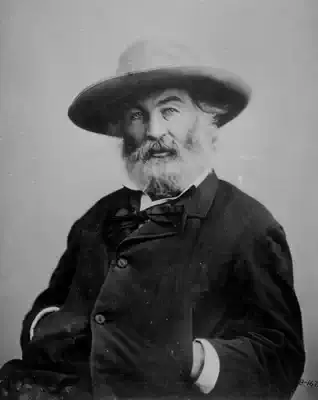
Walt Whitman
Brother Of All, With Genesrous Hand
BROTHER of all, with generous hand,
Of thee, pondering on thee, as o'er thy tomb, I and my Soul,
A thought to launch in memory of thee,
A burial verse for thee.
What may we chant, O thou within this tomb?
What tablets, pictures, hang for thee, O millionaire?
--The life thou lived'st we know not,
But that thou walk'dst thy years in barter, 'mid the haunts of
brokers;
Nor heroism thine, nor war, nor glory.
Yet lingering, yearning, joining soul with thine,
If not thy past we chant, we chant the future,
Select, adorn the future.
Lo, Soul, the graves of heroes!
The pride of lands--the gratitudes of men,
The statues of the manifold famous dead, Old World and New,
The kings, inventors, generals, poets, (stretch wide thy vision,
Soul,)
The excellent rulers of the races, great discoverers, sailors,
Marble and brass select from them, with pictures, scenes,
(The histories of the lands, the races, bodied there,
In what they've built for, graced and graved,
Monuments to their heroes.)
Silent, my Soul,
With drooping lids, as waiting, ponder'd,
Turning from all the samples, all the monuments of heroes.
While through the interior vistas,
Noiseless uprose, phantasmic (as, by night, Auroras of the North,)
Lambent tableaux, prophetic, bodiless scenes,
Spiritual projections.
In one, among the city streets, a laborer's home appear'd,
After his day's work done, cleanly, sweet-air'd, the gaslight
burning,
The carpet swept, and a fire in the cheerful stove.
In one, the sacred parturition scene,
A happy, painless mother birth'd a perfect child.
In one, at a bounteous morning meal,
Sat peaceful parents, with contented sons.
In one, by twos and threes, young people,
Hundreds concentering, walk'd the paths and streets and roads,
Toward a tall-domed school.
In one a trio, beautiful,
Grandmother, loving daughter, loving daughter's daughter, sat,
Chatting and sewing.
In one, along a suite of noble rooms,
'Mid plenteous books and journals, paintings on the walls, fine
statuettes,
Were groups of friendly journeymen, mechanics, young and old,
Reading, conversing.
All, all the shows of laboring life,
City and country, women's, men's and children's,
Their wants provided for, hued in the sun, and tinged for once with
joy,
Marriage, the street, the factory, farm, the house-room, lodgingroom,
Labor and toil, the bath, gymnasium, play-ground, library,
college,
The student, boy or girl, led forward to be taught;
The sick cared for, the shoeless shod--the orphan father'd and
mother'd,
The hungry fed, the houseless housed;
(The intentions perfect and divine,
The workings, details, haply human.)
O thou within this tomb,
From thee, such scenes--thou stintless, lavish Giver,
Tallying the gifts of Earth--large as the Earth,
Thy name an Earth, with mountains, fields and rivers.
Nor by your streams alone, you rivers,
By you, your banks, Connecticut,
By you, and all your teeming life, Old Thames,
By you, Potomac, laving the ground Washington trod--by you Patapsco,
You, Hudson--you, endless Mississippi--not by you alone,
But to the high seas launch, my thought, his memory.
Lo, Soul, by this tomb's lambency,
The darkness of the arrogant standards of the world,
With all its flaunting aims, ambitions, pleasures.
(Old, commonplace, and rusty saws,
The rich, the gay, the supercilious, smiled at long,
Now, piercing to the marrow in my bones,
Fused with each drop my heart's blood jets,
Swim in ineffable meaning.)
Lo, Soul, the sphere requireth, portioneth,
To each his share, his measure,
The moderate to the moderate, the ample to the ample.
Lo, Soul, see'st thou not, plain as the sun,
The only real wealth of wealth in generosity,
The only life of life in goodness?
Read more →
418

William Wordsworth
The Green Linnet
BENEATH these fruit-tree boughs that shed
Their snow-white blossoms on my head,
With brightest sunshine round me spread
Of spring's unclouded weather,
In this sequestered nook how sweet
To sit upon my orchard-seat!
And birds and flowers once more to greet,
My last year's friends together.
One have I marked, the happiest guest
In all this covert of the blest:
Hail to Thee, far above the rest
In joy of voice and pinion!
Thou, Linnet! in thy green array,
Presiding Spirit here today,
Dost lead the revels of the May;
And this is thy dominion.
While bird, and butterflies, and flowers,
Make all one band of paramours,
Thou, ranging up and down the bowers,
Art sole in thy employment:
A Life, a Presence like the Air,
Scattering thy gladness without care,
Too blest with any one to pair;
Thyself thy own enjoyment.
Amid yon tuft of hazel trees,
That twinkle to the gusty breeze,
Behold him perched in ecstasies,
Yet seeming still to hover;
There! where the flutter of his wings
Upon his back and body flings
Shadows and sunny glimmerings,
That cover him all over.
My dazzled sight he oft deceives,
A Brother of the dancing leaves;
Then flits, and from the cottage eaves
Pours forth his song in gushes;
As if by that exulting strain
He mocked and treated with disdain
The voiceless Form he chose to feign,
While fluttering in the bushes.
Read more →
416
Ella Wheeler Wilcox
Answered Prayers
I prayed for riches, and achieved success;
All that I touched turned into gold. Alas!
My cares were greater and my peace was less,
When that wish came to pass.
I prayed for glory, and I heard my name
Sung by sweet children and by hoary men.
But ah! the hurts – the hurts that come with fame.
I was not happy then.
I prayed for Love, and had my heart’s desire.
Through quivering heart and body, and through brain,
There swept the flame of its devouring fire,
And but the scars remain.
I prayed for a contented mind. At length
Great light upon my darkened spirit burst.
Great peace fell on me also, and great strength –
Oh, had that prayer been first!
Read more →
416
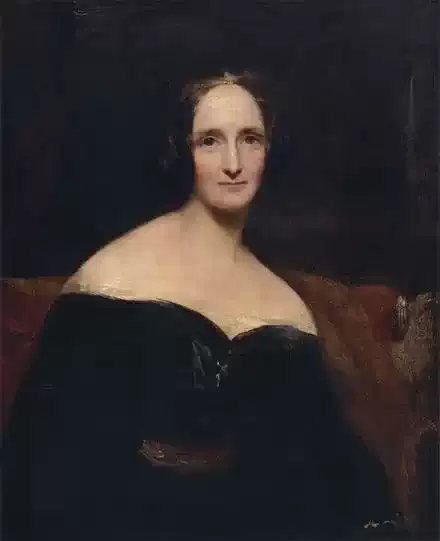
Percy Bysshe Shelley
The Invitation
BEST and brightest, come away!
Fairer far than this fair Day,
Which, like thee to those in sorrow,
Comes to bid a sweet good-morrow
To the rough Year just awake
In its cradle on the brake.
The brightest hour of unborn Spring,
Through the winter wandering,
Found, it seems, the halcyon Morn
To hoar February born.
Bending from heaven, in azure mirth,
It kiss'd the forehead of the Earth;
And smiled upon the silent sea;
And bade the frozen streams be free;
And waked to music all their fountains;
And breathed upon the frozen mountains;
And like a prophetess of May
Strew'd flowers upon the barren way,
Making the wintry world appear
Like one on whom thou smilest, dear.
Away, away, from men and towns,
To the wild wood and the downs--
To the silent wilderness
Where the soul need not repress
Its music lest it should not find
An echo in another's mind,
While the touch of Nature's art
Harmonizes heart to heart.
I leave this notice on my door
For each accustom'd visitor:--
'I am gone into the fields
To take what this sweet hour yields.
Reflection, you may come to-morrow;
Sit by the fireside with Sorrow.
You with the unpaid bill, Despair,--
You, tiresome verse-reciter, Care,--
I will pay you in the grave,--
Death will listen to your stave.
Expectation too, be off!
To-day is for itself enough.
Hope, in pity mock not Woe
With smiles, nor follow where I go;
Long having lived on your sweet food,
At length I find one moment's good
After long pain: with all your love,
This you never told me of.'
Radiant Sister of the Day,
Awake! arise! and come away!
To the wild woods and the plains;
And the pools where winter rains
Image all their roof of leaves;
Where the pine its garland weaves
Of sapless green and ivy dun
Round stems that never kiss the sun;
Where the lawns and pastures be,
And the sandhills of the sea;
Where the melting hoar-frost wets
The daisy-star that never sets,
And wind-flowers, and violets
Which yet join not scent to hue,
Crown the pale year weak and new;
When the night is left behind
In the deep east, dun and blind,
And the blue noon is over us,
And the multitudinous
Billows murmur at our feet
Where the earth and ocean meet,
And all things seem only one
In the universal sun.
Read more →
416

Johann Wolfgang von Goethe
The Drops Of Nectar
WHEN Minerva, to give pleasure
To Prometheus, her well-loved one,
Brought a brimming bowl of nectar
From the glorious realms of heaven
As a blessing for his creatures,
And to pour into their bosoms
Impulses for arts ennobling,
She with rapid footstep hasten'd,
Fearing Jupiter might see her,
And the golden goblet trembled,
And there fell a few drops from it
On the verdant plain beneath her.
Then the busy bees flew thither
Straightway, eagerly to drink them,
And the butterfly came quickly
That he, too, might find a drop there;
Even the misshapen spider
Thither crawl'd and suck'd with vigour.
To a happy end they tasted,
They, and other gentle insects!
For with mortals now divide they
Art - that noblest gift of all.
Read more →
417

Emily Dickinson
In Winter in my Room
In Winter in my Room
I came upon a Worm-
Pink, lank and warm-
But as he was a worm
And worms presume
Not quite with him at home-
Secured him by a string
To something neighboring
And went along.
A Trifle afterward
A thing occurred
I'd not believe it if I heard
But state with creeping blood-
A snake with mottles rare
Surveyed my chamber floor
In feature as the worm before
But ringed with power-
The very string with which
I tied him-too
When he was mean and new
That string was there-
I shrank-"How fair you are"!
Propitiation's claw"
Afraid," he hissed
"Of me"?
"No cordiality"-
He fathomed me-
Then to a Rhythm Slim
Secreted in his Form
As Patterns swim
Projected him.
That time I flew
Both eyes his way
Lest he pursue
Nor ever ceased to run
Till in a distant Town
Towns on from mine
I set me down
This was a dream.
Read more →
416

William Butler Yeats
The Double Vision Of Michael Robartes
I
ON the grey rock of Cashel the mind's eye
Has called up the cold spirits that are born
When the old moon is vanished from the sky
And the new still hides her horn.
Under blank eyes and fingers never still
The particular is pounded till it is man.
When had I my own will?
O not since life began.
Constrained, arraigned, baffled, bent and unbent
By these wire-jointed jaws and limbs of wood,
Themselves obedient,
Knowing not evil and good;
Obedient to some hidden magical breath.
They do not even feel, so abstract are they.
So dead beyond our death,
Triumph that we obey.
On the grey rock of Cashel I suddenly saw
A Sphinx with woman breast and lion paw.
A Buddha, hand at rest,
Hand lifted up that blest;
And right between these two a girl at play
That, it may be, had danced her life away,
For now being dead it seemed
That she of dancing dreamed.
Although I saw it all in the mind's eye
There can be nothing solider till I die;
I saw by the moon's light
Now at its fifteenth night.
One lashed her tail; her eyes lit by the moon
Gazed upon all things known, all things unknown,
In triumph of intellect
With motionless head erect.
That other's moonlit eyeballs never moved,
Being fixed on all things loved, all things unloved.
Yet little peace he had,
For those that love are sad.
Little did they care who danced between,
And little she by whom her dance was seen
So she had outdanced thought.
Body perfection brought,
For what but eye and ear silence the mind
With the minute particulars of mankind?
Mind moved yet seemed to stop
As 'twere a spinning-top.
In contemplation had those three so wrought
Upon a moment, and so stretched it out
That they, time overthrown,
Were dead yet flesh and bone.
I knew that I had seen, had seen at last
That girl my unremembering nights hold fast
Or else my dreams that fly
If I should rub an eye,
And yet in flying fling into my meat
A crazy juice that makes the pulses beat
As though I had been undone
By Homer's Paragon
Who never gave the burning town a thought;
To such a pitch of folly I am brought,
Being caught between the pull
Of the dark moon and the full,
The commonness of thought and images
That have the frenzy of our western seas.
Thereon I made my moan,
And after kissed a stone,
And after that arranged it in a song
Seeing that I, ignorant for So long,
Had been rewarded thus
In Cormac's ruined house.
MICHAEL ROBARTES AND THE DANCER
He. Opinion is not worth a rush;
In this altar-piece the knight,
Who grips his long spear so to push
That dragon through the fading light,
Loved the lady; and it's plain
The half-dead dragon was her thought,
That every morning rose again
And dug its claws and shrieked and fought.
Could the impossible come to pass
She would have time to turn her eyes,
Her lover thought, upon the glass
And on the instant would grow wise.
She. You mean they argued.
He. Put it so;
But bear in mind your lover's wage
Is what your looking-glass can show,
And that he will turn green with rage
At all that is not pictured there.
She. May I not put myself to college?
He. Go pluck Athene by the hair;
For what mere book can grant a knowledge
With an impassioned gravity
Appropriate to that beating breast,
That vigorous thigh, that dreaming eye?
And may the Devil take the rest.
She. And must no beautiful woman be
Learned like a man?
He. Paul Veronese
And all his sacred company
Imagined bodies all their days
By the lagoon you love so much,
For proud, soft, ceremonious proof
That all must come to sight and touch;
While Michael Angelo's Sistine roof,
His 'Morning' and his 'Night' disclose
How sinew that has been pulled tight,
Or it may be loosened in repose,
Can rule by supernatural right
Yet be but sinew.
She. I have heard said
There is great danger in the body.
He. Did God in portioning wine and bread
Give man His thought or His mere body?
She. My wretched dragon is perplexed.
Hec. I have principles to prove me right.
It follows from this Latin text
That blest souls are not composite,
And that all beautiful women may
Live in uncomposite blessedness,
And lead us to the like -- if they
Will banish every thought, unless
The lineaments that please their view
When the long looking-glass is full,
Even from the foot-sole think it too.
She. They say such different things at school.
Read more →
417
William Butler Yeats
A Poet To His Beloved
I BRING you with reverent hands
The books of my numberless dreams,
White woman that passion has worn
As the tide wears the dove-grey sands,
And with heart more old than the horn
That is brimmed from the pale fire of time:
White woman with numberless dreams,
I bring you my passionate rhyme.
Read more →
418
Emily Dickinson
To fight aloud, is very brave
To fight aloud, is very brave-
But gallanter, I know
Who charge within the bosom
The Cavalry of Woe-
Who win, and nations do not see-
Who fall-and none observe-
Whose dying eyes, no Country
Regards with patriot love-
We trust, in plumed procession
For such, the Angels go-
Rank after Rank, with even feet-
And Uniforms of Snow.
Read more →
417
Johann Wolfgang von Goethe
New Love, New Life
HEART! my heart! what means this feeling?
What oppresseth thee so sore?
What strange life is o'er me stealing!
I acknowledge thee no more.
Fled is all that gave thee gladness,
Fled the cause of all thy sadness,
Fled thy peace, thine industry-
Ah, why suffer it to be?
Say, do beauty's graces youthful,
Does this form so fair and bright,
Does this gaze, so kind, so truthful,
Chain thee with unceasing might?
Would I tear me from her boldly,
Courage take, and fly her coldly,
Back to her. I'm forthwith led
By the path I seek to tread.
By a thread I ne'er can sever,
For 'tis 'twined with magic skill,
Doth the cruel maid for ever
Hold me fast against my will.
While those magic chains confine me,
To her will I must resign me.
Ah, the change in truth is great!
Love! kind love! release me straight!
Read more →
417
William Butler Yeats
The Fairy Pendant
Scene: A circle of Druidic stones
First Fairy: Afar from our lawn and our levee,
O sister of sorrowful gaze!
Where the roses in scarlet are heavy
And dream of the end of their days,
You move in another dominion
And hang o'er the historied stone:
Unpruned in your beautiful pinion
Who wander and whisper alone.
All: Come away while the moon's in the woodland,
We'll dance and then feast in a dairy.
Though youngest of all in our good band,
You are wasting away, little fairy.
Second Fairy: Ah! cruel ones, leave me alone now
While I murmur a little and ponder
The history here in the stone now;
Then away and away I will wander,
And measure the minds of the flowers,
And gaze on the meadow-mice wary,
And number their days and their hours--
All: You're wasting away, little fairy.
Second Fairy: O shining ones, lightly with song pass,
Ah! leave me, I pray you and beg.
My mother drew forth from the long grass
A piece of a nightingle's egg,
And cradled me here where are sung,
Of birds even, longings for aery
Wild wisdoms of spirit and tongue.
All: You're wasting away, little fairy.
First Fairy [turning away]: Though the tenderest roses were round you,
The soul of this pitiless place
With pitiless magic has bound you--
Ah! woe for the loss of your face,
And the loss of your laugh with its lightness--
Ah! woe for your wings and your head--
Ah! woe for your eyes and their brightness--
Ah! woe for your slippers of red.
We'll dance and then feast in a dairy.
Though youngest of all in our good band,
She's wasting away, little fairy.
Read more →
415
William Butler Yeats
Mad As The Mist And Snow
Bolt and bar the shutter,
For the foul winds blow:
Our minds are at their best this night,
And I seem to know
That everything outside us is
Mad as the mist and snow.
Horace there by Homer stands,
Plato stands below,
And here is Tully's open page.
How many years ago
Were you and I unlettered lads
Mad as the mist and snow?
You ask what makes me sigh, old friend,
What makes me shudder so?
I shudder and I sigh to think
That even Cicero
And many-minded Homer were
Mad as the mist and snow.
Read more →
415
Ella Wheeler Wilcox
Canada
England, father and mother in one,
Look on your stalwart son.
Sturdy and strong, with the valour of youth,
Where is another so lusty?
Coated and mailed, with the armour of truth,
Where is another so trusty?
Flesh of your flesh, and bone of your bone,
He is yours alone.
England, father and mother in one,
See the wealth of your son.
Forests primeval, and virginal sod,
Wheat-fields golden and splendid:
Riches of nature and opulent God
For the use of his children intended.
A courage that dares, and a hope that endures,
And a soul all yours.
England, father and mother in one,
Hear the cry of your son.
Little cares he for the glories of earth
Lying around and above him,
Yearning is he for the rights of his birth,
And the heart of his mother to love him.
Vast are your gifts to him, ample his store,
Now open your door.
England, father and mother in one,
Heed the voice of your son.
Proffer him place in your councils of state:
Let him sit near, and attend you.
Ponder his words in the hour of debate,
Strong is his arm to defend you.
Flesh of your flesh, and bone of your bone,
Give him his own.
Read more →
414
Henry Wadsworth Longfellow
By The Fireside : Gaspar Becerra
By his evening fire the artist
Pondered o'er his secret shame;
Baffled, weary, and disheartened,
Still he mused, and dreamed of fame.
'T was an image of the Virgin
That had tasked his utmost skill;
But, alas! his fair ideal
Vanished and escaped him still.
From a distant Eastern island
Had the precious wood been brought
Day and night the anxious master
At his toil untiring wrought;
Till, discouraged and desponding,
Sat he now in shadows deep,
And the day's humiliation
Found oblivion in sleep.
Then a voice cried, 'Rise, O master!
From the burning brand of oak
Shape the thought that stirs within thee!'
And the startled artist woke,--
Woke, and from the smoking embers
Seized and quenched the glowing wood;
And therefrom he carved an image,
And he saw that it was good.
O thou sculptor, painter, poet!
Take this lesson to thy heart:
That is best which lieth nearest;
Shape from that thy work of art.
Read more →
414
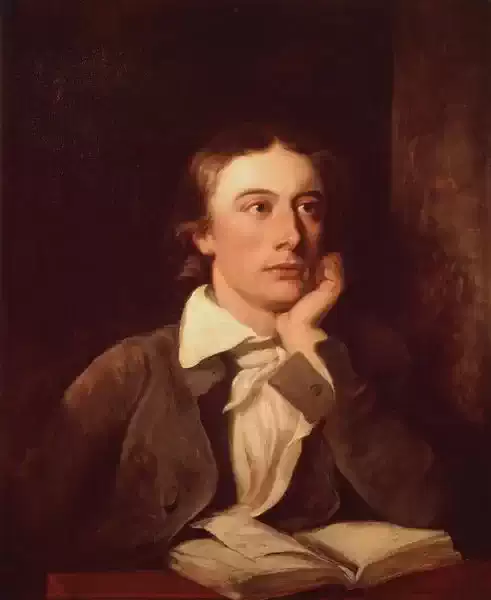
John Keats
Song. Hush, Hush! Tread Softly!
1.
Hush, hush! tread softly! hush, hush my dear!
All the house is asleep, but we know very well
That the jealous, the jealous old bald-pate may hear.
Tho' you've padded his night-cap -- O sweet Isabel!
Tho' your feet are more light than a Fairy's feet,
Who dances on bubbles where brooklets meet,--
Hush, hush! soft tiptoe! hush, hush my dear!
For less than a nothing the jealous can hear.
2.
No leaf doth tremble, no ripple is there
On the river, -- all's still, and the night's sleepy eye
Closes up, and forgets all its Lethean care,
Charm'd to death by the drone of the humming May-fly;
And the Moon, whether prudish or complaisant,
Hath fled to her bower, well knowing I want
No light in the dusk, no torch in the gloom,
But my Isabel's eyes, and her lips pulp'd with bloom.
3.
Lift the latch! ah gently! ah tenderly -- sweet!
We are dead if that latchet gives one little chink!
Well done -- now those lips, and a flowery seat --
The old man may sleep, and the planets may wink;
The shut rose shall dream of our loves, and awake
Full blown, and such warmth for the morning's take;
The stock-dove shall hatch her soft brace and shall coo,
While I kiss to the melody, aching all through!
Read more →
414
Ella Wheeler Wilcox
A Man's Repentance
To-night when I came from the club at eleven,
Under the gaslight I saw a face-
A woman's face! and I swear to heaven
It looked like the ghastly ghost of-Grace!
And Grace? why, Grace was fair; and I tarried,
And loved her a season as we men do.
And then-but pshaw! why, of course, she is married,
Has a husband, and doubtless, a babe or two.
She was perfectly calm on the day we parted;
She spared me a scene, to my great surprise.
She wasn't the kind to be broken-hearted,
I remember she said, with a spark in her eyes.
I was tempted, I know, by her proud defiance,
To make good my promises there and then.
But the world would have called it a mésalliance!
I dreaded the comments and sneers of men.
So I left her to grieve for a faithless lover,
And to hide her heart from the cold world's sight
As women do hide them, the wide earth over;
My God! was it Grace that I saw to-night?
I thought of her married, and often with pity,
A poor man's wife in some dull place.
And now to know she is here in the city,
Under the gaslight, and with that face!
Yet I knew it at once, in spite of the daubing
Of paint and powder, and she knew me;
She drew a quick breath that was almost sobbing,
And shrank in the shade so I should not see.
There was hell in her eyes! She was worn and jaded;
Her soul is at war with the life she has led.
As I looked on that face so strangely faded,
I wonder God did not strike me dead.
While I have been happy and gay and jolly,
Received by the very best people in town,
That girl whom I led in the way to folly,
Has gone on recklessly down and down.
Two o'clock, and no sleep has found me.
That face I saw in the street-lamp's light
Peers everywhere out from the shadows around me-
I know how a murderer feels to-night!
Read more →
415
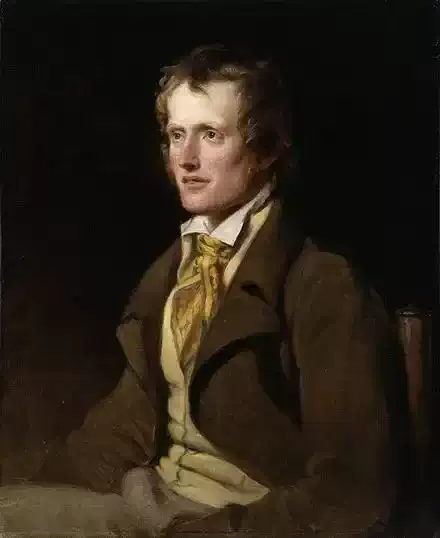
John Clare
Invitation To Eternity
Say, wilt thou go with me, sweet maid,
Say, maiden, wilt thou go with me
Through the valley-depths of shade,
Of bright and dark obscurity;
Where the path has lost its way,
Where the sun forgets the day,
Where there's nor light nor life to see,
Sweet maiden, wilt thou go with me?
Where stones will turn to flooding streams,
Where plains will rise like ocean's waves,
Where life will fade like visioned dreams
And darkness darken into caves,
Say, maiden, wilt thou go with me
Through this sad non-identity
Where parents live and are forgot,
And sisters live and know us not?
Say, maiden, wilt thou go with me
In this strange death of life to be,
To live in death and be the same,
Without this life or home or name,
At once to be and not to be--
That was and is not--yet to see
Things pass like shadows, and the sky
Above, below, around us lie?
The land of shadows wilt thou trace,
Nor look nor know each other's face;
The present marred with reason gone,
And past and present both as one?
Say, maiden, can thy life be led
To join the living and the dead?
Then trace thy footsteps on with me:
We are wed to one eternity.
Read more →
414
Emily Dickinson
A Cloud withdrew from the Sky
A Cloud withdrew from the Sky
Superior Glory be
But that Cloud and its Auxiliaries
Are forever lost to me
Had I but further scanned
Had I secured the Glow
In an Hermetic Memory
It had availed me now.
Never to pass the Angel
With a glance and a Bow
Till I am firm in Heaven
Is my intention now.
Read more →
414

William Shakespeare
Sonnet 102: My love is strengthen'd, though more weak in seeming
My love is strengthen'd, though more weak in seeming;
I love not less, though less the show appear:
That love is merchandized whose rich esteeming
The owner's tongue doth publish every where.
Our love was new and then but in the spring
When I was wont to greet it with my lays,
As Philomel in summer's front doth sing
And stops her pipe in growth of riper days:
Not that the summer is less pleasant now
Than when her mournful hymns did hush the night,
But that wild music burthens every bough
And sweets grown common lose their dear delight.
Therefore like her I sometime hold my tongue,
Because I would not dull you with my song.
Read more →
415
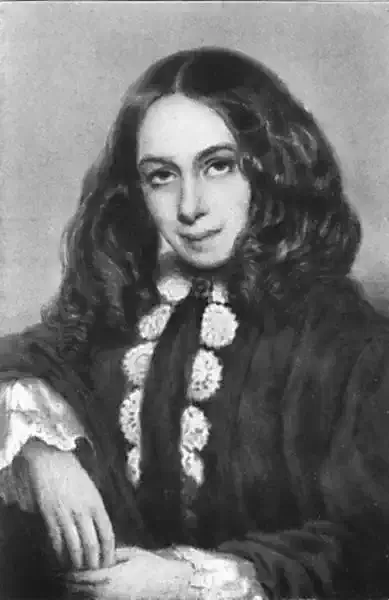
Elizabeth Barrett Browning
Sonnet XXXI: Thou Comest!
Thou comest! all is said without a word.
I sit beneath thy looks, as children do
In the noon-sun, with souls that tremble through
Their happy eyelids from an unaverred
Yet prodigal inward joy. Behold, I erred
In that last doubt! and yet I cannot rue
The sin most, but the occasion--that we two
Should for a moment stand unministered
By a mutual presence. Ah, keep near and close,
Thou dovelike help! and, when my fears would rise,
With thy broad heart serenely interpose:
Brood down with thy divine sufficiencies
These thoughts which tremble when bereft of those,
Like callow birds left desert to the skies.
Read more →
414