
Soul
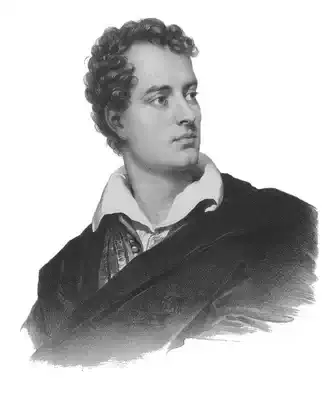
Lord Byron
A Fragment: When, To Their Airy Hall
When, to their airy hall, my father's voice
Shall call my spirit, joyful in their choice;
When, poised upon the gale, my form shall ride,
Or, dark in mist, descend the mountains side;
Oh! may my shade behold no sculptured urns,
To mark the spot where earth to earth returns!
No lengthen'd scroll, no praiseencumber'd
stone;
My epitaph shall be my name alone:
If that with honour fail to crown my clay,
Oh! may no other fame my deeds repay!
That, only that, shall single out the spot;
By that remember'd, or with that forgot.
Read more →
413
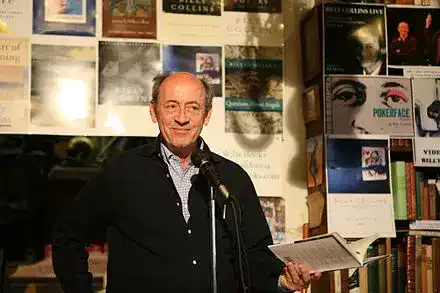
Billy Collins
Nostalgia
Remember the 1340's? We were doing a dance called the Catapult.
You always wore brown, the color craze of the decade,
and I was draped in one of those capes that were popular,
the ones with unicorns and pomegranates in needlework.
Everyone would pause for beer and onions in the afternoon,
and at night we would play a game called "Find the Cow."
Everything was hand-lettered then, not like today.
Where has the summer of 1572 gone? Brocade and sonnet
marathons were the rage. We used to dress up in the flags
of rival baronies and conquer one another in cold rooms of stone.
Out on the dance floor we were all doing the Struggle
while your sister practiced the Daphne all alone in her room.
We borrowed the jargon of farriers for our slang.
These days language seems transparent a badly broken code.
The 1790's will never come again. Childhood was big.
People would take walks to the very tops of hills
and write down what they saw in their journals without speaking.
Our collars were high and our hats were extremely soft.
We would surprise each other with alphabets made of twigs.
It was a wonderful time to be alive, or even dead.
I am very fond of the period between 1815 and 1821.
Europe trembled while we sat still for our portraits.
And I would love to return to 1901 if only for a moment,
time enough to wind up a music box and do a few dance steps,
or shoot me back to 1922 or 1941, or at least let me
recapture the serenity of last month when we picked
berries and glided through afternoons in a canoe.
Even this morning would be an improvement over the present.
I was in the garden then, surrounded by the hum of bees
and the Latin names of flowers, watching the early light
flash off the slanted windows of the greenhouse
and silver the limbs on the rows of dark hemlocks.
As usual, I was thinking about the moments of the past,
letting my memory rush over them like water
rushing over the stones on the bottom of a stream.
I was even thinking a little about the future, that place
where people are doing a dance we cannot imagine,
a dance whose name we can only guess.
Read more →
413

William Butler Yeats
The Folly Of Being Comforted
ONE that is ever kind said yesterday:
'Your well-beloved's hair has threads of grey,
And little shadows come about her eyes;
Time can but make it easier to be wise
Though now it seems impossible, and so
All that you need is patience.'
Heart cries, 'No,
I have not a crumb of comfort, not a grain.
Time can but make her beauty over again:
Because of that great nobleness of hers
The fire that stirs about her, when she stirs,
Burns but more clearly. O she had not these ways
When all the wild Summer was in her gaze.'
Heart! O heart! if she'd but turn her head,
You'd know the folly of being comforted.
Read more →
413
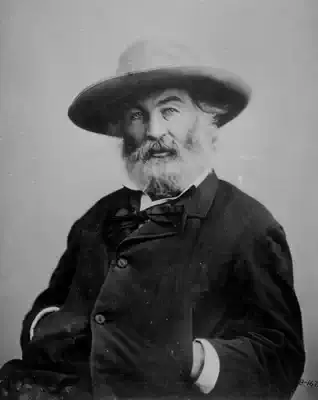
Walt Whitman
The Prairie-Grass Dividing
THE prairie-grass dividing--its special odor breathing,
I demand of it the spiritual corresponding,
Demand the most copious and close companionship of men,
Demand the blades to rise of words, acts, beings,
Those of the open atmosphere, coarse, sunlit, fresh, nutritious,
Those that go their own gait, erect, stepping with freedom and
command--leading, not following,
Those with a never-quell'd audacity--those with sweet and lusty
flesh, clear of taint,
Those that look carelessly in the faces of Presidents and Governors,
as to say, Who are you?
Those of earth-born passion, simple, never-constrain'd, never
obedient,
Those of inland America.
Read more →
415

Emily Dickinson
Within my reach!
Within my reach!
I could have touched!
I might have chanced that way!
Soft sauntered thro' the village-
Sauntered as soft away!
So unsuspected Violets
Within the meadows go-
Too late for striving fingers
That passed, an hour ago!
Read more →
414
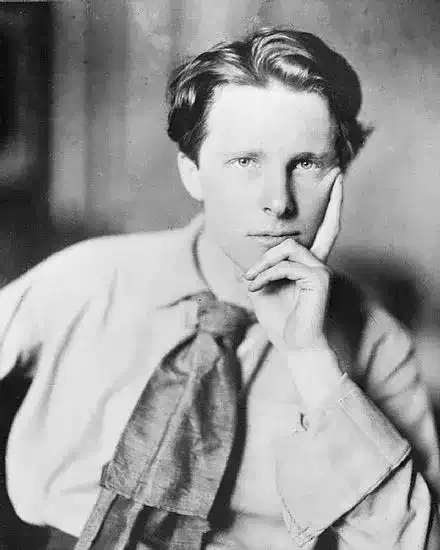
Rupert Brooke
The Goddess in the Wood
In a flowered dell the Lady Venus stood,
Amazed with sorrow. Down the morning one
Far golden horn in the gold of trees and sun
Rang out; and held; and died.… She thought the wood
Grew quieter. Wing, and leaf, and pool of light
Forgot to dance. Dumb lay the unfalling stream;
Life one eternal instant rose in dream
Clear out of time, poised on a golden height.…
Till a swift terror broke the abrupt hour.
The gold waves purled amidst the green above her;
And a bird sang. With one sharp-taken breath,
By sunlit branches and unshaken flower,
The immortal limbs flashed to the human lover,
And the immortal eyes to look on death.
Read more →
413
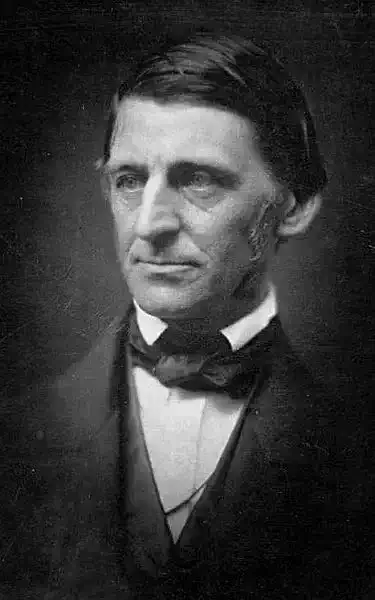
Ralph Waldo Emerson
Good-by
Good-by, proud world, I'm going home,
Thou'rt not my friend, and I'm not thine;
Long through thy weary crowds I roam;
A river-ark on the ocean brine,
Long I've been tossed like the driven foam,
But now, proud world, I'm going home.
Good-by to Flattery's fawning face,
To Grandeur, with his wise grimace,
To upstart Wealth's averted eye,
To supple Office low and high,
To crowded halls, to court, and street,
To frozen hearts, and hasting feet,
To those who go, and those who come,
Good-by, proud world, I'm going home.
I'm going to my own hearth-stone
Bosomed in yon green hills, alone,
A secret nook in a pleasant land,
Whose groves the frolic fairies planned;
Where arches green the livelong day
Echo the blackbird's roundelay,
And vulgar feet have never trod
A spot that is sacred to thought and God.
Oh, when I am safe in my sylvan home,
I tread on the pride of Greece and Rome;
And when I am stretched beneath the pines
Where the evening star so holy shines,
I laugh at the lore and the pride of man,
At the sophist schools, and the learned clan;
For what are they all in their high conceit,
When man in the bush with God may meet.
Read more →
415
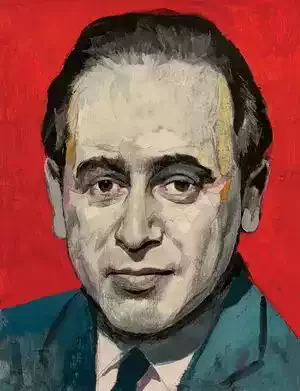
Paul Celan
Little Night
Little Night: when you
take me within, within,
up there,
three Pain-Inches above
the Floor:
all the Shroud-Coats of Sand,
all the Help-Nots,
all, that still
laughs
with the Tongue -
Read more →
413
William Butler Yeats
The Hosting Of The Sidhe
The host is riding from Knocknarea
And over the grave of Clooth-na-Bare;
Caoilte tossing his burning hair,
And Niamh calling Away, come away:
Empty your heart of its mortal dream.
The winds awaken, the leaves whirl round,
Our cheeks are pale, our hair is unbound,
Our breasts are heaving, our eyes are agleam,
Our arms are waving, our lips are apart;
And if any gaze on our rushing band,
We come between him and the deed of his hand,
We come between him and the hope of his heart.
The host is rushing 'twixt night and day,
And where is there hope or deed as fair?
Caoilte tossing his burning hair,
And Niamh calling Away, come away.
Read more →
413

Ella Wheeler Wilcox
The Land Of The Gone-Away Souls
Oh! that is a beautiful land, I wis,
The land of the Gone-away Souls.
Yes, a lovelier region by far than this
(Though this is a world most fair).
The goodliest goal of all good goals,
Else why do our friends stay there?
I walk in a world that is sweet with friends,
And earth I have ever held dear;
Yes, love with duty and beauty blends
To render the earth-place bright.
But faster and faster, year on year,
My comrades hurry from sight.
They hurry away to the Over-There,
And few of them say farewell;
Yes, they go away with a secret air
As if on a secret quest.
And they come not back to earth to tell
Why that land seems the best.
Messages come from the mystic sphere,
But few know the code of that land,
Yes, many the message but few who hear,
In the din of the world below,
Or hearing the message, can understand
Those truths which we long to know.
But it must be the goal of all good goals,
And I think of it more and more.
Yes, think of that land of the Gone-Away Souls
And its growing hosts of friends
Who will hail my bark when it touches shore
Where the last brief journey ends.
Read more →
414

Phillis Wheatley
One Being Brought From Africa To America
'TWAS mercy brought me from my Pagan land,
Taught my benighted soul to understand
That there's a God, that there's a Saviour too:
Once I redemption neither sought now knew,
Some view our sable race with scornful eye,
'Their colour is a diabolic die.'
Remember, Christians, Negroes, black as Cain,
May be refin'd, and join th' angelic train.
Read more →
414
Ella Wheeler Wilcox
Realisation
Hers was a lonely, shadowed lot;
Or so the unperceiving thought,
Who looked no deeper than her face,
Devoid of chiselled lines of grace –
No farther than her humble grate,
And wondered how she bore her fate.
Yet she was neither lone nor sad;
So much of love her spirit had,
She found an ever-flowing spring
Of happiness in everything.
So near to her was Nature’s heart
It seemed a very living part
Of her own self; and bud and blade,
And heat and cold, and sun and shade,
And dawn and sunset, Spring and Fall,
Held raptures for her, one and all.
The year’s four changing seasons brought
To her own door what thousands sought
In wandering ways and did not find –
Diversion and content of mind.
She loved the tasks that filled each day –
Such menial duties; but her way
Of looking at them lent a grace
To things the world deemed commonplace.
Obscure and without place or name,
She gloried in another’s fame.
Poor, plain and humble in her dress,
She thrilled when beauty and success
And wealth passed by, on pleasure bent;
They made earth seem so opulent.
Yet none of quicker sympathy,
When need or sorrow came, than she.
And so she lived, and so she died.
She woke as from a dream. How wide
And wonderful the avenue
That stretched to her astonished view!
And up the green ascending lawn
A palace caught the rays of dawn.
Then suddenly the silence stirred
With one clear keynote of a bird;
A thousand answered, till ere long
The air was quivering bits of song.
She rose and wandered forth in awe,
Amazed and moved by all she saw,
For, like so many souls who go
Away from earth, she did not know
The cord was severed.
Down the street,
With eager arms stretched forth to greet,
Came one she loved and mourned in youth;
Her mother followed; then the truth
Broke on her, golden wave on wave,
Of knowledge infinite. The grave,
The body and the earthly sphere
Were gone! Immortal life was here!
They led her through the Palace halls;
From gleaming mirrors on the walls
She saw herself, with radiant mien,
And robed in splendour like a queen,
While glory round about her shone.
‘All this, ’ Love murmured, ‘is your own.’
And when she gazed with wondering eye,
And questioned whence and where and why,
Love answered thus: ‘All Heaven is made
By thoughts on earth; your walls were laid,
Year after year, of purest gold;
The beauty of your mind behold
In this fair palace; ay, and more
Waits farther on, so vast your store.
I was not worthy when I died
To take my place here at your side;
I toiled through long and weary years
From lower planes to these high spheres;
And through the love you sent from earth
I have attained a second birth.
Oft when my erring soul would tire
I felt the strength of your desire;
I heard you breathe my name in prayer,
And courage conquered weak despair.
Ah! earth needs heaven, but heaven indeed
Of earth has just as great a need!
Across the terrace with a bound
There sped a lambkin with a hound
(Dumb comrades of the old earth land)
And fondled her caressing hand.
Read more →
413
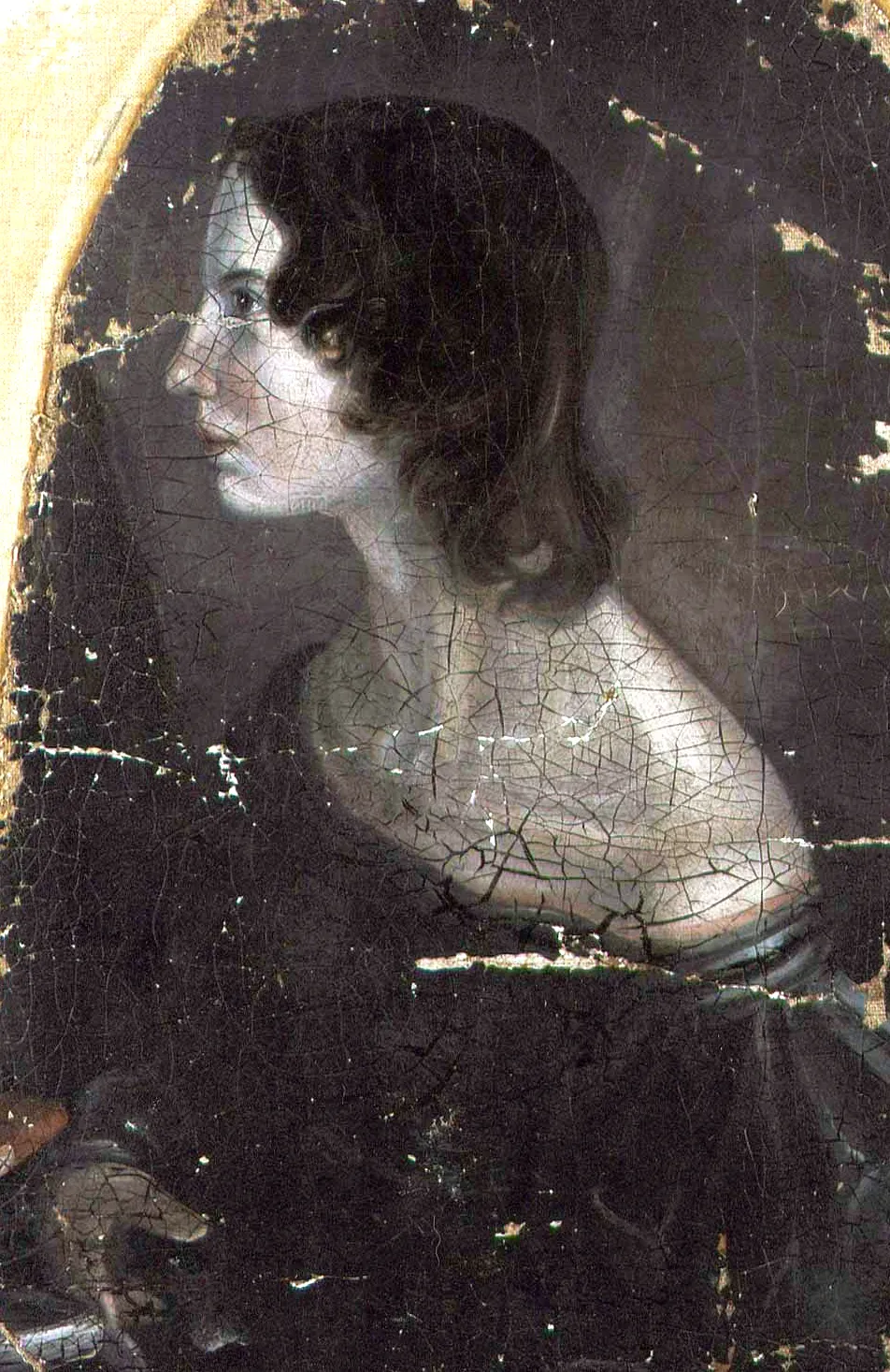
Emily Jane Brontë
The Night - Wind
In summer's mellow midnight,
A cloudless moon shone through
Our open parlour window,
And rose-trees wet with dew.
I sat in silent musing;
The soft wind waved my hair;
It told me heaven was glorious,
And sleeping earth was fair.
I needed not its breathing
To bring such thoughts to me;
But still it whispered lowly,
'How dark the woods would be!
'The thick leaves in my murmur
Are rustling like a dream,
And all their myriad voices
Instinct with spirit seem.'
I said, 'Go, gentle singer,
Thy wooing voice is kind:
But do not think its music
Has power to reach my mind.
'Play with the scented flower,
The young tree's supply bough,
And leave my human feelings
In their own course to flow.'
The wanderer would not heed me:
Its kiss grew warmer still:
'Oh Come!' it sighed so sweetly;
'I'll win thee 'gainst thy will.
'Were we not friends from childhood?
Have I not loved thee long?
As long as thou, the solemn night,
Whose silence wakes my song.
'And when thy heart is resting
Beneath the church-aisle stone,
I shall have time for mourning,
And thou for being alone.'
Read more →
412
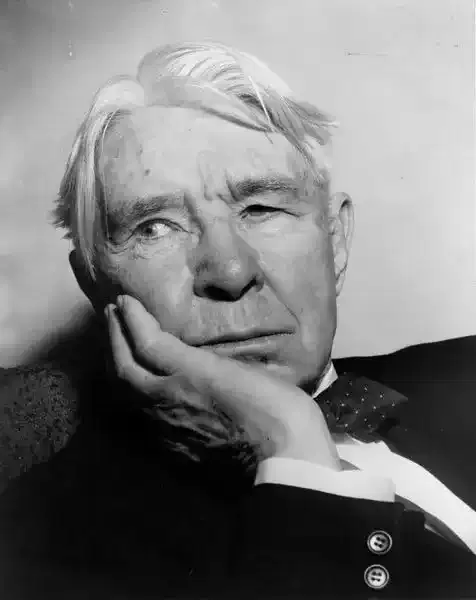
Carl Sandburg
In a Back Alley
Remembrance for a great man is this.
The newsies are pitching pennies.
And on the copper disk is the man’s face.
Dead lover of boys, what do you ask for now?
Read more →
412
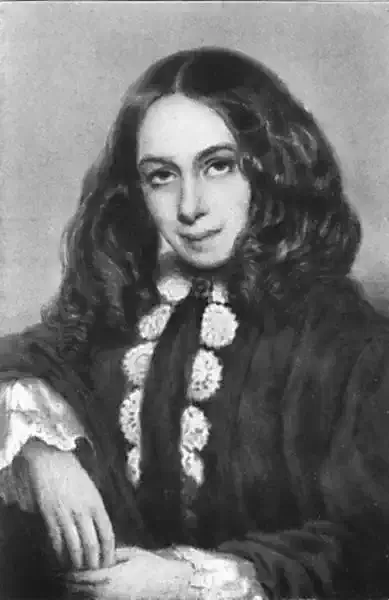
Elizabeth Barrett Browning
Sonnet XXXIII: Yes, Call Me by My Pet-Name!
Yes, call me by my pet-name! let me hear
The name I used to run at, when a child,
From innocent play, and leave the cowslips piled,
To glance up in some face that proved me dear
With the look of its eyes. I miss the clear
Fond voices which, being drawn and reconciled
Into the music of Heaven's undefiled,
Call me no longer. Silence on the bier,
While I call God--call God!--So let thy mouth
Be heir to those who are now exanimate.
Gather the north flowers to complete the south,
And catch the early love up in the late.
Yes, call me by that name,--and I, in truth,
With the same heart, will answer and not wait.
Read more →
412
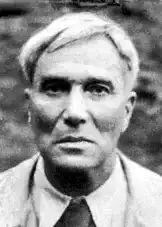
Boris Pasternak
Intoxication
Under osiers with ivy ingrown
We are trying to hide from bad weather.
I am clasping your arms in my own,
In one cloak we are huddled together.
I was wrong. Not with ivy-leaves bound,
But with hops overgrown is the willow.
Well then, let us spread out on the ground
This our cloak as a sheet and a pillow.
Read more →
412
Lord Byron
On A Cornelian Heart Which Was Broken
Illfated
Heart! And can it be,
That thou should'st thus be rent in vain?
Have years of care for thine and thee
Alike been all employ'd in vain?
Yet precious seems each shatter'd part
And every fragment dearer grown
Since he who wears thee feels thou art
A fitter emblem of his own.
March 16, 1812
Read more →
412

Kazi Nazrul Islam
Lonely in My Floral chariot
O my friend,
you walked on your thorny path smiling,
seeing me lonely in my floral chariot, crying.
O the friend passer-by,
if you took me to your path,
I would have covered all the thorns under my breast.
Now I cry in my gay chariot
longing to become your friend in distress.
[Original: Tumi heshe chole gele; Translation: Mohammad Nurul Huda]
Read more →
412
Ella Wheeler Wilcox
Spectres
How terrible these nights are when alone
With our scarred hearts, we sit in solitude,
And some old sorrow, to the world unknown,
Does suddenly with silent steps intrude.
After the guests departed, and the light
Burned dimly in my room, there came to me,
As noiselessly as shadows of the night,
The spectre of a woe that used to be.
Out of the gruesome darkness and the gloom
I saw it peering; and, in still despair,
I watched it gliding swift across the room,
Until it came and stood beside my chair.
Why, need I tell thee what its shape or name?
Thou hast thy secret hidden from the light:
And be it sin or sorrow, woe or shame,
Thou dost not like to meet it in the night.
And yet it comes. As certainly as death,
And far more cruel since death ends all pain,
On lonesome nights we feel its icy breath,
And turn and face the thing we fancied slain.
With shrinking hearts, we view the ghastly shape;
We look into its eyes with fear and dread,
And know that we can never more escape
Until the grave doth fold us with the dead.
On the swift maelstrom of the eddying world
We hurl our woes, and think they are no more.
But round and round by dizzy billows whirled,
They reach out sinewy arms and swim to shore.
Read more →
410
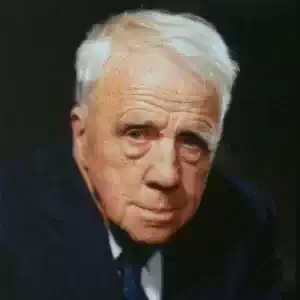
Robert Frost
A Cliff Dwelling
There sandy seems the golden sky
And golden seems the sandy plain.
No habitation meets the eye
Unless in the horizon rim,
Some halfway up the limestone wall,
That spot of black is not a stain
Or shadow, but a cavern hole,
Where someone used to climb and crawl
To rest from his besetting fears.
I see the callus on his soul
The disappearing last of him
And of his race starvation slim,
Oh years ago - ten thousand years.
Read more →
410
Ella Wheeler Wilcox
High Noon
Time’s finger on the dial of my life
Points to high noon! And yet the half-spent day
Leaves less than half remaining, for the dark,
Bleak shadows of the grave engulf the end.
To those who burn the candle to the stick,
The sputtering socket yields but little light.
Long life is sadder than early death.
We cannot count on raveled threads of age
Whereof to weave a fabric. We must use
The warp and woof the ready present yields
And toils while daylight lasts. When I bethink
How brief the past, the future still more brief,
Calls on to action, action! Not for me
Is time for retrospection or for dreams,
Not time for self-laudation or remorse.
Have I done nobly? Then I must not let
Dead yesterday unborn to-morrow shame.
Have I done wrong? Well, let the bitter taste
Of fruit that turned to ashes on my lip
Be my reminder in temptations hour,
And keep me silent when I could condemn.
Sometimes it takes the acid of a sin
To cleanse the clouded windows of our souls
So pity may shine through them.
Looking back,
My faults and errors seem like stepping-stones
That led the way to knowledge of the truth
And made me value virtue: sorrows shine
In rainbow colours o’er the gulf of years,
Where lie forgotten pleasures.
Looking forth,
Out to the westers sky still bright with noon,
I feel well spurred and booted for the strife
That ends not till Nirvana is attained.
Battling with fate, with men and with myself,
Up the steep summit of my life’s forenoon,
Three things I learned, three things of precious worth
To guide and help me down the western slope.
I have learned how to pray, and toil, and save.
To pray for courage to receive what comes,
Knowing what comes to be divinely sent.
To toil for universal good, since thus
And only thus can good come unto me.
To save, by giving whatsoe’er I have
To those who have not, this alone is gain.
Read more →
410
Walt Whitman
Once I Pass'd Through A Populous City
ONCE I pass'd through a populous city, imprinting my brain, for
future use, with its shows, architecture, customs, and
traditions;
Yet now, of all that city, I remember only a woman I casually met
there, who detain'd me for love of me;
Day by day and night by night we were together,--All else has long
been forgotten by me;
I remember, I say, only that woman who passionately clung to me;
Again we wander--we love--we separate again;
Again she holds me by the hand--I must not go!
I see her close beside me, with silent lips, sad and tremulous.
Read more →
411
Carl Sandburg
Autumn Movement
I cried over beautiful things knowing no beautiful thing lasts.
The field of cornflower yellow is a scarf at the neck of the copper
sunburned woman, the mother of the year, the taker of seeds.
The northwest wind comes and the yellow is torn full of holes,
new beautiful things come in the first spit of snow on the northwest wind,
and the old things go, not one lasts.
Read more →
411
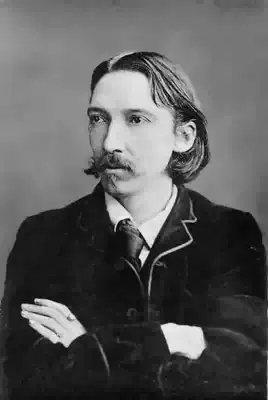
Robert Louis Stevenson
Fixed Is The Doom
FIXED is the doom; and to the last of years
Teacher and taught, friend, lover, parent, child,
Each walks, though near, yet separate; each beholds
His dear ones shine beyond him like the stars.
We also, love, forever dwell apart;
With cries approach, with cries behold the gulph,
The Unvaulted; as two great eagles that do wheel in air
Above a mountain, and with screams confer,
Far heard athwart the cedars.
Yet the years
Shall bring us ever nearer; day by day
Endearing, week by week, till death at last
Dissolve that long divorce. By faith we love,
Not knowledge; and by faith, though far removed,
Dwell as in perfect nearness, heart to heart.
We but excuse
Those things we merely are; and to our souls
A brave deception cherish.
So from unhappy war a man returns
Unfearing, or the seaman from the deep;
So from cool night and woodlands to a feast
May someone enter, and still breathe of dews,
And in her eyes still wear the dusky night.
Read more →
412