
Soul
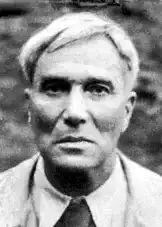
Boris Pasternak
It's spring, I leave a street where poplars...
It's spring, I leave a street where poplars are astonished,
Where distance is alarmed and the house fears it may fall.
Where air is blue just like the linen bundle
A discharged patient takes from hospital,
Where dusk is empty, like a broken tale,
Abandoned by a star, without conclusion,
So that expressionless, unfathomable,
A thousand clamouring eyes are in confusion.
Read more →
356
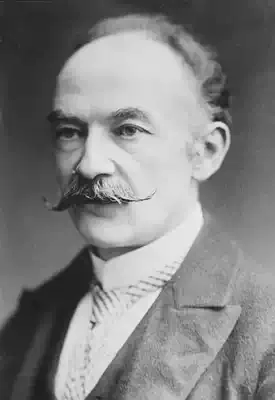
Thomas Hardy
The Voice
Woman much missed, how you call to me, call to me,
Saying that now you are not as you were
When you had changed from the one who was all to me,
But as at first, when our day was fair.
Can it be you that I hear? Let me view you, then,
Standing as when I drew near to the town
Where you would wait for me: yes, as I knew you then,
Even to the original air-blue gown!
Or is it only the breeze, in its listlessness
Travelling across the wet mead to me here,
You being ever dissolved to wan wistlessness,
Heard no more again far or near?
Thus I; faltering forward,
Leaves around me falling,
Wind oozing thin through the thorn from norward,
And the woman calling.
Read more →
357

John Donne
To Mr. Rowland Woodward
LIKE one who in her third widowhood doth profess
Herself a nun, tied to retiredness,
So affects my Muse, now, a chaste fallowness.
Since she to few, yet to too many hath shown,
How love-song weeds and satiric thorns are grown,
Where seeds of better arts were early sown ;
Though to use and love poetry, to me,
Betroth'd to no one art, be no adultery ;
Omissions of good, ill, as ill deeds be.
For though to us it seems but light and thin,
Yet in those faithful scales, where God throws in
Men's works, vanity weighs as much as sin.
If our souls have stain'd their first white, yet we
May clothe them with faith, and dear honesty,
Which God imputes as native purity.
There is no virtue but religion.
Wise, valiant, sober, just, are names which none
Want, which want not vice-covering discretion.
Seek we then ourselves in ourselves ; for as
Men force the sun with much more force to pass,
By gathering his beams with a crystal glass,
So we—if we into ourselves will turn,
Blowing our spark of virtue—may out-burn
The straw which doth about our hearts sojourn.
You know physicians, when they would infuse
Into any oil the souls of simples, use
Places, where they may lie still warm, to choose.
So works retiredness in us. To roam
Giddily and be everywhere, but at home,
Such freedom doth a banishment become.
We are but farmers of ourselves, yet may,
If we can stock ourselves, and thrive, uplay
Much, much dear treasure for the great rent day.
Manure thyself then, to thyself be improved ;
And with vain outward things be no more moved,
But to know that I love thee and would be loved.
Read more →
356

Edna St. Vincent Millay
Two Sonnets In Memory
(Nicola Sacco -- Bartolomeo Vanzetti)
Executed August 23, 1927
I
As men have loved their lovers in times past
And sung their wit, their virtue and their grace,
So have we loved sweet Justice to the last,
That now lies here in an unseemly place.
The child will quit the cradle and grow wise
And stare on beauty till his senses drown;
Yet shall be seen no more by mortal eyes
Such beauty as here walked and here went down.
Like birds that hear the winter crying plain
Her courtiers leave to seek the clement south;
Many have praised her, we alone remain
To break a fist against the lying mouth
Of any man who says this was not so:
Though she be dead now, as indeed we know.
II
Where can the heart be hidden in the ground
And be at peace, and be at peace forever,
Under the world, untroubled by the sound
Of mortal tears, that cease from pouring never?
Well for the heart, by stern compassion harried,
If death be deeper than the churchmen say, --
Gone from this world indeed what's graveward carried,
And laid to rest indeed what's laid away.
Anguish enough while yet the indignant breather
Have blood to spurt upon the oppressor's hand;
Who would eternal be, and hang in ether
A stuffless ghost above his struggling land,
Retching in vain to render up the groan
That is not there, being aching dust's alone?
Read more →
356

Ella Wheeler Wilcox
PH. Best & Co.'s Lager-Beer
In every part of the thrifty town,
Whether my course be up or down,
In lane, and alley, and avenue,
Painted in yellow, and red, and blue,
This side and that, east and west,
Was this flaunting sign-board of 'Ph. Best.'
'Twas hung high up, and swung in the air
With a swaggering, bold-faced, 'devil-may-care
It-
is-none-of-your-business' sort of way;
Or, as if dreading the light o' the day,
It hung low, over a basement-stair,
And seemed ashamed when you saw it there.
Or it shone like a wicked and evil eye
From a 'restaurant' door on passers-by,
And seemed with a twinkling wink to say:
'Are you bound for hell? Then step this way;
This is the ticket-office of sin;
If you think of purchasing, pray, walk in.'
Or it glared from a window where the light
Of the lamps within shone full and bright,
And seemed to be saying, 'Come out of the storm!
Come into my haven snug and warm;
I will give you warmth from the flowing bowl,
And all I ask is your purse and soul.'
But whether on window, door, or stair,
Wherever I went, it was always there;
Painted in yellow, and red, and blue,
It stared from alley and avenue:
It was north, and south, and east, and west,
The lager-beer of this Philip Best.
And who was Philip Best, you ask?
Oh! he was a man, whose noble task
Was the brewing of beer-good beer, first-class-
That should sparkle, and bubble, and boil in the glass:
Should sparkle and flow till drank, and then
Feast like a vampire on brains of men.
Ah! Philip Best, you have passed from view,
But your name and your works live after you.
Come, brothers, raise him a monument,
Inscribed, 'Here lies the man who sent
A million of souls to the depths of hell;
Turned genius and worth to the prison-cell;
Stole bread from the mouth of the hungry child:
Made the father a brute, and the mother wild;
Filled happy homes with dread unrest:
Oh! a very great man was Philip Best.
O Ph. Best! you have passed from view,
But your nameand your deeds live after you.'
Read more →
357
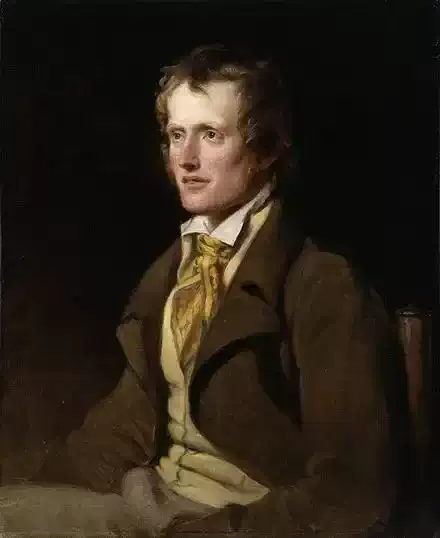
John Clare
Idle Fame
I would not wish the burning blaze
Of fame around a restless world,
The thunder and the storm of praise
In crowded tumults heard and hurled.
I would not be a flower to stand
The stare of every passer-bye;
But in some nook of fairyland,
Seen in the praise of beauty's eye.
Read more →
357

Henry Lawson
The Lily of St Leonards
’TIS sunrise over Watson,
Where I sailed out to sea,
On that wild run to London
That wrecked and ruined me.
The beauty of the morning
On bluff and point and bay,
But the Lily of St Leonards
Was fairer than the day.
O Lily of St Leonards!
And I was mad to roam—
She died with loving words for me
Three days ere I came home.
As fair as lily whiteness,
As pure as lily gold,
And bright with childlike brightness
And wise as worlds of old.
Her heart for all was beating
And all hearts were her own—
Like sunshine through the Lily
Her purity was shown.
O Lily of St Leonards!
My night is on the track,
’Tis well you never lived to see
The wreck that I came back.
A leaden sky shuts over
A sobbing leaden sea,
For the Lily of St Leonards
Is never more for me.
I seek the wharf of Outward
Where the deck no longer thrills
Where she stood with great tears starting
Like the lights on dark wet hills.
The world was all before me
The laurels on my brow—
’Twas the world-star of the rovers,
’Tis the Star of Exile now.
Read more →
356

George Herbert
Faith
Lord, how couldst thou so much appease
Thy wrath for sin, as when man's sight was dim,
And could see little, to regard his ease,
And bring by Faith all things to him?
Hungry I was, and had no meat:
I did conceit a most delicious feast;
I had it straight, and did as truly eat,
As ever did a welcome guest.
There is a rare outlandish root,
Which when I could not get, I thought it here:
That apprehension cur'd so well my foot,
That I can walk to heav'n well near.
I owed thousands and much more.
I did believe that I did nothing owe,
And liv'd accordingly; my creditor
Believes so too, and lets me go.
Faith makes me any thing, or all
That I believe is in the sacred story:
And where sin placeth me in Adam's fall,
Faith sets me higher in his glory.
If I go lower in the book,
What can be lower than the common manger?
Faith puts me there with him, who sweetly took
Our flesh and frailty, death and danger.
If bliss had lien in art or strength,
None but the wise or strong had gained it:
Where now by Faith all arms are of a length;
One size doth all conditions fit.
A peasant may believe as much
As a great Clerk, and reach the highest stature.
Thus dost thou make proud knowledge bend and crouch
While grace fills up uneven nature.
When creatures had no real light
Inherent in them, thou didst make the sun
Impute a lustre, and allow them bright;
And in this show what Christ hath done.
That which before was darkned clean
With bushy groves, pricking the looker's eye,
Vanisht away, when Faith did change the scene:
And then appear'd a glorious sky.
What though my body run to dust?
Faith cleaves unto it, counting ev'ry grain
With an exact and most particular trust,
Reserving all for flesh again.
Read more →
357
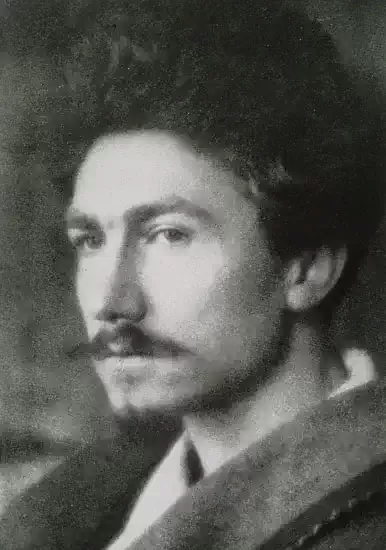
Ezra Pound
Post Mortem Conspectu
A brown, fat babe sitting in the lotus,
And you were glad and laughing
With a laughter not of this world.
It is good to splash in the water
And laughter is the end of all things.
Read more →
358
Edna St. Vincent Millay
Memorial To D.C.
(Vassar College, 1918)
O, loveliest throat of all sweet throats,
Where now no more the music is,
With hands that wrote you little notes
I write you little elegies!
Read more →
357
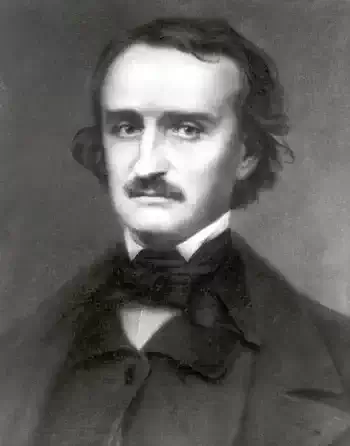
Edgar Allan Poe
Bridal Ballad
The ring is on my hand,
And the wreath is on my brow;
Satin and jewels grand
Are all at my command,
And I am happy now.
And my lord he loves me well;
But, when first he breathed his vow,
I felt my bosom swell
For
the words rang as a knell,
And the voice seemed his who fell
In the battle down the dell,
And who is happy now.
But he spoke to re-assure me,
And he kissed my pallid brow,
While a reverie came o'er me,
And to the church-yard bore me,
And I sighed to him before me,
Thinking him dead D'Elormie,
"Oh, I am happy now!"
And thus the words were spoken,
And this the plighted vow,
And, though my faith be broken,
And, though my heart be broken,
Here is a ring, as token
That I am happy now!
Would God I could awaken!
For I dream I know not how!
And my soul is sorely shaken
Lest an evil step be taken,
Lest the dead who is forsaken
May not be happy now.
Read more →
357
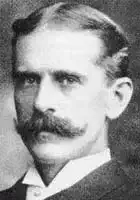
Henry Van Dyke
Milton
I
Lover of beauty, walking on the height
Of pure philosophy and tranquil song;
Born to behold the visions that belong
To those who dwell in melody and light;
Milton, thou spirit delicate and bright!
What drew thee down to join the Roundhead throng
Of iron-sided warriors, rude and strong,
Fighting for freedom in a world half night?
Lover of Liberty at heart wast thou,
Above all beauty bright, all music clear:
To thee she bared her bosom and her brow,
Breathing her virgin promise in thine ear,
And bound thee to her with a double vow, --
Exquisite Puritan, grave Cavalier!
II
The cause, the cause for which thy soul resigned
Her singing robes to battle on the plain,
Was won, O poet, and was lost again;
And lost the labour of thy lonely mind
On weary tasks of prose. What wilt thou find
To comfort thee for all the toil and pain?
What solace, now thy sacrifice is vain
And thou art left forsaken, poor, and blind?
Like organ-music comes the deep reply:
"The cause of truth looks lost, but shall be won.
For God hath given to mine inward eye
Vision of England soaring to the sun.
And granted me great peace before I die,
In thoughts of lowly duty bravely done."
III
O bend again above thine organ-board,
Thou blind old poet longing for repose!
Thy Master claims thy service not with those
Who only stand and wait for his reward.
He pours the heavenly gift of song restored
Into thy breast, and bids thee nobly close
A noble life, with poetry that flows
In mighty music of the major chord.
Where hast thou learned this deep, majestic strain,
Surpassing all thy youthful lyric grace,
To sing of Paradise? Ah, not in vain
The griefs that won at Dante's side thy place,
And made thee, Milton, by thy years of pain,
The loftiest poet of the Saxon race!
Read more →
357
Edna St. Vincent Millay
Song Of A Second April
April this year, not otherwise
Than April of a year ago,
Is full of whispers, full of sighs,
Of dazzling mud and dingy snow;
Hepaticas that pleased you so
Are here again, and butterflies.
There rings a hammering all day,
And shingles lie about the doors;
In orchards near and far away
The grey wood-pecker taps and bores;
The men are merry at their chores,
And children earnest at their play.
The larger streams run still and deep,
Noisy and swift the small brooks run
Among the mullein stalks the sheep
Go up the hillside in the sun,
Pensively,—only you are gone,
You that alone I cared to keep.
Read more →
356

Jack Kerouac
Mexico City Blues (The wheel of the quivering meat)
The wheel of the quivering meat
conception
Turns in the void expelling human beings,
Pigs, turtles, frogs, insects, nits,
Mice, lice, lizards, rats, roan
Racinghorses, poxy bucolic pigtics,
Horrible unnameable lice of vultures,
Murderous attacking dog-armies
Of Africa, Rhinos roaming in the
jungle,
Vast boars and huge gigantic bull
Elephants, rams, eagles, condors,
Pones and Porcupines and Pills-
All the endless conception of living
beings
Gnashing everywhere in Consciousness
Throughout the ten directions of space
Occupying all the quarters in & out,
From supermicroscopic no-bug
To huge Galaxy Lightyear Bowell
Illuminating the sky of one Mind-
Poor!
I wish I was free
of that slaving meat wheel
and safe in heaven dead.
356
Ella Wheeler Wilcox
The Winds of Fate
One ship drives east and another drives west
With the selfsame winds that blow.
Tis the set of the sails
And not the gales
Which tells us the way to go.
Like the winds of the seas are the ways of fate,
As we voyage along through the life:
Tis the set of a soul
That decides its goal,
And not the calm or the strife.
Read more →
357

John Greenleaf Whittier
In Remembrance Of Joseph Sturge
In the fair land o'erwatched by Ischia's mountains,
Across the charmed bay
Whose blue waves keep with Capri's silver fountains
Perpetual holiday,
A king lies dead, his wafer duly eaten,
His gold-bought masses given;
And Rome's great altar smokes with gums to sweeten
Her foulest gift to Heaven.
And while all Naples thrills with mute thanksgiving,
The court of England's queen
For the dead monster so abhorred while living
In mourning garb is seen.
With a true sorrow God rebukes that feigning;
By lone Edgbaston's side
Stands a great city in the sky's sad raining,
Bareheaded and wet-eyed!
Silent for once the restless hive of labor,
Save the low funeral tread,
Or voice of craftsman whispering to his neighbor
The good deeds of the dead.
For him no minster's chant of the immortals
Rose from the lips of sin;
No mitred priest swung back the heavenly portals
To let the white soul in.
But Age and Sickness framed their tearful faces
In the low hovel's door,
And prayers went up from all the dark by-places
And Ghettos of the poor.
The pallid toiler and the negro chattel,
The vagrant of the street,
The human dice wherewith in games of battle
The lords of earth compete,
Touched with a grief that needs no outward draping,
All swelled the long lament,
Of grateful hearts, instead of marble, shaping
His viewless monument!
For never yet, with ritual pomp and splendor,
In the long heretofore,
A heart more loyal, warm, and true, and tender,
Has England's turf closed o'er.
And if there fell from out her grand old steeples
No crash of brazen wail,
The murmurous woe of kindreds, tongues, and peoples
Swept in on every gale.
It came from Holstein's birchen-belted meadows,
And from the tropic calms
Of Indian islands in the sunlit shadows
Of Occidental palms;
From the locked roadsteads of the Bothniaii peasants,
And harbors of the Finn,
Where war's worn victims saw his gentle presence
Come sailing, Christ-like, in,
To seek the lost, to build the old waste places,
To link the hostile shores
Of severing seas, and sow with England's daisies
The moss of Finland's moors.
Thanks for the good man's beautiful example,
Who in the vilest saw
Some sacred crypt or altar of a temple
Still vocal with God's law;
And heard with tender ear the spirit sighing
As from its prison cell,
Praying for pity, like the mournful crying
Of Jonah out of hell.
Not his the golden pen's or lip's persuasion,
But a fine sense of right,
And Truth's directness, meeting each occasion
Straight as a line of light.
His faith and works, like streams that intermingle,
In the same channel ran
The crystal clearness of an eye kept single
Shamed all the frauds of man.
The very gentlest of all human natures
He joined to courage strong,
And love outreaching unto all God's creatures
With sturdy hate of wrong.
Tender as woman, manliness and meekness
In him were so allied
That they who judged him by his strength or weakness
Saw but a single side.
Men failed, betrayed him, but his zeal seemed nourished
By failure and by fall;
Still a large faith in human-kind he cherished,
And in God's love for all.
And now he rests: his greatness and his sweetness
No more shall seem at strife,
And death has moulded into calm completeness
The statue of his life.
Where the dews glisten and the songbirds warble,
His dust to dust is laid,
In Nature's keeping, with no pomp of marble
To shame his modest shade.
The forges glow, the hammers all are ringing;
Beneath its smoky vale,
Hard by, the city of his love is swinging
Its clamorous iron flail.
But round his grave are quietude and beauty,
And the sweet heaven above,-The
fitting symbols of a life of duty
Transfigured into love!
Read more →
358
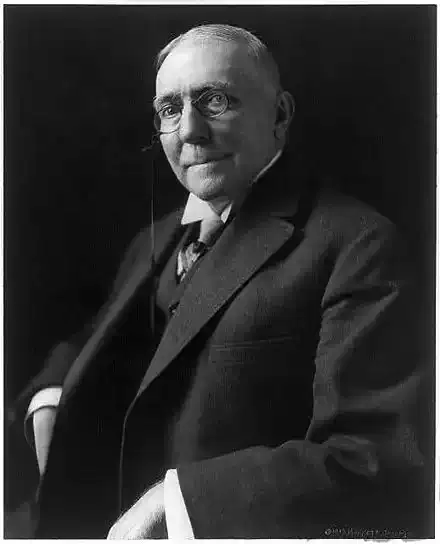
James Whitcomb Riley
The Rose
It tossed its head at the wooing breeze;
And the sun, like a bashful swain,
Beamed on it through the waving trees
With a passion all in vain,--
For my rose laughed in a crimson glee,
And hid in the leaves in wait for me.
The honey-bee came there to sing
His love through the languid hours,
And vaunt of his hives, as a proud old king
Might boast of his palace-towers:
But my rose bowed in a mockery,
And hid in the leaves in wait for me.
The humming-bird, like a courtier gay,
Dipped down with a dalliant song,
And twanged his wings through the roundelay
Of love the whole day long:
Yet my rose turned from his minstrelsy
And hid in the leaves in wait for me.
The firefly came in the twilight dim
My red, red rose to woo--
Till quenched was the flame of love in him,
And the light of his lantern too,
As my rose wept with dewdrops three
And hid in the leaves in wait for me.
And I said: I will cull my own sweet rose--
Some day I will claim as mine
The priceless worth of the flower that knows
No change, but a bloom divine--
The bloom of a fadeless constancy
That hides in the leaves in wait for me!
But time passed by in a strange disguise,
And I marked it not, but lay
In a lazy dream, with drowsy eyes,
Till the summer slipped away,
And a chill wind sang in a minor key:
'Where is the rose that waits for thee?'
. . . . . . . .
I dream to-day, o'er a purple stain
Of bloom on a withered stalk,
Pelted down by the autumn rain
In the dust of the garden-walk,
That an Angel-rose in the world to be
Will hide in the leaves in wait for me.
Read more →
354

Dylan Thomas
Holy Spring
O
Out of a bed of love
When that immortal hospital made one more moove to soothe
The curless counted body,
And ruin and his causes
Over the barbed and shooting sea assumed an army
And swept into our wounds and houses,
I climb to greet the war in which I have no heart but only
That one dark I owe my light,
Call for confessor and wiser mirror but there is none
To glow after the god stoning night
And I am struck as lonely as a holy marker by the sun
No
Praise that the spring time is all
Gabriel and radiant shrubbery as the morning grows joyful
Out of the woebegone pyre
And the multitude's sultry tear turns cool on the weeping wall,
My arising prodgidal
Sun the father his quiver full of the infants of pure fire,
But blessed be hail and upheaval
That uncalm still it is sure alone to stand and sing
Alone in the husk of man's home
And the mother and toppling house of the holy spring,
If only for a last time.
Read more →
354
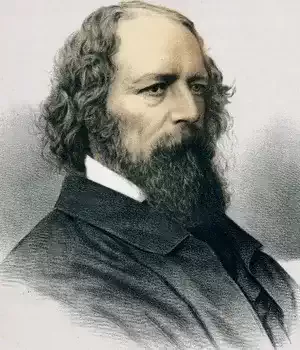
Alfred Lord Tennyson
In Memoriam A. H. H.: 39. Old warder of these buried bones
Old warder of these buried bones,
And answering now my random stroke
With fruitful cloud and living smoke,
Dark yew, that graspest at the stones
And dippest toward the dreamless head,
To thee too comes the golden hour
When flower is feeling after flower;
But Sorrow--fixt upon the dead,
And darkening the dark graves of men,-What
whisper'd from her lying lips?
Thy gloom is kindled at the tips,
And passes into gloom again.
Read more →
354
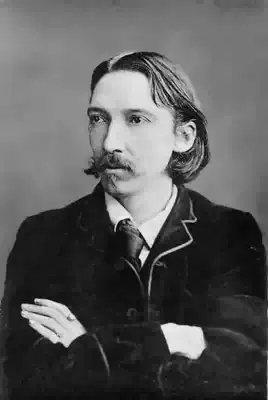
Robert Louis Stevenson
Music At The Villa Marina
FOR some abiding central source of power,
Strong-smitten steady chords, ye seem to flow
And, flowing, carry virtue. Far below,
The vain tumultuous passions of the hour
Fleet fast and disappear; and as the sun
Shines on the wake of tempests, there is cast
O'er all the shattered ruins of my past
A strong contentment as of battles won.
And yet I cry in anguish, as I hear
The long drawn pageant of your passage roll
Magnificently forth into the night.
To yon fair land ye come from, to yon sphere
Of strength and love where now ye shape your flight,
O even wings of music, bear my soul!
Ye have the power, if but ye had the will,
Strong-smitten steady chords in sequence grand,
To bear me forth into that tranquil land
Where good is no more ravelled up with ill;
Where she and I, remote upon some hill
Or by some quiet river's windless strand,
May live, and love, and wander hand in hand,
And follow nature simply, and be still.
From this grim world, where, sadly, prisoned, we
Sit bound with others' heart-strings as with chains,
And, if one moves, all suffer, - to that Goal,
If such a land, if such a sphere, there be,
Thither, from life and all life's joys and pains,
O even wings of music, bear my soul!
Read more →
356
Ella Wheeler Wilcox
The Christian’s New Year Prayer
Thou Christ of mine, Thy gracious ear low bending
Through these glad New Year days,
To catch the countless prayers to heaven ascending –
For e’en hard hearts do raise
Some secret wish for fame, or gold, or power,
Or freedom from all care –
Dear, patient Christ, who listeneth hour on hour,
Hear now a Christian’s prayer.
Let this young year, silent, walks beside me,
Be as a means of grace
To lead me up, no matter what betide me,
Nearer the Master’s face.
If it need be ere I reach the Fountain
Where living waters play,
My feet should bleed from sharp stones on the mountain,
Then cast them in my way.
If my vain soul needs blows and bitter losses
To shape it for Thy crown,
Then bruise it, burn it, burden it with crosses,
With sorrows bear it down.
Do what Thou wilt to mould me to Thy pleasure,
And if I should complain,
Heap full of anguish yet another measure
Until I smile at pain.
Send dangers – deaths! but tell me how to dare them;
Enfold me in Thy care.
Send trials, tears! but give me strength to bear them –
This is a Christian’s prayer.
Read more →
354

Emily Dickinson
I reason, Earth is short
I reason, Earth is short-
And Anguish-absolute-
And many hurt,
But, what of that?
I reason, we could die-
The best Vitality
Cannot excel Decay,
But, what of that?
I reason, that in Heaven-
Somehow, it will be even-
Some new Equation, given-
But, what of that?
Read more →
353
Henry Van Dyke
Love's Reason
For that thy face is fair I love thee not;
Nor yet because the light of thy brown eyes
Hath gleams of wonder and of glad surprise,
Like woodland streams that cross a sunlit spot:
Nor for thy beauty, born without a blot,
Most perfect when it shines through no disguise
Pure as the star of Eve in Paradise, ---
For all these outward things I love thee not:
But for a something in thy form and face,
Thy looks and ways, of primal harmony;
A certain soothing charm, a vital grace
That breathes of the eternal womanly,
And makes me feel the warmth of Nature's breast,
When in her arms, and thine, I sink to rest.
Read more →
353

Christina Rossetti
Dream-Love
Young Love lies sleeping
In May-time of the year,
Among the lilies,
Lapped in the tender light:
White lambs come grazing,
White doves come building there:
And round about him
The May-bushes are white.
Soft moss the pillow
For oh, a softer cheek;
Broad leaves cast shadow
Upon the heavy eyes:
There winds and waters
Grow lulled and scarcely speak;
There twilight lingers
The longest in the skies.
Young Love lies dreaming;
But who shall tell the dream?
A perfect sunlight
On rustling forest tips;
Or perfect moonlight
Upon a rippling stream;
Or perfect silence,
Or song of cherished lips.
Burn odours round him
To fill the drowsy air;
Weave silent dances
Around him to and fro;
For oh, in waking
The sights are not so fair,
And song and silence
Are not like these below.
Young Love lies dreaming
Till summer days are gone,—
Dreaming and drowsing
Away to perfect sleep:
He sees the beauty
Sun hath not looked upon,
And tastes the fountain
Unutterably deep.
Him perfect music
Doth hush unto his rest,
And through the pauses
The perfect silence calms:
Oh, poor the voices
Of earth from east to west,
And poor earth's stillness
Between her stately palms.
Young Love lies drowsing
Away to poppied death;
Cool shadows deepen
Across the sleeping face:
So fails the summer
With warm, delicious breath;
And what hath autumn
To give us in its place?
Draw close the curtains
Of branched evergreen;
Change cannot touch them
With fading fingers sere:
Here the first violets
Perhaps will bud unseen,
And a dove, may be,
Return to nestle here.
Read more →
353