Soul
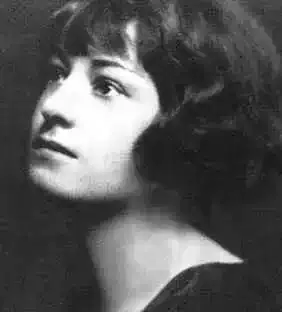
Dorothy Parker
But Not Forgotten
I think, no matter where you stray,
That I shall go with you a way.
Though you may wander sweeter lands,
You will not soon forget my hands,
Nor yet the way I held my head,
Nor all the tremulous things I said.
You still will see me, small and white
And smiling, in the secret night,
And feel my arms about you when
The day comes fluttering back again.
I think, no matter where you be,
You'll hold me in your memory
And keep my image, there without me,
By telling later loves about me.
Read more →
349
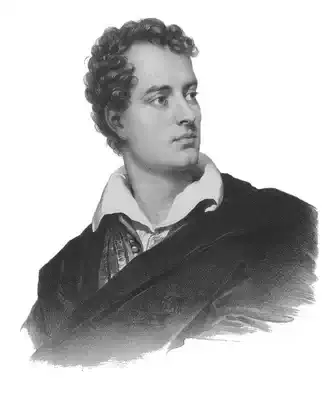
Lord Byron
Adrian's Address To His Soul When Dying
Ah! gentle, fleeting, wav'ring sprite,
Friend and associate of this clay!
To what unknown region borne,
Wilt thou now wing thy distant flight?
No more with wonted humour gay,
But pallid, cheerless, and forlorn.
[Animula! vagula, blandula,
Hospes comesque corporis,
Quæ nunc abibis in loca
Pallidula,
rigida, nudula,
Nec, ut soles, dabis jocos?]
Read more →
348

Henry Wadsworth Longfellow
The Dead. (From The German Of Stockmann)
How they so softly rest,
All they the holy ones,
Unto whose dwelling-place
Now doth my soul draw near!
How they so softly rest,
All in their silent graves,
Deep to corruption
Slowly don-sinking!
And they no longer weep,
Here, where complaint is still!
And they no longer feel,
Here, where all gladness flies!
And, by the cypresses
Softly o'ershadowed
Until the Angel
Calls them, they slumber!
Read more →
349

Ella Wheeler Wilcox
Bohemia
Bohemia, o'er thy unatlassed borders
How many cross, with half-reluctant feet,
And unformed fears of dangers and disorders,
To find delights, more wholesome and more sweet
Than ever yet were known to the "elite."
Herein can dwell no pretence and no seeming;
No stilted pride thrives in this atmosphere,
Which stimulates a tendency to dreaming.
The shores of the ideal world, from here,
Seem sometimes to be tangible and near.
We have no use for formal codes of fashion;
No "Etiquette f Courts" we emulate;
We know it needs sincerity and passion
To carry out the plans of God, or fate;
We do not strive to seem inanimate.
We call no time lost that we give to pleasure;
Life's hurrying river speeds to Death's great sea;
We cast out no vain plummet-line to measure
Imagined depths of that unknown To-Be,
But grasp the Now, and fill it full of glee.
All creeds have room here, and we all together
Devoutly worship at Art's sacred shrine;
But he who dwells once in thy golden weather,
Bohemia--sweet, lovely land of mine--
Can find no joy outside thy border-line.
Read more →
350
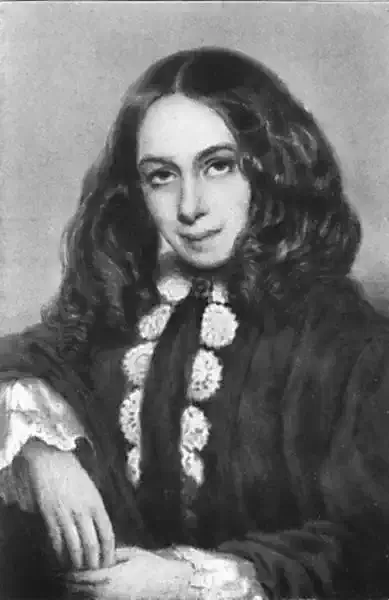
Elizabeth Barrett Browning
Sonnet XXI: Say Over Again
Say over again, and yet once over again,
That thou dost love me. Though the word repeated
Should seem "a cuckoo-song,"as thou dost treat it,
Remember, never to the hill or plain,
Valley and wood, without her cuckoo-strain
Comes the fresh Spring in all her green completed.
Beloved, I, amid the darkness greeted
By a doubtful spirit-voice, in that doubt's pain
Cry, Speak once more--thou lovest! Who can fear
Too many stars, though each in heaven shall roll,
Too many flowers, though each shall crown the year?
Say thou dost love me, love me, love me--toll
The silver iterance!--only minding, Dear,
To love me also in silence with thy soul.
Read more →
348

William Shakespeare
Sonnet 50: How heavy do I journey on the way
How heavy do I journey on the way,
When what I seek, my weary travel's end,
Doth teach that ease and that repose to say
'Thus far the miles are measured from thy friend!'
The beast that bears me, tired with my woe,
Plods dully on, to bear that weight in me,
As if by some instinct the wretch did know
His rider loved not speed, being made from thee:
The bloody spur cannot provoke him on
That sometimes anger thrusts into his hide;
Which heavily he answers with a groan,
More sharp to me than spurring to his side;
For that same groan doth put this in my mind;
My grief lies onward and my joy behind.
Read more →
349

John Donne
To Mr. Tilman After He Had Taken Orders
THOU, whose diviner soul hath caused thee now
To put thy hand unto the holy plough,
Making lay-scornings of the ministry
Not an impediment, but victory ;
What bring'st thou home with thee ? how is thy mind
Affected since the vintage ? Dost thou find
New thoughts and stirrings in thee ? and, as steel
Touch'd with a loadstone, dost new motions feel ?
Or, as a ship after much pain and care
For iron and cloth brings home rich Indian ware,
Hast thou thus traffick'd, but with far more gain
Of noble goods, and with less time and pain ?
Thou art the same materials, as before,
Only the stamp is changèd, but no more.
And as new crowned kings alter the face,
But not the money's substance, so hath grace
Changed only God's old image by creation,
To Christ's new stamp, at this thy coronation ;
Or, as we paint angels with wings, because
They bear God's message and proclaim His laws,
Since thou must do the like and so must move,
Art thou new feather'd with celestial love ?
Dear, tell me where thy purchase lies, and show
What thy advantage is above, below.
But if thy gainings do surmount expression,
Why doth the foolish world scorn that profession,
Whose joys pass speech ? Why do they think unfit
That gentry should join families with it ?
As if their day were only to be spent
In dressing, mistressing and compliment.
Alas ! poor joys, but poorer men, whose trust
Seems richly placèd in sublimèd dust,
—For such are clothes and beauty, which though gay,
Are, at the best, but of sublimèd clay—
Let then the world thy calling disrespect,
But go thou on, and pity their neglect.
What function is so noble, as to be
Ambassador to God, and destiny ?
To open life ? to give kingdoms to more
Than kings give dignities? to keep heaven's door ?
Mary's prerogative was to bear Christ, so
'Tis preachers' to convey Him, for they do,
As angels out of clouds, from pulpits speak ;
And bless the poor beneath, the lame, the weak.
If then th' astronomers, whereas they spy
A new-found star, their optics magnify,
How brave are those, who with their engine can
Bring man to heaven, and heaven again to man ?
These are thy titles and pre-eminences,
In whom must meet God's graces, men's offences ;
And so the heavens which beget all things here,
And the earth, our mother, which these things doth bear ;
Both these in thee, are in thy calling knit
And make thee now a blest hermaphrodite.
Read more →
350

Emily Dickinson
I prayed, at first, a little Girl
I prayed, at first, a little Girl,
Because they told me to-
But stopped, when qualified to guess
How prayer would feel-to me-
If I believed God looked around,
Each time my Childish eye
Fixed full, and steady, on his own
In Childish honesty-
And told him what I'd like, today,
And parts of his far plan
That baffled me-
The mingled side
Of his Divinity-
And often since, in Danger,
I count the force 'twould be
To have a God so strong as that
To hold my life for me
Till I could take the Balance
That tips so frequent, now,
It takes me all the while to poise-
And then-it doesn't stay-
Read more →
348

John Greenleaf Whittier
My Triumph
The autumn-time has come;
On woods that dream of bloom,
And over purpling vines,
The low sun fainter shines.
The aster-flower is failing,
The hazel's gold is paling;
Yet overhead more near
The eternal stars appear!
And present gratitude
Insures the future's good,
And for the things I see
I trust the things to be;
That in the paths untrod,
And the long days of God,
My feet shall still be led,
My heart be comforted.
O living friends who love me!
O dear ones gone above me!
Careless of other fame,
I leave to you my name.
Hide it from idle praises,
Save it from evil phrases:
Why, when dear lips that spake it
Are dumb, should strangers wake it?
Let the thick curtain fall;
I better know than all
How little I have gained,
How vast the unattained.
Not by the page word-painted
Let life be banned or sainted:
Deeper than written scroll
The colors of the soul.
Sweeter than any sung
My songs that found no tongue;
Nobler than any fact
My wish that failed of act.
Others shall sing the song,
Others shall right the wrong, -Finish
what I begin,
And all I fail of win.
What matter, I or they?
Mine or another's day,
So the right word be said
And life the sweeter made?
Hail to the coming singers!
Hail to the brave light-bringers!
Forward I reach and share
All that they sing and dare.
The airs of heaven blow o'er me;
A glory shines before me
Of what mankind shall be, -Pure,
generous, brave, and free.
A dream of man and woman
Diviner but still human,
Solving the riddle old,
Shaping the Age of Gold!
The love of God and neighbor;
An equal-handed labor;
The richer life, where beauty
Walks hand in hand with duty.
Ring, bells in unreared steeples,
The joy of unborn peoples!
Sound, trumpets far off blown,
Your triumph is my own!
Parcel and part of all,
I keep the festival,
Fore-reach the good to be,
And share the victory.
I feel the earth move sunward,
I join the great march onward,
And take, by faith, while living,
My freehold of thanksgiving.
Read more →
349
Henry Wadsworth Longfellow
Tales Of A Wayside Inn : Part 1. Interlude III.
He ended: and a kind of spell
Upon the silent listeners fell.
His solemn manner and his words
Had touched the deep, mysterious chords
That vibrate in each human breast
Alike, but not alike confessed.
The spiritual world seemed near;
And close above them, full of fear,
Its awful adumbration passed,
A luminous shadow, vague and vast.
They almost feared to look, lest there,
Embodied from the impalpable air,
They might behold the Angel stand,
Holding the sword in his right hand.
At last, but in a voice subdued,
Not to disturb their dreamy mood,
Said the Sicilian: 'While you spoke,
Telling your legend marvellous,
Suddenly in my memory woke
The thought of one, now gone from us,--
An old Abate, meek and mild,
My friend and teacher, when a child,
Who sometimes in those days of old
The legend of an Angel told,
Which ran, as I remember, thus.'
Read more →
350
William Shakespeare
Sonnet 20: A woman's face with Nature's own hand painted
A woman's face with Nature's own hand painted
Hast thou, the master-mistress of my passion;
A woman's gentle heart, but not acquainted
With shifting change, as is false women's fashion;
An eye more bright than theirs, less false in rolling,
Gilding the object whereupon it gazeth;
A man in hue, all hues in his controlling,
Which steals men's eyes and women's souls amazeth.
And for a woman wert thou first created,
Till Nature, as she wrought thee, fell a-doting,
And by addition me of thee defeated,
By adding one thing to my purpose nothing.
But since she pricked thee out for women's pleasure,
Mine be thy love and thy love's use their treasure.
Read more →
350
Dorothy Parker
Interior
Her mind lives in a quiet room,
A narrow room, and tall,
With pretty lamps to quench the gloom
And mottoes on the wall.
There all the things are waxen neat
And set in decorous lines;
And there are posies, round and sweet,
And little, straightened vines.
Her mind lives tidily, apart
From cold and noise and pain,
And bolts the door against her heart,
Out wailing in the rain.
Read more →
348
Emily Dickinson
It might be lonelier
It might be lonelier
Without the LonelinessI'm
so accustomed to my Fate-
Perhaps the Other-Peace-
Would interrupt the Dark-
And crowd the little Room-
Too scant-by Cubits-to contain
The Sacrament-of Him-
I am not used to Hope-
It might intrude upon-
Its sweet parade-blaspheme the place-
Ordained to Suffering-
It might be easier
To fail-with Land in Sight-
Than gain-My Blue Peninsula-
To perish-of Delight-
Read more →
350
John Greenleaf Whittier
In The
She came and stood in the Old South Church,
A wonder and a sign,
With a look the old-time sibyls wore,
Half-crazed and half-divine.
Save the mournful sackcloth about her wound,
Unclothed as the primal mother,
With limbs that trembled and eyes that blazed
With a fire she dare not smother.
Loose on her shoulders fell her hair,
With sprinkled ashes gray;
She stood in the broad aisle strange and weird
As a soul at the judgment day.
And the minister paused in his sermon's midst,
And the people held their breath,
For these were the words the maiden spoke
Through lips as the lips of death:
'Thus saith the Lord, with equal feet
All men my courts shall tread,
And priest and ruler no more shall eat
My people up like bread!
'Repent! repent! ere the Lord shall speak
In thunder and breaking seals
Let all souls worship Him in the way
His light within reveals.'
She shook the dust from her naked feet,
And her sackcloth closer drew,
And into the porch of the awe-hushed church
She passed like a ghost from view.
They whipped her away at the tail o' the cart
Through half the streets of the town,
But the words she uttered that day nor fire
Could burn nor water drown.
And now the aisles of the ancient church
By equal feet are trod,
And the bell that swings in its belfry rings
Freedom to worship God!
And now whenever a wrong is done
It thrills the conscious walls;
The stone from the basement cries aloud
And the beam from the timber calls.
There are steeple-houses on every hand,
And pulpits that bless and ban,
And the Lord will not grudge the single church
That is set apart for man.
For in two commandments are all the law
And the prophets under the sun,
And the first is last and the last is first,
And the twain are verily one.
So, long as Boston shall Boston be,
And her bay-tides rise and fall,
Shall freedom stand in the Old South Church
And plead for the rights of all!
Read more →
350
Emily Dickinson
If I may have it, when it's dead
If I may have it, when it's dead,
I'll be contented-so-
If just as soon as Breath is out
It shall belong to me-
Until they lock it in the Grave,
'Tis Bliss I cannot weigh-
For tho' they lock Thee in the Grave,
Myself-can own the key-
Think of it Lover! I and Thee
Permitted-face to face to be-
After a Life-a Death-We'll say-
For Death was That-
And this-is Thee
I'll tell Thee All-how Bald it grew-
How Midnight felt, at first-to me-
How all the Clocks stopped in the World-
And Sunshine pinched me-'Twas so cold-
Then how the Grief got sleepy-some-
As if my Soul were deaf and dumb-
Just making signs-across-to Thee-
That this way-thou could'st notice me
I'll tell you how I tried to keep
A smile, to show you, when this Deep
All Waded-We look back for Play,
At those Old Times-in Calvary,
Forgive me, if the Grave come slow-
For Coveting to look at Thee-
Forgive me, if to stroke thy frost
Outvisions Paradise!
Read more →
348
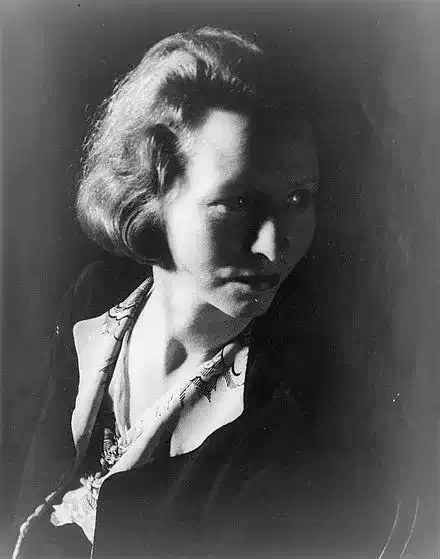
Edna St. Vincent Millay
Wild Swans
I looked in my heart while the wild swans went over.
And what did I see I had not seen before?
Only a question less or a question more:
Nothing to match the flight of wild birds flying.
Tiresome heart, forever living and dying,
House without air, I leave you and lock your door.
Wild swans, come over the town, come over
The town again, trailing your legs and crying!
Read more →
347
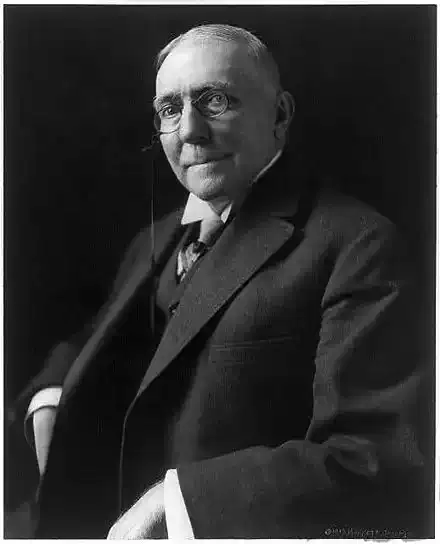
James Whitcomb Riley
George Mullen's Confession
For the sake of guilty conscience, and the heart that ticks the
time
Of the clockworks of my nature, I desire to say that I'm
A weak and sinful creature, as regards my daily walk
The last five years and better. It ain't worth while to talk-
I've been too mean to tell it! I've been so hard, you see,
And full of pride, and--onry--now there's the word for me--
Just onry--and to show you, I'll give my history
With vital points in question, and I think you'll all agree.
I was always stiff and stubborn since I could recollect,
And had an awful temper, and never would reflect;
And always into trouble--I remember once at school
The teacher tried to flog me, and I reversed that rule.
O I was bad I tell you! And it's a funny move
That a fellow wild as I was could ever fall in love;
And it's a funny notion that an animal like me,
Under a girl's weak fingers was as tame as tame could be!
But it's so, and sets me thinking of the easy way she had
Of cooling down my temper--though I'd be fighting mad.
'My Lion Queen' I called her--when a spell of mine occurred
She'd come in a den of feelings and quell them with a word.
I'll tell you how she loved me--and what her people thought:
When I asked to marry Annie they said 'they reckoned not--
That I cut too many didoes and monkey-shines to suit
Their idea of a son-in-law, and I could go, to boot!'
I tell you that thing riled me! Why, I felt my face turn white,
And my teeth shut like a steel trap, and the fingers of my right
Hand pained me with their pressure--all the rest's a mystery
Till I heard my Annie saying--'I'm going, too, you see.'
We were coming through the gateway, and she wavered for a spell
When she heard her mother crying and her raving father yell
That she wa'n't no child of his'n--like an actor in a play
We saw at Independence, coming through the other day.
Well! that's the way we started. And for days and weeks and
months
And even years we journeyed on, regretting never once
Of starting out together upon the path of life--
Akind o' sort o' husband, but a mighty loving wife,--
And the cutest little baby--little Grace--I see her now
A-standin' on the pig-pen as her mother milked the cow--
And I can hear her shouting--as I stood unloading straw,-'
I'm ain't as big as papa, but I'm biggerest'n ma.'
Now folks that never married don't seem to understand
That a little baby's language is the sweetest ever planned--
Why, I tell you it's pure music, and I'll just go on to say
That I sometimes have a notion that the angels talk that way!
There's a chapter in this story I'd be happy to destroy;
I could burn it up before you with a mighty sight of joy;
But I'll go ahead and give it--not in detail, no, my friend,
For it takes five years of reading before you find the end.
My Annie's folks relented--at least, in some degree;
They sent one time for Annie, but they didn't send for me.
The old man wrote the message with a heart as hot and dry
As a furnace--'Annie Mullen, come and see your mother die.'
I saw the slur intended--why I fancied I could see
The old man shoot the insult like a poison dart at me;
And in that heat of passion I swore an inward oath
That if Annie pleased her father she could never please us both.
I watched her--dark and sullen--as she hurried on her shawl;
I watched her--calm and cruel, though I saw her tear-drops fall;
I watched her--cold and heartless, though I heard her moaning,
call
For mercy from high Heaven--and I smiled throughout it all.
Why even when she kissed me, and her tears were on my brow,
As she murmured, 'George, forgive me--I must go to mother now!'
Such hate there was within me that I answered not at all,
But calm, and cold and cruel, I smiled throughout it all.
But a shadow in the doorway caught my eye, and then the face
Full of innocence and sunshine of little baby Grace.
And I snatched her up and kissed her, and I softened through and
through
For a minute when she told me 'I must kiss her muvver too.'
I remember, at the starting, how I tried to freeze again
As I watched them slowly driving down the little crooked lane--
When Annie shouted something that ended in a cry,
And how I tried to whistle and it fizzled in a sigh.
I remember running after, with a glimmer in my sight--
Pretending I'd discovered that the traces wasn't right;
And the last that I remember, as they disappeared from view,
Was little Grace a-calling, 'I see papa! Howdy-do!'
And left alone to ponder, I again took up my hate
For the old man who would chuckle that I was desolate;
And I mouthed my wrongs in mutters till my pride called up the
pain
His last insult had given me--until I smiled again
Till the wild beast in my nature was raging in the den--
With no one now to quell it, and I wrote a letter then
Full of hissing things, and heated with so hot a heat of hate
That my pen flashed out black lightning at a most terrific rate.
I wrote that 'she had wronged me when she went away from me--
Though to see her dying mother 'twas her father's victory,
And a woman that could waver when her husband's pride was rent
Was no longer worthy of it.' And I shut the house and went.
To tell of my long exile would be of little good--
Though I couldn't half-way tell it, and I wouldn't if I could!
I could tell of California--of a wild and vicious life;
Of trackless plains, and mountains, and the Indian's
scalping-knife.
I could tell of gloomy forests howling wild with threats of
death;
I could tell of fiery deserts that have scorched me with their
breath;
I could tell of wretched outcasts by the hundreds, great and
small,
And could claim the nasty honor of the greatest of them all.
I could tell of toil and hardship; and of sickness and disease,
And hollow-eyed starvation, but I tell you, friend, that these
Are trifles in comparison with what a fellow feels
With that bloodhound, Remorsefulness, forever at his heels.
I remember--worn and weary of the long, long years of care,
When the frost of time was making early harvest of my hair--
I remember, wrecked and hopeless of a rest beneath the sky,
My resolve to quit the country, and to seek the East, and die.
I remember my long journey, like a dull, oppressive dream,
Across the empty prairies till I caught the distant gleam
Of a city in the beauty of its broad and shining stream
On whose bosom, flocked together, float the mighty swans of
steam.
I remember drifting with them till I found myself again
In the rush and roar and rattle of the engine and the train;
And when from my surroundings something spoke of child and wife,
It seemed the train was rumbling through a tunnel in my life.
Then I remember something--like a sudden burst of light--
That don't exactly tell it, but I couldn't tell it right--
A something clinging to me with its arms around my neck--
A little girl, for instance--or an angel, I expect--
For she kissed me, cried and called me 'her dear papa,' and I
felt
My heart was pure virgin gold, and just about to melt--
And so it did--it melted in a mist of gleaming rain
When she took my hand and whispered, 'My mama's on the train.'
There's some things I can dwell on, and get off pretty well,
But the balance of this story I know I couldn't tell;
So I ain't going to try it, for to tell the reason why-I'm
so chicken-hearted lately I'd be certain 'most to cry.
Read more →
346

Johann Wolfgang von Goethe
The Consecrated Spot
WHEN in the dance of the Nymphs, in the moonlight so holy assembled,
Mingle the Graces, down from Olympus in secret descending,
Here doth the minstrel hide, and list to their numbers enthralling,
Here doth he watch their silent dances' mysterious measure.
All that is glorious in Heaven, and all that the earth in her beauty
Ever hath brought into life, the dreamer awake sees before him;
All he repeats to the Muses, and lest the gods should be anger'd,
How to tell of secrets discreetly, the Muses instruct him.
Read more →
348
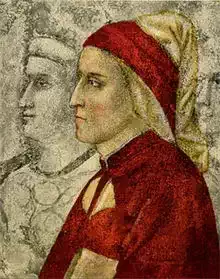
Dante Alighieri
Sestina
I have come, alas, to the great circle of shadow,
to the short day and to the whitening hills,
when the colour is all lost from the grass,
though my desire will not lose its green,
so rooted is it in this hardest stone,
that speaks and feels as though it were a woman.
And likewise this heaven-born woman
stays frozen, like the snow in shadow,
and is unmoved, or moved like a stone,
by the sweet season that warms all the hills,
and makes them alter from pure white to green,
so as to clothe them with the flowers and grass.
When her head wears a crown of grass
she draws the mind from any other woman,
because she blends her gold hair with the green
so well that Amor lingers in their shadow,
he who fastens me in these low hills,
more certainly than lime fastens stone.
Her beauty has more virtue than rare stone.
The wound she gives cannot be healed with grass,
since I have travelled, through the plains and hills,
to find my release from such a woman,
yet from her light had never a shadow
thrown on me, by hill, wall, or leaves’ green.
I have seen her walk all dressed in green,
so formed she would have sparked love in a stone,
that love I bear for her very shadow,
so that I wished her, in those fields of grass,
as much in love as ever yet was woman,
closed around by all the highest hills.
The rivers will flow upwards to the hills
before this wood, that is so soft and green,
takes fire, as might ever lovely woman,
for me, who would choose to sleep on stone,
all my life, and go eating grass,
only to gaze at where her clothes cast shadow.
Whenever the hills cast blackest shadow,
with her sweet green, the lovely woman
hides it, as a man hides stone in grass.
Read more →
347
Dante Alighieri
Sonnet: Love and the Gentle
Love and the gentle heart are one same thing,
Even as the wise man in his ditty saith.
Each, of itself, would be such life in death
As rational soul bereft of reasoning.
'Tis Nature makes them when she loves: a king
Love is, whose palace where he sojourneth
Is call'd the Heart; there draws he quiet breath
At first, with brief or longer slumbering.
Then beauty seen in virtuous womankind
Will make the eyes desire, and through the heart
Send the desiring of the eyes again;
Where often it abides so long enshrined
That Love at length out of his sleep will start.
And women feel the same for worthy men.
Read more →
346
William Shakespeare
The Passionate Pilgrim
I.
When my love swears that she is made of truth,
I do believe her, though I know she lies,
That she might think me some untutor'd youth,
Unskilful in the world's false forgeries,
Thus vainly thinking that she thinks me young,
Although I know my years be past the best,
I smiling credit her false-speaking tongue,
Outfacing faults in love with love's ill rest.
But wherefore says my love that she is young?
And wherefore say not I that I am old?
O, love's best habit is a soothing tongue,
And age, in love, loves not to have years told.
Therefore, I'll lie with love, and love with me,
Since that our faults in love thus smother'd be.
II.
Two loves I have, of comfort and despair,
That like two spirits do suggest me still;
My better angel is a man right fair,
My worser spirit a woman colour'd ill.
To win me soon to hell, my female evil
Tempteth my better angel from my side,
And would corrupt my saint to be a devil,
Wooing his purity with her fair pride.
And whether that my angel be turn'd fiend,
Suspect I may, yet not directly tell:
For being both to me, both to each friend,
I guess one angel in another's hell:
The truth I shall not know, but live in doubt,
Till my bad angel fire my good one out.
III.
Did not the heavenly rhetoric of thine eye,
'Gainst whom the world could not hold argument.
Persuade my heart to this false perjury?
Vows for thee broke deserve not punishment.
A woman I forswore; but I will prove,
Thou being a goddess, I forswore not thee:
My vow was earthly, thou a heavenly love:
Thy grace being gain'd cures all disgrace in me.
My vow was breath, and breath a vapour is;
Then, thou fair sun, that on this earth doth shine,
Exhale this vapour vow; in thee it is:
If broken, then it is no fault of mine.
If by me broke, what fool is not so wise
To break an oath, to win a paradise?
IV.
Sweet Cytherea, sitting by a brook
With young Adonis, lovely, fresh, and green,
Did court the lad with many a lovely look,
Such looks as none could look but beauty's queen,
She told him stories to delight his ear;
She show'd him favours to allure his eye;
To win his heart, she touch'd him here and there, --
Touches so soft still conquer chastity.
But whether unripe years did want conceit,
Or he refused to take her figured proffer,
The tender nibbler would not touch the bait,
But smile and jest at every gentle offer:
Then fell she on her back, fair queen, and toward:
He rose and ran away; ah, fool too froward!
V.
If love make me forsworn, how shall I swear to love?
O never faith could hold, if not to beauty vow'd:
Though to myself forsworn, to thee I'll constant prove;
Those thoughts, to me like oaks, to thee like osiers bow'd.
Study his bias leaves, and make his book thine eyes,
Where all those pleasures live that art can comprehend.
If knowledge be the mark, to know thee shall suffice;
Well learned is that tongue that well can thee commend;
All ignorant that soul that sees thee without wonder;
Which is to me some praise, that I thy parts admire:
Thy eye Jove's lightning seems, thy voice his dreadful thunder,
Which, not to anger bent, is music and sweet fire.
Celestial as thou art, O do not love that wrong,
To sing heaven's praise with such an earthly tongue.
VI.
Scarce had the sun dried up the dewy morn,
And scarce the herd gone to the hedge for shade,
When Cytherea, all in love forlorn,
A longing tarriance for Adonis made
Under an osier growing by a brook,
A brook where Adon used to cool his spleen:
Hot was the day; she hotter that did look
For his approach, that often there had been.
Anon he comes, and throws his mantle by,
And stood stark naked on the brook's green brim:
The sun look'd on the world with glorious eye,
Yet not so wistly as this queen on him.
He, spying her, bounced in, whereas he stood:
'O Jove,' quoth she, 'why was not I a flood!'
VII.
Fair is my love, but not so fair as fickle;
Mild as a dove, but neither true nor trusty;
Brighter than glass, and yet, as glass is brittle;
Softer than wax, and yet, as iron, rusty:
A lily pale, with damask dye to grace her,
None fairer, nor none falser to deface her.
Her lips to mine how often hath she joined,
Between each kiss her oaths of true love swearing!
How many tales to please me bath she coined,
Dreading my love, the loss thereof still fearing!
Yet in the midst of all her pure protestings,
Her faith, her oaths, her tears, and all were jestings.
She burn'd with love, as straw with fire flameth;
She burn'd out love, as soon as straw outburneth;
She framed the love, and yet she foil'd the framing;
She bade love last, and yet she fell a-turning.
Was this a lover, or a lecher whether?
Bad in the best, though excellent in neither.
VIII.
If music and sweet poetry agree,
As they must needs, the sister and the brother,
Then must the love be great 'twixt thee and me,
Because thou lovest the one, and I the other.
Dowland to thee is dear, whose heavenly touch
Upon the lute doth ravish human sense;
Spenser to me, whose deep conceit is such
As, passing all conceit, needs no defence.
Thou lovest to bear the sweet melodious sound
That Phoebus' lute, the queen of music, makes;
And I in deep delight am chiefly drown'd
Whenas himself to singing he betakes.
One god is god of both, as poets feign;
One knight loves both, and both in thee remain.
IX.
Fair was the morn when the fair queen of love,
Paler for sorrow than her milk-white dove,
For Adon's sake, a youngster proud and wild;
Her stand she takes upon a steep-up hill:
Anon Adonis comes with horn and hounds;
She, silly queen, with more than love's good will,
Forbade the boy he should not pass those grounds:
'Once,' quoth she, 'did I see a fair sweet youth
Here in these brakes deep-wounded with a boar,
Deep in the thigh, a spectacle of ruth!
See, in my thigh,' quoth she, 'here was the sore.
She showed hers: he saw more wounds than one,
And blushing fled, and left her all alone.
X.
Sweet rose, fair flower, untimely pluck'd, soon vaded,
Pluck'd in the bud, and vaded in the spring!
Bright orient pearl, alack, too timely shaded!
Fair creature, kill'd too soon by death's sharp sting!
Like a green plum that hangs upon a tree,
And falls, through wind, before the fall should he.
I weep for thee, and yet no cause I have;
For why thou left'st me nothing in thy will:
And yet thou left'st me more than I did crave;
For why I craved nothing of thee still:
O yes, dear friend, I pardon crave of thee,
Thy discontent thou didst bequeath to me.
XI.
Venus, with young Adonis sitting by her
Under a myrtle shade, began to woo him:
She told the youngling how god Mars did try her,
And as he fell to her, so fell she to him.
'Even thus,' quoth she, 'the warlike god embraced me,'
And then she clipp'd Adonis in her arms;
'Even thus,' quoth she, 'the warlike god unlaced me,'
As if the boy should use like loving charms;
'Even thus,' quoth she, 'he seized on my lips
And with her lips on his did act the seizure
And as she fetched breath, away he skips,
And would not take her meaning nor her pleasure.
Ah, that I had my lady at this bay,
To kiss and clip me till I run away!
XII.
Crabbed age and youth cannot live together
Youth is full of pleasance, age is full of care;
Youth like summer morn, age like winter weather;
Youth like summer brave, age like winter bare;
Youth is full of sport, age's breath is short;
Youth is nimble, age is lame;
Youth is hot and bold, age is weak and cold;
Youth is wild, and age is tame.
Age, I do abhor thee; youth, I do adore thee;
O, my love, my love is young!
Age, I do defy thee: O, sweet shepherd, hie thee,
For methinks thou stay'st too long.
XIII.
Beauty is but a vain and doubtful good;
A shining gloss that vadeth suddenly;
A flower that dies when first it gins to bud;
A brittle glass that's broken presently:
A doubtful good, a gloss, a glass, a flower,
Lost, vaded, broken, dead within an hour.
And as goods lost are seld or never found,
As vaded gloss no rubbing will refresh,
As flowers dead lie wither'd on the ground,
As broken glass no cement can redress,
So beauty blemish'd once's for ever lost,
In spite of physic, painting, pain and cost.
XIV.
Good night, good rest. Ah, neither be my share:
She bade good night that kept my rest away;
And daff'd me to a cabin hang'd with care,
To descant on the doubts of my decay.
'Farewell,' quoth she, 'and come again tomorrow:
Fare well I could not, for I supp'd with sorrow.
Yet at my parting sweetly did she smile,
In scorn or friendship, nill I construe whether:
'T may be, she joy'd to jest at my exile,
'T may be, again to make me wander thither:
'Wander,' a word for shadows like myself,
As take the pain, but cannot pluck the pelf.
XV.
Lord, how mine eyes throw gazes to the east!
My heart doth charge the watch; the morning rise
Doth cite each moving sense from idle rest.
Not daring trust the office of mine eyes,
While Philomela sits and sings, I sit and mark,
And wish her lays were tuned like the lark;
For she doth welcome daylight with her ditty,
And drives away dark dismal-dreaming night:
The night so pack'd, I post unto my pretty;
Heart hath his hope, and eyes their wished sight;
Sorrow changed to solace, solace mix'd with sorrow;
For why, she sigh'd and bade me come tomorrow.
Were I with her, the night would post too soon;
But now are minutes added to the hours;
To spite me now, each minute seems a moon;
Yet not for me, shine sun to succour flowers!
Pack night, peep day; good day, of night now borrow:
Short, night, to-night, and length thyself tomorrow.
Read more →
347
William Shakespeare
Sonnet 32: If thou survive my well-contented day
If thou survive my well-contented day
When that churl Death my bones with dust shall cover,
And shalt by fortune once more re-survey
These poor rude lines of thy deceasèd lover,
Compare them with the bett'ring of the time,
And though they be outstripped by every pen,
Reserve them for my love, not for their rhyme,
Exceeded by the height of happier men.
O, then vouchsafe me but this loving thought:
"Had my friend's Muse grown with this growing age,
A dearer birth than this his love had brought
To march in ranks of better equipage;
But since he died and poets better prove,
Theirs for their style I'll read, his for his love."
Read more →
348
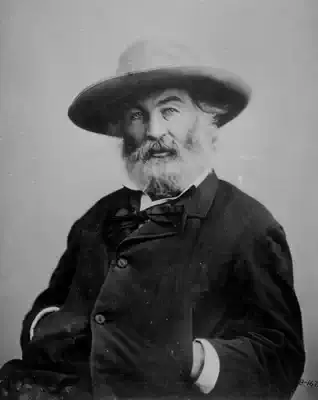
Walt Whitman
Thou Orb Aloft Full-Dazzling
THOU orb aloft full-dazzling! thou hot October noon!
Flooding with sheeny light the gray beach sand,
The sibilant near sea with vistas far and foam,
And tawny streaks and shades and spreading blue;
O sun of noon rufulgent! my special word to thee.
Hear me illustrious!
Thy lover me, for always I have loved thee,
Even as basking babe, then happy boy alone by some wood edge, thy
touching-distant beams enough,
Or man matured, or young or old, as now to thee I launch my
invocation.
(Thou canst not with thy dumbness me deceive,
I know before the fitting man all Nature yields,
Though answering not in words, the skies, trees, hear his voice--and
thou O sun,
As for thy throes, thy perturbations, sudden breaks and shafts of
flame gigantic,
I understand them, I know those flames, those perturbations well.)
Thou that with fructifying heat and light,
O'er myriad farms, o'er lands and waters North and South,
O'er Mississippi's endless course, o'er Texas' grassy plains,
Kanada's woods,
O'er all the globe that turns its face to thee shining in space,
Thou that impartially infoldest all, not only continents, seas,
Thou that to grapes and weeds and little wild flowers givest so
liberally,
Shed, shed thyself on mine and me, with but a fleeting ray out of thy
million millions,
Strike through these chants.
Nor only launch thy subtle dazzle and thy strength for these,
Prepare the later afternoon of me myself--prepare my lengthening
shadows,
Prepare my starry nights.
Read more →
348