
Soul

Henry Wadsworth Longfellow
Weariness. (Birds Of Passage. Flight The Second)
O little feet! that such long years
Must wander on through hopes and fears,
Must ache and bleed beneath your load;
I, nearer to the wayside inn
Where toil shall cease and rest begin,
Am weary, thinking of your road!
O little hands! that, weak or strong,
Have still to serve or rule so long,
Have still so long to give or ask;
I, who so much with book and pen
Have toiled among my fellow-men,
Am weary, thinking of your task.
O little hearts! that throb and beat
With such impatient, feverish heat,
Such limitless and strong desires;
Mine that so long has glowed and burned,
With passions into ashes turned
Now covers and conceals its fires.
O little souls! as pure and white
And crystalline as rays of light
Direct from heaven, their source divine;
Refracted through the mist of years,
How red my setting sun appears,
How lurid looks this soul of mine!
Read more →
309

John Donne
Elegy VI
Oh, let me not serve so, as those men serve
Whom honour's smokes at once fatten and starve;
Poorly enrich't with great men's words or looks;
Nor so write my name in thy loving books
As those idolatrous flatterers, which still
Their Prince's styles, with many realms fulfil
Whence they no tribute have, and where no sway.
Such services I offer as shall pay
Themselves, I hate dead names: Oh then let me
Favourite in Ordinary, or no favourite be.
When my soul was in her own body sheathed,
Nor yet by oaths betrothed, nor kisses breathed
Into my Purgatory, faithless thee,
Thy heart seemed wax, and steel thy constancy:
So, careless flowers strowed on the waters face
The curled whirlpools suck, smack, and embrace,
Yet drown them; so, the taper's beamy eye
Amorously twinkling beckons the giddy fly,
Yet burns his wings; and such the devil is,
Scarce visiting them who are entirely his.
When I behold a stream which, from the spring,
Doth with doubtful melodious murmuring,
Or in a speechless slumber, calmly ride
Her wedded channels' bosom, and then chide
And bend her brows, and swell if any bough
Do but stoop down, or kiss her upmost brow:
Yet, if her often gnawing kisses win
The traiterous bank to gape, and let her in,
She rusheth violently, and doth divorce
Her from her native, and her long-kept course,
And roars, and braves it, and in gallant scorn,
In flattering eddies promising retorn,
She flouts the channel, who thenceforth is dry;
Then say I, That is she, and this am I.
Yet let not thy deep bitterness beget
Careless despair in me, for that will whet
My mind to scorn; and Oh, love dulled with pain
Was ne'er so wise, nor well armed as disdain.
Then with new eyes I shall survey thee, and spy
Death in thy cheeks, and darkness in thine eye.
Though hope bred faith and love: thus taught, I shall,
As nations do from Rome, from thy love fall.
My hate shall outgrow thine, and utterly
I will renounce thy dalliance: and when I
Am the recusant, in that resolute state,
What hurts it me to be excommunicate?
Read more →
308
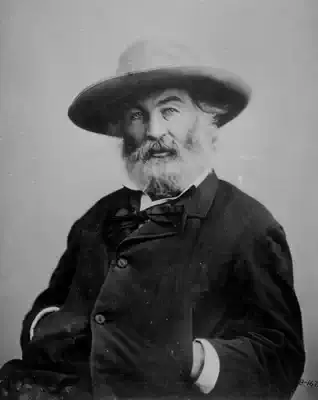
Walt Whitman
Ages And Ages, Returning At Intervals
AGES and ages, returning at intervals,
Undestroy'd, wandering immortal,
Lusty, phallic, with the potent original loins, perfectly sweet,
I, chanter of Adamic songs,
Through the new garden, the West, the great cities calling,
Deliriate, thus prelude what is generated, offering these, offering
myself,
Bathing myself, bathing my songs in Sex,
Offspring of my loins.
Read more →
309
Henry Wadsworth Longfellow
Flower-De-Luce: Palingenesis
I lay upon the headland-height, and listened
To the incessant sobbing of the sea
In caverns under me,
And watched the waves, that tossed and fled and glistened,
Until the rolling meadows of amethyst
Melted away in mist.
Then suddenly, as one from sleep, I started;
For round about me all the sunny capes
Seemed peopled with the shapes
Of those whom I had known in days departed,
Apparelled in the loveliness which gleams
On faces seen in dreams.
A moment only, and the light and glory
Faded away, and the disconsolate shore
Stood lonely as before;
And the wild-roses of the promontory
Around me shuddered in the wind, and shed
Their petals of pale red.
There was an old belief that in the embers
Of all things their primordial form exists,
And cunning alchemists
Could re-create the rose with all its members
From its own ashes, but without the bloom,
Without the lost perfume.
Ah me! what wonder-working, occult science
Can from the ashes in our hearts once more
The rose of youth restore?
What craft of alchemy can bid defiance
To time and change, and for a single hour
Renew this phantom-flower?
'O, give me back,' I cried, 'the vanished splendors,
The breath of morn, and the exultant strife,
When the swift stream of life
Bounds o'er its rocky channel, and surrenders
The pond, with all its lilies, for the leap
Into the unknown deep!'
And the sea answered, with a lamentation,
Like some old prophet wailing, and it said,
'Alas! thy youth is dead!
It breathes no more, its heart has no pulsation;
In the dark places with the dead of old
It lies forever cold!'
Then said I, 'From its consecrated cerements
I will not drag this sacred dust again,
Only to give me pain;
But, still remembering all the lost endearments,
Go on my way, like one who looks before,
And turns to weep no more.'
Into what land of harvests, what plantations
Bright with autumnal foliage and the glow
Of sunsets burning low;
Beneath what midnight skies, whose constellations
Light up the spacious avenues between
This world and the unseen!
Amid what friendly greetings and caresses,
What households, though not alien, yet not mine,
What bowers of rest divine;
To what temptations in lone wildernesses,
What famine of the heart, what pain and loss,
The bearing of what cross!
I do not know; nor will I vainly question
Those pages of the mystic book which hold
The story still untold,
But without rash conjecture or suggestion
Turn its last leaves in reverence and good heed,
Until 'The End' I read.
Read more →
308

Johann Wolfgang von Goethe
The Friendly Meeting
IN spreading mantle to my chin concealed,
I trod the rocky path, so steep and grey,
Then to the wintry plain I bent my way
Uneasily, to flight my bosom steel'd.
But sudden was the newborn day reveal'd:
A maiden came, in heavenly bright array,
Like the fair creatures of the poet's lay
In realms of song. My yearning heart was heal'd.
Yet turn'd I thence, till she had onward pass'd,
While closer still the folds to draw I tried,
As though with heat self-kindled to grow warm;
But follow'd her. She stood. The die was cast!
No more within my mantle could I hide;
I threw it off,--she lay within mine arm.
Read more →
307
Henry Wadsworth Longfellow
The Three Silences Of Molinos
Three Silences there are: the first of speech,
The second of desire, the third of thought;
This is the lore a Spanish monk, distraught
With dreams and visions, was the first to teach.
These Silences, commingling each with each,
Made up the perfect Silence, that he sought
And prayed for, and wherein at times he caught
Mysterious sounds from realms beyond our reach.
O thou, whose daily life anticipates
The life to come, and in whose thought and word
The spiritual world preponderates.
Hermit of Amesbury! thou too hast heard
Voices and melodies from beyond the gates,
And speakest only when thy soul is stirred!
Read more →
309
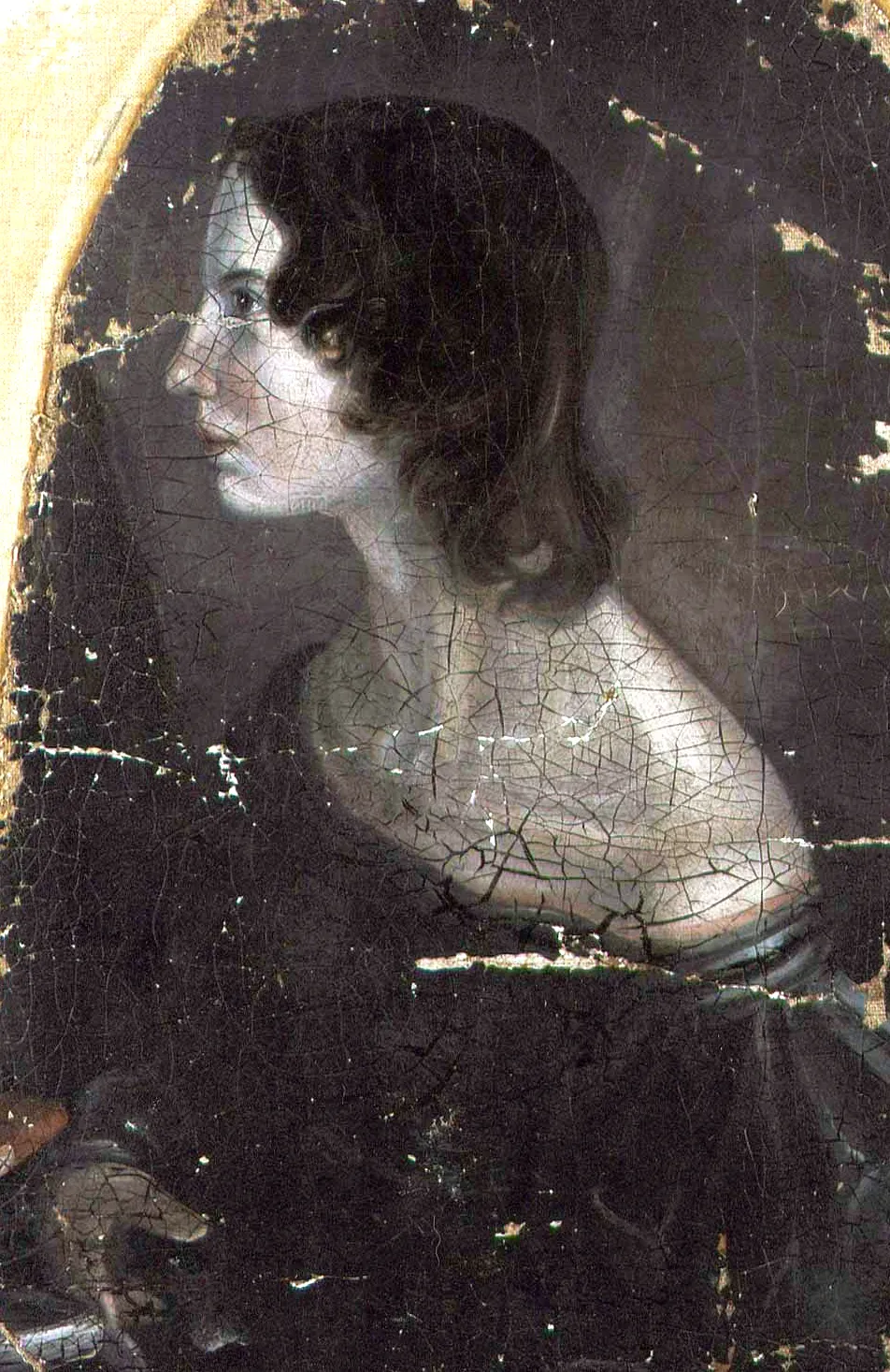
Emily Jane Brontë
R. Alcona to J. Brenzaida
Cold in the earth, and the deep snow piled above thee!
Far, far removed, cold in the dreary grave!
Have I forgot, my Only Love, to love thee,
Severed at last by Time's all-wearing wave?
Now, when alone, do my thoughts no longer hover
Over the mountains on Angora's shore;
Resting their wings where heath and fern-leaves cover
That noble heart for ever, ever more?
Cold in the earth, and fifteen wild Decembers
From those brown hills have melted into spring--
Faithful indeed is the spirit that remembers
After such years of change and suffering!
Sweet Love of youth, forgive if I forget thee
While the World's tide is bearing me along:
Sterner desires and darker hopes beset me,
Hopes which obscure but cannot do thee wrong.
No other Sun has lightened up my heaven;
No other Star has ever shone for me:
All my life's bliss from thy dear life was given
All my life's bliss is in the grave with thee.
But when the days of golden dreams had perished
And even Despair was powerless to destroy,
Then did I learn how existence could be cherished,
Strengthened and fed without the aid of joy;
Then did I check the tears of useless passion,
Weaned my young soul from yearning after thine;
Sternly denied its burning wish to hasten
Down to that tomb already more than mine!
And even yet, I dare not let it languish,
Dare not indulge in Memory's rapturous pain;
Once drinking deep of that divinest anguish,
How could I seek the empty world again?
(March 3, 1845)
Read more →
308

John Greenleaf Whittier
The Mystic’s Christmas
'All hail!' the bells of Christmas rang,
'All hail!' the monks at Christmas sang,
The merry monks who kept with cheer
The gladdest day of all their year.
But still apart, unmoved thereat,
A pious elder brother sat
Silent, in his accustomed place,
With God's sweet peace upon his face.
'Why sitt'st thou thus?' his brethren cried.
'It is the blessed Christmas-tide;
The Christmas lights are all aglow,
The sacred lilies bud and blow.
'Above our heads the joy-bells ring,
Without the happy children sing,
And all God's creatures hail the morn
On which the holy Christ was born!
'Rejoice with us; no more rebuke
Our gladness with thy quiet look.'
The gray monk answered: 'Keep, I pray,
Even as ye list, the Lord's birthday.
'Let heathen Yule fires flicker red
Where thronged refectory feasts are spread;
With mystery-play and masque and mime
And wait-songs speed the holy time!
'The blindest faith may haply save;
The Lord accepts the things we have;
And reverence, howsoe'er it strays,
May find at last the shining ways.
'They needs must grope who cannot see,
The blade before the ear must be;
As ye are feeling I have felt,
And where ye dwell I too have dwelt.
'But now, beyond the things of sense,
Beyond occasions and events,
I know, through God's exceeding grace,
Release from form and time and place.
'I listen, from no mortal tongue,
To hear the song the angels sung;
And wait within myself to know
The Christmas lilies bud and blow.
'The outward symbols disappear
From him whose inward sight is clear;
And small must be the choice of clays
To him who fills them all with praise!
'Keep while you need it, brothers mine,
With honest zeal your Christmas sign,
But judge not him who every morn
Feels in his heart the Lord Christ born!'
Read more →
308
John Greenleaf Whittier
The Sisters
ANNIE and Rhoda, sisters twain,
Woke in the night to the sound of rain,
The rush of wind, the ramp and roar
Of great waves climbing a rocky shore.
Annie rose up in her bed-gown white,
And looked out into the storm and night.
'Hush, and hearken!' she cried in fear,
'Hearest thou nothing, sister dear?'
'I hear the sea, and the plash of rain,
And roar of the northeast hurricane.
'Get thee back to the bed so warm,
No good comes of watching a storm.
'What is it to thee, I fain would know,
That waves are roaring and wild winds blow?
'No lover of thine's afloat to miss
The harbor-lights on a night like this.'
'But I heard a voice cry out my name,
Up from the sea on the wind it came.
'Twice and thrice have I heard it call,
And the voice is the voice of Estwick Hall!'
On her pillow the sister tossed her head.
'Hall of the Heron is safe,' she said.
'In the tautest schooner that ever swam
He rides at anchor in Anisquam.
'And, if in peril from swamping sea
Or lee shore rocks, would he call on thee?'
But the girl heard only the wind and tide,
And wringing her small white hands she cried,
'O sister Rhoda, there's something wrong;
I hear it again, so loud and long.
''Annie! Annie!' I hear it call,
And the voice is the voice of Estwick Hall!'
Up sprang the elder, with eyes aflame,
'Thou liest! He never would call thy name!
'If he did, I would pray the wind and sea
To keep him forever from thee and me!'
Then out of the sea blew a dreadful blast;
Like the cry of a dying man it passed.
The young girl hushed on her lips a groan,
But through her tears a strange light shone,-
The solemn joy of her heart's release
To own and cherish its love in peace.
'Dearest!' she whispered, under breath,
'Life was a lie, but true is death.
'The love I hid from myself away
Shall crown me now in the light of day.
'My ears shall never to wooer list,
Never by lover my lips be kissed.
'Sacred to thee am I henceforth,
Thou in heaven and I on earth!'
She came and stood by her sister's bed
'Hall of the Heron is dead!' she said.
'The wind and the waves their work have done,
We shall see him no more beneath the sun.
'Little will reek that heart of thine,
It loved him not with a love like mine.
'I, for his sake, were he but here,
Could hem and 'broider thy bridal gear,
'Though hands should tremble and eyes be wet,
And stitch for stitch in my heart be set.
'But now my soul with his soul I wed;
Thine the living, and mine the dead!'
Read more →
307

Phillis Wheatley
To A Lady And Her Children, On The Death Of Her Son And Their Brother
O'ERWHELMING sorrow now demands my song:
From death the overwhelming sorrow sprung.
What flowing tears? What hearts with grief opprest?
What sighs on sighs heave the fond parent's breast?
The brother weeps, the hapless sisters join
Th' increasing woe, and swell the crystal brine;
The poor, who once his gen'rous bounty fed,
Droop, and bewail their benefactor dead.
In death the friend, the kind companion lies,
And in one death what various comfort dies!
Th' unhappy mother sees the sanguine rill
Forget to flow, and nature's wheels stand still,
But see from earth his spirit far remov'd,
And know no grief recals your best-belov'd:
He, upon pinions swifter than the wind,
Has left mortality's sad scenes behind
For joys to this terrestial state unknown,
And glories richer than the monarch's crown.
Of virtue's steady course the prize behold!
What blissful wonders to his mind unfold!
But of celestial joys I sing in vain:
Attempt not, muse, the too advent'rous strain.
No more in briny show'rs, ye friends around,
Or bathe his clay, or waste them on the ground:
Still do you weep, still wish for his return?
How cruel thus to wish, and thus to mourn?
No more for him the streams of sorrow pour,
But haste to join him on the heav'nly shore,
On harps of gold to tune immortal lays,
And to your God immortal anthems raise.
Read more →
308
Henry Wadsworth Longfellow
The Chamber Over The Gate
Is it so far from thee
Thou canst no longer see,
In the Chamber over the Gate,
That old man desolate,
Weeping and wailing sore
For his son, who is no more?
O Absalom, my son!
Is it so long ago
That cry of human woe
From the walled city came,
Calling on his dear name,
That it has died away
In the distance of to-day?
O Absalom, my son!
There is no far or near,
There is neither there nor here,
There is neither soon nor late,
In that Chamber over the Gate,
Nor any long ago
To that cry of human woe,
O Absalom, my son!
From the ages that are past
The voice sounds like a blast,
Over seas that wreck and drown,
Over tumult of traffic and town;
And from ages yet to be
Come the echoes back to me,
O Absalom, my son!
Somewhere at every hour
The watchman on the tower
Looks forth, and sees the fleet
Approach of the hurrying feet
Of messengers, that bear
The tidings of despair.
O Absalom, my son!
He goes forth from the door
Who shall return no more.
With him our joy departs;
The light goes out in our hearts;
In the Chamber over the Gate
We sit disconsolate.
O Absalom, my son!
That 't is a common grief
Bringeth but slight relief;
Ours is the bitterest loss,
Ours is the heaviest cross;
And forever the cry will be
'Would God I had died for thee,
O Absalom, my son!'
Read more →
309
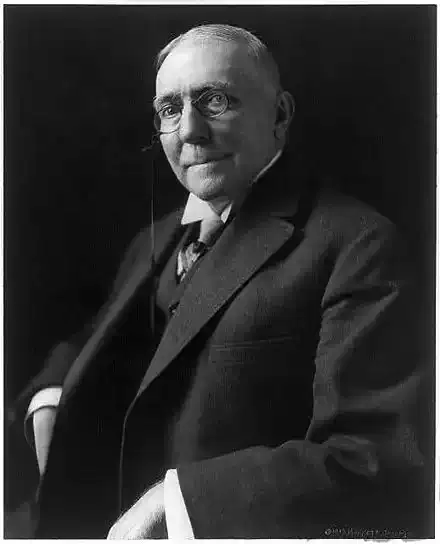
James Whitcomb Riley
The Shower
The landscape, like the awed face of a child,
Grew curiously blurred; a hush of death
Fell on the fields, and in the darkened wild
The zephyr held its breath.
No wavering glamour-work of light and shade
Dappled the shivering surface of the brook;
The frightened ripples in their ambuscade
Of willows thrilled and shook.
The sullen day grew darker, and anon
Dim flashes of pent anger lit the sky;
With rumbling wheels of wrath came rolling on
The storm's artillery.
The cloud above put on its blackest frown,
And then, as with a vengeful cry of pain,
The lightning snatched it, ripped and flung it down
In ravelled shreds of rain:
While I, transfigured by some wondrous art,
Bowed with the thirsty lilies to the sod,
My empty soul brimmed over, and my heart
Drenched with the love of God.
Read more →
307
John Greenleaf Whittier
The Over-Heart
Above, below, in sky and sod,
In leaf and spar, in star and man,
Well might the wise Athenian scan
The geometric signs of God,
The measured order of His plan.
And India's mystics sang aright
Of the One Life pervading all,-One
Being's tidal rise and fall
In soul and form, in sound and sight,-Eternal
outflow and recall.
God is: and man in guilt and fear
The central fact of Nature owns;
Kneels, trembling, by his altar-stones,
And darkly dreams the ghastly smear
Of blood appeases and atones.
Guilt shapes the Terror: deep within
The human heart the secret lies
Of all the hideous deities;
And, painted on a ground of sin,
The fabled gods of torment rise!
And what is He? The ripe grain nods,
The sweet dews fall, the sweet flowers blow;
But darker signs His presence show
The earthquake and the storm are God's,
And good and evil interflow.
O hearts of love! O souls that turn
Like sunflowers to the pure and best!
To you the truth is manifest:
For they the mind of Christ discern
Who lean like John upon His breast!
In him of whom the sibyl told,
For whom the prophet's harp was toned,
Whose need the sage and magian owned,
The loving heart of God behold,
The hope for which the ages groaned!
Fade, pomp of dreadful imagery
Wherewith mankind have deified
Their hate, and selfishness, and pride!
Let the scared dreamer wake to see
The Christ of Nazareth at his side!
What doth that holy Guide require?
No rite of pain, nor gift of blood,
But man a kindly brotherhood,
Looking, where duty is desire,
To Him, the beautiful and good.
Gone be the faithlessness of fear,
And let the pitying heaven's sweet rain
Wash out the altar's bloody stain;
The law of Hatred disappear,
The law of Love alone remain.
How fall the idols false and grim!
And to! their hideous wreck above
The emblems of the Lamb and Dove!
Man turns from God, not God from him;
And guilt, in suffering, whispers Love!
The world sits at the feet of Christ,
Unknowing, blind, and unconsoled;
It yet shall touch His garment's fold,
And feel the heavenly Alchemist
Transform its very dust to gold.
The theme befitting angel tongues
Beyond a mortal's scope has grown.
O heart of mine! with reverence own
The fulness which to it belongs,
And trust the unknown for the known.
Read more →
309
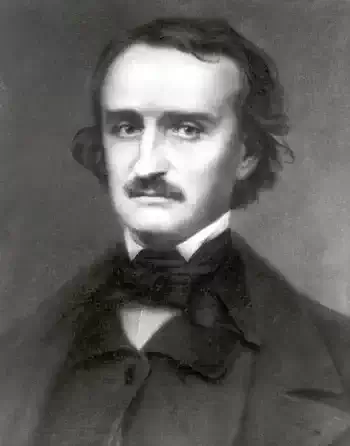
Edgar Allan Poe
To Helen - 1848
I saw thee once- once only- years ago:
I must not say how many- but not many.
It was a July midnight; and from out
A full-orbed moon, that, like thine own soul, soaring,
Sought a precipitate pathway up through heaven,
There fell a silvery-silken veil of light,
With quietude, and sultriness, and slumber,
Upon the upturned faces of a thousand
Roses that grew in an enchanted garden,
Where no wind dared to stir, unless on tiptoe-
Fell on the upturn'd faces of these roses
That gave out, in return for the love-light,
Their odorous souls in an ecstatic death-
Fell on the upturn'd faces of these roses
That smiled and died in this parterre, enchanted
By thee, and by the poetry of thy presence.
Clad all in white, upon a violet bank
I saw thee half reclining; while the moon
Fell on the upturn'd faces of the roses,
And on thine own, upturn'd- alas, in sorrow!
Was it not Fate, that, on this July midnight-
Was it not Fate, (whose name is also Sorrow,)
That bade me pause before that garden-gate,
To breathe the incense of those slumbering roses?
No footstep stirred: the hated world an slept,
Save only thee and me. (Oh, Heaven!- oh, God!
How my heart beats in coupling those two words!)
Save only thee and me. I paused- I looked-
And in an instant all things disappeared.
(Ah, bear in mind this garden was enchanted!)
The pearly lustre of the moon went out:
The mossy banks and the meandering paths,
The happy flowers and the repining trees,
Were seen no more: the very roses' odors
Died in the arms of the adoring airs.
All- all expired save thee- save less than thou:
Save only the divine light in thine eyes-
Save but the soul in thine uplifted eyes.
I saw but them- they were the world to me!
I saw but them- saw only them for hours,
Saw only them until the moon went down.
What wild heart-histories seemed to he enwritten
Upon those crystalline, celestial spheres!
How dark a woe, yet how sublime a hope!
How silently serene a sea of pride!
How daring an ambition; yet how deep-
How fathomless a capacity for love!
But now, at length, dear Dian sank from sight,
Into a western couch of thunder-cloud;
And thou, a ghost, amid the entombing trees
Didst glide away. Only thine eyes remained;
They would not go- they never yet have gone;
Lighting my lonely pathway home that night,
They have not left me (as my hopes have) since;
They follow me- they lead me through the years.
They are my ministers- yet I their slave.
Their office is to illumine and enkindle-
My duty, to be saved by their bright light,
And purified in their electric fire,
And sanctified in their elysian fire.
They fill my soul with Beauty (which is Hope),
And are far up in Heaven- the stars I kneel to
In the sad, silent watches of my night;
While even in the meridian glare of day
I see them still- two sweetly scintillant
Venuses, unextinguished by the sun!
Read more →
306

Emily Dickinson
You'll find—it when you try to die
You'll find—it when you try to die—
The Easier to let go—
For recollecting such as went—
You could not spare—you know.
And though their places somewhat filled—
As did their Marble names
With Moss—they never grew so full—
You chose the newer names—
And when this World—sets further back—
As Dying—say it does—
The former love—distincter grows—
And supersedes the fresh—
And Thought of them—so fair invites—
It looks too tawdry Grace
To stay behind—with just the Toys
We bought—to ease their place—
Read more →
304
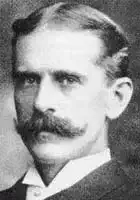
Henry Van Dyke
Thomas Bailey Aldrich
I
BIRTHDAY VERSES
Dear Aldrich, now November's mellow days
Have brought another Festa round to you,
You can't refuse a loving-cup of praise
From friends the fleeting years have bound to you.
Here come your Marjorie Daw, your dear Bad Boy,
Prudence, and Judith the Bethulian,
And many more, to wish you birthday joy,
And sunny hours, and sky caerulean!
Your children all, they hurry to your den,
With wreaths of honour they have won for you,
To merry-make your threescore years and ten.
You, old? Why, life has just begun for you!
There's many a reader whom your silver songs
And crystal stories cheer in loneliness.
What though the newer writers come in throngs?
You're sure to keep your charm of only-ness.
You do your work with careful, loving touch, --
An artist to the very core of you, --
You know the magic spell of "not-too-much ":
We read, -- and wish that there was more of you.
And more there is: for while we love your books
Because their subtle skill is part of you;
We love you better, for our friendship looks
Behind them to the human heart of you.
November 24, 1906.
II
MEMORIAL SONNET
THIS is the house where little Aldrich read
The early pages of Life's wonder-book:
With boyish pleasure, in this ingle-nook
He watched the drift-wood fire of Fancy spread
Bright colours on the pictures, blue and red:
Boy-like he skipped the longer words, and took
His happy way, with searching, dreamful look
Among the deeper things more simply said.
Then, came his turn to write: and still the flame
Of Fancy played through all the tales he told,
And still he won the laurelled poet's fame
With simple words wrought into rhymes of gold.
Look, here's the face to which this house is frame, --
A man too wise to let his heart grow old!
Read more →
306

William Butler Yeats
Her Triumph
I did the dragon's will until you came
Because I had fancied love a casual
Improvisation, or a settled game
That followed if I let the kerchief fall:
Those deeds were best that gave the minute wings
And heavenly music if they gave it wit;
And then you stood among the dragon-rings.
I mocked, being crazy, but you mastered it
And broke the chain and set my ankles free,
Saint George or else a pagan Perseus;
And now we stare astonished at the sea,
And a miraculous strange bird shrieks at us.
Read more →
307
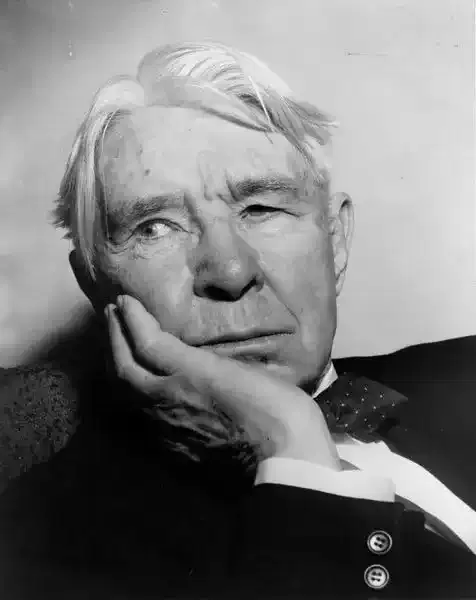
Carl Sandburg
Sixteen Months
On the lips of the child Janet float changing dreams.
It is a thin spiral of blue smoke,
A morning campfire at a mountain lake.
On the lips of the child Janet,
Wisps of haze on ten miles of corn,
Young light blue calls to young light gold of morning.
Read more →
304
Emily Dickinson
A little bread-a crust-a crumb
A little bread-a crust-a crumb-
A little trust-a demijohn-
Can keep the soul alive-
Not portly, mind! but breathing-warm
Conscious-
as old Napoleon,
The night before the Crown!
A modest lot-A fame petite-
A brief Campaign of sting and sweet
Is plenty! Is enough!
A Sailor's business is the shore!
A Soldier's-balls! Who asketh more,
Must seek the neighboring life!
Read more →
306
John Greenleaf Whittier
The Shadow And The Light
The fourteen centuries fall away
Between us and the Afric saint,
And at his side we urge, to-day,
The immemorial quest and old complaint.
No outward sign to us is given,-From
sea or earth comes no reply;
Hushed as the warm Numidian heaven
He vainly questioned bends our frozen sky.
No victory comes of all our strife,-From
all we grasp the meaning slips;
The Sphinx sits at the gate of life,
With the old question on her awful lips.
In paths unknown we hear the feet
Of fear before, and guilt behind;
We pluck the wayside fruit, and eat
Ashes and dust beneath its golden rind.
From age to age descends unchecked
The sad bequest of sire to son,
The body's taint, the mind's defect;
Through every web of life the dark threads run.
Oh, why and whither? God knows all;
I only know that He is good,
And that whatever may befall
Or here or there, must be the best that could.
Between the dreadful cherubim
A Father's face I still discern,
As Moses looked of old on Him,
And saw His glory into goodness turn!
For He is merciful as just;
And so, by faith correcting sight,
I bow before His will, and trust
Howe'er they seem He doeth all things right.
And dare to hope that Tie will make
The rugged smooth, the doubtful plain;
His mercy never quite forsake;
His healing visit every realm of pain;
That suffering is not His revenge
Upon His creatures weak and frail,
Sent on a pathway new and strange
With feet that wander and with eyes that fail;
That, o'er the crucible of pain,
Watches the tender eye of Love
The slow transmuting of the chain
Whose links are iron below to gold above!
Ah me! we doubt the shining skies,
Seen through our shadows of offence,
And drown with our poor childish cries
The cradle-hymn of kindly Providence.
And still we love the evil cause,
And of the just effect complain
We tread upon life's broken laws,
And murmur at our self-inflicted pain;
We turn us from the light, and find
Our spectral shapes before us thrown,
As they who leave the sun behind
Walk in the shadows of themselves alone.
And scarce by will or strength of ours
We set our faces to the day;
Weak, wavering, blind, the Eternal Powers
Alone can turn us from ourselves away.
Our weakness is the strength of sin,
But love must needs be stronger far,
Outreaching all and gathering in
The erring spirit and the wandering star.
A Voice grows with the growing years;
Earth, hushing down her bitter cry,
Looks upward from her graves, and hears,
'The Resurrection and the Life am I.'
O Love Divine!--whose constant beam
Shines on the eyes that will not see,
And waits to bless us, while we dream
Thou leavest us because we turn from thee!
All souls that struggle and aspire,
All hearts of prayer by thee are lit;
And, dim or clear, thy tongues of fire
On dusky tribes and twilight centuries sit.
Nor bounds, nor clime, nor creed thou know'st,
Wide as our need thy favors fall;
The white wings of the Holy Ghost
Stoop, seen or unseen, o'er the heads of all.
O Beauty, old yet ever new!
Eternal Voice, and Inward Word,
The Logos of the Greek and Jew,
The old sphere-music which the Samian heard!
Truth, which the sage and prophet saw,
Long sought without, but found within,
The Law of Love beyond all law,
The Life o'erflooding mortal death and sin!
Shine on us with the light which glowed
Upon the trance-bound shepherd's way.
Who saw the Darkness overflowed
And drowned by tides of everlasting Day.
Shine, light of God!--make broad thy scope
To all who sin and suffer; more
And better than we dare to hope
With Heaven's compassion make our longings poor!
Read more →
306
William Butler Yeats
To His Heart, Bidding It Have No Fear
BE you still, be you still, trembling heart;
Remember the wisdom out of the old days:
Him who trembles before the flame and the flood,
And the winds that blow through the starry ways,
Let the starry winds and the flame and the flood
Cover over and hide, for he has no part
With the lonely, majestical multitude.
Read more →
307
Carl Sandburg
Passers-By
Passers-by,
Out of your many faces
Flash memories to me
Now at the day end
Away from the sidewalks
Where your shoe soles traveled
And your voices rose and blent
To form the city's afternoon roar
Hindering an old silence.
Passers-by,
I remember lean ones among you,
Throats in the clutch of a hope,
Lips written over with strivings,
Mouths that kiss only for love.
Records of great wishes slept with,
Held long
And prayed and toiled for. .
Yes,
Written on
Your mouths
And your throats
I read them
When you passed by.
Read more →
306

William Wordsworth
Lament of Mary Queen of Scots, on The Eve of a New Year
Smile of the Moon!---for I so name
That silent greeting from above;
A gentle flash of light that came
From her whom drooping captives love;
Or art thou of still higher birth?
Thou that didst part the clouds of earth,
My torpor to reprove!
Bright boon of pitying Heaven!---alas,
I may not trust thy placid cheer!
Pondering that Time tonight will pass
The threshold of another year;
For years to me are sad and dull;
My very moments are too full
Of hopelessness and fear.
And yet, the soul-awakening gleam,
That struck perchance the farthest cone
Of Scotland's rocky wilds, did seem
To visit me, and me alone;
Me, unapproached by any friend,
Save those who to my sorrow lend
Tears due unto their own.
To night the church-tower bells will ring
Through these wide realms a festire peal;
To the new year a welcoming;
A tuneful offering for the weal
Of happy millions lulled in deep;
While I am forced to watch and weep,
By wounds that may not heal.
Born all too high, by wedlock raised
Still higherÑto be cast thus low!
Would that mine eyes had never gazed
On aught of more ambitious show
Than the sweet flowerets of the fields
---It is my royal state that yields
This bitterness of woe.
Yet how?---for I, if there be truth
In the world's voice, was passing fair;
And beauty, for confiding youth,
Those shocks of passion can prepare
That kill the bloom before its time;
And blanch, without the owner's crime,
The most resplendent hair.
Unblest distinction! showered on me
To bind a lingering life in chains:
All that could quit my grasp, or flee,
Is gone;---but not the subtle stains
Fixed in the spirit; for even here
Can I be proud that jealous fear
Of what I was remains.
A Woman rules my prison's key;
A sister Queen, against the bent
O£ law and holiest sympathy,
Detains me, doubtful of the event;
Great God, who feel'st for my distress,
My thoughts are all that I possess,
O keep them innocent!
Farewell desire of human aid,
Which abject mortals vainly court!
By friends deceived, by foes betrayed,
Of fears the prey, of hopes the sport;
Nought but the world-redeeming Cross
Is able to support my loss,
My burthen to support.
Hark! the death-note of the year
Sounded by the castle-clock!
From her sunk eyes a stagnant tear
Stole forth, unsettled by the shock;
But oft the woods renewed their green,
Ere the tired head of Scotland's Queen
Reposed upon the block!
Read more →
307
John Greenleaf Whittier
Hymn of The Dunkers
KLOSTER KEDAR, EPHRATA, PENNSYLVANIA (1738)
SISTER MARIA CHRISTINA sings
Wake, sisters, wake! the day-star shines;
Above Ephrata's eastern pines
The dawn is breaking, cool and calm.
Wake, sisters, wake to prayer and psalm!
Praised be the Lord for shade and light,
For toil by day, for rest by night!
Praised be His name who deigns to bless
Our Kedar of the wilderness!
Our refuge when the spoiler's hand
Was heavy on our native land;
And freedom, to her children due,
The wolf and vulture only knew.
We praised Him when to prison led,
We owned Him when the stake blazed red;
We knew, whatever might befall,
His love and power were over all.
He heard our prayers; with outstretched arm
He led us forth from cruel harm;
Still, wheresoe'er our steps were bent,
His cloud and fire before us went!
The watch of faith and prayer He set,
We kept it then, we keep it yet.
At midnight, crow of cock, or noon,
He cometh sure, He cometh soon.
He comes to chasten, not destroy,
To purge the earth from sin's alloy.
At last, at last shall all confess
His mercy as His righteousness.
The dead shall live, the sick be whole,
The scarlet sin be white as wool;
No discord mar below, above,
The music of eternal love!
Sound, welcome trump, the last alarm!
Lord God of hosts, make bare thine arm,
Fulfil this day our long desire,
Make sweet and clean the world with fire!
Sweep, flaming besom, sweep from sight
The lies of time; be swift to smite,
Sharp sword of God, all idols down,
Genevan creed and Roman crown.
Quake, earth, through all thy zones, till all
The fanes of pride and priesteraft fall;
And lift thou up in place of them
Thy gates of pearl, Jerusalem!
Lo! rising from baptismal flame,
Transfigured, glorious, yet the same,
Within the heavenly city's bound
Our Kloster Kedar shall be found.
He cometh soon! at dawn or noon
Or set of sun, He cometh soon.
Our prayers shall meet Him on His way;
Wake, sisters, wake! arise and pray!
Read more →
306